Article
J. Braz. Chem. Soc., Vol. 24, No. 11, 1754-1763, 2013. Printed in Brazil - ©2013 Sociedade Brasileira de Química 0103 - 5053 $6.00+0.00
A
http://dx.doi.org/10.5935/0103-5053.20130220*e-mail: [email protected]
Ring Transformation of Chromone-3-Carboxamide under Nucleophilic Conditions
Magdy A. Ibrahim
Department of Chemistry, Faculty of Education, Ain Shams University, Roxy 11711, Cairo, Egypt
A reatividade química de cromona-3-carboxamida foi estudada para uma série nucleófilos de carbono e de nitrogênio. O tratamento da carboxamida com algumas aminas primárias forneceu cromona-2,4-dionas. A condensação da carboxamida com hidrato de hidrazina, fenilihidrazina e hidrocloridrato de hidroxilamina forneceu cromenopirazóis e cromeno isoxazol, respectivamente. A reação da carboxamida com cloridrato de guanidina, cianoguanidina e tioureia resultou na transformação do anel, produzindo cromenopiridinas. O comportamento químico da carboxamida também foi estudado para etilenodiamina, o-fenilenodiamina, 2-aminofenol e 2-aminotiophenol. Uma variedade de produtos foi isolada a partir da reação de carboxamidas com alguns nucleófilos de carbono.
The chemical reactivity of chromone-3-carboxamide was studied towards a series of nitrogen and carbon nucleophiles. Treatment of carboxamide with some primary amines gave chromane-2,4-diones. Condensation of carboxamide with hydrazine hydrate, phenyl hydrazine and hydroxylamine hydrochloride afforded chromenopyrazoles and chromenoisoxazole, respectively. Reaction of carboxamide with guanidine hydrochloride, cyanoguanidine and thiourea resulted in ring transformation producing chromenopyridines. The chemical behavior of carboxamide was also studied towards ethylenediamine, o-phenylenediamine, 2-aminophenol and 2-aminothiophenol. A variety of products were isolated from the reaction of carboxamide with some carbon nucleophiles.
Keywords: chromone-3-carboxamide, ring transformation, chromane-2,4-diones, chromeno[4,3-d]pyrimidine, nitrogen and carbon nucleophiles, cyclocondensation
Introduction
3-Substituted chromones are very active substrates toward nucleophilic reagents, due to the availability of different electron deficient centers. The diversity of properties of these compounds is due to the fact that they are highly reactive geminally activated push-pull alkenes (α,β-unsaturated ketones) with a good leaving group at the β-carbon atom, whose role is played by the phenolate anion. 3-Substituted chromones have the ability to undergo a nucleophilic 1,4-addition followed by further transformations related to γ-pyrone ring opening and heterocyclizations at the C-4 atom and/or at the substituent in position 3. 3-Formylchromones have been used to prepare a variety of heterocyclic compounds via reaction with different nucleophiles.1-4
Chromone-3-carbonitriles on treatment with carbon nucleophiles produced chromeno[2,3-b]pyridines.5
A variety of products was obtained from reactions of
chromone-3-carboxylic acid with nucleophilic reagents.6
Furthermore, the heating of chromone-3-carboxylate with concentrated ammonium hydroxide leads to 3-formimidoyl-4-hydroxycoumarin.7 Primary and secondary amines
reacted with 3-bromochromone to yield ring contraction products and 3-aminochromones.8,9 The work on the
chemistry of chromone-3-carboxamide is rare,10 thus as
an extension of the work directed to study the chemical behavior of 3-substituted chromones under nucleophilic conditions, the present investigation describes the chemical reactivity of chromone-3-carboxamide (1) towards a variety of nucleophilic reagents.
Results and Discussion
Chromone-3-carboxamide has three electron deficient centers, C-2, C-4 as C=O and the amidic carbon at position 3. In continuation to our interest in the chemistry of chromone-3-carboxamide (1),10 the present work aims to
Ibrahim 1755 Vol. 24, No. 11, 2013
of carboxamide 1 with some primary aliphatic and aromatic amines namely; n-propylamine, benzylamine,
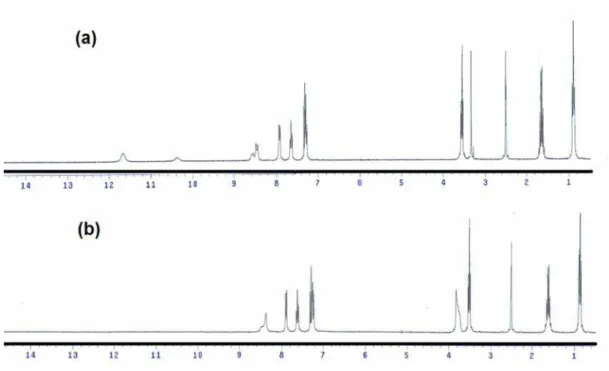
p-bromoaniline and p-toluidine, in absolute ethanol resulted in ring transformation via γ-pyrone ring opening followed by lactonization with loss of ammonia to afford the corresponding chromane-2,4-diones 2-5 (Scheme 1). Compounds 2-4 were isolated as stereoisomeric mixtures of Z and E isomers, while compound 5 was isolated as a pure isomer (Z isomer). The ratio of Z:E isomers depends on the type of amine used. The Z:E ratios of compounds 2-4
were deduced from studies of their 1H nuclear magnetic
resonance (NMR) spectra. The relatively high deshielding effect on the β-hydrogen which is cis to the cyclic ester function of an α,β-unsaturated ester compared to that of an α,β-unsaturated ketone helped to distinguish the Z and
E isomers. Also, the higher d values of NH in Z isomers as compared with that of E isomers help to differentiate between the Z and E isomers. The high d values are attributed to the intramolecular hydrogen bonds in both isomers. The two doublets assigned to the exocyclic CH protons, in E and
Z isomers, are usually exchanged to singlets in the presence of D2O, with concomitant disappearance of the two signals
assigned to the NH protons. On the other hand, the 1H NMR
spectrum of compound 5 showed one exchangeable signal at d 13.45 ppm corresponding to the NH proton. The high d value confirms the Z isomer for compound 5, in addition the spectrum also revealed characteristic singlet at d 2.33 attributed to the methyl protons. Moreover, the 13C NMR
spectrum of compound 5 showed characteristic signals at d 20.6 and 97.9 assigned to methyl carbon and C-3.
Next, the chemical reactivity of carboxamide 1
was studied towards a variety of 1,2-binucleophiles. Thus, condensation of carboxamide 1 with hydrazine hydrate and phenyl hydrazine in refluxing ethanol achieved the ring transformation of compound 1
producing chromeno[4,3-c]pyrazoles 6 and 7, respectively (Scheme 2). While the reaction of carboxamide 1
with 7-chloro-4-hydrazinoquinoline (8) in refluxing ethanol afforded the hydrazone derivative 9. Also, the condensation of carboxamide 1 with hydroxylamine hydrochloride in refluxing DMF (dimethylformamide) produced chromeno[3,4-d]isoxazol-4(4H)-one (10) (Scheme 3). The 1H NMR spectrum of compound 10
showed characteristic singlet assigned to H-3isoxazole at
d 8.88 ppm.
On the other hand, carboxamide 1 was allowed to react with some 1,3-binucleophiles. Thus, the condensation of carboxamide 1 with guanidine hydrochloride, cyanoguanidine and thiourea in ethanolic potassium hydroxide solution produced chromeno[4,3-d]pyrimidine derivatives 11-13, respectively (Scheme 4). The infrared (IR) spectra of compounds 11-13 showed characteristic absorption band in the range 1701-1734 cm-1 assigned
to the O–C=O functions, the spectrum of compound 12
showed absorption band at 2259 cm-1 attributed to the
nitrile function. The 1H NMR spectra of compounds 11-13
showed singlet signals attributed to the H-4pyrimidine in the
range d8.99-9.35 ppm. Structures of compounds 12 and
13 were further deduced from their mass spectra which revealed the molecular ion peaks at m/z 238 and 230,
Ring Transformation of Chromone-3-Carboxamide under Nucleophilic Conditions J. Braz. Chem. Soc.
1756
respectively, which agree with the formula weights and support the structures.
Further, the chemical behavior of carboxamide 1 was studied towards o-phenylenedimine, 2-aminophenol and 2-aminothiophenol. Thus, the condensation of 1 with
o-phenylenedimine and o-aminophenol in refluxing DMF afforded the chromane-2,4-dione derivatives 14 and 15, respectively, as Z isomers (Scheme 5). The 1H NMR spectra
of compounds 14 and 15 showed exchangeable doublets assigned to the NH protons at d 13.42 and 13.75 ppm, respectively, in addition to characteristic doublets exchanged to singlets in D2O at d 8.74 and 8.94 ppm,
respectively, which were assigned to the exocyclic vinyl protons. The higher d values of the exocyclic vinyl protons and NH protons confirm the pure Z isomers for compounds 14 and 15. The structure of compound 14
was further deduced from its mass spectrum which revealed the molecular ion peak at m/z 280, agreeing with the formula weight 280.29. On the other hand, the
treatment of carboxamide 1 with o-aminothiophenol in refluxing DMF achieved ring transformation producing benzothiazolylcoumarin derivative 17 via the non-isolable intermediate 16 as shown in Scheme 5.
Ethylenediamine showed different behavior when reacted with carboxamide 1 and produced the bis enaminone derivative 18 via the reaction of ethylenediamine with two equivalents of carboxamide 1 (Scheme 6). The mass spectrum of compound 18 showed the molecular ion peak at m/z 404 which agrees with the formula weight 404.38 and confirms the structure.
Also, the chemical reactivity of carboxamide 1 was studied towards a variety of carbon nucleophiles. Thus, the treatment of carboxamide 1 with malononitrile in ethanol containing few drops of piperidine afforded the pyridine derivative 19 as depicted in Scheme 7. The reaction proceeds via deprotonation of malononitrile followed by nucleophilic attack at C-2 position and γ-pyrone ring opening with concomitant cycloaddition. The IR spectrum Scheme 2.
Ibrahim 1757 Vol. 24, No. 11, 2013
of compound 19 showed characteristic absorption bands at 2222 (C≡N) and 1654 (C=Opyridone). Its
1H NMR spectrum
showed characteristic singlet at d 8.64 ppm assigned to the H-4pyridine. The mass spectrum showed the molecular ion
peak at m/z 255 corresponding to its molecular formula C13H9N3O3 and supports the structure. Further, the
13C NMR
spectrum of compound 19 showed characteristic signals at d 89.8 (C-5 pyridine) and 115.5 (C≡N).
In the same manner, the treatment of carboxamide 1
with cyanoacetamide under the same reaction conditions produced the pyridine derivative 20 (Scheme 8). Its
1H NMR spectrum showed characteristic singlet at
d 8.79 ppm due to the H-4pyridine.
The reaction of carboxamide 1 with acetophenone in ethanolic potassium hydroxide solution gave the corresponding α,β-unsaturated ketone 21 (Scheme 9). The 1H NMR spectrum of compound 21 showed two
doublets at d 8.97 and 9.50 ppm assigned to the olefinic protons. Finally, the condensation of carboxamide 1 with thiobarbituric acid in ethanolic sodium ethoxide afforded pyrimidine derivative 22. Its 1H NMR spectrum showed
characteristic singlet due to the exocyclic vinyl proton at d 8.80 ppm, its mass spectrum showed the molecular ion peak at m/z 316 corresponding to the molecular formula (C14H8N2O5S) and confirms the structure.
Conclusion
In conclusion, chromone-3-carboxamide has three electron deficient centers, C-2, C-4 and the amidic carbon at position 3. The nucleophilic reagent usually attack at the C-2 position with γ-pyrone ring opening followed by further transformation during the course of the reaction producing a variety of products depending on the nucleophile used.
Experimental
General
Melting points are uncorrected and were determined on a digital Stuart SMP3 apparatus. Infrared spectra were measured on FTIR Nicolet IS10 spectrophotometer (cm-1), using KBr disks. 1H NMR spectra were measured
on Gemini (200 MHz) and Mercury-300BB (300 MHz) spectrometers using DMSO-d6 as a solvent and TMS (tetramethylsilane,d) as the internal standard. Mass spectra were obtained using GCMS qp 1000 ex Shimadzu instrument (70 eV). Elemental microanalyses were performed on a Perkin-Elmer CHN-2400 analyzer at the Chemical War Department, Ministry of Defense, Cairo, Egypt.
Ring Transformation of Chromone-3-Carboxamide under Nucleophilic Conditions J. Braz. Chem. Soc.
1758
General procedure for the reaction of chromone 3-carboxamide (1) with aliphatic and aromatic amines
A mixture of carboxamide 1 (0.57 g, 3 mmol) and
n-propylamine, benzylamine, p-bromoaniline and
p-toluidine (3 mmol), in absolute ethanol (15 mL), was heated under reflux for 1 h. The crystalline products obtained after cooling were filtered off and recrystallized from ethanol to givecompounds 2-5, respectively.
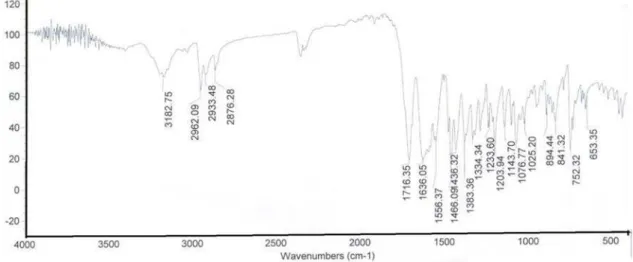
3-[(Propylamino)methylidene]chromane-2,4(3H)-dione (2) White crystals; mp 156-157 ºC; yield (0.48 g, 69%);IR (KBr) ν/cm-1 3181 (NH), 3028 (CH
arom.), 2962, 2933, 2876
(CHaliph.), 1716 (OC=O), 1636 (C=O), 1590 (C=C);
1H NMR
(300 MHz, DMSO-d6) d 0.89 (t, 3H, J 7.5 Hz, CH3),
1.59-1.71 (m, 2H, CH2), 3.56 (t, 2H, J 6.9 Hz, CH2), 7.26-7.33 (m,
2H, H-6 and H-8), 7.65 (t, 1H, J 7.8 Hz, H-7), 7.92 (d, 1H,
J 6.4 Hz, H-5), 8.46 (d, 0.64 H, J 12.6 Hz, CHvinyl exchanged
to singlet with D2O, Z isomer), 8.56 (d, 0.36 H, J 12.6 Hz,
Scheme 5.
Ibrahim 1759 Vol. 24, No. 11, 2013
CHvinyl exchanged to singlet with D2O, E isomer), 10.38 (bs,
0.36 H, NH exchangeable with D2O, E isomer), 11.67 (bs,
0.64 H, NH exchangeable with D2O, Z isomer); MS (m/z,
%) 232 (M + 1, 17), 231 (M+, 100), 216 (63), 202 (24), 188
(24), 173 (13), 121 (72), 93 (18), 77 (19) and 65 (28); anal. calcd for C13H13NO3 (231.25): C, 67.52; H, 5.67; N, 6.06%;
found: C, 67.49; H, 5.61; N, 6.03%.
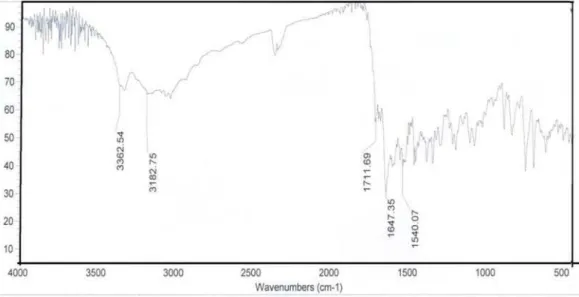
3-[(Benzylamino)methylidene]chromane-2,4(3H)-dione (3) White crystals; mp 165-166 ºC; yield (0.44 g, 53%); IR (KBr) ν/cm-1 3363, 3183 (NH), 3025 (CH
arom.), 2955,
2915 (CHaliph.), 1712 (OC=O), 1647 (C=O), 1603 (C=C); 1H NMR (300 MHz, DMSO-d
6) d 4.45 (d, 2H, J 6.0 Hz,
CH2 exchanged to singlet with D2O, E isomer), 4.83 (d, 2H,
J 6.0 Hz, CH2 exchanged to singlet with D2O, Z isomer),
Scheme 7.
Scheme 8.
Ring Transformation of Chromone-3-Carboxamide under Nucleophilic Conditions J. Braz. Chem. Soc.
1760
6.79-6.88 (m, 1H, Ar-H), 7.05 (d, 1H, J 7.8 Hz, Ar-H), 7.12-7.42 (m, 5H, Ar-H), 7.48 (d, 0.5H, J 13.2 Hz, CHvinyl
exchanged to singlet with D2O, Z isomer), 7.65 (t, 1H,
J 6.6 Hz, Ar-H), 7.91 (d, 1H, J 6.9 Hz, Ar-H), 8.65 (bs, 0.5H, CHvinyl exchanged to singlet with D2O, E isomer),
8.95 (d, 0.5H, NH exchangeable with D2O, E isomer),
11.01 (m, 0.5H, NH exchangeable with D2O, Z isomer);
anal. calcd for C17H13NO3 (279.30): C, 73.11; H, 4.69; N,
5.01%; found: C, 73.03; H, 4.78; N, 4.92%.
3-{[(4-Bromophenyl)amino]methylidene}chromane-2,4(3H)-dione (4)
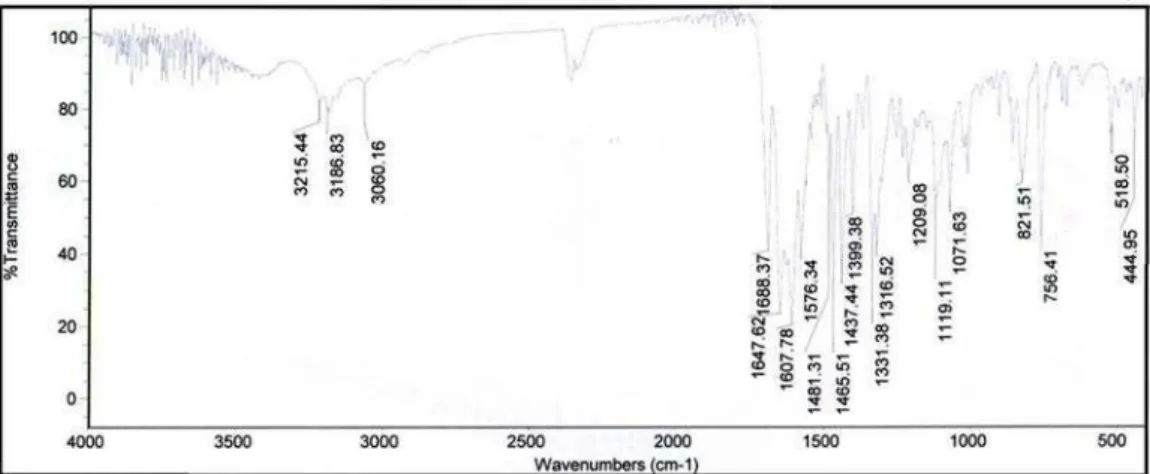
White crystals; mp 249-250 ºC; yield (0.64 g, 62%); IR (KBr) ν/cm-1 3215, 3187 (NH), 3060 (CH
arom.), 1688
(OC=O), 1648 (C=O), 1608 (C=C); 1H NMR (300 MHz,
DMSO-d6) d 6.50 (d, 1H, J 8.7 Hz, Ar-H), 7.11 (d, 1H,
J 9.0 Hz, Ar-H), 7.33-7.39 (m, 3H Ar-H), 7.53 (d, 1H,
J 7.8 Hz, H-8), 7.64 (t, 1H, J 7.8 Hz, H-7), 7.96 (d, 1H,
J 7.8 Hz, H-5), 8.85 (d, 0.5H, CHvinyl exchanged to singlet
with D2O, Z isomer), 8.89 (d, 0.5H, CHvinyl exchanged
to singlet with D2O, E isomer), 11.82 (d, 0.5H, NH
exchangeable with D2O, E isomer), 13.37 (d, 0.5H, NH
exchangeable with D2O, Z isomer), MS (m/z, %) 344
(M + 2, 25), 342 (M+, 25), 173 (100, M+- 4-BrC
6H5NH),
157 (7), 155 (7), 121 (42), 92 (28), 77 (11) and 64 (26); anal. calcd for C16H10BrNO3 (344.17): C, 55.84; H, 2.93;
N, 4.07%; found: C, 55.78; H, 2.85; N, 4.01%.
(3Z
)-3-{[(4-Methylphenyl)amino]methylidene}chromane-2,4(3H)-dione (5)
White crystals; mp 194-195 ºC; yield (0.45 g, 54%); IR (KBr) ν/cm-1 3174 (NH), 3064 (CH
arom.), 1684 (OC=O),
1648 (C=O), 1603 (C=C); 1H NMR (300 MHz, DMSO-d 6)
d 2.33 (s, 3H, CH3), 6.46 (d, 1H, J 8.4 Hz, Ar-H), 7.81 (d,
1H, J 7.8 Hz, Ar-H), 7.28-7.39 (m, 3H, Ar-H), 7.56 (d, 1H,
J 8.4 Hz, H-8), 7.71 (t, 1H, J 8.4 Hz, H-7), 7.98 (d, 1H,
J 7.8 Hz, H-5), 8.85 (bs, 1H, CHvinyl), 13.45 (bs, 1H, NH
exchangeable with D2O);
13C NMR (75 MHz, DMSO-d 6)
20.6 (CH3), 97.9 (C3), 113.9, 114.2, 117.1, 119.2, 124.2,
125.7, 129.3, 130.3, 134.9, 135.6, 136.7, 152.0 (Cvinyl),
154.3 (C8a), 158.0 (C-2 as C=O), 177.9 (C-4 as C=O); anal. calcd for C17H13NO3 (279.30): C, 73.11; H, 4.69; N,
5.01%; found: C, 73.02; H, 4.62; N, 5.07%.
Chromeno[4,3-c]pyrazol-4(1H)-one (6)
A mixture of carboxamide 1 (0.57 g, 3 mmol) and hydrazine hydrate (0.15 mL, 3 mmol), in absolute ethanol (15 mL), was heated under reflux for 2 h. The white crystals obtained after cooling were filtered off and recrystallized from ethanol to give compound 6 as white crystals; mp 225-226 ºC (mp 226-227 ºC);6 yield (0.31 g, 56%).
1-Phenylchromeno[4,3-c]pyrazol-4(1H)-one (7)
A mixture of carboxamide 1 (0.57 g, 3 mmol) and phenyl hydrazine (0.30 mL, 3 mmol), in absolute ethanol (15 mL), was heated under reflux for 2 h. The pale yellow crystals obtained after cooling were filtered off and recrystallized from ethanol to give compound 7 as white crystals; mp 193-194 ºC (mp 192-193 ºC,11 191 ºC);12 yield (0.36 g, 46%).
3-{[2-(7-Chloroquinolin-4-yl)hydrazinylidene]methyl}-4-hydroxy-2H-chromen-2-one (9)
A mixture of carboxamide 1 (0.57 g, 3 mmol) and 7-chloro-4-hydrazinoquinoline (8) (0.58 g, 3 mmol), in absolute ethanol (30 mL), was heated under reflux for 15 min. The yellow crystals obtained during heating were filtered off and recrystallized from DMF/H2O to give
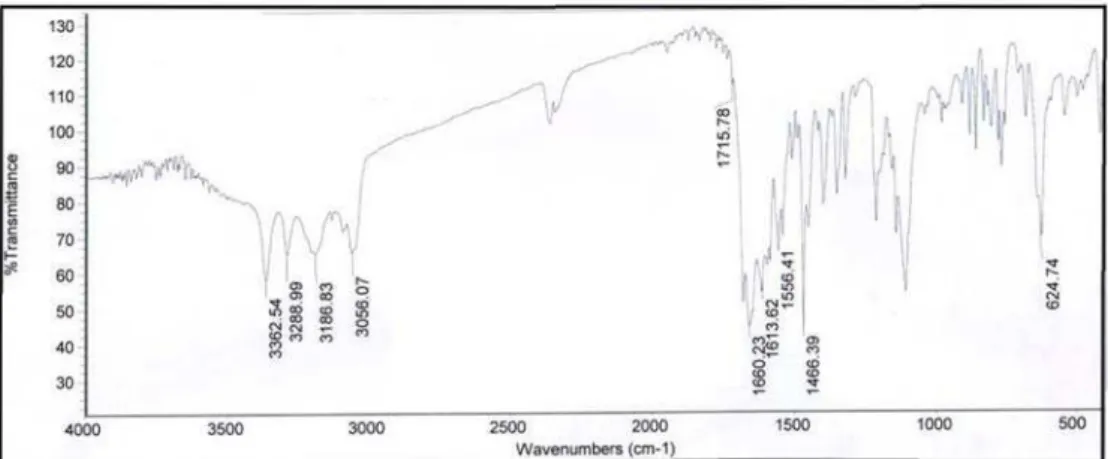
compound 9 as yellow crystals; mp 304-305 ºC; yield (0.65 g, 60%);IR (KBr) ν/cm-1 3363, 3289, 3178 (OH, NH),
3056 (CHarom.), 1716 (OC=O), 1660 (C=N), 1614 (C=C); 1H NMR (300 MHz, DMSO-d
6) d 7.23-7.35 (m, 2H, Ar-H),
7.49 (s, 1H, H-8quinoline), 7.55-7.66 (m, 1H, Ar-H), 7.76-7.86
(m, 1H, Ar-H), 7.90 (s, 1H, CH=N), 8.12 (d, 1H, J 8.1 Hz, Ar-H), 8.27 (d, 1H, J 9.0 Hz, Ar-H), 8.37 (d, 1H, H-3quinoline),
8.57 (d, 1H, H-2quinoline), 11.60 (bs, 1H, NH exchangeable
with D2O), 16.53 (bs, 1H, OH exchangeable with D2O);
anal. calcd for C19H12ClN3O3 (365.77): C, 62.39; H, 3.31;
N, 11.49%; found: C, 62.37; H, 3.30; N, 11.32%.
Chromeno[3,4-d]isoxazol-4(4H)-one (10)
A mixture of carboxamide 1 (0.57 g, 3 mmol) and hydroxylamine hydrochloride (0.21 g, 3 mmol) in DMF was heated under reflux for 2 h. After cooling, the white precipitate so formed was filtered off and recrystallized from DMF/H2O to givecompound 10 as white crystals;
mp 223-224 ºC (225 ºC);13 yield (0.37 g, 66%).
General procedure for the reaction of chromone-3 - c a r b o x a m i d e (1) g u a n i d i n e h y d r o c h l o r i d e , cyanoguanidine and thiourea
A mixture of carboxamide 1 (0.57 g, 3 mmol) and guanidine hydrochloride, cyanoguanidine or thiourea (3 mmol), in ethanolic potassium hydroxide solution (2%, 20 mL), was heated under reflux for 2 h. After cooling, the reaction mixture was neutralized with dil. HCl. The separated solid was filtered off and crystallized from the proper solvent to produce compounds 11, 12 and 13.
2-Imino-1,2-dihydro-5H-chromeno[4,3-d]pyrimidin-5-one
(11)
Ibrahim 1761 Vol. 24, No. 11, 2013
IR (KBr) ν/cm-1 3277 (br, 2NH), 1702 (OC=O), 1663
(C=N), 1608 (C=C); 1H NMR (300 MHz, DMSO-d 6)
d 7.32-7.46 (m, 1H, Ar-H), 7.62-7.83 (m, 2H, Ar-H), 8.01 (bs, 1H, NH exchangeable with D2O), 8.30 (d, 1H,
J 7.2 Hz, H-10), 8.99 (s, 1H, H-4pyrimidine), 12.57 (bs, 1H,
NH exchangeable with D2O); anal. calcd for C11H7N3O2
(213.20): C, 61.97; H, 3.31; N, 19.71%; found: C, 61.95; H, 3.32; N, 19.65%.
(5-Oxo-5H-chromeno[4,3-d]pyrimidin-2-yl)cyanamide (12) Crystallized from AcOH as white crystals; mp 200-201 ºC; yield (0.38 g, 53%);IR (KBr) ν/cm-1 3461
(NH), 2259 (C≡N), 1734 (OC=O), 1609 (C=N), 1559 (C=C);1H NMR (300 MHz, DMSO-d
6) d 6.92 (bs, 1H, NH
exchangeable with D2O). 7.46-7.53 (m, 2H, Ar-H), 7.80 (t,
1H, J 7.8 Hz, H-8), 8.35 (d, 1H, J 7.2 Hz, H-10), 9.22 (s, 1H, H-4pyrimidine); 13C NMR (75 MHz, DMSO-d6) 116.8 (C≡N),
117.4, 119.0, 124.5, 124.9, 125.1, 135.6, 154.3 (C6a), 158.5 (C-5 as C=O), 161.1 (C-2 as C=N), 161.8 (C-4 as C=N), 171.8 (C10b). MS (m/z, %) 238 (M+, 83), 212 (13), 187 (30),
175 (77), 121 (99), 105 (20), 92 (55), 77 (34), 65 (49) and 57 (100); anal. calcd for C12H6N4O2 (238.21): C, 60.51; H, 2.54;
N, 23.52%; found: C, 60.45; H, 2.38; N, 23.41%.
2-Thioxo-1,2-dihydro-5H-chromeno[4,3-d]pyrimidin-5-one
(13)
Crystallized from AcOH/H2O as white crystals; mp
246-247 ºC; yield (0.32 g, 46%);IR (KBr) ν/cm-1 3261
(NH), 1701 (OC=O), 1633 (C=N), 1607 (C=C);1H NMR
(300 MHz, DMSO-d6) d 7.20-7.87 (m, 3H, 2Ar-H and NH), 7.77 (t, 1H, J 7.8 Hz, Ar-H), 8.30 (d, 1H, J 7.8 Hz, H-10), 9.35 (s, 1H, H-4pyrimidine); MS (m/z, %) 230 (M
+, 11),
214 (11), 173 (76), 149 (66), 121 (84), 105 (34), 92 (45), 77 (37), 65 (60) and 50 (100); anal. calcd for C11H6N2O2S
(230.25): C, 57.38; H, 2.63; N, 12.17; S, 13.93%; found: C, 57.27; H, 2.58; N, 12.13; S, 13.82%.
General procedure for the reaction of chromone-3 - c a r b ox a m i d e (1) w i t h o- p h e n y l e n e d i a m i n e ,
2-aminophenol and 2-aminothiophenol
A mixture of carboxamide 1 (0.57 g, 3 mmol) and
o-phenylenediamine, 2-aminophenol and 2-aminothiophenol (3 mmol) in DMF (15 mL) was heated under reflux for 2 h. The crystalline products obtained during heating or after cooling were filtered off and recrystallized to give compounds 14, 15 and 17, respectively.
(3Z
)-3-{[(2-Aminophenyl)amino]methylidene}chromane-2,4(3H)-dione (14)
Obtained during heating as yellow crystals, recrystallized
from DMF; mp 219 ºC; yield (0.39 g, 46%); IR (KBr)
ν/cm-1 3407 (NH
2, NH), 3068 (CHarom.), 1719 (OC=O),
1640 (C=O), 1558 (C=C);1H NMR (300 MHz, DMSO-d 6)
d 5.30 (bs, 2H, NH2 exchangeable with D2O). 6.76 (t, 1H,
J 7.8 Hz, Ar-H), 6.92 (d, 1H, J 6.9 Hz, Ar-H), 7.10 (t, 1H,
J 7.5 Hz, Ar-H), 7.36-7.46 (m, 2H, Ar-H), 7.49 (d, 1H,
J 7.8 Hz, Ar-H), 7.78 (t, 1H, J 7.5 Hz, H-7), 8.01 (d, 1H,
J 7.2 Hz, H-5), 8.74 (d, 1H, J 12.6 Hz, CHvinyl exchanged
to singlet with D2O), 13.42 (d, 1H, NH exchangeable with
D2O);
13C NMR (75 MHz, DMSO-d
6) 97.9 (C3), 117.5,
117.8, 118.2, 119.9, 120.0, 124.1, 125.2, 128.1, 129.8, 134.7, 140.5, 154.3 (C8a), 155.8 (Cvinyl), 162.3 (C-2 as
C=O), 179.9 (C-4 as C=O). MS (m/z, %) 281 (M + 1, 9), 280 (M+, 48), 159 (25), 119 (100), 105 (9), 92 (13), 77
(11) and 65 (30); anal. calcd for C16H12N2O3 (280.29):
C, 68.57; H, 4.32; N, 9.99%; found: C, 68.54; H, 4.24; N, 9.92%.
(3Z
)-3-{[(2-Hydroxyphenyl)amino]methylidene}chromane-2,4(3H)-dione (15)
Obtained after cooling as yellow crystals, recrystallized from DMF/EtOH; mp 290-291 ºC; yield (0.35 g, 42%); IR (KBr) ν/cm-1 3072 (br, NH, OH), 1716 (OC=O), 1629
(C=O), 1548 (C=C); 1H NMR (300 MHz, DMSO-d 6)
d6.95 (t, 1H, Ar-H), 7.02 (d, 1H, J 7.8 Hz, Ar-H), 7.14 (t, 1H, J 7.8 Hz, Ar-H), 7.16-7.35 (m, 3H, Ar-H), 7.69 (d, 1H, H-8), 7.99 (d, 1H, J 7.8 Hz, H-5), 8.94 (d, 1H, J 14.1 Hz, CHvinyl exchanged to singlet with D2O), 12.10 (d, 1H, OH
exchangeable with D2O), 13.75 (d, 1H, NHexchangeable
with D2O); anal. calcd for C16H11NO4 (281.27): C,
68.33; H, 3.94; N, 4.98%; found: C, 68.41; H, 3.69; N, 4.75%.
3,3’-{Ethane-1,2-diylbis[iminomethylylidene]}bis(2H
-chromene-2,4(3H)-dione) (18)
A mixture of carboxamide 1 (0.57 g, 3 mmol) and ethylenediamine (0.2 mL, 3 mmol), in absolute ethanol (15 mL), was heated under reflux for 30 min. The white crystals obtained during heating were filtered off and recrystallized from DMF to givecompound 18 as white crystals; mp > 300 ºC; yield (0.39 g, 32%); IR (KBr)
ν/cm-1 3314 (2NH), 3068 (CH
arom.), 2925, 2865 (CHaliph.),
1748 (OC=O), 1665 (C=O), 1602 (C=C); 1H NMR
(300 MHz, DMSO-d6) d 3.86 (s, 4H, 2CH2), 5.29 (s, 2H,
2 NH), 7.29-7.31 (m, 4H, Ar-H), 7.60-7.68 (m, 2H, Ar-H), 7.93-7.98 (m, 2H, Ar-H), 8.45 (d, 2H, J 12.6 Hz, 2CHvinyl
exchanged to singlet with D2O). MS (m/z, %) 404 (M+,
25), 230 (13), 215 (24), 203 (46), 174 (41), 149 (100), 121 (71), 105 (30), 92 (30), 77 (35) and 64 (80); anal. calcd for C22H16N2O6 (404.37): C, 65.34; H, 3.99; N, 6.93%; found:
Ring Transformation of Chromone-3-Carboxamide under Nucleophilic Conditions J. Braz. Chem. Soc.
1762
2-Amino-5-(2-hydroxybenzoyl)-6-oxo-1,6-dihydropyridine-3-carbonitrile (19)
A mixture of carboxamide 1 (0.57 g, 3 mmol) and malononitrile (0.2 g, 3 mmol), in absolute ethanol (15 mL) containing two drops of piperidine was heated under reflux for 30 min. The white crystals obtained during heating were filtered off and recrystallized from DMF/H2O to give
compound 19 as white crystals; mp > 300 ºC; yield (0.52 g, 68%);IR (KBr) ν/cm-1 3382, 3314, 3138 (NH
2, NH,
OH), 2222 (C≡N), 1654 (C=Opyridone), 1609 (C=Ohydrogen
bonded), 1552 (C=C); 1H NMR (300 MHz, DMSO-d6) d
7.46 (t, 1H, J 6.9 Hz, Ar-H), 7.58 (d, 1H, J 7.5 Hz, Ar-H), 7.81-7.87 (m, 2H, 1Ar-H and NH), 8.12 (t, 1H, J 6.6 Hz, Ar-H), 8.42 (bs, 1H, NH exchangeable with D2O), 8.64
(s, 1H, NH), 8.81 (s, 1H, H-4pyridine); 13C NMR (75 MHz,
DMSO-d6) 89.8 (C-5 pyridine), 115.5 (C≡N), 118.0, 121.1,
124.9, 125.9, 135.4, 137.9, 144.3, 154.5, 161.5 (C-6 pyridine),
168.5 (C=O), 174.0 (C=O); MS (m/z, %) 256 (M + 1, 7), 255 (M+, 38), 237 (100), 210 (25), 121 (36), 105 (15),
92 (17), 77 (15) and 64 (29); anal. calcd for C13H9N3O3
(255.23): C, 61.18; H, 3.55; N, 16.46%; found: C, 61.19; H, 3.65; N, 16.64%.
2-Amino-5-(2-hydroxybenzoyl)-6-oxo-1,6-dihydropyridine-3-carboxamide (20)
A mixture of carboxamide 1 (0.57 g, 3 mmol) and cyanoacetamide (0.25 g, 3 mmol), in absolute ethanol (15 mL) containing two drops of piperidine, was heated under reflux for 30 min. The white crystals obtained during heating were filtered off and recrystallized from DMF/H2O to give compound 20 as white crystals;
mp > 300 ºC; yield (0.43 g, 53%); IR (KBr) ν/cm-1
3424, 3390, 3203 (2NH2, NH, OH), 3064 (CHarom.), 1697
(C=Oamide), 1654 (C=Opyridone), 1636 (C=Ohydrogen bonded),
1624 (C=C);1H NMR (300 MHz, DMSO-d
6) d 7.26 (d,
1H, J 6.3 Hz, Ar-H), 7.45-7.52 (m, 3H, 2Ar-H and 1H of NH2), 7.78 (t, 1H, J 7.2 Hz, Ar-H), 7.89 (bs, 2H, NH2
exchangeable with D2O), 8.62 (d, 1H, J 8.1 Hz, Ar-H),
8.66 (bs, 2H, NH2 exchangeable with D2O), 8.79 (s, 1H,
H-4pyridine), 13.30 (bs, 1H, OH exchangeable with D2O);
anal. calcd for C13H11N3O4 (273.25): C, 57.14; H, 4.06; N,
15.38%; found: C, 56.92; H, 4.09; N, 15.16%.
4-Hydroxy-3-[(1E
)-3-oxo-3-phenylprop-1-en-1-yl]-2H-chromen-2-one (21)
A mixture of carboxamide 1 (0.57 g, 3 mmol) and acetophenone (0.36 g, 3 mmol), in ethanolic potassium hydroxide solution (2%, 20 mL), was heated under reflux for 2 h. After cooling, the reaction mixture was neutralized with dil. HCl. The white precipitate so formed was filtered off and crystallized from acetic acid to givecompound 21 as white
crystals; mp 238-239 ºC (239-240 ºC;16 yield (0.48 g, 55%).
5-[(4-Hydroxy-2-oxo-2H
-chromen-3-yl)methylidene]-2-thioxodihydropyrimidine-4,6(1H,5H)-dione (22)
A mixture of carboxamide 1 (0.57 g, 3 mmol) and thiobarbituric acid (0.43 g, 3 mmol), in ethanolic potassium hydroxide solution (2%, 20 mL), was heated under reflux for 2 h. After cooling, the reaction mixture was neutralized with dil. HCl. The white precipitate so formed was filtered off and crystallized from DMF to givecompound 22 as yellow crystals; mp > 300 ºC; yield (0.55 g, 58%);IR (KBr)
ν/cm-1 3506, 3420 (2NH, OH), 3048 (CH
arom.), 1761, 1713
(3C=O), 1527 (C=C), 1254 (C=S);1H NMR (200 MHz,
DMSO-d6) d 7.60 (t, 1H, Ar-H), 7.72 (d, 1H, Ar-H), 7.86 (t, 1H, Ar-H), 8.12 (d, 1H, Ar-H), 8.80 (s, 1H, CHvinyl),
12.29 (bs, 2H, 2NHexchangeable with D2O). MS (m/z, %)
316 (M+, 9), 258 (13), 207 (22), 166 (16), 138 (24), 141
(14), 105 (23), 91 (63), 84 (100), 77 (11) and 65 (30); anal. calcd for C14H8N2O5S (316.29): C, 53.16; H, 2.55; N, 8.86;
S, 10.14%; found: C, 53.02; H, 2.34; N, 8.38; S, 9.88%.
Supplementary Information
Data spectra and spectra of synthesized compounds are available free of charge at http://jbcs.sbq.org.br as PDF file.
References
1. Quiroga, J.; Rengifo, A.; Insuasty, B.; Abonía, R.; Nogueras, M.; Sánchez, A.; Tetrahedron Lett.2002, 43, 9061.
2. Rihs, G.; Sigg, I.; Hass, G.; Winkler, T.; Helv. Chim. Acta1985,
68, 1933.
3. Basinski, W.; Pol. J. Chem.1995, 69, 376.
4. Quiroga, J.; Mejía, D.; Insuasty, B.; Abonía, R.; Nogueras, M.; Sánchez, A.; Cobo, J.; Low, J. N.; J.Heterocycl. Chem. 2002,
35, 51.
5. Ibrahim, M. A.; Synth. Commun. 2009, 39, 3527. 6. Ibrahim, M. A.; ARKIVOC2008, 17, 192.
7. Klutchko, S.; Shavel, J.; Strandtmann, M. V.; J. Org. Chem. 1974, 39, 2436.
8. Gammill, R. B.; Nash, S. A.; Mizsak, S. A.; Tetrahedron Lett.
1983, 24, 3435.
9. Huang, W.; Liu, M.-Z.; Li, Y.; Tan, Y.; Yang, G.-I.; Bioorg. Med. Chem. 2007, 15, 5191.
10. Ibrahim, M. A.; Tetrahedron2009, 65, 7687.
11. Sosnovskikh, V. Y.; Moshkin, V. S.; Kodess, M. I.;
J. Heterocycl. Chem. 2010, 47, 629.
12. Chantegrel, B.; Nodi, A.; Gelin, S.; Tetrahedron Lett. 1983, 24, 381.
13. Moorty, S. R.; Sundaramurthy, V.; Rao, N. V. S.; Indian J. Chem.
Ibrahim 1763 Vol. 24, No. 11, 2013
14. Ghosh, C. K.; Tewari, N.; Bandyopadhyay, C.; Indian J. Chem., Sect B 1983, 22, 1200.
15. Pene, C.; Hubert-Habart, M.; J. Heterocycl. Chem. 1980, 17, 329.
16. Mulwad, V. V.; Shirodkar, J. M.; J.Heterocycl. Chem.2003,
40, 377.
Article
J. Braz. Chem. Soc., Vol. 24, No. 11, 1-22, 2013. Printed in Brazil - ©2013 Sociedade Brasileira de Química 0103 - 5053 $6.00+0.00
A
doi number*e-mail: [email protected]
Ring Transformation of Chromone-3-Carboxamide under Nucleophilic Conditions
Magdy A. Ibrahim
Department of Chemistry, Faculty of Education, Ain Shams University, Roxy 11711, Cairo, Egypt
Chromeno[4,3-c]pyrazol-4(1H)-one (6): IR (KBr)
ν/cm-1 3217 (NH), 3054 (CH
arom.), 1735 (OC=O) and 1603
(C=N); 1H NMR (200 MHz, DMSO-d
6) d 7.61 (t, 1H,
J 7.6 Hz, H-8), 7.79 (d, 1H, J 8.2 Hz, H-6), 7.93 (t, 1H,
J 7.6 Hz, H-7), 8.16 (d, 1H, J 8.2 Hz, H-9), 9.12 (s, 1H, H-3), 13.23 ppm (bs, 1H, NH exchangeable with D2O).
1-Phenylchromeno[4,3-c]pyrazol-4(1H)-one (7): IR (KBr) ν/cm-1 3117 (CH
arom.), 1751 (OC=O), 1614 (C=N),
1526 (C=C).
Chromeno[3,4-d]isoxazol-4(4H)-one (10): IR (KBr)
ν/cm-1) 3037 (CH
arom.), 1728 (OC=O), 1621 (C=N), 1591
(C=C); 1H NMR (300 MHz, DMSO-d
6) d 7.37-7.56 (m,
2H, Ar-H), 7.65 (d, 1H, J 6.6 Hz, Ar-H), 7.87 7.65 (d, 1H,
J 6.9 Hz, Ar-H), 8.88 (s, 1H, H-3isoxazole).
3-(1,3-Benzothiazol-2-yl)-4-hydroxycoumarin (17): obtained after cooling as yellow crystals,recrystallized
from ethanol; mp 281-282 ºC (279-282 ºC);1 yield (0.32 g,
36%); IR (KBr) ν/cm-1 3334 (OH), 3064 (CH
arom.), 1667
(OC=O), 1618 (C=N), 1604 (C=C); 1H NMR (300 MHz,
DMSO-d6) d 6.86 (d, 1H, Ar-H), 7.00 (t, 1H, Ar-H), 7.27-7.44 (m, 2H, Ar-H), 7.58-7.63 (m, 2H, Ar-H), 7.94 (d, 1H, H-8), 8.13 (d, 1H, J 6.6 Hz, Ar-H), 9.01 (bs, 1H, OHexchangeable with D2O).
4-Hydroxy-3-[(1E )-3-oxo-3-phenylprop-1-en-1-yl]-2H-chromen-2-one (21): IR (KBr) ν/cm-1 3081 (CH
arom.),
1714 (OC=O), 1654 (C=O), 1607 (C=C); 1H NMR
(200 MHz, DMSO-d6) d 8.11-8.49 (m, 7H, Ar-H), 8.62 (d, 1H, J 8.6 Hz, Ar-H), 8.73 (d, 1H, J 8.0 Hz, Ar-H), 8.97 (d, 1H, J 15.2 Hz, CHolefinic), 9.50 (d, 1H, J 14.8 Hz, CHolefinic), 12.97 (bs, 1H, OHexchangeable with D2O).
Reference
1. Djudjic, R.; Trkovnik, M.; Monatsh. Chem. 1991, 122, 77.
Ring Transformation of Chromone-3-Carboxamide under Nucleophilic Conditions J. Braz. Chem. Soc. S2
Figure S2. 1H NMR spectrum of compound 2 in DMSO-d
6 (a) and DMSO-D2O (b).
Ibrahim S3 Vol. 24, No. 11, 2013
Figure S4. IR spectrum of compound 3.
Figure S5. 1H NMR spectra of compound 3 in DMSO-d
Ring Transformation of Chromone-3-Carboxamide under Nucleophilic Conditions J. Braz. Chem. Soc. S4
Figure S6. IR spectrum of compound 4.
Figure S7. 1H NMR spectrum of compound 4 in DMSO-d
Ibrahim S5 Vol. 24, No. 11, 2013
Figure S8. Mass spectrum of compound 4.
Ring Transformation of Chromone-3-Carboxamide under Nucleophilic Conditions J. Braz. Chem. Soc. S6
Figure S10. 1H NMR spectrum of compound 5 in DMSO-d
6.
Figure S11. 13C NMR spectrum of compound 5 in DMSO-d
Ibrahim S7 Vol. 24, No. 11, 2013
Figure S12. IR spectrum of compound 6.
Figure S13. 1H NMR spectrum of compound 6 in DMSO-d
6.
Ring Transformation of Chromone-3-Carboxamide under Nucleophilic Conditions J. Braz. Chem. Soc. S8
Figure S15. IR spectrum of compound 9.
Figure S16. 1H NMR spectrum of compound 9 in DMSO-d
6.
Ibrahim S9 Vol. 24, No. 11, 2013
Figure S20. 1H NMR spectrum of compound 11 in DMSO-d
6.
Figure S19. IR spectrum of compound 11.
Figure S18. 1H NMR spectrum of compound 10 in DMSO-d
Ring Transformation of Chromone-3-Carboxamide under Nucleophilic Conditions J. Braz. Chem. Soc. S10
Figure S21. IR spectrum of compound 12.
Figure S22. 1H NMR spectrum of compound 12 in DMSO-d
Ibrahim S11 Vol. 24, No. 11, 2013
Figure S23. 13C NMR spectrum of compound 12 in DMSO-d
6.
Ring Transformation of Chromone-3-Carboxamide under Nucleophilic Conditions J. Braz. Chem. Soc. S12
Figure S25. IR spectrum of compound 13.
Figure S26. 1H NMR spectrum of compound 13 in DMSO-d
Ibrahim S13 Vol. 24, No. 11, 2013
Figure S27. IR spectrum of compound 14.
Figure S28. 1H NMR spectra of compound 14 in DMSO-d
Ring Transformation of Chromone-3-Carboxamide under Nucleophilic Conditions J. Braz. Chem. Soc. S14
Figure S29. 13C NMR spectrum of compound 14 in DMSO-d
6.
Ibrahim S15 Vol. 24, No. 11, 2013
Figure S31. IR spectrum of compound 15.
Figure S32. 1H NMR spectra of compound 15 in DMSO-d
Ring Transformation of Chromone-3-Carboxamide under Nucleophilic Conditions J. Braz. Chem. Soc. S16
Figure S33. IR spectrum of compound 17.
Figure S34. 1H NMR spectra of compound 17 in DMSO-d
6.
Ibrahim S17 Vol. 24, No. 11, 2013
Figure S36. 1H NMR spectra of compound 18 in DMSO-d
6.
Figure S37. Mass spectrum of compound 18.
Ring Transformation of Chromone-3-Carboxamide under Nucleophilic Conditions J. Braz. Chem. Soc. S18
Figure S39. 1H NMR spectrum of compound 19 in DMSO-d
6.
Figure S40. 13C NMR spectrum of compound 19 in DMSO-d
Ibrahim S19 Vol. 24, No. 11, 2013
Figure S41. Mass spectrum of compound 19.
Ring Transformation of Chromone-3-Carboxamide under Nucleophilic Conditions J. Braz. Chem. Soc. S20
Figure S43. 1H NMR spectrum of compound 20 in DMSO-d
6.
Figure S44. IR spectrum of compound 21.
Figure S45. 1H NMR spectrum of compound 21 in DMSO-d
Ibrahim S21 Vol. 24, No. 11, 2013
Figure S47. 1H NMR spectrum of compound 22 in DMSO-d
6.
Ring Transformation of Chromone-3-Carboxamide under Nucleophilic Conditions J. Braz. Chem. Soc. S22