Palliative care of elderly patients in intensive care
units: a systematic review
Cuidados paliativos para idosos na unidade de terapia intensiva:
revisão sistemática
INTRODUCTION
Palliative care (PC) comprises interventions to treat patients during the end
of life. According to the World Health Organization (WHO), PC includes
interventions that relieve unpleasant symptoms caused by treatment or disease
progression.
(1,2)Elderly people are the group most frequently subjected to such
interventions, especially those undergoing long treatments for chronic diseases,
such as dementia; neoplasia; and heart, lung, or kidney disease. he serious
impacts of aging on health became more clear in Brazil starting at the end of
the 1980s, and consequently, clinical approaches speciically targeting the elderly
came to be considered as essential.
(3)Nevertheless, despite improvements in the
diagnosis, treatment, and prognosis of diseases, the subject of “death” looms large
in the minds of the elderly and their attendants. One of the major concerns of
healthcare professionals who treat the elderly is the manner in which death is
experienced by the patients and their relatives. A large fraction of deaths occur
in hospitals, especially in intensive care units (ICU). his is one of the reasons
Anelise Coelho da Fonseca1, Walter VieiraMendes Junior1, Maria de Jesus Mendes da
Fonseca1
1. Escola Nacional de Saúde Pública, Fundação Oswaldo Cruz - ENSP/Fiocruz - Rio de Janeiro (RJ), Brazil.
ABSTRACT
Objective:
he use of interventionist
medical technology in terminal elderly
patients must be associated with palliative
care as a measure of clinical support in
intensive care units. Palliative care is an
important component of end-of-life care,
and the assistance provided by the healthcare
team should be guided by decisions made
by patients and their family members.
Prolongation of life not accompanied by
therapies aimed at relieving symptoms, such
as pain and dyspnea, contributes to patient
and family member stress sufering. he aim
of the present study was to survey advances
made in the application of palliative care in
intensive care units.
Methods:
Medline and Bireme were
used to perform a systematic literature
review of intensive care units-based
palliative care for elderly patients.
Results:
A total of 29 articles
describing palliative care in intensive
care units were analyzed according to
the variables “satisfaction of relatives
when they participate in the discussions
on palliative care” and “diiculties to
implement such type of care due to lack
of technical skills of the health caregivers.”
Conclusion:
Palliative care for elderly
patients in intensive care units must be
more thoroughly investigated to improve
the relationships and communication
among patients, their relatives, and the
healthcare team. As greater numbers of
elderly patients are admitted to intensive
care units, the skills of health caregivers
must improve to meet the challenges
posed by the end-of-life care.
Keywords
: Aged; Hospice care; Life
support care; Palliative care; Critical
care; Chronic disease
Conflict of interest: None
Submitted on January 13, 2012 Accepted on June 14, 2012
Corresponding author:
Anelise Coelho da Fonseca
Escola Nacional de Saúde Pública, Fundação Oswaldo Cruz
Rua Leopoldo Bulhões, 1.480, 8th floor, room 818 -
Manguinhos
why the relationship between PC and ICUs must be
understood from the perspective of shifting disease patterns
and increased longevity.
(4-6)he Study to Understand
Prognoses and Preferences for Outcomes and Risks of
Treatment (SUPPORT) was a pioneering investigation
that laid the groundwork for further research.
(7)In Brazil,
this subject came to the forefront when the British journal
he Economist published a 2010 ranking on the quality of
death in several countries. According to the selected criteria,
Brazil was the third worst country to die in.
(8)When discussing end-of-life conditions in the
elderly, we must take into account the symptoms
of chronic diseases and their required care as the
fundamental elements to aford relief from sufering
and to maintain patient functional ability. he aim
of referrals to the ICU is to make the most modern
life-support resources available. However, even when
technology is able to aford patients and their relatives
symptom relief, it is insuicient for ameliorating their
sufering and anguish.
(9,10)PC comprises a set of interventions independent
from the motives of admission that aford comfort to
patients and that might be performed simultaneously
with ICU interventionist and “curative” actions. he
healthcare professionals who assist patients with very
severe diseases are aware that the most probable outcome
is death.
(11)When facing imminent death, instead of
insisting on treatments for with recovery of the clinical
picture reversion and prolonging life despite any
resulting sufering, intensivist doctors and nurses should
direct their attention toward treatments that promote
relief and comfort. PC increases therapeutic options
beyond traditional ICU care strategies. As an example,
one might mention the combined use of a titrated dose
of morphine and non-invasive ventilation with mask
to treat dyspnea associated with chronic obstructive
pulmonary disease (COPD) instead of orotracheal
tubes. he use of non-pharmacological interventions
such as physiotherapy, speech therapy, psychology,
relaxing techniques, and music therapy might promote
well-being while the patients are subjected to intensive
treatment.
(12)Respect for the autonomy of patients and
their relatives by stimulating their participation in the
decision-making process is also an initiative that might
contribute to minimize anguish in a way drug therapies
usually cannot.
he use of PC in ICU is not new. here is ample
literature to support its use, and thus, there is no reason
for patients to sufer at the time of death. he aims
of the present review were to systematically assess the
literature for advances made in PC in ICUs and to
suggest that PC options be implemented as protocols
in conjunction with clinical guidelines that are already
available. An example of these protocols is the protocol
that directs the measures for the prophylaxis of
pneumonia associated with mechanical ventilation.
METHODS
We performed a systematic literature review of
descriptive studies assessing PC for patients >65
years old in ICUs. Articles in English, Spanish, and
Portuguese were analyzed, but published editorials and
letters were excluded. he National Library of Medicine
(NCBI) and Virtual Health Library (Biblioteca Virtual
em Saúde - BVS) were used, and the following databases
were searched: Cochrane Library, IBECS, Scientiic
Electronic Library Online (SciELO), and PubMed. All
articles published between January 1960 and November
30 2011 were analyzed. he search keywords used were
“cuidados paliativos”
and
“unidade de terapia intensiva”
in Portuguese; “palliative care” and “critical care” in
English;
“unidades de cuidados intensivos”
and
“cuidados
paliativos”
in Spanish. he English keywords were
Medical Subject Headings (MeSH) Terms from the US
National Library of Medicine (NLM).
We considered the following variables during our
analysis: type of study, i.e., whether it was based on
qualitative or quantitative methods; aims; and results and
conclusions. To analyze the methodological quality of
the studies, the following guidelines were used: PRISMA
(Preferred Reporting Items for Systematic Reviews and
Meta-Analyses) and STROBE (STrengthening the Reporting
of OBservational studies in HYPERLINK “http://www.
cochrane.org/glossary/5#term226” Epidemiology).
(13,14)Studies identiied in the initial search were selected
based on their titles and abstracts, which were
independently and blindly assessed by two researchers.
Selection was performed in two stages: irst, the title
and abstract of all located studies were assessed, and
those that met the requirements were assessed in full.
Inter-examiner disagreement as to the selection of
articles was solved by consensus; when consensus could
not be achieved, the articles were included for full-text
assessment.
RESULTS
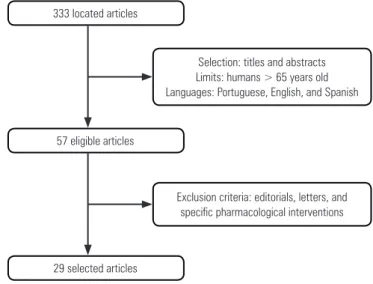
he present systematic review located 333 studies.
After selection by title and available abstract, 57 studies
remained, and 28 of these were excluded because they
were editorials or letters or did not address the relationship
between the two subjects of interest. A total of 29 articles
were selected for full-text assessment. Figure 1 depicts
the lowchart of the article selection process. Notably,
the number of publications addressing both subjects of
interest increased in the last 10 years (Table 1).
he selected articles are described in charts 1-3.
Chart 1 - Characteristics of the selected qualitative studies on PC in ICUs between 1960 and 2011
Author, year Type of study/Method Aims Results and Conclusions
Singer et al., 1999(15) Analysis of answers in interviews
with specialized intensive medicine coordinators.
To identify and describe important quality factors in end-of-life care from the patients’ perspective.
Five domains of quality in end-of-life care were identified: control of pain, avoidance of prolongation of life, maintaining control, relief of suffering, and improved relationships. These domains might help improve the quality of life for terminal patients
Gherardi et al., 2000(20) Content analysis of questionnaire
answers provided by 93 intensivist doctors.
To discuss the decision of whether to start or discontinue life-support measures in the ICU.
Lack of legal regulations or jurisprudence protecting doctors and lack of cultural consensus on PC were the main hindrances to restricting ICU interventions. The medical field lacks consensus on the technical decision or desire to act.
Palú et al., 2004(22) Discourse analysis of nine reports by
ICU nurses.
To understand ICU nurses’ perception of death.
Nurses reported feeling emotional and having some doubts while performing their tasks. They did not feel prepared to address death and tended to deny it and associate it with failure.
Lourenço, 2004(23) Content analysis of 20 ICU visitor
interviews.
To investigate the environment as an impact factor from visitors’ perspective. To offer a caring and comfortable environment for visitors.
Comfort through their faith, discomfort due the anticipated loss of a beloved one, and need of affection and attention by ICU caregivers were the main findings of the investigation of the targeted setting. The authors suggest the creation of ICU care environments to improve the reception of visitors on the grounds of 9 assumptions.
Earle et al., 2005(24) Analysis of protocol patterns and
existing statistical variations in terminal patient care using Medicaid and Medicare data on 48,906 deaths over 5 years in 11 areas of the United States.
To assess whether resources such as chemotherapy, hospital admission, and hospices might serve as markers of the type of care given to terminal patients.
Aggressive treatment was not administered in most cases, and 55% of cases were referred to hospices. The usefulness of such measures depends on the treatment that is instituted and might eventually be used as markers of the work by the team.
PC - palliative care; ICU - intensive care unit.
Table 1 - Proportional distribution of articles including the terms “palliative care” and “intensive care unit” between 1960 and 2011
Years PC ICU Crossed terms
60-70 144(1.6) 0(0.0) 0(0.0)
70-80 502(5.4) 67(1.3) 0(0.0)
80-90 1,137(12.3) 676(12.7) 13(3.9)
90-2000 2,259(24.5) 1,497(28.0) 47(14.1)
2000-2011 5,179(56.2) 3,097(58.0) 273(82.0)
Total 9,221(100) 5,337(100) 333(100)
PC - palliative care; ICU - intensive care unit. Results expressed in number (% of total).
333 located articles
57 eligible articles
Selection: titles and abstracts Limits: humans > 65 years old Languages: Portuguese, English, and Spanish
Exclusion criteria: editorials, letters, and specific pharmacological interventions
29 selected articles
Figure 1 - Search method flowchart.
Chart 2 - Characteristics of the selected quantitative studies on PC and ICUs between 1960 and 2011
Author, year Type of study/Method Aims Results and Conclusions
Predergast et al., 1998(26)
Prevalence study.
Analysis of how intensivist doctors categorize death in the ICU where they work.
To establish the frequency of cardiac resuscitation maneuvers and interventions to maintain life in the ICU.
In all, 70% of patients placed limits on end-of-life care; the actual frequency of use of maneuvers or decisions to discontinue interventions at the end of life was not known; lack of consensus on limiting interventions suggested the need for ICU managers to attempt to understand different motives to make medical decisions to improve the quality of assistance.
Lilly et al., 2000(32)
Intervention study.
The intervention studied was the use of communication to discuss the assistance plan with relatives within 72 hours from the admission of 530 patients to the ICU.
To determine the effect of communication on decisions regarding advanced life support. To determine whether care provided by a PC team was effective in meeting the patients’ goals; to determine whether communication with relatives facilitated the transition from advanced life support to PC.
To determine whether communication within the healthcare team reduced the length of hospitalization and the mortality rate.
Communication influenced the reduction of the median time of ICU hospitalization from 4 to 3 days and the maintenance of the mortality rates; more limits were imposed on interventions when the relatives participated in the discussions; higher level of satisfaction was achieved for patients assisted by the multidisciplinary team; an increased frequency of consensus between the healthcare team members and the relatives was found (reduction of the disagreement time rate from 65 days to 4 days/1,000 day and from 171 to 16 days/1,000 patients-day, respectively).
Mann et al., 2004(43)
Descriptive study.
Description of 17 cases of patients admitted to ICU at the end of life.
Description of the authors’ experience in transferring terminal patients from the ICU to their homes.
All 17 relatives were consulted, and treatments that demanded the permanence of patients in the hospital were discontinued; in the end, the response was positive with regard to the decision to transfer terminal patients to their homes.
Loyd et al., 2004(31)
Prospective cohort.
Analysis of the answers of 50 patients admitted to the ICU when scenarios of imminent risk of death were presented.
To establish the influence of self-response on quality of life before hospital admission and in regard to the prediction of mortality prognosis. To establish whether such self-responses influenced the length of stay in the ICU and the ICU care of severely ill elderly patients.
Approximately 80% accepted admission to ICU with mechanical ventilation when the odds of survival were 50% in 15 days; 50% would stay 1 month if the odds were higher; and 30% would accept if the odds were 1%. Prediction of quality of life after discharge from the ICU seems to be important in decision making by the medical team but did not alter the length of stay of severely ill patients.
Watch et al., 2005(34)
Three-year retrospective cohort. Review of clinical records of patients >55 years old who died after ICU admission.
To establish what factors were related with the discontinuance of treatment to maintain life in trauma victims who died.
From the total number of admissions, 20% died, and intervention was discontinued in 54.7% of cases. Discussions with relatives were documented in 78% of cases. Factors such as age, prognostic indexes of severity, comorbidities, and complications were not associated with intervention discontinuance.
Long and Lescoe-Long, 2005(35)
Two-year prospective cohort. Follow-up of elderly patients included in a care management program with functional disability or repeated hospitalizations
To establish whether there is an inverse correlation between age and aggressiveness of the indicated treatment in elderly patients with functional disability.
To establish whether patients who died received more aggressive treatment than those who survived.
The intensity of assistance decreased by 8% in outpatients 75-79 years old and by 32% in those older than 90 years old; this difference was not observed for hospitalized patients, whereas the oldest elderly patients who died received more aggressive treatment than those who survived. The authors point to the need of more discussion regarding advanced will guidelines and compliance with the will expressed by patients as important factors in the decision-making process.
Twaddle et al., 2007(36)
Multicenter prevalence study in 35 university hospitals.
Review of 1,596 clinical records of patients admitted to the ICU for more than 4 days in the course of 1 year.
To assess the occurrence and quality of palliative care performed at the investigated locations.
Among 1,596 cases, 90% were rated as severe diseases; 16.7% died, and 52.6% of these deaths were due to respiratory causes (20% very severe). In the group of patients who died, 57% were in the ICU for 48 hours, 34% signed advanced life support guidelines, and 80% requested PC. Of the patients who survived, 42% were discharged, and 66% received PC. The main palliative measures included treatment of pain and dyspnea, psychological assistance, and a plan for discharge. Assistance varied among the investigated hospitals; the services were more effective in the care of physical symptoms. The coordination of assistance must be improved. A package of palliative measures is suggested as an approach to improve care given to patients at the end of life.
Chart 2 - Continuation
Author, year Type of study/Method Aims Results and Conclusions
Barnato et al., 2007(37)
Prevalence study.
Analysis of interviews performed with elderly patients affiliated with Medicare during 8 months in 2005.
To assess regional differences in patients’ preferences with regard to end-of-life treatment.
A total of 2,515 interviews were performed, and 80% of interviewees stated that they preferred to die at home.
Sharma et al., 2008(38)
Retrospective cohort.
Review of clinical records and data from Medicare, Medicaid, and the National Cancer Institute.
To investigate the tendency to use ICU resources in the last 6 months of life of patients with advanced lung cancer over a 9-year period. To investigate the cost of assisting these ICU patients.
The use of ICU increased by 7.2%; 25% of such patients received mechanical ventilation with an average hospitalization length of 5.9 days; the average cost of ICU patients was approximately 40% higher compared to patients out of the ICU. Despite the growth of hospices, admission of elderly patients with advanced stages of neoplasia to the ICU is still increasing.
Mosenthal et al., 2008(27)
Prospective cohort.
Study to assess the integration of a PC team in the ICU. It included early communication between the PC team and relatives as an intervention.
To show that early communication regarding treatment among relatives and ICU professionals is a support measure that might improve end-of-life care.
Early palliative intervention did not alter patient mortality, but the participation of relatives in the debates increased by 32%, which resulted in earlier consensus as to the goals suggested by the ICU team. The mortality rate did not change, which was different from the increased number of decisions not to resuscitate. The purpose of this study was to contribute to the local culture of care.
Curtis et al., 2008(30)
Intervention study.
Implementation of a complex support system by means of educational actions for healthcare teams and ICU patients’ relatives.
To assess the quality and effectiveness of intervention to widen the scope of ICU PC by changing the attitude of the healthcare team towards proactive behavior in regard to patients and valorization of relative participation.
Out of a total of 590 deaths, the relatives of 496 received the intended intervention; 55% of the relatives and 89% of the nurses responded positively; the quality of assistance by the nursing team improved, and hospitalization length decreased.
Tang et al., 2009(39)
Four-year retrospective cohort in Taiwan.
Review of clinical records of 242,530 terminal patients who died during the study period.
To assess the tendency of the quality of care given to oncology patients at the end of life.
All the investigated patients received more intensive care in the last month of life; more patients tended to be referred to ICU where the average length of hospitalization was longer than 14 days. Of the investigated population, 63% died in the hospital. The quality at the end of life was poorer than expected, and guidelines were recommended to improve such support.
Setoguchi et al., 2010(41)
Seven-year retrospective cohort. Review of clinical records and data from: Medicare, cancer records, hospice, emergency services, and a specific drug supply program.
To describe the use of opiates by patients with terminal HF in emergency services and hospices. To compare this population with a cancer patient population.
A total of 45,559 patients with HF were studied, and 15,231 of these also had neoplasia. Among those referred to hospices, 51% had neoplasia, and 20% had HF. The group with neoplasia used 23% more opiates than HF patients in the hospices. More patients with HF die in emergency services compared to patients with neoplasia. Patients with HF died in emergency services and had less hospice support and opiates. Opportunities to provide clinical and pharmacological support and afford better care at the time of death are better for HF patients.
Bloomer et al., 2010(28)
Prevalence study.
Review of the clinical records of admissions to ICU in 1 year.
To review the end-of-life process in the ICU and the involvement of relatives.
Out of 70 clinical records, death occurred in 86%, and 85% of these did not employ resuscitation maneuvers; in 90%, relatives participated in the discussions; in 49%, intensive treatment was discontinued; and in 46%, at least one relative was present at that moment. The authors concluded that death was predictable in the ICU, and end-of-life care was performed on the basis of a consulting process.
O’Mahony et al., 2010(42)
Intervention study.
Application of an assistance model of end-of-life patients in ICU.
To promote an integrated end-of-life care model. To integrate PC in the ICU by means of consultants.
To stimulate the transfer of terminal patients from ICU to other hospital areas and hospices.
The rate of formalization of advanced guidelines increased; the time for the ICU to request a PC team decreased by 12 days; 33% of patients assisted by the PC team requested not to be resuscitated (this request was met 83% of the time); 51% of patients were referred to hospices, whereas 33% were hospitalized; the survival time of patients did not change; the use of opiates increased in the group that received intervention. The PC team might improve the implementation of care and was associated with better assistance quality by the patients, their relatives, and the medical team.
Chart 3 - Characteristics of the selected theoretical and review studies on PC and ICUs between 1960 and 2011
Author, year Type of study/Method Aims Results and Conclusions
Mularski and Osborne, 2003(18)
Theoretical foundations To describe the principles of PC and elucidate the justification for end-of-life care to the geriatric population in ICU.
The authors advocate the need to consider the admission of elderly patients to the ICU from financial and emotional perspectives.
Curtis et al., 2007(25)
Literature review with later discussion by an expert panel
To establish guidelines for the use of non-invasive ventilation instead of orotracheal intubation at the end of life.
The panel suggested the use of non-invasive ventilation when patients and their relatives are able to make such a choice after a meeting with the ICU team to discuss risks and benefits.
Dawson, 2008(16)
Theoretical foundations based on a case report
To discuss the definition of PC and the complexities of care to the severely ill elderly and to suggest recommendations for nursing practices.
Recommendations for the practice of end-of-life care by nurses, who are the caregivers closest to patients.
Costa-Filho et al., 2008(17)
Theoretical foundations To present the philosophy of PC as complementary to curative treatments, to promote it as an opportunity for professionals to dignify the assistance they provide, and to indicate barriers hindering its implementation in ICUs.
Education of healthcare professionals in the palliative field has paramount importance to promote PC in ICUs; the importance of PC should be stressed and additional research on the subject should be conducted.
Moritz et al., 2008(19)
Theoretical foundations To assess and summarize the current state of knowledge on end-of-life care and PC in the ICU.
The following subjects were approached: ICU communication, decision making in regard to end of life and PC, and palliative treatment in the ICU. Mosenthal et
al.,2008(21)
Theoretical foundations To describe the basic principles and tools of PC in the surgical ICU.
How to redefine the aims of care, combine comfort and interventions, when to discontinue or decline treatment, and the importance of emotional and spiritual support.
Ryder-Lewis, 2005(33)
Description of professionals’ experience in discharging terminal patients from the ICU
To describe experiences discharging ICU patients under PC to die at home.
Careful planning and relative participation must be performed for the removal of tubes and drugs that support patients. PC must involve community-based studies, skilled human resources, and a safety policy for patients and their relatives.
Kuschner et al., 2009(29)
Description of ICU PC practice based on 4 cases assisted by doctors and assessed by nurses
To describe ICU PC to reduce communication conflicts between doctors and nurses.
According to the nurses, interventions were not excessive in the presented cases; the authors concluded that improvement of service quality, standardization of measures, and the development of guidelines to orient the healthcare professionals would diminish individual differences in clinical interventions, especially in palliative interventions, thus favoring the elimination of variation among professionals; ICUs need to improve the communication and professional training with regard to PC.
Delisser, 2009(40)
Description of the medical approach to end-of-life care by relatives with distorted expectations on the reversibility of terminal patient clinical conditions
Used a representative case to suggest alternative paths of communication for families with unrealistically high expectations on the improvement of their severely ill relatives in the ICU.
This specific type of approach might be effective in helping families cope with the loss of loved ones.
PC - palliative care; ICU - intensive care unit.
Singer et al.
(15)performed a qualitative study that
administered a questionnaire to the coordinators
of specialization courses in intensive medicine. he
aim of this study was to identify and describe the
elements corresponding to domains of quality in
end-of-life care from the patient perspective. Five domains
were identiied: a) control of pain and appropriate
symptom management, b) avoidance of inappropriate
prolongation of life that causes unnecessary sufering due
to the application of curative measures, c) maintenance
of patient autonomy, d) stress relief, and e) strengthening
of relationships with the patients’ relatives. hese
dimensions are also a component of PC interventions.
he study by Dawson
(16)on the theoretical foundations
of PC discusses the notion of PC and the complexity of
terminal patients within the context of a case report. It
study concludes with a series of recommendations for
applying PC in the ICU and stresses that the initiative
ought to be taken by nurses, who are the closest health
caregivers to patients.
A theoretical study by Costa-Filho et al.
(17)discusses
PC as a philosophy of care that complements the
curative treatments of modern medicine. he authors
highlight the barriers that hinder the implementation
of PC in ICUs, while stressing that PC afords an
opportunity to act with dignity and purpose, especially
for intensivists. hey conclude that educating health
caregivers in the ield of palliation is of paramount
importance for the promotion of PC in ICUs and state
that research is needed to increase the dialogue of this
subject in intensive medicine.
Mularski and Osborne
(18)discuss the grounds of
PC for severely ill elderly patients and its relationship
with the ICU. hey comment on the need to assess
the conditions that lead to the decision to admit these
elderly patients to the ICU from several perspectives,
including the considering the feelings of the patients
and their relatives.
Prendergast et al.
(26)conducted a survey on
end-of-life ICU care. he authors conducted interviews
and quantiied the frequency of cardiac resuscitation
maneuvers and discontinuance of life-support
interventions. Protocol deinitions were lacking in
30% of ICUs that participated in the study, and the
authors were unable to quantify the frequency of use
of resuscitation maneuvers. Moreover, there was not
always a record of decisions to discontinue interventions
at the end of life. hose authors observed that there was
a lack of regarding palliative actions and PC training
programs. hey concluded by suggesting the need
for ICU managers to make an efort to understand
the reasons for variations in medical decisions and to
propose protocols that might contribute to improve the
quality of assistance.
Mosenthal et al.
(27)performed a prospective study
in a trauma ICU to assess the inclusion of a PC team
in supporting end-of-life care and to establish whether
structured and early communication with the patients
and their relatives as a systematized intervention might
be helpful. hey found that implementing these changes
improved relative participation by 32%, which resulted
in a higher number of consensual decisions between
doctors and relatives regarding the intended goals. hose
authors concluded that this type of intervention resulted
in early consensuses and that the study contributed to
changing the culture of care in that ICU.
Bloomer et al.
(28)performed a retrospective cohort
study in an Australian ICU to investigate the
end-of-life process and the involvement of the patients’
relatives. That study included 70 patients with an
average age of 69 years old and expected mortality
of 86% (as a function of severity indicators), and
relatives were present in 66% of cases. Resuscitation
maneuvers were not performed in 85% of the deaths.
The family participated in the discussions regarding
end-of-life decisions in 90% of cases, and in 49% of
cases, the decision to discontinue curative treatment
was respected. Those authors emphasize that although
the study was conducted in a single ICU, it showed
that PC in ICUs might be approached from several
perspectives. This includes the participation of
relatives, nurses, and doctors in the decision-making
process, which makes the approach to care more
patient specific. The authors conclude that death
was predictable in that ICU and that the modality of
end-of-life care was decided jointly by the patients’
relatives and their health caregivers.
Kuschner et al.
(29)described the practice of PC in
ICUs aimed at reducing communication problems
between doctors and nurses. he authors veriied that
the ICU doctors felt uncomfortable when the goal of
care was palliative. he nurses reported that despite
feelings of discomfort, the interventions suggested
were not excessive, and the authors concluded that
assistance standardization is a path that must be taken
into account to improve the quality of ICU PC.
In an interventional study, Curtis et al.
(30)assessed
the quality of assistance in a model of integrated PC
in the ICU as an approach to improve patient care.
he authors applied a series of educational actions
related to PC grounded on the premise of the
“self-eicacy” theory. heir hypothesis was that changes in
the attitude of the healthcare team, including proactive
behavior, with regard to patients and valorization
of relative participation might result in routine PC
provision with consequent improvement of the quality
of end-of-life care. he main results of the study
were reduced length of hospitalization before death,
improved PC application by the nurses, and greater
relative satisfaction.
the elderly still die with much sufering and pain.
Two issues stood out in the present literature review:
irst, there are only a small number of quantitative
studies correlating PC, satisfaction of relatives, team
communication, patient quality of life, and length of
ICU hospitalization. Second, PC should be applied
in the ICU because it improves quality indicators and
helps in the construction and consolidation of positive
relationships among ICU health caregivers, patients,
and their relatives. PC might be adopted if intensivists
receive technical training to apply palliative measures.
Because the number of deaths in ICUs is high,
discussions on how to perform PC must be conducted
and incorporated into caregiver work routines. he
present review indicated several paths for achieving
these goals, including protocol development, health
caregiver training, and the addition of this subject in
medical residency programs.
he addition of the subject “PC in the elderly
with chronic diseases at end-of-life in the ICU” will
stimulate thoughts on how to focus ICU interventions
in this subset of patients. PC represents an opportunity
to intervene from another perspective that afords
comfort, relief, and respect to patients and their
relatives.
he number of publications on PC has increased
in the last 10 years, and noticeably, only 2 of the 29
articles selected were published before 2000. he impact
of aging on overall population demographics and the
increasing prevalence of chronic degenerative diseases
contribute to this trend. However, other motives
might be considered, including that although the
United Kingdom was the origin of the modern hospice
movement, palliative medicine was only acknowledged
there as a medical specialty in 1987. Issues such as the
high number of patients who sufer and die in the ICU,
the conlict between advances in artiicial life-support
techniques and ethical issues, and the participation of
relatives in decision making emphasized the importance
of debating the use of PC in intensive medicine (as a
subject of research) beginning in the late 1990s and
early 2000s.
Another frequent subject addressed by the selected
studies was the important role of nursing in PC. Nurses
participated in 12 out of the 29 selected studies, which
stressed the fact that nurses play an essential role
in palliative interventions. Nurses are in charge of
directly assisting the patients and promoting the active
participation of the full ICU team in such assistance.
Multi-professional PC teams include other types of
patients’ reports on their quality of life before admission,
2) possible quality of life after ICU admission and
mortality prognosis, and 3) length of hospitalization
and most likely needed invasive interventions. Those
authors conducted interviews with the patients and
presented two scenarios of risk: one consisted of a
14-day hospitalization with mechanical ventilation,
and the other was a hospitalization longer than one
month with mechanical ventilation, tracheostomy,
and enteral nutrition. The results showed that patients
who initially expressed preference for interventionist
measures chose not to accept “invasive” interventions
after the odds of mortality and possible quality of life
were explained. The authors concluded that their study
made clear the need to make the wishes of the patients
known to the ICU staff. Respect for patient autonomy
has become an important part of the discussion since
the SUPPORT study.
(7)DISCUSSION
PC in the ICU is a relevant topic for several reasons,
including increased prevalence of chronic diseases, the
diiculty of healthcare teams in providing end-of-life
treatments, and rapidly aging populations, which is
particularly important in a country with a demographic
proile like Brazil’s, where 25% of the population will
be considered elderly in the next 30 years.
(7,44,45)here is theoretical justiication to advocate for
and apply PC in the ICU. Indeed, there are journals
speciically devoted to PC that also contribute to
the update of multidisciplinary interventions in
pharmacological therapy and the organization of
physical spaces favorable for such actions. he fact that
the number of publications addressing both subjects
together is small compared to studies addressing each
one separately underscores the need to widen the
debate and perform research on and include PC in
intensivists’ work routines. It is possible that PC will
become a medical specialty in Brazil in the near future,
as has already happened in the United Kingdom,
Australia, and Canada. he irst step in that direction
was taken in Brazil at the beginning of 2010, when
PC was acknowledged as a specialty ield in geriatrics,
anesthesiology, community medicine, pediatrics, and
clinical medicine; it has also been added to the code of
medical ethics.
(46,47)professionals who are each important in their respective
ield. However, nurses stand out because they often lead
PC planning.
CONCLUSION
Several barriers must be overcome for PC to gain wider
implementation, including the beliefs and lack of technical
training of ICU teams; the resistance of the patients’
regular doctors, who sometimes oppose the suggestions
made by intensivists; the managers of hospitals where the
ICU is located; and inally, the patients’ relatives when
they have not been properly informed.
he present study was limited in regard to the search
sources. he authors were aware that some relevant
studies would not be located because the search was
restricted to just two databases. However, the two
portals are the best-known sources and are important in
the terms of the journals they include and the frequency
of access by healthcare professionals.
RESUMO
Objetivo:
O uso de
tecnologia médica intervencionista
em pacientes idosos em estado terminal necessita ser
associa-do aos cuidaassocia-dos paliativos como medidas de suporte clínico
na terapia intensiva. Esse recurso auxilia nas decisões ao inal
da vida do paciente e direciona a atenção da equipe de saúde
para garantir o conforto do paciente e a satisfação da
famí-lia. O prolongamento da vida sem a implementação de ações
que visem amenizar sintomas, como dor e dispneia, contribui
para o estresse familiar e a morte com sofrimento. O objetivo
deste trabalho foi conhecer os avanços no uso dos cuidados
paliativos na unidade de terapia intensiva.
Métodos:
Revisão sistemática sobre a relação entre
cui-dados paliativos aos idosos e a terapia intensiva nos portais
Medline e Bireme.
Resultados:
Foram analisados 29 artigos, que mostram
experiências de cuidados paliativos em unidades de terapia
intensiva utilizando as variáveis “satisfação da família quando
participa das discussões sobre os cuidados paliativos” e
“di-iculdades na implementação desse tipo de cuidado por falta
de capacitação técnica dos proissionais”.
Conclusão:
O tema “cuidados paliativos” deve ser
apro-fundado visando melhorar a relação entre pacientes, seus
fa-miliares e a equipe de saúde. Considerando o aumento do
número de idosos na terapia intensiva, é fundamental
melho-rar a capacitação do proissional de saúde para enfrentar os
desaios que envolvem a terminalidade da vida.
Descritores:
Idoso; Cuidados paliativos; Cuidados para
prolongar a vida; Assistência paliativa; Cuidados críticos;
Doença crônica
REFERENCES
1. Davies E, Higginson IJ, editors. The solid facts. Palliative care. Denmark: World Health Organization Europe; 2004. Disponível em: http://www.euro. who.int/__data/assets/pdf_file/0003/98418/E82931.pdf. Acesso em 12 de outubro de 2007.
2. Burlá C. Paliação: cuidados ao fim da vida. In: Freitas EV, Py L, Cançado FA, Doll J, Gorzoni ML, organizadores. Tratado de geriatria e gerontologia. 2a ed. Rio de Janeiro: Guanabara Koogan; 2006. p. 1079-88.
3. Kalache A, Veras RP, Ramos LR. O envelhecimento da população mundial: um desafio novo. Rev Saúde Pública. 1987;21(3):200-10.
4. Prata PA. A transição epidemiológica no Brasil. Cad Saúde Pública. 1992;8(2):168-75.
5. Nelson JE, Angus DC, Weissfeld LA, Puntillo KA, Danis M, Deal D, Levy MM, Cook DJ; Critical Care Peer Workgroup of the Promoting Excellence in End-of-Life Care Project. End-of-life care for the critically ill: A national intensive care unit survey. Crit Care Med. 2006;34(10):2547-53. 6. Angus DC, Barnato AE, Linde-Zwirble WT, Weissfeld LA, Watson RS,
Rickert T, Rubenfeld GD; Robert Wood Johnson Foundation ICU End-Of-Life Peer Group. Use of intensive care at the end of life in the United States: an epidemiologic study. Crit Care Med. 2004;32(3):638-43.
7. A controlled trial to improve care for seriously ill hospitalized patients. The study to understand prognoses and preferences for outcomes and risks of treatments (SUPPORT). The SUPPORT Principal Investigators. JAMA. 1995;274(20):1591-8. Erratum in JAMA 1996;275(16):1232.
8. The quality of death: ranking end-of-life care across the world.
Commissioned by Lien Foundation [Internet]. Economist Intelligence Unit. 2010.[cited 2012 June 16]. Available from: http://graphics.eiu.com/ upload/QOD_main_final_edition_Jul12_toprint.pdf
9. Malacrida R, Bettelini CM, Degrate A, Martinez M, Badia F, Piazza J, et al. Reasons for dissatisfaction: a survey of relatives of intensive care unit patients who died. Crit Care Med. 1998;26(7):1187-93.
10. Henneman EA, Cardin S. Family-centered critical care: a practical approach to making it happen. Crit Care Nurse. 2002;22(6):12-9.
11. Gherardi C, Chaves M, Capdevila A, Tavella M, Sarquis S, Irrazabal C. La muerte en un servicio de terapia intensiva: influencia de la abstencion y retiro del soporte vital. Medicina (B Aires). 2006;66(3):237-41.
12. Hilliard RE. Music therapy in hospice and palliative care: a review of the empirical data. Evid Based Complement Alternat Med. 2005;2(2):173-8. 13. Moher D, Liberati A, Tetzlaff J, Altman DG; PRISMA Group. Preferred
reporting items for systematic reviews and meta-analyses: the PRISMA statement. J Clin Epidemiol. 2009;62(10):1006-12.
14. Malta M, Cardoso LO, Bastos FI, Magnanini MMF, Silva CMFP. Iniciativa STROBE: subsídios para a comunicação de estudos observacionais. Rev Saúde Pública. 2010;44(3):559-65.
15. Singer PA, Martin DK, Kelner M. Quality end-of-life care: patients’ perspectives. JAMA. 1999;281(2):163-8.
16. Dawson KA. Palliative care for critically ill older adults: dimensions of nursing advocacy. Crit Care Nurs Q. 2008;31(1):19-23.
18. Mularski RA, Osborne ML. End-of-life care in the critically ill geriatric population. Crit Care Clin. 2003;19(4):789-810, viii.
19. Moritz RD, Lago PM, Souza RP, Silva NB, Meneses FA, Othero JCB, et al Terminalidade e cuidados paliativos na unidade de terapia intensiva. Rev Bras Ter Intensiva. 2008;20(4):422-8.
20. Gherardi CR, Biancolini CA, Del Bosco CG. Ingreso de pacientes irrecuperables en terapia intensiva, no aplicación y suspención de métodos de soporte vital: análisis de una encuesta de opinión. Med Intensiva. 2000;17(1):15-20.
21. Mosenthal AC, Murphy PA, Barker LK, Lavery R, Retano A, Livingston DH. Changing the culture around end-of-life care in the trauma intensive care unit. J Trauma. 2008;64(6):1587-93.
22. Palú LA, Labronici LM, Albini L. A morte no cotidiano dos profissionais de enfermagem de uma unidade de terapia intensiva. Cogitare Enferm. 2004;9(1):33-41.
23. Lourenço EC. As necessidades de cuidado e conforto em UTI oncológica: com a palavra os visitantes![dissertação]. Rio de Janeiro: Faculdade de Enfermagem da Universidade do Estado do Rio de Janeiro; 2004. 24. Earle CC, Neville BA, Landrum MB, Souza JM, Weeks JC, Block SD, et al.
Evaluating claims-based indicators of the intensity of end-of-life cancer care. Int J Qual Health Care. 2005;17(6):505-9.
25. Curtis JR, Cook DJ, Sinuff T, White DB, Hill N, Keenan SP, Benditt JO, Kacmarek R, Kirchhoff KT, Levy MM; Society of Critical Care Medicine Palliative Noninvasive Positive VentilationTask Force. Noninvasive positive pressure ventilation in critical and palliative care settings: understanding the goals of therapy. Crit Care Med. 2007;35(3):932-9.
26. Prendergast TJ, Claessens MT, Luce JM. A national survey of end-of-life care for critically ill patients. Am J Respir Crit Care Med. 1998;158(4):1163-7. 27. Mosenthal AC, Lee KF, Huffman J. Palliative care in the surgical intensive
care unit. J Am Coll Surg. 2002;194(1):75-83; discussion 83-5.
28. Bloomer MJ, Tiruvoipati R, Tsiripillis M, Botha JA. End of life management of adult patients in an Australian metropolitan intensive care unit: A retrospective observational study. Aust Crit Care. 2010;23(1):13-9. 29. Kuschner WG, Gruenewald DA, Clum N, Beal A, Ezeji-Okoye SC.
Implementation of ICU palliative care guidelines and procedures: a quality improvement initiative following an investigation of alleged euthanasia. Chest. 2009;135(1):26-32.
30. Curtis JR, Treece PD, Nielsen EL, Downey L, Shannon SE, Braungardt E, et al. Integrating palliative and critical care: evaluation of a quality-improvement intervention. Am J Respir Crit Care Med. 2008;178(3):269-75.
31. Lloyd CB, Nietert PJ, Silvestri GA. Intensive care decision making in the seriously ill and elderly. Crit Care Med. 2004;32(3):649-54.
32. Lilly CM, De Meo DL, Sonna LA, Haley KJ, Massaro AF, Wallace RF, et al. An intensive communication intervention for the critically ill. Am J Med. 2000;109(6):469-75.
33. Ryder-Lewis M. Going home from ICU to die: a celebration of life. Nurs Crit Care. 2005;10(3):116-21.
34. Watch LS, Saxton-Daniels S, Schermer CR. Who has life-sustaining therapy withdrawn after injury? J Trauma. 2005;59(6):1320-6; discussion 1326-7.
35. Long MJ, Lescoe-Long M. Does age influence the intensity of care in a managed care organization? Health Care Manag (Frederick). 2005;24(2):119-23.
36. Twaddle ML, Maxwell TL, Cassel JB, Liao S, Coyne PJ, Usher BM, et al. Palliative care benchmarks from academic medical centers. J Palliat Med. 2007;10(1):86-98.
37. Barnato AE, Herndon MB, Anthony DL, Gallagher PM, Skinner JS, Bynum JP, et al. Are regional variations in end-of-life care intensity explained by patient preferences? A Study of the US Medicare Population. Med Care. 2007;45(5):386-93.
38. Sharma G, Freeman J, Zhang D, Goodwin JS. Trends in end-of-life ICU use among older adults with advanced lung cancer. Chest. 2008;133(1):72-8. 39. Tang ST, Wu SC, Hung YN, Huang EW, Chen JS, Liu TW. Trends in quality
of end-of-life care for Taiwanese cancer patients who died in 2000-2006. Ann Oncol. 2009;20(2):343-8.
40. Delisser HM. A practical approach to the family that expects a miracle. Chest. 2009;135(6):1643-7.
41. Setoguchi S, Glynn RJ, Stedman M, Flavell CM, Levin R, Stevenson LW. Hospice, opiates, and acute care service use among the elderly before death from heart failure or cancer. Am Heart J. 2010;160(1):139-44. 42. O’Mahony S, McHenry J, Blank AE, Snow D, Eti Karakas S, Santoro G, et
al. Preliminary report of the integration of a palliative care team into an intensive care unit. Palliat Med. 2010;24(2):154-65.
43. Mann S, Galler D, Williams P, Frost P. Caring for patients and families at the end of life: withdrawal of intensive care in the patient’s home. N Z Med J. 2004;117(1196):U935.
44. Wong LLR, Carvalho JA. O rápido processo de envelhecimento populacional do Brasil: sérios desafios para as políticas públicas. Rev Bras Estud Popul. 2006;23(1):5-26.
45. Barreto ML, Carmo EI. Tendências recentes das doenças crônicas no Brasil. In: Lessa I, organizador. O adulto brasileiro e as doenças da modernidade: epidemiologia das doenças crônicas não-transmissíveis. São Paulo: Hucitec; 1998. p. 15-27.
46. Clark D. International progress in creating palliative medicine as a specialized discipline. In: Hanks G, Cherny NI, Christakis NA, Fallon M, Kaasa S, Portenoy RS, editors. Oxford textbook of palliative medicine. 4th ed. Oxford: Oxford University Press; 2009. p. 9-16.