http://ijehss.com/ Page 61 DETERMINANTS THAT INFLUENCE CONDOM USE AT FIRST SEXUAL
INTERCOURSE IN PORTUGAL
Marta Reis*1,2,3,Lucia Ramiro1,2, Tania Gaspar2,4& Margarida Gaspar de Matos1,2
1Faculdade de Motricidade Humana/Universidade de Lisboa, Portugal 2ISAMB/Faculdade de Medicina, Universidade de Lisboa, Portugal 3FCT - Foundation for Science and Technology / SFRH / BPD / 110905/2015
4Universidade Lusíada, Lisboa, Portugal
ABSTRACT
A self-administered questionnaire was carried out among young people in Portugal, between the ages of 18 and 24, with the aim to examine determinants influencing condom use at first sexual intercourse, according to the IMB model (Fisher & Fisher, 1992). Young people’s level of information, motivation and behavioral skills regarding preventive sexual behavior (condom use at first sexual intercourse) were ascertained and were used to determine association of condom use at first sexual intercourse. The majority of respondents (78.8%) indicated that they used condom at first sexual intercourse. Most young people had a good level of information regarding HIV/AIDS transmission/prevention. They also showed reasonable positive attitudes, having positive subjective norms and intentions towards HIV/AIDS preventive behaviors. Different models with a path analysis revealed that preventive sexual behavior did not depend directly on information level, nor on motivation, but on behavioral skills. Information and motivation about HIV prevention/ transmission alone were not significantly associated with condom use at first sexual intercourse. The finding that behavioral skills were the strongest determinants of condom use at first sexual intercourse suggested that these may be important factors in effective STIs prevention programs.
Key Words: First sexual intercourse, Condom use, Determinants, University students,
Community youth.
1. INTRODUCTION
Young people usually initiate intimate relationships and become sexually active while they are still undergoing emotional and cognitive development, and the probability of risk of unwanted and unplanned pregnancy, abortion or sexually transmitted infections (STIs) may increase, mainly due to the misuse or non-use of condoms or other contraceptives (Avery &Lazdane, 2010; Ramiro et al., 2015; Reis, Ramiro, Matos, &Diniz, 2013a; 2013b).
Evidence suggests that the age of onset of sexual intercourse is declining in industrialized countries and the rate of STIs among adolescents is rising (Ramiro et al., 2015). While fertility rates vary across countries, about 16 million adolescents worldwide give birth every year (UNFPA, 2015; WHO, 2018).
In Portugal, data from the INE / Pordata (2018) reported a decrease of adolescent mothers between 15 and 19 years old from 2011 to 2015, namely13.3% (2011), 12.2% (2012), 10.7%
http://ijehss.com/ Page 62
(2013), 9.3% (2014) 8.4% (2015), 8.1%(2016), and 8% (2017). Although there has been a decrease of pregnancies in adolescence, this is still considered a serious problem in terms of public health.
In relation to voluntary interruption of pregnancy (VIP), the UN report stated that about 3.9 million abortions are performed in unsafe conditions annually in developing countries, accounting for 98% of the total numbers (UNFPA, 2015; WHO, 2018).
In Portugal, from 2011 to 2016, 20480 (2011), 19156 (2012), 18281 (2013),16039 (2014) 16028 (2015) and 15959 (2016) VIP were carried out, showing a decreasing trend. Nevertheless, when considering age groups, in the year 2016, within the age group 20-24 years old, women reported the highest number of VIP (22.9%), followed by the 25-29 years old age group (21.6%) and the 30-34 year olds (19.5%), which overall corresponded to 64% of the total number of VIP cases (DGS, 2011; 2012; 2013; 2014; 2015; 2016) andsuggesting that those still undergoing emotional and cognitive development have the highest probability of risk of VIP.
Worldwide, 36.9 million people are living with HIV / AIDS (UNAIDS, 2018). According to the National Institute of Health Dr. Ricardo Jorge, the Center forEpidemiological Surveillance of Communicable Diseases (Ministry of Health, 2015; CVEDT, 2016), in Portugal, 34.3% of the people infected are between 15 and 29 years old and 15.6% are between the ages of 15 and 24 (CVEDT, 2016).
Portugal continues to have one of the highest rates of HIV in the European Union, occupying the
6th place with the highest incidence in the European Union (EU) and European Economic Area
(EEA), with 9.5 cases versus 5,8 / 100 thousand inhabitants from the EU / EEA (World Health Organization, European Center for Diseases Prevention and Control, 2016). Literature suggests that adolescents and young adults (13 to 24 yearolds) are more likely to take risks compared to older people, and are less likely to recognize themselves as vulnerable as a result of the risks they face (Matos &Simões, 2010, Reis, Ramiro, Matos, &Diniz, 2012, Reis et al., 2013a, 2013b). Although the search for new preventive methods such as HIV vaccines continues to make progress, condoms will probably remain the key preventive tool for many years to come. For sexually active individuals the condom is yet the single, most efficient, available method to reduce sexual transmission of HIV and other STIs (Reis, et al., 2012; Reis, et al., 2013a; 2013b; UNAIDS, 2018).
Despite the existence of safe and effective contraception in Portugal, contraception non-use and inconsistent condom use are prevalent among young Portuguese people. Based on these observations, and combined with findings that early sexual activity is associated with risk factors such as substance use (Madkour, Farhat, Halpem, Godeau, &Gabhainn, 2010), early onset of sexual activity has been pinpointed as an important marker for sexual health (WHO, 2018). There is increasing evidence that well-designed behavioral and theoretically sound interventions can be effective (Ramiro, Reis, Matos, &Diniz, 2014; Reis, Ramiro, Matos, &Diniz, 2013c; Reis et al., 2015).
Although there is no explanatory model of risk and protection, or sexual behavior, or even a model that has been consistently used, there are several investigations that point out that knowledge, though necessary, is not enough for people to change their behavior since there are other factors, such as
attitudes, social norms, beliefs, behavioral skills, motivation, the parent-child relationship and their connection to school for example, that may interfere in different types of behavior,
http://ijehss.com/ Page 63
consequently considering behavior change as an extremely complex process, which develops in several stages and differs from individual to individual, according to their psychological, social and cultural characteristics (Matos, Sampaio, Baptista &equipa Aventura Social, 2013; Matos &Simões, 2010; Ramiro, et al., 2014).
Research undertaken in other countries identified a varied range of determinants for condom use behaviors, with one of the most consistent determinants being one’s attitude toward condom use (Albarracin, Johnson, Fishbein, &Muellerleile, 2001; Reinecke, Schmidt, &Ajzen, 1996; Reece, Herbenick, Hollub, Hensel, &Middlestadt, 2010; Sheeran & Taylor, 1999).
The current study used as its theoretical framework the Information- Motivation-Behavioral skills (IMB) model (Fisher & Fisher, 1992) to identify determinants of condom use at first sexual intercourse (preventive sexual behavior) among young people. The IMB model is a three-factor conceptualization of preventive sexual behavior: (a) information about transmission and prevention; (b) motivation to reduce risk (which include personal attitudes about the preventive behavior, subjective norms for sexual prevention, and behavioral intentions); and (c) behavioral skills to practice prevention (including perceived effectiveness and perceived difficulty of HIV/AIDS preventive behavior) (Bandura, 1994; Fisher & Fisher, 1992; 1993). Hence, according to this model, there are three prerequisites to perform a preventive sexual behavior: information, motivation and behavioral skills.
Together they determine whether individuals will be able to adopt preventive behaviors.
The purpose of this research was to examine the power of the constructs of the IMB model to establish the determinants of condom use during first sexual intercourse among young people. An association between information, motivation, behavioral skills and condom use at first sexual intercourse (preventive sexual behavior) was hypothesized. Information and motivation were expected to have a direct effecton behavioral skills, and behavioral skills were expected to have a direct effect on condom use.
Accordingly, the present study examined: 1) gender differences for condom use at first intercourse, sexual intercourse without alcohol or drugs, information regarding HIV/AIDS transmission/prevention, and motivation and behavioral skills towards behaviors to prevent HIV/AIDS; 2) the ability of the IMB–based model to explain condom use at first sexual intercourse; 3) the ability of the IMB–based model to explain condom use at the first intercourse for university students and community youth, and 4) the ability of the IMB–based model to explain condom use at first sexual intercourse for young people who responded having had sexual intercourse under the influence of alcohol or drugs.
Furthermore, by examining and analyzing results, the research was expected to contribute with information and strategies that should help health educators and other professionals interested in promoting condom use at first intercourse.
In the absence of an effective cure for HIV / AIDS and taking into account the epidemiology of the disease itself, control and prevention of AIDS continue to depend mainly on the adoption and maintenance of safe sexual behaviors (Ramiro et al., 2015).
For all these reasons, HIV / AIDS is a public health problem associated with young population, lacking investment in prevention and intervention, particularly in Portugal (Reis et al., 2015; WHO, 2018).
The present study was carried out with young people, in different regions of Portugal, in order to allow for a representative sample of Portuguese youth in terms of sexual health. For the purpose
http://ijehss.com/ Page 64
of the present study the preventive sexual behavior studied was condom use at first sexual intercourse.
2. METHOD
The national survey “Life without AIDS” aimed to ascertain knowledge, attitudes, beliefs, skills and behaviors of young people regarding HIV/AIDS.
This cross-sectional study was carried out between April and June 2017 with an evaluation protocol that was administered to young people. AllPortuguese universities, both public and private, were invited to participate and the partners of this study - ESCOLHAS and IPDJ - also invited all young people between the ages of 18 and 24 to participate in it. In a first phase, by responding to a first contact by e-mail to 21 public and private universities of mainland Portugal and islands; to all university student associations; and contacts made by partners (ESCOLHAS and IPDJ), 816 young people participated. The contacts were repeated, this time directed to university teachers, to the presidents of the universities’ student associations, and to the partners of the study (ESCOLHAS and IPDJ) who were responsible for disseminating the study to the young people they target within their projects. In order to protect participants and their anonymity, no information regarding identity was put on the questionnaires. Confidentiality of the data was also guaranteed.
This study had the approval of a scientific committee, the National Ethics Committee, and the National Commission for Data Protection and followed strictly all the guidelines for human rights protection.
The study provides national representative data of 1166 Portuguese young people, between 18 and 24 years old, randomly chosen from those attending university during the academic year of 2016/2017 (n=875) as well as the young people invited by our partners (ESCOLHAS and IPDJ) (n= 250 and 41, respectively). Data was collected through a self-administered questionnaire. The sample was stratified by region (North, Center, Lisbon and Tagus Valley, Alentejo, Algarve, Madeira and the Azores). The sample included 1166 young people with an average age of 21 years old and the majority are of Portuguese nationality (96.2%). Most of the participants are female (72.3%), single (96.2%) and (predominantly) heterosexual (89.3%). Most of the young people referred having a romantic relationship at the time of the data collection (79.3%), of which 41.6% stated that it lasted over two years.
From the total sample, 562 young people had already had their first sexual intercourse. Of these, 65.8% referred that they had had their first sexual intercourse at the age of 17 and 78.8% used condom at first sexual intercourse.
As for ever having had sexual intercourse under the influence of alcohol or drugs, 60.8% mentioned never having had such a behavior.
3. MEASURES
HIV / AIDS preventive behavior was assessed through one question: "Did you use condom at first sexual intercourse?" and the risk behavior was assessed by another question: “Have you ever had sexual intercourse under the influence of alcohol or drugs?”. For both questions young people responded "yes" (1), "no" (2) or "I do not remember" (3). "Yes" was scored "1", any other
http://ijehss.com/ Page 65
response (no and I do not remember) was scored "0" since none of them represent for sure preventive behavior. Condom use at first sexual intercourse was also the variable selected as the HIV/ AIDS preventive behavior for the path analysis.
Information regarding HIV/AIDS transmission/prevention:
It was assessed through participants’ answers to nine statements that were selected from the knowledge regarding HIV/AIDS transmission/prevention scale, which was developed for the purpose of the HBSC research (from which this study derives) and which aimed at studying health and risk behaviors in adolescence (Currie, Samdal, Boyce, & Smith, 2001). The Portuguese version of the scale was used (Matos et al., 2011). Young people were asked to respond to nine statements about HIV/AIDS transmission/prevention: 1. «it is possible to become infected with HIV/AIDS by sharing needles»; 2. «it is possible to become infected with HIV/AIDS from coughing and sneezing»; 3.«an HIV infected pregnant woman may pass the virus to her baby»; 4. «it is possible to become infected with HIV/AIDS by hugging someone infected»; 5.«the oral contraceptive can protect against HIV/AIDS infection»; 6. «it is possible to become infected with HIV/AIDS by engaging just once in unprotected sexual intercourse with someone »; 7. «someone who looks healthy can be HIV infected»; 8. «it is possible to become infected with HIV/AIDS by sharing a glass, fork or spoon»; 9. «it is possible to become infected with HIV/AIDS by blood transfusion in a Portuguese hospital». Items were rated on a three response options (1= Yes, 2= No and 3= I do not know). Correct responses were coded as 1 and both incorrect or uncertain responseswere coded as 0 since none of them represent for sure correct knowledge. After recoding the scores in each item, they were added so as to be obtained an overall result for Information Regarding HIV/AIDS transmission/prevention.
Final scores ranged from 0 to 9, with high scores suggesting more information/more positive knowledge. For this measure, Cronbach's alpha was 0.70.
Motivation towards HIV/AIDS preventive behavior:
This scale was based on the concepts of the theory of rational action (Ajzen, & Fishbein, 1980), and motivation was assessed with regard to personal attitudes, subjective norms and behavioral intentions related to six HIV/AIDS preventive behaviors (Misovich, Fisher & Fisher, 1998). The Portuguese version of the scale was used (Carvalho, 1999).
For each of the six preventive behaviors: (1) persuade your partner to practice safer sex only, (2) use condoms every time having sex, (3) always carry condoms with you, (4) take an HIV test using blood (HIV Test), (5) buy condoms and (6) ask your partner to take an HIV test using blood (HIV Test), three subscales were used to assess the attitudes of the participants, their subjective norms and their behavioral intentions to perform those preventive behaviors.
- Attitudes towards HIV/AIDS preventive behaviors were assessed through participants’ answers to the six previously described preventive behaviors and that were selected from the attitudes towards HIV/AIDS subscale, which was developed for the purpose of a research aimed at AIDS prevention (Misovich, Fisher & Fisher, 1998). The Portuguese version of the subscale was used (Carvalho, 1999). Young people were asked to indicate their level of agreement with the statements using a five-point response format (1= completely false to 5= completely true). The results were added in order to construct an overall measure of attitudes regarding the practice of HIV/AIDS preventive behaviors. The results obtained vary between 6 and 30, being the highest score an indicator of more positive attitudes towards HIV/AIDS preventive behaviors. Cronbach's alpha for this scale was 0.80.
http://ijehss.com/ Page 66
- The subjective norms regarding HIV/AIDS preventive behaviors were assessed through participants’ answers to the six preventive behaviors selected from the subjective norms regarding HIV/AIDS subscale developed for the purpose of a research aimed at AIDS prevention (Misovich, Fisher & Fisher, 1998). The Portuguese version of the subscale was used (Carvalho, 1999). To evaluate the generalized perceptions of social support for the practice of preventive behaviors regarding HIV/AIDS transmission, those individuals were asked to mark how far they believed that most people thought was important that they should perform each of the six preventive behaviors by using a five- point response format (1= completely false to 5= completely true). The results were added in order to construct an overall measure of subjective norms regarding HIV/AIDS preventive behaviors. All items were worded positively in such a way that a higher score on this subscale corresponded to more positive attitudes towards HIV/AIDS preventive behaviors. For this reason, the scores on this subscale range from 6 to 30. For this subscale, Cronbach's alpha was .80.
- Intention to have HIV/AIDS preventive behaviors was assessed through participants’ answer to the six preventive behaviors selected from a subscale developed for the purpose of a research aimed at AIDS prevention (Misovich, Fisher & Fisher, 1998). The Portuguese version of the subscale was used (Carvalho, 1999). In order to measure the participants' behavioral intentions regarding the performance of those preventive behaviors, participants were asked to signal the likelihood that they intended to carry out each of the six behaviors. Response options were 1 (= very unlikely) to 5 (=very likely), therefore high scores on this scale corresponded to increased intentions to perform preventive behaviors regarding HIV/AIDS transmission. Total scores ranged from 6 to 30. Cronbach's alpha for this scale was .84.
Behavioral skills towards HIV/AIDS preventive behaviors were assessed with two subscales that referred to the perceived difficulty and perceived effectiveness in the performance of preventive behaviors at the level of transmission of HIV/AIDS.
- Perceived difficulty was assessed through a subscale of five items selected from the Perceived difficulty subscale, which was developed for the purpose ofa research aimed at AIDS prevention (Misovich, Fisher & Fisher, 1998). The Portuguese version of the subscale was used (Carvalho, 1999). This subscale referred to the degree of difficulty that participants thought they would have in relation to the performance of five preventive behaviors regarding the transmission of HIV/AIDS: (1) to what extent would it be difficult to support your sexual partner if he/she started talking about using condoms to reduce the risk of contracting STIs, (2) to what extent would it be difficult for you to use condoms every time you have occasional sexual meetings, (3) to what extent would it be difficult for you to talk about safe sex with your partner in a nonsexual situation, e.g. while driving, (4) to what extent can you refuse to have sex with someone you met recently and refuses to use condom, and (5) to what extent is it difficult for you to buy condoms. Using a response set that ranged from 1= very hard to 5 = very easy, young people rated their level of difficulty in adopting five HIV/AIDS preventive behaviors with a sex partner. Summing items yields a total score that may range from 5 to 25. Young people who scored high on this scale believed they could easily practice those behaviors. This subscale has an acceptable level of internal consistency (alpha= .77).
- Perceived effectiveness was assessed through a subscale of five items selected from the Perceived self-efficacy scale, which was developed for the purpose of a research aimed at AIDS
http://ijehss.com/ Page 67
prevention (Misovich, Fisher & Fisher, 1998). The Portuguese version of this subscale was used (Carvalho, 1999).
This subscale referred to the degree of effectiveness that participants thought they would have in relation to the performance of five preventive behaviors regarding the transmission of HIV/AIDS: (1) how effectively can you convince your partner to practice safe sex only, (2) how effectively can you tell your partner that you want to practice safe sex only, (3) how effectively can you be sure that you will use a condom, (4) how effectively can you refuse to have unprotected sex and (5) how effectively can you persuade your partner to get tested for HIV. Using a response set that ranged from 1= completely ineffective to 5 = completely effective, young people rated their level of effectiveness in adopting five HIV/AIDS preventive behaviors with a sex partner. Summing items yields a total score that may range from 5 to 25. Young people who scored highon this subscale believed they could effectively practice safer sex behaviors. For this measure, Cronbach's alpha was 0.83.
4. DATA ANALYSIS
The data were analyzed using the Statistical Package for Social Sciences (SPSS) version 19 for Windows. Descriptive statistics of the measures were examined, as well as potential gender differences, through 2-test and ANOVA. The level for statistical significance was set at p < .001. In this research, Pearson correlation coefficient and a path analysis were used to determine the connection between the dimensions of information, motivation, behavioral skills and preventive sexual behavior (male condom use).
5. RESULTS
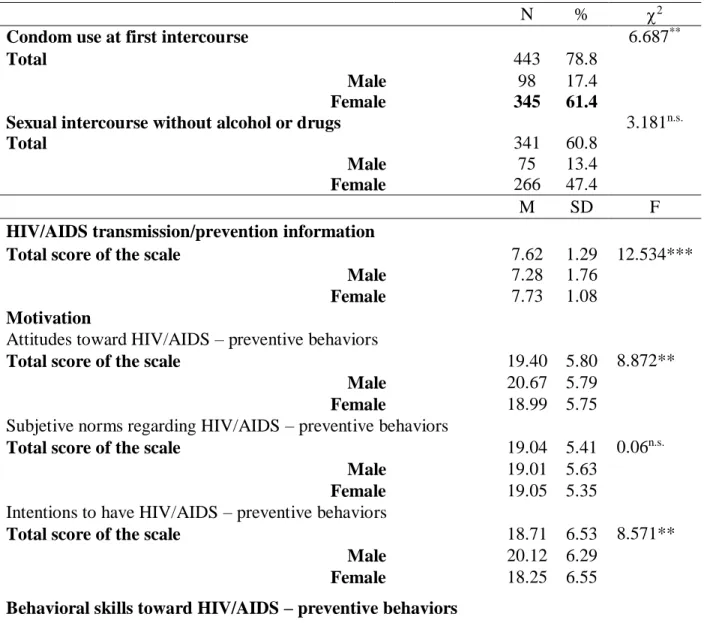
HIV/AIDS preventive behavior: 78.8% of participants reported having used the condom during first intercourse, and 60.8% reported never having had sexual intercourse with alcohol or drugs. Information regarding HIV/AIDS transmission/prevention: the majority showed a high level of information. The mean total score in relation to information about HIV/AIDS was 7.62 (SD= 1.29), with males showing significantly less knowledge (M = 7.28, SD=1.76) than females [(M = 7.73, SD=1.08 (F (1, 560) = 12.534, p< .001)] (see table 1).
Motivation – a) Attitudes towards HIV / AIDS preventive behaviors: the mean total score in relation to attitudes towards HIV/AIDS preventive behaviors was 19.40 (SD=5.80); with females showing significantly more negative attitudes (M = 18.99, SD=5.75) than males [(M = 20.67, SD=5.79 (F(1, 560) =8.872, p< .010)]. b) Subjective norms regarding HIV/AIDS preventive behaviors: the mean total score was 19.04 (SD=5.41); with females showing being slightly more influenced by subjective norms (M = 19.05, SD= 5.35) than males [(M = 19.01, SD= 5.63 (F(1,
560) = 0.06, p .05)]. c) Intentions to have HIV/AIDS preventive behaviors: the mean total score
was 18.71 (SD=6.53), with males showing significantly more intentions to practice preventive behaviors (M = 20.12, SD=6.29) than females [(M = 18.25, SD=6.55) (F(1, 560) = 8.571,p<.010)] (see table 1).
Behavioral skills – a) Perceived difficulty in the performance of preventive behaviors regarding the transmission of HIV/AIDS: the mean total score was21.92 (SD=3.29), with males showing significantly more difficulty (M = 21.33, SD=3.59) than females [(M = 22.11, SD=3.16 (F(1, 560) = 5.982 p< .010)]. b) Perceived effectiveness in the performance of preventive behaviors
http://ijehss.com/ Page 68
regarding the transmission of HIV/AIDS: the mean total score of the scale was 20.94 (SD=3.65), with females showing slightly higher more efficiency (M = 21.11, SD=3.53) than males [(M =
20.43, SD=3.97 (F(1, 560) = 3.591, p .05.)] (see table 1).
Table 1 – Differences between gender and condom use at first intercourse, sexual intercourse without alcohol, HIV/AIDS transmission/prevention information, motivation toward preventive behavior, and behavioral skills toward HIV/AIDS – Preventive behaviors (N=562)
N % 2
Condom use at first intercourse 6.687**
Total 443 78.8
Male 98 17.4
Female 345 61.4
Sexual intercourse without alcohol or drugs 3.181n.s.
Total 341 60.8
Male 75 13.4
Female 266 47.4
M SD F
HIV/AIDS transmission/prevention information
Total score of the scale 7.62 1.29 12.534***
Male 7.28 1.76
Female 7.73 1.08
Motivation
Attitudes toward HIV/AIDS – preventive behaviors
Total score of the scale 19.40 5.80 8.872**
Male 20.67 5.79
Female 18.99 5.75 Subjetive norms regarding HIV/AIDS – preventive behaviors
Total score of the scale 19.04 5.41 0.06n.s.
Male 19.01 5.63
Female 19.05 5.35 Intentions to have HIV/AIDS – preventive behaviors
Total score of the scale 18.71 6.53 8.571**
Male 20.12 6.29
Female 18.25 6.55
Behavioral skills toward HIV/AIDS – preventive behaviors
Perceived difficulty in the performance of preventive behaviors regarding the transmission of HIV/AIDS
Total score of the scale 21.92 3.29 5.982**
Male 21.33 3.59
http://ijehss.com/ Page 69
Perceived effectiveness in the performance of preventive behaviors regarding the transmission of HIV/AIDS
Total score of the scale 20.94 3.65 3.591n.s.
Male 20.43 3.97
Female 21.11 3.53
***p≤0.001, ** p≤0.010; n.s.= not significant
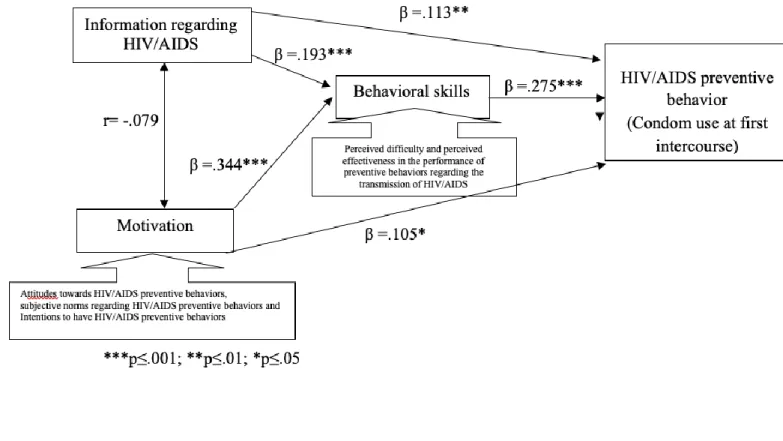
A hypothesized model was examined via a Path analysis. Figure 1a presents the results of the Path analysis for condom use at first sexual intercourse, using maximum likelihood estimations. The standardized coefficients in Figure 1a clearly showed that preventive sexual behavior (condom use at first sexual intercourse) was significantly associated to knowledge regarding HIV/AIDS transmission/prevention, motivation and behavioral skills in a positive way (.113, .105 and .275, respectively).
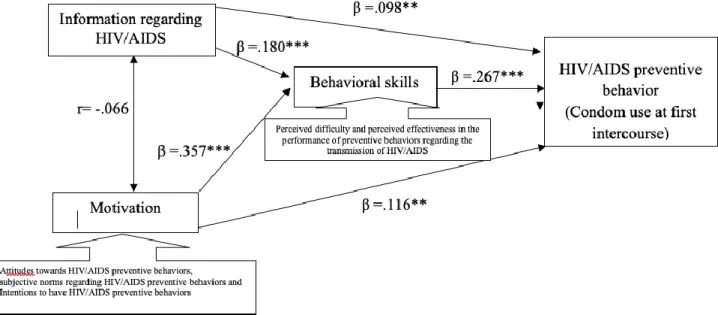
Figure 1b presents the results of the Path analysis for condom use at first sexual intercourse, using maximum likelihood estimations but controlling the gender variable. Results go in the same sense, that is, the preventive sexual behavior (condom use at first sexual intercourse) was significantly associated to knowledge regarding HIV/AIDS transmission/prevention, motivation and behavioral skills in a positive way (.098, .116 and .267, respectively).
Figure 1a - Path analysis between information, motivation, behavioral skills and HIV/AIDS
http://ijehss.com/ Page 70 Figure 1b - Path analysis between information, motivation, behavioral skills and HIV/AIDS
preventive behaviour (condom use at first intercourse)
***p≤.001; **p≤.01; *p≤.05. Controlling the gender variable
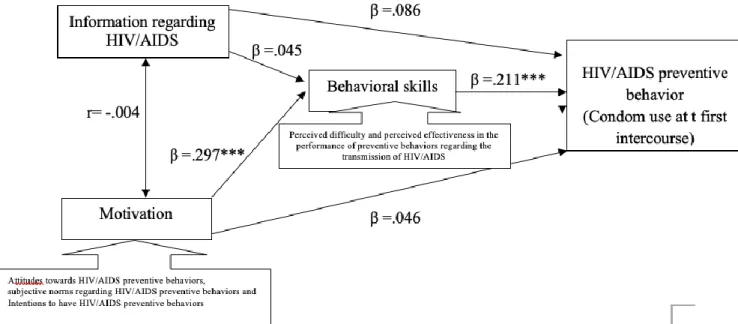
Figure 2a presents the results of the Path analysis for the condom use at first sexual intercourse, controlling the gender variable and only university students were selected, using maximum likelihood estimations.
The standardized coefficients in Figure 2a clearly showed that preventive sexual behavior (condom use at first sexual intercourse) was not significantly associated to knowledge regarding HIV/AIDS transmission/prevention and motivation. On the other hand, behavioral skills were associated to preventive sexual behavior (condom use at first sexual intercourse) in a positive way (.211).
Figure 2b presents the results of the Path analysis for condom use at first sexual intercourse, controlling the gender variable and only community youth were selected, using maximum likelihood estimations.
The standardized coefficients in Figure 2b clearly showed that preventive sexual behavior (condom use at first sexual intercourse) was not significantly associated to knowledge regarding HIV/AIDS transmission/prevention. On the other hand, motivation and behavioral skills were associated to preventive sexual behavior (condom use at first sexual intercourse) in a positive way (.313 and .308, respectively).
http://ijehss.com/ Page 71 Figure 2a - Path analysis between information, motivation, behavioral skills and HIV/AIDS
preventive behaviour (condom use at first intercourse)
***p≤.001; **p≤.01; *p≤.05. Controlling the gender variable and only university students
Figure 2b - Path analysis between information, motivation, behavioral skills and HIV/AIDS
preventive behaviour (condom use at first intercourse)
http://ijehss.com/ Page 72
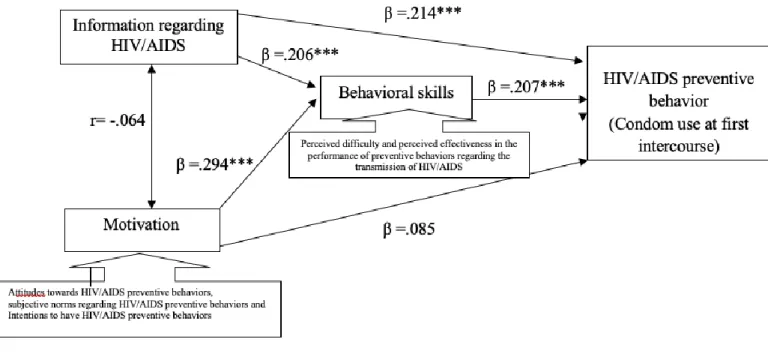
Figure 3a presents the results of the Path analysis for condom use at first sexual intercourse, controlling the gender variable and only young people who responded never having had sexual intercourse with alcohol or drugs were selected, using maximum likelihood estimations.
The standardized coefficients in Figure 3a clearly showed that preventive sexual behavior (condom use at first sexual intercourse) was not significantly associated to motivation. On the other hand, knowledge regarding HIV/AIDS transmission/prevention and behavioral skills were associated to preventive sexual behavior (condom use at first sexual intercourse) in a positive way (.214 and .207, respectively).
Figure 3b presents the results of the Path analysis for condom use at first sexual intercourse, controlling the gender variable and only young people who responded having had sexual intercourse under the influence of alcohol or drugs were selected, using maximum likelihood estimations.
The standardized coefficients in Figure 3b clearly showed that preventive sexual behavior (condom use at first sexual intercourse) was not significantly associated to knowledge regarding HIV/AIDS transmission/prevention. On the other hand, motivation and behavioral skills were associated to preventive sexual behavior (condom use at first sexual intercourse) in a positive way (.160 and .356, respectively).
Figure 3a - Path analysis between information, motivation, behavioral skills and HIV/AIDS
preventive behaviour (condom use at first intercourse)
***p≤.001; **p≤.01; *p≤.05
Controlling the gender variable and only young people who responded having sexual intercourse without alcohol or drugs
http://ijehss.com/ Page 73 Figure 3b - Path analysis between information, motivation, behavioral skills and HIV/AIDS
preventive behaviour (condom use at first intercourse)
***p≤.001; **p≤.01; *p≤.05
Controlling the gender variable and only young people who responded having sexual intercourse under the influence of alcohol or drugs
6. DISCUSSION
Findings showed most young people, especially women, have a good level of information regarding HIV/AIDS transmission/prevention. They also showed reasonable positive attitudes, subjective norms and intentions towards HIV/AIDS preventive behaviors. Men and women reported feeling motivated to perform preventive behaviors, with men presenting a higher motivation compared to women.
Nevertheless, men presented a lower perceived difficulty as well as a lower perceived effectiveness to have HIV/AIDS preventive behaviors, compared to women. This is probably due to the fact that men are those who have to actually put condoms on themselves and not women. Overall, 78.8% used condom in their first sexual intercourse. Therefore, it is crucial to understand who were those who had an HIV/AIDS preventive behavior – usingthe condom at first sexual intercourse – and which were the determinants for that behavior.
The IMB model has been studied in a variety of populations (Fisher, Fisher, Bryan, &Misovich, 2002; Kalichman et al., 2002), including young people (Bazargan, Kelly, Stein, Husaini, &Bazargan, 2000), regarding condom use. Information and motivation were found to be independent factors, each related to behavioral skills, and behavioral skills were related to preventive behaviors (e.g., condom use discussions, condom accessibility, condom use during sexual intercourse, and HIV antibody testing). Specifically, the model states that HIV/AIDS prevention information and motivation work through prevention behavioral skills to influence risk reduction behaviors (Fisher & Fisher, 1992). Furthermore, information and motivation are independent constructs, since some people are well informed about AIDS but may not be
http://ijehss.com/ Page 74
motivated to perform preventive behaviors, while other people are motivated to perform preventive behaviors but may not be well informed. On the other hand, information and motivation may relate to behavioral skills which are relevant to risk behavior changes, such as condom use.
Findings were consistent with the information-motivated behavioral skills (IMB) model, applied to condom use (preventive sexual behavior) (Fisher & Fisher, 1992; 1993). The Path analysis for all participants having had sex and controlling the gender variable showed that preventive sexual behavior (condom use at first sexual intercourse) did not depend exclusively on information, but also on the enhancement of motivation and the acquisition of behavioral skills.
The IMB model is supported in that it does not require all three components to establish association and regards differential association as meaningful and diagnostic of directions for intervention.
Consistent with the IMB model, indicators of motivation to prevent HIV/AIDS were significantly associated with behavioral skills to prevent HIV/AIDS for all models (controlling variables such as gender, university versus community youth, and young people who responded having had versus never having had sexual intercourse under the influence of alcohol or drugs). Inaddition, as suggested by the IMB model, a significant relationship was observed between behavioral skills and condom use at first sexual intercourse.
However, contrary to expectations, no associations were found between information regarding HIV/AIDS transmission/prevention and motivation for all models. Neither were associations found between information and condom use at first sexual intercourse in three models, namely in the models in which gender, schooling (university and community) and ever having had sexual intercourse under the influence of alcohol or drugs were controlled. Also, no associations were found between information and behavioral skills in two models, in which gender and schooling (university and community) were controlled.
Information and motivation about HIV/AIDS transmission/prevention alone did not grant a protective effect in relation to condom use at first sexual intercourse. This means that being well informed or being motivated about HIV/AIDS transmission/prevention does not guarantee that individuals will not perform behaviors that may put them at risk of becoming infected. The lack of direct effects of information and motivation regarding HIV/AIDS transmission/prevention on condom use were not surprising, given previous research showing that information about risks and risk-reducing behaviors is often insufficient to change risk behavior (Fishbein, Middlestadt, & Hitchcock, 1994, Raj, 1996).
This means that it will be necessary to deepen other variables that can weigh in the prevention of sexual behavior. Since the variables used in the IBM model are individual and cognitive, it will be necessary to broaden the research and to deepen external, relational and emotional variables which are necessary in the relationship with others.
Behavioral skills to perform preventive sexual behaviors had significant effects, and consequently those were the determinants that influenced condom use in this research. Therefore, it is suggested that interventions that promote prevention of sexual behavior should give emphasis on behavioral skills and simultaneously give knowledge and motivate young people to have a preventive behavior.
http://ijehss.com/ Page 75
Although the cross sectional nature of the present study didn’t allow to make causality inferences, the present study had the advantage to include a large number of randomly selected young people in Portugal.
Further research is needed to understand the situational and contextual issues that explain why young people are less likely to use condoms at first sexual intercourse, despite having strong intentions to do so. Perhaps young people are more concerned with pregnancy prevention than with avoiding STIs (Reis, Ramiro & Matos, 2009), or maybe they are more focused in feelings than in prevention or disease. It is also possible that differences in power within the relationship have an impact on the capacity of youth to act upon their intentions, or that the length of time of a relationship may be interpreted as a sign of stability, thus influencing their perceived need of condom use. Future studies should include the assessment of these determinants and it would also be important to conduct an evaluation within the couple.
Research also suggests that targeting only youth behavior is not likely to be enough. The engagement of parents, peers, family, school, university and community is crucial to develop well-informed, motivated and skilled adolescents and young people (Ramiro, et al., 2014; 2015).
REFERENCES
AJZEN, I., & FISHBEIN, M. (1980). Understanding attitudes and predicting social behavior. Englewood CliVs, NJ: Prentice-Hall.
ALBARRACIN, D., JOHNSON, B. T., FISHBEIN, M., & MUELLERLEILE, P. A.
(2001). Theories of reasoned action and planned behavior as models of condom use: A meta-analysis. Psychological Bulletin, 127(1), 142–161.
AVERY, L. & LAZDANE, G. (2010) What do we know about sexual and reproductive health of adolescents in Europe. European Journal of Contraception and Reproductive Health Care, 15, 54-66. doi:10.3109/13625187.2010.533007
BANDURA, A. (1994). Social cognitive theory and exercise of control over HIV infection. In DiClemente, R. & Peterson, J. (Eds.), Preventing AIDS: Theories and methods of behavioural interventions (pp. 25–59). New York: Plenum.
BAZARGAN, M., KELLY, E.M., STEIN, J.A., HUSAINI, B.A., & BAZARGAN, S.H.
(2000). Correlates of HIV risk-taking behaviors among African-American college students: The effect of HIV knowledge, motivation, and behavioural skills. JournaloftheNational Medical Association, 92 (8), 391-404.
CARVALHO, M., (1999). O Modelo Informação-Motivação-Aptidões Comportamentais: Estudo dos Determinantes dos Comportamentos Preventivos na Transmissão do VIH em Jovens Adultos. Tese de Mestrado em Psicologia da Saúde. [The ModelInformation-Motivation-BehavioralSkills: StudyoftheDeterminantsofPreventiveBehaviors in HIV transmission in Young Adults. Master Thesis in Health Psychology]. ISPA – Instituto Superior de Psicologia aplicada. CURRIE, C., SAMDAL, O., BOYCE, W., & SMITH, R. (2001). HBSC, a WHO
cross national study: research protocol for the 2001/2002 survey. Copenhagen: WHO. CVEDT – Centro de Vigilância das Doenças Sexualmente Transmissíveis.
Infecção VIH/SIDA (2016). A situação em Portugal a 31 de junho de 2016. [HIV/AIDS. (2016). The situation in Portugal on June 31, 2016]. CVEDT. Lisboa. Portugal: INSA.
DGS - Direção Geral de Saúde (2011). Relatório dos registos das Interrupções da Gravidez – Dados referentes ao período de Janeiro a Dezembro de 2010. [Report of interruptions of
http://ijehss.com/ Page 76
pregnancy - Data for the period from January to December 2010]. Divisão de Saúde Reprodutiva. Lisboa, Portugal: Direção Geral de Saúde.
DGS - Direção Geral de Saúde (2012). Relatório dos registos das Interrupções da Gravidez – Dados referentes ao período de Janeiro a Dezembro de 2011. Report of interruptions of pregnancy - Data for the period from January to December 2011]. Divisão de Saúde Reprodutiva. Lisboa, Portugal: Direção Geral de Saúde.
DGS - Direção Geral de Saúde (2013). Relatório dos registos das Interrupções da Gravidez – Dados referentes ao período de Janeiro a Dezembro de 2012. [Report of interruptions of pregnancy - Data for the period from January to December 2012]. Divisão de Saúde Reprodutiva. Lisboa, Portugal: Direção Geral de Saúde.
DGS - Direção Geral de Saúde (2014). Relatório dos registos das Interrupções da Gravidez – Dados referentes ao período de Janeiro a Dezembro de 2013. [Report of interruptions of pregnancy - Data for the period from January to December 2013] Divisão de SaúdeReprodutiva. Lisboa, Portugal: Direção Geral de Saúde.
DGS - Direção Geral de Saúde (2015). Relatório dos registos das Interrupções da Gravidez – Dados referentes ao período de Janeiro a Dezembro de 2014. [Report of interruptions of pregnancy - Data for the period from January to December 2014]. Divisão de Saúde Reprodutiva. Lisboa, Portugal: Direção Geral de Saúde.
DGS - Direção Geral de Saúde (2016). Relatório dos registos das Interrupções da Gravidez – Dados referentes ao período de Janeiro a Dezembro de 2015. [Report of interruptions of pregnancy - Data for the period from January to December 2015]. Divisão de Saúde
Reprodutiva. Lisboa, Portugal: Direção Geral de Saúde. Retrived from
http://www.saudereprodutiva.dgs.pt/pagina.aspx?f=2
FISHBEIN, M., MIDDLESTADT, S., & HITCHCOCK, P. (1994). Using information
to change sexually transmitted disease-related behaviors: an analysis based on theory of reasoned action. In: DiClemente R, Peterson J, editors. Preventing AIDS: theories, methods, and behavioral interventions. New York: Plenum Press, 61–77.
FISHER, J. & FISHER, W. (1992). Changing AIDS risk behaviour. Psychological Bulletin, 111, 455–474.
FISHER, W. & FISHER, J. (1993). Understanding and promoting AIDS preventive behaviour: A conceptual model and educational tools. The Canadian Journal of Human Sexuality, 1, 99–106. FISHER, J., FISHER, W., BRYAN, A., & MISOVICH, S. (2002). Information–
motivation–behavioral skills model–based HIV risk behavior change intervention for inner–city high school youth. Health Psychology; 21,177–186.
INE / Pordata (2018). Taxa de fecundidade por grupo etário. [Fertility rate by age group]
Retrived from
https://www.pordata.pt/Portugal/Taxa+de+fecundidade+por+grupo+et%c3%a1rio-415 KALICHMAN, S., STEIN, J.A., MALOW, R., AVERHART, C., DEVIEUX, J.,
JENNINGS, T., PRADO, G., & FEASTER, D.J. (2002). Predicting protected sexual behaviour using the Information-Motivation-Behaviour skills model among adolescentsubstance abusers in court-ordered treatment. Psychoogyl Health & Medicine, 27(3), 327–338.
MADKOUR, A.S., FARHAT, T., HALPEM, C. T., GODEAU, E., & GABHAINN,
S.N. (2010) Early adolescent sexual initiation as a problem behavior: a comparative study of five nations. JournalofAdolescent Health, 47(4):389–398.
http://ijehss.com/ Page 77
MATOS, M.G. & SIMÕES, C. (2010). Sexualidade. Segurança e Sida. In Matos (coord). Sexualidade. Afectos e Cultura – Gestão de problemas de saúde em meio escolar. Coisas de Ler. MATOS, M.G., SIMÕES, C., TOMÉ, G., CAMACHO, I., FERREIRA, M.,
RAMIRO, L., REIS, M., & Equipa Aventura Social (2011). A Saúde dos Adolescentes Portugueses – Relatório do Estudo HBSC 2010. [The Adolescent Health Study Report Portuguese HBSC 2010.] ACS/FMH/UTL/CMDT-UNL.
MATOS, M.G., SAMPAIO, D., BAPTISTA, I., & Equipa Aventura Social. UTL and CMDT/UNL (2013). Adolescent’s health education and promotion in Portugal: a case study of planning for sustainable practice. In Samdal. O..& Rowling. L. (Eds.). The Implementation of health promoting schools. exploring the theories of what. why and how. New York: Routledge Taylor & Francis Group.
MINISTÉRIO DA SAÚDE [Ministry of Health] (2015). Infeção VIH/SIDA: A situação em
Portugal a 31 de dezembro de 2014. [HIV / AIDS Infection: The situation in Portugal
on December 31, 2014.] Recuperado de
http://repositorio.insa.pt/bitstream/10400.18/3205/3/Relat%C3%B3rio%20VIH_SIDA_2 014.pdf MISOVICH, S.J., FISHER, W.A., & FISHER, J.D. (1998). A measure of AIDS
prevention information, motivation and behavioural skills. In C. M. Davis, W. H. Yarber,
R. Bauserman, G. Scheer & S.L. Davis (Eds.), Handbook of Sexuality Related Measures. New Park, CA: Sage.
RAJ, A. (1996). Identification of social cognitive variables as predictors of safer sex behavior and intent in heterosexual college students. Journal of Sex & Marital Therapy, 22(4), 247-258. RAMIRO, L., REIS, M., MATOS, M.G., & DINIZ, J. A. (2014). "Trends in
adolescent sexual behavior. impact of information. and attitudes about HIV/AIDS in Portugal".
Psychology. Health & Medicine, 19,5: 614 - 624. (IF= 1.532) doi:
10.1080/13548506.2013.845299
RAMIRO, L., WINDLIN, B., REIS, M., GODEAU, E., NIC GABHAIN, S., JOVIC,
S., MATOS, M.G. & SEXUAL HEALTH GROUP (2015). Trends in very early sex andcondom use in 20 European countries 2002 – 2010. The European Journal of Public Health, 25(2): 65-68. (IF= 2.591) DOI: http://dx.doi.org/10.1093/eurpub/ckv030
REECE, M., HERBENICK, D., HOLLUB, A., HENSEL, D., & MIDDLESTADT, S.
(2010). A Psychometric Assessment of the Multi-Factor Attitude Toward Condoms Scale (MFACS). International Journal of Sexual Health, 22, 119-129.
REINECKE, J., SCHMIDT, P., & AJZEN, I. (1996). Application of the theory of planned behavior to adolescents’ condom use: A panel study. Journal of Applied Social Psychology, 26(9), 749–772.
REIS, M., RAMIRO, L., & MATOS, M.G. (2009). Contracepção, Parceiros Ocasionais e
Consumo de Substâncias em Jovens Portugueses [Contraception,
occasionalpartnersandsubstanceconsumption in youngPortugueseStudents]. Revista Lusófona de Ciências e Tecnologias da Saúde, 6 (2): 206-214.
REIS, M., RAMIRO, L., MATOS, M. G., & DINIZ, J. (2012). Os comportamentos
sexuais dos universitários portugueses de ambos os sexos em 2010. Revista Portuguesa de Saúde Pública, 30(2):105–114.
http://ijehss.com/ Page 78
Survey on HIV/AIDS Knowledge. Attitudes and Risk Behaviour in university students of
Portugal. The Spanish Journal of Psychology, 16. e99.: 1-10. (IF= 0.704)
http://dx.doi.org/10.1017/sjp.2013.100
REIS, M., RAMIRO, L., MATOS, M.G., & DINIZ, J.A. (2013b). Nationwide survey
of contraceptive and sexually transmitted infection knowledge. attitudes and skills of university students in Portugal. International Journal of Clinical and Health Psychology, 13: 127−137. (IF=2.787) http://dx.doi.org/10.1016/S1697-2600(13)70016-4
REIS, M., RAMIRO, L., MATOS, M.G., & DINIZ, J.A. (2013c). Determinants
influencing male condom use among university students in Portugal. International Journal of Sexual Health, 25(2): 115-127. DOI:10.1080/19317611.2012.728554 (IF= 0.610)
REIS, M., CAMACHO, I., RAMIRO, L., TOMÉ, G., GOMES, P., GASPAR, T.,
CANHA, L., SIMÕES, C. & MATOS, M.G. (2015). A escola e a transição para a universidade: idades transacionais e o seu impacto na saúde – notas a partir do Estudo HBSC/ OMS.
JournalofChildandAdolescentPsychology /Revista Psicologia da Criança e do
Adolescente, 6(2):77-92.
http://revistas.lis.ulusiada.pt/index.php/rpca/article/view/2315/2437
SHEERAN, P., & TAYLOR, S. (1999). Predicting intentions to use condoms: A meta-analysis and comparison of the theories of reasoned action and planned behavior. Journal of Applied Social Psychology, 28(8), 1624–1675.
UNAIDS (2018). Joint United Nations Programme on HIV/AIDS. UNAIDS DATA 2018 Retreived from http://www.unaids.org/en/resources/documents/2018/unaids-data- 2018
UNFPA (2015). Girlhood, not motherhood: Preventing adolescent pregnancy. New York.
Retrieved from https://www.unfpa.org/sites/default/files/pub-
pdf/Girlhood_not_motherhood_final_web.pdf
WORLD HEALTH ORGANIZATION. European Centre for Diseases Prevention and Control. (2016). HIV/AIDS surveillance in Europe 2015: Surveillance report. Retrievedfrom http://ecdc.europa.eu/en/publications/Publications/HIV-AIDS- surveillance-Europe-2015.pdf WORLD HEALTH ORGANIZATION (2018). Adolescent pregnancy. Retrieved from http://www.who.int/news-room/fact-sheets/detail/adolescent-pregnancy
View publication stats View publication stats