HUMANNESS AND (IM)MORALITY IN GROUP
RELATIONS
Ana Patrícia Matos Henriques
Tese orientada por
Prof.ª Doutora Maria Gouveia-Pereira ISPA – Instituto Universitário
Tese submetida como requisito parcial para obtenção do grau de
Doutoramento em Psicologia
Área de especialidade... Psicologia Social
Tese apresentada para cumprimento dos requisitos necessários à obtenção do grau de Doutor em Psicologia na área de especialização de Psicologia Social, realizada sob a orientação de Maria Gouveia-Pereira, apresentada no ISPA - Instituto Universitário, no ano de 2016.
O presente trabalho foi financiado pelo Programa Operacional Ciência e Inovação (POCI 2010) da Fundação para a Ciência e Tecnologia (SFRH/BD/73196/2010).
Acknowledgments
I would like to express my gratitude to my supervisor, Maria Gouveia-Pereira, without whom this work would not exist. Thank you for having pulled me in to do this doctorate, and for always supporting me when I wanted to try new things, even when the results did not smile to us.
I would like to thank Jeroen Vaes for all his comments on my work, and for all the contributions that helped me to try new approaches.
I would also like to thank the Portuguese Foundation for Science and Technology, for funding this research project, to ISPA, for welcoming it, and to our participants, that really made it possible.
I have to leave a special thank note to Mariana and Cristina, who have always helped me throughout this process in everything they could. I hope you know how deeply grateful I am for having you two as my doctoral “sisters”.
I am very grateful to André Mata for the time he afford me to finish my thesis.
To all my office colleagues, who have always put a smile on my face, know that I am very glad to have shared the attic with all of you.
To all my friends, who kept asking me when would this be over, finally it is. I promise I’m also through with all the "I cannot" answers. Thank you for waiting.
To Hugo, for always being there, and give me hope. Thank you for sharing your life with me.
Finally, to my parents, for everything, but specially for always having told me that I could do all that I really wanted, even when I doubted them the most.
Palavras-chave:
Desumanização, Moralidade, Imoralidade, Ameaça Intragrupal
Key words:
Dehumanisation, Morality, Immorality, Ingroup Threat
Categorias de Classificação da tese
PsycINFO Classification Categories and Codes: 2300 Human Experimental Psychology
2340 Cognitive Processes 2343 Social Psychology
3000 Social Psychology
ABSTRACT
Morality is a valued dimension within and between groups (Ellemers, Pagliaro, & Barreto, 2013; Leach, Bilali, & Pagliaro, 2015), that has been consistently pointed out as part of what makes us uniquely human (Demoulin et al., 2004; Leyens et al., 2000; Haslam, 2006). On the other hand, the extent to which we see others as fully human also impacts on other’s moral status (Bastian, Laham, Wilson, Haslam, & Koval, 2011; Kelman, 1973; Opotow, 1990). The two dimensions seem to have a narrow relation, which has recently begun to capture more attention (Haslam, Bastian, Laham, & Loughnan, 2012; Khamitov, Rotman, & Piazza, 2016; Vasiljevic, & Viki, 2014).
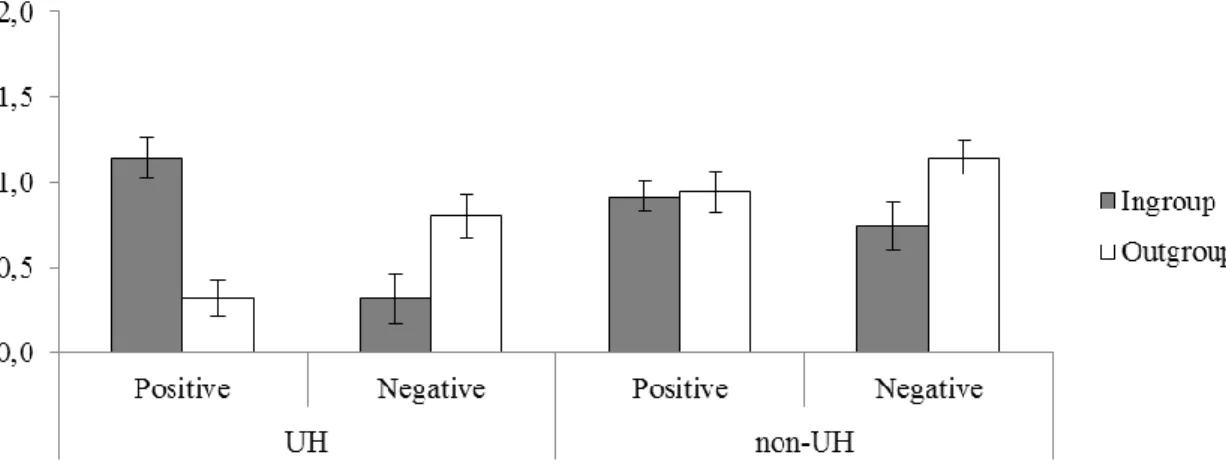
This thesis aims at analysing the relation between morality and humanness in group relations. A first research paper analysed the attribution and denial of moral traits to groups, integrating the role of humanness and valence in intergroup differentiation. By means of two studies we tested the hypothesis stating that within the moral domain, participants choose different strategies to differentiate the ingroup from the outgroup depending on trait humanness and valence. Our results support this hypothesis, as we found that participants attributed more uniquely human traits to the ingroup, but only in case these were positive; in case these were negative the uniquely human traits were more attributed to outgroups.
In a second paper we analysed the relation between immorality and humanness, by using the evaluation of criminal behaviours as a proxy to address this relation. In our data, we found that Human Uniqueness and immorality did not correlate with each other. With this paper we also aimed at providing researchers with a range of validated stimuli to address these topics, which was exactly what we purposed ourselves to do in the last research paper presented in this thesis.
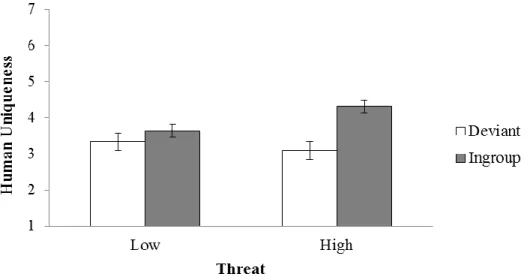
In a third paper we analysed how ingroup members deal with ingroup deviance, integrating the role of ingroup threat. Specifically, we analysed the humanness perception of a deviant ingroup member that behaves in an immoral but uniquely human way. We found that when the deviant behaviour was less threatening, the ingroup members humanised the deviant as much as the ingroup itself. However, when the deviant behaviour represented a threat to the ingroup image, the ingroup members dehumanised more the deviant member. In a second study we analysed the dehumanisation of the ingroup deviant, regarding two different types of behaviours, which vary in humanness and immorality. In both studies we also measured the perception of moral blame of the deviant member, integrating our results with previous findings (Bastian, Denson, & Haslam, 2013). Finally we addressed the different intragroup strategies that ingroup members use to deal with threats to the ingroup image.
Results are discussed in terms of their contribution to the relation between humanness and immorality, as well as the implications for dehumanisation theory. Future research is outlined.
Index Section I : Introduction
Chapter I. Dehumanisation……… 03
Infrahumanisation Theory……….……….……….………. 04
Bi-Dimensional Model of Dehumanisation.……….………….…… 07
Attribute, Metaphor, and Target Based Approaches to Dehumanisation……….………. 09
Chapter II. Morality……… 13
The Importance of Morality in Social Judgement……… 14
The Inferential Power of Morality……… 16
Morality in Outgroups……… 17
Morality in Ingroups………... 19
Chapter III. Dehumanisation and Morality……… 21
Mind Perception, Moral Status, and Humanness……….……….…… 21
The Humanness Costs of Immorality……….… 23
Overview of the Studies…..……….. 24
Section II: Empirical Section More human than others, but not immoral: On the attribution of humanness with moral characteristics... 29
Abstract... 29
Infrahumanisation and Dehumanisation... 30
The Importance of Morality in Groups... 32
Study 1... 34
Method... 34
Participants... 34
Procedure and Materials... 34
Results and Discussion... 35
Study 2a and 2b... 37
Method... 37
Participants... 37
Procedure and Materials... 38
Results and Discussion... 38
General Discussion... 41
References... 43
The Relation Between Human Uniqueness and Morality: An Index of Behaviours... 49
Abstract... 49
Humanness and Morality... 50
The Importance of Negative Behaviours... 51
Method... 52 Participants... 52 Materials... 52 Procedure... 53 Results... 53 Discussion... 56 Acknowledgments... 57 References... 58
Dealing with Inside Immorality and Human Uniqueness: The Role of Group Threat... 67
Abstract... 67
Threat in Goup Relations... 69
Study 1………. 71
Method... 71
Participants………... 71
Procedure and Materials………. 71
Results and Discussion... 73
Post-test……… 74
Study 2………. 75
Method... 76
Participants and Design………... 76
Procedure and Materials………. 76
Results and discussion... 77
General Discussion... 80
Conclusion... 81
Acknowledgments... 81
References... 82
Secção III: Geral Discussion Geral Discussion... 89
Future Research... 92
References... 95
Section IV: Appendixes
Appendixe A: Materials and measures of More human than others, but not
immoral: On the attribution of humanness with moral characteristics... 111
Appendixe B: Statistics of More human than others, but not immoral: On the
attribution of humanness with moral characteristics... 113
Appendixe C: Materials and measures of The relation between human
uniqueness and immorality: An index of behaviours ... 145
Appendixe D: Statistics of The relation between human uniqueness and
immorality: An index of behaviours... 146
Appendixe E: Materials and measures of Dealing with Inside Immorality and
Human Uniqueness: The Role of Group Threat ... 153
Appendixe F: Statistics of Dealing with Inside Immorality and Human
Index of Figures
Section II: Empirical Section
More human than others, but not immoral: On the attribution of humanness with moral characteristics
Figure 1: Mean number and error bars of positive and negative non-uniquely and uniquely human moral traits attributed to the ingroup and to the outgroup in Study 2a... 39
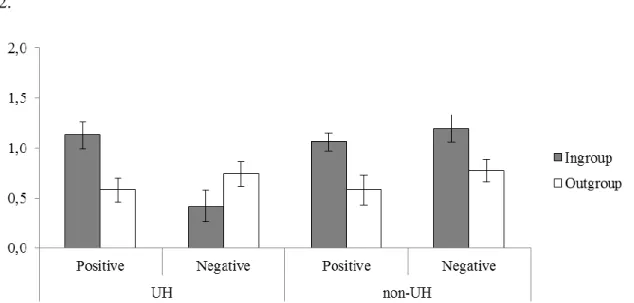
Figure 2: Mean number and error bars of positive and negative non-uniquely and uniquely human moral traits attributed to the ingroup and to the outgroup in Study 2b... 40
Dealing with Inside Immorality and Human Uniqueness: The Role of Group Threat
Figure 1: Mean values and error bars of Human Uniqueness of the deviant member and of the ingroup by threat condition……… 73
Index of Tables
Section II: Empirical Section
More human than others, but not immoral: On the attribution of humanness with moral characteristics
Table 1: Means and standard errors of the attribution of uniquely and non-uniquely human moral traits to the ingroup and outgroup in positive and
negative traits conditions... 37
The Relation Between Human Uniqueness and Morality: An Index of Behaviours
Table 1: Number of judges and reliability values before and after deletion of unreliable judges... 54 Table 2: Cluster analysis of 27 behaviours as defined by Morality and HU
ratings... 56 Table 3: Behaviours rank ordered according to standardized Morality rating
(highest to lowest)... 63 Table 4: Behaviours rank ordered according to standardized HU rating
(highest to lowest)... 64 Table 5: Behaviours rank ordered according to standardized Severity rating
(highest to lowest)... 65
Dealing with Inside Immorality and Human Uniqueness: The Role of Group Threat
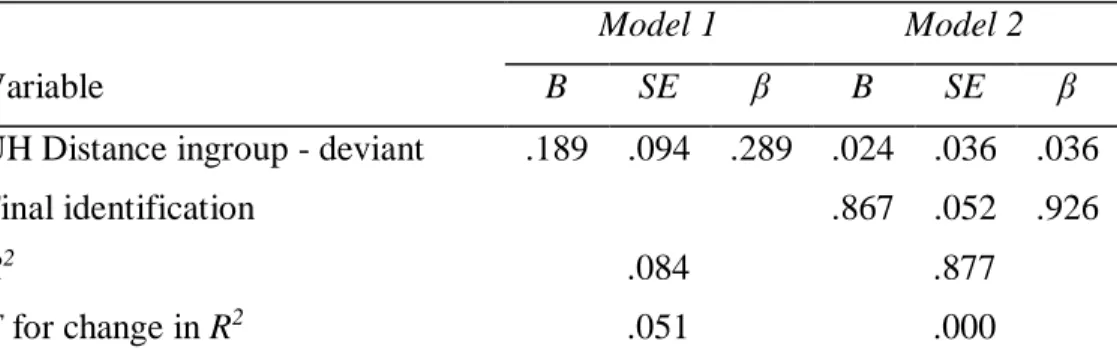
Table 1: Summary of hierarchical regression analysis for initial identification, distance of the deviant from ingroup, and final identification... 79
Section I Introduction
Chapter I. Dehumanisation
Dehumanisation is a psychological process that involves seeing others as less than human. Historically, the study of dehumanisation focused on the processes that justify interpersonal or intergroup conflicts. For Kelman (1973), one of the first authors to address this topic, dehumanisation provided an explanation for the mass violence that occurred in the context of genocidal policies, such as the Nazi Holocaust. Kelman argued that when people deprive fellow human beings of what makes them human, they are excluded from the human category. This replacement outside the category of humanness is what makes the moral restraints against killing more readily overcome. Opotow (1990) also defended that placing people outside the boundary in which moral values, rules, and considerations of fairness apply is what facilitates dehumanisation. The author argued that people morally excluded are seen as non-entities, denied basic humanness, and consequently harming them appears to be acceptable. Similarly, Bandura (1999) viewed dehumanisation as a psychological mechanism that allows the perpetrators to disengage from their damaging behaviour, after all dehumanised others worth less ethical treatment.
On the intergroup conflict’s side, Bar-Tal (1989) proposed that dehumanisation is a delegitimization strategy, that consists in a collective shared representation of outgroups as non-human (e.g., savages, monsters), that justify extreme intergroup violence, and provide it with a sense of superiority. The ongoing Israeli-Palestinian conflict is considered to be an example of a conflict that is fuelled by delegitimise representations of the respect ive sides, where the intervenients dehumanise the other group, perpetuating the violence and preventing a peaceful resolution (Oren & Bar Tal, 2006). Struch and Schwartz (1989) proposed that people are dehumanised when they are seen as lacking prosocial values or when their values are seen as incongruent with those of the perceiver’s ingroup. The authors found that intergroup conflict is associated with greater perceptions that an outgroup is in violation of pro-social values (e.g., helpfulness, forgiveness, and compassion), which increases support for outgroup negativity. In line with this reasoning, Esses, Veenvliet, Hodson, and Mihic (2008) found that Canadian participants express greater contempt for refugees and less support for Canadian refugee policies when refugees are described in a dehumanising manner (i.e., as violating moral values).
The theories described have in common a focus in blatant forms of dehumanisation that are believed to predict or justify violence at the interpersonal or intergroup level. Contemporary theorising, however, broadened the study of dehumanisation to more subtle
forms, emerging even in the absence of extreme intergroup violence. The main contributions for this new approach to dehumanisation were made by Leyens and colleagues (2001; 2007), with the Infrahumanisation account, and the Model of Dehumanisation proposed by Haslam (2006). Both approaches focused on the subtle tendency of scaling others on the human dimension (Haslam, 2015; Haslam, Loughnan, Kashima, & Bain, 2008; Leyens et al, 2000; 2003; Leyens, Demoulin, Vaes, Gaunt, & Paladino, 2007; Vaes, Leyens, Paladino, & Miranda, 2012). The present work will be developed within this framework, and from now on the term dehumanisation will be used to refer to this subtle bias, except when specific terminology is required.
Infrahumanisation Theory
In the beginning of the century, Leyens and colleagues developed a framework for the study of subtle dehumanisation. The authors begun to establish what it means to be human, recognising that there are some characteristics are uniquely human, and not shared with animals (Leyens et al., 2000). Intelligence, language, emotions, sociability and values were the uniquely human categories cited more often in Leyens and colleagues sample, which found correspondence with the features identified by other authors (Chulvi & Perez, 2003).
Building on the idea that humanness is a fundamental dimension of social judgment in intergroup relations, the authors developed an approach to the study of subtle dehumanisation that they called infrahumanisation. Leyens and colleagues (2000) focused on the emotional side of humanness, considering that the attribution or denial of uniquely human emotions as a form of intergroup differentiation had not been investigated yet, unlike other uniquely human dimensions, such as intelligence (Crocker, Major, & Steele, 1998) or language (Giles & Coupland, 1991). Furthermore, emotions are unlikely to depend on structural relationships between groups, and are not strongly associated with social norms that could enable social desirability, like intelligence or language (Demoulin et al., 2004b).
To test the infrahumanisation hypothesis that humanness is a fundamental dimension which groups reserve for their members, Leyens and colleagues analysed the differential attribution of uniquely and non-uniquely human emotions to the ingroup and outgroup (Leyens et al., 2001, for a review Leyens et al., 2007).
In a cross-cultural study, Demoulin and colleagues (2004a) tested the distinction between secondary or uniquely human emotions and primary or non-uniquely human emotions in lay theories. The results showed that people differentiate between emotions which
are considered uniquely human (e.g., admiration, pride, regret) from those which are not (e.g., joy, sadness, anger), showing a high agreement concerning the criteria that lead to this differentiation. Uniquely human emotions are caused by internal factors, are not easily observable, occur late in development, are not experienced in the same way by every people, and tend to last longer. On the other hand, emotions shared with other species are caused by external factors, are universally shared, are easily observed in others, and appear early in development. Rodriguez-Torres and colleagues (2005) also found evidence of the distinction between primary and secondary emotions, finding that it is a spontaneous categorisation used by lay people, which behaves like other meaningful categorisations. According to the authors, the distinction between primary and secondary emotions is useful for people precisely because it is an implicit differentiation which they are not aware of.
Demoulin and colleagues (2004a) also observed that uniquely human emotions are implicitly associated in memory with the human category. Participants associated uniquely human emotions to human beings faster than they did with animals. Moreover, the authors found that participants not only tend to associate more primary emotions with animals rather than humans, but also demonstrated some reluctance in associating these emotions with the human category.
Ensuring that emotions capture the essence of humanness, the infrahumanisation hypothesis was systematically studied in the last fifteen years. Using an attribution paradigm, Leyens and colleagues (2001) showed that people attribute more uniquely human emotions to their groups, and less to outgroups, suggesting that outgroups are seen as less human. No effect was found regarding non-uniquely human emotions, as these were equally attributed to both groups. Also, the greater attribution of uniquely human emotions to ingroup was independent of trait desirability, indicating that what drove participants’ trait choice was humanness and not ingroup bias. This effect was also tested in a within participants design (Cortes, Demoulin, Rodríguez-Torres, Rodríguez-Pérez, & Leyens, 2005; Gaunt, 2009), with the same results.
To ensure the generalisability of the infrahumanisation hypothesis, different paradigms were used, replicating the same conclusions. Paladino and colleagues (2002) used an adaptation of the Implicit Association Test (Greenwald, McGhee, & Schwartz, 1998), using groups with different status. In four studies the authors found that participants were faster at associating the ingroup to secondary emotions and outgroups to primary emotions, regardless of the emotions being positive or negative, and the outgroup possessing a lower or higher
status than the ingroup. Boccato, Cortes, Demoulin, and Leyens (2007) went further in a series of priming experiments by elucidating that what was causing the effect was actually the association between the ingroup and secondary emotions, and not an alternative association between the outgroup and primary emotions. Using a lexical decision task (Wittenbrink, Judd, & Park, 1997), the authors found that people were particularly quick in associating the ingroup with secondary emotions compared to the outgroup, while no differences were found for primary emotions.
An alternative explanation for the preferential attribution of uniquely human emotions to the ingroup was tested by Cortes and colleagues (2005). Taking into account Demoulin and colleagues’ (2004a) findings concerning the greater visibility of secondary over primary emotions, it would be reasonable to design the hypothesis that secondary emotions are more attributed to ingroup rather than outgroups because they are more difficult to identify, and are thus assigned to ingroup due to greater familiarity. However, this explanation was ruled out when the authors found that the familiar self was not more humanised than the ingroup or the outgroup, neither did participants attributed secondary emotions depending on the level of familiarity of different outgroups.
Finally, the Infrahumanisation Theory claims that what drives the differential attribution of uniquely and non-uniquely human emotions to ingroup and outgroups is the idea that one´s ingroup is fully human. Boccato, Capozza, Falvo, and Durante (2008) tested directly the association between the ingroup and the human concept in two studies, finding that participants associated the ingroup to human stimuli faster than they did with the outgroup. Vaes, Paladino, and Leyens (2006) also provided empirical support for this assumption, finding that, when primed with ingroup members (compared to outgroup members) who express themselves with secondary emotions, participants used more words related to uniquely human concepts in a word completion task. These results suggest that ingroup and outgroup members are perceived differently in human terms, and that the accessibility of the human concept is differently activated.
Although initially operationalised based on the differential attribution of uniquely and non-uniquely human emotions to ingroup and outgroups, the Infrahumanisation Theory was expanded to a non-emotional sphere. Viki, Winchester, Titshall, and Chisango (2006) used human-related (e.g., citizen) and animal-related (e.g., creature) words in a series of studies, concluding that participants differentiated the ingroup from the outgroup based on human-related words, whereas no such distinction was made regarding animal-human-related words.
Capozza, Boccato, Andrighetto, and Falvo (2009) also used another type of stimuli, this time human and ape faces, ambiguous and not ambiguous, finding that participants categorised ambiguous stimuli as ape more often in the ingroup than the outgroup condition. Vaes and Paladino (2010) also contributed to a different operationalisation of the infrahumanisation effect, by using stereotypical traits of the groups considered in the study.
Altogether, the infrahumanisation authors provided a tool to measure humanness, found evidence that ingroups are seen as more uniquely human when compared to outgroups, and emphasised the relative nature of the humanness intergroup differentiation, contrasting with the previous dehumanisation theories.
Although the subtle nature of this approach to dehumanisation, its consequences are not subtle at all. Indeed, seeing outgroup members as less human is a common and pervasive phenomenon that impacts negatively on people’s behaviour. For instance, people are more willing to help an ingroup member that expresses himself with uniquely human emotions, than an outgrouper in the same condition (Cuddy, Rock, & Norton, 2007; Vaes, Paladino, Castelli, Leyens, & Giovanazzi, 2003; Vaes, Paladino, & Leyens, 2002), demonstrate more avoidance reactions towards outgroup members (Vaes et al., 2003) and are less willing to take their perspective (Vaes, Paladino, & Leyens, 2004). The perception of uniquely human emotions also increases intergroup forgiveness in post-conflict situations (Tam et al., 2007), and impacts the support for reparation policies after wrong doing (Zebel, Zimmermann, Viki, & Doosje, 2008) and the empathy felt for a victim group (Cehajic, Brown, & Gonzalez, 2009).
Bi-Dimensional Model of Dehumanisation
Infrahumanisation represented an innovative approach to the study of humanness attribution, defining the human concept as that which is unique to our species. Haslam (2006; Haslam, Loughnan, Kashima, & Bain, 2008) extended the comprehension of dehumanisation, by considering that the animal distinction was not the only way to define humanness. The author took Kagan’s (2004) definition of how objects can be represented, i.e., either by its description, listing the core traits, or by comparison with the non-human, and proposed a bi-dimensional approach to represent humanness, including two senses, namely Human Nature and Human Uniqueness.
Attempting to demonstrate that the two senses of humanness did correspond to different constructs, Haslam, Bain, Douge, Lee, and Bastian (2005) used personality traits
from the five dimensions of the Five Factor Model (Costa & McCrae, 1992) and Schwartz’s (1992) values taxonomy. The authors found that not only the two representations of humanness correspond to different themes, but they are also uncorrelated. Human Nature referred to the central or typical traits, the core of human essence, involving emotionality, warmth, cognitive openness, agency, and depth. On the other hand, Human Uniqueness represents what is uniquely human, not shared with other species, comprehending civility, refinement, moral sensibility, rationality, and maturity.
If there are two distinct senses of humanity, then two distinct forms of dehumanisation should be expected (Haslam, 2006). When a person or a group is deprived of Human Nature traits, mechanistic dehumanisation takes place, linking humans to inanimate objects, portraying individuals as lacking warmth, emotion, individuality, and human essence. When a person or group is denied Human Uniqueness traits they are deprived from what distinguishes humans from animals, thereby linked subtly or overtly, to animals, and seen as lacking refinement, self-control, morality, and rationality. This form of animalistic dehumanisations draws a parallel with the infrahumanisation bias.
The evidence found by Haslam, Kashima, Loughnan, Shi, and Suitner (2008) supported this dehumanisation model. The authors developed a study in three distinct cultural samples (Australian, Chinese, and Italian) concluding that emotions and desires, Human Nature components, are the properties that best differentiate robots from humans, while properties involving high cognition and refined emotions, components considered uniquely human, are the ones that best differentiate humans from animals.
Subsequent studies demonstrated that different groups can use in a different manner the two types of humanness to differentiate their ingroup from outgroups, showing that the two types of humanness are contextually determined (Andrighetto, Baldissarri, Lattanzio, Loughnan, & Volpato, 2014; Bain, Vaes, Haslam, Kashima, & Guan, 2012; Bain, Park, Kwok, & Haslam, 2009).
The dual model extends beyond the Infrahumanisation Theory by incorporating the human-object distinction alongside with the human-animal distinction, which brings some innovations into the comprehension of the dehumanisation phenomena. First of all, it encompasses a new form of dehumanisation that relates to denials of Human Nature. Secondly, it can be applied to diverse forms of dehumanisation, subtle or blatant, like other models here discussed, and at the intergroup or interpersonal level, by bringing the self-humanisation effect into discussion. On the basis of Human Nature traits, the self can be
ascribed more humanness when compared with the generalised other (Haslam et al., 2005; Haslam & Bain, 2007; Haslam, Loughnan, Reynolds, & Wilson, 2007; Loughnan et al., 2010), which is not the case of the Uniquely Human dimension that operates at the intergroup level (Cortes et al., 2005).
Attribute, Metaphor, and Target Based Approaches to Dehumanisation
Humanness is a broad concept, as we have seen so far, and it can be either attributed or denied through different approaches.
Loughnan, Haslam, and Kashima (2009), in an attempt to integrate the different approaches to dehumanisation, started by differentiating between researches about dehumanisation that focus on the denial of human characteristics to others, the attribute-based approach, and those that focus on the association of others with non-human entities, the metaphor-based approach.
The attribute-based approach first defines and selects human characteristics and then verifies whether these are attributed differently to social targets. Research on infrahumanisation exemplifies this approach, focusing specially on the denial of uniquely human emotions to outgroup members (Boccato et al., 2007; Leyens et al., 2001; Paladino et al., 2002), as well as the work of Haslam and colleagues (Haslam et al., 2005; 2008), which selected different personality traits to measure dehumanisation.
Metaphor-based approaches focus directly in the possibility that outgroups are linked to a non-human entity, such as animals or robots. Throughout history there have been many examples of enemy descriptions containing direct references to animal images, namely during the Second World War where the Nazis called the Jews “rats”, or usage of the term “cockroach” to designate Tutsis during the Rwandan genocide. Goff, Eberhardt, Williams, and Jackson (2008) showed that this type of association still occurs today, and is not limited to intergroup conflict situations, by demonstrating that the association between Blacks and apes still persists in the mind of White Americans. The authors observed that White Americans tended to implicitly associate Blacks with ape images more often than they did with other wild animals, while none of these associations was observed on White targets. Furthermore, this association has negative consequences on Black compared with White criminals convicted of capital crimes, resulting in a higher probability of actually being executed (Goff et al., 2008, study 6).
Martínez, Rodríguez-Bailón, and Moya (2012) also focused on metaphors to measure animalistic and mechanistic dehumanisation. The authors used both explicit and implicit measures, concluding that while some outgroups are more associated with animal-related words (i.e., Gypsies), others are more associated with machine-related words (i.e., Germans).
Loughnan and colleagues (2009) were the first ones to show that attribute-based dehumanisation is strongly related with the attribution of the corresponding dehumanising metaphors. The authors gave participants a description of a fictitious group which either lacked one type of humanness or was associated with a non-human metaphor (animal or machine), verifying that participants were able to infer the attribute-based from the metaphor-based dehumanisation and vice-versa.
A new approach to dehumanisation was coined “target-based approach”, as a reference to the target to which humanness is attributed or denied, disregarding the specific characteristic that is denied to others (for a review on this topic see Vaes et al., 2012). This approach proposes that not only uniquely human characteristics are more attributed to ingroups, but also that characteristics attributed to ingroups are judged to be more human than those same characteristics attributed to outgroups. This assumption is supported by Paladino and Vaes’ (2009) findings, where the authors gave to the participants bogus information about their ingroup’s typical characteristics (for instance, Italians) as well as of different outgroups (Slavs, Albanians, and Belgians), but only half of the participants were correctly informed, whereas the other half received the typical ingroup and outgroups traits reversed. The authors found that when the characteristics were said in advance to characterise the ingroup, they would be rated more human than when said to characterise the outgroup. These findings were shown to be independent of the characteristics’ valence and type of traits used to describe the groups, suggesting that humanness is generalised to all kinds of things associated to our groups.
These results are in line with the ingroup projection model (Mummendey & Wenzel, 1999; Wenzel, Mummendey, Weber, & Waldzus, 2003), stating that people tend to project, and therefore to perceive the ingroup and its characteristics as more prototypical of the superordinate category (in this case humanness) than the outgroup and its characteristics.
Based on Paladino and Vaes’ (2009) conclusions, Vaes and Paladino (2010) formulated an operationalisation of humanness based on group stereotypes. The authors looked at the uniquely human content of stereotypes in a large set of intergroup contexts, using the warmth and competence divide proposed by the Stereotype Content Model (Fiske,
Cuddy, & Glick, 2007). Overall, Vaes and Paladino (2010) observed that ingroup stereotypes were judged more uniquely human than outgroup stereotypes, independently of the specific intergroup comparison situation, i.e., independently of the warmth or competence with which it was associated, the ingroup was seen as uniquely human. Moreover, a post-hoc analysis revealed that the ingroup stereotypes also differed in terms of competence and warmth as a function of the intergroup situation. Although similar variations in warmth and competence influenced the perception of the outgroup in human terms, the ingroup stereotypes remained invariably human.
These results reinforce the ones founded by Paladino and Vaes (2009), indicating that it matters to whom a trait is attributed, giving more support to the target-based dehumanisation. These results also highlight the distinction between the roles of ingroup and outgroup in differentiating both groups in human terms (Vaes et al., 2012).
In earlier formulations of the Infrahumanisation Theory (e.g., Leyens et al., 2000; 2003) it was defended that it comprised at the same time ingroup favouritism and outgroup derogation. Indeed, the Infrahumanisation Theory was conceptualised as deriving directly from Social Identity Theory (Tajfel & Turner, 1979), postulating that even in meaningless contexts the ingroup is seen as more uniquely human than the outgroup (Demoulin et al., 2009). Moreover, since the effect was consistently observed independently of valence, as we have already pointed out, it could not be explained by ingroup bias, including necessarily ingroup humanisation, and outgroup dehumanisation. Although the two biases often stand side by side, that may not always be the case (Brewer, 1999). Vaes and Paladino’s (2010) results support this latter case. In their study, the humanness distinction between ingroup and outgroup was mainly created through the ingroup humanisation, whereas in other contexts what divided the effect was the combination of the ingroup humanisation and the denial of humanity to the outgroup. Vaes and colleagues (2012) pointed out that this variation suggests that what guides the process of humanness attribution may differ in the ingroup and outgroup. Vaes and Paladino (2010) also signalised an issue which will turn out to be particularly relevant for this work. Although the literature on social stereotypes focuses largely on competence and warmth, a more recent set of studies showed that the two fundamental dimensions of perception are not the most important dimensions to positively distinguish the ingroup from the outgroup.
In fact, Leach, Ellemers, and Barreto (2007) found that morality is the most important dimension in order to feel good about the ingroup, and moreover it is largely independent of
competence and warmth. Furthermore, Brambilla, Sacchi, Rusconi, Cherubini, and Yzerbyt (2012) examined the importance of the three social dimensions for predicting reactions towards outgroups, showing that while doing a global impression of outgroup, participants were mostly affected by morality characteristics.
Vaes and Paladino (2010) confronted the ingroup with several outgroups that differed on competence and warmth, unfolding changes of perception on the two dimensions. Nevertheless, the ingroup perception in the human dimension remained unchanged, regardless of the comparasion outgroup’s competence and warmth. The authors considered that these results together with the ones founded by Leach and colleagues (2007) revealed the importance of deep-seated, uniquely human characteristics, such as morality, at describing one’s own group.
Having that in mind, we shall devote the next chapter to discuss the importance of morality within intergroup relations.
Chapter II. Morality
Moral considerations play an important role in society by asserting what is right or wrong in human conduct. Due to its centrality in human life, morality has been a popular topic among academics, although the approaches to its study have been particularly changeable over time (Haidt, 2008; Haidt & Kesebir, 2010). During the middle ages morality was defined by virtue-based approaches, where honour occupied a prominent place, a heritage of Aristotle´s ethical treat Nicomachean Ethics. In the post-Enlightenment era the approach to morality evolved to a deontological approach, emphasising logical and universal principles, independent of individual’s personal relations, or interpersonal consequences (Kant, 1797/2005). One still had to wait 200 years before the field of moral psychology departed from Philosophy, having its roots in Piaget’s (1965) and Kohlberg’s (1969) developmental approaches to moral intuitions and reasoning. However, it did not depart from the philosophical approach, in the sense that it did not incorporate the social-relational contexts in which moral judgements naturally occur. The cognitive-developmental approach to morality saw social influences as biases which may distort the expressions of moral judgements. Turiel (1983) put forward one of the most influential definition of morality within this approach, defining the moral domain as ‘‘prescriptive judgments of justice, rights, and welfare pertaining to how people ought to relate to each other’’ (p. 3).
For social psychologists the study of morality was first dominated by themes were close to the moral domain and had been longstanding interests in the field, such as honesty (e.g., Reeder & Brewer, 1979; Reeder & Coovert, 1986), justice (e.g., Leventhal, 1980; Lind, & Tyler, 1988; Thibaut & Walker, 1975), pro-social behaviour (e.g., Eisenberg et al., 1989; Isen & Levin, 1972), and empathy and egoism (e.g., Batson, O'Quin, Fultz, Vanderplas, & Isen, 1983). In fact, morality has become a current topic in Social Psychology ever since the 70s until now (Pagliaro, 2012), which is not surprising given its core role within social interactions (Rai & Fiske, 2011). What people consider morally ‘‘good’’ (Giner-Sorolla, 2012) is not just a purely individual question. As Leach, Bilali, and Pagliaro (2015) put it “if each individual operated under a purely idiosyncratic sense of morality, individuals would never have any sense of what others consider moral, and as a result would not know what actions to expect from others, and would have little basis for deciding how to act themselves.” Morality can therefore be conceptualised in different ways (trustworthiness, cooperation, justice, or caring), but it always concerns treatment of people within social relationships.
During the past few decades social psychologists have addressed more systematically the social implications of morality in interpersonal relations and group processes, within various fields (Pagliaro, 2012). As a result, researchers have discovered the central role of morality in social judgment (Brambilla, Rusconi, Sacchi, & Cherubini, 2011; Leach et al., 2007), for instance, the importance in self and ingroup evaluations (Ellemers, Kingma, van de Burgt, & Barreto, 2011; Epley & Dunning, 2000; Leach et al., 2007; Rodriguez Mosquera, Manstead, & Fisher, 2002a), and in forming impressions of other individuals or groups (Brambilla et al. 2011; 2012), or even group norms (Ellemers, Pagliaro, Barreto, & Leach, 2008; Pagliaro, Ellemers, & Barreto, 2011). These empirical researches have demonstrated the prominence of morality over other evaluative dimensions in determining the social judgments of individuals and groups (Ellemers, Pagliaro, & Barreto, 2013; Ellemers & van den Bos, 2012; Leach et al., 2015). In this chapter we will revise some of the literature from these areas, which will hopefully help to broader our understanding of morality’s role within social relations.
The Importance of Morality in Social Judgements
Being moral and acting morally are parts of one’s essential self (Blasi, 1983), despite of what people consider morally “good” may differ different groups and cultures (Sacheva, Singh, & Medin, 2011). What seems to be consistent is the importance that individuals attribute to morality matters. For instance, Rodriguez Mosquera and colleagues (2002a) examined samples from more (Spain) or less (Netherlands) honour oriented cultures, concluding that cultural values and norms can vary, but the importance of trustworthiness (a moral concern) is constant. The authors found that individuals were more likely to report negative feelings about themselves if they were thought to be dishonest or untrustworthy (vs. honest or trustworthy) (Rodriguez Mosquera, Manstead, & Fischer, 2002b).
People not only value morality, but also tended to see it more in themselves than in others. Epley and Dunning (2000) found that people tended to over-estimating one’s own morality, the “holier than thou” effect. University students in the U.S. tended to overestimate how much they would donate to charity, cooperate with a peer, or help a peer compared to their actual behaviour. Epley and Dunning (2000) found that this sense of individual morality was achieved mainly by over-estimating one’s own morality, rather than under-estimating others’ morality. A similar conclusion was drawn by Balcetis, Dunning, and Miller (2008) in a study with students from individualist (western Europe, US) and collectivist (Spain, China) societies. The authors found that individualists, like Epley, and Dunning’s participants, tended
to over-estimate the degree to which they would behave in a moral way. Similar to the “holier than thou” effect is the “Muhammad Ali effect”, a reference to the famous boxeur and to his not less famous claim to be “the greatest, not the smartest” (Allison, Messick, & Goethals, 1989). In Allison and colleagues studies, participants indicated they would be more likely to perform moral behaviours than other people, but not more likely to perform intelligent behaviours. Van Lange and Sedikides (1998) examined the reasons for this moral self-aggrandisement, finding that moral traits (in this case honesty) are believed to be more descriptive of the self than others, more desirable, more controlled and less verifiable than intelligence.
Morality is not only determinant to self-concept, it also dominates the impressions people form of others around them. When forming an impression of an individual or a group, people are confronted with a variety of information comprising traits and behaviours (Neuberg, & Fiske, 1987; Reeder & Brewer, 1979; Skowronski & Carlston, 1987). Several studies have shown that two fundamental dimensions of perception underlie this information, usually labelled as agency and communion (Abele & Wojciszke, 2007) or competence and warmth (Cuddy, Fiske, & Glick, 2008; Fiske, Cuddy, Glick, & Xu, 2002). Despite differences in names there is a wide agreement on the common core underlying each of those dimensions (Abele, Cuddy, Judd, & Yzerbyt, 2008). However, recent experimental work by Leach and colleagues (2007) demonstrated that the warmth dimension actually encompasses two distinct aspects, distinguishing between sociability and morality. Whereas sociability refers to cooperation and intention to connect with others (e.g., friendliness, likeability), morality refers to perceived correctness of social targets (e.g., honesty, sincerity, and trustworthiness). Although morality and sociability traits can be seen as falling along the same general dimension of evaluation (namely, warmth), they are conceptually distinct and play different roles at group and individual levels (Leach et al., 2007). A substantial amount of research has examined the importance attached by people to moral information when perceiving others behaviour or intentions (e.g., De Bruin, & van Lange, 2000; Martijn et al., 1992; Wojciszke, 2005; Wojciszke, Bazinska, & Jaworski, 1998), but generally encompassed traits that indicate both morality and sociability. Taking into account the evidence found by Leach and colleagues (2007) regarding the independence of the two dimensions, research has shown that people favour information indicating morality rather than sociability or competence in interpersonal and intergroup relations (Brambilla & Leach, 2014; Landy, Piazza, & Goodwin, 2016). When asked to form a global impression, Brambilla and colleagues (2011) found that
participants were more interested in gathering information about individual’s morality (such as sincere, honest, righteous, trustworthy, and respectful) than their sociability (such as kind, friendly, warm, likeable, helpful) or competence (intelligent, competent, efficient, skilful, and capable). Pagliaro, Brambilla, Sacchi, D’Angelo, and Ellemers (2013) examined how information about morality and competence impacts on people’s behavioural intentions towards a newcomer at work. Following the procedure developed by Brambilla and colleagues (2011), employees of primary schools received a short page with trait information describing the degree of morality and competence of a prospective school manager. The school employees reported a more positive emotional and behavioural response towards the prospective new manager when he was described as a moral (vs. immoral) person. By contrast, the competence of the prospective school manager impacted less strongly on the emotional responses, and had no impact on the behavioural intentions reported by school employees.
Individuals attend to others’ morality because it is an important guide on how to interact with them, but also on what to expect from them. People are so adept at inferring others’ morality that they do this very quickly and spontaneously in interactions, on the basis of very little information. Willis and Todorov (2006) exposed participants to novel faces for either 1/10th of a second, half a second, or one second. Then participants would judge the faces on attractiveness, likeability, honesty, trustworthiness, competence, and aggressiveness. The authors found that even when exposed to the faces for only 1/10th of a second, participants were able to made very quickly (in about 1.7 seconds) fairly confident judgments of people’s honesty and trustworthiness, whereas judging non-moral traits (such as likeability and competence) took longer. Self-reports also indicate that in social interactions people primarily express an interest in understanding whether someone’s intentions are beneficial or harmful, rather than whether or not they are competent in enacting those intentions (e.g., Cuddy et al., 2008). When disclaiming others intentions are at quest, nothing is more informative than morality.
The Inferential Power of Morality
In social interactions people are primarily concerned about others’ moral character, so they can infer whether someone's intentions are beneficial or harmful, whether this interaction will represent an opportunity or a threat (e.g., Abele & Wojciszke, 2007; Cuddy et al., 2008; Fiske et al., 2007; Wojciszke, 2005; Wojciszke, Bazinska, & Jaworski, 1998). Cottrell and Neuberg (2007) found that people consider trustworthiness as the most important
characteristic for the ideal other to have. Without information about trustworthiness it is difficult to ensure someone’s moral character, and rely in their beneficial intentions (Leach et al., 2015).
When faced with negative information the inferential search about another´s morality is heightened. Those are the so called negativity effects – the greater impact of negative evaluative information rather than of equally intense positive stimuli when forming an impression of others (Peeters & Czapinski, 1990) – which are particularly pronounced in the case of morally relevant behaviours. Martijn, Spears, van der Pligt, and Jakobs (1992) found that while forming an impression of another´s morality, people place greater weight on negative information than on positive information, but do not do so with competence. In fact, people search mostly for evidence of immorality because immoral behaviours are taken to be specially diagnostic of a person's moral character (Reeder & Coover, 1986; Trafimow & Trafimow, 1999). Skowronski and Carlston (1987) found that dishonest behaviours are more diagnostic of immorality than honest behaviours are predictive of perceived morality. People expect dishonest people to act dishonestly, whereas both honest and dishonest people may act honestly because honest behaviour is normative (Reeder & Brewer, 1979).
Individuals seem to share a concern for evaluating others’ morality since doing so is essential for choosing how to interact with them. This concern can be particularly relevant in the case of outgroups; knowing outgroups morality can disclaim whether we are facing a threat, or whether their intentions are beneficial.
Morality in Outgroups
A few studies addressed the moral content of outgroup stereotypes. In a cross-national research, Phalet and Poppe (1997) investigated the role of competence and morality, finding that participants viewed morality as a more desirable characteristic for outgroups to possess than competence. Leach, Minescu, Poppe, and Hagendoorn (2008) also addressed outgroup stereotypes, stressing the importance of examining both the generality and the specificity of stereotype content. The authors characterised views of two contrasting outgroups, Chechens and Jews, examining whether the power and benevolence dimensions, and the more specific characteristics that fall along them (e.g., trustworthiness, peacefulness, antagonism), offer complementary characterizations of the stereotypes of these two outgroups.
Leach and colleagues (2007) had already established the independence of morality and sociability, showing that these two dimensions represent distinguishable clusters of traits that
individuals ascribe to groups. In the third study the authors showed that the specific characteristics of morality (i.e., honest, sincere) and sociability (i.e., warm, likeable) were related to the positive evaluation of outgroups, depending on ingroup success. When an outgroup was said to be more successful than the ingroup, the perceived outgroup’s morality was more important to positive evaluation than its perceived sociability. However, when this same outgroup was said to be less successful than the ingroup, it was the perceived sociability of the outgroup that was more empirically important to participants’ positive evaluation of the outgroup. These results showed that although the characteristics of sociability and morality fall along the general dimension of benevolence, they capture different facets of benevolence, and hence should be treated as different dimensions of group perception (Leach, et al., 2015). Building on Leach and colleagues’ work, Brambilla et al. (2012) examined the importance of morality, sociability and competence on individual’s impressions of outgroups. The authors instructed Italian students to imagine that an unfamiliar ethnic group, described as high or low in one of the three dimensions, would be immigrating to Italy in the next year. Participant´s global impression of the outgroup was most affected by morality traits; when described as morally high, the outgroup was evaluated more positively, on the contrary, when described as morally low, the outgroup was more negatively evaluated. In a third study, the authors investigated the link between morality and the experience of threat, finding that the more the members of the unknown outgroup were perceived as immoral, the more they were perceived as representing a threat.
Later on, in a new series of studies, Brambilla, Sacchi, Pagliaro, and Ellemers (2013) addressed this question. Italian students were asked to evaluate a target who was presented as an ingroup member (Italian descent) or outgroup member (Indian descent); to indicate if they felt threatened by the target (i.e., in terms of the group’s identity or the group’s safety); and finally, to indicate their behavioural intentions to approach (e.g., cooperate with) or avoid (e.g., distance themselves from) the target. The morality of the target was found to be the only dimension that significantly affected participants’ experiences of threat, as well as their behavioural intentions. However, the impact of the target’s morality differed depending on whether the target represented an ingroup or an outgroup member. The ingroup target lacking morality was experienced as a threat to the image of one’s group, whereas the immoral outgroup target was seen as representing a threat to the safety of one’s group. Even though both ingroup and outgroup targets raised behavioural avoidance rather than approach intentions when lacking morality, the desire to avoid the target was mediated by the
experience of group image threat in the case of an ingroup target, and by experiencing group safety threat in the case of an outgroup target.
Although people seem willing to avoid outgroup and ingroup targets which lack morality, they do so for different reasons. Avoiding immoral outgroups is a question of group safety, whereas avoiding an immoral ingroup member is a way of cutting implications for the image of the group.
Morality in Ingroups
According to the Social Identity Theory (Tajfel & Turner, 1979) any dimension of evaluation can serve as basis for a positive ingroup evaluation, which has probably discouraged much of the empirical research at considering the nature of the dimensions of evaluation to be theoretically meaningful (Ellemers et al., 2013). Leach and colleagues (2007) were the first to consider the importance of morality for a positive ingroup identity, examining the role of morality for the group-level self-concept. In a series of studies the authors used different methods and different ingroups, and consistently found that participants considered morality traits (honest, sincere, trustworthy) as a primary source of ingroup virtue, and suggested that positive evaluations of a group in terms of morality can contribute more to a positive social identity than traits can indicate the group’s competence (competent, intelligent, skilled) or sociability (likable, warm, friendly). Moreover, morality also revealed to be determinant for ingroup identification, with participants reporting identification with an experimentally created ingroup only depending on how moral they though it to be.
In a final set of studies, Leach et al. (2007) resorted to bogus information about ingroup level of morality, sociability, and competence, finding that ingroup pride only depended on the perceived morality of the group. Furthermore, only when the morality of the ingroup seemed deficient did participants distanced themselves from the group, by emphasising intragroup differences or claiming they were different from other group members. Informing the participants that their group lacked competence or sociability did not contribute to the tendency of distanciating the self from the ingroup. These results point in the same direction the aforementioned results of Brambilla et al. (2013).
Taken together, these evidences suggest that morality plays a role in groups’ behavioural regulation. Ellemers and van den Bos (2012) addressed this topic arguing that shared moral standards help individuals defining who they are and where they belo ng, by providing them with self-relevant behavioural guidelines that they can use to express a
distinct and specific group-based identity. Identifying what is “right” or “wrong” can be used to judge whether the individual is a good group member, with social exclusion being the ultimate consequence for those who do not behave in line with group morals.
Pagliaro and colleagues (2011) showed that group members followed moral norms because they believed that such behaviour earned them the respect of fellow ingroup members, regardless of the specific behaviour prescribed by the norm. But when the group norms are not followed the ingroup can react against the deviant. Prior work on the black sheep effect has demonstrated that people tend to distanciate and exclude ingroup members that deviate from the group’s norms (Marques, Yzerbyt, & Leyens, 1988).
When members of a particular social group agree upon specific moral standards, this provides them with a definition of what is considered to be right and wrong within their group - which is not necessarily shared with other groups (Ellemers et al., 2013). Taking the social identity approach into account, different behaviours, values, or goals, may be seen to characterise one’s group, depending on whether and how these may contribute to the group’s distinct identity. This means that, in principle, even negatively valenced group characteristics may fulfil the aim of establishing a distinct group identity (Mlicki & Ellemers, 1996). Ont the other hand, and given what was already exposed about the importance of morality, for groups and for self-concerns, to be seen as immoral may jeopardize the positive and distinct group identity. In this case, the group members will do everything to defend ingroup’s moral self-image against the threat represented by wrongdoing (e.g., Iyer, Jetten, & Haslam, 2012).
Some research has showed how groups deal with ingroup wrongdoings. For instance, Castano and Giner-Sorolla (2006) confronted European American students with historical evidence regarding the mass killing of Native Americans. Those who were told that the mass killing was an intentional extermination saw Native Americans as less human. The dehumanisation of the victim outgroup served to reduce the perceived responsibility of European Americans and to legitimise the violence. Because the same standards of morality are thought not to apply to sub-humans or non-humans, violence against such outgroups is not perceived as a moral violation (Kelman, 1973; Opotow, 1990). Despite moral norms and codes being often said to apply universally – to all people under all circumstances – it seems to depend largely on the appreciation of others humanness. If we are not seen as equally human (Leyens et al., 2007), then the moral treatment that we inspire should be different too.
It seems clear then that morality stands in relation with dehumanisation. In the next chapter we will revise some of the investigation relating these two topics.
Chapter III. Dehumanisation and Morality
By principle, every person deserves moral treatment simply by virtue of being human (Haslam, Bastian, Laham, & Loughnan, 2012). However, as we have already seen, humanness is not universally ascribed to everyone. When we see others as fully human, we see them as deserving moral treatment and concern about their well-being. However, when people are not seen as fully human, they are excluded from the moral circle, and consequently their suffering becomes less visible and our willingness to help them decreases (Bastian, Costello, Loughnan, & Hodson, 2012; Cuddy, Rock, & Norton, 2007; Opotow, 1990). Moral standing and moral action are therefore entwined with humanness, having great consequences in various social domains.
In the beginning of the first chapter we referred to some studies that focused on moral exclusion and more blatant forms of dehumanisation. In this chapter we will cover some work that links the study of humanness and subtle dehumanisation with moral psychology.
Mind Perception, Moral Status, and Humanness
Recently research linked the perception of mind with moral status. Gray, Gray, and Wegner (2007) began to demonstrate that mind attribution falls along two separate dimensions, namely Agency and Experience. In an international survey they asked people to evaluate the Agency, Experience, and the moral standing of different entities, including a dog, a normal adult, a child, a person in a vegetative state, a foetus, a robot, a dead person, a chimpanzee, and God. The authors found that moral standings tapped on moral rights, by asking which entities would be the most difficult for the participants to harm – which entities deserved more protection from harm – and which entities should be more punished for causing someone’s death – moral blame. The results showed that people perceived the minds of these entities along the two mentioned mental dimensions (Agency and Experience), and more important, that those two dimensions of mind predicted the entities moral standards.
Agency is the capacity to do and intend, and includes mental capabilities such as thinking, self-control, and communication, and endows an entity with moral responsibility and warranted punishment for killing another. Experience is the general capacity for sensation and feeling, and includes attributes such as emotion, consciousness, and personality, which determine whether an entity deserves moral rights and protection from harm. Those perceived as having more agency are moral agents – entities capable of doing good or evil, right or
wrong – and those perceived with more experience are moral patients – capable of experiencing good or evil, right or wrong, done to them (Gray & Wegner, 2012).
These dimensions are generally independent, which means that an entity can have agency without experience or experience without agency. More broadly, this demonstrates that mind-having is not simply a matter of degree (less vs. more) but of type (agency, experience, or both). These two dimensions of mind map onto other dimensions through which we perceive others, including warmth (experience) and competence (agency; Fiske et al., 2007) as well as Human Nature (experience) and Human Uniqueness (agency; Haslam et al., 2008; 2012).
Bastian, Laham, Wilson, Haslam, and Koval (2011) confirmed this pattern in relation to perceived humanness, finding that people seen as lacking uniquely human traits were viewed as less blameworthy and punishable for immoral behaviour, whereas people seen as lacking Human Nature were judged less worthy of protection, less capable of rehabilitation, and less deserving of praise for moral behaviour. These results indicate that basic aspects of moral status are associated in distinctive ways with the dimensions of humanness.
Bastian and colleagues (2011) established the relation between Human Uniqueness and moral blame for immoral behaviour. However, in later studies a different pattern of results was found. Bastian, Denson, and Haslam (2013) found that the more dehumanised was the agent of an immoral behavior, the more morally blame he was considered to be.
The authors analysed the impact of dehumanisation and moral outrage in retributive justice, in response to criminal behaviour. Bastian and colleagues (2013) found that people feel morally outraged by harmful crimes, and dehumanise the perpetrators of these crimes. They also found that the more dehumanised was the agent of the criminal behaviour, the more morally blamed he was considered to be. Although they used a unique measure for dehumanisation that comprises both Human Uniqueness and Human Nature, the relation between humanness and moral blame took a different direction from the one found in the previous studies developed by Bastian and colleagues (2011). The authors later advanced the hypothesis that these differences were due to the nature of the behaviour; when dehumanisation appears in response to criminal behaviour, it can be combined with the moral character of the individual, leaving his responsibility unchanged.
Overall, it seems that the extent to which individuals or groups are ascribed or denied humanness is therefore likely to affect the everyday moral judgments involving them. On the other hand, immorality also seems to have some costs in the perception of humanness.
The Humanness Costs of Immorality
Acting or being viewed as immoral has costs for the humanness of individuals, ingroups, and outgroups. For instance, Bastian and Haslam (2010) analysed the effects of social ostracism, behaviour considered immoral, in dehumanisation. The authors found that when people were ostracised they judged themselves and those who ostracised them as less human and believed they were also viewed as less human by the perpetrators.
Bastian, Jetten, Chen, Radke, Harding, and Fasoli (2013) extended these results, by examining how people evaluated themselves in response to their own harmful behaviour. The authors found that when engaging in the social ostracism of others, people see themselves as less human. Specifically, the authors provided evidence that perpetrators of social ostracism see themselves as less human compared with when they engage in a more positive interpersonal interaction. Moreover, they showed that it was the perceived immorality of one’s behaviour that which explained the self-dehumanisation process. In contrast with the moral disengagement literature, these studies highlight that self-dehumanisation also arises from engaging with the moral consequences of behaviour.
As stated in the previous chapter, dehumanising others may also serve to reduce the affective and moral consequences of one’s actions. In the above cited studies, Castano and Giner-Sorolla (2006) used different ingroups (humans, British, White Americans) and outgroups (aliens, Australian Aborigines, and Native Americans), finding that when participants were made aware of ingroup’s mass killing of outgroup members, they dehumanised the victims more. The perception of collective responsibility, not just the knowledge that outgroup members had died in great numbers, was shown to be necessary for this effect. Dehumanisation also occurred concurrently with increased collective guilt but was unrelated to it. The authors proposed that dehumanisation might be a strategy for people to reestablish psychological equanimity when confronted with a self-threatening situation and that such a strategy may occur concomitantly with other strategies, such as providing reparations to the outgroup. This follows the idea that denying full human status to the victims allows people to disengage self-sanctions (Bandura, 1999).