43 | Revista GEAMA, Scientific Journal of Environmental Sciences and Biotechnology, 6 (2): 43-50, Agosto, 2020, Online version ISSN: 2447-0740
6
2
Revista GEAMA – Ciências Ambientais e Biotecnologia
Scientific Journal of Environmental Sciences and Biotechnology
ISNN: 2447-0740
ARTIGO
Nutritional status, nutrient accumulation and yield of corn grown in
Yellow-Red Oxisol
Estado nutricional, acúmulo de nutrientes e produtividade de milho cultivado em
Latossolo Vermelho-Amarelo
Mauro Wagner de Oliveira
1, Vinicius Santos Gomes da Silva
2, Andréa Renilda Silva Soares
2, Terezinha
Bezerra Albino Oliveira
1, Denise de Santana Silva
2, Polyana Albino Silva Machado
31 Universidade Federal de Alagoas, Centro de Ciências Agrárias, Alagoas, Brasil. 2 Instituto Federal de Pernambuco, Campus Vitória de Santo Antão, Pernambuco, Brasil. 3 Universidade Federal de Viçosa, Departamento de Veterinária, Minas Gerais, Brasil.
Contato: [email protected] Palavras-Chave balanço nutricional BM 3066 PRO2 diagnose foliar forragem Zea mays L. RESUMO
Devido sua elevada produção de biomassa, o milho extrai e acumula grandes quantidades de nutrientes do solo. Objetivou-se com o presente trabalho, avaliar o estado nutricional, acúmulo de nutrientes, balanço de macronutrientes primários e a produtividade do híbrido de milho BM 3066. Para tanto, se realizou uma amostragem de forma sistemática, em sete áreas da lavoura de milho cultivado em um Latossolo Vermelho-Amarelo. Com relação ao estado nutricional, as plantas não apresentaram deficiência de nutrientes. Os teores foliares apresentaram a seguinte ordem decrescente de concentração N > K > Ca > P > S > Mg > Fe = Mn > Zn > B > Cu. Nas avaliações biométricas, verificou-se uma altura média das plantas de 2,42m, enquanto que a inserção da primeira espiga foi observada em média a 1,52 m. A produção de biomassa verde e seca foi 57,17 e 18,36 t ha-1, respectivamente. O acúmulo de macronutrientes primários na biomassa aérea das plantas foi 235,95 kg ha-1 de N, 36,99 kg ha-1 de P e 225,53 kg ha-1 de K. Para o balanço de nutrientes, constatou-se que foi positivo para nitrogênio (9,1 kg) e fósforo (22 kg), mas negativo para potássio (-15 kg). Key-word nutritional balance BM 3066 PRO2 foliar diagnosis forage Zea mays L. ABSTRACT
Corn extracts and accumulates high amounts of soil nutrients due to its high forage yield. The aim of this study was to evaluate nutritional status, nutrient accumulation, and forage yield of corn hybrid BM 3066 PRO2, as well as primary macronutrient balance in the soil-plant system. Thus, a systematic sampling was carried out in seven crop areas of corn grown in a Yellow-Red Oxisol. Plants did not show nutrient deficiency. Leaf contents had the following decreasing order of concentration N> K> Ca> P> S> Mg> Fe = Mn> Zn> B> Cu. Biometric evaluations were carried out and we found average plant height and first ear insertion height of 2.42m and 1.52m, respectively. Fresh and dry biomass yields were 57.17 and 18.36 t ha-1, respectively. The accumulation of primary macronutrients in plant shoot biomass was 235.95 kg ha-1 N, 36.99 kg ha-ha-1 P and 225.53 kg ha-ha-1 K. Nutrient balance was positive for nitrogen (9.1 kg) and phosphorus (22 kg), but negative for potassium (-15 kg).
Informações do artigo
Recebido: 28 de janeiro, 2020 Aceito: 17 de agosto, 2020 Publicado: 29 de agosto, 2020
44 | Revista GEAMA, Scientific Journal of Environmental Sciences and Biotechnology, 6 (2): 17-24, Agosto, 2020, Online version ISSN: 2447-0740
Introdução
Corn is a crop that has a huge expression within the world agricultural scenario, and it is a highly cultivated and consumed cereal grain. The importance of corn is due to its varied use, such as in human and animal nutrition, and more recently in the production of ethanol, used as biofuel in several countries (SALLA et al., 2010; ECKERT et al., 2018; ARTUZO et al., 2019).
In regards to animal feed, it is important to highlight that corn silage is one of the best fodder for dairy cows. Being the genotype, soil fertility and crop management, the variables that generally influence forage yield, bromatological composition and silage quality. (KHAN et al., 2015; SILVA et al., 2019).
Dairy farming is an activity of great
socioeconomic importance in the Zona da Mata Mineira region, where the use of corn to feed dairy cows is a prominent alternative to reduce the costs related to cattle feed, the most costly item in determining production costs. The prospect of expansion of the crops in the region is associated with this activity and, therefore, requires proper management by farmers to reach higher forage yields. To lower the cost of producing high quality silage, livestock farmers have invested in a variety of technologies, including soil preparation, correcting topsoil acidity, using agricultural gypsum, chemical fertilization at planting and topdressing, using organic compost originating from animal waste, crop rotation, and sowing corn genotypes responsive to fertilization and which have high percentage of grains in the biomass to be ensiled.
Regarding genotype selection, the crop has been the target of genetic improvement programs aimed at obtaining materials that meet the adversities found in the field and adapting to existing soil management (OLIVEIRA et al., 2017; NASCIMENTO et al., 2018). For genotypes to express their maximum yield potential, efficient nutritional management is necessary. Because of its high forage yield, corn extracts high amounts of nutrients from the soil and accumulates them in its biomass (MENDONÇA et al., 2014; OLIVEIRA et al., 2019). It is also important to highlight that because of the large removal of nutrients when harvesting all the corn shoots for ensilage, one should be aware of the negative nutrient balance in the soil-plant system to avoid decreases in yield and forage quality of future crops (ADAMTEY et al., 2016).
In order to adopt an efficient nutritional management of the corn field, different techniques can be combined, such as assessing nutritional status through leaf diagnosis, estimating nutrient accumulation in shoot biomass and assessing nutrient balance in the soil-plant system. These tools also allow us to supply adequate amounts of essential nutrients required by the plant, thus allowing for increased yield and rational use of available resources.
Based on these considerations, this study aimed to evaluate nutritional status, nutrient accumulation, and forage yield of corn hybrid BM 3066 PRO2 grown in a Yellow-Red Oxisol, as well as primary macronutrient balance in the soil-plant system.
Material and Methods
Characterization of the experimental area
The experiment was carried out in a corn field located in the city of Mercês (21º11'39"S, 43º20'29"W), Zona da Mata region of Minas Gerais, Brazil (Figure 1). The climate of the study area is subtropical highland according to the Koppen (1936) classification, with rainfall during summer. Temperatures vary between 24 °C (average maximum) and 13.8 °C (average minimum) and the annual average temperature is 18 °C. The average annual rainfall is approximately 1,200 mm, with a water surplus from October to April. The relief varies from flat to gently rolling. The soil used is of sandy texture and it was classified as a Latossolo Vermelho - Amarelo distrófico (EMBRAPA, 2013).Figure 1. Location of the experimental area
Source: Authors (2020)
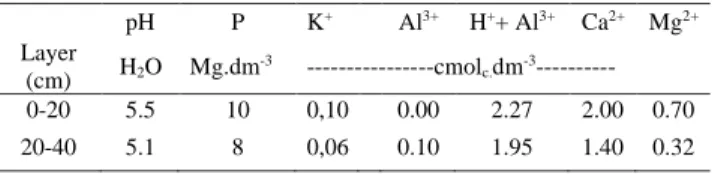
Soil samples were collected at the 0-20 and 20-40 cm layers to evaluate soil fertility prior to the instalment of the experiment. We determined pH (H2O), Ca2+, Mg2+, K+, Al3+ and P. Calcium, magnesium and aluminum were extracted with KCl 1.0 mol L-1 and quantified by titration. Potassium was extracted with Mehlich-1 and determined by flame photometry. Phosphorus was determined by the Resin method. Analysis was carried out according to the methodologies described by Teixeira et al. (2017).
Limestone was manually applied to raise base saturation in the topsoil to 70%. The soil was plowed and harrowed in the first week of October 2017. The rainy season for planting was chosen because the experiment was conducted under rain-fed conditions. Three days later, the corn hybrid BM 3066 PRO2 was sown with a planter at a depth of 5 cm with 0.70 m row spacing and plant density of 5 plants/linear meter.
For planting fertilization, we used fertilizer 10-30-10 at a dose of 450 kg.ha-1, obtained by mixing of
potassium nitrate (KNO3) and mono-ammonium
phosphate (NH4H2PO4). Glyphosate and atrazine were used for weed control after corn emergence (a dose of 3.0 liters of the commercial product of each herbicide). At the phenological stage of three leaf pairs, topdressing was performed using 1,000 kg of fertilizer 20-00-20 per hectare. The fertilizer was buried between the corn rows to avoid possible volatilization losses (OLIVEIRA et al., 2018).
Mauro W. de Oliveira, Vinicius S. G. da Silva, Andréa R. S. Soares, Terezinha B. A. Oliveira, Denise de S. Silva, Polyana A. S. Machado
45 | Revista GEAMA, Scientific Journal of Environmental Sciences and Biotechnology, 6 (2): 43-50, Agosto, 2020, Online version ISSN: 2447-0740 Table 1. Chemical analysis of the soil of the study area at 0-20 and
20-40 cm pH P K+ Al3+ H++ Al3+ Ca2+ Mg2+ Layer (cm) H2O Mg.dm -3 ---cmol c.dm-3--- 0-20 5.5 10 0,10 0.00 2.27 2.00 0.70 20-40 5.1 8 0,06 0.10 1.95 1.40 0.32 Source: Authors (2020)
To characterize the behavior of the genotype and its yield potential, we carried out biometric evaluations of plant nutritional status, forage yield, nutrient accumulation and nutrient balance. Thus, systematic sampling was carried out in seven areas of the corn crop. Each sample area consisted of 4.9 m² (seven linear meters, 0.7 m row spacing), for to reduce border effect.
Assessment of plant nutritional status
Nutritional status was evaluated during the stage of female inflorescence emission, 60 days after the planting of corn, by quantifying leaf nutrient contents. To evaluate each sample area, we collected fully expanded leaves opposite and below the first (superior) ear. After the leaves were collected, the midrib was cut, washed and then dried in a forced air oven at 65 °C for 72 h. The samples were ground in a Wiley mill, and the macronutrient (g.kg-1) and micronutrient (mg.kg-1) contents were subsequently determined following to the method described by Malavolta et al. (1997).Biometric variables and forage yield
When shoot biomass had an average of 33% dry matter, we evaluated the plant height, ear insertion height and forage yield. At each sampling, the height and insertion of the first ear of ten plants were measured.Fresh matter accumulation (FMA) was obtained by harvesting all plants of the 4.9 m2 sample area, Then, we estimated fresh matter accumulation per hectare. Afterwards, the fresh plant material was put through a forage chopper, subsampled and dried in a forced air oven at 65 ° C for 72 h to obtain dry matter. The accumulation of dry matter was obtained by multiplying the accumulation of natural matter by the dry matter content and then estimated in t.ha-1.
Primary macronutrient accumulation and balance
To determine nitrogen, phosphorus and potassium contents in corn shoots, the dry plant material was ground in a Wiley mill and then analyzed for nutrient content following the methods of Malavolta et al. (1997). The accumulation of N, P and K in shoots was calculated by multiplying the shoot dry matter weight by the nutrient content.The balance of NPK in the soil-plant system was assessed considering chemical fertilizers as nutrient inputs and the removal of these nutrients by corn by harvesting the shoots as output.
Data analysis
Based on the results of the evaluation of the plant nutritional status, forage yield, plant height and nutrient accumulation, the data was evaluated by descriptive statistics, using the following measures: average, maximum and minimum values and coefficient of variation.
Results and Discussions
Plant nutritional status
Leaf N contents ranged from 31.8 to 39 g.kg-1, showing an average of 36 g.kg-1 (Table 2). This demonstrates that the corn crop had N content above the sufficiency range considered adequate by Raij (2011) (Figure 2). Martins et al. (2016) evaluated the agronomic performance of two corn genotypes (P30F53 and P30F53 YH) as a function of seed treatment with biostimulants and found leaf N content of 40 g.kg-1, which is 8% higher than that found in this study. Costa et al. (2016) studied corn nutrition in different crop systems and fertilizer sources and found a leaf content of 21 g.kg-1.
The high availability of nitrogen may perhaps be explained by the successive cultivation of corn for several years and proper N fertilization. It may also have been the result of soil correction and tillage (plowing and harrowing), which increase soil microbial activity and mineralization rate of soil organic matter, especially of the previous crop residues. Thus, the nitrate content in the soil solution increases and this increase associated with the high availability of phosphorus (as a result of fertilization) results in higher plant nitrate uptake efficiency (OLIVEIRA et al., 2018).
Table 2. Leaf macronutrient contents in corn hybrid BM3066 grown in Yellow-Red Oxisol Sampling N P K Ca Mg S --- g.kg-1---. 1 37.0 2.9 25.2 5.0 1.9 2.5 2 39.0 3.1 26.9 4.8 1.9 2.2 3 35.4 2.8 28.1 4.4 2.2 2.4 4 31.8 2.8 27.4 4.3 2.3 2.0 5 34.6 3.0 25.7 5.4 2.1 1.9 6 38.3 3.4 32.1 4.6 2.4 2.4 7 36.5 2.7 27.9 5.3 2.0 2.3 Average 36.0 2.96 27.61 4.83 2.11 2.24 C.V. (%) 6.74 8.02 8.16 8.84 9.23 9.92 Source: Authors (2020)
The average leaf P content was 2.96 g.kg-1. This indicates that the plants were within the range considered appropriate by Raij (2011) at the time of sampling (Figure 2). These results allow us to state that P was not limiting to plant growth. This was expected because of the high P availability in soil (10 mg.dm-3 P at 0-20 cm) (Table 1) combined with phosphate fertilization at planting.
Potassium contents in corn leaves ranged from 25.2 to 32.1 g.kg-1 (Table 2), with an average of 27.61 g kg-1, which is within the range considered appropriate by Raij (2011) (Figure 2).
46 | Revista GEAMA, Scientific Journal of Environmental Sciences and Biotechnology, 6 (2): 43-50, Agosto, 2020, Online version ISSN: 2447-0740 Figure 2. Macronutrient levels in corn leaves compared to the maximum
and minimum levels cited by Raij (2011)
Source: Authors (2020)
Ueno et al. (2013) evaluated the performance of hybrid SG 6010 for silage production and found leaf K contents of 29.37 g.kg-1, while Minato et al. (2017) found an average K content of 22.8 g.kg-1.
The adequate K leaf contents are most likely a result of planting (37.5 kg.ha-1) and topdressing (166.7 kg. ha-1) fertilization. This is because at the time of installation of the study, soil contents both at 0-20 cm (0,10 cmolc.dm -3) and 20-40 cm (0,06 cmol
c.dm-3) were considered low, which could have possibly resulted in leaf K deficiency (OLIVEIRA et al., 2018). Good potassium availability for corn is critical for high yields, because them element acts as an activator for many enzymes and metabolic pathways, including those for photosynthesis and protein and starch formation in grain. Additionally, K is key for cell wall strength and cellulose production, that enhance disease resistance and the ability of the crop to maintain firm, healthy stalks (TAIZ; ZEIGER, 2013).
The average Ca and Mg leaf contents were 4.83 and 2.11 g.kg-1, respectively, indicating that the plants had adequate supply of these elements (Figure 2). In soil, Ca: Mg ratio was 2.85:1 at 0-20 cm (Table 1). There is a generalized conceptualization that the best Ca+2:Mg+2 ratio in the soil is 4:1. Therefore, the type of limestone (calcitic, magnesian, or dolomitic) to be used should be based on this ratio. On the other hand, some authors recommend exchangeable cation saturation in relation to the effective cation exchange capacity of the soil (t) at 80% of calcium, 13% of magnesium, and 6% of potassium, providing Ca:Mg, Ca:K, and Mg:K ratios of 6.15:1, 13.3:1, and 2.2:1, respectively. However, several studies have shown that the concentrations of Ca and Mg in the solution are more important than the relation between these cations (OLIVEIRA et al., 2018) In the case of corn, study conducted by Oliveira (1993) indicated that variations in the soil Ca:Mg ratio from 1:1 to 12:1 in soils with exchangeable Ca and Mg contents above 2.32 and 0.40 cmolc.dm−3, respectively, did not affect yield and production of corn dry matter.
Sulfur content in this study ranged from 1.9 to 2.5 g.kg-1, with an average of 2.24 g.kg-1 (Table 2). Thus, its concentration was within the range considered adequate by Raij (2011) (Figure 2). The N:S ratio found in this experiment was 14.7:1 to 18.2:1. This is different from that mentioned by Martins et al. (2016), which was 12:1 to 15:1. This N: S ratio indicates a high yield potential of dry matter and protein and therefore high leaf accumulation, as
an imbalance between these nutrients promotes
disturbances in plant metabolism (MARTINS et al., 2016).
The average macronutrient contents in the corn diagnostic leaf had the following decreasing order of concentration: nitrogen, potassium, calcium, phosphorus, sulfur and magnesium. This is in accordance with results found by Von Pinho et al. (2009).
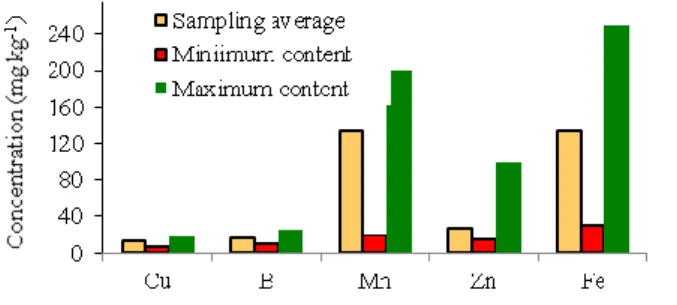
As for the micronutrient contents, a range of 14 to 17 mg.kg-1 (Table 3) was found for boron, which is within the sufficiency range proposed by Raij (2011) (Figure 3). The adequate supply of B is critical because of its important role in cell elongation, participation in the integrity of cell wall structure, and synthesis of nucleic acids and phytohormones (TAIZ; ZEIGER, 2013).
Its availability to plants depends on soil attributes such as pH, organic matter, clay content, Fe and Al compounds, texture, among others (NAZIR; WANI, 2016). According to Leite et al. (2003), the highest availability of B occurs in the pH range of 5.0 and 7.0. This may explain the values found in this study, as the pH of the experimental area was 5.5 and 5.1 for the 0-20 cm and 20-40 cm layers, respectively.
Table 3. Leaf micronutrient contents in corn hybrid BM3066 grown in Yellow-Red Oxisol Sampling B Cu Fe Mn Zn .---mg.kg-1--- 1 14 11 126 143 26 2 16 11 143 136 29 3 16 12 148 148 31 4 14 13 120 119 25 5 17 14 142 134 27 6 14 13 125 120 25 7 17 12 137 141 31 Average 15.43 12.29 134.43 134.43 27.71 C.V. (%) 9.06 9.06 7.98 8.32 9.48 Source: Authors (2020)
Copper remained within the sufficiency range proposed by Raij (2011) (Figure 3), with contents of 11 to 14 mg.kg-1 and an average of 12.29 g.kg-1 (Table 3). This
micronutrient is associated with photosynthesis,
respiration and reduction processes. Copper availability is influenced by several factors, especially pH, whose increase reduces availability (TAIZ; ZEIGER, 2013).
Iron contents of 120 to 148 mg.kg-1 were found (average of 134.43 mg.kg-1) (Table 3), remaining within the sufficiency range proposed by Raij (2011) (Figure 3).
In a study conducted at two sowing dates in Rio Verde, state of Goiás, Simão et al. (2017) found high contents of cationic micronutrients, the highest of which was iron, followed by manganese and zinc. In evaluating transgenic corn in the state of São Paulo, Correia; Santos (2013) found an average of 201.71 mg.kg-1 Fe.
Manganese contents found in this experiment varied from 119 to 148 mg.kg-1, with an average of 134.43 mg.kg-1 (Table 3). Such values are within the sufficiency range cited by Raij (2011) (Figure 3).
According to Leite et al. (2003), Mn toxicity is more common than deficiency in Brazilian soils. Also, increased Mn availability in soil implies an increase in shoot contents, which justifies the high leaf content found in this study.
Mauro W. de Oliveira, Vinicius S. G. da Silva, Andréa R. S. Soares, Terezinha B. A. Oliveira, Denise de S. Silva, Polyana A. S. Machado
47 | Revista GEAMA, Scientific Journal of Environmental Sciences and Biotechnology, 6 (2): 43-50, Agosto, 2020, Online version ISSN: 2447-0740 Figure 3. Micronutrient contents in corn leaves compared to the
maximum and minimum levels cited by Raij (2011).
Source: Authors (2020)
The same author found Mn contents ranging from 27.20 to 1618.99 mg.kg-1.
The average zinc content found in this study was 27.71 mg.kg-1 (Table 3), thus being within the sufficiency range cited by Raij (2011). The lowest Zn content was 25 mg.kg-1, while the highest was 31 mg.kg-1. Zinc has been reported in the literature as having the greatest tendency among micronutrients to limit crop development, as its availability in soil solution is influenced by phosphorus concentration, pH, clay content, organic matter and oxides and hydroxides (SADAT et al., 2019).
Biometric variables
The results of the variables (plant height, first ear insertion height, % of dry matter in the plant and accumulation of dry matter and fresh matter) in each sampling of hybrid BM 3066 PRO2 are shown in Table 4.
It is important to note that plant height is a variable that has a relationship with the first ear insertion height. According to Borgui et al. (2004), taller plants tend to have higher first ear insertion height. In this study, the plants showed on average 242.5 cm and 152.71 cm for plant height and first ear insertion height, respectively. In evaluating the production and bromatological composition of corn hybrid silage, Buso et al. (2018) found average values of 219 cm for plant height and 114 cm for first ear insertion height. Petter et al. (2012) reported 275 cm and 151 cm for plant height and first ear insertion height for hybrid Pioneer 30F35H, respectively.
Table 4. Values of the biometric parameters (H: Plant height, EIH: First ear insertion height, FMA: fresh matter accumulation, DM: dry matter, and DMA: dry matter accumulation)
Sampling
H EIH FMA DM DMA
---cm--- (t.ha-1) % (t.ha-1) 1 245 146 60.4 34.2 20.7 2 256 167 55.6 30.9 17.2 3 238 158 55.3 32.6 18.0 4 256 140 58.7 32.1 18.8 5 254 135 51.1 31.9 16.3 6 210 154 64.7 28.8 18.6 7 239 169 54.4 34.8 18.9 Average 242.57 152.71 57.17 32.18 18.36 CV (%) 6.71 8.53 7.82 6.24 7.58 Source: Authors (2020)
For a hybrid to be grown for silage production and to be considered economically viable, it must produce at least 15 t.ha-1 of dry matter (NEUMANN et al., 2019).
Thus, the hybrid BM 3066 PRO2 is suitable for the silage production, as it showed an average of 18.368 t.ha-1 of dry matter. In evaluating two hybrids (DKB 290 and RB 9006). Costa et al. (2017) found dry matter yield of 12.8 and 10.8 t.ha-1, respectively.
Carpici et al. (2010) found high dry matter yield in corn plants (variety ADA-523) fertilized with high doses of nitrogen. This macronutrient promotes greater vegetative growth and promotes an accumulation of photoassimilates and consequently of dry matter. Klein et al. (2018) corroborate this data with their study finding of 15 t.ha-1 of total dry shoot biomass of corn with a dose of 120 kg.ha-1 of nitrogen.
Fresh or green matter yield is extremely important when evaluating a cultivar for silage production. However, this variable can be influenced by genotype-environment interaction, where the same genotype can present different results depending on management and environment (OLIVEIRA et al., 2017). We found an average fresh matter yield of 57.171 t.ha-1 in this study. Silva (2018) found fresh matter yield of 35.87 and 44.56 t. ha-1 in genotypes Branca and Jaboatão, respectively.
Nutrient content and accumulation in shoots and
nutrient balance
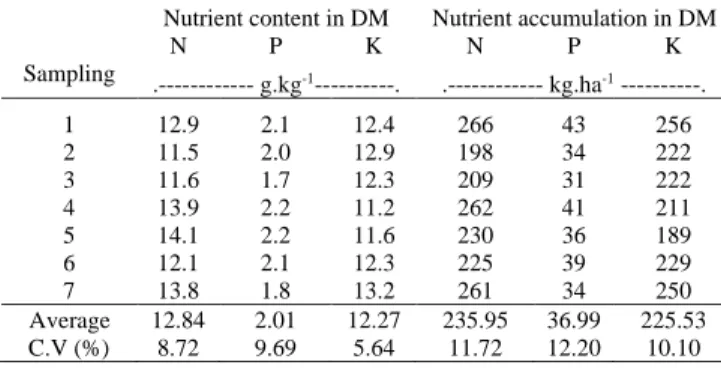
Primary macronutrient contents and accumulation in corn shoot biomass are shown in Table 5. It appears that N content (12.84 g.kg-1) and N accumulation (235.9 kg.ha -1) was higher in comparison to potassium and phosphorus. The high extraction of nitrogen by corn is because of its participation as a constituent of many components of the plant cell, including amino acids, proteins and nucleic acids. Nitrogen is found in only 1% of the total dry matter of the plant, but its deficiency causes a reduction in the synthesis of chlorophyll, essential amino acids and energy necessary for the production of carbohydrates and carbon skeletons, directly impacting crop development and yield (TAIZ; ZEIGER, 2013).
Gava et al. (2010) report that N accumulation in high-yielding corn cultivars may reach values of 150 to 350 kg.ha-1. However, in evaluating nitrogen doses, the same author found an accumulation of 254.1 kg.ha-1 without N application and 366.8 kg ha-1 with a dose of 200 kg.ha-1 N. In evaluating N uptake of corn grown in Lavras (MG), Von Pinho et al. (2009) found N accumulation of 401 kg.ha-1.
The amounts of phosphorus generally required by corn are low, especially in comparison to nitrogen and potassium. In this crop, phosphorus affects both growth and grain yield, making up approximately 0.2% of plant
dry biomass. It is a structural component of
macromolecules (e.g., nucleic acids and phospholipids) and adenosine triphosphate (ATP).
It is also a key element of several metabolic pathways and biochemical reactions, such as countless stages of the Calvin cycle and glycolysis (TAIZ; ZEIGER, 2013).
Thus, despite the low demand, there is a need for frequent applications of P to provide and maintain high crop yields.
48 | Revista GEAMA, Scientific Journal of Environmental Sciences and Biotechnology, 6 (2): 43-50, Agosto, 2020, Online version ISSN: 2447-0740
Von Pinho et al. (2009) found that phosphorus was third in terms of nutrient accumulation in corn, with an extraction of 76 kg.ha-1 by genotype 30F33. In evaluating genotype CD 3590 Hx, Menezes et al. (2018) found average P accumulation of 46 kg.ha-1.
Ueno et al. (2013) found values of 42.14 kg.ha-1 P in hybrid SG 6010.
Table 5. Primary macronutrient content and accumulation in shoot biomass of corn hybrid BM3066
Nutrient content in DM Nutrient accumulation in DM
N P K N P K Sampling .--- g.kg-1---. .--- kg.ha-1 ---. 1 12.9 2.1 12.4 266 43 256 2 11.5 2.0 12.9 198 34 222 3 11.6 1.7 12.3 209 31 222 4 13.9 2.2 11.2 262 41 211 5 14.1 2.2 11.6 230 36 189 6 12.1 2.1 12.3 225 39 229 7 13.8 1.8 13.2 261 34 250 Average 12.84 2.01 12.27 235.95 36.99 225.53 C.V (%) 8.72 9.69 5.64 11.72 12.20 10.10 Source: Authors (2020)
Potassium is the second most required nutrient by the crop, after nitrogen, acting on the quality, especially of the individual grain weight and the number of grains per ear (RODRIGUES et al., 2014). The corn crop is highly responsive to N and K, which explains the close contents. Potassium influences plant metabolism as it activates more than 60 enzymes, thus promoting an increase in cell volume and ion transport to the cells of the meristem. In addition to this function, K also acts in the osmotic regulation of plant cells and in activating enzymes that participate in the physiological processes of respiration and photosynthesis (TAIZ; ZEIGER, 2013).
Comparing four transgenic hybrids in medium and high investment environments, Silva (2016) found averages of 52.7 kg.ha-1, 74.8 kg.ha-1, 63.1 kg.ha-1 and
63.6 kg.ha-1 K for hybrids AG 8088, DKB 310, DKB 390
and P 30F53, respectively. In evaluating cultivars GNZ 2004 and P 30F33, Borges et al. (2009) found shoot K accumulation of 312 and 316 kg.ha-1, respectively.
In evaluating NPK in the soil-plant system, considering fertilization (planting and topdressing) as inputs and the removal of nutrients by harvesting the shoot biomass of corn as output, we found a positive balance for nitrogen (9.1 kg) and phosphorus (22 kg), but negative for potassium (-15 kg).
Conclusion
Leaf diagnosis showed that corn was not nutritionally deficient in regards to any of the nutrients evaluated in this study.
Hybrid BM 3066 PRO2 showed the following decreasing order of leaf contents N > K > Ca > P > S > Mg > Fe = Mn >Zn > B > Cu.
The accumulation of primary macronutrients in plant shoot biomass was 235.95 kg.ha-1 N, 36.99 kg.ha-1 P and 225.53 kg.ha-1 K.
The high forage yield showed that BM 3066 PRO2 is a genotype with high potential for forage and silage production.
A positive balance for nitrogen (9.1 kg) and phosphorus (22 kg), but negative for potassium (-15 kg)
References
ADAMTEY, N.; MUSYOKA, M. W.; ZUNDEL, C.; COBO, J. G.; KARANJA, E.; FIABOE, K. K.; MESSMER, M. M. Productivity, profitability and partial nutrient balance in maize-based conventional and organic farming systems in Kenya. Agriculture, Ecosystems & Environment, v.235, p. 61-79, 2016.
ARTUZO, F. D.; FOGUESATTO, C. R.; MACHADO, J. A. D.; OLIVEIRA, L.; SOUZA, Â. R. L. O potencial produtivo brasileiro: uma análise histórica da produção de milho. Revista em Agronegócio e Meio Ambiente, v. 12, n.2, p. 515-540, 2019. BORGES, I. D.; PINHO, R. G. von.; PEREIRA, J. L. A. R. Acúmulo de micronutrientes em híbridos de milho em diferentes estádios de desenvolvimento. Ciência e Agrotecnologia, v. 33, p. 1018 – 1025, 2009.
BORGUI, E.; MELLO, L. M. M. de; CRUSCIOL, C. A. C. Adubação por área e por planta, densidade populacional e desenvolvimento do milho em função do sistema de manejo do solo. Acta Scientiarum, Maringá, v. 26, n. 3, p. 337 – 345, 2004. BUSO, W. H. D.; MACHADO, A. S.; RIBEIRO, T. B.; SILVA, L. O. Produção e composição bromatológica da silagem de híbridos de milho sob duas alturas de corte. Journal of Neotropical Agriculture, v. 5, n. 4, p.74-80, 2018.
CARPICI, E. B.; CELIK, N.; BAYRAM, G.. Yield and quality of forage maize as influenced by plant density and nitrogen rate. Turkish Journal of Field Crops, v. 15, n. 2, p. 128-132, 2010. CORREIA, N. M.; SANTOS, E. A. Teores foliares de macro e micronutrientes em milho tolerante ao glyphosate submetido à herbicidas. Semina: Ciências Agrárias, Londrina, v. 34, n. 6, p. 3165 – 3172, 2013.
COSTA, M. S.; COSTA, Z. V. B. da.; ALVES, S. M. C.; FERREIRA NETO, M.; MARINHO, M. J. C. Avaliação nutricional do milho cultivado com diferentes doses de efluente doméstico tratado. Irriga, Ed. Especial, p. 12 – 26, 2016. COSTA, S. H. P.; SANTOS, D. G.; DIAS, I. B.; DUARTE, R. L. T.; MORAES, L. L. B.; QUEIROZ, J. M. N.; NASCIMENTO, P. Participação de espiga na massa seca de híbridos de milho destinados à silagem, cultivados na região central de Minas Gerais. In XIV SEMINÁRIO NACIONAL DE MILHO SAFRINHA, Cuiabá, MT, 2017.
ECKERT, C. T.; FRIGO, E. P.; ALBRECHT, L. P.; ALBRECHT, A. J. P.; CHRIST, D.; SANTOS, W. G.; BERKENBROCK, E.; EGEWARTH, V. A. Maize ethanol production in Brazil: Characteristics and perspectives. Renewable and Sustainable Energy Reviews, v.82, p. 3907-3912, 2018.
EMBRAPA – Empresa Brasileira de Pesquisa Agropecuária. Sistema brasileiro de classificação de solos. Brasília, DF: Embrapa Solos, 2013. 353 p.
Mauro W. de Oliveira, Vinicius S. G. da Silva, Andréa R. S. Soares, Terezinha B. A. Oliveira, Denise de S. Silva, Polyana A. S. Machado
49 | Revista GEAMA, Scientific Journal of Environmental Sciences and Biotechnology, 6 (2): 43-50, Agosto, 2020, Online version ISSN: 2447-0740 GAVA, G. J. de C.; OLIVEIRA, M. W. de; SILVA, M. de A.;
JERÔNIMO, E. M.; CRUZ, J. C. S.; TRIVELIN, P. C. O. Produção de fitomassa e Acúmulo de nitrogênio em milho Cultivado com Diferentes Doses de 15N-uréia. Semina: Ciências Agrárias, v. 31, n. 4, p. 851 – 862, 2010.
KHAN, N. A., YU, P., ALI, M., CONE, J. W., & HENDRIKS, W. H. Nutritive value of maize silage in relation to dairy cow performance and milk quality. Journal of the Science of Food and Agriculture, v. 95, n. 2, p. 238-252, 2015.
KLEIN, J. L.; VIANA, A. F. P.; MARTINI, P. M.; ADAMS, S. M.; GUSATTO, C.; BONA, R. A.; RODRIGUES, L. S.; ALVES FILHO, D. C.; BRONDANI, I. L. Desempenho produtivo de híbridos de milho para produção de silagem de planta inteira. Revista Brasileira de Milho e Sorgo, v. 17, p. 101-110, 2018. KÖPPEN, W. Das geographische System der Klimate. In: KÖPPEN, W.; GEIGER, R. (Eds): Handbuch der Klimatologie. Berlin: GebrüderBornträger, 1936. Banda1, Parte C, p.1-44. LEITE, U. T.; AQUINO, B. F. de; ROCHA, R. N. C.; SILVA, J. Níveis críticos foliares de boro, cobre, manganês e zinco em milho. Bioscence Journal, v. 19, n. 2, p. 115 – 125, 2003. MALAVOLTA, E.; VITTI, G. C.; OLIVEIRA, S. A. Avaliação do Estado Nutricional das Plantas: princípios e aplicações. 2. ed. Piracicaba: POTAFOS, 1997. 319p.
MARTINS, D. C., BORGES, I. D., CRUZ, J. C., Netto, D. A. M. Produtividade de duas cultivares de milho submetidas ao tratamento de sementes com bioestimulantes fertilizantes líquidos e Azospirillum sp. Revista Brasileira de Milho e Sorgo, v. 15, n.2, p. 217-228, 2016.
MENDONÇA, V. Z.; MELLO, L. M., ANDREOTTI, M., YANO, É. H. Teor e acúmulo de nutrientes no consórcio de milho com forrageiras no sistema plantio direto. Revista Brasileira de Ciências Agrárias, v. 9, n.3, p. 330-337. 2014. MENEZES, J. F. S.; BERTI, M. P. S, JÚNIOR, V. D. V.; RIBEIRO, R. L.; BERTI, C. L. F. Extração e exportação de nitrogênio, fósforo e potássio pelo milho adubado com dejetos de suínos. Journal of Neotropical Agriculture, v.5, n. 3, p. 55-59, 2018.
MINATO, E. A.; ESPER NETO, M.; LIMA, R. S.; INOUE, T. T.; BATISTA, M. A. teores foliares de macronutrientes e produção de milho (Zea mays L.) após gessagem em um Latossolo Vermelho distrófico típico. Scientia Agraria Paranaenses, v. 16, n. 1, p. 2019-224, 2017.
NASCIMENTO, M. R..; DOS SANTOS, P. R..; COELHO, F. C., JAEGGI, M. E. P.C.; COSTA, K. D. S.; SOUZA, M. N. Análise biométrica em genótipos de milho apropriados para produção de minimilho e forragem em sistema de cultivo orgânico. Horticultura Brasileira, v.36, n.3, 2018.
NAZIR, S.; WANI, M. A. Kinetics of adsorption and desorption of boron in major soils of lesser himalayas. The indian ecological society, v. 43, n.1, p. 43-49, 2016.
NEUMANN, M.; TURCO, G. M. S.; FARIA, M. V.; VIGNE, G. L. D.; SOUZA, A. M.; Produção e composição física da planta de milho para silagem em diferentes sistemas de cultivo. Pesquisa Aplicada & Agrotecnologia, v.12, n.1, p.87-97, 2019.
OLIVEIRA, E. L. Rendimento de matéria seca e absorção de cálcio e magnésio pelo milho em função da relação Ca/Mg do solo. Revista Brasileira de Ciência do Solo, v.17, p.383-388, 1993.
OLIVEIRA, I. J.; ATROCH, A. L.; DIAS, M. C.; GUIMARÃES, L. J. M.; & GUIMARÃES, P. E. O. Seleção de cultivares de milho quanto à produtividade, estabilidade e adaptabilidade no Amazonas. Pesquisa Agropecuária Brasileira, v.52, n. 6, p. 453-461, 2017.
OLIVEIRA, M. W.; MACÊDO, G. A. R.; MARTINS, J. A.; SILVA, V. S. G.; OLIVEIRA, A. B. Mineral nutrition and fertilization of sugarcane. Sugarcane: Technology and Research, 169. 2018.
OLIVEIRA, T. F.; OLIVEIRA, V. J. B.; CLEMENTE, J. M..; AQUINO, L.A.; REIS, M. R.; FERNANDES, F. L. Extração e exportação de macronutrientes em lavouras de milho de alta produtividade. Revista em Agronegócio e Meio Ambiente, v. 12, n. 3, p. 837-854, 2019.
PETTER, F. A.; SILVA, J.; PACHECO, A. P.; ALMEIDA, F. A.; ALCÂNTARA NETO, F.; ZUFFO, A. M.; LIMA, L. B. Desempenho agronômico da soja a doses e épocas de aplicação de potássio no cerrado piauiense. Revista de Ciências Agrárias, Belém, v. 55, n. 3, p.190-196, 2012.
RAIJ, B. van. Fertilidade do Solo e Manejo de Nutrientes. Piracicaba: International Plant Nutrition Institute, 2011. 420 p. RODRIGUES, M. A. C.; BUZETTI, S.; TEXEIRA FILHO, M. C. M.; GARCIA, C. M. P.; ANDREOTTI, M. Adubação com KCl revestido na cultura do milho no Cerrado. Revista Brasileira de Engenharia Agrícola e Ambiental, v. 18, n. 2, p. 127 – 133, 2014.
SADAT, S., REHMAN, N. Z., BHAT, M. A., & WANI, M. A. Zinc adsorption in relation to soil properties, analysed with Langmuir and Freundlich models in soils of Kashmir Valley. Current Agriculture Research Journal, v.7, n. 1, p. 68-73, 2019.
SALLA, D. A.; FURLANETO, F. D. P. B.; CABELLO, C.; KANTHACK, R. A. D. Estudo energético da produção de biocombustível a partir do milho. Ciência Rural, v. 40, n. 9, p. 2017-2022, 2010.
SILVA, C. G. M. Absorção e exportação de macronutrientes em milho transgênico sob dois níveis de investimento em adubação. 2016. 56 f. (Dissertação em Agronomia) – Universidade Federal de São João del Rei, Sete Lagoas, 2016. SILVA, D. F. da. Desempenho de genótipos de milho e de sorgo submetidos a duas densidades de plantio para a produção de forragem. TCC (Monografia em Zootecnia) – Universidade Federal de Alagoas, Centro de ciências Agrárias, Rio Largo, 2018.
SILVA, M. T.; FERREIRA, P. V.; LIRA, R. C.; GILSON FILHO, M.; SANTOS, D. F.; LIRA, M. E. S. Forage performance of corn hybrids and their varieties. Journal of Experimental Agriculture International, v. 33, n. 1, p.1-8, 2019.
50 | Revista GEAMA, Scientific Journal of Environmental Sciences and Biotechnology, 6 (2): 43-50, Agosto, 2020, Online version ISSN: 2447-0740 SIMÃO, E. P.; RESENDE, A. V.; GONTIJO NETO, M. M.;
BORGHI, E.; MARTINS, D. C.; VANIN, A. Demanda de nutrientes pelo milho safrinha em função da época de semeadura e adubação. Revista Brasileira de Milho e Sorgo, v. 16, n. 3, p. 481 – 494, 2017.
TAIZ, L.; ZEIGER, E. Fisiologia Vegetal. 5. ed. Porto Alegre: Artmed, 2013. 918 p.
TEIXEIRA. P. C.; DONAGEMMA, G. K.; FONTANA, A.; TEIXEIRA, W. G. Manual de Métodos de Análise de Solo, 3rd ed., Brasília: Embrapa, 573 p. 2017.
UENO, R. K.; NEUMANN, M.; MARAFON, F.; REINEHR, L. L.; POCZYNEK, M.; MICHALOVICZ, L. Exportação de macronutrientes do solo em área cultivada com milho para alimentação de bovinos confinados. Semina: Ciências Agrárias, v. 34, n. 6, p. 3001 – 3018, 2013.
VON PINHO, R. G.; BORGES, I. D.; ANDRADE, J. L. de.; PEREIRA, R.; REIS, M. C. dos. Marcha de absorção de macronutrientes e acúmulo de matéria seca em milho. Revista Brasileira de Milho e Sorgo, v. 8, n. 2, p. 157 – 173, 2009.