BUSINESS PLAN: NANOLUNG
Ana Cristina Fonseca Rodrigues
Project submitted as a partial requirement for the conferral of Master in Management
Supervisor:
Ph.D. Professor Ana Cristina Simões, Invited Professor, ISCTE Business School, Marketing, Operations and General Management Department
Co-supervisor:
Dr. Paulo Amaral, Quality Director at Recipharm Lisbon
ii
Acknowledgements
Em primeiro lugar gostaria de agradecer à minha equipa do COHiTEC, aos investigadores Sérgio Silva e Raquel Teixeira assim como à Mafalda Videira, consultora científica, por me terem acolhido na sua equipa e me terem dado a oportunidade de realizar esta dissertação de mestrado.
À minha orientadora, Cristina Simões, por todo o conhecimento transmitido, pela disponibilidade e rigor teórico e estratégico demonstrado.
Ao meu coorientador, Paulo Amaral, pela sua disponibilidade e partilha de conhecimentos relevantes na área farmacêutica dada à sua experiencia profissional que foi uma mais-valia para o enriquecimento deste plano de negócios.
Aos entrevistados Ana Gonçalves e António Dinis por disponibilizarem do seu tempo para enriquecerem o meu trabalho.
À minha família, namorado e amigos por todo o apoio que me deram para concluir esta etapa da minha vida com sucesso.
iii
Abstract
Lung cancer is the leading cause of cancer death, representing approximately 1.8 million diagnosed cases every year worldwide. The most aggressive form of lung cancer, SCLC (small cell lung cancer), is expected to be responsible to 10% to 15% of all lung cancer cases. Nanolung, the solution proposed in this business plan, is a nanocarrier with three key functional components, that is able to distinguish between healthy and cancer cells, stop tumor progression and kill the cancer cells.
Recent trends suggest that well-established companies are more adequate to the activities regarding clinical trials and marketing drugs, while small companies, like Nanoplex, should explore niche areas with a strong science-based focus. Usually these two types of companies joint through mergers or acquisitions due to the technological star-ups financial difficulties pursuing to the market. Having said that, Nanoplex will make a license deal of the technology after phase two of clinical trials to a well-established pharmaceutical company.
The author conducted an analysis of secondary data like scientific articles, academic books and websites of relevant institutions for the subject under analysis, as well as, collected and analyzed primary data through semi-structured interviews with professionals with a vast experience in the pharmaceutical industry and particularly in the R&D areas, in order to validate the work contents.
This business plan allows to affirm that Nanolung, a treatment against SCLC, is economical and financial viable.
Keywords: Technological innovation, business model, startup company and small cell lung
cancer treatment
iv
Resumo
O cancro do pulmão é a causa principal de morte, representando aproximadamente 1.8 milhões de diagnósticos todos os anos a nível global. A forma mais agressiva de cancro do pulmão, o carcinoma de pequenas células, é expetável que represente 10 a 15% dos casos de cancro do pulmão.
O Nanolung, a solução proposta neste plano de negócios, é uma nanopartícula transportadora com três componentes funcionais, que permite distinguir as células saudáveis das células cancerígenas, parar a progressão tumoral e eliminar as células cancerígenas.
Tendências recentes sugerem que empresas bem estabelecidas são mais adequadas para atividades tais como ensaios clínicos e atividades de marketing, enquanto que empresas pequenas, como a Nanoplex, devem explorar áreas de nicho focadas em atividades cientificas. Habitualmente a junção destes dois tipos de empresas faz-se via fusões e aquisições, dadas as dificuldades financeiras das start-ups de base tecnológica em prosseguir para o mercado. Dito isto, a Nanoplex irá realizar um contrato de licenciamento da tecnologia após a segunda fase dos ensaios clínicos a uma empresa farmacêutica bem estabelecida.
A autora realizou uma análise de informação secundária tal como artigos científicos, livros académicos e websites de instituições relevantes para os temas em análise bem como recolheu e analisou informação primária através de entrevistas semi-estruturadas com profissionais com uma vasta experiência na indústria farmacêutica e particularmente na área de investigação e desenvolvimento de forma a validar o conteúdo deste trabalho.
Este plano de negócios permite afirmar que o Nanolung, um tratamento para o carcinoma de pequenas células, é viável em termos económicos e financeiros.
Palavras-chave: Inovação tecnológica, modelo de negócio, empresa startup e tratamento para
o cancro do pulmão de pequenas células
Classificação JEL: M13, L65
v
Index
Acknowledgements ... ii Abstract ... iii Resumo ... iv Abbreviations list ... ix Sumário executivo ... x 1. Introduction ... 11.1 Objectives of the business plan ... 2
1.2 Description of the project and identification of the promoters ... 2
2. Literature Review ... 3
2.1 Technological innovation ... 3
2.2 Business Model... 6
2.3 Startup company ... 7
2.4 Small cell lung cancer ... 8
2.5 Analysis tools ... 9
2.5.1 Pest analysis ... 9
2.5.2 Porter Five Forces ... 9
2.5.3 SWOT analysis ... 11 2.6 Frame of reference ... 12 3. Methodology ... 13 3.1 Research question ... 13 3.2 Objectives ... 13 3.3 Methodology ... 14 3.4 Methods ... 15
4. Description of the new product ... 16
4.1 Opportunity ... 16
4.2 Description of the technology... 17
5. Market analysis ... 19
5.1 Industry analysis ... 19
5.1.1 Industry map ... 19
5.1.2 Industry characterization and competition ... 19
5.2 Pest analysis ... 22
5.3 Five forces of Porter ... 23
5.4 Identification of opportunities and threats ... 26
vi
6.1 Organizational structure ... 27
6.2 Identification of strengths and weaknesses ... 28
7. Competitive analysis ... 29
7.1 Systemic SWOT ... 29
7.2 Ansoff Matrix ... 29
8. Development strategy ... 30
8.1 Vision, mission and values ... 31
8.1.1 Vision ... 31
8.1.2 Mission ... 31
8.1.3 Values ... 32
8.2 Objectives and SMART goals ... 32
8.2.1 Objectives ... 32
8.2.2 SMART goals ... 32
8.3 Critical success factors ... 33
8.4 Resources, skills and strategic capability ... 33
9. Implementation policies ... 34 9.1 Product ... 34 9.2 Price ... 35 9.3 Communication ... 36 10. Implementation requirements ... 37 10.1 Exit strategy ... 37 10.2 Milestone map ... 38
10.3 Supplies, services and equipment needed ... 39
10.4 Implementation requisites ... 39
10.5 Risk planning ... 40
11. Financial forecasts ... 41
11.1 Assumptions ... 41
11.2 Financial forecasts for Nanoplex ... 44
11.2.1 Cost projections ... 44
11.2.2 Investment in net working capital ... 45
11.2.3 Cash flow analysis ... 46
11.2.4 Economic evaluation of the project ... 47
11.2.5 Provisional income statement ... 48
11.2.6 Financial plan ... 49
vii 11.2.8 Sensitivity analysis ... 51 11.2.9 Ratios ... 51 12. Conclusion ... 53 13. Bibliography ... 54 14. Appendices ... 60
Figures index
Figure 1 - Business model innovation and technology innovation ... 5Figure 2 - Five forces of Porter ... 10
Figure 3 - Frame of reference ... 12
Figure 4 - Inhalation localized delivery ... 17
Figure 5 - Triple functional nanocarrier ... 18
Figure 6 - Industry map ... 19
Figure 7 - BCG matrix ... 20
Figure 8 - GE/Mckinsey matrix ... 21
Figure 9 - Five forces of Porter of the pharmaceutical industry ... 25
Figure 10 - Nanoplex organizational structure ... 27
Figure 11 - Systemic SWOT analysis ... 29
Figure 12 - Ansoff matrix ... 30
Figure 13 - Generic competitive strategies ... 31
Figure 14 - Product logo ... 35
Figure 15 - Milestone map ... 38
Tables index
Table 1 - Quantitative five forces of Porter of the pharmaceutical industry ... 25Table 2 - COGS and supplies and services expenses ... 44
Table 3 - Net working capital ... 45
Table 4 - Cash flow statement ... 46
Table 5 - Project's evaluation ... 47
Table 6 - Income statement ... 48
Table 7 - Financial plan ... 49
Table 8 - Balance sheet ... 50
Table 9 - Sensitivity analysis ... 51
Table 10 - Economic ratios ... 51
Table 11 - Financial ratios ... 52
Table 12 - Liquidity ratios ... 52
Table 13 - Threat of new entrants ... 64
Table 14 - Rivalry among existing competition ... 64
Table 15 - Bargaining power of suppliers ... 64
Table 16 - Bargaining power of buyers ... 65
Table 17 - Threat of substitute products or services ... 65
Table 18 - Assumptions 1 ... 65
viii
Table 20 - Personnel costs ... 66
Table 21 - Government and other public entities ... 67
Table 22 - Investment ... 68
Table 23 - Amortizations and depreciations ... 69
ix
Abbreviations list
CEO – Chief executive officer CIO – Chief of innovation officer FDA – Food and Drug Administration IND – Investigational new drug IP – Intellectual property NPV – Net present value NWC – Net working capital
R&D – Research and development ROA – Return on assets
ROE – Return on equity ROI - Return on investment SCLC – Small cell lung cancer VAT – Value added tax
x
Sumário executivo
A escolha deste tipo de tese de mestrado, plano de negócios, foi feita após a participação no programa COHiTEC, uma ação de formação em comercialização de tecnologias.
Este plano de negócios assenta numa tecnologia que visa tratar o cancro do pulmão de pequenas células, um problema que afeta aproximadamente 225 000 pessoas em todo o mundo. O cancro do pulmão de pequenas células tem a tendência de crescer e alastrar-se rapidamente, tornando o seu diagnóstico mais difícil, dado que em 2/3 dos casos as células cancerígenas já estão num estado avançado. A taxa de sobrevivência é de apenas dois a quatro meses caso não seja tratável e de seis a oito meses caso o doente faça quimioterapia. Esta doença reage à quimioterapia, no entanto, as recaídas frequentes fazem com que os doentes não consigam sobreviver. O progresso clinico desta doença tem sido lento, no entanto, estudos pré-clínicos recentes revelaram um número considerável de novas possibilidades por explorar.
O Nanolung, a solução proposta neste plano de negócios, é uma nanopartícula transportadora com três componentes funcionais: anticorpo, terapia genética e um fármaco anticancerígeno. Esta tecnologia permite distinguir as células saudáveis das células cancerígenas, parar a progressão tumoral e eliminar as células cancerígenas.
Após uma análise da indústria farmacêutica, é possível afirmar que aquela se aproxima do modelo económico de concorrência pura devido à elevada competição e à evidente grande procura neste mercado. Esta indústria está a enfrentar um crescimento especialmente acelerado dado o aumento de doentes com necessidades por satisfazer. Embora existam algumas barreiras como por exemplo um processo de investigação e desenvolvimento extenso e consequentemente com elevado investimento financeiro, esta indústria está mais aberta a colaborações com diferentes intervenientes assim como pequenas e médias empresas, em que a sua principal atividade é a investigação e desenvolvimento.
Tendências recentes sugerem que empresas bem estabelecidas são mais adequadas para actividades tais como ensaios clínicos e atividades de marketing, enquanto que empresas pequenas, como a Nanoplex, devem explorar áreas de nicho focadas em atividades cientificas. Habitualmente a junção destes dois tipos de empresas faz-se via fusões e aquisições, sendo esta uma estratégia desejável para a Nanoplex dadas as dificuldades financeiras em garantir uma posição sustentável e uma quota de mercado substancial nesta indústria tão competitiva.
xi Parcerias e aquisições de empresas startups, representam um quarto a um terço da gama de produtos das grandes farmacêuticas.
A estratégia definida teve em conta as características específicas do produto assim como a caracterização do tipo de competição existente. Neste sentido, a empresa adotará uma estratégia competitiva de diferenciação mas também de focalização. Embora a vantagem competitiva do produto seja a diferenciação perante os seus concorrentes, sendo o cancro do pulmão de pequenas células um segmento pequeno, optar por uma estratégia de focalização é igualmente adequado.
Quanto ao investimento, será necessário angariar 9 504 704,61€ para garantir o sucesso da empresa nas atividades de investigação e desenvolvimento. O estudo de viabilidade económica e financeira confirma que a Nanoplex irá gerar resultados financeiros suficientes para que seja considerado um bom investimento e, em consequência captar o interesse de investidores em todas as fases do processo. Esta conclusão verifica-se pelo valor atual líquido de 438 329 112,30€, uma taxa interna de rentabilidade de 261,46% e um payback period de cinco anos e quatro dias.
1
1. Introduction
This business plan aims to investigate the economic and financial viability of Nanoplex’ SCLC treatment, Nanolung. Nanoplex will be a global prestigious research and development company and will license their innovative technology to a well-established pharmaceutical company.
Firstly, the author provides a description of the project along with the identification of the promoters of the project.
Secondly, a literature review will be conducted focused on the themes of technological innovation, business model, startup company, small cell lung cancer and analysis tools that will be used during the elaboration of the business plan.
In the methodology chapter the research question is presented, as well as the specific objectives and the author will explain which methods of research will be used.
Then, there will be a description of the new product that will be describe the opportunity and the technology.
Moreover, a market analysis will be conducted to understand the exterior environment where Nanoplex will be related. The author will perform this analysis by explaining how the pharmaceutical industry is characterized and its respective competition. Additionally, the author will execute a PEST analysis, five forces of Porter analysis and will identify the opportunities and threats.
Afterwards, it is important to analyze the internal environment of the company by presenting the internal structure of Nanoplex as well as identifying its strengths and weaknesses.
Then, in the competitive analysis the systemic SWOT is presented, combining the internal and the external analysis. Also the Ansoff matrix will be used to explain Nanoplex approach of the product extension.
The development strategy involves the vision, mission, values, objectives, SMART goals, critical success factors as well as resources, skills and strategic capabilities of Nanoplex. After that, taking into consideration that the company will not commercialize the technology, it will be mentioned the implementation policies and requirements as well as respective financial forecasts.
2
1.1 Objectives of the business plan
The type of thesis that will be developed is a business plan, since the aim is to evaluate the economical and financial viability of an innovative technology to fight against small cell lung cancer.
This document will provide all the information to analyze the business opportunity and the strategy that will be set in order to successfully license the technology. In order to achieve that purpose, a clear description of the technology is the starting point to attract investors to finance the project.
In addition, a thorough analysis of market will be conducted to analyze the pharmaceutical industry and all the external factors intrinsic to this such as political, economic, social and technological. Moreover Porter 5 forces will be developed to have a better understanding of the industry as well as identification of opportunities, threats, strengths and weaknesses of the project.
Furthermore, a structured strategy will be defined taking into concern all the implementation policies and requirements such as product, price, communication, exit strategy, milestone map and risk planning.
Lastly an accurate financial evaluation will help to determine the feasibility of this product in terms of value creation.
1.2 Description of the project and identification of the promoters
The choice of this thesis was made after the author’s participation in COHiTEC, a training program of technology commercial, from March to July 2015 with the partnership of INDEG-IUL. This program aims to assess the commercial viability of products or services that can be achieved from technologies of the participant researchers by having the support of management students and mentors, who contribute with their management skills.
Nanolung, was developed in the Cohitec sessions with the participant researchers Sergio Silva, Ph. D. of the Faculty of Pharmacy of University of Lisbon, and Raquel Teixeira, Ph. D. of the Faculty of Pharmacy of the University of Coimbra.
The mentors of the project were Nuno Serra, Manager at Unisys Portugal and Paulo Amaral, Quality director at Recipharm Lisbon. The mentors’ contribution was essential to achieve the final results due to their management and pharmaceutical experience.
3 The technology was developed by Professor Mafalda Videira of the Faculty of Pharmacy, University of Lisbon with collaboration of her mentoring Master and Ph.D. students, one of them Sergio Silva.
Nanolung is a therapy against small cell lung cancer that is able to target and kill specific cancer cells.
Small cell lung cancer is a rare disease and the most aggressive form of lung cancer with an early tendency for dissemination. This rare disease is responsible for approximately 240 thousand deaths per year and has a 5-year survival rate lower than 5%.
2. Literature Review
2.1 Technological innovationInnovation is driven by the ability of companies to see connections, to spot opportunities and to take advantage of them, because if they do not invest in innovation they put their future at risk. Porter (1990) refers that companies achieve competitive advantage through acts of innovation. Additionally refers that they approach innovation in its broadest sense, including both new technologies and new ways of doing things.
As stated by Oldham et al. (2004), innovation is the process or final product that develops from a novel idea, leading to a new creation. Incremental innovation refers to adaptations of an existing product or procedure and is low-risk, while radical innovation comes from revolutionary ideas and carries high risk (D’Innocenzo et al., 2012).
Christensen and Anthony (2012) define disruptive innovation as making the complicated simple, making the expensive affordable, driving growth by transforming what exists and creating what doesn’t.
Innovation is often considered the most important characteristic associated with success. As stated by Tidd and Bessant (2013), innovation matters, not only at the level of the individual enterprise, but increasingly as the wellspring for national economic growth.
Davila et al. (2013: 1) refers that for any organization, innovation represents not only the opportunity to grow and survive but also the opportunity to significantly influence the direction of the industry.
4 Innovation is a network that includes inside (R&D, marketing) and outside (customers, suppliers). To innovate, this network needs to be maintained as an open and collaborative force.
Innovation can contribute to value creation in several ways. Academic research suggests a strong correlation between market performance and new products. New products are able to capture and retain market shares and increase profitability in those markets. Also, new product development is an important capability since the environment is constantly changing and shifts in the socio-economic area create opportunities and constraints. While new products are seen as an innovation in the marketplace, process innovation plays as well an important strategic role keeping the organization coping with the constant environmental changes.
Commercialization is known to be a critical stage of the technological innovation process, mainly because of the high risks and costs that it entails, (Chiesa and Frattini, 2011). This phase is consider critical due to difficulties that companies face in commercializing technological innovation such as volatility and proliferation of new technologies. Commercialization decisions like timing, target, distribution and price, have direct influence of the support from the innovation’s adoption network and the post-purchase attitude of early adopters.
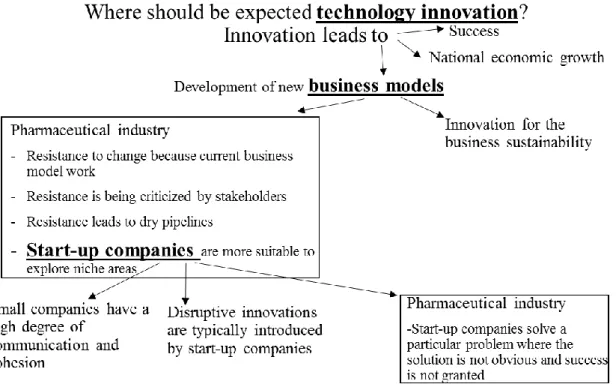
The most common misunderstanding is that innovation is primarily, if not exclusively, about changing technology. However, high-performing companies innovate by leveraging customer insight to develop new business models and improved technologies to create important value for the consumers and the company.
Davila et al. (2013), defined the six levers of innovation that affect how a company creates, sells, delivers and monetizes value to its customers.
5
Figure 1 - Business model innovation and technology innovation
Source: Owning the disease: A new transformational business model for healthcare
On the business model innovation side, innovation is intended to create new value for customers by using products and/or services to deliver complete solutions, delivering and monetizing in new ways and find new or under-served customers. The later a crucial but often ignored form of innovation.
The three technology innovation levers provide new technologies that enhance existing products and/or services, by improving processes of manufacturing, delivering and providing support to the other levers.
If focusing only on the business model side or in the technology side, it will severely restrict the possible benefits and impact of the potential innovation. When both sides are combined, companies are able to create and deliver blockbuster innovations. The application of this framework in the pharmaceutical industry gives the opportunity to companies to rethink where they want to be in the future.
In order to own the disease, pharmaceutical companies, are not just changing the products that they offer but as well as reaching new patients by tackling unserved markets, meet unmet medical needs and do a better job of serving existing patients by managing patient outcomes. These new business models are more suitable for the future of healthcare, where radical innovation is a requirement together with more incremental innovations.
6
2.2 Business Model
As stated by Davila et al. (2013: 14), typically, when people think about innovation, they think of technological innovation. However, business model innovation is equally important and powerful in driving business success and in revolutionizing industries. Business models describe how the company creates, sells, and delivers value to customers, and it includes in the description the supply chain, targeted customer segments, and the customers’ perception of the delivered value (Davila et al., 2013: 14).
Business model innovation for sustainability are innovations that create significant positive or significantly reduced negative impacts for the environment and/or society, through changes in the way the organization and its value-network create, deliver and capture value or change their value propositions (Bocken et al, 2014).
Pharmaceutical industry executives understand the new business environment, however, they are still resistant to change their current business models. The main reason is that the current business model is working, still allowing high margins and solid growth and the projections show that it will continue in the short and mid-term. Nevertheless many companies are being criticized by their shareholders, investor and regulators for their lack of innovation being the reflection of dry pipelines. According to Barei and Pen (2014), the lack of improvement in product pipeline shows that continuing to increase R&D expenses will not eliminate the shortfall in product output nor will increase process efficiencies or organizational restructuring.
As stated by Chesbrough (2010), the economic value of a technology remains latent until it is commercialized in some way via a business model. The same technology can be commercialized in different ways and the return will be different in those. For instance, a technology can be implemented in a business model already familiar to a company, while, on the other hand, the company have a business model that can make use of the technology via licensing. Moreover, there are still cases where a new technology does not have a specific business model and the managers must explore a new and more appropriate business model in order to capture value from that technology.
The ecosystem is expeditiously changing too fast for the pharmaceutical industry to respond, so companies need to create partnerships among each other. Recent trends suggest that big generic companies are more adequate to the operations regarding clinical trials and marketing drugs, while small companies should explore niche areas with a strong science-based focus.
7
2.3 Startup company
As stated by Bessant and Tidd (2011: 28), innovation needs an innovative organization in which the structure and climate enables people to deploy their creativity and share their knowledge to bring about change. Though, it needs to determine the appropriate organization given the operating facts. This is one area where start-ups often have a major advantage – by definition they are small organizations (often one-person ventures) with a high degree of communication and cohesion (Bessant and Tidd, 2011: 28).
Only “high growth potential entrepreneurs” are strictly beneficial in terms of contributing to economic growth and innovation; others (the “typical” entrepreneurs) may in fact be rather inefficient (Anokhin and Wincent, 2012). Additionally the authors state that individual entrepreneurs are considered to be the driving force of innovative development in economies; they either discover opportunities or create them and exploit these opportunities via start-up firms.
Christensen and Anthony (2012), highlighted the fact that disruptive innovations are typically introduced by startups, the rebel forces in the business universe.
Pharmaceutical industry includes thousands of small firms, start-up companies, usually thought of as a company in its first years of business, that works to solve a particular problem where the solution is not obvious and success is not granted.
Mergers or acquisitions are often used as exit strategies for these small firms, due to their financial difficulties to pursue to the market. Partnerships and acquisitions of pharmaceutical start-ups, represent one-quarter to one-third of most large companies’ pipelines.
In order to forecast revenues, it is needed to consider market size, market share and market growth of the start-up potential drug or drugs. To determine the market size, it is necessary to consider the number of patients receiving the treatment, the price of the treatment per patient and existing sales data to similar products.
Startup face a highly regulated industry, with increasing research & development costs, escalating costs of litigation, growing threats to patient life and a constant entry of new competitors. Research did by DiMasi, et al. (2013) shows that only 32% biologics that entered phase I trials were approved. On the same study, the authors provided evidence that the approval rate was even lower for the oncology biologics, only 12%. In 2012, only 15,4% of
8 all orphan drugs (treatments for diseases affecting 200.000 or fewer people) in the US were approved.
Small companies also often license-out their novelty drugs to more experience firms for further development phases, regulatory review and commercialization.
2.4 Small cell lung cancer
According to the American Cancer society, Lung cancer (both small cell and non-small cell) is the second most common cancer and is by far the leading cause of cancer death in both men and women. Lung cancer accounts for approximately 13% of all new cancers diagnosed every year worldwide (1.8 million cases) being responsible for approximately 1.6 million deaths in 2012 with a growth rate of 13.5%.
There are two major types of lung cancer: small cell lung cancer (SCLC) and non-small cell lung cancer. Small cell lung cancer, the most aggressive form of lung cancer, accounts for about 10% to 15% of all lung cancers. This rare disease tends to grow and spread quickly, and the majority of cases spread to distant parts of the body before it is found. This type of cancer is responsible for approximately 30 thousand patients annually and the 5-year survival rate is a dismal 6%.
In around two-thirds of the cases the cancer cells are already in a later stage due to the difficult detection of the disease. The median survival rate is only 2 to 4 months if untreated, and survival increases to 6 to 8 months with chemotherapy. This disease is responsive to chemotherapy, but frequently relapses, and patients succumb to the disease in a few months. It is clear that the treatment of SCLC remains a significant challenge for oncologist and new therapeutic approaches are urgently needed to improve patient outcomes of this disease as well as to improve patient quality of life. As stated by Abidin et al. (2010), there has been an increase on the effort to understand the molecular biology of SCLC and to exploit this knowledge for therapeutic control through the development of so-called targeted therapies. According to Carillio et al. (2014), a large number of molecular-targeted drugs and immune-modulators are currently in clinical development: however, only a better understanding of molecular markers predictive of response to targeted agents will lead to real advances in the treatment of SCLC.
Limited SCLC tumor tissue availability for diagnosis and study contributed to a decreased research attention to this disease. In the 2012 fiscal year, the National Cancer Institute
9 research portfolio contained 745 projects that included lung cancer research, but only 17 (approximately 2%) of those studies has a focus on SCLC (Pietanza et. al, 2015).
Clinically meaningful progress has been slow in SCLC, although recent preclinical and clinical correlative analyses have pointed to a number of new targets of interest (Pietanza et. al, 2015).
2.5 Analysis tools 2.5.1 Pest analysis
In 1967, Francis Aguilar developed a tool for scanning the business environment called ETPS (economical, technical, political and social), as the four environments that must be scanned when looking for analytical grounds to support the strategic plans. Afterwards, in the 1960s, Arnold Brown emphasized the same environmental factors but labeled them differently, STEP (social, technical, economic and political). Then, this macro external environmental analysis was modified to STEEP (social, technical, economic, environmental and political).
In 1980, several authors such as Porter, Fahey, Narayanan, Morrison, Renfro, Boucher and Mecca included a variety of orders like: PEST (political, economic, social and technological) and PESTLE (political, economic, sociological, technological, legal and environmental). According to Gupta (2013), the underlying thinking of the PEST analysis is that the enterprise reacts to changes in its external environment. Additionally, Gupta (2013) states that this reflects the idea that strategy requires a fit between internal capabilities and the external environment.
2.5.2 Porter Five Forces
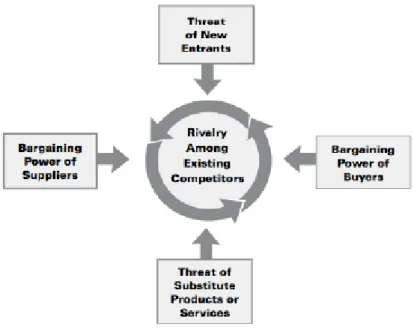
Porter’ Five Forces model was developed by Michael E. Porter in the late 1970s. The five forces model is a simple but influential tool for the identification where power lies in a certain business situation by using the outside-in perspective (Johnson et. al, 2008).
10
Figure 2 - Five forces of Porter
Source: The five competitive forces that shape strategy
In order to develop a strategy, it is crucial to have a deep knowledge about the industry in which the company operates taking into concern all the factors that can influence the company within an industry. Besides rivalry among the existing competitors, Porter’s Five Forces model identifies another four forces that characterize the dynamics within an industry: bargaining power of Supplier, bargaining power of buyer, threat of substitutes and threat of new entrants (Porter, 1979). Porter’s essential message is that if these five forces are high, then industries are not attractive to compete in (Johnson, 2008: 60).
The force rivalry among existing competitors includes several forms of competition, such as “price discounting, new product introductions, advertising campaigns, and service improvements” (Porter, 2008: 32).
The threat of entry depends on the extent and height of barriers to entry (Johnson, 2008: 61). These typical barriers are scale and experience, access to supply or distribution channels, expected retaliation, legislation or government action and differentiation.
The force threat of substitutes consists on products or services that offer similar benefit to an industry but by a different process.
Regarding the power of buyers, this can be concentrated buyers: where a few large customers represent for the majority of sales, then buyer power is increased; low switching cost: where buyers can easily change between one supplier to another due to the strong negotiating
11 position since suppliers are desperate for their business; and buyer competition threat: if the buyer has some facilities to supply itself or has the possibility to acquire those facilities. The power of suppliers tends to be high where they are concentrated suppliers, a few producers dominate the supply; high switching cost, if it is too expensive for buyers to change constantly the suppliers, then buyers become quite dependent; and supplier competition threat, when suppliers are able to cut out buyers that are acting as intermediaries.
2.5.3 SWOT analysis
The traditional planning school in strategic management is driven by a conception of balance as a strategic balance between existing internal resources and external opportunities (Bordum, 2010). Ansoff, Steiner, Andrews and Humphrey developed the basic elements of the planning school (Ansoff, 1965; Steiner, 1969; Andrews, 1971).
They were all affected by the work in the Stanford Research Institute’s (SRI) Strategic Intelligence Program, where the term stakeholder was coined in 1963 to define those who had a critical interest in the operation and success of an enterprise and where the strengths, weaknesses, opportunities, and threats (SWOT) analysis was also developed (SRI Timeline of innovations).
The original analysis name was SOFT standing for satisfactory, opportunity, fault and threat. We started as the first step by asking “What’s good and bad about the operation?” Then we asked, “What is good and bad about the present and the future?” What is good in the present is satisfactory, good in the future is an opportunity; bad in the present is a fault, and bad in the future is a threat (Humphrey, 2005).
The SOFT analysis was organized with time being operative through a distinction between present state and future state, and not organized as in the SWOT analysis, being operative in space through a systems theoretical distinction between internal system and external environment (Bordum, 2010).
The SOFT analysis evolves into SWOT analysis with a focus on objectives and the strategic balance of a firm to its environment. The SWOT analysis freezes the distinction between internal resources (S-W balance) and external opportunity (O-T balance) (Bordum, 2010). SWOT summarises the key issues from the business environment and the strategic capability of an organization that are most likely to impact on strategy development (Johnson, 2008).
12
2.6 Frame of reference
Figure 3 - Frame of reference
13
3. Methodology
3.1 Research questionA clear definition of the research question, will give focus to the author when developing the business plan by providing guidance and consistency. Additionally, it delimitates the study and guides the literature review to the central issue.
The research question of this project is:
Is Nanolung, a treatment against Small Cell Lung Cancer, economically and financially viable?
The author considers that the question is relevant for the reason that is a novelty treatment for small cell lung cancer, a rare disease that currently has no cure, and preliminary studies indicate that the therapy will be a success.
On the other hand, the research question suits the criterion clear, in the way that the reader understands what is the purpose of this project. When questioning if a product is economically and financially viable, it implies a financial evaluation and all the preliminary and complementary business opportunity analysis.
Since this treatment is only addressing the Small cell cancer patients instead of the bigger lung cancer market, it is also considered a suitable research question regarding feasibility.
3.2 Objectives
Since this project will be developed as a business plan, objectives must be set to support the answer to the proposed research question:
Is Nanolung, a treatment against Small Cell Lung Cancer, economically and financially viable?
Once the research question is defined, specific objectives need to be mentioned. These objectives are a reflection on the central issue and intent to verify if the product is economically and financially viable.
As mentioned in the literature review, small research and development companies in the pharmaceutical industry usually focus in niche markets and most of the products are licensed to big pharmaceutical players. Having said that, the exit strategy of this project will be to
14 license the product Nanolung and the following questions were defined taking that into consideration.
1. Which countries will be willing to adopt this treatment? 2. What are the benefits that patients need to be satisfied?
3. What are the advantages this product has, since it is a treatment for an orphan disease? 4. What are the competitors of this treatment?
5. What differentiates Nanolung from the competition? 6. Which business model is more suitable for this product? 7. How should Nanolung be promoted to future investors?
The first and second question focus on the target of this product by questioning which countries are more willing to adopt this treatment through the analysis of previous similar treatments being adopted. Moreover, the understanding of benefits that patients need to be satisfied will be helpful since these need to be emphasized when the product is being promoted.
Third question emphasizes the fact that Nanolung is a treatment against an orphan disease and due to that this product has some advantages regarding time, cost and regulatory issues during the research and development process.
The next two questions (fourth and fifth) will allow a better understanding the competition and highlight what differentiates Nanolung from the other current solutions.
The sixth question involves defining what business model is more suitable for the type of company that Nanoplex is by analyzing what similar companies are doing in the pharmaceutical industry.
Lastly, the final question is regarding the communication strategy the company will adopt focusing on the future investors of the company, to whom Nanolung is going to be licensed.
3.3 Methodology
Methodology is a set of principles and rules that are implicit to the structure of thought. Research methodology is a process of selection of the strategy that better suits the objectives
15 defined for this business plan. Likewise, the techniques for gathering data should be appropriate to the same objectives.
Therefore, the author will follow an interpretative paradigm, by analyzing and understanding the reality of the product in study and setting the business development strategy for a successful implementation of the project.
Regarding data analysis, it will be used both qualitative and quantitative analysis. Estimating the costs and revenues on the economic and financial evaluation is an example of quantitative analysis, although a thorough study should be done to understand the economic and financial feasibility of project. Other example that would imply the use of quantitative analysis is the external and internal analysis.
3.4 Methods
The methods used to elaborate the project are based on the analysis of secondary data, scientific articles published on databases such as B-on and ABI/INFORM; academic books related to the issues addressed as well as websites of relevant institutions for the subject under analysis.
Additionally, the author collected and analyzed primary data through semi-structured interviews with two professionals with a vast experience in the pharmaceutical industry, particularly in the R&D areas. The semi-structured interview (often called a ‘conversation with a purpose’) allows the author to provide some structure based on her research interests and guiding the interview as well as allowing the interviewees enough space to follow different paths enriching the information collection process.. The questions (see attachment I) often serve as helpful guides for the participants. However, due to the vast experience of the professionals being interviewed, the semi-structured interview allows flexibility so that the author can obtain more pivotal information than the initially asked. The interviews were conducted to Dr. Ana Gonçalves, consultant for the pharmaceutical industry specialized in FDA inspections (see attachment II); and António Dinis, director of marketing and communications at Hovione (see attachment III).
16
4. Description of the new product
4.1 OpportunityCancer is a broad group of diseases in which cells divide and grow in an uncontrolled fashion, forming malignancies that can invade other parts of the body. In normal tissues, the rates of new cell growth and cell death are tightly regulated and kept in balance. In cancerous tissues, this balance is disrupted as a result of mutations, causing unregulated cell growth that leads to tumor formation and growth. While tumors can grow slowly or rapidly, the dividing cells will nevertheless accumulate and the normal organization of the tissue will become disrupted. Cancers can subsequently spread throughout the body by processes known as invasion and metastasis. Once cancer spreads to sites beyond the primary tumor, it is generally incurable. Cancer can arise in virtually any part of the body, with the most common types arising in the prostate gland, breast, lung, colon and skin. Dysregulated cell growth in vital organs such as the liver, lung or brain can impair their normal function with consequences that may ultimately lead to death.
Lung cancer is the leading cause of cancer death among both men and women. Lung cancer accounts for approximately 13% of all new cancers diagnosed every year worldwide (1.8 million cases) being responsible for approximately 1.6 million deaths in 2012 with a growth rate of 13.5%.
According to the American Cancer Society, SCLC, the most aggressive form of lung cancer, is expected to have around 10% to 15% of the 221,200 newly diagnosed lung cancer cases and the 158,040 deaths estimated to occur in the United States in 2015.
SCLC tends to grow and spread quickly, due to the difficult detection of the disease, 2/3 of the cases the cancer cells are already in a later stage. The median survival rate is only two to four months if untreated, and survival increases to six to eight months with chemotherapy. This disease is responsive to chemotherapy, but frequently relapses, and patients succumb to the disease in a few months.
Research by Corral et al. (2015), has provided information regarding costs for SCLC patients. The mean cost per patient was 15 418€ for limited disease and 12 482€ for extensive disease. Lower costs when the disease is presented in an advance stage is a reflection of the shorter
17 survival and lower tolerance to aggressive treatment as well as the limited treatment options available to patients. Chemotherapy was the major contributor to these costs (36.1%).
The need to demonstrate cost-effectiveness and estimate the budget impact of new interventions and therapeutic innovations requires consideration of the costs of treating the disease, including all therapeutic strategies, namely surgery, chemotherapy and radiotherapy (Corral et al., 2015).
As Dr. Duro da Costa, Director of Pneumology Dept. at IPO Lisbon, mentioned, “no significant progress has been done (regarding SCLC) in the past 20 years”. Clinically meaningful progress has been slow in SCLC, however recent preclinical and clinical correlative analyses have pointed to a number of new targets of interest (Pietanza et. al, 2015).
4.2 Description of the technology
Nanolung is a treatment against SCLC that is able to target and kill specifically SCLC cells. The technology was engineered to be able to deliver the therapeutic agents directly to site where it is needed the most, the lungs. Inhalation localized therapy is a minimal invasive approach since it goes directly to the lungs. This approach avoids most severe side effects of chemotherapeutic drugs since the drugs will not be spread out throughout the body and will not affect other organs or tissues such as the hair follicles.
Figure 4 - Inhalation localized delivery
Source: Author
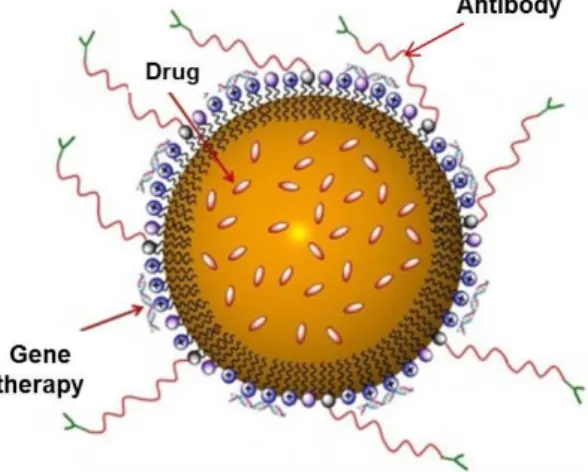
Nanolung technology is a nanocarrier with three key functional components: antibody, gene therapy agent and anticancer drug. When reached the lung, the triple functional inhalable
18 nanocarrier will be able to distinguish between healthy and cancer cells due to the antibody that is specifically designed to bind to receptors found only in SCLC cells. After the connection is made, the gene therapy agent will stand and will be able to stop tumor progression and reverse the cancer stage of the cells. These cells when detected are already in advance stage so by reversing the stage, these can be transformed to a point that it can be cured. Lastly, the anti-cancer drug is released into the cancer cells and kills them.
Figure 5 - Triple functional nanocarrier
Source: Author
With pulmonary administration and the triple functional nanocarrier, it is possible to increase the amount of drug without affecting the rest of the body. This novelty treatment will be able to overcome current unmet medical needs, reflecting in not only saving lives but also enhancing patients’ quality of life.
All the intellectual property generated by Nanoplex solutions will be considered as a private property after being patented, providing therefore competitive advantages, which will grant Nanoplex, the right to exclude others from producing, using, or selling its invention.
In most countries, patents give a 20-year period protection from the date the patent is issued. However, the effective patent term is frequently less than 20 years because patents are often obtained before products enter the market. Considering the development stage of Nanolung, it is expected to reach the market in 2024, IP will not represent an obstacle for the success of Nanolung.
Since the technology is unique and has potential applications in the most desirable markets, the intention is to submit a patent of the technology as soon as possible in the main markets, namely USA, Europe and China.
19
5. Market analysis
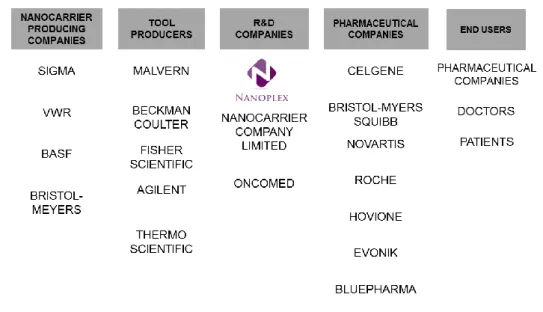
5.1 Industry analysis 5.1.1 Industry mapFigure 6 - Industry map
Source: Author
The global lung cancer therapeutics market has been driven by the adoption of personalized treatments. Novelty treatments have revitalized the lung cancer therapeutics market and on the other hand, patent expiry of existing drugs has posed a major threat to original drug producers. For that reason, manufacturers were pressured to cut down investments in research and development. In order for these companies to maintain its competitiveness and diversified portfolio, pharmaceutical companies are acquiring smaller research and development companies, like Nanoplex, or their products.
5.1.2 Industry characterization and competition
The pharmaceutical industry is characterized by its significant competition from many pharmaceutical and biotechnology companies that are also researching and selling products. The main players in this industry are the large pharmaceutical companies and these have extensive financial, manufacturing, marketing, research and drug development resources. Also, these companies have large expertise in preclinical and clinical testing and in obtaining regulatory approvals for drugs. In addition, academic institutions, government agencies and other public and private organizations are conducting research that may seek patent protection
20 with respect to potentially competitive technologies. These organizations may also establish exclusive collaborations or licensing their technologies with the main players of the industry. Due to the significant competition and large market demand, the pharmaceutical industry is characterized by almost perfect competition.
This industry is facing a growing life cycle mainly due to the growth of patients with unmet needs to be satisfied. Although there are some barriers like extensive research and development processes, this industry is more open to collaborations with different players like small and medium enterprises which core business are research and development.
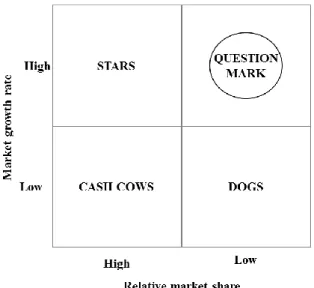
As it can be observed in BCG matrix below, Nanoplex is a question mark due to the high growth rate of the industry and the low market share when compared to the other players in this industry.
Figure 7 - BCG matrix
Source: Adapted from Introdução à gestão de organizações
GE/ Mckinsey matrix allows understanding the industry attractiveness as well as the Nanoplex competitive position in the pharmaceutical industry.
21
Figure 8 - GE/Mckinsey matrix
Source: Adapted from Introdução à gestão de organizações
Nanoplex competitive position is high giving the unique technology that will fulfill specific unmet needs and the qualification of their human resources giving the amount of years of experience on research. The high industry attractiveness is due to the enormous dimension of the market and increasing growth rate. As observed above, the circle reflects the major importance that this product represents to the company. Giving the position of the circle in the GE/Mckinsey matrix, this model recommends the investment for this one to grow.
For the purpose of this work it was considered as direct competitors the emergent therapies such as Cell therapies and Monoclonal Antibodies and also the conventional therapies such as chemotherapy.
Although Cell therapy is a direct competitor, they face a major disadvantage due to the longer time needed to be applied resulting a slower therapeutic process. Time is crucial in a fast evolution disease such as SCLC.
Also despite the fact that Monoclonal Antibodies are consider direct competitors, they can only identify the cancer cells and leave the immune system to attack them naturally. With Nanolung the cancer cells are identify and a proved effective anti-cancer drug eliminates them.
The major disadvantages of chemotherapy are related with I.V. administration, drug unspecificity and inability to discriminate between cancer cells and normal cells undergoing rapid division which will result in massive side effects. Since Nanolung is pulmonary
22 administrated and for that reason more focus on the source of the cancer, reduction of side effects is a benefit not achieve by our competitors.
Indirect competitors are the conventional therapies such as surgery and radiotherapy. These treatments are considered indirect competitors since they only produce positive results when combined with chemotherapy.
Analyzing the competition, Nanolung against advanced lung cancer, has a clear advantage since it can perform more effectively by being non-evasive which will reduce side effects and just for that patients and their families with be attracted to use Nanolung.
5.2 Pest analysis
Analyzing the political/legal context, pharmaceutical industry has faced an increased pressure on price however, in the oncology area, cost of treatments continue to rise around the world since it offers innovative treatments for diseases with few other options. The increase cost of treatment not only affects patients and their families, it affects the society. Politicians offer new plans to increase votes and health institutions encourage doctors to asks patients for their money. The high cost of treatments can also be associated to the many legal existing restraints to releasing drugs suitable for human consumption. Before the treatment is allowed to be studied in humans, FDA requires extremely thorough preclinical tests such as in vitro (studies conducted in the laboratory) and in vivo (studies in living cell, tissue cultures and animal models) tests. These nonclinical studies, contribute to a better understanding of the treatment mechanism of action as well as provide evidences that the treatment is reasonably safe to conduct the proposed clinical trials. Afterwards, starts the recruitment and enroll of volunteers to participate in clinical trials and this phase can take months since there are often specific requirements for enrollment, based on the nature of the condition studied and the patient group that is expected to benefit from the novelty treatment.
Regarding the economical context, global economic crisis still exists, however, OECD Health Statistics report show that the spending on healthcare per capita continues to grow. Increased pressures from shareholders caused a consolidation of the industry and more mergers and acquisitions will continue to take place in the coming years. Also venture capitalists are more willing to offer funding for new industry players like biotechnology companies.
23 Concerning the social aspect, patients are becoming more and more informed about the innovations available and consequently become more demanding. The continuous innovation has increased patient’s expectation to acquire the best available services and products. Also emerging markets have shown enormous populations with high levels of unmet needs creating a gap in the market ready to fulfill. In addition, the continuous research and development process requires more qualified human capital.
Due to fast technology evolution in the industry, companies need to update frequently to avoid being left behind. These need to be the first to implement novelty technologies to gain the first mover advantages in this competitive market.
5.3 Five forces of Porter Threat of new entrants (Low)
The pharmaceutical industry has high entry barriers mainly since companies need to allocate a lot of capital into research and development, patent expenses, distribution and marketing expenses before having the return on the capital.
On the other side, big pharmaceuticals are able to build global operations and benefit from economies of scale in terms of manufacturing and distribution. A new entrant lacks the strong brand name as well as reputation and necessary network able to facilitate this process and reduce cost.
Patent expirations lead to an entry of new competitors (generic competition) causing decreased revenues. The ability for a pharmaceutical company to offset the loss of revenue from patents’ expiration, depends on the growth of existing products and also the growth of novelty products or services to be introduced in the company pipeline.
Rivalry among existing competition (High)
The pharmaceutical industry is characterized by being a mature, consolidating and highly competitive industry. Companies have strong credit profiles with high margins, healthy balance sheets and good liquidity.
For small and medium enterprises to stay alive in this industry they need either a potential “blockbuster” in their pipeline or significant research or valuable assets that will be licensed to big and strong pharmaceutical company.
24 Intellectual property protection tends to reduce competition between pharmaceutical industries. Although, companies can always try to submit a patent with a similar technology for treating the same health condition however using a different approach. Consequently this will increase rivalry between the companies.
Bargaining power of suppliers (Low)
Large number of suppliers and the importance that each pharmaceutical company represents to them are the main reasons why usually suppliers have no negotiation power. The resources required to produce products or services are not restricted to a limited set of suppliers.
Bargaining power of buyers (Low)
Generally consumers have no power of negotiation. They consume medication that is prescribed by the doctors, the only option is generic but in the oncology area this is not a common practice. Patients will acquire the product or service that will better fulfill their unmet needs.
Threats of substitute products or services (Medium)
Generic competition can be a threat for the pharmaceutical industry and even for some cases in oncology area. However generally and for the specific case of small cell lung cancer, the choice will be the most efficacy proved products and novelties that proved fulfill unmet needs.
Normally, when a new product is introduced in the market, no better alternatives are available. It takes a long amount of time to place a product in the market, during this period, the first mover will gain recognition and reputation. Also, patent protection will allow keeping in secret all the technology information and prevent others from producing the same product. However, when patent protection period finishes, the information is disclosed and the threat of substitute products or services increases.
25
Figure 9 - Five forces of Porter of the pharmaceutical industry
Source: Author
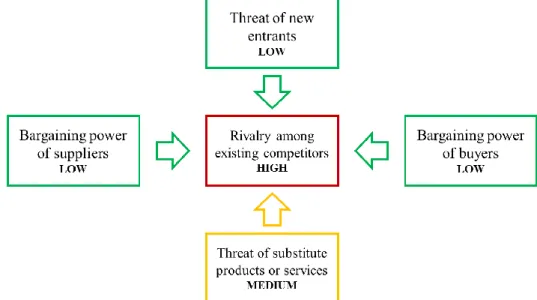
In a nutshell, the pharmaceutical industry has high entry barriers given the amount of financial resource necessary and for that reason the threat of new entrants is low. Both bargaining power of suppliers and buyers have low forces as it can be observed in figure 11. The second highest score belongs to the threat of substitute products or services, due to the patent protection of products and also due to the amount of time and resources needed to place a product or service in the market. Lastly, this industry is characterized by being a mature, consolidating and highly competitive one. For that reason the highest force is rivalry among existing competitors. Given this scenario, it can be consider a relative high attractive industry with an average of 2.86 global evaluation.
Table 1 - Quantitative five forces of Porter of the pharmaceutical industry
26
5.4 Identification of opportunities and threats Opportunities
As mentioned on literature review, Pharmaceutical companies are experiencing an evolution on their business models. Big pharmaceutical companies are opting to acquire, or do mergers with small and medium enterprises that focus on research and development such as Nanoplex, instead of investing on their own research and development departments.
The ability to establish strategic agreement with pharmaceutical companies will boost Nanoplex research and will place its name in the market. Though acquisitions and mergers are opportunities for small and medium enterprises to gain reputation and increase their credibility to future investors as well as patients. In addition, these partnerships allow a global penetration and market leadership through distribution channels and marketing activities. Nowadays, is occurring an increased awareness about healthcare needs and cancer has been one of the most discussed topics. An increased awareness leads to an increased demand for more healthcare solutions, especially healthcare solutions that can not only treat the problem but as well ensure patient’s life quality during the treatment period.
Threats
This industry is characterized by its fast technology evolution, thereby reaching the market as fast as possible is crucial for successful new product.
Although novelty products with patent protection cannot be imitated, competitors can always try to submit a patent with similar technology to treat the same disease however using a different approach.
Investments on start-up pharmaceutical companies are crucial especially during the research and development phase. If no companies show interest and invest, start-up companies cannot survive in this industry. Also these investments can be negatively affected by the global economic slowdown resulting on the lower probability to receive them.
6. Internal analysis
Once the external factors are analyzed, matters to characterize the internal context of Nanoplex, starting to describe the organizational structure and afterwards identify the strengths and weaknesses of the company that will allow to keep competitive advantages in this competitive industry.
27
6.1 Organizational structure
As it can be observed in the figure 10, Nanoplex will have a simple structure, focusing on the research and development process and promotion of the technology to future investors.
Figure 10 - Nanoplex organizational structure
Source: Author
Nanoplex will count with a CEO (Chief executive officer) on the top of hierarchical structure, who will set the company’ strategy and direction; following by the CIO (Chief of innovation officer) that will have the responsibility to coordinate all the research and development activities and will be in charge of two researchers, one with more experience in the field. Moreover, a clinical trial expert will be recruited in 2019, the first year of clinical trials, in order to give guidance and ensure that all the procedures are in accordance to standard and guarantee the Nanolung’ success in clinical trials.
Chief Executive Officer
Especially in a start-up company, the CEO is responsible for the success or failure of the company. The CEO will be the responsible for all the management activities and will have the Chief of Innovation Officer reporting directly to him.
The CEO will be responsible to set and implement the strategy that is the most suitable for Nanoplex. In addition, he/she will have the responsibilities to manage the firm capital, target and initiate strategic business partnerships, identify risks and ensure appropriate strategies are
28 in place, recruit human capital and deal with day-to-day decisions. The CEO will be also in charge of promoting the project, namely to ensure the adequate flow of funds.
Chief of Innovation Officer
The Chief of Innovation Officer is the bridge between the scientific and the business part of the company. Works with as well as reports to the CEO to develop and manage new ideas and their implementation throughout the organization, specifically addressing R&D issues.
This professional will be responsible for all the research and development activities from the planning to the implementation. Moreover, it will coordinate the work of the two researchers.
6.2 Identification of strengths and weaknesses Strengths
Nanolung is a treatment against SCLC and since it is a rare disease, this treatment is considered an orphan drug. As stated by Richter (2015), despite variation in the terminology and prevalence thresholds used to define rare diseases among different jurisdictions and organizations, the terms “rare disease” and “orphan drug” are used most widely and the average prevalence threshold is between 40 and 50 cases/100,000 people. This designation allows Nanoplex to receive orphan tax credits, which can provide incentives to develop some drugs for a class of indicators. In addition, Nanoplex may also have lower clinical development costs, as clinical trials sizes are lower given that less patients are required. This FDA program, begun in the early 1990s, allows to speed new treatments for serious or life-threatening diseases for which there are no adequate treatment.
Due to the minimal invasive approach of Nanolung, most severe side effects of chemotherapeutic drugs will be avoided since the drugs will not be spread out throughout the body and will not affect other organs or tissues such as the hair follicles.
Nanoplex technology is patentable which prevents any competitors from commercially making, using selling, importing or distributing this technology. In addition, this technology has the potential to be used in various applications such as pulmonary diseases diagnose kit and pharmaceutical nanocarrier development services.
Nanoplex has strong scientific background due to the fact that Nanoplex human capital is a research group that has been doing research in the cancer field for more than 15 years.
29
Weaknesses
If a proposal to be acquired by a pharmaceutical established company does not happen, the company financial and human resources will not be enough to survive in this competitive market especially given the costly and lengthy research and development process of Nanolung.
Additionally, being a star-up company with lack of capital funds, increases the dependency on investments in order to achieve their milestones and keep their human capital employed. Although Nanoplex has strong scientific background, it lacks in business experience.
7. Competitive analysis
7.1 Systemic SWOTFigure 11 - Systemic SWOT analysis
Source: Author 7.2 Ansoff Matrix
Igor Ansoff created Ansoff Matrix and it was firstly publish in his article “Strategies for Diversification” in the Harvard Business Review in 1957. This tool is crucial for Nanoplex integration in the industry, since it shows the different approaches that allow the company’ growth.
30 Given Nanoplex is launching its first product, in an existing market but it is not been explored by the company and since market needs already exist, Nanoplex approach is product extension (figure 12).
Figure 12 - Ansoff matrix
Source: Adapted from Manual de Estratégia – Conceitos, Prática e Roteiro
Nanoplex believes that is able to reduce the market share of existent and emergent alternatives due to its competitive advantage that is the effectiveness of its approach to SCLC. In addition, there is a technological gap in the market since the existent market needs are not satisfied, giving an opportunity for Nanolung to succeed.
8. Development strategy
On the previous chapters the internal and external analysis were conducted which contribute to the development of Nanoplex strategy.
Porter (1998) introduced the generic competitive strategies, the firm’s relative position within its industry: cost leadership, differentiation and focus. The focus strategy has two variants cost focus and differentiation focus. These strategies result in a combination between the type of competitive advantage (lower cost or differentiation) and the competitive scope (broad target or narrow target).