ORIGIN
AL RESEAR
CH
This study derives from the project Funcionalidade do membro superior de mulheres pós-mastectomia radical modificada com e sem reconstrução mamária (Functionality of the upper limb of women after modified radical mastectomy without breast reconstruction), developed at Universidade Federal de Santa Maria – Santa Maria (RS), Brazil.
1Physical therapist, resident of the Multi-Professional Program in Clinical Care focused on Infectious Diseases and Neurology at Centro Universitário Franciscano (Unifra) – Santa Maria (RS), Brazil.
2Physical therapist, master’s degree from the Graduate Program in Functional Rehabilitation of Universidade Federal de Santa Maria (UFSM) – Santa Maria (RS), Brazil.
3Master’s degree in Physical Education from Universidade Federal de Santa Maria (UFSM) – Santa Maria (RS), Brazil.
4Master’s degree in Health Promotion – Professor of the Course in Medicine of the Department of Gynecology and Obstetrics at Universidade Federal de Santa Maria (UFSM) – Santa Maria (RS), Brazil
5Doctoral degree in Industrial Engineering – Professor of the Course in Physical therapy of the Physical Therapy and Rehabilitation Department at Universidade Federal de Santa Maria (UFSM) – Santa Maria (RS), Brazil.
6Doctoral degree in Education – Professor of the Course in Physical therapy of the Department of Physical Therapy and Rehabilitation at Universidade Federal de Santa Maria (UFSM) – Santa Maria (RS), Brazil.
ABSTRACT | With the evolution of oncoplastic techniques that enable breast reconstruction at the same time of mastectomy without compromising oncologic safety, it becomes pertinent to investigate the implications of immediate reconstruction with expanders or silicone prostheses for the pain, the functionality of the homolateral upper limb and the quality of life (QoL) of these women. The aim of this study was to compare the pain, the functionality and the QoL of women subjected to modified radical mastectomy with immediate breast reconstruction and without reconstruction. This is a cross-sectional, comparative and descriptive study with a quantitative approach, which evaluated 22 volunteers who had undergone modified radical mastectomy, divided evenly into two groups, according to whether they were subjected to immediate breast reconstruction (RI) or not (SR). The volunteers answered the sociodemographic, clinical and oncological questionnaire, VAS to measure pain, DASH to assess the functionality of the upper limb, and QoL was assessed through the EORTC QLQ-C30 questionnaire, with its specific module for breast CA. There was a high prevalence of pain, moderate functional
412
limitation and satisfactory QoL, with no statistical difference between groups. However, no significant differences were found between groups for pain (p=0.586), functionality (p=0.399) and QoL (p>0.05). For the evaluated sample, reconstructing the breasts or not with expanders or silicone prostheses during mastectomy did not produce effects over pain, functionality and QoL.
Keywords | Breast Neoplasms; Pain; Upper Extremity; Quality of Life; Modified Radical Mastectomy.
RESUMO | Com a evolução das técnicas oncoplásticas que permitem a reconstrução da mama no mesmo instante da mastectomia, sem comprometer a segurança oncológica, torna-se pertinente investigar as implicações da reconstrução imediata com expansor ou prótese de silicone sobre a dor, a funcionalidade do membro superior homolateral à cirurgia e a qualidade de vida (QV) das mulheres. O objetivo deste estudo foi comparar a dor, a funcionalidade e a QV de mulheres submetidas à mastectomia radical modificada com reconstrução mamária imediata e sem reconstrução. Trata-se de um estudo transversal, comparativo e descritivo
Immediate breast reconstruction versus
non-reconstruction after mastectomy: a study on
quality of life, pain and functionality
Reconstrução mamária imediata versus não reconstrução pós-mastectomia: estudo sobre
qualidade de vida, dor e funcionalidade
Reconstrucción mamaria inmediata versus no reconstrucción postmastectomía: estudio sobre
calidad de vida, dolor y funcionalidad
Thaís Nogueira de Oliveira Martins1, Luana Farias dos Santos2,Gustavo do Nascimento Petter3,
João Nazareno da Silva Ethur4, Melissa Medeiros Braz5, Hedioneia Maria Foletto Pivetta6
com abordagem quantitativa, que avaliou 22 voluntárias pós-mastectomia radical modificada, divididas igualmente em dois grupos, de acordo com a realização da reconstrução mamária imediata (RI) ou sem reconstrução (SR). As voluntárias responderam ao questionário sociodemográfico, clínico e de tratamento oncológico, a EVA, para mensurar a dor, DASH para avaliar a funcionalidade do membro superior e, para avaliar a QV, foi utilizado o questionário EORTC QLQ-C30 com seu módulo específico para o CA de mama. Houve alta prevalência de dor, moderada limitação funcional e satisfatória QV. No entanto, não foram encontradas diferenças significativas intergrupos para dor (p=0,586), funcionalidade (p=0,399) e QV (p>0,05). Para a amostra avaliada, fazer ou não a reconstrução da mama com expansor ou implante de silicone no ato da mastectomia não implicou sobre a dor, funcionalidade e QV.
Descritores | Neoplasias da Mama; Dor; Extremidade Superior; Qualidade de Vida; Mastectomia Radical Modificada.
RESUMEN | Con la evolución de las técnicas oncoplásticas que permiten la reconstrucción de la mama en el mismo instante de la mastectomía, sin comprometer la seguridad oncológica, resulta pertinente investigar las implicaciones de la reconstrucción inmediata con expansor o prótesis de silicona sobre el dolor, la
funcionalidad del miembro superior homolateral a la cirugía y la calidad de vida (CV) de las mujeres. El objetivo de este estudio ha sido comparar el dolor, la funcionalidad y la CV de mujeres sometidas a la mastectomía radical modificada con reconstrucción mamaria inmediata y sin reconstrucción. Se trata de un estudio transversal, comparativo y descriptivo con abordaje cuantitativo, que evaluó 22 voluntarias postmastectomía radical modificada, divididas igualmente en dos grupos, de acuerdo a la realización de la reconstrucción mamaria inmediata (RI) o sin reconstrucción (SR). Las voluntarias han contestado al cuestionario sociodemográfico, clínico y de tratamiento oncológico, la EVA, para medir el dolor, DASH para evaluar la funcionalidad del miembro superior y, para evaluar la CV, se utilizó el cuestionario EORTC QLQ-C30 con su módulo específico para el CA de mama. Hubo alta prevalencia de dolor, moderada limitación funcional y satisfactoria CV. Sin embargo, no se encontraron diferencias significativas intergrupos para el dolor (p=0.586), funcionalidad (p=0.399) y CV (p>0.05). Para la muestra evaluada, hacer o no la reconstrucción de la mama con expansor o implante de silicona en el acto de la mastectomía no implicó sobre el dolor, la funcionalidad y la CV.
Palabras clave | Neoplasias de la Mama; Dolor; Extremo Superior; Calidad de Vida; Mastectomía Radical Modificada.
INTRODUCTION
Surgical techniques, as well as associated therapies in the treatment of breast cancer (CA), reduce the risk of local recurrence, distant metastasis and increase overall survival, contributing to the improvement of the prognosis observed in the last years. However, the whole therapeutic process may lead to a series of physical alterations, among them, pain and restriction of mobility of the homolateral upper limb, which even after the end of treatment still affect negatively the quality of life (QoL) of these women1-3.
QoL has been a major concern of health professionals, beyond the time of survival free from the disease. In this context, the advances of oncological surgical techniques enable immediate breast reconstruction after mastectomy, improving the physical and psychological integrity of patients without hindering oncological safety4-6. Immediate breast reconstruction with expanders or silicone prostheses has become the preferential option for both doctors and patients,
because of its simplicity, lower total surgical time, minimal scarring, and immediate aesthetic results7.
Despite this, some women opt for not reconstructing their breasts, usually because they are afraid of going through additional surgeries, they lack information or do not have the security needed to decide on this aspect in the space of time between diagnosis and surgery8,9.
Numerous studies have shown the negative repercussions of breast CA treatment on pain, functionality and QoL10,11. Other studies indicate the improvement in the QoL of women who underwent breast reconstruction5,12, especially regarding the emotional aspect13, however, in our research, we did not find any studies that compare pain, functionality and QoL of women who underwent immediate breast reconstruction versus those who did not.
mastectomy with immediate breast reconstruction and without reconstruction.
METHODOLOGY
This is a cross-sectional, comparative and descriptive study with a quantitative approach, in which to obtain a 5% significance level (alpha) and 80% power (beta), a minimum sample of 22 women was estimated, considering the results obtained in the EORTC QLQ-C30 overall health scale of a study that evaluated women with breast CA14 as primary outcome.
The collections were held in the Physical Therapy and Mastology clinics of Hospital Universitário de Santa Maria (HUSM), as well as in Centro de Referência em Saúde do Trabalhador de Santa Maria – RS and in one of the city’s mastology clinics, in the period from April to September 2016, based on the analysis of the medical records of women diagnosed with breast CA who met the study’s criteria for inclusion and exclusion.
Women aged 35 to 60 years old subjected to unilateral modified radical mastectomy, associated or not with axillary dissection (AD), participated in the study. Volunteers with or without immediate breast reconstruction, having completed therapy at least three months and a maximum of five years prior to the study, considering both surgical treatment as well as radiation therapy and chemotherapy, were included. The breast reconstructions were performed with expanders or silicone prostheses. In addition, the participants could have undergone physical therapy, performed at any time during the treatment of breast CA according to their clinical condition and to whether they had access to it.
Patients with myocutaneous flaps-based reconstruction, musculoskeletal, neurological, and rheumatologic comorbidities, either diagnosed or referred to previously in the homolateral upper limb, were excluded. Women with lymphedema in the upper limb, i.e., a difference between members greater than or equal to 2.5 cm verified via perimetry15 in at least one point out of the three evaluated16, were also excluded.
The participants were stratified into two groups: the group without breast reconstruction (SR) and the group with immediate breast reconstruction (RI), 11 women having been evaluated in each group. From the selection of the women’s medical records, there were no sample losses. This study derives from a project titled “Funcionalidade do membro superior de mulheres
pós-mastectomia radical modificada com e sem reconstrução mamária” [Functionality of the upper limb of women after modified radical mastectomy without breast reconstruction], submitted to and approved by the Research Ethics Committee of Universidade Federal de Santa Maria (Protocol No. 1.468.794). Data collection began after the women had agreed to it and signed two copies of the Informed Consent Form.
To delineate the sociodemographic and oncological profile of the participants, a semi-structured questionnaire with questions related to age, marital status, education level, laterality and therapies employed was applied. The Visual Analogue Scale (VAS) was used to evaluate the intensity of pain in the breast, axilla and medial region of the homolateral arm during the last week.
The Disabilities of the Arm, Shoulder and Hand (DASH) questionnaire was used to evaluate the functional performance of the homolateral upper limb. This questionnaire was validated for the Brazilian context17 and consists of 30 questions which refer to function and symptoms in relation to the last week, including questions pertaining to physical function, symptoms and social functions. In this study, the optional modules were not applied. DASH uses a 5-point Likert scale and the total score ranges from 0 (no dysfunction) to 100 (severe dysfunction)18.
For evaluation of the QoL, the European Organization for Research and Treatment of Cancer Quality of Life Questionnaire C-30 (EORTC QLQ-C30) version 3.0 was applied, along with the specific module for breast CA, the Breast Cancer Module (EORTC BR-23). These are health-related QoL questionnaires translated and validated for the Portuguese language19.
EORTC QLQ-C30 consists of 30 questions and is divided into 3 scales for calculating the scores, which correspond to the Overall Health Scale (OHS), Functional Scale (FS) and Symptoms Scale (SS). The specific questionnaire for breast CA (EORTC BR-23) consists of 23 questions and is subdivided into two scales for calculating the FS and SS scores. All questionnaires were applied by the same researcher in the form of interviews.
samples. Categorical variables were compared through the Chi-Squared test. The significance level adopted was 5% and the software used was SPSS (Statistical Package for the Social Sciences) 14.0 for Windows.
RESULTS
Twenty-two volunteers participated in the study, with an average age of 49.55±5.22 years in the RI group, and 49.73±7.77 years in the SR group.
Table 1 presents the results of the sociodemographic, clinical and oncological questionnaire answered by the evaluated women.
The groups were homogeneous in all variables showed in Table 1. As for physical therapy, all the women evaluated were undergoing or had undergone physical therapy as a physiotherapeutical follow-up to cancer treatment.
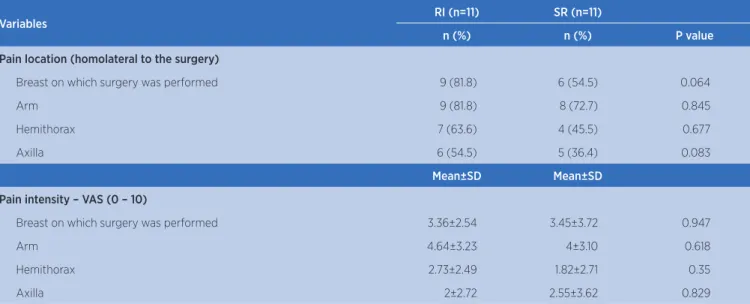
Table 2 shows data concerning pain symptomatology for both groups, in relation to the location and intensity of the pain.
Table 1. Sociodemographic, clinical and oncological treatment profile of participants
Variables RI (n=11) SR (n=11)
n (%) Mean±SD n (%) Mean±SD P value
Age (years) 49.55±5.22 49.73±7.77 0.949
Skin color
White 10 (90.9) 5 (45.5)
Nonwhite 1 (9.1) 6 (54.5)
Marital status
Married or living with a partner 9 (81.8) 8 (72.7)
Divorced/separated 1 (9.1) 2 (18.2)
Widow 1 (9.1) 0 (0)
Single 0 (0) 1 (9.1)
Education level (years)
Up to 8 years 1 (9.1) 6 (54.5)
9-11 years 6 (54.5) 4 (36.4)
12 and over 4 (36.4) 1 (9.1)
Time since the surgery (months) 21.27±15.26 22.45±15.67 0.86
Axillary Approach
SLB 4 (36.4) 1 (9.1)
AD 7 (63.6) 10 (90.9)
Surgery was homolateral to the dominant limb 0.215
Yes 5 (45.5) 8 (72.7)
No 6 (54.5) 3 (27.3)
Dominant member
Right 11 (100) 10 (90.9)
Left 0 (0) 1 (9.1)
Adjuvant treatment
QT 8 (72.7) 11 (100)
RT 3 (27.3) 8 (72.7) 0.86
Table 2. Location and intensity of pain according to a visual analogue scale for the sample evaluated
Variables RI (n=11) SR (n=11)
n (%) n (%) P value
Pain location (homolateral to the surgery)
Breast on which surgery was performed 9 (81.8) 6 (54.5) 0.064
Arm 9 (81.8) 8 (72.7) 0.845
Hemithorax 7 (63.6) 4 (45.5) 0.677
Axilla 6 (54.5) 5 (36.4) 0.083
Mean±SD Mean±SD
Pain intensity – VAS (0 – 10)
Breast on which surgery was performed 3.36±2.54 3.45±3.72 0.947
Arm 4.64±3.23 4±3.10 0.618
Hemithorax 2.73±2.49 1.82±2.71 0.35
Axilla 2±2.72 2.55±3.62 0.829
RI – modified radical mastectomy associated with breast reconstruction; SR – modified radical mastectomy without reconstruction; VAS – visual analogue scale; SD – standard deviation
The RI and SR groups showed high prevalence of pain/discomfort, with 10 (90.9%) and 8 (72.7%) for the women in each group, respectively, without differences between the groups (p=0.586). The RI group showed, in all locations assessed, the highest percentage of women with pain complaints. As for the intensity of the pain, there was no statistical difference between the groups.
Table 3 refers to the average DASH score obtained in the two groups evaluated.
Table 3. DASH’s functionality score for the sample evaluated DASH (Scale of 0-100)
Groups Mean±SD P value
RI 31.66±18.62
0.399
SR 25.38±15.39
DASH – The lower the score the better the functionality of the upper limb; RI – modified radical mastectomy associated with breast reconstruction; SR – modified radical mastectomy without reconstruction; SD – standard deviation
The mean value found in the assessment of functionality (DASH) had a similar score for both groups, demonstrating that there is no significant difference (p=0.399) between women who have undergone reconstruction and those who have not.
The assessment of QoL with the EORTC-QLQC30 and its specific module for breast CA are shown in Table 4.
It is observed that in both scales of assessment of QoL (EORTC QLQ-C30 and BR 23) there was no difference in the comparison between groups.
Table 4. EORTC-QLQC30 and EORTC-QLQ BR 23’s scores for the sample evaluated
Groups Mean±SD P value
EORTC-QLQC30
Overall Health Scale* RI 73.48±22.31 0.867 SR 70.45±26.19
Functional Scale* RI 80.60±11.72 1
SR 80.60±11.02
Symptoms Scale** RI 21.91±17.37 0.074
SR 11.89±8.61
EORTC-QLQ BR 23
Functional Scale* RI 62.66±23.68 0.338
SR 52.05±27.86
Symptoms Scale** RI 22.32±18.70 0.895
SR 19.38±11.28
*The closer to one hundred, the better the Overall Quality of Life; **The closer to one hundred, the worse the Overall Quality of Life; RI – modified radical mastectomy associated with breast re-construction; SR – modified radical mastectomy without rere-construction; SD – standard deviation
DISCUSSION
which may have contributed to the increased sensitivity compared to the pain on the day of collection only24.
As for the intensity of the pain, in the comparison between groups, there was no difference for any of the locations assessed, with the average pain intensity being low, except for the arm. For this last one, the average pain intensity was considered moderate22 in both groups. This fact does not allow us to indicate a cause and effect relationship, because this is a cross-sectional study24 and variables related to the surgery, such as nerve damage, were not controlled25.
With regard to the functional limitations, it can be presumed that they would occur when the surgery performed was homolateral to the dominant limb, however, the groups’ homogeneity does not allow confirming this finding, since there were no differences between them. These findings corroborate the results found in another research that also found no association between the dominant limb and the side of the surgery in relation to functional performance24.
In a way, the functional consequences that arise from breast CA surgery involve primarily the homolateral upper limb. In the vast majority of the time the prevalence of post-treatment complications leads to restriction of shoulder mobility generated by several factors, among them scar adhesions and fibrosis26. What one might notice in this study is that, despite this, SR and RI women exhibited moderate functional limitation27. This can be explained because all the women had undergone or were undergoing physical therapy as a follow-up to cancer treatment; also, the women with lymphedema, which is known to be a comorbidity that interferes with functionality28, were excluded from the research.
Previous studies have reported that after breast reconstruction women may experience decreased functionality29,30, however, one study reported no association between breast reconstruction and functionality3, which corroborates the results of this research. Such findings can be explained by the fact that the sample studied had an almost two-year long postoperative period, which could have minimized the treatment’s effects. Similarly, the women underwent physical therapy, which may have positively influenced the findings.
The EORTC-C30 and BR 23 questionnaires denote reasonable or satisfactory QoL11 in both groups, without statistical differences between them, which can be justified by these women’s pain and functionality results, since QoL is directly linked to these factors. The average
scores obtained for the EORTC C-30 questionnaire in both groups show that, within the total universe of the questionnaire’s score, these values would be considered as low, and therefore would not represent more expressive complications31,32. This can be justified by the fact that the women in both groups had already completed the adjuvant treatment a few months prior and for that reason the symptoms presented would not be as evident.
Similar results were found in previous studies in which there was no difference in QoL in the comparison between groups for the general13 and specific scores of this variable, suggesting that functional postoperative adaptation that transcended the additional anatomical modifications imposed by breast reconstruction took place33.
Our findings allow us to state that, for the sample evaluated, immediate breast reconstruction had no major impact on functionality and QoF when comparing the women who underwent it with the women who did not. This emphasizes the importance of the existing legislation, which ensures the right to immediate breast reconstruction, when adequate technical conditions are available34.
It is believed that our study may contribute to the understanding of the issues of functionality of the upper limb and QoL, which are widely studied in women after the treatment of breast CA, however without comparisons between groups taking into consideration immediate breast reconstruction with expanders or implants. In a way, this research fills the gap that exists in the current literature regarding reconstruction and non-reconstruction, providing women and the medical staff with greater security in relation to the decision-making process associated with breast reconstruction, in what concerns the aspects inherent to functionality and QoL.
CONCLUSION
For the evaluated sample, the results show that reconstructing or not the breasts with expanders or silicone prostheses during mastectomy did not produce effects on pain, functionality and QoL. In both groups there was a high prevalence of pain and moderate functionality. However, women from both groups considered their overall QoL to be reasonable or satisfactory.
REFERENCES
1. Carvalho FN, Bergmann A, Koifman RJ. Functionality in women with breast cancer: the use of International Classification of Functioning, Disability and Health (ICF) in Clinical Practice. J Phys Ther Sci. 2014;26(5):721-30. doi:10.1589/jpts.26.721 2. Ewertz M, Jensen AB. Late effests of breast cancer treatment
and potentials for rehabilitation. Acta Oncol. 2011;50(2):187-93. doi: 10.3109/0284186X.2010.533190
3. Assis MR, Marx AG, Magna LA, Ferrigno ISV. Late morbidity in upper limb function and quality of life in women after breast cancer surgery. Braz J Phys Ther. 2013;17(3):236-43. doi:10.1590/S1413-35552012005000088
4. Manning AT, Sacchini VS. Conservative mastectomies for breast cancer and risk-reducing surgery: the Memorial Sloan Ketterring Cancer Center experience. Gland Surg. 2016;5(1):55-62. doi: 10.3978/j.issn.2227-684X.2015.10.02 5. Rondelo JC, Martino MD, Mermerian T, Veiga DF, Abla LEF,
Gebrin, LH, et al. Qualidade de vida em pacientes submetidas à reconstrução de mama com retalho miocutâneo transverso do reto abdominal. Rev Bras Cir Plást. 2014;29(1):79-83. doi: 10.5935/2177-1235.2014RBCP0013
6. Inocenti A, Santos MA, Loyola EAC, Magalhães PAP, Panobianco MS. Repercussão dos efeitos da cirurgia reconstrutora na vida de mulheres com neoplasias da mama. Texto Contexto Enferm. 2016;25(2):e4520014. doi:10.1590/0104-07072016004520014
7. Atiyeh BS, Abbas J, Costagliola M. Barreira cutânea para reconstrução mamária com prótese. Rev Bras Cir Plást. 2012;27(4):630-5. doi:10.1590/S1983-51752012000400028 8. Azevedo RF, Lopes RLM. Revisando as contribuições da
reconstrução mamária para mulheres após a mastectomia por câncer. Rev Enferm. 2010;18(2):298-303.
9. Holland F, Archer S, Montague J. Younger women’s experiences of deciding against delayed breast reconstruction post-mastectomy following breast cancer: an interpretative phenomenological analysis. J Health Psychol. 2016;21(8):1688-99. doi: 10.1177/1359105314562085
10. Basílio FB, Anjos RMM, Medeiros EP, Melo EMF, Silva RMV. Effects of manual therapy techniques in the treatment of pain in post mastectomy patients: systematic review. Man Ther Posturology Rehab J. 2014;12:196-201. doi: 10.17784/ mtprehabjournal.2014.12.190
11. Lôbo AS, Fernandes AF, Almeida PC, Carvalho CM, Sawada NO. Qualidade de vida em mulheres com neoplasias de mama em quimioterapia. Acta Paul Enferm. 2014;27(6):554-9. doi: 10.1590/1982-0194201400090
12. Paredes CG, Pessoa SGP, Peixoto DTT, Amorim DN, Araújo JS, Barreto PRA. Impacto da reconstrução mamária na qualidade de vida de pacientes mastectomizadas atendidas no serviço de cirurgia plástica do Hospital Universitário Walter Cantídio. Rev Bras Cir Plást. 2013;28(1):100-4. doi: 10.1590/S1983-51752013000100017
13. Furlan VLA, Sabino Neto M, Abla LEF, Oliveira CJR, Lima AC, Ruiz BFO, et al. Qualidade de vida e autoestima de pacientes mastectomizadas submetidas ou não a reconstrução de mama. Rev Bras Cir Plást. 2013;28(2):264-9. doi: 10.1590/ S1983-51752013000200016
14. Fernández MER, San Gregorio MAP, Más MB, Rodríguez AM. Diferencias psicológicas en pacientes con cáncer de mama según el tipo de cirugía mamaria. Cir Plást Iberolatinoam. 2010;36(4):359-68.
15. Bergmann A, Mattos IE, Koifman RJ. Diagnóstico do linfedema: análise dos métodos empregados na avaliação do membro superior após linfadenectomia axilar para tratamento do câncer de mama. Rev Bras Cancerol. 2004;50(4):311-20. 16. Carvalho APF, Azevedo EMM. A fisioterapia aquática
no tratamento do linfedema pós-mastectomia. Femina. 2007;35(7):413-6.
17. Orfale AG, Araújo PMP, Ferraz MB, Natour J. Translation into Brazilian Portuguese, cultural adaptation and evaluation of the reliability of the disabilities of the arm, shoulder and hand questionnaire. Braz J Med Biol Res. 2005;38(2):293-302. doi:10.1590/S0100-879X2005000200018
18. Institute For Work & Health [Internet]. Toronto: The Disabilities of the Arm, Shoulder and Hand. Scoring Instructions Scoring the DASH; c2006-2013. Toronto: Institute for work & Health. [cited 2016 Sep 13]. Available from: http://www.dash.iwh. on.ca/scoring
19. European Organization for Research and Treatment of Cancer Data Center. The EORTC QLQ-C30 Scoring Manual [Internet]. Brussels: EORTC; 2001 [cited 2016 Sep 13]. Available from: http://groups.eortc.be/qol/manuals
20. Andersen KG, Jensen MB, Tvedskov TF, Kehlet H, Gärtner R, Kroman N. Persistent pain, sensory disturbances and functional impairment after immediate or delayed axillary lymph node dissection. Eur J Surg Oncol. 2013;39(1):31-5. doi: 10.1016/j.ejso.2012.10.010
21. Fabro EAN, Bergmann A, Amaral e Silva B, Ribeiro ACP, Abrahão KS, Ferreira MGCL, et al. Post-mastectomy pain syndrome: incidence and risks. Breast. 2012;21(3):321-5. doi:10.1016/j.breast.2012.01.019
22. Mejdahl MK, Andersen KG, Gärtner R, Kroman N, Kehlet H. Persistent pain and sensory disturbances after treatment for breast cancer: six year nationwide follow-up study. BMJ. 2013;346:f1865. doi: 10.1136/bmj.f1865
23. Gärtner R, Jensen MB, Nielsen J, Ewertz M, Kroman N, Kehlet H. Prevalence of and factors associated with persistent pain following breast cancer surgery. JAMA. 2009;302(18):1985-92. doi: 10.1001/jama.2009.1568
24. Velloso FSB, Barra AA, Dias RC. Functional performance of upper limb and quality of life after sentinel lymph node biopsy of breast cancer. Rev Bras Fisioter. 2011;15(2):146-53. doi:10.1590/S1413-35552011000200010
25. Bezerra TS, Rett MT, Mendonça ACR, Santos DE, Prado VM, DeSantana JM. Hipoestesia, dor e incapacidade no membro superior após radioterapia adjuvante no tratamento para câncer de mama. Rev Dor. 2012;13(4):320-6. doi: 10.1590/ S1806-00132012000400003
26. Braz MM, Petter GN, Nora DD, Santos TS, Rubin N, Silva AMV. Efeitos da liberação miofascial sobre a funcionalidade e a dor em mulheres mastectomizadas. Fisioter Br. 2015;16(3):202-6. 27. MacLean RT, Spriggs P, Quinlan E, Towers A, Hacks T,
28. Fabro EAN, Costa RM, Oliveira JF, Lou MBA, Torres DM, Ferreira FO, et al. Atenção fisioterapêutica no controle do linfedema secundário ao tratamento do câncer de mama: rotina do Hospital do Câncer III/Instituto Nacional de Câncer. Rev Bras Mastologia. 2016;26(1):4-8. doi: 10.5327/ Z201600010002RBM
29. McNeely ML, Binkley JM, Pusic AL, Campbell KL, Gabram S, Soballe PW. A prospective model of care for breast cancer rehabilitation: postoperative and postreconstructive issues. Cancer. 2012;118(Suppl 8):2226-35. doi: 10.1002/ cncr.27468
30. Hage JJ, van der Heeden JF, Lankhorst KM, Romviel SM, Vluttters ME, Woerdeman LA, et al. Impact of combined skin sparing mastectomy and immediate subpectoral prosthetic reconstruction on the pectoralis major muscle function. Ann Plast Surg. 2014;72(6):631-7. doi: 10.1097/ SAP.0b013e318269e4ee
31. Fangel LMV, Panobianco MS, Kebbe LM, Almeida AM, Gozzo TO. Qualidade de vida e desempenho de atividades cotidianas após tratamento das neoplasias mamárias.
Acta Paul Enferm. 2013;26(1):93-100. doi: 10.1590/ S0103-21002013000100015
32. Silva SH, Koetz LCE, Sehnem E, Grave MTQ. Qualidade de vida pós-mastectomia e sua relação com a força muscular de membro superior. Fisioter Pesqui. 2014;21(2):180-5. doi: 10.1590/1809-2950/68121022014
33. Oliveira RR, Morais SS, Sarian LO. Efeitos da reconstrução mamária imediata sobre a qualidade de vida de mulheres mastectomizadas. Rev Bras Ginecol Obstet. 2010;32(12):602-8. doi:10.1590/ S0100-72032010001200007