Effect of mangosteen peel extract as an
antioxidant agent on the shear bond strength of
orthodontic brackets bonded to bleached teeth
Ananto Ali Alhasyimi1, Pinandi Sri Pudyani1, Ikmal Hafizi2
Introduction: The number of patients who seek orthodontic treatment that may have a history of tooth bleaching is increasing over the time. Bleaching may influence the decrease of the bond strength of orthodontic brackets. Objective: To determine and prove the effect of mangosteen peel (MP) extract to reverse the reduced shear bond strength (SBS) of orthodontic brackets after bleaching. Methods: A total of 150 maxillary first premolar teeth were randomly divided into 6 experimental groups as follow (n=25): negative-control (N: no bleaching), positive-control (P: bleaching + no treatment), and the treatment groups (bleaching + 10% sodium ascorbate (SA), 10% (MP-10), 20% (MP-20) and 40% (MP-40) MP extract gel). After treatment, the brackets were bonded with the resin-modified glass ionomer cement, SBS testing was performed using universal testing machine, and the adhesive remnant index (ARI) was examined using stereoscopic microscope after debonding. The SBS data were analyzed by analysis of variance (Anova) and the Tukey test. For the ARI, the Kruskal-Wallis test was performed. Result: There was significant SBS difference (p < 0.001) between various groups. The group without bleaching showed significantly higher SBS (8.19 ± 2.26 MPa) compared to others, while SBS in the group treated with 40% MP gel was significantly higher (7.93 ± 1.92 MPa) than other groups treated with antioxidants. The failure of orthodontic brackets bonded after bleaching and treatment using MP extract occurred at the enamel-adhesive inter-face. Conclusion: The application of MP extract as an antioxidant after bleaching was effective in reversing the reduced shear bond strength of orthodontic brackets after bleaching.
Keywords:Brackets. Bonding. Bleaching. Mangosteen peel extract.
1 Gadjah Mada University, Faculty of Dentistry, Department of Orthodontics
(Yogyakarta, Indonesia).
2 Gadjah Mada University, Faculty of Dentistry, Master Program of Biomaterial
Science (Yogyakarta, Indonesia).
» The authors report no commercial, proprietary or financial interest in the products or companies described in this article.
Submitted: February 23, 2017 - Revised and accepted: August 29, 2017
DOI: https://doi.org/10.1590/2177-6709.23.5.058-064.oar
How to cite: Alhasyimi AA, Pudyani PS, Hafizi I. Effect of mangosteen peel extract as an antioxidant agent on the shear bond strength of orthodontic brackets bonded to bleached teeth. Dental Press J Orthod. 2018 Sept-Oct;23(5):58-64. DOI: https://doi.org/10.1590/2177-6709.23.5.058-064.oar
Contact address: Ananto Ali Alhasyimi
55281, Jl. Denta North Sekip No 1, Special Region of Yogyakarta, Indonesia E-mail: [email protected]
Introdução: o número de pacientes que procuram o tratamento ortodôntico e têm histórico de clareamento dentário tem aumentado. O cla-reamento pode levar à diminuição da resistência adesiva dos braquetes ortodônticos. Objetivos: comprovar a efetividade do extrato de casca de mangostão (CM) em reverter a diminuição da resistência ao cisalhamento de braquetes ortodônticos colados após o clareamento. Métodos: 150 primeiros pré-molares superiores foram aleatoriamente divididos em seis grupos experimentais (n = 25): controle negativo (grupo N, sem cla-reamento), controle positivo (grupo P, clareamento + sem tratamento) e os grupos com tratamento (clareamento + ascorbato de sódio a 10% [grupo AS], gel de extrato de CM a 10% [grupo CM-10], a 20% [grupo CM-20] e a 40% [grupo CM-40]). Após o tratamento, os braquetes foram colados com cimento de ionômero de vidro modificado por resina e, depois, fez-se o teste de resistência ao cisalhamento (SBS) em uma máquina universal de ensaios. Após a descolagem dos braquetes, verificou-se o índice de adesivo remanescente (ARI), com o uso de um microscópio estereoscópico. Os dados da SBS foram submetidos a uma análise de variância (ANOVA) e ao teste de Tukey. Para o ARI, foi utilizado o teste de Kruskal-Wallis. Resultados: houve diferença significativa na SBS (p < 0,001) entre os diferentes grupos. O grupo sem clareamento mostrou resistência ao cisalhamento significativamente maior (8,19 ± 2,26 MPa) do que os outros grupos, enquanto a resistência ao cisalhamento do grupo tratado com o gel de extrato de CM a 40% foi significativamente maior (7,93 ± 1,92 MPa) do que nos outros grupos tratados com antioxidantes. A falha na colagem dos braquetes ortodônticos após o clareamento e tratamento com o extrato de CM ocorreu na interface adesivo/esmalte. Conclusão: a aplicação do extrato de CM como agente antioxidante foi efetiva em reverter a diminuição, que ocorre após o clareamento dentário, na resistência ao cisalhamento da colagem de braquetes ortodônticos.
INTRODUCTION
Nowadays, tooth discoloration has become a big problem in all levels of the society. To overcome this problem, bleaching is the best treatment, since it does not involve a lot of dental structures when is performed, and provides a significant improvement on tooth
ap-pearance1,2. Bleaching using various whitening agents
has been widely accepted by dentists and their patients as a tooth whitening method that is safe, simple and
ef-fective, with predictable result3.
An in vitro study showed that bleaching procedure
is more effective and provides more significant results when performed before the use of orthodontic brackets
rather than when it is done after debonding4.
Unfor-tunately, bleaching may lead to a decrease in the bond
strength of orthodontic brackets5-7. In-office bleaching
may produce immediate results, but leaves more resid-ual peroxide on the tooth surface, which might inhibit
polymerization of the adhesive8. In vitro studies showed
that application of synthetic antioxidants such as sodium ascorbate was effective in restoring the bond strength of brackets after bleaching9-11.
The use of synthetic antioxidants may cause some
health problems in human.12 Moreover, the efficiency
level of synthetic antioxidants is lower than natural anti-oxidants, which has become the lessening factor of
syn-thetic antioxidants use13. Mangosteen is a tropical fruit
whose peels are sources of powerful natural antioxidants.
Previous in vitro study proved that mangosteen peel
extract is efficient in controlling oxidation reaction of free radical molecules, comparable to some commercial
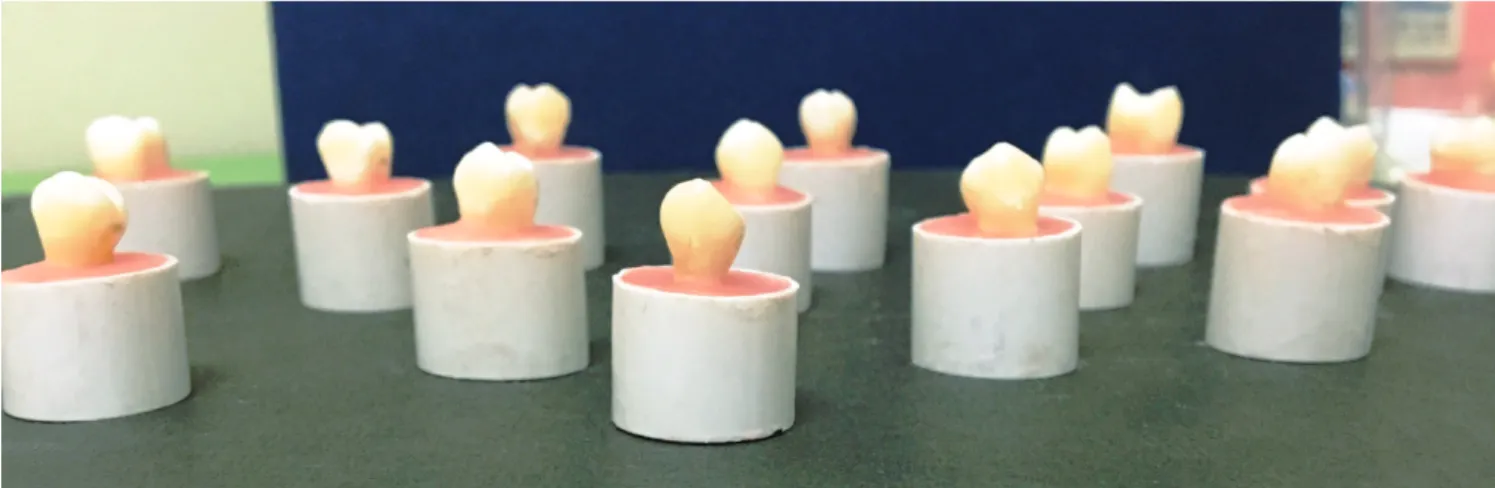
Figure 1 - Specimens mounted in self-curing acrylic resin.
antioxidants14. Thus, the aim of this study was to
deter-mine the effect of mangosteen peel extract on the shear bond strength of orthodontic brackets to bleached teeth. The hypothesis to be tested was that mangosteen peel extract would reverse the reduced shear bond strength of brackets in bleached teeth.
MATERIAL AND METHODS Preparation of specimens
This study was approved by the Ethics Committee of Gadjah Mada University (Faculty of Dentistry, #00669/ KKEP/FKG-UGM/EC/2016). One hundred and fifty
maxillary first premolars (n = 150) recently extracted for
orthodontic reasons with no defects, cracks, or restora-tions were chosen. After selection, the teeth were sub-mitted to manual scaling with a periodontal curette, to remove organic debris. The teeth used for the study were cleaned and then decontaminated with a 0.5% chlorine solution for one week at room temperature, which was changed every other day, to prevent bacterial contamina-tion. Each tooth was mounted in self-curing acrylic up to the cemento-enamel junction, with its long axis vertical (Fig 1). Specimens were then randomly divided into six
groups (n = 25), as follow: Group 1 (negative control, N),
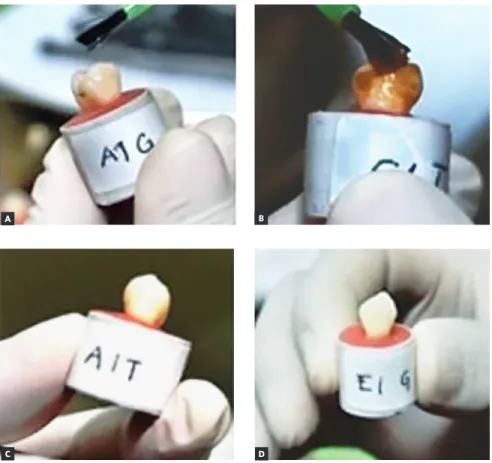
Figure 2 - Specimens before application of SA (A); before application of MP (B); after application of SA (C); after application of MP (D). (SA = so-dium ascorbate; MP = mangosteen peel).
Bleaching procedure
All of the specimens were bleached using 40% hydro-gen peroxide (Opalescence® Boost, Ultradent, USA) on the enamel surfaces according to the manufacturer’s in-structions. The thickness of the bleaching agent that was applied on each tooth’s enamel surface was 0.5 - 1 mm. After 20 minutes, it was washed with distilled water and dried using air syringe for 30 s. The bleaching procedure was applied twice, as recommended by the manufacturer’s instruction manual, for optimal results.
Application of the antioxidant
Groups 3, 4, 5 and 6 were treated as follows: 10% sodium ascorbate gel (manufactured by Laboratorium Penelitian dan Pengujian Terpadu, LPPT, Indonesia) and 10%, 20%, and 40% mangosteen peel gel (manufac-tured with mangosteen peel extract, CMC-Na 2%, glycerin, propylene glycol, propylparaben and meth-ylparaben, by LPPT, Indonesia). Antioxidant was ap-plied 0.5 – 1 mm onto the enamel surfaces of the em-bedded teeth and agitated for 30 s with a sterile brush following the bleaching process (Fig 2). After 10
min-utes, it was washed with distilled water and gently dried by air jets. After completion of the procedure, the samples were stored in artificial saliva solution for 24 hours prior to bonding.
Bonding of brackets
One hundred and fifty stainless steel pre-adjusted Edgewise upper bicuspid brackets (American Ortho-dontics, USA), with 0.022-in slot and micro-etched
base with a surface area of 10.64 mm2, were used for
the study. The brackets were handled at all times with bonding tweezers, to avoid contamination. The enamel surface was conditioned with 10% polyacrylic acid (GC Corporation, Tokyo, Japan), then the brackets were bonded with a resin-modified glass ionomer cement (Fuji Ortho Light Cure, GC Corporation, Tokyo, Ja-pan), according to the manufacturer’s instructions. Af-ter mixing the powder and liquid, the homogenized mixture was spread on the bracket’s base. A bracket po-sitioning gauge was used to place the brackets on the mid-buccal surfaces of the teeth at least 4 mm away from the buccal cusp ridges. Meanwhile, the bracket
A
C
B
slot was perpendicular to the tooth coronal long axis. Furthermore, each bracket was light-cured for 40 seconds according to the manufacturer (10 seconds per side: occlusal, cervical, mesial, and distal) using a quartz-tungsten-halogen (QTH) light-curing unit (Li-tex 680A, Dentamerica, USA) with a light intensity of
450 mW/cm2. Based on the in vitro bond strength study
by Henkin et al,15 in the present study, all specimens
were stored in distilled water at 37°C for 24 hours after bonding, prior to SBS analysis.
Shear bond strength analysis
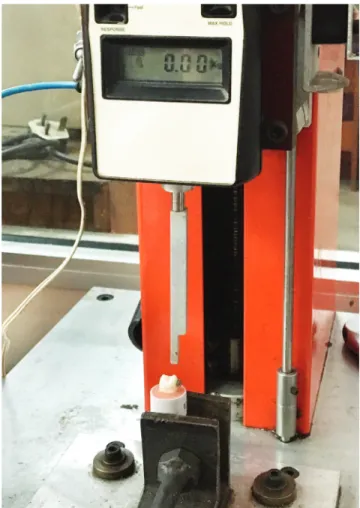
The shear bond strength (SBS) test was per-formed in a universal testing machine (Pearson Panke Equipment Ltd., London), with a 50 kg load cell, at a speed of 1.0 mm/min until the removal of the brackets. The chisel was positioned parallel to the surface of the tooth/bracket interface, to allow force transmission in the occluso-gingival direc-tion (Fig 3). The results obtained were converted to megapascals (MPa) by dividing the debonding force
(in Newton) by the bracket base area (10.64 mm2).
Immediately after bracket debonding, the enam-el surface of each specimen was examined under 10× magnification with a stereoscopic microscope (Nikon, SMZ-2T, Japan), to determine the amount of residual adhesive. Adhesive remnant index (ARI) scores at the failure sites were recorded according to
the classification of Artun and Bergland,16 as follows:
score 0, no adhesive left on the tooth; score 1, less than half of the adhesive left on the tooth; score 2, more than half of the adhesive left on the tooth; and score 3, all of the adhesive left on the tooth.
Statistical analysis
The shear bond strength data of the groups were subjected to a test of normality and homogeneity. With respect to this, Analysis of Variance (Anova) was used to determine the significance between the groups. The significance level for all statistical tests was set at
p < 0.05, and Tukey’s HSD post-hoc test was used to
de-tect pairwise differences between the groups (Table 1). The ARI scores were evaluated by Kruskal-Wallis anal-ysis. To determine the differences between the groups, a Mann-Whitney U test was performed. Statistical analy-sis was processed with the SPSS 21.0 software (SPSS Inc., Chicago, Illinois, USA).
RESULTS
Table 1 contains the mean and standard deviation for the SBS of specimens in the six study groups. These descriptive statistics clearly indicate the variation in SBS among the six groups, with the higher bond strength pres-ent in the negative-control group (8.19 ± 2.26 MPa), and the lower in the positive-control group (4.57 ± 1.49 MPa). It can be observed that Groups 3, 4, 5 and 6, which were subjected to antioxidants treatment after bleaching, showed an improvement in SBS, compared to the posi-tive-control group, while the group treated with MP-40 showed the highest SBS (7.93 ± 1.92 MPa), compared to other groups treated with antioxidants.
The results of the ANOVA indicated statistically
sig-nificant differences among the tested groups (p = 0.000).
The Tukey test showed that the SBS of Group 1 (nega-tive-control) was significantly higher than other groups. Furthermore, no statistically significant difference in SBS value was found between Group 1 and groups
treated with 10%, 20%, and 40% MP extract (p > 0.05).
Figure 3 - Universal testing machine used for determining the shear bond
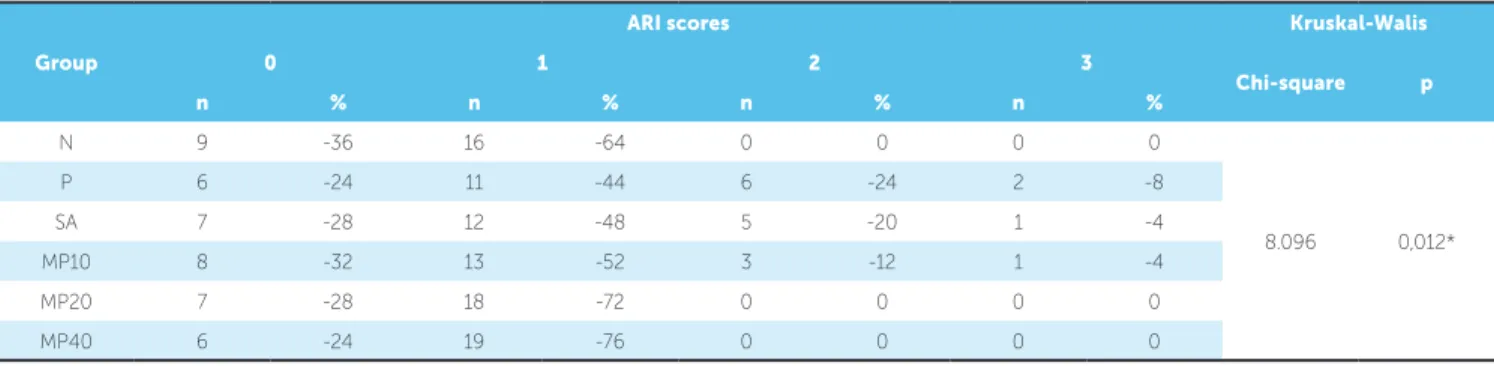
The ARI scores for all the tested groups are listed in Table 2. The results of the Kruskal-Wallis test showed
significant differences among the groups (p = 0,012).
ARI scores equal to 0 and 1 were more prevalent, while ARI scores equal to 2 and 3 were less prevalent.
DISCUSSION
The results, in general, showed there were increases in SBS in groups with antioxidant treatments. Group 1 showed the highest SBS values; conversely, Group 2 showed the lowest SBS values. The reduced SBS in Group 2, compared to other groups, may be due to the residual oxygen layer remaining after the bleach-ing process, which could have interfered with the resin infiltration into etched enamel and inhibit
polymeriza-tion of resins that cure via a free-radical mechanism17.
Reynolds18 recommended that the suitable minimum
bond strength for clinical requirements, being able to resist masticatory and orthodontic forces, ranges
from 6 to 8 MPa. The groups treated with antioxidant showed mean values ranging from 6 to 8 MPa, con-firming that even samples subjected to peroxide agents could withstand the stresses from orthodontic forces.
Groups with antioxidants treatments showed sig-nificantly higher bond strength than Group 2 (positive-control). These findings are in accordance with the fact that the use of antioxidants immediately following bleaching could neutralize the residual oxygen and
re-verse the reduced bond strength19. Studies have shown
that the use of antioxidants can definitely overcome the inclusion of peroxide ions. An antioxidant solution of 10% sodium ascorbate (SA) applied on the bleached enamel surface for 10 minutes effectively restored the reduced bond strength. Sodium ascorbate is a potent antioxidant, capable of removing the reactive free radi-cals and neutralizing their effect. The mechanism by which sodium ascorbate reverses the reduction in bond strength is that sodium ascorbate allows free-radical
Table 1 - Descriptive statistics and results of the ANOVA and Tukey tests comparing the shear bond strengths in the six groups tested.
Table 2 - Frequency distribution of the ARI scores of the groups and results of the Kruskal-Wallis test.
Values are presented as mean ± standard deviation or p-value only. *ANOVA, a Significant differences between groups (p < 0.05). b No significant differences between
groups (p > 0.05). N = negative-control; P = positive-control; SA = sodium ascorbate; MP-10 = 10% mangosteen peel extract; MP-20 = 20% mangosteen peel extract; MP-40 = 40% mangosteen peel extract. ANOVA = Analysis of variance; SBS = shear bond strength.
*ARI scores: 0 = no adhesive on the tooth; 1 = less than half of the adhesive left on the tooth surface; 2 = half of the adhesive or more left on tooth surface; 3 = all adhesive left on tooth surface, failure between adhesive and bracket base. * Significant differences between groups (p < 0.05). ARI = Adhesive remnant index.
Group n SBS (MPa) Sig* p-value
P SA MP-10 MP-20 MP-40
N 15 8.19 ± 2.26 p=0.000a 0.000a 0.007a 0.087b 0.363b 0.998b
P 15 4.57 ± 1.49 0.052b 0.004a 0.000a 0.000a
SA 15 6.19 ± 1.82 0.955b 0.627b 0.029a
MP-10 15 6.68 ± 2.06 0.982b 0.234b
MP-20 15 7.07 ± 2.29 0.65b
MP-40 15 7.93 ± 1.92
Group
ARI scores Kruskal-Walis
0 1 2 3
Chi-square p
n % n % n % n %
N 9 -36 16 -64 0 0 0 0
8.096 0,012*
P 6 -24 11 -44 6 -24 2 -8
SA 7 -28 12 -48 5 -20 1 -4
MP10 8 -32 13 -52 3 -12 1 -4
MP20 7 -28 18 -72 0 0 0 0
polymerization of the adhesive resin to proceed and avoids early termination, by repairing the altered redox potential of the oxidized bonding substrate, and hence
neutralizes the compromised bonding20. In the process
subsequent to the application of sodium ascorbate, SBS values reached a level almost similar to the MP extract groups. However, groups with 40% MP extract treat-ment showed significantly higher bond strength than the group with SA treatment, which could be attributed to the fact that the antioxidant present in MP extract is more potent than the SA.
Group 1 (unbleached teeth) showed significantly highest bond strength than the other groups. Previ-ous studies have shown that when teeth are exposed to bleaching agents, there is a change in the structure of enamel and the bond strength. The bleaching proce-dure may decrease the microhardness and weaken the mechanical properties of the tooth, and thus reduce the bond strength of brackets to tooth surface. Another pos-sible reason is attributed to the fact that the bleaching agent also affects the collagen network of dentin, result-ing in denaturation and relative instability of the dentin
organic matrix, therefore decreasing bond strength5-9.
Furthermore, the results showed no significant difference in SBS values between Group 1 (unbleached teeth) and the groups treated with 10%, 20% and 40% MP extract
(p > 0.05). In addition, SBS values of the group with 40%
MP extract treatment reached a level almost similar to the negative-control group. It is indicated that the treatment with MP extract may approximate the bond strength val-ues of teeth without the bleaching procedure.
Application of MP extract on enamel bleached with 40% hydrogen peroxide neutralized the effect of resid-ual oxygen molecules on the bleached enamel surface and increased the SBS of orthodontic brackets. Mango-steen (Garcinia mangostana L.) peel presented potential antioxidant properties, and it was stronger when
com-pared to its pericarp and leaves as well21. Antioxidants
are substances that can delay or prevent the oxidation process by inhibiting the initiation or propagation of oxidation chain reaction. Suttirak and
Manurakchina-korn13 showed that the antioxidant properties of MP
extract can inhibit or delay oxidation by scavenging free radicals (i.e. reactive oxygen species, e.g. hydroxyl, su-peroxide, nitric oxide, thiyl and peroxyl) by donating a hydrogen atom or electron, which convert their radicals to the more stable products.
Alpha(α)-Mangostin was the first xanthone isolated
from MP and has been reported as an antioxidant by scavenging, in a singlet oxygen
concentration-depen-dent way22,23. Furthermore, MP extract contains
epicat-echin as the predominant monomeric unit, reported as a better free radical scavenger24.
The ARI scores indicated significant differences among the various groups, although ARI scores of 0 and 1 were seen with higher frequency. In MP 20 and MP 40 groups, there was a higher frequency of ARI scores equal to 1. This means that failures occurred at the enamel-adhesive interface. This could be clinically advantageous since, when brackets fail at the enamel-adhesive interface, the less residual adhesive remains, and tooth clean-up is
likely to be easier and faster25-27. Treatment success in
clinical orthodontics is stated upon the easy and efficient removal of remaining adhesive without iatrogenic dam-age to the underlying enamel when the attachments are
debonded28. The use of a bur or sandblaster to clean the
remaining adhesive from the tooth surfaces can also lead to surface scratches, cracking, loss of sound enamel and
may increase chairside time. 25,29
Extensive prior studies have also noted that delayed bonding after bleaching can effectively restore the shear bond strength of brackets, since the decrease in bond strength to freshly bleached enamel has been shown to be temporary. The recommended post-bleaching time for bonding procedures ranges from one to three weeks10,26,30,31. Previous studies10,30 reported that waiting for seven days before bonding orthodontic bracket was sufficient to ensure adequate bond strength after
bleach-ing. A study by Machado et al31 has shown that intervals
of more than 15 days are required to restore the adhesive properties of enamel prior to bonding any orthodontic
ap-pliances. In another study, Nascimento et al26 found that
delaying bracket bonding for three weeks is required to attain acceptable bond strength. On the other hand, once patients have their teeth bleached, they often become
im-mediately interested in orthodontic treatment.10 Thus,
the presence of an antioxidant may be an alternative clini-cal option to having to wait, and more importantly, may reduce the necessity of postponing bracket bonding.
a wet environment, releasing fluoride and effectively
preventing white spot lesions.32 It seems important to
assess the behavior of RMGIC applied to the bleached teeth, and also to evaluate possible surface treatments to achieve the best outcome, considering its broad use. RMGIC seemed to be less sensitive to bleaching be-cause the oxygen inhibits the polymerization of the composite resin. However, obviously, the low fraction of 2-hydroxyethylmethacrylate (HEMA) molecules in
RMGIC may make it vulnerable to oxygen33. In
addi-tion, the application of antioxidants treatment increased
the SBS eventually, showing that free oxygen radicals did have a considerable negative impact on the mean SBS and inhibit the polymerization of RMGIC.
CONCLUSION
Within the limitations of the present study, the application of mangosteen peel extract as an antioxi-dant was effective in increasing the SBS of brackets in bleached teeth. However, additional clinical and labora-tory studies are required before mangosteen peel extract can be used in daily clinical practice.
1. Penumatsa NV, Sharanesha RB. Bleaching of fluorosis stains using sodium hypochlorite. J Pharm Bioallied Sci. 2015;7(Suppl 2):S766-8.
2. Henn-Donassollo S, Fabris C, Gagiolla M, Kerber Í, Caetano V, Carboni V, et al. In situ and in vitro effects of two bleaching treatments on human enamel hardness. Braz Dent J. 2016 Jan-Feb;27(1):56-9.
3. Leonard RH Jr, Bentley C, Eagle JC, Garland GE, Knight MC, Phillips C. Nightguard vital bleaching: a long-term study on efficacy, shade retention, side effects, and patients’ perceptions. J Esthet Restor Dent. 2001;13(6):357-69. 4. Hintz JK, Bradley TG, Eliades T. Enamel colour changes following whitening
with 10 per cent carbamide peroxide: a comparison of orthodontically-bonded/ debonded and untreated teeth. Eur J Orthod. 2001 Aug;23(4):411-5. 5. Mullins JM, Kao EC, Martin CA, Gunel E, Ngan P. Tooth whitening effects on
bracket bond strength in vivo. Angle Orthod. 2009 July;79(4):777-83. 6. Cacciafesta V, Sfondrini MF, Stifanelli P, Scribante A, Klersy C. The effect of
bleaching on shear bond strength of brackets bonded with a resin-modified glass ionomer. Am J Orthod Dentofacial Orthop. 2006 July;130(1):83-7. 7. Akin M, Aksakalli S, Basciftci FA, Demir A. The effect of tooth bleaching on the
shear bond strength of orthodontic brackets using self-etching primer systems. Eur J Dent. 2013 Jan;7(1):55-60.
8. Patusco VC, Montenegro G, Lenza MA, Carvalho AA. Bond strength of metallic brackets after dental bleaching. Angle Orthod. 2009 Jan;79(1):122-6. 9. Bulut H, Kaya AD, Turkun M. Tensile bond strength of brackets after antioxidant
treatment on bleached teeth. Eur J Orthod. 2005 Oct;27(5):466-71. 10. Bulut H, Turkun M, Kaya AD. Effect of an antioxidizing agent on the shear
bond strength of brackets bonded to bleached human enamel. Am J Orthod Dentofacial Orthop. 2006 Feb;129(2):266-72.
11. Nayak USK, Katyal A. Shear bond strength of orthodontic brackets after antioxidant treatment on previously bleached teeth: an in vitro study. J Orthod Res. 2015;3(2):96-100.
12. Taghvaei M, Jafari SM. Application and stability of natural antioxidants in edible oils in order to substitute synthetic additives. J Food Sci Technol 2015;52(3): 1272-82. 13. Suttirak W, Manurakchinakorn S. In vitro antioxidant properties of mangosteen
peel extract. J Food Sci Technol 2014;51(12):3546-58.
14. Weecharangsan W, Opanasopit P, Sukma M, Ngawhirunpat T, Sotanaphun U, Siripong P. Antioxidative and neuroprotective activities of extracts from the fruit hull of mangosteen (Garcinia mangostana Linn.). Med Princ Pract. 2006;15(4):281-7.
15. Henkin FS, Macedo EOD, Santos KS, Schwarzbach M, Samuel SMW, Mundstock KS. In vitro analysis of shear bond strength and adhesive remnant index of different metal brackets. Dental Press J Orthod. 2016 Nov-Dec;21(6):67-73.
16. Artun J, Bergland S. Clinical trials with crystal growth conditioning as an alternative to acid-etch enamel pretreatment. Am J Orthod. 1984 Apr;85(4):333-40.
17. Kimyai S, Valizadeh H. The effect of hydrogel and solution of sodium ascorbate on bond strength in bleached enamel. Oper Dent. 2006 July-Aug;31(4):496-9.
REFERENCES
18. Reynolds IR. A review of direct orthodontic bonding. Br J Orthod. 1975;2(3):171-8. 19. Torres CR, Koga AF, Borges AB. The effects of anti-oxidant agents as neutralizers
of bleaching agents on enamel bond strength. Braz J Oral Sci 2006;5(16):971-6. 20. Danesh-Sani SA, Esmaili M. Effect of 10% sodium ascorbate hydrogel and delayed
bonding on shear bond strength of composite resin and resin- modified glass ionomer to bleached enamel. J Conserv Dent. 2011 July;14(3):241-6. 21. Palakawong C, Sophanodora P, Pisuchpen S, Phongpaichit S. Antioxidant
and Antimicrobial Activities of Crude Extracts from Mangosteen (Garcinia mangostana L.) Parts and Some Essential Oils. Int Food Res J. 2010;17(3):583-9. 22. Guzmán-Beltrán S, Orozco-Ibarra M, González-Cuahutencos O, Victoria-Mares S,
Merchand-Reyes G, Medina-Campos ON, et al. Neuroprotective effect and reactive oxygen species scavenging capacity of mangosteen pericarp extract in cultured neurons. Curr Top Nutraceut Res. 2008;6(3):149-58.
23. Pedraza-Chaverrí J, Cárdenas-Rodríguez N, Orozco-Ibarra M, Pérez Rojas JM. Medicinal properties of mangosteen (Garcinia mangostana). Food Chem Toxicol. 2008 Oct;46(10):3227-39.
24. Yu L, Zhao M, Yang B, Zhao Q, Jiang Y. Phenolics from hull of Garcinia mangostana fruit and their antioxidant activities. Food Chem. 2007;104(1):176-81. 25. Al Shamsi A, Cunningham JL, Lamey PJ, Lynch E. Shear bond strength and
residual adhesive after orthodontic bracket debonding. Angle Orthod. 2006 July;76(4):694-9.
26. Nascimento GCR, Miranda CA, Machado SMM, Brandão GAM, Almeida HA, Silva CM. Does the time interval after bleaching influence the adhesion of orthodontic brackets? Korean J Orthod. 2013;43(5):242-7.
27. Sharma S, Tandon P, Nagar A, Singh GP, Singh A, Chugh VK. A comparison of shear bond strength of orthodontic brackets bonded with four different orthodontic adhesives. J Orthod Sci. 2014 Apr-June;3(2):29-33. 28. Titley KC, Mahal R-D, Rossouw PE, Kulkarni GV. Shear bond strengths of
orthodontic brackets cemented to bovine enamel with composite and resin-modified glass ionomer cements. Pediatr Dent. 2003 May-June;25(3):263-9. 29. Breuning H, Dekkers L, Beeftink M, Schols J, Wolke J. Bonding metal brackets on
tooth surfaces. Dentistry. 2014;4(231):1-6.
30. Britto FAR, Lucato AS, Valdrighi HC, Vedovello SAS. Influence of bleaching and desensitizing gel on bond strength of orthodontic brackets. Dental Press J Orthod. 2015 Mar-Apr;20(2):49-54.
31. Machado SMM, Nascimento DBP, Silva RC, Loretto SC, Normando D. Evaluation of metallic brackets adhesion after the use of bleaching gels with and without amorphous calcium phosphate (ACP): In vitro study. Dental Press J Orthod. 2013 May-Apr;18(3):101-6.
32. Khosravanifard B, Rakhshan V, Saadatmand A. Effects of blood and saliva contamination on shear bond strength of metal orthodontic brackets and evaluating certain methods for reversing the effect of contamination. Orthod Waves. 2010;69(4):156-63.