Patient identifi cation in the records of health professionals
Identifi cação do paciente nos registros dos profi ssionais de saúde Identifi cación del paciente en los registros profesionales de salud
Kisna Yasmin Andrade Alves1
Pétala Tuani Candido de Oliveira1
Flávia Barreto Tavares Chiavone1
Mayara Lima Barbosa1
Cecília Olívia Paraguai de Oliveira Saraiva1
Claudia Cristiane Filgueira Martins1
Viviane Euzébia Pereira dos Santos1
Corresponding author Kisna Yasmin Andrade Alves
http://orcid.org/0000-0001-7900-0262 E-mail: [email protected]
DOI:
http://dx.doi.org/10.1590/1982-0194201800012
1Universidade Federal do Rio Grande do Norte, Rio Grande do Norte, RN, Brazil.
Confl icts of interest: there are no confl icts of political and/or fi nancial interests associated with patents or property, provision of material and/or inputs and equipment used in the study by the manufacturers.
Abstract
Objective: Identify the conformity of patient identifi cation data in the records of health professionals from three public hospitals in Rio Grande do Norte.
Methods: A cross-sectional study was carried out at the medical and surgical clinical nursing wards of three public hospitals in Rio Grande do Norte, Brazil. The sample consisted of patients hospitalized in these wards for at least ten days, between October and November 2016. The data were analyzed descriptively, using absolute frequencies and the Pareto Diagram.
Results: Non-conformity was found in the header data birth date and affi liation, which was responsible for 61% of inadequacies in the medical evolutions, 65% in the nursing team notes and 62% in the opinions of doctors and the other categories.
Conclusion: The study revealed that the headers of the health professionals’ records in the hospitals analyzed do not guarantee correct patient identifi cation and patient safety.
Resumo
Objetivo: Identifi car a conformidade dos dados de identifi cação do paciente nos registros dos profi ssionais de saúde de três hospitais públicos do Rio Grande do Norte.
Métodos: Trata-se de um estudo transversal realizado em três hospitais públicos do Rio Grande do Norte, nas enfermarias de clínica médica e cirúrgica. A amostra constituiu-se de pacientes internados há pelo menos dez dias nesses espaços, no período de outubro a novembro de 2016. A análise de dados ocorreu de forma descritiva, mediante frequências absolutas e Diagrama de Pareto.
Resultados: Obteve-se não conformidade nos dados dos cabeçalhos data de nascimento e fi liação, sendo responsáveis por 61% das inadequações nas evoluções médicas, 65% nas anotações da equipe de enfermagem e 62% nos pareceres médicos e das demais categorias. Conclusão: O estudo revelou que os cabeçalhos dos registros dos profi ssionais de saúde dos hospitais analisados não garantem a identifi cação correta do paciente e a segurança do paciente.
Resumen
Objetivo: Identifi car la conformidad de los datos de identifi cación del paciente en registros de los profesionales de salud de tres hospitales públicos de Rio Grande do Norte.
Métodos: Estudio transversal realizado en tres hospitales públicos de Rio Grande do Norte, en las enfermerías de clínica médica y quirúrgica. Muestra constituida por pacientes internados durante al menos diez días en tales servicios, entre octubre y noviembre de 2016. Datos analizados de forma descriptiva, mediante frecuencias absolutas y Diagrama de Pareto.
Resultados: Se hallaron errores en los datos de los encabezados fecha de nacimiento y fi liación, siendo responsables del 61% de los errores en la evolución médica, 65% en las notas del equipo de enfermería y 62% en las opiniones médicas y del resto de las categorías.
Conclusión: Se reveló que los encabezados de registros de profesionales de salud en los hospitales analizados no garantizan la correcta identifi cación y seguridad del paciente.
Keywords
Patient safety; Health personnel; Communication; Hospital
Descritores
Segurança do paciente; Profi ssional da saúde; Comunicação; Hospital
Descriptores
Seguridad del paciente; Personal de salud; Comunicación; Hospital
Submitted
December 2, 2017
Accepted
February 19,2018
How to cite:
Introduction
Correct patient identification is an action that guar-antees care and minimizes the occurrence of errors and damage. It is, therefore, the first activity that advocates in favor of patient safety (SP).(1)
Errors in the patient identification process oc-cur from admission to discharge from the health service and stem from factors related to the patient (level of consciousness, for example), the work pro-cess (changes in the sector, beds and professionals), among other situations.(2)
Studies show that errors in patient identifi-cation lead to potentially fatal consequences and that approximately 9% of them cause temporary or permanent damage. In addition, it is important to note that this problem encompasses multiple situations, ranging from hospitalization to care by the multiprofessional team.(3) In the United States, about 850 patients undergo blood transfusion each year that is not part of their treatment, and 3% of them die.(4)
It should be noted that the occurrence of patient identification errors affects at least two individuals: the patient who received the wrong therapy and the other whose treatment was omitted.(3)
To overcome this problem, several initiatives have been promoted. Among them, in the inter-national context, the project “Solutions for Patient Safety” is highlighted, which sets priorities for the implementation of patient safety, such as: correct identification of the patient; effective communi-cation among health professionals; safety during medication prescription, use and administration; safe surgery; hand hygiene; and reduced risk of falls and pressure ulcers.(5)
In the Brazilian reality, the National Patient Safety Program (PNSP) was established through Administrative Rule 529, on April 1, 2013, which proposes that health services construct protocols, guides and manuals focused on the different ar-eas of patient safety, such as patient identification processes.(6)
In that context, initiatives such as the use of standardized white wristbands are used to put in practice the correct identification of the patient.(2)
It should be noted, however, that this process in-volves several modalities beyond the use of a brace-let. The main modality and archetype for others are the headers of the health professionals’ records in the clinical history.
Therefore, we found it necessary to investigate the level of conformity of the headers of the health professionals’ records at three hospitals in Rio Grande do Norte, revealing the following research questions: do the headers of health professionals’ records ensure the correct identification of the pa-tient? Which data do or do not conform with the correct identification of the patient? In this perspec-tive, this study aims to identify the conformity of patient identification data in the records of health professionals from three public hospitals in Rio Grande do Norte.
Methods
This cross-sectional and descriptive study is based on the project “Monitoring of patient safety indi-cators in public hospitals in Rio Grande do Norte, Brazil”, approved by Consolidated Opinion of the Research Ethics Committee at the Federal University of Rio Grande do Norte 1.662.417, CAAE: 57947716.5.0000.5537, on August 4, 2016.
The study was based on the recommendations adapted from the World Health Organization (WHO) regarding the construction of the “Record review of current in-patients” - a strategy that makes it possible to investigate patient safety in hospital settings in all countries, especially in developing countries.(7)
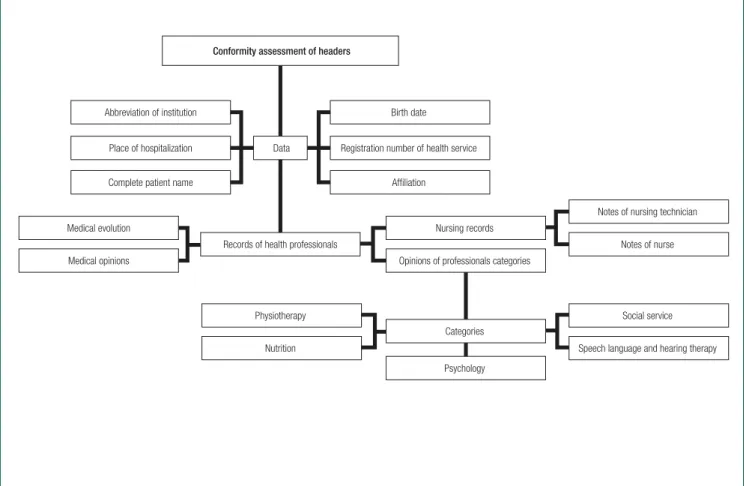
Figure 1. Compliance assessment flowchart of patient identification data in the professional records A non-probabilistic sample was used, consisting
of records of patients hospitalized for at least 10 days in the hospitals mentioned above, from October to November 2016, and who agreed to participate in the study, through the signing of the Free and Informed Consent Form (TCLE) - conditions that were applied as the eligibility criteria.
Data collection was performed using an instru-ment built from a scoping review and validated by a patient safety expert group. Its structure con-sists of six thematic areas (patient identification; professional records; safety in medication prescrip-tion, use and administration; prevention of pres-sure injuries; prevention of falls; and safe surgery), ten subtopics, 89 items and spaces to check the alternatives “do not have”, “have” and the specifi-cations “appropriate” and “inappropriate”, as well as to write comments.
To answer the study objective, the patient’s iden-tification data in the records of health professionals
were surveyed, which include: medical evolution, medical opinions, opinions of various professional categories and nursing records (Figure 1).
It is highlighted that the medical evolutions and nursing records were evaluated from the first to the tenth day of hospitalization. Regarding the opinions of the doctors and other categories, the first opinion requested / answered in the aforementioned period was used.
Ten reviewers of clinical histories executed the review of the medical records, all of whom were nurses enrolled in graduate nursing program courses.
The collected data were organized in the Statistical Package for Social Sciences for Windows (SPSS), version 22, and analyzed descriptively, us-ing absolute frequencies and the Pareto Diagram, which makes it possible to identify the level of com-pliance of the headers in the health professionals’ records.
Conformity assessment of headers
Data
Abbreviation of institution Birth date
Place of hospitalization Registration number of health service
Complete patient name
Notes of nursing technician
Notes of nurse
Social service
Speech language and hearing therapy Physiotherapy
Nutrition Medical evolution
Medical opinions
Records of health professionals
Affiliation
Nursing records
Opinions of professionals categories
Categories
Results
In total, 234 clinical histories were evaluated, be-ing 92 from hospital A (39.3%), 120 from hos-pital B (51.3%) and 22 from hoshos-pital C (9.4%). This number was not a constant for the health professionals’ records, as there were variations during the ten days, due to the professionals’ absence.
Thus, the number of evaluations of health pro-fessionals’ records varied from 189 to 199 medical evolutions, between 195 and 227 notes from nurs-ing technicians and between two and 19 notes from nurses (Figure 2).
Unlike the health professionals’ records, the number of opinions was accurate, as the evalua-tion occurred only once during the ten days. Thus, 78 (42.4%) medical opinions, 52 (28.3%) from the social service, 28 (15.1%) from physiotherapy, 18 (9.8%) nutrition, 4 (2.2%) psychology and 4 (2.2%) speech therapy.
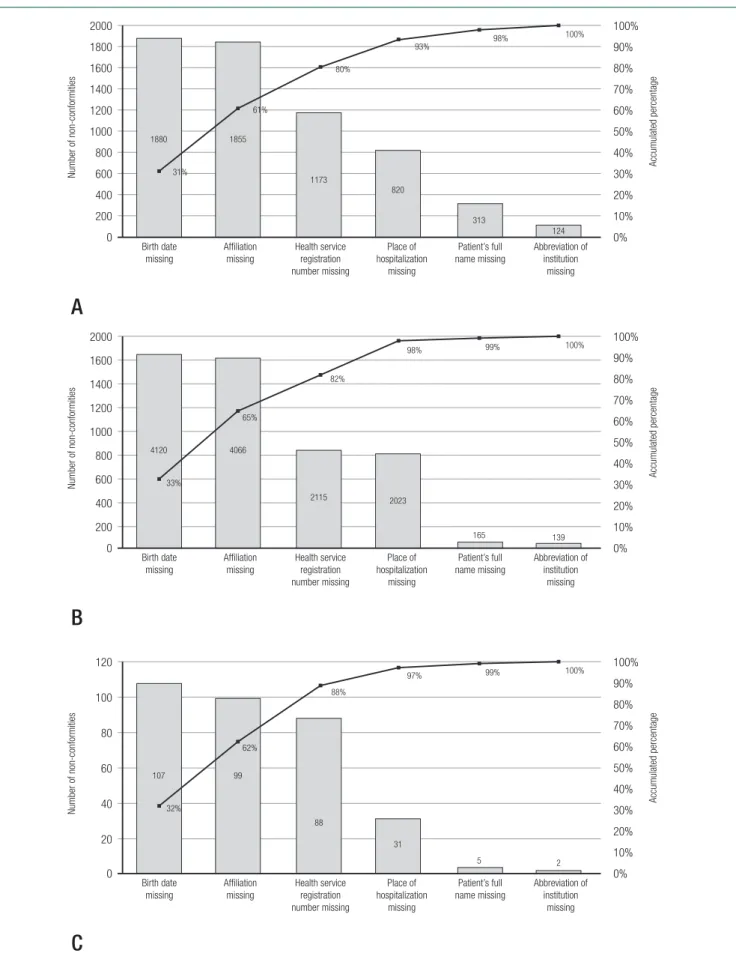
Figure 3 displays the Pareto Diagrams for pa-tient identification data in medical evolutions, nursing team notes, and opinions of doctors and other categories.
Regarding the patient identification data in the medical evolutions, a frequency of 6,165 non-con-formities was found. The absence of the date of birth and affiliation accounted for more than 61% of the inadequacies.
Similar results are verified in the nursing team notes, where the date of birth and affiliation made up 65% of the incomplete records in the identification of the patient. The total frequency of non-conformity was 12,628. In the opinions, the joint evaluation demonstrated 332 cases of inconsistency, in which the date of birth and af-filiation were responsible for 62% of the missing data.
In view of the above, the records of the health professionals at the three hospitals analyzed are fragile, mainly regarding the completion of the date
0 Day 1
19 189 195
217
193
9
221
197
3
224
199
6
227
197
4 4 4 2
220
196
221
194
226
193 193
8
193
2 226 225
Frequenc
y of health professionals’ records
Day 2 Day 3 Day 4 Day 5 Day 6 Day 7 Day 8 Day 9 Day 10
20 40 60 80 100 120 140 160 180 200 220 240
Medical evolution Notes of nursing technician Notes of nurse
Figure 3. Pareto Diagram of patient identification data in health professionals’ records: (A) medical evolutions; (B) notes of nursing team; and (C) opinions of doctors and other categories
0 200 400 600 800 1000 1200 1400 1600 1800 2000 0% 10% 20% 30% 40% 50% 60% 70% 80% 90% 100%
A
Number of non-conformities
Accumulated percentage Birth date missing Affiliation missing 31% 61% 80% 93% 98% 100% 124 313 820 1173 1855 1880 Health service registration number missing Place of hospitalization missing Patient’s full name missing Abbreviation of institution missing 0 200 400 600 800 1000 1200 1400 1600 0% 10% 20% 30% 40% 50% 60% 70% 80% 90% 100% 2000
B
Number of non-conformities
Accumulated percentage Birth date missing Affiliation missing 33% 65% 82%
98% 99% 100%
139 165 2023 2115 4066 4120 Health service registration number missing Place of hospitalization missing Patient’s full name missing Abbreviation of institution missing 0 20 40 60 80 100 0% 10% 20% 30% 40% 50% 60% 70% 80% 90% 100% 120
C
Number of non-conformities
Accumulated percentage Birth date missing Affiliation missing 32% 62% 88%
97% 99% 100%
of birth and affiliation, aspects that negatively affect the correct identification of the patient.
Discussion
The results indicated several errors in completing the headers and, consequently, in the correct identi-fication of the patient in the medical records.
The first issue to be discussed is the lack of re-cords of professionals. This reality is worrisome as communication among team members was incom-plete and omission of information may have trig-gered harm to the patient’s clinical evolution. It should be noted that records are not only a legal instrument, but also one of the sides of care.(8)
Regarding this scenario, some suspicions arise that may be related to weaknesses in the profes-sionals’ records or their absence, such as the lack of time and the high demand for activities in hospital settings.
In line with this assertion, researchers(9) revealed that 78% of incidents in the hospital environment were motivated by work overload and one of the de-terminant for this finding, in turn, is the weakness in human resources.(10)
In this context, it is essential to foster actions that increase the number of professionals and im-prove their skills and abilities. This will boost their performance.(11)
In addition, it is essential to intervene in loco in the training institutions, concerning the elabo-ration of strategies that contribute to the prepara-tion of individuals beyond the tradiprepara-tional and boost the ethical, critical, collaborative, transformative, reflexive and social responsibility dimensions.(12) These characteristics contribute to a posture that converges to the patient safety culture - individu-als with attitudes and behaviors focused on health management and learning from mistakes.(13)
Regarding the nonconformities in completing patient identification data in the medical and nurs-ing team records and in the opinions of physicians and other categories, the absence of the “date of birth” and the “affiliation” were verified, aspects that lead to a lack of patient safety.
The identification of the patient occurs through-out care and, when incorrect, it generates severe consequences, such as: wrong procedures, wrong patient exchange, wrong medication administra-tion, among others.(4)
Usually, for the sake of patient identification, the use of a bracelet is recommended, indicating two identifiers that enable the professional to confirm the data on the bracelet with those con-tained in the clinical history. These are: full name of the patient and/or date of birth and/or health service registration number and/or full name of the mother.(2)
Thus, the information in the clinical histories is one of the main steps for correct patient identi-fication, an aspect that requires the conformity of the headers present in the professional records - a premise not attested in this study, as the two main identifiers (“date of birth” and “affiliation”) were ab-sent 12,133 times in the revised records.
Although this fact is worrisome, the disclosure of research aimed at a broader and specific under-standing of the professionals’ practices regarding the theme of correct patient identification - such as the completion of headers in the clinical history forms - is incipient.(14)
Nevertheless, it has been evidenced that this re-ality of insecurity for the patient is not restricted to the region investigated, as other Brazilian and inter-national studies(15-18) have identified it.
In Australia, for example, where written and spoken communication was evaluated in the light of information transfer tools - The Nursing Handover Minimum Dataset (NH-MDS) and Identification of the patient and clinical risks, clinical history/pre-sentation, clinical status, care plan and outcomes/ goals of care (ICCCO) - demonstrated that, only 3.3% of the nursing records contained the correct identification. The main non-conformities were the patient’s name and age.(15)
the functions of nursing is to adopt “(...) appropri-ate measures to safeguard individuals, families and communities”.(19)
In Brazil, a cross-sectional study on the improve-ment of the patient identification process revealed that, among the inadequacies, the incompleteness of the headers in the professional records stand out, which should contain, as a minimum, the patient’s full name, date of birth and health service registration.(16)
It was also observed during the investigation of medication-related incidents at a Brazilian universi-ty hospital that 8.1% of the errors in drug therapy presented the patient’s inadequate identification as the root cause.(18)
In a Brazilian obstetric health unit, research-ers(17) reported that 81.9% of the hospitalized wom-en had the first names with idwom-entical spelling and/ or phonetic similarities, a situation that poses a pa-tient safety risk if no actions are implemented for the sake of correct patient identification.
Regarding the analysis of the Pareto Diagrams of this study, it is evident that the actions to improve the quality of patient identification in the three hos-pitals investigated should prioritize the appropriate completion of the date of birth and affiliation in the specific fields of the professional records, which will enhance patient safety.
Thus, these two identifiers need to be legibly re-corded and the following recommendations need to be adopted: 1) date of birth in DD / MM / YYYY format (example: 07/06/2005); and (2) affiliation shall preferably contain the full name of the pa-tient’s mother.(2)
Among the tools to encourage the use of the aforementioned recommendations, educational processes(20,21) that cover content related to patient safety and written communication are mentioned.
In view of the above, the findings of this and the aforementioned studies attest a worrying reality for patient safety, an assertion that lacks initiatives that can improve patient identification in health contexts, especially the hospital.
Because this study was based on the analysis of clinical histories, the main limitations are related to these records’ illegibility and disorganization. In addition, the complexity of the data collection
instrument may have caused a tedious completion process and, consequently, subject to errors - it is important to point out that, in order to overcome this situation, the research team carried out system-atic evaluations to identify possible inconsistencies in the collection stage, as well as meetings, from the beginning of the research, to verify the experiences and difficulties the reviewers experienced. These ac-tivities were essential to equalize the data collection stages and mitigate information bias.
Regarding the findings, the fact that the review of clinical histories was limited to a single region makes it impossible to carry out an extended eval-uation of the results, an aspect that demands the need for multicenter studies.
Conclusion
Collaborations
Alves KYA, Salvador PTCO, Martins CCF, Santos VEP participated in the conception of the project. Alves KYA, Chiavone FBT, Barbosa ML and Saraiva COPO collected the data. Alves KYA and Santos VEP contributed to the interpretation of the data, writing and critical review of the article. Santos VEP approved the final version for publication.
References
1. Armond GA. Eventos adversos relacionados à identificação do paciente. In: Armond G. Segurança do paciente: como garantir qualidade nos serviços de saúde. Rio de Janeiro: DOC Content, 2016. p. 117-26.
2. Brasil. Ministério da Saúde. Anexo 02: protocolo de identificação do paciente [Internet]. Brasília (DF): Ministério da Saúde; 2013. [citado 2017 Jun 14]. Disponível em: http://www20.anvisa.gov.br/ segurancadopaciente/index.php/publicacoes/item/identificacao-do-paciente
3. ECRI Institute. Patient identification errors [Internet]. 2016 [cited 2017 Jun 14]. Available from: https://www.ecri.org/Resources/HIT/ Patient%20ID/Patient_Identification_Evidence_Based_Literature_ final.pdf
4. Prates CG, Malta M. Metas internacionais para a segurança do paciente. In: Prates CG, Stadñik CM. Segurança do paciente, gestão de riscos e controle de infecções hospitalares. Porto Alegre: Moriá; 2017. p. 167-76.
5. Brasil. Ministério da Saúde. Documento de referência para o Programa Nacional de Segurança do Paciente. Brasília (DF): Ministério da Saúde; 2014 [citado 2017 Jun 14]. Disponível em: http://bvsms.saude. gov.br/bvs/publicacoes/documento_referencia_programa_nacional_ seguranca.pdf
6. Brasil. Ministério da Saúde. Portaria Nº 529, de 1º de abril de 2013. Institui o Programa Nacional de Segurança do Paciente (PNSP) [Internet]. 2013 [citado 2017 Jun 14]. Disponível em: http://www20. anvisa.gov.br/segurancadopaciente/index.php/publicacoes/item/ identificacao-do-paciente
7. World Health Organization (WHO). Assessing and tackling patient harm: a methodological guide for data-poor hospitals. Geneva: WHO; 2010. 8. Barreto JA, Lima GG, Xavier CF. The inconsistency of nursing
records in audit process. Rev Enferm. Centro Oeste Minineiro. 2016; 1(6): 2081-93.
9. Novaretti MC, Santos EV, Quitério LM, Daud-Gallotti RM. Nursing workload and occurrence of incidents and adverse events in ICU patients. Rev Bras Enferm. 2014; 67(5): 692-9.
10. Silva LC, Prado MA, Barbosa MA, Ribeiro DP, Lima FH, Andrade LZ, et al. Inconformidades acerca dos registros em prontuários: percepção dos trabalhadores de saúde da região central do Brasil. Atas CIAIQ. 2017; 2:1570-7.
11. Morici MC, Barbosa AC. A gestão de recursos humanos em hospitais do Sistema Único de Saúde (SUS) e sua relação ao modelo de assistência: um estudo em hospitais de Belo Horizonte, Minas Gerais. Rev Adm Pública. 2013; 47(1):205-25.
12. Cyrino EG, Pinto HA, Oliveira FP, Figueiredo AM. The Project “Mais Médicos” and training in and for the Brazilian Health System (SUS): why change it?. Esc Anna Nery. 2015;19(1):5-10.
13. Brasil. Ministério da Saúde. Agência Nacional de Vigilância Sanitária. RDC nº 36, de 25 de julho de 2013. Institui ações para a segurança do paciente em serviços de saúde e dá outras providências [Internet]. Brasília (DF): Ministério da Saúde; 2013 [citado 2016 Abr 26]. Disponível em: http://bvsms.saude. gov.br/bvs/saudelegis/anvisa/2013/rdc0036_25_07_2013.html. 14. Tase TH, Tronchin DM. Patient identifcation systems in obstetric units,
and wristband conformity. Acta Paul Enferm. 2015;28(4):374-80 15. Johnson M, Sanchez P, Suominen H, Basilakis J, Dawson L, Kelly B, et
al. Comparing nursing handover and documentation: forming one set of patient information. International Nursing Review. 2014; 61, 73–81. 16. Neto Junior JG. Ciclo de melhoria para uma correta identificação do
paciente em hospitais oncológicos [tese]. Natal: Universidade Federal do Rio Grande do Norte; 2016.
17. Tase TH, Quadrado ER, Tronchin DM. Evaluation of the risk of misidentif cation of women in a public maternity hospital. Rev Bras Enferm. 2018; 71(1):131-7.
18. Carollo JB, Andolhe R, Magnago TS, Dalmolin GL, Kolankiewicz AC. Medication related incidents in a chemotherapy outpatient unit. Acta Paul Enferm. 2017; 30(4):428-34.
19. Conselho Internacional de Enfermeiras (os). Código de Ética do CIE para enfermeiras (os) [Internet]. Revisado 2012. [Tradução para o português realizada por Telma Ribeiro Garcia (PPGENF-UFPB ICN Accredited ICNP® Centre), com revisão de Maria Amélia de Campos Oliveira (EEUSP). [citado 2017 Jun 14]. Disponível em: http://sobende.org.br/pdf/Codigo%20 de%20Etica%20do%20CIE%20-%20revisado%20em%202012.pdf 20. Oliveira RM, Leitão IM, Silva LM, Figueiredo SV, Sampaio RL, Gondim
MM. Strategies for promoting patient safety: from the identification of the risks to the evidence-based practices. Esc Anna Nery. 2014;18(1):122-9.