Beatriz Leão Rodolpho
Licenciatura em Ciências de Engenharia Biomédica
Ground Truth Determination for
Segmentation of Tomographic Volumes
Using Interpolation
Dissertação para obtenção do Grau de Mestre em Engenharia Biomédica
Adviser: Dr. Deidre Meldrum, The Biodesign Institute, ASU
Co-advisers: Dr. Roger Johnson, The Biodesign Institute, ASU and Dr. Mário Secca, FCT-UNL
Júri: (Júri:
Presidente: Doutora Maria Adelaide de Almeida Pedro de Jesus,
FCT-UNL
Arguente: Doutor André Teixeira Bento Damas Mora, FCT-UNL
Vogal: Doutor Mário António Basto Forjaz Secca, FCT-UNL
Beatriz Leão Rodolpho
Licenciatura em Ciências de Engenharia Biomédica
Ground Truth Determination for
Segmentation of Tomographic Volumes
Using Interpolation
Dissertação para obtenção do Grau de Mestre em Engenharia Biomédica
Adviser: Dr. Deidre Meldrum, The Biodesign Institute, ASU
Co-advisers: Dr. Roger Johnson, The Biodesign Institute, ASU and Dr. Mário Secca, FCT-UNL
Júri: (Júri:
Presidente: Doutora Maria Adelaide de Almeida Pedro de Jesus,
FCT-UNL
Arguente: Doutor André Teixeira Bento Damas Mora, FCT-UNL
Vogal: Doutor Mário António Basto Forjaz Secca, FCT-UNL
Ground Truth Determination for Segmentation of Tomographic Volumes Using Interpolation
Copyright©2013 – Todos os Direitos Reservados. Beatriz Leão Rodolpho, FCT/UNL e UNL
v
vii
ACKNOWLEDGEMENTS
This work has benefited greatly from the input of several people. I would first and foremost like to thank my advisor, Dr. Deidre Meldrum of the Center for Biosignatures Discovery Automation (CBDA) at Arizona State University, who deserves much credit for the overarching direction of this research and insightful guidance. Thanks are due to Dr. Roger Johnson of Arizona State University, for his support, guidance, and persistence along the duration of this research. I would also like to thank my advisor at the Universidade Nova de Lisboa, Dr. Mario Seca, for his willingness to oversee my studies in the United States. The ability to conduct my research abroad significantly molded my experience as a student and as a person; I would like to thank these three people for their willingness to facilitate this arrangement.
Special thanks go to Dr. Brian Ashcroft of Arizona State University for his profound impact on my research and for his day-to-day mentorship and friendship in the lab. This research could not have been done without his help. I would also like to thank Dr. Vivek Nandakumar for overseeing the research project.
Completion of my thesis would not have been possible without the help of my research colleagues and team members in the CBDA lab. These persons included Stephanie Helland, Kathryn Hernandez, and Miranda Slaydon. I would like to thank them for their insight and friendship throughout the thesis process.
A special thanks to Berit Kloster for her support throughout my college career.
I would like to thank my family, friends and college colleagues who—through their patient and gracious sacrifice—have helped me to reach this goal. I would like to especially thank my father and mother, Antonio and Maria Rodolpho, my sisters, Natalia Bandeira and Letícia Rodolpho, and my boyfriend, Chuck Davis, for their unwavering love and support.
ix
ABSTRACT
Optical projection tomographic microscopy allows for a 3D analysis of individual cells, making it possible to study its morphology. The 3D imagining technique used in this thesis uses white light excitation to image stained cells, and is referred to as single-cell optical computed tomography (cell CT).
Studies have shown that morphological characteristics of the cell and its nucleus are deterministic in cancer diagnoses. For a more complete and accurate analysis of these characteristics, a fully-automated analysis of the single-cell 3D tomographic images can be done. The first step is segmenting the image into the different cell components. To assess how accurate the segmentation is, there is a need to determine ground truth of the automated segmentation.
This dissertation intends to expose a method of obtaining ground truth for 3D segmentation of single cells. This was achieved by developing a software in C-Sharp. The software allows the user to input a visual segmentation of each 2D slice of a 3D volume by using a pen to trace the visually identified boundary of a cell component on a tablet. With this information, the software creates a segmentation of a 3D tomographic image that is a result of human visual segmentation.
To increase the speed of this process, interpolation algorithms can be used. Since it is very time consuming to draw on every slice the user can skip slices. Interpolation algorithms are used to interpolate on the skipped slices.
x
After evaluating each interpolation method we concluded that linear interpolation was the most accurate interpolation method, producing the best segmented volume for a faster ground truth determination method.
xi
RESUMO
A tomografia óptica microscópica de projecção permite uma análise 3D de células individuais, tornando possível estudar a sua morfologia. A técnica de imagiologia 3D utilizada nesta tese utiliza excitação por luz branca para obter imagens de células pigmentadas, e é chamada de tomografia óptica computadorizada celular (cell CT).
Estudos mostram que as características morfológicas da célula e do seu núcleo são determinísticas no diagnóstico do cancro. Para uma análise mais complete a precisa dessas características uma análise completamente automatizada pode ser feita das imagens 3D celulares tomográficas. O primeiro passo é segmentar a imagem nos diferentes componentes celulares. Para avaliar a precisão da segmentação é necessário estabelecer ground truth, ou a verdade
absoluta, para a segmentação automatizada.
Esta dissertação pretende expor um método de obter ground truth para
segmentação 3D de células individuais. Isto foi conseguido através de um
software desenvolvido em C-Sharp. O software permite ao utilizador introduzir
a sua segmentação visual de cada fatia 2D de um volume 3D, utilizando uma caneta para delinear o limite de um componente celular num tablet. Com esta
informação, o software cria a segmentação de uma imagem tomográfica 3D,
que é o resultado de uma segmentação visual humana.
Para aumentar a rapidez deste processo, algoritmos de interpolação podem ser utilizados. Dado que é demorado desenhar em todas as fatias, o utilizador pode saltar fatias. Algoritmos de interpolação são utilizados para interpolar nas fatias que foram saltadas.
xii
Após avaliar cada método de interpolação concluímos que a Interpolação Linear é o método de interpolação mais preciso, produzindo o melhor volume segmentado para um método de obtenção de ground truth mais rápido.
Termos chave: segmentação 3D, ground truth, tomográfica computorizada,
xiii
Table of Contents
Acknowledgements ... vii
Abstract ... ix
Resumo ... xi
List of Figures ... xv
List of Tables ... xvii
List of Abbreviations and Acronyms ... xix
1. Introduction ... 1
1.1 Motivation ... 1
1.2 Research Goal ... 3
1.3 Optical Cell – CT ... 4
1.3.1 The cell CT Instrument ... 4
1.3.2 Projection Image Acquisition ... 5
1.4 Segmentation Algorithms ... 6
1.4.1 Rosin’s threshold method ... 6
1.4.2 Otsu’s method ... 7
1.4.3 K-means Clustering ... 9
1.5 State of the Art ... 10
2. Methods ... 13
2.1 Cell Sample Preparation ... 13
2.2 Ground Truth Evaluation Software ... 14
2.3 Interpolation Algorithms ... 22
2.2.1 Linear Interpolation ... 22
xiv
2.2.3 Gaussian Splat ... 27
2.2.4 Delaunay Triangulation ... 28
2.2.5 Unorganized Points ... 31
2.4 Evaluation Metrics ... 32
2.4.1 Jaccard Similarity ... 34
2.4.2 Dice’s Coefficient ... 35
2.4.3 Specificity ... 35
2.4.4 Sensitivity ... 36
3. Results ... 37
3.1 Inter–user variance... 37
3.2 Interpolated Volumes ... 38
3.2.1 Linear Interpolation ... 38
3.2.2 Marching Cubes ... 40
3.2.3 Gaussian Splat ... 41
3.2.4 Delaunay Triangulation ... 42
3.2.5 Unorganized Points ... 43
4. Discussion ... 47
4.1 Software’s Inter-user variability ... 47
4.2 Interpolation Algorithms ... 47
5. Conclusion ... 55
Bibliography ... 57
xv
LIST OF FIGURES
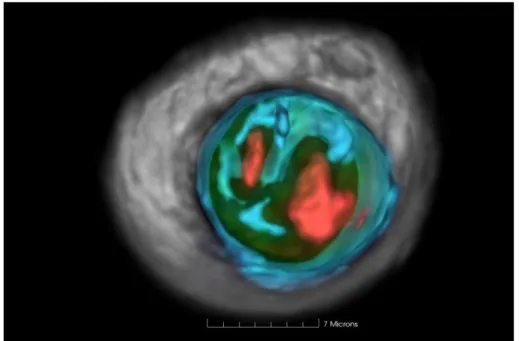
Figure 1.1 - 3D image of a cancer cell generated by the cell CT. Artificial color
was added to the nucleus and its components. ... 2
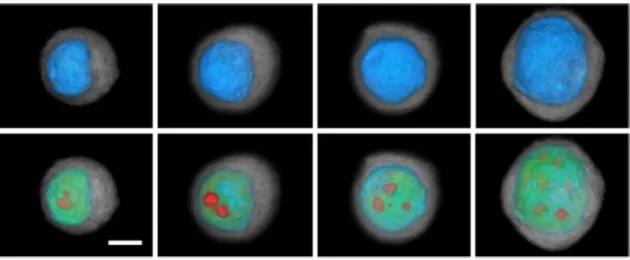
Figure 1.2 - Four cells imaged using the cell CT. On the top row the nucleus is colored in blue; on the bottom row the nucleus presents a transparency view of the nucleus to show its insides. The first cell is a healthy cell: the subsequent three cells show the progression of different stages of cancer. The progression in nuclear size and morphology, as well as on its components, can be observed. ... 3
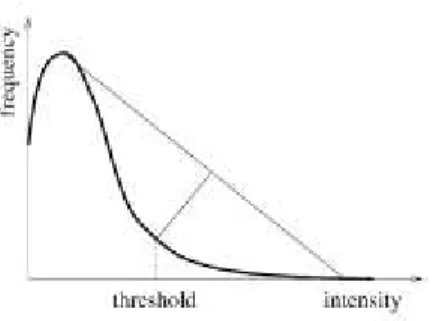
Figure 1.3 – Rosin’s procedure for calculating the threshold value from intensity histogram... 7
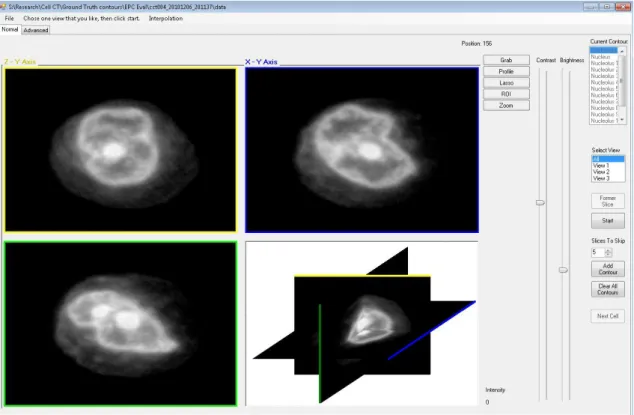
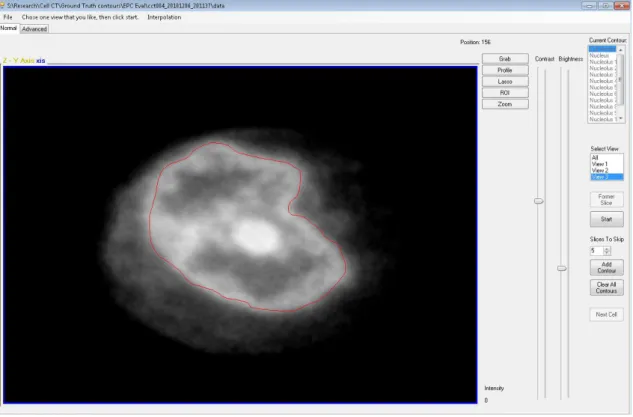
Figure 2.1 - Ground Truth Evaluation software interface. The cell is displayed from all three orthogonal axes. ... 14
Figure 2.2 - Ground Truth Evaluation software interface with a cell nucleus boundary traced in red. ... 16
Figure 2.3 - Software flow chart ... 18
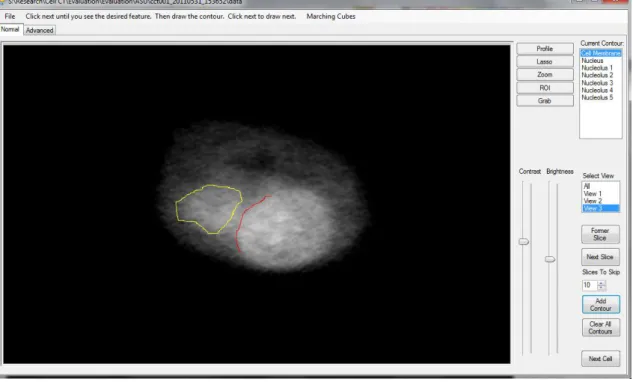
Figure 2.4 - Ground Truth Evaluation software interface. Image shows two contours drawn on the same slice. The yellow contour is the finished contour; the red contour is the active contour being drawn. ... 20
Figure 2.5 - Linear Interpolation Illustration ... 23
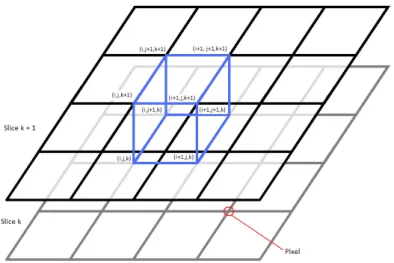
Figure 2.6 - Marching Cubes Illustration ... 24
Figure 2.7 - Marching Cubes’ cubes configuration ... 25
Figure 2.8 - Marching Cubes' configuration cube for when interpolating between a slice with contour and a slice without contour. ... 26
Figure 2.9 - Delaunay Triangulation's Circumcircle Triangles ... 29
Figure 2.10 - Delaunay Triangulation Process ... 30
xvi
xvii
LIST OF TABLES
xix
LIST OF ABBREVIATIONS AND ACRONYMS
GUI Graph User Interface
1
1. INTRODUCTION
1.1 Motivation
Cancer is a group of diseases characterized by abnormal, unregulated cell growth. Despite all the extensive research that has been undertaken to better understand and treat cancer, it is one of the leading causes of death worldwide. Over 1.6 million new cases, and half a million deaths were estimated in 2012 in the United States alone [1]. Cancer’s high mortality rate indicates that further research is needed.
Cancer diagnosis is largely centered on recognizing the morphological manifestations of the disease, referred to as malignancy associated changes (MACs)[2]. There are morphological abnormalities that can be observed in the nuclear structure of cancer cells. Some of the structural differences cancer cells have when compared to normal cells include nuclear size and shape, number and size of nucleoli, and chromatin texture[3].
These structures have been studied by growing tumor cells lines in monolayer tissue culture. Although monolayer culture is easy to work with, it does not
adequately represent the structure of the cell’s nucleus in real tissue; monolayer
culture deforms the nucleus, thus making it fundamental to study these characteristics using three-dimensional imaging systems[3]. A more accurate quantitative characterization of cell and nuclear morphology by 3D analysis of high contrast, high resolution 3D imagery with isotropic resolution facilitates the assessment of morphological changes associated with malignancy.
2
images acquired over a 360 degree rotation of a stained cell suspended in an index-matched optical gel (SmartGel, Nye Lubricants) within a glass capillary. A pseudo-projection image is generated by integrating widefield focal plane information over the cell volume using a 100x, 1.3 NA, oil immersion objective lens (UPlanFluor, Olympus). Acquired pseudo-projection images are denoised, registered and subjected to reconstruction algorithms to generate the volumetric cell image. The 3D imagining technique used in this research used white light excitation to image single stained cells and is referred to as single-cell optical computed tomography (cell CT).
Figure 1.1 - 3D image of a cancer cell generated by the cell CT. Artificial color was added to the nucleus and its components.
Research is being undertaken to precisely quantify three-dimensional cell and nuclear morphology from cell images generated by optical cell CT imagery and compute a morphological biosignature composed of the set of morphological parameters that can best distinguish two or more classes of cells with differing health states[6]–[8]as seen in figure 1.2. A modular, automated computational
3
interest in the volumetric images, and compute biologically relevant morphological and texture parameters from the segmented volumes of interest[10]. The efficacy of these segmentation techniques needs to be
validated by comparison to ground truth. Since size, volume, surface area, and similar characteristics of a cell cannot be directly measured on the physical cell, this measurement has to be done using the information contained in 3D tomographic images.
Figure 1.2 - Four cells imaged using the cell CT. On the top row the nucleus is colored in blue; on the bottom row the nucleus presents a transparency view of the nucleus to show its insides. The first cell is a healthy cell: the subsequent three cells show the progression of different stages of cancer. The progression in nuclear size and morphology, as well as on its components, can be observed.
1.2 Research Goal
4
1.3 Optical Cell – CT
This section provides an overview of the optical projection tomographic microscopy technique that allowed for a real 3D analysis of individual cells. The 3D imagining technique used in this research uses white light absorption to image single stained cells and is referred to as single-cell optical computed tomography (cell CT).
Optical cell CT is a cellular-scale imaging technique that incorporates computed tomography principles into widefield optical microscopy to generate three-dimensional single-cell images with sub-micron, isotropic spatial resolution[5], [11], [12]. The 3D cell image is generated by mathematical reconstruction from five hundred equiangular, 2D optical projection images of a stationary, stained cell suspended in an optical carrier gel within a glass capillary. Optical cell CT can be used in different widefield microscopy modalities, such as brightfield, darkfield, phase-contrast and epi fluorescence[13].
1.3.1 The cell CT Instrument
The cell CT instrument was used in this research is the Cell-CTTM instrument commercialized by VisionGate, Inc (Phoenix, AZ). It consists of the following:
An inverted optical microscope (IX71, Olympus) fitted with a 100x, 1.3NA, oil immersion objective lens (UPlanFluor, Olympus).
A 1400 x 1100 pixel, monochrome CCD camera (Prosillica 1650, Burnaby).
A motorized stage which permits injection and rotation control. This stage holds a portable cartridge which houses the tomographic imaging chamber.
Inside the imaging cartridge, there is a microcapillary (inner diameter of 50 µm,
5
360º of rotation. The microcapillary is connected to a syringe needle that permits coupling the Cell-CTTM instrument with a glass syringe. The glass syringe loaded with stained cells embedded in a carrier gel (Smart Gel, Nye Lubricants) is connected to the syringe needle of the Cell-CTTM, and an injection controller is connected to the other end of the glass syringe to carefully control the disbursement of the sample into the microcapillary. All the elements in the imaging chamber, including the capillary and the carrier gel, and the immersion oil for the objective lens are refractive index matched to minimize optical distortion.
A LabView software suite is used to automate the image acquisition process.
1.3.2 Projection Image Acquisition
Once the glass syringe with the stained cells is mounted onto the Cell-CTTM, the cells are transported through the capillary by forward actuation of the syringe plunger. This pressurizes the carrier gel and causes it to flow. When a desired cell is in the field of view of the microscope, the pressure is released and the gel flow stops; making the cell immediately stationary. The user selects the cells to be imaged based on cell quality. If a cell is selected to be imaged, the capillary will rotate at constant speed, allowing the acquisition of 500 projection images at angular intervals of 0.72º around the cell. Each projection image is generated by sweeping the objective lens through the cell volume and integrating the resultant infinite focal plane information on the camera chip[12].
A 3D image is generated by aligning the projection image data, and subjecting it to mathematical reconstruction algorithms. To eliminate pattern noise, a background subtraction routine is performed. The alignment is done based on the center of intensity; the aligned projections are subject to filtered back projection reconstruction using a custom ramp filter to obtain the volumetric cell image. This image has an isotropic spatial resolution of ~350nm.
6
hematoxylin stain density, i.e. a darker stain implies a higher intensity in the image.
1.4 Segmentation Algorithms
Automated segmentation algorithms for medical images have been a subject of active research. Many techniques have been developed[14] and are being evaluated. In a collaborative effort, a fellow laboratory colleague developed a fully-automated segmentation algorithm to segment the cell CT images. The segmentation algorithms chosen to be used in his research were the ones considered to be the most adequate after analyzing the characteristics of the cell CT image[10]. For brevity, only the segmentation methods used in the cell CT research will be exposed. The ground truth that is produced from this project was used to validate these automated segmentation algorithms.
1.4.1 Rosin’s threshold method
Threshold segmentation algorithms segment an image based on its histogram. Different modal classes can be identified on a histogram; and the key to segmentation based on threshold is to identify the value, i.e. the threshold, that best separates the different modal classes.
Rosin’s method[15] assumes that the image’s histogram is unimodal. This
7
Figure 1.3 –Rosin’s procedure for calculating the threshold value from intensity histogram
A line, , is drawn from the highest bin in the histogram to the first empty bin after the last filled bin. The threshold will be the value of the entry of the histogram that maximizes the length of the perpendicular line connecting that histogram entry to . See Figure 1.1.
1.4.2 Otsu’s method
Otsu’s segmentation technique[16] selects the threshold that minimizes the intra-class variance, i.e., that maximizes the homogeneity of each class. This means that the method attempts to maximize the inter-class variance.
Otsu’s method for a bimodal histogram will be explained, but it can be easily extended to multi-modal histograms.
For a bi-modal image with 1 to L gray levels, one can calculate the normalized
frequency of each gray level i from 1 to L as P(i). Otsu’s method sets a
threshold value and then tests the intra-class variance for each class. The nomenclature herein defines background intensities as being below the threshold, and object intensities as being above the threshold. Based on these definitions, one can calculate the weighted intra-class variance as follows
8
where w refers to the weighted intra-class variance, t refers to the threshold
value, o refers to the object class from the image, b refers to the background
class from the image, σ is variance, and q is intra-class probabilities. These
intra-class probabilities are estimated as follows:
ti
o t P i
q 1 ) ( ) ( (1.2) and
I t ib t P i
q 1 ) ( ) ( (1.3)
such that qo(t)qb(t)1.
In addition, the class means are computed by the following:
t
i o
o iP i
t q t 1 ) ( ) ( 1 ) (
(1.4)
and
I t i bb iP i
t q t 1 ) ( ) ( 1 ) (
(1.5)
Finally, the variance of the background and object classes can be computed as follows:
t i o oo i t P i
t q t 1 2 2 ) ( )] ( [ ) ( 1 ) ( (1.6) and
I t i b bb i t P i
t q t 1 2 2 ) ( )] ( [ ) ( 1 ) (
. (1.7)
Simply, the threshold for every possible pixel value could be assigned to t, and
a minimum σw could be selected from all of the possible computations.
inter-9
class variance σB—which is merely a relationship between the weighted
distances between the class means and the grand mean of the entire dataset μ—one can rewrite the equations above as follows.
2 2 2 ] ) ( )[ ( ] ) ( )[ ( ) (
B t qo t o t qb t b t (1.8)
and ) ( ) ( 2 2 2 t t B w
(1.9)
Since the overall variance does not change for the dataset depending on the threshold, one can see that minimizing the intra-class variance is equivalent to maximizing the inter-class variance to arrive at an optimum threshold.
1.4.3 K-means Clustering
In order to cluster data in a way such to minimize an objective function, k
-means clustering methodologies can be used[17], [18]. In these methodologies,
n observations can be broken into k partitions such that each observation
belongs to the cluster with the nearest mean; in other words, the within-cluster sum of squares or the mean squared distance of each observation to the mean of the cluster in which it falls is minimized.
In application to image analysis, this can be viewed as breaking the pixels of an image into two or more partitions based on the intensity of the pixels. While computationally difficult, k-means clustering has proven very efficient when
subjected to heuristic methods. Primarily, the segmentation algorithm can be used to approximate this methodology by assuming the optimal center for a cluster of data falls at the centroid of that data cluster. The mean-squared distance from each point to the mean of the cluster can be computed; then the
10
distance computations for the new cluster set can be summed and compared to the previous iteration. When the objective function—i.e., the sum of all of the within-cluster sum of squares—is minimized, then the optimal formulation of the clusters has been found to minimize intra-class variability.
Given a set of observations (x1, x2, …, xn), where each observation is a d -dimensional real vector, k-means clustering aims to partition the n observations
into k sets (k≤ n) S = {S1, S2, …, Sk} so as to minimize the within-cluster sum of squares (WCSS):
(1.10)
where μi is the mean of points in Si.
1.5 State of the Art
With the increasing use of 3D imaging techniques in the medical field, it is crucial to understand and manipulate the data and vital information present in these images. Image segmentation is widely used in many imaging modalities in various different medical fields. A few software applications have been developed that allows for manual segmentation of a 3D medical image.
TurtleSeg is a free 3D medical image segmentation tool developed by the Medical Image Analysis Lab at Simon Fraser University and the Biomedical Signal and Image Laboratory at the University of British Columbia[19].
The software allows the user to manually segment a sparse number of slices. The software picks the slices that are crucial to be manually traced for the user to draw; and then calculates the volume by producing a dense set of parallel segmentation contours.
11
trace the contour perfectly, instead the user clicks on relevant points and livewire connects the sequential cliked points.
ITK–Snap is a free software application to segment 3D medical images developed by Paul Yushkevich, Ph.D., of the Penn Image Computing and Science Laboratory (PICSL) at the Department of Radiology at the University of Pennsylvania [20].
Unlike TurtleSeg, ITK-Snap allows the user to draw on all the slices, and have fully manual segmentation. This software application was also developed to be used with a mouse, so it also has a livewire where you can add as many points as needed to make the shape as close as possible to the desired contour. Once you are done with one slice and move to the next, the contour drawn on the previous slice will appear on top of the image. Since there is not much change between slices, the user can use that as a guide and only make small changes to the contour; making the process of tracing the contours faster.
3D-Doctor is a 3D medical image processing tool used in many organizations working with medical images. Unlike the previous two, this tool is not free. 3D-Doctor allows the user to manually segment all the slices of a 3D image by clicking the mouse around the desired boundary on each slice[21].
Studies have shown that manual segmentation using a pen and a tablet are easier, faster and more accurate[22]. Even though this technique has been used in several medical research fields[23], [24], we do not know of any freely available software developed to be used with a pen and tablet that does 3D fully manual segmentation.
Our software will be innovative in that it is designed to be used with a pen and tablet, the user can pick what slices he/she intends to draw on, being able to draw on all slices or only draw on a few, and it uses interpolation to speed up the process of obtaining a volume.
13
2. METHODS
2.1 Cell Sample Preparation
The cells used for imaging were grown in culture. This research analyzed different kinds of cancer cells as well as healthy cells. After the cells were grown, they had to be prepared for imaging.
The optical contrast must be proportional to the density of the biological material, since, like x-ray CT, the cell CT 3D image captures variations in the object’s density. To achieve this, the cell needs to be stained with an absorption dye. The dye used was hematoxylin, commonly used in clinical practices for this purpose[25]. Standard cytological protocols for staining were followed as outlined below.
Staining Procedure:
1. Cells are fixed for one hour with CytoLyt, and posteriorly smeared onto a clean microscope glass slice coated with a Poly-L-Lysine solution.
2. Cells are stained for a few minutes (cell type dependent) in aqueous 6.25% w/w Gill’s hematoxylin solution, followed by a bluing reagent
(Fisher Scientific, Fair Lawn) for 30 seconds after washing thrice with filtered tap water.
3. Cells are dehydrated by use of an ethanol series (50%, 95%, and 100%) and two washes of xylene.
After the cells are stained they are embedded into the carrier gel and scraped off the glass slide to be introduced into the glass syringe.
14
optimization of the results is so dependent on experimental conditions (including pH of the water used).
The properly stained cells will have a bluish nucleus and a lighter cytoplasm. The staining is more predominant in the nucleus due to binding of the dye-metal to nuclear DNA.
2.2 Ground Truth Evaluation Software
To achieve the goal of determining ground truth for 3D automated segmentation of cells the Ground Truth Evaluation software was created. See Figure 2.1.
Figure 2.1 - Ground Truth Evaluation software interface. The cell is displayed from all three orthogonal axes.
15
The real challenge is to convert the result from the visual segmentation into digital data that can be compared with the result of the automated segmentation. This is best performed by utilizing a tablet and a pen to draw on the images of the cell. In this way, a user of the Ground Truth Evaluation can input his/hers visual segmentation into the software by drawing a contour around the identified boundary.
For this purpose, the tablet Cintiq 12wx (Wacom) was used. The Wacom Cintiq 12wx is a 12.1" TFT wide-screen LCD in WXGA resolution of 1280 x 800 pixels.
The goal was to have a 3D segmentation of the cell’s components, but we were limited to a 2D display and therefore limited to 2D images. For this reason, the 3D image has to be divided into a series of slices; where each slice represents a 2D image. This is simple, if we consider that a 3D image is a stack of 2D images. The data of the 3D image is stored in a 3D matrix. A 3D matrix of the type can be written as matrices of the type . So a 3D matrix can be decomposed into a series of 2D matrices. Each 2D matrix defines a 2D image that is one slice of the 3D image.
The Ground Truth Evaluation will go through the stack of 2D images, and the user can then draw a contour on each slice. This contour will define the segmentation for that slice. After the user has defined the segmentation boundary of the desired object on every slice, the slices can be stacked back into a 3D volume. This will allow for a full 3D segmentation, since all the planes of the 3D volume were segmented.
16
Figure 2.2 - Ground Truth Evaluation software interface with a cell nucleus boundary traced in red.
Once the boundary of the volume is defined on a slice, the section of volume on that slice can be determined with a flood fill algorithm. This algorithm determines all the pixels enclosed in a bounded area. In this way, all the pixels of that image that are contained in the volume are found. The total volume of the ground truth is the sum of all the voxels belonging to the volume in each slice.
Even though this method of determining ground truth is reliable, there is one problem with it: it is too slow. To precisely draw one contour, it takes between 30 seconds to 1 minute. A cell, depending on the size of the cell and along which axis the user chooses to draw, will require around 170 slices. This means it takes over two hours to draw the contours of just one of a cell’s components.
17
slices that were skipped. In this way, it is possible to obtain the ground truth volume without needing to define its boundary on every slice, making it a much faster process.
Different interpolation methods and algorithms will be discussed in the next section.
After the ground truth volume is found, it is then possible to compare it with the volume resulting from automated segmentation algorithms. The Ground Truth Evaluation has a few evaluation metrics that can be applied to the volumes to compare and evaluate how close the automated segmentation came to the ground truth volume.
These metrics will be presented in section 2.4. They will also be used to evaluate the interpolation methods.
18
Figure 2.3 - Software flow chart
Some extra features that were added to the software include:
The ability to zoom – the user can zoom in and out in the image, making it easier to define the boundaries.
The ability to change the contrast – the user can adjust the contrast of the image optimizing the visualization of the cell and its components. The ability to change the brightness – the user can adjust the brightness
of the image optimizing the visualization of the cell and its components. The user can select what cell component (Cell Wall, Nucleus, Nucleolus
1, Nucleolus 2, etc…) he/she is drawing. The name of that component
will be tied to all the contours belonging to it. In this way, it is only necessary to load the cell once to draw all the different cell components.
All of the cell’s components for a given cell can be saved in one file.
When the cell is loaded, the user can see the cell from the perspective of all three axes. The user can move through the stack on each axis and choose which view he/she would like to work with. See Image 2.1.
Evaluation of Automated Segmentation
The ground truth volume can be used to compare and evaluate the validity of other segmentatios. This can be done using different evalution metrics.
Ground Truth Volume
The ground truth volume is obtained.
Interpolation
The software will interpolate the volume between the slices that were drawn on.
User draws contours
The user will go through the stack of images drawing the contours on the slices that were not skipped.
Load the Cell Image
View from the 3 axis are shown. The user can scan through the cell
19
Setting the number of slices to be skipped – the user can predefine how many slices he/she desires to skip before starting to draw. In this way, every time the user selects the “Next Slice” button the software will
automatically skip the desired number of slices, and display the corresponding slice image.
The possibility of drawing multiple contours on the same slice – this in an important feature. The cell components can have different cell shapes. In some cases, the shape can include variations like large dents in the surface. These dents can produce two parallel saliencies that project out in the same direction but do not touch each other. This will imply that when this object is divided into slices, there will be slices where it appears as two different objects. This is easy to picture if you consider slicing horizontally a U-shaped object. It becomes a problem to draw a contour around the surface of a cell component which in a given slice appears as two disjointed objects, even though both segments belong to the same object. To overcome this problem, the software allows the user to draw multiple contours for the same cell component on a given slice. When the user is satisfied with the first contour, he/she can select the
“Add Contour” button to draw another contour. The finished contours will
appear yellow, and the current contour being drawn will be red. See Figure 2.4.
Each contour has to be traced continuously. If the user dislikes the line traced all he/she has to do is take the pen off the screen and then proceed to restart tracing the surface. This will clear the image of the line of the previous attempt. Other contours drawn on that slice that are now yellow will not be cleared by this action. Only the current contour being drawn is cleared. To clear all contours, the user can select the “Clear All Contours” button.
20
When the user is done drawing all the contours on a cell, he/she can
select the “Next Cell” button. By doing so, the contours of that cell are
automatically saved in a file and the next cell is loaded.
The user can select a directory from which he/she desires to load cell images. The Ground Truth Evaluation will scan that directory and load a list of cells present in that directory. While selecting the cell files, the software will verify if a file containing the contours of that cell already exists. In the case where it does exist, the software will not include that cell in the list. This makes the process of selecting the cells more efficient and faster for the user. It also ensures that the user does not select a cell he/she has already drawn the contours for.
When the user starts his/hers session he/she may introduce his/her name, which will be saved in all the files saved during that session. This makes it easier to study the intra-user and the inter-user variability of the software.
21
The software realization was achieved by programming in C#. C# is a programming language developed for .NET Framework[26].
There were several aspects of the C# programming language that were attractive and are the reasoning to why it was chosen over other languages. Some of these aspects are listed below:
Allowing polymorphism in object-oriented programming. This means that methods can be implemented to work with groups of related objects in a uniform way. In other words, it is possible to present the same interface for different underlying data types. This made it possible to organize the data into classes and subclasses, and take advantage of inheritance, making the Ground Truth Evaluation more efficient.
3D Libraries – C# has an extensive library for 3D graphics, something that was vital for the Ground Truth Evaluation.
C# makes it easy to work with plug-ins. This makes it possible to work with the Ninject design pattern, which was used to make the drawing and lasso tools.
Easy to create and work with Graphical User Interface (GUI) – The Ground Truth Evaluation relies on the functionality of GUIs.
Reflection – the ability to inspect and determine the contents of an unknown assembly, object, type, and members. This is useful for determining dependencies of an assembly, testing and debugging.
The Visualization Toolkit (VTK)[27] library was integrated into the Ground Truth Evaluation. VTK is an open-source C++ library used in 3D computer graphics, image processing and visualization. VTK is a very useful tool in computer graphics making it easier to perform complex tasks using an object-oriented approach. This software system is widely used due to its compatibility with other languages like Tcl/Tk, Java and Python. VTK was chosen over other 3D computer graphics libraries such as OpenGL and DirectX because of its modular, object-oriented and scalable proprieties. VTK is also geared more specifically for scientific use.
22
functionalities to the code without much effort or coding. This makes it easy to integrate the software into other software and scripts.
2.3 Interpolation Algorithms
In this section, five different interpolation algorithms are presented to complete the volume between the slices that were drawn on.
2.2.1 Linear Interpolation
23
Figure 2.5 - Linear Interpolation Illustration
The mathematics behind this method is simple and does not require much computationally. It is a robust method that will work for any kind of complex cell shape.
On the other hand, it is important to note that this method does not have any surface awareness. It does not recognize patterns in the shape of the volume and will not try to reproduce it. It also fails to produce curvature on the undrawn slices, something that is expected in the shape of cells. The Linear Interpolation will generate a volume that is smaller than that of the ground truth, since it will not recreate the curves of the cell, but only the flat lines between slices. This will also result in a volume with sharp edges.
It is also important to take into account that the Linear Interpolation only interpolates between slices. It cannot interpolate before the first slice that was drawn on, or after the last slice that was drawn on. This means that the ends of the cell may be cut off. With this in mind, the user should always try to draw on the first slice where the cell is seen, as well as on the last one.
24
2.2.2 Marching Cubes
Marching Cubes is an algorithm used in computer graphics to construct and display 3D data. It creates a polygonal mesh from an isosurface within the 3D data[28].
This method consists in defining a cube in between two consecutive slices, where the vertexes of the cube are adjacent pixels on the slices. Four vertexes will belong to slice k, and four to slice k+1. See Figure 2.6.
Figure 2.6 - Marching Cubes Illustration
The vertices can have two different states: being inside or on the surface, or being outside the surface. This will be decided according to the value of the corresponding pixel. Normally the user will define a threshold. Any pixel equal or superior to that value will be considered to be inside or on the surface. Any pixel that has a value inferior to the threshold will be considered to be outside the surface. In this way the vertices can be defined by a binary system. Each vertex will have an independent value of either 0 or 1.
25
polygon has to ensure to include all the vertices that were labeled as inside the surface in the surface; as well as exclude from the surface all the vertices that were labeled as outside the surface.
Given that there are 8 vertices in each cube, and each vertex of the cube can be characterized by two different states, there will be 256 different configurations possible for a cube ( ). Due to the symmetry proprieties of the cube it is possible to reduce that number to 14 basic polygon configurations. When all the vertices are either outside or are all inside the surface, the surface does not go through that cube. Therefore these two cases do not need to be considered since there is no polygon in these situations. The 14 basic configurations can be seen in Figure 2.7.
Figure 2.7 - Marching Cubes’ cubes configuration
These 14 configurations are allocated in memory in a table to be queried.
For every cube that is defined by eight pixels (four neighboring pixels in one slice and four neighboring pixels in the next slice) an eight bit index is ascribed. A standard numbering technique is defined to number the vertices of the cubes. So each vertex has a number and subsequently a bit associated to it. This means that each vertex contributes with one bit to the cube’s index. The value
of that bit will depend on if the vertex is in inside or outside the surface. Once
26
that contains all possible polygon configurations. Each configuration will have a list of all possible indexes associated with that specific configuration.
After the surface shape is found for a cube, the intersection of that surface with the edges of the cube is calculated. This calculation is done by linear interpolation using the vertex’s density value. Each cube defines the surface in
that space, the total volume is the combination of all the surfaces enclosed in each cube.
The final step is the calculation of the triangles’ in each cube normal. This is
useful for rendering algorithms to produce shading in the surface.
For interpolation purposes, not all slices are introduced into the Marching Cube algorithm. Only the slices with contours are introduced. The slices that were skipped are removed from the volume. The Marching Cubes algorithm is applied to the slices that contain a contour as if they defined the whole volume. Once the surface is created using the Marching Cubes algorithm the surface is stretched back out to the original volume size. This will elongate the polygons along the axis perpendicular to the slices. This elongation will result in less resolution along that axis compared to the other two axes. This technique is the standard in computer graphics and is used for a wide range of applications. It is a robust method that works for different kinds of data.
Like the Linear Interpolation, this method creates sharp edges. On both ends of the volume that are close to parallel to the planes of the slices, the Marching Cubes technique will generate a flat surface. This is due to the fact that to define these ends, the algorithm will interpolate between a slice with no contour and the first slice that was drawn on. The resulting cube will have the configuration in Figure 2.8.
27
This will mean that the surface will be flat in those extremes.
Marching Cubes is a computationally expensive algorythm since it requires a secondary interpolation and a large amount of memory needs to be allocated due to the fact that the vertices are not connected until the calculation is completed.
To understand how this algorithm was implemented see Appendix A.2.
2.2.3 Gaussian Splat
Splatting techniques[29] use a splatting function to distribute the data value of each point over the surrounding region. This is done using a splatting kernel, or blur kernel. The kernel should be symmetric and gradually decrease to zero as you move away from the centre. In this way, the algorithm will blend all the volume points. It is important to assure that the kernel has an adequate size. A kernel that is either too big or too small can produce artifacts in the surface, such as blurring and loss of detail.
The Gaussian Distribution Function can be used as a splatting function. The Gaussian function is the probability density function of the normal distribution, which in 3D is expressed as:
where is the standard deviation and µ the mean.
The Gaussian Distribution Function can be used to distribute a point to its surrounding. This is done by creating a Gaussian distribution around each point,
28
curve. The Gaussian distribution for a given point will be the contribution of that point to the volume. In this way, each point will define a small volume in the 3D space. The sum of all the volumes defined by each point will be the final volume.
The Gaussian Distribution Function, centered on a given point , can be written as:
(2.2)
where is the distance from to , ,
is the radius of propagation of the splat, this value is expressed as a percentage of the length of the longest side of the sampling volume,
and is the scalar value of point .
This function is used in the Gaussian Splat interpolation technique. The function is applied to the list of points to be interpolated. Once the values have been blurred, an isosurface is extracted from the volume. This interpolation technique will work for any kind of input contours and is very robust and fast.
The Gaussian Splat will create a volume larger than the ground truth volume. Since the interpolation is calculated by expanding each point into its surroundings, it will expand the whole volume. Unlike Linear Interpolation and Marching Cubes, Gaussian Splat will not produce a volume with sharp edges. Instead, it will create a volume with large rounded edges. It also will remove any trace of fine features.
29
Delaunay Triangulation[30] is used in computer graphics to create geometric surfaces from a list of points, . This is done by defining edges of triangles between points and, consequently, connecting all the points through triangles. The edges should never intersect each other. This method will produce a surface made up of various small triangles, where the vertices of these triangles are the points belonging to .
Every triangle resulting of the Delaunay Triangulation should satisfy the “empty circumcircle” condition. This condition states that the circumscribed circle of
every triangle contains no other point . This means that the algorithm ensures that no circumference of a circle contains four points of . See Figure 2.9.
Figure 2.9 - Delaunay Triangulation's Circumcircle Triangles
The Delaunay Triangulation algorithm begins by defining a triangle that is big enough to contain all the points of . Then each point of the set is added one by one into the algorithm. When a new point is added, the triangle in which it
falls has to be redefined to satisfy the “empty circumcircle” condition. This is
30
circle contains . This procedure is repeated until all the points are successfully integrated into the Delaunay Triangulation. After all points are added, the edges that connect the points of the initial triangle created to contain all the points of can be eliminated. Figure 2.10 shows how this process is done.
Figure 2.10 - Delaunay Triangulation Process
Even though it was shown how the Delaunay Triangulation works in 2D, the concept still holds in 3D, where , and the algorithm defines 3D simplexes and their corresponding circumscribed spheres.
31
plane, no three points lie on the same line and no four points lie on the same circle.
The points to which the algorithm is applied in this case is the list of points that define the contours drawn by the user. A contour, theoretically, is defined by an infinite number of points. This list of points will be a string of consecutive points to describe a continuous line. The fact that there is no spacing between the points is a problem for the Delaunay algorithm. Even though the algorithm will exclude points that coincide or almost do so, it will still have to define edges between points that are too close together and their almost infinite circumscribing circles. It is very unlikely that the data obeys the condition for the ideal scenario mentioned on the previous paragraph.
For this technique, the number of points introduced into the algorithm was reduced to improve its performance. No great improvement was noticed in its behavior.
2.2.5 Unorganized Points
Unorganized Points [31] is a very sophisticated surface reconstruction algorithm. Considering M as the unknown surface that we intend to calculate,
function f
, (2.3)
can be defined, where is a region near the data. The function f
estimates the signed geometric distance to M. The zero set is the estimate
for M. A contouring algorithm is then used to approximate by a simplicial
32
The first step consists of attributing an oriented tangent plane to each data point , where X is set of data points. These planes serve as a local linear
approximation of the surface, and will be used to help calculate for .
The singed distance of a point p to a surface M is the distance between p and
the closest point , multiplied by . Multiplying it by allows distinguishing points that are on different sides of the surface. Since M is not
known the oriented tangent planes are used for this calculation. The distance of
p to M is defined as the distance from p to the plane which has the
center closest to p; that is,
, (2.4)
where is a unit normal vector.
Once the zero set is found a contouring algorithm can be used to discretely sample the function f over a portion of a 3D grid near the data and
reconstruct a continuous piecewise linear approximation to The contour tracing algorithm used to extract the isosurface from the scalar function is the algorithm of Wyvill et al..
2.4 Evaluation Metrics
33
making the number of slices skipped 2; and so on, until the number of slices skipped was 9.
The evaluation metrics used to evaluate the interpolation methods were Jaccard Similarity[32], Dice Coefficient[33], Specificity and Sensitivity[34]. These metrics are the same metrics that the Ground Truth Evaluation software has built in to evaluate the fully-automated segmentation algorithms.
For a better comprehension of the metrics, the following terminology will be used:
V - all the voxels in the image;
GT (ground truth) – all the voxels classified as cell by the user;
I (interpolated volume) – all the voxels classified as cell by the
interpolation method;
TP (True Positive) – all the voxels that were classified as cell by both the
user and the interpolation method, i.e., ;
TN (True Negative) – all the voxels that were classified as non-cell by
both the user and the interpolation method, i.e., ;
FP (False Positive) – all the voxels that were classified as non-cell by the
user but were classified as cell by the interpolation method, i.e.,
;
FN (False Negative) – all the voxels that were classified as cell by the
34
Figure 2.11 - Representation of True Negative, False Positive, True Positive, and False Negative Areas
2.4.1 Jaccard Similarity
Jaccard Similarity is a metric used to compare how similar two sets are by measuring their overlap. It is defined as the ratio between the intersection of the two sets and their union:
(2.5)
35
2.4.2 Dice’s Coefficient
Dice’s Coefficient measures the agreement between two sets by dividing the
intersection of the sets by the average of their sizes:
(2.6)
This metric will vary from 0 to 1, where 0 indicates there is no agreement between the sets and 1 that there is total agreement. In the case of the interpolation methods, the closer to 1 the Dice’s Coefficient is, the closer the
interpolated volume is to the ground truth volume.
2.4.3 Specificity
The specificity measures an interpolation method’s ability to characterize
negative elements as negative, i.e., to exclude the negative elements from the desired set. This metric can be expressed as:
(2.7)
For the interpolation methods this will mean the method’s ability to leave out of
36
2.4.4 Sensitivity
Sensitivity measures the method’s ability to recognize positive elements, i.e., the ability to include in the desired set the positive elements. The greater the ability to correctly identify the positive elements, the closer to 1 the sensitivity will be. The metrics is written as:
(2.8)
In the case of the interpolation methods this means the ability to include in the interpolated volume all the cell voxels.
37
3. RESULTS
3.1 Inter–user variance
To assess inter-user variance, three users delineated the contours of 14 cells and their nuclei. 7 of these cells were healthy cells, and 7 were cancerous cells.
Tables 3.1 and 3.2 show the inter-user variance for the 14 nuclear volumes and the 14 cellular volumes respectively.
Table 3.1 - Inter-user Standard Deviation for nucleus volume ( ) Cell
Index User 1 User 2 User 3 Mean
Standard Deviation
1.0 689.8 627.0 646.3 654.3 32.2
2.0 601.2 668.4 669.1 646.2 39.0
3.0 472.5 491.5 451.7 471.9 19.9
4.0 414.9 422.2 419.9 419.0 3.7
5.0 465.8 558.2 546.4 523.5 50.3
6.0 740.3 658.8 724.8 708.0 43.3
7.0 330.0 353.5 357.9 347.1 15.0
8.0 240.7 281.2 298.5 273.5 29.7
9.0 321.7 313.2 313.9 316.3 4.8
10.0 338.2 359.9 442.3 380.1 54.9
11.0 266.1 249.3 263.9 259.8 9.1
12.0 475.9 488.8 494.7 486.5 9.6
13.0 633.9 638.6 643.2 638.6 4.7
38
Table 3.2 - Inter-user Standard Deviation for cell volume ( ) Cell
Index User 1 User 2 User 3 Mean
Standard Deviation
1 2228.8 1499.8 2296.9 2008.5 441.9
2 2413.8 2385.9 2201.6 2333.8 115.3
3 1933.7 1372.1 1528.3 1611.3 289.9
4 1540.0 1041.3 1300.0 1293.8 249.4
5 2883.4 2285.9 2516.2 2561.8 301.3
6 2706.1 2119.4 2330.6 2385.4 297.1
7 1119.3 887.7 1077.7 1028.2 123.5
8 892.0 876.8 900.1 889.6 11.8
9 1572.2 1067.0 1243.0 1294.1 256.5
10 1566.7 1441.0 1623.8 1543.8 93.5
11 815.0 630.0 656.2 700.4 100.1
12 1123.8 1107.8 1110.4 1114.0 8.6
13 1408.1 1361.4 1584.2 1451.3 117.5
14 844.3 729.9 848.0 807.4 67.1
3.2 Interpolated Volumes
3.2.1 Linear Interpolation
39
40
3.2.2 Marching Cubes
Marching Cube produced good volumes when the number of skipped slices was low, but it quickly deteriorated with the increase in the number of slices skipped. There is a tendency to create a square wave or aliasing pattern along the segmented axis that becomes more evident as the number of slices skipped increases. See Figure 3.2.
41
3.2.3 Gaussian Splat
The Gaussian Splat produced bulgy, enlarged volumes, where the whole nucleus is inflated. A lot of the detail and small creases, folds and lumps disappear. There is not a great difference on the volumes obtained as the number of slices skipped increased. See Figure 3.3
42
3.2.4 Delaunay Triangulation
The Delaunay’s produced volume where its constituent triangles are very evident, and created surfaces with holes. It did not remain true to the nucleus’s
uneven surface, or pay attention to small detail. As can be noted in figure 3.4, no significant visible difference can be seen on the volume as the number of slices skipped increases.
43
3.2.5 Unorganized Points
Unorganized Points produced volumes that were sensitive to the nucleus’s
uneven surface. It created equally smooth surfaces along all three axis. With the increase of slices skipped, the volumes became more even. This means a loss of detail, and small lumps and dents on the surface. See Figure 3.5
Figure 3.5 -Nucleus volumes obtained using Delaunay Triangulation. Top-left volume obtained with no slices skipped. Top-right volume obtained with 3 slices skipped. Bottom-left volume
47
4. DISCUSSION
4.1 Software’s Inter-user variability
This technique of ground truth establishment has a high inter-user variance. There are several parameters that can influence this. The users all had the freedom to adjust the brightness and contrast to their liking. This can affect the way the user observes less well defined boundaries. The users could also pick the slices on which they drew or skipped, and the interpolation method was used to define the contour on the skipped slices. Depending on how differently the chosen slices were, the final volumes could reflect these choices. The users also experiences fatigue, which makes the user more prone to error. Poor judgment and human error must be considered as well. There might not always be agreement on where the boundary is. Having trained experts trace the volume could minimize these problems.
The inter-user variability for the cell was considerably greater than for the nucleus. This could be explained by the higher contrast imparted by the hematoxylin to the nucleus.
4.2 Interpolation Algorithms
48 - Jaccard Similarity
Figure 4.1 - Jaccard Similarity Index Graph for all five interpolation algorithms
As can be seen in Figure 4.1, for the Linear Interpolation, the Marching Cubes and the Unorganized Points, there is a tendency for the Jaccard Similarity Index to decrease as the number of slices skipped increases. This was expected since the accuracy of the results of the interpolation algorithms should decrease as the number of slices (i.e., information from the ground truth volume) introduced in the algorithm decreases. Even though the Linear Interpolation had a better result than the Unorganized Points for all 10 trials, Unorganized Points’
performance did not degrade as much with the increase of the number of slices skipped. This is due to the fact that Linear Interpolation’s performance is highly
tied to the proximity of the consecutive contours, as it only mimics the two closest contours. The Unorganized Points, on the other hand, takes into account the three-dimensional region around each point and tries to understand
its pattern. Marching Cube’s performance is the most affected because of its rigid cube structure that is strictly enforced to a certain resolution. Also, both Linear Interpolation and Marching Cubes are unable to create curvature, producing sharp edges. This characteristic becomes a more predominant as more slices are skipped, since the flat surface produced by these algorithms between two consecutive contours is extended over a greater distance.
0.40 0.60 0.80 1.00
0 2 4 6 8 10
Jac car d In d e x Val u e
Number of Slices Skipped
Linear Interpolation
Delaunay
Unorganized
Gaussian
49
Unorganized Points does not have this problem, seeing as it describes the surface more organically, generating a smooth descriptive surface.
The Gaussian Splat and the Delaunay did not show the same tendency as the other three methods. For the Gaussian Splat, the Jaccard Similarity Index actually increases as the number of slices skipped increases. This can be explained by the fact that the Gaussian Splat enlarges the volume of the cell. It computes the volume creating a Gaussian distribution around each point that is inputted into the algorithm, enlarging the volume of that point. The more points that are introduced into the algorithm the greater the effect of that enlargement will be. So the Gaussian Splat actually creates a volume closer to the size of the ground truth volume when there is less slices introduced into the algorithm.
As for the Delaunay, it seems that the Jaccard Similarity Index remains constant. This is because the Delaunay failed to create full surfaces, creating volumes with holes. These holes were constant throughout all the volumes, regardless of the number of slices skipped. Delaunay’s poor performance is
tied to the nature of our data and its highly uneven concentration of points.
50 - DICE Coefficient
Figure 4.2 – Dice Coefficient Graph for all five interpolation algorithms
In figure 3 we can see that this metric has similar results to the Jaccard Similarity Index. For the same reasons as previously discussed for the Jaccard Similarity here the Linear Interpolation has the best results, followed by the Unorganized Points, Marching Cubes, then the Gaussian Splat, and lastly the Delaunay.
It is interesting to note that, despite the fact that the shape of Dice Coefficient’s
graph is very similar to Jaccard Similarity’s graph, all the methods have a higher
score for the Dice Coefficient. This is due to the fact that the Jaccard Similarity Index is more sensitive to the number of elements that do not agree, since it takes into account the size of the union, and not the average size of both sets. In this way, if we compare how much lower a method scored in Jaccard Similarity in regards to how it scored in the Dice Coefficient, we can conclude how large the set of elements defined by ) is. The greater the difference between the scores, the greater this set will be. Ideally, this set should be empty.
0.60 0.80 1.00
0 2 4 6 8 10
D ic e 's Co e ff ic e n t Val u e
Number of Slices Skipped
Linear Interpolation
Delaunay
Unorganized
Gaussian
51
Doing this analyzes, we can see that the Delaunay had a greater difference between its score in the two metrics, followed by the Gaussian Splat. It can also be seen that the difference between the two metrics for the Linear Interpolation and Marching Cubes increases as the number of slices skipped increases. This is not as noticeable for the Unorganized Points. This shows, once again, that the increase of the number of slices skipped is more detrimental to the performance of the Linear Interpolation and of the Marching Cubes than it is to
the Unorganized Point’s performance.
- Specificity
Figure 4.3 - Specificity Index Graph for all five interpolation algorithms
As can be seen in figure 4, there is not a great variation on the specificity value for each interpolation method as the number of slices skipped increases. For all the methods the specificity was high. This is due to the large volume of the reconstruction space, that is to say, the cell (and consequently its nucleus) occupies a small portion of the total image. The True Negative value is a really large number compared to False Positive; therefore False Positive exerts a reduced impact in the quotient TN/(TN + FP).
0.97 0.98 0.99 1.00
0 2 4 6 8 10
S p e ci fi ci ty
Number os slices skipped
Linear Interpolation
Delaunay
Unorganized
Gaussian