Quality of Life and characterization of patients with atopic dermatitis in Portugal - QUADEP study
Running title: QoL in AD patients in Portugal
Carvalho D1, Aguiar P1, Mendes-Bastos P2, Palma-Carlos A3*, Freitas J4, Ferrinho P5
1 Public Health Research Center, NOVA University of Lisbon, Avenida Padre Cruz,
1600-560, Lisboa, Portugal
2 Dermatology Centre, Hospital CUF Descobertas. Rua Mário Botas. 1998-018 Lisboa,
Portugal.
3 CAIC – Clinica de Alergia e Imunologia Clinicas, Rua Sampaio Pina 16, 4º, 1070-249
Lisboa
4 Blueclinical, Avenida Villagarcia de Arosa 1919, 1º4460-439 Senhora da Hora, Matosinhos,
Portugal
5 GHTM, Instituto de Higiene e Medicina Tropical of the Universidade Nova de Lisboa, Rua
da Junqueira 100, 1349-008 Lisboa
* Recently passed away
Corresponding author: Daniela Carvalho
Avenida Padre Cruz, 1600-560, Lisboa, Portugal
E-mail:[email protected]
This article has been accepted for publication and undergone full peer review but has not been through the copyediting, typesetting, pagination and proofreading process, which may lead to differences between this version and the Version of Record. Please cite this article as doi: 10.18176/jiaci.0443
Abstract
Objectives: To investigate the quality of life (QoL) and to characterize patients with atopic dermatitis (AD) in Portugal.
Methods: This was a cross-sectional study, including patients with AD and other eczemas. Skindex-29, Skindex-teen and Childhood Atopic Dermatitis Impact Scale (CADIS) were the instruments used to assess QoL in adults, teenagers, and children respectively.
Complementarily, the SF-12 was used and disease severity was evaluated through Patient-Oriented SCORAD (PO-SCORAD). Odds Ratio (OR) were performed to measure
associations with QoL. SPSS statistics 95% confidence intervals and values of p<0.05 were considered statistically significant.
Results:162 participants were included, aging 0.5-74 years. We found that 37.3% of AD patients consider their disease as disabling and more than half of AD patients feel stigmatized by society. The mean Skindex score for AD was 39.68, and 44% patients presented a severe QoL impact. “Symptoms” was the most affected category in adults. Moderate to severe AD patients were 87% of the sample. Regarding the factors that most influenced worse QoL in AD, with increasing age, the Skindex score is likely to increase (OR: 1.03 [95%CI 1.00-1.06]). “Consider having disability” was also associated, OR: 6.72 (95%CI 2.56-17.63). With increasing affected body area and edema, the QoL worsens (OR: 1.07 [95%CI 1.03-1.11] and OR: 2.04 [95%CI 1.23-3.40], respectively).
Conclusions: This is the first study with QoL data about AD patients in Portugal, revealing an expected negative impact. More awareness-raising activities are needed to increase literacy, decrease the stigma, and consequently to address some impacted factors in AD patients’ QoL.
Resumen
Objetivos: investigar la calidad de vida (QoL) y caracterizar a los pacientes con dermatitis atópica (AD) en Portugal.
Métodos: Se trata de un estudio transversal, que incluyó pacientes con AD y otros eczemas. Skindex-29, Skindex-teen y ChildhoodAtopic Dermatitis ImpactScale (CADIS) fueron los instrumentos utilizados para evaluar la calidad de vida en adultos, adolescentes y niños, respectivamente. Además, se utilizó el SF-12 y se evaluó la gravedad de la enfermedad a través del SCORAD Orientado por el paciente (PO-SCORAD). Se determinó el Odds Ratio (OR) para medir su asociación con QoL. Valores de p <0.05 fueron considerado
estadísticamente significativos.
Resultados: se incluyeron 162 participantes, con una edad entre 0,5 a 74 años. El 37.3% de los pacientes con AD consideraron que su enfermedad es incapacitante y más de la mitad de los pacientes con DA se sienten estigmatizadospor la sociedad. La puntuación media de Skindex para AD fue de 39.68 y el 44% de los pacientes presentaron un importante Impacto de la QoL. "Síntomas" fue la categoría más afectada en adultos. La DA fue catalogada como moderada a severa en el 87% de la muestra. En cuanto a los factores que más influyeron en la peor calidad de vida enAD fueron: 1) el aumento con la edad, la puntuación Skindex
aumenta (OR: 1.03 [IC 95% 1.00-1.06]; 2)también se asoció)"Considerar tener
discapacidad", OR: 6.72 (IC 95% 2.56-17.63); 3) con el aumento del área corporal afectada y el edema, la calidad de vida empeora (OR: 1.07 [IC 95% 1.03-1.11] yOR: 2.04 [IC 95% 1.23-3.40], respectivamente).
Conclusiones: este es el primer estudio con datos de calidad de vida sobre pacientes con DA en Portugal y que revela un impacto negativo esperado sobre ésta. Se necesitan más
actividades de sensibilización para aumentar el conocimiento,disminuir el estigma y, en consecuencia, abordar algunos factores afectados en la calidad de vida de los pacientes con DA.
Introduction
The occurrence of inflammatory chronic diseases is an increasing concern in industrialized countries. There is still no definite cure for most chronic conditions and more attention is being paid to patient’s limitations, disability, and quality of life (QoL) [1].
Assessing QoL has led to a better comprehension of the impact of the pathology and is a good indicator in decisions regarding the most appropriate treatment for each subject. In addition, looking at some issues, the assessment makes it possible to deal with patients more effectively. Communication on QoL can also be useful by involving patients in discussions of treatment preferences and allow for mutual or shared decision making [2].
In chronic dermatological diseases, treatments may offer temporary suppression or diminution of severity and symptoms [2]. As a result, many patients must cope with the impact of their illness throughout life. Skin diseases are sometimes neglected by society and continue to receive little attention in global health discussions [3].
Atopic dermatitis (AD) is a chronic and relapsing inflammatory disease characterized by intense pruritus and very sensitive and dry skin [4]. In fact, AD and other types of eczema affect patients’ QoL dramatically due to their impact on a range of factors, including psychological, social, physical, and functional (relationships and daily activities) [4, 5].
Due to a paucity of data, the importance of studying the QoL of Portuguese patients with AD is very clear. The aim of this study is to assess patients’ QoL and determine the factors that may be associated with their QoL, as well as among patients with other eczemas. As a
secondary objective, we questioned the patients about the impact in how they feel concerning medical community and society in their QoL.
Materials and Methods Study design and population
QUADEP (QUality of Life in Atopic Dermatitis and Eczema in Portugal) is a national, cross-sectional study performed in Portugal in 2018. Recruitment for the participants was based on interviews. Patients’ databases were constructed beforehand with data from a previous prevalence study[6]. Of those who accepted to participate in QUADEP, 38.2% completed the study. In order to enhance the range of patients enrolled, notices soliciting participants were discloses in clinics in Lisbon and posted on websites, available to all country. Additionally,
the AD patient association, ADERMAP (AssociaçãoDermatiteAtópica Portugal), assisted in the recruitment effort. After a patient’s consent, questionnaires were sent by post or e-mail. In addition, for those who agreed, a phone interview to collect additional data was undertaken.
All subjects provided informed consent prior to participation, and this study was approved by the Portuguese Commission of Data Protection (CNPD) before being undertaken.
Only patients living in Portugal and with Portuguese nationality were considered. A participant’s self-reported diagnosis of AD or eczema was also a criterion for inclusion, which was assessed through the following question: “Have you ever been diagnosed with AD or eczema by a medical doctor?” Only those who answered positively were included. Patients of any age could participate. For patients younger than 6 years-old (n=29), a parent filled in the questionnaire. Patients with other eczemas included hand eczema, contact dermatitis, and general eczema.
Data were collected through a survey addressing socio-demographic and clinical
characteristics (family history, diagnosis data, concomitant allergies and treatments) as well as Patient Reported Outcomes (PROs) to assess disease severity and QoL. The questions were mostly Likert-scale, quantitative questions, yes or no lists, and multiple-choice questions.
Study outcomes
Disease severity was assessed using the Patient Orientated-SCORAD(PO-SCORAD) (range score 0 [mild or no disease] to 103 [very severe disease]) scale. Additional,general, and disease-specificQoL questionnaires were used, namely the Short Form (SF)-12 (range score 0 to 100) and the Skindex questionnaires group (range score 0 to 100), previous validated in Portuguese [7]1:
Skindex-29 for adult population (≥17 years-old);
Skindex-teen for the age group between 7 and 16 years-old and;
Childhood Atopic Dermatitis Impact Scale (CADIS) for participants with ≤6 years-old.
SF-12 is a set of generic, coherent, and easily administered QoL measures, evaluated through two dimensions: MCS (Mental Component Summary scores) and PCS (Physical Component Summary scores). Higher values correspond to a better QoL[8].
Regarding Skindex-questionnaires group scores: higher values indicate worse QoL index. The following Skindex cut-offs were used: [0-30[, [30-40[, and [40-100] for mild, moderate, and severe impact on QoL, respectively [9–12]. In logistic regression analysis, QoL was classified in severe impact versus moderate or mild impact, by these cut-offs.
Statistical analysis
The analysis was made by subgroups: patients with AD and patients with eczema (others).
All quantitative variables were summarized using descriptive statistics, namely mean or median, standard deviation (SD) and range (minimum and maximum). Qualitative variables were analysed as absolute (n) and relative frequencies (%). The association between two continuous variables was tested with Spearman correlation, and with the Chi-square for categorical variables[13].
Multiple logistic regression was used to compute adjustedodds ratios (OR) between each simultaneous predictor factor and a binary outcome[13]. The multivariable analysis was executed with QoL as dependent variable (severe vs non severe impact) controlling for age, gender, living place, AD family history, time since diagnosis, exacerbation situations, considering having disability, medical appointments frequently, feeling supported by the medical community, talking about QoL, social stigma, the PO-SCORAD dimensions, and SF-12 dimensions.
Values of p<0.05 were considered statistically significant and confidence intervals were determined with 95% confidence. All analyses were performed using the IBM SPSS Statistics 24 for Windows.
Results Patients
A total of 162 participants (n=134 with AD and n=28 with other eczemas), with ages ranging from 0.5 to 74 years were included to QUADEP.
Sociodemographic and clinical characteristics
The median age varied between the AD (21.50 years) and eczema (43 years) groups. More women (63.4%) were interviewed with AD and the majority live in an urban area (76.9%) (Table 1). There are respondents from all Portugal counties, mainly from Lisbon (25.3%), followed by Porto (11.7%), Setubal (11.1%), and Santarem (8.6%). Family history of AD was observed in 48.5% of AD patients (Table 1).
Patients from all subgroups were most often diagnosed first by a dermatologist (46.3% for AD patients and 50% for eczema patients), followed by a paediatrician (23.9% for AD patients) or a General and Family physician (21.6% for AD patients). Another concordance seen in both subgroups was the preference for a private institution as place of first diagnosis (54.5% for AD patients and 50% for eczema patients) (Table 1).
Subjects with AD had been diagnosed 11 years ago (median). The average age for AD diagnosis was 8.77 years-old. Twenty-five percent of these patients were diagnosed when younger than 1 year-old and 15% were 1 year-old when diagnosed (Table 1).
Concomitant allergic diseases were also studied, and the most common were asthma and/or allergic rhinitis.
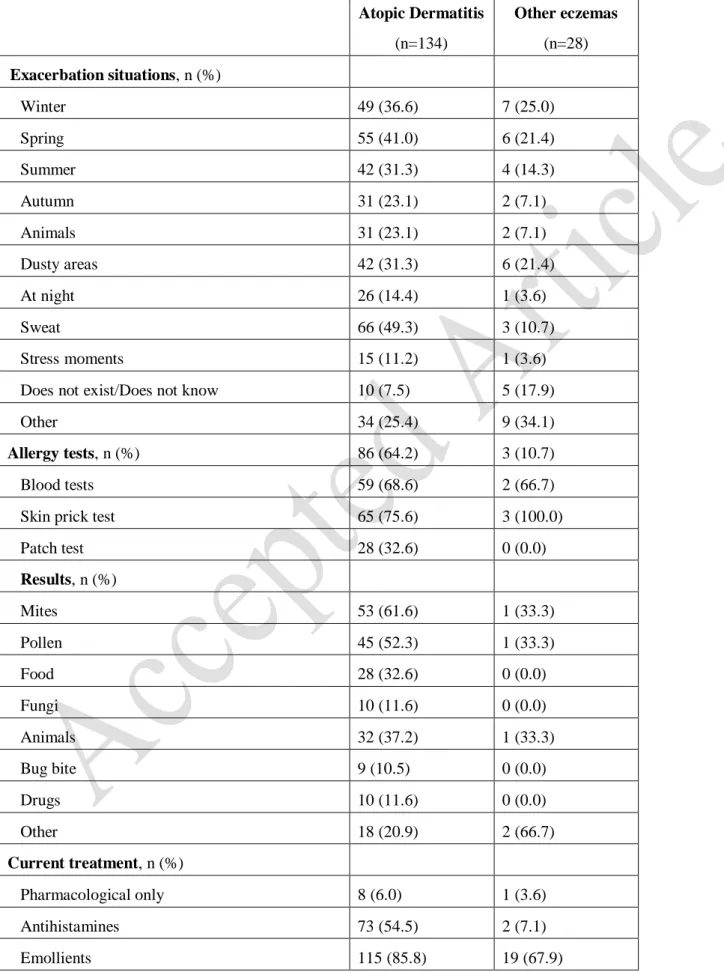
A large proportion of AD patients reported their symptoms worsening when they sweat (49.3%) (Table 2). Stress moments were described by 11.2% and 3.6% of AD and other eczema patients. Concerning “other situations”, 25.4% of AD patients reported: allergen contact, wind, when driving (because of hands contact), ironing, sunlight exposure, hot weather, certain chemical products, water contact (any temperature), humidity, life changes, wool, eating certain foods, when sleeping poorly, using make up, when feeling tired, weather changing, close to trees, and physical efforts.
While 34.1% of subjects with other eczemas described being worse when frequently washing their hands, being in contact with pollens/ground/farms, when wearing tight clothing, during sports, when contacting alcoholic disinfectants and detergents, during warm weather, with temperature changes, and when in contact with savoury and plants.
Characteristics of care
Regarding current treatment, many different answers reflect the diversity of therapeutic options. Emollients were widely used in both subgroups (85.5% in AD, and 67.9% for other
eczemas) (Table 2) and all patients highlighted the importance of daily emollient use to improve their QoL. In addition to therapy, 5% of patients reported alternatives to improve their lives or to reduce some pain or discomfort, such as montelukast sodium, food
supplements, folic acid, dietary food and homeopathy and homeopathic creams.
Regarding discontinued therapies 27.6% AD patients admitted having stopped taking and/or using:
Immunosuppressors (mainly cyclosporine and azathioprine) due to poor effectiveness and adverse events,
Oral steroids due to symptoms worsening and adverse events,
Topical corticosteroids (TCS) due to poor effectiveness and symptoms worsening, Oral antihistamines due to poor effectiveness,
Allergen immunotherapy due to the increase of allergic crises, Some emollients due to poor effectiveness,
Antidepressants due to poor effectiveness,
Phototherapy, due to poor effectiveness, symptoms worsening and adverse events, Topic tacrolimus due to an intense pruritus, and
Acupuncture due to poor effectiveness.
Apart from the above described treatments, general measures are considered important by most patients (76.1% and 42.9% of AD and eczema patients, respectively). Clothing material was a concern, with 87.2% of patients preferring cotton and 35.3% reported avoiding wool, knitwear, synthetic and acrylic textiles and elastic clothes. Before using something new, some patients admitted checking its material, avoiding aggressive seams, turtle necks, and tighter clothes, and also removing hang tags. Some patients mentioned the need to use sunglasses daily to avoid the wind or going out with light clothing in order to avoid sweating. Some patients stated that wearing accessories like belts and details in sandals can be troublesome. Regarding bedding, some patients admit to vacuum-cleaning and airing the mattress
frequently as well as washing the sheets more often and separately from the rest of the family, and using specific detergents.
Quality of Life and subjective burden of disease
In order to understand patients’ perspectives regarding disability, medical support, and society rejection, some subjective questions were included (Figure 1). We observed that
37.3% of AD patients and 14.3% of other eczema patients consider that their disease causes a certain degree of disability. A high number of patients do not attend regular medical
appointments (29.9% of AD patients and 78.6% of other eczema patients) and some do not feel supported by the medical community (22.4% and 35.7%, respectively). A matter of concern is how these patients feel about society’s perspective and thought. More than half of the AD patients feel stigmatized by society (Figure 1).
As far as score results are concerned, there is some heterogeneity (Table 3). The mean AD QoL (Skindex) was 39.68, which represents a moderate impact on QoL. Nevertheless, 44% of AD patients report a severe impact on QoL. Patients with more severe disease had a greater impact on QoL. “Symptoms” is the most affected category in adults (Table 4).
In this sample, 87% of AD patients had moderate to severe atopic dermatitis according to PO-SCORAD (41.8% moderate and 45.5% severe, respectively).
The MCS and PCS results complemented the study of QoL, showing high values that match those from Skindex (Table 5).
Factors that can affect QoL
Regarding the factors that most influenced worse QoL in AD, we found that time since diagnosis was statistically related with total score of Skindex (r=0.404; p<0.001) and with clinical severity (r=0.324; p<0.001). This implies that QoL worsens over the years and that persistent AD is clinically more severe.
Age was statistically significant associated with severity (r=0.305; p<0.001) and Skindex score (r=0.392; p<0.001). With increasing age, the Skindex score is likely to increase (OR: 1.028 [p=0.007 95%CI 1.008-1.049]).
Among the situations that can worsen the disease, “dusty areas” and “at night” were the ones most associated with Skindex: OR: 2.451 (p=0.025 95%CI 1.118-5.373) and OR: 3.940 (p=0.006 95%CI 1.490-10.417), respectively.
“Consider having disability” and feel social stigma” were also associated, OR: 9.349 (p<0.001 95%CI 4.134-21.146), and OR: 14.857 (p<0.001 95%CI 5.899-37.417), respectively.
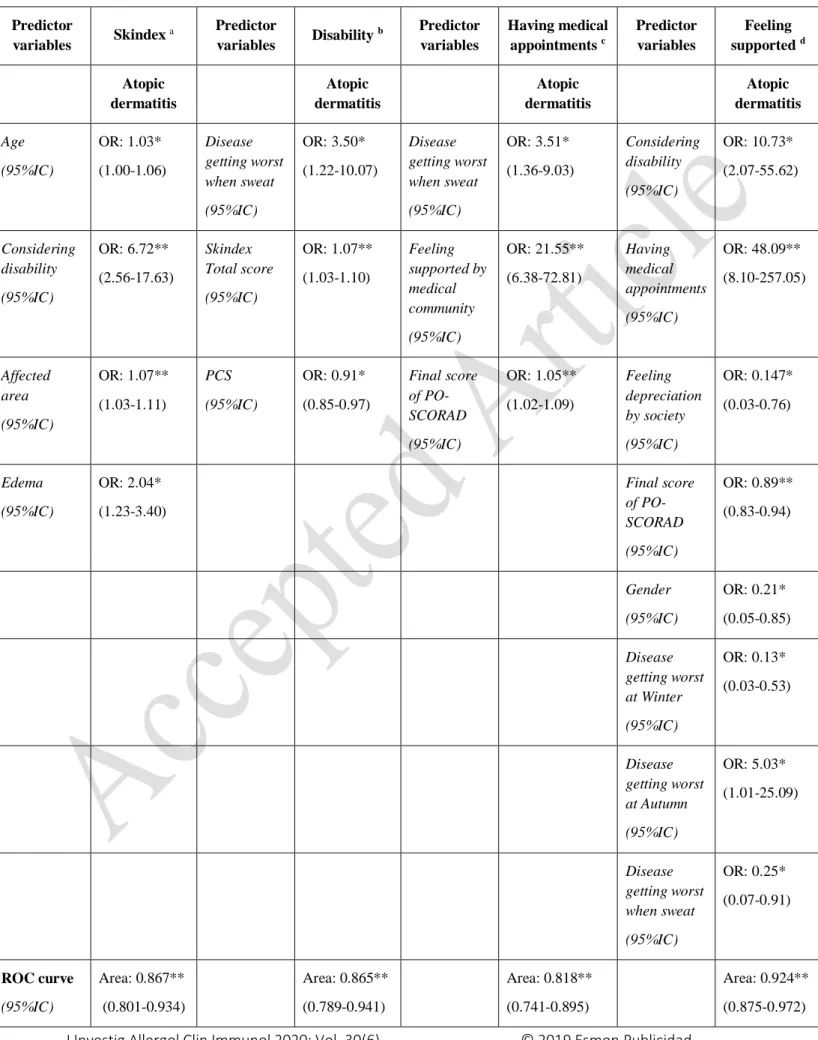
In multivariable analysis, we investigated the associations with worse QoL score between some variables. The associationsare reported in Table 6.
Discussion
This is the first study to provide a comprehensive outlook on the QoL of AD patients in Portugal.Since there is still no Portuguese registry for AD, we chose to send the survey through post or e-mail, a methodology that has been increasingly used in recent years [14– 16].Doing so, we enrolled 162 patients of varying ages. However, our children’s sample was very small and the majority were mild or moderate AD. The three instruments used (Skindex, PO-SCORAD and SF-12) were correlated, with statistically significant results.
The overall mean Skindex score for AD was 39.68 on a 0-100 scale, representing a moderate impact on QoL. Since we had a heterogeneous sample comprising mild, moderate, and severe AD patients, the mean Skindex score for each severity class was 18.52, 33.09, and 51.57, respectively. For adults, “Symptoms” was the dimension with highest score for all subgroups. Similarly, among AD teenagers and children, the “Psychosocial functioning” and
“Symptoms” dimension were the highest scores, respectively. Two previous studies in the Netherlands and Australia with patients aged >2 years-old reported a mean Skindex-29 score of 39.7 and 58.6 [17, 18].Other previous studies in AD adults revealed a mean Skindex score of 20-30, in which “Symptoms” was also the dimension with the highest values [19, 20]. Japanese adults reported a mean Skindex-16 score of 50±23 (66±17 among severe disease), although the dimension with the highest score was “Emotions”, with a mean score of 64±40 [21]. “Physical symptoms” is the dimension with the highest values in other studies [22].
Other instruments are also widely used, such as Dermatology Quality of Life Index (DLQI). Nevertheless, the conclusion follows the same path: AD has a strong negative impact on QoL and “Symptoms” is the dimension with the strongest impact, whether for adults or children [23–27].
It is known that being a female and with increasing age are risk factors in the appearance of eczema and AD[15, 16, 28], as well as environmental factors [29, 30]. This was a convenient sample of patients. In a representative sample, we could hypothesize if these factors would influence QoL in the same way. Nonetheless, we found that with increasing age, both
Regarding the environmental factor, we did not find any difference amongst patients who live in rural and urban areas, perhaps due to our sample being predominantly urban. Nonetheless, AD patients, who report being worse when in dusty areas, have 2.451 (p=0.025 95%CI 1.118 - 5.373) greater chance of having a negative impact on QoL. In addition, AD patients who become worse at night presented 3.940 times higher likelihood of a more negative impact on QoL.
As genetics is other important feature concerning the onset of disease, family history is often associated with AD or eczema [16, 31], namely from the mother [32]. Our sample
corroborates this finding, with 48.5% of AD patients and 32.1% of other eczema patients having a positive family history, especially with the mother (33.9% of AD patients).
When in first contact with the symptoms, patients mostly appeal to a dermatologist, a General and Family Physician, or a Paediatrician. Regarding the institution chosen for this appeal, patients with AD and other eczemas prefer going to a clinic or private hospital than to a public centre.
This disease can grow worse during childhood or in an adult phase, and as a result, time since diagnosis and age of diagnosis can vary. In our subgroups, intervals were observed between 0.3 and 50 years of diagnosed. Most AD patients were diagnosed when 0-1 years old, and still have the disease in adulthood.
Treatment and therapy efforts are increasingly targeted at reducing disease severity or at increasing patients’ QoL [33]. The usual treatments consist of antihistamines, topical and oral corticosteroids, and immunosuppressors, amongst others. An important treatment is the continuous use of emollients [28, 34], with 85.8% of AD patients reporting its use, as well as 67.9% of other eczema patients. Some of these patients described the daily use of emollients, shower gel, and shampoo, and that without the emollients their pain is unbearable and
sometimes cannot even move. A German study also reported emollients as the most-used treatment (by 90.4% of all patients) [24]. Additionally, we verify that 5% of patients reported diet changes and other alternatives as treatment, because they saw differences in their disease following those changes.
‘Pharmacological only’ was thought to be marked by patients who only take medication, and no emollient, vaccinesor any other ‘self-technique’, as described by many other patients. Nevertheless, this topic was not well understood, and some patients signalized
Responses about treatment, treatment discontinuation, and clothing care allowed us to understand how much perseverance these patients have. Apart from the conventional treatments, or advice about emollients or clothes to use, they improve their QoL by experimenting with what is better or worse for their skin. Our patients reported spending around 200€ per month on emollients (moisturizing creams, shampoo, or shower gel). A study regarding willingness to pay (in Germany) affirmed that patients with AD would pay 1000€ per month for sustainable healing [35].
It has previously been shown that society tend to underestimate skin diseases [36].Around 58% and 46% of patients with AD and eczema, respectively, declared feeling that their disease is unappreciated by the society, including some teenagers, who reported suffering from bullying at school, which is a known fact among sufferers reported elsewhere [5, 37, 38]. Also, more than half of patients are not used to talking about QoL with a health professional. More data concerning this topic in Portugal is needed. In fact, we observed 22.4% and 35.7% of AD and other eczema patients do not feel supported by physicians, and this may be the reason why some subjects do not have frequent appointments. A previous study examined this issue and reported that QoL discussion was absent in 40% of the specialist consultations. In appointments where QoL discussion occurred, clinical nurse specialists had more dialogue than other clinicians [39].
We are not the only ones who have found this to be the case.In Japan there is a similar realization that AD patients do not usually visit a physician [40]. Assessing the patients’ satisfaction with the physician’s care, the mean Visual Analog Scale (VAS) was 59.6, and patients with severe disease were satisfied significantly less often [26]. Most of our patients, even some of whom did not feel a stigma by society, explained that there exists a lack of knowledge and that many questions from or situations with other people make them feel uncomfortable. Some such situations have been reported in other studies, confirming a the existence of social stigma [27, 38].
Patients shared with us some situations that were not questioned: or instance, that when the skin hurts and bleeds, they cannot go to the toilet or take a shower alone; or that when the skin is so “rough” that it is awkward to touch/see, or they feel prohibited from taking part in enjoyable activities, they are made to feel that they are the ones making things worse.
In summary, we found some factors that seemed to influence negatively the QoL of patients with AD: age and some situations that can worsen the disease, as explained above. In
also feel the stigma from the society.
In the multivariable regression models, we can observe that patients who consider having disability, with the increased of age, have more area affected by the disease, and more edema in the lesions present greater probability of having a severe impact on QoL. Affected body surface area was also found to be a predictor factor of worse QoL [35].
On the other hand, “consider having disability” is influenced by patients whose disease worsens when sweating. Patients with high scores of Skindex and patients with low physical score (from SF-12), i.e. negative impact of QoL consider that the disease causes disability.
Patients whose disease grows worse when sweating and those who feel supported by the medical community often have more medical appointments, as well as thosewith a more severe disease (high PO-SCORAD score).
Lastly, considering that the disease causes disability and having frequent medical
appointments increases the feeling of support. Nonetheless, in our study, patients who do not feel the social stigma and having a less severe disease feel more supported by the medical community. Being a female is a predictor factor for worse QoL, for patients who do not feel supported by the medical community.
A part of the non-representative sample, other limitation that we can highlight is the fact that diagnosis of AD was self-reported for patients, although confirmed by a medical doctor.
Although our study focused on the patient perspective, there is evidence that the correlations between patient and physician perspective are not very different [23]. Since this is the first study that describes the AD’s QoL in Portugal, we elected to listen, firstly, to the patients. However, a great deal remains to be done, regarding future studies and actions in the country. As noted above, it is important to assess the patient-physician relationship in order to include the patient more in the decisions regarding treatment and life-style. These patients have enormous perseverance. There is wide heterogeneity amongst severity, affected areas, and conditions that worsen the disease. These diseases have a daily variance pattern and it is important to listen more to the patients since they are the ones who know the disease’s behaviour best. To improve QoL, the focus should not be on the treatment only, but also on the “techniques” patients already know and employ, such as choices about clothing, cleaning, emollients, showers, etc. In addition, it is important to have more awareness-raising activities, in order to educate society, decrease the stigma and in consequences, and to help some of the factors affecting the psychological well-being of patients with AD and eczema.
Conflicts of interest
P. Mendes-Bastos has worked as Consultant/Speaker for AbbVie, Pfizer, Janssen-Cliag, LEOPharma, Novartis, Sanofi, Teva, Bayer e L’Oreal and has participated as Investigator in Clinical Trials sponsored by Novartis and AbbVie.
The other authors declare no conflict of interest.
Acknowledgments
The authors would like to thank Mariana Nunes for the support during data collection. Also to John Stewart Huffstot, a director of English-language, who reviewed the language of the article.
Financial disclosures
References
1. Bonita R, Beaglehole R, Kjellstrom T. Basic epidemiology. 2nd edition. Geneva: World Health Organization. 2006.
2. van Cranenburgh OD, Prinsen CAC, Sprangers MAG, Spuls PI, de Korte J. Health-related quality-of-life assessment in dermatologic practice: relevance and application. Dermatol Clin. 2012;30:323–32.
3. Hay RJ, Johns NE, Williams HC, Bolliger IW, Dellavalle RP, Margolis DJ, et al. The global burden of skin disease in 2010: an analysis of the prevalence and impact of skin conditions. J Invest Dermatol. 2013;134:1527–34.
4. Coutanceau C, Stalder J. Analysis of correlations between patient-oriented SCORAD (PO-SCORAD) and other assessment scores of atopic dermatitis severity and quality of life. Dermatology. 2014;229:248–55.
5. Rehal B, Armstrong AW. Health outcomes in atopic dermatitis. Dermatol. Clin. 2012;30:73–86.
6. Carvalho D, Aguiar P, Ferrinho P, Mendes-Bastos P, Palma-Carlos A. Eczema and urticaria in the adult population in Portugal: a prevalence study. Actas
DermoSifiliográficas. 2019;pii: S0001:30130–9.
7. Carvalho D, Aguiar P, Palma-Carlos A. Validation of the skindex-29 questionnaire: Portuguese version (Portugal). Acta Med Port. 2018;31:463–9.
8. SF-12v2 Health Survey. (https://www.optum.com/solutions/life-sciences/answer-research/patient-insights/sf-health-surveys/sf-12v2-health-survey.html). Accessed 28 January 2019.
9. Prinsen CAC. Interpretation of Skindex-29 scores: cutoffs for mild, moderate, and severe impairment of health-related quality of life. J. Invest. Dermatol.
2011;131:1945–7.
10. Prinsen CAC, Lindeboom R, Sprangers MAG, Legierse CM. Health-related quality of life assessment in dermatology: interpretation of Skindex-29 scores using patient-based anchors. J. Invest. Dermatol. 2010;130:1318–23.
11. Nijsten T, Sampogna F, Abeni D. Categorization of Skindex-29 scores using mixture analysis. Dermatology. 2009;218:151–4.
12. Sampogna F, Abeni D. Interpretation of Skindex-29 scores. J. Invest. Dermatol. 2011;131:1790–3.
13. Aguiar P. Estatística em investigação epidemiológica: SPSS - guia prático de medicina. Lisboa: Climepsi Editore. 2007.
14. de Marco R, Pesce G, Marcon A, Accordini S, Antonicelli L, Bugiani M, et al. The coexistence of asthma and chronic obstructive pulmonary disease (COPD): prevalence and risk factors in young, middle-aged and elderly people from the general population. PLoS One. 2013;8:e62985.
15. Pesce G, Marcon A, Carosso A, Antinicelli L, Cazzoletti L, Ferrari M, et al. Adult eczema in Italy: prevalence and associat ions with environ mental factors. J. Eur. Acad. Dermatology Venereol. 2015;29:1180–7.
16. Rönmark EP, Ekerljung L, Lötvall J, Wennergren G, Rönmark E, Torén K, et al. Eczema among adults: prevalence, risk factors and relation to airway diseases. results from a large-scale population survey in Sweden. Br. J. Dermatol. 2012;166:1301–8.
17. Brenninkmeijer E, Spuls PI, Legierse CM, Lindeboom R, Smitt H, Bos JD. Clinical differences between atopic and atopiform dermatitis. J. Am. Acad. Dermatol. 2008;58:407–14.
18. Zhao C, Tran A, Lazo-Dizon J, Kim J, Daniel B, Venugopal S, et al. A pilot comparison study of four clinician‐rated atopic dermatitis severity scales. Br. J. Dermatol. 2015;173:488–97.
19. Sanclemente G, Burgos C, Nova J, Hernández F, González C, Reyes M, et al. The impact of skin diseases on quality of life: a multicenter study. Actas Dermosifiliogr. 2017;108:244–52.
20. Vinding G, Knudsen K, Ellervik C, Olesen A, Jemec G. Self-reported skin morbidities and health-related. Dermatology. 2014;228:261–8.
21. Higaki Y, Kawamoto K, Kamo T, Ueda S, Arikawa J, Kawashima M. Measurement of the impact of atopic dermatitis on patients’ quality of life: a cross-sectional and
longitudinal questionnaire study using the Japanese version of skindex-16. J. Dermatol. 2004;31:977–82.
22. Smidt AC, Lai J-S, Cella D, Patel S, Mancini AJ, Chamlin SL. Development and validation of skindex-teen, a quality-of-life instrument for adolescents with skin
disease. Arch. Dermatol. 2010;146:865–9.
23. Holm EA, Wulf HC, Stegmann H, Jemec GBE. Life quality assessment among patients with atopic eczema. Br. J. Dermatol. 2006;154:719–25.
24. Langenbruch A, Radtke M, Franzke N, Ring J, Foelster-Holst R, Augustin M. Quality of health care of atopic eczema in Germany: results of the national health care study AtopicHealth. J. Eur. Acad. Dermatology Venereol. 2014;28:719–26.
25. Misery L, Seneschal J, Reguiai Z, Merhand S, Héas S, Huet F, et al. Patient burden is associated with alterations in quality of life in adult patients with atopic dermatitis: results from the ECLA Study. Acta Derm. Venereol. 2018;98:713–4.
26. Schmitt J, Csötönyi F, Bauer A, Meurer M. Determinants of treatment goals and satisfaction of patients with atopic eczema. J Dtsch Dermatol Ges. 2008;6:458–66.
27. Wittkowski A, Richards HL, Griffiths C, Main C. The impact of psychological and clinical factors on quality of life in individuals with atopic dermatitis. J. Psychosom. Res. 2004;57:195–200.
28. Barata LT, Santos AS, Fonseca AM, Todo-Bom A, Lopes A, Moreira A, et al.
Fundamentos de imunoalergologia: da epidemiologia ao tratamento. 1a. Lisboa: Lidel. 2011.
29. World Allergy Organization. WAO: white book on allergy. 1st edition. Wisconsin: World Allergy Organization. 2013.
30. Schram ME, Tedja AM, Spijker R, Bos JD, Williams HC, Spuls PI. Is there a rural/urban gradient in the prevalence of eczema? A systematic review. Br. J. Dermatol. 2010;162:964–73.
31. Montnemery P, Nihlén U, Göran Löfdahl C, Nyberg P, Svensson A. Prevalence of self-reported eczema in relation to living environment, socio-economic status and respiratory symptoms assessed in a questionnaire study. BMC Dermatol. 2003;3:6.
32. Harrop J, Chinn S, Verlato G, Olivieri M, Norbäck D, Wjst M, et al. Eczema, atopy and allergen exposure in adults: a population-based study. Clin Exp Allergy.
2007;37:526–35.
33. Prinsen CAC, Korte J de, Augustin M, Sampogna F, Salek SS, Basra MKA, et al. Measurement of health-related quality of life in dermatological research and practice: outcome of the EADV taskforce on quality of life. J. Eur. Acad. Dermatology
Venereol. 2013;27:1195–203.
34. Furue M, Chiba T, Tsuju G, Ulzii D, Kido-Nakahara M, Nakahara T, et al. Atopic dermatitis: immune deviation, barrier dysfunction, IgE autoreactivity and new therapies. Allergol. Int. 2017;66:398–403.
35. Beikert FC, Langenbruch A, Radtke MA, Kornek T, Purwins S, Augustin M.
Willingness to pay and quality of life in patients with atopic dermatitis. Arch Dermatol Res. 2014;306:279–86.
36. Bingefors K, Svensson Å, Isacson D, Lindberg M. Self-reported lifetime prevalence of atopic dermatitis and comorbidity with asthma and eczema in adulthood: a
populationbased cross-sectional survey. Acta Derm. Venereol. 2013;93:438–41.
37. Halvorsen JA, Lien L, Dalgard F, Bjertness E, Stern RS. Suicidal ideation, mental health problems, and social function in adolescents with eczema: a population-based study. J. Invest. Dermatol. 2014;134:1847–54.
38. Roosta N, Black D, Peng D, Riley L. Skin disease and stigma in emerging adulthood: impact on healthy development. J. Cutan. Med. Surg. 2010;14:285–90.
39. David S, Ahmed Z, Salek M, Finlay A. Does enough quality of life related discussion occur during dermatology outpatient consultations? Br J Dermatol. 2005;153:997– 1000.
40. Arima K, Gupta S, Gadkari A, Hiragun T, Kono T, Katayama I, et al. Burden of atopic dermatitis in Japanese adults: analysis of data from the 2013 National Health and Wellness Survey. J. Dermatol. 2018;45:390–6.
Tables
Table 1: Sociodemographic and clinical characteristics concerning atopic dermatitis and other eczemas Atopic Dermatitis (n=134) Other eczemas (n=28) Age, years Median [min-max] 21.50 [0.5-74] 43.00 [9-59] 0-6 years, n (%) 29 (21.6) 0 (0.0) 7-16 years, n (%) 28 (20.9) 3 (10.7) 17-29 years, n (%) 35 (26.1) 6 (21.4) 30-39 years, n (%) 14 (10.4) 3 (10.7) 40-49 years, n (%) 14 (10.4) 7 (25.0) 50-59 years, n (%) 8 (6.0) 9 (32.1) 60-80 years, n (%) 6 (4.5) 0 (0.0) Feminine, n (%) 85 (63.4) 11 (39.3) Urban, n (%) 103 (76.9) 19 (67.9) AD Family history, n (%) 65 (48.5) 9 (32.1) Mother 22 (33.9) 1 (11.1) Father 14 (21.5) 1 (11.1)
Grandparents and grandchildren 6 (9.2) 2 (22.2)
Children 13 (20.0) 2 (22.2)
Siblings 14 (21.5) 4 (44.4)
Nephews, cousins and uncle/aunts 12 (18.5) 0 (0.0)
Further Relatives 2 (3.08) 1 (11.1)
Medical speciality which diagnosed, n (%)
General and Family Physician 29 (21.6) 9 (32.1)
Immunoalergologist 8 (6.0) 2 (7.1)
Dermatologist 62 (46.3) 14 (50)
Paediatric 32 (23.9) 2 (7.1)
Other 3 (2.2)a 1 (3.6)b
Health centre where diagnosis occurred, n (%)
Public Hospital 30 (22.4) 3 (10.7)
Primary Care 29 (21.6) 10 (35.7)
Other 1 (0.7)d 0 (0.0)
Time since diagnosis, n (%)
Median [min-max] 11.00 [0.3-50] 6.00 [1-40]
<1 years, n (%) 8 (6.0) 4 (14.3)
2-5 years, n (%) 32 (23.9) 9 (32.1)
6-10 years, n (%) 22 (16.4) 4 (14.3)
>11 years, n (%) 66 (49.3) 9 (32.1)
Age when diagnosis, years
Mean ± SD 8.77 ± 12.41 27.69 ± 15.70
Other allergic disease, n (%) 59 (44.0) 1 (3.6)
Asthma 9 (15.3) 0 (0.0)
Rhinitis 22 (37.3) 1 (100.0)
Asthma and Rhinitis 4 (6.8) 0 (0.0)
Sinusitis 3 (5.1) 0 (0.0)
Combinations 8 (13.6) 0 (0.0)
Others 13 (22.0) 0 (0.0)
a pharmacist, internal medicine and oncologist b emergency
c pharmacist/pharmacy, emergency room, occupational medicine d pharmacy
Table 2: Treatment characteristics and characteristics of care concerning atopic dermatitis and other eczemas
Atopic Dermatitis (n=134) Other eczemas (n=28) Exacerbation situations, n (%) Winter 49 (36.6) 7 (25.0) Spring 55 (41.0) 6 (21.4) Summer 42 (31.3) 4 (14.3) Autumn 31 (23.1) 2 (7.1) Animals 31 (23.1) 2 (7.1) Dusty areas 42 (31.3) 6 (21.4) At night 26 (14.4) 1 (3.6) Sweat 66 (49.3) 3 (10.7) Stress moments 15 (11.2) 1 (3.6)
Does not exist/Does not know 10 (7.5) 5 (17.9)
Other 34 (25.4) 9 (34.1)
Allergy tests, n (%) 86 (64.2) 3 (10.7)
Blood tests 59 (68.6) 2 (66.7)
Skin prick test 65 (75.6) 3 (100.0)
Patch test 28 (32.6) 0 (0.0) Results, n (%) Mites 53 (61.6) 1 (33.3) Pollen 45 (52.3) 1 (33.3) Food 28 (32.6) 0 (0.0) Fungi 10 (11.6) 0 (0.0) Animals 32 (37.2) 1 (33.3) Bug bite 9 (10.5) 0 (0.0) Drugs 10 (11.6) 0 (0.0) Other 18 (20.9) 2 (66.7) Current treatment, n (%) Pharmacological only 8 (6.0) 1 (3.6) Antihistamines 73 (54.5) 2 (7.1) Emollients 115 (85.8) 19 (67.9)
Immunotherapy 11 (8.2) 0 (0.0) Corticoids (topical or systemic) 86 (64.2) 15 (53.6)
Immunosuppressants 14 (10.4) 0 (0.0)
None 2 (1.49) 3 (1.85)
Others 7 (5.22) 0 (0.0)
Treatment discontinuation, n (%) 37 (27.6) 2 (7.1)
Table 3: Skindex and PO-SCORAD results and respective correlations by disease subgroup Skindex Total score
Atopic Dermatitis
Disease severity* Mild (n=17) Moderate (n=56) Severe (n=61) Overall (n=134)
Mean ± SD 18.52 ± 8.81 33.09 ± 16.68 51.57 ± 18.95 39.68 ± 20.66
Spearman coefficient 0.661 a
Other Eczemas
Disease severity* Mild (n=7) Moderate (n=17) Severe (n=4) Overall (n=28)
Mean ± SD 17.03 ± 3.87 30.35 ± 10.15 41.81 ± 18.68 28.66 ± 12.87
Spearman coefficient 0.672 a
*
measured by PO-SCORAD score, based on [0-25[, [25-50[, and ≥50, which represent levels of mild, moderate and severe, respectively.
a p≤0.001
Table 4: Skindex-29, Skindex-teen and CADIS dimensions by disease subgroup Atopic Dermatitis
(n=134)
Other eczemas
(n=28)
Skindex-29, Functioning dimension score N=77 N=25
Mean ± SD 35.10 ± 24.00 16.58 ± 14.54
Skindex-29, Emotions dimension score N=77 N=25
Mean ± SD 46.74 ± 22.18 33.72 ± 16.04
Skindex-29, Symptoms dimension score N=77 N=25
Mean ± SD 62.78 ± 15.99 47.29 ± 14.18
Skindex–teen, PS dimension score N=28 N=3
Mean ± SD 53.75 ± 16.59 35.0 ± 10.0
Skindex–teen, PF dimension score N=28 N=3
Mean ± SD 31.34 ± 22.49 47.29 ± 14.18
CADIS, Family dimension score N=29
Mean ± SD 15.8 ± 20.41 -
CADIS, Emotions dimension score N=29
Mean ± SD 27.99 ± 18.40 -
CADIS, Sleep dimension score N=29
Mean ± SD 17.82 ± 21.48 -
CADIS, Symptoms dimension score N=29
Mean ± SD 42.86 ±26.11 -
CADIS, Activities dimension score N=29
Mean ± SD 22.74 ± 17.98 -
Table 5: Correlations between Skindex or PO-SCORAD and SF-12, by disease subgroup
MCS PCS
Atopic dermatitis
PO-SCORAD Spearman coefficient=-0.265 a
Spearman coefficient=-0.453 b
Skindex Spearman coefficient=-0.451 b Spearman coefficient=-0.337 b
Other eczemas
PO-SCORAD Spearman coefficient=-0.369 Spearman coefficient=-0.377 a
Skindex Spearman coefficient=-0.349 Spearman coefficient=-0.385 a
a p≤0.05 b p≤0.001
Table 6: Multivariable logistic regression for AD Predictor variables Skindex a Predictor variables Disability b Predictor variables Having medical appointments c Predictor variables Feeling supported d Atopic dermatitis Atopic dermatitis Atopic dermatitis Atopic dermatitis Age (95%IC) OR: 1.03* (1.00-1.06) Disease getting worst when sweat (95%IC) OR: 3.50* (1.22-10.07) Disease getting worst when sweat (95%IC) OR: 3.51* (1.36-9.03) Considering disability (95%IC) OR: 10.73* (2.07-55.62) Considering disability (95%IC) OR: 6.72** (2.56-17.63) Skindex Total score (95%IC) OR: 1.07** (1.03-1.10) Feeling supported by medical community (95%IC) OR: 21.55** (6.38-72.81) Having medical appointments (95%IC) OR: 48.09** (8.10-257.05) Affected area (95%IC) OR: 1.07** (1.03-1.11) PCS (95%IC) OR: 0.91* (0.85-0.97) Final score of PO-SCORAD (95%IC) OR: 1.05** (1.02-1.09) Feeling depreciation by society (95%IC) OR: 0.147* (0.03-0.76) Edema (95%IC) OR: 2.04* (1.23-3.40) Final score of PO-SCORAD (95%IC) OR: 0.89** (0.83-0.94) Gender (95%IC) OR: 0.21* (0.05-0.85) Disease getting worst at Winter (95%IC) OR: 0.13* (0.03-0.53) Disease getting worst at Autumn (95%IC) OR: 5.03* (1.01-25.09) Disease getting worst when sweat (95%IC) OR: 0.25* (0.07-0.91) ROC curve (95%IC) Area: 0.867** (0.801-0.934) Area: 0.865** (0.789-0.941) Area: 0.818** (0.741-0.895) Area: 0.924** (0.875-0.972)
(**p≤0.001; *p≤0.05)
a dependent variable is Skindex Score (1=Severe Score, 0=Little, Mild and Moderate Score) b dependent variable is disability (1=Yes, 0=No)
c dependent variable is having medical appointments (1=Yes, 0=No) d dependent variable is Feeling supported (1=Yes, 0=No)
Independent variables were: age, affected area, edema, elimination of liquid/crusts, Skindex Total Score, PO-SCORAD score, PCS and MCS as continuous variables; and disability, disease getting worst, feeling supported, having medical and feeling depreciation by society with reference: no
MCS: Mental Component Summary scores OR: Odds Ratio; PCS: Physical Component Summary scores; ROC: Receiver operating characteristic
Figures
Figure 1: Patients’ perspective regarding disability, medical support and society depreciation by disease subgroup 0.0% 10.0% 20.0% 30.0% 40.0% 50.0% 60.0% 70.0% 80.0% Consider having disability of certain movements Not having frequently medical appointments Do not feel supported by the physician Used to talk about QoL with
health professionals
Feel social stigma 37.3% 29.9% 22.4% 47.8% 57.5% 14.3% 78.6% 35.7% 32.1% 46.4%
![Table 1: Sociodemographic and clinical characteristics concerning atopic dermatitis and other eczemas Atopic Dermatitis (n=134) Other eczemas (n=28) Age, years Median [min-max] 21.50 [0.5-74] 43.00 [9-59] 0-6 years, n (%) 29 (21.6) 0 (0.0) 7-16](https://thumb-eu.123doks.com/thumbv2/123dok_br/15926053.1094426/19.892.59.773.205.1161/sociodemographic-clinical-characteristics-concerning-dermatitis-eczemas-atopic-dermatitis.webp)