Development of an EU
framework to assess
the overall impacts of
occupational health and safety
(OSH) prevention
on the performance of
construction enterprises
Development of an EU framework to
assess the overall impacts of
occupational health and safety
(OSH) prevention on the
performance of construction
enterprises
Final Report
Client: EASME
Development of an EU framework
to assess the overall impacts of
occupational health and safety
(OSH) prevention on the
performance of construction
enterprises
Final Report
Client: EASME
Martin van der Ende Michael Flickenschild Saraï Sapulete Andrew Howard Sally Wilson
Rotterdam, 28.05.2020
The information and views set out in this study are those of the author(s) and do not necessarily reflect the official opinion of EASME or of the Commission. Neither EASME, nor the Commission can guarantee the accuracy of the data included in this study. Neither EASME, nor the Commission or any person acting on their behalf may be held responsible for the use which may be made of the
Table of contents
5 Development of an EU framework to assess the overall impacts of occupational health and safety (OSH)
prevention on the performance of construction enterprises
Executive summary 11
Zusammenfassung 17
1 Introduction 29
2 Background 31
2.1 Construction sector 31
2.2 OSH in the construction sector 31
3 Taxonomy of the costs and benefits of OSH prevention 35
3.1 Introduction to the taxonomy of costs and benefits of OSH initiatives 35
3.2 Direct benefits 39
3.3 Indirect benefits 43
3.4 Direct costs 46
3.5 Indirect costs 47
4 Mapping of OSH prevention initiatives and cost-benefit profile 49 4.1 Mapping of national and sectoral initiatives on OSH prevention in construction 49 4.2 Profiling of the costs and benefits associated with the initiatives identified via the
mapping exercise 50
5 Framework for the financial analysis and assessment 59
5.1 Financial framework 59
5.2 Minimal user input for the framework 60
5.3 Advanced user input 62
5.4 Output 66
5.5 Accident rates 67
5.6 Calculation of costs and benefits 72
5.7 Use of case studies in framework 79
6 Case studies 81
6.1 Approach for the case studies 81
6.2 Overview over the case studies 81
6.3 Aggregated findings from the case studies 84
7 Stakeholders’ consultation and communication 87
7.1 Meeting 1: Mapping and Taxonomy 87
7.2 Meeting 2: Financial Framework and Case Studies 88
7.3 Meeting 3: Dissemination and validation 89
6 Development of an EU framework to assess the overall impacts of occupational health and safety (OSH)
prevention on the performance of construction enterprises
Annex 2: Present value (PV) and probability calculations 93
Annex 3: Manual for updating the tool 95
Annex 4: Case studies 99
1 Austria – PORR AG 101
1.1 Company profile 101
1.2 Background information 101
1.3 OSH Initiative(s) profile 103
1.4 Observed impacts of the measures 104
1.5 Costs and benefits identified in financial framework 104
2 Bulgaria - GP Group JSC 105
2.1 Company profile 105
2.2 Background information 105
2.3 OSH Initiative(s) profile 106
2.4 Observed impacts of the measures 107
2.5 Costs and benefits identified in financial framework 107
3 Bulgaria – Parsec Group Ltd. 109
3.1 Company profile 109
3.2 Background information 109
3.3 OSH Initiative(s) profile 110
3.4 Observed impacts of the measures 111
3.5 Costs and benefits identified in financial framework 111
4 Germany – Mainka Bau GmbH & Co. KG 113
4.1 Company profile 113
4.2 Background information 113
4.3 OSH Initiative(s) profile 115
4.4 Observed impacts of the measures 116
4.5 Costs and benefits identified in financial framework 117
5 Denmark – Christiansen & Essenbæk 119
5.1 Company profile 119
5.2 Background information 119
5.3 OSH Initiative(s) profile 121
5.4 Observed impacts of the measures 122
5.5 Costs and benefits identified in financial framework 123
6 Estonia – EstHus OÜ 125
6.1 Company profile 125
6.2 Background information 125
6.3 OSH Initiative(s) profile 126
6.4 Observed impacts of the measures 127
7 Development of an EU framework to assess the overall impacts of occupational health and safety (OSH)
prevention on the performance of construction enterprises
7 Finland – Ab Vasa Byggnadsreparation 129
7.1 Company profile 129
7.2 Background information 129
7.3 OSH Initiative(s) profile 130
7.4 Observed impacts of the measures 131
7.5 Costs and benefits identified in financial framework 131
8 France – Léon Grosse 133
8.1 Company profile 133
8.2 Background information 133
8.3 OSH Initiative(s) profile 134
8.4 Observed impacts of the measures 136
8.5 Costs and benefits identified in financial framework 136
9 Greece – HATEL 137
9.1 Company profile 137
9.2 Background information 137
9.3 OSH Initiative(s) profile 139
9.4 Observed impacts of the measures 140
9.5 Costs and benefits identified in financial framework 141
10 Lithuania – Undisclosed company 143
10.1 Company profile 143
10.2 Background information 143
10.3 OSH Initiative(s) profile 144
10.4 Observed impacts of the measures 144
10.5 Costs and benefits identified in financial framework 145
11 Lithuania – UAB Medžio forma 147
11.1 Company profile 147
11.2 Background information 147
11.3 OSH Initiative(s) profile 148
11.4 Observed impacts of the measures 148
11.5 Costs and benefits identified in financial framework 149
12 Latvia – Undisclosed company 151
12.1 Company profile 151
12.2 Background information 152
12.3 OSH Initiative(s) profile 153
12.4 Observed impacts of the measures 155
12.5 Costs and benefits identified in financial framework 155
13 Latvia – BUKOTEKS Ltd. 157
13.1 Company profile 157
13.2 Background information 157
13.3 OSH Initiative(s) profile 158
8 Development of an EU framework to assess the overall impacts of occupational health and safety (OSH)
prevention on the performance of construction enterprises
13.5 Costs and benefits identified in financial framework 160
14 Latvia – Undisclosed company 161
14.1 Company profile 161
14.2 Background information 161
14.3 OSH Initiative(s) profile 162
14.4 Observed impacts of the measures 164
14.5 Costs and benefits identified in financial framework 164
15 Latvia – ALFARENT Ltd. 165
15.1 Company profile 165
15.2 Background information 165
15.3 OSH Initiative(s) profile 166
15.4 Observed impacts of the measures 167
15.5 Costs and benefits identified in financial framework 168
16 Malta – Undisclosed company 169
16.1 Company profile 169
16.2 Background information 169
16.3 OSH Initiative(s) profile 171
16.4 Observed impacts of the measure 172
16.5 Costs and benefits identified in financial framework 173
17 Netherlands – Strukton Rail 177
17.1 Company profile 177
17.2 Background information 177
17.3 OSH Initiative(s) profile 178
17.4 Observed impacts of the measures 179
17.5 Costs and benefits identified in financial framework 179
18 Poland – ROMA BUD 181
18.1 Company profile 181
18.2 Background information 181
18.3 OSH Initiative(s) profile 183
18.4 Observed impacts of the measures 184
18.5 Costs and benefits identified in financial framework 185
19 Poland – Undisclosed company 187
19.1 Company profile 187
19.2 Background information 187
19.3 OSH Initiative(s) profile 189
19.4 Observed impacts of the measures 189
19.5 Costs and benefits identified in financial framework 190
20 Slovakia – EUCOS SK, s.r.o. 191
20.1 Company profile 191
9 Development of an EU framework to assess the overall impacts of occupational health and safety (OSH)
prevention on the performance of construction enterprises
20.3 OSH Initiative(s) profile 193
20.4 Observed impacts of the measures 194
20.5 Costs and benefits identified in financial framework 195
Annex 5: Minutes of the stakeholder meetings 197
11 Development of an EU framework to assess the overall impacts of occupational health and safety (OSH)
prevention on the performance of construction enterprises
Executive summary
Context of the study and research questions
The construction sector is the biggest industrial employer in Europe. It represents 9% of the European Union’s GDP and employs over 16 million Europeans. Even though the sector is home to several major multinational companies, it is mainly characterised by a supply chain of small and medium sized enterprises (SMEs) as well as micro and small enterprises (MSEs). The sector faces a number of challenges, which are especially affecting SMEs. One specific challenge is the lack of skilled workers in the sector.
The risky working environments as well as an ageing workforce lead to the question on how the construction sector can improve its attractiveness to potential employees as well as to avoid early retirements. Offering improved working conditions through investing in OSH may be an important step in the right direction. There are various physical (and psychological) hazards in the construction industry (e.g., vibration, noise, working at height, handling of heavy loads, exposure to chemicals and airborne substances). Consequently, numerous interventions are necessary to mitigate risks to safety and health. Several policy programmes and activities are in place to address these issues by improving the level of health and safety at work. However, even though these actions contribute to improved health and safety at work (across sectors), the efforts mostly regard legislative compliance.
The European OSH Strategic Framework indicates that MSEs and SMEs have particular difficulties in complying with OSH legislation. There is some evidence that costs deter implementation of safer working methods in small companies. Therefore, emphasising profitability and productivity gains and providing a business case for investing into OSH measures could incentivise companies to improve OSH prevention. Consequently, research into the development of an EU framework to assess the impacts of OSH prevention on the performance of construction enterprises could improve OSH in construction. It could be an important step in awareness-raising of the advantages to OSH prevention. In fact, prevention should increasingly be viewed as an enabler of
performance.
Study approach and activities conducted
This study developed an EU framework to assess the impacts of OSH prevention on the performance of construction enterprises. The focus in this assessment was on micro-economic benefits of OSH implementation, not societal or sectoral benefits. For this purpose, a taxonomy of costs and benefits of OSH prevention was created based on desk research. In addition, the study team conducted a mapping of national and sectoral initiatives related to OSH prevention in construction and their costs and benefits profiles. Finally, a financial framework was developed to allow companies to assess their benefits of investing into OSH. The framework was validated in case studies with construction companies as well as in consultation with stakeholders.
12 Development of an EU framework to assess the overall impacts of occupational health and safety (OSH)
prevention on the performance of construction enterprises
Main findings of the study
A Taxonomy of costs and benefits of OSH prevention
Direct benefits of OSH measures stem from the reduction in work place accidents. The amount of
workplace accidents in construction companies is expected to be reduced after implementation of OSH measures. In monetary terms, reduced costs can be subdivided into two areas: reduced insured costs and reduced non-insured costs. The reduced insured costs correspond to the lower or non-increasing costs of the insurance premiums due to a reduced number of accidents. Non-insured costs cover the costs not typically covered by insurance, such as identifying replacement employees, fines, contractual penalties for late work delivery, and more.
The indirect benefits are not necessarily part of the objectives of the OSH measures but rather
they can be characterised as positive side effects that emerge. Thus, through the reduction in accidents, wider firm-level benefits may emerge such as:
enhanced productivity; improved mental health; better quality of service;
and reputational benefits with clients and other stakeholders.
While national or sectoral programs may financially contribute to OSH investments, overall there are still investment costs associated with OSH. The direct costs are those that relate to the costs of implementing an OSH measure. This includes items such as the investment of staff time in managing the OSH measure and the cost of training materials or new equipment. The indirect
costs are unintended side effects. These can be considered as ‘opportunity costs’ meaning that the time and resources spent could have been dedicated towards other revenue generating activities, such as working on construction projects or new business leads.
Mapping of national and sectoral initiatives on OSH prevention in construction
A total of 107 initiatives were identified and data were collected on the types of costs and benefits associated with these initiatives. About half of the schemes identified were generic approaches to
tackle OSH risks. These include short training courses, certification schemes and communications
campaigns. Their aim is usually to bring about safety and health improvements across the sector. The other half tackled specific OSH risks and hazardous activities. They include schemes to promote the use of lifting equipment, education campaigns about forklift safety and safer roadside working during highway maintenance. For this type of scheme, the indicators of success are much clearer and, potentially, easier to measure.
Overall, the following categories of initiatives were identified: Training and guidance materials;
Online tools/technologies/hardware/apps; Certificates/accreditation;
Knowledge sharing, e.g. to establish standards/approaches; Bespoke guidance/consultancy;
Insurance incentive;
Improved commissioning practices; Enforcement Initiative;
13 Development of an EU framework to assess the overall impacts of occupational health and safety (OSH)
prevention on the performance of construction enterprises The analysis of these initiatives identified the benefits and costs associated with each scheme as well as the particular challenges they aim to address. These challenges include physical,
mechanical, electrical, thermal, chemical, and psychological risks as well as the changing nature of construction sites, the skills shortages in the labour market and the use of migrant workers, and finally the need to provide services through subcontractors. These challenges can be categorised into different stages of the construction process and between different types of functions across a firm. Namely, inappropriate construction planning, inappropriate construction site conditions
and operation, and inappropriate worker behaviours.
In order to address these challenges, OSH initiatives often aim to transfer information to companies and/or encourage the companies themselves to independently invest time in OSH familiarisation and implementation activities. Another common goal is also to introduce a “safety culture” in companies so that the advice provided is adopted effectively. In fact, the ratio of benefits to costs is likely to be higher in companies that have well-established safety cultures. Therefore, there is a
clear business case to nudge construction firms towards further investment in OSH activities.
A framework to assess the profitability of risk prevention measures
The financial framework takes a unique company perspective and provides construction
enterprises with a tool to calculate costs and benefits of investments in OSH. The tool uses
EU statistics on accidents and costs of OSH measures. In addition, it uses more granular statistics from a limited number of countries, and inputs from 20 case studies across the EU. It allows managers to compare costs and benefits of investments in OSH per worker, and optionally at the company level.
At a basic level, the tool requires only inputs from the user on company characteristics and optional choices such as insurance coverage and penalties for late deliveries. Already these limited inputs provide the user with the accident rate before OSH investments and after OSH investments, as well as the costs and benefits of OSH investments and their difference. In addition, the output shows costs per type of cost, aggregated over all measures as well as benefits per type of benefit (for example avoidance of sick pay, costs on the day of the accident). Advanced user input makes the tool more flexible but also heavier to use. Input that a more experienced user might want to view and/or change includes:
Investments already done; Investment in safety equipment; Indirect benefits;
Financial requirements.
Benefits that are included in the framework include direct benefits such as reduced sick leave and
medical costs (adjusted depending on insurance coverage), less hours of work interruption due to accidents, fewer accident investigations (including assessing damages and making repairs), reduced worker replacement costs, fewer administrative fines and legal proceedings, and finally less project delay costs. Costs included are purchase of material and services, annual
maintenance and writing off costs, hours of initial preparation by management, annual hours for monitoring, annual hours for training, and on-site OSH management by OSH officers.
The framework can be consulted here (currently only in English): https://ec.europa.eu/growth/sectors/construction/health-safety_en
14 Development of an EU framework to assess the overall impacts of occupational health and safety (OSH)
prevention on the performance of construction enterprises Findings from the case studies and stakeholder consultations
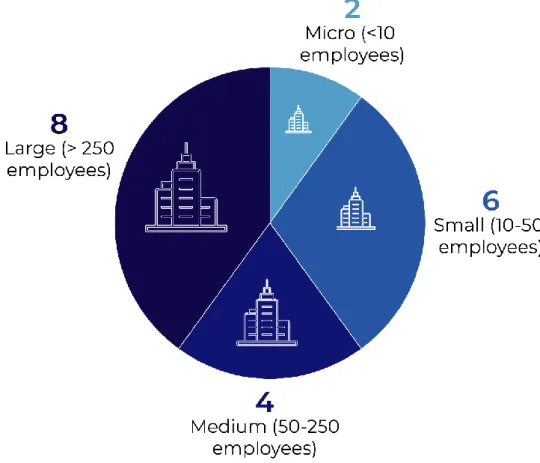
In total, 20 case studies were conducted with construction companies across 15 Member States. These include companies of all sizes with over half of them being SMEs. In addition, the case studies covered different subsectors such as the construction of buildings, civil engineering and other construction activities (e.g. demolition and electrical engineering), since these generally face different health and safety risks. The information collected is by far not representative with such a small sample. However, it allowed the study team to test input data for the financial framework as well as gain practical insights into the challenges faced by companies on the ground as well as the solutions in form of OSH initiatives implemented by companies.
The findings from the case studies show that companies’ main motives to invest into OSH are
the safety of workers, legal compliance, the company’s reputation, and the quality of work. However, companies mention a great variety of reasons to invest into OSH with many of them indicating that it is difficult to limit oneself to only a few motives. In turn, risks faced by companies generally vary as these companies work in different fields of construction. However, the ones mentioned most were falling from heights, collisions with heavy machinery, slipping and tripping, overall negligence, musculoskeletal disorders, cuts from tools, and electrocution. In order to address these risks, companies state their needs to be an increased awareness among workers about OSH, improved cooperation and communication on construction sites, and the establishment of an overall safety culture in the company.
In terms of benefits of OSH, companies agree that avoidance of accident costs by decreasing minor and major accidents is the main benefit. In addition, companies are aware of benefits such as improved efficiency and productivity, a reduction in absenteeism, having more projects and reduced idle time between projects, and a reduction in hiring costs and staff turnover.
Generally there seems to be awareness among construction companies not only regarding the costs associated with accidents, but also the indirect benefits of investing in OSH. However, not all companies are fully aware of all costs and benefits. Therefore, in order to raise awareness and provide information to companies, a practical handbook on investing in OSH and its benefits for
construction enterprises was created.
The handbook is accessible via this link (currently only in English): https://ec.europa.eu/growth/sectors/construction/health-safety_en
In addition, to the case studies, valuable input came from stakeholder consultations in form of three separate workshops. These focused on:
1. The mapping of OSH initiatives and the taxonomy of costs and benefits; 2. The financial framework and the case studies;
3. And the dissemination and validation of the results.
Next to providing inputs for the workstreams and the results presented above, one of the stakeholder consultations’ main outcomes was to highlight the difficulties in assessing the
costs and benefits of OSH. This is due to various factors, for example long-term costs such as
from occupational diseases are difficult to factor in, the differences between Member States and types of companies, and the difficulty of measuring indirect benefits such as reputation. In addition, the consultations also flagged that the framework would need to be complex enough to cover all important factors while being simple enough for companies to actually use it. Finally, there will be the need to update the framework over time and possibly to enhance it further. Overall,
15 Development of an EU framework to assess the overall impacts of occupational health and safety (OSH)
prevention on the performance of construction enterprises
stakeholders agreed that OSH should become part of the larger picture of doing business and that benefits going beyond accident reduction need to be highlighted. A goal that can be supported by the handbook and financial framework.
Concluding remarks
In conclusion, this work is a first step in preparing companies to invest in OSH. Researchers, practitioners and stakeholders in OSH and construction companies are encouraged to disseminate the results, use them, and further build upon them.
17 Development of an EU framework to assess the overall impacts of occupational health and safety (OSH)
prevention on the performance of construction enterprises
Zusammenfassung
Kontext der Studie und der Forschungsfragen
Der Bausektor ist der größte industrielle Arbeitgeber in Europa. Der Sektor repräsentiert 9% des BIP der Europäischen Union aus und beschäftigt über 16 Millionen Menschen. Obwohl der Sektor mehrere große multinationale Unternehmen beinhaltet, ist er hauptsächlich durch eine Lieferkette von kleinen und mittleren Unternehmen (KMU) sowie Kleinst- und Kleinunternehmen
gekennzeichnet. Der Sektor steht vor einer Reihe von Herausforderungen, von denen insbesondere KMUs betroffen sind. Eine dieser besonderen Herausforderungen ist der Fachkräftemangel in der Branche.
Das riskante Arbeitsumfeld sowie eine alternde Belegschaft führen zu der Frage, wie der Bausektor seine Attraktivität für potenzielle Arbeiter verbessern kann und eine vorzeitige Pensionierung der aktuellen Belegschaft vermeiden kann. Das Angebot verbesserter Arbeitsbedingungen durch
Investitionen in den Arbeitsschutz kann ein wichtiger Schritt in die richtige Richtung sein. Die
Bauindustrie is gekennzeichnet von vielen verschiedenen körperlichen (und psychische) Gefahrenquellen (z. B. Vibration, Lärm, Arbeiten in der Höhe, Handhabung schwerer Lasten, Exposition gegenüber Chemikalien und Substanzen in der Luft). Folglich sind zahlreiche
Maßnahmen erforderlich, um die Risiken für Sicherheit und Gesundheit zu verringern. Es bestehen bereits verschiedene politische Programme, um diese Probleme durch eine Erhöhung des
allgemeinen Gesundheits- und Sicherheitsniveaus am Arbeitsplatz anzugehen. Diese Maßnahmen tragen zu einer (sektorübergreifenden) Verbesserung von Gesundheit und Sicherheit am
Arbeitsplatz bei, jedoch beziehen sich die Bemühungen hauptsächlich auf die Einhaltung gesetzlicher Vorschriften.
Der Europäische Strategische Rahmen für Arbeitsschutz weist darauf hin, dass KMUs besondere Schwierigkeiten haben, die Arbeitsschutzgesetze einzuhalten. Es bestehen Hinweise, dass oft Kostenfaktoren die Umsetzung sicherer Arbeitsmethoden in kleinen Unternehmen verhindern. Daher, die Betonung von Rentabilitäts- und Produktivitätsgewinnen sowie die Bereitstellung eines
Geschäftsmodells für Investitionen in Arbeitsschutzmaßnahmen könnten weitere Anreize für
Unternehmen schaffen, die Arbeitsschutzprävention zu verbessern. Folglich könnte die Entwicklung eines EU-Rahmens zur wirtschaftlichen Bewertung der Auswirkungen der Arbeitsschutzprävention auf die Leistung von Bauunternehmen den Arbeitsschutz im Baugewerbe verbessern. Dies könnte ein wichtiger Schritt in Richtung einer Bewusstseinsbildung über die wirtschaftlichen Vorteile der Arbeitsschutzprävention sein. In der Tat sollte Prävention zunehmend als Leistungsförderer
angesehen werden.
Ansatz der Studie und durchgeführte Aktivitäten
Die hier präsentierte Studie hat einen EU-Rahmen entwickelt, um die Auswirkungen der Arbeitsschutzprävention auf die wirtschaftliche Leistung von Bauunternehmen zu bewerten. Der Schwerpunkt dieser Bewertung lag auf den mikroökonomischen Nutzen der
Arbeitsschutzimplementierung und nicht auf den gesellschaftlichen oder sektorübergreifenden Nutzen. Zu diesem Zweck wurde eine Taxonomie von Kosten und Nutzen der
Arbeitsschutzprävention auf Grundlage einer umfassenden Literaturrecherche erstellt. Darüber hinaus stellte das Studienteam ein Mapping von nationalen und branchenspezifischen Initiativen
18 Development of an EU framework to assess the overall impacts of occupational health and safety (OSH)
prevention on the performance of construction enterprises
zur Arbeitsschutzprävention im Baugewerbe zusammen. Dieses beinhaltete auch Informationen zu den Kosten- und Nutzenprofile der gefundenen Initiativen. Schließlich wurde ein finanzielles Rahmenwerk entwickelt, das es Unternehmen ermöglicht, ihren Nutzen von einer Investition in den Arbeitsschutz auszuwerten. Das Rahmenwerk wurde in Fallstudien mit Bauunternehmen sowie in Gesprächen mit Interessenvertretern aus dem Baugewerbe validiert.
Hauptergebnisse der Studie
Eine Taxonomie von Kosten und Nutzen der Arbeitsschutzprävention
Der direkte Nutzen von Arbeitsschutzmaßnahmen ergibt sich aus der Verringerung der Arbeitsunfälle. Generell wird angenommen, dass sich die Zahl der Arbeitsunfälle in
Bauunternehmen nach Umsetzung von Arbeitsschutzmaßnahmen verringert. In monetärer Hinsicht lassen sich hierdurch reduzierte Kosten in zwei Bereiche unterteilen: reduzierte versicherte Kosten und reduzierte nicht versicherte Kosten. Die reduzierten Versicherungskosten entsprechen den niedrigeren oder nicht steigenden Kosten von Versicherungsprämien aufgrund einer reduzierten Anzahl von Unfällen. Nicht versicherte Kosten sind die Kosten, die normalerweise nicht durch Versicherungen abgedeckt sind, z. B. die Identifizierung von Ersatzarbeitern, Geldstrafen, Vertragsstrafen für verspätete Arbeitslieferungen und andere.
Der indirekte Nutzen ist nicht unbedingt Teil der ursprünglichen Ziele der
Arbeitsschutzmaßnahmen, sondern setzt sich stattdessen aus positive Nebeneffekten zusammen. Durch die Reduzierung von Unfällen können sich somit umfassendere Vorteile auf
Unternehmensebene ergeben, wie z. B.: gesteigerte Produktivität;
verbesserte psychische Gesundheit; bessere Servicequalität;
und Reputationsgewinne bei Kunden und anderen Akteuren.
Nationale oder branchenspezifische Programme unterstützen Unternehmen auch oft finanziell zu Arbeitsschutzinvestitionen, jedoch werden generell immer noch Investitionskosten mit Arbeitsschutz verbunden. Die direkten Kosten sind die Investitionen die ein Unternehmen für die Durchführung einer Arbeitsschutzmaßnahme machen muss. Dies umfasst unter anderem den Einsatz von Arbeitszeit in die Verwaltung der Arbeitsschutzmaßnahme und die Kosten für Schulungsunterlagen oder neue Ausrüstung. Die indirekten Kosten sind unbeabsichtigte Nebeneffekte. Diese können als „Opportunitätskosten“ betrachtet werden. Dies versteht sich in dem Sinne, dass der Zeit- und Ressourcenaufwand für andere umsatzgenerierende Aktivitäten wie die Arbeit an Bauprojekten oder der Entwicklung neuer Geschäftsfelder hätte verwendet werden können.
Mapping nationaler und branchenspezifischer Initiativen zur Arbeitsschutzprävention im Baugewerbe
Insgesamt wurden 107 Initiativen identifiziert sowie Daten zu den mit diesen Initiativen verbundenen Kosten und Nutzen gesammelt. Etwa die Hälfte der identifizierten Arbeitsschutz Programme waren generische Ansätze zur Bewältigung von Arbeitsschutzrisiken. Dazu gehören kurze Schulungen, Zertifizierungsprogramme und Kommunikationskampagnen. Ihr Ziel ist es normalerweise, branchenweit Sicherheits- und Gesundheitsverbesserungen zu erzielen. Die andere Hälfte befasste sich mit spezifischen Arbeitsschutzrisiken und bestimmten
gefährlichen Aktivitäten. Dazu gehören zum Beispiel Programme zur Förderung des Einsatzes
von Hebewerkzeugen, Aufklärungskampagnen zur Sicherheit von Gabelstaplern und zum sichereren Arbeiten am Straßenrand während der Instandhaltung von Autobahnen. Für diese Art
19 Development of an EU framework to assess the overall impacts of occupational health and safety (OSH)
prevention on the performance of construction enterprises von Programmen sind die Erfolgsindikatoren um einiges klarer und leichter zu messen als bei generischen Programmen.
Die folgende Kategorien von Initiativen wurden identifiziert: Schulungsmaterialien und Leitfäden;
Online-Tools / Technologien / Hardware / Apps; Zertifikate / Akkreditierung;
Wissensaustausch, z. B. um Standards / Vorgehensweisen festzulegen; Maßgeschneiderte Anleitung / Beratung;
Versicherungsanreiz;
Verbesserte Praktiken in der Beauftragung; Durchsetzungsinitiative von Vorschriften;
Und letztendlich Kampagnen mit mehreren Ergebnissen.
Bei der Analyse dieser Initiativen wurden die Nutzen und Kosten der einzelnen Programme ermittelt sowie die besonderen Herausforderungen, mit denen sie sich befassen, hervorgehoben. Zu diesen Herausforderungen gehören physische, mechanische, elektrische, thermische, chemische und psychologische Risiken sowie der dynamische Wandel von Baustellen, der Fachkräftemangel auf dem Arbeitsmarkt und der Einsatz von Wanderarbeitern und letztendlich die Notwendigkeit, Dienstleistungen über Subunternehmer zu erbringen. Diese Herausforderungen beziehen sich auf verschiedene Phasen des Bauprozesses und unterscheiden zwischen verschiedenen Arten von Funktionen innerhalb eines Unternehmens. Dazu gehören eine unangemessene Bauplanung,
unangemessene Baustellenbedingungen, ein unangemessener Baustellenbetrieb, sowie ein unangemessenes Verhalten der Arbeiter.
Um diese Herausforderungen zu bewältigen, zielen Arbeitsschutzinitiativen häufig darauf ab Informationen an Unternehmen zu vermitteln und / oder die Unternehmen selbst zu ermutigen Zeit in die Einarbeitung und Umsetzung von Arbeitsschutzmaßnahmen zu investieren. Ein weiteres gemeinsames Ziel ist die Einführung einer „Sicherheitskultur“ in Unternehmen, damit die Beratung auch effektiv umgesetzt wird. Tatsächlich ist das Verhältnis von Nutzen zu Kosten von
Arbeitsschutzmaßnahmen in Unternehmen mit etablierten Sicherheitskulturen wahrscheinlich höher. Daher besteht ein klares Geschäftsszenario, dass dafür spricht Baufirmen zu weiteren
Investitionen in Arbeitsschutzaktivitäten zu bewegen.
Ein Rahmenwerk zur Bewertung der Rentabilität von Risikopräventionsmaßnahmen
Das finanzielle Rahmenwerk nimmt eine einzigartigen Unternehmensperspektive und bietet
damit Bauunternehmen ein Tool zur Berechnung der Kosten und Nutzen von
Arbeitsschutzinvestitionen. Das Tool verwendet EU-Statistiken zu Unfällen und Kosten von
Arbeitsschutzmaßnahmen als Grundlage. Zusätzliche Informationen kommen von detaillierteren Statistiken aus einer begrenzten Anzahl von Mitgliedsstaaten und Informationen von den 20 EU-Fallstudien. Unternehmer können Kosten und Nutzen von Investitionen in Arbeitsschutz pro Mitarbeiter und optional auf Firmenebene vergleichen.
Grundsätzlich erfordert das Tool nur die Eingabe von allgemeinen Unternehmensmerkmalen und erlaubt optionale Auswahlmöglichkeiten wie Versicherungsschutz und Strafen für verspätete Bauabnahmen. Bereits diese einfachen Eingaben liefern dem Benutzer die Unfallrate vor und
nach Arbeitsschutzinvestitionen sowie die Kosten und den Nutzen von Arbeitsschutz-investitionen und deren Differenz. Darüber hinaus zeigt das Ergebnis die Kosten pro Kostenart,
20 Development of an EU framework to assess the overall impacts of occupational health and safety (OSH)
prevention on the performance of construction enterprises
Krankengeld, Kosten am Tag des Unfalls). Erweiterte Benutzereingaben machen das Tool flexibler, aber auch schwerer zu bedienen. Zu den Eingaben, die ein erfahrener Benutzer möglicherweise anzeigen und / oder ändern möchte, gehören:
Bereits getätigte Arbeitsschutzinvestitionen; Investition in Sicherheitsausrüstung; Indirekte Nutzenarten;
Finanzielle Bedingungen.
Die Nutzen, die das finanziellen Rahmenwerk beinhaltet, unterteilen sich in direkte Nutzen wie reduzierter Krankenstand und geringere medizinische Kosten (angepasst je nach
Versicherungsschutz), weniger Arbeitsunterbrechungen aufgrund von Unfällen, weniger Unfalluntersuchungen (einschließlich Schadensbewertung und Reparaturen), geringere Kosten durch nötige Ersatzarbeitskräfte, weniger Geldbußen und Gerichtsverfahren und schließlich geringere Kosten durch Projektverzögerungen. Die Kosten umfassen den Kauf von
Sicherheitsmaterialien und Dienstleistungen, die jährlichen Wartungs- und Abschreibungskosten, die Stunden für die Erstvorbereitung durch das Management, die jährlichen Arbeitsstunden für die Überwachung der Maßnahmen, die jährliche Arbeitszeit für die Schulung und letztendlich das Arbeitsschutzmanagement vor Ort durch die Arbeitsschutzbeauftragten.
Das Framework kann hier gefunden werden (Aktuell nur in Englisch): https://ec.europa.eu/growth/sectors/construction/health-safety_en
Ergebnisse aus den Fallstudien und den Konsultationen mit Interessenvertretern
Insgesamt wurden 20 Fallstudien mit Bauunternehmen aus 15 verschiedenen Mitgliedstaaten durchgeführt. Die Firmen variieren in ihrer Größe und Anzahl von Mitarbeitern. Mehr als die Hälfte der Unternehmen sind KMU. Darüber hinaus decken die Fallstudien verschiedene Baubranchen ab, wie den Bau von Gebäuden, den Tiefbau und andere Bautätigkeiten (z. B. Abbruch- und Elektrotechnik). Dies ist wichtig, da verschiedene Baubranchen unterschiedliche Gesundheits- und Sicherheitsrisiken haben. Die Ergebnisse sind bei einer relativ kleinen Stichprobe von nur 20 Firmen natürlich nicht repräsentativ. Sie ermöglichten es dem Studienteam jedoch, die Parameter für den Finanzrahmen zu testen und praktische Einblicke in Unternehmensspezifische
Herausforderungen zu erhalten, sowie in die Lösungen dieser Herausforderungen durch Unternehmenseigene Arbeitsschutzinitiativen.
Die Ergebnisse der Fallstudien zeigen die Hauptmotive von Unternehmen in den Arbeitsschutz
zu investieren auf. Diese umfassen die Sicherheit der Arbeitnehmer, die Einhaltung von Gesetzen,
der Ruf des Unternehmens und die Qualität der Arbeit. Unternehmen beschränken sich jedoch nicht auf einzelne Gründe für Arbeitsschutzinvestitionen und viele weisen darauf hin, dass es schwierig ist, sich auf nur wenige Motive zu beschränken. Die Risiken für Bauunternehmen sind im Allgemeinen sehr unterschiedlich, da die befragten Unternehmen in verschiedenen Bereichen des Bauwesens tätig sind. Die am häufigsten genannten Risiken waren jedoch Höhenunterschiede, Kollisionen mit schweren Maschinen, Ausrutschen und Stolpern, allgemeine Fahrlässigkeit, Erkrankungen des Bewegungsapparates, Schnittwunden an Werkzeugen und Stromschläge. Die
Bedürfnissen von Unternehmen um diese Risiken zuverlässig anzugehen wurden auch genannt.
Zum einen braucht es eine bessere Sensibilisierung von Arbeitnehmern für den Arbeitsschutz, eine stärkere Zusammenarbeit und Kommunikation auf Baustellen, und die Schaffung einer generellen Sicherheitskultur im Unternehmen.
21 Development of an EU framework to assess the overall impacts of occupational health and safety (OSH)
prevention on the performance of construction enterprises
In Bezug auf den Nutzen von Arbeitsschutzmaßnahmen sind sich die Unternehmen einig, dass die Vermeidung von Unfallskosten durch die Verringerung kleinerer und schwerer Unfälle der Hauptnutzen ist. Darüber hinaus sehen Unternehmen auch Vorteile wie eine verbesserte Effizienz und Produktivität, eine Verringerung der Fehlzeiten von Arbeitern, mehr Projektgewinne und eine kürzere Leerlaufzeit zwischen den Projekten sowie eine Verringerung der Einstellungskosten und der Mitarbeiterfluktuation.
Generell scheint ein Bewusstsein bei Bauunternehmen zu bestehen dass nicht nur die mit Unfällen verbundenen Kosten umfasst, sondern auch die indirekten Nutzen von Investition in den
Arbeitsschutz. Allerdings waren sich nicht alle Unternehmen aller möglichen Kosten und Nutzen bewusst. Um dieses Bewusstsein zu stärken und Unternehmer besser zu informieren, wurde daher ein praktisches Handbuch über Investitionen in den Arbeitsschutz und deren Vorteile für
Bauunternehmen erstellt.
Das Handbuch kann hier gefunden werden (Aktuell nur in Englisch): https://ec.europa.eu/growth/sectors/construction/health-safety_en
Zusätzlich zu den Fallstudien kamen wertvolle Beiträge aus den Konsultationen mit Vertretern von Interessengruppen aus dem Baugewerbe und dem Arbeitsschutz. Diese Konsultationen wurden in Form von drei separaten Workshops zu den folgenden Themen organisiert:
1. Mapping von Arbeitsschutzinitiativen und Taxonomie von Kosten und Nutzen; 2. Das finanzielle Rahmenwerk und die Fallstudien;
3. Und die Verbreitung und Validierung der Ergebnisse.
Neben der Bereitstellung von Informationen zu den Studienfragen und der Diskussion von Ergebnissen, war eines der Hauptergebnisse hervorzuheben wie schwer und kompliziert die Bewertung der Kosten und Nutzens von Arbeitsschutz auf europäischer Ebene ist. Dies ist auf verschiedene Faktoren zurückzuführen. So sind zum Beispiel langfristige Kosten von
Berufskrankheiten und indirekte Nutzenarten wie das Ansehen eines Unternehmens schwer einzuschätzen. Außerdem können die Bedingungen und Situationen zwischen Mitgliedstaaten und Unternehmenstypen stark abweichen. Darüber hinaus wurde in den Konsultationen darauf hingewiesen, dass das Rahmenwerk ausreichend komplex sein muss, um alle wichtigen Faktoren abzudecken, aber gleichzeitig unkompliziert damit Unternehmen es tatsächlich auch nutzen. Letztendlich wird es daher auch notwendig sein, das finanzielle Rahmenwerk im Laufe der Zeit zu aktualisieren und zu erweitern.
Insgesamt waren sich die Branchenvertreter jedoch einig, dass Arbeitsschutz Teil des
Gesamtbildes der Geschäftstätigkeit von Bauunternehmen werden sollte. Hierbei soll gerade der Nutzen von Arbeitsschutzmaßnahmen, welcher mehr als nur Unfallvermeidung beinhaltet, mehr hervorgehoben werden. Ein Ziel, das durch das Handbuch und das finanzielle Rahmenwerk unterstützt werden kann.
Abschließende Bemerkungen
Zusammenfassend kann gesagt werden das diese Arbeit ein erster Schritt ist, um Bauunternehmen auf Investitionen in Arbeitsschutz vorzubereiten. Akademiker, Arbeitsschutzbeauftragte und Interessengruppen für den Arbeitsschutz- und für Bauunternehmen sind ermutigt, die Ergebnisse zu verbreiten, zu nutzen und weiter auf ihnen aufzubauen.
23 Development of an EU framework to assess the overall impacts of occupational health and safety (OSH)
prevention on the performance of construction enterprises
Résumé exécutif
Contexte de la question d'étude et de recherche
Le secteur de la construction est le plus grand employeur industriel d'Europe. Il représente 9% du PIB de l’Union européenne et emploie plus de 16 millions d’européens. Même si le secteur abrite plusieurs grandes entreprises multinationales, il se caractérise principalement par une chaîne d'approvisionnement de petites et moyennes entreprises (PME) ainsi que de micro et petites entreprises (MPE). Le secteur est confronté à un certain nombre de défis, qui affectent
particulièrement les PME. Un défi spécifique est le manque de travailleurs qualifiés dans le secteur.
Les environnements de travail risqués ainsi que le vieillissement de la main-d'œuvre conduisent à se demander comment le secteur de la construction peut améliorer son attractivité pour les employés potentiels et éviter les départs à la retraite anticipés. Offrir de meilleures conditions de
travail en investissant dans la SST peut être un pas important dans la bonne direction. Il existe
divers dangers physiques (et psychologiques) dans l'industrie de la construction (par exemple : vibrations, bruit, travail en hauteur, manipulation de charges lourdes, exposition à des produits chimiques et à des substances en suspension dans l'air). Par conséquent, de nombreuses interventions sont nécessaires pour atténuer les risques pour la sécurité et la santé. Plusieurs programmes et activités politiques sont en place pour résoudre ces problèmes en améliorant le niveau de santé et de sécurité au travail. Cependant, même si ces actions contribuent à
l'amélioration de la santé et de la sécurité au travail (dans tous les secteurs), les efforts concernent principalement le respect de la législation.
Le cadre stratégique européen de SST indique que les MPE et les PME ont des difficultés particulières à se conformer à la législation en matière de SST. Il existe des preuves que les coûts dissuadent la mise en œuvre de méthodes de travail plus sûres dans les petites entreprises. Ainsi, mettre l'accent sur les gains de rentabilité et de productivité et fournir une analyse de cas pour
investir dans des mesures de SST pourraient inciter les entreprises à améliorer la prévention de
la SST. Par conséquent, la recherche sur le développement d'un cadre européen pour évaluer les impacts de la prévention de la SST sur la performance des entreprises de construction pourrait améliorer la SST dans la construction. Il pourrait s'agir d'une étape importante dans la
sensibilisation aux avantages de la prévention de la SST. En fait, la prévention doit de plus en
plus être considérée comme un catalyseur de performance.
Approche de étude et activités menées
Cette étude a développé un cadre européen pour évaluer les impacts de la prévention de la SST sur la performance des entreprises de construction. Dans cette évaluation, l'accent a été mis sur les avantages microéconomiques de la mise en œuvre de la SST, et non sur les avantages sociétaux ou sectoriels. À cette fin, une taxonomie des coûts et des avantages de la prévention de la SST a été créée sur la base d'une recherche documentaire. De plus, l'équipe d'étude a réalisé une cartographie des initiatives nationales et sectorielles liées à la prévention de la SST dans la construction et leurs profils de coûts et avantages. Enfin, un cadre financier a été élaboré pour permettre aux entreprises d'évaluer leurs avantages à investir dans la SST. Le cadre a été validé
24 Development of an EU framework to assess the overall impacts of occupational health and safety (OSH)
prevention on the performance of construction enterprises dans des études de cas avec des entreprises de construction ainsi qu'en consultation avec les parties prenantes.
Principales conclusions de l'étude
Une taxonomie des coûts et avantages de la prévention de la SST
Les avantages directs des mesures de SST proviennent de la réduction des accidents sur le lieu
de travail. Le nombre d'accidents du travail dans les entreprises de construction devrait en principe diminuer après la mise en œuvre des mesures de SST. En termes monétaires, les coûts réduits peuvent être subdivisés en deux domaines: les coûts assurés réduits et les coûts non assurés réduits. Les coûts assurés réduits correspondent aux coûts inférieurs ou non croissants des primes d'assurance en raison d'un nombre réduit d'accidents. Les coûts non assurés couvrent les coûts qui ne sont généralement pas couverts par l'assurance, tels que l'identification des employés de remplacement, les amendes, les pénalités contractuelles pour livraison tardive du travail, et plus.
Les avantages indirects ne font pas nécessairement partie des objectifs des mesures de SST
mais peuvent plutôt être caractérisés comme des effets secondaires positifs qui se manifestent. Ainsi, grâce à la réduction des accidents, des avantages plus larges au niveau de l'entreprise peuvent émerger tels que:
Productivité accrue;
Amélioration de la santé mentale; Meilleure qualité de service;
Avantages en terme de réputation auprès des clients et des autres parties prenantes.
Bien que les programmes nationaux ou sectoriels puissent contribuer financièrement aux investissements en matière de SST, dans l'ensemble, il existe encore des coûts d'investissement associés à la SST. Les coûts directs sont ceux qui se rapportent aux coûts de mise en œuvre d'une mesure de SST. Cela comprend des éléments tels que l'investissement en temps du personnel dans la gestion de la mesure de SST et le coût du matériel de formation ou du nouvel équipement. Les coûts indirects sont des effets secondaires imprévus. Ceux-ci peuvent être considérés comme des «coûts opportunistes», ce qui signifie que le temps et les ressources dépensés auraient pu être consacrés à d'autres activités génératrices de revenus, telles que le travail sur des projets de construction ou de nouvelles pistes commerciales.
Cartographie des initiatives nationales et sectorielles sur la prévention de la SST dans la construction
Au total, 107 initiatives ont été identifiées et des données ont été collectées sur les types de coûts et d'avantages associés à ces initiatives. Environ la moitié des programmes identifiés étaient des
approches génériques pour lutter contre les risques de SST. Il s'agit notamment de formations
courtes, de programmes de certification et de campagnes de communication. Leur objectif est généralement d'améliorer la sécurité et la santé dans l'ensemble du secteur. L'autre moitié a
abordé des risques spécifiques en matière de SST et des activités dangereuses. Ils
comprennent des programmes visant à promouvoir l'utilisation de l'équipement de levage, des campagnes d'éducation sur la sécurité des chariots élévateurs à fourche et un travail en bordure de route plus sûr lors de l’entretien des routes. Pour ce type de dispositif, les indicateurs de réussite sont beaucoup plus clairs et, potentiellement, plus faciles à mesurer.
25 Development of an EU framework to assess the overall impacts of occupational health and safety (OSH)
prevention on the performance of construction enterprises Dans l'ensemble, les catégories d'initiatives suivantes ont été identifiées:
Matériel de formation et d'orientation ;
Outils / technologies / matériel / applications en ligne ; Certificats / accréditation ;
Partage des connaissances, par ex. pour établir des normes / approches; Orientation / conseils personnalisés;
Incitation à l'assurance ;
Amélioration des pratiques de mise en service ; Initiative d'application de la loi ;
Et des campagnes avec plusieurs extrants.
L'analyse de ces initiatives a identifié les avantages et les coûts associés à chaque programme ainsi que les défis particuliers qu'ils visent à relever. Ces défis comprennent les risques physiques, mécaniques, électriques, thermiques, chimiques et psychologiques ainsi que la nature changeante des chantiers de construction, les pénuries de compétences sur le marché du travail et l'utilisation de travailleurs migrants, et enfin la nécessité de fournir des services par le biais de sous-traitants. Ces défis peuvent être classés en différentes étapes du processus de construction et entre différents types de fonctions au sein d'une entreprise. À savoir, une planification de construction
inappropriée, des conditions et des opérations inappropriées sur les chantiers et des comportements inappropriés des travailleurs.
Afin de relever ces défis, les initiatives de SST visent souvent à transférer des informations aux entreprises et / ou à encourager les entreprises elles-mêmes à investir de manière indépendante, du temps dans les activités de familiarisation et de mise en œuvre de la SST. Un autre objectif commun est également d'introduire une «culture de la sécurité» dans les entreprises afin que les conseils fournis soient effectivement adoptés. En fait, le rapport avantages / coûts sera
probablement plus élevé dans les entreprises qui ont des cultures de sécurité bien établies. Par conséquent, il existe une analyse de rentabilité claire pour inciter les entreprises de
construction à investir davantage dans les activités de SST.
Un cadre pour évaluer la rentabilité des mesures de prévention des risques
Le cadre financier adopte une perspective d'entreprise unique et fournit aux entreprises de
construction un outil pour calculer les coûts et les avantages des investissements en SST.
L'outil utilise des statistiques de l'UE sur les accidents et les coûts des mesures SST. Par ailleurs, il utilise des statistiques plus approfondies sur un nombre limité de pays et les résultats de 20 études de cas à travers l'UE. Il permet aux managers de comparer les coûts et les avantages des
investissements en SST par travailleur, et optionnellement au niveau de l'entreprise.
À un niveau de base, l'outil ne nécessite que des entrées de l'utilisateur sur les caractéristiques de l'entreprise et les choix facultatifs tels que la couverture d'assurance et les pénalités pour les retards de livraison. Ces entrées limitées fournissent déjà à l'utilisateur le taux d'accidents avant
les investissements en SST et après les investissements en SST, ainsi que les coûts et avantages des investissements en SST et leurs différences. De plus, le résultat montre les
coûts par type de coût, agrégés sur toutes les mesures ainsi que les prestations par type de prestation (par exemple, évitement des indemnités de maladie, coûts le jour de l'accident). L'entrée utilisateur avancé rend l'outil plus flexible mais aussi plus lourd à utiliser. Les entrées qu'un utilisateur plus expérimenté pourrait souhaiter visualiser et / ou modifier comprennent: Investissements déjà réalisés ;
26 Development of an EU framework to assess the overall impacts of occupational health and safety (OSH)
prevention on the performance of construction enterprises Avantages indirects ;
Besoins financiers.
Les avantages inclus dans le cadre comprennent des avantages directs tels que la réduction des
congés de maladie et des frais médicaux (ajustés en fonction de la couverture d'assurance), moins d'heures d'interruption de travail en raison d'accidents, moins d'enquêtes sur les accidents (y compris l'évaluation des dommages et la réparation), la réduction des coûts liés au remplacement des travailleurs, moins d'amendes administratives et de procédures judiciaires, et enfin moins de coûts de retard de projet.
Les coûts inclus sont l'achat de matériel et de services, les coûts annuels de maintenance et
d'amortissement, les heures de préparation initiale par la direction, les heures annuelles de surveillance, les heures annuelles de formation et la gestion sur place de la SST par les agents de SST.
Le cadre peut être consulté ici (actuellement seulement en anglais) : https://ec.europa.eu/growth/sectors/construction/health-safety_en
Résultats des études de cas et des consultations des parties prenantes
Au total, 20 études de cas ont été menées avec des entreprises de construction dans 15 États membres. Il s'agit d'entreprises de toutes tailles, dont plus de la moitié sont des PME. En outre, les études de cas couvraient différents sous-secteurs tels que la construction de bâtiments, le génie civil et d'autres activités de construction (par exemple la démolition et l'électrotechnique), car ceux-ci font généralement face à des risques différents pour la santé et la sécurité. Les informations collectées ne sont de loin pas représentatives avec un si petit échantillon, mais elles ont permis à l'équipe d'étude de tester les données d'entrée pour le cadre financier ainsi que d'avoir un aperçu pratique des défis rencontrés par les entreprises sur le terrain ainsi que les solutions apportées par leurs propres initiatives de SST.
Les résultats des études de cas montrent que les principales motivations des entreprises à
investir dans la SST sont la sécurité des travailleurs, la conformité légale, la réputation de
l'entreprise et la qualité du travail. Cependant, les entreprises mentionnent une grande variété de raisons d'investir dans la SST, nombre d'entre elles indiquant qu'il est difficile de se limiter à quelques motifs. À leur tour, les risques auxquels sont confrontées les entreprises varient généralement car ces entreprises travaillent dans différents domaines de la construction.
Cependant, ceux mentionnés le plus sont les chutes de hauteur, les collisions avec des machines lourdes, les glissades et les trébuchements, la négligence générale, les troubles
musculosquelettiques, les coupures avec des outils et l'électrocution. Afin de faire face à ces risques, les entreprises indiquent leurs besoins de sensibiliser davantage les travailleurs à la SST, d'améliorer la coopération et la communication sur les chantiers de construction, et de mettre en place une culture de sécurité globale dans l'entreprise.
En termes d'avantages des SST, les entreprises conviennent que l’évitement des coûts des accidents, en diminuant les accidents mineurs et majeurs, est le principal avantage. De plus, les entreprises sont conscientes des avantages tels que l'amélioration de l'efficacité et de la
productivité, une réduction de l'absentéisme, l'augmentation du nombre de projets et la réduction des temps morts entre les projets, ainsi qu'une réduction des coûts de recrutement et du roulement du personnel.
27 Development of an EU framework to assess the overall impacts of occupational health and safety (OSH)
prevention on the performance of construction enterprises En général, les entreprises de construction semblent être conscientes non seulement des coûts associés aux accidents, mais également des avantages indirects d'un investissement dans la SST. Cependant, toutes les entreprises ne sont pas pleinement conscientes de tous les coûts et avantages. Par conséquent, afin de sensibiliser les entreprises et de leur fournir des informations, un manuel pratique sur l'investissement dans la SST et ses avantages pour les entreprises
de construction a été créé.
Le manuel est accessible via ce lien (actuellement seulement en anglais): https://ec.europa.eu/growth/sectors/construction/health-safety_en
En plus, des études de cas, des contributions précieuses sont venues des consultations des parties prenantes sous la forme de trois ateliers distincts. Ceux-ci se sont concentrés sur:
1. La cartographie des initiatives de SST et la taxonomie des coûts et avantages ;
2. Le cadre financier et les études de cas ;
3. Et la diffusion et la validation des résultats.
En plus des contributions aux domaines de travail et les résultats présentés ci-dessus, l'un des principaux résultats des consultations avec les parties prenantes a été de mettre en évidence les
difficultés à évaluer les coûts et les avantages de la SST. Cela est dû à divers facteurs, par
exemple les coûts à long terme tels que les maladies professionnelles sont difficiles à prendre en compte, les différences entre les États membres et les types d'entreprises, et la difficulté de mesurer les avantages indirects tels que la réputation. En outre, les consultations ont également montré que le cadre devrait être suffisamment complexe pour couvrir tous les facteurs importants tout en étant suffisamment simple pour que les entreprises puissent réellement l'utiliser. Enfin, il sera nécessaire de mettre à jour le cadre au fil du temps et éventuellement de l'améliorer davantage. Dans l'ensemble, les parties prenantes ont convenu que la SST devrait faire partie du cadre plus large de la conduite des affaires et que les avantages allant au-delà de la réduction des accidents doivent être mis en évidence. Un objectif qui peut être soutenu par le manuel et le cadre financier.
Observations finales
En conclusion, ce travail est une première étape pour préparer les entreprises à investir dans la SST. Les chercheurs, les praticiens et les parties prenantes des SST et des entreprises de construction sont encouragés à diffuser les résultats, à les utiliser et à les développer davantage.
29 Development of an EU framework to assess the overall impacts of occupational health and safety (OSH)
prevention on the performance of construction enterprises
1 Introduction
The construction sector is the biggest industrial employer in Europe. Even though the sector is home to several major multinational companies, it is mainly characterised by a supply chain of small and medium sized enterprises (SMEs) as well as micro and small enterprises (MSEs). The sector is a prime driver of growth and employment. After a period of decline, employment is on the rise again, and expected to increase more over the course of 2015-2025. Furthermore, there is an increase in demand for skills levels, which is expected to even double, following the developments in construction of ‘green’ and energy efficient buildings.1
Parallel to this growth, the sector faces a number of challenges, of which most are especially threatening to SMEs. The Strategy for the sustainable competitiveness of the construction sector and its enterprises (“Construction 2020”) identifies (amongst others) the following structural challenges:2
1. The shortfall of skilled workers;
2. Low attractiveness to young people due to the working conditions.
Due to low birth rates and rising life expectancy, the proportion of older people in the EU will increase fast. It is expected that in 50 years after 2010 the percentage of people older than 65 will grow from 17.4% to 29.5% while at the same time the EU working age population is expected to decline by 14.2%. These developments put pension and health systems under pressure and make it necessary to keep the elderly as long and healthy as possible at work. As some functional capacities decline with age OSH management is needed in order to keep people working. Next to these demographic changes, the attractiveness of the sector remains low, among others because the sector is still the most risky sector when it comes to fatalities.3,4 Providing a healthy and safe
workplace may increase attractiveness of the sector and attract and retain young workers to the sector.
Several policy programmes and activities are in place to address these issues by improving health and safety standards at work. However, even though these actions contribute to improved health and safety standards (across sectors), the efforts mostly regard legislative compliance and improving OSH conditions. Emphasizing profitability and productivity gains and introducing a business case of competitiveness and sustainable development is much more rare when it comes to reasons for enterprises to invest in OSH measures. Providing a cost-benefit analysis to illustrate the possible benefits of investing in OSH measures is therefore an important step in awareness-raising of the competitiveness and sustainability advantages to OSH prevention. This especially accounts for SMEs, who are generally less well informed about risks and thus more vulnerable to inducing high costs as a consequence of these risks. Prevention should be increasingly viewed as an enabler of performance, in which innovation should be used for the benefit of SMEs.
1 European sectoral trends. CEDEFOP. http://www.cedefop.europa.eu/en/publications-and-resources/publications/8093 2 COM (2012) 433 final. http://eur-lex.europa.eu/LexUriServ/LexUriServ.do?uri=COM:2012:0433:FIN:EN:PDF. 3 EUROSTAT, Accidents at work statistics.
http://ec.europa.eu/eurostat/statistics-explained/index.php/Accidents_at_work_statistics
30 Development of an EU framework to assess the overall impacts of occupational health and safety (OSH)
prevention on the performance of construction enterprises With one of the most risky working environments as well as an ageing workforce that needs replacement, OSH investments can be used as a way to signal attractiveness of construction work to potential employees as well as avoiding early retirement through offering improved working conditions.
The aim of this study is to provide a solid basis for the development of the EU framework to assess impacts of OSH prevention on the performance of construction enterprises, by offering a practical tool, namely a handbook with financial framework.
The study focuses on the micro-economic benefits of implementation, not societal or sectoral benefits. With this information, the implementation of health and safety standards in the construction sector should be improved, such that the sector adheres to working conditions comparable to other sectors of the economy. In the end, we hope to contribute to improving the sector image, such that new cohorts of young people enter and remain working in the construction sector.
Reading guide
Chapter 2 describes the background of the study. Chapter 3 describes a taxonomy of costs and benefits of investing in OSH prevention. Chapter 4 presents the Mapping of national and sectoral initiatives related to OSH prevention in construction and their costs-benefits profile. The detailed mapping is included in a separate Annex. After that, Chapter 5 presents the framework, with its assumptions and instructions for use. Chapter 6 describes the case studies in which we tested the framework. Chapter 7 summarises the stakeholder meetings.
31 Development of an EU framework to assess the overall impacts of occupational health and safety (OSH)
prevention on the performance of construction enterprises
2 Background
2.1 Construction sector
As stated in the introduction, the construction sector mainly consists of SME’s. When considering major contractors in isolation, several large multinationals dominate the European market. This is particularly evident in large infrastructure projects, led by major multinational contractors such as, Vinci (France), ACS Construction Group (Spain), Bouygues (France), Skanska (Sweden) and Eiffage (France).5 However in practice, operation and composition of the sector is characterised by
a complex supply chain structure, in which micro and small businesses dominate (the average company has 4 workers).6
An important feature of construction is that management of activities is on a temporary site rather than in a factory. This has implications for working practices since tasks are likely to be organised and managed on a site-level basis. New technological developments such as Building Information Modelling (BIM), 3d printing and robotics might allow companies to improve on pre-planning and pre-building whole construction projects, however adoption of these technologies has been slow.7
The collaborative approach to many construction projects presents opportunities for shared learning and learning across supply tiers (although the fragmentation of the industry has also been seen as a key block to change).8 Additionally, construction clients can play a major role in the way the
construction market operates and through purchasing power and procurement rules can be a facilitator of innovation.9
2.2 OSH in the construction sector
Occupational safety and health in the construction area is driven by safety considerations
(preventing accidents and diseases), and competitiveness reasons i.e., financial profitability through investing in safety. With one of the most risky working environments as well as an ageing workforce that will need replacement, OSH investments can be used as a way to signal attractiveness of construction work to potential employees as well as avoiding early retirement through offering improved working conditions.
OSH in the construction sector is related to development, promotion, and maintenance of the workplace environment, policies and programs to ensure mental, physical and emotional well-being of employees. At the same time, the workplace should be free from actual or potential hazards that could injure employees.
5 https://www.statista.com/statistics/264430/the-largest-construction-companies-in-europe/ 6 http://www.ebc-construction.eu/
7 Roland Berger (2017) Turning point for the construction industry. The disruptive impact of Building Information Modelling (BIM), available at
https://www.rolandberger.com/en/Publications/pub_disruptive_impact_of_building_information_modelling.html 8 Wolstenhome, A. (2009) Never Waste a Good Crisis A Review of Progress since Rethinking Construction and Thoughts
for Our Future, Constructing Excellence.
9 Innovation, Strategy and Risk in Construction: Turning Serendipity into Capability by Martin Loosemore, 2014. Routledge, London.
32 Development of an EU framework to assess the overall impacts of occupational health and safety (OSH)
prevention on the performance of construction enterprises There are various physical hazards in the construction industry (e.g., vibration, noise, working at height, handling of heavy loads, exposure to chemicals and airborne substances). Consequently, numerous risk management interventions are necessary to control risks to safety and health. There are often several potential approaches to manage the same risks and there is a number of levers that regulators can utilise to encourage or enforce safer behaviour. Recently, psycho-social risks have received an increased amount of attention in this sector10,11 as a result of the recognition that
the young, male demographic, which is typical to the construction workforce, can be psychologically vulnerable.12 The European social partners, the European Federation of Building and Woodworkers
(EFBWW) and the European Construction Industry Federation (FIEC), have also recognised this and recently held a workshop on this issue as part of the Social Dialogue project (co-financed by the Directorate-General for Employment, Social Affairs and Inclusion (DG EMPL of the European Commission).13
According to the European OSH Strategic Framework,14 micro and small enterprises have
particular difficulties in complying with OSH legislation. There is some evidence that costs deter implementation of safer working methods in small companies. An IES study,15 for which interviews
with tools traders were carried out, found that cost was the main barrier to the universal take-up of safer handheld tools. Old-style ground breakers were still reported as being in use, for example, even though they had been superseded by models with much lower vibration levels. Suppliers felt that smaller companies were unlikely to be able to cover the costs of replacing old tools, even when they were exposing workers to unnecessarily high vibration levels when, in all other ways, the tools were fully operational.
Smaller businesses are likely to have more difficulties in resourcing and implementing safety and health policies than larger companies.16 Having a clear business case is an important motivator.
Therefore, there is a need for high-quality economic evidence to evaluate the cost-effectiveness of OSH interventions, especially at the organisational level and in all areas of worker health.17
Schemes for small companies
An EU-OSHA report examined the economic aspects of occupational safety and health (OSH) interventions in small and medium-sized businesses (SMEs).18 Case studies in the existing
literature were identified and examined, and thirteen new case studies on OSH initiatives in European SMEs were conducted, with a business case for each intervention prepared according to a common model. Analysis showed the OSH interventions studied were generally profitable, and these new case studies therefore provide a useful tool to allow owners and managers of SMEs an insight into the potential benefits of improving OSH and the key factors involved in carrying out a cost–benefit analysis. Table 2.1 shows examples from the construction sector.
10 http://sustainability.bam.co.uk/health-and-wellbeing/ 11 https://www.skanska.co.uk/about-skanska/sustainability/health-and-safety/performance/ 12 https://www.theguardian.com/society/2017/mar/17/male-construction-workers-greatest-risk-suicide-england-study-finds 13 http://www.fiec.eu/en/event/mental-health-in-construction-work---fiec-efbww-workshop.aspx?MenID=272 14 http://www.cesi.org/wp-content/uploads/2016/06/PODNIECE-Zinta-European-Commission-EN.pdf 15 http://www.hse.gov.uk/research/rrpdf/rr843.pdf 16 https://osha.europa.eu/sites/default/files/seminars/documents/15%20EU-OSHA%20D%20Elsler_The%20business%20case%20for%20OSH_EN_0.pdf 17 https://www.ncbi.nlm.nih.gov/pmc/articles/PMC5794237/ 18 https://osha.europa.eu/en/publications/reports/the-business-case-for-safety-and-health-cost-benefit-analyses-of-interventions-in-small-and-medium-sized-enterprises/view