Revista Gaúcha
de Enfermagem
How to cite this article: Teixeira CC, Guimarães LSP, Echer IC. Factors associated with smoking initiation among school-aged adolescents. Rev Gaúcha Enferm. 2017 Mar;38(1):e69077. doi: http://dx.doi.org/10.1590/1983-1447.2017.01.69077.
doi: http://dx.doi.org/10.1590/1983-1447.2017.01.69077
Factors associated with smoking initiation
among school-aged adolescents
Fatores associados à iniciação tabágica em adolescentes escolares
Factores asociados con el inicio del tabaquismo en los adolescentes escuela
a Hospital Nossa Senhora da Conceição, Linha de
Cuidado Mãe-Bebê. Porto Alegre, Rio Grande do Sul, Brasil.
b Hospital de Clínicas de Porto Alegre (HCPA),
Unida-de Unida-de EpiUnida-demiologia e Bioestatística. Porto Alegre, Rio Grande do Sul, Brasil.
c Universidade Federal do Rio Grande do Sul (UFRGS),
Escola de Enfermagem, Departamento de Assistência e Orientação Profissional. Porto Alegre, Rio Grande do Sul, Brasil.
Carolina de Castilhos Teixeiraa Luciano Santos Pinto Guimarãesb Isabel Cristina Echerc
ABSTRACT
Objective: To identify factors associated with smoking initiation in adolescent secondary school students.
Method: This is a cross-sectional study conducted in 2014 with 864 adolescents at a secondary school in southern Brazil. Data were collected using an instrument with sociodemographic questions, application of the Fagerström Nicotine Dependence Scale, and Beck Depression Inventory, and analysed using descriptive statistics, Fisher’s Exact test, Chi-square test, Mann-Whitney’s test, and the Poisson Regression test.
Results: Fifty-four of the adolescents started smoking, of which 35 continued smoking and exhibited high nicotine dependence. Smoking was associated with brown skin (p = 0.020), single-parent household (p = 0.006), a fair family relationship (p = 0.003), and drug users in the family (p = 0.04). A significantly higher prevalence ratio was detected for boys (p = 0.038), higher family income (p> 0.001), living with one family member (p> 0.001), and a fair family relationship (p> 0.001).
Conclusions: We identified factors associated with smoking initiation, revealing the importance of supporting health education strategies to change this reality.
Keywords: Smoking. Adolescent health. Adolescent behaviour.
RESUMO
Objetivo: Identificar os fatores associados à iniciação tabágica em adolescentes escolares.
Método: Estudo transversal realizado em 2014 com 864 adolescentes do ensino médio do sul do Brasil. Os dados foram coletados por meio de instrumento com questões sociodemográficas, da aplicação da Escala de Fagerström e do Inventário de Depressão de Beck, sendo analisados por estatística descritiva, testes Exato de Fisher, Qui-quadrado, Mann-Whitney, T e Regressão dePoisson. Resultados: Cinquenta e quatro adolescentes iniciaram o comportamento tabágico, desses 35 continuam fumando, com elevada dependência de nicotina. Estiveram associados ao tabagismo: cor parda (p=0,020), famílias monoparentais (p=0,006), regular re-lação familiar (p=0,003) e familiares usuários de drogas (p=0,04). Apresentaram razão de prevalência significativamente maior: masculino (p=0,038), maior renda familiar (p>0,001), morar com um membro da família (p>0,001), relação familiar regular (p>0,001).
Conclusões: Os fatores identificados como associados à iniciação tabágica, demonstram que existe a necessidade de construir apoio para estratégias de educação em saúde a fim de mudar esta realidade.
Palavras-chave: Hábito de fumar. Saúde do adolescente. Comportamento do adolescente.
RESUMEN
Objetivo: Identificar los factores asociados con el inicio del tabaquismo en adolescentes estudiantes.
Método: Estudio transversal en 2014 con 864 adolescentes de la escuela secundaria en el Sur de Brasil. Recoge instrumento con preguntas sociodemográficas, aplicando el test de Fagerström Inventario de Depresión de Beck, analizados por estadística descriptiva, prueba exacta de Fisher, Chi-cuadrado, Mann-Whitney, T y de regresión de Poisson.
Resultados: Cincuenta y cuatro comenzaron el hábito de fumar, entre ellos, 35 permanecen fumando, con una alta dependencia de la nicotina. Se asociaron con el hábito de fumar personas pardas (p = 0,020), los padres solteros (p = 0,006), relación regular de la familia (p = 0,003) y los usuarios de drogas de la familia (p = 0,04). Ellos tenían significativamente más alta razón de prevalencia: masculino (p = 0,038), mayor ingreso familiar (p> 0,001), que viven con un miembro de la familia (p> 0,001), relación familiar normal (p> 0,001).
Conclusiones: Se identificaron como factores asociados con el inicio del tabaquismo mostrando que hay una necesidad de incre-mentar el apoyo a las estrategias de educación sanitaria para cambiar esta realidad.
INTRODUCTION
Adolescence is the period of social transition from child to young adult. This phase involves body transformations and puberty, and is characterised by significant changes in behaviour, the reorganisation of the way of thinking, and the formation of character and personality of youths. In adolescence, external influences, culture, values, respon-sibilities, and relationships are important causal factors of changes in the identity-building process, and may lead to life-changing and health-related choices, such as the use of psychoactive substances(1).
A study found that the prevalence of smoking among adolescent students is 9.3%(2). The National School Health Survey showed that public school students (19.4%) stated they had experimented smoking with more intensity than private school students (12.6%). With regard to adolescent students who have experimented with cigarettes, current consumption reached 30.5% for Brazil(3).
In adolescence, young smokers and passive smokers can suffer from health problems, such as cardiovascular alterations, alterations to blood pressure and lung func-tion, and a higher prevalence of asthma(4-5). In Brazil, in 2011, smoking accounted for 147,072 deaths, 157,126 myocardial infarctions, 75,663 strokes, and 63,753 diagno-ses of cancer, resulting in a cost of BRL 23.37 billion to the healthcare system(6).
A study(7) reveals that one third of the young smokers have some type of mental health problem, with a prev-alence of emotional disorders (38.0%), followed by be-havioural (26.7%) and relationship problems (25.8%). The family context and social conviviality can be an important risk factor for initiating the use of psychoactive drugs. Fam-ily issues that can trigger drug use include disagreements, diseases, losses in the family, separation of parents, dissat-isfaction with the attitude of the parents, and conflicts(8).
Despite the current range and power of globalisation, advancements in healthcare through new studies on the subject, extensive information available on the hazards of tobacco, and the existing legislation, many young people are still interested in the world of smoking(2-3).
Once individuals are dependent on nicotine, the pro-cess of quitting smoking is long and difficult. For some, it is a battle they are forced to face, which is why actions to prevent smoking initiation are so important(9). A literature review revealed the scarcity of actions to prevent smoking initiation from ever occurring(10).
The relevance of the subject of smoking, difficulties quitting, the importance of control, and the gap in aca-demic literature on smoking initiation motivated this study
Initiation, for the authors, means the period of experimen-tation, moments of decisions, and the actual consumption of tobacco. Based on these considerations, the guiding question of this research was: which factors are associated with smoking initiation in adolescent students? To answer this question, the aim of this study was to identify factors associated with smoking initiation in adolescent second-ary school students. The relevance of this study is to col-laborate in the improvement of effective care strategies to prevent adolescents from entering the world of tobacco.
METHOD
This is a cross-sectional study from a dissertation enti-tled, “Fatores que contribuem para a iniciação tabágica em adolescentes de quatro escolas de Porto Alegre e região met-ropolitana”(11) conducted in four secondary schools (two public and two private) in two cities of southern Brazil. The population was composed of secondary school students enrolled in the selected schools, both sexes, who agreed to participate in the study. The inclusion criteria were students over 12 years of age, since studies show that the average age of smoking initiation lies within this age group(12), enrolled in one of the selected schools, and studying in the current school year. Students with a neurological problem that pre-vented them from answering the questions were excluded.
The sample size was calculated based on a study(12) that found a prevalence rate of 14.4% of young smokers. Con-sidering a confidence interval of 95% and an acceptable error of 5%, the obtained sample size was 190 adolescents. In all, 1000 adolescents were invited to participate, or the total number of students enrolled in the four secondary schools. Of this total, 864 returned the completed data collection instrument and subsequently constituted the sample of this study.
under 10 represent the absence of depression; from 10 to 18, mild depression; from 19 to 29, moderate depression; and scores above 30, severe depression. The instruments were handed to students during school hours at previously scheduled times with the teachers.
The adolescents were informed of the nature and im-portance of the study and the confidentiality of their par-ticipation in the research. After the subjects answered the questions, the instruments were collected in sealed enve-lope. The average time of instrument completion per class was 20 minutes.
To ensure adequacy of the content and language of the instrument used with the adolescents, a test pilot was run with a class of 32 students selected according to the study inclusion criteria. The content of the instrument was not altered after the pilot test, so the test participants were part of the sample.
The collected data were entered into a database and analysed using the Statistical Package for Social Sciences (SPSS) version 18.0. The data were initially subjected to de-scriptive analysis and the categorical variables were repre-sented by absolute and relative frequency. The quantitative variables were represented by average, standard deviation and quartiles. The chi-square test or Fisher’s exact test was used to detect associations between the categorical vari-ables. The average age of the smokers and non-smokers was compared using the t test, and the distribution of the Beck Depression score between the groups was compared using the Mann-Whitney test. The association between the studied factors and the groups (adolescent smokers and non-smokers) was estimated using the Prevalence Ratio (PR) modelled for the Poisson regression.
The association between the studied factors and the groups (smokers and non-smokers) was estimated using the Prevalence Ratio (PR) modelled for Poisson regression with robust estimator. The regression was used to confirm the relationship between the surveyed variables and the groups. Univariate modelling was initially performed. The regressions with p-value less than 0.10 were selected and initiated in the multivariate regression model. Of all the variables of the model that were not significant, with the least relation, that is, the variable with a highest p was re-moved and the model was run again. The final multivariate model only contains significant variables. The adopted sig-nificance level was 0.05.
For this study, smokers were considered adolescents who smoke every day, sporadically, or who smoked regu-larly for less than six months, and non-smokers were ado-lescents who had only experimented with cigarettes, but did not become smokers.
The selected schools were visited in advance to ob-tain approval of the directors to conduct research. Firstly, we visited the classrooms to explain the purpose of the research, invite the students to participate and deliver the terms to the interested students. The adolescents who agreed to participate signed an approval form and took the informed consent statements to their guardians for signing. These statements were returned to researchers before data collection, thus formalising their disposition to participate in the study. The anonymity of the subjects was guaranteed, together with the condition to use the information they provided for research purposes only, after which it would be filed, as determined by law. The adolescent felt some discomfort when answering the questions in the instrument, which can be considered minimal risk.
This study observed the guidelines and regulatory standards of human research, established in resolution 466/2012 of the national health council, and the project was approved by the research ethics committee of the Universidade Federal do Rio Grande do Sul, #508.378 in 9 January 2014.
RESULTS
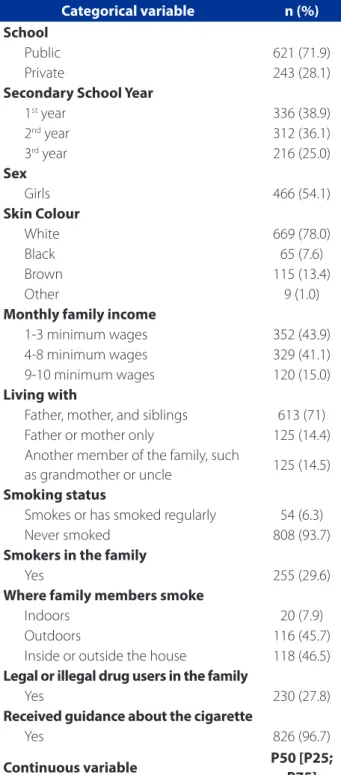
In all, 864 students participated in the study or 86.4% of the student population of the four surveyed schools. Table 1 shows the characteristics of the sample.
Of the participants, 466 (54.1%) were girls, 621 (71.9%) studied at public school, 613 (71%) lived with their parents and siblings, and 669 were white (78%). Regarding the use of drugs, 54 (6.3%) exhibited smoking initiation, and 35 (64.8%) of these student stated they continued smoking on a daily basis.
Table 2 shows the results of the associations of the smoking factor with the other studied variables.
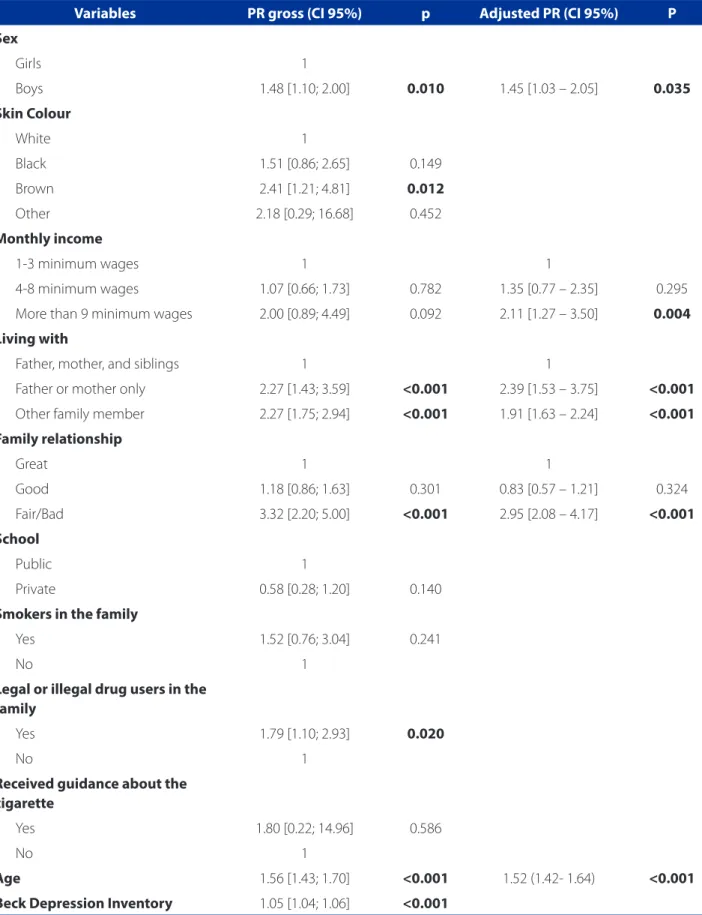
Table 3 shows the results of the Poisson regression anal-ysis in the univariate and multivariate model with the out-come variable “adolescent smoker”.
The multivariate analysis showed some significant asso-ciations with the tobacco factor. The relationship of colour, monthly household income, living with, family relation-ship, age, and smoking were all factors with a significant effect when analysed together.
Moreover, the variable “living with” was associated with the variable outcome (p = 0.006); the adolescents consid-ered non-smokers live with their parents and siblings, while a higher proportion of smokers live “with father or mother only” or with “another other family member, such as grand-mother or uncle.”
The Poisson regression analysis showed that the ado-lescents who only live with the father or the mother and those who live with relatives such as grandparents, uncles and others prevailed in the smoking initiation category, with 143% and 77%, respectively, compared to those who live with both parents and siblings (p<0.001).
The association test showed that adolescent smokers have fair family relationships (p = 0.003), and the preva-lence of smoking initiation for adolescents with this type of family arrangement is 229% greater compared to those who have a great family relationship (p<0.001).
The adolescent smokers were mostly from families with members who were dependent on licit and illic-it drugs, while non-smokers came from families whose members did not use drugs (p = 0.04). The regression analysis showed that families of drug users have a 79% higher prevalence of adolescent smokers than those without a family history of drug use.
The median age of the groups of adolescent smokers and non-smokers was 17 [16; 17] and 15 [15; 16] respective-ly, statistically different, p<0.001, while the regression anal-ysis indicated a 56% increase in the prevalence of smoking for each year of age (p<0.001).>
The median score of the Fagerström scale was 7 [5; 7], revealing a high level of nicotine addiction. The medi-an score for the Beck Depression Inventory in the group of adolescent smokers was 8 [3.5; 12], which means that the individual is not potentially depressive. In the group of non-smoker adolescents, the score was 5 [1; 10], which also means that the individual is not potentially depressive, despite presenting a significant difference (p = 0.007). The regression analysis showed an increase in the prevalence of smoking that grew 5% for every in-creasing point of the Beck Depression Inventory score (p<0.001).
In the analysis of association, the variables sex and smoking and income and smoking were not statistically significant; however, the regression analysis showed that the prevalence of smoking initiation among the boys was 49% higher than among the girls (p = 0.010), and that the prevalence of adolescent smokers from families with a household income of more than nine minimum wages was 111% higher than for the families with an income of 1 to 3 wages (p = 0.004).
Categorical variable n (%)
School
Public 621 (71.9)
Private 243 (28.1)
Secondary School Year
1st year 336 (38.9)
2nd year 312 (36.1)
3rd year 216 (25.0)
Sex
Girls 466 (54.1)
Skin Colour
White 669 (78.0)
Black 65 (7.6)
Brown 115 (13.4)
Other 9 (1.0)
Monthly family income
1-3 minimum wages 352 (43.9)
4-8 minimum wages 329 (41.1)
9-10 minimum wages 120 (15.0)
Living with
Father, mother, and siblings 613 (71) Father or mother only 125 (14.4) Another member of the family, such
as grandmother or uncle 125 (14.5) Smoking status
Smokes or has smoked regularly 54 (6.3)
Never smoked 808 (93.7)
Smokers in the family
Yes 255 (29.6)
Where family members smoke
Indoors 20 (7.9)
Outdoors 116 (45.7)
Inside or outside the house 118 (46.5) Legal or illegal drug users in the family
Yes 230 (27.8)
Received guidance about the cigarette
Yes 826 (96.7)
Continuous variable P50 [P25;
P75]
Age (n = 846)* 15.6 (1.2)
Age of smoking initiation (n = 34) 14.5 [14;15]
Fageström Scale (n = 34) 7 [5;7]
Beck Depression Inventory (n = 835) 5 [1;10] Table 1 – Characteristics of the sample. Porto Alegre, RS, Brazil 2014
Variables Smoker N (%) Non-smoker N (%) p (X2)
(n = 54) (n = 808)
Sex 0.176
Girls 30 (44.4) 363 (54.9)
Boys 24 (55.6) 442 (45.1)
Skin Colour 0.020
White 34 (63) 634 (79.1)*
Black 5 (9.3) 60 (7.5)
Brown 14 (25.9)* 100 (12.5)
Other 1 (1.9) 8 (1.0)
Monthly household income 0.124
1-3 minimum wages 19 (37.3) 332 (44.4)
4-8 minimum wages 19 (37.3) 309 (41.3)
More than 9 minimum wages 7 (13.7) 45 (6.0)
Living with 0.006
Father, mother, and siblings 28 (51.9) 583 (72.2)*
Father or mother only 13 (24.1)* 112 (13.9)
Another member of the family, such as
grandmother or uncle 13 (24.1)* 112 (13.9)
Family relationship <0.001
Great 20 (37.0) 398 (49.4)
Good 20 (37.0) 333 (41.4)
Fair/Bad 14 (26.0)* 74 (9.2)
School 0.140
Public 44 (81.5) 575 (71.2)
Private 10 (18.5) 233 (28.8)
Smokers in the family 0.163
Yes 21 (38.9) 233 (28.9)
No 33 (61.1) 572 (71.1)
Legal or illegal drug users in the family 0.040
Yes 22 (40.7)* 207 (26.8)
No 32 (59.3) 565 (73.2)*
Received guidance about the cigarette >0.999
Yes 53 (98.1) 771 (96.6)
No 1 (1.9) 27 (3.4)
Age <0.001
Average (SD) 16.5 (1.56) 15.5 (1.13)
Fageström Scale
Median 7 [5;7]
-Beck Depression Inventory 0.007
Median 8 [3,5;12] 5 [1;10]
Table 2 – Association of the smoking factor with the studied variables. Porto Alegre, 2014
Table 3 – Analysis of regression in the proportions of groups of adolescent smokers and non-smokers. Porto Alegre, 2014
Variables PR gross (CI 95%) p Adjusted PR (CI 95%) P
Sex
Girls 1
Boys 1.48 [1.10; 2.00] 0.010 1.45 [1.03 – 2.05] 0.035
Skin Colour
White 1
Black 1.51 [0.86; 2.65] 0.149
Brown 2.41 [1.21; 4.81] 0.012
Other 2.18 [0.29; 16.68] 0.452
Monthly income
1-3 minimum wages 1 1
4-8 minimum wages 1.07 [0.66; 1.73] 0.782 1.35 [0.77 – 2.35] 0.295
More than 9 minimum wages 2.00 [0.89; 4.49] 0.092 2.11 [1.27 – 3.50] 0.004
Living with
Father, mother, and siblings 1 1
Father or mother only 2.27 [1.43; 3.59] <0.001 2.39 [1.53 – 3.75] <0.001
Other family member 2.27 [1.75; 2.94] <0.001 1.91 [1.63 – 2.24] <0.001
Family relationship
Great 1 1
Good 1.18 [0.86; 1.63] 0.301 0.83 [0.57 – 1.21] 0.324
Fair/Bad 3.32 [2.20; 5.00] <0.001 2.95 [2.08 – 4.17] <0.001
School
Public 1
Private 0.58 [0.28; 1.20] 0.140
Smokers in the family
Yes 1.52 [0.76; 3.04] 0.241
No 1
Legal or illegal drug users in the family
Yes 1.79 [1.10; 2.93] 0.020
No 1
Received guidance about the cigarette
Yes 1.80 [0.22; 14.96] 0.586
No 1
Age 1.56 [1.43; 1.70] <0.001 1.52 (1.42- 1.64) <0.001
Beck Depression Inventory 1.05 [1.04; 1.06] <0.001
DISCUSSION
We observed several factors that may be associated with smoking initiation among adolescents, one of which was skin colour. This evidence could be related to the cul-tural and social marginalisation and exclusion, and the lower financial conditions of the black and brown-skinned population. Issues related to skin colour and involvement with smoking are rarely discussed in literature, probably because in other studies this difference does not have a statistical significance(15).
The prevalence of adolescent smokers in families with a monthly income of more than nine minimum wages was 111% higher than that of families who earn up to one min-imum wage. This difference indicates that higher-income families probably provide their children with an allowance and greater purchasing power, which enables them to make decisions and purchases without the financial barrier. This fact, along with the time to focus on experimentation, self-affirmation, and transgression, often induces them to try cigarettes.
In this study, the median age of the adolescents was 17, which is higher than the age of those who do not smoke, increasing the chance of the adolescent becom-ing a smoker by 56% for every year of age. A study shows that the greater age of the adolescent is associated with a higher risk of smoking initiation(15). This finding demon-strates the extent to which adulthood and the fascination of adolescents for this stage of life can influence the de-cisions they make.
Fair or bad family relations can be associated with ado-lescent smokers, and the rate of smoking initiation among adolescents who have family relations considered fair or bad is 195% higher than among those who have a great family relationship. A study conducted in Hong Kong(8) on the types of family relationships found that the adoles-cents who have authoritarian parents or a conflicting re-lationship with their patents are more prone to smoking and drinking, respectively, while young people with more permissive parents are less likely to drink.
The regression analysis showed that adolescents who only live with one parent, or those who live with family members such as grandparents, uncles and others, have a higher prevalence of smoking initiation than those who live with both parents and siblings. Similarly, a study(8) found that adolescents who live in single-parent house-holds are more likely to become smokers, and this index can increase if they have siblings who smoke.
The same study(8) points to possible difficulties that the family and adolescent could be facing, such as the absence
of a parent, financial hardship or an excessive workload. These factors are considered possible causes of smoking initiation since smoking is seen as form of relief from the psychological stress. This finding reinforces the importance of good family relationships and support – a tool that can help build specific strategies for this population.
The presence of illegal and legal drug users in the fam-ily was statistically significant when associated with smok-ing in adolescence, reachsmok-ing a 79% higher prevalence in relation to families without a history of drug use. The stud-ied adolescents reported they had family members who smoke inside and outside the home and members who use other drugs. A study showed that adolescents who have parents or friends who smoke are more likely to try smoking than those who do not have parents or friends who smoke(2). This finding reveals that adolescents are in-fluenced by their loved ones to start smoking inside the home. Adolescents with family members who smoke at home grow up believing smoking is natural, which can in-duce them to initiate this habit.
In this study, we observed that the prevalence of smok-ing initiation among the boys was 49% higher than among the girls. A study conducted in another southern state of Brazil also found higher prevalence of male adolescent smokers(15). This evidence resumes discussions on gender issues, which still have a huge impact on the health of men and women in terms of decisions, already present in adolescents. A meta-analysis found that active or passive exposure to smoking is associated with an increased risk for allergic pulmonary diseases, and passive smoking is as-sociated with food allergies in children and adolescents(16). In relation to girls, a study in Finland revealed that smoking interferes with the quality of the production of antibodies in vaccine processes in adolescents, as in the case of the vaccine against the Human Papilloma Virus (HPV)(17).
A study with adolescents sought to reveal the distinc-tions between the experimenters that evolved to currently smoking and those who did not experiment. It was ob-served that the risk factors significantly associated with the transition from experimentation with cigarettes to smok-ing were current alcohol consumption, illicit drug use and friends who smoke(19). The practice of a religion was pin-pointed as a protective factor against smoking initiation(20). These findings suggest that a good psychological and physical structure, self-esteem, personality, and spirituality can make a difference in the lives of youths in times of dif-ficult decisions and social pressure.
The emergence of adolescent smokers can indicate a network that needs support because it is leading youths toward the world of smoking, considering they are usu-ally aware of the hazard they are assuming. A study iden-tified the family health strategy (“ESF”) as the healthcare service that is closer to schools and youths, and this ser-vice includes the nurse(21). This finding shows the poten-tial of this professional in healthcare education and the fight against smoking initiation inside communities. Giv-en their proximity with users, they can approach youths to a better quality of life away from tobacco, alcohol, and other drugs through bonding with these adolescents and the community as a whole.
The prevalence of adolescents who started smok-ing was 6.3%, which is lower than the percentage found in study in Brazilian capitals(12), suggesting the existence of different prevalence between the capital cities and re-gions of Brazil. These results also suggest that, although the smoking-related behaviour is analysed in the same period of life, the prevalence of adolescents in various places oc-curs differently. This data alerts to the importance of envi-ronmental influences on whether an adolescent will or will not become a smoker, and the need to better understand the variables that individually surround each adolescent who becomes a smoker; evidently, the mere detection of associated factors is insufficient to understand the dynam-ics of smoking initiation in adolescence.
CONCLUSION
The study identified several factors that may be associ-ated with smoking initiation in adolescents, especially skin colour, age, a healthy family relationship, social conviviality, sex and, income.
Older boys with brown skin and a higher household income were more susceptible to the onset of smoking, which contradicts the previously observed trend that people with a lower income are more prone to smoking.
The start of adult life was considered a moment of possibil-ities, so the older the adolescent and the better the finan-cial condition, the greater the risk of him or her becoming a smoker. Aspects of the personal and social lives of ado-lescents, such as fair and bad family relationships, relatives who use licit and illicit drug, living with a single parent or with another family member such as uncle, grandfather or boyfriend, and the presence of depressive symptoms also had a significant influence on smoking initiation.
The difficulties faced by the adolescents during the construction of their identities may cause them to seek re-lief from stress and anxiety, and the cigarette becomes an outlet for their problems. These results point to the need for health and education professionals to understand how these factors are interfering in the lives of adolescents, and how they perceive and deal with these situations. Great-er insight into this reality can enable bettGreat-er guidance and support for youths as they struggle to cope with this transi-tion to prevent smoking initiatransi-tion from occurring.
Bonding and support through healthcare education at schools and within the scope of the family health strategy can potentially change this reality. Through education, re-search, and assistance for adolescent smokers, nurses can contribute to the fight against drug use, and help provide adolescents with quality of life without tobacco by increas-ing awareness of themselves and their choices.
It is important to stress that the method of measuring the outcome variable was the information provided by the adolescents, which may have caused embarrassment, the minimisation/hiding of facts to avoid exposure, and the subsequent underestimation of results, thus characterising a possible limitation of the study.
REFERENCES
1. World Health Organization [Internet]. Genava: WHO; c2015- 2017 [cited 2016 Oct 10]. Adolescent development; [about 4 screens]. Available at: www.who. int/maternal_child_adolescent/topics/adolescence/development/en/. 2. Mohammadpoorasl KKA, Esmaeelpour R, Aghazamani F, Rostami F. Tobacco
use and substance abuse in students of Karaj universities. Int J Prev Med. 2016 [cited 2016 Oct 13];7:105. Available at: www.ncbi.nlm.nih.gov/pmc/articles/ PMC5029117/.
3. Ministério do Planejamento, Desenvolvimento e Gestão (BR), Instituto Brasileiro de Geografia e Estatística. Pesquisa Nacional de Saúde do Escolar 2015. Rio de Janeiro: IBGE; 2016 [cited 2016 Oct 16]. Available at: https://www.icict.fiocruz. br/sites/www.icict.fiocruz.br/files/PENSE_Saude%20Escolar%202015.pdf. 4. Alomari MA, Al-Sheyab NA. Cigarette smoking lowers blood pressure in
adoles-cents: the Irbid-TRY. Inhal Toxicol. 2016 [cited 2016 Oct 05];28(3):140-4. Avail-able at: www.tandfonline.com/doi/full/10.3109/08958378.2016.1145769. 5. Zacharasiewicz A. Maternal smoking in pregnancy and its influence on
Available at: http://openres.ersjournals.com/content/erjor/2/3/00042-2016. full.pdf.
6. Pinto MT, Pichon-Riviere A, Bardach A. The burden of smoking-related diseases in Brazil: mortality, morbidity and costs. Cad Saúde Pública. 2015 jun [cit-ed 2017 Feb 08]; 31(6):1283-97. Available at: http://dx.doi.org/10.1590/0102-311X00192013.
7. Zeitoune RCG, Ferreira VS, Silveira HS, Domingos AM, Maia AC. O conhecimento de adolescentes sobre drogas lícitas e ilícitas: uma contribuição para a enferma-gem comunitária. Esc Anna Nery. 2012;16(1):57-63.
8. Loke AY, Mak Y-W. Family process and peer influence on substance use by adolescents. Int J Environ Res Public Health. 2013 [cited 2015 Feb 17];10(9):3868-85. Available at: www.ncbi.nlm.nih.gov/pmc/articles/PMC3799532/pdf/ijerph-10-03868.pdf. 9. Hoek J, Smith K. A qualitative analysis of low income smokers’ responses to tabacco
excise tax increases. Int J Drug Policy [internet]. 2016 [cited Sept 30];37:82-89. Available at: www.ijdp.org/article/S0955-3959(16)30275-4/pdf.
10. Moura MAS, Menezes MFB, Mariano RD, Silva VR, Sousa LP. Intervenções de enfermagem no controle do tabagismo: uma revisão integrativa. Rev Bras Can-cerol. 2011;57(3):411-9.
11. Teixeira CC. Fatores que contribuem para a iniciação tabágica em adolescentes de quatro escolas de Porto Alegre e região metropolitana [dissertação]. Porto Alegre (RS): Universidade Federal do Rio Grande do Sul, Escola de Enfermagem; 2015. 12. Barreto SM, Giatti L, Casado L, Moura L, Crespo C, Malta DC. Exposição ao
taba-gismo entre escolares no Brasil. Ciênc Saúde Coletiva. 2010;15(2):3027-34. 13. Paranhos ME, Argimon IIL, Werlang BSG. Propriedades psicométricas do
Inventário de Depressão de Beck–II (BDI–II) em adolescentes. Aval Psicol. 2010;9(3):383-92.
14. Carmo JT, Pueyo AA. A adaptação ao português do Fageström Test for Nicotine Dependence (FTND) para avaliar a dependência e tolerância à nicotina em fu-mantes brasileiros. Rev Bras Med. 2002;59(1/2):73-80.
15. Menezes AHR, Dalmas JC, Scarinci IC, Maciel SM, Cardelli AAM. Fatores as-sociados ao uso regular de cigarros por adolescentes estudantes de escolas públicas de Londrina, Paraná, Brasil. Cad Saude Publica. 2014 [cited 2014 Dec 10];30(4):774-84. Available at: www.scielosp.org/pdf/csp/v30n4/0102-311X-csp-30-4-0774.pdf.
16. Saulyte J, Regueira C, Montes-Martínez A, Khudyakov P, Takkouche B. Ac-tive or passive exposure to tobacco smoking and allergic rhinitis, allergic dermatitis, and food allergy in adults and children: a systematic review and meta-analysis. PLoSMed. 2014 [cited 2015 Jun 20];11(3). Avail-able at: http://journals.plos.org/plosmedicine/article/file?id=10.1371/journal. pmed.1001611&type=printable.
17. Namujju PB, Pajunen E, Simen-Kapeu A, Hedman L, Merikukka M, Surcel HM, et al. Impact of smoking on the quantity and quality of antibodies induced by human papillomavirus type 16 and 18 AS04-adjuvanted virus-like-particle vac-cine: a pilot study. BMC Res Notes. 2014 [cited 2015 Feb 20];7:445. Available at: http://www.biomedcentral.com/1756-0500/7/445.
18. Rao S, Aslam SK, Zaheer S, Shafique K. Anti-smoking initiatives and cur-rent smoking among 19,643 adolescents in South Asia: findings from the Global Youth Tobacco Survey. Harm Reduct J. 2014[cited 2015 Feb 20];11:8. Available at: http://harmreductionjournal.biomedcentral.com/arti-cles/10.1186/1477-7517-11-8.
19. Bonilha AG, Ruffino-Neto A, Sicchieri MP, Achcar JA, Rodrigues-Júnior AL, Bad-dini-Martinez J. Correlatos de experimentação e consumo atual de cigarros entre adolescentes. J Bras Pneumol. 2014;40(6):634-42.
20. Santos ARM, Oliveira LMF, Farias Júnior JC, Silva PPC, Silva EAPC, Freitas CMSM Associação entre prática religiosa e comportamentos de risco à saúde em ado-lescentes de Pernambuco, Brasil. Rev Bras Ativ Fís Saúde. 2015;20(3):284-96. 21. Souza TT, Pimenta AM. Características das ações de educação em saúde para
adolescentes. Rev Enferm Cent O Min. 2013;3(1):587-96.
Corresponding author:
Carolina de Castilhos Teixeira
E-mail: [email protected]