Mestre em Genética Molecular e Biomedicina
Phenotypic and genotypic characterization
of Salmonella spp. isolates in Portugal
Dissertação para obtenção do Grau de Doutor em Biologia, Especialidade de Genética Molecular
Orientador: João Paulo dos Santos Gomes, Investigador
Auxiliar com Habilitação, INSA
Coorientador: Jorge Cândido Pinheiro da Costa Machado,
Coordenador do Departamento de Doenças Infeciosas, INSA
Coorientador: Luís Jaime Gomes Ferreira da Silva Mota,
Professor Auxiliar, FCT - UNL
Júri:
Presidente: Prof. Doutor Pedro Viana Batista
Arguentes: Prof. Doutor Mário Nuno Ramos de Almeida Ramirez Prof. Doutora Paula Cristina Maia Teixeira
Vogais: Prof. Doutora Rita Gonçalves Sobral de Almeida Prof. Doutor João Paulo dos Santos Gomes
Phenotypic and Genotypic characterization
of Salmonella spp. isolates in Portugal
Copyright © Leonor Silveira
A Faculdade de Ciências e Tecnologia e a Universidade Nova de Lisboa têm o direito, perpétuo e sem limites geográficos, de arquivar e publicar esta dissertação através de exemplares impressos reproduzidos em papel ou de forma digital, ou por qualquer outro meio conhecido ou que venha a ser inventado, e de a divulgar através de repositórios científicos e de admitir a sua cópia e distribuição com objetivos educacionais ou de investigação, não comerciais, desde que seja dado crédito ao autor e editor.
As secções desta dissertação já publicadas por editores para os quais foram transferidos direitos de cópia pelos autores, encontram-se devidamente identificadas ao longo da dissertação e são reproduzidas sob permissão dos editores originais e sujeitas às restrições de cópia impostas pelos mesmos.
Look up at the stars and not down at your feet. Try to make sense of what you see, and wonder about what makes the universe exist. Be curious.
Primeiro que tudo gostaria de agradecer ao Doutor João Paulo Gomes, a sua orientação e motivação constantes, muitas vezes nos momentos em que mais precisava. O teu apoio foi fundamental para conseguir completar este desafio. A tua confiança em mim e no meu trabalho fizeram-me sentir mais segura e a começar a acreditar mais naquilo que faço. Obrigada!
Ao Doutor Jorge Machado, meu coorientador, Coordenador e Responsável de Laboratório. Agradeço todo o apoio ao longo destes anos.
Ao Doutor Jaime Mota, por ter aceite ser meu coorientador interno, e por todo o apoio e disponibilidade demonstrados ao longo destes anos. Fica a faltar uma futura colaboração! Aos restantes membros da Comissão de Acompanhamento de Tese, Doutora Mónica Oleastro e Doutora Isabel Couto por todas as sugestões.
Um agradecimento especial às minhas colegas do Laboratório de Infeções Gastrintestinais, Mónica Oleastro e Ângela Pista. Sem a vossa compreensão e apoio constante nada disto teria sido possível.
Aos restantes colegas do Departamento de Doenças Infeciosas, agradeço a motivação no decorrer deste trabalho.
Quero também agradecer aos colegas da Secção de Bioinformática, Alexandra Nunes, Vítor Borges e Miguel Pinto, pelo apoio técnico e não só. Pela companhia nas horas de almoço. Pela discussão de temas técnicos e pela distração nas horas vagas. Obrigada a todos! Agradeço também à Raquel Rocha pelo seu companheirismo.
Aos colegas da Unidade de Tecnologia e Inovação por todo o apoio na implementação e otimização das técnicas de sequenciação cruciais para desenvolver deste trabalho.
À Faculdade de Ciências e Tecnologia da Universidade Nova de Lisboa, em especial à Professora Isabel Sá Nogueira, coordenadora do Programa Doutoral em Biologia. Toda a minha formação foi feita nesta casa e irei guardar sempre um carinho especial por esses tempos.
Um agradecimento do fundo do coração às minha miúdas, Andrea Santos, Joana Isidro e Rita Macedo. Nem consigo descrever por palavras o quanto vos agradeço. Os vossos conselhos, os vossos mimos, as nossas saídas e sleepovers, ajudaram-me a manter a sanidade mental e a manter-me focada no objetivo. Obrigada! Adoro-vos!
À minha família, de sangue e coração, e que adoro de paixão. Aos meus avós, por estarem sempre presentes, pelo vosso apoio e por serem um excelente exemplo de perseverança e sucesso na vida profissional. À minha avó Arminda, por ter sido tão especial na minha vida e continuar a olhar por mim. Aos meus tios e padrinhos (oficiais e emprestados), pela amizade e por serem os mais fixes de sempre. Adoro-vos a todos! Aos meus sogros e aos meus cunhados, agradeço todo o carinho e apoio. Aos meus miúdos: Catarina, Carolina, João, Francisco e Sofia, espero que lutem sempre por aquilo que querem e que cumpram sempre os vossos objetivos. Nunca deixem de acreditar nas vossas capacidades! Espero ser sempre um bom exemplo para vocês.
Um agradecimento muito especial aos meus pais. O seu apoio incondicional, os exemplos excecionais que são, e a educação que me proporcionaram, fizeram de mim o que sou hoje. E obrigada por me darem sempre guarida quando precisei.
Ao meu irmão, que apesar de longe, é parte do meu coração. Para sempre.
Finalmente, ao Pedro, acima de tudo pela paciência. Eu sei que não foi fácil, especialmente a última fase… obrigada pelo teu apoio, pelo teu carinho, por seres o meu companheiro de viagens e da vida. Por me ajudares a crescer, por seres a minha família, por todos os momentos de partilha. Espero que se sigam muitos mais. Amo-te.
no mundo e representa um enorme impacto económico não só em países em desenvolvimento, mas também em países desenvolvidos. Assim, a vigilância epidemiológica e laboratorial de Salmonella é essencial para o controlo da infeção e para a diminuição dos custos associados à doença. Desde 1950 que o Instituto Nacional de Saúde Doutor Ricardo Jorge tem tido um papel relevante na vigilância laboratorial desta doença.
O principal objetivo deste trabalho prendeu-se com a contribuição para o melhor conhecimento de alguns dos serotipos de Salmonella que circulam em Portugal, quer mais frequentes, quer serotipos com características vantajosas para a sua perseverança. De forma a cumprir este objetivo, primeiramente foram analisados os dados acumulados ao longo de décadas de vigilância laboratorial e foram determinadas as tendências dos serotipos circulantes no país. Foi também implementada, no Laboratório Nacional de Referência, a sequenciação genómica aplicada à vigilância de Salmonella enterica, e foi feita a avaliação da substituição das técnicas clássicas de tipagem. A sequenciação genómica, como método altamente discriminatório permitiu, não só a confirmação de surtos previamente identificados, como também a sinalização de potenciais surtos não sinalizados pelas autoridades de saúde. Neste trabalho, identificámos também vários isolados com múltiplos marcadores de resistência e diversos elementos genéticos móveis que conferem a capacidade de persistência e disseminação a estas bactérias.
Esta dissertação destaca a necessidade de revisão da regulamentação associada a géneros alimentícios e de estabelecimento de novas medidas de controlo de infeção na produção animal, de maneira a evitar a disseminação de marcadores de multirresistência e persistência, que contribuem grandemente para o aumento da severidade das infeções causadas por Salmonella, e também da disseminação dessas características altamente transmissíveis. Este trabalho representa uma importante contribuição para o conhecimento dos isolados de Salmonella enterica circulantes em Portugal, e também para o reforço da capacitação do Laboratório Nacional de Referência.
Palavras-chave
in the world, and represents a considerable burden in developing and developed countries. As such, Salmonella surveillance is essential to control infection and decrease the economic burden of the disease, and the Portuguese National Institute of Health has been working in this field roughly since 1950.
Considering the importance of the surveillance of Salmonella enterica, the main goal of this work was to contribute to a better knowledge of relevant serovars circulating in Portugal, either the most common, or serovars exhibiting important fitness traits that confer ecological advantages over other strains. In order to achieve this objective, first we analysed decades of data and established the trends of Salmonella enterica serovars circulating in Portugal. Additionally, whole-genome sequencing (WGS) was implemented at the National Reference Laboratory to the surveillance of Salmonella enterica, and was evaluated as a substitute of traditional typing methods, such as serotyping and multiple-locus variable number tandem repeat analysis. WGS proved to be a highly discriminatory method for the detection of suspected outbreaks and even previously undetected clusters. We identified several isolates carrying multiple resistance markers and mobile genetic elements that confer the potential of persistence and spread of these bacteria.
This PhD dissertation highlights the need for the adjustment of the existing regulations for foodstuffs monitoring and the investigation of safe control measures in animal production, as a means to control the spread of resistant and persistent clones that may contribute to the increase of severe infections and to the spread of those markers to other bacteria. This work stands as an important contribution for the insight on Salmonella
enterica isolates circulating in Portugal, as well as a contribution for the reinforcement of
the capacitation of the Portuguese National Reference Laboratory.
Keywords
Salmonella enterica, Multidrug resistance, Whole-genome sequencing, Surveillance,
Agradecimentos ... vii
Resumo ... ix
Abstract ... xi
Figure index ... xv
Table index ... xvii
List of abbreviations ... xix
Notes of the author: thesis organization, format and outline ... xxi
1. General introduction ... 3
The genus Salmonella spp. ... 3
1.1.1. The discovery of Salmonella ... 3
1.1.2. Taxonomy ... 4
From classical typing to genomic characterization ... 5
1.2.1. Classical typing ... 5
1.2.2. Molecular typing... 5
1.2.3. Genomic era ... 6
Salmonella evolution and genome structure... 8
Host preference and human disease ... 10
Epidemiology ... 11
Pathogenesis ... 13
Diagnosis, antimicrobial therapy and antimicrobial resistance ... 14
1.7.1. Diagnosis ... 14
1.7.2. Antimicrobial therapy ... 15
1.7.3. Antimicrobial resistance ... 16
Heavy metals tolerance ... 19
Aims and research plan ... 20
2. Salmonella spp. surveillance in Portugal ... 23
Global trends ... 23
Serotyping: trends from January 1998 to July 2019 ... 28
Multidrug resistance in Portugal... 30
3. The new era of surveillance of Salmonella ... 35
Materials and Methods ... 37
3.1.2. Data availability ... 38
Retrospective study of the genetic diversity of Salmonella enterica serovar Enteritidis in Portugal ... 38
3.2.1. Introduction ... 38
3.2.2. Materials and Methods ... 39
3.2.3. Results... 44
3.2.4. Discussion ... 47
3.3.1. Introduction ... 49
3.3.2. Epidemiological information... 49
3.3.3. WGS-based analysis ... 51
3.3.4. Conclusions ... 51
4. Multidrug resistant Salmonella enterica serovar Rissen clusters detected in Azores archipelago, Portugal ... 55
Abstract... 55
Introduction ... 56
Materials and Methods ... 57
4.3.1. Bacterial isolate typing and antimicrobial susceptibility testing ... 57
4.3.2. Whole Genome Sequencing and genome characterization ... 57
4.3.3. Gene-by-gene analysis ... 58
Results ... 59
4.4.1. Antimicrobial susceptibility and heavy metal tolerance ... 59
4.4.2. Global genetic diversity of S. enterica serovar Rissen ... 60
4.4.3. WGS-based epidemiological analysis of the PT isolates ... 62
Discussion ... 66
Conclusions ... 68
5. Characterization of multidrug-resistant isolates of Salmonella enterica serovars Heidelberg and Minnesota from imported poultry meat in Portugal ... 71
Abstract... 71
Introduction ... 72
Materials and methods ... 72
5.3.1. Sample dataset characterization ... 73
5.3.2. Whole Genome Sequencing and genome characterization ... 73
5.3.3. Genome assembly and annotation ... 73
5.3.4. Strains’ genomic characterization ... 74
5.3.5. Gene-by-gene analysis ... 74
Results ... 75
5.4.1. Characterization of the isolates ... 75
5.4.2. WGS-based genomic relatedness analysis ... 79
Discussion ... 84
6. Final overview, concluding remarks and future directions ... 89
7. References ... 93
Figure 1-2 - Confirmed non-typhoidal salmonellosis versus S. enterica serovar Enteritidis 12 Figure 1-3 - Distribution of the EU top-five Salmonella serovars 13 Figure 1-4 – Pathogenesis of Salmonella 14
Figure 1-5. – Antibiotics timeline 16
Figure 2-1– Origin of the Salmonella spp. isolates received at NIH 24 Figure 2-2 – Total of Salmonella spp. serovars identified from 1950 to July 2019 24 Figure 2-3 –Total Salmonella spp. serovars versus number of Salmonella serovar Enteritidis 24 Figure 2-4 – Number of notifications of typhoid/paratyphoid fever 26 Figure 2-5 – Number of notifications of salmonellosis 26 Figure 2-6 – Rates of cases by age group 27 Figure 2-7 – Seasonality of Salmonella spp. in Portugal 27 Figure 2-8 – Place of residence of patients with salmonellosis 28 Figure 2-9 – Percentage of serovars isolated from patients with salmonellosis 29 Figure 2-11 – Most relevant multidrug resistant serovars from January 2015 to June 2019 31 Figure 2-12 – Percentage of isolates resistant to each antibiotic group tested 31 Figure 3-1 – Trend of Salmonella enterica serovar Enteritidis 44 Figure 3-2 – Minimum spanning tree of the 56 different MLVA profile 45 Figure 3-3 – Percentage of the most common MLVA profiles in Portugal 45 Figure 3-4 – Number of cases of the 10 most frequent profiles per year 46 Figure 3-5 – Global phylogeny of S. enterica serovar Enteritidis isolates with MLVA profiles
3-10-5-4-1 and 3-11-5-3-10-5-4-1 47
Figure 3-6 – Distribution of suspected outbreak cases by month 49 Figure 3-7 – Trend of Salmonella enterica serovar Newport identified in the NRL 50 Figure 3-8 – Cases’ distribution in the Portuguese continent, Madeira and Açores archipelagos 50 Figure 3-9 – Allelic diversity analysis of Salmonella enterica serovar Newport based on a
gene-by-gene approach 51
Figure 4-1 - Phylogenetic analysis of S. enterica serovar Rissen 61 Figure 4-2 – Allelic diversity analysis of the “Portuguese” (PT) S. enterica serovar Rissen 65 Figure 5-1 – Global phylogeny of S. enterica serovars Heidelberg and Minnesota isolates 80 Figure 5-2 – Phylogenic relationships based on a dynamic gene-by-gene approach and allelic differences between S. enterica serovar Minnesota isolates 81 Figure 5-3 – Phylogenic relationships based on a dynamic gene-by-gene approach and allelic differences of S. enterica serovar Heidelberg isolates 83
3-10-5-4-1 and 3-11-5-4-1 40 Table 5-1 – Serovar, antibiotic resistance phenotype and genotype, plasmids and pathogenicity islands of the Salmonella enterica serovar Heidelberg and Salmonella enterica serovar Minnesota isolates enrolled in the present study 77 Supplementary Table 4-1 – Metadata, genome assembly statistics, antibiotic resistance phenotype and genotype and heavy metal tolerance genotype of the Salmonella enterica serovar Rissen isolates enrolled in the present study 114 Supplementary Table 4-2 - List of publicly available Salmonella enterica serovar Rissen genomes used in the present study 118 Supplementary Table 5-1 – List of publicly available Salmonella enterica serovar Heidelberg and
Salmonella enterica serovar Minnesota genomes used in the present study 120
Supplementary table 5-2 - Phage presence in the 36 sequenced isolates of Salmonella enterica serovar Heidelberg and Salmonella enterica serovar Minnesota 125
AD – Allele differences bp – Base pairs BC – Before Christ
CGE – Centre for Genomic Epidemiology
CLED agar - Cystine lactose electrolyte deficient agar DNA – Deoxyribonucleic Acid
EC – European Communion
ECDC – European Centre for Disease Prevention and Control
EPIS-FWD – Epidemic Intelligence Information System for food- and waterborne diseases ENA – European Nucleotide Archive
ESBLs – Extended-spectrum β-lactamases EU – European Union
EUCAST – European Committee on Antimicrobial Susceptibility Testing EU/EEA – European Union/European Economic Area
GN broth – Gram-Negative broth HGT –Horizontal gene transfer
INIAV – Instituto Nacional de Investigação Agrária e Veterinária iNTS – Invasive non-typhoidal Salmonella
INSA – Instituto Nacional de Saúde Doutor Ricardo Jorge IS – Insertion sequence
LPS – Lipopolysaccharides
MALDI-TOF MS – Matrix-assisted laser desorption/ionisation time-of-flight mass spectrometry Mb – Megabase
MDR – Multidrug resistant
MLST – Multilocus sequence typing
MLVA – Multiple-locus variable number tandem repeat analysis MST – Minimum spanning tree
NIH – National Institute of Health NRL – National Reference Laboratory NTS – Non-typhoidal Salmonella PBP – Penicillin Binding Protein PCR – Polymerase chain reaction PFGE – Pulsed-field gel electrophoresis PHE – Public Health England
PMQR – Plasmid-mediated quinolone resistance genes PT – Portuguese
QA/QC – Quality Assurance/Quality Control
RFLP – Restriction fragment length polymorphism analysis rpm – Revolutions per minute
rRNA – Ribosomal RNA
SCV – Salmonella-containing vacuoles SPI – Salmonella pathogenicity island SNP – Single nucleotide polymorphism ST – Sequence type
T3SS – Type III secretion systems T4SS – Type IV secretion system Tn – Transposon
tRNA – Transfer RNA
USA – United States of America
VNTR – Variable number tandem repeat
wgMLST – Whole-genome multi locus sequence typing WGS – Whole-genome sequencing
WHO – World Health Organization
studies, and a final discussion. The main body is based on two studies that were already submitted to peer reviewed international journals, and are presented as individual chapters. In summary, the PhD dissertation includes:
Chapter 1
This chapter consists of an overview of the state of the art regarding the context of this dissertation. It describes the major aspects of Salmonella spp. taxonomy, a description of the transition from the classic typing methods to whole-genome sequencing (WGS), insights of
Salmonella evolution and genome structure, and a summary of all aspects related to human
disease, such as diagnostic, epidemiology and treatment. Finally, this chapter presents the general and specific aims of this PhD dissertation.
Chapter 2
This chapter gives insight on the surveillance of Salmonella spp. performed at the National Reference Laboratory of Gastrointestinal Infections of the National Institute of Health Doutor Ricardo Jorge, over the last 21 years. It is not presented in the form of a classical manuscript (i.e., with an Abstract, methods section, etc.) since it is not our intent to submit it for publication (in contrast with the subsequent chapters), and because it enrols methodologies that changed over time, and its description would be a cumbersome task and completely irrelevant taking the objective of the chapter into account.
Chapter 3
This chapter, also written in an unconventional manner, focuses on the practical advantages that WGS brought to the National Reference Laboratory in terms of Salmonella surveillance. Two studies are approached in this chapter, i) the transition from a traditional molecular typing method, Multiple-locus variable number tandem repeat analysis (MLVA), to WGS and what it entails for surveillance of one of the most common serovars in Portugal, Salmonella
enterica serovar Enteritidis, ii) and an ongoing study of an outbreak of Salmonella enterica
serovar Newport and the preliminary findings. Chapter 4
This chapter is based on a manuscript (“Silveira L., Pinto M., Isidro J., Pista A., Themudo P.,
Vieira L., Machado J. and Gomes J.P.. Multidrug resistant Salmonella enterica serovar Rissen clusters detected in Azores archipelago, Portugal”) published in the International Journal of
clusters of S. enterica serovar Rissen linking samples from multiple sources, while gaining insight on the genetic diversity of Portuguese isolates.
Chapter 5
This chapter, also based on a manuscript (“Leonor Silveira, Alexandra Nunes, Ângela Pista,
Joana Isidro, Cristina Belo Correia, Margarida Saraiva, Rita Batista, Isabel Castanheira, Jorge Machado, João Paulo Gomes. Characterization of multidrug-resistant isolates of Salmonella enterica serovars Heidelberg and Minnesota from imported poultry meat in Portugal”, under
review in Microbial Drug Resistance), consists in the phenotypic and genotypic characterization of isolates recovered from imported poultry meat.
Chapter 6
Finally, this chapter provides an overview of the main results of this PhD dissertation. Since Chapters 4, and 5 have their own Discussion and Conclusion sections, only the main results are discussed and the main conclusions highlighted, to avoid excessive redundancy. Also, in this section future perspectives are approached.
The chapters were all formatted in the same style, and the references are cited by sequential numbers and listed in a single “References” section. The supplemental tables are also presented in a section at the end of this dissertation.
CHAPTER 1
1. General introduction
The genus Salmonella spp.
1.1.1. The discovery of Salmonella
Salmonella is a genus of rod-shaped Gram-negative intracellular facultative bacteria,
within the Enterobacteriaceae family. Several Historical accounts point to Salmonella as the cause of death of many important personalities and civilizations. In 430 BC, the Plague of Athens decimated around 75,000 to 100,000 people during the second year of the Peloponnesian War (against Sparta) and had enormous political, economic and social ramifications, since it was the main reason for Athens losing the war. This outbreak spread from Ethiopia into Egypt, Libya, the Near East and finally the port of Athens. It was also, at that time, the cause of death of the Athenian leader Pericles in 429 BC1. A few years later, in
323 BC, Alexander the Great died at 33 years old, most likely due to typhoid fever2. In 2001,
a mass grave with victims from the Plague was found, and the DNA of Salmonella enterica serovar Typhi was detected in three squeletons3. Just recently, in 2018, Nature Ecology &
Evolution published a study that suggests that S. enterica serovar Paratyphi C was introduced in the New World by the European colonizers and was the cause of death of the Aztecs in the 1500s4. On November 11th 1861, the beloved Portuguese king D. Pedro V died
at the age of 24 years old, from typhoid fever, along with two of his brothers, D. Fernando and D. João5. One month later, on December 14th 1861, his cousin, and Queen Victoria’s
husband, Prince Consort Albert of Saxe-Coburg and Gotha, died from the same illness6.
The attribution of the discovery of Salmonella is still debatable since many were the scientists that contributed to the characterization of typhoid fever and its propagation. In 1873, William Bud, a medical doctor who studied cholera and intestinal fever, stated that typhoid fever was transmitted through faeces, and contaminated hands and water were the probable propagation routes. Bud indicated disinfection as a preventive measure of spread of this disease7. Later in 1879, Karl Joseph Eberth described a bacillus in the abdominal
lymph nodes and in the spleen of patients with typhoid fever8. However, it was only in 1885
that this microorganism was isolated and identified by Theobald Smith as Bacillus
choleraesuis, the etiologic agent of hog cholera9,10. Nevertheless, typhoid fever was still
believed to be transmitted through polluted water, milk, putrefying organic matter or even sewer gas11. Later, during the 1900s, the work of sanitary engineer George Soper on the
typhoid outbreaks caused by Mary Mallon cleared much of the mystery surrounding the transmission of typhoid fever. Mary Mallon was an Irish woman who worked as a cook in several private homes in New York. She was an asymptomatic carrier of S. enterica serovar Typhi and was responsible for several outbreaks and the contamination of at least 122
people before she was forcibly admitted in North Brother Island, where she lived until her death in 193812.
1.1.2. Taxonomy
The nomenclature of Salmonella is somewhat complex and suffered several changes through time. Bacillus choleraesuis was initially included in the group Bacterium or Bacillus, until 1900, Lignières proposed it should be considered a genus and named it Salmonella, after Theobald Smith’s supervisor Daniel Salmon9,13. In 1931, Kauffman proposed one of the
first Salmonella taxonomic classification methods, the Kauffmann-White Schema, based on the identification of cell wall (O) and flagellar (H) antigens, and according to which serovars were considered different species14. At that time, novel Salmonella species were given
names according to, for example, the disease caused (Salmonella typhi), host specificity (Salmonella abortus-ovis), and later after the geographical area where the strain was first isolated (Salmonella london)14–16. By 1940, the number of Salmonella species was becoming
unmanageable, hence Borman et al proposed the consideration of only three species, determined by serological methods: S. choleraesuis for the type species, Salmonella typhosa and Salmonella kauffmannii, containing all known serovars. This classification was ignored until 1952, when Kauffmann and Edwards proposed the consideration of three species according to their biochemical properties, Salmonella choleraesuis, Salmonella typhosa and
Salmonella enterica17,18. Subsequent taxonomic classifications divided the serovars in four
species or subgenera: Salmonella kauffmannii, subgenera I; Salmonella salamae, subgenera II; Salmonella arizonae, subgenera III; and Salmonella houtenae, or subgenera IV16. The
concept of few species was well accepted, until 1973 DNA hybridization techniques demonstrated that all serovars, except for group V, Salmonella bongori, were related at species level19. The species name Salmonella enterica came up later on, in 1986, since Salmonella choleraesuis could easily be confused with the serovar Salmonella enterica
serovar Choleraesuis20.
Currently, the genus Salmonella comprises two species, S. bongori and S. enterica, the latter being divided in six subspecies: enterica (I), salamae (II), arizonae (IIIa),
diarizonae (IIIb), houtenae (IV), and indica (VI)15. According to the White-Kauffman-Le
Minor scheme, these subspecies are further divided into serovars15. More than 2600
serovars of S. enterica have been described to date while only 22 serovars of S. bongori are known15.
From classical typing to genomic characterization
Typing is by definition the analysis of the phenotype and/or genotype of bacteria in a more specific level, and usually contributes to the detection of outbreaks, definition of transmission patterns, and determination of source of infection21. In the following points, a
few of the most commonly used methods for typing of Salmonella will be described.
1.2.1. Classical typing
The White-Kauffman-Le Minor scheme has been the gold standard method for
Salmonella serotyping for almost 90 years. It consists, as explained previously, on the
identification of O and H antigens, by slide agglutination with specific antisera15. The O
antigen is part of the lipopolysaccharide that composes the outer membrane of Gram-negative bacteria. There are sixty-seven O groups, 1 to 67, that basically vary in their chemical structure15,22. Some bacterial cells can express several O antigens
simultaneously23. In addition, there are one hundred and fourteen flagellins, that differ in
their epitopes24. Moreover, most Salmonella enterica serovars are diphasic, meaning they
have the ability to express two different flagellar filament proteins, FljB and FliC, in a process, controlled by the Hin recombinase, known as flagellar phase variation25. All these
variations make Salmonella serotyping a complex process, since serovars are determined by the combination of O, H1, and H2 antigens. Among several limitations, serotyping is not a discriminatory method when trying to differentiate species, subspecies, or strains, so additional testing is usually required. A typing technique often used to differentiate strains from specific serovars, namely S. enterica serovar Enteritidis and S. enterica serovar Typhimurium, was phage typing23. Phage typing is based on the capacity of certain
bacteriophages to selectively infect strains, and consequently, a phage type is assigned upon the variety of phages that are able to infect a specific strain26. The complexity of the
technique, which calls for active phage stocks, and the subjective interpretation of the results, eventually limited the use of this technique to a few reference laboratories23,26.
1.2.2. Molecular typing
The development of molecular techniques, based on the genomic differences between bacterial genomes, allowed for the identification and fingerprinting of species, subspecies, and strains in general. Several techniques have been used for Salmonella molecular typing, amongst others, Pulsed Field Gel Electrophoresis (PFGE), Restriction Fragment Length Polymorphism analysis (RFLP), Multilocus Sequence Typing (MLST), and Multiple-Locus Variable number tandem repeat Analysis (MLVA)23,26. PFGE, used for many
the bacterial genome. The bacterial DNA, internalized in agarose, is isolated and fragmented by restriction enzymes, and then separated by alternating polarities, generating a restriction profile characteristic to each genome26. This technique is labour intensive and
time-consuming and studies have now shown its discriminatory limitations27–29. RFLP is
somewhat similar to PFGE, but after the electrophoresis, the fragments are transferred by southern blotting to a membrane with labelled DNA probes that hybridize with repeat motifs26. This method, like PFGE, is also currently obsolete. Contrarily, a technique still in
use in the great majority of European laboratories is MLVA. MLVA is based on the premise that each strain has a distinct number of tandem repeats in various loci of specific regions of its genome (variable number tandem repeats, VNTR)30. Several schemes for many
bacteria have been established, including S. enterica serovar Enteritidis and S. enterica serovar Typhimurium31,32. This technique is quite robust, simple, and has high
reproducibility, among other advantages, making it an elected tool for worldwide outbreak detection to this day33. Finally, MLST is a typing technique based on the variations that
naturally occur in the sequence of bacterial housekeeping genes. The most accepted scheme for Salmonella is based on 7 housekeeping genes, aroC, dnaN, hemD, hisD, purE, sucA, and
thrA, and has a high correlation with serotype, making it an alternative to classical
serotyping for some laboratories28. This molecular typing technique, presents lower
resolution than PFGE and MLVA due to the fact that housekeeping genes have a slow mutation rate35.
1.2.3. Genomic era
In the 1970’s the first sequencing technologies started to arise, but the need for toxic and radioactive reagents limited their use, and when Sanger sequencing was developed it quickly prevailed in the following 30 years. Later, the demand for faster, higher throughput and a cheaper solution to determine the human genome sequence, in the context of the Human Genome Project, prompted the development of next-generation sequencing (NGS)36.
During the 2010’s, whole-genome sequencing (WGS) of bacterial pathogens started being used in several public health laboratories following its application in the resolution of two major outbreaks, the cholera outbreak in Haiti and the Escherichia coli O104:H4 outbreak37–
39.
1.2.3.1. Illumina sequencing technology
Throughout the years, several sequencing platforms, have been developed by different companies, differing in their method of immobilization of DNA and in the sequencing approach, sequencing by ligation or sequencing by synthesis40,41. However,
these second-generation technologies all share the capability for massively parallel analysis, generating an output of millions of short reads in a couple days, at a lower cost than first generation sequencing, and eliminating the need for electrophoresis upon sequencing37,41. The Illumina technology, the most popular in the market, and also used in
this work, will be described in more detail. Illumina sequencing is based on a sequencing by synthesis approach37. It starts with the random fragmentation of DNA and the simultaneous
ligation of adapters to both ends of each fragment (tagmentation)41. These adaptors allow
ligation to a complementary sequence on the flow cell, PCR amplification, binding of sequencing primers, and indexing. After hybridization of forward and reverse primers to the flow cell, bridge amplification begins, in which millions of clusters of clonal sequences are synthetized40. Sequencing follows, with the incorporation of fluorescently labelled
reversible terminators. These modified nucleotides are blocked at their 3’ hydroxyl ends in order to guaranty that incorporation is achieved one nucleotide at a time41. During each
cycle of incorporation, a laser excites the nucleotide and the signal is detected, followed by cleavage of the fluorescent tag and the restoration of the 3’ hydroxyl end, which allows further incorporation of complementary nucleotides42. The output of this sequencing
platform consists in millions of paired-end reads of 2x150 bp.
1.2.3.2. Application and bioinformatic tools for Salmonella typing
The major applications of NGS in infectious diseases genomic studies, are (i) the characterization of the pathogen, (ii) molecular epidemiology, and (iv) pathogenomics43.The importance of Salmonella as a foodborne human pathogen has made this bacteria one of the most studied pathogens by WGS, with many bioinformatic tools and pipelines being developed recently44–46.
Identification of microorganisms by WGS in routine laboratories is still very unlikely given the costs when comparing to current diagnostic methods such as matrix-assisted laser desorption/ionisation time-of-flight mass spectrometry (MALDI-TOF MS). Nonetheless, it can still be a useful tool to identify pathogens that are unidentifiable by traditional methods, unculturable or slow growth microorganisms, and to perform culture-independent metagenomics directly from clinical samples47. Specific features of Salmonella can be
extracted from the high throughput data generated by NGS technologies using freely available online platforms, before or after assembly of the reads, depending on the tool43,46.
Centre for Genomic Epidemiology (CGE) is an online platform where several tools for
Salmonella typing are available. Serovar (SeqSero or SISTR) and ST (MLST) determination,
identification of resistance markers (ResFinder or CARD), mobile genetic elements (PlasmidFinder, PHASTER), and Salmonella pathogenicity islands (SPIFinder) are useful
tools for Salmonella fingerprinting that can be used in place of traditional typing methods48–
54.
Comparative genomic analysis based on gene-by-gene approaches (extended MLST schemes), or single nucleotide polymorphisms (SNP), have not only been invaluable tools for infection control, outbreak detection and source attribution, but have also allowed to shed light on the micro and macroevolution processes of several Salmonella serovars29,55–60.
Both approaches can be indexed to core or accessory genome, and easily visualized in software like PHILOViZ or GrapeTree61,62. When concerning outbreak detection, core
genome MLST (cgMLST) is proving to be the method of choice rather than whole-genome MLST (wgMLST) or SNP typing, since it provides the resolution needed for epidemiological investigations and is slightly less computationally demanding63,64. However, when studying
evolution of bacterial lineages by accessing the most common recent ancestor and determining transmission events, a combination of core and accessory genomes analysis is more useful47,65. Contrary to traditional typing methods, it is difficult to define thresholds of
similarity between strains analysed by WGS, essentially due to the natural occurring variability of the genomes over time. It is fundamental to perform large scale studies including epidemiologically verified outbreak isolates and evaluate significant differences case by case45,66. An example of such a study is the INNUENDO project, in which a dynamic
cgMLST scheme with three levels of differences for Salmonella enterica was established, with 0.5% allele differences discriminating outbreak cases from sporadic cases45. However,
these thresholds should not be considered absolute and static, since the genomic variability in different Salmonella enterica serovars is significant.
Salmonella evolution and genome structure
Any bacterial genome is characterized by a common set of gene families, the core genome, and a set of genes subjected to variability, the accessory genome. The core genome together with the accessory genome constitute the pan-genome66. Salmonella is a close
relative of Escherichia coli, both species sharing 90% of their core genomes, which suggests the existence of a common ancestor 100 million years ago67,68. Bacterial evolutionary
processes are strongly correlated with adaptation to new niches and hosts, and it is believed to have occurred in three phases in Salmonella69. Genome variation in general, results from
point mutations (SNP, insertions, and deletions), horizontal gene transfer (HGT), large insertions and deletions, duplications and rearrangements. However, it was mostly HGT that played an important role in Salmonella evolution70. The acquisition of Salmonella
pathogenicity island 1 (SPI 1), which encodes several proteins related to invasion of epithelial cells, by plasmid-or phage-mediated HGT, marked the divergence of E. coli and
Salmonella9,69. The subsequent acquisition of SPI-2, which contributes to survival and
replication inside host cells, through a similar mechanism, resulted in the divergence of the two Salmonella species, Salmonella enterica and Salmonella bongori9,69. Finally, the
acquisition of virulence genes was essential in the divergence of the different Salmonella subspecies, evolving primarily from a strictly gastrointestinal pathogen in cold-blooded animals, to then expand to other hosts like warm-blooded animals and also developing the ability to cause systemic infection69,70. In some serovars, host restriction was compensated
by the ability to increase longevity of transmission, such is the case of S. enterica serovar Typhi, as shall be elucidated in the following sections70. Other important mark in Salmonella
evolution was the acquisition of the fljAB/hin locus, which conferred the bacteria the ability to change flagellar phases, to elude the host immune system71. In addition to the SPIs it is
also possible to find Insertion sequence (IS) elements, bacteriophages, transposons and plasmids in Salmonella genome71.
Salmonella genome ranges from approximately 4.4 to 5.8 Megabases (Mb)72. The
core genome evolved from a lower percentage of guanines and cytosines (% G+C) to a G+C rich genome, with approximately 55% G+C content. The acquired virulence islands are clearly identified as regions with higher adenine and thymine content73. The pan-genome
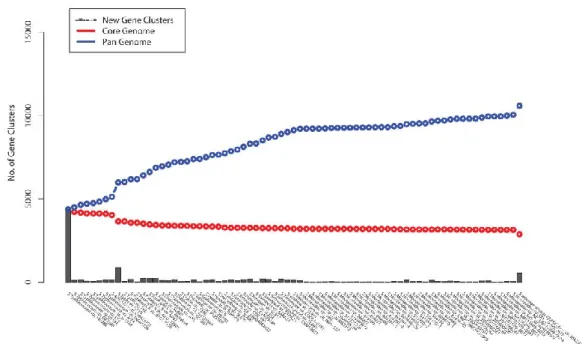
consists on the entire set of gene families present in all the strains within a clade, therefore it includes the core genome, the genes present in all strains of the clade, and the accessory genome, strain specific genes74. Salmonella has what is considered to be a closed
pan-genome, which means that the average number of gene families specific to each particular strain is lower than the average genome size (Figure 1-1)75.
Host preference and human disease
Salmonella spp. is a well-adapted pathogen with a wide range of hosts and niches,
and depending on the serovar, different pathogenicity. While the main niche of Salmonella spp. is the intestinal tract of humans and farm animals, these Enterobacteriaceae are widely distributed in nature and have been isolated from a wide variety of animals and their food products9,77. S. bongori, as well as subspecies salamae, arizonae, diarizonae, houtenae, and indica, are mainly associated with cold-blooded animals and the environment, while S. enterica subsp. enterica, that accounts for more than 99.5% of isolated Salmonella strains,
is usually associated with warm-blooded animals9. However, Salmonella spp. adapts quite
easily to different environments and non-enterica subspecies can also be found in warm-blooded animals9. Salmonella can cause two types of salmonellosis in humans:
gastroenteritis, commonly associated with non-typhoidal Salmonella (NTS), and enteric fever, caused by S. enterica serovar Typhi or S. enterica serovar Paratyphi A, B or C78.
The main vehicle of NTS infection is the ingestion of contaminated food or contaminated water, and by direct contact with animals. NTS is further widespread due to faecal contamination as it is excreted to the environment in the faeces of its hosts77. As a
result, Salmonella can also be found in a variety of fruits and vegetables10. Although most
animal hosts are asymptomatic, others exhibit signs of infection. For instance, S. enterica serovar Gallinarum causes Pullorum disease and S. enterica serovar Pullorum fowl typhoid in poultry, S. enterica serovar Typhimurium and S. enterica serovar Dublin cause salmonellosis in cattle and S. enterica serovar Cholerasuis causes septicaemia in pigs77. The
majority of Salmonella infections, caused by NTS, lead to gastroenteritis, presenting self-limiting diarrhoea, associated with fever and abdominal cramping, 12 to 72 hours after infection10. However, in immunocompromised individuals, some of those strains may cause
systemic infections, frequently lacking diarrheal symptoms, for example, bacteraemia, osteomyelitis and meningitis78–80.
Typhoid and paratyphoid, serovars S. enterica serovar Typhi and S. enterica serovar Paratyphi A, B and C, are exclusively human pathogens, meaning that humans are their only reservoir. In endemic countries, typhoid and paratyphoid Salmonella are usually transmitted indirectly due to poor hygiene and poor sanitary conditions, which lead to the contamination of the environment either by sewage released in water supplies, or with use of human faeces as fertilizer, or even with untreated piped water10,81,82. Other transmission
route may be the direct contamination of food and water by a carrier or infected person82.
The incubation period is often 7 to 14 days and symptoms can sometimes be very similar to other febrile illnesses82,83. Enteric fever can be characterized by a wide range of clinical
severity, but the most frequent symptoms include prolonged high fever, nausea, vomiting, and headache. Neurological complications and even death, usually due to intestinal perforation and peritonitis or severe toxic encephalopathy associated with myocarditis and hemodynamic shock, may occur in more severe cases68,79,80. Typhoidal Salmonella
proliferation in the host may endure for extended periods, due to its capacity to invade monocytes and macrophages, and to colonize the gall bladder, with an estimated 5 to 10% of patients experiencing a relapse79. Some individuals may even present asymptomatic
shedding for several years10.
Epidemiology
Salmonellosis is a major public health concern, with huge economic burden in both developed and underdeveloped countries. Salmonella is estimated to be responsible for 9% of the 1.9 billion cases of diarrhoea that occur each year worldwide. Nonetheless, 41% of deaths with diarrhoeal causes are attributed to Salmonella84. In the European
Union/European Economic Area (EU/EEA), it remains the second most common cause of gastroenteritis, right after Campylobacter85,86. NTS is estimated to cause 93.8 million cases
of gastroenteritis globally per year, of which 80.3 million are considered foodborne. NTS is also estimated to be responsible for 155 thousand deaths each year86. Between 2004 and
2013, a statistically significant decreasing trend of salmonellosis, probably linked to the implementation of control measures in the poultry industry, has been observed in the EU/EEA. However, the countries reporting an increase in the number of cases doubled since 2012, although the trend seems to have stabilized in half of the Member States the past few years. This increase seems to be linked to an increase in the number of cases of S. enterica serovar Enteritidis, most specifically to an increase in the number of multi-country outbreaks caused by this serovar (Figure 1-2)85,87. In 2016, the most common cause of
foodborne outbreaks was Salmonella, accounting for 22% of total cases85. The highest
notification rate continued to be observed in children under 5 years old, and in Portugal it was even 34 times higher than in adults (25-44 years). The hospitalization rate was also very high in Portugal (74−88%), considering the low notification rates (<10 per 100,000)85.
Figure 1-2 - Trends of reported confirmed human cases of non-typhoidal salmonellosis versus trend of reported Salmonella enterica serovar Enteritidis cases, in the EU/EEA, 2008–2016. Adapted from (88).
While more than 2600 serovars of S. enterica have been described to date, S. enterica serovar Enteritidis and S. enterica serovar Typhimurium remain the most common serovars that cause human disease, accounting for 80% of total cases of salmonelosis87. According to
the “European Union summary report on zoonoses, zoonotic agents and food-borne outbreaks 2016”, the most commonly reported serovars in 2016 were: S. enterica serovar Enteritidis, S. enterica serovar Typhimurium, monophasic S. enterica serovar Typhimurium (S. 4,[5],12:i:-), S. enterica serovar Infantis, and S. enterica serovar Derby87. In the European
Union (EU), laying hens, broilers and broiler meat remain the main sources of S. enterica serovar Enteritidis infections in humans. S. enterica serovar Typhimurium is manly associated with cattle, and their meat, and to a lesser extent with pigs, poultry and their meat. Contact with pigs and consumption of pig meat are the most frequent reported sources of monophasic S. enterica serovar Typhimurium, while S. enterica serovar Infantis is mostly associated with broiler and turkey chains. Finally, S. enterica serovar Derby was mostly reported in pigs and pig meat, and to a lesser extent in poultry and cattle (Figure 1-3)87.
S. enterica serovar Enteritidis Non-typhoidal Salmonella
Figure 1-3 - Distribution of the 2016 EU top-five Salmonella serovars in human salmonellosis acquired in the Member States, across different food, animal and meat sectors (broiler, cattle, pig and turkey). Adapted from (88).
Enteric fever is very frequent in underdeveloped countries, where poor water supply and sanitation is very common. South/South-East Asia, sub-Saharan Africa, and Oceania islands are the most affected areas, presenting the highest mortality rates, especially among children81. In 2017, 14.3 million cases of enteric fever occurred globally,
with 76.3% of cases caused by S. enterica serovar Typhi and 135.9 thousand deaths81.
Enteric fever is a rare disease in the EU/EEA, mainly acquired while travelling to endemic countries, specially India and Pakistan. In 2016, 22 EU/EEA countries reported 1161 confirmed cases of typhoid/paratyphoid fever, representing an increase comparing to previous years, probably related to higher notification rates and an increase in travels to countries outside the EU89. S. enterica serovar Typhi was the most frequent cause of enteric
fever in EU/EEA, accounting for 60% of cases, followed by S. enterica serovar Paratyphi A89.
When traveling to endemic countries, WHO recommends vaccination with one of the 3 available vaccines82.
Pathogenesis
After ingestion, Salmonella has to overcome numerous host defence mechanisms, such as gastric acidity, proteases, defensins and aggressins, in order to succeed and cause infection90,91. When Salmonella enters the small intestine, the bacteria adheres to intestinal
epithelial cells, preferably M cells of Peyer’s patches (Figure 1-4), and disrupts the epithelial structure causing diarrhoeal symptoms90. Salmonella then invades enterocytes, via a type
III secretion system encoded by SPI-1, T3SS-1, or dendritic cells, in order to reach follicles and mesenteric lymph nodes78. Inside the enterocytes, the bacteria resides in
Salmonella-containing vacuoles (SCV) where it disrupts the cell’s cytoskeleton, alters membrane transport, signal transduction, and cytokine expression, by secreting SPI-2 encoded effector proteins via another type III secretion system, T3SS-278,90–92. This allows Salmonella to
survive and replicate inside host cells. The SCVs are eventually transported to the basolateral membrane and Salmonella is released to the submucosa to either (i) colonize adjacent enterocytes, to repeat the intracellular cycle again, (ii) be phagocytosed by neutrophils, inflammatory monocytes, or dendritic cells, and then spread systemically upon phagocyte migration, (iii) or even to spread directly to the lymph nodes90–92. Some serovars,
such is the case of S. enterica serovar Typhi and S. enterica serovar Typhimurium, have yet the ability to form biofilms on the gallbladder stones, prolonging their longevity inside the host91.
Figure 1-4 – Pathogenesis of Salmonella, adapted from (92). a. Salmonella adheres to
intestinal epithelium and M cells. b, c. Effector proteins cause changes to the cytoskeleton. d. Alternatively, Salmonella is directly engulfed by dendritic cells from the submucosa. e. Inside the enterocytes, Salmonella replicates inside Salmonella-containing vacuoles. f. Salmonella is released to the submucosa. g. Finally, bacteria is phagocytosed and contained in SCVs.
Diagnosis, antimicrobial therapy and antimicrobial resistance
1.7.1. Diagnosis
marrow, urine, among others. The culture medium used depends on the type of sample collected. Isolation of Salmonella in faeces usually requires an enrichment step in Selenite F (Salmonella enrichment and inhibition of other bacteria) or GN broth (Salmonella and
Shigella enrichment and inhibition of other bacteria) for 6 to 12h prior to culture in selective
media, such as Hektoen agar (selective and differential for Salmonella and Shigella), SS agar (selective and differential for Salmonella and Shigella), or XLD agar (selective for Salmonella and Shigella). Blood cultures require incubation in proper culture bottles followed by subculture in differential media. Urine samples are firstly cultured in CLED agar for inhibition of Proteus swarming and colony counting, and also subcultured in differential media. All the obtained cultures are then identified either by their biochemical characteristics using automated systems or more prosaic testing, or by MALDI-TOF MS.
The serological Widal test is still used in several countries as the main diagnostic method for enteric fever given its low cost and straightforward operation. It consists in an agglutination reaction between O and H antigens with the antibodies present in serum of a patient. Given that an individual may present background antibodies due to previous or repeated infections, vaccination, or even for living in an endemic area, this test has low sensitivity and is very inaccurate. Moreover, this test also lacks specificity due to antigens cross reactivity. Rapid serologic tests, represent a slightly improvement from Widal test, but still lack sensitivity and specificity. When culture is not possible or successful, molecular testing by conventional or real-time PCR come as an alternative93,94.
1.7.2. Antimicrobial therapy
In the majority of cases, salmonellosis caused by NTS does not require hospitalization. Treatment usually involves replacement of fluids and electrolytes to control dehydration. Empirical antibiotic therapy is to be avoided in mild to moderate cases in otherwise healthy individuals, since it gives rise to antimicrobial resistance and may even contribute to prolongation of faecal shedding10,95. Nevertheless, antibiotics may be required
to cure severe disease, invasive NTS (iNTS) infection and enteric fever, after appropriate testing96. Additionally, neonates and young children should always be treated to avoid
bacteremia97. Treatment of chronic shedding involves long-term oral antibiotic therapy and
possible removal of the gallbladder 95.
For several years, the first-line of treatment of enteric fever and NTS severe infections was either ampicillin, chloramphenicol or trimethoprim–sulfamethoxazole96.
With the emergence of multidrug resistant (MDR) strains, that is, strains presenting resistance phenotypes to at least three different drug classes, the fluoroquinolone
ciprofloxacin and later the third-generation cephalosporin ceftriaxone, have been used as empirical therapy, and azithromycin as the last line of treatment98. But eventually,
resistance phenotypes to these antibiotics started to emerge and the nephrotoxic colistin was recently re-introduced has the last resort treatment of severe infections caused by MDR pathogens, including Salmonella99–102. Salmonellosis caused by MDR strains are more
invasive, require more hospitalizations and are associated with higher mortality rates103.
Recently a major concern is threatening the advances of modern medicine, with the identification of plasmids that confer resistance to colistin (mcr family), which will probably set us back to a post-antibiotic era, where patients will unfortunately succumb to common infections and minor injuries104–111.
1.7.3. Antimicrobial resistance
Antibiotics have been one of the major findings of the modern era. The introduction of penicillin for public use in the 1940s revolutionized Medicine, having countless lives been saved since then112. However, even at the time of its discovery, Alexander Fleming gave
warning of the possibility of occurrence of penicillin resistant strains and in fact, the development and generalized misuse of new antibiotics has always been shortly
accompanied with the arise of resistant strains (Figure 1-5)113.
Figure 1-5. – Antibiotics timeline depicting the year of introduction and the year when the first resistant strain was identified, adapted from (114), (112), (115), (102),
https://www.ukri.org/ukri/assets/Image/SiteImages/xorg/amrinfographicfull.jpg, and
https://www.cdc.gov/drugresistance/about.html. *The use of colistin was abandoned in the 1980s
The emergence of MDR strains is mainly promoted by the indiscriminate misuse of antibiotics in human and veterinary treatment, and as growth factors in animals for food production112. Antibiotic resistance may be intrinsic, when microorganisms exhibit
inherent characteristics that confer resistance to certain drugs, or acquired, when resistance genes are acquired from other bacteria (same or different species), or when new mutations in chromosomal genes occur and induce expression of innate resistance mechanisms116. Foreign DNA may be acquired through intake of insertion sequences (IS),
transposons, plasmids and bacteriophages117. In order to avoid an antibiotic apocalypse has
preconized by World Health Organization (WHO), we are called for action specifically in respect of harmonization of surveillance in humans and food-producing animals, in a “One Health” approach.
1.7.3.1. β-lactams
β-lactams incorporate three major groups of antibiotics: penicillins, cephalosporins (1st to 4th generation) and carbapenems. They interfere with cell wall formation by
inhibiting Penicillin Binding Proteins (PBPs), impeding synthesis of peptydoglican118. The
most common mechanism of resistance to lactams in Salmonella is the secretion of β-lactamases, enzymes that hydrolyse the β-lactam ring rendering these antibiotics inactive118. These hydrolytic enzymes can either be inherent to some bacteria being carried
on chromosomes, or in plasmids with potential to disseminate to other microorganisms (bla genes)119. There are several classes of β-lactamases that comprise more than one thousand
enzymes but the most commonly associated with Salmonella resistance are class A β-lactamases, specially the extended-spectrum β-lactamases (ESBLs) gene family TEM114,118.
Other genes commonly associated with Salmonella include class A blaPSE-1, blaCARB-2, blaKPC-2, and blaCTX-M, and class C blaampC, and blaCMY-2118. ESBLs became a major public health concern not only because they have the ability to hydrolyse cephalosporins (cefotaxime, ceftriaxone, ceftazidime, or cefepime) and monobactams (aztreonam), but also because they are widely disseminated worldwide114,120.
1.7.3.2. Aminoglycosides
Aminoglycosides (streptomycin, neomycin, amikacin, gentamicin, spectinomycin, kanamycin, tobramycin, among others) act by inhibiting protein synthesis by binding to the 16S rRNA of the 30S ribosomal subunit, leading to codon misreading and inhibition of translation118,121. The mechanism of resistance to this group of antibiotics in Salmonella is
usually the modification of the drug although other resistance mechanisms such as reduction of uptake, target alteration and increased efflux exist in other bacteria118,121.
There are several types of modifying enzymes that confer resistance to aminoglycosides. Aminoglycoside acetyltransferases confer resistance to gentamicin, tobramycin, and kanamycin by modifying their amino groups. They are coded by genes aac found in
Salmonella genomic islands, integrons, and plasmids. Aminoglycoside phosphotransferases,
coded by plasmid genes aph (aph(3’) and aph(6)-Id, also known as strA and strB, respectively), catalyse ATP-dependent phosphorylation of hydroxyl groups of streptomycin, kanamycin, and neomycin. Finally, nucleotidyltranferases encoded by genes
aad, some also designated ant genes, also target hydroxyl groups by adding AMP from an
ATP donor. The aadA gene, also known as ant(3’), confers streptomycin resistance in
Salmonella, while aadB, or ant(2’)-Ia, provides resistance to gentamicin and
tobramycin118,121.
1.7.3.3. Quinolones
All quinolones (nalidixic acid, ciprofloxacin, pefloxacin, levofloxacin, etc.) exhibit the same mechanism of action, typically targeting DNA gyrase and DNA topoisomerase IV, disrupting DNA replication and leading to cell death122,123. Consequently, the mechanism of
resistance conferring resistance to one quinolone, confers resistance to all quinolones, although some mechanisms only decrease quinolone susceptibility and require the presence of additional alterations to confer full resistance124. Several mechanisms of
resistance to quinolones have been described: (i) mutations in the genes that encode the two topoisomerases, gyrA, gyrB, parC and parE, lower the affinity of quinolones to the topoisomerases; (ii) the presence of plasmid-mediated quinolone resistance genes (PMQR),
qnrA, qnrB, qnrS, qnrC, and qnrD, encoding topoisomerase-binding proteins that prevent
quinolone binding to the enzymes; (iii) the presence of the aac(6’)lb-cr gene, encoding a modifying enzyme that decreases quinolone activity; (iv) efflux pumps encoded by oqxAB and qepA; (v) and finally, the regulation of multidrug efflux pumps AcrAB-TolC, which lower the concentration of quinolones in the cell122.
1.7.3.4. Macrolides
Macrolides act by binding to the large subunit of 23S rRNA, inhibiting protein synthesis, causing premature dissociation of the tRNA125. Macrolide resistance in general is
either conferred by (i) ribosomal binding site modification by methylases encoded by erm genes; (ii) by antibiotic modifying enzymes esterases (ereA and ereB) and phosphotranferases (mphA, mphB, and mphD); (iii) by active efflux of the antibiotic (mefA and msrA); or (iv) by the presence of mutations in the genes rrl and rpl, encoding the 50S ribosomal proteins L4, and L22 and in 23S rRNA126.
1.7.3.5. Other antibiotics
Resistance mechanisms to additional clinically relevant antibiotics have been identified in Salmonella. Chloramphenicol acts by binding to the 50S ribosomal unit, preventing the formation of new peptide bonds. Resistance to chloramphenicol is conferred by enzymatic inactivation of the antibiotic (cat1 and cat2) or by the presence of efflux pumps (cmlA and floR)118.
Tetracyclines also act by inhibiting protein synthesis, by preventing binding of tRNA to the 30S ribosomal subunit. Resistance to tetracyclines in Salmonella depends on the presence of efflux pumps encoded by tet(A), tet(B), tet(C), tet(D), tet(G), and tet(H)118.
Sulphonamides and trimethoprim have been used in combination for a few decades. These antimicrobials have a similar mode of action, inhibiting enzymes involved in the synthesis of tetrahydrofolic acid (co-factor in synthesis of amino acids and nucleic acids). The mechanism of resistance to both antibiotics is also similar. Genes sul1, sul2, and sul3, and dhfr1, dfrA1, and dhfr12 express enzymes insensitive to sulphonamides and trimethoprim respectively118.
Finally, and in brief, colistin, also known as polymyxin E, binds in a disruptive way to lipopolysaccharides (LPS) of the outer membrane of Gram-negative bacteria, leading to an increase of permeability of the cell and ultimately to cell death. Colistin resistance is quite complex and involves several mechanisms. For the most part, mechanisms leading to colistin resistance are linked to chromosomal mutations, except for the plasmid mediated
mcr gene family. In general, in Salmonella, they involve mutations that lead to modifications
of the outer membrane (pmrA/pmrB, phoP/phoQ, arnBCADTEF, and mcr1-5)127.
Heavy metals tolerance
Metals occur naturally in nature and act as important co-factors for several enzymatic processes. In fact, bacterial growth requires the presence of metals, but these compounds become toxic at higher concentrations128. In 2006, EU banned the use of
antimicrobials in animal feed, which lead to the use of heavy metals such as copper, cobalt, and zinc, as alternative growth promoters or preservatives129,130. Additionally, arsenic,
copper, mercury, silver and zinc have been used as biocidal agents to treat human and animal infections for several decades. Mercury and silver are also recognized by their disinfectant properties128. Meanwhile, heavy metal tolerance has been detected in
association with antibiotic resistance genes in several bacteria, including Salmonella130–132.
These genes are usually located in plasmids, transposons, or integrons, therefore, the use of heavy metals has been suggested to promote the spread of antibiotic resistance . The
mechanisms that lead to heavy metal tolerance include efflux systems to reduce copper concentration in the cell (pcoABCDRSE and tcrYAZB), silver (silCFBAPRSE) or arsenic (arsRBC), detoxification of mercury by enzymatic reduction (mer operon), and tellurite resistance system (terZABCDEF)132,136.
Aims and research plan
The main objective of this PhD dissertation was to contribute to the determination of the genomic structure and antibiotic resistance phenotype of particular Salmonella
enterica serovars identified in Portugal, through WGS of several isolates with different
phenotypes and genotypes. This main objective is divided in several specific aims:
i) to evaluate the main serovars causing salmonellosis in Portugal and to identify serovars of interest for our study (Chapter 1);
ii) to identify clusters of potential epidemiological interest and compare several typing methods with WGS (Chapter 2, 3, and 4);
iii) to study the genomic structure of isolates of the same serovar (Chapter 2, 3, and 4);
iv) to identify resistance markers and mobile genetic elements responsible for the phenotype expressed by the isolates in study (Chapter 2, 3, and 4).
CHAPTER 2
Salmonella spp. surveillance in Portugal
LS performed most of the experimental work from 2014 to 2019 and interpreted all the data analysed for this chapter.