ZOE STELIANA
MUSTRICU
DEFINING THE ECONOMIC VALUE OF THE
ECOSYSTEMS LOSS IN RIA DE AVEIRO
ZOE STELIANA
MUSTRICU
DEFINING THE ECONOMIC VALUE OF THE
ECOSYSTEMS LOSS IN RIA DE AVEIRO
Dissertation presented to the University of Aveiro as requirement for obtaining the Master Degree in Environmental Engineering in the scope of the Environmental Engineering Master Programme, with scientific supervision of Prof. Dr. Maria de Fátima Lopes Alves, Invited Auxiliary Professor of the Environment and Planning Department of the University of Aveiro.
jury
president Prof. Dr. Myriam Alexandra dos Santos Batalha Dias Nunes Lopes Assistant Professor of the Environment and Planning Department of the University of Aveiro
Dr. Ana Isabel Lillebø Batista
Researcher of the Biology Department of the University of Aveiro
Prof. Dr. Maria de Fátima Lopes Alves
acknowledgements Apart from the individual character of the work, I would like to express my appreciation for all those who have played an important role in its achievement. Firstly, an important gratitude to my coordinator, Professor Fátima Alves, whose support, openness, involvement, trust and encouragement have guided me along the time I spent developing this thesis. Thank you for making my effort to seem as pleasant as possible and for the attractive working environment that only motivated me for the better.
Thanks to João Vasco Silva, for his collaboration in the preparation of the maps used in this work, his unconditioned availability and patience in advising me in my progress. Together with Lisa Sousa & João Rocha, amazing people that welcomed me in CESAM (Centre for Environmental and Marine Studies), thanks for the friendly environment you made me discover.
Thanks to my parents for their invaluable lifetime support, especially during my academic year spent abroad. Thank you for believing in me and my decisions. Last but not least, a special thanks to the University of Aveiro, the city and the Ria de Aveiro, my home for 10 months, places that have contributed to my personal development and helped me design new perspectives, and gather the best memories of my life.
palavras-chave valorização dos ecossistemas, lagoas costeiras, governança
resumo As zonas costeiras abrangem cerca de 84% dos países do mundo. São áreas
de elevada importância, pelos ecossistemas presentes, que de diversas formas potenciam actividades como o lazer, o recreio para além das actividades comerciais. Constituem ainda locais privilegiados para a habitação permanente e sazonal para a população, em geral. O interesse em produzir informação sobre o estado dos ecossistemas costeiros, em termos ecológicos, económicos e sociais, tem vindo a aumentar na última década. Actualmente, assiste-se a diversas tentativas de quantificar o valor económico dos ecossistemas, no sentido de que este poderá constituir um importante contributo ao planeamento, ordenamento e gestão do território, em particular, aos territórios costeiros como as zonas húmidas.
A presente investigação teve como objectivo principal, fazer uma primeira abordagem metodológica, de avaliação do valor económico dos ecossistemas presentes na Ria de Aveiro. Complementarmente, efectuou-se uma análise dos principais projectos de gestão integrada das zonas costeiras e de planos de acção que foram, ou estão a ser, implementadas nesta área.
A avaliação económica efectuada foi baseada, em primeiro lugar, numa pesquisa bibliográfica existente nas principais revistas científicas, nesta matéria, e ainda nos documentos técnicos mais relevantes produzidos por instituições e organizações que têm vindo a divulgar diversos estudos, nos últimos anos. Este processo exploratório permitiu identificar os métodos utilizados e os valores associados a determinados ecossistemas. Seguidamente, e após a definição da área de estudo foram analisadas as mudanças e transferências de uso do solo ocorridos entre 1990 e 2006,na área envolvente da Ria de Aveiro, tendo sido aplicada uma valoração económicas a cada um dos ecossistemas, presentes na área de estudo. A Ria de Aveiro desempenha um importante papel na qualidade do ambiente e na economia local. Contudo, nos últimos vinte anos a intensa pressão humana e turística, sobre este ecossistema, deixou uma forte marca no território, marca esta bem patente nas alterações de usos do solo observadas. Contudo, nos últimos anos ocorreram intervenções destinadas a promover a conservação, reabilitação e recuperação das áreas mais sensíveis quer do ponto de vista social, económica e ambiental. Deste modo, constituiu objectivo final, deste trabalho, verificar as perdas reais dos ecossistemas da Ria de Aveiro e
keywords ecosystem valuation, coastal lagoon, governance.
abstract Coastal zones, bathing 84% of the countries of the world, are important ecosystems that facilitate leisure, recreational and tourism activities, host strategic ports of commerce and provide opportunities for permanent living for the population. The interest in generating information about the coastal ecosystems’ status in ecological, economic and social terms, has only risen in the last decade and at the moment, attempts to quantify their economic valuation brings an important contribution to management plans, as well as to wetland conservation approaches.
The main objective of the present thesis is to assess the economic value of the ecosystems found in the Ria de Aveiro Lagoon, as well as to compare some of the main research and action plans that were implemented in the area in the past ten years.
The economic valuation was based, firstly, on a research on the existing bibliography, in order to identify the methods used and the associated values for certain ecosystems. Second, after defining the study area and highlighting the main approaches in term of management plans and programmes, were analyzed the changes and transfers of land use that took place from 1990 to 2006, having applied the economic values.
The Ria de Aveiro brings an important contribution to the local economy and to the environment and in the past twenty years the human pressure has left a strong mark upon it. However, the latest interventions aimed at promoting the preservation, rehabilitation and recovery of the most sensitive areas, socially and economically, as well as environmentally. The purpose of this work is to ascertain the real losses of natural ecosystems in the Ria de Aveiro and translating them into economic terms.
Table of Contents
List of Figures ... v List of Tables ... vii List of Abbreviations ... ix Chapter I Introduction ... 1 1.1. Theme framework ... 1 1.2. Objectives ... 3 1.3. Methodology ... 4 1.4. Structure of the document ... 5 Chapter II Concepts and definitions in the area of ecosystem services and values ... 7 2.1. Introduction... 7 2.2. What they are? ... 9 2.2.1. Which are their characteristics?... 13 2.2.2. Which are the services? ... 15 2.2.3. Which are the functions? ... 16 2.3. Littoral ecosystems ... 21 2.3.1. Coastal areas ... 22 2.3.2. Estuary areas ... 23 2.4. Which are the ecosystems’ values? ... 25 2.5. Ecosystem Services Framework ... 27 2.6. Payments for Environmental Services (PES) ... 30 Chapter III Study Case: The Ria de Aveiro, Coastal Lagoon ... 33 3.1. Introduction... 33 3.2. Main characteristics ... 343.2.1. Location 34 3.2.2. Biophysical ... 36 3.2.3. Socio‐economic ... 41 3.2.4. The Ria de Aveiro’s surroundings ... 47 3.2.5. Planning and Governance ... 48 3.3. Ecosystem valuation applied to the study area ... 65 3.3.1. Methodology ... 69 3.3.2. Analysis of the land use patterns ... 72 3.3.3. Land use transfer ... 73 3.3.4. Ecosystems, services and functions ... 77 3.3.5. Economic value ... 79 Chapter IV Conclusions and Final Remarks ... 83 Appendixes ... 87 Bibliography ... 92
List of Figures
Figure 1.1. ‐ Methodological structure of the research………..5
Figure 2.1. ‐ Ecosystem services………16
Figure 2.2. ‐ Ecosystem functions………17
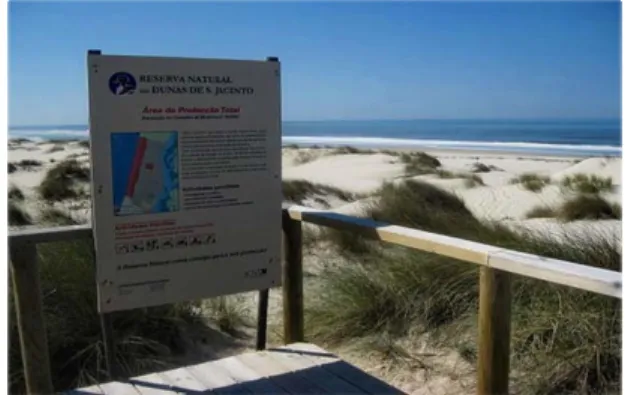
Figure 2.3. ‐ Total economic value and its components (Source: European Environment Agency, 2010)………..…25 Figure 2.4. ‐ The Ecosystem Services Framework (ESF) (Source: Turner et al., 2008)………29 Figure 3.1. ‐ Ria de Aveiro’s location in Europe and Portugal………..……..33 Figure 3.2. ‐ Barra de Aveiro Canal……….34 Figure 3.3. ‐ View of the Ria de Aveiro……….36 Figure 3.4. ‐ Urban canals and quays of the Ria de Aveiro……….39 Figure 3.5. ‐ Salt pans in the Ria de Aveiro………..…….39 Figure 3.6. ‐ ‘Marinhas’ in the Ria de Aveiro………...43 Figure 3.7. ‐ Salt exploration in the Ria de Aveiro………..…….43 Figure 3.8. ‐ Traditional boats in the Ria de Aveiro………..…………..45 Figure 3.9. ‐ The Aveiro Port………45 Figure 3.10. ‐ São Jacinto Dunes Natural Reserve………47 Figure 3.11. ‐ Fishermen houses in Costa Nova……….48 Figure 3.12. ‐ Spatial area of the ARH Centro, I.P. (Source: www.arhcentro.pt)...49 Figure 3.13. ‐ The Ria de Aveiro management in the ambit of ARH Centro, I.P. (Adapted from the Report of the activities developed in the ambit of the Ria de Aveiro, 2009)…....54 Figure 3.14. ‐ Fields of action of the ARH Centro, I.P. in the Ria de Aveiro (Adapted from the Report on the activities developed in the ambit of the Ria de Aveiro, 2009)…..………..55 Figure 3.15. ‐ Preview of the organizational model of the elaboration process of the Vouga Estuary Development Plan (Adapted from the Estuaries Development Plan)……….58 Figure 3.16. ‐ Coastal area, the concept……….59 Figure 3.17. ‐ The Ria de Aveiro Lagoon study area (Source: Silva et al., 2011)…………..…..69 Figure 3.18. ‐ Distribution of land use classes for the years 1990, 2000 and 2006 (Source: Silva et al., 2011)……….72 Figure 3.19. ‐ Transfers of land use disaggregated at the second hierarchic level of the CLC (Source: Silva et al., 2011)………73 Figure 3.20. ‐ Representation of land use in 1990 in the area surrounding the Aveiro Port and changes for the periods from 1990 to 2000 and from 2000 to 2006 (Source: Silva et al., 2011)………75
List of Tables
Table 2.1. ‐ Indirect, option and non‐use values associated with environmental services (Source: FAO, 2007)………..31 Table 3.1. ‐ Methodological approach of the MARIA (LIFE’96) Programme (Source: Alves et
al., 2000a)………...60
Table 3.2. ‐ ICZM Principles, as stated by the European Commission (Source: Council Recommendation of the European Parliament and of the Council of the 30th of May 2002, concerning the implementation of the Integrated Coastal Zone Management in Europe (2002/413/EC))……….…61 Table 3.3. ‐ ICZM Principles present in the subject of analysis (Source: Alves et al., 2011)………64 Table 3.4. ‐ Projects, plans and programmes assessment and comparison (Adapted from Alves et al., 2011)………65 Table 3.5. ‐ Adjustments in the typologies between 1990 and 2000 (Source: Silva et al., 2011)………76 Table 3.6. ‐ Adjustments in the typologies between 2000 and 2006 (Source: Silva et al., 2011)………76 Table 3.7. ‐ Correspondence between types of ecosystems and prices per ha/year (Calculated by Costanza et al., 1997)………81 Table 3.8. ‐ Areas per ecosystems (Source: Silva et al., 2011)……….82
List of Abbreviations
AC ‐ Avoided Cost AL ‐ Arable Land APA ‐ Administration of the Port of Aveiro ARH Centro, I.P. ‐ Administration of the Hydrographic Region of the Center ASPA ‐ Avifauna Special Protection Area CCDRC ‐ Commission for the Coordination and Regional Development of the Center CEC ‐ Commission of European Communities CLC ‐ CORINE Land Cover
DRAOT Centro ‐ Regional Directorate of Environment and Territorial Planning of the Center DRIA ‐ Department of the Ria de Aveiro ESF ‐ Ecosystem Services Framework F ‐ Forests FI ‐ Factor Income GIS ‐ Geographic Information System HAA ‐ Heterogeneous Agricultural Areas HP ‐ Hedonic Pricing ICTU ‐ Industry, Commerce and Transport Units ICZM ‐ Integrated Coastal Zone Management IUCN ‐ International Union for Conservation of Nature IW ‐ Inland Waters IWL ‐ Inland Wetlands MAOTDR ‐ Ministry of Environment, Territorial Planning and Regional Development MDCS ‐ Mine, Dump and Construction Sites MEA ‐ Millennium Ecosystem Assessment MMU ‐ Minimum Mapping Unit MW ‐ Marine Waters MWL ‐ Maritime Wetlands NSICZM ‐ National Strategy for Integrated Coastal Zone Management NUTS ‐ Nomenclature of Territorial Units for Statistics OSLNV ‐ Open Spaces with Little or No Vegetation P ‐ Pastures PBRH ‐ Hydrographic Region Management Plans PES ‐ Payments for Environmental Services PMD ‐ Public Maritime Domain RC ‐ Replacement Cost
SHVA ‐ Scrub and/or Herbaceour Vegetation Associations TC ‐ Travel Cost TEEB ‐ The Economics of Ecosystems and Biodiversity UF ‐ Urban Fabric UNEP ‐ United Nations Environment Programme WFD ‐ Water Framework Directive WL ‐ Water Law WTA ‐ Willingness to Accept WTP ‐ Willingness to Pay WWF ‐ World Wildlife Fund
Chapter I
Introduction
1.1. Theme framework
Ecosystems support human life and activities, providing goods and services for the sustainable well‐being, as well as future economic and social development. However, there are precisely the human activities that destroy biodiversity and alter the capacity of healthy ecosystems to deliver each other’s range of good and services. The loss of services from natural ecosystems require costly alternatives, therefore investing in natural capital presents interest in welfare and long‐term survival.
Planet Earth is a coastal planet, comprising 361.13 million km2 of water (71% of total planet surface) and 148.94 million km2 of land area (29% of total planet surface), whose interaction intensively and extensively lies along the world's total 1,634,701 km of coastline. About 84% of the countries of the world have a coastline either with the open oceans, inland seas or both, resulting in a variety of geomorphological features, weather regimes and biomes. The coasts include soft‐shores, rocky shores and cliffs, hilly or flat coastal plains, narrow or wide coastal shelves and a wide variety of wetlands (estuaries, saltmarshes, and deltas). Nevertheless, human beings have not been insensitive to the wide array of opportunities provided by the coasts and have been attracted to them, making the coasts the most favored locations to either live permanently, for leisure, recreational activities, or tourism. The coasts also host the world's primary ports of commerce. However, it was only within the last decade that global information of the coasts have been generated via remote sensing technologies and satellite imagery,
providing the opportunity to integrate and summarize the available information to develop a comprehensive picture of the status of coastal ecosystems and to evaluate their relative importance in terms of their ecological, economic and social attributes. Economic values can be quantified through a process that is called economic valuation of ecosystems. For the wetland goods and services that are traded in the market place, whose prices are not distorted, market prices can be used as indicators for economic values. Often, however, most goods and services do not have a market price and their economic values are determined through shadow pricing techniques. Economic theory distinguishes several shadow valuation methods, like: Contingent Valuation, which directly obtains consumers’ willingness to pay for a change in the level of an environmental good (based on a hypothetical market), or the Travel Cost method, that relies on individual valuations of environmental goods that are revealed in the travel costs made by consumers to obtain the environmental good, such as distance costs per kilometer travelled, time costs of the individual, and the entrance fee of the particular environmental good.
Economic valuation of wetlands has two benefits. Firstly, economic valuation is an important factor in highlighting the relative importance of different economic activities that depend on wetland functions, bringing an important contribution to management plans of wetlands. Secondly, economic valuation may be useful in countering arguments on wetland conservation. Putting a monetary value on activities can highlight the significance of wetlands for people and thus provide strong arguments for the conservation of wetland lands and water as opposed to reclamation or diversion. In both cases, monetary valuation is an important complementary assessment to other, qualitative assessments on wetland functions that cannot be monetized.
Key ecological goods and services were always regarded as being essential to human welfare, together with unique environments and natural habitats, and irreplaceable ecosystem attributes. However, their true value was always uncertain, particularly the value that future generations may place on them if they become increasingly scarce. This concern is reflected in various definitions of sustainable development. For example, in
1991, the World Wide Fund for Nature, the International Union for Conservation of Nature (IUCN), and UNEP interpreted the concept of sustainable development as “improving the quality of human life within the carrying capacity of supporting ecosystems” (WWF; IUCN, 1991; UNEP, 2011).
It is stated that coastal and estuarine environments are privileged localizations for bio‐ diversity evolution, being extremely sensitive to changes in the boundary conditions, particularly in water properties. Further analysis in order to foresee the behavior of water flows, temperature distribution and salinity is therefore needed.
Ria de Aveiro is such a system, a shallow water lagoon with complex geometry, connected with the Atlantic Ocean through a single artificial canal. Water exchange with the ocean is realized through tidal input/output across this narrow entrance. The input of fresh water occurs through several small rivers distributed by different canals of the lagoon, most important of which is Vouga (Nolasco et al., 1999).
1.2. Objectives
The work develops as a main objective the economic valuation of the ecosystems found in the area of Ria de Aveiro. Beside the environmental and ecological points of view, the paper attempts to assess the Governance approaches for an integrated coastal zone management and the development plans that covered it during the past decade.
The specific objectives aimed at are:
• Identifying the main ecosystems found in the study area;
• Understanding the concepts of ecosystem services and functions, and ecosystem payments;
• Analyzing the land evolution in the study area, and assessing it from an economical point of view;
• Understanding the importance of the Geographic Information Systems (GIS) databases in identifying the changes in land use;
• Presenting a methodological approach in assessing the economic value of ecosystems, applied to the Ria de Aveiro, a biodiversity enriched area, whose potential is endangered by the development of human activities, mostly aggressive to the ecosystems.
1.3. Methodology
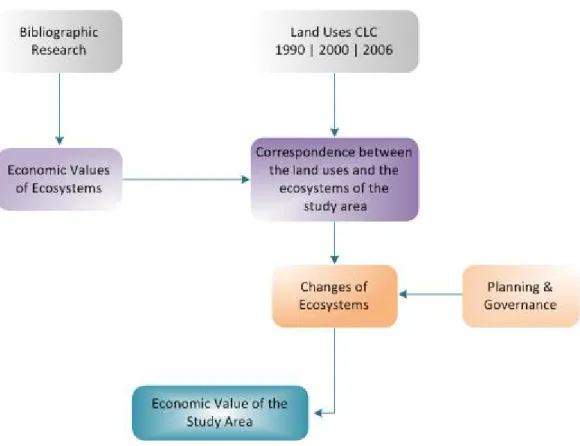
In order to achieve the proposed objectives, was analyzed the existing literature regarding the topic of economic valuation of natural ecosystems. This way, it was possible to identify various methods used in the valuation of ecosystems and to find a set of economic values associated with each ecosystem, based on the services and functions they provide.
Later on, proceeding to the aid of GIS, was established the study area and an analysis of land use for three different years (1990 | 2000 | 2006) was performed, based on the CORINE Land Cover (CLC) mapping, implemented with the aim of developing an information system on the environment at a European level (Caetano et al., 2005). Having made the analysis of the studied periods, were analyzed the changes and transfers of land use that occurred in the study area, in order to obtain an evolving perspective of the land use and consequent changes in the ecosystems present in the study area. After identifying these changes, and once having established a correspondence between the types of land use and ecosystems identified in the literature, the referenced economic values were applied and calculated for different periods.
With this methodology it was possible to highlight those areas where there were more significant environmental losses and confront them with the investments in restoration, enhancement and protection provided to the study area. The following figure presents synthetically the present methodology.
1.4. Structure of the document
The present thesis is organized in four chapters.
The first chapter presents a framework which shows the relevance of the topic, introducing as well the objectives, the methodology adopted and the organization of the work.
The second chapter presents various concepts and definitions in the area of ecosystem services and values, as well as their characterization and classification, focuses on the littoral ecosystems and highlights several issues about the ecosystem service framework and payments.
The third chapter realizes a biophysical, socio‐economic, legislative and strategic characterization of the Aveiro lagoon, analyses the spatial plans and programmes applied in the study area so far and presents the economic valuation of the existing ecosystems.
The final chapter highlights the main conclusions and considerations, presenting a couple of recommendations and guidelines for future developments.
Chapter II
Concepts and definitions
in the area of ecosystem services and values
2.1. Introduction
Services of ecological systems and their correspondent natural capital stocks are critical to the functioning of the earth's life support system. Their contribution is brought significantly to human welfare, both directly and indirectly, representing a significant portion of the total economic value of the planet. However, these services are given too little weight in policy decisions, as a result of their incomparability with economic services and manufactured capital, despite the fact that this might actually compromise the sustainability of humans in the biosphere. The economies of the earth would stop operating without the services of ecological life support systems, so in one sense their total value to the economy is great. Many studies in the past few decades aimed at estimating the value of a wide variety of ecosystem services. According to a set of authors, this kind of exercise was essential in:• Making the range of potential values of the services of ecosystems more apparent;
• Establishing at least a first approximation of the relative magnitude of global ecosystem services;
• Setting up a framework for their further analysis;
• Stimulating additional research and debate (Costanza, 1997).
The concept of ecosystem services is still new to many biologists and environmental scientists. This poses two major difficulties. First, it requires scientists to change their frame of mind to an anthropocentric perspective. Second, it requires scientists to familiarize themselves with tools for the valuation of ecosystem services, including economic tools. Since 1983, a great number of papers have been addressing the concepts of ‘ecosystem services’ or ‘ecological services’ and is still rising exponentially. Concerning the consequences of ecosystem change for human well‐being, The Millennium Ecosystem Assessment (MEA)1, an international assessment designed to meet the needs of decision makers for scientific information, was also among the first to offer a classification system that is nowadays widely used. However, the MEA classification of: supporting, regulating,
provisioning and cultural services, is not meant to fit all purposes, thus making it
necessary to agree upon a functional definition, that may allow for meaningful comparisons across different projects, policy contexts, time and space (Boyd, 2007; Barbier, 2007). The MEA definition of ecosystem services state them as benefits people obtain from ecosystems, including things outside of ecological systems such as imputed cultural meanings, recreation and spiritual fulfillment, whereas Boyd and Banzhaf (2007) highlight the role of science, in delivering the information to society.
The classification system should therefore be informed by a clear and robust definition, the characteristics of the ecosystem or ecosystem services under investigation and the decision context or motivation for which ecosystem services are being considered. Once defined, it is very easy to consider ecosystems’ characteristics, as well as the ones of the systems’ from which they derive, understanding their link with human welfare. The final approach would be acknowledging the decision context and motivations for mobilizing ecosystem services research. 1 The Millennium Ecosystem Assessment was launched by UN Secretary‐General Kofi Annan, and was designed to meet some of the assessment needs of the Convention on Biological Diversity, Convention to Combat Desertification, and the Ramsar Convention on Wetlands. The MEA is a multi‐scale assessment, consisting of interconnected assessments at the global, sub‐global and local levels.
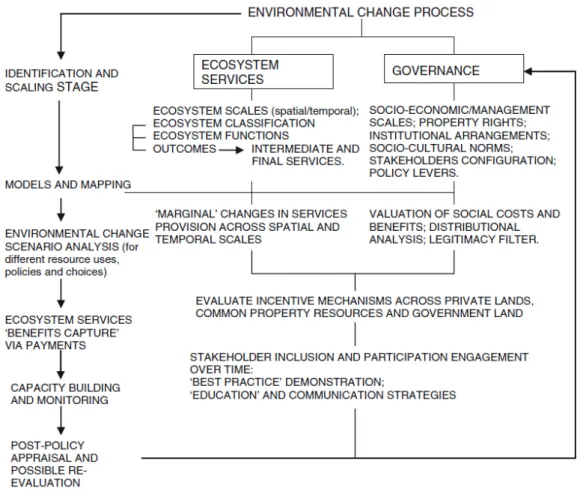
Moreover, despite the fact that the term and concept of ecosystem services has received such a great interest in the past decades, there has not yet been developed anything like an operational decision‐support system. The Ecosystem Services Framework (ESF) outlines the long‐term role that healthy ecosystems play in the sustainable provision of human well‐being, economic development and poverty alleviation all around the world. It takes an efficient and effective management of ecosystems in order to provide vital ecosystem services, such as climate stabilization, drinking water supply, flood alleviation, crop pollination, recreation opportunities and amenity, as well as cultural assets (Holdren and Ehrilch 1974; Westman 1977; Daily 1997; Balmford et al. 2002; Turner et al. 2003; MEA, 2005).
People depend on nature, and people too often damage nature, thereby endangering their own health and well‐being. The contribution of the MEA was its championing of a new scientific focus, a focus on understanding how nature produces a wide array of ecosystem services, quantifying the rate and value of the delivery of these services, and modeling the connections between ecosystem services, human welfare, and economic systems. MEA’s contribution might have presented huge gaps in the science of ecosystem services; however both conservation and economic development communities embrace ecosystem services, without explicitly labeling them as such. This melding of conservation and development comes from two distinct agendas: conservationists who seek to increase public support for biodiversity protection by integrating economic development, and development agencies that seek to also provide for the stewardship of nature under the mantra of sustainable development (Tallis et al., 2008). All these projects have variously been categorized as integrated conservation‐development projects, community‐ based natural resource management, and, most recently, pro‐poor conservation.
2.2. What they are?
An ecosystem is a complex of dynamic sequence of plants, animals, micro‐organisms and the natural environment, that co‐exist as a whole unit, in interdependence. The planet’s ecosystems provide humanity with a wide range of benefits, namely ‘ecosystems goodsinclude water supply and air purification, natural recycling of waste, soil formation, pollination, and a set of regulatory mechanisms that nature uses to control climatic conditions and populations of animals, insects and other organisms. Because many of the goods and services have always been freely available, their true long‐term value was never included in society’s economic estimates.
The main categories of ecosystems and the services they each provide, as stated in the MEA (2005), are:
• Marine ‐ fish and other seafood (commercial and subsistence fisheries), ecotourism, recreation, medicinal products, climate regulation, transportation, freshwater cycling;
• Coastal ‐ tourism, recreation, cultural value, fisheries (commercial and subsistence), aquaculture, transportation, nutrient cycling, storm/flood protection, climate regulation, disease regulation, waste processing, erosion control, hydropower, freshwater storage;
• Inland Water ‐ crops, fisheries, freshwater, storage of greenhouse gases, groundwater recharge and discharge, water for agriculture and industry, detoxification of water, flood control, recreation, tourism, cultural value, sediment retention, hydropower, nutrient cycling;
• Forest and Woodlands ‐ pollination, medicines, food, erosion control, water regulation, timber, biofuel, food, climate regulation, disease regulation, tourism, recreation, cultural value;
• Dry lands ‐ soil conservation of moisture, nutrient cycling, food, fiber, biochemical, biofuel, pollination, freshwater, water regulation, climate regulation, cultural value, tourism;
• Island ‐ fisheries, freshwater, tourism, recreation, timber, fuel, cultural value, flood/storm protection;
• Mountain ‐ freshwater, food, medicinal plants, natural hazard regulation, climate regulation, soil fertility, water regulation, recreation, tourism, cultural value, fuel, rangeland for animals;
• Polar ‐ climate regulation, freshwater, fisheries, game animals, fuel, fiber, cultural value, tourism, recreation;
• Cultivated ‐ food, fiber, fuel, pollination, nutrient cycling, soil formation, pest regulation, freshwater;
• Urban ‐ ecosystem services generally consumed rather than produced; services supplied by green spaces and parks include: air quality, microclimate regulation, noise reduction, water regulation (surface water drainage), pollination, genetic libraries, pest regulation, waste processing and recycling, cultural value, recreation, tourism (urban gardens and parks).
The concept of ecosystem services encompasses the delivery, provision, production, protection or maintenance of a set of goods and services that people perceive to be important (Chee, 2004). Humanity’s reliance upon nature for welfare and survival is complete. Its services have been managed directly in order to increase productivity, recognizing in this way their importance. It was in 1977, that Westman (1977) referred to the benefits that ecosystems provide as ‘nature’s services’, and later in 1981, that Ehrlich and Ehrlich (1981) first introduced the term of ‘ecosystem services’. However, in spite of the concept’s history, the literature has not agreed yet upon an exact definition (Boyd, 2007; Barbier, 2007). The most common cited definitions are:
• The conditions and processes through which natural ecosystems, and the species that make them up, sustain and fulfill human life (Daily, 1997);
• The benefits human populations derive, directly or indirectly, from ecosystem functions (Costanza et al., 1997);
• The benefits people obtain from ecosystems (MEA, 2005).
Though these definitions might agree on the same idea of ecosystem services, there are still some important highlighted differences. The concept is being referred to as: ‘conditions and processes’, ‘goods and services derived from the functions’, as well as ‘benefits’. Usually the language surrounding this issue takes many forms.
Boyd and Banzhaf (2007) were the ones who introduced an alternative definition to the ones already presented. In their assumption, final ecosystem services are ecological components directly consumed or enjoyed to produce human well‐being. They also state that final ecosystem services are directly enjoyed or used, that they are components, and that they are a quantity to be paired with a price (value). Making a distinction between end‐products and intermediate products is essential in welfare accounting, in order to avoid double counting. It is notable, as well, that final ecosystem services are not necessarily the final product consumed, thought they might be end‐products of nature. Ecosystem services are ‘components’ (Boyd and Banzhaf, 2007), representing things or characteristics, not functions and processes. Ecosystem components include resources such as surface water, oceans, vegetation types, and species populations. Ecosystem processes and functions are the biological, chemical, and physical interactions between ecosystem components. Functions and processes are not end‐products; they are intermediate to the production of final ecosystem services. Also, in a conventional economic account, another distinction is being made between the quantity of ecosystem services and their value. There are few definitions that actually focus on the ecological input as a quantity unit, while maintaining an appropriate price unit.
A recent definition states that ecosystem services are the aspects of ecosystems utilized (actively and passively) to produce human well‐being (Fisher et al., 2009). The key point of this approach is precisely the fact that functions and processes become services if there are human beneficiaries.
In a work on the diversity of the ecosystem services concept, Lamarque (2011) introduces a series of terms and concepts that have been developed in other contexts and disciplines. Ecosystem services are broadly defined in references as the benefits people obtain from ecosystems. In addition, the term of ecosystem goods is sometimes used for those services that have a direct market value such as food but both tangible goods and immaterial services provided by ecosystems are now generally labeled as ecosystem services.
Ecological services have been used by some authors as a synonym to ecosystem services but the term sometimes refers to services provided by a particular species or group of species rather than processes occurring at the ecosystem level.
Landscape services and the terms land, land‐use and landscape functions are widely used referring to services supplied by regions, landscapes or land‐use systems with the technical and socio‐economic characteristics of the land. However, landscape services are considered to differ from ecosystem services as they stress explicitly on the underlying role of spatial patterns, landscape elements and horizontal landscape processes.
Environmental services are often used as a synonym of ecosystem services in Payments for Environmental Services schemes (PES), where stewards are paid by third party beneficiaries for an activity aimed at intentionally transforming or maintaining some useful characteristics of an ecosystem (or landscape) The term is also used for labeling human‐made services that substitute ecosystem services totally or partially. This fits with the use of the term to label waste and water management services. The term sometimes also refers to the services provided by the abiotic environment such as the wind or water regimes used for generating electricity.
The terminologies differ in terms of key components and processes necessary to deliver an ecosystem service (services providers, including ‘service‐providing units’ and ‘ecosystem services providers’) and human interventions in their delivery.
2.2.1. Which are their characteristics?
In order to better manage and evaluate ecosystem services, as well as to understand their ecology‐society link, it is important to acknowledge their key characteristics that might be considered for decision‐making and general motivations behind the use of this concept (Fisher et al., 2008):
• Public‐private good aspect;
Goods and services can be characterized along from rival to non‐rival and from excludable to non‐excludable, following an economic approach. Ecosystem services
provide benefits that are both rival and excludable. They can be traded in conventional markets, typically considered as private or market goods, while others are known as toll or club goods. These are neither non‐rival, nor excludable. Then again, there are goods that are rival, but non‐excludable. These are called open access or common pool sources. One last category would be represented by pure‐ public goods, which are neither rival, nor excludable.
However, there is a great amount of goods and services in between categories, the use of which is more difficult to exclude, making the classification purely stylized. Stability, resilience and resistance roles of biodiversity for ecosystem functioning, along with service provision are other characteristics that relay non‐excludability and non‐rivalry to society. Moreover, the understanding of how ecosystem services and their benefits fit into the public‐private goods aspect stands in the social systems that interface with them. Complex and dynamic factors like governance systems, market, and informal land use interact in different categories of goods, requiring different types of solutions.
• Spatial and temporal dynamism;
Ecosystems and the services they provide are not homogenous across landscapes or seascapes, nor are they static phenomena. They are heterogeneous in space and evolve though time. It is precisely this feature that makes them easier to classify. Some ecosystems provide services that are utilized in the same place they were made (e.g. soil formation), whilst others whose benefits occur in another location at another time, then when and where they were provided (e.g. water regulation). • Joint production;
Ecosystem services can provide multiple benefits for human welfare, which are considered ‘joint products’ (Daily, 1997b). Interactions among intermediate services lead to final services that provide joint products, or multiple benefits. This feature could be of real importance in certain decision‐making contexts.
• Complexity;
Ecosystems are not linear, but complex systems, with feedbacks, time lags and nested phenomena (Limburg et al., 2002). Complexity is responsible for the early classification of goods as well as for the impossibility of direct measurement and monitoring. The role of biodiversity in the production of ecosystem services is reined by uncertainty and complexity. As the term itself has been approached in different ways, the complexity of a system is a characteristic that might actually help in classifying ecosystem services, as well as in developing financial or market mechanisms for managing ecosystems. • Benefit dependence.
Services are mostly benefit dependent (Boyd and Banzhaf, 2007), allowing the benefit to dictate the way the service is valued, monitored or measured. Stakeholders and individuals perceive different benefits from the same ecosystem processes that might even turn out conflicting (Turner et al., 2003).
2.2.2. Which are the services?
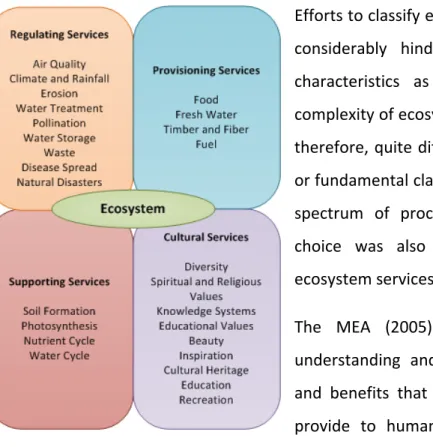
So far, environment experts have identified four kinds of services, all of them vital to human health and well‐being. However, there might yet be important services there are still unidentified.
• Provisioning services ‐ supply the good themselves, such as food, fresh water, timber and fiber, fuel;
• Regulating services ‐ govern climate and rainfall, water (flooding), waste, and spread of disease;
• Cultural services – beauty, inspiration, education and recreation that contribute to spiritual welfare;
• Supporting services ‐ soil formation, photosynthesis and nutrient cycling that underpin growth and production.
Efforts to classify ecosystem services have been considerably hindered by and their innate characteristics as well as by the dynamic complexity of ecosystem processes. It has been, therefore, quite difficult to agree upon a single or fundamental classification system. The broad spectrum of processes which lead to social choice was also crucial for mobilizing the ecosystem services concept.
The MEA (2005) focused on the public’s understanding and education of the services and benefits that well‐functioning ecosystems provide to humans, fact that helped in the release of the classification presented above. The classification is understandable as it uses the complexity characteristic of ecosystems and the public‐private dynamic to distinct the boundaries.
2.2.3. Which are the functions?
Ecosystem functions are defined as being ‘the capacity of natural processes and
components to provide goods and services that satisfy human needs, directly or indirectly’
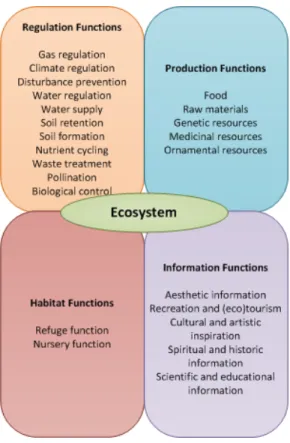
(De Groot, 1992). Like other concepts in the ecological literature, this term has also been subject to various and contradictory interpretations. It has been approached as the internal functioning of the ecosystem, as well as the benefits derived by humans from ecosystems’ properties and processes. De Groot et al. (2002), researchers in Centers for Environmental Studies at top universities in Europe and the United States of America state that functions are in fact a result of the natural processes (result of complex interactions between biotic and abiotic components of ecosystems) of the total ecological sub‐system they belong to. They were also the ones who proposed their assortment in four primary categories. In all, there are about 23 functions agreed upon, and a series of underlying ecological structures and processes. One function may influence the
availability of other functions, their goods and services, in a sustainable manner (Limburg et al., 2002), requiring an explicit representation of their interdependencies and implications, for a better dynamic modeling (Boumans et al., 2002). Moreover, ecosystem processes and services don’t provide a one‐to‐one correspondence and their analysis involves both a physical scale (of the ecosystem function itself) and one at which the provided goods and services are valued by humans.
• Regulation functions ‐ capacity of natural and semi‐natural ecosystems to regulate essential ecological processes and life support systems through a series of bio‐geochemical cycles and biosphere processes. They ensure the transformation of energy, from solar radiation into biomass, storage and transfer of minerals and energy in food chains, mineralization of organic matter in soils and sediments, regulation of the physical climate system ‐ all of which are regulated, in turn, by the interplay of abiotic factors;
o Gas regulation ‐ maintaining the chemical balance in the atmosphere,
preventing diseases and any other alterations that might have uncalled for impacts on natural, social and economic processes. Analyses for determining the service value should be carried out at a considerable scale;
o Climate regulation ‐ maintaining a favorable climate, at local and global scales, considering the interaction of circulation patterns with topography, vegetation and land configuration;
o Disturbance prevention ‐ providing safety of human life and constructions,
by ameliorating potential hazards and disruptive natural events (storms, floods, droughts etc.);
o Water regulation ‐ ensuring a regular distribution of hydrological flows at
earth surface, helping in the maintenance of normal conditions in the watershed. o Water supply ‐ water filtering, retention and storage performed by the
vegetation cover and soil, topography and sub‐surface characteristics, depending as well on ecosystems’ hydrologic cycles;
o Soil retention ‐ consisting of structural aspects of ecosystems, such as
vegetation cover and root system, in order to maintain agricultural productivity and prevent soil erosion damage;
o Soil formation ‐ maintaining crop productivity on cultivated lands together
with the integrity and functioning of natural ecosystems2;
o Nutrient cycling ‐ at both local and global scale, is performed by soil
organisms and migrating animals, releasing nutrients to plant growth and surrounding atmosphere, respectively distributing them between ecosystems3;
o Waste treatment ‐ storing and recycling organic and inorganic human waste
through dilution, assimilation and chemical re‐composition;
o Pollination ‐ provided by wild pollinator‐species (insects, birds and bats) in
order to avoid extinction and to sustain current agricultural productivity4;
o Biological control ‐ according to Ehrlich (1985), biotic communities of
ecosystems participate in more than 95% in the prevention of the outbreak of pests and diseases.
• Habitat functions ‐ maintaining a healthy refuge and reproduction habitat to wild plants and animals, contributing to the conservation of biological and genetic diversity; 2 Soil formation is a very slow process, generating naturally at a rate of a few centimeters per century, and after erosion (regeneration), one centimeter in 100‐140 years (Pimentel and Wilson, 1997). 3
Life on Earth depends on the continuous (re)cycling of about 30‐40 of the 90 occurring chemical elements. Most important nutrients are carbon, oxygen, hydrogen, nitrogen, sulfur and phosphorous. Together with macro‐nutrients like calcium, magnesium, potassium, sodium, chlorine and trace elements (iron, zinc), they are needed for life maintenance, but their availability is often limited, making their (re)cycling essential (De Groot et al., 2002).
4
In the absence of wild pollinator species, agricultural productivity can only be maintained through artificial pollination, at a high cost (Daily, 1997).
o Refuge function ‐ providing a ‘storehouse’ of genetic information, for
resident and transient species of plants and animals, maintaining the viability of a ‘genetic library’ of Earth species (De Groot et al., 2002);
o Nursery function ‐ supplying breeding and nursery areas to adult species
that harvest elsewhere for subsistence and commercial purposes5.
• Production functions ‐ broad diversity of carbohydrate structures used by secondary producers for creating a larger variety of living biomass, which provides a high range of ecosystem goods for human consumption (food, raw materials, energy sources, genetic material)6;
o Food ‐ includes an unlimited source of edible plants and animals, as well as
small‐scale subsistence farming and aquaculture, whose functions need to be maintained in order to recover in a certain period of time;
o Raw materials ‐ refer exclusively to renewable biotic sources, such as wood
and strong fibers, biochemical and biodynamic compounds, as well as other energy sources like fuel wood, organic matter, animal power and biochemicals, and animal‐ feed;
o Genetic resources ‐ cross‐breeding inputs between wild and cultivated
varieties of important crop‐species, along with complicated manipulations of genetic resources through biotechnological research and genetic engineering7;
o Medicinal resources ‐ providing chemicals with use in pharmaceutics
industry, and animals for testing new medicines or as student specimens;
o Ornamental resources ‐ extensive and varied use for clothing, handicrafts,
objects of worship, decoration, as well as zoological and botanical gardens collection supplements.
5
Certain nursery areas are often transformed to direct economic use, with disastrous ecological and socio‐economic consequences (Gilbert and Janssen, 1997).
6
It is essential to distinct biotic resources from abiotic ones that mainly differ on their renewability. However, authors limit production functions to renewable natural resources (De Groot et al., 2002).
7
In order to maintain their commercial status, important crops need the genetic support of their wilder relatives. Features like taste, resistance to pests and diseases, adaptation to environmental conditions are improved by the share of regular inputs of genetic material from their wild relatives and primitive (semi‐) domesticated ancestors (Oldfield,
• Information functions ‐ contribution to the maintenance of human health, through opportunities for reflection, spiritual enrichment, cognitive development, recreation and aesthetic experience8;
o Aesthetic information ‐ natural areas and landscapes scenery with great
influence on real estate prices, houses’ prices rising considerably in the proximity of natural parks or aesthetically pleasing environments (Costanza et al., 2007);
o Recreation and (eco)tourism ‐ retreat for rest, relaxation, refreshment and
recreation, ensuring a variety of recreational activities, in ongoing development; o Cultural and artistic inspiration ‐ embedding human culture within natural
systems9 and using nature as a motive and inspiration source for various areas, of which, people are still not aware and whose economic value is not yet appreciated aright;
o Spiritual and historic information ‐ ethical, religious and heritage‐values
that support the continuity and understanding of life in the universe;
o Scientific and educational information ‐ nature study and environmental
education for scientific research and reference for changes monitoring.
Unfamiliarity with the ecosystem functions concept entails a restricted knowledge or ecosystem functioning. The confronting approaches exist between a descriptive interpretation and a normative interpretation (Whigham, 1996). The first one regards the ecosystem phenomenon as a contribution to something else, while in the second one, ecosystem function is perceived as an environmental value, a source of ecosystem benefits in social and/or economic terms. However, in recent literature, the most common used interpretation is the descriptive one (Whigham, 1996, Costanza et al., 1997, Freeman, 1998, Heal et al., 2005). This fact has implied a translation into normative concepts of ecosystem goods and services, as long as human needs or values are affected
8
‘…natural environments provide a highly inspirational and educative form of re‐creative experience, with opportunities for reflection, spiritual enrichment and cognitive development through exposure to life processes and natural systems’ (Forster, 1973).
9
‘There is hardly any province of culture to which nature does not give shape or inspiration.’ (Van Dieren and Hummelinck, 1979)
(De Groot et al., 2002), thus focusing valuation nearly exclusively on ecosystem services (MEA, 2005; Alcamo et al., 2003; Toman, 1996; Heal et al., 2005).
2.3. Littoral ecosystems
Considered to be one of the most productive marine zones, littoral ecosystems feature high levels of light intensity, relatively high temperatures, and both macro and micro algae. A large number of species of fish and invertebrates are attracted to the coastal zones, where they find rich feeding and, frequently, breeding grounds. Distinguished as biodiversity hotspots, they support a large amount of species of macroscopic marine organisms, due to the paleogeographic, hydrological and ecological characteristics.
Due to their close proximity to cities and villages, littoral ecosystems often are affected by anthropogenic activities more than any other marine habitats. More than any other threat, littoral ecosystems face physical disturbances caused by trawling and anchoring, leading to the loss of important habitats.
Eutrophication and pollution from untreated sewage outlets and fish‐farm effluents can smother benthic species and reduce water visibility, decreasing the depth to which photosynthetic organisms can survive. The accumulation of toxic chemicals in the water column can inhibit growth rates and bio‐accumulates in the food chain. Mercury is a heavy metal commonly found in a number of commercial fish species, such as swordfish and tuna. These chemicals bio‐accumulate throughout the food chain and can be particularly dangerous to wildlife and humans, especially to fetuses, infants, and nursing mothers.
Climate change alters seawater temperature and deep‐water currents, affecting the spread of some species, with more tolerant species able to survive while fragile, slow growing species are wiped out. It can also lead to a rise in sea levels, resulting in the migration of both invertebrate and algae species further up the littoral zone.
2.3.1. Coastal areas
Represented as a transitional area between land and sea, the coastal area appears like a band whose width is determined by the interaction of marine and terrestrial coastal processes. With a worldwide average of 60 km width and less than 15% of the Earth’s terrestrial surface, it accommodates however more than 60% of the world’s population. Coastal areas are marked by above‐average concentrations of people and economic activity, only 40% of their total surface being inhabited.
Pollution and development are affecting coastal habitats considerably. Feeding and nursery areas are being destroyed, reducing fish and wildlife populations. Runoff along the coasts leads to oxygen‐depleted water and fish kills, due to the enriched content of nutrients. However, the most important sources of coastal pollution are sewage disposal and sedimentation from land‐clearing and erosion. Contamination is also caused by nonpoint‐source pollution that results in outbreaks of toxic algal blooms and red tides. Global warming’s effects point out both immediate and far‐reaching consequences, the most direct threat to the coastal areas being the rise in sea levels. On the long run, this is the cause of frequent floods. Warm surface water temperatures also result in coral bleaching.
Being mostly populated because of their potential in fertile soil, fishing and shipping industry opportunities, coastal wetlands are lost considerably because of commercial and residential developments.
Integrated analyses of coastal areas have agreed upon the fact that coastal marine ecosystems are at risk worldwide as a result of human activities. The main key land‐based drivers of ecological change were considered to be: • Nutrient input from agriculture in urban settings; • Organic pollutants derived from pesticides; • Inorganic pollutants from urban runoff; • Direct impact of human populations on coastal marine habitats.
However, only 90% of the coastal waters experience impact from human inland activities, drawing attention towards activities in the ocean, like: fishing, climate change, invasive species and commercial shipping. 2.3.2. Estuary areas Partially enclosed bodies of water where fresh water from rivers or streams mingles with salty ocean water, estuaries trap nutrients and sediment that is carried from the land by rivers and from the ocean by tides. Being characterized by a constant mixing of these nutrients with the rise and fall of the tide, they provide an enormous amount of plant and animal life. Estuaries are therefore one of the most productive types of ecosystems on earth. Estuaries can be found in flat river deltas or steep‐sided coastal fiords, being composed by tidal mud flats, lagoons, salt marshes and sand dunes. Estuaries are also popular places for people, and unfortunately many of them have been lost due to urban and agricultural development.
Estuaries formation started after the most recent glaciation (~29,000 to 10,000 years ago), when melting ice caused a rise in the sea level. Valleys that were previously carved out by glaciers and/or streams were flooded, and shallow, protected inlets and estuaries were created. An important role is also played by the sediments carried by streams and rivers, due to natural or human‐caused erosion of streams and upland areas. When the water reaches the ocean and is no longer constricted in the stream channel, it slows down, and the sediment drops out. Protected from waves scouring, sediments can also form mud flats, trapped by specific vegetation, such as eelgrass and salt marsh grasses. Salt marsh grasses themselves add organic material, and may eventually form a dense mat of vegetation that is laced with tidal canals. Thus an estuary can have many forms, and is in constant change, though still depending on the pre‐existing form of the surrounding landscape and specific controlling forces, like tides, wind, waves, and currents.10
Ecosystem services provided by estuaries have long been overlooked and they were recognized only after they were “reclaimed” for human use. The way population benefits from estuaries, is being exemplified as follows:
• Erosion control and storm surge protection ‐ Vegetation in estuaries anchors sediment and soil along river banks and shorelines, preventing stream flows, rainwater and waves from scouring away the land. Deposits of mud, silt and sand help to dissipate the energy of large waves that can otherwise inflict serious damage on human life and property;
• Water quality ‐ Natural water is filtered by vegetation and fine sediments as it flows from the land to the ocean. Bacteria living in the sediments of estuaries can also help to break down certain pollutants; • Atmospheric gas regulation ‐ Carbon dioxide is absorbed in the photosynthesis carried out by the prolific plant growth and being released when wood or fossil fuel is burned, or when estuaries are filled in; • Nutrient cycling ‐ Concentrations of nutrients such as nitrogen and phosphorous found in the marine environment are regulated through estuaries. They are needed for plant growth but in excess can cause harmful algae blooms and rob the water of oxygen; • Habitat for plants, shorebirds & other animals ‐ Many species of animals spend all or a part of their lives in estuaries, having direct commercial value or being an important part of the overall function of the ecosystem;
• Education, recreation & tourism opportunities ‐ Peaceful and beautiful landscapes, estuaries are considered proper study and teaching environments, attracting a great number of artists, canoeists, bird/wildlife watchers, hunters, fishers, photographers, scientists and researchers.
Valuable and biologically productive ecosystems, estuaries are difficult to be attached monetary worth, as most of their services are needed for life on earth and are not replaceable with human‐made systems, at any cost. Estimating their real value is useful for making the appropriate land use decisions.
Estuaries are mainly threatened by urban and agricultural development. Practiced in rich soils of floodplains and estuaries for a long time, modern agriculture methods that involve diking, damming and filling‐in estuaries have been severely affecting the ecological function of the land. Restoration efforts are yet unfeasible in some areas, where estuarine areas have been heavily altered by bringing forth large urban areas.
Poor water quality, caused by excess sediment, nutrients or chemical pollution, is also affecting estuaries. Logging and construction in watersheds can cause erosion and deposition of excess sediment, meanwhile fertilizers or sewage in the water can cause excess nutrient levels. Natural flows of water and nutrients are also altered by invasive species, decreasing with time, the estuaries’ biodiversity.11
2.4. Which are the ecosystems’ values?
Nunes and Bergh (2001) where the ones to develop a different classification of biodiversity values, that doesn’t necessarily imply a distinction between services and functions. According to them, ‘functional diversity’ includes ‘primary ecosystem processes’ (photosynthesis and biogeochemical cycling) and ‘ecosystem life support functions’, as referred to in the list of ecosystem services (Heal et al., 2005). In the scientific papers of Farber et al. (2002), Limburg et al. (2002), Howarth and Farber (2002), Wilson and Howarth (2002), the value of ecosystem is divided into three concepts: ecological, socio‐cultural and economic value. Figure 2.3. Total economic value and its components (Source: European Environment Agency, 2010)