Original Article
Artigo Original ISSN 2317-1782 (Online version)
This is an Open Access article distributed under the terms of the Creative Commons Attribution License, which permits unrestricted use, distribution, and reproduction in any medium, provided the original work is properly cited.
Syllabic patterns in typical and atypical
phonological development: ultrasonographic
analysis
Padrões silábicos no desenvolvimento
fonológico típico e atípico: análise
ultrassonográfica
Aline Mara de Oliveira Vassoler1Larissa Cristina Berti1
Keywords Speech-Language Pathology and
Audiology Speech Therapy Speech Disorders Ultrasonography Child Language Language Development Language
Descritores Fonoaudiologia Fonoterapia Distúrbios da Fala
Ultrassonografia
Linguagem Infantil Desenvolvimento da Linguagem Linguagem
Correspondence address:
Aline Mara de Oliveira Vassoler
Faculdade de Filosofia e Ciências de
Marília – FFC, Universidade Estadual Paulista “Júlio de Mesquita Filho” – UNESP
Av. Higino Muzi Filho, 737, Mirante, Marília (SP), Brasil, CEP: 17525-900. E-mail: [email protected]
Received: April 04, 2017
Accepted: October 10, 2017
Study carried out at Department of Speech-Language Pathology and Audiology, Faculdade de Filosofia e Ciências de Marília da Universidade Estadual Paulista “Júlio de Mesquita Filho” – UNESP - Marília (SP), Brazil.
1 Faculdade de Filosofia e Ciências de Marília – FFC, Universidade Estadual Paulista “Júlio de Mesquita Filho” – UNESP - Marília (SP), Brasil.
Financial support: FAPESP - Fundação de Amparo à Pesquisa do Estado de São Paulo, process 2013/00513-8.
Conflict of interests: nothing to declare. ABSTRACT
Objective: The present study aims to compare the production of syllabic patterns of the CVC and CV types performed by Brazilian children with typical and atypical phonological development through ultrasonography of tongue. Methods: Ten children (five with typical and with five atypical phonological development) recorded
nine pairs of words from the syllables: CCV and CV. The images and audios were captured simultaneously by the Articulate Assistant Advanced software. The data were submitted to perceptive analysis and ultrasonographic articulatory analysis (the area between the tip and the blade of the tongue). The area measurements were submitted to one-way repeated measures ANOVA. Results: ANOVA demonstrated a significant effect for the clinical
condition (typical and atypical), (F (1.8) = 172.48, p> 0.000) forthe area measurements. In both syllabic patterns (CCV and CV) the atypical children showed greater values of the area between the tip and the blade of the tongue.
Regarding the syllabic patterns analyzed, the statistical test showed no significant effect (F (1.8)=0.19, p>0.658).
Conclusion: The use of a greater area of the tongue by children with atypical phonological development suggests the non-differentiation of the tip and the anterior body gestures of the tongue in the production of CV and CCV.
RESUMO
Objetivo: O presente estudo busca comparar, por meio da ultrassonografia de língua, a produção de padrões
silábicos do tipo CCV e CV realizados por crianças brasileiras com desenvolvimento fonológico típico e atípico. Método: Dez crianças (cinco com desenvolvimento fonológico típico e cinco atípico) gravaram nove pares de palavras das sílabas: CCV e CV. As imagens e os áudios foram capturados simultaneamente pelo programa Articulate Assistant Advanced. Os dados foram submetidos à análise oitiva e à análise articulatória
ultrassonográfica (área entre a ponta e a lâmina da língua). As medidas de área foram submetidas à ANOVA de
medidas repetidas. Resultados: Para os valores de área, a ANOVA mostrou um efeito significativo para a condição
clínica das crianças (típica e atípica) (F(1,8)=172,48, p>0,000). As crianças atípicas (CAs) apresentaram, em
ambos os padrões silábicos (CCV e CV), valores superiores da área entre a ponta e a lâmina da língua. Com relação aos padrões silábicos analisados, o teste estatístico não mostrou nenhum efeito significante (F(1,8)=0,19,
INTRODUCTION
In syllabic terms, the CV structure (consonant and vowel) precedes the acquisition of the CCV structure (consonant, consonant and vowel)(1). In Brazilian Portuguese (BP), consonant
groups are composed of the lateral liquid (/l/) or the rhotic liquid (/r/) followed by the obstruents. There is a consensus in the literature(1,2,3) that the lateral liquids are acquired before the
rhotic ones, being these stabilized in the phonological system
of the child by the age of five years(4).
Researches(2,3,5) point out that CCV syllables are acquired
lately because of their phonological complexity, on the one hand, and, on the other hand, because of their articulatory complexity. In the attempt to adjust the target phonological system to the expected phonological system, in the position of the segment and/or syllabic structure unknown or improperly produced, children make use of resources called repair strategies. In the case of the CCV syllabic structure, the repair strategies are
commonly simplified from CCV to CV(3).
The simplifications of the CCV structure towards the CV are
reported in the literature both in the initial phase of phonological acquisition and in late phonological development. The high
prevalence of the called simplifications of the cluster in the
children’s speech is reported in several studies(6-8) carried out
in different regions of Brazil. In relation to the CCV syllable, a study involving the perceptive analysis showed evidence
that simplification (CCV to CV, for example, prato to pato)
is the most frequently adopted resource by school children, corresponding to 60.67%(6) of simplified CCV productions to
CVs. However, other strategies can also be identified during the
acquisition process of this syllabic structure, as described in a
previous study: omissions of syllable (e.g.: plástico – [´tʃiku]), epenthesis (e.g..: bruxa – [bu’ɾuʃa]), merger (e.g..: cravo – [´davu]), compensatory stretching (e.g.: planta – [´pã:nta]) and
metathesis (e.g.: prato – [‘paɾtu])(3).
Since the perceptive analysis does not allow the phonetic detailing of the linguistic facts or structures that occur during the process of phonological acquisition (whether typical or atypical), instrumental analyzes (acoustic and/or articulatory) can make it possible (have made possible) to elucidate questions related to the typical and atypical CCV production(8-11).
In acoustic terms, studies(3,12) were carried out to analyze
the phonic production of CCV and CV syllables with typical
and atypical phonological development and identified that, to
differentiate the two syllabic patterns, the typical children (TC) or atypical children (AC) make use of what the authors called as compensatory stretching strategy (CSS) (also called as vowel stretching) as repair strategy. The presence of CSS elucidates that children with atypical CCV production already have a phonological knowledge about the syllabic structure(2,3), but still
cannot produce according to the patterns expected by the adult. The incorporation of acoustic analysis in studies aimed at language acquisition has revealed strategies, such as CSS, carried out by ACs, that is, they apparently appropriate the phonological knowledge of the language, but do not necessarily perform the expected and necessary articulation task to differentiate the two syllables (in the example quoted above, CCV and CV)(2).
Although the acoustic studies have promoted an advance in relation to the phonetic detailing of children’s productions, the acoustic information is capable of performing only articulatory inferences. In this sense, methodologies that make use of articulatory instruments (electropalatography, micro X-rays, ultrasonography, articulography) have gained space, since they allow the direct visualization of speech-articulatory organs during speech production(13-17).
In articulatory terms, a recent study carried out in the English language(17) has pointed out differences in the production of
children with typical and atypical phonological development. Data from magnetic resonance showed different articulatory patterns in liquid substitutions. The results pointed to different gestures in the three groups of individuals studied (children in phonological acquisition phase, adolescents with phonological disorder and adolescents with hearing loss). Different from the articulatory gestures found in typical productions, in children in the phonological development phase and in adolescents with phonological disorder, missing† and stiffened‡ gestures were
found. However, in the group of adolescents with hearing loss, only stiffened gestures were observed.
Research(18) based on electropalatography (EPG) detected
articulatory differences in the production of Scottish school children with typical and atypical development. When
comparing the speech of these children, the author identified
a high percentage of undifferentiated gestures in the group of children with phonological disorders, which does not appear in the group of typical children or adult. The children with typical development articulated the tip and body gestures of the tongue in
a manner similar to the adult, being able to produce well defined
patterns against the palate. In contrast to, the atypical children make use of the anterior and posterior region, simultaneously, or even the entire surface of the tongue against the palate, without differentiating the gestures independently. In accordance with
these findings, another study(19), when analyzing the coordination
of lingual consonant gestures in children with phonological
disorder, also identified not only undifferentiated gestures, but
also detected the presence of an excessive movement of the body of the tongue during the production of the consonant /t/ if compared to TCs(19).
Although the studies mentioned previously were not analyzing the CCV syllabic production, the articulatory analysis detected differences in the productions of the investigated groups
(acquisition, phonological disorders and auditory deficits).
In BP, thus far, there are no studies comparing the production of CCV and CV in TCs and ACs from the articulatory analysis. Thus, analogously to previous studies(2,3), it is expected that
investigations based on instrumental methodologies may provide information about the typical and atypical acquisition of the CCV syllabic pattern.
† Missing gestures refer to when one of the two expected gestures is
absent, resulting in a single oral constriction.
‡ Stiffened gestures occur when the speaker intends to produce two
Therefore, the first hypothesis assumed was that ACs (simplification of clusters) present values of area, between the
tongue tip and blade, higher to the values presented by TCs. Additionally, the second hypothesis assumed was that the syllabic pattern of the CCV type would present a greater area, between the tip and the blade of the tongue, when compared to the CV.
The present study aims to compare the production of syllabic patterns of the CVC and CV types performed by Brazilian children with typical and atypical phonological development through ultrasonography of tongue.
METHODS
This research was approved (nº 0974/2014) by the Ethics Committee of the Faculty of Philosophy and Sciences -
UNESP/Marília (Faculdade de Filosofia e Ciências – UNESP/Marília).
The responsible for the children and the children nodded with the Informed Consent Form (ICF). This study was based on guidelines and regulatory standards for researches involving human beings determined by the National Health Council in its resolution 466/12 and 510/16, respectively.
Casuistry
This was a cross-sectional, quantitative and prospective clinical study. The study sample consisted of 10 children aged from 5 years to 6 years and 9 months, of both genders, being subdivided into two delineated groups from the clinical condition of the children: children with typical phonological development (TC) and atypical phonological development (AC).
In order to compose the group of children for this study, the researcher carried out a speech-language screening in order to identify alterations in oral language, voice, and orofacial
motricity, with the use of a specific protocol.
The hearing screening was also performed by the researcher with the use of the Interacoustic AD-28 audiometer, with a TDH-39 headphone, in an acoustic booth installed in a room of the School of Early Childhood Education. The frequencies of 1000, 2000 and 4000 Hz were investigated at an intensity of 20 dB HL (decibel hearing level).
The evaluation of speech production was performed by means of phonological evaluation(20), and both the phonetic inventory
and the phonological system were collected. The analysis of the phonetic and phonological inventory made it possible to exclude
the children who presented difficulties in the production of other
classes of sounds and of the liquids separately. The children who presented alterations in the speech-language screening were
referred for specific services at the Speech-Language Therapy
Clinic of the UNESP (Marília).
For the TC group, children from 5 years and 4 months up to 6 years and 8 months of age, of both genders were included, who presented absence of intellectual, neurological alterations; anatomo-morphological alterations that compromise the speech production process (for example, cleft lip and cleft palate); otologic/hearing alterations, changes in the stomatognathic system and speech and language alterations.
The ACs also did not present hearing, intellectual, neurological
alterations and presented difficulties in the pronunciation of clusters. Children who presented difficulties in the production
of liquid isolated, lateral liquids or rhotic, that is, in the CV syllabic pattern, were excluded.
Experimental procedure Corpus
18 words were recorded contrasting the CCV and CV initial syllable as proposed by previous study(2). For the corpus,
figures corresponding to the pairs of the following words were selected: broa/boa [´bɾoa/ ´boa], prato/pato [´pɾato/´pato], prego/pego [´pɾɛgo/´pɛgo], pressa/peça [´pɾɛsa/´pɛsa], bruxa/bucha [´bɾuʃa/´buʃa], frita/fita [´fɾita/´fita], grato/gato [´gɾato/ ´gato], troca/toca [´tɾɔka/´tɔka], troco/toco [´tɾoko/´toko]. The figures
referring to the words were presented to the individuals by means of a play activity, that is, throughout the recording,
the children named the figures inserted in the AAA software
(Articulate Assistant Advanced).
Equipment
The recordings used in this research were performed using a portable ultrasound device (model DP 6600), located in a booth acoustically treated with the following equipment: unidirectional microphone, coupled micro-convex transducer to a computer and a head stabilizer(21,22). The capture of the data
was made by the AAA software, which allows us to analyze the ultrasonographic and acoustic signals obtained in speech recording in real time(22).
The transducer was positioned on the child’s chin with the help of the head stabilizer, the Articulate, developed by Articular Instrument (Queen Margaret University). This procedure was adopted in order to minimize changes in the position of the transducer in relation to the submandibular region of the individual.
Recording procedure
The individuals were individually recorded in a single session of approximately 30 minutes at the Acoustic Analysis Laboratory – AAL of the Universidade Estadual Paulista (UNESP on the campus of Marília), inside an acoustically treated cabin.
The figures that represented the stimuli were presented in the AAA software. The figures were presented previously to the
children, with the purpose of certifying the understanding of the target word. For each word, the individuals were requested to perform three repetitions, totaling 540 stimuli (3 repetitions x 5 TCs x 5 ACs x 9 words with CCV + 9 words with CV). In consequence of the clinical condition of the ACs, it is expected that, from the point of view auditory perceptual, these ones produce the CCV as CV.
Form of analysis
Perceptual-auditory judgment
The 540 acoustic files (.wav) produced by the children, being
240 recordings of the TCs and 240 of the ACs, were sent to three judges by means of a computational resource that allows
to share digital files. The judges who participated in the research
are experienced in phonetic transcription and residents in the same dialectal region of the participants in order to perform perceptual-auditory judgment.
The stimuli were randomly organized by the researcher in the attempt to avoid patterns of responses at the trial. When hearing the sound stimulus, the judge was oriented to respond between CCV, CV or the other option (in this case, it would be necessary to transcribe phonetically), being that the agreement of at least 2 (66%) judges was considered for each evaluated stimulus. The judges were instructed to listen to the data with the aid of earphones as many times as they judged necessary.
Ultrasonographic parameter
In relation to the articulatory measure, it was decided to investigate the relative area to the region between the tongue tip and blade, as illustrates the Figure 1. This quantitative measure of the ultrasound essentially seeks to apprehend the presence of the relative gesture to the rhotic inside the CCV syllable. The resulting value of this measure is given in mm2.
The ultrasonographic recording is composed of several frames (images) per second, which results in visualization of the tongue movement. It was decided to select a period corresponding to
seven frames because it is believed that it is in its interior that occurs the point of maximum constriction of the tongue for the production of rhotic, in the case of the CCV syllabic pattern.
The time frame chosen for all words whose first consonant
was occupied by voiceless stops were the three frames before and after the burst, totaling seven frames. In voiced stops, the reference was the end of the voicing bar, before the beginning of
the vowel. For the words “frita” and “fita”, it was used the end
of fricative noise, as reference point. Therefore, this selection
corresponds to the transition between the first consonant and
the subsequent vowel, that is, the corresponding period to the seven frames selected (three frames before and three after the reference point) is illustrated in Figure 2.
Considering the period of seven frames selected, by means of AAA, the frame corresponding to the point of maximum constriction for the extraction of the area measurement was automatically selected.
Statistical analysis
It was performed a descriptive and inferential statistical treatment of ultrasonographic data using the IBM SPSS Statistics software (version 2.2). In relation to the descriptive statistics, the mean, standard deviation and the area values between the tongue tip and blade were extracted.
For the area values, it was adopted the ANOVA test for repeated measures, with syllabic patterns (CCV and CV) as the intra-individual variable and the clinical condition (typical and
atypical) of individuals as an inter-individual variable. A significance level of α ≤ 0.05 and a reliability interval of 95% was established.
RESULTS
Perceptual-auditory judgment
All children with atypical phonological development were previously selected by the researchers and, when producing
the CCV syllable, such syllables presented a simplification of
the cluster.
Thus, of the 270 words whose onset is formed by CCV, 135 (50%) of the typical children’s achievements were evaluated as CCV. However, the 135 (50%) target words produced by atypical children were judged as CV, this means that all CCV
productions were judged as simplified.
Of the 270 target words with CV onset, 270 (100%) were judged as CV, being 135 (50%) in the TCs group and 135 (50%) as CV in the ACs group.
Ultrasonographic parameter
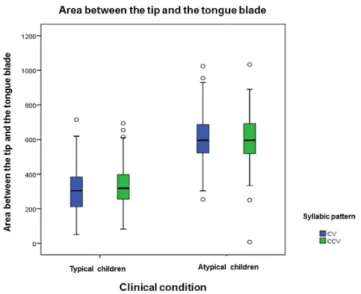
Table 1 shows the values, in millimeters2, of the mean and
standard deviations of the area measurements between the tongue tip and blade, as a function of the syllabic pattern analyzed and the clinical condition of the children.
However, in the table 2 results obtained by repeated measures ANOVA are presented, having as the main effects the syllabic pattern and the clinical condition of the individuals, as well as the interaction between clinical condition and syllabic pattern.
The ACs produced the two syllables analyzed, CCV and CV, with area values (between the tongue tip and blade) higher than the values of typical children, as exposed in Figure 3.
Figure 2. The numbers that are in the digAviSplines window (a) are relative to the selected frames (7 frames): the maximum point. The selected period (b) corresponds to the acoustic signal
Table 1. Descriptive statistics (mean (x), standard deviation (±) and coefficient of variation) for the parameter of area between tongue tip and blade of typical and atypical individuals. Mean of CCV means an average of the values for the CCV syllabic pattern and Mean of CV means an average of the values for the CV syllabic pattern
Corpus
Typical Children Atypical Children
Mean Standard
deviation Mean
Standard deviation
Broa 340.66 134.37 539.63 191.48
Boa 278.35 128.57 567.94 136.21
Prato 326.64 106.6 547.31 95.58
Pato 261.99 113.51 536.16 127.19
Prego 310.24 82.87 603.47 91.17
Pego 366.45 127.86 590.45 83.43
Pressa 282.18 93.52 604.52 145.43
Peça 292.92 116.01 599.53 116.51
Bruxa 313.21 93.02 656.92 115.76
Bucha 274.89 86.4 594.48 140.99
Frita 346.08 124.49 651.17 131.83
Fita 372.02 92.43 658 108.92
Troca 309.26 113.79 608.36 118.37
Toca 268.37 114.53 630.27 174.82
Troco 335.59 114.97 589.52 146.35
Toco 265.23 129.73 621.11 154.28
Grato 374.52 131.06 628.68 206.04
Gato 387.18 152.97 725.06 166.53
CCV Mean 326.49 110.52 603.29 138
The ANOVA did not show any significant effect regarding
the syllabic pattern (F (1.8) = 0.19, p> 0.658), nor for the interaction between clinical condition and syllabic pattern
(F (1.6) = 2, 95, p> 0.090). However, it showed a significant
effect on children’s clinical condition (typical and atypical) (F (1.8) = 172.48, p> 0.000).
DISCUSSION
The present study aimed to compare, through ultrasonography of tongue, the production of syllabic patterns of CVC and CV types performed by Brazilian children with typical and atypical phonological development.
The first hypothesis assumed was that children with atypical phonological development (simplification of cluster) present
area values between the between the tongue tip and blade, higher than the values presented by typical children.
This hypothesis was fully corroborated, as far as the area values obtained for children with atypical development were
always higher than for children with typical development, both for CV production and for CCV production (see Table 1).
The results showed that typical children produce the CCV and CV syllables differently from the productions of the AC group, which can be elucidated by the presence of undifferentiated gestures in the CCV production. These results also agree with the researched literature(16-19), since it showed
articulatory differences in the production of TCs and ACs, and may be associated with the presence of undifferentiated gestures (UGs) in the speech production in the latter group of children.
The UGs, in turn, may be associated with motor restrictions in speech, present as a result of delays or deviations in the control of these regions of the tongue in the group of children
with difficulties in the production of CCV. Thus, the ACs may
present UGs, because the ultrasonographic measurements indicate that this group has restrictions on differentiating the tip and anterior body gestures of the tongue.
The children with typical development when performing productions make use of almost independent articulators, are
able to produce well defined patterns of tongue against the
palate. Differently, the children with atypical phonological development seem to be incapable of differentiating the tip and anterior body of the tongue(18), thus performing the UGs.
According to the author’s interpretation(18), UGs occur due to
motor restrictions in the speech present as a result of delays or deviations in the control of these regions of the tongue(18).
It is hypothesized that children with atypical productions of this study possibly present UGs in the production of CCVs, keeping the tongue closer to the palate, which explains the larger area measurements between the tongue tip and blade regardless of the type of syllabic pattern. In other words, these children do not seem to coordinate the gesture of tongue tip and body during the production of CCV and CV, which can be interpreted as a use of a larger portion of the tongue as a result of UGs.
The second hypothesis assumed was that the syllabic pattern of the CCV type would present a larger area when compared
to the CV. The hypothesis was not confirmed for any of the
groups of children studied.
Differently from the studies that used acoustic analysis to detect subtle differences in the comparison of CCV and CV by duration measurement(2,3), the ultrasonographic measurement
related to the area was not sensitive to detect the tongue movements that differentiate CCV from CV in both the groups.
It is suspected, however, that the area measurement apprehends more global articulatory patterns, not allowing a
detailing of specific regions of the tongue, which would justify
the non-difference between the CV and CCV syllabic pattern. The area measurement, therefore, allowed to differentiate articulatory patterns between clinical groups of children, since
it apprehends non-specific articulatory information of a region
of the tongue.
As well as the acoustic analysis showed a strategy of speech production, not captured by the human ear that differentiates
Table 2. ANOVA values by repeated measures obtained by area measurements (between the tongue tip and blade), as well as the main effects on the clinical condition of the individuals and the syllabic pattern (CCV and CV), as well as the interaction between clinical condition and syllabic pattern
Main effects and interactions between effects
Tongue Tip/Blade Syllabic Pattern F F(1.8)=0.19
P 0.658
Clinical Condition F F(1.6)=172.48
P 0.000
Interaction between syllabic pattern and clinical condition
F F(1.6)=2.95
P 0.090
the typical children from atypical ones(12), it is observed that the
articulatory analysis also detected differences with respect to the phonic production between the groups, that is, it is believed that children, although they do not produce the sound or the target syllabic pattern, perform an articulatory movement to determine the phonological knowledge does not captured by the ear.
The results of this study indicated that quantitative ultrasonographic
analysis, specifically, from the area measurement between two
anterior regions of the tongue (tip and blade), was effective in differentiating the clinical condition analyzed (in this case, typical and atypical phonological development). In the future, it is suggested to apply this ultrasonographic parameter in other clinical groups and to include other articulatory measures that analyze distinct regions of the tongue, including, for example, the posterior regions of the tongue.
The ultrasonography of the tongue contour showed to be an effective technique for the characterization of the gestural patterns of the more global speech productions, since it allowed to identify the phonic production of the children diagnosed with atypical phonological development contributing to the diagnostic process of this group of children.
CONCLUSION
Through the ultrasonography of tongue, it was sought to compare articulatory differences in the performance of CCV and CV syllabic patterns performed by children with typical and atypical phonological development.
The results showed that atypical children produce the syllables studied with a greater area between the tongue tip and blade if they are compared to the group of typical children, which may be interpreted as the presence of undifferentiated gestures. However, CCV syllables did not have a larger area between the tongue tip and blade if they are compared to the CV syllable in any of the investigated children (TCs or ACs).
ACKNOWLEDGEMENTS
To the Fundação de Amparo à Pesquisa do Estado de São Paulo (FAPESP), process 2013/00513-8, for the funding granted to carry out the research whose results were reported in the present article. Thanks to Prof. Dr. James Scobie and Prof. Alan Wrench from Queen Margaret University, supervisors of the internship accomplished by Aline Mara de Oliveira Vassoler. To Prof. Dr. Tim Bressmann (University of Toronto-Canada) and Profª. Dr. Marianne Pouplier (Ludwig-Maximilians-Universität) for the fundamental contributions of the analyzes of this work.
REFERENCES
1. Ribas LP. Sobre a aquisição do Onset complexo. In: Lamprecht RR.
Aquisição fonológica do Português: perfil de desenvolvimento e subsídios
para terapia. Porto Alegre: Artmed; 2004. p. 151-64.
2. Miranda ICC, Silva TC. Aquisição de encontros consonantais tautossilábicos: uma abordagem multirrepresentacional. Rev Linguist. 2011;7(1):1-17. 3. Mezzomo CL, Vargas DZ, Cuti LK, Lopes SG. As variáveis intervenientes
na produção do onset complexo mediante uma análise silábica. Rev CEFAC. 2013;15(5):1247-58. http://dx.doi.org/10.1590/S1516-18462012005000106.
4. Lamprecht R, Bonilha G, Freitas G, Matzenauer CLB, Mezzomo C, Ribas L. Aquisição fonológica do português: perfil de desenvolvimento e subsídios para terapia. Porto Alegre: Artmed; 2004.
5. Wertzner HF. Fonologia. In: Andrade CRF, Befi-Lopes DM, Fernandes FDM, Wertzner HF. ABFW: teste de linguagem infantil nas áreas de fonologia,
vocabulário, fluência e pragmática. Carapicuíba: Pró-Fono; 2000. p. 5-40.
6. Patah LK, Takiuchi N. Prevalência das alterações fonológicas e uso dos processos fonológicos em escolares aos 7 anos. Rev CEFAC. 2008;10(2):158-67. http://dx.doi.org/10.1590/S1516-18462008000200004.
7. Cavalheiro LG, Brancalioni AR, Keske-Soares M. Prevalência do desvio fonológico em crianças da cidade de Salvador, Bahia. Soc Bras. 2012;17(4):441-6.
8. Giacchini V, Mota HB, Mezzomo CL. Diferentes modelos de terapia fonoaudiológica nos casos de simplificação do onset complexo com alongamento compensatório. Rev CEFAC. 2011;13(1):57-64. http://dx.doi. org/10.1590/S1516-18462011000100008.
9. Silva AHP. Pela incorporação de informação fonética aos modelos fonológicos. Rev Let. 2003;60(1):319-33.
10. Silva AHP, Clemente FC, Nishida G. Para a representação dinâmica do
tap em grupos e codas: evidências acústicas. ReVEL. 2006;4(7):1-26.
11. Barberena LS, Keske-Soares M, Berti LC. Description of the articulatory gestures concerned in the production of the sounds /r/ and /l/. Audiol Commun Res. 2014;19(4):338-44. http://dx.doi.org/10.1590/S2317-6431201400040000135.
12. Giacchini V, Mota HB, Mezzomo CL. Variáveis relevantes no processo
terapêutico para a aquisição do onset complexo na fala de crianças com
desvio fonológico. Rev CEFAC. 2015;17(Suppl 1):17-26. http://dx.doi. org/10.1590/s1516-18462012005000049.
13. Zharkova N, Gibbon FE, Lee A. Using ultrasound tongue imaging to identify covert contrasts in children’s speech. Clin Linguist Phon. 2017;31(1):21-34. http://dx.doi.org/10.1080/02699206.2016.1180713. PMid:27322800. 14. Cleland J, Scobbie JM, Wrench AA. Using ultrasound visual biofeedback
to treat persistent primary speech sound disorders. Clin Linguist Phon. 2015;29(8-10):575-97. http://dx.doi.org/10.3109/02699206.2015.10161 88. PMid:25751614.
15. Gick B. The use of ultrasound for linguistic phonetic fieldwork. J Int Phon Assoc. 2002;32(2):113-21. http://dx.doi.org/10.1017/S0025100302001007. 16. Wertzner HF, Francisco DT, Neves LOP. Contorno de língua dos sons /s/ e
/ʃ/ em crianças com transtorno fonológico. Revista CoDAS.
2014;26(3):248-51. http://dx.doi.org/10.1590/2317-1782/201420130022.
17. Gick B, Bacsfalvi P, Bernhardt BM, Oh S, Stolar S, Wilson I. A motor differentiation model for liquid substitutions in in children’s speech. Proc Meet Acoust. 2007;1(1):1-9.
18. Gibbon FE. Undifferentiated lingual gestures in children with articulation/ phonological disorders. J Speech Lang Hear Res. 1999;42(2):382-97. http:// dx.doi.org/10.1044/jslhr.4202.382. PMid:10229454.
19. Goozée J, Murdoch B, Ozanne A, Cheng Y, Hill A, Gibbon F. Lingual kinematics and coordination in speech-disordered children exhibiting differentiated versus undifferentiated lingual gestures. Int J Lang Commun Disord. 2007;42(6):703-24. http://dx.doi.org/10.1080/13682820601104960. PMid:17852538.
20. Yavas M, Hernandorena CLM, Lamprecht RR. Avaliação fonológica da criança: reeducação e terapia. Porto Alegre: Artes Médicas; 1991. 21. Articulate Instruments LTD. Articulate assistant advanced user guide:
version 2.14. Edinburgh: Articulate Instruments; 2014.
22. Articulate Instruments LTD. Ultrasound stabilisation headset users manual: 1.4. Edinburgh: Articulate Instruments; 2008.
Author contributions
AMOV main researcher, elaboration of the research, elaboration of the schedule, literature review, collection and analysis of the data, writing of the article, submission and paperwork of the article; LCB research supervisor, analysis of