Quim. Nova, Vol. 35, No. 7, 1477-1481, 2012
Educação
*e-mail: [email protected]
BIOMIMETIC OXIDATION OF CARBAMAZEPINE WITH HYDROGEN PEROXIDE CATALYZED BY A MANGANESE PORPHYRIN
Cláudia M. B. Neves, Mário M. Q. Simões*, Fernando M. J. Domingues, M. Graça P. M. S. Neves e José A. S. Cavaleiro
Departamento de Química, QOPNA, Universidade de Aveiro, 3810-193 Aveiro, Portugal
Recebido em 26/10/11; aceito em 25/1/12; publicado na web em 15/6/12
This laboratory project is planned for an undergraduate chemistry laboratory in which students prepare a manganese porphyrin able to mimic the oxidative metabolism of carbamazepine, one of the most frequently prescribed drugs in the treatment of epilepsy. The in vitro oxidation of carbamazepine results in the formation of the corresponding 10,11-epoxide, the main in vivo metabolite. The reaction is catalyzed by manganese porphyrin in the presence of H2O2, an environmentally-friendly oxidant. Through this project
students will develop their skills in organic synthesis, coordination chemistry, chromatographic techniques such as TLC and HPLC, UV-visible spectrophotometry, and NMR spectroscopy.
Keywords: Mn(III) porphyrin; catalysis; epoxidation.
INTRODUCTION
Epoxides are very easy to prepare via the reaction of an alkene with a peroxy acid and epoxide chemistry is routinely discussed in organic chemistry manuals.1 In addition, it seems that metallopor-phyrins as catalysts and hydrogen peroxide as an oxidant have not yet been utilized in epoxidation reactions for undergraduate teaching laboratories. The developments achieved recently for epoxidation catalyzed by metalloporphyrins make this an appealing system from a synthetic point of view.2
This lab project is intended for a fifth semester laboratory of the BSc Chemistry course, with weekly sessions of 8 h. Normally, stu-dents who enrol in this laboratory have already attended 2 semesters of organic chemistry and 1 semester of a practical organic chemistry course. In this lab project, which is planned for three 8 h sessions, students (in groups of 2) will set up a non-enzymatic system able to mimic the oxidative metabolism of carbamazepine (3), one of the most frequently prescribed drugs in the treatment of epilepsy.3
The metabolism of drugs and other xenobiotics is often initiated by oxidation reactions catalyzed by cytochrome P450 (CYP) enzy-mes.4 Since the isolation of the biological entities can become com-plicated and time-consuming, synthetic models have been developed for mimicking the role of CYP in living organisms. In fact, there are several synthetic models that can mimic, in vitro, the role of CYP, including metalloporphyrins.4-7
Students should realize the importance and the potentiality of metalloporphyrins as biomimetic chemical models in the research and development of biologically active molecules, along with the prediction of oxidation metabolites that can allow a better understan-ding of drugs’ mechanism of action. This is an extremely rewarunderstan-ding area for students of an undergraduate chemistry laboratory because it introduces students to the synthesis and characterization of porphyrins and their manganese complexes, allowing the use of chromatographic and spectroscopic techniques, and the assessment of the performance of a catalyst, namely based on percent conversion, selectivity and turnover number (TON).
For this purpose, students will prepare and use the manganese(III) complex of 5,10,15,20-tetrakis(2,6-dichlorophenyl)porphyrin [Mn(TDCPP)Cl] (2), an extensively studied catalyst in oxidation
processes, mimicking a wide range of reactions catalyzed by CYP enzymes.8 The oxidation reaction of carbamazepine (3) using Mn(TDCPP)Cl results in the formation of the epoxide (4), known as its main in vivo metabolite, and involves chromatographic techniques such as TLC and HPLC, allowing students to follow up the reaction and to observe the formation of the epoxide along with the disappea-rance of the substrate. The epoxide will subsequently be characterized by 1H NMR spectroscopy. In this reaction diluted aqueous hydrogen peroxide, a safe, easily available and environmentally-friendly oxidant is used. When hydrogen peroxide is chosen as an oxidant for catalytic processes, its dismutation reaction must be taken into account and an excess of oxidant should be used.9,10
EXPERIMENTAL
TLC silica gel plastic sheets (with F254 indicator and without indicator) and manganese(II) chloride were purchased from Merck. Ammonium acetate and 2,6-dichlorobenzaldehyde were obtained from Fluka, whereas pyrrole and carbamazepine were obtained from Sigma-Aldrich. Hydrogen peroxide 30% (w/w) was purchased from Riedel-de Haën and HPLC grade acetonitrile was obtained from LabScan.
UV-visible analyses were performed on a Uvikon 922 spectro-photometer and HPLC analyses were carried out using a Gilson model 321 instrument equipped with a UV/Vis-156 Gilson detector and a Waters Spherisorb S10 ODS2 (10 µm) reversed-phase column. Organic compounds were analyzed by 1H NMR (Bruker Avance 300 spectrometer at 300.13 MHz), using CDCl3 as the solvent and TMS as the internal reference.
The synthesis (monitored by TLC and UV-vis) of the free-base 5,10,15,20-tetrakis(2,6-dichlorophenyl)porphyrin (1) is carried out during the first lab session; the second lab session involves the fil-tration and characterization of (1) (by 1H NMR) and the synthesis of the manganese(III) complex (2) (monitored by TLC and UV-vis); the third session involves the catalytic oxidation of carbamazepine, including monitorization of the reaction by TLC, HPLC and also includes 1H NMR characterization of the epoxide.
The synthesis of the manganese(III) complex (2) is then perfor-med by the reaction of the free-base porphyrin with MnCl2 under reflux in DMF (Scheme 1b).12
Subsequently, students carry out the carbamazepine oxidation reaction using Mn(TDCPP)Cl (2) as the catalyst, ammonium acetate as the co-catalyst and hydrogen peroxide as the oxidant (diluted 1:5 in acetonitrile) in an initial total volume of 2.0 mL of acetonitrile at 25-30 ºC (Scheme 2). The H2O2 additions (aliquots of 0.05 mmol) are made every 15 min during the reaction. Different substrate/ catalyst molar ratios (150, 300 and 600) can be used, by different student groups, in order to compare the influence of the amount of catalyst added.
The reaction can be followed by TLC and by reverse-phase HPLC, monitoring the formation of epoxide (4) and the disappearance of carbamazepine (3). The liquid-liquid extraction of the reaction mix-ture with dichloromethane, followed by solvent removal will provide a sufficiently pure epoxide sample to be characterized by 1H NMR.
Session 1. Synthesis of 5,10,15,20-tetrakis(2,6-dichlorophenyl) porphyrin (1)
In a two-neck round bottom flask (1000 mL), equipped with a reflux condenser and a dropping funnel, mix 105 mL of glacial acetic acid and 75 mL of nitrobenzene (flasks with bottle-top dispensers should be used for safety reasons). Place the mixture on a heating oil bath at 120 °C, with stirring, and add the 2,6-dichlorobenzaldehyde (6.3 g, 28.8 mmol). After complete dissolution of the aldehyde, slowly add the pyrrole (2.00 mL, 28.8 mmol) through the dropping funnel (the addition of pyrrole should be carried out only when the reaction mixture is at reflux) and leave the reaction under reflux for 45 min.
The reaction can be followed by TLC (a brown spot can be observed in the front of the solvent using CH2Cl2 as eluent; Figure 1S, supplemen-tary material) and by UV-Visible spectrophotometry. Figure 1a shows the typical UV-Vis spectrum of 5,10,15,20-tetrakis(2,6-dichlorophenyl) porphyrin (1) at the end of the reaction, where a strong Soret band can be observed at 417 nm, along with three Q bands. The absorption spectrum of free-base porphyrins shows a typical absorption band of high intensity at around 420 nm, which is called the Soret band, and two to four bands (I, II, III, IV) between 480-700 nm, called the Q bands. The Soret band is common to all macrocycles.13,14
After cooling, the porphyrin can be crystallized directly from the reaction medium by the addition of 200 mL of methanol. Place the
reaction flask in a recipient with ice and let it stand in the dark as the product precipitates. Two hours should suffice to observe the forma-tion of a powder, which must then be filtered through a normal glass funnel with cotton wool, recovering the mother liquor in a 1000 mL round-bottom flask (if kept for the next session, the mother liquor should provide another crop of crystals). Wash the cotton wool with methanol to remove the black tars and then dissolve the purple por-phyrin retained in the cotton wool with dichloromethane into a clean round bottom flask (250 mL). Evaporate the solvent in a rotary evapo-rator, dissolve the residue in a minimal amount of dichloromethane and add methanol (about 50 mL) to crystallize the porphyrin. Leave this solution protected from light until the next session.
Students should finish this session with the recrystallization step. The crystals should be filtered and then dried in an oven (60 ºC) at the beginning of the following session, while students prepare the assembly for the following reaction.
Session 2. Characterization of (1) and synthesis of the manganese(III) complex (2)
Filter the free-base porphyrin (1) crystals left to crystallize at the end of session 1, under vacuum, in a Hirsch funnel with filter paper. Wash the purple crystals 2-3 times with methanol (10 mL). Place the crystals in an oven (60 ºC) to dry for about 1 h. Porphyrin structure can then be confirmed by 1H NMR (CDCl
3).
The 1H NMR spectrum of (1) presents the typical three signals of N NH N HN Ar Ar Ar Ar CH3CO2H
C6H5NO2
H N
CHO
+
Cl Cl
120 ºC N
N N N Ar Ar Ar Ar Mn(III) Cl 1. MnCl2 /DMF/Py
153 ºC
2
2. NaCl (aq)
η = 5% η = 90%
Cl
Cl Ar =
1
(a) (b)
Scheme 1. Synthesis of the manganese porphyrin catalyst
N CONH2 N CONH2 O Catalyst Co-catalyst
CH3CN
H2O2
3 4
25-30 ºC
Scheme 2.Catalytic oxidation of carbamazepine (3)
Figure 1. Typical UV-Vis spectra of a)
5,10,15,20-tetrakis(2,6-dichlo-rophenyl)porphyrin (H2TDCPP)(1); b) manganese(III) complex of
the symmetrical 5,10,15,20-tetraaryl substituted porphyrins (Figure 2S, supplementary material): a singlet at δ−2.54 ppm, corresponding to the NH protons; a singlet at δ 8.67 ppm corresponding to the eight pyrrole protons; a multiplet at δ 7.67-7.81 ppm, corresponding to the twelve aromatic protons of the 5,10,15,20-tetraaryl substituents.
Into a 25 mL round bottom flask, equipped with a reflux condenser and a magnetic bar, weigh 50 mg (0.1 mmol) of porphyrin (1) and dissolve it in 5.0 mL of DMF. Reflux the solution in the dark, under a nitrogen atmosphere and add 0.5 mL of pyridine and 10 eq. (198 mg; 1 mmol) of manganese(II) chloride (MnCl2.4H2O).
Monitor the progress of the reaction by UV-Vis and by TLC (a new red spot of (2) can be observed at the base, in contrast with the brown spot of (1) at the top of the TLC plate, using CH2Cl2 as eluent; Figure 3S, supplementary material). The UV-Vis spectrum shows a Soret band shift to a higher wavelength (λmax= 478 nm) and the disappearance of two Q bands of the free -base macrocycle, thereby confirming the presence of the complex (Figure 1b). The transition band of manganese at λmax = 371 nm can also be observed. The reac-tion normally takes 2 h to be complete.
Turn off the heat and keep the reaction mixture under stirring for around 30 min, in the open air and protected from light. Remove the solvent in the rotary evaporator and dissolve the residue in dichloro-methane. As DMF has a very high boiling point (153 °C), addition of a small amount of toluene will facilitate solvent removal. Wash the organic phase 2-3 times with water in a separating funnel, and finally with a saturated sodium chloride solution. Filter the organic phase through a glass funnel with cotton wool, and anhydrous sodium sulfate into a round bottom flask (100 mL), remove the solvent in the rotary evaporator and then crystallize the residue in hexane, after dissolution in a minimal amount of dichloromethane.
The crystals thus formed should then be filtered under vacuum, using a Hirsch funnel with filter paper, washed several times with hexane and placed in an oven (60 ºC) to dry for about 1 h. The yield, based on the porphyrin,should be over 90%.
This session should end with the crystallization step. Filtration and drying of the crystals should be done in the next session, in order to maximize the yield.
Session 3. Oxidation of carbamazepine
Prepare the catalyst (2) stock solution by dissolving 10 mg of (2) in a 10 mL volumetric flask, with a small amount of acetonitrile (if necessary, use ultrasound to help dissolve the catalyst), and then fill it to the 10 mL mark. Prepare the oxidant solution by diluting 1.0 mL of H2O2 30% (w/w) with CH3CN in a 5 mL volumetric flask.
In a pear-shaped flask of 10 or 25 mL, add 0.1 mmol of carbam-azepine (23.6 mg), the required volume of the catalyst stock solution (variable according to the substrate/catalyst molar ratio used), 15 mg of ammonium acetate (the co-catalyst), and acetonitrile until attaining a reaction mixture final volume of 2 mL. Keep the reaction mixture under stirring at 25-30 °C and protected from light. Add 25 µL (0.05 mmol) of the oxidant-diluted solution at regular intervals of 15 min. Take a 10 µL aliquot from the reaction mixture before each oxi-dant addition and dilute the aliquot with 2 mL of acetonitrile. The reaction can be monitored by TLC (silica gel plastic sheets with F254 indicator; Figure 4S, supplementary material) using ethyl acetate as the eluent (Rfcarbamazepine = 0.25 and Rfepoxide = 0.18), and by reverse-phase HPLC (CH3CN/H2O (40:60), λ = 215 nm, flow rate 1.0 mL/min, room temperature). The HPLC chromatogram of carbamazepine oxidation after 45 min of reaction is shown as an example in Figure 2.
Add water (2 mL) to the reaction mixture and extract twice with 2 mL of dichloromethane. Filter the organic phase through a glass funnel with cotton wool and anhydrous sodium sulfate into a
round bottom flask (25 or 50 mL). Evaporate the solvent in a rotary evaporator. Since the product resulting from the oxidation of carba-mazepine is an epoxide, it is advisable to use the water bath at room temperature to evaporate the solvent in order to prevent the epoxide ring from opening. Characterize the product by 1H NMR using the entire residue. The carbamazepine 1H NMR spectrum should also be obtained for comparison with the final residue 1H NMR spectrum.
The 1H NMR spectra of carbamazepine (3) and carbamazepine 10,11-epoxide (4) are depicted in Figure 5Sa and b,supplementary material, respectively. In the 1H NMR spectrum of the epoxide (4) the most important feature is the strong up field shift of the H-10,11 singlet from δ 6.95 ppm in carbamazepine to δ 4.28 ppm in the 10,11-epoxide.
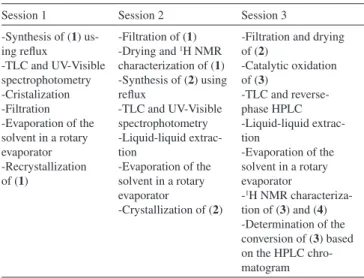
Table 1 summarizes the main tasks for the 3 laboratory sessions described above.
Hazardous
All chemicals used in this lab project should be handled with the propera care. All of these chemicals can be considered toxic and irritant, so inhalation or any contact with skin and eyes should be avoided. Dichloromethane and nitrobenzene are considered po-tential carcinogens. Pyridine is flammable and may affect fertility. Glacial acetic acid is flammable, lachrymator and causes burns. Dimethylformamide exposure may result in foetal death. Aqueous 30% hydrogen peroxide is an oxidant and may cause skin and eye burns. Lab coat, safety glasses and adequate gloves are compulsory and all the experimental work should be done in a well-ventilated fumehood. Nitrobenzene and glacial acetic acid should be measured Table 1. List of main tasks for the three laboratory sessions
Session 1 Session 2 Session 3
-Synthesis of (1) us-ing reflux
-TLC and UV-Visible spectrophotometry -Cristalization -Filtration -Evaporation of the solvent in a rotary evaporator -Recrystallization of (1)
-Filtration of (1) -Drying and 1H NMR
characterization of (1) -Synthesis of (2) using reflux
-TLC and UV-Visible spectrophotometry -Liquid-liquid extrac-tion
-Evaporation of the solvent in a rotary evaporator
-Crystallization of (2)
-Filtration and drying of (2)
-Catalytic oxidation of (3)
-TLC and reverse-phase HPLC -Liquid-liquid extrac-tion
-Evaporation of the solvent in a rotary evaporator
-1H NMR
characteriza-tion of (3) and (4) -Determination of the conversion of (3) based on the HPLC chro-matogram
Figure 2. Reverse-phase HPLC chromatogram of carbamazepine oxidation
using an appropriate bottle-top dispenser system, minimizing risks of contact and inhalation.
RESULTS AND DISCUSSION
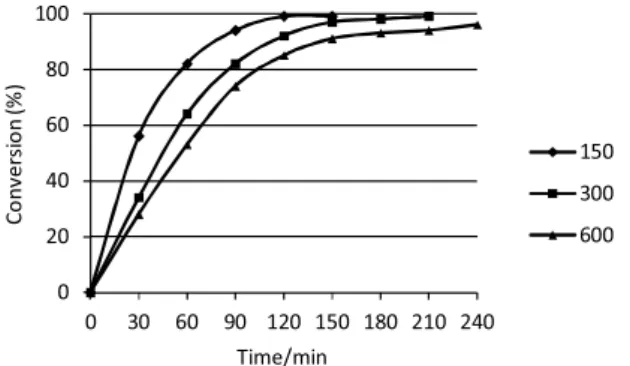
Figure 3 shows the typical profile for carbamazepine conversion versus time, with different substrate/catalyst molar ratios. Depending on the substrate/catalyst molar ratio used, the reaction can be con-sidered finished when: carbamazepine is completely consumed, as observed by TLC or HPLC; no further carbamazepine conversion is observed by TLC or HPLC.
When a substrate/catalyst molar ratio of 150 is used, the total conversion of (3) is achieved after approximately 2 h of reaction. If a substrate/catalyst molar ratio of 300 is used, total conversion of (3) is achieved only after approximately 3 h of reaction. For a substrate/ catalyst molar ratio of 600, the reaction is even slower and, after 4 h of reaction, there is no evident increase in carbamazepine conversion, as observed by HPLC (Table 1). From the 1H NMR spectrum of the extracted final reaction mixture, students can identify both the epo-xide and non-reacted carbamazepine, depending on the percentage of conversion of the substrate (Table 2).
CONCLUSIONS
Two main classical methods for the preparation of epoxides, namely the epoxidation of alkenes and the base-promoted ring clo-sure of vicinal halohydrins, are commonly described in texbooks.1 However, these classical approaches produce significant amounts of waste, being certainly unacceptable in the near future, and so efforts aimed at replacing such processes by sustainable epoxidation pro-cesses are highly desirable. The synthesis of epoxides via catalyzed oxidation of alkenes represents the most elegant and environmentally friendly way for the preparation of this class of compounds. This is of particular significance, bearing in mind that the preservation of
resources should be the main focus of interest when novel chemical processes are developed. Thus, the development of catalytic epoxida-tion methods in which hydrogen peroxide is employed as the terminal oxidant is highly attractive.
The present laboratory project aims to introduce a greener, more sustainable approach for the epoxidation of double bonds, in con-trast to the current methods presented in textbooks and developed in traditional laboratory classes. Students are therefore invited to prepare an appropriate catalyst and to use a safe, easily available and environmentally friendly oxidant for the epoxidation of a highly prescribed drug via a biomimetic approach.
SUPPLEMENTARY MATERIAL
Supplementary material is available at http://quimicanova.sbq. org.br in the form of a PDF file, with free access. This material in-cludes TLC images and 1H NMR spectra of the free-base porphyrin (1), of carbamazepine (3) and of carbamazepine 10,11-epoxide (4).
ACKNOWLEDGEMENTS
Thanks are due to Fundação para a Ciência e a Tecnologia (FCT/ FEDER) for funding the Organic Chemistry Research Unit (QOPNA; Project PEst-C/QUI/UI0062/2011). Authors also acknowledge the Portuguese National NMR Network, supported with funds from FCT.
REFERENCES
1. Carey, F. A.; Organic Chemistry, 7th ed., McGraw-Hill: New York,
2008, chap. 6; Wade, L. G.; Organic Chemistry, 3rd ed., Prentice Hall:
New Jersey, 1995, chap. 8; Vollhardt, K. P. C.; Schore, N. E.; Organic Chemistry, 3rd ed., W. H. Freeman and Company: New York, 1998,
chap. 12; Solomons, T. W. G.; Fryhle, C. B.; Organic Chemistry, 7th ed.,
Wiley: New York, 2000, chap. 11; Clayden, J.; Greeves, N.; Warren, S.; Wothers, P.; Organic Chemistry, 7th ed., Oxford University Press: New
York, 2001, chap. 20.
2. Mansuy, D.; Battioni, P. In The Porphyrin Handbook; Kadish K. M.; Smith K. M.; Guilard R., eds.; Academic Press: New York, 2000, vol. 4, chap. 26; Groves J. T.; Shalyaev K.; Lee J. In The Porphyrin Handbook; Kadish K. M.; Smith K. M.; Guilard R., eds.; Academic Press: New York, 2000, vol. 4, chap. 27; Meunier B.; Robert A.; Pratviel G.; Bernadou J. In The Porphyrin Handbook; Kadish K. M.; Smith K. M.; Guilard R., eds.; Academic Press: New York, 2000, vol. 4, chap. 31. 3. Bernus, I.; Hooper, W. D.; Dickinson, R. G.; Eadie, M. J.; Epilepsy Res.
1995, 21, 65; Bernus, I.; Dickinson, R. G.; Hooper, W. D.; Eadie, M. J.; Epilepsy Res. 1996, 24, 163; Faria, A. L.; Mac Leod, T. C. O.; Assis, M. D.; Catal. Today 2008, 133, 863.
4. Lohmann, W.; Karst, U.; Anal. Bioanal. Chem. 2008, 391, 79. 5. Bernadou, J.; Meunier, B.; Adv. Synth. Catal. 2004, 346, 171. Table 2. Typical results for the oxidation of carbamazepine with hydrogen peroxide catalyzed by Mn(TDCPP)Cla
Entry Substrate/catalyst molar ratio
Time (min) H2O2 (mmol) Conversion (%) Selectivity (%) TON
1 150 120 4.0 > 99 > 99 148
2 300 180 6.0 > 99 > 99 297
3 600 240 8.0 97 > 99 582
4 without catalyst 120 4.0 0 --
--5 150 120 without 0 -- --
aReaction conditions: 0.1 mmol of carbamazepine, 6.7 x 10⁻⁴ or 3.3 x 10⁻⁴ or 1.7 x 10⁻⁴ mmol of catalyst and 15 mg of co-catalyst (ammonium acetate) in a final
total volume of 2.0 mL with CH3CN. Aqueous 30% (w/w) H2O2 diluted (1:5) in CH3CN is added every 15 min of reaction, each H2O2 addition corresponding
to a half-substrate amount (0.05 mmol).
Figure 3. Carbamazepine conversion versus time, for the three molar
6. Mansuy D.; C. R. Chimie 2007, 10, 392.
7. Hartmann, J.; Bartels, P.; Mau, U.; Witter, M.; van Tümpling, W.; Hofmann, J.; Nietzschmann, E.; Chemosphere 2008, 70, 453. 8. Sheldon, R. A.; Metalloporphyrins in Catalytic Oxidations, Marcel
Dekker: New York, 1994; Neves, C. M. B.; Simões, M. M. Q.; Santos, I. C. M. S.; Domingues, F. M. J.; Neves, M. G. P. M. S.; Paz, F. A. A.; Silva, A. M. S.; Cavaleiro J. A. S.; Tetrahedron Lett. 2011, 52, 2898; Simões, M. M. Q.; De Paula, R.; Neves, M. G. P. M. S.; Cavaleiro, J. A. S.; J. Porphyrins Phthalocyanines 2009, 13, 589; Rebelo, S. L. H.; Pereira, M. M.; Simões, M. M. Q.; Neves, M. G. P. M. S.; Cavaleiro, J. A. S.; J. Catal. 2005, 234, 76.
9. Adolfsson, H. In Modern Oxidation Methods; Bäckvall, J. E., ed.; Wi-ley: Weinheim, 2004, p. 21-50; Brinksma, J.; de Boer, J. W.; Hage, R.; Feringa, B. L. In Modern Oxidation Methods, Bäckvall, J. E., ed.; Wiley:
Weinheim, 2004, p. 295-326; Jones, C. W.; Applications of Hydrogen Peroxide and Derivatives, The Royal Society of Chemistry: Cambridge, 1999.
10. Ragsdale, R. O.; Vanderhooft, J. C.; Zipp A. P.; J. Chem. Educ. 1998, 75, 215.
11. Gonsalves, A. M. A. R.; Varejão, J. M. T. B.; Pereira, M. M.; J. Hete-rocycl. Chem. 1991, 28, 635.
12. Adler, A. D.; Longo, F. R.; Kampas, F. L.; J. Inorg. Nucl. Chem. 1970, 32, 2443.
13. Milgrom, L. R.; The Colours of Life: an Introduction to the Chemistry of Porphyrins and Related Compounds, Oxford University Press: Oxford, 1997.
Supplementary Material
*e-mail: [email protected]
BIOMIMETIC OXIDATION OF CARBAMAZEPINE WITH HYDROGEN PEROXIDE CATALYZED BY A MANGANESE PORPHYRIN
Cláudia M. B. Neves, Mário M. Q. Simões*, Fernando M. J. Domingues, M. Graça P. M. S. Neves e José A. S. Cavaleiro
Departamento de Química, QOPNA, Universidade de Aveiro, 3810-193 Aveiro, Portugal
Figure 1S. TLC of the free-base 5,10,15,20-tetrakis(2,6-dichlorophenyl)porphyrin (1) after crystallization using CH2Cl2 as eluent
Figure 2S.1H NMR spectrum of the 5,10,15,20-tetrakis(2,6-dichlorophenyl)porphyrin (1) using CDCl
Figure 5S. 1H NMR spectra (CDCl
3) of a) carbamazepine (3); b) carbamazepine 10,11-epoxide (4)
Figure 3S. Monitoring of the reaction progress (session 2) by TLC after one
hour. A new red spot of manganese(III) complex (2)can be observed at the base, in contrast with the brown spot of the free-base porphyrin (1) in the top of the TLC plate, using CH2Cl2 as eluent
![Figure 1. Typical UV-Vis spectra of a) 5,10,15,20-tetrakis(2,6-dichlo- 5,10,15,20-tetrakis(2,6-dichlo-rophenyl)porphyrin (H 2 TDCPP) (1); b) manganese(III) complex of 5,10,15,20-tetrakis(2,6-dichlorophenyl)porphyrin [Mn(TDCPP)Cl] (2)](https://thumb-eu.123doks.com/thumbv2/123dok_br/18985724.458781/2.892.313.754.77.627/typical-tetrakis-tetrakis-rophenyl-porphyrin-manganese-dichlorophenyl-porphyrin.webp)