2-[
18
F]-fluoro-2-deoxy-D-glucose positron-emission tomography
is cost-effective in the initial staging of non-small cell lung cancer
patients in Brazil
*
A tomografia por emissão de pósitrons com 2-[18F]-fluoro-2-desoxi-D-glicose é custo-efetiva em pacientes com câncer de pulmão não pequenas células no Brasil
Juliano Julio Cerci1, Teresa Yae Takagaki2, Evelinda Trindade3, Roberta Morgado4, Fausto Morabito5, Rafael Silva Musolino5, José Soares Junior6, José Cláudio Meneghetti7
Objective: To evaluate the accuracy and cost-effectiveness of metabolic staging (MS) with FDG-PET as compared with the conventional staging (CS) strategy in the preoperative staging of non-small cell lung cancer (NSCLC). Materials and Methods: A total of 95 patients with initial diagnosis of NSCLC were staged before undergoing treatment. The MS and CS results were compared with regard to treatment definition and incidence of futile thoracotomies with both strategies. Results: Metabolic staging with FDG-PET upstaged 48.4% and downstaged 5.3% of the patients, and would lead to change in the treatment of 41% of cases. Thoracotomy was considered as futile in 47% of the patients with CS, and in 19% of the patients with MS. The cost of futile thoracotomies in eight patients with MS was R$ 79,720, while in 31 patients with CS it would be R$ 308,915. Just such saving in costs would be more than enough to cover the costs of all FDG-PETs (R$ 126,350) or FDG-PET/CTs (R$ 193,515) for the 95 patients. Conclusion: The metabolic staging with FDG-PET is more accurate than CS in patients with NSCLC. Both FDG-PET and FDG-PET/CT are cost-effective methods and their utilization is economically justifiable in the Brazilian public health system.
Keywords: Non-small cell lung cancer; FDG-PET; Staging; Cost-effectiveness.
Objetivo: Comparar a acurácia e a custo-efetividade do estadiamento metabólico (EM) com o FDG-PET em relação ao estadiamento convencional (EC) no estadiamento inicial de pacientes com câncer de pulmão não pequenas células (CPNPC). Materiais e Métodos: Noventa e cinco pacientes com diagnóstico inicial de CPNPC foram estadiados an-tes do início do tratamento. Os resultados do EC e EM foram comparados quanto a definição do tratamento e incidên-cia de toracotomia fútil em cada estratégia. Resultados: O EM com FDG-PET classificou 48,4% dos pacientes como estádio mais avançado e 5,3% como menos avançado. O resultado do EM modificaria o tratamento em 41% dos pa-cientes. A toracotomia foi considerada fútil em 47% dos pacientes com EC e em 19% dos casos com EM. O custo das toracotomias fúteis em oito pacientes no EM foi de R$ 79.720, enquanto em 31 pacientes no EC seria de R$ 308.915. Apenas esta economia seria mais que suficiente para cobrir os custos de todos os exames de FDG-PET nos 95 pacien-tes (R$ 126.350) ou de FDG-PET/CT (R$ 193.515). Conclusão: O EM com FDG-PET tem maior acurácia que o EC em pacientes com CPNPC. A FDG-PET e FDG-PET/CT são custo-efetivas e sua utilização se justifica economicamente na saúde pública no Brasil.
Unitermos: Câncer de pulmão não pequenas células; FDG-PET; Estadiamento; Custo-efetividade.
Abstract
Resumo
* Study developed at Instituto do Coração (InCor) – Hospital das Clínicas da Faculdade de Medicina da Universidade de São Paulo (HC-FMUSP), São Paulo, SP, Brazil. The present study was sponsored by the Brazilian Ministry of Health.
1. PhD, Director of PET-CT Center, Quanta – Diagnóstico e Terapia, Curitiba, PR, MD, Researcher, Instituto do Coração (In-Cor) – Hospital das Clínicas da Faculdade de Medicina da Uni-versidade de São Paulo (HC-FMUSP), São Paulo, SP, Brazil.
2. Postdoctoral Fellowship, Professor, Universidade de São Paulo (USP), São Paulo, SP, Brazil.
3. PhD, Núcleo de Avaliação de Tecnologia, Instituto do Co-ração (InCor) – Hospital das Clínicas da Faculdade de Medicina da Universidade de São Paulo (HC-FMUSP), São Paulo, SP, Bra-zil.
4. Nuclear Physician, Researcher, Unit of Nuclear Medicine, Instituto do Coração (InCor) – Hospital das Clínicas da Faculdade
Cerci JJ, Takagaki TY, Trindade E, Morgado R, Morabito F, Musolino RS, Soares Junior J, Meneghetti JC. 2-[18 F]-fluoro-2-deoxy-D-glu-cose positron-emission tomography is cost-effective in the initial staging of non-small cell lung cancer patients in Brazil. Radiol Bras. 2012 Jul/Ago;45(4):198–204.
INTRODUCTION
Non-small cell lung cancer (NSCLC) corresponds to approximately 85% of all lung neoplasms, and is the main cause of deaths from lung cancer in Brazil nowa-days. According to Instituto Nacional de Câncer (INCA) (National Cancer Institute), de Medicina da Universidade de São Paulo (HC-FMUSP), São
Paulo, SP, Brazil.
5. MDs, Pneumologists, Unit of Pneumology, Instituto do Coração (InCor) – Hospital das Clínicas da Faculdade de Medi-cina da Universidade de São Paulo (HC-FMUSP), São Paulo, SP, Brazil.
6. PhD, Director of PET-CT Center, Unit of Nuclear Medicine, Instituto do Coração (InCor) – Hospital das Clínicas da Faculdade de Medicina da Universidade de São Paulo (HC-FMUSP), São Paulo, SP, Brazil.
7. PhD, Director of Unit of Pneumology, Instituto do Coração (InCor) – Hospital das Clínicas da Faculdade de Medicina da Universidade de São Paulo (HC-FMUSP), São Paulo, SP, Brazil. Mailing Address: Dr. Juliano Julio Cerci. Núcleo de Avalia-ção de Tecnologia do Instituto do CoraAvalia-ção (InCor) – FMUSP. Ave-nida Doutor Enéas de Carvalho Aguiar, 44, AB, Cerqueira
Cé-sar. São Paulo, SP, Brazil, 05403-000. E-mail: cercijuliano@ hotmail.com
the estimated mortality due to NSCLC in Brazil reached 14,715 patients in the year of 2000(1), with 27,270 new cases in 2008(2).
The initial staging of NSCLC deter-mines the best treatment approach and is essential to define the patient’s progno-sis(3,4). Thus, an incorrect staging of
NSCLC may lead to inappropriate treat-ment (futile surgeries in patients with ad-vanced disease, as well as contraindication for curative surgery in patients with an oth-erwise curable disease)(5,6).
The TNM classification of malignant tumors, developed by the American Joint Committee on Cancer, is the most com-monly utilized staging system, and is based on tumor size, regional lymph nodes in-volvement and presence of metastasis. The definition of the nodal stage (N) is particu-larly important in the decision making re-garding neoadjuvant therapy to be adopted before surgical resection, potentially in-creasing the long-term survival of patients with stage IIIA NSCLC(7–9). Several
diag-nostic tools have been investigated for the early detection and staging of NSCLC, in-cluding chest radiography, computed to-mography (CT), magnetic resonance imag-ing (MRI), bronchoscopy, videothoraco-scopy, transesophageal ultrasonography (EUS) or transbronchial ultrasonography (EBUS) and mediastinoscopy.
Positron emission tomography (PET) with [18F]-fluoro-2-deoxy-D-glucose (FDG) has consistently played an important role in the noninvasive preoperative staging of patients with NSCLC(10–12). As compared
with CT, FDG-PET is more accurate in N and M staging and, therefore, has a consid-erable clinical impact in the identification of unresectable disease(13–15). However, the
additional costs arising from the introduc-tion of this new technology must be deter-mined. Thus, the present study is aimed at assessing the impact of metabolic staging (MS) with FDG-PET in the initial staging of patients with NSCLC in Brazil and de-termine the cost-effectiveness of such a strategy as compared with the conventional staging (CS).
MATERIALS AND METHODS
Patients
The present prospective study, approved by the Committee for Ethics in Research of
Universidade de São Paulo/Hospital das Clínicas, included 95 consecutive patients with recent NSCLC diagnosis confirmed by biopsy. The patients were referred by the Service of Pneumology of Instituto do Coração (InCor) – Hospital das Clínicas da Faculdade de Medicina da Universidade de São Paulo (HC-FMUSP). A term of free and informed consent was obtained from all eligible patients in the period between August 2005 and December 2007. Preg-nancy and presence of other concomitant tumor were the exclusion criteria.
All the 95 patients were submitted to CS and MS, while MRI and scintigraphy were only performed in cases of clinical rel-evance.
Conventional staging
All the patients underwent CS, includ-ing physical examination, laboratory tests (LDH, alkaline phosphatase, liver en-zymes, bilirubin, renal function, calcium) and CT (chest, abdomen and pelvis). At CT, slice thickness was 1 mm thickness, with administration of both oral and intravenous contrast.
Cranial MRI and bone scintigraphy were performed only in the presence of neurological symptoms and bone pain, re-spectively. EUS with biopsy was per-formed in the suspicion of mediastinal lymph nodes involvement.
The conventional clinical stage for each patient was attributed in accordance with “The revised TNM staging for lung can-cer”(16).
FDG-PET
Tomographic images were acquired from the skull to the roots of the thighs in a dedicated PET apparatus (GE Advance; GE Healthcare, Waukesha, WI, USA), 60 to 90 minutes following intravenous injec-tion of 296–444 MBq (8–12 mCi) of FDG. The images were reconstructed in the axial, sagittal and coronal planes. Attenuation correction was performed with 68Ge sources.
The images were interpreted by two ex-perienced nuclear physicians, both bearing nuclear medicine specialist title. The FDG-PET images were analyzed together with the CT images. Areas of non-physiological concentration with FDG concentration
greater than the background concentration were classified as positive for disease. The metabolic stage for each patient was attrib-uted according to the TNM staging system. The time elapsed between the perfor-mance of CT and PET was not longer than two weeks.
Treatment and follow-up
The final TNM staging was obtained at a consensus meeting by a group of onco-logists and imaging diagnosis specialists on the basis of all available data (clinical data, initial CT and PET-FDG, bronchoscopy, mediastinoscopy and EUS, as applicable). EUS was considered the reference standard in the preoperative evaluation of medias-tinal lymph nodes.
For treatment planning purposes, the patients were divided into groups as fol-lows: (i) stage I: curative surgery; (ii) stages II and IIIA (resectable disease): curative surgery with adjuvant chemotherapy; (iii) stage IIIB: combined chemotherapy-radio-therapy; (iv) stage IV: palliative chemo-therapy. Treatment changes after MS were determined in cases of changes in the origi-nal treatment plan with basis on FDG-PET results. Positive findings only at FDG-PET study were confirmed by biopsy or TEUS at the discretion of the assisting physician. All the patients were followed-up ac-cording to the local conventional standard, being evaluated at every three months or at shorter intervals, for at least one year.
Reference standard and data analysis
stages IIIA or IIIB, or by lymph nodes sam-pling at thoracotomy, or development of local recurrence, distant metastasis or death up to one year after thoracotomy (stage IV of the disease). The data were prospectively collected.
In the clinical stage analysis, CS and MS results were compared in cases where FDG-PET indicated a change in the surgi-cal approach as the patient stage changed from I-IIIA to IIIB-IV, and vice-versa; and in radiotherapy, as the stage changed from IIIB to IV and vice-versa.
Regarding patients considered eligible for surgery at CS and MS, thoracotomy was considered as futile in cases where anatomopathological evaluation of the sur-gical specimens confirmed disease at stage IIIB or IV, or in the case of recurrence or death due to any cause up to one year after surgery.
The diagnostic accuracy was analyzed by summing up the number of patients with true-positive and true-negative results, and dividing the result by the total number of patients. The intermethod agreement was evaluated by means of the McNemar χ2 test. The software SPSS 10.0 for Windows (SPSS Inc.; Chicago, IL, USA) was utilized for statistical analysis.
Cost-effectiveness analysis
All the health care resources required for patients’ assessment and treatment were prospectively evaluated and quantified. Drugs, procedures (including investiga-tions, chemotherapy, radiotherapy, surgical procedures, days of hospitalization, outpa-tient and hospital assistance) or any other resources utilized for local care were cal-culated by micro-costing methodology. The HC-FMUSP is a public hospital, and all material purchase is performed by means of electronic tendering in statewide bids. The costs of resources were updated for 2010. Medical fees were not included.
The clinical stage of the patient defines which treatment he/she should undergo. The mean cost of each staging of the dis-ease was calculated for each group. The economic impact of CS (strategy I), CS + FDG-PET (strategy II), and PET/CT (strat-egy III) was calculated.
The calculations of costs for staging and first-line treatment strategies were based on
the actual costs of strategy II (CS + FDG-PET) and estimated for strategies I and III.
RESULTS
The patients’ clinical characteristics are described on Table 1.
Accuracy and impact on changes in CS and in therapy
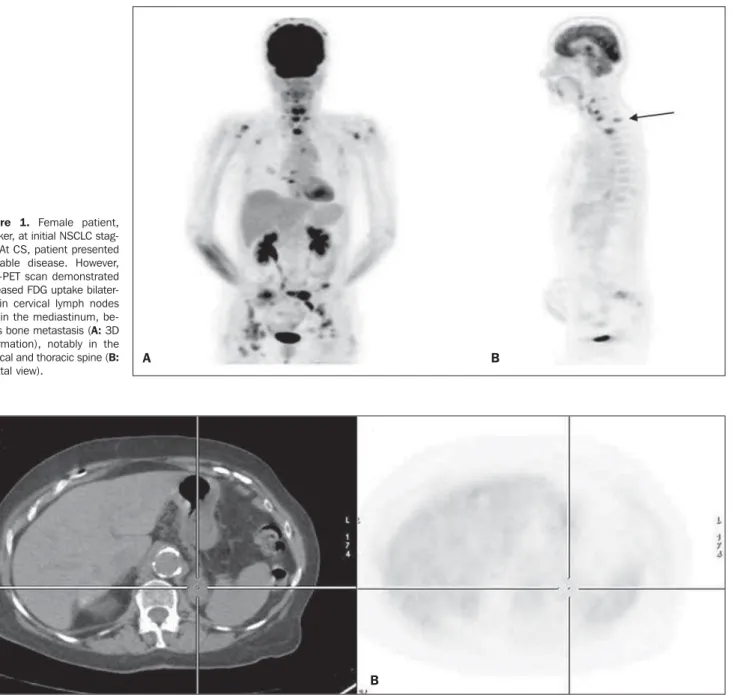
Table 2 shows the comparison of CS and MS with FDG-PET. There was agree-ment between CS and MS in 44/95 (46.3%) of the patients. Intermethod agreement was not observed in 51/95 patients (53.7%): 46/95 (48.4%) patients had their staging changed to more advanced stages with the information provided by FDG-PET (Figure 1), while 5/95 (5.3%) patients had their staging modified to earlier stages (Figure 2).
Considering all the cases in the present study, the inclusion of FDG-PET in CS
Table 1 Clinical characteristics of the 95 NSCLC patients.
Characteristics
Sex Female
Male Age (mean ± SD) Conventional clinical staging
I II IIIA IIIB IV 95 Patients 26 (27.4%) 69 (72.6%) 64.6 (± 8.8)
24 (25.3%) 17 (17.9%) 25 (26.3%) 12 (12.6%) 17 (17.9%)
SD, standard deviation.
would change the treatment in 39/95 pa-tients (41.0%) as regards the surgical thera-peutic approach (I-IIIA ↔ IIIB-IV), and in
7/95 patients (7.4%) (stage IIIB ↔ IV) as
regards radiotherapy.
As regards the reference standard, PET has correctly staged 86/95 patients (90.5%) as compared with 53/95 cases (55.8%) with CS. Results of PET were considered as false-positive in 8 patients, and CT, in four cases; while PET results were considered as false-negative in one patient, and CT in 38 patients. Statistically significant differ-ence was observed between CT and PET results (MacNemar test χ2:
p < 0.001).
As regards the final treatment, informa-tion from PET would determine change in treatment for 39 patients; in 9 cases the treatment was that suggested by CS, while in 30 patients the results were defined by PET, avoiding surgery in 21 patients, sug-gesting surgery for two patients and radio-therapy for six patients, and avoiding it for one patient. Finally, considering the final treatment result, MS has correctly defined the treatment in 86/95 (90.5%) of the pa-tients, and CS in 65/95 (68.4%).
Futile thoracotomy
The staging data determined the indica-tion for curative surgical treatment with thoracotomy in 33 patients submitted to MS and in 66 patients submitted to CS.
Among the 66 patients with indication for surgical treatment by CS, the procedure was considered futile in 31 patients (47%): 11 patients with confirmed stage IV, 9 were reclassified as inoperable NSCLC based on anatomopathological findings by EUS, and
Table 2 Comparison of CS and MS with FDG-PET in the 95 NSCLC patients. In bold, the number of patients who had their treatments changed with basis on FDG-PET findings.
CS IA IB IIA IIB IIIA IIIB IV Total MS IA 3 — — — — — — 3 IB — 5 — — — — — 5 IIA — — 2 — — — — 2 IIB — 1 — 4 — 1 — 6 IIIA — 6 1 4 12 1 2 26 IIIB 1 6 1 2 6 4 1 21 IV — 2 — 3 7 6 14 32 Total 4 20 4 13 25 12 17 95
Figure 2. Male patient, smoker, at initial NSCLC staging. At CS, patient presented inoperable disease. Probable left adrenal metastasis at CT (A: axial section), however without increase in metabolism (B: axial section). Follow-up studies did not demonstrated any change in the the left adrenal gland.
A B
15 died less than one year after thorac-otomy.
Considering MS, 8/42 patients (19%) would be submitted to futile thoracotomy: one inoperable case based on EUS, one patient with stage IV, who died, besides six other patients (four patients stage 3A and two stage 2B) who also died less than one year after thoracotomy.
Local costs analysis
The mean costs of the procedures were the following: biopsy, R$ 624; CT, R$
1,200; MRI, R$ 400; laboratory and bio-chemistry, R$ 398; EUS, R$ 1,287; FDG-PET, R$ 1,330; PET/CT, R$ 2,037.The costs of the three different strategies are presented on Table 3.
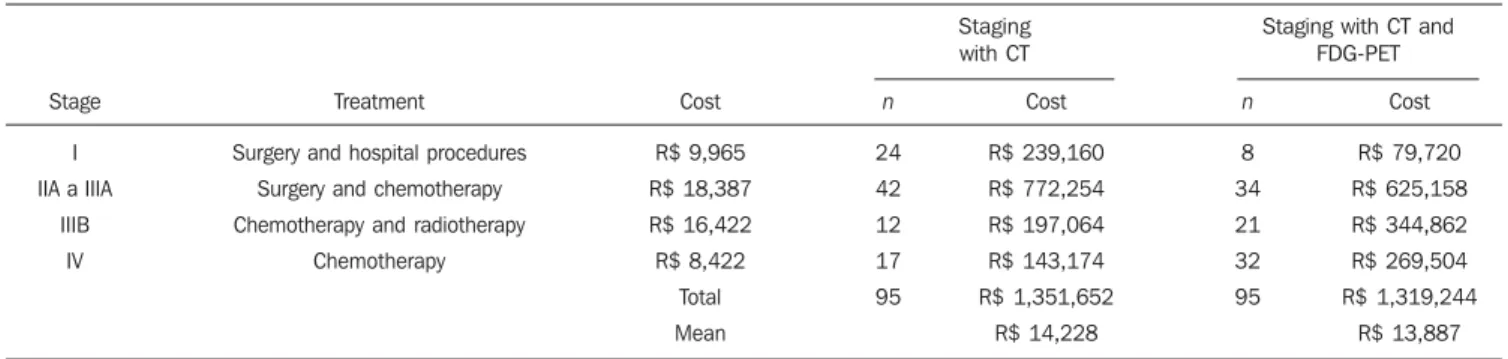
The mean costs of each treatment mo-dality were the following: surgery and hos-pital procedures, R$ 9,965; adjuvant che-motherapy, R$ 8,422; radiotherapy, R$ 8,000. The costs of staging and first-line treatment are presented on Table 4.
The initial staging of the 95 patients with CT had a total cost of R$ 114,000,
while that cost with FDG-PET was R$ 126,350. The calculated cost for PET/CT would be R$ 193,515 for the same patients. The MS by means of FDG-PET would change the disease stage in a considerable number of patients, determining changes in treatment strategies in 39/95 patients (41.0%).
The number of supplementary studies, such as cranial MRI and bone scintigraphy would remain the same with both strate-gies. However, in CS, EUS would be per-formed in 26 patients with stages IB to IIIA Figure 1. Female patient,
smoker, at initial NSCLC stag-ing. At CS, patient presented operable disease. However, FDG-PET scan demonstrated increased FDG uptake bilater-ally in cervical lymph nodes and in the mediastinum, be-sides bone metastasis (A: 3D reformation), notably in the cervical and thoracic spine (B: sagittal view).
with N2 disease; and in MS with strategy II or III the EUS would be performed in 27 patients.
The cost of futile thoracotomy in 31 conventionally staged patients reached R$ 308,915, while in eight patients with MS, the cost reached R$ 79,720, representing total savings of R$ 229,195.
The mean cost of staging and first-line treatment with strategy I by CS would be R$ 16,983 per patient; with strategy II (CT + PET) it would be R$ 17,985; and with strategy III (PET/CT) the mean cost would be R$ 17,492 per patient.
DISCUSSION
Patients with NSCL at clinical stages IA, IB, IIA, IIB of the disease might benefit from curative surgical resection. Patients with stages IIIB and IV are inoperable, while patients with stage IIIA rarely meet the cri-teria for surgery. The current role of neoad-juvant chemotherapy for selected patients with stage IIIA remains controversial(16).
The present study results confirm the benefits of MS as compared with CS, lead-ing to a more accurate definition of the
dis-ease stage and, therefore, an increasingly more refined treatment strategy for the pa-tient. The data from FDG-PET resulted in the modification of the stage in approxi-mately half the cases (51/95; 53.7%) and changes in treatment in approximately one-third (30/95; 31.6%) of the cases, particu-larly avoiding unnecessary treatment in one-third of the patients (21 cases had contraindications for surgery, and 6 cases for radiotherapy) while suggesting more aggressive treatment for only three patients (surgical treatment for two patients and radiotherapy for one patient).
Several other studies have demonstrated the significant clinical impact of FDG-PET on the initial staging of NSCLC patients, ranging from 22% to 67%(5,17–19). As CS
and CS + MS strategies are compared, it is also important to consider the costs of ex-ams and subsequent procedures performed for the investigation of the results of such new method. In the present study, the in-vestigation strategy including FDG-PET increased the number of subsequent proce-dures in only one of the 95 patients.
Randomized studies(5,20,21) suggest that
FDG-PET and FDG-PET/CT improve the
accuracy in the mediastinal staging of NSCLC, as compared with CT, confirming the results reported by previous non-ran-domized studies(22–28). Typically, hybrid
PET/CT devices present a better perfor-mance than PET alone, optimizing the in-terpretation of both modalities as it allows for the anatomical identification of areas with increased metabolism(29–33).
Three important randomized studies re-ported the impact of adding FDG-PET to conventional staging for NSCLC(5,21,22).
Their results were different. Viney et al.(20)
have faced as primary result the perfor-mance of thoracotomy, which was per-formed in 98% of their patients of the CS group and in 96% of the group MS with FDG-PET besides CS (p = 0.44), and
dem-onstrated that the addition of PET did not significantly reduce the number of thorac-otomies. The main result of the study de-veloped by van Tinteren et al.(5) was futile
thoracotomy. The rate of futile thoracoto-mies was 41% in the CS group and 21% in the group of MS with PET in association with CS (p < 0.003). In 2009, Fischer et
al.(21) randomized the investigation by
means of CS and MS followed by the in-Table 3 Summary of the costs with CS strategy, MS with FDG-PET and simulation of the cost with PET/CT in the 95 NSCLC patients.
Procedure Biopsy Laboratory tests CT PET PET/CT Cranial MRI Bone scintigraphy
EUS in stage IB and IIIA with suspected N2
Cost R$ 624 R$ 398 R$ 1,200 R$ 1,330 R$ 2,037 R$ 400 R$ 138 R$ 1,287 n 95 95 95 — — 28 43 26 Total Mean Total R$ 59,280 R$ 37,810 R$ 114,000 — — R$ 11,200 R$ 5,934 R$ 33,462 R$ 261,686 R$ 2,755 n 95 95 95 95 — 28 43 27 Total R$ 59,280 R$ 37,810 R$ 114,000 R$ 126,350 — R$ 11,200 R$ 5,934 R$ 34,749 R$ 389,323 R$4,098 n 95 95 — — 95 28 43 27 Total R$ 59,280 R$ 37,810 — — R$ 193,515 R$ 11,200 R$ 5,934 R$ 34,749 R$ 342,488 R$ 3,605
CT, computed tomography; FDG, fluoro-deoxy-glucose; PET, positron emission tomography; MRI, magnetic resonance imaging; EUS, transesophageal ultrasonography.
Table 4 Summary of the treatment costs based on CS and MS with FDG-PET and CT.
Stage
I IIA a IIIA
IIIB IV
Treatment
Surgery and hospital procedures Surgery and chemotherapy Chemotherapy and radiotherapy
Chemotherapy Cost R$ 9,965 R$ 18,387 R$ 16,422 R$ 8,422 Total Mean n 24 42 12 17 95 Cost R$ 239,160 R$ 772,254 R$ 197,064 R$ 143,174 R$ 1,351,652 R$ 14,228 n 8 34 21 32 95 Cost R$ 79,720 R$ 625,158 R$ 344,862 R$ 269,504 R$ 1,319,244 R$ 13,887 Staging with CT
vestigation of any abnormality. The rate of futile thoracotomies was 52% in the CS group and 35% in the group with CS asso-ciated with MS. The present study results are in agreement with those of the latter two studies, demonstrating the benefits of MS, with a significantly lower rate of futile tho-racotomies in comparison with the rate obtained by CS (19% versus 47%).
There are scarce studies approaching the utilization of FDG-PET in Brazilian pa-tients(34,35), and studies approaching
analy-sis of its cost-effectiveness are even rarer(36). The rational utilization of financial
resources is extremely relevant for the pub-lic health system, moreover in developing countries such as Brazil. Additionally, one should take into consideration that results of cost-effectiveness studies in certain countries may not necessarily apply to oth-ers. In the case of the present study, the results corroborate those of studies devel-oped in other countries and demonstrate the cost-effectiveness of MS with FDG-PET in cases of NSCLC. The costs of futile thora-cotomies in eight patients with MS reached R$ 79.720, while those costs in 31 patients with CS reached R$ 308.915. Just such saving in costs (R$ 229.195) would be more than enough to cover the costs of all PETs (R$ 126,350) or even FDG-PET/CTs (R$ 193,515) for all of the 95 patients.
One should take into consideration that the present study results may be questioned with respect to the utilization of PET ap-paratuses instead of PET/CT apap-paratuses for staging of NSCLC. However, it is in-teresting to notice that the data regarding accuracy data in the present study are quite similar to reported data for PET/CT. This can be explained by the careful correlation of the PET and CT images during the read-ing of the FDG-PET studies. The main dis-advantage in the present study is the ab-sence of histological confirmation of all the lesions. Until recently, mediastinoscopy was considered as being the gold standard for N staging(16). However, new and less
invasive technologies are emerging, such as the case of EUS and EBUS. Thus, due to superimposition of anatomical areas, mediastinoscopy was not mandatory in the present study. Additionally, a randomized and controlled study would have been more
elegant, however, ethical considerations impaired such option.
CONCLUSION
The present study demonstrates that MS with FDG-PET is more accurate than CS with CT. Additionally, FDG-PET is a cost-effective imaging method in initial staging of NSCLC, allowing a better selection of patients for the most appropriate treatment in approximately one-half of the cases and reducing the number of futile thoracoto-mies from 47% to 19%.
The introduction of MS with FDG-PET or FDG-PET/CT is a very cost-effective option, with acceptable cost for NSCLC staging, and therefore, its utilization is eco-nomically justifiable in the Brazilian pub-lic health system.
REFERENCES
1. Instituto Nacional de Câncer. Tipos de câncer – pulmão. [acessado em 3 de julho de 2012]. Dis-ponível em: http://www2.inca.gov.br/wps/wcm/ connect/tiposdecancer/site/home/pulmao 2. Instituto Nacional de Câncer. Incidência de
cân-cer no Brasil – estimativa 2007. [acessado em 4 de fevereiro de 2011]. Disponível em: http:// www.inca.gov.br/estimativa/2007
3. Molina JR, Yang P, Cassivi SD, et al. Non-small cell lung cancer: epidemiology, risk factors, treat-ment, and survivorship. Mayo Clin Proc. 2008; 83:584–94.
4. Tanoue LT. Staging of non-small cell lung cancer. Semin Respir Crit Care Med. 2008;29:248–60. 5. van Tinteren H, Hoekstra OS, Smit EF, et al.
Ef-fectiveness of positron emission tomography in the preoperative assessment of patients with sus-pected non-small-cell lung cancer: the PLUS multi-centre randomised trial. Lancet. 2002;359: 1388–93.
6. Swensen SJ, Brown LR, Colby TV, et al. Lung nodule enhancement at CT: prospective findings. Radiology. 1996;201:447–55.
7. Rosell R, Felip E. Role of multimodality treatment for lung cancer. Semin Surg Oncol. 2000;18:143– 51.
8. Spásová I, Petera J, Hytych V. The role of neoad-juvant chemotherapy in marginally resectable or unresectable stage III non-small cell lung cancer. Neoplasma. 2002;49:189–96.
9. Roth JA, Atkinson EN, Fossella F, et al. Long-term follow-up of patients enrolled in a random-ized trial comparing perioperative chemotherapy and surgery with surgery alone in resectable stage IIIA non-small-cell lung cancer. Lung Cancer. 1998;21:1–6.
10. Toloza EM, Harpole L, McCrory DC. Noninvasive staging of non-small cell lung cancer: a review of the current evidence. Chest. 2003;123(1 Suppl): 137S–146S.
11. Vesselle H, Pugsley JM, Vallières E, et al. The impact of fluorodeoxyglucose F 18
positron-emis-sion tomography on the surgical staging of non-small cell lung cancer. J Thorac Cardiovasc Surg. 2002;124:511–9.
12. Graeter TP, Hellwig D, Hoffmann K, et al. Medi-astinal lymph node staging in suspected lung cancer: comparison of positron emission tomog-raphy with F-18-fluorodeoxyglucose and medias-tinoscopy. Ann Thorac Surg. 2003;75:231–6. 13. Kalff V, Hicks RJ, MacManus MP, et al. Clinical
impact of (18)F fluorodeoxyglucose positron emission tomography in patients with non-small-cell lung cancer: a prospective study. J Clin Oncol. 2001;19:111–8.
14. Lowe VJ, Naunheim KS. Positron emission to-mography in lung cancer. Ann Thorac Surg.
1998;65:1821–9.
15. Stroobants S, Verschakelen J, Vansteenkiste J. Value of FDG-PET in the management of non-small cell lung cancer. Eur J Radiol. 2003;45:49– 59.
16. Silvestri GA, Gould MK, Margolis ML, et al. Noninvasive staging of non-small cell lung can-cer: ACCP evidenced-based clinical practice guidelines (2nd edition). Chest. 2007;132(3 Suppl):178S–201S.
17. Pieterman RM, van Putten JW, Meuzelaar JJ, et al. Preoperative staging of non-small-cell lung
cancer with positron-emission tomography. N Engl J Med. 2000;343:254–61.
18. Miele E, Spinelli GP, Tomao F, et al. Positron emission tomography (PET) radiotracers in on-cology – utility of 18F-fluoro-deoxy-glucose (FDG)-PET in the management of patients with non-small-cell lung cancer (NSCLC). J Exp Clin Cancer Res. 2008;27:52.
19. Subedi N, Scarsbrook A, Darby M, et al. The
clini-cal impact of integrated FDG PET-CT on manage-ment decisions in patients with lung cancer. Lung Cancer. 2009;64:301–7.
20. Viney RC, Boyer MJ, King MT, et al. Random-ized controlled trial of the role of positron emis-sion tomography in the management of stage I and II non-small-cell lung cancer. J Clin Oncol.
2004;22:2357–62.
21. Fischer B, Lassen U, Mortensen J, et al. Preop-erative staging of lung cancer with combined PET-CT. N Engl J Med. 2009;361:32–9. Erratum in: N Engl J Med. 2011;364:982.
22. Herder GJ, Kramer H, Hoekstra OS, et al. Tradi-tional versus up-front [18F] fluorodeoxyglucose-positron emission tomography staging of non-small-cell lung cancer: a Dutch cooperative ran-domized study. J Clin Oncol. 2006;24:1800–6.
23. [No authors listed]. Investigating extrathoracic metastatic disease in patients with apparently operable lung cancer. The Canadian Lung Oncol-ogy Group. Ann Thorac Surg. 2001;71:425–34.
24. Pieterman RM, van Putten JW, Meuzelaar JJ, et al. Preoperative staging of non-small-cell lung cancer with positron-emission tomography. N Engl J Med. 2000;343:254–61.
25. Saunders CA, Dussek JE, O’Doherty MJ, et al. Evaluation of fluorine-18-fluorodeoxyglucose whole body positron emission tomography imag-ing in the stagimag-ing of lung cancer. Ann Thorac Surg. 1999;67:790–7.
27. MacManus MP, Hicks RJ, Ball DL, et al. F-18 fluorodeoxyglucose positron emission tomogra-phy staging in radical radiotherapy candidates with nonsmall cell lung carcinoma: powerful cor-relation with survival and high impact on treat-ment. Cancer. 2001;92:886–95.
28. Ung YC, Maziak DE, Vanderveen JA, et al; Lung Cancer Disease Site Group of Cancer Care Onta-rio’s Program in Evidence-Based Care. 18Fluoro-deoxyglucose positron emission tomography in the diagnosis and staging of lung cancer: a sys-tematic review. J Natl Cancer Inst. 2007;99:
1753–67.
29. Hicks RJ, Kalff V, MacManus MP, et al. (18)F-FDG PET provides high-impact and powerful prognostic stratification in staging newly diag-nosed non-small cell lung cancer. J Nucl Med.
2001;42:1596–604.
30. Cerfolio RJ, Ojha B, Bryant AS, et al. The accu-racy of integrated PET-CT compared with dedi-cated PET alone for the staging of patients with nonsmall cell lung cancer. Ann Thorac Surg.
2004;78:1017–23.
31. Lardinois D, Weder W, Hany TF, et al. Staging of non-small-cell lung cancer with integrated posi-tron-emission tomography and computed tomog-raphy. N Engl J Med. 2003;348:2500–7. 32. Halpern BS, Schiepers C, Weber WA, et al.
Pre-surgical staging of non-small cell lung cancer: positron emission tomography, integrated posi-tron emission tomography/CT, and software im-age fusion. Chest. 2005;128:2289–97.
33. Antoch G, Stattaus J, Nemat AT, et al. Non-small cell lung cancer: dual-modality PET/CT in pre-operative staging. Radiology. 2003;229:526–33.
34. Cerci JJ, Pracchia LF, Linardi CC, et al. 18F-FDG PET after 2 cycles of ABVD predicts event-free survival in early and advanced Hodgkin lym-phoma. J Nucl Med. 2010;51:1337–43. Erratum in: J Nucl Med. 2010;51:1658.
35. Pracchia LF, Chaves AA, Cerci JJ, et al. Metabolic test with fluorine-18-fluorodeoxyglucose in stag-ing and detection of residual tumor or recurrence in Hodgkin lymphoma. Clinics (Sao Paulo). 2007;62:121–6.