Anemia in recyclable waste
pickers using human driven
pushcarts in the city of Santos,
southeastern Brazil
Anemia em catadores de material
reciclável que utilizam carrinho de
propulsão humana no município de
Santos
Mauro Abrahão Rozman
I,IICezar Henrique de Azevedo
I,IIRafaella Rodrigues Carvalho de Jesus
IRubens Moldero Filho
IValmir Perez Junior
IIICentro de Ciências da Saúde (CCS) da Universidade Católica de Santos
IINúcleo de Estudos Epidemiológicos (NEEPID) da Universidade Católica de
Santos
Correspondência: Valmir Perez Junior. Núcleo de Estudos Epidemiológicos da Universidade Cató-lica de Santos, R. Carvalho de Mendonça, 144, sala 103, Santos, SP CEP 11070-906. E-mail: valmir. [email protected]
Resumo
Objetivo: Estimar a prevalência de ane-mia e analisar os fatores de risco a ela asso-ciados nos catadores de material reciclável que utilizam carrinho de propulsão humana do município de Santos - São Paulo.
Método: Estudo transversal com 253 catadores foi realizado em julho de 2005. A coleta de informações foi feita por meio de questionário com informações sobre características individuais, ocupacionais e dietéticas. Foi realizada avaliação antro-pométrica e coletado sangue venoso para hemograma completo e sorologias de HIV, HCV, HBV e síilis.
A análise estatística foi feita pela análise uni e multivariada (regressão logística), relacionando a anemia aos fatores de risco. Resultados: A prevalência de anemia foi de 38,3%. As variáveis que mostraram associação independente com anemia no modelo multivariado foram: sexo (OR 2,8; IC95%: 1,25-6,25), infecção pelo HIV (OR 6,45; IC95%: 2,11-21,06), IMC (χ2de
tendên-cia p<0,01), anos de trabalho como catador (χ2de tendência p<0,01), consumo de leite
(χ2de tendência p<0,01) e de proteína
ani-mal (OR 0,30; IC95%: 0,13-0,68).
Conclusão: A prevalência de anemia entre catadores de material reciclável é elevada mesmo após a obrigatoriedade de adição de ferro nas farinhas de trigo e milho. Os catadores são excluídos das ações de proteção à saúde do trabalhador, previstas na legislação. Ações de saúde dirigidas a essa categoria proissional devem ser imple-mentadas, garantindo a acessibilidade aos serviços de saúde.
Abstract
Objective: To estimate anemia preva-lence and describe risk factors associated in recyclable waste pickers using pushcarts in the city of Santos.
Methods: A cross-sectional study inclu-ding 253 recyclable waste pickers was con-ducted in the city of Santos, southeastern Brazil, in July 2005. A questionnaire was used to collect information about indivi-dual, occupational, and dietary factors. All subjects underwent an anthropometric evaluation and venous blood was drawn for complete blood count and serological testing for HIV, HCV, HBV, and syphilis.
Statistical analysis included univaria-te and multivariaunivaria-te (logistic regression) analyses testing for the association between anemia and risk factors.
Results: The prevalence of anemia was 38.3%. The variables independently asso-ciated to anemia in the multivariate model were: gender (OR 2.8; 95% CI: 1.25–6.5), HIV infection (OR 6.45; 95% CI: 2.11–21.06), BMI (χ2 for trend, p<0.01), length of time working
as a picker (χ2 for trend, p<0.01), and
con-sumption of milk (χ2 for trend, p<0.01) and
animal protein (OR 0.30; 95% CI: 0.13–0.68). Conclusions: The prevalence of anemia among recyclable waste pickers is high even after compulsory addition of iron to wheat and corn flours. Waste pickers have not beneited from actions for worker’s health protection established by the law. Health actions targeting this occupational category should be implemented to ensure their access to health services.
Key words: Anemia; Diet; solid waste segregator
Introduction
Anemia is a very common condition affecting nearly two billion people, a third
of the world’s population.1 The decrease in
hemoglobin concentration increases the risk of maternal and infant mortality, and can impair physical and cognitive develo-pment in children and affect work capacity in adults.2,3
Over 50% of anemia cases are due to deicient iron intake, and this type of ane-mia is the most common deiciency disease
worldwide.4
Most studies on iron deiciency anemia investigate the prevalence, treatment and prevention strategies5 in the most
vulne-rable populations: children6,7 and pregnant
women.8 There are few studies in adult men
in Brazil.
The study of the Xavante Brazilian Nati-ve population of the village of São José, San-gradouro Indigenous Land, Volta Grande, in the state of Mato Grosso, found a 28.6% prevalence of anemia in adults aged 20 years or more, of which 50.0% among women and
8.3% among men.9 In a health examination
before employment of male workers in the city of Salvador the prevalence of anemia
found was 12.8%.10 A population-based
stu-dy in women aged 20–60 years carried out in the city of São Leopoldo, state of Rio Grande
do Sul, showed a prevalence of 19.2%.11
The above mentioned studies show pre-valences before the implementation by the Brazilian Ministry of Health policy aimed at reducing the prevalence of anemia – the Bra-zilian Social Commitment for Reduction of
Iron Deiciency Anemia.12 The main action
of this policy was the compulsory addition of iron (30% of the recommended daily in-gestion [RDI] or 4.2 mg/100 g) and folic acid (70% RDI or 150 µg/100 g) to corn and wheat lours. It intended to increase the availability of foods rich in these micronutrients to all population segments. As of June 2004, all wheat and corn lours either produced in
Brazil or imported have to be enriched.13
The Business Commitment for Recycling (CEMPRE), a business organization for the promotion of recycling and integrated waste management, estimated that the number of waste pickers increased sharply between
1999 and 2004, from 150,000 to 500,000.14
Studies have reported poor health and
living conditions among waste pickers.15,16
A study conducted with waste pickers of the city’s landill in Rio de Janeiro assessed their reported morbidity and concluded these workers are exposed to highly unhealthy
and dangerous environments.17
There are few studies assessing health conditions of recyclable waste pickers using pushcarts.
Objective
To estimate anemia prevalence and describe risk factors associated in recyclable waste pickers using pushcarts.
Methods
Recyclable waste pickers were approa-ched in July 2005 when they attended the local office for licensing their pushcarts, which is compulsory every year in the city of Santos under penalty of having them im-pounded. On that occasion, they were asked to give their informed consent and those who agreed were interviewed by employees of the local Division of Social Services. All interviewers had college education and were trained by the university faculty. The study questionnaire consisted of questions on living and working conditions and
qualitative food frequency18 based on food
groups adapted to the Brazilian population.19
Subjects also underwent an anthropometric assessment carried out by trained nutrition students, supervised by their teacher, inclu-ding weight measures using a mechanical scale (Welmy®), 150-kg capacity and 100-g division, and height measurements were taken using the scale’s anthropometric ruler with 200-cm capacity and 0.5-cm division. These measurements were used for the calculation of body mass index (BMI) and
BMI classiication according to World Health
Organization (WHO) criteria.20 Venous blood
was drawn for complete blood count (CBC), HIV, hepatitis B and C virus and syphilis sero-logical tests. Blood samples were obtained by venipuncture using the Vacutainer® System. Approximately 14 mL of blood were collected from each subject: 10 mL in a tube with no anticoagulant for serological tests and 4 mL in an EDTA tube for CBC.
Anemia was deined according to WHO criteria: hemoglobin level lower than 13
g/dL and 12 g/dL21 in men and women,
respectively.
To assess a potential association betwe-en the selected variables and anemia, odds ratios (OR) and their related 95% conidence intervals were estimated, considering ane-mia as the dependent variable and multiple exposures as independent variables. For variables grouped into more than two cate-gories, we calculated the χ2 for trend.
The variables with p-value <0.3 in univa-riate analysis were tested in the multivauniva-riate analysis using a non-conditional logistic regression model. The inal explanatory mo-del included those variables independently associated with anemia.
The present study was approved by the Research Ethics Committee of the Univer-sidade Católica de Santos.
Results
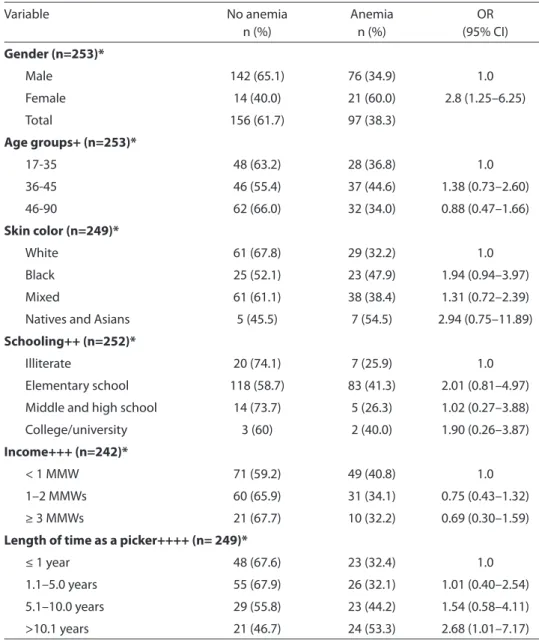
A total of 253 subjects, both males and females, participated in the study. The sam-ple comprised mostly male pickers (86.2%), aged 35 years or more (70.0%) with low scho-oling and income (Table 1). They worked on average 8.32 hours/day and 78.7% of them worked six or seven days a week. The prevalence of anemia was 38.3%. The varia-bles gender and length of time working as a picker (shown in Table 1) were statistically associated with anemia.
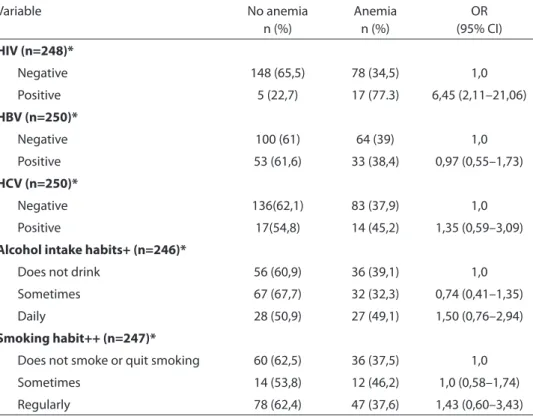
50.6% smoked regularly. HIV infection was the single variable in this group of variables that was signiicantly associated with ane-mia (OR 6.45, 95% CI: 2.11–21.06).
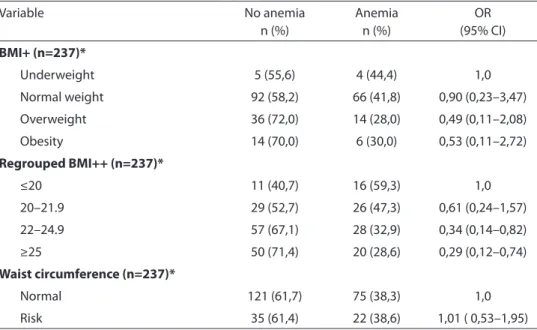
Overweight or obesity was seen in 29.5% of the population studied, and there was a small proportion with BMI below normal (Table 3). When BMI was regrouped to make
the number of individuals in each stratum closer, there was seen a statistically signi-icant trend with decreasing prevalence of anemia as BMI increased (p<0.01).
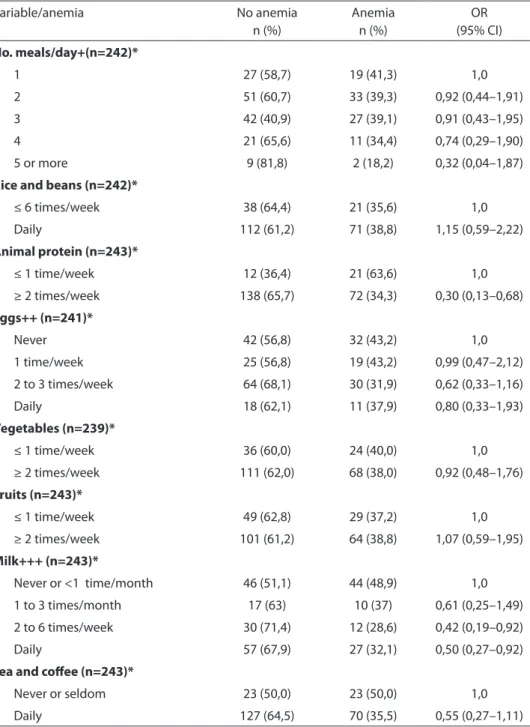
Table 4 shows the analysis of the asso-ciation between dietary habits and anemia. The variables that showed a statistically signiicant association with anemia were
Tabela 1 – Prevalência de anemia em catadores de materiais recicláveis segundo variáveis demográicas.
Table 1 – Prevalence of anemia among recyclable waste pickers according to demographic variables.
Variable No anemia
n (%)
Anemia n (%)
OR (95% CI)
Gender (n=253)*
Male 142 (65.1) 76 (34.9) 1.0
Female 14 (40.0) 21 (60.0) 2.8 (1.25–6.25)
Total 156 (61.7) 97 (38.3)
Age groups+ (n=253)*
17-35 48 (63.2) 28 (36.8) 1.0
36-45 46 (55.4) 37 (44.6) 1.38 (0.73–2.60)
46-90 62 (66.0) 32 (34.0) 0.88 (0.47–1.66)
Skin color (n=249)*
White 61 (67.8) 29 (32.2) 1.0
Black 25 (52.1) 23 (47.9) 1.94 (0.94–3.97)
Mixed 61 (61.1) 38 (38.4) 1.31 (0.72–2.39)
Natives and Asians 5 (45.5) 7 (54.5) 2.94 (0.75–11.89)
Schooling++ (n=252)*
Illiterate 20 (74.1) 7 (25.9) 1.0
Elementary school 118 (58.7) 83 (41.3) 2.01 (0.81–4.97)
Middle and high school 14 (73.7) 5 (26.3) 1.02 (0.27–3.88)
College/university 3 (60) 2 (40.0) 1.90 (0.26–3.87)
Income+++ (n=242)*
< 1 MMW 71 (59.2) 49 (40.8) 1.0
1–2 MMWs 60 (65.9) 31 (34.1) 0.75 (0.43–1.32)
≥ 3 MMWs 21 (67.7) 10 (32.2) 0.69 (0.30–1.59)
Length of time as a picker++++ (n= 249)*
≤ 1 year 48 (67.6) 23 (32.4) 1.0
1.1–5.0 years 55 (67.9) 26 (32.1) 1.01 (0.40–2.54)
5.1–10.0 years 29 (55.8) 23 (44.2) 1.54 (0.58–4.11)
>10.1 years 21 (46.7) 24 (53.3) 2.68 (1.01–7.17)
* n=number of answers among the 253 partiicpants. MMWs: monthly minimum wages + tendency
χ2: p = 0.65 ++ tendency χ2: p = 0.76 +++ tendency
consumption of animal protein and milk (OR 0.30, 95% CI 0.13–0.68). The higher the consumption of animal protein and milk, the lower the prevalence of anemia.
Multivariate analysis
The variables with p-value lower than 0.30 were gender, income, length of time working as a picker, HIV infection, HCV infection, BMI, and consumption of animal protein, eggs, milk, coffee and tea. These va-riables were tested in multivariate models. Table 5 shows the variables that con-tributed to the explanatory model of the occurrence of anemia, adjusted by age.
Discussion
The present study found a high
preva-lence of anemia in recyclable waste pickers in 2005. The WHO considers anemia a serious public health problem when its prevalence is greater than or equal to 40%.1,4
Thus, in the sample studied, anemia can be considered overall a moderate problem but seriously concerning among females.
The analysis of data regarding personal habits and living conditions of waste pickers showed a statistically signiicant association between anemia and gender (OR 2.8, 95% CI: 1.25–6.25). This finding is consistent with the literature that show women as the second group of higher risk of anemia, after
children.1,21 In nonpregnant women of
chil-dbearing age, excessive menstrual bleeding (hypermenorrhea), that may go unnoticed or untreated, is the leading cause of iron
deiciency anemia.21,22
The association between schooling and
Tabela 2 – Prevalência de anemia em catadores de material reciclável segundo infecções detectadas na sorologia e hábitos de fumar e consumir bebidas alcoólicas.
Table 2 – Prevalence of anemia in recyclable waste pickers according to positive viral infections, smoking and drinking.
Variable No anemia
n (%)
Anemia n (%)
OR (95% CI)
HIV (n=248)*
Negative 148 (65,5) 78 (34,5) 1,0
Positive 5 (22,7) 17 (77.3) 6,45 (2,11–21,06)
HBV (n=250)*
Negative 100 (61) 64 (39) 1,0
Positive 53 (61,6) 33 (38,4) 0,97 (0,55–1,73)
HCV (n=250)*
Negative 136(62,1) 83 (37,9) 1,0
Positive 17(54,8) 14 (45,2) 1,35 (0,59–3,09)
Alcohol intake habits+ (n=246)*
Does not drink 56 (60,9) 36 (39,1) 1,0
Sometimes 67 (67,7) 32 (32,3) 0,74 (0,41–1,35)
Daily 28 (50,9) 27 (49,1) 1,50 (0,76–2,94)
Smoking habit++ (n=247)*
Does not smoke or quit smoking 60 (62,5) 36 (37,5) 1,0
Sometimes 14 (53,8) 12 (46,2) 1,0 (0,58–1,74)
Regularly 78 (62,4) 47 (37,6) 1,43 (0,60–3,43)
* n=number of answers among the 253 participants + trend
income and anemia could not be assessed as waste pickers comprise a very homoge-neous population and very few individuals have high schooling or income, making it dificult to detect differences. However, the variable length of time working as a picker was associated with anemia: the longer a subject worked as a picker (χ2 for trend:
p<0.01), which relects greater exposure to low income and poor housing, living, and working conditions, the higher the risk of anemia.
It is also well-established the association between alcohol intake and anemia.23,24,25
Several hypotheses have been formulated to explain this association such as reduced hemoglobin due to bleeding or hemolysis, usually associated with liver disease and fo-lic acid deiciency due to inadequate intake as energy is provided by alcohol.23 However,
the present study did not ind any associa-tion between alcohol intake and anemia.
Most subjects studied worked as pickers for at least ive years. Many worked from 8 to 12 hours or more a day and often did not have a weekly rest. Working as a picker
is physically demanding and requires a considerable intake of energy, proteins and micronutrients as they go over long distances pushing their carts loaded with waste materials.
Iron deiciency is associated not only to the amount of iron ingested and absorbed but also its bioavailability, which is de-pendent on interfering dietary factors: the consumption of ascorbic acid, meat, ish and fermented products may promote the absorption of iron,26,27 while beans
(phyta-tes),28,29 vegetables (phytates and oxalates),30
teas and coffee (polyphenols), dairy pro-ducts (calcium)27 and eggs (albumin)31 can
inhibit iron absorption.26,32
The study showed an association be-tween low consumption of meat and anemia. The inverse relationship between consumption of animal protein and ane-mia is explained by the fact that meat has proteins of high biological value and high iron bioavailability found in hemoglobin
and myoglobin, especially in red meat.26,27
No association was found between con-sumption of rice, beans, eggs, vegetables
Tabela 3 – Prevalência de anemia em catadores de material reciclável segundo medidas antropométricas.
Table 3 – Prevalence of anemia in recyclable waste pickers according to anthropometric measures.
Variable No anemia
n (%)
Anemia n (%)
OR (95% CI)
BMI+ (n=237)*
Underweight 5 (55,6) 4 (44,4) 1,0
Normal weight 92 (58,2) 66 (41,8) 0,90 (0,23–3,47)
Overweight 36 (72,0) 14 (28,0) 0,49 (0,11–2,08)
Obesity 14 (70,0) 6 (30,0) 0,53 (0,11–2,72)
Regrouped BMI++ (n=237)*
≤20 11 (40,7) 16 (59,3) 1,0
20–21.9 29 (52,7) 26 (47,3) 0,61 (0,24–1,57)
22–24.9 57 (67,1) 28 (32,9) 0,34 (0,14–0,82)
≥25 50 (71,4) 20 (28,6) 0,29 (0,12–0,74)
Waist circumference (n=237)*
Normal 121 (61,7) 75 (38,3) 1,0
Risk 35 (61,4) 22 (38,6) 1,01 ( 0,53–1,95)
* n=number of answers among the 253 participants + trend χ2: p = 0.12
and fruits and anemia. Despite high protein quality of eggs and rice/beans mixture, they are not good food sources of bioavailable iron as they contain inhibitory factors as mentioned before.28,29
Excessive consumption of tea and co-ffee (rich in polyphenols) and milk (rich in
calcium and casein phosphopeptides)27 can
negatively affect iron absorption by forming insoluble complexes and competing for
Tabela 4 – Prevalência de anemia em catadores de material reciclável segundo hábitos alimentares.
Table 4 – Prevalence of anemia in recyclable waste pickers according to eating habits.
Variable/anemia No anemia
n (%)
Anemia n (%)
OR (95% CI)
No. meals/day+(n=242)*
1 27 (58,7) 19 (41,3) 1,0
2 51 (60,7) 33 (39,3) 0,92 (0,44–1,91)
3 42 (40,9) 27 (39,1) 0,91 (0,43–1,95)
4 21 (65,6) 11 (34,4) 0,74 (0,29–1,90)
5 or more 9 (81,8) 2 (18,2) 0,32 (0,04–1,87)
Rice and beans (n=242)*
≤ 6 times/week 38 (64,4) 21 (35,6) 1,0
Daily 112 (61,2) 71 (38,8) 1,15 (0,59–2,22)
Animal protein (n=243)*
≤ 1 time/week 12 (36,4) 21 (63,6) 1,0
≥ 2 times/week 138 (65,7) 72 (34,3) 0,30 (0,13–0,68)
Eggs++ (n=241)*
Never 42 (56,8) 32 (43,2) 1,0
1 time/week 25 (56,8) 19 (43,2) 0,99 (0,47–2,12)
2 to 3 times/week 64 (68,1) 30 (31,9) 0,62 (0,33–1,16)
Daily 18 (62,1) 11 (37,9) 0,80 (0,33–1,93)
Vegetables (n=239)*
≤ 1 time/week 36 (60,0) 24 (40,0) 1,0
≥ 2 times/week 111 (62,0) 68 (38,0) 0,92 (0,48–1,76)
Fruits (n=243)*
≤ 1 time/week 49 (62,8) 29 (37,2) 1,0
≥ 2 times/week 101 (61,2) 64 (38,8) 1,07 (0,59–1,95)
Milk+++ (n=243)*
Never or <1 time/month 46 (51,1) 44 (48,9) 1,0
1 to 3 times/month 17 (63) 10 (37) 0,61 (0,25–1,49)
2 to 6 times/week 30 (71,4) 12 (28,6) 0,42 (0,19–0,92)
Daily 57 (67,9) 27 (32,1) 0,50 (0,27–0,92)
Tea and cofee (n=243)*
Never or seldom 23 (50,0) 23 (50,0) 1,0
Daily 127 (64,5) 70 (35,5) 0,55 (0,27–1,11)
* n=number of answers among the 253 participants + trend χ2: p = 0.64
common intestinal absorption sites of iron and calcium, favoring the development of anemia.33,34 The present study showed
no association between consumption of tea, coffee and anemia. Paradoxically, milk consumption had a protective effect against anemia. One possible explanation would be high intake of animal protein of high biological value as a source of substrate for hemoglobin synthesis and the fact that the inhibitory effect of milk on iron absorption in adults is apparently not relevant as the meals when food with the highest iron content (lunch and dinner) are consumed are taken separately from those with milk intake (breakfast).
The assessment of nutritional status
ba-sed on BMI, the most widely uba-sed parameter to assess the prevalence of overweight and obesity and risk factors associated,35 showed
that most subjects were normal weight. There was seen a statistically significant trend of increasing prevalence of anemia as BMI decreased, suggesting a possible relationship between nutritional factors and anemia.
According to Pedro Escudero dietary guiding principles established in 1937,36
adequate quantity, harmony and adequacy of nutrients, and not only quality, are requi-red for an adequate eating. It is possible that the intake of food required for red cell production in waste pickers is associated to more food in general.
Tabela 5 – Odds ratio e intervalo de 95% de coniança de variáveis independentemente associados à anemia na análise multivariada.
Table 5 – Odds ratio and 95% conidence interval for variables independently associated with anemia in the multivariate analysis.
Variable OR (95% CI)
Age groups
17-35 36-45 46-90
1,0 1,49 0,62
-0,67–3,32 0,26–1,43
Gender
Masculino Feminino
1,0 4,11
-1,56–10,87
HIV
Negativo Positivo
1,0 9,23
-2,93–29,1
BMI
≤ 20 20,1-21,9 22,0-24,9 ≥ 25,0
1,0 0,50 0,26 0,21
-0,16–1,59 0,09–0,76 0,07–0,64
Length of time as a picker
≤ 1,0 ano 1,1 a 5,0 anos 5,1 a 10,0 anos > 10,1 anos
1,0 1,14 2,74 4,54
-0,35–3,71 0,78–9,66 1,29–16,0
Milk intake
Nunca ou < 1 x/mês De 1 a 3x/mês De 2 a 6x/semana Diariamente
1,0 0,42 0,40 0,36
-0,15–1,20 0,15–1,02 0,16–0,81
Consumption of animal protein
≤ 1 x/semana Mais de 1 vez/semana
1,0 0,39
There is a statistically signiicant asso-ciation between HIV infection and anemia and it has been demonstrated in previous studies.37,38,39,40
As recyclable waste pickers in the city of Santos are a low-income and low-schooling population, they may not have access to healthier foods and may not be familiar with hygienic and sanitary practices, which favors intestinal parasite infections41,42 that
negatively affect the use of nutrients and/ or cause disease.
Study limitations
Apart from the limitations intrinsic to the study design, it was dificult to identify risk factors of anemia.
As the population studied is very homo-geneous, any differences between groups were minor and difficult to identify. For example, with respect to schooling and income, the vast majority was low income and schooling and very few were above the average for comparison.
No calculation of sample size was per-formed to identify explanatory factors of anemia since the entire population was included in the study. A larger sample of pickers would be required to identify some associations.
Anemias are categorized into different types and have different risk factors, and can be considered etiologically different diseases. The analysis of anemias as a whole reduces the strength of association between some variables and the disease and may explain why the association was not statis-tically signiicant in some cases.
Conclusion
Despite the study limitations, an as-sociation was found between anemia and living conditions, including eating habits, HIV infection and length of time working as a picker. Anemia adds further stress to their work, which is already quite demanding.
Unlike most workers in Brazil, recyclable waste pickers have not beneited from po-licies for workers’ health protection as they do not undergo routine exams and health checks before employment.
This study was conducted after the implementation of iron supplementation in corn and wheat lour. Iron supplemen-tation alone failed to prevent anemia in these workers, indicating a need to ensure access to health services. The inclusion of recyclable waste pickers in the workers’ health program should be considered.
CONFLICTOFINTEREST: None.
References
1. World Health Organization. Worldwide prevalence of anaemia 1993–2005. WHO Global Database on Anaemia. Geneva; 2008.
2. Finch CA, Cook JD. Iron deiciency. Am. J. Clin. Nutr 1984; 39: 471-77.
3. Lozoff B, Andraca I, Castillo M, Smith JB, Walter T, Pino P. Behavioral and developmental effects of preventing iron-deiciency anemia in healthy full-term infants. Pediatrics 2003; 112: 846-54.
4. World Health Organization. Iron deiciency anaemia: assessment, prevention, and control. A guide for programme managers. Geneva; 2001.
5. Pereira RC, Ferreira LOC, Diniz AS, Batista Filho M, Figueroa JN. Eicácia da suplementação de ferro associado ou não à vitamina A no controle da anemia
em escolares. Cad. Saúde Pública 2007;23(6):1415-21.
6. Monteiro CA, Szarfarc SC, Mondini L. Tendência secular da anemia na infância na cidade de São Paulo (1984-1996). Rev. Saúde Pública 2000;34(6):62-72.
7. Spinelli MGN, Marchioni DML, Souza JMP, Souza SB, Szarfarc SC. Fatores de risco para anemia em crianças de 6 a 12 meses no Brasil. Rev Panam Salud Publica 2005;17(2):84-91.
8. Almeida SDM, Barros MBA. Eqüidade e atenção à saúde da gestante em Campinas (SP), Brasil. Rev Panam Salud Publica 2005;17(1):15-25.
10. Santana VS, Carvalho LC, Santos CP, Andrade C, D´oca G. Morbidade em candidatos a emprego na região metropolitana de Salvador, Bahia, Brasil. Cad. Saúde Pública 2001; 17(1):107-15.
11. Fabian C, Olinto MTA, Dias-Da-Costa JS, Bairros F, Nácul, LC. Prevalência de anemia e fatores associados em mulheres adultas residentes em São Leopoldo, Rio Grande do Sul, Brasil. Cad. Saúde Pública 2007; 23(5):1199-205.
12. Brasil. Compromisso social para a redução da anemia por carência de ferro no Brasil. Aracajú: 1999. [citado em 30 mar. 2009]. Disponível em: http://nutricao.saude. gov.br/mn/ferro/docs/compromisso_social_reducao_ anemia.pdf
13. Brasil. Resolução RDC Nº 344, de 13 de Dezembro de 2002. Diário Oicial da União. 2002 Dez 18.
14. Compromisso Empresarial para Reciclagem. O Sucateiro e a Coleta Seletiva. São Paulo: 2005.
15. Gonçalves, RS. Catadores de materiais recicláveis: trajetória de vida, trabalho e saúde [dissertação de mestrado]. Rio de Janeiro: Fundação Oswaldo Cruz, 2004.
16. Silva DB, Lima SC. Catadores de materiais recicláveis em Uberlândia - MG, BRASIL: estudo e recenseamento. Caminhos de Geograia 2007; 8 (21): 82-98.
17. Porto MFS, Juncá DCM, Gonçalves RS, Freitas FMI. Lixo, trabalho e saúde: um estudo de caso com catadores em um aterro metropolitano no Rio de Janeiro, Brasil. Cad. Saúde Pública 2004; 20(6):1503-14.
18. Fisberg RM, Martini LA, Slater B. Métodos de inquéritos alimentares. In.: Fisberg RM, Slater B, Marchioni DML, Martini LA. Inquéritos alimentares: métodos e bases cientíicos. Barueri-SP: Manole; 2005. cap 1.
19. Philippi ST, Latterza AR, Cruz ATR, Ribeiro LC. Pirâmide alimentar adaptada: guia para escolha dos alimentos. Rev. Nutr. 1999; 12(1): 65-80, jan./abr.
20. World Health Organization. Obesity: preventing and managing the global epidemic. Report of a WHO Consultation. Geneva; 2000. (WHO - Technical Report Series, 894).
21. UNICEF/UNU/WHO/MI. Preventing iron deiciency in women and children: background and consensus on key technical issues and resources for advocacy, planning and implementing national programmes. New York: 1998.
22. Rapaport SI. Introdução à Hematologia. São Paulo: Rocca;1990.
23. Gualandro SFM. Efeitos diretos e indiretos do etanol sobre o eritron: estudo em alcoolistas sob regime ambulatorial [tese]. São Paulo: Universidade de São Paulo; 1992.
24. Mcgufin R, Goff P, Hillman RS. The effect of diet and alcohol on the development of folate deiciency in the rat. Br.J. Haematol 1975; 31(2): 185-92.
25. Maio, R, Dichi JB, Burini RC. Implicações do alcoolismo e da doença hepática crônica sobre o metabolismo de micronutrientes. Arq gastroent 2000; 37(2):120-4
26. Fairweather-Tait S. Iron absorption. In.: British Nutrition Fundation. Iron nutritional and physiological signiicance. London: Chapman & Hall; 1995. p.3-12.
27. López MAA, Martos FC. Iron availability: An updated review. International Journal of Food Sciences and Nutrition 2004; 55(8):597-606.
28. Moura NC, Canniatti-Brazaca SG. Avaliação da disponibilidade de ferro de feijão comum (Phaseolus vulgaris L.) em comparação com carne bovina. Ciênc. Tecnol. Aliment 2006; 26(2): 270-276.
29. Silva MR, Silva MAAP. Aspectos nutricionais de itatos e taninos. Rev. Nutr 1999; 12(1): 5-19.
30. Siqueira EMA, Mendes JFR, Arruda SF. Biodisponibilidade de minerais em refeições vegetarianas e onívoras servidas em restaurante universitário Rev. Nutr 2000; 20 (3): 229-37.
31. Mulvihill B. et al. Effect of myoibrillar muscle proteins on the in vitro bioavailability of non-haem iron. International Journal of Food Sciences and Nutrition 1998; 49 (3): 187-92.
32. Heath A-LM, Skeaff CM, Gibson RS. The relative validity of a computerized food frequency questionnaire for estimating intake of dietary iron and its absorption modiiers. European Journal of Clinical Nutrition 2000; 54(7): 592-99.
33. Anderson JJB. Minerais In: Mahan LK, Escott-Stump S. Krause Alimentos, Nutrição e Dietoterapia. 10. ed. São Paulo: Roca; 2002.p.106-145.
34. Cozzolino SMF. Fortiicação dos alimentos versus biodisponibilidade. In: Angelis RC. Fome Oculta. São Paulo: Atheneu; 2000. cap.30.
35. World Health Organization. Population nutrient intake goals for preventing diet-related chronic diseases. Disease-speciic recommendations. [cited 2008 oct 08]. Available from: http://www.who.int/nutrition/topics/5_ population_nutrient/en/print.html .
36. ESCUDERO P. Las Leyes de la Alimentación. In: CUMMING HS. Técnica de las encuestas de Alimentación. Washington, D.C. Oicina Sanitaria Panamericana: 1945. 101 p.
38. Levine AM, Berhane K, Masri-Lavine L, Sanchez M, Young M, Augenbraun M, et al. Prevalence and correlates of anemia in a large cohort of HIV- infected women: Women´s interagency HIV study. Journal of Acquired Immune Deiciency Syndromes 2001; 26(1):28-35.
39. Semba RD, Shah N, Strathdee AS, Vlahov D. High prevalence of iron deiciency and anemia among female injection drug users with and without HIV infection. Journal of Acquired Immune Deiciency Syndromes 2002; (29): 142-44.
40. Sullivan OS, Hanson DL, Chu SY, Jones JL, Ward JW. Epidemiology of anemia in human immunodeiciency virus (HIV)-Infected persons: Results from the
multistate adult and adolescent spectrum of HIV disease surveillance project. Blood 1998; 91(1): 301-8.
41. Uecker M, Copetti CE, Poleze L, Flores V. Infecções parasitárias: diagnóstico imunológico de
enteroparasitoses. RBAC 2007; 39(1):15-19.