Regulation of GacA in
Pseudomonas
chlororaphis
Strains Shows a Niche Specificity
Jun Li1,2☯, Yang Yang2☯, Jean-Frédéric Dubern3, Hui Li4, Nigel Halliday3, Leonid Chernin5,
Kexiang Gao4, Miguel Cámara3, Xiaoguang Liu2*
1School of Food and Biological Engineering, Jiangsu University, Zhenjiang, 212013, China,2Institute of Life Sciences, Jiangsu University, Zhenjiang, 212013, China,3School of Life Sciences, Centre for Biomolecular Sciences, University of Nottingham, Nottingham, NG7 2RD, United Kingdom,4Department of Plant Pathology, Shandong Agricultural University, Taian, 271018, China,5Department of Plant Pathology and Microbiology, The Robert H. Smith Faculty of Agriculture, Food and Environment, The Hebrew University of Jerusalem, Rehovot, 76100, Israel
☯These authors contributed equally to this work. *[email protected]
Abstract
The GacS/GacA two-component system plays a central role in the regulation of a broad range of biological functions in many bacteria. In the biocontrol organismPseudomonas chlororaphis, the Gac system has been shown to positively control quorum sensing, biofilm formation, and phenazine production, but has an overall negative impact on motility. These studies have been performed with strains originated from the rhizosphere predominantly. To investigate the level of conservation between the GacA regulation of biocontrol-related traits inP.chlororaphisisolates from different habitats, the studies presented here focused on the endophytic isolate G5 ofP.chlororaphissubsp.aurantiaca. AgacAmutant deficient in the production ofN-acylhomoserine lactones (AHLs) and phenazine was isolated through transposon mutagenesis. Further phenotypic characterization revealed that in strain G5, similar to otherP.chlororaphisstrains, agacAmutation caused inability to produce biocon-trol factors such as phenazine, HCN and proteases responsible for antifungal activity, but overproduced siderophores. LC-MS/MS analysis revealed that AHL production was also practically abolished in this mutant. However, the wild type exhibited an extremely diverse AHL pattern which has never been identified inP.chlororaphis. In contrast to other isolates of this organism, GacA in strain G5 was shown to negatively regulate biofilm formation and oxidative stress response whilst positively regulating cell motility and biosynthesis of indole-3-acetic acid (IAA). To gain a better understanding of the overall impact of GacA in G5, a comparative proteomic analysis was performed revealing that, in addition to some of the traits like phenazine mentioned above, GacA also negatively regulated lipopolysaccharide (LPS) and trehalose biosynthesis whilst having a positive impact on energy metabolism, an effect not previously described inP.chlororaphis. Consequently, GacA regulation shows a differential strain dependency which is likely to be in line with their niche of origin.
OPEN ACCESS
Citation:Li J, Yang Y, Dubern J-F, Li H, Halliday N, Chernin L, et al. (2015) Regulation of GacA in
Pseudomonas chlororaphisStrains Shows a Niche Specificity. PLoS ONE 10(9): e0137553. doi:10.1371/ journal.pone.0137553
Editor:Hsin-Chih Lai, Chang-Gung University, TAIWAN
Received:June 2, 2015
Accepted:August 19, 2015
Published:September 17, 2015
Copyright:© 2015 Li et al. This is an open access article distributed under the terms of theCreative Commons Attribution License, which permits unrestricted use, distribution, and reproduction in any medium, provided the original author and source are credited.
Data Availability Statement:All relevant data are within the paper and its Supporting Information files.
Introduction
Rhizospheric or endophyticPseudomonasspecies such asP.chlororaphis,P.protegensandP.
fluorescenshave been isolated and identified from numerous plant species displaying a broad spectrum of antagonistic activity against phytopathogenic fungi, bacteria and nematodes, and plant growth-promoting potential due to the production of an array of secondary metabolites including antibiotics such as 2,4-diacetylphloroglucinol, pyrrolnitrin, pyoluteorin, hydrogen cyanide (HCN), phenazines, and the plant auxin indole-3-acetic acid (IAA), volatile organic compounds like acetoin and 2R, 3R-butanediol, as well as extracellular chitinases and proteases [1,2]. Thereby, plant-beneficialPseudomonasspecies are key components of the ecological processes that suppress plant pathogens and promote plant growth in agricultural and natural environments and several strains within theP.fluorescensgroup are used commercially to manage plant diseases [3].
The precise regulation of gene expression in response to various environmental stimuli and the cellular physiological state is essential for the survival of bacterial populations in different habitats and their biological control activity against plant diseases [4]. Many of these genes are known to be coordinately regulated by quorum sensing system at a transcriptional level medi-ated byN-acyl-homoserine lactone (AHL) signals in biocontrol bacteria [5,6]. In addition, numerous two-component systems (TCSs) act as key mediators of successful adaptation to changing environments in bacteria. For example, the GacS/GacA system consisting of the sen-sor kinase GacS and the response regulator GacA which is highly conserved among pseudomo-nads and otherγ-proteobacteria operate a switch between primary and secondary metabolism [7]. The Gac/Rsm signal transduction pathway controls gene expression at both transcriptional and post-transcriptional levels, which is mediated largely through activation of the transcrip-tion of small RNAs (sRNAs) such as CsrB/C or RsmX/Y/Z. These CsrB family sRNAs sequester the RsmA/CsrA family proteins binding to the Shine-Dalgarno (SD) sequences, thereby relieve translational repression [7,8]. The range of phenotypes modulated by the Gac/Rsm cascade typically involves management of carbon storage, regulation of the production of AHL signals, motility and biofilm formation, virulence determinants and biocontrol factors. However, the GacS/GacA system has known to differentially control the accessory genome across bacterial genera displaying the remarkable versatility [7,9].
Apart from quorum sensing circuits, many global regulators such as two sensor kinases LadS and RetS [10], and the stationary-phase sigma factor RpoS [11] have been reported as parts of the Gac/Rsm cascade network in pseudomonads. Recent studies demonstrated that Lon protease negatively affects GacA protein stability and expression inP.(fluorescens) prote-gensCHA0[12]. Increasing genome-wide transcriptomic evidence demonstrated that GacA influenced 10% to 15% transcript levels in the genome of pseudomonads including numerous transcriptional regulatory genes. These findings indicated a central role of the Gac system in the complex regulatory network, and the wider impact of GacA on the transcriptome profiling likely to be mediated via intermediate transcriptional regulators including quorum sensing cir-cuits in pseudomonads [13–14]. However, proteomic studies on the role of the Gac system in posttranscriptional regulation of gene expression in pseudomonads remains less documented. For example, recent comparative proteomic analysis between the rhizobacteriumP. chlorora-phisO6 and agacSmutant was performed showing the differentially expressed proteins func-tion in secondary metabolism, oxidative stress, cell signaling and secrefunc-tion [15].
The endophytic microorganisms live within host plants for at least part of their life cycle without causing apparent disease symptoms, and colonize ecological niches similar to that of phytopathogens, thereby play an important role in the development of environmentally-friendly methods to manage plant diseases [2,16].Pseudomonas chlororaphissubsp. analysis, decision to publish, or preparation of the
manuscript.
aurantiacaG5 is an endophytic strain isolated from the stems of Chinese parsley (Coriandrum sativumL.) in Taian, China [16] which is different from other rhizobacteria ofP.chlororaphis
such asP.chlororaphissubsp.aureofaciens30–84 or O6 isolated from wheat rhizosphere or soil in the USA [3,15,17], whereasP.chlororaphisPA23 originated from soybean root tips, Canada [18]. Similar to otherP.chlororaphisstrains, G5 can produce several antibiotics such as phenazine, pyrrolnitrin and hydrogen cyanide (HCN), extracellular protease, and plant hor-mone IAA which are responsible for biocontrol and plant growth-promoting potential, as well as high level of AHL signal molecules [3,16]. However, the AHL profile produced byP. chlor-oraphisG5 has not been characterized yet. Interestingly, both phenazine and AHLs have been shown to be required for biofilm formation in closely related biocontrol strains 30–84 [17] and PA23 [18–20]. Here we isolated and selected agacAmutant from a random Mini-Tn5 transpo-son library of strain G5. Furthermore, we provided evidence that GacA regulates a variety of biological processes in the endophyticP.chlororaphisG5 and showed that, although there is a level of conservation in their regulation which is shared with differentP.choloraphisstrains described in the literature, the Gac system clearly shows differential regulation of some of these traits described above, which may be in line with the niche origin of these strains. These results may help with developing and optimizing strain G5 as seed inoculants with a view to improve its biocontrol and plant growth-promoting potential.
Materials and Methods
Microorganisms, media and growth conditions
The bacterial strains and plasmids used in this study are listed inS1 Table.Pseudomonas chlor-oraphissubsp.aurantiacaG5 and the AHL biosensor strainChromobacterium violaceum
CV026 were grown in Luria-Bertani (LB) medium at 28°C with shaking. WhereasEscherichia colistrains were grown in LB at 37°C unless otherwise stated. When required, antibiotics were added at the following concentrations: ampicillin (Ap), 100μg/mL; kanamycin (Km), 50μg/mL;
tetracycline (Tc), 200μg/mL and rifampicin (Rif), 30μg/mL. Bacterial growth was monitored by
measuring the optical density at 600 nm. The fungal pathogenRhizoctonia cerealis(authors’
collection) was routinely cultured on potato dextrose agar (PDA) (Difco) at 25°C.
DNA preparation and manipulations
Standard methods were used for plasmid and genomic DNA isolation, restriction enzyme digestion, agarose gel electrophoresis, ligation, and transformation [21].
Transposon mutagenesis and transposon-insertion mapping
performed using self-ligation ofSalI-digested chromosomal DNA obtained from the G5-6 mutant as template, followed by cloning and sequencing to map the transposon sites. The deduced amino acid sequences of the sequenced PCR fragments were compared with the protein sequence database using the BLASTX Algorithm (http://www.ncbi.nlm.nih.gov).
Complementation of
gacA
mutant
For complementation of the mutant G5-6, using primer pairsgacA-pF: 5’-gcgGGATCCAT ACCCTTG-CCGAGCTTT-3’(withBamHI underlined) andgacA-R: 5’-ggcAAGCTTCT GCAGGTGGAAAGAAAAG-3’(withHindIII underlined), a 898-bpBamHI-HindIII PCR fragment of thegacAgene from strain G5 with the native promoter was ligated into the same restriction sites of the broad-host-range vector pUCP26, followed by transformed intoE.coli
S17-1. The resulting plasmid pUCP26-gacAwas introduced into thegacAmutant G5-6 by biparental mating. The complemented strain G5-6/gacA+was selected on LB agar plates with kanamycin and tetracycline and was verified by recovery of orange pigment and AHLs produc-tion, and antifungal activity.
Extraction and identification of AHLs by LC-MS/MS
All tested bacteria were grown in 10 ml LB in triplicate with shaking at 30°C for 24 hr, AHLs were extracted and examined by LC-MS/MS as described previously[6]. MS analysis was con-ducted under positive electrospray conditions (+ES) with the MS in MRM (multiple reaction monitoring) mode, screening the LC eluent specifically for all unsaturated, 3-oxo and 3-OH AHLs with acyl chain lengths between 4–14, and comparing LC retention time of detected peaks with synthetic standards as control.
Assay of biocontrol-related phenotypes
Suppression of the fungal pathogenRhizoctonia cerealis, the production of hydrogen cyanide (HCN) and siderophore and protease activity were determined as previously described [24]. Phenazine was tested as described by Yang et al., 2011 [25]. Briefly, bacteria were grown with shaking in 5 ml of LB broth supplemented with 0.2% glucose at 30°C for 48 hr. The culture supernatants were acidified with 45μl of 10% trifluoroacetic acid and extracted twice with 10
ml of ethyl acetate. Organic phases were pooled and evaporated to dryness, and residues were re-dissolved in 20μl of methanol. For TLC assay, 10μl of each sample was loaded onto the
thin-layer Silica Gel 60 F254 plate (Merck, Germany). The plate was then placed in a mixture of benzene/acetic acid (95:5 vol/vol) to develop for 1 hr. Phenazine-1-carboxylic acid (PCA) was visualized by UV irradiation at 256 nm.
To assess the plant hormone IAA biosynthesis, strain G5 and thegacAmutant G5-6 were incubated in triplicate in LB supplemented with 200μg/ml tryptophan at 28°C in the dark with
shaking for 48 hr. Culture supernatants were acidified to pH2.0 with 4N HCl, and extracted twice with ethyl acetate. HPLC analysis (Agilent 1200LC, USA) with a diode array detector at 280 nm using a reversed-phase C18 column (5μm, 150 x 4.6 mm Zorbax eclipse XDB) was
performed to determine IAA production with two independent experiments as previously described [24]. Synthetic IAA (50μg/ ml, Sigma) was used as a standard.
Cell motility and biofilm formation
Biofilm formation was evaluated using a Laser Confocal Scanning Microscopy (LCSM) as described by Müsken et al.(2010) [26] with minor modifications. Briefly, overnight bacterial cultures from single colonies were normalized to an OD600= 0.05 in 0.1xLB broth, then 1ml of
the diluted cultures was pipetted into each well of 24-well glass bottom Sensoplate (Greiner Bio-One, Germany) with 6 replicates, and incubated at 30°C, 80 rpm for 24 hr. After dying with diluted Syto9 (Life Technology, USA) at the final concentration of 1.0μM in the wells,
bacteria were grown for a further 24 hr. Biofilms were then washed with PBS buffer (pH 7.0) and visualized using a Zeiss LSM 510 META/AxioVert 200 Confocal Microscope. Biofilm quantification was performed using COMSTAT2 software (http://www.comstat.dk) [27].
Superoxide dismutase activity and tolerance to oxidative stress
Determination of the superoxide dismutase (SOD) activity was performed using the Superox-ide Dismutase Assay Kit (Suzhou Comin Biotech, Ltd., China) according to manufacturer’s recommendations [28]. One unit of SOD activity was defined as the amount required to inhibit the rate of reduction of superoxide anion by 50% per microgram of protein in the xanthine oxi-dase coupling reaction system.
To assess the sensitivity to oxidative stress, overnight cultures were washed with 0.9% (w/v) NaCl, and resuspended in 0.9% NaCl to a final OD600= 0.2. Fifteen microliters of 30% H2O2
was added to 1 ml of bacterial suspension. The suspension was held at room temperature for 40 min. Serial dilution of samples in 0.9% NaCl were placed on LB agar with rifampicin and incubated overnight at 28°C. The initial 100% survival point was determined by counting the colony forming unit (CFU) before addition of the H2O2[29].
Comparative proteomic analysis
A detail description of the comparative analysis of cellular proteins ofP.chlororaphisG5 and a
gacAmutant G5-6 by two-dimensional electrophoresis used in this study is presented inS1 File.
Extraction and detection of lipopolysaccharides (LPS)
Bacteria were grown in LB with shaking at 28°C for 24 hr. Lipopolysaccharides were extracted using the LPS Extraction Kit (iNtRON Biotechnology, Inc., Japan) according to manufacturer’s instruction. For Tricine-SDS-PAGE, 40μl of 0.25x buffer A [12% (w/v) SDS, 6% (v/v)
mercap-toethanol, 30% (w/v) glycerol, 0.05% (w/v) Coomassie Blue G-250, 150 mM Tris/HCl, pH 7.0] was added to LPS pellets with vortex, followed by boiling it for 5 min before loading samples [30]. Protein molecular-weight standards are not presented due to the relative motilities of the LPS do not correlate with those of the protein standard markers [31].
Statistical analysis
All data were subjected to statistical analysis using SPSS 14.0 (SPSS Inc., USA). ANOVA analy-sis was conducted with 95% confidence intervals. All experiments were repeated at least twice with three replicates for each treatment.
Results
Isolation and identification of a
gacA
mutant of
P
.
chlororaphis
G5
AHL production. An AHL-negative mutant with lost ability to suppress the pathogenic fungusR.
cerealis(the causative agent of the sharp eyespot disease in cereal)in vitrowas identified and des-ignated as G5-6. Inverse PCR and sequence analysis of the nucleotide region flanking the transpo-son revealed that the insertion site of the mini-Tn5 transpotranspo-son is 105-bp downstream of the response regulatorgacA(GenBank: FJ969507) translational start site which corresponds to the predicted phosphorylation and intermolecular recognition site of GacA. Multiple sequences align-ment demonstrated that the GacA from strain G5 shares 99% identity at the amino acid level to its homologue inP.choloraphisA23 (GenBank: AEA02287). Introduction of plasmid
pUCP26-gacAharbouring a functionalgacAgene in thegacAmutant G5-6 restored the production of orange pigment and AHLs, and antifungal activity near to the wild type levels (Fig A inS2 File).
GacA was essential for AHL accumulation in
P
.
chlororaphis
G5
We compared the growth rate of strain G5 and thegacAmutant by monitoring OD600. Mutation
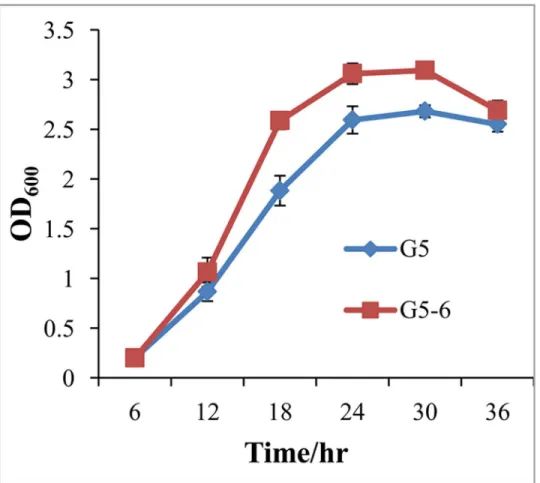
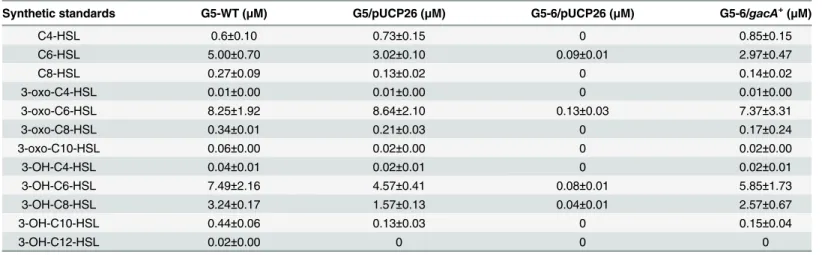
ingacAresulted in a marked increase in bacterial growth inP.chlororaphisG5 (Fig 1), but almost abolished the production of AHL signals as seen using the biosensorC.violaceumCV026 (Fig A inS2 File), which was further confirmed by LC-MS/MS analysis of the AHL profiles between the G5 parent, the G5-6 mutant and complemented strain. As shown inTable 1, LC-MS/MS analysis showed that G5 can produce at least twelve different AHLs with long- or short-chain in varying abundance including unsubstituted AHLs (C4-HSL, C6-HSL, C8-HSL), 3-oxo derivatives
Fig 1. AgacAmutation stimulated bacterial growth.Bacterial growth of the wild type G5 and thegacA mutant G5-6 was monitored by measuring OD600. Overnight cultures of all strains were normalized to an
OD600= 0.01, incubated in LB at 28°C with aeration up to 36 hr.
(3-O-C4-HSL, 3-O-C6-HSL, 3-O-C8-HSL, 3-O-C10-HSL) and 3-hydroxy derivatives (3-OH-C4-HSL,3-OH-C6-HSL, 3-OH-C8-HSL, 3-OH-C10-HSL, 3-OH-C12-HSL) exhibiting more diverse AHL profile than what has been described in otherP.chlororaphisstrains. The most abundant, and probably more biological relevent AHLs in strain G5 areN -(3-oxo-hexa-noyl)-L-homoserine lactone (3-O-C6-HSL),N-(3-hydroxy-hexanoyl)-L-homoserine lactone (3-OH-C6-HSL),N-hexanoyl-L-homoserine lactone (C6-HSL) andN -(3-hydroxy-octanoyl)-L-homoserine lactone (3-OH-C8-HSL).gacAinactivation resulted in only trace amounts of 3-O-C6-HSL, 3-OH-C6-HSL, 3-OH-C8-HSL and C6-HSL were detected, but complementation withgacAexpressed from its native promoter almost restored the AHL production to the wild type level indicating that quorum sensing circuits in G5 are highly regulated by the Gac system.
GacA regulation of the production of biocontrol factors and IAA shows
some niche specificity
The Gac system has been recognized as a key regulator of biocontrol-related properties in plant-beneficialPseudomonasspecies [13,15,18]. In agreement with previous findings, pheno-typic analysis showed that GacA in the endophytic strain G5 positively regulated the produc-tion of antibiotics phenazine and HCN (Fig B inS2 File), and protease activity, but negatively controlled siderophore production (Fig C inS2 File).
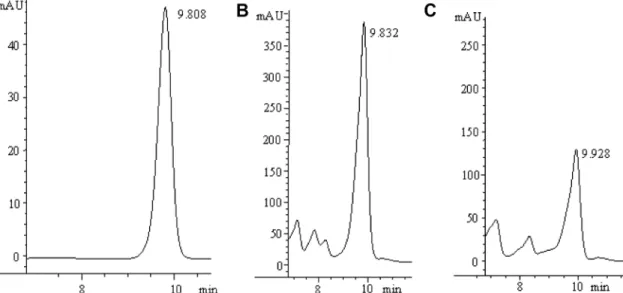
In the rhizobacteriumP.chlororaphisO6, GacS has been shown to negatively regulate IAA production [32]. In contrast, HPLC analysis revealed that GacA from the endophyticP. chlor-oraphisG5 is a positive regulator of plant auxin IAA (p<0.01). As shown inFig 2,gacA inacti-vation resulted in about four-fold decreased IAA production suggesting that Gac regulation has an element of niche specificity.
gacA
inactivation decreased cell motility, but induced biofilm formation
and oxidative stress tolerance
The Gac system fromP.chlororaphishas been shown to inhibit cell motility and enhance bio-film formation important for plant colonization and the fitness [13,17,19,33]. To assess Table 1. Relative quantification of AHL production by LC-MS/MS analysisa.
Synthetic standards G5-WT (μM) G5/pUCP26 (μM) G5-6/pUCP26 (μM) G5-6/gacA+(μM)
C4-HSL 0.6±0.10 0.73±0.15 0 0.85±0.15
C6-HSL 5.00±0.70 3.02±0.10 0.09±0.01 2.97±0.47
C8-HSL 0.27±0.09 0.13±0.02 0 0.14±0.02
3-oxo-C4-HSL 0.01±0.00 0.01±0.00 0 0.01±0.00
3-oxo-C6-HSL 8.25±1.92 8.64±2.10 0.13±0.03 7.37±3.31
3-oxo-C8-HSL 0.34±0.01 0.21±0.03 0 0.17±0.24
3-oxo-C10-HSL 0.06±0.00 0.02±0.00 0 0.02±0.00
3-OH-C4-HSL 0.04±0.01 0.02±0.01 0 0.02±0.01
3-OH-C6-HSL 7.49±2.16 4.57±0.41 0.08±0.01 5.85±1.73
3-OH-C8-HSL 3.24±0.17 1.57±0.13 0.04±0.01 2.57±0.67
3-OH-C10-HSL 0.44±0.06 0.13±0.03 0 0.15±0.04
3-OH-C12-HSL 0.02±0.00 0 0 0
aA wide range of synthetic AHLs with or without a 3-oxo or 3-hydroxy (OH) substitution, and with even acyl side-chain lengths ranging from C4 to C14
each at either 1μM or 5μM concentrations were used as standards. AHLs were identified and confirmed by comparing both the elution time and the MS spectra of the peaks obtained with those of the standards.
whether this regulation was conserved or strain-specific as observed in the control of IAA pro-duction, the impact of the GacA mutation in motility and biofilm formation was tested. As shown inFig 3, in contrast to what has been shown for otherP.chlororaphisstrains, thegacA
mutant greatly decreased the ability to swim (Fig 3B) compared to the wild type (Fig 3A), and a similar trend was observed for swarming motility (Fig 3C and 3D).
The impact of thegacAmutation on biofilm formation was also tested after incubation of bacteria at 30°C for 48 hr using 24-well microtiter plate assays by LCSM observation. As shown inFig 4A,gacAinactivation greatly induced biofilm formation. Further quantitative analysis confirmed that both the biofilm biomass (Fig 4B) and the average thickness (Fig 4C) between these two strains were significantly different. These results support the idea of a strain specificity regulation by the Gac system.
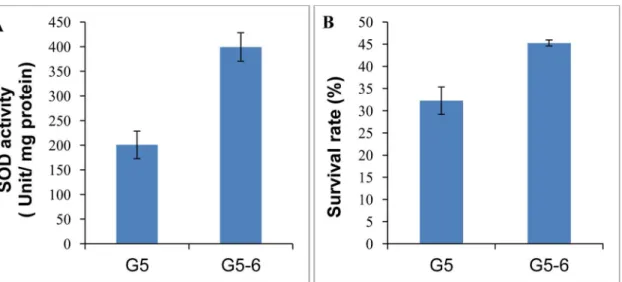
Excess reactive oxygen species (ROS) or oxidants can damage many cell components, as well as cause disruptions in normal mechanisms of cellular signalling. Antioxidant gene regula-tion to maintain ROS homeostasis is one of the principal mechanisms of protecregula-tion against oxidative stress [34]. GacA are known to positively regulate resistance to oxidaive stress in pseudomonads [9,11,15]. To determine whether GacA has impact on oxidative stress response in strain G5, we tested the cell sensitivity to hydrogen peroxide and superoxide dismutase (SOD) activity which is essential for oxidative stress response. In contrast toP.chlororaphisO6 where GacS has been shown to positively regulate the catalase/peroxidase KatG involved in oxi-dative stress [15], GacA in strain G5 negatively modulated SOD activity and tolerance to H2O2
exposure (Fig 5).
Proteomic profiles of
P
.
chlororaphis
G5 and a
gacA
mutant
The results above show that there are marked strain-dependent differences between the impacts of the Gac system in the biology ofP.chlororaphisstrains isolated from different niches. To gain a better understanding of global role of GacA inP.chlororaphisG5, a compara-tive proteomic analysis of cellular protein extracts from the wild type G5 and thegacAmutant G5-6 prepared from early stationary phase cultures (24 hr) was performed, followed by MAL-DI-TOF Mass Spectrometry (MS) identification. A total of 55 cellular protein spots identified Fig 2. GacA positively controlled IAA biosynthesis.HPLC analysis was performed to detect IAA production with 50μg/ ml synthetic IAA (A) as a standard between the wild type G5 (B) and thegacAmutant G5-6 (C). 20μl of each sample were loaded and eluted isocratically at a 1 ml/ min flow rate.
by MS were found to be differentially produced (>1.5 fold; p<0.05) including 13 negatively regulated and 42 positively regulated proteins with 22 spots only found in the wild type G5 (Fig 6,S2 Table). Further bioinformatics analysis using blast2GO revealed that thegacA -dependent targets are involved in several distinct biological processes (S2 Table) including pri-mary, secondary metabolisms and energy production; transcription, translation, and signal transduction; membrane biogenesis, transport and secretion; information storage and process-ing. For example, the abundance of proteins PhzA (C21) and PhzB (C48) encoding the antibi-otic phenazine biosynthesis gene clusters was much lower in thegacAmutant relative to WT, which agree with the TLC assay for the end product phenazine (Fig B inS2 File) as described above. Correspondingly,gacAinactivation resulted in 3.5-fold decreased abundance in the outer membrane efflux protein OprM (C26) contributed to antibiotic transport.
GacA had a negative impact on lipopolysaccharide and trehalose biosynthesis and a pos-itive effect on energy metabolism. Bacterial polysaccharides including peptidoglycan, lipo-polysaccharides (LPS), capsular and exolipo-polysaccharides (EPS) function as structural cell-wall components or important virulence factors enabling bacteria to survive in harsh environments. Therefore polysaccharide biosynthesis is a tightly regulated, energy intensive process [35]. In Fig 3. GacA was required for swimming and swarming motility.The wild type G5 (A, C) and thegacA mutant G5-6 (B, D) were inoculated on the 0.25% agar swimming plates (top panel) or the 0.4% agar swarming plates (bottom panel), and incubated for 24 hr at room temperature.
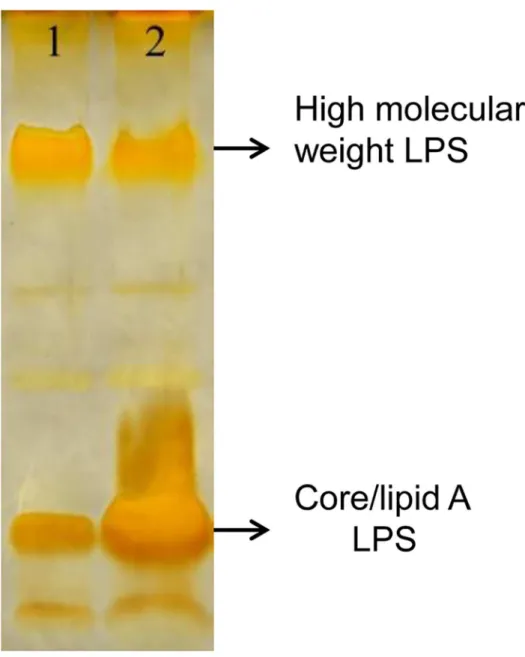
strain G5 cellular proteome (Fig 6,S2 Table), we found that the LPS biosynthesis protein (C17) and the malto-oligosyltrehalose synthase (C10) responsible for production of the disaccharide trehalose showed increased expression (1.7- and 2.2-fold, respectively) in thegacAmutant rela-tive to WT, which was further validated by Tricine SDS-PAGE quantification of LPS produc-tion (Fig 7). LPS is composed of lipid A, the core oligosaccharide and the O-antigen
polysaccharide sharing the general architecture in members of the familyEnterobacteriaceae, and constituting an integral part of the outer membrane, thus mediates interactions between the bacterial cell and its surrounding environment [36]. The LPS patterns inFig 7showed that only the core/lipid A fraction (Rough-LPS), but not the high-molecular-weight LPS with O-antigen was induced in thegacAmutant. In agreement with previous observation inP. aerugi-nosashowing the core/lipid A Rough-LPS fraction was more prominent in biofilm than in planktonic cells [36].
In contrast, three energy-associated proteins including the key glycolytic enzyme pyru-vate kinase (C41), the succinyl-CoA synthetase (C36) involved in TCA cycle, and F0F1 ATP synthase (C78) for energy production showed lower abundance in thegacAmutant relative to WT which agrees with the transcriptomic study in the rhizobacteriumP. prote-gensPf-5 where 58 genes function in energy metabolism were down-regulated in thegacA
mutant [9].
Fig 4.gacAinactivation induced biofilm formation. A,biofilm formation after 48 hr incubation at 30°C with shaking at 80 rpm was visualized by CLSM.B, biofilm biomass andC,the average thickness were quantified between the wild type G5 and thegacAmutant G5-6 using COMSTAT2 software (p<0.01).
Fig 5. AgacAmutation enhanced superoxide dismutase activity and tolerance to oxidative stress. A,superoxide dismutase(SOD) activity was determined using the Superoxide Dismutase Assay Kit (Suzhou Comin Biotech. Ltd., China). One unit of SOD activity was defined as the amount required to inhibit the rate of reduction of superoxide anion by 50% per microgram of protein (p<0.01).B,stationary-phase cultures of the wild type and thegacAmutant were assessed for their sensitivity to H2O2exposure in 0.9% NaCl for 40 min as survival rate. The initial 100% survival point was determined by counting
CFU before addition of the H2O2(p<0.05).
doi:10.1371/journal.pone.0137553.g005
Fig 6. Cellular proteomic profiles of the wild type (A) and thegacAmutant (B).A total of 800μg of each protein sample in triplicate was loaded for IEF, followed by 12% SDS-PAGE. The differentially expressed protein spots (>1.5 fold changes) were numbered (p<0.05). Circle indicates up-regulated spots in WT (A) or in thegacAmutant (B), square indicates protein spots only found in the wild type (A).
Discussion
Genome-wide transcriptomic studies have established that the Gac/Rsm system in Pseudomo-nasspecies may activate numerous downstream transcriptional regulators to cause profound transcriptome changes [8,9,13,14]. In comparison, there have been limited proteomic studies on the impact of Gac system in pseudomonads despites their importance in complementing transcriptomic analysis to determine post-transcriptionally regulated processes which is the key in the regulation by GacS/GacA [7,37]. Recent proteomic study in the rhizobacteriumP.
chlororaphisO6 characterized 12 up-regulated proteins by GacS. For example, TrpE and PrnA responsible for biosynthesis of tryptophan and antibiotic pyrrolnitrin, respectively which were Fig 7. AgacAmutation elevated LPS production.Lipopolysaccharides from the wild type G5 and thegacA mutant G5-6 were extracted using the LPS Extraction Kit (iNtRON Biotechnol. Inc., Japan), followed by 12% Tricine-SDS-PAGE separation after treatment with proteinase K. Lane 1: the wild type G5; Lane 2; thegacA mutant G5-6.
also demonstrated playing a role in induced systemic resistance (ISR) or colonization of plant roots. In addition, KatG encoding a catalase/peroxidase involved in oxidative stress and the general porin OprF are also under the positive control of GacS [15]. Similarly, proteomic analy-sis in strain G5 showed that PhzA/B responsible for biosyntheanaly-sis of antibiotic phenazine and the outer membrane protein OprF were also controlled positively by GacA (Fig 6,S2 Table).
In this study, we provided post-transcriptional evidence confirming that GacA may also influence gene transcription in strain G5 through modulating the translation of many interme-diate transcriptional factors. In agreement with previous studies [4,7,13,38], AHL profiling confirmed that quorum sensing isgacA-dependent. Further proteomic analysis identified many transcriptional regulators differentially expressed bygacAinactivation, including LysR-type (C71) and GntR-LysR-type (C44) transcriptional factors, the anti-sigma factor MucB (C39) and several TCS regulators like a nitrogen specific histidine kinase NtrB (C67) and a response regu-lator (C81) (Fig 6,S2 Table) although remain to be reconfirmed. In addition, phenotypic analy-sis confirmed that GacA in strain G5 was also required for the production of biocontrol factors like antibiotics phenazine, HCN and proteases, consistent with previous observation that the GacS/GacA system functions as a key regulator of secondary metabolisms and extracellular enzymes crucial for biocontrol activity in plant beneficial strains ofPseudomonas[13,15]. However, GacA has also been reported as a negative regulator of phenazine production inP.
aeruginosaM18 [14]. Unexpectedly, in contrast to the rhizobacteriumP.chlororaphisO6 [33], IAA production is positively regulated by the Gac system in the endophytic G5. However, it is worth noting that Salkowski assay of the cultures from G5 and thegacAmutant showed oppo-site results (data not shown) due to the presence of indole compounds unrelated to IAA in bac-terial cultures, suggesting that HPLC or LC-MS analysis is essential to confirm IAA
production.
LC-MS/MS analysis exhibited an extremely diverse AHL profile byP.cholororaphisG5 including short-chain unsubstituted-HSLs, as well as 3-hydroxy- HSLs and 3-oxo-HSLs with short- and long-chain. It is different from observation in the wheat rhizosphericP.chlororaphis
30–84, which has been reported to produce 3-hydroxy-HSLs with chain lengths of 6, 8, and 10 carbons as major species, as well as short-chain C4-HSL and C6-HSL, but 3-oxo-HSLs had not previously been detected in this organism by LC-MS/MS identification [5] highlighting another difference betweenP.chlororaphisstrains which could have been influenced in part by their original isolation niche. Previous studies have established that the Gac system positively con-trols the QS machinery via the stimulation of AHL production in some species ofPseudomonas
[4,7,13]. For example, the Gac/Rsm system in the pathogenicP.aeruginosaPAO1 primarily modulates the C4-HSL production, but agacAmutation has little influence on the amount of the long chain 3O-C12-HSL [38]. In addition, the level of AHL production in thegacSorgacA
mutant ofP.chlororaphis30–84 was ca. 10% of the level of that in the control strain [4]. How-ever, in the endophyticP.chlororaphisG5, the biosynthesis of both long- and short-chain AHLs is fully dependent on GacA (Table 1).
The Gac system has been demonstrated to differentially regulate cell motility important for plant rhizospheric colonization in biocontrol pseudomonads. For example, GacS/GacA posi-tively regulates cell motility inP.protegensPf-5 [9] andP.fluorescensPf0-1[39], but negatively controls swimming motility inP.chlororaphis30–84 and O6,P aeruginosaM18 andP. fluores-censF113 [13,14,33]. Unlike the closely related strains 30–84 and O6, both swimming and swarming motilities in strain G5 were impaired in thegacAmutant supporting the idea ofgacA
showing, not only species-specific regulation, but also a strain specificity withinP.
chlororaphis.
activate the stress response often lead to biofilm formation; in turn, induction of the stress response genes forms part of the cellular adaptation to the biofilm lifestyle [40]. In contrast to the rhizobacteriaP.protegensCHA0 and Pf-5, andP.chlororaphisO6 where the Gac system positively regulates oxidative stress [9,11,15], agacAmutation inP.cholororaphisG5 enhanced the tolerance to oxidative stress. GacA has also been showed to be required for bio-film formation in many pathogenic or beneficialPseudomonasspecies [8,17,18,39]. For instance, the Gac system inP.chlororaphis30–84 and PA23 positively regulates biofilm forma-tion via stimulating AHL and phenazine synthesis required for biofilm development [17–20]. However, GacA fromP.chlororaphisG5 negatively modulated biofilm development in an AHL- and phenazine- independent pattern as thegacAmutant was also deficient in the pro-duction of both AHLs and phenazines.
These findings above highlight the strain-specific mechanisms underlying GacA regulation of the distinctive biology ofP.chlororaphisstrains with remarkably metabolic and ecological diversity, and likely due to their differences in specific lifestyle (endophytic or rhizospheric), belonging to different subspecies (P.chlororaphissubsp.aurantiacaG5 orP.chlororaphis
subsp.aureofaciens30–84 and O6), or different geographical distribution (from different habi-tats in two continents). Differences in the regulation of GacS/A also could be caused by hori-zontal gene transfer from other taxa. In addition, GacS has been demonstrated to differentially regulate biofilm formation inP.cholororaphisO6 depending on carbon source. Mutation in
gacSresulted in reduced biofilm formation with sucrose as the major carbon source, but enhanced biofilm formation when mannitol was substituted for sucrose in the defined medium [41]. More importantly, recent comparative genomics studies provide genetic evidence reveal-ing the existence of tremendous genomic diversity within theP.fluorescensgroup includingP.
chlororaphis30–84 and O6. Especially, most of the genes contributed to biological control are in the variable regions of the genome, apart from each strain has hundreds of unique genes that could shape their specific lifestyles and distinctive characteristics [3]. However, the precise mechanisms behind the differentially regulation remain to be explored in future.
and TCA cycle activities. These findings are agreement with the observation inStaphylococcus
species where the TCA cycle acts as a signalling pathway negatively modulating polysaccha-rides intercellular adhesins (PIA) biosynthesis and biofilm formation [48,49]. However, whether the TCA cycle can act as a signal transduction pathway to modulate biofilm develop-ment in other bacteria remains to be explored. These results above suggested that the Gac sys-tem inP.chlororaphisG5 may repress biofilm development at least partially through
differential regulation of biosynthesis of polysaccharides, trehalose and the energy production to balance out the carbohydrate metabolism. This highlights the impact of proteomic analysis as a powerful tool to gain an insight into regulatory networks accounting for post-transcrip-tional regulation.
Spontaneousgacmutants arising with high frequency in laboratory cultures, and in soil and rhizosphere have been observed in many pseudomonads which suggested the existence of a positive selection for the loss of Gac and likely due to a reduced metabolic load relative to that of the Gac+population [39]. For example,gacmutants often present growth advantages with larger colonies and hyper-fluorescence indicating overproduction of siderophores to increase iron acquisition. These phenotypes were also observed inP.chlororaphisG5 (Fig 1, Fig C inS2 File). On the other hand, Gac-strains are likely to utilize exogenous public goods such as AHL signal molecules and antibiotics secreted by the Gac+neighbour in heterogeneous populations. Consequently, Gac+and Gac-populations can be mutualistic in mix populations [13,39]. Therefore, the negative-regulated traits by GacA are of particular interest. Apart from growth rate and siderophores, biofilm development and the oxidative stress tolerance were also found to be greatly induced in thegacAmutant of strain G5, which is a complete contrast to previous observations in many pseudomonads where GacS/GacA is required for biofilm formation, and the oxidative stress response via RpoS [7–9,11,18,39].
In conclusion, the impact of the Gac system inP.cholororaphisshows a strain specificity which may be associated with a niche-dependency. The Gac-dependent activation of the quo-rum sensing regulatory circuits, and the tightly regulation of a large variety of secondary metabolites such as antibiotics phenazine and HCN inP.chororaphisG5 is an energy intensive process. We hypothesize that GacA inactivation lowered the metabolic burden to allow over-production of polysaccharides and trehalose important to promote biofilm formation. Further-more,gacAmutants elevated tolerance to oxidative stress, and siderophore production which probably contributed to stress tolerance, competitive adaptation for better colonization and survival of heterogeneous populations in adverse environment. WhethergacAmutants some-how confer selective advantages to the mixed populations ofP.chlororaphisG5 still need to be verified in field experiments which may help developing new strategies for the exploitation of mixed populations such as Gac+and Gac-strains in the future management of plant diseases.
Supporting Information
S1 File. Methods for 2D-PAGE and MALDI-TOF/MS analysis.
(PDF)
S2 File. Phenotypic analysis of the production of AHLs, antibiotics, protease and sidero-phores, and antifungal activity by strain G5 and its derivatives.
(PDF)
S3 File. Original MALDI-TOF/MS data.
(ZIP)
S1 Table. Strains and plasmids used in this study.
S2 Table. Identification of cellular proteins with altered abundance (>1.5-fold) in agacA
mutant G5-6 relative to G5-WT.
(DOCX)
Author Contributions
Conceived and designed the experiments: KG MC XL. Performed the experiments: JL YY JFD HL KG XL. Analyzed the data: JL YY JFD NH XL. Contributed reagents/materials/analysis tools: YY JFD NH KG XL. Wrote the paper: JL JFD LC MC XL.
References
1. Mercado-Blanco J, Bakker PA. Interactions between plants and beneficialPseudomonasspp.: exploit-ing bacterial traits for crop protection. Antonie van Leeuwenhoek. 2007; 92(4): 367–89. PMID:
17588129
2. Ryan RP, Germaine K, Franks A, Ryan DJ, Dowling DN. Bacterial endophytes: recent developments and applications. FEMS Microbiol Lett. 2008; 278(1):1–9. PMID:18034833
3. Loper JE, Hassan KA, Mavrodi DV, Davis EW, Lim CK, Shaffer BT, et al. Comparative genomics of plant-associatedPseudomonasspp.: insights into diversity and inheritance of traits involved in multi-trophic interactions. PLoS genetics. 2012; 8(7):e1002784. doi:10.1371/journal.pgen.1002784PMID: 22792073
4. Chancey ST, Wood DW, Pierson LS 3rd. Two-component transcriptional regulation of N-acyl-homoser-ine lactone production inPseudomonas aureofaciens. Appl Environ Microbiol. 1999; 65(6):2294–9.
PMID:10347004
5. Khan SR, Herman J, Krank J, Serkova NJ, Churchill MEA, Suga H, et al.N-(3-hydroxy- hexanoyl)-L-homoserine lactone is the biologically relevant quormone that regulates the phz operon of
Pseudomo-nas chlororaphisstrain 30–84. Appl Environ Microbiol. 2007; 73(22):7443–55. PMID:17921283
6. Liu X, Jia J, Popat R, Ortori CA, Li J, Diggle SP, et al. Characterisation of two quorum sensing systems in the endophyticSerratia plymuthicastrain G3: differential control of motility and biofilm formation according to life-style. BMC Microbiol. 2011; 11(1):26. doi:10.1186/1471-2180-11-26PMID:21284858 7. Lapouge K, Schubert M, Allain FH, Haas D. Gac/Rsm signal transduction pathway of
gamma-proteo-bacteria: from RNA recognition to regulation of social behaviour. Mol Microbiol. 2008; 67(2):241–53.
PMID:18047567
8. Brencic A, McFarland KA, McManus HR, Castang S, Mogno I, Dove SL, et al. The GacS/GacA signal transduction system ofPseudomonas aeruginosaacts exclusively through its control over the transcrip-tion of the RsmY and RsmZ regulatory small RNAs. Mol. Microbiol. 2009; 73:434–445. doi:10.1111/j.
1365-2958.2009.06782.xPMID:19602144
9. Hassan KA, Johnson A, Shaffer BT, Ren Q, Kidarsa TA, Elbourne LD, et al. Inactivation of the GacA response regulator inPseudomonas fluorescensPf-5 has far-reaching transcriptomic consequences. Environ Microbiol. 2010; 12(4):899–915. doi:10.1111/j.1462-2920.2009.02134.xPMID:20089046
10. Ventre I, Goodman AL, Vallet-Gely I, Vasseur P, Soscia C, Molin S, et al. Multiple sensors control recip-rocal expression ofPseudomonas aeruginosaregulatory RNA and virulence genes. Proc Natl Acad Sci U S A. 2006; 103(1):171–6. PMID:16373506
11. Heeb S, Valverde C, Gigot-Bonnefoy C, Haas D. Role of the stress sigma factor RpoS in GacA/RsmA-controlled secondary metabolism and resistance to oxidative stress inPseudomonas fluorescens CHA0. FEMS Microbiol Lett. 2005; 243(1):251–8. PMID:15668026
12. Takeuchi K, Tsuchiya W, Noda N, Suzuki R, Yamazaki T, Haas D. Lon protease negatively affects GacA protein stability and expression of the Gac/Rsm signal transduction pathway inPseudomonas
protegens. Environ Microbiol. 2014; 16(8):2538–49. doi:10.1111/1462-2920.12394PMID:24428244
13. Wang DP, Lee SH, Seeve C, Yu JM, Pierson LS, Pierson EA. Roles of the Gac-Rsm pathway in the regulation of phenazine biosynthesis inPseudomonas chlororaphis30–84. MicrobiologyOpen. 2013; 2
(3):505–24. doi:10.1002/mbo3.90PMID:23606419
14. Wei X, Huang XQ, Tang LL, Wu DQ, Xu YQ. Global control of GacA in secondary metabolism, primary metabolism, secretion systems, and motility in the rhizobacteriumPseudomonas aeruginosaM18. J Bacteriol. 2013; 195(15):3387–400. doi:10.1128/JB.00214-13PMID:23708134
15. Kim CH, Kim YH, Anderson AJ, Kim YC. Proteomic analysis of a global regulator GacS sensor kinase in the rhizobacterium,Pseudomonas chlororaphisO6. Plant Pathol J. 2014; 30(2):220–7. doi:10.5423/
16. Li H, Liu X, Gao K, Jia J. Cloning ofphzIRfrom the endophyticPseudomonassp. G5 and its expression
inEscherichia coli. Chin J Biotech. 2009; 25(6):832–9. PMID:19777809.
17. Maddula VS, Zhang Z, Pierson EA, Pierson LS 3rd. Quorum sensing and phenazines are involved in biofilm formation byPseudomonas chlororaphis(aureofaciens) strain 30–84. Microb Ecol. 2006; 52
(2):289–301. PMID:16897305
18. Poritsanos N, Selin C, Fernando WG, Nakkeeran S, de Kievit TR. A GacS deficiency does not affect
Pseudomonas chlororaphisPA23 fitness when growing on canola, in aged batch culture or as a biofilm.
Can J Microbiol. 2006; 52(12):1177–88. PMID:17473887
19. Selin C, Habibian R, Poritsanos N, Athukorala SN, Fernando D, de Kievit TR. Phenazines are not essential forPseudomonas chlororaphisPA23 biocontrol of Sclerotinia sclerotiorum, but do play a role in biofilm formation. FEMS Microbiol Ecol. 2010; 71(1):73–83. doi:10.1111/j.1574-6941.2009.00792.x
PMID:19889032
20. Selin C, Fernando WG, de Kievit T. The PhzI/PhzR quorum-sensing system is required for pyrrolnitrin and phenazine production, and exhibits cross-regulation with RpoS inPseudomonas chlororaphis PA23. Microbiol. 2012; 158(Pt 4):896–907.
21. Green MR, Sambrook J. Molecular cloning: a laboratory manual. Cold Spring Harbor, N.Y: Cold Spring Harbor Laboratory Press; 2012.
22. De Lorenzo V, Timmis KN. Analysis and construction of stable phenotypes in gram-negative bacteria with Tn5-and Tn10-derived minitransposons. Methods Enzymol. 1994; 235:386–405. PMID:8057911
23. Liu XG, Bimerew M, Ma YX, Mueller H, Ovadis M, Eberl L, et al. Quorum-sensing signaling is required for production of the antibiotic pyrrolnitrin in a rhizospheric biocontrol strain ofSerratia plymuthica. FEMS Microbiol Lett. 2007; 270(2):299–305. PMID:17355597
24. Liu X, Jia J, Atkinson S, Cámara M, Gao K, Li H, et al. Biocontrol potential of an endophyticSerratiasp. G3 and its mode of action. World J Microbiol Biotechnol. 2010; 26(8):1465–71.
25. Yang MM, Mavrodi DV, Mavrodi OV, Bonsall RF, Parejko JA, Paulitz TC, et al. Biological control of Take-All by fluorescentPseudomonasspp. from Chinese wheat fields. Phytopathol. 2011; 101 (12):1481–91.
26. Müsken M, Di Fiore S, Römling U, Häussler S. A 96-well-plate-based optical method for the quantitative and qualitative evaluation ofPseudomonas aeruginosabiofilm formation and its application to suscepti-bility testing. Nat Protoc. 2010; 5(8):1460–9. doi:10.1038/nprot.2010.110PMID:20671729
27. Heydorn A, Nielsen AT, Hentzer M, Sternberg C, Ersbøll BK, Givskov M, Molin S. Quantification of bio-film structures by the novel computer program COMSTAT. Microbiol. 2000; 146 (10): 2395–2407.
28. Gulyaeva NV, Obidin AB, Marinov BS. Modulation of superoxide dismutase by electron donors and acceptors. FEBS letters. 1987; 211(2):211–4. PMID:2433158.
29. Notley-McRobb L, King T, Ferenci T.rpoSmutations and loss of general stress resistance in
Escheri-chia colipopulations as a consequence of conflict between competing stress responses. J Bacteriol.
2002; 184(3):806–11. PMID:11790751
30. Schägger H. Tricine-SDS-PAGE. Nat Protoc. 2006, 1(1):16–22. PMID:17406207
31. Dasgupta T, de Kievit TR, Masoud H, Altman E, Richards JC, Sadovskaya I, Speert DP, Lam JS. Char-acterization of lipopolysaccharide-deficient mutants ofPseudomonas aeruginosaderived from sero-types O3, O5, and O6. Infect Immun. 1994; 62(3):809–17. PMID:8112851
32. Kang BR, Yang KY, Cho BH, Han TH, Kim IS, Lee MC, Anderson AJ, Kim YC. Production of indole-3-acetic acid in the plant-beneficial strainPseudomonas chlororaphisO6 is negatively regulated by the global sensor kinase GacS. Curr Microbiol. 2006; 52(6):473–6. PMID:16732458
33. Kim JS, Kim YH, Anderson AJ, Kim YC. The sensor kinase GacS negatively regulates flagellar forma-tion and motility in a biocontrol bacterium,Pseudomonas chlororaphisO6. Plant Pathol J. 2014; 30 (2):215–9. doi:10.5423/PPJ.NT.11.2013.0109PMID:25289006
34. Ray PD, Huang BW, Tsuji Y. Reactive oxygen species (ROS) homeostasis and redox regulation in cel-lular signalling. Cell Signal. 2012; 24(5):981–90. doi:10.1016/j.cellsig.2012.01.008PMID:22286106
35. Ullrich Matthias. Bacterial Polysaccharides: Current Innovations and Future Trends. Caister Academic Press, Wymondham. 2009.
36. Giwercman B, Fomsgaard A, Mansa B, Høiby N. Polyacrylamide gel electrophoresis analysis of lipo-polysaccharide fromPseudomonas aeruginosagrowing planktonically and as biofilm. FEMS Microbiol Immunol. 1992; 4(4):225–9. PMID:1599708
37. Sauer K. The genomics and proteomics of biofilm formation. Genome Biol. 2003; 4(6):219. PMID: 12801407
N-butyryl-homoserine lactone and the formation of the virulence factors pyocyanin, cyanide, and lipase. Mol Microbiol. 1997; 24: 309–319. PMID:9159518
39. Seaton SC, Silby MW, Levy SB. Pleiotropic effects of GacA onPseudomonas fluorescensPf0-1 in vitro and in soil. Appl Environ Microbiol. 2013, 79(17):5405–10. doi:10.1128/AEM.00819-13PMID:
23811507
40. Landini P. Cross-talk mechanisms in biofilm formation and responses to environmental and physiologi-cal stress inEscherichia coli. Res Microbiol. 2009; 160(4):259–66. doi:10.1016/j.resmic.2009.03.001
PMID:19345733
41. Kim JS, Kim YH, Park JY, Anderson AJ, Kim YC. The global regulator GacS regulates biofilm formation
inPseudomonas chlororaphisO6 differently with carbon source. Can J Microbiol. 2014; 60(3):133–8.
doi:10.1139/cjm-2013-0736PMID:24588386
42. Amarasinghe JJ, Scannapieco FA, Haase EM. Transcriptional and translational analysis of biofilm determinants ofAggregatibacter actinomycetemcomitansin response to environmental perturbation. Infect Immun. 2009; 77(7):2896–907. doi:10.1128/IAI.00126-09PMID:19433550
43. De Araujo C, Balestrino D, Roth L, Charbonnel N, Forestier C. Quorum sensing affects biofilm formation through lipopolysaccharide synthesis inKlebsiella pneumoniae. Research in microbiology. 2010; 161 (7):595–603. doi:10.1016/j.resmic.2010.05.014PMID:20600864
44. Ivanova SA, Davis DW, Arenz BW, Connellan TK. Compositions and methods to prevent and treat bio-films. Google Patents; 2012.
45. Bouffartigues E, Moscoso JA, Duchesne R, Rosay T, Fito-Boncompte L, Gicquel G et al. The absence of thePseudomonas aeruginosaOprF protein leads to increased biofilm formation through variation in c-di-GMP level. Front Microbiol. 2015; 6:630. doi:10.3389/fmicb.2015.00630eCollection 2015. PMID: 26157434
46. Martin DW, Schurr MJ, Mudd MH, Deretic V. Differentiation ofPseudomonas aeruginosainto the algi-nate-producing form: inactivation of mucB causes conversion to mucoidy. Mol. Microbiol. 1993; 9: 497–
506. PMID:8412698
47. Mann EE, Wozniak DJ.Pseudomonasbiofilm matrix composition and niche biology. FEMS Microbiol Rev. 2012; 36(4):893–916. doi:10.1111/j.1574-6976.2011.00322.xPMID:22212072
48. Islam N, Kim Y, Ross JM, Marten MR. Proteomic analysis ofStaphylococcus aureusbiofilm cells grown under physiologically relevant fluid shear stress conditions. Proteome Sci. 2014; 12:21. doi:10.1186/ 1477-5956-12-21PMID:24855455