Thermal Insulating Foams Produced From Glass Waste and Banana Leaves
Sabrina Arcaroa,b, Bianca Goulart de Oliveira Maiaa,b*, Marcelo Tramontin Souzaa,b, Francielly
Roussenq Cesconetoa,b, Laura Granadosa, Antonio Pedro Novaes de Oliveiraa,b
Received: October 10, 2015; Revised: May 2, 2016; Accepted: July 25, 2016
In this work, compositions containing transparent glass bottles and banana leaves (desiccated and
crushed), with diferent mass fractions (30-50%), were prepared for obtaining cellular materials for thermal insulation purposes. The formulated and prepared compositions were uniaxially pressed (10 MPa) and the compact powders ired between 700 and 850°C for 30 min in order to investigate the efect of the banana leaves on the formation of pores and on the thermal and mechanical properties of the processed glass foams. The results indicated that the obtained glass foams with porosities between 58.5 and 87.5%, compressive strength ranging between 1.17 and 3.50 MPa and thermal conductivity
ranging between 0.06 and 0.15 W/mK, are potential candidates to work as thermal insulators with
appropriate properties for a speciic application.
Keywords: Cellular materials, wastes, glass foams, banana leaves
* e-mail: [email protected]
1. Introduction
Several diferent materials can be used for the manufacture of porous ceramics such as alumina, mullite, silicon carbide, zirconia and hydroxyapatite. However, recent studies have shown numerous advantages and possibilities for the use of discarded glasses to obtain glass foams1-3.
The use of glass foams is viable in applications involving temperatures lower than 500 °C, for example in thermal
insulation systems used in building such as panels, blocks,
roofs, ireplaces, grills, among others1. These materials are
also characterized by high porosity (> 60% vol.) which can be opened, closed or mixed. The pore size, according to International Union of Pure and Applied Chemistry (IUPAC)2
can be classiied as micro (<2 nm), meso (2-50 nm) or macropores (>50 nm). The distribution and amount of pores determine speciic properties, such as low density and thermal conductivity, high surface area, permeability and chemical and
thermal stability1,4,5. Furthermore, glass foams have mechanical
strength and chemical and thermal stabilities greater than the
polymeric foams typically employed in such cases1,6,7.
Several techniques or methods for producing porous
ceramics are used and the process steps generally consist in
preparing a suspension of a ceramic powder, forming and heat treatment (iring). Among the best known forming methods the replication method, gelcasting, foaming and incorporation of porogenic agents (pore formers) are highlighted1,8. Due
to its simplicity, one of the techniques widely used for the production of glass foams, is the addition of a foaming agent to the powdered glass, followed by its removal in the
heat treatment step (iring) to form a cellular structure 6, 7. The foaming agents can be synthetic (polymer) or natural
(mineral and vegetable residues)7,9.
The natural residues show diferent constituents such as
cellulose, hemicellulose and lignin, which open many value
adding opportunities and can be a low cost alternative for use as foaming agents. Signiicant plant residues in tropical regions comes from banana cultivation, as banana leaves and
pseudostem10. Banana is one of the most consumed fruits in
the world and it is commercially grown in about 120 countries.
Currently, Brazil is the second largest producer (preceded by India) and is responsible for 7.5% of world production. Further, for every ton of bananas produced approximately 3,000 kg of pseudostem, 160 kg of stems, 480 kg of leaves and 440 kg of skins are generated11.
The glass used in the manufacture of glass foams can, however, also be glass from the disposal. The recycling and the use of glass can contributes to the national energy matrix through the large amount of energy savings since to produce 1 kg of new glass 4500 kJ are needed, while to produce 1 kg of recycled glass 500 kJ only are needed12,13. In order to reduce production costs and get raw materials, several
modiications have been applied to the processing techniques
and starting materials6. In addition, glass foams represent an
interesting destination for glass wastes and vegetables from an economic and environmental point of view.
In this context, the objective of this work was to produce cellular materials (glass foams) from glass bottles and banana leaves in diferent mass fractions to be used as
thermal insulators.
aGraduate Program in Materials Science and Engineering – PGMAT, Federal University of Santa
Catarina – UFSC, 88040-900, Florianópolis, SC, Brazil
bLaboratory of Glass-Ceramic Materials – VITROCER, Federal University of Santa Catarina – UFSC,
2. Materials and Methods
In this study transparent glass bottles, TGB (soda-lime
type) and banana leaves (BL) were used as raw materials. The
selected glass bottles were washed and dried at 110 °C for 2 h
in a laboratory dryer (SP LABOR®). In a subsequent step, the
glass bottles were crushed in a crusher hammer (Servitech, CT-058), and the resulting product milled for 30 min in a fast mill (Servitech, CT-242) constituted by a porcelain jar containing
alumina balls and water such that powders with particle sizes
lower than 44 µm (325 Mesh) were obtained. The average
particle size distribution (d50 = 6 µm) of the resultant material was determined using a laser scattering particle size analyzer
(Master Sizer 2000, Malvern). The chemical characterization of the obtained glass powders was performed by X-ray luorescence spectroscopy (XRF, Philips PW 2400).
Samples of dried banana leaves were obtained directly from banana trees but only the dried leaves were collected. The pseudostem was obtained only from plants that had been cut for obtaining fruit and were decomposing in the
soil. The pseudostem, since it has a high humidity content, was pressed in a hydraulic press to remove the largest liquid
fraction and then it was dried in a forced ventilation mule at 60 ºC for 24 h. Both samples were milled so that a powder with an average particle size of 2.5 mm was obtained. The obtained powder samples were characterized by proximate chemical analysis, following procedures described in ASTM E1871-82 (2006) for moisture, ASTM E872-82 (2006) for volatile materials, ASTM E1755-01 (2007) for ash and ASTM E1756-08 (2008) for total solids and ixed carbon;
elemental chemical analysis (carbon, nitrogen and hydrogen)
by elemental analyzer (Perkin-Elmer CHN 2400) and sulfur
by atomic emission spectrometer with inductively coupled
plasma (Spectro Ciros CCD). The samples of both wastes were dried at 110 °C for 2 h in a mule and then mixed (dry mixing in a ball mill for 5 min) with diferent proportions of TGB (50-70 wt%) and BL (30-50 wt%) and with addition of 5% water. The prepared mixtures were at a later stage, uniaxially pressed (10 MPa) in a steel matrix by means of
a hydraulic press (Bovenau P10 ST). The obtained powder
compacts in the form of discs (10 x 6 mm) were dried at 110 °C for 2 h.
The thermal behaviour during iring of raw materials and prepared compositions was studied by means of an optical dilatometer (Expert System Solution Misura ODHT) and
by a thermal analyser equipment (TA Instruments, SDT
Q600 - Simultaneous TGA-DSC) at a heating rate of 10 °C/ min with a low of synthetic air of 10 cm3/min.
Based on the thermal analyses, green compacts were
heated in a mule furnace (Jung J200) up to 600 ºC at 0.5 ºC/min with a holding time of 30 min (irst step) and then heated at diferent temperatures (700, 800 e 850 °C) for 30 min at 10 °C/min (second step) and inally cooled to room temperature, ~25 °C (third step).
To identify the crystalline phases formed during iring, difractometric analysis were carried out in a X-ray difractometer (Philips, model X’Pert, The Netherlands). In this case, powdered samples ired in the 700-850 °C temperature range were prepared. A glass sample (unheat-treated one) was also prepared and subjected XRD analysis.
The true densities (ρt) of powdered samples were
determined by using a helium pycnometer (AccuPyc 1340,
Micromeritics, USA). The apparent densities (ρa) of ired samples were determined by relating their geometrical measurements, obtained using a caliper (Mitotoyo, accuracy
± 0.01 mm), and their masses (Shimadzu AX200 at 0.001
g). The relative densities (ρr) were determined, relating the
apparent densities and the true densities of the samples. From measurements of geometrical and true densities (same procedures used for powder compacts), the porosities (ε) of ired glass foams were calculated according to equation 1.
%
1
100
( )
1
t a
#
f
t
t
=
-Q
V
T
Y
The microstructure of pores could be seen from images of fractured surfaces of ired samples, obtained in a scanning electron microscope, SEM (Philips, XL-30).
To determine the mechanical strength of the produced glass foams, compression tests (Stable Micro Systems TA. XT Plus Texture Analyzer – cell load of 500 N) at ~25 °C were performed on 5 cylindrical samples (10 mm diameter) with a loading speed of 1 mm/min.
The thermal conductivity of the obtained materials was determined by a TCi Thermal Conductivity C-THERM TECHNOLOGIES on disk-shaped samples of 30 mm diameter and 8 mm thick.
3. Results and Discussion
Table 1 shows the chemical composition of the transparent glass bottle (TGB) used in this work. It can be veriied the predominant presence of SiO2, Na2O and CaO in amounts
typically found in soda-lime-silica glasses.
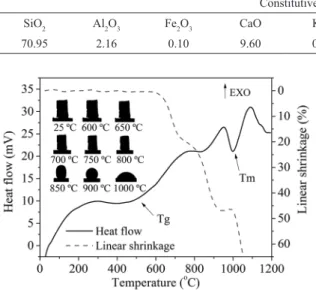
Figure 1 shows linear shrinkage and diferential scanning calorimetric (DSC) curves related to the TGB. As observed, combining the techniques of dilatometry and diferential scanning calorimetry (DSC), it can follow the thermal behavior of the TGB. It is found that there is a discontinuity in the baseline around 520 ºC, which is characteristic of the
glass transition temperature (Tg)14.
It is also observed in Figure 1, an endothermic peak
at about 1000 °C which may be attributed to the melting
(Tm) of the glass (melting of the crystalline phases formed
during the heating of the glass), which can be conirmed
by observing the linear shrinkage curve and the images (in the same Figure) obtained during this thermal analysis.
Table 1: Chemical composition of the TGB obtained by XRF. L.O.I: loss on ignition. Constitutive oxides (wt%)
SiO2 Al2O3 Fe2O3 CaO K2O Na2O P2O5 TiO2 L.O.I
70.95 2.16 0.10 9.60 0.02 16.76 0.03 0.05 0.33
Figure 1: Linear shrinkage (also showing pictures of specimen tested in diferent temperatures) and DSC curves of the TGB.
Figure 2: X-ray difraction patterns of the glass sample (unheat-treated one) (a) and after iring at 700(b), 800(c), 850 ºC/30 min(d). ♦ Cristobalyte (JCPDS 01.076-0939) ● Calcium sodium silicate (JCPDS 00.023-0671)
phase) and calcium-sodium silicate, JCPDS 00.023-0671 toke place in the 700-850 °C temperature range (Figure 2 (b-d)) and from 800 °C (Figure 2 (c-d)), respectively. Thus, it clear, according to Figure 2 (a) for a glass sample (unheat-treated sample) that crystallization toke places in the studied temperature range explaining thus the observed
(in Figure 1) melting temperature.
It is observed further from the linear shrinkage curve that around 600 °C begins the sintering processes of the glass powder. At 850 °C the glass powder compacts start to lose their geometric shape, probably explained by the low glass viscosity with increasing temperature. At 900 °C the glass already has a ball-shape and at 1000 °C, it may realizes by
dilatometry (in terms of shrinkage) and by DSC, that the
glass melting (Tm) occurred.
Table 2 shows the results of proximate elemental and chemical analysis of BL samples10.
The moisture of the BL used was approximately 8%. The biomass moisture is an important factor since it interferes
directly on other parameters such as the lower heating value, which decreases with increasing moisture content and thermal conductivity10,15. The volatile solid contents indicate the
presence of organic matter and represent lignocellulosic and carbon fractions present in the samples, and expresses the weight amount of the components of biomass which irst are
combusted15,16. The ashes represent 6.2% of the total. Studies
indicate low ash concentration in biomass from 0.3 to 1%,
but in agricultural residues such as rice husks, ashes may
represent 23% and less than 3% for sugar cane bagasse10,15,17.
The carbon content found was 43.4%.
Table 2: Proximate chemical and elemental analysis of banana leaf (BL) samples.
Parameters Contents (wt%)
Moisture 7.81 ± 0.3
Volatile solids 78.16 ± 0.8
Fixed carbon 15.59 ± 0.4
Ashes 6.2 ± 0.4
Carbon 43.28
Hydrogen 6.23
Nitrogen 0.98
Sulfur 0.49
Figure 3 shows the weight loss, from thermogravimetry analysis (TGA), and diferential scanning calorimetry (DSC) curves of the BL. The BL showed two stages of thermal
degradation.
The irst (a) from room temperature to about 150 °C, which is related to moisture loss from the sample, corresponding to a weight loss of 10.7% for the leaves. These values are close to those found by proximate analysis, presented earlier. In the second stage (b), between 150 °C and 580 °C, a largest weight loss attributed to volatile materials and degradation of hemicellulose (cellulose and lignin portion - constituents of the biomass) was registered, with mass losses for the leaves samples of 80.3%. At this stage it is also possible to identify the ignition temperature of the biomass combustion process17.
Figure 3: DSC/TGA curves of banana leaf samples.
correspond to thermal degradation of hemicellulose fractions
stages, cellulose and lignin gradually. The greater release
of energy in which occurs the degradation of volatiles was observed in the second event nearly at 400°C. The thermal degradation of biomass products consist of moisture, volatiles
and ash5. The volatiles are subdivided into gases, such as
light hydrocarbons, carbon monoxide, carbon dioxide and
tar. Yields depend on the temperature and heating rate17.
Based on the thermal behavior of the TGB and BL, it was deined the following iring cycle of the compacts constituted by TGB and BL: heating at 0.5 °C/min up to 600 °C for 120 min to decomposition of BL and thus the release of CO/ CO2 gases which are responsible for the formation of pores.
This temperature (600 °C) is near the glass transition (Tg)
and the TGB, despite being in a viscous state, still retains
the cell structure caused by the decomposition of leaves. Subsequently, the temperature was increased to 700, 800, 850 °C at 10 °C/min to promote the sintering of the bodies and thus the trapping of gases released in the decomposition step of the banana leaves. Figures 4 show the efect of the iring temperature and BL content on the apparent density of the produced glass foams.
It can be seen from Figure 4 that the apparent densities ranged between 0.31 and 1.03 g/cm3. Compositions with
50% added BL showed the lowest densities for all tested
sintering temperatures.
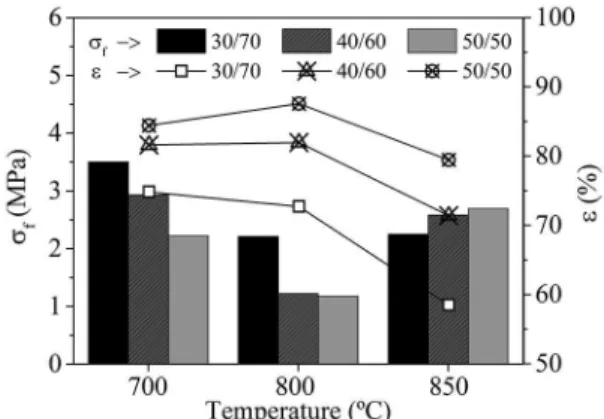
Figure 5 shows the results of mechanical strength (σf)
tests and porosity (ε) of glass foams with additions of 30, 40 and 50% BL, ired at 700, 800 and 850 °C for 30 min.
As can be seen, the porosity of the produced glass foams ranged from 58.5 to 87.5%. As the iring temperature increases from 700 to 800 °C the porosity remained practically constant. However, at 850 °C there is a signiicant decrease in porosity for all studied compositions, in contrast to the apparent density, which is related to a decrease of the glass viscosity which was not suicient to maintain the cell structure, since 850 °C is very close to its melting temperature, as previously mentioned. The sharp decreases of the mechanical strength of the glass foams of all compositions with increasing iring
Figure 4: Efect of the iring temperature and BL content on the apparent density of the produced glass foams.
Figura 5: Efect of the iring temperature on the mechanical strength (σf) and porosity (ε) of the produced glass foams for diferent
compositions (BL/TGB).
temperature, i.e., from 700 to 800 °C can be associated, probably, to the crystobalite formation as shown in the XRD (Figure 2) since it has a very high coeicient of thermal expansion which results in crack formation during cooling process. With the increment of temperature from 800 to 850 °C, the mechanical strength increases due a porosity decreasing associated, probably, to a decreasing of the glass
(TGB) viscosity, as previously mentioned, which causes
the rupture of the pore’s walls allowing the gases to escape (specially for samples containing high BL concentrations) resulting in a lower porosity (glass densiication). The rupture of the pore’s walls and so the escape of gases is a consequence of the high internal pressure which expand the porous in the low viscous glass. In fact, in the glass working
range temperature, the viscosity (106.6 to 103 Pa·s) is low
enough, allowing the pressure of the produced gases from the decomposition of the foaming agent, expands the glass
producing porosity which can be controlled depending on the selected temperature and holding time at temperature.
values are lower than those of samples ired at 700 and 800 °C, crystobalite volume (Figure 2) seems to be higher (higher peak intensity) than that observed at 800 °C but in particular than the sample ired at 700 °C for 30 min. Thus, seems that crystobalite as porosity has an important inluence
on the mechanical strength.
Figure 6 shows the results of thermal conductivity of glass foams with additions of 30, 40, 50% BL ired at 700, 800, 850 °C for 30 min.
Figure 6: Thermal conductivity of glass foams with additions of 30, 40, 50% BL ired at 700, 800, 850 °C for 30 min, respectively.
It can be seen that the thermal conductivity of the produced glass foams decreases with increasing iring temperature (700 to 800 °C). This is due to the contribution of a higher
porosity which reduces the thermal conductivity, especially in cases where the pores are closed and no interconnected.
With the increment of temperature from 800 to 850 °C, it is found that the thermal conductivity increases due a porosity
decreasing in good agreement with the literature1.
In fact, Figure 7 shows micrographs showing the mentioned before aspects.
As is known, in general, the porosity causes a decrease
in the mechanical strength of the materials. Typically, the subjected foams have a mechanical (compressive
strength) behavior characterized by three regimens, i.e.,
linear elastic, plateau and densiication. Initially occurs the elastic deformation of the walls and/or struts of the glass foams. The plateau region, the second stage, begins when
there is a sharp drop in the stress value which is associated
with fracture of the material. This region presents large luctuations of stress due to the successively breaking of struts which constitute the glass foam. In the third stage of the process, the stress increases due to densiication of the glass foam7.
Figure 7: SEM micrographs of glass foams ired at 800 °C for 30 min. (a) 30%, (b) 40%, (c) 50% BL.
4. Conclusions
Based on the proposed objectives of this work, it is concluded that produced glass foams ired between 700 and 850 °C for 30 min and with porosities between 58.5 and 87.5% had compressive strength ranging between 1.17 and 3.50 MPa and thermal conductivity ranging between
0.06 and 0.15 W /mK.
The dried banana leaves proved to be a vegetable residue
with interesting properties for use as foaming agent, indicating new applications for this residue.
The values of the evaluated properties indicate that the obtained glass foams can be recommended as heat insulation panels which require an appropriate combination of thermal
conductivity, porosity and mechanical strength.
5. Acknowledgments
The authors are grateful to FAPESC/CNPq (PRONEX T.O. N. 17431/2011-9) for funding this work.
6. References
1. Scheler M, Colombo P, eds. Cellular Ceramics: Structure, Manufacturing, Properties and Applications. Weinheim:
Wiley-VCH; 2005.
2. Rouquerol J, Avnir D, Fairbridge CW, Everett DH, Haynes JM, Pernicone N, et al. Recommendation for the characterization of
porous solids. Pure and Applied Chemistry. 1994;66(8):1739-1758.
3. Zhu X, Jiang D, Tan S. Preparation of silicon carbide reticulated
porous ceramics. Materials Science and Engineering: A.
2002;323(1-2):232-238.
4. Barg S, Soltmann C, Andrade M, Koch D, Grathwohl G. Cellular ceramics by direct foaming of emulsiied ceramic powder
suspensions. Journal of the American Ceramic Society.
2008;91(9):2823-2829.
5. Zeschky J, Goetz-Neunhoefer F, Neubauer J, Jason Lo SH, Kummer B, Scheler M, et al. Preceramic polymer derived
cellular ceramics. Composites Science and Technology.
2003;63(16):2361-2370.
6. Bernardo E, Cedro R, Florean M, Hreglich S. Reutilization and stabilization of wastes by the production of glass foams. Ceramics International. 2007;33(6):963-968.
8. Studart AR, Gonzenbach UT, Tervoort E, Gauckler LJ. Processing
routes to macroporous ceramics: A review. Journal of the American Ceramic Society. 2006;89(6):1771-1789. 9. Sousa E, Rambo CR, Montedo ORK, Hotza D, Oliveira APN.
Glass ceramics porous LZSA system using organic waste as pore-forming agent. Exacta. 2006;4(2):289-296 (in Portuguese). 10. Sellin N, Oliveira BG, Marangoni C, Souza O, Oliveira APN,
Oliveira TMN. Use of banana culture waste to produce briquettes. Chemical Engineering Transactions. 2013;32:349-354. 11. Bello RH, Linzmeyer P, Franco CMB, Souza O, Sellin N,
Medeiros SHW, et al. Pervaporation of ethanol produced from
banana waste. Waste Management. 2014;34(8):1501-1509.
12. Alves OL, Gimenes IF, Mazalli IO. Vidros. Cadernos Temáticos - Química Nova na Escola - Novos Materiais. 2001;Edição
Especial:9-20 (in Portuguese).
13. Scarinci G, Brusatin G, Barbieri L, Corradi A, Lancellotti I, Colombo P, et al. Vitriication of industrial and natural wastes with production of glass ibers. Journal of European Ceramic Society. 2000;20(14-15):2485-2490.
14. Padilha AF. Materiais de Engenharia: Microestrutura e Propriedades. São Paulo: Hemus; 2000 (in Portuguese). 15. Fernandes ERK, Marangoni C, Souza O, Sellin N. Thermochemical
characterization of banana leaves as a potential energy source. Energy Conversion and Management. 2013;75:603-608. 16. García R, Pizzaro C, Lavín AG, Bueno JL. Characterization of
Spanish biomass wastes for energy use. Bioresource Technology.
2012;103(1):249-258.
17. Demirbas A. Combustion characteristics of different biomass fuels. Progress in Energy and Combustion Science.