ISSN 0104-6632 Printed in Brazil
www.abeq.org.br/bjche
Vol. 26, No. 02, pp. 367 - 373, April - June, 2009
Brazilian Journal
of Chemical
Engineering
CHARACTERIZATION OF AlMCM-41
SYNTHESIZED WITH RICE HUSK SILICA AND
UTILIZATION AS SUPPORTS FOR
PLATINUM-IRON CATALYSTS
J. Chumee
1, N. Grisdanurak
2,4, S. Neramittagapong
3and J. Wittayakun
1,4*1Material Chemistry Research Unit, School of Chemistry, Suranaree University of Technology, Nakhon Ratchasima, Thailand.
2Department of Chemical Engineering, Thammasat University, Pathumthani, Thailand.
3Department of Chemical Engineering, Khon Kaen University, Khon Kaen, Thailand.
4National Center of Excellence for Environment and Waste Management (EHWM), Phone: + (66) (44) 224-256,
Fax: + (66) (44) 224-185, Thammasat University, Pathumthani, Thailand. E-mail: [email protected]
(Submitted: August 18, 2008 ; Revised: November 25, 2008 ; Accepted: December 2, 2008)
Abstract - RH-MCM-41 was synthesized by using silica from rice husk and further modified to increase
acidity by adding Al with grafting method with Si/Al ratio of 75 and 25. The resulting materials were referred to as RH-AlMCM-41(75) and RH-AlMCM-41(25). The XRD spectra of all RH-AlMCM-41 confirmed a mesoporous structure of MCM-41. Surface areas of all RH-AlMCM-41 were in the range of 700-800 m2/g, lower than that of the parent RH-MCM-41, which was 1230 m2/g. After Al addition the Si/Al ratios of 41(75) and 41(25) were higher than that of the parent RH-MCM-41. The RH-AlMCM-41 materials were used as supports for bimetallic platinum−iron catalysts, denoted as Pt-Fe/RH-AlMCM-41, with Pt and Fe amounts of 0.5 and 5.0% by weight, respectively. Results from TPR indicated that the presence of Al might assist the interaction between Pt and Fe as the reduction temperature of iron oxides shifted to a lower value. All catalysts were active for phenol hydroxylation using H2O2 as an oxidant, for which the highest conversions were observed on the RH-MCM-41 material with the highest surface area. The acidity of the supports did not present a significant role in improving the catalytic performance.
Keywords: RH-AlMCM-41; Rice husk; Phenol hydroxylation; Pt-Fe/RH-AlMCM-41.
INTRODUCTION
Rice husk is a by-product from rice milling and could be considered as an agricultural waste (Huang et al., 2001). Its major components are organic compounds such as cellulose and lignin; and amorphous silica. Silica with high purity can be obtained from rice husk by leaching it with mineral acid before calcination (Krishnarao et al., 2001). The rice husk silica can be used as a silica source for the synthesis of porous materials such as zeolite X and Y and MCM-41 (Khemthong et al., 2007; Wittayakun et al., 2008; Grisdanurak et al., 2003). This work focused on continuation of using rice husk
silica as a source for the synthesis of MCM-41, which was further modified with Al.
Brønsted acid sites on surface of MCM-41 could be generated through isomorphous substitution of Si by Al. There are two methods to introduce Al to MCM-41: direct sol–gel method (Pre) and post-synthetic grafting method (Post). Modification of MCM-41 by the sol-gel method was reported to result in unfavorable hydrothermal structural deterioration and relatively low concentration and strength of Brønsted acid sites even at high aluminum content (Park et al., 2002). Therefore, post-synthesis modifications have been developed to maintain structural stability and to incorporate various metal elements into siliceous MCM-41 support. In this work, MCM-41 synthesized with rice husk silica was modified to increase acidity by adding Al with grafting method with Si/Al ratio of 75 and 25. They will be referred to as RH-AlMCM-41. The products were characterized by X-ray fluorescence (XRF), X-ray diffraction (XRD), transmission electron microscopy (TEM) and N2 adsorption-desorption (BET method). They were further used as catalyst supports for platinum and iron, which were tested for phenol hydroxylation.
The phenol hydroxylation to produce dihydroxybenzenes is an important selective oxidation reaction in which the products, 1,2- dihydroxybenzene or catechol and 1,3- dihydroxybenzene or hydroquinone, are used in various applications such as photographic chemicals, antioxidants, flavoring agents, polymerization inhibitors and pharmaceuticals (Kannan et al., 2005). The process of phenol hydroxylation with 30% H2O2 could be a useful process in the future because of its simplicity and lack of pollution. Redox molecular sieves, which are promising materials for transformations of large organic molecules in liquid phase reactions, have emerged recently by incorporating various transition metal species such as platinum and iron (Kannan et al., 2005; Choi et al., 2006; Kuznetsova et al., 2005; Masende et al., 2006). In this work, the catalysts consisting of bimetallic platinum/iron supported on RH-AlMCM-41 were tested for the hydroxylation of phenol. The percent conversions of phenol at different reaction times were determined.
EXPERIMENTAL
Extraction of Silica from Rice Husk and Preparation of RH-AlMCM-41
The rice husk silica (RHS) was prepared by a procedure similar to our previous work (Khemthong et al., 2007; Wittayakun et al., 2008). Its phase was
amorphous and the purity of silica from XRF was 98 wt%. The rice husk silica also contained 0.56 wt% of Al2O3.
The parent RH-MCM-41 was synthesized by a method from the literature with modifications (Park et al., 2002). Briefly, a starting gel with a molar composition of 4 SiO2 : 1 CTMABr : 0.29 H2SO4 : 400 H2O (CTMABr = cetyltrimethylammonium bromide) was prepared and the gel pH was adjusted to 11 with H2SO4. The crystallization was done in a Teflon-lined autoclave at 100°C in static conditions for 3 days. The RH-MCM-41 powder was separated by centrifugation, washed with distilled water, dried and calcined at 540°C for 6 h to remove the CTMABr template.
RH-AlMCM-41 supports with Si/Al ratio of 75 and 25 were prepared from the parent RH-MCM-41 and NaAlO2 by the grafting method by a procedure from the literature (Park et al., 2002). The starting materials (0.5 g) were mixed with an aqueous NaAlO2 solution of 25 ml with Si/Al ratio of 75 and 25 in a polypropylene bottle and stirred vigorously for 30 min. Then the solid powder was separated by centrifugation, dried at 100°C overnight and calcined at 300°C for 2 h. The RH-AlMCM-41 with Si/Al ratio of 75 and 25 were referred to as 41(75) and RH-AlMCM-41(25) throughout this article.
Characterization of RH-AlMCM-41
All supports were characterized by XRF (EDS Oxford Instrument ED 2000), powder XRD (Bruker axs D5005 with Cu Kα radiation), TEM (JEOL JEM 2010) and N2 adsorption-desorption (BET method, Micromeritics Analyzer ASAP 2010).
The samples and synthetic calibration standards for XRF analysis were prepared by borate-fusion technique (Buurman et al., 1996). The flat sample disks were bombarded with X-rays generated with a high voltage of 40 kV and current of 30 mA. The quantities of oxides of silicon and aluminum were determined by a standard procedure and the acidities were calculated based on XRF measurements.
The samples for TEM studies were dispersed in absolute ethanol by sonication, dropped on a copper carbon only grid and dried at 70°C with UV lamp. The voltage for electron acceleration in the TEM was 120 kV.
pore size and pore volumes were calculated from the desorption branches of the isotherm using the Barrett-Joyner-Halenda (BJH) method.
Preparation of 0.5Pt5Fe/RH-AlMCM-41
The 0.5 wt% of platinum and 5 wt% of iron catalysts supported on RH-AlMCM-41 were prepared by co-impregnation with 0.45 M of FeCl3 and 4.8 ×10⁻³ M of H2PtCl6.6H2O. The materials were dried at 100°C overnight and calcined at 300°C for 2 h, with a heating rate of 10°C/min. The catalysts obtained were
0.5Pt5Fe/RH-MCM-41, 0.5Pt5Fe/RH-AlMCM-41(75) and 0.5Pt5Fe/RH-AlMCM-41(25).
Catalyst Characterization by Temperature-Programmed Reduction (TPR)
In each measurement, a catalyst sample of approximately 50 mg was packed in a quartz tube, pretreated by heating from room temperature to 300°C in helium flow (flow rate 20 mL/min and ramp rate of 10°C/min) and held for 1 h to remove water. After cooling down to room temperature, a gas mixture containing 5%H2 in He was introduced with flow rate of 2 mL/min and the temperature was ramped again at the rate of 5°C/min from room temperature to 600°C. The water from reduction was detected continuously by a mass spectrometer (Balzer QME200) and plotted with temperature.
Catalytic Testing for Phenol Hydroxylation
The catalytic testing for phenol hydroxylation, the catalyst, phenol and H2O2 solution (30% w/v) were mixed (phenol/H2O2 mole ratio = 2/3) in a two-necked round bottle (250 ml) equipped with a magnetic stirrer and a reflux condenser. The reaction was carried out at 70°C for 4 h and the catalyst was separated by centrifugation. The product was sampled every hour and analyzed by gas chromatography (Shimadzu GC14-A) with a capillary column (ID-BP1 3.0 µm, 30 m × 0.53 mm), a flame ionization detector (FID); the injector and column temperatures were 250°C and 190°C, respectively.
RESULTS AND DISUSSION
Characterization of RH-AlMCM-41
Because the aluminum was added to RH-MCM-41 by grafting, in which the support was mixed with
a solution of NaAlO2 and stirred vigorously, some aluminum might remain in the solution. Thus, it was necessary to determine the actual amount of aluminum deposited on RH-MCM-41 by XRF. The obtained Si/Al ratios and calculated acidities of RH-MCM-41 and RH-AlRH-MCM-41s are displayed in Table 1. The Si/Al ratios were slightly lower than the calculated values because there was some aluminum present in the rice husk silica source. The amount of Al added to the parent RH-MCM-41 was significant enough to change the Si/Al ratio and calculated acidity.
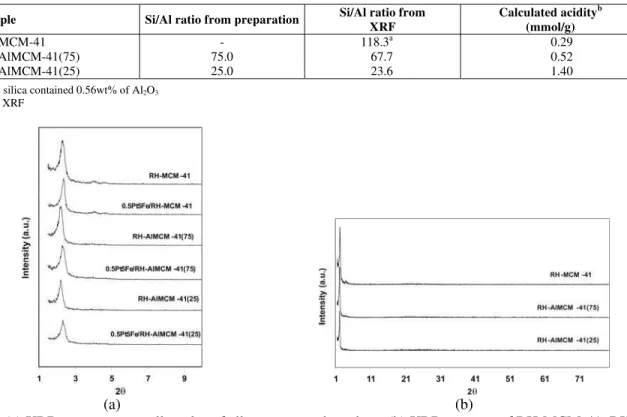
The XRD patterns of the calcined supports and catalysts are displayed in Fig. 1 a. The RH-MCM-41 showed a strong peak at 2.5 and small peaks at 4, and 4.5 °2θ corresponding to the 100, 110 and 200 planes of a hexagonal lattice, respectively, and distances of 35, 22 and 19 Å, respectively. All RH-AlMCM-41 had only the main peak of the 100 plane with lower intensity than that of the parent RH-MCM-41, indicating the decrease of crystallinity after Al grafting. The relative crystallinity of each RH-AlMCM-41 compared to the parent RH-MCM-41 was calculated from area of the main peak. The results are shown in Table 2. After grafting, aluminium could in principle be found as isolated atoms or as aggregates of alumina. The peaks of alumina in 41(75) and RH-AlMCM-41(25) samples were not detected by XRD (see Fig. 1b), indicating that aluminum was well dispersed on the MCM-41 framework.
The N2 adsorption isotherms of MCM-41, RH-AlMCM-41(75) and RH-AlMCM-41(25) samples are shown in Fig 2. All isotherms corresponded to a mixture of type IV and type I, which are typical isotherms of mesoporous materials. At low P/P0, the adsorbed amount increased quickly due to adsorption to form a monolayer. The adsorbed amounts of all AlMCM-41 samples were lower than that of RH-MCM-41 indicating that their surface areas decreased after Al grafting (see Table 2). The N2 adsorption increased again before reaching a nearly constant volume. This range corresponded to nitrogen adsorption in the mesopores of MCM-41, RH-AlMCM-41(75) and RH-AlMCM-41(25). However, the adsorption in this range for RH-AlMCM-41 did not increase sharply as in RH-MCM-41, indicating that some mesopores might collapse during the Al-grafting. It was possible that the surface area decreased because the pores of RH-AlMCM-41 were blocked by alumina particles.
Table 1: Si/Al ratio of RH-MCM-41 and RH-AlMCM-41
Sample Si/Al ratio from preparation Si/Al ratio from
XRF
Calculated acidityb (mmol/g) RH-MCM-41
RH-AlMCM-41(75) RH-AlMCM-41(25)
- 75.0 25.0
118.3a
67.7 23.6
0.29 0.52 1.40 arice husk silica contained 0.56wt% of Al
2O3 bbased on XRF
(a) (b)
Figure 1: (a) XRD patterns at small angles of all supports and catalysts (b) XRD patterns of MCM-41,
RH-AlMCM-41(75) and RH-AlMCM-41(25) at large angles.
Table 2: Relative crystallinity and surface area of samples prepared in this work.
Figure 2: N2 adsorption isotherm of RH-AlMCM-41
Sample Relative crystallinity (%) Surface area
(m2/g) RH-MCM-41
0.5Pt5Fe /RH-MCM-41
100 78
1231
-RH-AlMCM-41(75)
0.5Pt5Fe /RH-AlMCM-41(75) 89 79
741
-RH-AlMCM-41(25)
0.5Pt5Fe /RH-AlMCM-41(25)
68 57
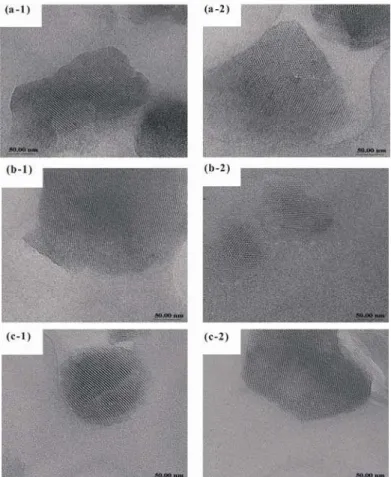
Figure 3: TEM micrograph of (a) RH-MCM-41, (b) RH-Al-MCM-41(75)
and (c) RH-Al-MCM-41(25)
Characterization of Pt-Fe/MCM-41 by TPR
The TPR results for bimetallic Pt-Fe catalysts supported on RH-MCM-41, RH-AlMCM-41(75) and RH-AlMCM-41(25) are shown in Figure 4. For 0.5Pt5Fe/RH-MCM-41, there were two peaks; the first peak around 100°C was assigned to the reduction of platinum and the second around 480°C was assigned to the reduction of iron. The assignment was based on the fact that platinum oxides are more easily reduced than iron (Jia et al., 1999). For the 0.5Pt5Fe/RH-AlMCM-41(75) and
0.5Pt5Fe/RH-AlMCM-41(25), the reduction peaks of iron in all catalysts shifted to lower temperature with maximum around 380°C. It was possible that iron on these supports is located near platinum. After platinum oxide was reduced, it may become the adsorption site for hydrogen and the reducer could easily migrate to reduce iron oxides, resulting in lower reduction temperature. Because this behavior was not observed for the bimetallic catalyst on RH-MCM-41, it was possible that the presence of Al on RH-MCM-41 created an ion exchange site where Pt(IV) and Fe(III) clustered.
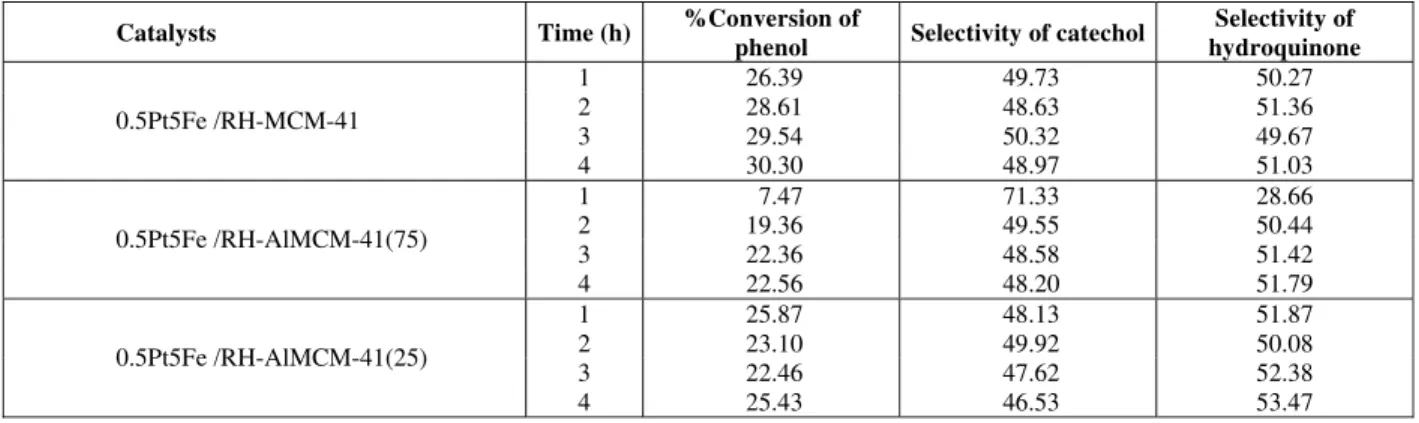
Table 3: Pt-Fe bimetallic catalysts on RH-AlMCM-41 for phenol hydroxylation (phenol/H2O2=3/1, 70°C and amount of catalyst 0.05 g)
Catalysts Time (h) %Conversion of
phenol Selectivity of catechol
Selectivity of hydroquinone
1 26.39 49.73 50.27
2 28.61 48.63 51.36
3 29.54 50.32 49.67
0.5Pt5Fe /RH-MCM-41
4 30.30 48.97 51.03
1 7.47 71.33 28.66
2 19.36 49.55 50.44
3 22.36 48.58 51.42
0.5Pt5Fe /RH-AlMCM-41(75)
4 22.56 48.20 51.79
1 25.87 48.13 51.87
2 23.10 49.92 50.08
3 22.46 47.62 52.38
0.5Pt5Fe /RH-AlMCM-41(25)
4 25.43 46.53 53.47
Catalytic Testing of Pt-Fe/MCM-41 for Phenol Hydroxylation
Table 3 shows the performance of the Pt-Fe bimetallic catalysts for the phenol hydroxylation reaction. After the first hour, all catalysts showed conversion of phenol: the highest of 28 % was over 0.5Pt5Fe/RH-MCM-41, probably because the support presented the highest surface area. After the second hour, all catalysts showed increased conversion and seemed to approach steady state with a slight increase of conversion. As the conversions on AlMCM-41(75) and 0.5Pt5Fe/RH-AlMCM-41(25) were not significantly different, the increase of support acidity did not have a significant influence on the catalytic performance.
CONCLUSIONS
RH-MCM-41 was prepared successfully with rice husk silica source and its calculated acidity was improved by adding aluminum via grafting method. However, the aluminum addition caused a decrease in the surface area of AlMCM-41(75) and RH-AlMCM-41(25). The prepared RH-AlMCM-41 materials were used as supports for bimetallic Pt-Fe catalysts and tested for hydroxylation of phenol. However, 5Fe0.5Pt/RH-MCM-41 showed the highest phenol conversion because the RH-MCM-41 support had significantly higher surface area.
ACKNOWLEDGMENTS
Funding for this research was from Synchrotron Light Research Institute (Public Organization) (Grant 2-2548/PS01), Suranaree University of
Technology Research Fund and Thailand Research Fund (Contract number MRG4780147). We also acknowledge the courtesy for the TPR experiments from the Institute of Materials Chemistry, Vienna University of Technology; the travel fund from ASEA-UNINET and Ministry of Education, Thailand.
REFERENCES
Buurman, P., Vanlagen, B. and Velthorst, J., Manual for soil and water analysis, Backhuys, Netherlands (1996).
Choi, J., Yoon, S., Jang, S. and Ahn, W., Phenol hydroxylation using Fe-MCM-41 catalysts, Catalysis Today, 111, 280 (2006).
Grisdanurak, N., Chiarakorn, S. and Wittayakun, J., Utilization of mesoporous molecular sieve synthesized from natural source rice husk silica to chlorinated volatile organic compounds (CVOCS) adsorption, Korean Journal of Chemical Engineering, 20, 950 (2003).
Huang, S., Jing, S., Wang, J., Wang, Z. and Jin, Y., Silica white obtained from rice husk in fluidized bed, Powder Technology, 117, 232 (2001). Jia, J., Shen, J., Lin, L., Xu, Z., Zhang, T. and Liang,
D., A study on reduction behaviors of the supported platinum–iron catalysts, Journal Molecular Catalysis A: Chemical, 138, 177 (1999).
Jing, H., Guo, Z., Ma, H., Evans, D. G. and Duan, X., Enhancing the selectivity of benzene hydroxylation by tailoring the chemical affinity of the MCM-41 catalyst surface for the reactive molecules, Journal of Catalysis, 212, 22 (2002). Kannan, S., Dubey, A. and Knozinger, H., Synthesis
phenol, Journal of Catalysis, 231, 381 (2005). Khemthong, P., Wittayakun, J. and Prayoonpokarach,
S., Synthesis and characterization of zeolite LSX from rice husk silica, Suranaree Journal of Science and Technology, 14, 367 (2007).
Krishnarao, R. V., Subrahmanyam, J. and Jagadish Kumar, T., Studies on the formation of black particles in rice husk silica ash, Journal of the European Ceramic Society, 21, 99 (2001).
Kuznetsova, I. N., Kuznetsova, I. L., Likholobov, A.V. and Pez, P. G., Hydroxylation of benzene with oxygen and hydrogen over catalysts containing Group VIII metals and heteropoly compounds, Catalysis Today, 99, 193 (2005). Masende, G. P. Z., Kuster, M. F. B., Ptasinski, J. K.,
Janssen, G. J. J. F., Katima, Y. H. J. and Schouten C. J., Platinum catalysed wet oxidation of phenol in a stirred slurry reactor; The role of oxygen and phenol loads on reaction pathways, Catalysis Today, 111, 280 (2006).
Matsumoto, A., Chen, H., Tsutsumi, K., Grün, M. and Unger, K., Novel route in the synthesis of MCM-41 containing framework aluminum and its characterization, Microporous Mesoporous Materials, 32, 55 (1999).
Park, J.-N., Wang, J., Choi, Y. K., Dong, W.-Y., Hong, S.-I. and Lee, W. C., Hydroxylation of phenol with H2O2 over Fe2+ and/or Co2+ ion-exchanged NaY catalyst in the fixed-bed flow reactor, Journal Molecular Catalysis A: Chemical, 247, 73 (2006).
Park, K. C., Yim, D. and Ihm, S., Characteristics of Al-MCM-41 supported Pt catalysts: effect of Al distribution in Al-MCM-41 on its catalytic activity in naphthalene hydrogenation, Catalysis Today, 74, 281 (2002).
Shylesh, S. and Singh, P. A., Synthesis, characterization, and catalytic activity of vanadiumincorporated, -grafted, and -immobilized mesoporous MCM-41 in the oxidation of aromatics, Journal of Catalysis, 228, 333 (2004).
Tang, H., Ren, Y., Bin, Y., Yan, S. and He, H., Cu-incorporated mesoporous materials: Synthesis, characterization and catalytic activity in phenol hydroxylation, Journal Molecular Catalysis A: Chemical, 260, 121 (2006).