The interdomain
flexible linker of the polypeptide
GalNAc transferases dictates their long-range
glycosylation preferences
Matilde de las Rivas
1
, Erandi Lira-Navarrete
1,2
, Earnest James Paul Daniel
3
, Ismael Compañón
4
,
Helena Coelho
5,6,7
, Ana Diniz
5
, Jesús Jiménez-Barbero
6,7,8
, Jesús M. Peregrina
4
, Henrik Clausen
2
,
Francisco Corzana
4
, Filipa Marcelo
5
, Gonzalo Jiménez-Osés
4
, Thomas A. Gerken
3,9,10
&
Ramon Hurtado-Guerrero
1,11
The polypeptide GalNAc-transferases (GalNAc-Ts), that initiate mucin-type
O-glycosylation,
consist of a catalytic and a lectin domain connected by a
flexible linker. In addition to
recognizing polypeptide sequence, the GalNAc-Ts exhibit unique long-range N- and/or
C-terminal prior glycosylation (GalNAc-
O-Ser/Thr) preferences modulated by the lectin
domain. Here we report studies on GalNAc-T4 that reveal the origins of its unique N-terminal
long-range glycopeptide speci
ficity, which is the opposite of GalNAc-T2. The GalNAc-T4
structure bound to a monoglycopeptide shows that the GalNAc-binding site of its lectin
domain is rotated relative to the homologous GalNAc-T2 structure, explaining their different
long-range preferences. Kinetics and molecular dynamics simulations on several GalNAc-T2
flexible linker constructs show altered remote prior glycosylation preferences, confirming that
the
flexible linker dictates the rotation of the lectin domain, thus modulating the GalNAc-Ts'
long-range preferences. This work for the
first time provides the structural basis for the
different remote prior glycosylation preferences of the GalNAc-Ts.
DOI: 10.1038/s41467-017-02006-0
OPEN
1BIFI, University of Zaragoza, BIFI-IQFR (CSIC) Joint Unit, Mariano Esquillor s/n, Campus Rio Ebro, Edificio I+D, Zaragoza, 50018, Spain.2Copenhagen Center for Glycomics, Department of Cellular and Molecular Medicine, School of Dentistry, University of Copenhagen, Copenhagen, DK-2200, Denmark. 3Department of Biochemistry, Case Western Reserve University, Cleveland, 44106 OH, USA.4Departamento de Química, Universidad de La Rioja, Centro de Investigación en Síntesis Química, E-26006 Logroño, Spain.5UCIBIO, REQUIMTE, Departamento de Química, Faculdade de Ciências e Tecnologia, Universidade de Nova de Lisboa, Caparica, 2829-516, Portugal.6CIC bioGUNE, Bizkaia Technology Park, Building 801A, 48170 Derio, Spain.7Departament of Organic Chemistry II, Faculty of Science & Technology, University of the Basque Country, Leioa, Bizkaia 48940, Spain.8Ikerbasque, Basque Foundation for Science, Maria Diaz de Haro 13, 48009 Bilbao, Spain.9Department of Pediatrics, Case Western Reserve University, Cleveland, 44106 OH, USA. 10Department of Chemistry, Case Western Reserve University, Cleveland, 44106 OH, USA.11Fundación ARAID, 50018 Zaragoza, Spain. Matilde de las Rivas, Erandi Lira-Navarrete and Earnest James Paul Daniel contributed equally to this work. Correspondence and requests for materials should be addressed to R.H-G. (email:rhurtado@bifi.es)
123456789
P
olypeptide N-acetylgalactosaminyltransferases (GalNAc-Ts)
are higher eukaryotic-retaining glycosyltransferases (GTs)
that transfer a GalNAc moiety from uridine diphosphate
N-acetylgalactosamine (UDP-GalNAc) onto Ser/Thr residues of
proteins
1. This family of enzymes, which initiates the most
common type of O-glycosylation in metazoans
1–5, plays profound
roles for the structure, stability, and function of proteins
6.
Gal-NAc-O-glycosylation is one of the most abundant types of protein
glycosylation in eukaryotes that is chiefly found in the densely
clustered heavily glycosylated domains of mucins and
mucin-domain-containing glycoproteins, hence the name, mucin-type
O-glycosylation. However, it is also clear that many other proteins
contain isolated sites of GalNAc-O-glycosylation, where more
than 5000 human proteins trafficking the secretory pathway have
been identified to date containing one or more mucin-type
O-glycans
7.
The initiation of mucin-type O-glycosylation by the
GalNAc-Ts is one of the most complex regulated types of protein
glyco-sylation. The GalNAc-Ts comprise a family of up to 20
iso-enzymes possessing a range of kinetic properties and expression
patterns. These enzymes orchestrate with high
fidelity, the initial
patterns of O-glycosylation on diverse proteins, including the
high-density regions in mucins, where 30–50% of the amino acids
may be glycosylated
1, 8. The GalNAc-Ts are unique among
metazoan GT enzymes because in addition to their N-terminal
catalytic domain adopting a GT-A fold (family 27 in the CAZy
database
9), they possess a C-terminal GalNAc-binding lectin
domain with a
β-trefoil fold
4,10–13(classified as a
carbohydrate-binding module 13 in the CAZy database), which provides
additional functions to these enzymes
14(see below for further
details). Both domains are linked through a short
flexible linker
whose motion has been suggested to be responsible for the
dynamic conformational landscape of these enzymes
4.
GalNAc-Ts can be classified according to their different
gly-cosylation capacity on peptide and glycopeptide substrates. Three
distinctive glycosylation modes have been reported: catalytic
domain-dependent glycosylation on
“naked” peptides (Fig.
1
a)
and on glycopeptides (Fig.
1
b), hereafter termed short-range
glycosylation
15, 16;
and
remote
lectin
domain-dependent
glycosylation on glycopeptides (Fig.
1
c), termed long-range
gly-cosylation
15,16. Adjacent and proximal sites relative to an existing
GalNAc glycosite are glycosylated in a catalytic
domain-dependent manner (Fig.
1
), with GalNAc-T4 being part of a
small number of GalNAc-Ts (including GalNAc-T7 and T10)
that will also glycosylate contiguous sites
16. Distant sites can be
glycosylated in a lectin domain-dependent manner (Fig.
1
) with
individual GalNAc-Ts having distinct preferences on remote sites
located N or C terminus from a prior GalNAc glycosite
15,16. For
example, GalNAc-T1/T2/T14 tend to glycosylate preferentially
N-terminal sites remote from prior C-N-terminal GalNAc glycosites in
glycopeptides,
whereas
GalNAc-T3/T4/T6/T12
exhibit
the
opposite preference (Fig.
1
c). Furthermore, some GalNAc-Ts,
including GalNAc-T5/T13/T16, appear to exhibit both
orienta-tional preferences for long-range glycosylation
16. Previous
structural work with GalNAc-T2 in complex with
“naked”
pep-tides and glycopeppep-tides has provided insight into the catalytic
domain-dependent reaction, and also demonstrated how the
GalNAc-T2 lectin domain guides catalysis to N-terminal acceptor
sites very distant from a prior C-terminal GalNAc glycosite
4,12, 17. However, the molecular basis of how other GalNAc-Ts, such
as GalNAc-T3/T4/T6/T12, achieve the opposite long-range
gly-cosylation preferences remains unclear
15,16.
The GalNAc-T4 isoform is of particular interest as it is the only
isoform capable of glycosylating two out of the
five acceptor sites
in the partially glycosylated MUC1 mucin tandem repeat in a
lectin domain-dependent manner
18. The density of glycosylation
together with the structure of O-glycans in the mucin repeat
regions are important features for the cancer-glycoforms of
MUC1 being exploited for diagnostic as well as therapeutic
purposes
19. Generally, GalNAc-T4 glycosylates very few isolated
glycosylation sites in
“naked” peptide acceptors, although it
readily glycosylates the important Thr57 in PSGL-1 that is the
essential O-glycan required for P-selectin-mediated leukocyte
trafficking
20, 21. We report herein a multidisciplinary approach
on GalNAc-T4, combined with the characterization of different
chimeras and mutants of GalNAc-T2, which begins to reveal the
molecular basis of the long-range glycosylation preferences of the
GalNAc-Ts on glycopeptide acceptors substrates.
GaINAc-T2 GaINAc-T2
a
b
c
C C C N N C N C N C N N C N N C N C Model 1 Model 2Fig. 1 Modes ofO-glycosylation found for the GalNAc-Ts. a–c These panels denote the three distinct modes of O-glycosylation performed by GalNAc-Ts: the neighboring glycosylation activity by the catalytic domain ina and b, and long-range lectin domain-mediated glycosylation activity in c. In c, two plausible models are suggested that might explain the different long-distance glycosylation preferences of GTs such as GalNAc-T3/T4/T16/T12. Oval-shapedfigures in blue and green depict the lectin and catalytic domains, respectively. Peptides are indicated in blue and the black hexagon-shaped figure denotes the position of prior GalNAc moieties in the glycopeptides. Arrows indicate the positions of acceptor sites
Results
Models explaining the long-range glycosylation preferences.
Based on previous results, we can infer two possible models (see
Fig.
1
c) that might provide a plausible explanation for the
Gal-NAc-T3/T4/T6/T12 long-range glycosylation preference in
con-trast to the one found for enzymes such as GalNAc-T1/T2/T14
15, 16. In model 1, the rotation of the lectin domain GalNAc-binding
site is required, thereby maintaining the same orientation of the
peptide on the catalytic domain. In model 2, the lectin domain
GalNAc-binding site would adopt the same orientation as found
in GalNAc-T2 while the glycopeptide adopts an inverse
orienta-tion on the catalytic domain, an assumporienta-tion unlikely to happen
providing the high similarity of the peptide-binding groove
among GalNAc-Ts
11(Fig.
1
).
GalNAc-T4-substrate interaction and kinetics studies. To test
the two models proposed above, three simplified peptides
enri-ched in glycine and alanine residues were designed, synthetized,
and evaluated as substrates of GalNAc-T4 (Table
1
). One of these
peptides was a
“naked” peptide, 1 (denoted –TT– for simplicity),
whereas the other two were monoglycopeptides, 2 and 3 (denoted
-TT–T*- and -T*–TT-, where T* represents a GalNAc
glycosy-lated Thr), that contain a GalNAc moiety located either at the C
or N terminus, respectively. All peptides have two potential Thr
acceptor sites and also contain an adjacent PXP motif, which is
recognized by most GalNAc-Ts
4,16. Our kinetic studies showed
that GalNAc-T4 glycosylated selectively peptide 3 (with a high
affinity, K
m~ 40
µM, and catalytic efficiency, ~75 (nmole min)
−1)
over peptides 1 and 2, both of which were imperceptibly
glyco-sylated over a range of peptide concentrations (Fig.
2
a). This is
consistent with previous
findings
16on GalNAc-T4 and illustrates
that the lectin domain guides GalNAc-T4 to preferentially
gly-cosylate C-terminal sites of monoglycopeptides that are remote
from an N terminus GalNAc-glycosylated residue. Although, the
“naked” peptide 1 was not a substrate, GalNAc-T4 has been
reported to readily glycosylate other highly specific peptide
sequences
20,21.
To understand why GalNAc-T4-only glycosylated
monoglyco-peptide 3, we performed binding studies using saturation-transfer
difference (STD) NMR experiments on peptide substrates 1–3
and
α-methyl-GalNAc in the presence of UDP and MnCl
2(Fig.
2
b and Supplementary Fig.
1
). The absence of STD-NMR
signals for peptide 1 revealed that the
“naked” peptide was very
poorly recognized by GalNAc-T4 in agreement with the low
glycosylation observed during the kinetics assays. For both
monoglycopeptides 2 and 3 relatively weak STD-NMR signals
were observed for the Ala and Thr methyl protons, suggesting
weak recognition of the peptide by GalNAc-T4. However, the
O-GalNAc glycosylated Thr of the monoglycopeptides 2 and 3
receive a higher STD enhancement. Remarkably, the sugar
protons of the GalNAc moiety of the monoglycopeptides 2 and
3
(region 3.5 a 4.2 ppm of the spectrum together with the singlet
at 2 ppm) showed unambiguous and more intense STD-NMR
signals (Fig.
2
b and Supplementary Fig.
1
). In addition, the
STD-NMR-derived epitope mapping of the GalNAc moiety is identical
for both monoglycopeptide 2 and control
α-methyl-GalNAc. In
fact, for both compounds, the highest STD response
corre-sponded to the H2 proton of the GalNAc moiety followed by a
modest STD of protons H4, H3, and N-acetyl group, suggesting
similar lectin-binding modes for these molecules. In contrast,
monoglycopeptide 3 presents a somewhat different GalNAc
STD-NMR-binding pattern, where H2, H4, and the N-acetyl group of
the GalNAc moiety have the highest STD-NMR response closely
followed by the H3 proton. This suggests that the
monoglycopep-tide 3 has a distinct binding mode of interaction with the enzyme,
which is different to the one found for monoglycopeptide 2 and
α-methyl-GalNAc control. From our kinetic and STD-NMR
results, we can infer that the unique binding of the GalNAc
residue of monoglycopeptide 3 to the lectin domain, facilitates the
correct orientation of the peptide acceptor onto the catalytic
domain for optimal C-terminal glycosylation. Thus, even though
monoglycopeptide 2 shows GalNAc binding to the lectin domain,
its N-terminal acceptor site must be directed away from the
catalytic domain, leading to the inability of GalNAc-T4 to
glycosylate this substrate. Hence, the correct location of a prior
glycosite in a monoglycopeptide, with respect to potential
acceptor sites, is essential for an optimal interaction of the
peptide within the catalytic domain, which in turn is critical for
an efficient catalysis and specificity.
Crystal structure of GalNAc-T4. To further elucidate the
molecular basis of GalNAc-T4’s monoglycopeptide glycosylation
preference and rule out one of the two proposed models (Fig.
1
),
Table 1 Peptide acceptor substrates used in this study
Peptide Sequence
1 (–TT–) GAGAGAGTTPGPG
2 (-TT–T*-) AGAGTTPGPGAGAT*GA
3 (-T*–TT-) GAT*GAGAGAGTTPGPG
T* denotes the Thr-O-GalNAc moiety
4
a
b
3 2 1 0 0 250 500 Monoglycopeptide 3 (–T*–TT-) Km = 41 ± 19 μM Vmax = 3.1 ± 0.25 mM/nmole×minCatalytic efficiency = 75.2 (nmole min)–1
[Peptide] (μM) Initial v e locity (mM product/(nmole*min) 750 1000 1 (-TT-) 2 (-TT–T*-) 2 (-TT–T*-) 3 (-T*–TT-) 1 (–TT–) % STD 100–75% 75–55% 55–35% 35–20% <20% No STD data OMe OH OH HO OH O OH OH HO O OH HO AcNH AcNH AcNH O 3 (-T*–T*-) 1250 1500
Fig. 2 Biophysical characterization of GalNAc-T4 against peptides 1–3. a Peptide glycosylation kinetics of GalNAc-T4 against (glyco)peptides 1–3 (black, red, and blue symbols, respectively). Michaelis–Menten kinetic values, Km,Vmax, and catalytic efficiency (Vmax/Km) for monoglycopeptide3 were obtained from the nonlinear least squarefit to the initial rate data, obtained as described in the “Methods” section and given in Supplementary Table2. Peptide substrates1 and 2 are largely unglycosylated by GalNAc-T4. b STD-NMR-derived epitope mapping. The different colored spheres indicate the normalized STD signal (in percent) observed for each proton. See“Methods” section and Supplementary Fig.1for further details
we obtained triclinic crystals of GalNAc-T4 that were
subse-quently soaked with monoglycopeptide 3 and UDP and MnCl
2.
The resulting crystal allowed us to solve the corresponding
structure at a high resolution (1.90 Å) (Supplementary Table
1
).
Within the asymmetric unit, two independent GalNAc-T4
molecules were present. The crystal structure shows a compact
structure with the typical GT-A fold and the lectin domain
located at the N- and C-terminal regions, respectively (Fig.
3
a). A
sequence alignment between GalNAc-T2 and T4 displays a
sequence identity of ~40% and a high resemblance between these
two enzymes at the secondary structure level (Supplementary
Fig.
2
). In fact, superposition analysis of both enzymes shows that
both catalytic domains are more structurally similar
(root-mean-square deviation (RMSD) of 1.23 Å for aligned Cα atoms) than
the lectin domains (RMSD of 1.82 Å) (Fig.
3
b and Supplementary
Fig.
3
). A global superposition of both enzymes renders a larger
RMSD of 2.12 Å, which suggests that a major shift has occurred
between the orientation of the lectin domains (see below for a
further discussion; Fig.
3
b). As expected and accordingly to model
1, the GalNAc-binding site in GalNAc-T4 is located on the right
side of the lectin domain, which requires a rotation of 28° with
respect to the homologous site in GalNAc-T2 (Fig.
3
b and
Sup-plementary Fig.
4
). To calculate the angle of rotation, the Cαs of
Asp458, Trp282, and Asp459 were used. Note that the angle of
rotation could be also determined using the Cαs of Asp458,
Trp286, and Asp459. In this case, the rotation angle was 30°,
which is very close to 28°. This is due to Trp282 of GalNAc-T2
and Trp286 of GalNAc-T4 adopt almost identical positions in the
catalytic domain (Fig.
3
b). This different position of the
GalNAc-T4 GalNAc-binding site, consistent with the STD-NMR results,
may explain why GalNAc-T4 promotes a distinct type of
long-range glycosylation, consisting of the glycosylation of acceptor
sites located at the C-terminal from prior GalNAc glycosites in
glycopeptides. This also suggests that the location of the
GalNAc-binding site of the lectin domain is coupled with the long-range
glycosylation preferences of these enzymes.
Lectin domain-binding site of GalNAc-T4. Even though the
crystals were soaked with a high concentration of peptide 3, UDP
Catalytic domain Lectin domain Flexible loop Flexible linker 90°a
b
Thr3-GalNAc Lectin domain D459 D458 W286 W282 MUC5AC-13 28° GalNAc T3 H478 F475 D459 N483 GalNAc-T4 GalNAc-T2c
GalNAc-T4d
e
f
g
α-GalNAc-binding site GalNAc-T2 T13 S11 H474 Y471 N479 D458 GalNAcFig. 3 Structural characterization of the interaction between GalNAc-T4 and monoglycopeptide 3. a Two different views of GalNAc-T4 in complex with 3. The catalytic and lectin domains are colored in gray and the interdomainflexible linker is depicted in red. The catalytic domain flexible loop is depicted in yellow and is mostly disordered. The GlcNAc moiety of the Thr3-GalNAc is shown as orange carbon atoms while Thr3 is shown as green carbon atoms.b (left) Superposition of the GalNAc-T4-glycopeptide3 (gray) and GalNAc-T2-MUC5AC-3-UDP-Mn+2(yellow) structures. The glycopeptide and the GalNAc moiety are shown in green and orange carbon atoms, respectively. The lectinα-subdomain GalNAc-binding residues, Asp458, and Asp459, of GalNAc-T2 and GalNAc-T4 are shown as sticks in black and gray carbon atoms, respectively. (right panel) Close-up view of the superposition between GalNAc-T2 and GalNAc-T4. Colors for peptides, GalNAc moiety, and proteins are identical as shown above.c–d Close-up view of the lectin α-subdomain GalNAc-binding site for both GalNAc-T4 (left) and T2 (right). The residues of both enzymes are depicted as gray carbon atoms. Hydrogen bond interactions are shown as dotted green lines. Electron density maps are FO–FC(blue) contoured at 2.2σ for Thr3-GalNAc. Note that both GalNAc-binding sites are depicted in the same orientation for comparison.e Surface representation of GalNAc-T4 (model built with monoglycopeptide 3 and UDP/Mn+2), and GalNAc-T2 (with UDP/Mn+2/MUC5AC-13). Both are viewed from the same orientation as inb. Colors for the glycopeptide and theflexible loop are the same as above.f Superposition of the GalNAc-T4-glycopeptide 3-UDP-Mn+2(gray) and GalNAc-T2-MUC5AC-3-UDP-Mn+2(blue–white) structures. The glycopeptide and the GalNAc moiety in the structure of GalNAc-T2 and GalNAc-T4 are shown as spheres in blue/green and yellow/orange, respectively. UDP and Mn+2are shown as brown carbon atoms and as a pink sphere, respectively.g Superimposed structures of the 200 ns MD simulation trajectory for GalNAc-T4 in complex with glycopeptide3/UDP/Mn+2. GalNAc-T4 is depicted in a light gray surface view. The GalNAc moiety, the peptide backbone, UDP, and the acceptor Thr residues are shown as orange, green, brown, and blue carbon atoms, respectively
and MnCl
2, we could only visualize well-defined density for the
GalNAc-O-Thr moiety of monoglycopeptide 3 bound to the
lectin
α-subdomain GalNAc-binding site (Fig.
3
a, c). Note that
GalNAc-Ts lectin domains contain three potential
carbohydrate-binding subdomains named
α, β, and γ; however, in most
GalNAc-Ts only one of them is functional
15, 16, 18,22, 23. The
almost absence of density for the peptide backbone of
mono-glycopeptide 3, is consistent with the STD-NMR results (showing
no significant STD with the acceptor peptide residues) and with
the weak binding affinity of this peptide (K
destimated in the mM
range), determined by surface plasmon resonance (SPR)
experi-ments in the presence of UDP and MnCl
2(Supplementary Fig.
5
).
The discrepancies between GalNAc-T4’s high-affinity K
mobtained from our kinetics studies (Fig.
2
a) versus the poor K
dvalues from the binding studies can be attributed to the fact that
the enzyme kinetics was performed with UDP-GalNAc. It is
known that this donor substrate stabilizes the
flexible loop of the
catalytic domain active site in a closed conformation, thus
com-pleting the formation of the peptide-binding groove and leading
to an active enzyme
4,12. Thus, our observations in the absence of
UDP-GalNAc represent the weak binding of peptide substrate to
the open
flexible loop conformation of the enzyme.
A closer inspection at the lectin domain GalNAc-binding site
depicts that the GalNAc moiety was tethered by conserved
residues, including Asp459, Asn483, Phe475, and His478, of the
lectin
α-subdomain GalNAc-binding site (equivalent residues in
GalNAc-T2 are Asp458, Asn479, Tyr471, and His474; Fig.
3
d). It
is important to note that only the lectin
α-subdomain
GalNAc-binding site has been shown to be functional in both GalNAc-T2
and GalNAc-T4 lectin domains
4,18. Most of the interactions are
through hydrogen bonds in both enzymes, although they also
share CH–π interactions between the GalNAc moiety and
Phe475/Tyr471. The importance of the Asp residue in recognition
of the GalNAc moiety and its role in the lectin domain-mediated
glycosylation has been previously reported
4,18. Furthermore, the
crystal structure explained the GalNAc STD-NMR-derived
epitope mapping. In particular, the structure shows that H4
and H3 of the GalNAc moiety are in closer contact with Phe475
and His478, which is further supported by the STD response
(92% for H4 and 72% for H3) observed for these protons in
monoglycopeptide 3.
Molecular docking and dynamics simulations. To address how
the lectin domain guides the delivery of potential peptide acceptor
sites to the catalytic domain, we performed molecular docking
and dynamics (MD) simulations on GalNAc-T4 in complex with
UDP/Mn
+2and monoglycopeptide 3 (see
“Methods” section).
The calculations suggest that although the peptide bound at the
catalytic domain was highly dynamic, the two potential peptide
acceptor Thr residues were in close contact to the
β-phosphate of
UDP during the simulated timeframe (200 ns), thereby
account-ing for the glycosylation of this peptide (Fig.
3
e, f, g and
Sup-plementary Fig.
6
and Supplementary Movie
1
). A comparison
with the GalNAc-T2 structure in complex with MUC5AC-13 and
UDP/Mn
+2clearly provides evidence of the two different
orien-tations of the lectin domains and supports our conclusion on the
coupling of the location of the GalNAc-binding site with the
observed long-distance glycosylation preference (Fig.
3
e, f).
The
flexible linker dictates the lectin domain rotation. Previous
studies suggested that the
flexible linker allowed for the
inter-domain translational-like motion in these enzymes
4. We
there-fore rationalized that different
flexible linkers found in these GTs
might also be behind the rotation capacity of the lectin domain
(Supplementary Fig.
7
). To test this hypothesis, we initially
per-formed 500 ns MD simulations in water solution of native
GalNAc-T2 and GalNAc-T4. Simulations clearly showed that the
lectin domains of GalNAc-T2 and GalNAc-T4 apo enzymes do
not rotate in the considered timescale (Supplementary Movies
2
and
3
). This suggests that the orientation of the GalNAc-binding
site with respect to the catalytic domain may remain relatively
fixed in a fully folded transferase. We then performed MD
simulations on chimeras 1 and 2 that corresponded to
GalNAc-T2 with two different lengths of the
flexible linker from
GalNAc-T3 (Table
2
). In agreement with our hypothesis, we observed the
prompt rotation of the lectin domain of the GalNAc-T2 chimera
2
toward a position similar to that in GalNAc-T4 (Fig.
4
a,
Sup-plementary Fig.
8
, and Supplementary Movie
4
). This stepwise
motion was completed in ~30 ns and involved sequential
exten-sion of the
flexible linker, rotation of the lectin domain around
the Z and Y axes, and
finally compression of the linker (Fig.
4
a).
Thus, initially the GalNAc-T3 linker was artificially forced to
adopt the compact conformation of the GalNAc-T2 native linker,
but early on in the simulation (after ~10 ns), the linker quickly
recovered its more native extended conformation and as a
con-sequence, the lectin domain springs and rotates sidewise to
finally
re-assemble in a structure similar to that of our GalNAc-T4. This
motion is likely smoothed by the absence of strong interdomain
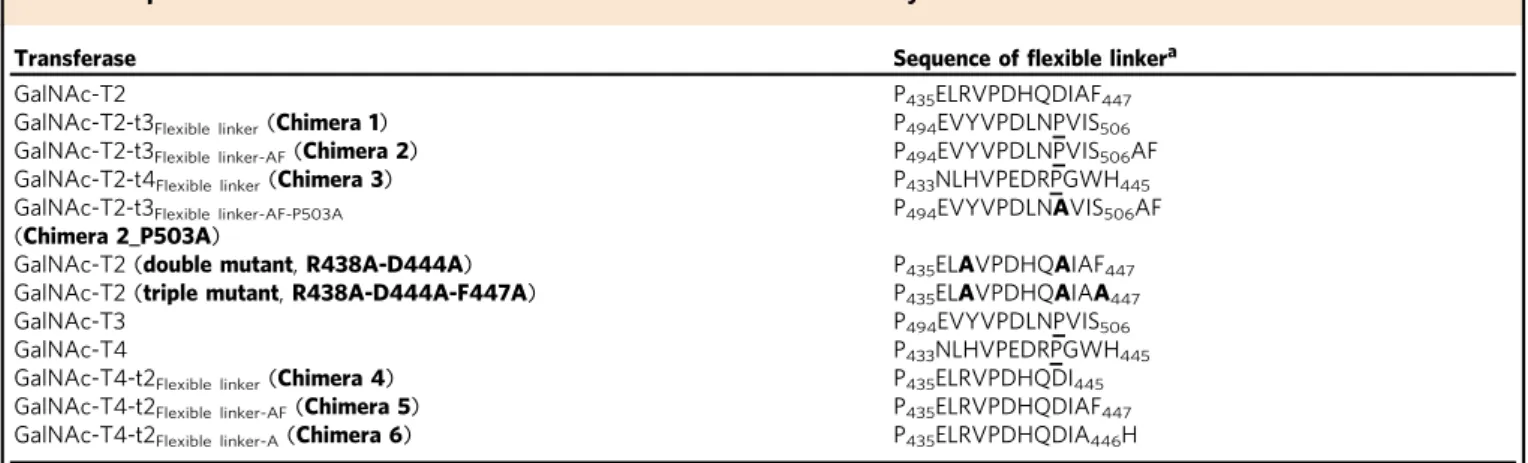
Table 2 Sequences of the chimeras and mutant GalNAc-Ts used in this study
Transferase Sequence offlexible linkera
GalNAc-T2 P435ELRVPDHQDIAF447
GalNAc-T2-t3Flexible linker(Chimera 1) P494EVYVPDLNPVIS506
GalNAc-T2-t3Flexible linker-AF(Chimera 2) P494EVYVPDLNPVIS506AF
GalNAc-T2-t4Flexible linker(Chimera 3) P433NLHVPEDRPGWH445
GalNAc-T2-t3Flexible linker-AF-P503A P494EVYVPDLNAVIS506AF
(Chimera 2_P503A)
GalNAc-T2 (double mutant, R438A-D444A) P435ELAVPDHQAIAF447
GalNAc-T2 (triple mutant, R438A-D444A-F447A) P435ELAVPDHQAIAA447
GalNAc-T3 P494EVYVPDLNPVIS506
GalNAc-T4 P433NLHVPEDRPGWH445
GalNAc-T4-t2Flexible linker(Chimera 4) P435ELRVPDHQDI445
GalNAc-T4-t2Flexible linker-AF(Chimera 5) P435ELRVPDHQDIAF447
GalNAc-T4-t2Flexible linker-A(Chimera 6) P435ELRVPDHQDIA446H
Above are the sequences of the native transferases and linker domain mutants and chimeras utilized in this work. Only the sequences of the linkers that are exchanged are shown. Shortened names in (bold) are referred to in the text andfigures
aNote that some of the exchanged linker regions also include part of the succeedingβ-strand of GalNAc-T2 and GalNAc-T4. This is due to the boundaries of flexible linkers are not well defined at the C terminus. The additional Pro in theflexible linker of GalNAc-T3/T4, that is not present in GalNAc-T2, is underlined
interactions in GalNAc-T2, which do take in place in GalNAc-T4
(see for instance the persistent salt bridge between Arg397 and
Glu487 in Supplementary Movie
5
). Thus, the intrinsic
con-formational preference(s) of a short, unfolded fragment of ~13
residues, was found to determine the relative orientation of two
very large protein domains (see also Supplementary Movies
6
and
7
; these movies show the intrinsic different conformational
pre-ferences of the GalNAc-T2 (folded) and GalNAc-T3 (extended)
flexible linkers by performing 500 ns MD simulations of these
isolated fragments).
Kinetics characterization of the chimeras. To validate our MD
simulations predictions, we expressed and purified chimeras 1–3
and performed a series of partial and full kinetic analysis against
our peptide substrates (Fig.
4
b, c) (also note that chimeras 4–6
b
3 (-T*–TT-) 2 (-TT–T*-) 1 (-TT-) 10 8 6 4 2 2 3 4 3 2 1 0 0 10 20 30 2 1 0 1 0 0nmol product / pmol
enzyme 60 120 180 240 300 0 10 20 30 0 10 8 6 4 2 0 10 6 4 2 0 8 6 4 2 0 0 20 40 0 30 60 90 120 150 0 30 60 90 120 150 0 30 60 90 120 150 Time (min) 60 80 GalNAc-T2 Chimera 1
Chimera 2_P503A Double mutant Triple mutant
Chimera 2 Chimera 3
c
3 (-T*–TT-) 2 (-TT–T*-) 3 (-TT–T*-) 2 (-T*–TT-) 1 (-TT-) 1500 6 25 5 4 3 2 1 0 20 15 10 5 0 4 2 0 1000 500 μ M 0 4 3 2 1 0 4 3 2 1 0 4 3 2 1 0 0 500 GalNAc-T2 Triple m utant Chimer a 3 GalNAc-T2 Triple m utant Chimer a 3 GalNAc-T2 Triple m utant Chimer a 3 GalNAc-T2 Triple m utant Chimer a 3 1000 [Peptide] μM Initial v e locity (mM product/(nmole*min)) 1500 2000 Vmax Km 0 500 mM/min*nmol 1/min*nmol P eptide 2 / P eptide 3 1000 1500 2000 0 500 1000 1500 2000GalNAc-T2 Triple mutant
Catalytic efficiency Catalytic efficiency ratios Chimera 3 100
Lectin domain translocation Loop extension + lectin domain Y-rotation 90°
a
Flexible linker P435ELRVPDHQDIAF447GalNAc-T2 (X-ray) Chimera 2 (MD) 11 ns 12 ns 14 ns 16 ns 28 ns GalNAc-T4 (X-ray)
P494EVYVPDLNPVIS506AF P433NLHVPEDRPGWH445 90° Y X Z Loop compression + lectin domain Y-rotation Lectin domain Z-rotation Lectin domain Y-rotation Loop extension
could not be expressed in our hands, see
“Methods” section and
Table
2
). Remarkably, the GalNAc-T2 chimeras rendered
glyco-sylation preferences similar to GalNAc-T3 and GalNAc-T4
15,16(preferring monoglycopeptide 3 over monoglycopeptide 2, by
approximately fourfold, which is significantly different from
native GalNAc-T2) despite comprising most of the GalNAc-T2
architecture (Fig.
4
b, c and Supplementary Fig.
9
). Interestingly,
GalNAc-T2’s preference for these substrates varied with peptide
substrate concentration, ranging from a high preference for
monoglycopeptide 2 at low substrate concentrations to nearly
equal preferences for both monoglycopeptides 2 and 3 at higher
substrate concentrations (Fig.
4
c). These differences arise from
monoglycopeptide 2’s ~fourfold lower K
mcompared to
mono-glycopeptide 3, thus giving an over threefold increase in catalytic
efficiency for monoglycopeptide 2 over monoglycopeptide 3
(Fig.
4
c and Supplementary Table
2
). These
findings readily
explain the previously reported differences in GalNAc-T2’s
long-range glycosylation preferences
15,17. This type of behavior was
not observed in the kinetics of GalNAc-T4 or chimera 3 (note
that detailed kinetics were not performed on chimera 1 or 2).
Further analysis revealed that the changes in specificity for
chimeras 1
–3 were chiefly due to a decrease in the observed
specific activity (chimera 1 and 2), and changes in V
maxand K
m(chimera 3) against monoglycopeptide 2 compared to that of
monoglycopeptide 3 whose specific activity and kinetic
para-meters remained relative constant (Fig.
4
b, c, Supplementary
Table
2
, and Supplementary Fig.
9
). It is also worth noting that
the specific activities (and detailed kinetics when obtained) for
chimeras 1
–3 toward the “naked” peptide 1 are quite similar to
those of GalNAc-T2, indicating that the GalNAc-T3/T4
flexible
linkers in these chimeras did not affect the overall architecture of
the GalNAc-T2’s active site (Fig.
4
b, c, Supplementary Table
2
,
and Supplementary Fig.
9
). Finally, we evaluated which Thr
residues of the substrates were preferably glycosylated by Edman
amino acid sequencing,
finding that the Thr residue adjacent to
the PXP motif was glycosylated by chimeras 1–3, as would be
expected for the PXP motif
16(Supplementary Fig.
10
). Little to no
glycosylation was observed at the proximal Thr.
Together, our results suggest that the glycosylation preferences
found for the GalNAc-T2 chimeras can be reasonably explained
by the rotation of the lectin domain as predicted by the MD
simulations of chimera 2. Thus, the lectin domains of these
chimeras must begin to adopt an equivalent position to that of
GalNAc-T4 to account for their altered long-range glycosylation
preferences. We conclude that the
flexible linker modulates
the rotation of the lectin domain, which subsequently determines
the orientation of the functional GalNAc-binding site of the
lectin domain with respect to the catalytic domain. This
modulation of the lectin domain relative to the catalytic domain
likely determines the distinct long-range glycosylation preferences
for all of the GalNAc-T isoforms. Our studies below further
examine the role of the linker in dictating these long-range
preferences.
Site-directed mutagenesis of the GalNAc-T2 and chimera 2.
Next, we explored whether specific particular residues within the
flexible linkers might be responsible for the lectin domain
orientation. A multiple alignment of the
flexible linkers
(Sup-plementary Fig.
7
) shows that GalNAc-T3/T4/T6/T12, which
share the same long-distance glycosylation preferences
15, 16,
contain an additional Pro that is not present in GalNAc-Ts
encompassing the opposed glycosylation preferences such as
GalNAc-T1/T2/T14. This Pro in the
flexible linkers of
GalNAc-T3 (P
494EVYVPDLNPVIS
506; underlined) and GalNAc-T4
(P
433NLHVPEDRPGWH
445; underlined) is located at the end
of the loop with respect to the
flexible linker of GalNAc-T2
(P
435ELRVPDHQDIAF
447). Considering that Pro residues are
abundant in protein turns, we hypothesized that this additional
Pro might be, at least in part, responsible of the different
orien-tation found crystallographically for the GalNAc-T4 lectin
domain, and computationally for chimera 2. To explore this
hypothesis, we mutated this Pro (in the GalNAc-T3
flexible linker
sequence of the GalNAc-T2 chimera 2) to Ala-producing
chi-mera 2_P503A
with the expectation that it would reverse its
preference (Table
2
). This chimera, however, showed an identical
glycosylation preference as the starting chimera 2 (Fig.
4
b and
Supplementary Fig
9
), rather than reverting to the expected
wild-type GalNA-T2 preference. This suggests that more complex
events within the
flexible linker might take place to explain the
interplay between the
flexible linker dynamics and its coupling
with the lectin domain rotation. Also note that this mutated
chimera displays a very low-specific activity compared to
GalNAc-T2 (~3–10%) (Supplementary Fig.
9
). This may suggest
that the architecture of the catalytic site of this chimera may have
been altered or perhaps blocked by an altered orientation of its
lectin domain.
Next, we evaluated in detail the interactions between residues
of the
flexible linker in the compact and extended crystal
structures of GalNAc-T2
4. Two major interactions, namely a salt
bridge between Arg438 and Asp444, and a CH–π
interac-tion between Pro440 and Phe447, appeared to be important to
maintain the compact, folded structure of its
flexible linker
(Supplementary Fig.
11
). We reasoned that these interactions
might be important for
fixing the GalNAc-T2 lectin domain
orientation with respect to its catalytic domain. To test this
hypothesis, we generated the double mutant R438A-D444A and
the triple mutant R438A-D444A-F447A (Table
2
). Our
assump-tion was that the disrupassump-tion of these interacassump-tions might lead to
more
“flexible” linkers, which in turn could cause some degree of
rotation of the lectin domain toward the orientation observed in
GalNAc-T4. MD simulations showed that, whereas the lectin
domain did not rotate in the appropriate direction in the double
mutant R438A-D444A (Supplementary Movie
8
), it did undergo
complete rotation in the triple mutant R438A-D444A-F447A toward
the orientation observed in chimera 2 and GalNAc-T4, although
such motion required a much longer simulation time (complete
rotation observed after 160–450 ns, Supplementary Movie
9
).
Fig. 4 Characterization of the GalNAc-T2 chimeras and mutants. a MD simulations in explicit water of chimera 2 (500 ns total simulation time; water molecules were removed for clarity). The 28 ns time-lapse snapshots show the dynamic events occurring during the lectin domain reorientation observed for this chimera. The GalNAc-T2 (far left) and GalNAc-T4 (far right) crystal structures are shown as references for the initial andfinal states. All structures are illustrated in a surface view with two different orientations. The lectin and catalytic domains, and theflexible linker of GalNAc-T2 and GalNAc-T4 are depicted as yellow/purple blue, orange/light gray, and red/deep teal, respectively. The colors used for thechimera 2 and GalNAc-T2 are the same except for theflexible linker of the former, which is pale green. Flexible linkers are also shown at the bottom in a cartoon- and sticks-like view. b Glycosylation time course plots of GalNAc-T2 and the GalNAc-T2 chimeras and mutants against (glyco)peptides1–3 at substrate concentration of 1.4 mM. The obtained specific activities and selected substrate activity ratios are given in Supplementary Fig.9.c Complete glycosylation kinetics (initial specific activity versus substrate concentration) for GalNAc-T2, the GalNAc-T2-triple mutant and the GalNAc-T2chimera 3 against substrate (glyco)peptides 1–3 (top panels) with plots of the obtained Michaelis–Menten kinetic parameters, Km,Vmax, catalytic efficiency (Vmax/Km), and catalytic efficiency ratios (monoglycopeptide 2 over 3) (bottom panels). Kinetic parameter values are summarized in Supplementary Table2These results were validated by their observed substrate
preferences (obtained for both mutants; Fig.
4
b and
Supplemen-tary Fig.
9
) and by a kinetic analysis of the triple mutant
R438A-D444A-F447A (Fig.
4
c and Supplementary Table
2
). Whereas the
double mutant gave nearly equal monoglycopeptide preferences
as observed for GalNAc-T2 (at high substrate concentration), the
triple mutant showed a 1.5–2-fold preference for
monoglycopep-tide 3 over monoglycopepmonoglycopep-tide 2, resembling the preference of
GalNAc-T4 (Fig.
4
b,c, Supplementary Table
2
, and
Supplemen-tary Fig.
9
). As with chimeras 1–3, the change in preferences
observed with the GalNAc-T2 triple mutant was due to a decrease
in V
maxand increase in K
mfor monoglycopeptide 2 rather than
due to a significant change in the kinetic properties of
monogycopeptide 3 (Fig.
4
b,c, Supplementary Table
2
, and
Supplementary Fig.
9
). The specific activity (and kinetic
constants, when obtained) of these linker mutants against peptide
1
are very similar to GalNAc-T2, as well as chimeras 1–3, further
supporting the notion that their catalytic domains have not been
significantly altered (Supplementary Table
2
, Fig.
4
b, c, and
Supplementary Fig.
9
). In summary, the stepwise change in
preference (Fig.
4
b, c) from monoglycopeptide 2 toward that of
monoglycopeptide 3, for native GalNAc-T2, the triple mutant
and chimera 3, mostly reflects changes in the kinetic constants
against monoglycopeptide 2 rather than those for
monoglycopep-tide 3.
All together, these results strongly suggest that the
flexible
linker plays a significant role in directing the long-range
glycopeptide specificity of this family of transferases by altering
the relative orientations of the catalytic and lectin domains. In
addition, our results suggest that specific interactions within the
flexible linker are sufficient to modulate this orientation thereby
dictating each isoforms long-range glycosylation preferences.
Discussion
Most types of protein O-glycosylation in higher eukaryotes
(O-Man, O-Xyl, O-Glc, O-GlcNAc, and O-Fuc) are initiated by only
one or two GT isoenzymes
1. However, these types of protein
O-glycosylation are only found on limited proteins and sequence
motifs. On the contrary, Nature has imposed a large family of
GalNAc-Ts isoforms to account for mucin-type O-glycosylation.
Initially, these GTs were considered redundant isoenzymes but
recent
findings clearly demonstrate that individual GalNAc-T
isoforms serve unique biological functions in health and disease.
For example, deficiency in GALNT3 and GALNT2 causes familial
tumoral calcinosis
24and dyslipidemia
25, respectively. How such
transferase specificity may be regulated is best illustrated by
GalNAc-T3, which is the only isoform capable of glycosylating
Thr178 at a proprotein convertase (PC) processing site
(RHTR
179↓) of FGF23, an important regulator of phosphate
homeostasis
22. However, glycosylation of Thr178 by GalNAc-T3
requires prior O-glycosylation of residue Thr171 of FGF23,
demonstrating that GalNAc-T3 utilizes its long-range N-terminal
preference for prior GalNAc glycosylation to target or amplify the
glycosylation of Thr178
15. Thus, the combination of local peptide
sequence and remote prior glycosylation is used by these
trans-ferases to ensure the
fidelity of isoform-specific glycosylation.
With the recent quantitative differential O-glycoproteomics
stu-dies
7, it is now clear that many individual GalNAc-T isoforms
serve unique non-redundant contributions to glycosylation of the
proteome, presumably employing similar strategies as that of
GalNAc-T3 and FGF23. The long-range lectin domain-mediated
functions of GalNAc-Ts are likely instrumental for the
coordi-nated glycosylation of additional diverse sequence motifs and in
particularly high-density acceptor sequence motifs such as in
mucins. Therefore, it is likely that the large number of GalNAc-Ts
and their lectin domains evolved to recognize diverse peptide
sequence motifs as well as to differentially recognize prior sites of
GalNAc glycosylation. This would ensure the
fidelity of
glyco-sylation in both low- and high-density glycosylated regions by
sequential orchestrated glycosylation reactions, coordinated by
both the specificity of the catalytic domain as well as the
long-range recognition of the lectin domain, that interacts with the
prior attached GalNAc residue
15,16. Therefore, to fully
under-stand the biological functions of these enzymes and to elucidate
their roles in disease, we must understand the molecular basis,
and mechanisms therein, which dictate and modulate their
complex long- and short-range substrate specificity.
Here we have addressed the molecular mechanisms behind the
unique long-range lectin domain-dependent glycosylation
func-tions of GalNAc-Ts and have provided a model explaining how
these transferases differentially recognize such N- or C-terminal
long-range prior glycosylation
15,16. We previously reported that
the location of the lectin
α-subdomain GalNAc-binding site,
relative to the catalytic domain, was key to explaining how
GalNAc-T2 delivered N-terminal acceptor sites of C-terminal
monoglycopeptides to the catalytic domain in a lectin
domain-dependent manner
4. We also demonstrated that the
flexible
lin-ker, located ~28–36 Å from the active site of GalNAc-T2, and
~18–25 Å from GalNAc-T2’s lectin α-subdomain was in charge of
the conformational heterogeneity of GalNAc-T2
4. This was
clearly due to the translational capacity of the lectin domain with
respect to the catalytic domain, which was further modulated in
the presence of substrates
4. Note also that in all of the GalNAc-T2
structures reported, irrespectively of whether they are compact or
extended structures, the lectin domain is positioned such that its
α-subdomain GalNAc-binding site is always located on the left
side of the lectin domain
4, 11, 12. However, it has remained a
conundrum how other GalNAc-Ts (i.e., GalNAc-T3, T4, T12,
etc.) presented the opposite long-range glycosylation preference
of GalNAc-T2 and others. Our multidisciplinary approach
pre-sented herein has revealed additional conformational properties
of the short
flexible linker that provide the molecular basis for the
distinct long-range glycosylation preferences found for these
enzymes. Our crystal structure of GalNAc-T4 revealed that its
lectin domain is positioned such that its lectin
α-subdomain
GalNAc-binding site is now located on the right side of the lectin
domain, in agreement with our proposed Model 1 (Figs.
1
c and
3
). This is fundamental to explaining why GalNAc-T4 and similar
behaving GalNAc-Ts prefer to glycosylate C-terminal acceptor
sites of N-terminal glycosylated glycopeptides. Our STD-NMR
studies together with the transferase kinetic studies suggested that
the orientation of the lectin domain-bound GalNAc moiety was
fundamentally important for the correct orientation and
pre-sentation of the acceptor residues to the catalytic site, thereby
leading to more efficient catalysis. Our MD simulations on
multiple chimera transferases together with their kinetic analysis,
further provide compelling evidence that the
flexible linkers not
only allow translational motion to the lectin domain, but also
rotational motion. Both types of motions likely differ between the
GalNAc-T isoforms and therefore will contribute to the different
glycosylation preferences found among these enzymes. All
toge-ther, our studies point to the dissimilar
flexible linkers as major
contributors to the distinct long-range glycosylation preferences
of these transferases (Supplementary Fig.
7
). It is further likely
that some
flexible linkers will have conformational properties in
solution that allow two or more conformational states of the
lectin domain relative to the catalytic domain thus accounting for
the dual long-range preferences observed for GalNAc-T2 (and its
chimeras and mutants) as well as the several GalNAc-Ts that
display nearly equal N- and C-terminal long-range glycosylation
preferences (i.e., GalNAc-T5, 13,16
15). That we did not observe
such conformational
flexibility in our MD trajectories of
GalNAc-T2 (and some chimeras and mutants) may suggest that the
activation energy for this interconversion may be very high and/
or that our simulations were not sufficiently long enough.
In conclusion, we have provided for the
first time the molecular
basis for the distinctive long-range glycosylation preferences of
the GalNAc-Ts, which is based on a very small
flexible linker that
provides rotational and translational capacity to the lectin
domain. This work further exemplifies how a structural feature,
very distant from both the active site and the lectin domain
GalNAc-binding site, is capable of tuning the activity and
spe-cificity of these biologically important multidomain enzymes.
Methods
Cloning and purification of human GalNAc-T4/chimeras. The DNA sequence encoding amino acid residues 36–578 of the human GalNAc-T4, defined as gal-nact4, was codon optimized and synthesized by GenSript (USA) for expression in Pichia pastoris. The DNA, containing at the 5′ end a recognition sequence for XhoI and a KEX2 cleavage signal, and at the 3′ end a sequence encoding a histidine tag, a stop codon and a recognition sequence for SacII, was cloned into the pUC57 vector (GenScript). Following digestion with XhoI and SacII, the construct was subcloned into the protein expression vector pPICZαA, resulting in the expression plasmid pPICZαA-galnact4. Subsequently, the plasmid was linearized by SacI-HF and transformed into SMD1168. Transformants were selected and colonies were grown as described before26,27. The DNA sequences encoding the GalNAc-T4 chimeras were also synthesized by GenScript and cloned in the same above vector. DNA linearization and transformation in SMD1168 were also performed in the same manner described above. Note that none of the GalNAc-T4 chimeras were expressed as a soluble secreted form in P. pastoris supernatants, impeding their biophysical characterization.
Supernatant containing the human GalNAc-T4 was dialyzed against buffer A (20 mM Na2HPO4pH 7.4, 20 mM imidazol 500 mM NaCl) and loaded into a His-Trap Column (GE Healthcare). The protein was eluted with an imidazol gradient in buffer A from 20 mM to 500 mM. Buffer exchange of GalNAc-T4 into buffer B (25 mM Tris pH 8, 150 mM NaCl) was carried out using a HiPrep 26/10 desalting column (GE Healthcare). GalNAc-T4 was further purified by size exclusion chromatography using a Superdex 75 XK26/60 column (Sigma) previously equilibrated with buffer B. Fractions containing GalNAc-T4 were dialized against buffer C (25 mM Tris pH 8, 1 mM TCEP), concentrated and used for biophysical experiments.
Cloning and purification of GalNAc-T2 chimeras/mutants. The DNA sequences encoding the GalNAc-T2 chimeras were synthesized by GenScript and cloned in the vector pPICZαA vector as previously described12. Site-directed mutagenesis experiments were also performed by GenScript using the previous reported tem-plate pPICZαAgalnact2 (K75-Q571)12and the plasmid encoding the chimera 2. The linearization and transformation of all constructs to SMD1168 were also performed in the same manner described for GalNAc-T4. The purification of all these GalNAc-T2 chimeras and mutants were expressed and purified using the purification protocol of the wild-type enzyme, as described previously12. Purity of enzymes was evaluated by SDS-PAGE coomassie staining and quantification of enzymes was quantified by absorbance at 280 nm using their theoretical extinction coefficients.
Crystallization. Crystals of the GalNAc-T4 were grown by hanging drop experi-ments at 18 °C by mixing 0.5μl of protein solution (4 mg/ml GalNAc-T4, 5 mM UDP, 2 mM MnCl2, and 5 mM MUC5AC-3,134(GTT*PSPVPTTSTT*SAP) in 25 mM Tris pH 7.5, 0.5 mM EDTA, and 1 mM tris(2-carboxyethyl)phosphine (TCEP)) with an equal volume of a reservoir solution (18% PEG3350, 0.1 M ammonium nitrate). Under these conditions, crystals appeared within 2–5 days. Note that MUC5AC-3-13 acted as an additive to improve the diffraction quality and the resolution of the crystals. The crystals were soaked for 30 min with a mix containing 20 mM monoglycopeptide 3 and 20 mM UDP in 25 mM Tris pH 7.5 and 2 mM MnCl2. Then, the crystals were cryo-protected with 25% ethylene glicol, 18% PEG3350, and 0.1 M ammonium nitrate, and frozen in a nitrogen gas stream cooled to 100 K.
Structure determination and refinement. The data were collected in the beam-line I03 of Diamond (DLS) at a wavelength and temperature of 0.97 Å and a temperature of 100 K, respectively. The data were processed and scaled using the XDS package28and CCP429,30software. Relevant statistics are given in Supple-mentary Table1. The crystal structure was solved by molecular replacement with Phaser29,30and using the PDB entry 5AJP as the template that corresponds to the human GalNAc-T2. Initial phases were further improved by cycles of manual model building in Coot31and refinement with REFMAC532. Once the GalNAc-T4 catalytic domain was unambiguously built and refined, ARP/wARP29,30was used
to fully build the GalNAc-T4 lectin domain. Again, new rounds of Coot and refinement with REFMAC5 were performed. The crystal structure of GalNAc-T4 from crystals co-crystallized with MUC5AC-3-13 displayed no electron density for the MUC5AC-3-13 diglycopeptide. Thefinal model of crystals soaked with monoglycopeptide 3 and UDP was validated with PROCHECK, model statistics are given in Supplementary Table1. The asymmetric unit of the triclinic crystal contained two molecules of GalNAc-T4. Despite the long soaking and high con-centration of monoglycopeptide 3 and UDP, only clear density was visualized for the presence of GalNAc-O-Thr and GalNAc moieties of monoglycopeptide 3 bound to the lectinα-subdomain GalNAc-binding site (Fig.3a, c). The Rama-chandran plot shows that 96.71, 2.89, and 0.40% of the amino acids are in most favored, allowed, and disallowed regions, respectively.
Surface plasmon resonance experiments. SPR experiments were performed at 25 °C with a Biacore X-100 apparatus (Biacore AB) in 25 mM Tris buffer, 1 mM DTT, 4 mM MnCl2, 100µM UDP, 0.01% surfactant P20, pH 7.5 (running buffer) at 25 °C. Flow cells (CM5 sensor chip; Biacore) were activated for 7 min by injecting 140µl of 50 mM N-hydroxysuccinimide (NHS): 200 mM ethyl-3(3dimethylamino) propylcarbodiimide (EDC). GalNAc-T4 was immobilized on aflow cell 2 by injection of a 100µg/ml protein solution diluted with 10 mM sodium acetate buffer with aflow rate of 10 µl/min for 7 min followed by an injection of 130 µl etha-nolamine to block any remaining activated groups on the surface. The level of immobilization reached was about 8000 RU. Flow cell 1, used as reference, was blocked with ethanolamine at the same conditions offlow cell 2 without immo-bilization of protein. Affinity experiments were made using a series of different concentrations of peptide 3 in the range of 0.01–5 mM with a flow rate of 30 µl/min during 100 s. Each injection was followed by a 100 s injection of running buffer (dissociation phase). No regeneration steps were performed between injections. Response data were collected at real time and analyzed with the Biacore®X-100 Evaluation software and plotted as response shift versus analyte concentration. We could not determine a Kdvalue due to binding saturation was not achieved. Synthesis of peptides. Peptides were synthesized via stepwise microwave-assisted solid-phase peptide synthesis on a Liberty Blue synthesizer using the Fmoc strategy on Rink Amide MBHA resin (0.1 mmol). The glycosylated amino acid building blocks (2.0 equiv) were synthesized as described in the literature33and manually coupled using HBTU, while the other Fmoc amino acids (5.0 equiv) were auto-matically coupled using oxyma pure/DIC. The O-acetyl groups of (AcO)3GalNAc moiety were removed in a mixture of NH2NH2/MeOH (7:3). The peptides were then released from the resin, and all acid sensitive side-chain protecting groups were simultaneously removed using TFA 95%, TIS 2.5%, H2O 2.5%, followed by precipitation with cold diethyl ether. Finally, they were purified by HPLC using a Phenomenex Luna C18(2) column (10μ, 250 mm × 21.2 mm) and a dual absor-bance detector, with aflow rate of 20 ml/min. Peptides were further subjected to Edman amino acid sequencing on a Shimadzu PPSQ-53A peptide sequencer prior to use.
Peptide 1: HPLC: Rt= 11.53 min (Grad: water 0.1% TFA/acetonitrile (95:5) → (87:13), 13 min,λ = 212 nm). HRMS ESI + (m/z) calcd. for C39H66N14O15[M + 2 H]2+485.2411, found 485.2301.
Monoglycopeptide 2: HPLC: Rt= 11.75 min (Grad: water 0.1% TFA/acetonitrile (95:5)→ (85.6:14.4), 15 min, λ = 212 nm). HRMS ESI + (m/z) calcd. for
C57H95N18O24[M + H]+1415.6761, found 1415.6739.
Monoglycopeptide 3: HPLC: Rt= 13.72 min (Grad: water 0.1% TFA/acetonitrile (93:7)→ (86:14), 15 min, λ = 212 nm). HRMS ESI + (m/z) calcd. for C56H93N18O24 [M + H]+1401.6605, found 1401.6546.
NMR experiments. All NMR experiments were recorded on a Bruker Avance 600 MHz spectrometer equipped with a triple channel cryoprobe head. The1H NMR resonances of the peptides 1–3 were completely assigned through standard 2D-TOCSY (30 and 80 ms mixing time) and 2D-NOESY experiments (400 ms mixing time). Solution conditions used for the NMR characterization studies were 1–3 mM (glyco)peptide, 25 mM perdeuterated tris-d11 in 90:10 H2O/D2O, 7.5 mM NaCl, and 1 mM DTT, uncorrected pH 7.4. The assignments were accomplished either at 278 or 298 K. The resonance of 2,2,3,3-tetradeutero-3-trimethylsilylpropionic acid (TSP) was used as a chemical shift reference in the1H NMR experiments (δ TSP = 0 ppm). Peak lists for the 2D-TOCSY and 2D-NOESY spectra were generated by interactive peak picking using the computer aided resonance assignment (CARA) software.
Samples for STD experiments were prepared in perdeuterated 25 mM TRIS-d11 in deuterated water, 7.5 mM NaCl, and 1 mM DTT, uncorrected pH 7.4. STD-NMR experiments were performed at 298 K in the presence of 75μM UDP, 75 μM MnCl2with ~880μM peptide (or GalNAc-O-Me) and 13.5 μM GalNAc-T4 giving a molar ratio of 65:1 peptide:GalNAc-T4.
The STD-NMR spectra were acquired with 1920 transients in a matrix with 64 k data points in t2 in a spectral window of 12335.53 Hz centered at 2819.65 Hz. An excitation sculpting module with gradients was employed to suppress the water proton signals. Selective saturation of the protein resonances (on resonance spectrum) was performed by irradiating at−1 ppm using a series of Eburp2.1000-shaped 90° pulses (50 ms, 1 ms delay between pulses) for a total saturation time of
2.0 s. For the reference spectrum (off resonance), the samples were irradiated at 100 ppm. Proper control experiments were performed with the ligands in the presence and absence of the protein in order to optimize the frequency for protein saturation (−1 ppm) and to ensure that the ligand signals were not affected. However, all the glycopeptides when irradiated at−1 ppm in the absence of protein showed residual saturation on the aliphatic methyl groups in the STD-NMR spectra. This nonspecific saturation was taken into account, by subtraction, when quantifying the STD-NMR data in the presence of the transferase. As well, a blank STD experiment with only the protein was also recorded. The substraction of this protein STD spectrum allowed eliminating the signal background of the protein. In all cases, to accomplish the STD-NMR-derived epitope mapping of each ligand, the STD-NMR total intensities were normalized with respect to the highest STD-NMR response. For Fig.2b and Supplementary Fig.1, the STD response of each amino acid corresponds to the average of STD percentages of all amino acid proton resonances that were measured with sufficient accuracy. The signal of the anomeric proton of as well as, the Hα protons of the Ala amino acids of glycopeptides could not be analyzed in the STD-NMR spectra due to their close proximity to the HDO resonance. Proton resonances, from Gly and Pro, appear in the same chemical shift region of the spectrum and were not discriminated.
Molecular docking. Two different docking calculations were conducted to gen-erate the ternary complex.
First, UDP was docked into GalNAc-T4 with the aid of of AutoDock Vina 1.1.234. The predicted binding energies ranged from−6.4 to −5.2 kcal/mol. The Autogrid grid point spacing was set at 0.375 Å, center coordinates of the grid box were 5.4,−2.4, − 7.2 (x, y, z), and number of grid points in xyz was 76, 40, 42, respectively. All allowed torsional bonds were considered rotatable. The 3D structure of the docked ligand to the protein with the lowest-binding energy was used for further calculations (see below).
In a second simulation, glycopeptide T(α-O-GalNAc)GAGAGAGTTPGPG was docked into GalNAc-T4. The Autogrid grid point spacing was set at 0.375 Å, center coordinates of the grid box were 0.0,−9.7, 9.4 (x, y, z), and number of grid points in xyz was 86, 60, 90, respectively. All allowed torsional bonds were considered rotatable, except the bonds involved in the glycosidic linkage, which werefixed to ϕ = 64°, ψ = 110°. The 3D structure of the docked ligand to the protein with lowest-binding energy and with the GalNAc unit located in the lectin domain region, was then used for further calculations.
The combination of both structures was used to build up the ternary complex, which was subjected to MD simulations (see below).
MD simulations. The starting coordinates for the complex between glycopeptide 3, UDP/Mn+2, and GalNAc-T4 were generated combining the X-ray structure of GalNAc-T4 solved in this manuscript and the crystal structure of the activated form of GalNAc-T2 in complex with UDP/Mn+2and MUC5AC-13 (PDB entry 5AJP). The GalNAc unit of the glycopeptide 3 was located by superimposition to the one solved in the X-ray structure of GalNAc-T4, and UDP was located by superimposition of GalNAc-T2 and T4 proteins. The peptide backbone of com-pound 3 was situated so that the Thr residues were laying on the proximity of the UDP moiety.
The starting coordinates for chimera 2 were generated by superimposing the X-ray structures of GalNAc-T2 (PDB entry: 5AJP) and GalNAc-T4. Residues 435–445 (PELRVPDHQDI) were manually deleted from GalNAc-T2 and replaced by residues 494–506 (PEVYVPDLNPVIS) of GalNAc-T3 using PyMol (http:// www.pymol.org). Residues A507F508were maintained in GalNAc-T2 to facilitate the linkage between its catalytic and lectin domains. The double (R438A-D444A) and triple mutant (R438A-D444A-F447A) were generated using PyMol. The same protocol was used for other computational chimeras.
Forcefield parameters for the substrates were generated with the antechamber module of Amber14 using a combination of GLYCAM0635parameters for the GalNAc unit and the general Amber forcefield (GAFF) for GDP, with partial charges set tofit the electrostatic potential generated with HF/6-31 G(d) by RESP. The charges are calculated according to the Merz–Singh–Kollman scheme using Gaussian 0936. Each protein was immersed in a truncated octahedral box with a 10 Å buffer of TIP3P water molecules and neutralized by adding explicit counter ions (Na+, Cl−). All subsequent simulations were performed using the ff14SB force field37. A two-stage geometry optimization approach was used. Thefirst stage minimizes only the positions of solvent molecules and ions, and the second stage is an unrestrained minimization of all the atoms in the simulation cell. The systems were then gently heated by incrementing the temperature from 0 to 300 K under a constant pressure of 1 atm and periodic boundary conditions. Harmonic restraints of 30 kcal/mol were applied to the solute, and the Andersen temperature coupling scheme was used to control and equalize the temperature. The time step was kept at 1 fs during the heating stages. Water molecules are treated with the SHAKE algorithm such that the angle between the hydrogen atoms is keptfixed. Long-range electrostatic effects are modeled using the particle-mesh-Ewald method. An 8-Å cutoff was applied to Lennard–Jones and electrostatic interactions. Each system was equilibrated for 2 ns with a 2-fs time step at a constant volume and temperature of 300 K. Production trajectories were then run for additional 100–500 ns under the same simulation conditions.
Transferase assays and kinetics. Specific activity determinations: GalNAc-T glycosylation reactions against (glyco)peptides 1–3 were performed with 75 mM sodium cacodylate, pH 6.5, 1 mM 2-mercaptoethanol, 10 mM MnCl2, 0.25 mM [3H]-radiolabeled UDP-GalNAc (~6 × 10⁸DPM/µmole, American Radiolabeled Chemicals Inc.), and 1.4 mM (~1.25 mg/ml) of (glyco)peptide (from 4 mM stock in 1 mM TRIS, pH ~7) and varying concentrations (0.01 to 0.5µM) of transferase (determined by OD280), giving afinal reaction volumes of 20 µl in 100 µl capped Eppendorf tubes. Reactions were incubated at 37 °C in a thermostated microplate shaker (Taitec Microincubator M-36) and quenched at the appropriate reaction time by the addition of 20µl of 250 mM EDTA and placed on ice prior to final workup. Typically, for each transferase, glycosylation reactions were performed at the same time with all three (glyco)peptide substrates (including a no peptide control) using the same batch of transferase and the same UDP-[3H]-GalNAc stock. Before performing time course experiments, the relative activity of each transferase was determined by trial and error against all three peptides to deter-mine the optimal transferase concentration or incubation time that gave no more than 10% peptide glycosylation against the best substrate. Final time course experiments typically consisted of incubation times of 10, 20, and 30, or 30, 60, and 90 or 120 min (depending on activity) and were performed at least twice. Most transferases were also characterized at two different enzyme concentrations (0.01–0.03 and 0.2–0.5 µM) and the results combined. After quenching the reaction and diluting to 4 ml, free UDP and non-hydrolyzed UDP-GalNAc were removed by passage over a Dowex 1 × 8 anion exchange resin (~3 ml column). Total UDP-[3H]-GalNAc utilization (transfer to peptide substrate and transfer to water, i.e, hydrolysis) was determined by difference after scintillation counting (Beckman LS5801 scintillation counter) 1/20 of the sample before and after passage over Dowex 1 × 8. The extent of [3H]-GalNAc transfer to peptide and the extent of hydrolysis was determined by Sephadex G10 gelfiltration analysis, typically for the longest reaction time point, as previously described15. Example gelfiltration chromatograms are given in Supplementary Fig.12. Significant hydrolysis was only observed for GalNAc-T4, which was corrected for in determining its specific activity. Specific activity was obtained by calculating at each individual data time point (of the combined time course plots, Fig.4b), an individual-specific activity, which was then averaged to obtain the overall average specific activity (and stan-dard deviation). Specific activity is reported as nmol of glycopeptide product formed per min, per pmol of enzyme. Substrate activity ratios (i.e., substrate ratios 2/1, 3/1, and 3/2) were also obtained at each individual time point and averaged (with standard deviation). These data are tabulated in Supplementary Fig.9. Note that the Microsoft Excel least squaresfitting function LINEST was used to obtain the linear plots shown in Fig.4b whilefixing the y intercept to zero. Note that the specific activity calculated from the least square slope differed slightly (less than 10%) from that determined from the average of the individual time points.
Detailed enzyme kinetics on GalNAc-T4, GalNAc-T2, the GalNAc-T2 triple mutant and GalNAc-T2 chimera 3: Glycosylation reactions were performed as described above using afixed enzyme concentration (0.06 µM for GalNAc-T4, and 0.02µM for GalNAc-T2 and its linker constructs) with varying peptide concentrations (typically 45, 90, 180, 350, 700, 1400, and 2000μM). Incubation times (10–90 min) were chosen such that no more than 30% of the UDP-GalNAc donor was depleted while typically giving less than 10% peptide glycosylation, after correction for UDP-GalNAc hydrolysis described above. Specific activities were obtained from one to two individual incubation time points performed in two–three separate experiments. These individual-specific activity values were used to calculate the kinetic constants of Kmand Vmaxusing the nonlinear
Michaelis–Menten fitting program in GraphPad Prism 7.03.
Determination of site of glycosylation. The determination of substrate glyco-sylation sites was performed by Edman amino acid sequencing (Applied Biosys-tems Procise 494 peptide sequencer) of the G10 isolated [3H]-GalNAc glycosylated substrate as previously described15,16where each cycle was collected on a fraction collector and scintillation counted (Beckman LS5801 scintillation counter) for [3H]-GalNAc content. Although there is commonly sample-to-sample variability in the [3H]-GalNAc content loaded on the sequencer (due sample losses and different initial UDP-[3H]-GalNAc-specific activities), the observed sites of incorporation were found to be identical between different experiments with the same transferase and substrate. The presence of [3H]-GalNAc lag after a peak of [3H]-GalNAc incorporation is commonly observed in these determinations, which is due to the poor extraction from the samplefilter of the glycosylated-PTH residues compared with the standard amino acid PTH derivatives15,16.
Data availability. The coordinate and structure factor for GalNAc-T4 in complex with monoglycopeptide 3 has been deposited in the Worldwide Protein Data Bank (wwPDB) with the accession code 5NQA. All relevant data are available from the authors on reasonable request.