Body image in different periods of adolescence
Imagem corporal em diferentes períodos da adolescênciaImagen corporal en distintos periodos de la adolescencia
Valter Paulo N. Miranda1, Maria Aparecida Conti2, Pedro Henrique B. de Carvalho3, Ronaldo Rocha Bastos3, Maria Elisa C. Ferreira3
Instituição:Laboratório de Estudo do Corpo da Faculdade de Educação Física e Desportos da Universidade Federal de Juiz de Fora (UFJF), Juiz de Fora, MG, Brasil
1Universidade Federal de Viçosa (UFV), Viçosa, MG, Brasil
2Faculdade de Medicina da Universidade de São Paulo (USP), São Paulo,
SP, Brasil
3UFJF, Juiz de Fora, MG, Brasil
ABSTRACT
Objective: To analyze body image in different periods of adolescence.
Methods: This cross-sectional study enrolled stu-dents aged ten to 19 years old of public schools in small districts of Minas Gerais, Southeast Brazil. The Body Shape Questionnaire (BSQ), the Body Dissatisfaction Assessment Scale for Teenagers and the Silhouette Scale for Teenagers (SST) were used. Adolescence phases were classified according to the subjects’ ages. Weight and height were measured in order to calculate the body mass index and the nutritional status. Results were analyzed by logistic regression.
Results: The study emolled 531 teenagers (318 females).
The average age was 15.6±2.2 years and 84.6% were
eu-trophic. The prevalence of body dissatisfaction varied from 28.9% (BSQ) to 78.9% (SST). Overweight adolescents
presented greater dissatisfaction (BSQ: OR 3.66, p<0.001;
SST: OR 4.108, p<0.001). Dissatisfaction also occurred for
females and those at the early adolescence (p<0.05).
Conclusions: A low prevalence of dissatisfaction with the body image was observed among adolescents in small towns of Minas Gerais; however, most of them wished a different silhouette than the current one. The results showed that younger adolescents had higher dissatisfac-tion than their peers, as well as female and overweighed adolescents.
Key-words: body image; adolescent; sex; nutritional status; adolescent health.
RESUMO
Objetivo: Investigar a imagem corporal em diferentes períodos da adolescência.
Métodos: Estudo transversal com estudantes de dez a 19 anos de escolas da rede pública de municípios de pequeno porte do interior da Zona da Mata Mineira. Aplicaram-se o Body Shape Questionnaire (BSQ), a Escala de Evaluación de Insatisfación Corporal para Adolescentes e a Escala de Silhueta para Adolescentes (ESA). Classificou-se o período da ado-lescência por meio da idade. A massa corporal e a estatura foram mensuradas para o cálculo do índice de massa corpórea e do estado nutricional. Os resultados foram avaliados por regressão logística.
Resultados: Participaram 531 adolescentes (318 meninas).
A média de idade foi de 15,6±2,2 anos e 84,6% eram
eutró-ficos. A prevalência de insatisfação corporal variou de 28,9% (BSQ) a 78,9% (ESA). Indivíduos com excesso de peso
apresen-taram maior chance de insatisfação (BSQ: OR 3,66, p<0,001;
ESA: OR 4,108, p<0,001). O mesmo ocorreu para meninas e
indivíduos no período inicial da adolescência (p<0,05).
Conclusões: A prevalência de insatisfação com a ima-gem corporal foi baixa entre os adolescentes das cidades pequenas de Minas Gerais, porém a maioria desejava uma silhueta diferente da atual. Os resultados mostraram maior insatisfação entre os participantes no período inicial da adolescência, assim como nos do sexo feminino e naqueles com excesso de peso.
Palavras-chave: imagem corporal; adolescente; sexo; estado nutricional; saúde do adolescente.
Endereço para correspondência: Valter Paulo N. Miranda
Avenida Deputado Último de Carvalho, s/n – Centro CEP 36165-000 – Tabuleiro/MG
E-mail: [email protected] Conflito de interesse: nada a declarar Recebido em: 1/8/2013
RESUMEN
Objetivo: Investigar la imagen corporal en distintos periodos de la adolescencia.
Métodos: Estudio transversal con estudiantes de diez a 19 años de escuelas de la red pública de municipios de peque-ño porte del interior de la Zona de Bosque de Minas Gerais
(Brasil). Se aplicaron el Body Shape Questionnaire (BSQ), la
Escala de Evaluación de Insatisfacción Corporal para Adolescentes
y la Escala de Silueta para Adolescentes (ESA). Se clasificó el periodo de la adolescencia por la edad. La masa corporal y la estatura fueron medidas para el cálculo del índice de masa corporal y del estado nutricional. Se realizaron análisis des-criptivo, inferencias y regresión.
Resultados: Participaron 531 adolescentes (318
mucha-chas). El promedio de edad fue de 15,6±2,2 años y 84,6%
eran eutróficos. La prevalencia de insatisfacción corporal varió del 28,9% (BSQ) al 78,9% (ESA). Individuos con exceso de peso presentaron mayor posibilidad de insatisfacción (BSQ:
OR 3,66, p<0,001; ESA: OR 4,108, p<0,001). Lo mismo
pasó con muchachas e individuos en el periodo inicial de la adolescencia (p<0,05).
Conclusiones: La prevalencia de insatisfacción con la imagen corporal fue baja entre los adolescentes de las ciu-dades pequeñas de Minas Gerais, pero la mayoría deseaba una silueta distinta de la actual. Los resultados mostraron mayor insatisfacción entre los participantes en el periodo inicial de la adolescencia, así como en los del sexo femenino y en aquellos con exceso de peso.
Palabras clave: imagen corporal; adolescente; sexo; estado nutricional; salud del adolescente.
Introduction
Adolescence is a developmental stage of a human being in which the process of biopsychosocial maturation occurs
intensively(1). The World Health Organization (WHO)(2)
adopts the chronological criteria, deining adolescence as the life span from 10 to 19 years, 11 months and 29 days. It can be divided into three periods: early (10–13 years),
middle (14–16 years) and late (17–21 years) adolescence(3).
Childhood and adolescence are periods of life marked by great vulnerability, because they represent stages in which the human being is growing and developing, both physically and intellectually(4).
During the periods of adolescence, morphological
chang-es occur in both sexchang-es(5). Such sudden changes in physical
appearance may inluence adolescents’ assessment of their
body image(6), which is a multidimensional construct
in-volving the accuracy of the perception that the person has regarding body shape and size, along with the feelings this
representation may cause(4). The concern with weight is a
major factor associated with increased body dissatisfac-tion(6,7). It is observed that the physical form considered
attractive may not be achieved successfully and thus some actions are taken to achieve a possible satisfaction. However, these attitudes are often harmful to health, such as unhealthy eating behaviors, inappropriate practices of weight control, overuse of diuretics and laxatives,
vomit-ing, and strenuous physical activity(8). To evaluate this
negative feeling in relation to body image, the researcher may use culturally adapted instruments for the adolescent population. Questionnaires and self-assessment scales are best suited to evaluate the components of body image,
both in epidemiological studies and in clinical studies(9).
Some studies(6-10) were conducted among Brazilian
adoles-cents, but there are few national studies investigating body image in different periods of adolescence(11). Accordingly, the
aim of this study was to assess body image of adolescents living in small municipalities in the state of Minas Gerais, in the early, middle, and late periods of adolescence, according to sex and nutritional status.
Method
This is a descriptive cross-sectional and observational
study, and the population consisted of adolescents(2) of both
sexes, regularly enrolled at public schools in small
mu-nicipalities(12) in the countryside of Zona da Mata Mineira.
We found nine municipalities with a population lower than
ive thousand inhabitants in the above region(13) and,
subse-quently, the researcher visited the schools to get the consent from the direction to conduct the research and to collect information on the number of adolescents, ages, and sex.
We used a cluster sample, from a universe of nine schools (clusters) and a inite population of 1,015 students. To calculate the sample size, signiicance was established at 5%, an absolute accuracy of 5.5 percentage points in the variable reference response — the score of the Body Shape
Questionnaire (BSQ)(14) — and the maximum variability
corresponding to the female sex (standard deviation: 34.3
points)(14). Thus, we came to the minimum sample size of
129, already with the inite-population correction.
To allow independent interferences for the three periods of adolescence, considering each one as stratum, the initial sample size was multiplied by three (for the periods of ado-lescence), which generated a minimum sample size of 387 students. The following municipalities were selected by simple random sampling (SRS): Goianá (n=191), Tabuleiro (n=207), Belmiro Braga (n=130), and Pequeri (n=124). The late number of analyzed students was 651.
Among the 651 evaluated participants, 120 individuals were excluded: eight lived in another municipality, two made use of controlled medications, 27 claimed not having permission from the parents, 43 did not hand over the term of consent signed by parents, and 40 attended only one day of data collection. At the end, the research involved 531 students, a greater number than the recommended by the sample calculation.
The instruments selected for body image assessment were those with transcultural adaption for Brazilian adolescents: The
Body Shape Questionnaire (BSQ)(14), the Escala de Evaluación
de Insatisfación Corporal para Adolescentes (EEICA)(15), and the
Silhouette Scale for Adolescents (SSA)(16).
The BSQ(14) is a questionnaire consisting of 34 questions
in a Likert-like self-report scale, with six response options (1 – never to 6 – always), and four levels of dissatisfaction with physical appearance, following the model proposed by
Cordás and Castilho(17), according to the scores: free of body
dissatisfaction – below 80 points; mild dissatisfaction – from 80–110 points; moderate dissatisfaction – 110 to 140 points; and severe dissatisfaction – equal to or above 140 points.
The EEICA(15) provides information about the frequency
of behaviors related to care and bodily perception and the social and family inluences on body dissatisfaction. The scale consists of 32 self-report questions in a Likert-like scale, with six response options (1 – never to 6 – always). The score ranges from zero to 96 points and, the higher the score, the greater the body dissatisfaction.
The SSA(16) consists of nine igures of silhouettes for each
sex. The categorization of the level of satisfaction (LS) was performed by the difference in the choice between the ideal silhouette (IS) and the real silhouette (RS). Adolescents who presented a difference equal or below zero (LS=0) were clas-siied as satisied, and those with a difference different than zero (LS≠0) were classiied as dissatisied.
Age and sex were self-reported and the classiication
of body mass index (BMI) [weight (kg)/height (m)2] was
used as the primary assessment of nutritional status. The categorization of the adolescence period was performed as
proposed by the WHO(3): early period (Early) – 10 to 13
years; middle period (MP) – 14 to16 years; and late period (LP) – 17 to 21 years. Anthropometric data were collected with adolescents wearing a physical education uniform,
bare-foot, and weighed on an electronic platform scale (G-Tech®),
with a capacity for 150kg and 100g-graduation. Placing the teenager in the middle of the platform, two measures
were assessed(18). Subsequently, each student went to the
wall-mounted stadiometer, in the upright position, leaning against the back wall, looking forward, feet together and heels touching. Two measures for height were assessed, and
we considered the mean of this value(18). Nutritional status
was categorized according to the percentile values for age
and gender(19): low BMI – percentiles below 3; eutrophic –
between 3 and 85; overweight – between 85 and 97; and obesity – percentile above 97.
A descriptive analysis was performed using frequency, mean values, and standard deviations. For the analysis of body dissatisfaction, adolescence was categorized by periods, creating three strata according to sex. For males: MEP (male early period), MMP (male middle period) and MLP (male late period); for females: FEP (female early period), FMP (female middle period) and FLP (female late period).
As the numerical variables were not normal by the Kolmogorov-Smirnov test, we chose the application of non-parametric tests. The chi-square, in the case of ordinal factors, and the Fisher exact test for the nominal factor, were applied to examine the associations of adolescence, sex, and nutritional status as well as the frequency of subjects clas-siied as satisied and dissatisied by the SSA and the BSQ. The variation in scores of dissatisfaction with body image between different periods of adolescence and between groups of nutritional status was evaluated by the Kruskal-Wallis
test and the post hoc Bonferroni’s test. To compare the mean
scores of the instruments between both sexes and groups related to the adolescence period, we applied the Mann-Whitney’s U test.
Then, a model of binary logistic regression was adjusted to determine which of the independent variables had a signii-cant association (risk or protection) with the SSA or the BSQ classiications of body dissatisfaction, according to the
These analyzes were based on the variables male sex, Early Period and low BMI, and eutrophic. To meet the require-ment of the dichotomy of the response variable, the BSQ was reorganized into two categories: satisied (classiied as free of body dissatisfaction) and dissatisied (with some level of dis-satisfaction: mild, moderate, or severe). The same was used for the nutritional status variable, which had the four categories grouped into two: underweight and eutrophic; overweight and obesity. The statistical software Statistical Package for the Social Sciences (SPSS), version 17.0, was used with a level of signiicance of 5% for the respective analyses.
This study was approved by the Research Ethics Committee of Universidade Federal de Juiz de Fora (protocol n. 1612.302.2008; opinion 416/2008) and its
implementation is in accordance with Resolution n. 196/96 from the Brazilian National Health Council.
Results
The mean age of the adolescents was of 15.6±2.2 years;
158 (28.7%) were in the EP, 290 (52.6%) in the MP and 103 (18.7%) in the LP. Among all participants, 233 (42.3%) were male and 318 (57.7%) female. The results of weight, height, BMI, and nutritional status classiication for the period of adolescence are available in Table 1.
In the assessment by the BSQ, 392 (71.1%) subjects were satisied with their body image, while 159 (28.9%) were dis-satisied – 100 (18.1%) with mild dissatisfaction, 41 (7.4%)
Table 1 - Descriptive analysis of anthropometric variables for the periods of adolescence. Juiz de Fora - MG, 2010
Variables Period of adolescence Total
EP MP LP
Weight (kg)* 51.7±13.0 59.5±12.3 64.1±14.0 58.14±13.6
Height(m)* 1.50±0.90 1.65±0.09 1.67±0.10 1.63±0.10
BMI* 20.7±4.1 21.6±3.6 22.9±3.9 21.13±3.8
EN – n (%)**
Low BMI 4 (2.5) 7 (2.4) 2 (1.9) 13 (2.4)
Eutrophic 133 (84.2) 245 (84.5) 88 (85.4) 466 (84.6)
Oberweight 18 (11.4) 31 (10.7) 11 (10.7) 60 (10.9)
Obesity 3 (1.9) 7 (2.4) 2 (1.9) 12 (2.2)
EP: early period; MP: middle period; LP: late period; BMI: body mass index; NS: nutritional status; n: absolute frequency; %: relative frequency.
*Data as mean and standard deviation. with signiicant variation among adolescents in the LP (p<0.05); **signiicant higher frequency of normal
adolescents (p<0.05)
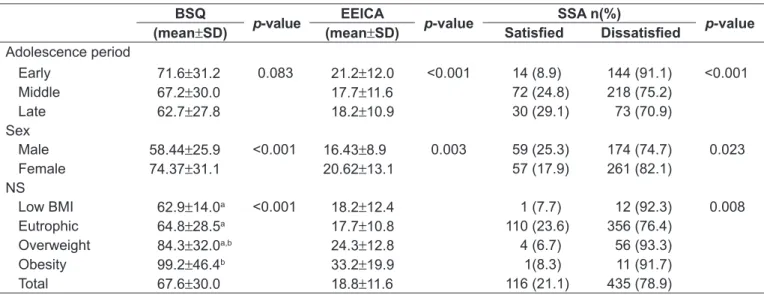
Table 2 - Dissatisfaction in relation to the period of adolescence, sex and nutritional state, Juiz de Fora - MG, 2010
BSQ
p-value EEICA p-value SSA n(%) p-value (mean±SD) (mean±SD) Satisied Dissatisied
Adolescence period
Early 71.6±31.2 0.083 21.2±12.0 <0.001 14 (8.9) 144 (91.1) <0.001
Middle 67.2±30.0 17.7±11.6 72 (24.8) 218 (75.2)
Late 62.7±27.8 18.2±10.9 30 (29.1) 73 (70.9)
Sex
Male 58.44±25.9 <0.001 16.43±8.9 0.003 59 (25.3) 174 (74.7) 0.023
Female 74.37±31.1 20.62±13.1 57 (17.9) 261 (82.1)
NS
Low BMI 62.9±14.0a <0.001 18.2±12.4 1 (7.7) 12 (92.3) 0.008
Eutrophic 64.8±28.5a 17.7±10.8 110 (23.6) 356 (76.4)
Overweight 84.3±32.0a,b 24.3±12.8 4 (6.7) 56 (93.3)
Obesity 99.2±46.4b 33.2±19.9 1(8.3) 11 (91.7)
Total 67.6±30.0 18.8±11.6 116 (21.1) 435 (78.9)
with moderate dissatisfaction, and 18 (3.3%) with severe body dissatisfaction. The evaluation of the SSA showed that 116 (21.1%) adolescents were satisied with their body im-age (SSA=0), while 435 (78.9%) were dissatisied (SSA≠0).
The mean score of body dissatisfaction of the BSQ, EEICA, and the SSA are shown in Table 2. It was found that individuals in the MP were more dissatisied in comparison to adolescents in the MP and the LP (EEICA and SSA –
p<0.001). There were also differences between the sexes, with greater dissatisfaction in female than in male adolescents in
the evaluation of all instruments (p<0.05). Overweight and
obese adolescents were also more dissatisied in comparison
to those with low BMI (BSQ – p<0.001).
Speciically girls in the EP of adolescence had the high-est prevalence of body image dissatisfaction among the
three observed periods (EEICA – p=0.002; SSA – p=0.005)
(Table 3). According to the classiication of BSQ, female adolescents in the LP were more often classiied as with free
and low dissatisfaction in comparison to those in the EP. Regarding male adolescents, the signiicance of variation in body dissatisfaction by the analysis of the BSQ presented a
value of p=0.05, and those in the EP were more dissatisied
than those in MP and LP (SSA – p=0.006).
Of the 435 adolescents classiied as dissatisied by the SSA, 60.8% wanted a smaller silhouette than the current and 39.2%, a greater one. Finally, it was observed that some adolescents classiied as eutrophic also expressed body dis-satisfaction (BSQ – 25%; SSA – 76%), especially girls, and 33% of eutrophic adolescents revealed dissatisfaction with their body image (BSQ) (Table 2).
The binary logistic regression model, from the OR risk estimator, conirmed that female adolescents, in the EP, with overweight or obesity had a signiicant association with body dissatisfaction (Table 4). The model according to the SSA showed that females were more dissatisied than male
adolescents (OR 1.49; p=0.063). Regarding adolescents in
Table 4 - Binary logistic regression model between the classiication of body image according to the Silhouette Scale for Adolescents and the Body Shape Questionnaire regarding the period of adolescence, sex, and nutritional status
Explanatory variables
β SE Wald Statistic DF p-value OR
SSA BSQ SSA BSQ SSA BSQ SSA BSQ SSA BSQ SSA BSQ
Girls 0.402 1.062 0.216 0.215 3.452 24.367 1 1 0.063 <0.001 1.494 2.893
EP 18.597 7.812 2 2 <0.001 0.020
MP -1.229 -0.422 0.314 0.222 15.366 3.611 1 1 <0.001 <0.001 0.293 0.656 LP -1.446 -0.827 0.358 0.309 16.343 7.177 1 1 <0.001 <0.001 0.235 0.437 Overweight/
obesity 1.413 1.298 0.481 0.271 8.642 22.954 1 1 <0.001 <0.001 4.108 3.66
SE: standard error; DF: degree of freedom; OR: Odds Ratio; SSA: Silhouette Scale for Adolescents; BSQ: Body Shape Questionnaire; EP: early period; MP: middle period; LP: late period
Table 3 - Value of body dissatisfaction according to the period of adolescence and according to sex. Juiz de Fora - MG, 2010
Variables ME MM ML p-value FE FM FL p-value
BSQ (mean±SD) 64.2±29.1 57.7±23.7 52.7±26.3 0.050 76.42±31.7 74.4±32.2 70.83±26.4 0.723 EEICA (mean±SD) 17.35±8.0 15.42±7.6 17.9±12.4 0.194 23.73±13.4 19.5±13.6 18.56±9.7 0.002
BSQ Classiication [n (%)]
Free 44 (71) 106 (84.8) 43 (93.5) 0.008 56 (58.3) 104 (63.6) 39 (68.4) 0.704 Light 11 (17) 12 (9.6) 1 (2.2) 0.023 24 (25.0) 38 (23.0) 14 (24.6) 0.140
Moderate 6 (9.7) 6 (4.8) – – 12( 12.5) 14 (8.5) 3 (5.3) –
Severe 1 (1.6) 1 (0.8) 2 (4.3) – 4 (4.2) 9 (5.5) 1 (1.8) –
SSA [n (%)]
Satisied 7 (11.3) 35 (28.0) 17 (37.0) 0.006 7 (7.3) 37 (22.4) 13 (22.8) 0.005
Dissatisied 55 (88.7) 90 (72.0) 69 (63.0) – 84 (92.7) 128 (77.6) 44 (37.2) –
the MP and LP they presented, respectively, 70% (OR 0.29;
p<0.001) and 76% (OR 0.23; p<0.001) less change of being dissatisied compared to those in the EP. The overweight and obese adolescents were more likely to be dissatisied compared to individuals with low and normal BMI (OR
4.10; p=0.003). The model according to the BSQ showed
that female adolescents were more likely to be dissatisied
compared to males (OR 2.89; p<0.001). Regarding the
period of adolescence, those in the MP and EP showed,
respectively, 56% (OR 0.65; p=0.050) and 45% (OR 0.43;
p=0.000) less chance of feeling dissatisied compared to
adolescents in the LP. The overweight and obese, in turn, were more dissatisied compared to adolescents with low and
normal BMI (OR 3.66; p<0.001).
Discussion
In the present study, the prevalence of dissatisfaction with body image was low among adolescents in small municipalities of Minas Gerais (BSQ) compared to other
adolescents from other regions of Brazil(14-16). However, the
results showed some factors related to dissatisfaction, such as the early period of adolescence, sex, and overweight. Regarding the early period, this dissatisfaction might have manifested by the dificulty that teenagers have to create an identity with their body image, due to the morphological
and biopsychosocial changes that happen during puberty(20).
In female adolescents, this effect may be even more intense, as they may feel more vulnerable to sociocultural pressures
to achieve an ideal body shape, often dificult to obtain(21).
For Maloney et al(22), the teenager in the age range of 10 to
13 years may be more concerned with their image and body language, turning their attention to weight reduction. The adolescents seem to increase their personal expectations after menarche, being more dissatisied with changes related to the accumulation of body fat(4,23).
Regarding male adolescents, the majority wanted a greater silhouette than the actual igure. Interestingly, in this group the maturation process is characterized by decreased
accumulation of body fat and increased fat-free mass(24).
Perhaps that is why this dissatisfaction tends to decline
with advancing puberty(24,25). While the standard for the
female ideal body is thin, for boys the propagated model is a muscular and lean body(25,26).
In this research, we observed that female adolescents had higher body dissatisfaction compared to their peers in the analysis of all instruments (BSQ, EEICA, and SSA). Moreover,
they showed nearly twice the chance of presenting body dis-satisfaction in relation to the opposite sex (SSA – OR 1.494;
p<0.001 and BSQ – OR 2.893; p<0.001). Jones et al(26) warns
that the female adolescent, even with an adequate weight or below the ideal, tends to feel fat or disproportionate, featuring a distorted perception of body image.
Overweight adolescents were more dissatisfied with their body image. According to the adjusted model, these students were four times more likely to present body image
dissatisfaction (SSA – OR 4.108; p<0.001 and BSQ – OR
3.66; p<0.001) compared to their peers. This result is in line with previous studies and shows the seriousness of the situ-ation, because these adolescents are at risk of diseases such as diabetes, hypercholesterolemia, among others, which can cause serious impairments in the emotional sphere, especially those related to their body acceptance(7,25).
Studies such as those by Mattos and Luz(27) discussed
obesity in the prospect of human and social sciences, empha-sizing the importance that the thin body has in society, as it seems to be the only type currently valued and recognized, causing suffering and illnesses in subjects that do not it the body type without fat accumulation. According to these researchers, a worked out body seems to be more valued and recognized. This overvaluation of thinness transforms fat into a symbol of moral failure and the obese becomes increasingly
stigmatized as an unwelcome being in society(27).
Studies in Brazil showed that body satisfaction in adoles-cents and children ranges from a 64- 82%(28). Conti et al(14)
found a mean of 73.2±36.4 points on the BSQ in adolescents
in the metropolitan region of São Paulo. Ours results with adolescents from small municipalities in the Zona da Mata
Mineira presented a mean of 67.6±30.0 points of BSQ.
Del Duca et al(7) evaluated 5,028 adolescents from public
schools in the state of Santa Catarina and found that 52.9% selected an ideal silhouette different than that selected as real; among these 16.7% (95%CI 15.7–17.7) were dissatisied with their weight and would like to increase it, and 36.2% (95%CI 34.9–37.5) would like to decrease it. Regarding the adolescents in the municipalities of Minas Gerais in this study, 78.9% were dissatisied with their body image by SSA because they wanted a different silhouette than the real one. Of these, 60.8% wanted a smaller silhouette, which demonstrates the desire for a thinner body type also in adolescents from rural municipalities.
are factors related to such negative feelings of body image. However, the study had some methodological limitations that should be considered, as, for instance, the cross-sectional design, which did not allow causal inferences to be made . Still, it was important to identify factors that may inluence the dissatisfaction with body image of adolescents from small municipalities. Epidemiological and school-based studies are essential to provide information on the dynamics of the adolescent, assisting educators and health professionals with the issue.
It was found that the prevalence of dissatisfaction with body image was low in adolescents from small municipalities of Minas Gerais; however, the majority wanted a different
silhouette. The results showed that students in early ado-lescence showed greater dissatisfaction in relation to other periods, as well as females and overweight adolescents. Studies such as the present one can provide information about the main factors associated with body dissatisfaction among adolescents, and avoid behaviors adopted as a result, which can be harmful to adolescents when they seek, at all costs, a physical appearance considered ideal.
Acknowledgements
We are thankful to all schools for the availability and for the encouragement of students to participate in this research.
References
1. Papalia DE, Feldman RD. Desenvolvimento humano. 12th ed. São Paulo:
McGraw Hill/Artmed; 2013.
2. World Health Organization. Nutrition in adolescence: issues and challenges for the health sector: issues in adolescent health and development. Geneva: WHO; 2005.
3. WHO; UNICEF. Breastfeeding and maternal medication: recommendations for drugs in the 8th WHO Model List of Essential Drugs. Geneva: WHO; 1995. 4. McCabe MP, Ricciardelli LA. A longitudinal study of pubertal timing and extreme
body change behaviors among adolescent boys and girls. Adolescence 2004;39:145-66.
5. Siervogel RM, Demerath EW, Schubert C, Remsberg KE, Chumlea WC, Sun S et al. Puberty and body composition. Horm Res 2003;60 (Suppl 1):36-45. 6. Santos EM, Tassitano RM, Nascimento WM, Petribú MM, Cabral PC. Body
satisfaction and associated factors among high school students. Rev Paul Pediatr 2011;29:214-23.
7. Del Duca GF, Garcia LM, Sousa TF, Oliveira ES, Nahas MV. Body weight dissatisfaction and associated factors among adolescents. Rev Paul Pediatr 2010;28:340-6.
8. Alves E, Vasconcelos Fde A, Calvo MC, Neves Jd. Prevalence of symptoms of anorexia nervosa and dissatisfaction with body image among female adolescents in Florianópolis, Santa Catarina state, Brazil. Cad Saude Publica 2008;24:503-12. 9. Thompson JK. The (mis)measurement of body image: ten strategies to improve
assessment for applied and research purposes. Body Image 2004;1:7-14. 10. Pelegrini A, Petroski EL. The association between body dissatisfaction and
nutritional status in adolescents. Human Moviment 2010;11:51-7.
11. Pereira EF, Graup S, Lopes AS, Borgatto AF, Daronco LS. Body image perception in children and adolescents with different socio-economic status in the city of Florianópolis, in the state of Santa Catarina, Brazil. Rev Bras Saude Mater Infant 2009;9:253-62.
12. Brasil - Instituto de Pesquisa Econômica Aplicada. Série Caracterização e Tendências da Rede Urbana do Brasil. Brasília: IPEA; 2001.
13. Brasil - Instituto Brasileiro de Geograia e Estatística [homepage on the Internet]. Censo 2000 - cidades [cited 2009 May 5]. Available from: http://
www.ibge.com.br/cidadesat
14. Conti MA, Cordás TA, Latorre MR. A study of the validity and reliability of the Brazilian version of the Body Shape Questionnaire (BSQ) among adolescents. Rev Bras Saude Mater Infant 2009;9:331-8.
15. Conti MA, Slater B, Latorre MR. Validity and reproducibility of Escala de Evaluación da Insatisfación Corporal para Adolescentes. Rev Saude Publica 2009;43:515-24.
16. Conti MA, Latorre MR. Study of validity and reliability of one contour rating scale to adolescence. Psicol Estud 2009;14:699-706.
17. Cordás TA, Castilho S. Body image on the eating disorders – evaluation instruments: “Body Shape Questionnaire”. Psiquiatr Biol 1994;2:17-21. 18. Gordon CC, Chumlea WC, Roche AF. Stature, recumbent length, and weight.
In: Lohman TG, Roche AF, Martorell R, editors. Anthropometric standardization reference manual. Champaing: Human Kinetics Books; 1988. p. 3-8. 19. De Onis M, Onyango AW, Borghi E, Siyam A, Nishida C, Siekmann J.
Development of a WHO growth reference for school-aged children and adolescents. Bull World Health Organ 2007;85:660-7.
20. Smolak L. Body image in children and adolescents: where do we go from here? Body Image 2004;1:15-28.
21. Matias TS, Rolim MK, Kretzer FL, Schmoelz CP, Andrade A. Corporal satisfaction associated with physical activity practice during adolescence. Motriz 2010;16:370-8.
22. Maloney MJ, McGuire J, Daniels SR, Specker B. Dieting behavior and eating attitudes in children. Pediatrics 1989;84:482-9.
23. Araújo CL, Dumith SC, Menezes AM, Hallal PC. Measured weight, self-perceived weight, and associated factors in adolescents. Rev Panam Salud Publica 2010;27:360-7.
24. Castro IR, Levy RB, Cardoso LO, Passos MD, Sardinha LM, Tavares LF et al. Body image, nutritional status and practices for weight control among Brazilian adolescents. Cienc Saude Coletiva 2010;15 (Suppl 2):3099-4108. 25. Presnell K, Bearman SK, Stice E. Risk factors for body dissatisfaction
in adolescent boys and girls: a prospective study. Int J Eat Disord 2004;36:389-401.
26. Jones DC, Vigfusdottir TH, Lee Y. Body image and the appearance culture among adolescent girls and boys: an examination of friend conversations, peer criticism, appearance magazines, and the internalization of appearance ideals. J Adolescent Res 2004;19:323-39.
27. Mattos RS, Luz MT. Surviving to the stigma of fat: a socio-anthropological study on obesity. Physis 2009;19:489-507.