Gene mutations of platelet glycoproteins and response
to tiroiban in acute coronary syndrome
Mutações gênicas das glicoproteínas plaquetárias e resposta ao tiroiban na
síndrome coronariana aguda
Antonio de Padua Mansur
I, Alessandra Roggerio
II, Júlio Yoshio Takada
III, Pérola Michelle Vasconcelos Caribé
IV,
Solange Desirée Avakian
III, Célia Maria Cassaro Strunz
VHeart Institute (InCor), University of São Paulo Medical School, São Paulo, Brazil
ABSTRACT
CONTEXT AND OBJECTIVES: Glycoprotein inhibitors (abciximab, eptiibatide and tiroiban) are used in patients with unstable angina and non-ST-segment elevation myocardial infarction before percutaneous coronary intervention. Of these, tiroiban is the least efective. We hypothesized that the response to tiroiban might be associated with glycoprotein gene mutations.
DESIGN AND SETTING: Prospective study at Emergency Unit, Heart Institute (InCor), University of São Paulo.
METHOD: Intrahospital evolution and platelet aggregation in response to tiroiban were analyzed in relation to four glycoprotein mutations in 50 patients indicated for percutaneous coronary intervention: 17 (34%) with unstable angina and 33 (66%) with non-ST-segment elevation myocardial infarction. Platelet aggregation was analyzed using the Born method. Blood samples were obtained before and one hour after tiroiban infusion. Glycoproteins Ia (807C/T), Ib (Thr/Met), IIb (Ile/Ser) and IIIa (PIA) were the mutations selected.
RESULTS: Hypertension, dyslipidemia, diabetes, smoking, previous coronary artery disease and stroke were similar between the groups. Mutant glycoprotein IIIa genotypes had lower platelet aggregation before tiroiban administration than that of the wild genotype (41.0% ± 22.1% versus 55.9% ± 20.8%; P = 0.035). Mutant glycoprotein IIIa genotypes correlated moderately with lower platelet inhibition (r = -0.31; P = 0.030). After tiroiban administration, platelet glycoprotein Ia, Ib, IIb and IIIa mutations did not inluence the degree of inhibition of platelet aggregation or intrahospital mortality.
CONCLUSIONS: Mutations of glycoproteins Ia, Ib, IIb and IIIa did not inluence platelet aggregation in response to tiroiban in patients with unstable angina and non-ST-segment elevation myocardial infarction.
RESUMO
CONTEXTO E OBJETIVOS: Inibidores da glicoproteína (abciximab, eptiibatide, tiroiban) são utilizados em pacientes com angina instável e infarto do miocárdio sem elevação do segmento ST (IAMSSST) antes da intervenção coronária percutânea. Dentre eles, o tiroiban é o menos eicaz. Nossa hipótese é que a resposta ao tiroiban possa estar associada a mutações no gene da glicoproteína.
DESENHO E LOCAL: Estudo prospectivo na Unidade de Emergência do Instituto do Coração (InCor), Universidade de São Paulo (USP).
MÉTODOS: Foram analisadas a evolução intra-hospitalar e agregabilidade plaquetária em resposta ao tiroiban de 4 mutações da glicoproteína em 50 pacientes com indicação para intervenção coronária percutânea, 17 (34%) com angina instável e 33 (66%) com IAMSSST. A agregação plaquetária foi analisada pelo método de Born. Amostras de sangue foram obtidas antes e uma hora após infusão do tiroiban. As glicoproteínas Ia (807C/T), Ib (Thr/Met), IIb (Ile/Ser) e IIIa (PIA) foram as mutações selecionadas.
RESULTADOS: Hipertensão, dislipidemia, diabetes, tabagismo, doença coronariana e acidente vascular cerebral prévios foram semelhantes entre os grupos. Observou-se menor agregabilidade plaquetária dos genótipos mutantes da glicoproteína IIIa antes da administração de tiroiban do genótipo selvagem (41% ± 22% versus 56% ± 21%; P = 0,035). Genótipos mutantes da glicoproteína IIIa correlacionaram-se moderadamente com menor inibição plaquetária (r = -0,31; P = 0,030). Após a administração tiroiban, as mutações das glicoproteínas Ia, Ib, IIb, e IIIa não inluenciaram o grau de inibição da agregação plaquetária e mortalidade intra-hospitalar.
CONCLUSÕES: Mutações das glicoproteínas Ia, Ib, IIb e IIIa não inluenciaram a agregação plaquetária em resposta ao tiroiban nos pacientes com angina instável e IAMSSST.
IMD, PhD. Associate Professor, Department
of Cardiopulmonology, Instituto do Coração, Hospital das Clínicas, Faculdade de Medicina, Universidade de São Paulo, São Paulo, Brazil.
IIBSc, PhD. Biochemist, Department of
Cardiopulmonology, Instituto do Coração, Hospital das Clínicas, Faculdade de Medicina, Universidade de São Paulo, São Paulo, Brazil.
IIIMD, PhD. Attending Physician, Department
of Cardiopulmonology, Instituto do Coração, Hospital das Clínicas, Faculdade de Medicina, Universidade de São Paulo, São Paulo, Brazil.
IVMD, MSc. Doctoral Student, Department of
Cardiopulmonology, Instituto do Coração, Hospital das Clínicas, Faculdade de Medicina, Universidade de São Paulo, São Paulo, Brazil.
VBSc. Central Laboratory Director, Department
of Cardiopulmonology, Instituto do Coração, Hospital das Clínicas, Faculdade de Medicina, Universidade de São Paulo, São Paulo, Brazil.
KEY WORDS:
Glycoproteins.
Platelet glycoprotein GPIIb-IIIa complex. Polymorphism, genetic.
Acute coronary syndrome. Angina, unstable. Myocardial infarction.
PALAVRAS-CHAVE:
Glicoproteínas.
Complexo glicoproteico GPIIb-IIIa de plaquetas. Polimorismo genético.
Síndrome coronariana aguda. Angina instável.
ORIGINAL ARTICLE | Mansur AP, Roggerio A, Takada JY, Caribé PMV, Avakian SD, Strunz CMC
INTRODUCTION
Tiroiban, a platelet surface receptor glycoprotein IIbIIIa (GPIIbIIIa) inhibitor, is recommended for patients with unsta-ble angina and non-ST-segment elevation myocardial infarction (NSTEMI) before a planned percutaneous coronary intervention, in order to reduce periprocedural coronary events. GPIIbIIIa plays a central role in thrombus formation through binding ibrinogen, von Willebrand factor and ibronectin.1 Tiroiban, like ibrinogen, has a similar ainity to the active GPIIbIIIa receptor. hus, tiroiban binds to GPIIbIIIa and prevents forma-tion of ibrinogen bridges, thereby reducing the thrombogenesis process.2 Clinical studies have demonstrated the eicacy of tiroi-ban in reducing coronary events in patients with unstable angina and NSTEMI who undergo percutaneous coronary interven-tion.3,4 However, studies have shown unfavorable results from use of tiroiban for reducing ischemic events in patients undergo-ing percutaneous coronary intervention and also less inhibition of platelet aggregation with tiroiban, compared with two other commercially available inhibitors of platelet glycoprotein, abcix-imab and eptiibatide.5,6 he possibility of a paradoxical efect of platelet inhibitors on platelet aggregation has also been dis-cussed.7 he possible hypotheses for these indings relate to lower intensity of platelet inhibition, antagonist-induced platelet acti-vation and interaction between platelets and inlammation.8 Another hypothesis to explain the interindividual variability in the antiplatelet efect of tiroiban may involve platelet glyco-protein gene polymorphisms.9 Mutations of GPIa (807C/T), Ib (hr/Met), IIb (Ile/Ser) and IIIa (PIA) have been inconsistently associated with increased risk of major acute coronary events and resistance to antiplatelet drugs.10,11 We hypothesized that the smaller efect of tiroiban might be associated with platelet GP gene mutations.
METHODS
Baseline clinical and admission laboratory characteristics, coronary artery disease risk factors, in-hospital outcomes, angiography and treatments were analyzed in relation to 50 con-secutive patients admitted to the emergency room with unstable angina or NSTEMI between May 2008 and November 2010. hey were indicated to receive tiroiban before undergoing coronary angiography for possible percutaneous coronary intervention, as advocated in the ACC/AHA 2002 guidelines for management of patients with unstable angina and non-ST-segment elevation myocardial infarction.12
All the patients received 200 mg of aspirin or were put on aspi-rin at least 3 hours before tiroiban was started, along with hepaaspi-rin. Initially, a bolus dosage regimen of 0.4 µg/kg/min was given for 30 minutes, followed by a maintenance dose of 0.1 µg/kg/min for at least 24 hours.
High-risk unstable angina was deined as chest pain at rest lasting for more than 20 minutes, with dynamic electrocardio-graphic changes on the electrocardiogram and normal levels of MB isoenzyme of creatine kinase (CKMB) mass or troponin I. NSTEMI was diagnosed when these indings were associated with increased blood levels of CKMB and troponin I. he clin-ical outcome was deined as in-hospital death from all causes. he study was approved by the local institutional ethics commit-tee. Informed consent was obtained from all patients.
Laboratory analysis
Troponin I and CKMB mass levels were analyzed in serum samples using speciic kits, in the automated ADVIA Centaur equipment (Siemens Healthcare Diagnostics, Tarrytown, NY, USA). he kit used for troponin determination was TnI-Ultra, and all assays were conducted in accordance with the manufacturer’s instruc-tions. Platelet aggregation tests in vitro were analyzed before and one hour ater tiroiban administration. Venous blood was col-lected in citrated tubes before and one hour ater the introduction of tiroiban. Plasma samples were obtained ater centrifugation and were analyzed as soon as possible. Platelet-rich plasma (PRP) was obtained by means of centrifugation at 250 g for 4 minutes from citrated blood. he time between sample collection and the tests did not exceed two hours. he platelet aggregation was performed by means of the optical method and consisted of treating 400 ul of PRP with 10 uM ADP, in the Chrono–Log 440 equipment (Havertown, PA, USA) in accordance with the Born method.13 he mixture was stirred at 37 °C using Telon-coated magnetic rods, and aggregation curves were recorded using an aggregometer. he analysis was per-formed in duplicate, and the aggregation rate was measured from the maximum variation of light transmittance from the system.
Platelet glycoprotein genotype determination
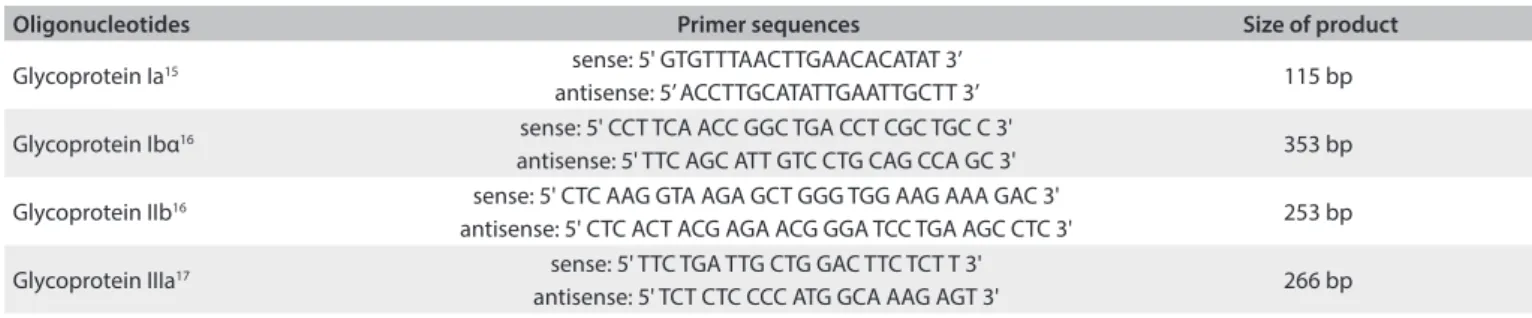
Samples for DNA extraction were collected in EDTA tubes and maintained at 4 °C until use. Genomic DNA was isolated from peripheral blood lymphocytes in accordance with the method of Miller et al.14 Platelet membrane glycoprotein Ia, Ibα, IIb and IIIa genotypes were analyzed by means of ampliication of DNA using the polymerase chain reaction (PCR), as described in previously published methods,15-17 and using the oligonucleotide sequencing primers described in Table 1. he mutations analyzed were selected
Presence of the platelet glycoprotein Ibα (hr/Met) genotype characterizes substitution of a cytosine by a thymine at position 1018 and results in amino acid dimorphism (hr/Met) in the 145 position of GP Ibα. A 353 bp sequence of nucleotides16 resulting from PCR was subjected to digestion using BsaHI at 37 °C overnight, followed by identiication of fragments through electrophoresis.
he normal allele has a restriction site for BsaHI, thus result-ing in two fragments of 242 and 111 bp. Presence of the mutant allele leads to loss of the restriction site (353 bp fragment).
Presence of the platelet glycoprotein IIb (Ile/Ser) genotype was relected in Ile/Ser dimorphism,16 which occurred at position 843 of GPIIb, thus resulting in substitution of thymine for guanine at nucleotide 2622 in exon 26. A 253 bp sequence of nucleotides was ampliied using PCR and was digested with Fok I at 37 °C over-night; the fragments were identiied by means of electrophoresis.
he normal allele had a restriction site for Fok I, thus result-ing in two fragments of 127 and 111 bp. Presence of the mutant allele leads to loss of the restriction site and a fragment of 253 bp. Presence of the platelet glycoprotein IIIa (PIA) genotype resulted from the C/T transition at position 1565 in exon 2 of GP IIIa.17 he PCR reaction product, comprising a sequence of 266 bp of nucleotides was digested using MspI, at 37 °C overnight, followed by identiication of fragments by means of electrophoresis. he normal allele had a restriction site for MspI, thus resulting in two fragments of 221 and 45 bp. he presence of polymorphism adds another restriction site to the 266 bp fragment, which then leads to presentation of three degradation products: 171, 50 and 45 bp.
Statistical analysis
he chi-square and Student t tests were used for baseline compar-isons. Each GP mutation was divided into two genotype groups for bivariate analysis (homozygous wild versus heterozygous and homozygous mutants). he Spearman test was used for correla-tions between GP mutacorrela-tions and platelet inhibition data. Using in-hospital death as a dependent variable, we performed logistic regression that included independent variables with P < 0.25. he signiicance level used for the statistical tests was 5% (P < 0.05). Statistical analyses were performed using the SAS for Windows sotware (Statistical Analysis System), version 9.2 (SAS Institute Inc., 1989-1996; Cary, NC, USA).
RESULTS
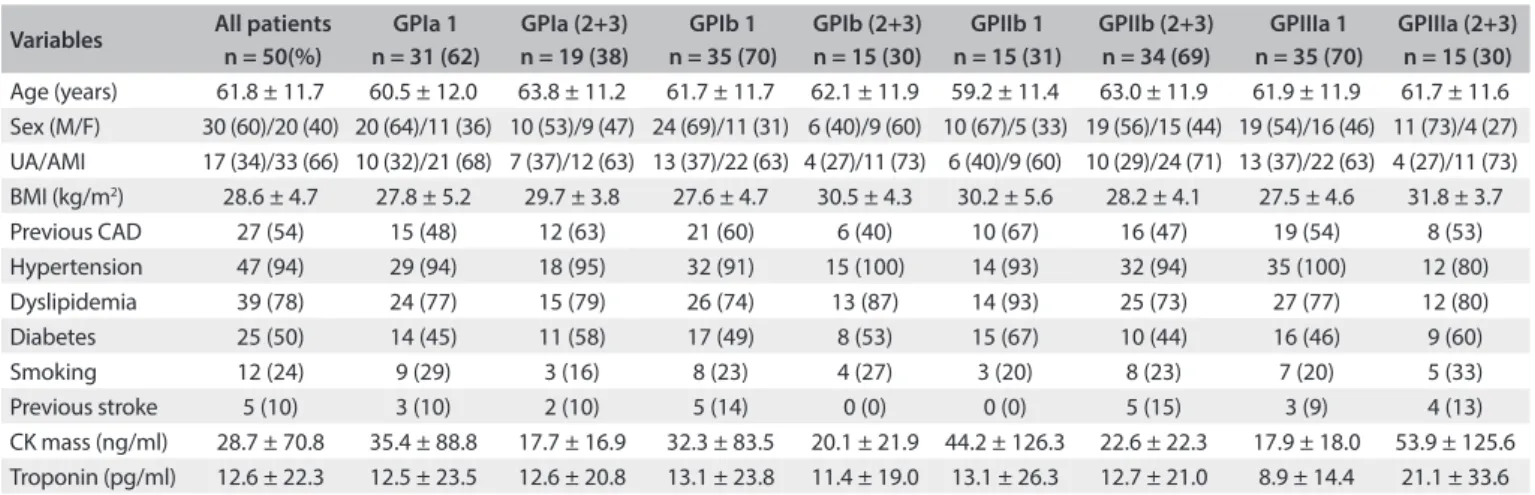
he patients’ mean age was 61.8 ± 11.7 years and 30 (60%) were men. Hypertension, dyslipidemia, previous coronary artery disease and diabetes were highly prevalent among the patients and occurred, respectively, in 47 (94%), 39 (78%), 27 (54%) and 25 (50%) of the patients. he prevalence of diabetes was 25%, and 24% were active smokers. Previous stroke was reported by 10% of the patients. In-hospital death occurred in the cases of seven patients (14%): six (12%) due to cardio-genic shock, and one (2%) due to septicemia. he distributions of these data according to the genotype group (homozygous wild versus heterozygous and homozygous mutant) of each GP mutation are shown in Table 2. he prevalences of
hyper-tension, dyslipidemia, diabetes, smoking, previous coronary artery disease, previous stroke and all causes of death were similar between the groups. Platelet aggregations before tiro-iban administration were also similar between the GPIa, Ib and IIb mutation groups, but not for the GPIIIa group. he GPIIIa mutation had lower baseline aggregation than the wild genotype (41.0% ± 22.1% versus 55.9% ± 20.8%; P = 0.035). A moderate correlation was observed between GPIIIa muta-tion and baseline platelet aggregamuta-tion (r = -0.31; P = 0.032). Ater tiroiban administration, platelet GPIa, Ib, IIb and IIIa mutations did not alter inhibition of platelet aggregation or all causes of death (Table 2). Multivariate logistic regression did
not reveal any GP mutation that was an independent variable for in-hospital death (Table 3).
DISCUSSION
he four polymorphisms of platelet glycoprotein analyzed in this study did not have any inluence on the level of platelet inhibition in response to a standard dose of tiroiban, a speciic inhibitor of GPIIbIIIa, in patients with acute coronary syndrome. he muta-tions analyzed were selected because these mutamuta-tions present high frequency in our population.11 he patients were treated in accor-dance with the guidelines of the American Heart Association for patients with unstable angina or NSTEMI.5 Aspirin was admin-istered at least three hours before introduction of tiroiban. Blood samples were obtained before and one hour ater tiroiban adminis-tration, for analysis on platelet aggregation in response to tiroiban.
Oligonucleotides Primer sequences Size of product
Glycoprotein Ia15 sense: 5' GTGTTTAACTTGAACACATAT 3’
antisense: 5’ ACCTTGCATATTGAATTGCTT 3’ 115 bp Glycoprotein Ibα16 sense: 5' CCT TCA ACC GGC TGA CCT CGC TGC C 3'
antisense: 5' TTC AGC ATT GTC CTG CAG CCA GC 3' 353 bp
Glycoprotein IIb16 sense: 5' CTC AAG GTA AGA GCT GGG TGG AAG AAA GAC 3'
antisense: 5' CTC ACT ACG AGA ACG GGA TCC TGA AGC CTC 3' 253 bp
Glycoprotein IIIa17 sense: 5' TTC TGA TTG CTG GAC TTC TCT T 3'
antisense: 5' TCT CTC CCC ATG GCA AAG AGT 3' 266 bp
ORIGINAL ARTICLE | Mansur AP, Roggerio A, Takada JY, Caribé PMV, Avakian SD, Strunz CMC
Prior tiroiban administration
here was a lower degree of inhibition of platelet aggregation with aspirin among the patients with the glycoprotein IIIa PLA2 mutation, before administration of tiroiban. his mutation was most oten associated with increased resistance to inhibi-tion among the platelet polymorphisms analyzed in this study.18 Szczeklik et al. assessed the association between genotypes with PlA2 mutation and platelet aggregation in response to aspirin, in 80 healthy subjects. Individuals carrying the mutation PlA2 were associated with greater resistance of platelet aggregation to aspi-rin.19 Among 82 patients on aspirin and clopidogrel, Angiolillo et al. showed that there was higher platelet aggregation in response to the agonists collagen, epinephrine and ADP, in patients with the GPIa C807T mutation.20 Furthermore, Gonzalez-Conejero et al. did not observe any association between the mutations GPIIbIIIa PlA2 and GPIaIIa C807T and the eicacy of aspirin for platelet inhibition.21 he efectiveness of platelet inhibition was higher among subjects treated with higher doses of aspirin. hese authors concluded that aspirin resistance was unlikely, but when it occurred, it would probably be dose-dependent and not inluenced by mutations of GPIIbIIIa and GPIa/IIa.
he association between mutations of GPIIbIIIa and GPIa/ IIa and higher resistance of platelet inhibition to aspirin and clopidogrel is very questionable. Recent systematic reviews and meta-analyses by Floyd et al. showed conlicting associations between the GPIIIa PlA2 allele and resistance to antiplatelets and to cardiovascular diseases.22 In these studies, the authors found an association between PlA2 mutation and ischemic stroke; however, no association was observed between the mutation and resistance to platelet inhibition with aspirin and clopidogrel, either in healthy subjects or in patients with cardiovascular diseases.23
After tiroiban administration
Our study showed that mutations of the glycoproteins ana-lyzed did not inluence platelet aggregation one hour ater administration of tiroiban. However, it can be argued that inhi-bition of platelet aggregation using tiroiban is less efective than that of other GPIIbIIIa inhibitors.5,6,24 his lower eicacy could be related to the genetic variability of the glycoproteins involved in thrombus formation.
Nevertheless, the results from studies on the inluence of genetic polymorphisms of platelet glycoproteins towards lower
Variables All patients n = 50(%)
GPIa 1 n = 31 (62)
GPIa (2+3) n = 19 (38)
GPIb 1 n = 35 (70)
GPIb (2+3) n = 15 (30)
GPIIb 1 n = 15 (31)
GPIIb (2+3) n = 34 (69)
GPIIIa 1 n = 35 (70)
GPIIIa (2+3) n = 15 (30)
Age (years) 61.8 ± 11.7 60.5 ± 12.0 63.8 ± 11.2 61.7 ± 11.7 62.1 ± 11.9 59.2 ± 11.4 63.0 ± 11.9 61.9 ± 11.9 61.7 ± 11.6
Sex (M/F) 30 (60)/20 (40) 20 (64)/11 (36) 10 (53)/9 (47) 24 (69)/11 (31) 6 (40)/9 (60) 10 (67)/5 (33) 19 (56)/15 (44) 19 (54)/16 (46) 11 (73)/4 (27)
UA/AMI 17 (34)/33 (66) 10 (32)/21 (68) 7 (37)/12 (63) 13 (37)/22 (63) 4 (27)/11 (73) 6 (40)/9 (60) 10 (29)/24 (71) 13 (37)/22 (63) 4 (27)/11 (73)
BMI (kg/m2) 28.6 ± 4.7 27.8 ± 5.2 29.7 ± 3.8 27.6 ± 4.7 30.5 ± 4.3 30.2 ± 5.6 28.2 ± 4.1 27.5 ± 4.6 31.8 ± 3.7
Previous CAD 27 (54) 15 (48) 12 (63) 21 (60) 6 (40) 10 (67) 16 (47) 19 (54) 8 (53)
Hypertension 47 (94) 29 (94) 18 (95) 32 (91) 15 (100) 14 (93) 32 (94) 35 (100) 12 (80)
Dyslipidemia 39 (78) 24 (77) 15 (79) 26 (74) 13 (87) 14 (93) 25 (73) 27 (77) 12 (80)
Diabetes 25 (50) 14 (45) 11 (58) 17 (49) 8 (53) 15 (67) 10 (44) 16 (46) 9 (60)
Smoking 12 (24) 9 (29) 3 (16) 8 (23) 4 (27) 3 (20) 8 (23) 7 (20) 5 (33)
Previous stroke 5 (10) 3 (10) 2 (10) 5 (14) 0 (0) 0 (0) 5 (15) 3 (9) 4 (13)
CK mass (ng/ml) 28.7 ± 70.8 35.4 ± 88.8 17.7 ± 16.9 32.3 ± 83.5 20.1 ± 21.9 44.2 ± 126.3 22.6 ± 22.3 17.9 ± 18.0 53.9 ± 125.6
Troponin (pg/ml) 12.6 ± 22.3 12.5 ± 23.5 12.6 ± 20.8 13.1 ± 23.8 11.4 ± 19.0 13.1 ± 26.3 12.7 ± 21.0 8.9 ± 14.4 21.1 ± 33.6
GP = glycoprotein; 1 = homozygous wild; 2 = heterozygous; 3 = homozygous mutant; UA = unstable angina; AMI = acute myocardial infarction; M = male; F = female; CAD = coronary artery disease; CK = creatine kinase. Value in parentheses are percentages.
Table 2. Demographic variables and laboratory data relating to 50 patients with unstable angina and non-ST-segment elevation myocardial infarction
*P = 0.035; GP = glycoprotein; 1 = homozygous wild; 2 = heterozygous; 3 = homozygous mutant; one-hour aggregation and inhibition (%) refer to the percentage aggregation or inhibition one hour after tiroiban administration. Value in parentheses are percentages.
Table 3. Aggregation data and incidence of death among 50 patients with unstable angina and non-ST-segment elevation myocardial infarction
Variables All patients n =50 (%)
GPIa 1 n =31 (62)
GPIa (2+3) n = 19 (38)
GPIb 1 n = 35 (70)
GPIb (2+3) n = 15 (30)
GPIIb 1 n = 15 (31)
GPIIb (2+3) n = 34 (69)
GPIIIa 1 n = 35 (70)
GPIIIa (2+3) n = 15 (30)
Baseline
aggregation (%) 51.9 ± 22.0 49.6 ± 23.8 55.7 ± 18.5 54.7 ± 22.0 45.1 ± 21.2 47.8 ± 23.5 52.7 ± 21.4 55.9 ± 20.8 41.0 ± 22.1*
One-hour
aggregation (%) 15.3 ± 13.6 16.6 ± 15.7 13.1 ± 8.7 17.2 ± 14.7 10.3 ± 8.6 15.8 ± 10.6 14.3 ± 14.1 14.7 ± 10.1 16.8 ± 20.5
Baseline to one
hour (%) 32.5 ± 23.6 33.1 ± 27.4 43.6 ± 18.8 37.6 ± 26.8 35.5 ± 19.9 32.1 ± 24.0 38.9 ± 25.6 41.7 ± 18.2 24.4 ± 35.1
platelet response to GPIIbIIIa inhibitors have been contradictory. O’Connor et al. showed that there was higher incidence of major coronary events among patients with acute coronary syndrome with GPIIIa PlA2 mutation who were treated with orboiban, an oral GPIIbIIIa antagonist, thus signaling that there might be an association between this mutation and coronary thrombo-sis.25 Wheeler et al. showed that there was less platelet inhibition through using abciximab in patients with the PlA2 mutation who underwent percutaneous coronary intervention.26 Weber et al. conducted an in vitro study on the antiplatelet efects of three GPIIbIIIa inhibitors (abciximab, tiroiban and eptiibatide) among healthy individuals and patients with stable coronary artery disease.27 hey conirmed that there was great variability of the inhibitory response to GPIIbIIIa inhibitors, but that this vari-ability was not associated with GPIIbIIIa PlA2 mutation. Verdoia et al. analyzed the platelet response to GPIIbIIIa inhibitors among 80 patients undergoing percutaneous coronary revascularization (40 patients with abciximab; 40 patients with eptiibatide or tiro-iban).28 Aggregation tests were performed at baseline and ater 10 min, 1 h and 4 h ater GPIIbIIIa inhibitor administration. PlA2 mutation was present in 26 patients (32.5%). he clinical and angiographic features were similar between groups of car-riers and noncarcar-riers of the PLA2 mutation, except with regard to in-stent restenosis, which was more frequent among patients with PlA2. he PlA2 mutation did not afect the platelet response to GPIIbIIIa inhibitors.
Although the initial studies signaled that genetic polymor-phisms of platelet glycoproteins had an inluence on platelet response, this interaction was not observed in our study or proven by other more recent studies.25-28 However, variability of platelet response to GPIIbIIIa inhibitors exists and can be correlated with other factors, such as drug dose-dependence, the method used to assess platelet aggregation, pharmacodynamics, concomitant use of dual antiplatelet aggregation, rheological characteristics of blood coagulation and other such things. Khaspekova et al. analyzed the platelet response among patients with acute coronary syndrome and found that the expression of platelet GPIb and GPIIbIIIa correlated with the average volume of platelets and not the genetic polymor-phism of the GPIIIa Leu33Pro and GPIbα hr145Met mutations.29 Schneider et al. showed that the lesser degree of initial inhibition of platelet aggregation using tiroiban was dose-dependent com-pared to abciximab.”30 A recent meta-analysis showed that there was a reduction in major adverse coronary events through addi-tion of tiroiban to aspirin and clopidogrel, among patients with ST-elevation myocardial infarction prior to percutaneous coronary intervention.31 Blood rheological changes, such as blood viscosity, increased serum levels of ibrinogen, inlammatory cytokines and others, could explain the variability of platelet response. It is well known that these factors favor thrombotic process by acting at vari-ous levels of the coagulation system.32
CONCLUSION
In conclusion, this study showed that the GPIa, Ib, IIb and IIIa mutations analyzed did not inluence platelet aggregation in response to tiroiban in patients with acute coronary syndrome. his result suggests that, despite the possibility that interindivid-ual diferences in platelet response to GPIIbIIIa inhibitors might have a genetic component, this probably depends on deeper interaction between genes and not just the interaction of a few single glycoprotein mutations. he small number of patients, homozygous and heterozygous mutant genotype groupings and inluence of prior use of aspirin may be important limitations of this study. Similarly, it may not be possible to generalize our ind-ings to other antiplatelet drugs.
REFERENCES
1. Lefkovits J, Plow EF, Topol EJ. Platelet glycoprotein IIb/IIIa receptors in cardiovascular medicine. N Engl J Med. 1995;332(23):1553-9.
2. Kleiman NS. Pharmacokinetics and pharmacodynamics of glycoprotein IIb-IIIa inhibitors. Am Heart J. 1999;138(4 Pt 2):263-75. 3. Inhibition of the platelet glycoprotein IIb/IIIa receptor with tiroiban
in unstable angina and non-Q-wave myocardial infarction. Platelet Receptor Inhibition in Ischemic Syndrome Management in Patients Limited by Unstable Signs and Symptoms (PRISM-PLUS) Study Investigators. N Engl J Med. 1998;338(21):1488-97.
4. Zhao XQ, Théroux P, Snapinn SM, Sax FL. Intracoronary thrombus and platelet glycoprotein IIb/IIIa receptor blockade with tiroiban in unstable angina or non-Q-wave myocardial infarction. Angiographic results from the PRISM-PLUS trial (Platelet receptor inhibition for ischemic syndrome management in patients limited by unstable signs and symptoms). PRISM-PLUS Investigators. Circulation. 1999;100(15):1609-15.
5. Topol EJ, Moliterno DJ, Herrmann HC, et al. Comparison of two platelet glycoprotein IIb/IIIa inhibitors, tiroiban and abciximab, for the prevention of ischemic events with percutaneous coronary revascularization. N Engl J Med. 2001;344(25):1888-94.
6. Batchelor WB, Tolleson TR, Huang Y, et al. Randomized COMparison of platelet inhibition with abciximab, tiRoiban and eptiibatide during percutaneous coronary intervention in acute coronary syndromes: the COMPARE trial. Comparison Of Measurements of Platelet aggregation with Aggrastat, Reopro, and Eptiibatide. Circulation. 2002;106(12):1470-6.
7. Cox D, Smith R, Quinn M, et al. Evidence of platelet activation during treatment with a GPIIb/IIIa antagonist in patients presenting with acute coronary syndromes. J Am Coll Cardiol. 2000;36(5):1514-9. 8. Quinn MJ, Plow EF, Topol EJ. Platelet glycoprotein IIb/IIIa inhibitors:
recognition of a two-edged sword? Circulation. 2002;106(3):379-85. 9. Jallu V, Poulain P, Fuchs PF, Kaplan C, de Brevern AG. Modeling and
ORIGINAL ARTICLE | Mansur AP, Roggerio A, Takada JY, Caribé PMV, Avakian SD, Strunz CMC
10. Andrioli G, Minuz P, Solero P, et al. Defective platelet response to arachidonic acid and thromboxane A(2) in subjects with Pl(A2) polymorphism of beta(3) subunit (glycoprotein IIIa). Br J Haematol. 2000;110(4):911-8. 11. Lopes NH, Pereira AC, Hueb W, et al. Efect of glycoprotein IIIa PlA2
polymorphism on outcome of patients with stable coronary artery disease and efect of smoking. Am J Cardiol. 2004;93(12):1469-72. 12. Braunwald E, Antman EM, Beasley JW, et al. ACC/AHA guideline update for
the management of patients with unstable angina and non-ST-segment elevation myocardial infarction--2002: summary article: a report of the American College of Cardiology/American Heart Association Task Force on Practice Guidelines (Committee on the Management of Patients With Unstable Angina). Circulation. 2002;106(14):1893-900.
13. Born GV, Cross MJ. The aggregation of blood platelets. J Physiol. 1963;168:178-95.
14. Miller SA, Dykes DD, Polesky HF. A simple salting out procedure for extracting DNA from human nucleated cells. Nucleic Acids Res. 1988;16(3):1215.
15. Reiner AP, Aramaki KM, Teramura G, Gaur L. Analysis of platelet glycoprotein Ia (alpha2 integrin) allele frequencies in three North American populations reveals genetic association between nucleotide 807C/T and amino acid 505 Glu/Lys (HPA-5) dimorphisms. Thromb Haemost. 1998;80(3):449-56.
16. Unkelbach K, Kalb R, Santoso S, et al. Genomic RFLP typing of human platelet alloantigens Zw(PIA), Ko, Bak and Br (HPA-1, 2, 3, 5). Br J Haematol. 1995;89(1):169-76.
17. Wagner KR, Giles WH, Johnson CJ, et al. Platelet glycoprotein receptor IIIa polymorphism P1A2 and ischemic stroke risk: the Stroke Prevention in Young Women Study. Stroke. 1998;29(3):581-5. 18. Cook GE, Bray PF, Hamlington JD, et al. PlA2 polymorphism and
eicacy of aspirin. Lancet. 1998;351(9111):1253.
19. Szczeklik A, Undas A, Sanak M, Frolow M, Wegrzyn W. Relationship between bleeding time, aspirin and the PlA1/A2 polymorphism of platelet glycoprotein IIIa. Br J Haematol. 2000;110(4):965-7.
20. Angiolillo DJ, Fernandez-Ortiz A, Bernardo E, et al. Variability in platelet aggregation following sustained aspirin and clopidogrel treatment in patients with coronary heart disease and inluence of the 807 C/T polymorphism of the glycoprotein Ia gene. Am J Cardiol. 2005;96(8):1095-9. 21. Gonzalez-Conejero R, Rivera J, Corral J, et al. Biological assessment of
aspirin eicacy on healthy individuals: heterogeneous response or aspirin failure? Stroke. 2005;36(2):276-80.
22. Floyd CN, Ellis BH, Ferro A. The PlA1/A2 polymorphism of glycoprotein IIIa as a risk factor for stroke: a systematic review and meta-analysis. PLoS One. 2014;9(7):e100239.
23. Floyd CN, Mustafa A, Ferro A. The PlA1/A2 polymorphism of glycoprotein IIIa as a risk factor for myocardial infarction: a meta-analysis. PLoS One. 2014;9(7):e101518.
24. Kereiakes DJ, Broderick TM, Roth EM, et al. Time course, magnitude, and consistency of platelet inhibition by abciximab, tiroiban, or eptiibatide in patients with unstable angina pectoris undergoing percutaneous coronary intervention. Am J Cardiol. 1999;84(4):391-5.
25. O’Connor FF, Shields DC, Fitzgerald A, et al. Genetic variation in glycoprotein IIb/IIIa (GPIIb/IIIa) as a determinant of the responses to an oral GPIIb/IIIa antagonist in patients with unstable coronary syndromes. Blood. 2001;98(12):3256-60.
26. Wheeler GL, Braden GA, Bray PF, et al. Reduced inhibition by abciximab in platelets with the PlA2 polymorphism. Am Heart J. 2002;143(1):76-82.
27. Weber AA, Jacobs C, Meila D, et al. No evidence for an inluence of the human platelet antigen-1 polymorphism on the antiplatelet efects of glycoprotein IIb/IIIa inhibitors. Pharmacogenetics. 2002;12(7):581-3.
28. Verdoia M, Pergolini P, Camaro C, et al. PlA(1)/PlA(2) polymorphism does not inluence response to Gp IIb-IIIa inhibitors in patients undergoing coronary angioplasty. Blood Coagul Fibrinolysis. 2013;24(4):411-8.
29. Khaspekova SG, Zyuryaev IT, Yakushkin W, et al. Relationships of glycoproteins IIb-IIIa and Ib content with mean platelet volume and their genetic polymorphisms. Blood Coagul Fibrinolysis. 2014;25(2):128-34.
30. Schneider DJ, Herrmann HC, Lakkis N, et al. Enhanced early inhibition of platelet aggregation with an increased bolus of tiroiban. Am J Cardiol. 2002;90(12):1421-3.
31. Sethi A, Bahekar A, Doshi H, et al. Tirofiban use with clopidogrel and aspirin decreases adverse cardiovascular events after percutaneous coronary intervention for ST-elevation myocardial infarction: a meta-analysis of randomized trials. Can J Cardiol. 2011;27(5):548-54.
32. Dormandy J, Ernst E, Matrai A, Flute PT. Hemorrheologic changes following acute myocardial infarction. Am Heart J. 1982;104(6):1364-7.
Partial data were presented at an event: Roggerio A, Strunz CMC,
Nogueira A, Mansur AP. Inluence of platelet membrane glycoproteins polymorphisms in the proile of patients with acute coronary syndrome. In: 32nd Congress of the State of São Paulo Cardiology Society.
2011;21:153.
Sources of funding: None
Conlict of interest: None
Date of irst submission: March 26, 2015
Last received: August 5, 2015
Accepted: August 8, 2015
Address for correspondence:
Antonio de Padua Mansur Av. Dr. Enéas de Carvalho Aguiar, 44 São Paulo (SP) — Brasil