Licenciatura em Engenharia Química
Development of molecularly imprinted
polymers using supercritical fluid technology
Dissertação para obtenção do Grau de Doutor em Química Sustentável
i
supercritical fluid technology
Copyright
Mara Lília Soares da Silva
Universidade Nova de Lisboa, Faculdade de Ciências e Tecnologia
A Faculdade de Ciências e Tecnologia e Universidade Nova de Lisboa têm o direito,
perpétuo e sem limites geográficos, de arquivar e publicar esta dissertação através de
exemplares impressos reproduzidos em papel ou de forma digital, ou por qualquer outro meio
conhecido ou que venha a ser inventado, e de a divulgar através de repositórios científicos e
de admitir a sua cópia e distribuição com objectivos educacionais ou de investigação, não
comerciais, desde que seja dado crédito ao autor e editor.
iii
v
I have learned much during my PhD and the first person to whom I really want to express my gratitude is Dr. Teresa Casimiro. I am very thankful for the guidance, the helpful brainstormings and the friendship. Things would have been much more complicated if I did not have the luck of having a supervisor who pushed me up in the hard days and shared my happiness with the achievements. I will always keep in mind the useful teachings concerning polymers and supercritical fluid technology and
the good moments in New Orleans (MIP… NIP…MIP…NIP). Teresa is a great scientist and a
wonderful person.
I also acknowledge Prof. Ana Aguiar Ricardo for receiving me in her laboratory, allowing me to take the research of my thesis under her supervision and always get time when I needed her.
My sincere thanks to “the big boss” Prof. Manuel Nunes da Ponte, for the financial support in
Socrates course that greatly contributed to my knowledge about supercritical fluid technology and also for the polka dance.
I also would like to thank Prof. Eurico Cabrita (HP NMR) and Dr. Luis Mafra (Solid-state NMR) for helping me in the characterization of the imprinting systems.
Further I want thank Dr. Jorge Caldeira for the guidance in my first contact with chromatography and Dr. José Catita for the knowledge transfer in HPLC and for letting me know the importance and
difficulty of my work (“…You know what you’re doing? If that works you’ll be rich.”). As for now, I am not… but maybe one day I will!
To Prof. Ílidio Correia thanks for the cytotoxicity studies that had greatly enriched my work and to Dr. Maria Manuela Marques for providing me the cyclodextrin derivatives. To Dr. Vasco Bonifácio I want to thank the help in organic chemistry.
To Fundação Ciência e Tecnologia thanks for financially supporting this thesis through grant SFRH/BD/31085/2006 and projects PTDC/QUI/66086/2006 and PTDC/QUI-QUI/102460/2008. To all my supercritical colleagues of Lab. 510, for turning days at work in nice moments. A special thanks to Rachel (Raquel) for sharing with me the enthusiasm of molecular imprinting, to Telma, Vanessa, Margarida, Rita, Eunice and Franklin and to the former member, Marcio. Also to Ricardo and Pedro for providing the laboratory the nice fragrance of roasted coffee beans.
To Dª Idalina and Dª Conceição, to Dª Maria José and Sr. Ramalho I thank for the technical help. I would also like to thank my friends for standing by me through tough times and for understanding the lack of time.
vi
vii
Ao longo da última década, o interesse em polímeros com impressão molecular tem vindo a intensificar-se devido à sua utilização promissora em processos de separação, libertação controlada de fármacos, sensores biomiméticos e catálise. O trabalho descrito nesta tese apresenta o uso da tecnologia supercrítica como uma alternativa sustentável na síntese e processamento de polímeros com impressão molecular. A afinidade das matrizes para determinadas moléculas foi introduzida através das técnicas de impressão molecular não-covalente e semi-covalente. O reconhecimento molecular dos polímeros foi avaliado em aplicações específicas de libertação controlada de fármacos, separação enantiomérica e adsorção de poluentes ambientais. A influência de determinados parâmetros experimentais no reconhecimento molecular das matrizes foi estudada através da variação do grau de reticulação, da natureza do monómero funcional e da razão molar entre a molécula a introduzir afinidade e o monómero. Os resultados obtidos mostram que é possível ajustar a afinidade dos polímeros através da optimização da mistura reaccional. Os polímeros com impressão molecular apresentam maiores constantes de afinidade para a molécula em questão e conseguem incorporar na sua matriz uma quantidade mais elevada dessa mesma molécula, quer seja em meio supercrítico ou em meio aquoso. Uma parte do trabalho desenvolvido envolveu a produção de membranas híbridas preparadas pelo método de inversão de fases, utilizando o dióxido de carbono supercrítico como não solvente. Os resultados obtidos evidenciam a possibilidade de preparar estruturas porosas com afinidade através da imobilização de partículas poliméricas com impressão molecular. A utilização dos polímeros como enchimento quiral em colunas de HPLC revelou que as matrizes poliméricas sintetizadas possuem uma elevada afinidade para a molécula que reconhecem, sendo capazes de diferenciar os dois enantiómeros quando a mistura racémica é injectada na coluna.
O trabalho desenvolvido no decorrer desta tese contribui para a consolidação da utilização do dióxido de carbono como um solvente alternativo na síntese e processamento de polímeros e demonstra a exequibilidade de sintetizar fácil e rapidamente polímeros com afinidade molecular utilizando tecnologias sustentáveis.
Termos chave
ix
Within the last decade, the interest in molecularly imprinted polymers (MIPs) has strongly increased because of their promising applications in separation processes, drug delivery, biomimetic sensing and catalysis. This thesis reports the development of MIPs using supercritical fluid technology as a viable and greener alternative to the synthesis and processing of these molecular recognition polymers. The affinity to the target molecule was introduced by means of non-covalent and semi-covalent molecular imprinting and the performance of the materials was evaluated in specific applications of drug delivery, chiral chromatography and adsorption of environmental pollutants. The influence of experimental parameters, such as crosslinking degree, functional monomer nature and template: monomer ratio, on molecular recognition was investigated. The results show that it is possible to tune the affinity of the polymers by optimizing the imprinting reactional mixture. MIPs show higher loading capacities and affinity constants to the template molecule, both in supercritical
and aqueous environments. Hybrid membranes were prepared by a scCO2-assisted phase inversion
method, showing that imprinted particles can be immobilized into porous structures introducing affinity to the materials. Further, HPLC experiments attested that the synthesized MIPs have high selectivity towards the template, as an enantiomeric differentiation was achieved when the racemic mixture was loaded into the imprinted polymeric stationary phase.
The work developed in this thesis contributes to the consolidation of scCO2 as alternative solvent and
demonstrates the feasibility of synthesizing clean, easy-to-make and ready-to-use molecular recognition polymers using sustainable technologies.
Keywords
xi
List of Contents
Acknowledgements ... v
Resumo ... vii
Abstract ... ix
Keywords ... ix
List of Contents ... xi
List of Figures ... xv
List of Tables ... xix
List of Abbreviations ... xxi
1. Introduction ... 1
1.1 Supercritical fluids ... 1
1.2 Molecular recognition ... 3
1.2.1 Molecularly imprinted polymers ... 3
1.2.2 Strategies in molecular imprinting ... 5
1.2.3 Rational design of MIPs ... 6
1.2.4 Molecular imprinting in scCO2 ... 7
1.3 Molecularly imprinted polymers in drug delivery ... 8
1.4 Molecular recognition materials in chromatography ... 11
1.4.1 Molecularly imprinted polymers as chiral stationary phases ... 12
1.4.2 Cyclodextrins as molecular recognition materials ... 14
1.5 Imprinted porous structures ... 16
1.6 Aims and structure of the thesis ... 19
1.7 References ... 21
2. Design of MIPs for drug delivery applications ... 27
2.1 MIPs with recognition to Flufenamic Acid ... 27
xii
2.1.2 Results and discussion ... 32
2.1.3 Conclusion ... 42
2.2 Low crosslinked MIPs ... 43
2.2.1 Experimental ... 44
2.2.2 Results and Discussion ... 48
2.2.3 Conclusion ... 56
2.3 References ... 57
3. Molecular recognition hosts for chiral separations by HPLC ... 61
3.1 Green preparation of chiral stationary phases- MIPs ... 61
3.1.1 Experimental ... 63
3.1.2 Results and Discussion ... 65
3.1.3 Conclusion ... 77
3.2 Development of dual recognition hosts- MIPs and Cyclodextrins ... 79
3.2.1 Experimental ... 80
3.2.2 Results and Discussion ... 82
3.2.3 Conclusion ... 87
3.3 References ... 88
4. Imprinted structures for extraction of environmental pollutants. Case study: Bisphenol A ... …91
4.1 scCO2-assisted preparation of hybrid imprinted membranes ... 91
4.1.1 Experimental ... 93
4.1.2 Results and discussion ... 97
4.1.3 Conclusion ... 103
4.2 Semi-covalently imprinted polymers ... 105
4.2.1 Experimental ... 106
4.2.2 Results and Discussion ... 108
4.2.3 Conclusion ... 114
4.3 References ... 115
xiii
xv
List of Figures
Figure 1.1- Phase diagram of carbon dioxide... 1
Figure 1.2- Molecular imprinting schematic mechanism: (1) Monomer and template pre-assembly;
(2) Polymerization with crosslinking agent; (3) Polymer-template bonds disruption and subsequent template removal; (4) Template rebinding. ... 4 Figure 1.3- Drug concentration as function of time. Adapted from [56]. ... 8
Figure 1.4 - Worldwide distribution of the approved drugs in the period of 1983-2002 according to
their chirality character. *Including diastereomeric mixtures. Adapted from [68]. ... 11 Figure 1.5 –Molecularstructureofα,βandγ-CD ... 15
Figure 2.1 - Molecular structures of NIPAAm, MAA, EGDMA and FA ... 27
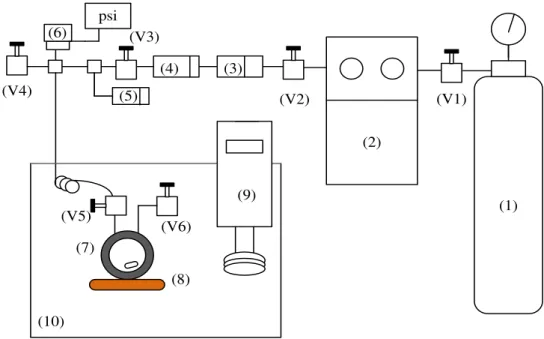
Figure 2.2 – Schematic representation of the experimental apparatus used in the polymerizations. 1-
CO2 cylinder, 2 - CO2 liquid pump, 3- line filter, 4 - check-valve, 5 - rupture disk, 6 -
high-pressure transducer, 7- high-high-pressure cell, 8 – magnetic stirrer, 9 – heating bath circulator, 10 –
open water bath; V1 to V6 – high-pressure valves ... 30
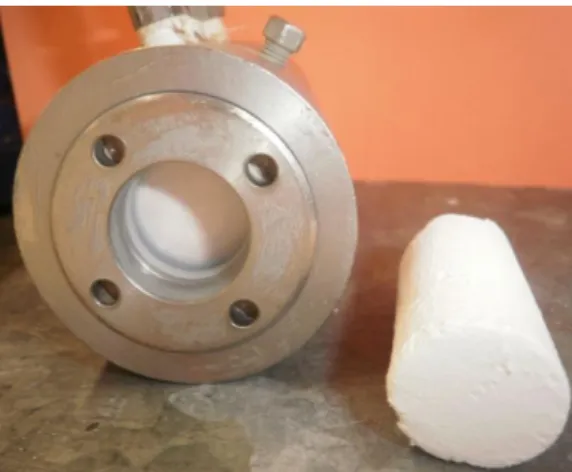
Figure 2.3 - High-pressure reactor used in the polymerizations and typical P(MAA-EGDMA) with
molar ratios of 1:32:20. ... 32
Figure 2.4. - SEM images of the synthesized P(MAA-EGDMA): (a) 0:12:40 and (b) 1:12:40; and
P(NIPAAm-EGDMA) copolymers: (c) 0:12:40 and (d) 1:12:40 template:monomer: crosslinker ratios. ... 33
Figure 2.5 - FTIR spectra detail for the impregnated P(MAA-EGDMA) copolymers. ... 35
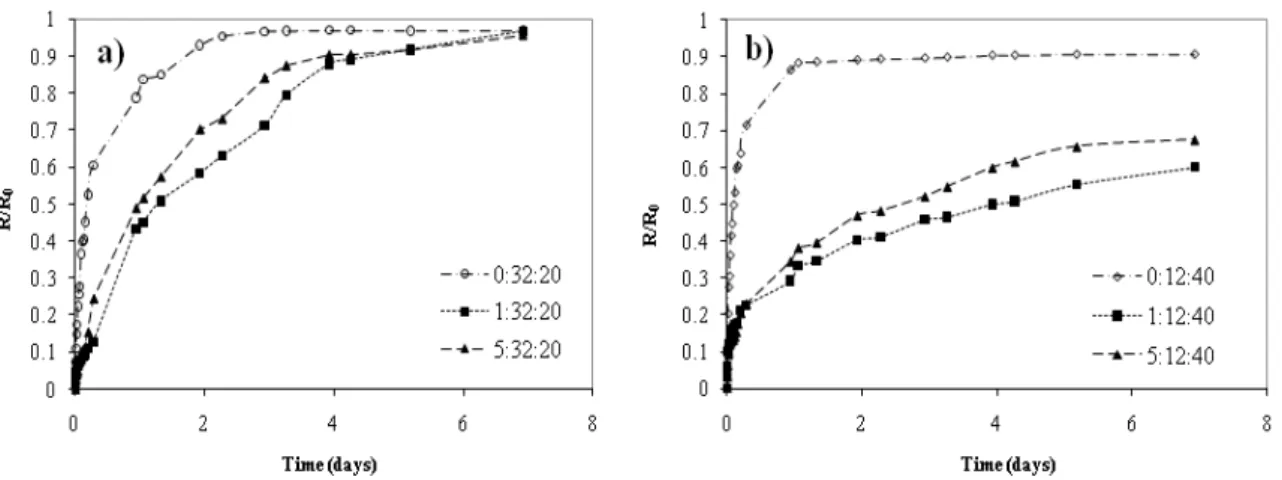
Figure 2.6 - Release profiles of FA from P(MAA-co-EGDMA): (a) less crosslinked and (b) more
crosslinked structures where (-○-) represents the NIP, (-■-) the MIP with lower T:M and (-▲-) the
MIP with higher T:M ratio. ... 35
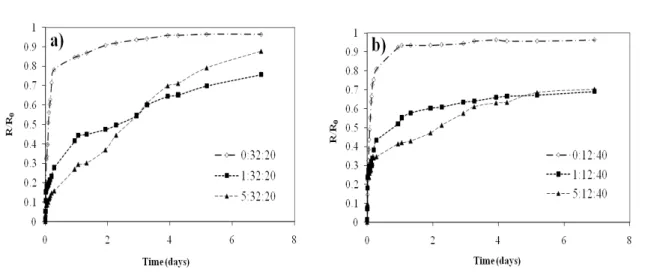
Figure 2.7 - Release profiles of FA from P(NIPAAm-EGDMA): (a) less crosslinked and (b) more
crosslinked structures where (-○-) represents the NIP, (-■-) the MIP with lower T:M and (-▲-) the
MIP with higher T:M. ... 36
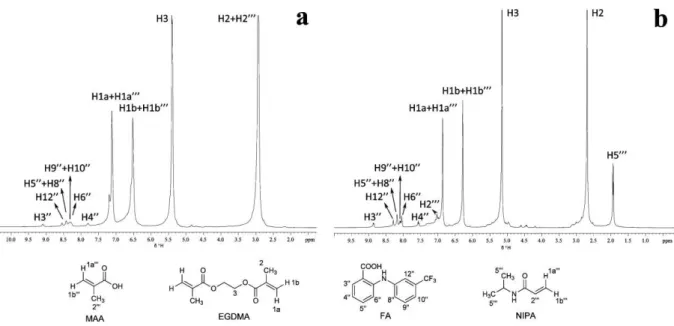
Figure 2.8 - 1H NMR spectra (400MHz) in scCO2 of: a) EGDMA + FA + MAA with resonances
assignment; b) EGDMA + FA + NIPA with H1 resonances assignment. ... 39
Figure 2.9 - Expansion of the 400 MHz 1H/1H 2D NOESY of FA+MAA+EDGMA system in
xvi
Figure 2.10 - a) 400 MHz 1H/19F 2D HOESY of FA+MAA+EDGMA in scCO2, b) 1D trace of
the 2D spectrum in a) at the FA 19F chemical shift. ... 41 Figure 2.11 - Molecular structures of DMAEMA and Ibuprofen. ... 44
Figure 2.12 - Synthesized imprinted P(DMAEMA-EGDMA). a) Inside the polymerization cell and
b) SEM image. ... 48
Figure 2.13 - Swelling ratio of both NIP and MIP matrices at 37ºC and pH 2.2 in the first 3 hours,
and pH 7.4 in the subsequent time. Filled dots represent the water uptake from NIP and filled
squares the water uptake from MIP (mean±SD, n=3). ... 49
Figure 2.14 - Microscopic Photographs of Caco-2 cells after being seeded in the presence of the
culture medium that was previously put in contact with MIP* (A) and NIP# (B). The negative and
positive controls are presented in (C) and (D). Original magnification x100. ... 50
Figure 2.15 - Cellular activities measured by the MTS assay after 24, 48 and 96 hours in contact
with the polymers. MIP, NIP, K+, positive control; K-, negative control. Each result is the mean ± standard error of at least three independent experiments. ... 51
Figure 2.16 - Images of scanning electron microscopy. (A) MIP nanoparticles in contact with
Caco-2 cells (1500x, Caco-20Kv); (B) NIP nanoparticles in contact with Caco-Caco-2 cells (1500x, Caco-20Kv). ... 5Caco-2
Figure 2.17 - Ibuprofen release profiles in phosphate buffer pH 7.4 from imprinted (filled squares)
and non-imprinted (filled dots) DMAEMA-EGDMA copolymers. Each result is the mean ±
standard error of the mean of at least three independent experiments. ... 53
Figure 2.18 - In vitro release profiles of ibuprofen from MIP and NIP at 37ºC and different pH for
8 hours. Each result is the mean ± standard error of at least three independent experiments. ... 54
Figure 2.19 - Ibuprofen diffusion coefficients from NIP and MIP at 37ºC, pH 2.2 and pH 7.4 in the
first hour of drug release. ... 55 Figure 3.1 - Molecular structure of Boc-D and Boc-L-Trp. ... 62 Figure 3.2 - SEM images of PEGDMA a) MIP and b) NIP. ... 66
Figure 3.3 - 13C CPMAS NMR spectra and peak assignment. Imprinted matrices, a) PEGDMA; b)
P(NIPA-EGDMA) and non-imprinted matrices c) PEGDMA and d) P(NIPAAm-EGDMA).
Asterisks depict spinning sidebands. ... 68
Figure 3.4 - Illustration of the Knauer HPLC equipment used, blank HPLC columns and typical
synthesized polymer. ... 69
Figure 3.5 - Chromatograms obtained with the separated injections of Boc-D-Trp and Boc-L-Trp
xvii
Figure 3.6 - Gradient elution and chromatograms obtained using those conditions. ... 71
Figure 3.7 - SEM image of PEGDMA_Krytox MIP and chromatograms obtained for D and L stereoisomers using this stationary phase with a gradient elution. Sample load concentration was set as 3 mM and flow rate at 0.4 mL.min-1. For more information about the gradient, please consult Figure 3.6. ... 72
Figure 3.8 - Chromatograms of P(NIPAAm-EGDMA) MIP and NIP injected with solutions of 0.25 mM each tryptophan enantiomer at 25ºC. Boc-L-trp (dotted line) and Boc-D-trp (solid line). ... 74
Figure 3.9 - Effect of sample load and temperature on the capacity factors of Boc-L- trp(▲)and Boc-D-trp(●).PEGDMAMIP:(a)25ºC;(b)65ºCandP(NIPAAm-EGDMA) MIP: (c) 25ºC; (d) 65ºC. ... 75
Figure 3.10 - Enantioseparation on P(NIPAAm-EGDMA) of a 1 mM trypthophan racemic mixture at a) 65ºC and b) 25ºC. ... 76
Figure 3.11 - Molecularstructureoftheβ-cyclodextrin derivative used in this work. ... 80
Figure 3.12 - SEM images of the synthesized materials. a) Mono-acryloyl-β-CD monomer, b) MIP, c) NIP CD and d) MIP CD. ... 83
Figure 3.13 - Chromatograms obtained for the separated injections of 1 mM Boc-D-Trp, Boc-L-Trp and racemic mixture in the MIP CD stationary phase, using a mobile phase compositions described in entry 4 of Table 3.4. ... 86
Figure 4.1 - Molecular structure of BPA. ... 92
Figure 4.2 - Layout of the high-pressure apparatus for the membrane formation [23]. 1 - Gilson 305 piston pump, 2 - temperature controller, 3 - high-pressure cell, 4 - pressure transducer, 5 - back pressure regulator, 6 – water recirculation pump, 7 – water bath. V1 to V3 – high-pressure valves. ... 94
Figure 4.3 - High pressure-cell used for scCO2-assisted membrane preparation and typical membrane obtained. ... 95
Figure 4.4 - SEM images of the developed structures. a) top surface and b) cross section of PMMA membrane, c) top surface and d) cross section of PMMA MIP hybrid membrane, e) detail of the top surface of PMMA MIP, f) MIP. ... 98
Figure 4.5 - Equilibrium binding curve of BPA to the synthesized polymers and membranes. ... 101
Figure 4.6 - Binding data for MIP and PMMA MIP fitted to a linearized Langmuir equation. ... 102
Figure 4.7 - BPA filtration data of hybrid PMMA membranes. ... 103
Figure 4.8 - Molecular structure of BPADM. ... 105
xviii
Figure 4.10 – Scheme of the BPA cleavage mechanism used in this work. ... 107
Figure 4.11 - SEM images of the polymers synthesized in the presence of acetonitrile. a) MIP, b)
NIP. ... 109
Figure 4.12 - BPA adsorbed by the NIPs synthesized with and without acetonitrile... 110
Figure 4.13 - Binding isotherms for BPA adsorption by NIP (filled triangles) and MIP (filled
squares). ... 111
Figure 4.14 - Scatchard plot for BPA in MIP and NIP sorbents within the range of 5–50 μM. ... 112
Figure 4.15 - Maximum adsorption capacities of BPA, PRO and EE obtained in the selectivity
xix
List of Tables
Table 1.1. - Physical properties of gases, liquids and supercritical fluids. ... 2
Table 1.2 - Critical data for some fluids. ... 2
Table 1.3 - MIPs prepared using different imprinting approaches. ... 5
Table 1.4 – MIPs develeloped as DDS. ... 10
Table 1.5 – Some MIPs tested as CSP reported in the literature. ... 13
Table 1.6 – Literature concerning the design and development of MIMs. ... 17
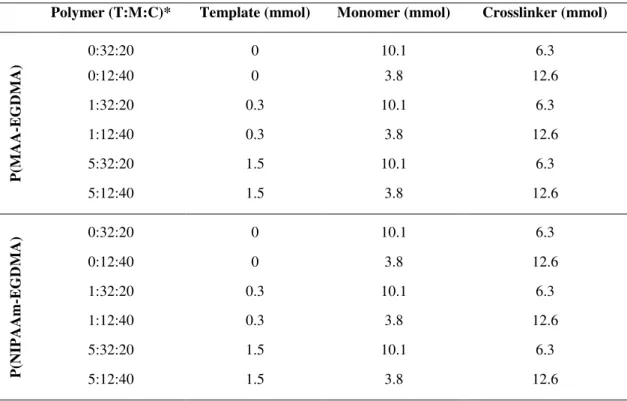
Table 2.1 – Amounts of template and monomers used in each polymerization. ... 29
Table 2.2 - Physical characteristics (surface area, average pore diameter and specific pore volume) of both MIPs and NIPs, obtained by multipoint BET method (type II). ... 34
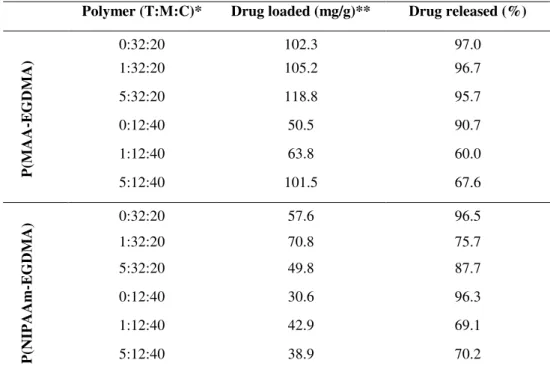
Table 2.3 - Polymer loading during impregnation and corresponding maximum in vitro drug release after 7 days at 37 ºC. ... 37
Table 2.4 - Physical characteristics of NIP and MIP particles and ibuprofen load in scCO2-assisted impregnation. Each result is the mean ± standard error of at least three independent experiments. ... 49
Table 2.5 - Summary of diffusion coefficients and release exponents at different pH. ... 55
Table 3.1 – Experimental variables studied during the analytical method optimization. ... 64
Table 3.2 - Physical characteristics (surface area, average pore diameter and specific pore volume) of both MIPs and NIPs, obtained by multipoint BET method (type II). ... 67
Table 3.3 - Retention, enantioselectivity and resolution factors of Boc-Trp enantiomers on P(NIPAAm-EGDMA) at different temperatures. ... 76
Table 3.4 – Analytical conditions tested during method optimization. ... 84
Table 4.1 - Physical characteristics of NIP and MIP polymers obtained by multipoint BET method (type II)... 98
Table 4.2 - Physical and mechanical properties of PMMA and hybrid PMMA membranes. ... 99
Table 4.3 - Physical characteristics of NIP and MIP polymers obtained by multipoint BET method (type II)... 109
xxi
List of Abbreviations
AA Acrylic Acid
AM Acrylamide
AIBN Azobis(isobutyronitrile)
BET Brunauer–Emmet–Teller
Boc-Trp Boc-Tryptophan
BPA Bisphenol A
BPADM Bisphenol A dimethacrylate
CD Cyclodextrin
CDCl3 Deuterated Chloroform
CE Capillary Electrophoresis
CSP Chiral Stationary Phase
DDS Drug Delivery System
DEAEM 2-(diethylamino) ethyl methacrylate
DEGDMA Diethylene Glycol Dimethacrylate
DMA Dynamic Mechanical Analysis
DMAEMA 2-(Dimethylamino)ethyl methacrylate
DMF Dimethylformamide
DVB Divinylbenzene
EE α-Ethinylestradiol
EGDMA Ethylene Glycol Dimethacrylate
EMEM, EBSS EaglesMinimumEssentialMediumwithEarle’sBalancedSaltSolution
EtOH Ethanol
FA Flufenamic Acid
FBS Fetal Bovine Serum
FTIR Fourier Transform Spectroscopy
GAS Gas Antisolvent
GC Gas Chromatography
Gly Glycine
HCl Hydrochloric Acid
HEMA 2-hydroxyethylmethacrylate
HOESY Heteronuclear Overhauser Effect Spectroscopy
HPLC High Performance Liquid Chromatography
HP NMR High-pressure NMR
IA Itaconic Acid
xxii
LCST Lower critical solution temperature
MAA Methacrylic Acid
MALDI-TOF Matrix-assisted laser desorption/ionization – time of flight
MeCN Acetonitrile
MeOH Methanol
MIM Molecularly Imprinted Membrane
MIP Molecularly Imprinted Polymer
MIP CD Molecularly imprinted polymer with Cyclodextrin moiety
MTS
3-(4,5-dimethylthiazol-2-yl)-5-(3-carboxymethoxyphenyl)-2-(4-sulfophenyl)-2H-tetrazolium
n-Bu4NOH Tetrabutylammonium hydroxide
NEAA Non-essential amino acids
NIP Non-Imprinted Polymer
NIPAAm N-isopropylacrylamide
NIP CD Non-imprinted polymer with cyclodextrin moiety
NOE Nuclear Overhauser Effect
NOESY Nuclear Overhauser Effect Spectroscopy
NVP N-vinyl pyrrolidone
PBS Phosphate Buffer Solution
PEG200DMA Polyethylene glycol (200) dimethacrylate
PGSS Particles from Gas-Saturated Solutions
PMMA Poly(methyl methacrylate)
PRO Progesterone
PVA Poly(vinyl alcohol)
PVP Poly(vinylpyrrolidone)
REACH Registration, Evaluation, Authorization and Restriction of Chemical
Substances
RESS Rapid Expansion of Supercritical Solutions
SAA Supercritical Assisted Atomization
scCO2 Supercritical carbon dioxide
SEM Scanning electron microscopy
SPE Solid Phase Extraction
TFMAA 2-(trifluoromethyl)acrylic acid
CHAPTER 1
1
1.
Introduction
Over the last years, chemistry and related industries have transformed our daily life in such a way that it is impossible to imagine how our life would be without pharmaceutical drugs, plastics, diesel, food packages, detergents and many others. Even with such high impact on the society, the majority of the population still misinterprets the benefits of chemistry and associates it with pollution and environmental harm. However, great efforts have been done by chemists and engineers to develop greener and more sustainable processes. Moreover, with the increased restrictions imposed by REACH
(Registration, Evaluation, Authorization and Restriction of Chemical Substances – EC 1907/2006),
much attention has been given to the protection of human health and environment, enhancing the development of new greener alternatives to already well-established processes. The substitution of hazardous organics by green solvents, such as ionic liquids and supercritical fluids has the potential to yield more sustainable processes and improved final products. Within this purpose, the use of supercritical fluid technology to synthesize and process molecular recognition polymers was investigated and will be presented in this thesis.
1.1
Supercritical fluids
A supercritical fluid is a substance above its critical temperature and pressure but bellow the pressure
required to condense it from the fluid to the solid state [1]. Figure 1.1 illustrates the phase diagram for
carbon dioxide.
2
The properties of supercritical fluids are somewhat intermediate between those of liquids and gases
(Table 1.1), with the exception of compressibility and heat capacity that are significantly higher in the
vicinity of the critical point. Properties such as gas-like diffusivities and liquid-like densities, in addition to the easily tuneable solvent power are some advantageous properties of supercritical fluids [2].
Table 1.1. - Physical properties of gases, liquids and supercritical fluids.
Diffusivity (cm2/s) Density (g/mL) Viscosity (Pa.s)
Gases 0.1 10-3 10-5
Supercritical fluids 10-3 0.3 10-4
Liquids 5 x 10⁻⁶ 1 10-3
The most commonly used supercritical fluids and their corresponding critical parameters are shown in Table 1.2.
Table 1.2 - Critical data for some fluids.
Fluid Critical temperature (ºC) Critical pressure (MPa)
Carbon dioxide 31.1 7.38
Water 374.0 22.06
Methane -82.6 4.60
Ethane 32.2 4.87
Propane 96.7 4.25
Methanol 239.5 8.08
Ammonia 132.4 11.32
Supercritical carbon dioxide (scCO2), in particular, possesses numerous properties that made it emerge
as the most extensively studied supercritical fluid. It has a low critical point, is inexpensive, readily available in high purity and is a gas under ambient conditions, meaning that by simple depressurization of the system no solvent residues will be found in the final product. In the last years,
scCO2 has already proved to be an excellent medium for the synthesis and processing of polymers [3,
3
Within this thesis special focus will be given to scCO2-assisted polymerization, impregnation and
membranes’preparation.
1.2
Molecular recognition
Molecular recognition comprises the specific interactions that enable one chemical entity to selectively recognize its physical and chemically complementary target molecule. The recognition mechanism is mainly mediated by weak non-covalent interactions, such as hydrogen bonding, ion-pairing, hydrophobic interactions and dipolar associations that as a whole govern the structural conformation of macromolecules and influence their interaction with other molecules. In nature there are several examples of successful recognition mechanisms in biological systems, such as DNA-protein, RNA-ribosome and antigen-antibody. Biomolecules however tend to lose their recognition properties in abiotic environments. Furthermore they are considerably expensive, which limits their applicability. For those reasons scientists have shown a great interest in the design of artificial supramolecular systems that exhibit molecular recognition. Examples of these materials are crown ethers and calixarenes, that selectively bind specific cations [12], derivatives of natural cyclodextrins [13], dendrimers [14] and molecularly imprinted polymers.
1.2.1 Molecularly imprinted polymers
The first time that selectivity effects was observed and explained in terms of a template influence was in 1931 in the group of Professor Polyakov [15], that reported some unusual adsorption properties in silica particles. The work reported a higher capacity for uptake the additive that had been in contact
withthesilicathanforitsstructurallyrelatedligands.AtthetimeofPolyakov’sfirstpapers, the origin of the selectivity of antibody-antigen was under discussion [16]. Linus Pauling, in 1940, suggested that antibody formation took place in the presence of an antigen that was captured by the cell and served as a template for antibody formation. Although this hypothesis was not correct, it somehow describes the principle of the synthesis of molecularly imprinted polymers.
4
Figure 1.2- Molecular imprintingschematic mechanism:(1) Monomer and template pre-assembly; (2)
Polymerization with crosslinking agent; (3) Polymer-template bonds disruption and subsequent template removal; (4) Template rebinding.
Imprinted polymers are synthetic receptors with binding constants comparable to natural receptors [18,19], but capable of withstanding harsh conditions of temperature [20], pressure [21], extreme pH [20] and organic solvents [22]. MIPs are also less expensive to synthesize and can be manufactured in large quantities with good reproducibility. These properties have led to a significant increase in reported applications in the last decade such as in synthesis and catalysis [23,24], solid-phase extraction [25, 26], chromatography [27,28], sensing [29,30] and in drug delivery [31,32]. There are, even, some pioneer companies (MIP Technologies, now part of Biotage and Polyintell) that commercially developed imprinted polymers to act as sorbents for analytical applications such as solid-phase extraction.
Although molecular imprinting process seems conceptually simple, the molecular level events that take place in the polymerization mixture are very complex. The basis for successful imprinting relies in the formation of stable monomer-template adducts, whose interaction strength varies from van der Waals to reversible covalent bonds. The energetic contributions to the thermodynamic balance, first developed by Williams [33] that are the basis for the recognition event that rules both binding site formation and template-MIP rebinding [34, 35] are described in Equation 1.1.
(Equation 1.1)
Where the Gibbs free energy changes are: ΔGbind, complex formation; ΔGt+r, translational and rotational Gibbs free energy, associated with the combination of two or more entities in a complex,
carries implications with the order of complexes that may form; ΔGr, restriction of rotors upon
complexation, is related with the higher selectivity observed in systems with more rigid structures
because the lower number of possible conformations leads to narrower site distribution; ΔGh,
5
temperature;∑ΔGp, the sum of interacting polar contributions, rules the degree of template binding
selectivity as a result of different template-functional monomer interaction strengths; ΔGconf and
ΔGvdW, Gibbs free energies, are related with adverse conformational changes and unfavourable van der
Waals interactions, respectively, reflecting the need of matrix conformation compromise and degree of effectivesolvation.TheresultantΔGbind, determines the number of interaction sites formed and their heterogeneity. The more stable and numerous the template-monomer complexes, the higher the number and homogeneity of the affinity sites in imprinted polymer.
1.2.2 Strategies in molecular imprinting
Molecularly imprinted polymers can be prepared according to a number of approaches that essentially differ in the way the template interact with the functional monomer and later with the polymeric binding sites. Although the divisions among them are becoming somewhat blurred due to the emergence of more complex hybrid strategies, the main molecular imprinting approaches considered
are covalent, non-covalent, semi-covalent and metal ion-mediated imprinting. Table 1.3 highlights
some works found in literature, developed on the basis of these strategies.
Table 1.3 - MIPs prepared using different imprinting approaches.
Imprinting Strategy Reactional System References
Covalent β-D-Fru-Val-O-bis(4-vinylphenylboronate) and
ethylene glycol dimethacrylate (EGDMA) [36]
Non-Covalent (-)-nicotine, methacrylic acid (MAA) and EGDMA [37]
Semi-Covalent propazine methacrylate and EGDMA [38]
Metal ion Tetracycline, Fe2+, Mg2+ or Cu2+, MAA and EGDMA [39]
6
amines and carboxylic acids) and difficulties in the cleavage of the template, led to the development of other imprinting methodologies.
Non-covalent imprinting, first developed by the group of Mosbach [41], is currently the most widely applied approach to produce molecular recognition matrices. By means of this technique, template and functional monomer(s) self-assembly through non-covalent interactions such as hydrogen bonding, ion-paring and dipole-dipole interactions, and template rebinding is achieved also via non-covalent interactions. The simplicity of this method, allied with the easy and cheap preparation, as well as the high selectivity that the polymers prepared by this approach can have, seem to overcome potential template-monomer complex stabilization issues, in which the success of this route relies.
Semi-covalent imprinting route combines both covalent interactions, by using a template with polymerizable groups and non-covalent bonds during the rebinding process. The advantages of this route are a narrower distribution of the binding sites and the inexistence of other kinetic restrictions than those encountered by diffusion. Two different approaches have been developed in which the template and the monomer are directly connected or, hence, have a sacrificial spacer group between them. This latter has been intensively developed by the group of Whitcombe [42].
Metal ion-mediated imprinting uses the ability of metal ions to target a wide range of functional groups through the donation of electrons from heteroatoms of ligands to the unfilled orbitals of the outer coordination sphere of the metal. The general procedure for active site formation usually consists in using a polymerizable ligand to complex the metal ion that coordinates to the template [43].
1.2.3 Rational design of MIPs
7
Sellergren [45] studied the influence of the polymerization pressure in the imprinting process by using three different solvents (dichlorometane, methanol and 2-propanol) and two different triazines as templates. The idea was to understand if template monomer assemblies could be stabilized in high pressure and if this would result in higher affinities. The results showed that, depending on the template, high-pressure could enhance the selectivity of the polymer or else have no effect. In both cases the affinity and selectivity in the rebinding process increased with decreasing hydrogen-bonding capacity of the porogen. Although the study was performed by using hydrostatic pressure and no supercritical conditions, their results support the idea that high-pressure could stabilize template-monomer complexes.
1.2.4 Molecular imprinting in scCO2
The porogen used in the imprinting process has a significant effect in surface morphology and molecular recognition properties of the polymers. [46,47] The effect is particularly important when
developing imprinted matrices by non-covalent imprinting route. Non-covalent imprinting, although
technically straightforward, demands an efficient stabilization of the individually weak non-covalent interactions between template and functional monomers. As the process occurs in the presence of the porogen, imprinting success depends on the relative amount of cross interaction between the solvent
and the intended non-covalentinteractions(hydrogenbonding,hydrophobicinteractions,π–πorbital
interactions, ionic interactions, and van der Waals forces) employed during template–monomer
complex formation. If the solvent interferes or competes with any of these interactions, less effective recognition will occur.
The most common method to produce MIPs, bulk polymerization, yields a monolithic polymer which has to be crushed, ground and sieved, leading to product loss of about 50% and resulting in irregular particles in both shape and size with binding sites partly destroyed [48,49]. Alternative methods have
been proposed, such as in situ, multi-step swelling and suspension polymerizations [50]. However they
still show limitations such as heterogeneity, complicated procedures, large use of template, phase partitioning and excessive use of organic solvents.
8
ScCO2 – assisted molecular imprinting has recently demonstrated to be a clean and one-step synthetic
route for the preparation of affinity polymeric materials, with attested performance in chromatography
[52], drug delivery [53] and extraction [54,55] The advantages of using scCO2 as porogenic solvent in
imprinting process go beyond environmental concerns. By performing the synthesis in an apolar
aprotic porogen, such as scCO2,the template-functional monomer complexes can be highly stabilized
giving rise to well-defined active sites and leading to materials with high affinity. Furthermore the matrices can have a controlled morphology and are obtained as dry powders, with no solvent residues, avoiding purification and drying steps. These are major advantages over conventional methods.
1.3
Molecularly imprinted polymers in drug delivery
Traditional drug delivery of pharmaceutical compounds requires pulsatile delivery, being frequently associated with high concentration doses and therefore increasing the risk of toxic side effects. Figure
1.3 illustrates these drug concentration fluctuations found in traditional delivery. If the active
compound possesses a narrow therapeutic window, concentrations in plasma can easily be found above the toxic levels or otherwise below the minimum effective concentration level. Drug delivery systems (DDS) are often required to overcome this issue and others such as the need to protect the drug against metabolic attack, effectively delivering it at the right site and at the right time. Drug delivery systems can comprise polymers, liposomes, cyclodextrins and several combinations among them.
Figure 1.3- Drug concentration as function of time. Adapted from [56].
Over the last years polymeric materials have found a wide range of applications in medicine, not only as pharmaceutical excipients in drug delivery systems [57], but also in prostheses, contact lenses and other medical devices [58]. Polymer-based drug release devices carry the active molecule dispersed
Toxic level
Min. effective level
No effect
9
within the matrix and, depending on the formulation, they can release the therapeutic agent over a prolonged period of time and under determined physiological conditions of temperature and/or pH. The sustained release increases the drug residence time in the body and therefore can enhance the therapeutic activity of the molecule. Moreover, tuning the drug delivery at specific body targets reduces the toxicity of the molecule and increases the therapeutic index.
The development of new drugs with enhanced complexity has increased the need in designing improved drug delivery systems. Moreover, the existing polymeric-based still shows some limitations such as the ability to release the drug only when the equilibrium concentrations in the plasma reach the minimum critical values. This feedback-controlled release would benefit from a drug delivery system with molecular recognition properties, able to store and release the drug while monitoring its concentration levels. The use of MIPs in this area could contribute to the development of better delivery devices.
Imprinted polymers have gained much importance over the last years due to their unique properties. Although no commercial MIPs for drug delivery are available in the market, the application of molecular imprinting technique in the development of drug delivery systems could be advantageous. The use of these recognition elements could improve the control over the therapeutic release by sustaining the delivery of the agent and, adjusting the crosslinking ratio, intelligently releasing the drug in response to the environment. Moreover molecular imprinting technique also enhances the loading capacity of the polymers towards the template drug.
Molecularly imprinted polymers can be used as unique delivery systems or incorporated into other drug release systems. Furthermore, the majority of the drugs act by a molecular recognition mechanism, which explains the growing interest in designing new and improved performance MIPs. The first report on sustained drug delivery from a molecularly imprinted polymer was conducted by the group of Norell [59] that investigated the drug dissociation kinetic from theophylline-imprinted polymers, at different pH and loaded with different amounts of drug. Theophylline, a methylxanthine drug structurally similar to caffeine, used in the treatment of respiratory diseases such as asthma, has a narrow therapeutic window with pronounced side-effects at concentrations slightly above the therapeutic. The imprinted polymers synthesized demonstrated higher affinity towards theophylline than caffeine and displayed more sustained delivery than the corresponding non-imprinted polymer. Since the first work for specific application in drug delivery was described, many others have been reported which attempt to develop imprinted polymers with potential to be used as DDS. Some recent developments include the use of molecular imprinting to prepare materials for ocular, transdermal and
10
Table 1.4 –MIPs develeloped as DDS.
Type of drug delivery Polymer/Drug system References
Ocular
Am-co-HEMA-co-PEGDMA), Poly(AA-co-HEMA-co-PEG200DMA),
Poly(AM-co-HEMA-co-PEG200DMA) loaded with ketotifen
[60]
P(HEMA-co-Vpy-co-EGDMA), P(HEMA-co-AA-co-EGDMA)
loaded with norfloxacin [61]
Poly(PVA(macromer)-co-AM-co-NVP-co-DEAEM) loaded
with hyaluronic acid [62]
Transdermal Cellulose membrane with MIP layer (MAA and EGDMA)
loaded with S-propranolol [63]
Oral
Poly(MAA-co-EGDMA) loaded with 5-Fluorouracil [64]
Poly(MAA-EGDMA) loaded with sulfasalazine [65]
Poly(NIPAAm-MAA-EGDMA) loaded with 4-aminopyridine [66]
Over the last years a great effort has been made to develop imprinted matrices for drug delivery applications with some chain flexibility. Although the majority of imprinted polymers reported possess high crosslinking degree and therefore limited chain mobility, a certain degree of flexibility can be found in biological systems, with recognition occurring in aqueous environment as the result of numerous non-covalent interactions. Much of the theory concerning conformational memory in biological macromolecules, such as proteins, is valid for molecularly imprinted polymers. Thus, the design of imprinted matrices with a certain mobility of the polymeric chains has been studied to improve the properties of common hydrogels. Low crosslinked polymeric networks can experience reversible volume phase transitions in response to external stimuli, such as pH, temperature, electric field, light or even when in the presence of certain molecules, if stimuli-responsive monomers are used. The stimuli-sensitive properties, in combination with imprinting effect, engage considerable advantages. The imprinting process can impart the polymer high drug loading capacity whilst the flexible chains can provide a stimuli-sensitive character. Different conformation of the chains leads to different affinity of the matrix to the target molecule, which provides different drug release profiles, with“on-off”deliverybeingalreadydocumented[67].
11
1.4
Molecular recognition materials in chromatography
The worldwide research concerning drug development, food industry, enzyme engineering and catalyst technology, among many others, requires novel and improved methods to separate enantiomeric molecules. In pharmaceutical industry, in particular, much attention has been given to this issue as the research for new drugs with more targeted specificity and reduced side effects leads to the development of complex chemical structures that often exhibit chirality. With regulations demanding the use of the single enantiomeric form, market-share of pure enantiomer is in expansion.
Figure 1.4 illustrates the distribution of approved drugs according to their chirality character.
Pharmaceutical applicants have to determine the amount of each form and separate the enantiomers present in specific product samples [68]. The most common techniques for assessing the optical purity of pharmaceutical samples are high performance liquid chromatography (HPLC), gas chromatography (GC) and capillary electrophoresis (CE).
Figure 1.4 - Worldwide distribution of the approved drugs in the period of 1983-2002 according to their
chirality character. *Including diastereomeric mixtures. Adapted from [68].
12
and can provide the separation of several important drugs. Their use is however restricted, as additives with high UV absorbance may decrease the detection limit of the separated enantiomeric molecules, when using a UV detector, being disadvantageous for the separation [71]. Chiral stationary phases are generally achieved by means of immobilizing small chiral molecules or polymers into supports such as silica gel. CSP based on optically active polysaccharide biopolymers, such as cellulose and amylose, that possess perfectly defined structures with high site density are readily available, although they usually lack from predictability of elution order and separation [72]. Some cyclodextrin-derivative CSPs proved to be efficient on the separation of amino acid enantiomers [73] although their high cost turn the chromatographic process economically disadvantageous. The use of imprinted polymers with chiral recognition ability could be considered a viable alternative as MIPs can replace expensive chiral columns and avoid chiral mobile phase additives and derivatisation with chiral reagents.
Chapter 3 of this thesis reports the development of an imprinted polymeric stationary phase with chiral recognition ability and the first studies concerning the design of a dual molecular recognition host of MIP and cyclodextrins.
1.4.1 Molecularly imprinted polymers as chiral stationary phases
A successful imprinting process is able to deliver polymeric networks with effective enantiomeric recognition properties when templating a chiral molecule. Higher affinity to the template enantiomer is translated in a predictable order of elution when using MIPs as chiral stationary phases, as the template establishes a higher number of interactions with the polymeric matrix and therefore is more retained. The use of imprinted polymers as stationary phases has been object of much research, with
several papers published in the area. Table 1.5 summarizes some relevant works in this field.
13
Table 1.5 – Some MIPs tested as CSP reported in the literature.
Analyte Polymeric system and Polymerization method References
(S)-Nilvadipine MAA, TFMAA, 2-Vpy, 4-Vpy as functional monomers,
EGDMA as crosslinker and polystyrene seed particles.
Multistep swelling
[78]
(-)-Norepinephrine MAA or IA as functional monomers and EGDMA as
crosslinker. In situ
[79]
(D)-Phenylalanine MAA as functional monomer, EGDMA as crosslinker and PVA as stabilizer. Suspension
[80]
Boc-L-tryptophan NIPAAm as functional monomer and EGDMA as
crosslinker. Precipitation polymerization
[52]
(-)-Isoproterenol TFMAA as functional monomer and DVB as crosslinker.
Polymerization inside silica pores
[81]
Monolithic imprinted chiral stationary phases are prepared by in situ polymerization within the
chromatographic columns, using solvents with good porogenic properties in order to assure high porosity. Yin and co-workers had performed a comparative study of the chromatographic performance of nateglinide imprinted monolith and bulk polymer [82]. In their work, monolithic MIPs showed superior chromatographic properties than MIPs prepared in bulk, namely higher mass transfer kinetics and hence more rapid separation, as well as lower backpressures. A key parameter when developing this type of CSPs is the choice of the porogenic solvent, as the relative polarity necessary to prepare a porous rod with good flow-through properties may be disadvantageous for imprinting, because the solvent may compete with the template-monomer interactions.
Imprinted polymeric beads can be easily prepared by precipitation polymerization, leading to particles with a more homogeneous binding site distribution than bulk polymers [83]. Precipitation polymerization is a surfactant-free synthetic strategy that, depending on the operational variables can provide agglomerates or spherical particles, from an initial high diluted mixture in a poor solvent. Studies concerning the application of imprinted particles prepared by precipitation polymerization as CSPs revealed this is a straightforward and viable method to prepared HPLC column packings [84, 52].
14
hydrogen bonds are compatible with this medium. To overcome this issue, Mosbach developed an alternative method for preparing spherical imprinted particles, by substituting water by perfluoroalkanes [85]. Although these particles led to a chromatographic packing with low pressure drops, allowing the increase of the flow rate, the high number of non-specific binding sites, attributed to a possible interaction of the surfactant with the template and the high cost of perfluoroalkanes compromised an extensive development of this method.
The group of Haginaka developed a sophisticated and efficient method for preparing uniformly sized spherical imprinted particles by multistep-swelling polymerization [86,87]. In a first step, polystyrene seed particles were mixed with a microemulsion prepared with activating solvent, surfactant and water. Once the particles were swollen, a second swelling was carried also in aqueous environment, in the presence of the imprinting reactional mixture. The resulting particles were tested as selective chromatographic packing and their chiral recognition ability attested in the separation of racemic naproxen, chlorpheniramine and others.
The synthesis of molecular recognition polymeric beads by imprinting inside the pores of preformed silica particles or by grafting a MIP film on porous silica supports are other reported methods to prepare CSPs [81,88]. Silica particles are most used mainly because they are commercially available in a wide variety of sizes and porosities [89]. Although the imprinted particles prepared by these methods present low back-pressures and high mass transfers, a significant peak broadening was observed.
Although MIP-based chiral stationary phases can be considered powerful tools to overcome some analytical challenges, much has to be done so that imprinted materials can be marketed. Efforts concerning the development of new materials with improved chromatographic performance properties could benefit from the use of alternative technologies and from the combination of already well-established molecular recognition materials, such as MIPs and cyclodextrins.
1.4.2 Cyclodextrins as molecular recognition materials
Cyclodextrins (CDs) are cyclic oligosaccharides composed of D-glucoseunitsconnectedthroughα
-(1,4) glucosidic linkages that are produced from starch by means of its enzymatic degradation. The mostcommonlyusednativecyclodextrinsareα,βandγ-CD, which consist respectively of 6, 7 and 8
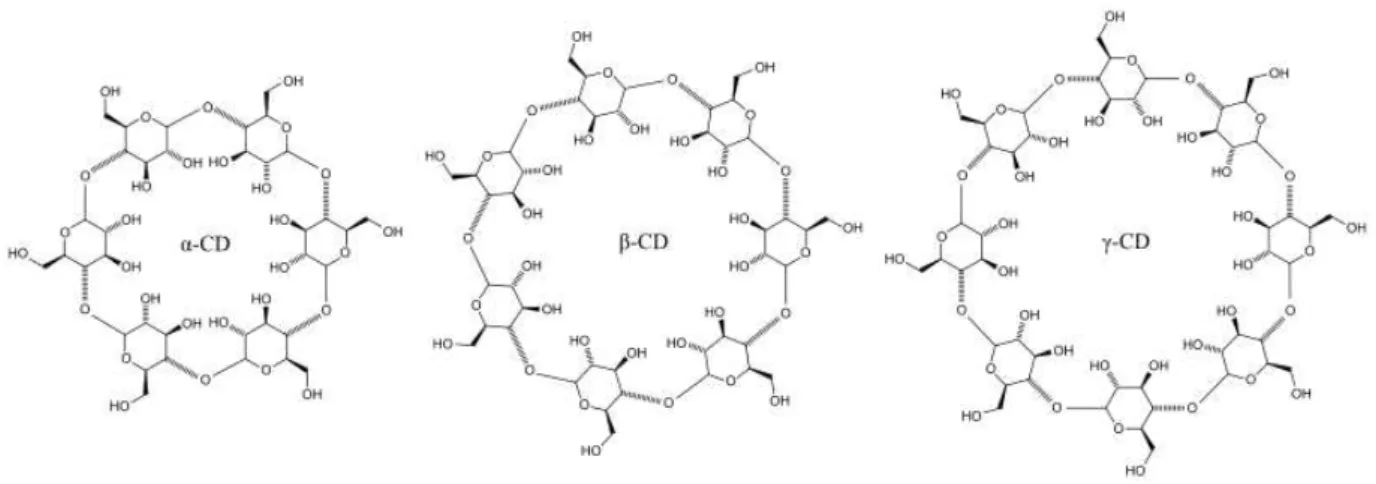
glucose units. Figure 1.5 illustrates the chemical structures of these cycloamyloses. The spatial
15
Figure 1.5 –Molecularstructureofα,βandγ-CD
Ever since they were discovered in 1891 [93], cyclodextrins have been widely used because of their availability, low cost and ability to form complexes. Applications include pharmaceutical applications [94], cosmetics [95], textiles [96] and food industry [97], as well as analytical sciences and separation processes. Among their characteristic properties is the capability of forming complexes with different free energies for a given pair of enantiomers [98], allowing their chiral separation. Moreover, the increasing number of derivative molecules has opened up the applications of cyclodextrins, with a special focus on the possibility of synthesizing highly selective cyclodextrin-silica composites to be used as chiral stationary phases. Cyclodextrin-based chiral stationary phases with attested performance in the separation of a wide range of molecules such as amino acids, anti-inflammatory molecules,
antibiotics and pesticides are reported in the literature[13, 99, 100].
Cyclodextrins can be polymerized and their recognition properties enhanced by means of molecular imprinting [101]. Molecularly imprinted cyclodextrin polymers can be polymerized in aqueous environments without disturbing the host-guest complexes, exhibiting therefore improved recognition properties in aqueous solutions. CD-based imprinted networks are usually prepared by crosslinking cyclodextrin molecules using diisocyanates [102,103] or epichlorohydrin [104]. However, novel procedures are emerging and the derivatization of the native cyclodextrins to prepare functional vinyl monomers that can be incorporated in typical polymeric networks conveys some advantages, such as the possibility of creating dual recognition hosts and stimuli-sensitive matrices.
16
1.5
Imprinted porous structures
Molecular recognition properties of MIPs in addition to their thermal, chemical and physical properties make them suitable alternatives to natural receptors in many applications. Nevertheless, the use in some diffusion-dependent processes such as sensing and membrane affinity separations demand an efficient immobilization onto solid surfaces, which is the most challenging issue. Nevertheless, successful immobilization of MIPs in a wide variety of material devices, such as in sensors, carbon nanotubes, electrospun fibers and flat sheet membranes are reported [105, 106, 107, 108, 109, 110, 111, 112].
The integration of MIPs in porous structures, such as membranes, can have a synergistic effect because the molecular recognition process benefits from the high surface area of the membrane and in turn the structure is able to selectively recognize a target molecule or a group of analogous molecules. An ideal membrane should possess good mechanical properties, such as strength and flexibility, high permeability and ability to selectively transport the components that diffuse through it. Membranes are widely used in many industrial sectors in chemical, petrochemical, pharmaceutical and biotechnology processes. New trends in membrane technology encounter the development of highly selective membranes with molecular affinity character, inspired in natural recognition mechanisms. Molecularly imprinted membranes (MIMs) emerge as suitable candidates due to their low cost, ease of preparation and good molecular recognition performance.
The first report concerning molecularly imprinted membranes was presented by Piletsky [113], in 1990 and studied the recognition ability of an imprinted film prepared by bulk polymerization using adenosine monophosphate (AMP) as template. Ever since that work was published, many others have been reported aiming to improve the properties of imprinted membranes and increase their affinity to
the target molecules. Table 1.6 shows some relevant publications in the field.
The preparation of imprinted membranes has been achieved by means of different strategies: synthesis of the imprinted polymer and sequential preparation of the membrane, simultaneous formation of imprinted sites and membrane morphology and synthesis of MIPs on a preformed membrane matrix.
In situ crosslinking polymerization and synchronous film solidification had been reported in the early
17
Table 1.6 –Literature concerning the design and development of MIMs.
Analyte Membrane composition Preparation technique References
Atrazine
Poly(methacrylic acid-co-tri(ethylene glycol)
dimethacrylate-co-oligourethane acrylate)
In situ polymerization [116]
Bisphenol A
Poly(bisphenol A dimethacrylate-co-divinyl benzene) with polystyrene,
cellulose acetate, nylon 66 and polysulfone as scaffold polymers
Polymer solution casting [117]
Folic acid Poly(acrylonitrile-co-acrylamide) Phase inversion [118]
Lysozyme, Albumin, Immunoglobulin G
Fluoropolymer, disaccharide, epoxy resin and glass coverslip on mica
support
Plasma deposition [119]
Theophylline
Poly(methacrylic acid-co-ethylene glycol dimethacrylate) in cellulose
support
Grafting [120]
Simultaneous formation of the porous structure and recognition sites by phase inversion technique has been widely studied by many groups. Kobayashi has several papers concerning the preparation of imprinted membranes using this approach. The first work using this technique lacked a viable water flux, as the membranes had usually very low permeability [121]. However, recent research has led to the development of membranes with an acceptable water flux [122]. The major challenge engaged with this method centres on the different optimal conditions required to obtain an adequate porous structure formation without disturbing the complexes necessary to the molecular recognition mechanism.
Composite imprinted membranes prepared by casting the reactive imprinting mixture in the base scaffold membrane and polymerizing it using photo initiators [123] are well reported in the literature. The main advantage concerning this method is the possibility of choosing the base membrane which best corresponds to the need of the process and graft the structure with the recognition polymer, yielding either symmetric or asymmetric membranes.
18
as a suitable scaffold and a functional polymer with recognition properties are able to form sufficiently strong intermolecular interactions, a stable porous hybrid imprinted structure can be prepared. In Chapter 4 of this thesis, the development of hybrid molecularly imprinted membranes prepared by
19
1.6
Aims and structure of the thesis
The aim of this thesis was to develop molecularly imprinted polymers using supercritical fluid technology and investigate their performance in concrete applications.
The thesis is structured into four chapters. Chapter 1 highlights the use of supercritical fluids and reviews the state-of-the-art of molecular recognition materials, namely MIPs and cyclodextrins. The latter chapters describe the experimental work developed in the scope of the thesis.
Chapter 2 reports the rational design of MIPs as potential drug delivery systems (DDS). This chapter is subdivided in two parts. The first part states the influence of some experimental variables in the performance of MIPs as drug delivery carriers. Copolymers of methacrylic acid (MAA) with ethylene glycol dimethacrylate (EGDMA) and N-isopropylacrylamide (NIPAAm) with EGDMA were designed to have molecular recognition to flufenamic acid (FA), the template drug. The synthesized polymeric matrices with different ratios between template and functional monomer and different crosslinking
degrees were further impregnated with FA in scCO2 and the drug release profiles evaluated in vitro.
The second part of the chapter describes the development of a low crosslinked imprinted polymer with molecular recognition to ibuprofen. Both MIP and NIP composed of 2-(dimethylamino)ethyl methacrylate (DMAEMA) and EGDMA were loaded with ibuprofen in scCO2-assisted impregnation
and evaluated as potential DDS in two different in vitro situations. In the first one the polymers were
allowed to release the drug over several days and in the second one an oral administration situation was simulated and the polymers were subjected to different pHs and the drug release profiles studied for a period of 8 hours.
Chapter 3 reports the development of MIP-based chiral stationary phases for enantiomeric separations in HPLC using aqueous-organic mobile-phases. The chapter is subdivided in two parts. The first describes the synthesis and enantiomeric recognition ability of PEGDMA and P(NIPAAm-EGDMA) MIPs towards Boc-L-Tryptophan (Boc-L-Trp), the template molecule and its enantiomer, Boc-D-Trp. The analytical method was optimized to ensure that the best chromatographic conditions were used. The influence of some experimental variables, such as sample load and temperature on the retention factors of both enantiomeric species was studied. The second part of the chapter reports the design of a dual molecular recognition host of MIP and cyclodextrin with chiral recognition properties. The
cyclodextrin derivative, 2-monoacryloyl-β-cyclodextrin monomer was copolymerized with NIPAAm
and EGDMA in the presence of Boc-L-Trp and the performance of the resultant polymer evaluated by HPLC analysis.
Chapter 4 reports the development of imprinted polymeric materials for extraction of environmental pollutants, namely bisphenol A (BPA). The chapter is organized in two parts. The first describes the synthesis of the non-covalent MIP with further immobilization into a hybrid PMMA membrane
20
beads (MIP and NIP) and membranes (PMMA MIP and PMMA NIP) to bind BPA was tested in aqueous solutions, in batch equilibrium conditions. Moreover, the molecular recognition performance of the membranes was evaluated through filtration experiments. The second part of the chapter reports the synthesis of an imprinted polymer with molecular recognition to BPA, using the semi-covalent approach. By means of this route a polymerizable template molecule, bisphenol A dimethacrylate, was
crosslinked with EGDMA. The hydrolysis of BPA from the matrix was performed in scCO2, using
tetratbutylammonium hydroxide (n-Bu4NOH) as cleavage agent. Both MIP and NIP were evaluated
with respect to their ability to adsorb BPA from aqueous solutions. Moreover, binding tests with
progesterone (PRO) and α-ethinylestradiol (EE) were carried out to study the selectivity of MIP
21
1.7
References
[1] Jessop, P., Leitner, W., Chemical Synthesis using supercritical fluids, Wiley-VCH, New York, USA, 1999. [2] Leitner, W., Jessop, P.G., Handbook of green chemistry, Volume 4: Supercritical Solvents, Wiley-VCH, Weinheim, 2010.
[3] Kendall, J.L., Canelas, D.A., Young, J.L., DeSimone, J.M., Polymerizations in supercritical carbon dioxide, Chem. Rev. 1999, 99, 543-563.
[4] Giles, M.R., Griffiths, R.M.T., Aguiar-Ricardo, A., Silva, M.M.C.G., Howdle, S.M., Fluorinated graft stabilizers for polymerization in supercritical carbon dioxide: the effect of stabilizer architecture, Macromolecules 2001, 34, 20-35.
[5] Jung, J., Perrut, M., Particle design using supercritical fluids: Literature and patent survey, J. Supercrit. Fluids 2001, 20, 179-219.
[6] Kikic, I., Vecchione, F., Supercritical impregnation of polymers, Curr. Opin. Solid State Mater. Sci. 2003, 7, 399-405.
[7] Reverchon, E., Cardea, S., Production of controlled polymeric foams by supercritical CO2, J. Supercrit. Fluids 2007, 40, 144-152.
[8] Temtem, M., Casimiro, T., Aguiar-Ricardo, A., Solvent power and depressurization rate effects in the formation of polysulfone membranes with CO2-assisted phase inversion method, J. Membr. Sci. 2006, 283, 244-252.
[9] Sousa, M., João Melo, M., Casimiro, T., Aguiar-Ricardo, A., The art of CO2 for art conservation: a green approach to antique textile cleaning, Green Chem. 2007, 9, 943- 947.
[10] Bogel-ukasik, E., Fonseca, I., Bogel-ukasik, R., Tarasenko, Y.A., Nunes da Ponte,M., Paiva, A., Brunner, G., Phase, equilibrium-driven selective hydrogenation of limonene in high-pressure carbon dioxide. Green Chem. 2007, 9, 427 – 430.
[11] Simões, P.C., Carmelo, P.J., Pereira, P.J., Lopes, J.A., Nunes da Ponte, M., Brunner, G., Quality assessment of refined olive oils by gas extraction. J. Supercrit. Fluids 1998, 13, 337-341.
[12] Ludwig, R., Dzung, N.T.K., Calixarene-based molecules for cation recognition, Sensors 2002, 2, 397-416. [13] Malta, L.F.B., Cordeiro, Y., Tinoco, L.W., Campos, C.C., Medeiros, M.E., Antunes, O.A.C., Recognition mechanism of D- and L-tryptophan enantiomers using 2-hydroxypropyl-α- or β-cyclodextrins as chiral selectors, Tetrahedron: Asymmetry 2008, 19, 10, 1182-1188.
[14]Pittelkow, M., Nielsen, C.B., Kadziola, A., Christensen, J.B., Molecular recognition: minimizing the acid-base interaction of a tunable host–guest system changes the selectivity of binding, J. Incl. Phenom. Macrocycl. Chem 2009, 63, 257-266.
[15] Polyakov MV., Adsorption properties and structure of silica gel., Zhur. Fiz. Khim. 1931, 2, 799–805. [16] Whitcombe, M.J., Vulfson, E.N., Imprinted polymers, Adv. Mater. 2001, 13, 7, 467-478.
[17] Alexander, C., Andersson, H.S., Andersson, L.I., Ansell, R.J., Kirsch, N., Nicholls, I.A., O’Mahony, J.,
Whitcombe, M.J., Molecular imprinting science and technology: a survey of the literature for the years up to and including 2003, J. Mol. Recognit. 2006, 19, 106-180.
[18] Chianella, I., Lotierzo, M., Piletsky, S.A., Tothill, I.E., Chen, B., Karim, K., Turner, A.P.F., Rational Design of a polymer specific for microcystin-LR using a computational approach, Anal. Chem. 2002, 74, 1288-1293. [19] Hoshino, Y., Shea, K.J., The evolution of plastic antibodies, J. Mater. Chem. 2011, 21, 3517-3521.
[20] Svenson, J., Nicholls, I.A., On the thermal and chemical stability of molecularly imprinted polymers, Anal. Chim. Acta 2001, 435, 19-24.
[21] Baggiani, C., Giraudi, G., Trotta, F., Giovannoli, C., Vanni, A., Chromatographic characterization of a molecular imprinted polymer binding cortisol, Talanta 2000, 51, 71-75.