Liliana Andreia Amaro Rodrigues
Licenciatura em Ciências da Engenharia Química e Bioquímica
Development of a "green process" for the
isolation of natural functional extracts with
anti-cancer activity - Application of
high-pressure technology
Dissertação para obtenção do Grau de Mestre em Engenharia Química e Bioquímica
Orientador: Catarina Duarte, Ph.D, IBET/ITQB-UNL
Co-orientador: Ana Teresa Serra, Ph.D, IBET/ITQB-UNL
Júri:
Presidente: Prof. Doutor Mário Fernando José Eusébio Arguente: Prof. Doutora Susana Filipe Barreiros
Vogal: Doutora Catarina Maria Martins Duarte
Liliana Andreia Amaro Rodrigues
Licenciatura em Ciências da Engenharia Química e Bioquímica
Development of a "green process" for the
isolation of natural functional extracts with
anti-cancer activity - Application of high-pressure
technology
Dissertação para obtenção do Grau de Mestre em Engenharia Química e Bioquímica
Orientador: Catarina Duarte, Ph.D, IBET/ITQB-UNL
Co-orientador: Ana Teresa Serra, Ph.D, IBET/ITQB-UNL
Júri:
Presidente: Prof. Doutor Mário Fernando José Eusébio Arguente: Prof. Doutora Susana Filipe Barreiros
Vogal: Doutora Catarina Maria Martins Duarte
Development of a “green process” for the isolation of natural functional extracts with anti
-cancer activity – Application of high-pressure technology
Copyright Liliana Andreia Amaro Rodrigues, FCT/UNL, UNL
i
Acknowledgments
Gostaria de agradecer a todos aqueles que, direta ou indiretamente, contribuíram para a realização deste trabalho.
Em primeiro lugar, à Doutora Catarina Duarte, por me ter dado a oportunidade de desenvolver este trabalho no laboratório de Nutracêuticos e Libertação Controlada. Agradeço também toda a orientação prestada, pelo seu constante otimismo e palavras de incentivo e apoio.
À Doutora Ana Teresa Serra, agradeço toda a orientação e apoio prestados. Obrigada pelas boas ideias e pela tua paciência e constante disponibilidade.
Agradeço a todos os membros e colegas do laboratório de Nutracêuticos e Libertação Controlada e de forma especial:
À Inês Silva que realizou todos os ensaios de citotoxicidade e atividade antiproliferativa. Muito obrigada por toda a tua ajuda e disponibilidade constante.
Ao Agostinho Alexandre, por todos os conhecimentos que me transmitiu, pelos comentários e sugestões. Obrigada pela tua preocupação e companhia.
À Joana Poejo, por toda a ajuda prestada nos ensaios de atividade antioxidante. Muito obrigada pela tua disponibilidade e paciência.
À Ana Nunes, por me ter acompanhado no início do projeto.
Ao Daniel D. Lopes, à Sara Nunes, à Cátia Carmo e à Vanessa Gonçalves. Obrigada pela vossa companhia, amizade e preocupação.
Agradeço à Doutora Maria do Rosário Bronze por todo o apoio na parte analítica do trabalho e pela disponibilidade constante.
Agradeço também ao Cláudio Almeida e ao Professor Luís Vilas Boas pela disponibilidade que sempre demonstraram.
À Ana, à Catarina, à Margarida, à Sara e ao Tiago, que me acompanharam desde o início do meu percurso académico. Obrigada pela vossa amizade, apoio e preocupação e por todos os bons momentos que passámos juntos.
Aos meus amigos David, Marco e Ricardo por todo o apoio, amizade e preocupação.
Ao Francisco, que mesmo estando longe, conseguiu estar sempre presente para me apoiar nas alturas mais difíceis. Obrigada pela tua amizade e palavras de apoio. Tens o otimismo que me falta!
À minha família e em especial aos meus pais, que tudo fizeram para me apoiar durante todo o percurso académico, à minha irmã pelas palavras de incentivo e à minha avó pela constante preocupação.
iii
Abstract
The knowledge of the healing power of some species of plants is ancient. Nowadays, the preference for natural products has increased, and with it, the interest in recover and isolate bioactive phytochemicals with potential health benefits.
The main goal of this thesis was to isolate anticancer bioactive compounds, namely
terpenes and fatty acids, from Portuguese Lavandula (L. angustifolia and L. stoechas) and
Mentha species (M. spicata, M. piperita var. citrata and M. pulegium), using supercritical fluid
extraction (SFE).
All extractions were performed at 50ºC and 250 bar in a two step methodology: a first step with supercritical CO2, during 60 minutes, followed by a second step, with a mixture of
CO2 and ethanol (90:10 %v/v), for 180 minutes. Different fractions of the extracts were
recovered every 30 minutes, and the resulting samples were characterized in terms of global yield (% g/g), screened for the presence of terpenes, by thin layer chromatography (TLC) and analyzed by gas chromatography coupled with mass spectrometry detection (GC-MS). Furthermore, ORAC, HORAC and HOSC assays were conducted for the determination of antioxidant activity. Cell-based assays in human HT-29 colorectal adenocarcinoma cells were also performed, in order to determine the potential of the extracts as cancer cell-growth inhibitors.
The fractions of the extract of M. piperita var. citrata presented the highest antioxidant
activity, whereas the fractions of L. angustifolia,L. stoechas and M. spicata extracts revealed to
be the most promising colorectal cancer cell-growth inhibitors. The bioactive responses were correlated with the phytochemical composition of the extracts, and the main compounds, such as camphor, fenchone, carvone, linoleic acid, among others, were highlighted. However, it is possible that the bioactivities were due to synergistic effects between several compounds.
Results of this thesis demonstrated that SFE is a reliable tool to extract anticancer
bioactive components from some Lavandula and Mentha plants.
Keywords: Supercritical fluid extraction, Lavandula spp., Mentha spp., terpenes,
v
Resumo
O conhecimento do poder curativo de certas espécies de plantas é muito antigo. Nos dias que correm, a preferência por produtos naturais aumentou e, com ela, o interesse em recuperar e isolar fitoquímicos bioativos com potenciais benefícios para a saúde.
Nesta tese pretendeu-se isolar compostos bioativos com atividade anticancerígena,
nomeadamente terpenos e ácidos gordos, a partir de espécies de Lavandula (L. angustifolia e L.
stoechas) e Mentha (M. spicata, M. piperita var. citrata e M. pulegium), utilizando extração
com fluidos supercríticos (SFE).
Todas as extrações foram realizadas a 50ºC e 250 bar utilizando uma metodologia de
dois passos: um primeiro com CO2 supercrítico, durante 60 minutos, seguido de um segundo
com uma mistura de CO2 e etanol (90:10 %v/v), durante 180 minutos. Os extratos foram
recolhidos em diferentes frações em intervalos de 30 minutos e as amostras resultantes foram caracterizadas em termos de rendimento global (% g/g), analisadas por cromatografia em camada fina (TLC) e por cromatografia gasosa acoplada a espectrometria de massa (GC-MS). Posteriormente, foram realizados ensaios para determinação da atividade antioxidante, nomeadamente ORAC, HORAC e HOSC, bem como ensaios em células humanas de cancro colo-rectal (HT-29), de forma a determinar a atividade antiproliferativa dos extratos.
As frações do extrato de M. piperita var. citrata apresentaram a maior atividade
antioxidante, enquanto que os extratos de L. angustifolia,L. stoechas e M. spicata revelaram ser
os mais promissores em termos de atividade anticancerígena. As respostas bioativas foram correlacionadas com a composição fitoquímica dos extratos e os seus compostos maioritários, tais como a cânfora, fenchona, carvona e ácido linoleico foram destacados. No entanto, é possível que as bioatividades se devam a sinergias entre vários compostos.
Os resultados desta tese demonstraram que a SFE é uma ferramenta fidedigna para extrair compostos bioativos com atividade anticancerígena a partir de plantas do género
Lavandula e Mentha.
Palavras-chave: Extracção com fluidos supercríticos, Lavandula spp., Mentha spp,
vii
Index
1. Introduction ... 1
1.1. Cancer worldwide ... 1
1.1.1. Colorectal cancer ... 2
1.2. Herbs and Spices: Their Role in Cancer Prevention and Treatment ... 4
1.2.1. Phytochemicals and their health-promoting effects ... 7
1.3. Lavandula and Mentha Species ... 13
1.3.1. Lavandula spp. ... 13
1.3.2. Mentha spp. ... 14
1.4. Natural Health Products and Nutraceuticals ... 16
1.4.1. Extraction of Bioactive Compounds ... 17
1.5. Aim and structure of the thesis ... 23
2. Materials and Methods ... 25
2.1. Chemicals ... 25
2.2. Raw material preparation ... 25
2.3. Moisture content determination ... 26
2.4. Supercritical Fluid Extraction (SFE) procedure ... 26
2.5. Characterization of the extracts ... 28
2.5.1. Terpenes and steroids detection by Thin Layer Chromatography (TLC) ... 28
2.5.2. Identification and quantification of the extract’s chemical components by Gas Chromatography – Mass Spectrometry (GC-MS) ... 29
2.6. Antioxidant activity ... 29
2.6.1. Oxygen Radical Absorbance Capacity (ORAC) ... 29
2.6.2. Hydroxyl Radical Adverting Capacity (HORAC) ... 30
2.6.3. Hydroxyl Radical Scavenging Capacity (HOSC) ... 31
2.6.4. Lipophilic Oxygen Radical Absorbance Capacity (L-ORAC) ... 31
2.7. Cell-Based Assays ... 32
2.7.1. Cell lines and culture ... 32
2.7.2. Cytotoxicity assay ... 33
2.7.3. Antiproliferative Assay ... 33
3. Results and Discussion ... 35
3.1. Development of natural extracts using supercritical fluid extraction ... 35
3.2. Phytochemical characterization of the bioactive rich extracts ... 37
3.3. Evaluation of the antioxidant activity of the natural extracts using chemical assays .. 53
3.4. Evaluation of the antiproliferative effect of the natural extracts in HT-29 cells ... 59
4. Conclusions ... 65
5. References ... 67
6. Appendix ... 79
Appendix A – Thin Layer Chromatography ... 79
ix
Index of figures
Figure 1.1 Endogenous and exogenous causes of cancer.
1
Figure 1.2 Schematic representation of part of the digestive system, including the colon
and rectum.
3
Figure 1.3 Fundamental processes in promotion or inhibition of cancer development and
progression, which can be influenced by food, nutrition, obesity and physical activity. 4
Figure 1.4 Potential mechanisms for cancer prevention with phytochemicals.
5
Figure 1.5 Different classes of terpenes.
10
Figure 1.6 Structural formulas of some fatty acids.
13
Figure 1.7 Pressure-temperature diagram for a pure component.
18
Figure 1.8 Schematic diagram of a basic supercritical fluid extraction system.
20
Figure 1.9 Structure of the thesis.
24
Figure 2.1 Schematic diagram of the supercritical fluid extraction apparatus.
27
Figure 3.1 TLC analysis of the natural extracts, obtained by SFE, to reveal terpenes and
steroids.
38
Figure 3.2 Antioxidant capacity of the fractions A, B and C of
Lavandula
and
Mentha
extracts.
55
Figure 3.3 Hydrophilic and lipophilic antioxidant capacities tested by ORAC and
L-ORAC assays.
59
Figure 3.4 Antiproliferative effect of the fractions A, B and C of
Lavandula
and
Mentha
extracts on HT-29 human colorectal adenocarcinoma cells (n=2).
61
Figure 3.5 Concentrations of the fractions A, B and C of the natural extracts required to
decrease 50% of the cell viability (EC50), after an incubation period of 24h. (Data are
means ± SD (n=2)).
62
Figure 6.1 TLC analysis of the
L. angustifolia
extract, obtained by SFE, to reveal
terpenes and steroids.
79
Figure 6.2 TLC analysis of the
L. stoechas
extract, obtained by SFE, to reveal terpenes
and steroids.
80
Figure 6.3 TLC analysis of the
M. spicata
extract, obtained by SFE, to reveal terpenes
and steroids.
80
Figure 6.4 TLC analysis of the
M. piperita
var
. citrata
extract, obtained by SFE, to
reveal terpenes and steroids.
81
Figure 6.5 TLC analysis of the
M. pulegium
extract, obtained by SFE, to reveal terpenes
x
xi
Index of tables
Table 1.1 Cancer estimated incidence, mortality and prevalence worldwide in 2012 (excluding
non-melanoma skin cancer). The data was estimated in thousands. 2
Table 1.2 Examples of bioactive components in commonly used herbs and spices. 6
Table 1.3 Major classes of plant chemicals and their subclasses. 8
Table 1.4 Multiple structures of monoterpenes. 11
Table 1.5 Range values of some physical properties of gases, liquids and supercritical fluids. 19
Table 1.6 Solubility of natural compounds in supercritical CO2. 20
Table 1.7 Some SFE applications in natural products and food industries. 22
Table 1.8 Some SFE natural extracts applications. 22
Table 3.1 Natural matrices initial characterization: mean particle size, moisture content and
global yield of the extracts obtained from the SFE performed. 37
Table 3.2 Mixtures of the fractions of the natural extracts, obtained by SFE, with similar
profiles. 38
Table 3.3 Major extract constituents of L. angustifolia determined by GC-MS. 40
Table 3.4 Other extract constituents of L. angustifolia determined by GC-MS. 40
Table 3.5 Major extract constituents of L. stoechas determined by GC-MS. 42
Table 3.6 Other extract constituents of L. stoechas determined by GC-MS. 43
Table 3.7 Major extract constituents of M. spicata determined by GC-MS. 45
Table 3.8 Other extract constituents of M. spicata determined by GC-MS. 45
Table 3.9 Major extract constituents of M. piperita var. citrata determined by GC-MS. 48
Table 3.10 Other extract constituents of M. piperita var. citrata determined by GC-MS. 48
Table 3.11 Major extract constituents of M. pulegium determined by GC-MS. 51
Table 3.12 Other extract constituents of M. pulegium determined by GC-MS. 51
Table 3.13 Antioxidant activity of the fractions of the natural extracts obtained by SFE. 54
Table 3.14 Concentrations of SFE natural extract required to decrease 50% of the cell viability
xiii
List of abbreviations, acronyms and symbols
Abbreviation Full form
AAPH 2’,2’-azobis (2-amidinopropane) dihydrochloride
ACS American Cancer Society
AICR American Institute of Cancer Research
Caco-2 Caco-2 human colorectal adenocarcinoma cell line
CAE Caffeic acid equivalents
CD Cyclodextrin
CO2 Carbon dioxide
CP Critical point
DMSO Dimethyl sulphoxide
DNA Deoxyribonucleic acid
EC50 Median effective concentration
EtOH Ethanol
FBS Fetal Bovine Serum
FL Disodium Fluorescein
GC Gas cromatographer
GC-MS Gas Chromatography – Mass Spectrometry
HORAC Hydroxyl Radical Adverting Capacity
HOSC Hydroxyl Radical Scavenging Capacity
HP-β-CD 2-Hydroxypropyl-β-cyclodextrin
HT-29 HT-29 human colorectal adenocarcinoma cell line
L-ORAC Lipophilic Oxygen Radical Absorbance Capacity
MTT 3-(4,5-Dimethylthiazol-2-yl)-2,5-diphenyltetrazolium bromide
NCI National Cancer Institute
ORAC Oxygen Radical Absorbance Capacity
PBS Phosphate Buffer Saline
Pc Critical pressure
Ret. Time Retention time
SCF Supercritical Fluid
SFE Supercritical Fluid Extraction
Sim. Index Similarity index
SPB Sodium Buffer Saline
Tc Critical temperature
TE Trolox equivalents
xiv
Abbreviation Full form
TP Triple point
Trolox 6-hydroxy-2,5,7,8-tetramethylchroman-2-carboxylic acid
UV Ultraviolet
WCRF / AICR World Cancer Research Fund / American Institute of Cancer Research
1
1. Introduction
1.1.Cancer worldwide
According to the World Health Organization (2014), cancer is among the leading causes of death worldwide, being most of these deaths caused by lung, liver, stomach, colorectal and breast cancers.
Cancer is the generic name given to a large group of diseases (more than 100 different kinds). Still, all types of cancer start due to a rapid and uncontrolled growth of abnormal cells. (ACS, 2012) This phenomenon is provoked by changes that occur in the genetic information of cells (DNA mutations). (AICR, 2013)
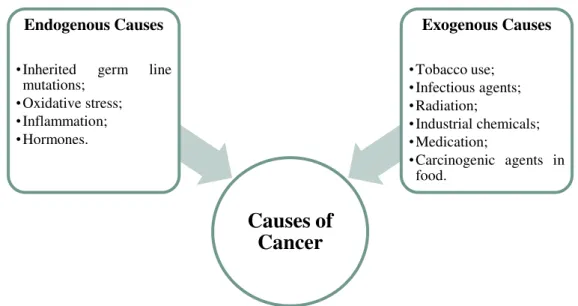
There are a number of different factors there are known causes of cancer. Those factors can be endogenous or exogenous (environmental). Some of them are outlined in Figure 1.1.
Figure 1.1 Endogenous and exogenous causes of cancer. (Adapted from WCRF / AICR, 2007)
According to the GLOBOCAN project, that estimates the incidence, the mortality and the prevalence of cancer worldwide, in 2012 there were about 14.1 million new cancer cases and the disease caused more than 8.2 million deaths (these numbers exclude non-melanoma skin cancer). More than 8 million of new cancer cases (representing 57% of the total cases) and about 5.3 million of the deaths provoked by cancer (which corresponds to 65% of the total cancer deaths) occurred in the less developed regions of the world. This data can be seen in detail in Table 1.1. (Ferlay et al., 2012) As reported by the American Cancer Society (2012), it is estimated that the cancer global incidence continues to grow, rising up to 21.4 million cases and 13.2 million deaths in 2030.
Causes of
Cancer
Endogenous Causes•Inherited germ line mutations;
•Oxidative stress;
•Inflammation;
•Hormones.
Exogenous Causes
•Tobacco use;
•Infectious agents;
•Radiation;
•Industrial chemicals;
•Medication;
2
Table 1.1 Cancer estimated incidence, mortality and prevalence worldwide in 2012 (excluding
non-melanoma skin cancer). The data was estimated in thousands. (Adapted from Ferlay et al., 2012)
Men Women Both Sexes
Cases Deaths Cases Deaths Cases Deaths
World 7427 4653 6663 3548 14090 8201
More developed regions 3244 1591 2832 1287 6076 2878
Less developed regions 4184 3062 3831 2261 8014 5323
WHO Africa region 265 205 381 250 645 456
WHO Americas region 1454 677 1429 618 2882 1295
WHO East Mediterranean region 263 191 293 176 555 367
WHO Europe region 1987 1080 1750 852 3737 1932
WHO South-East Asia region 816 616 908 555 1724 1171
WHO Western Pacific region 2642 1882 1902 1096 4543 2978
IARC membership (24 countries) 3706 1900 3354 1570 7060 3470
United States of America 825 324 779 293 1604 617
China 1823 1429 1243 776 3065 2206
India 477 357 537 326 1015 683
European Union (28 countries) 1446 715 1211 560 2657 1276
1.1.1. Colorectal cancer
Colorectal cancer is the third most common cancer among men (746.000 cases that corresponds to 10% of the total) and the second with respect to women (614.00 cases, corresponding to 9.2% of the total). This type of cancer tends to be a disease that occurs in more developed regions of the world (almost 55% of the cases are associated to those regions), contradicting the trend demonstrated by Table 1.1. (Ferlay et al., 2012)
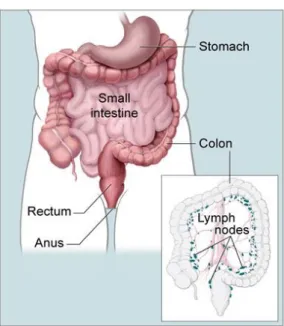
This is a type of cancer that starts by affecting the tissues of colon or the rectum, (ACS, 2014) which are parts of the digestive system. As can be seen in Figure 1.2, the colon corresponds to the first and longest part of the large intestine, and the rectum constitutes the final and smallest part. (NCI, 2006) The colon is coated with mucous membranes, and also
contains lymphoid cells that are a part of the body’s immune defenses. (WCRF / AICR, 2007) The function of this muscular tube is to absorb the fluids of the food that was previously processed by the stomach and the small intestine, and turn it into solid waste. Afterwards, the waste is transferred from the colon to the rectum, and then expelled through the anus. (NCI, 2006)
3
Figure 1.2 Schematic representation of part of the digestive system, including the colon and rectum.
(NCI, 2006)
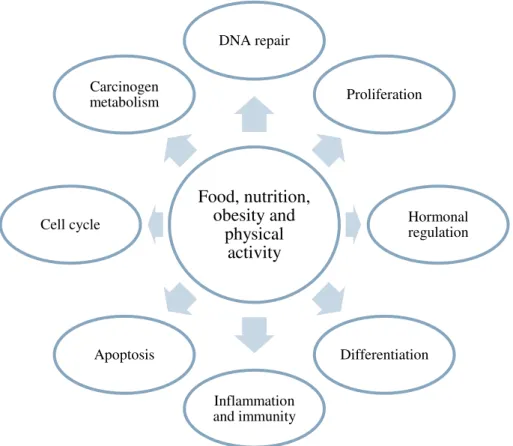
According to the Second Expert Report, published in 2007 by the American Institute for Cancer Research, among the environmental factors that are involved in the risk of contracting cancer, there is extensive evidence that nutritional factors can influence several fundamental processes which are related to cancer development and progression (see Figure 1.3). (WCRF / AICR, 2007) In particular, colorectal cancer is generally pointed to be greatly affected by food and nutrition factors, as well as other types of cancer that affect the gastrointestinal tract. (Boivin et al., 2009; Kaliora et al., 2014)
Several epidemiological and experimental studies have suggested that consumption of a typical Western-style diet, that is high in fat and protein, significantly increases colorectal cancer risk, whereas a high intake of fruits, vegetables, and whole grains is shown to be protective against this type of cancer. (Kim et al., 2013)
4
Figure 1.3 Fundamental processes in promotion or inhibition of cancer development and progression,
which can be influenced by food, nutrition, obesity and physical activity. (Adapted from WCRF / AICR, 2007)
1.2. Herbs and Spices: Their Role in Cancer Prevention and Treatment
Plants and foods have been used for centuries for their medicinal properties, to prevent and treat all kind of diseases, including cancer. (Mehta et al., 2010) Fossil records date human use of plants for medical purposes at least to the Middle Paleolithic age, some 60000 years ago. (Fabricant et al., 2001) Hence, there is no doubt that herbs are the oldest drugs in the world. (Kaliora et al., 2014)
All species of plants produce a large number of organic compounds, which are imperative for their normal development and function. These chemicals include the primary metabolites suchlike amino acids, carbohydrates, fats, nucleic acids, etc.; and the secondary metabolites, which are specific to some taxonomic groups, such as terpenes, phenolics, carotenoids, alkaloids, saponins, glucosinolates, cyanogenic glycosides, etc. However this group of chemicals does not appear to participate directly in the development and growth of plants. Recent research shows that these so called secondary metabolites play an essential role in
plants’ protection against some environmental stresses. (Croteau et al., 2000; Krzyzanowska et al., 2010)
Food, nutrition,
obesity and
physical
activity
DNA repair
Proliferation
Hormonal regulation
Differentiation
Inflammation and immunity Apoptosis
Cell cycle
5
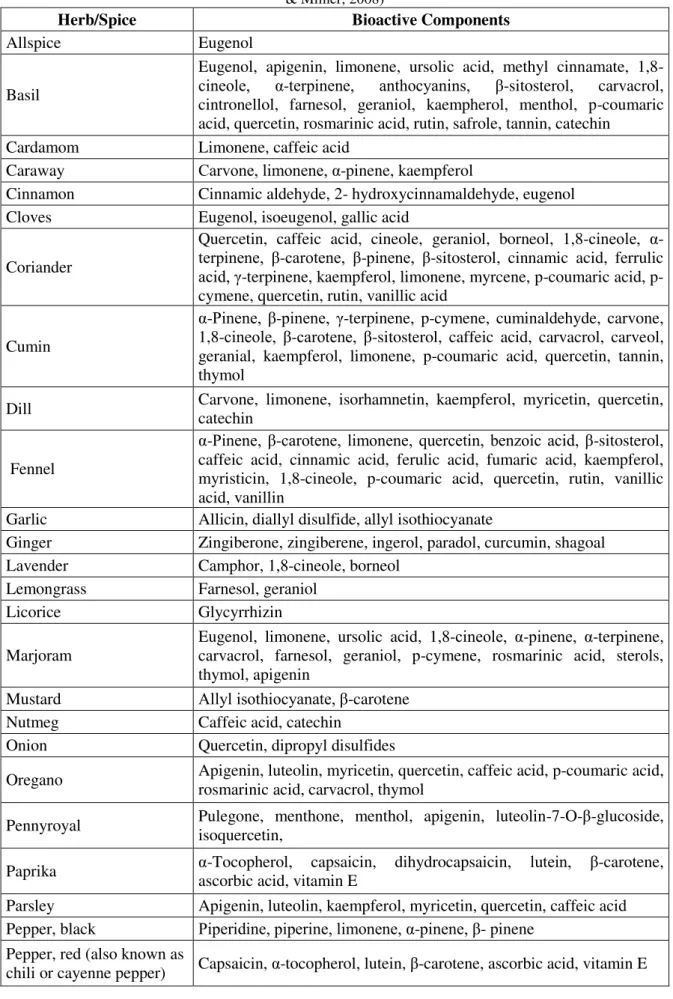
Nowadays, it is believed that the phytochemicals that compose these groups of secondary metabolites are, among other things, responsible for the health promoting effects shown by plants and foods over the centuries. (Patil et al., 2009) This belief is supported by studies that were conducted in the last decades, which show that these bioactive compounds have crucial roles in the prevention of chronic diseases, including cancer, diabetes and hypercholesteremia. (Mehta et al., 2010) Examples of these key compounds that are present in herbs and spices can be found in Table 1.2.
In fact, epidemiological, in vitro, in vivo and clinical trials that have been conducted
over the years indicate that a plant-based diet, especially the consumption of fruit, vegetables and whole grain, can reduce the risk of chronic diseases, particularly cancer. These products are rich sources of particular classes of phytochemicals, and therefore are thought to have health promoting actions. (Rafter, 2002; Krzyzanowska et al., 2010) According to the U.S. National Cancer Institute, there are more than 30000 plants identified with phytochemicals possessing anticancer activity. (Kaliora et al., 2014)
It is known that some of these phytochemical compounds have the ability of targeting several key events that are involved in the development of cancer (see Figure 1.4), and act like chemopreventive agents. However, it is likely that this behavior arises from synergistic combinations between several distinct molecules, not only within a given food, but also from the overall composition of the diet. (Boivin et al., 2009)
Figure 1.4 Potential mechanisms for cancer prevention with phytochemicals. (Adapted from Boivin et al.,
2009)
Mechanisms for
cancer prevention
Prevention of DNA adduct formation
Enhanced carcinogen elimination
Inhibition of inflammmatory
process Interference
with tumor angiogenesis Direct cytotoxic
6
Table 1.2 Examples of bioactive components in commonly used herbs and spices. (Adapted from Kaefer
& Milner, 2008)
Herb/Spice Bioactive Components
Allspice Eugenol
Basil
Eugenol, apigenin, limonene, ursolic acid, methyl cinnamate,
1,8-cineole, α-terpinene, anthocyanins, β-sitosterol, carvacrol, cintronellol, farnesol, geraniol, kaempherol, menthol, p-coumaric acid, quercetin, rosmarinic acid, rutin, safrole, tannin, catechin
Cardamom Limonene, caffeic acid
Caraway Carvone, limonene, α-pinene, kaempferol
Cinnamon Cinnamic aldehyde, 2- hydroxycinnamaldehyde, eugenol
Cloves Eugenol, isoeugenol, gallic acid
Coriander
Quercetin, caffeic acid, cineole, geraniol, borneol, 1,8-cineole, α
-terpinene, β-carotene, β-pinene, β-sitosterol, cinnamic acid, ferrulic
acid, γ-terpinene, kaempferol, limonene, myrcene, coumaric acid, p-cymene, quercetin, rutin, vanillic acid
Cumin
α-Pinene, β-pinene, γ-terpinene, p-cymene, cuminaldehyde, carvone, 1,8-cineole, β-carotene, β-sitosterol, caffeic acid, carvacrol, carveol, geranial, kaempferol, limonene, p-coumaric acid, quercetin, tannin, thymol
Dill Carvone, limonene, isorhamnetin, kaempferol, myricetin, quercetin, catechin
Fennel
α-Pinene, β-carotene, limonene, quercetin, benzoic acid, β-sitosterol, caffeic acid, cinnamic acid, ferulic acid, fumaric acid, kaempferol, myristicin, 1,8-cineole, p-coumaric acid, quercetin, rutin, vanillic acid, vanillin
Garlic Allicin, diallyl disulfide, allyl isothiocyanate
Ginger Zingiberone, zingiberene, ingerol, paradol, curcumin, shagoal
Lavender Camphor, 1,8-cineole, borneol
Lemongrass Farnesol, geraniol
Licorice Glycyrrhizin
Marjoram Eugenol, limonene, ursolic acid, 1,8-carvacrol, farnesol, geraniol, p-cymene, rosmarinic acid, sterols, cineole, α-pinene, α-terpinene, thymol, apigenin
Mustard Allyl isothiocyanate, β-carotene
Nutmeg Caffeic acid, catechin
Onion Quercetin, dipropyl disulfides
Oregano Apigenin, luteolin, myricetin, quercetin, caffeic acid, p-coumaric acid, rosmarinic acid, carvacrol, thymol
Pennyroyal Pulegone, menthone, menthol, apigenin, luteolin-7-O-isoquercetin, β-glucoside,
Paprika αascorbic acid, vitamin E -Tocopherol, capsaicin, dihydrocapsaicin, lutein, β-carotene,
Parsley Apigenin, luteolin, kaempferol, myricetin, quercetin, caffeic acid
Pepper, black Piperidine, piperine, limonene, α-pinene, β- pinene
Pepper, red (also known as
7
Table 1.2 (Continued).
Herb/Spice Bioactive Components
Peppermint Limonene, menthol, eriodictyol, hesperitin, apigenin, luteolin
Rosemary Carnasol, carnosic acid, cineole, geraniol, αapigenin, limonene, naringin, luteolin, caffeic acid, rosmarinic acid, -pinene, β-carotene, rosmanol, vanillic acid
Saffron Crocetin, crocin, β-carotene, safranal, all trans retinoic acid
Sage
α-pinene, β-sitosterol, citral, farnesol, ferulic acid, gallic acid,
geraniol, limonene, cineole, perillyl alcohol, β-carotene, catechin, apigenin, luteolin, saponin, ursolic acid, rosemarinic acid, carnosic acid, vanillic acid, caffeic acid, thymol, eugenol
Spearmint Carvone, limonene, 1,8-cineole, perillyl alcohol, catechin, epicatechin, rutin,myrecitin, luteolin, apigenin and naringenin
Tarragon Luteolin, isorhamnetin, kaempferol, quercetin, caffeic acid
Tea, green (−)theophylline, gallic acid, theanine -Epigallocatechin gallate, (−)-epigallocatechin, (−)-(+)-catechin,
Thyme Thymol, carvacrol, cineole, αlimonene, ursolic acid, luteolin, gallic acid, caffeic acid, rosmarinic -pinene; apigenin, β-carotene, eugenol, acid, carnosic acid, hispidulin, cismaritin
Turmeric Curcumin, curcuminoids
1.2.1. Phytochemicals and their health-promoting effects
Currently, the therapeutic drugs used on the treatment of cancer are mainly cytotoxic. They act, directly or indirectly, by killing cancer cells. (Gould, 1997) Thence, in the last years, there has been a growing interest in exploring natural bioactive phytochemical substances, to be used in prevention and treatment of cancer. (Gotti, 2011)
It is believed that fruits, vegetables, herbs and spices have some compounds on their constitution, whose properties are effective against a wide variety of cancers. This anticancer power arises essentially from their high content of phytochemicals. (Boivin et al., 2009)
Naturally occurring phytochemicals are bioactive nonnutrient compounds of various plant parts, such as seeds, fruits, leaves and rhizomes. (Kumazaki et al., 2013)
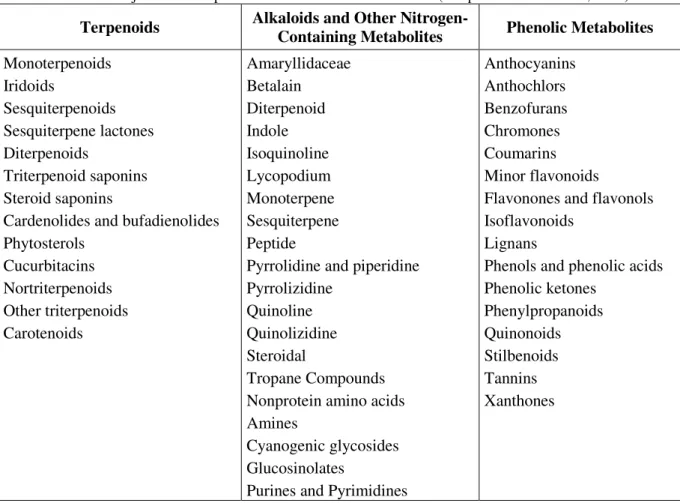
According to Harborne (1999), there are three major classes of plant chemicals: terpenoids, alkaloids and other nitrogen-containing plant constituents and phenolic metabolites. The phytochemicals included in these major classes are summarized in Table 1.3.
8
Table 1.3 Major classes of plant chemicals and their subclasses. (Adapted from Harborne, 1999)
Terpenoids Alkaloids and Other
Nitrogen-Containing Metabolites Phenolic Metabolites
Monoterpenoids Amaryllidaceae Anthocyanins
Iridoids Betalain Anthochlors
Sesquiterpenoids Diterpenoid Benzofurans
Sesquiterpene lactones Indole Chromones
Diterpenoids Isoquinoline Coumarins
Triterpenoid saponins Lycopodium Minor flavonoids
Steroid saponins Monoterpene Flavonones and flavonols
Cardenolides and bufadienolides Sesquiterpene Isoflavonoids
Phytosterols Peptide Lignans
Cucurbitacins Pyrrolidine and piperidine Phenols and phenolic acids
Nortriterpenoids Pyrrolizidine Phenolic ketones
Other triterpenoids Quinoline Phenylpropanoids
Carotenoids Quinolizidine Quinonoids
Steroidal Stilbenoids
Tropane Compounds Tannins
Nonprotein amino acids Xanthones
Amines
Cyanogenic glycosides
Glucosinolates
Purines and Pyrimidines
In the last few years, the biggest impact of plant-derived drugs, was probably felt in the antitumor area, and nowadays, a few plant products are already being used to treat cancer. Drugs like taxol, vinblastine, vincristine and camptothecin have greatly improved the effectiveness of chemotherapy against some of the deadliest cancers. (Raskin et al., 2002)
Since current clinical therapies, including conventional chemotherapy, radiation, immunosuppression and surgery, are limited and are associated to a high number of undesired side effects, there is a grave need for additional and innovative treatment options. (Neergheen et al., 2010) Natural therapies, such as the use of plant-derived products in cancer treatment, may reduce the referred adverse side effects. (Desai et al., 2008)
Chemoprevention involves the use of pharmacological, dietary bioactive compounds, phytochemicals and even whole plant extracts to prevent arrest or reverse the cellular and molecular processes of carcinogenesis. In addition, epidemiological and experimental studies show that these phytochemicals have not only a protective role, but also a power to contain and control carcinogenesis. (Neergheen et al., 2010)
9
1.2.1.1.Terpenes
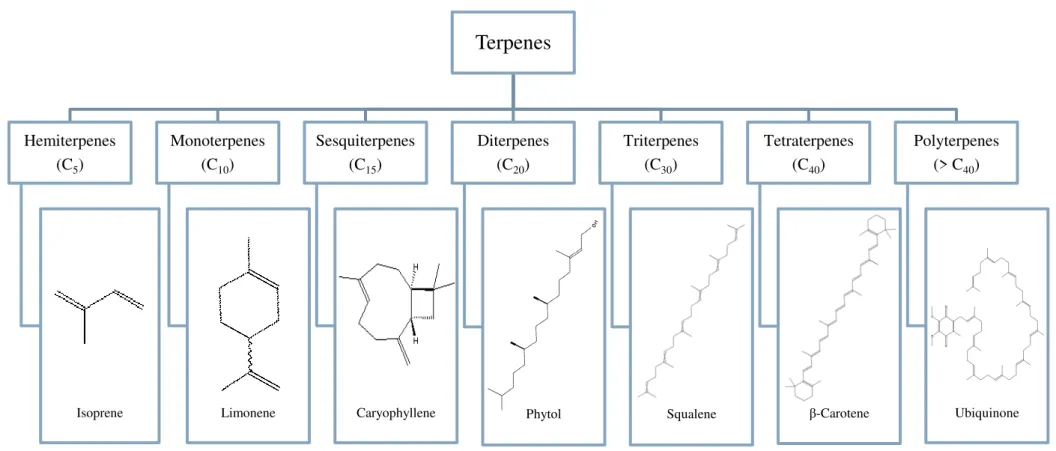
Plant living species contain a large diversity of bioactive compounds. In particular, medicinal plants are known for being rich in terpenes (for instance carvacrol, citral, linalool and geraniol) and phenolic compounds (like flavonoids and phenolic acids). (Ortega-Ramirez, 2014) The terpenes are characterized by being derived from repetitive combinations of branched five-carbon units (C5) based on isoprene skeleton. (Croteau et al., 2000) In plants, their function is to fix carbon trough photosynthetic reactions, using photosensitizing pigments. (Dillard & German, 2000)
Terpenes have a unique antioxidant activity: they react with free radicals by taking advantage of their long carbon side chain and separate themselves to form fatty membranes. (Dillard & German, 2000)
Depending on the number of isoprene units, the terpenes form structurally and functionally different classes. These classes are outlined in Figure 1.5, along with some specific examples for each of them. (Croteau et al., 2000; Bakkali et al., 2008)
The herbal terpenoids have been proved to have strong anticancer potential by inhibition of tumor proliferation and induction of apoptosis. Such compounds are inversely related with the risk of cancer including breast, prostate, and liver cancer. (Yang et al., 2014) In particular, a number of dietary monoterpenes, which are nonnutritive components, are known for having antitumor activity. They exhibit not only the ability to prevent the formation and progression of cancer, but also to regress preexisting malignant tumors. (Crowell, 1999)
10
Figure 1.5 Different classes of terpenes. (Adapted from Bakkali et al., 2008)
Terpenes
Hemiterpenes (C5)
Isoprene
Monoterpenes (C10)
Limonene
Sesquiterpenes (C15)
Caryophyllene
Diterpenes (C20)
Phytol
Triterpenes (C30)
Squalene
Tetraterpenes (C40)
β-Carotene
Polyterpenes (> C40)
11
Table 1.4 Multiple structures of monoterpenes. (Adapted from Bakkali et al., 2008)
Acyclic Monocyclic Bicyclic
Carbides
Myrcene Limonene Pinenes
Ocimene Terpinenes -3-Carene
p-Cimene Camphene
Phellandrenes Sabinene
Alcohols
Geraniol Menthol Borneol
Linalool α-terpineol Fenchol
Citronellol Carveol Chrysanthenol
Lavandulol Thuyan-3-ol
Nerol
Aldehydes
Geranial
Neral
Citronellal
Ketones
Tegetone Menthones Camphor
Carvone Fenchone
Pulegone Thuyone
Piperitone Ombellulone
Pinocamphone
Pinocarvone
Esters Linalyl acetate Menthyl Isobornyl acetate
Citronellyl acetate α-Terpinyl acetate
Ethers 1,8-cineole Menthofurane
Peroxydes Ascaridole
Phenols Thymol
Carvacrol
Monoterpenes of plant origin have shown potential to inhibit proliferation of numerous types of organ-specific cancer cells. (Gould, 1995; Burke et al., 1997; Bardon et al., 2002) Terpenoids, such as D-limonene (Crowell, 1999), perillyl alcohol (Crowell, 1999; Bardon et al., 2002; Sundin et al., 2010), menthone, (R)-(+)-citronellal, (S)-(−)-β-citronellol, α-terpinene,
terpinolene, (−)-β-pinene (Yoshida, et al., 2008), farnesol, geraniol (Sundin et al., 2010), α -terpineol, linalyl acetate, camphor (Hassan et al., 2010), carvacrol, thymol, carveol, carvone, eugenol, isopulegol (Jaafari et al., 2012) menthol (Tatman & Mo, 2002), among others are
known to inhibit proliferation of cancer cells. Plus, plant volatile oils that are rich in β-myrcene, (+)-sabinene, α-farnesene, β-bisabolene, triacontane, 1,8-cineol, borneol, among others, were demonstrated to inhibit proliferation of breast, colon and other cancer cells. (Shehzad et al., 2010; Jayaprakasha et al., 2013)
12
As an example, pulegone, which is a component of essential oils from mint species, can
induce carcinogenesis through metabolism, generating the glutathione depletory p-cresol (Zhou
et al., 2004).
1.2.1.2.Fatty acids
The beneficial role of some fatty acids in chronic diseases, such as atherosclerosis or rheumatoid arthritis, has been known for years. (Sahena et al., 2009)
Fatty acids are carboxylic acids with a variable unbranched aliphatic chain. (Bernal et al., 2011) This hydrocarbon chain length may vary from 8 to 30 carbons. (Sahena et al., 2009) and can be chemically classified as saturated or unsaturated (monounsaturated and polyunsaturated). It is known that their structure affects their nutritional and health effects. (Ricchi et al., 2009)
In acids with only a few carbons, the acid functional group dominates and gives the whole molecule a polar character. However, in fatty acids, the non-polar hydrocarbon chain gives the molecule a non-polar character. (Sahena et al., 2009)
Fatty acids play multiple roles in humans and other organisms. They are important energy substrates and represent a substantial part of lipids, one of the three major components of biological matter (along with proteins and carbohydrates). (Tvrzicka et al., 2011)
It has been proved that they are important as nutritional substances in living organisms (Bernal et al., 2011), and that the presence of saturated and unsaturated fatty acids on human diet has implications on health. It is believed that an excessive consumption of saturated fatty acids increases the risk of vascular disease, whereas the consumption of unsaturated fatty acidy is believed to be beneficial, decreasing the risk of cardiovascular diseases. (Botelho et al., 2014) The most abundant fatty acids present in the diet are palmitic acid, which is a saturated fatty acid, and oleic acid, a monounsaturated fatty acid. (Ricchi et al., 2009) Their structures are represented in Figure 1.6, along with some other fatty acids.
There have been many clinical and epidemiologic studies concerning dietary fatty acids and their relation with risks of many chronic diseases. Some fatty acids are considered to be effective in reducing the incidence of cancer, cardiovascular diseases, inflammation, autoimmune disorders, hypertension, hypotriglyceridemic effect, etc.. (Hayashi et al., 1992; Tavakoli et al., 2012)
13
Figure 1.6 Structural formulas of some fatty acids. (Adapted from Tvrzicka et al., 2011)
1.3. Lavandula and Mentha Species
1.3.1. Lavandula spp.
The genus Lavandula, commonly known as lavender, is an important member of the
Lamiaceae family. Lavenders are low-growing bushy shrubs (Combest, 2002), and many
species are cultivated around the world, mainly in the Mediterranean region. Over 200 species are reported to exist. (Giray et al., 2008; Fismer &Pilkington, 2012)
It is possible to trace document evidence, for the use of those flowering plants as therapeutic agents, back to the ancient Romans and Greeks. (Cavanagh & Wilkinson, 2002)
Currently, due to its unique chemical composition, both the plant material and its essential oil have a commercial interest in a wide range of industries, such as cosmetic, perfumery, aromatherapy and pharmaceutical industries for its therapeutic effects. (Giray et al., 2008; Danh et al., 2012; Gonçalves et al., 2013) Recently it has also been employed in food industry as natural flavoring for beverages, ice cream, candy, baked goods and chewing gum. (Da Porto et al., 2009)
The medicinal importance of the plants of this genus is well documented and the drugs prepared from it are registered in many Pharmacopeia. (Giray et al., 2008)
Traditionally, and depending on the species type, lavender plants are reported to be effective as a sedative, expectorant, carminative, anticonvulsant, anti-inflammatory, antispasmodic, analgesic, antiseptic, antiviral, antibacterial, etc. (Giray et al., 2008; Danh et al., 2012; Vakili et al., 2014)
14
One of the most important properties of lavender essential oil is its antioxidant activity. It is applied in food processing not only as a flavoring ingredient but also as an antioxidant, to protect food products. (Danh et al., 2012)
The various lavenders have similar ethnobotanical properties and major chemical constituents; however, there are some differences in the reported therapeutic uses for different species. (Fismer &Pilkington, 2012)
The chemical composition of lavender is complex and is comprised of more than a hundred constituents, being linalool, linalyl acetate, camphor, 1,8-cineole and 4-terpineol the predominant in essential oils. These constituents, which are responsible for its pharmacological activity, can vary significantly in different extracts. (Hritcu et al., 2012; Vakili et al., 2014)
Species like Lavandula angustifolia and Lavandula stoechas grow in Portugal:
Lavandula angustifolia, commonly known as English lavender, is a stockier plant with a fuller
flower, and Lavandula stoechas, which is commonly called French lavender, is recognized for
its short stems with fat purple bracts on the top. (Platt, 2009).
Although there are controversial opinions and inconclusive data about this genus health-promoting power, there are studies that support some of its biological activities. Certainly, these are plants with attractive but sill unexplored potential.
1.3.2. Mentha spp.
Mentha is also a genus of Lamiaceae family (the same of Lavandula spp.), and includes
25 to 30 species (Damien Dorman et al., 2003) that can be found all over the world, namely in Europe, Africa, Asia Australia and North America. (Kedia et al., 2014)
Lamiaceae species are considered to be very important because of their use in folk
medicine, culinary, cosmetics, perfumery, flavoring and production of essential oils throughout the world. (Aghel et al., 2004; Riahi et al., 2013)
The Mentha genus is the most important in the Lamiaceae family because it contains
several plants with essential oils which have high economic value. (Chen et al., 2012)
According to Lawrence (2007) these are the most economically important essential oils produced, since their annual production exceeds 23.000 metric tones corresponding to a value of more than 400 millions of dollars.
Mentha oils are essentially used in the cosmetics, pharmaceuticals, confectionery food,
and liquor industries, and mint corps are cultivated all around the world precisely for its high valuable oils. (Khanuja et al., 2000)
The plants from Mentha genus are used by humans for over 2000 years. (Ansari et al.,
2010) Nowadays, it is known that some health benefits are related to these plants. Aerial parts
from Mentha species have been widely used for herbal teas and condiments, as spasmolytics,
15
2003) There are also records of their use as part of the treatment of cold, cholera, bronchitis,
tuberculosis and sinusitis. Mentha also possesses diuretic, carminative, antiflatulent, expectorant
and antitussive properties. (Riahi et al., 2013) Therapeutically, mint is considered to be a source of micro and macro-elements and vitamins. (Rubio et al., 2012)
Mentha plants have been confirmed to possess antimicrobial, antioxidant, antifungal,
antiulcer, anti-inflammatory, anti-mutagenic, antispasmodic and stimulant properties. Significant effects on cholesterol, on blood and immunity parameters, and on triglyceride values have also been noted. Additionally, its antidote properties for poisons have been reported as well. (Talpur, 2014)
Since Mentha plants are a rich source of polyphenols, this genus possesses a powerful
antioxidant activity. As an example, this property allows the prevention of food oxidation;
therefore, this Mentha property has a special interest to the food industry (Ansari et al., 2010),
where they are used as natural preservatives. (Curutchet et al., 2014) Recently, interest in finding naturally occurring antioxidants to replace synthetic antioxidants has considerably increased, since synthetic antioxidants are restricted, due to their side effects such as carcinogenesis. (Riahi et al., 2013)
Some of the most economically important species of this genus are Mentha aquatica,
Mentha canadensis, Mentha spicata, Mentha pulegium and their hybrids Mentha x gracilis,
Mentha x piperita and Mentha x villoso-nervata. (Ansari et al., 2010; Curutchet et al., 2014)
Some species of Mentha, as Menthaspicata, Mentha x piperita and Menthapulegium
grow in Portugal.
Mentha spicata, commonly known as spearmint, is a hybrid resulting from Mentha
longifolia and Mentha rotundifolia and is the Mentha plant that is used more frequently. (Ansari
et al., 2010) Spearmint is an aromatic plant (Telci et al., 2010) that is widely used in culinary as a flavor enhancer. Its flavor is essentially related to carvone, dihydrocarvone, carveol, dihydrocarveol and limonene, which are substances that are present in this plant chemical composition. (Curutchet et al., 2014) Spearmint is known for its antifungal effect against some food-poisoning fungi and other storage insects (Kedia et al., 2014).
Mentha x piperita, also known as peppermint, is one of the most widely consumed
single ingredient herbal teas, or tisanes. Peppermint characteristic flavour is related to its main component, menthol, and its isomers (isomenthol, neomenthol, and neoisomenthol), menthone,
menthyl esters and piperitone. (Curutchet et al., 2014) This plant is one of the world’s oldest
medicinal herbs, and is used in both Eastern and Western traditions. It is also reported that peppermint contains polyphenolic compounds, and consequently possesses strong antioxidant
properties. (Nanekarani et al., 2012) Mentha x piperita var. citrata (Ehrh.) Briq., is a Mentha x
piperita variety and is erroneously nominated Mentha citrata. This species produces a type of
16
components, in contrast to other species of the genus Mentha which contain menthol, menthone,
carvone, limonene and pulegone as majoritary cyclic components. (Garlet et al., 2013)
Both spearmint and peppermint are popular flavors used in a wide variety of sugar confectioneries, chewing gums, toothpastes, chocolate fillings, pharmaceuticals, and liqueurs. (Barton et al., 1992)
Mentha pulegium, which is commonly known as pennyroyal, is reported as having
antimicrobial actions in vitro, among others. (Erhan et al., 2012) The essential oils composition depends on the genetic structure, the climatic factors and the agronomical practices applied on the plants. (Telci et al., 2010) However, its major oil components usually are pulegone, piperitone and isomenthone/neoisomenthol. (Mahboubi & Haghi, 2008) This essential oils and dry parts of the plant have been traditionally used in medicine. (Teixeira et al., 2012)
1.4. Natural Health Products and Nutraceuticals
Long before the development of nutritional sciences, the relationship between food and health was already accepted. Hippocrates (460 - 370 BC), a Greek physician referred to as the
father of western medicine, stated “let food be your medicine and medicine be your food”.
(Bernal et al., 2011)
The knowledge that some natural products have health-giving and curative function is ancient. However, the real studies about the relation between medicine and diet only began recently, with epidemiological and clinical studies, which have unraveled some chemical and physiological mechanisms of the effects of natural bioactive compounds on human health, hence proving the importance of dietary factors on health status. (Shahidi, 2009)
Nowadays, scientists continue to look into nature, in order to transform some compounds that are present in those products, into powerful drugs, that can be used with positive impact on the human body. (Goldberg, 1994)
The term “nutraceutical” was firstly coined and defined by the Foundation for Innovation in Medicine in 1989. (Andlauer and Fu, 2002) This word was created to describe the union between nutrition and pharmaceutics, since there was a need to provide a name for the union of those two areas of research. Thus, a nutraceutical can be defined as any substance that can be considered a food or part of a food that provides recognized medical or health benefits, including the prevention and treatment of disease, in dosages that exceed those that could be obtained from normal foods. (Andlauer and Fu, 2002; Bernal et al., 2011) These commodities can assume the form of pills, powders, capsules, vials, etc., containing food bioactive compounds as active principles. (Espín et al., 2007)
17
Complementary and Alternative Medicine defines natural products as dietary supplements and include vitamins, minerals, probiotics, and herbal medicines. (Greenlee, 2012)
1.4.1. Extraction of Bioactive Compounds
In the past two decades, the interest in the search for bioactive compounds from natural origin has increased. This growth was due to the proven capacity of some of them against several diseases. (Herrero et al., 2013)
In recent years, different sources of bioactive compounds have been studied, such as plants, food by-products and marine products. (Herrero et al., 2006) In regard to plants, the bioactive compounds are commonly produced as secondary metabolites. In some species, those metabolites have demonstrated pharmacological or toxicological effects in humans and animals. (Azmir et al., 2013)
Plant extracts, containing these interesting compounds, are widely used in the food, pharmaceutical and cosmetics industries. (Wang & Weller, 2006) These extracts can be obtained by conventional or non-conventional extraction methods. (Azmir et al., 2013)
Conventional techniques, such as Soxhlet extraction have serious drawbacks: require long extraction times; use large amounts of toxic organic solvents that needs to be evaporated/concentrated later and it is possible that the targeted compounds undergo thermal decomposition since the extraction usually occurs at the boiling point of the solvent during a long time. (Wang & Weller, 2006; Araus et al., 2009) Plus, there are few parameters that can be adjusted to control the extraction selectivity. (Lang & Wai, 2001)
Nowadays, the safety of both producers and consumers is a major requirement of any new product or process. As a consequence, the mandatory regulations on the usage of hazardous, carcinogenic, or toxic solvents, as well as high energy costs for solvent regeneration, have forced the natural extract industries to adopt new methodologies. (Mukhopadhyay, 2000)
Since pharmacologically active compounds in plants are usually in low concentrations and the final products must be safe for the consumers, lots of research has been done in order to develop more effective, selective and clean extraction techniques to recover these phytochemicals from the raw materials. (Lang & Wai, 2001)
With regard to product quality, supercritical fluid extraction has emerged over the last years as an alternative to the traditional extraction methods. (Pourmortazavi & Hajimirsadeghi, 2007)
1.4.1.1.Supercritical Fluids
18
environment-friendly, nonpolluting solvents, such as carbon dioxide (CO2), in supercritical
conditions. (Mukhopadhyay, 2000)
As demonstrated in Figure 1.7, the state of a pure component is named supercritical fluid (SCF) when both temperature and pressure are forced beyond its critical point (CP). The
value of that specific temperature is called critical temperature (Tc) and the corresponding vapor
pressure is named critical pressure (Pc). When these conditions are achieved, the fluid assumes
the properties of both gas and liquid. (Mukhopadhyay, 2000; Herrero et al., 2006)
Figure 1.7 Pressure-temperature diagram for a pure component. (Mukhopadhyay, 2000) Legend: CP –
critical point; Pc– critical pressure; Tc – critical temperature; TP – triple point.
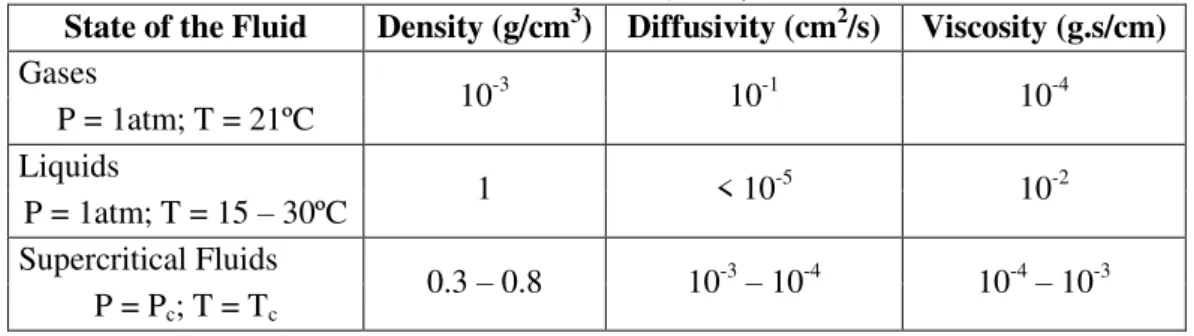
A correlation between the values of some of the physical properties of gases, liquids and supercritical fluids is shown in Table 1.5.
The values expressed in Table 1.5 suggest that the density of supercritical fluids is similar to the density values of liquids which imply an identical solvating power. On the other hand, the values of viscosity are similar to the values presented by gases. Further, its diffusivity is intermediate between the two states.
19
Table 1.5 Range values of some physical properties of gases, liquids and supercritical fluids. (adapted
from Herrero et al., 2006)
State of the Fluid Density (g/cm3) Diffusivity (cm2/s) Viscosity (g.s/cm)
Gases
10-3 10-1 10-4
P = 1atm; T = 21ºC Liquids
1 < 10-5 10-2
P = 1atm; T = 15 – 30ºC
Supercritical Fluids
0.3 – 0.8 10-3– 10-4 10-4– 10-3
P = Pc; T = Tc
1.4.1.2.Supercritical Fluid Extraction: Process and Operating Conditions
To successfully optimize an extraction of bioactive compounds by SFE, there are several important factors that must be studied and chosen prior to the experiments. Those factors are the type and pretreatment of sample, including the moisture of the samples and the particle size, the choice of the fluid and eventual modifiers and the extraction conditions, such as the temperature, pressure, flow rate and extraction time. (Lang & Wai, 2001; Wang & Weller, 2006)
The most relevant process parameter is perhaps the extraction pressure, since it can be
used to adjust the selectivity of the SFE. Usually, the higher is the pressure, the larger is the solvent power and the smaller is the extraction selectivity. (Reverchon & De Marco, 2006)
There are several compounds that can be used as solvents in this kind of extraction.
However, carbon dioxide is the most widely used by far. (Sihvonen & Hietaniemi, 1999) CO2 is
an inert, inexpensive, easily available, odorless, tasteless, environmentally friendly and safe solvent and, since it is a gas at ambient temperature and pressure, leaves no residue in the extract, being easily removed from it. (Mukhopadhyay, 2000)
The critical temperature of CO2 is 33ºC and its critical pressure is 74 bar. The moderate
critical temperature makes it an ideal solvent for extracting thermolabile natural compounds, avoiding their degradation. (Fornari et al., 2012) Still, by increasing the temperature, the density
of supercritical CO2 (for a fixed pressure) can be reduced, thus reducing the solvent power of
the supercritical solvent. However, when the temperature is increased, the vapor pressure of the compounds to be extracted increases as well. Thus, the tendency of these compounds to pass in the fluid phase also increases. (Reverchon & De Marco, 2006)
Supercritical CO2 is also a suitable solvent to extract lipophilic compounds, due to its
nonpolar character, such as the compounds that are present in plant essential oils. (Fornari et al.,
2012) The solubility of some natural compounds in supercritical CO2 is expressed in Table 1.6.
20
Table 1.6 Solubility of natural compounds in supercritical CO2. (Adapted from King & Bott, 1993)
Very soluble Moderatly soluble Almost insoluble
Non-polar and slightly polar organic compounds of low molecular weight (< 250)
Organic compounds with higher molecular weight
(~ 400) or higher polarity Sugars, proteins
Examples
Monoterpenes and
sesquiterpenes Substituted terpenes and sesquiterpenes Tannins, waxes and inorganic salts Thiols, pyrazines and
thiazoles Water Chlorophyll, carotenoids, citric acid and malic acid
Acetic acid, benzaldehyde, hexanol, glycerol, acetates
Oleic Acid, glycerol, decanol and saturated lipids (up to C12)
Glycine, nitrates and components in pesticides and insecticides
To extract nutraceuticals such as phenolics, alkaloids and glycosidic compounds, that are poorly soluble in CO2, it is vital to add a small quantity of another solvent suchlike methanol, ethanol, acetonitrile, acetone, water, ethyl ether and dichloromethane, or even a mixture of solvents, to enhance their solubility, making them extractable. The most suitable solvent to extract nutraceuticals is ethanol, mostly because of its low toxicity. (Wang & Weller, 2006)
A supercritical fluid extraction system is shown in Figure 1.8. Briefly, the plant raw material is loaded in an extraction vessel, which is equipped with temperature and pressure controllers. The preheated fluid is pumped into the extraction vessel by a pump and then the fluid and the dissolved compounds are transported to separators. The product is then collected in the separators, where the solvation power of the fluid decreases by decreasing the pressure or increasing the temperature of the fluid. (Wang & Weller, 2006)
Figure 1.8 Schematic diagram of a basic supercritical fluid extraction system. (Adapted from Wang &
21
1.4.1.3.Main Advantages and Disadvantages of SFE
Since supercritical fluid extraction with carbon dioxide leaves no chemical residue, this technology is considered as an environment friendly separation process (Shilpi et al., 2013) and, when compared to traditional extraction methods that use toxic organic solvents, such as hexane, petroleum ether, chloroform, etc., presents several advantages. (Santana et al., 2012)
These fluids have numerous benefits thanks to their gas and liquid-like properties. They present higher diffusion coefficient and lower viscosity than liquids, which helps to a more favorable mass transfer. They are also absent of surface tension, which allows a rapid penetration into the pores of solid matrices, enhancing the extraction efficiencies. (Shilpi et al., 2013)
With these properties, the extraction conditions may be manipulated by slight variations of temperature and pressure which immediately affects the solubility of the various components of the matrix in the supercritical fluid. (Shilpi et al., 2013)
The general agreement is that supercritical extracts proved to be of superior quality, presenting better functional activity, when compared with extracts produced by hydro-distillation or using organic solvents, due to its selectivity. (Fornari et al., 2012)
When compared with conventional atmospheric pressure extraction techniques, the major disadvantage of SFE is related to the elevated investment coasts. Yet, the base process scheme is relatively cheap and easily scaled up. (Reverchon & De Marco, 2006)
1.4.1.4.Applications of SFE
Since the 1970s, supercritical fluid extraction has been used to isolate natural products. (Sihvonen & Hietaniemi, 1999) This technology was extensively used in the past to extract target compounds from a variety of matrices. There are a number of examples where SFE has been scaled up, such as decaffeination of coffee and tea, refining of cooking oils and extraction of flavors and pungencies from plants. (Mukhopadhyay, 2000; Wijngaard et al., 2012) Nonetheless, considering the high investment costs, SFE technology is mostly applied when the product to be extracted is recognized as a high-value product. (Palmer & Ting, 1995) Some of the current known applications of SFE are presented in Table 1.7.
For instance, nutraceuticals are one of the fields of application of SFE: SFE of
medicinal plants such as Serenoa repens or Pygeum africanum that are used to cure prostate
22
Table 1.7 Some SFE applications in natural products and food industries. (Adapted from Mukhopadhyay,
2000)
Decaffeination of coffee and tea Spice extraction
Deodorization of oils and fats
Extraction of vegetable oils from flaked seeds and grains Flavors, fragrances, aromas, and perfumes
Hops extraction for bitter Extraction of herbal medicines Stabilization of fruit juices Lanolin from wool
Deoiling of fast foods
Decholesterolization of egg yolk and animal tissues Antioxidants from plant materials
Food colors from botanicals Natural pesticides
Denicotinization of tobacco
This method has been used in chemical industries and in environmental, pharmaceutical, cosmetic, food and polymer applications, since Kurt Zosel patented SFE as a technique to decaffeinate coffee. (Perrut, 2000; Azmir et al., 2013)
In particular, supercritical CO2 natural extracts have several known applications in food
and pharmaceutical industries. Some of those applications are summarized in Table 1.8.
Table 1.8 Some SFE natural extracts applications. (Adapted from Mukhopadhyay, 2000)
Extract Source Commercial Applications
Ginger oil Zingiber officinalis Oriental cuisines Beverages
Pimento berry oil Pimenta officinalis Savory sauces Oral hygiene
Clove bud oil and oleoresin Eugenia caryophyllata
Meats Pickles Oral hygiene
Nutmeg oil Myristica fragrans
Soups Sauces
Vegetable juices
Juniper berry oil Juniperus officinalis Alcoholic beverages Gin
Celery seed oil Apium graveolens Soups Vegetable juice
Vanilla absolute Vanilla fragrans Cream liqueurs Pure dairy foods
Cardamom oil Elletaria cardamomum
Meats Pickles Spice blends
23
Table 1.8 (Continued).
Extract Source Commercial Applications
Coriander oil Coriander sativum
Curry Chocolate Fruit flavors
Pepper oleoresin and oil Piper nigrum
Spices Meat
Salad dressing
Cinnamon bark oil Cinnamonum zeylendium Baked goods Sweet products
Cumin oil Cuminium cyminum Mexican and Indian cuisines Pharmaceuticals
Marjoram oil Majorlana hortensis Soups Savoury sauces
Savory oil Satureja hortensis Soups Savoury sauces
Rosemary oil Rosemary officinalis Antioxidant Soups
Sage oil Salva officinalis
Meat Sauces Soups
Thyme oil Thymus vulgaris Meat Pharmaceutical products
Paprika color Capsicum annum
Soup Sauces Sweets
1.5. Aim and structure of the thesis
In this thesis, supercritical fluid extraction was explored as a reliable technology to
extract and isolate anticancer bioactive compounds from different plants, namely Lavandula
angustifolia, Lavandula stoechas, Mentha spicata, Mentha x piperita var. citrata and Mentha
pulegium.
To achieve this goal, the work was divided in four major parts as schematically described in Figure 1.9.
In part 1, supercritical fluid extractions were performed in two distinct species of the
genus Lavandula (Lavandula angustifolia and Lavandula stoechas) and three other species of
the genus Mentha (Mentha spicata, Mentha x piperita var. citrata and Mentha pulegium). All
extractions were performed at 50 ºC and 250 bar, during 60 minutes with supercritical CO2, plus
180 minutes with a mixture of CO2 and ethanol (90:10, % v/v). The resulting samples were
characterized in terms of global yield.
In part 2, the extracts were firstly screened for the presence of terpenes by TLC and then their phytochemical content, as well as its quantification, were evaluated by GC-MS.
24
Figure 1.9 Structure of the thesis.
In part 4, the bioactive rich extracts were assessed for their antiproliferative effect in HT-29 human colorectal adenocarcinoma cells. The observed bioactivity was then correlated with the phytochemical composition of the extracts, in order to identify the compounds responsible for the anticancer activity.
Part 1.
Development of natural extracts using supercritical fluid extraction
Part 2.
Phytochemical characterization of the bioactive rich extracts
Part 3.
Evaluation of the antioxidant activity of the natural extracts using chemical assays
Part 4.