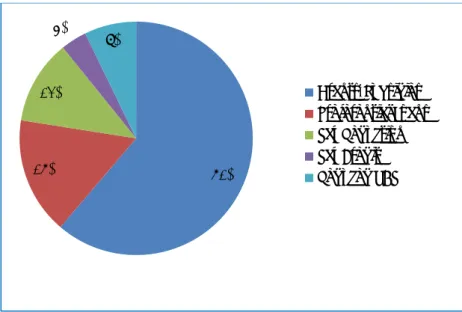
Member States shall establish a long-term strategy for the mobilization of investment in the renovation of the national stock of residential and commercial buildings, both public and private. Several EU member states have already drawn up some kind of long-term vision for the development of the construction sector.

IMPLEMENTATION STATUS OF THE EPBD RENOVATION REQUIREMENTS IN THE EU REQUIREMENTS IN THE EU
Individual parts of the building envelope and systems in the buildings must meet minimum requirements. Individual parts of the building envelope and systems in the buildings must meet certain minimum requirements in the renovated building.
ECONOMIC INSTRUMENTS SUPPORTING THERMAL RENOVATION OF EXISTING BUILDINGS RENOVATION OF EXISTING BUILDINGS
Other MS have requirements for building components, but not requirements for the total energy performance of the renovated building (Sbi, 2009). Conventional financial instruments that have been used since the oil crises of the 1970s include: grants and subsidies, loans and tax incentives.
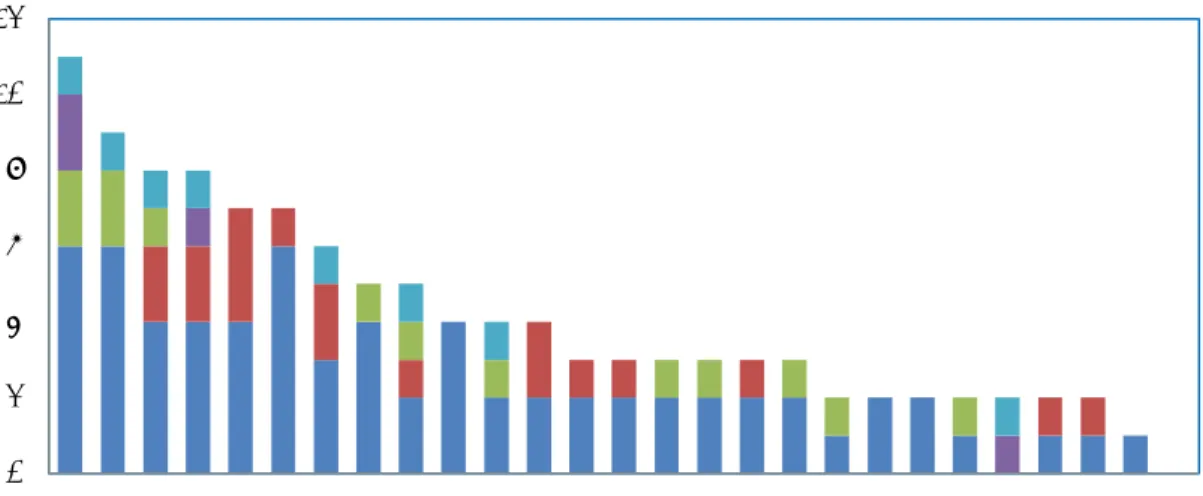
BUILDING RENOVATION REQUIREMENTS IN SELECTED EU COUNTRIES EU COUNTRIES
AUSTRIA
However, this obligation has no real impact due to the lack of compliance and effective control mechanisms. Therefore, there are requirements regarding the maximum heating demand (87.5 kWh/m²/year for residential and 30 kWh/m3/year for non-residential) and cooling energy demand of renovated buildings. Furthermore, in relation to major renovations, energy performance requirements are linked to Energy Performance Certificates.
For households, the maximum subsidy rate is 20% of the cost of thermal renovation, while for companies, subsidies cover 30% of the investment.
BELGIUM
In addition, from 2015 there will be system requirements from building permits (art. 8 EPBD). When a building permit is required and installations and systems are replaced or added, there are minimum system requirements. If a building accumulates 15 penalty points, it is considered unsuitable and it is illegal to rent it out (VEA, 2013).
The roof insulation standard will be applied to single-family houses, studios and apartments, but not to rooms. From 2020 onwards, the absence of adequate roof insulation (alone) will be enough to declare a building unsuitable and it will be illegal to rent it out.
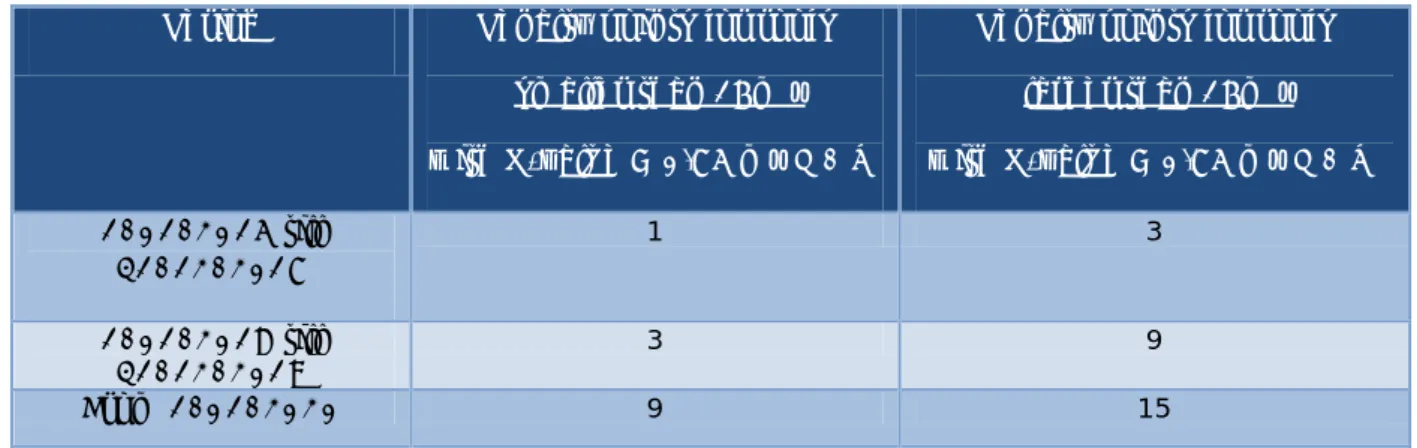
DENMARK
Indeed, the roof is a common part of the building and defects are passed on to all the dwellings in the building. For new buildings in Flanders, the subsidy mechanisms are based on the global energy performance of the building. If implementation of the full requirement is not cost-effective for the owner, lower or no requirements need to be implemented.
When renewing an installation in an existing building, the requirements are also the same as for an installation in a new building. The subsidy makes up approximately one third of the labor costs and applies both inside and outside the home.
FINLAND
The first alternative is to improve the thermal insulation properties of the building parts to be repaired or renewed so that they comply with the required standards (Maximum U-values for building elements). The other alternative is to improve the energy efficiency of the building in accordance with the level defined for the type of building in question. The third alternative is to calculate the building's E-number (the total energy consumption in the building) based on the solutions chosen when the building was first constructed, or from the solutions from its most recent change of use.
The aim is to reduce the E number according to the level defined for the relevant type of building. It is important to ensure that a building's technical systems such as heating and ventilation are functioning and their basic settings are always checked when insulation is added to the building or its airtightness is improved or the systems are renewed.
FRANCE
The national debate "Grenelle de l' Environnement" that took place in 2007 resulted in the creation of the 1st Loi Grenelle, which explicitly states that the French state must reduce energy consumption in existing buildings by at least 38%, up to in 2020. renovation of buildings, "Grenelle de l'environnement" has presented as a main objective the creation of a plan for the large-scale energy and thermal renovation of existing buildings, with the aim of reducing the energy consumption of the existing stock by 38% with. 2020. Regarding the EED requirement for an annual renovation rate of 3% in central government buildings, Grenelle 1 states that, from 2009, the entire state.
Under the latest measure, which was passed in 2009, landlords will be able, at the end of energy renovation work, to ask the tenant to contribute half of the estimated costs saved and pay it back through the rent. These plans have been reinforced within the new Residential Energy Renewal Plan, they started their implementation in September 2013.
GERMANY
In the case of individual measures, the changes must be designed so that the specific heat transfer coefficients of the external components are not exceeded (ENTRANZE, 2013). Instead of the upper floor ceiling, it is possible to insulate the roof above (Concerted Action, 2012). Replacement of electric heat storage systems: Due to the high consumption of primary energy in electricity production in Germany, the Energy Saving Regulation requires the phasing out of electric heat storage systems if the building is heated exclusively by electricity. heat storage systems.
According to the non-official paper that has become available (Lesefassung_EnEV) it is likely that the requirement will not be included in the future version of the German Thermal Insulation Ordinance. A renovated building that for example uses 115% of the primary energy of a comparable new building - (i.e. only 15% more)- is assigned the promotion standard "KfW efficient building 115" and receives a 2.5% credit and subsidy, while a "KfW efficient building 55" (i.e. 55% of the comparable new building ) building) received a much higher subsidy of 12.5% (Concerted Action, 2010).
ITALY
One of the main incentive mechanisms for the renovation of residential properties in Italy is the "55% tax credit for energy efficiency improvements". The measure allows building owners to recover 55% of investment costs (with maximum limits) within 10 years within the income declaration procedure. Furthermore, in the Valle D'Aosta region, in the case of a 20% extension of buildings with a floor area of more than 2000m2 or in the case of new housing, the energy performance of the building must comply with the local energy class B level (legge regionale 11/1998), i.e.
For the same cases, in the province of Trento, the minimum requirement is energy class B+, while for a building extension of up to 30%, the minimum energy efficiency requirements are more restrictive. In addition, the Turin building regulations provide for a voluntary scheme that assesses the energy performance of a building according to a set of energy and environmental criteria.

THE NETHERLANDS
Green funds" offer a relatively low return, but instead allow investors to receive tax benefits, which makes green investment attractive. The interest rate of a "green bond" is approximately 1% lower than the market interest rate (for an ordinary bond or loan). The amount of the loan is based on the energy performance of the building achieved through renovation.
The reduced rate will apply to labor costs incurred, including those of architects and landscapers, but not to materials used. The Decree also stipulates that the reduced rate will only apply to the renovation, renovation and repair of homes that take place at least 2 years after the first occupation of the owner-occupied home.
UNITED KINGDOM
From April 2016, landlords of homes will no longer be able to unreasonably refuse requests from their tenants for permission for energy efficiency improvements, if financial support is available for this, such as the Green Deal and/or the Energy Company Obligation (ECO). The “Green Deal” program aims to finance energy-saving upgrades for buildings without upfront costs. There are 45 home improvement measures or areas approved that receive funding under the “Green Deal”, covering insulation, heating and hot water systems, glazing and micro-generation.
The Green Deal funding is tied to the building, not the owner, so if residents move out, the debt is passed on to the next person to move in. Unlike many other building improvement initiatives, the Green Deal does not depend on people's income and the loans are available to everyone (USwitch, 2013).
EXAMPLES OF BUILDING RENOVATION REQUIREMENTS AT GLOBAL LEVEL REQUIREMENTS AT GLOBAL LEVEL
Before this law went into effect, the New York State Energy Conservation Building Code only required buildings to be upgraded to current code standards during renovations where more than half of the building's systems were replaced. In New York, almost all renovations involve less than 50% of the building, so these projects have not had to be upgraded to state-of-the-art standards, avoiding significant efficiency gains. The new law requires upgrades to meet current code standards for all renovation or alteration projects, rather than those that only affect more than 50% of the building system.
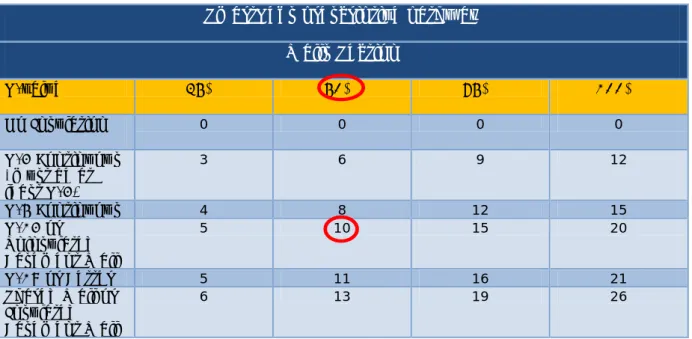
One of the goals of creating the SmartRegs checklist was to design a tool that would naturally lead property owners to more cost-effective, higher-impact improvements. It is an example of the Walls section of the checklist, for a house where 50% of the walls are not insulated and 50% are insulated with R-13.

Specifies the target groups for gaining the subsidy for energy-efficient building envelopes, installation of heat meters and temperature control
This policy package aims at improving energy performance in existing residential buildings by introducing heat metering and energy-efficient retrofitting, as well as reforming the heat pricing system in the North China Heating Region.
Policy 3: Provides a technical guide for heat metering and energy-efficient retrofitting for existing residential buildings in the heating areas of North China
Policy 4: Directs the assessment of heat metering and energy-efficient retrofitting projects, including the reference, condition, scope, and procedure of
- Heat metering and temperature control equipment: ‘installation of heat meters in boiler and heat stations; meter installation in the entrance
- Retrofitting the heat supply network for heat balance: ‘energy- efficient improvement for heat supply, such as boilers and heating
- CONCLUSIONS AND RECOMMENDATIONS
- REFERENCES
Directive 2004/08/EC of the European Parliament and of the Council of 11 February 2004 on the promotion of. Directive 2012/27/EU of the European Parliament and of the Council of 25 October 2012 on energy efficiency. 2002/91/EC of the European Parliament and of the Council of 16 December 2002 on the energy performance of buildings.
Directive 2010/31/EU of the European Parliament and the Council of 19 May 2010 on the energy performance of buildings (retrofit). Second Energy Efficiency Action Plans of the EU-MS” is available at: http://ec.europa.eu/energy/efficiency/end-use_en.htm.