Development and validation of high-performance liquid chromatographic methods for the determination of 1,4-benzodiazepines in bio-fluids». A selective sequential SPE was optimized for the isolation of six 1,4-benzodiazepines and four tricyclic antidepressants from bio-fluids by fractionating them into two different groups, and then the two drugs were determined individually using the same chromatographic conditions used in the third method. In general, higher recoveries, purer extracts, better sensitivity and precision, and reduced consumption of solvents or time were achieved for the determination of these drugs.
I would like to acknowledge the State Scholarships Foundation (IKY), Greece, for the financial support to stay in Greece that allowed me to complete this Ph.D.
INTRODUCTION
CHAPTER 1
Many of the benzodiazepines are also used in combination with antidepressants to treat depression. Likewise, tricyclic antidepressants (TCAs) are the second largest group of drugs for the treatment of psychiatric disorders such as depression, mainly endogenous major depression and anxiolytics for over 40 years. The function of these drugs is to block the reuptake of the neurotransmitters, norepinephrine and serotonin, in the central nervous system (9,10).
Brief discussion on structure, properties and effects of benzodiazepines and tricyclic antidepressants, basic principle of solid phase extraction and HPLC technique, overview of sample preparation and determination of these drugs in biological samples by different methods giving special emphasis on HPLC are also included in the thesis.
BENZODIAZEPINES: STRUCTURE, SYNTHESIS,
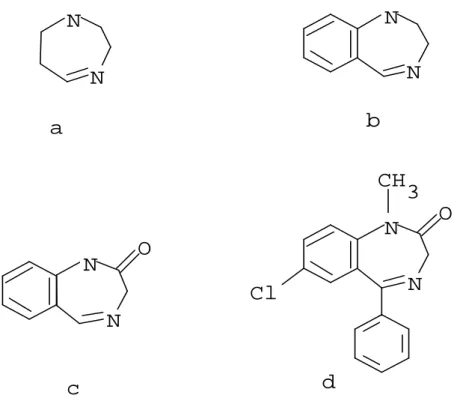
Structure and Classification
CHAPTER 2
- Synthesis
- Properties
- Stability
- Hydrolysis
- Metabolism
- Physiological Action
Replacement of the primary benzene ring with a thienyl ring in the triazole benzodiazepines (brotizolam, cyclotiazepam, and etizolam). Care should be taken regarding the specificity/selectivity of the analytical methods used for the determination of benzodiazepines, as benzodiazepines are metabolized. Its reaction with special sites (GABAA-receptors) on the outside of the receiving neuron opens a channel that allows the passage of negatively charged particles (chloride ions) into the interior of the neuron.
Below are the steps of the mechanism of action of the natural neurotransmitter GABA (gamma-aminobutyric acid) and benzodiazepines on nerve cells (neurons) in the brain.
TRICYCLIC ANTIDEPRESSANTS
Antidepressants
CHAPTER 3
- The mechanism of Action of Tricyclic Antidepressants
- Adverse effect of TCAs
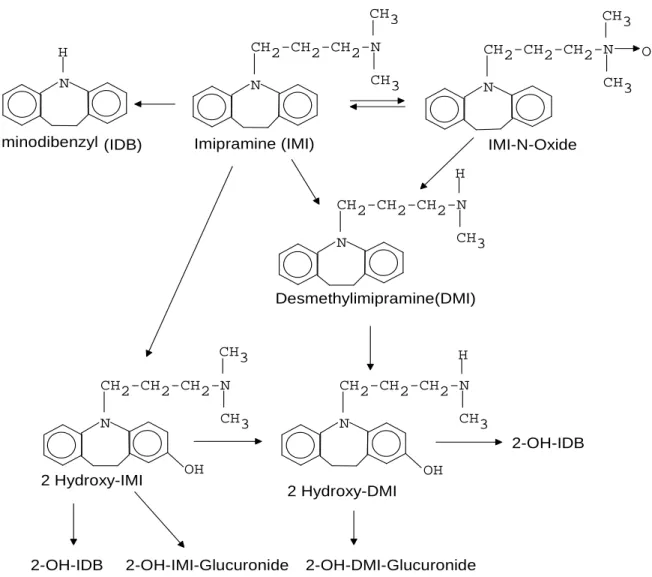
For example, hydroxylation occurs at ring position 2 in the case of imipramine (and desipramine) and at ring position 8 in clomipramine and its desmethyl metabolite (88). There is a link between the amount of these chemicals in the brain and a person's mood. The exact mechanism of action of TCAs in the treatment of depression is unclear and not yet fully understood.
This reuptake blockade leads to the accumulation of 5-HT and noradrenaline in the synaptic cleft and the concentration returns within the normal range.

HPLC TECHNIQUE: BASIC PRINCIPLES
CHAPTER 4
- Chromatography Terms
- Distribution of Analytes between Phases
- Retention
- The Rate Theory of Chromatography
- Column efficiency and Resolution .1 Plate height and plate number
- Liquid Chromatography/Column Chromatography
- High-Performance Liquid Chromatography (HPLC)
- Types of Column Packing Materials
- Effects of Particle Size of Packing Materials
- HPLC Systems
The amount of lag depends on the nature of the analyte, the stationary phase, and the composition of the mobile phase. The choice of solvents, additives and gradient depends on the nature of the stationary phase and the analyte. Partition chromatography based on the separation of the solute between the mobile and stationary phase.
Retention increases as the amount of polar solvent (water) in the mobile phase increases.

SAMPLE PREPARATION TECHNIQUES
CHAPTER 5
- Advantages of SPE over LLE
- Solid-phase Sorbents
- Other Solid Phases and Chromatographic Modes
- Basis of Solid Phase Extraction- SPE Theory
- The Role of pH in SPE
- SPE-Experimental Procedure
- New Configurations/Column Technology for Solid-phase Extraction
- Solid-phase Micro-extraction
To perform derivatization reactions between the reactive groups of the analyte(s) and those on the adsorbent surface. Here, the hydrophilic silanol groups on the surface of the raw silica packing (typically 60 Å pore size, 40 µm particle size) have been chemically modified with hydrophobic alkyl or aryl functional groups by reaction with the corresponding silanes (98). Retention of an analyte under normal phase conditions is mainly due to interactions between polar functional groups of the analyte and polar groups on the sorbent surface.
These materials can also be used under reversed phase conditions (with aqueous samples) to exploit the hydrophobic properties of the small alkyl chains in the bound functional groups. The functional groups involved in the adsorption of compounds from non-polar matrices are the free hydroxyl groups on the surface of the silica particles. In order to retain a compound by ion exchange from an aqueous solution, the pH of the sample matrix must be one at which both the compound of interest and the functional group are charged onto the bonded silica.
As a result, LC-SAX is used to isolate strongly anionic (very low pKa, <1) or weakly anionic (moderately low pKa, >2) compounds, as long as the pH of the sample is one at which the compound with interest is charged. Secondary hydrophilic interactions and cation exchange of the analyte can be used to maintain an appropriate pH. Retention in ion exchange SPE procedures is highly dependent on sample pH and conditioning solutions.
For retention of the analyte, the pH of the sample must be one at which the analyte and the functional groups on the silica surface are oppositely charged. Elute the analytes from the adsorbent with an appropriate solvent (desorption or elution step) and collect them for later analysis.

CHAPTER 6
- Non-extraction Techniques .1 Dialysis
The mixture was centrifuged with the addition of 8 mL (plasma) or 6 mL (saliva) of diethyl ether, the organic phase was transferred, evaporated to dryness at 45°C under nitrogen. The mixture is extracted with 4 mL of hexane-ethyl acetate (7:3, v/v), after mixing (3 min), centrifugation (4000 rpm for 5 min), the organic phase is evaporated at 45oC under nitrogen flow. The extracts were eluted with 3 mL of methanol, evaporated to dryness at 42oC, the residue was dissolved in 500 µL of eluent.
The resulting residue was redissolved in 0.2 ml of mobile phase (water/acetonitrile containing 1% AcOH). A mixture of 1.0 ml plasma, 100 µl internal standard (alprazolam) and sodium borate buffer (pH 9.3) was prepared. It was extracted with 5.0 ml dichloromethane: n-pentane (4:6) on a vortex, the upper layer was evaporated to dryness at 50°C under a gentle stream of nitrogen.
Buffered (pH 11) aqueous sample was applied to Sep-Pak C18 (1 g, 6 mL) cartridge activated with 2 mL of methanol. The elution was carried out with 2 ml of chloroform, evaporated to dryness under nitrogen at approx. 40°C. 3ml of cyclohexane was added and centrifuged for 10 minutes, the organic layer was evaporated to dryness under nitrogen flow at 40oC.
2 mL plasma with 100 µL IS (oxazepam) was loaded on column, washed with 1 mL H2O and 1 mL acetonitrile 10%, eluted with 1 mL methanol under light vacuum, evaporated under N2, reconstituted in 150 µL mobile phase; acetonitrile/phosphate buffer (19/81 v/v). Finally, the analytes were eluted with 2 mL of ethyl acetate and collected in a vial of the ASPEC. The organic layer was evaporated to dryness in vacuo and reconstituted in 10 ml of 0.1 M citrate buffer (pH 5).
The analyte was eluted with 1 ml of methanol; the eluent was evaporated to dryness under a stream of nitrogen.
CHAPTER 7
- Chromatographic Methods
- LC/HPLC: Columns, Mobile Phases, Detectors .1 Column
- Ultra-performace Liquid Chromatography-UPLC
- HPLC Chiral Separation
- Micellar Liquid Chromatography
- Gas Chromatography: Column, Derivatization and Detection .1 Column
- Thin-layer Chromatography
- Micellar Electrokinetic Capillary Chromatography
- Capillary Electrophoresis/Capillary Zone Electrophoresis
- Capillary Electrochromatography
- Immunoassays
- Photometric Methods .1 UV-Spectrophotometry
- Fluorimetry
- Electroanalytical Methods .1 Potentiometry
- Voltammetry
- Polarography
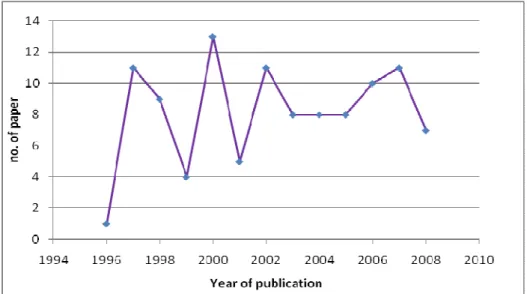
This review* includes methods published since 1996 covering various analytical techniques for the determination of benzodiazepines in biological samples. For these reasons, attention has shifted to the development of HPLC methods for the determination of these drugs in body fluids. Therefore, HPLC offers an attractive analytical alternative for the routine determination of 1,4-benzodiazepines in biological samples.
The HPLC-UV method using the Hisep column has been developed for the determination of selected benzodiazepines (nitrazepam, clobazam, oxazepam, lorazepam) in plasma. UV detection was also coupled to HPLC for the determination of clobazam in human blood (350) and seven 1,4-benzodiazepines as bulk drugs and in pharmaceutical formulations (351). A sensitive LC-ESI-MS method has been developed for the simultaneous determination of triazolam and its hydroxy metabolites in hair (255).
LOD was found to be 0.05-0.5 ng ml-1 for the determination of benzodiazepines together with other drugs in whole blood linking MS-MS to TSI (149). ECD (242) or benchtop ion mass spectrometer (MS-MS) (269) has been applied for the identification and determination of flunitrazepam and its metabolites in blood and urine, respectively. A quantitative TLC method using plates containing a fluorescent indicator has been developed for the determination of some 1,4-benzodiazepines in pharmaceutical formulations (368).
Chromatographic conditions and results of the TLC densitometric technique for the determination of benzodiazepines are shown in Table 7.3. Hansen and Sheribah (324) compared MEKC and MEEKC (microemulsion electrokinetic chromatography) separation techniques for the determination of impurities in bromazepam using dynamically coated fused silica capillaries. Experimental conditions for the determination of benzodiazepines from different matrices by capillary electrophoresis are given in Table 7.5.
For the determination of diazepam in pharmaceutical products, we have developed a quality control procedure using Fourier transform infrared spectroscopy (FTIR).

CHAPTER 8
- ANALYTICAL METHODS FOR THE DETERMINATION OF TRICYCLIC ANTIDEPRESSANTS
- Chromatographic Methods
- Photometry
- Electro-analytical Method .1 Voltammetric Method
- Flow-injection Analysis
- Immunoassay
- Automated Nanoelectrospray Ionisation Tandem Mass Spectrometry
- SAMPLE PREPARATION TECHNIQUES FOR TRICYCLIC ANTIDEPRESSANTS
- Direct Injection
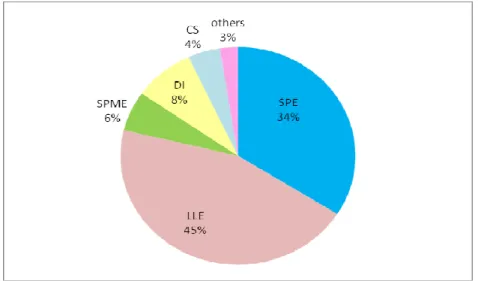
Among them, HPLC has assumed an important role as shown in Figure 8.1 for the determination of tricyclic antidepressants and their metabolites in biological samples. The in-tube solid-phase microextraction (in-tube SPME) coupled with microcolumn liquid chromatography (micro-LC) was investigated for the analysis of antidepressants, desipramine, nortriptyline, imipramine, amitriptyline, in human urine. An HPLC analytical method using chemiluminescence detection was developed for the determination of tricyclic antidepressants; imipramine, desipramine, amitriptyline, nortriptyline and clomipramine.
Gas chromatographic methods were developed and validated for the simultaneous determination and identification of tricyclic antidepressants such as imipramine desipramine, amitriptyline, amoxapine, doxepin, trimipramine and metabolites, in human plasma hair (451), horse blood and urine (452). Another GC-NPD method was developed for the simultaneous determination of amitriptyline, nortriptyline, imipramine, desipramine, clomipramine, and desmethylclomipramine in human plasma when detection limits ranged from 1.2-5.8 ng mL-1 (399). Solid-phase extraction (SPE) was coupled at-line to capillary electrophoresis (CE) for the determination of a range of tricyclic antidepressants such as amitriptyline, imipramine, nortriptyline, desipramine and maprotyline in urine and serum.
Sample pretreatment of dialysis solid phase extraction (SPE) was combined on-line with non-aqueous capillary electrophoresis for the determination of tricyclic antidepressants; amitriptyline, imipramine, nortriptyline, maprotiline and desipramine in urine and serum. Spectrophotometric methods have been developed for the determination of tricyclic antidepressants such as amitriptyline or imipramine in pure and pharmaceutical form using 7,7,8,8-tetracyanoquinodimethane (TCNQ) (469) or Eriochrome cyanine R (ECR) (392) as reagents, respectively spectrophotometric. An approach for the quantification of tricyclic antidepressants (TCAs) such as imipramine, desimipramine, amitriptyline and nortriptyline, based on the measurement of the critical micelle concentration of mixed surfactant-drug aggregates, TCA-sodium dodecyl sulfate (SDTS) and TCA-sodium X- 100 was proposed.
A novel flow injection method for the determination of a range of tricyclic antidepressants, including doxepin, promazine, nortriptyline, amitriptyline, chlorpromazine, imipramine, clomipramine, desipramine, protriptyline and trimipramine, using electrogenerated chemiluminescence (ECL), based on the reaction between tris(2,2A-bipyridyl)ruthenium(ii) [Ru(bpy)3]2+ and the tertiary amino groups on the antidepressants. An automated multi-commutated flow system was developed for the spectrophotometric determination of clomipramine in pharmaceutical preparations.