This current study attempts to shed light on the relationship between human resource operations and employee engagement by testing the relationship empirically. In addition, the results of the employee engagement survey among Skroutz employees were evaluated.
Human resource operations Management, Definition, roles and objectives
The Role of HR Operations Management
HR Operations Management is an essential part of any type of organizational success (Slack et al., 2013). The primary role of HR Operations is to oversee and manage operational and human resources needs.
HR Operations Manager Role: Planning, Controlling, Staffing, Leading,
A typical responsibility of the head of HR operations is to ensure the smooth operation and performance of the HR workgroups. Therefore, in some cases, the head of HR operations liaises with people outside of operations, such as sales managers.
Objectives of HR Operations Management
- Human Resource Outsourcing
- Recruitment Process Outsourcing (RPO)
- Training and Development
- Payroll
- Automation
- Total Quality Management
- Employee empowerment
- Re-engineering
- Benchmarking
- Six Sigma
Benchmarking is another approach in the context of total quality management that has been widely adopted by organizations to keep abreast of the latest trends and factors in the global business environment (Wheelen and Hunger, 2012). One of the benefits of Six Sigma is that it requires HR professionals to have a project before they begin certification or training.

Improving Productivity
Akinnusi (2008), "Benchmarking human resource management in the public sector: prospects, problems and challenges: original research", SA Journal of HumaMonica C. 1993) Re-engineering the Corporation, Nicholas Brealey. Callahan (2012), “Human Resource Outsourcing: Market and Business Performance Effects of Administrative HR Functions”, Journal of Business Research.
HR Operations function and the new HR Operating model
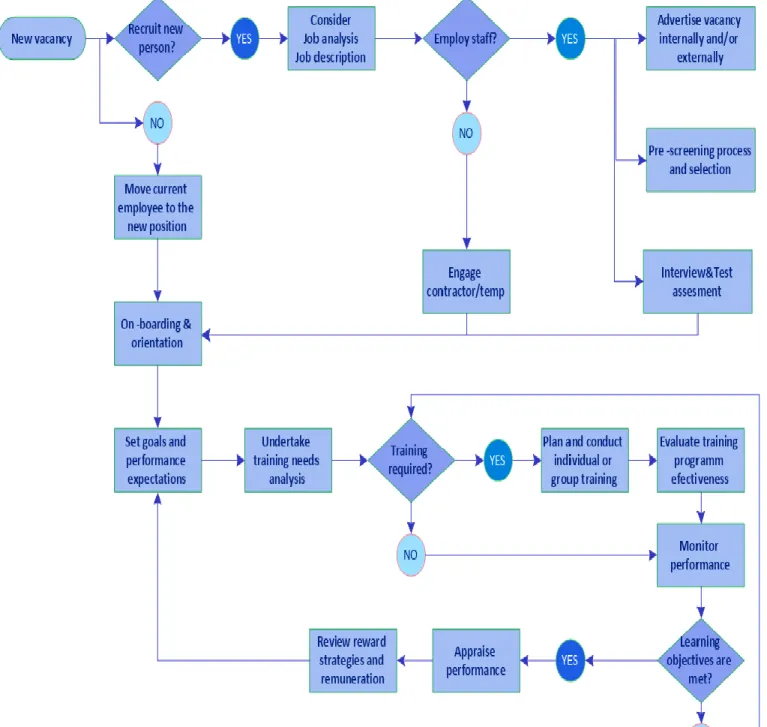
HR Operations function: The operational role of HR Practitioners
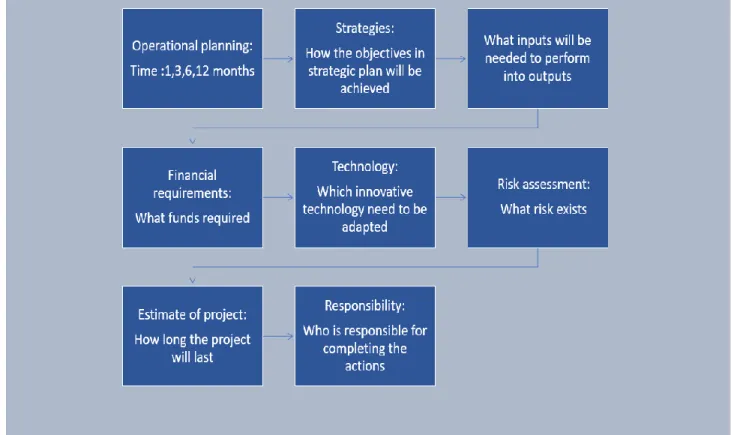
Develop and manage Operational HR Planning and strategies
- Develop and implement HR Operational plans
- Develop and implement HR Operational plans
Financial requirements: what funds are needed to implement the plan and what are the current and potential sources of these funds. Project lifetime assessment, sustainability: how long the project will last and how it will ensure the sustainability of project achievements.
Recruitment, sourcing and selection process
- Create and develop employee requisitions
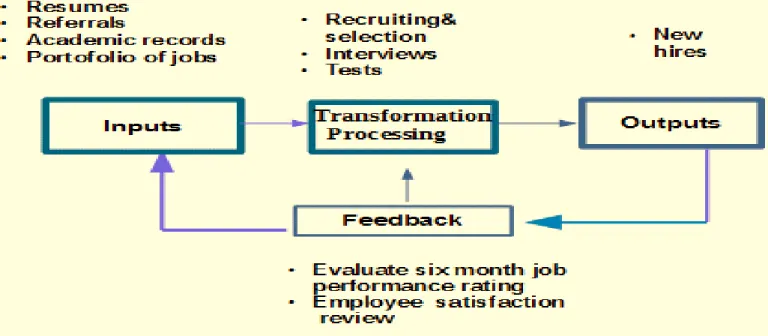
- Recruit/Source candidate process
- Screen and select candidates
- Manage pre-placement verification
- Manage new hire/re-hire
- Track candidates
The personnel officer keeps records related to the personnel file, which includes applications, pre-employment tests, performance evaluations, changes in grade, changes in position, vacations, transfers, promotions, demotions, documentation of disciplinary actions and job descriptions, and filing of the unemployed.
Development, Training and counseling processes
- Manage employee orientation and deployment
- Manage employee performance
- Manage employee relations
- Manage employee development
- Develop and train employees
The program covers the new employment documentation process, a welcome package (welcome letter, employee information form, employee handbook), necessary equipment and services such as computer, passwords, cards and e-mail accounts and a company tour, so new staff acquaints the entire workforce (peers and managers) as well as the devices in the company. To gather information that leads to an informed decision about how well onboarding initiatives are working, HR professionals identify performance and effectiveness metrics to evaluate and report on the overall effectiveness of the process. The role of HR is to align learning programs with competency needs that are defined by performance data, project requirements, organizational business plans and goals, appraisal records, team needs, and job role requirements (Draganidis and Mentzas, 2006).HR.
Reward and retain employees
- Develop and manage reward, recognition, and motivation programs
- Manage and administer benefits
- Manage employee assistance and retention
- Administer payroll
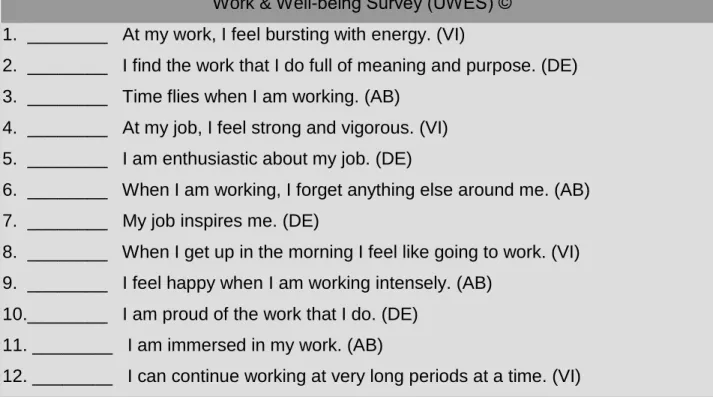
59 characterized by energy, commitment and effectiveness – the direct opposites of the burnout dimensions of exhaustion, cynicism and inefficiency. They view employee engagement as "the individual's involvement and satisfaction with, as well as enthusiasm for, the job" (p. 269). A relatively lower degree of agreement with the statement about Q.5 “There are opportunities to advance my career (career development).
Redeploy and retire employees
- Manage separation
- Manage retirement
- Manage leave of absence
- Develop and implement employee outplacement
- Manage deployment of personnel
- Relocate employees and manage assignments
- Manage expatriates
Manage employee information
- Manage reporting processes
- Manage employee inquiry process
- Manage and maintain employee
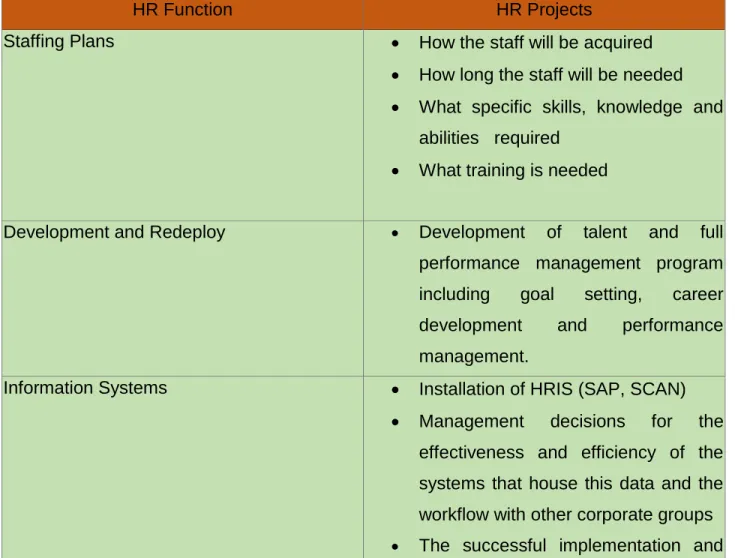
- Manage human resource information systems
- Develop and manage employee metrics
- Develop and manage time and attendance systems
- Manage employee communication
HR practitioners must review personal data, such as changing benefits enrollment, employee status, and pay grades. Therefore, HR practitioners are responsible for tracking, editing, collecting and entering data via paper forms into HR Information Systems (HRIS) related to employees' hours worked, overtime and paid time off. As such, HR practitioners are responsible for designing and implementing employee communication plans; support workplace relations, provide direct and consistent information on organizational issues, manage employee suggestions and grievances; and publishing employee communications through three top channels: print (accessible on paper), electronic (accessible on a piece of technology) and face-to-face (interpersonal).
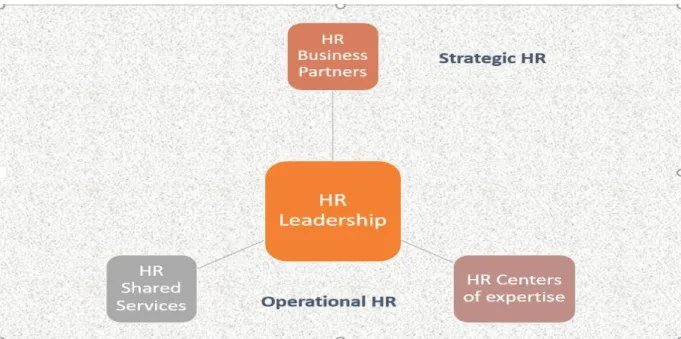
Latest trends in the HR Operations: Business Partners, Centers of Excellence, Shared Services
- Ulrich’s HR ‘three-legged stool’ the new best practice model
- HR Operations Embedded Among HR Business Partners support
- Strategic partner
- Change agent
- Administrative expert
- Employee champion
They are usually embedded in the business unit, where they act as a bridge between the needs of the business and the capabilities of the HR team. This role refers to the traditional function of human resources, which is related to the design and execution of the day-to-day operations of the HR department. Improve the speed of delivery of HR services and constant focus on the needs of the business units (Rafat et al., 2012).
HR operations as a Centers of Expertise (CoE)
Accordingly, the role of the employee champion is to provide guidance and support on all issues related to employee needs and improves the quality of management and teamwork (Ulrich, 1997). Innovation of 53 solutions aligned with business challenges such as talent management, absenteeism, organizational change and others, providing support for day-to-day functional needs such as traditional compensation, benefits and learning. Like Business Partners, Centers of Expertise teams use their "unique" knowledge and skills to add greater value to business outcomes.
HR operations within Shared Services (SSCs)
Today, HR shared services professionals continue to focus on improving operational efficiency and reengineering processes to reduce operational costs and help the company achieve its strategic goals for performance and growth. Joseph Soalheira and Greg Timbrell, (2014), What are Shared Services?, in Tanya Bondarouk (ed.) Shared Services as a New Organizational Form (Advanced Series in Management, Volume 13) Emerald Group Publishing Limited, pp.67 - 84. Peter Reilly, (2014), Managing Boundaries Better: The Key to More Effective HR Shared Services, in Tanya Bondarouk (ed.) Shared Services as a New Organizational Form (Advanced Series in Management, Volume 13) Emerald Group Publishing Limited, p. 17 – 38.
EMPLOYEE ENGAGEMENT
- The meaning of Engagement
- Utrecht Work Engagement Scale (UWES)
- Types of employee engagement
- The Drivers of Engagement
- Models of employee engagement drivers
Other burnout researchers (Gonzalez-Roma et al., 2006) also found that the core dimensions of employee engagement (nervousness and commitment) are the conceptual opposite of the core dimensions of burnout (exhaustion and cynicism) (Dagher et al., 2015). Harter et al., (2002) were the first to study employee engagement at the business unit level (Shuck et al, 2009). In fact, he extended the duration of employee engagement to encompass two types of engagement: job engagement and organizational engagement (Welch, 2011).

- How HR Operations drive engagement
- Job Design and engagement
- Recruitment and Employee Engagement
- On -boarding and Employee Engagement
- Training and Employee Engagement
- Internal Communication and Employee Engagement
Recruiting is one of the first and best ways to start involving employees in. Karen Mishra, Lois Boynton and Aneil Mishra, (2014), “Driving Employees The Expanded Role of Internal Communications”, Journal of Business Communication 2014, Vol. 2008), "The Importance of Employee Engagement", Industrial and Organizational Psychology, Vol. A new approach to help distinguish between the concepts of engagement and burnout", V5 pp Antecedents and consequences of employee engagement", Journal of Managerial Psychology, Vol.
A Comprehensive analysis of HR Operations and Employee Engagement Activities of Skroutz
Overview of Skroutz
VISION & MISSION
- Vision
- Mission
Organizational structure of Skroutz
HR Operations and Its Activities
- Recruiting, Orientation and On-boarding
- Management of employee data and related system
- Human Resources Information Systems (HRIS)
- Development and ongoing administration of Compensation and Incentive Plans
- Development of strategy and implementation of progressive employee benefits
- HR Policy and Implementation
- Employee Development/Training
Managing employee data is another important task for HR operations team in Skroutz based on the needs of its workforce. HR team is responsible for securing and reporting on accurate and timely personnel-related data that drives management decisions, as well as, the effectiveness and efficiency of the systems that house this data and the workflow with other corporate groups. In this role, HR Operations team is responsible for the development and ongoing administration of the company's entire compensation program, including base pay, and various incentive and recognition programs that ensure Skroutz practices are competitive and fair. HR Operations team is also responsible for developing the strategy, implementing and overseeing the day-to-day administration of the entire employee benefit offering.
Engagement strategies of Skroutz
HR policy and implementation at Skroutz is another essential task of the HR operations team, indispensable for simplifying workforce management, maintaining quality and productivity. In this position, the HR team maintains and implements HR policies, such as employment policies, procedures, laws, standards or internal regulations, based on the Skroutz organizational culture and work environment, under the direction of the Director of Human Resources, who is responsible for the implementation of all policies and programs human resources. The HR operations team also handles employee training or planning promotional opportunities, attendance and planned absence reporting, employee relations issues such as harassment allegations, workplace complaints, as directed by the Director and Operations/Supervisors, and as directed by the Director of Human Resources . Provide opportunities for training and development: Skroutz encourages and supports the development of its employees by offering a variety of ways in which everyone can engage with new ideas and techniques.
Employee Engagement Techniques of Skroutz
There are moments and details that make employees feel happy about the time they spend inside and outside the office (www.skroutz.gr). The favorite moment of the day is also when the employees go to the large company dining room to eat. Others get their hands on the grill, others give directions, others engage in conversation, and others eat what comes off the barbecue right away.
Findings, Analysis and Conclusions
- Highlights
- The Methodology
- Results
- Characteristics of Respondents
- Section 1: Strategic Alignment
- Section 2: Culture
- Section 3: Engagement
The one question that experienced a decrease in agreement was "The feedback I receive from my supervisor". The seven questions in this section with the highest level of agreement are presented in Table 10. The surveys are intended to measure the level of employee engagement related to their growth and training opportunities, the brand name, benefits and the loyalty to the company. general satisfaction questions (Q1. and Q2.) approach the percentage of 80% agreement (strongly agree).

Opportunities for improvement
Taking action on the performance feedback system is part of Skroutz's operational goals (29.8%). Improvements to the feedback system will include a systematic plan for career discussion. The agreement with the information about the issues related to the company and its course received the lowest agreement score.
Conclusion
98 employment by focusing on non-financial benefits, such as making employees feel like a valued part of an organization to show them they are valued or even more giving them development opportunities and performance feedback. This means that engagement does not mean employee happiness and satisfaction – employee engagement is something more, it is the emotional connection that employees have to the organization and its goals.
Future Implications
You work for Skroutz- less than 1 year, 1 to 3 years, 3 to 5 years more than 5 years On a six-point scale, where '6' strongly agree and '1' strongly disagree. My company gives me motivation and motivates me to contribute as much as possible to my work. Skroutz gives me opportunities in the field of training and development of knowledge and skills.