
The aim of this security investigation report is to be cautious and try to avoid a reoccurrence by understanding the events of May 7, 2015. The findings of the security investigation are not binding on any party and the conclusions reached and recommendations given do not in any case create a presumption of liability (criminal and/or civil). or guilt. During the course of the safety investigation, the MSIU had very limited information about the Bo Spring, its crew members and the dynamics leading up to the collision from the vessel's perspective.
Vessel, Voyage and Marine Casualty Particulars
Description of Vessels
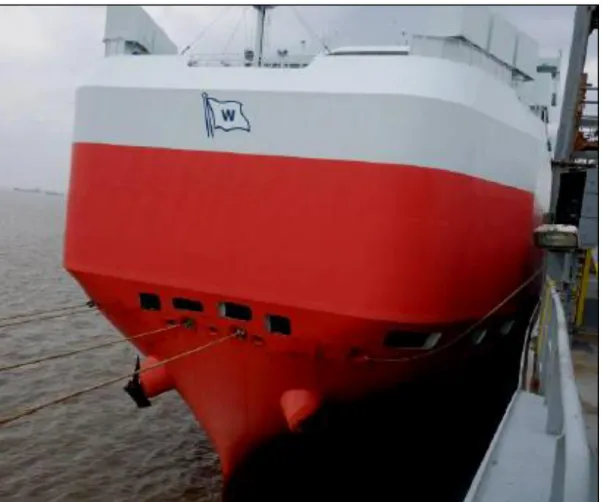
Tongala
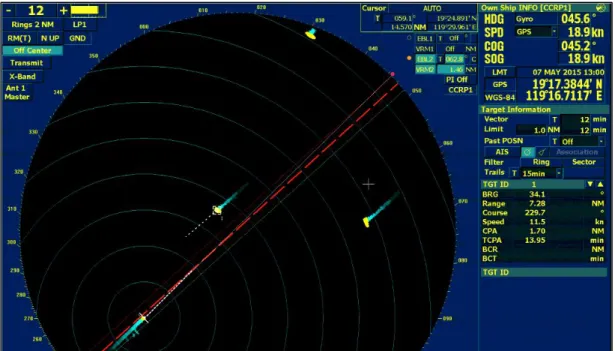
According to VDR data, the X-band ARPA was linked to the Global Positioning System (GPS) and the ship's improved course and speed over land were also displayed.
Crew members on board Tongala
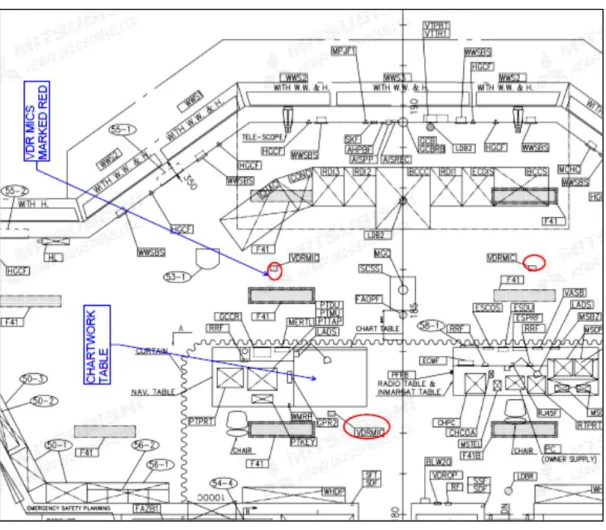
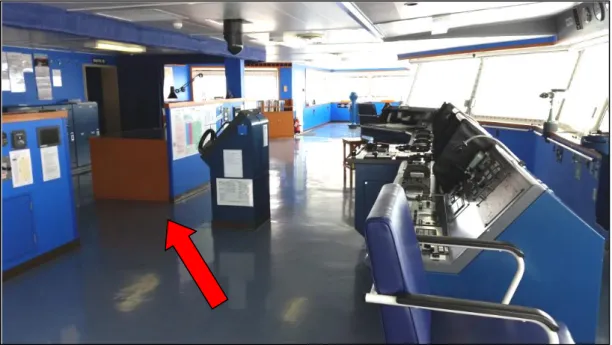
The chart room was an integral part of the bridge, mounted behind the central navigation instrument console (Figure 2). According to the evidence collected, the second mate was the navigation officer (OOW) of the watch at the time of the collision. He obtained his OOW certificate in 2004 (issued by the Indian authorities), his chief officer's certificate in 2006 and his certificate of competency in relation to the International Convention on Standards of Training, Certification and Watchkeeping for Seafarers (STCW).
Bo Spring
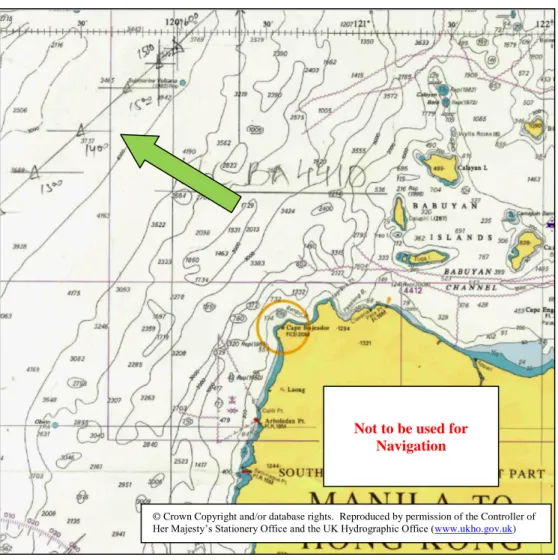
Location of the Accident and Prevailing Weather Conditions
Narrative
Events on Tongala
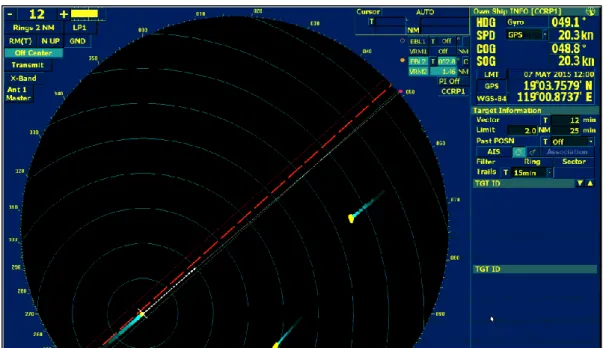
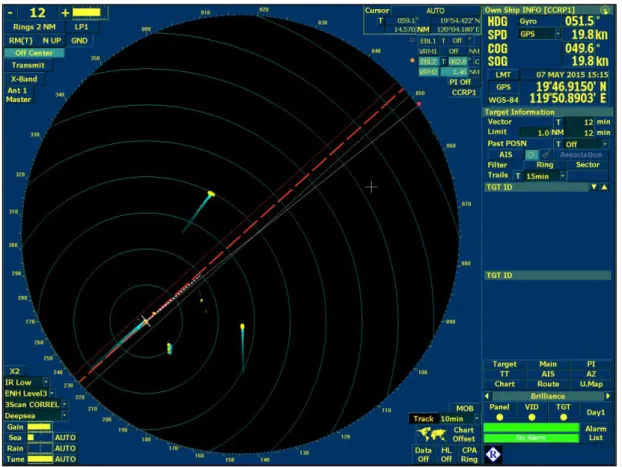
0500 (UTC) on 07 May 2015), the bridge equipment was reported to be all functioning well, including the General Alarm and the ship's whistle which was. The starboard X-band and the S-band ARPA radars are both tuned to North-Up, in relative motion on the 12 nm range scale with an off-center display. The ECDIS was set to a scale so that a target could be displayed on the screen approximately 24 nm ahead2.
The second mate was the only lookout on the bridge after taking over navigational watch. About 1228 the captain arrived on the bridge and got into a conversation with the OOW. After the captain left the bridge about 1243, the OOW started working on the passage plan for the next voyage, from Singapore to Suez.
At this time Tongala had a vessel on her starboard beam at 1.5 nm and two other targets / vessels, one on the port side at 11 nm and the other seven nm away on his starboard side. Other vessels came within Tongala's radar range, including Bo Spring which was on the radar about one hour before the collision, ie at 1432. The OOW continued its chart work in the chart room until 1535 when the collision occurred.
When the crash happened, the OOW ran around the bridge, answering the phone and answering "I don't know" to a question that was asked on the other end of the line.
Events on Bo Spring
Purpose
Bridge Procedures on Tongala
The OOW as the sole look-out during hours of daylight
Missing barriers on the three ARPA sets
Keeping a proper lookout by sight and hearing and by all available means
Although the map room was not a separate room from the bridge, it was located at the far end of the bridge (Figure 6). Even with the night curtains open, the view from the area was not clear, especially in the ship's beams. In addition, it appears that the night curtain of the ski room was usually drawn and placed on the starboard side of the handrail and therefore would have obstructed the view of the OOW on the starboard side.
Bo Spring approached the Tongala from the starboard side, about four points ahead of the starboard beam, and it is highly likely that from her position the OOW would not have visually noticed the approaching vessel. Analysis of the VDR data did not indicate that audio signals were heard at any time prior to the accident. It must be pointed out, however, that as the bridge was of the completely enclosed type, it was rather difficult to keep a lookout by hearing; more with the OOW immersed in his work inside the chart room.
With the vessel having a fully enclosed bridge, the vessel should have been fitted with external sound reception facilities to have the same effect as if the vessel's bridge wing doors were kept open13. However, according to the VDR sound data, no sound of the other vessel's approach was heard inside the bridge until the collision. Maintaining a navigational watch by all available means also refers to the appropriate use of available navigational equipment.
While it has already been explained that there were potential problems with the approved placement of the ARPA arrays (and the ECDIS alert because this was not captured on the VDR)14, the MSIU did not come across evidence that would confirm that the long-range scan was made with that the ship was doing over 20 knots.
The Discussion between the Master and the OOW
Nevertheless, the company's procedures were not followed in what appeared to be a departure from the company's procedures. Of particular interest are two levels, which have been identified as factors influencing procedural deviations. The potential time savings and the demonstration of ability to work under pressure (particularly after the master drew the OOW's attention to the cards requiring corrections) were two typical examples of factors influencing procedural variability.
On the other hand, deviations from company procedures are highly susceptible to management influences. However, there was no attempt to mitigate the workload by sharing it among other crew members. The MSIU found it possible that no additional crew members were assigned to the OOW because it was not the intention of the master to put pressure on the OOW.
In fact, during the course of the safety investigation, it was clarified that the master was willing to simply record the actual correction status on his handover slips, rather than expecting those corrections to be made prior to his sign-off. The fact that OOW gave the case top priority seemed to indicate that this message was not caught (possibly even due to the above reasons); rather, it may have inadvertently created an environment that encouraged OOW to deviate from company procedures. Moreover, the hierarchical gap between the master and the junior OOW may have 'forbidden' the latter from asking for additional resources, a clarification that would possibly have avoided a misunderstanding.
The Conduct of the Navigational Watch and Situation Awareness on Tongala
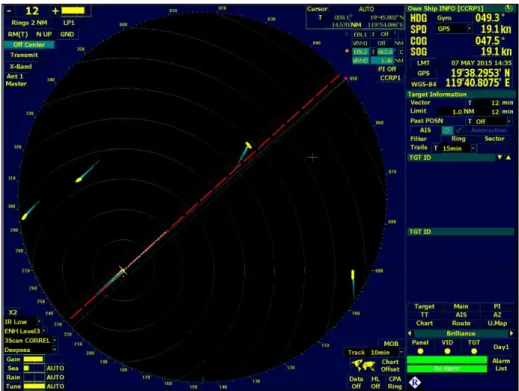
Whether this change was made at 1500, when Bo Spring was off at eight pm, or by 1515, when Bo Spring was off at five pm, it is clear that the OOW was totally unaware of Bo Spring, which was drawing closer to Tongala on a steady course from the starboard side. Moreover, the setting used on the radar sets contributed to the inaccuracy of assessing the situation. As noted elsewhere in this safety investigation report, the three available radar sets were all set North-up, on relative motion and off-center with the starboard X-band and S-band radars / ARPAs on the 12 nm range and the port X-band radar / ARPA on the six pm range.
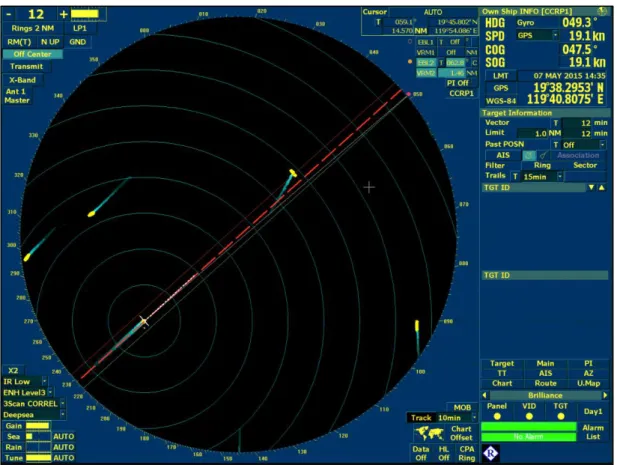
This 'off centre' configuration gave the OOW a greater range forward, but contributed to a reduction in the range on the vessel's starboard beam and on the quarter. Distances did not appear to be changed during viewing, indicating that no long-range scanning was done on the 24 and 48 nm ranges. In fact, by 1524, while the OOW was still in the chart room working on the next passage plan, Bo Spring was only four nm down with a CPA of 0.19 nm (Figure 10).
The issue was also analyzed taking into account the fact that at 1532 (Figure 11), i.e., one minute before the collision and when Bo Spring was less than one nm away (CPA was 0.09 nm), no alarms were heard on the bridge . With no alert, the OOW in the chart room had no immediate and obvious knowledge of the effects on the ship (in terms of collision risk). The perception of the target state would be the result of the interpretation of the context by the OOW, based on a set of.
Without these crucial signals, the mapping of the meaningful states of the situation remained questionable and imprecise – to such an extent that the close situation and ultimately the collision was not avoided.
The Conduct of the Navigational Watch on Bo Spring
Immediate Safety Factor
Latent Conditions and other Safety Factors
Other Findings
Safety Actions Taken During the Course of the Safety Investigation
Removal of bridge watch alarm system (BNWAS) reset function – The facility to reset the BNWAS alarm function on the chart table is being removed on all Company vessels. Computer Based Training (CBT) on the ColRegs application – A review of the CBT data has been carried out to ensure that the ColRegs company specified training has been carried out by the required individuals and gaps have been addressed as necessary;. Additional Promotion Criteria - To facilitate better evaluation of all ship personnel, the Company is considering a 'Crew Training Record Book'.
Training Presentations and Experience Reviews - Training presentations are given at bi-annual officer conferences in India and the Philippines to discuss the accident in detail. Presentations included the results of the root cause analysis, lessons learned and actions to prevent recurrence. Company BPM and Navigational Maintenance - The Company is amending its BPM to strictly prohibit a navigating OOW from performing duties unrelated to a safe watch of navigation (among others, chart corrections, voyage . planning, routine testing and maintenance of equipment) when he/she is the only observer on the bridge.
In light of the conclusions reached and taking into account the security measures taken during the course of the security investigation. Conversation and laughter can be heard between the 3rd Mate and 2nd Mate on the Bridge as part of the handover of the watch. Conversation between the master and the second mate about whether to move the ship's clocks forward one hour that evening and about the chart corrections the second mate was asked to update while the master was preparing his delivery report.
While the second target on the left side is 11 nm away and the one on the right side is 7 nm away. There are clear sounds and noises related to handling charts, opening and closing chart drawers and clearing previous rates/clearing charts. Two more new targets shown on the radar, one on the port bow and one on the starboard bow.

![HF 4I !3 r -) <-l =7. -C} =U _i=IJ] ;,az l 2Va -.i=) E az< 2 a '6P-i.)](data:image/gif;base64,R0lGODlhAQABAIAAAP///wAAACH5BAEAAAAALAAAAAABAAEAAAICRAEAOw==)