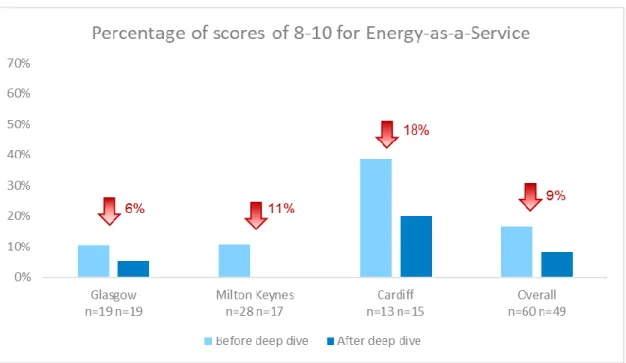
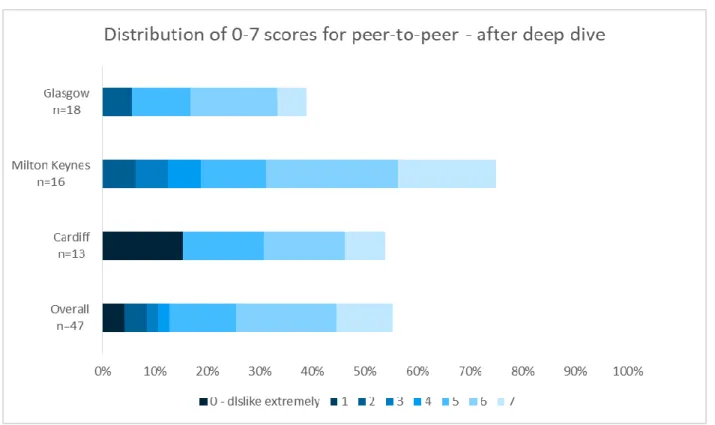
Compared to the current energy supply model, energy-as-a-service is loved by some and misunderstood by others. While some models will complement the existing energy supply model (specifically lifestyle products, efficient consumption and bundling), others will require more substantial changes (specifically peer-to-peer).
SCOPE AND OBJECTIVES
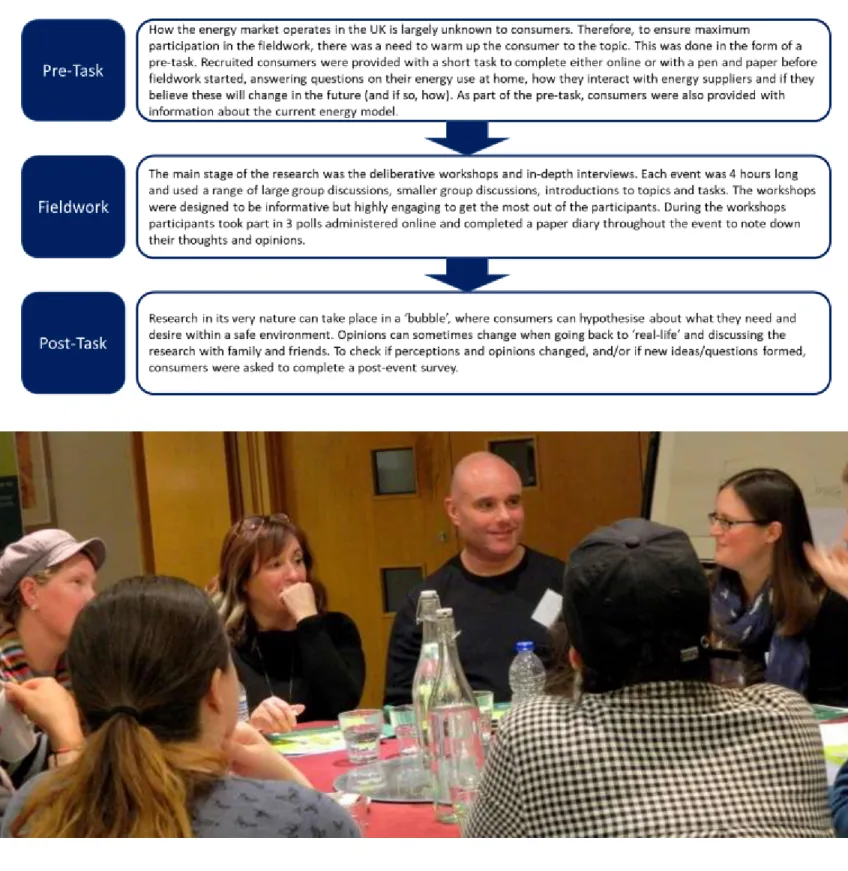
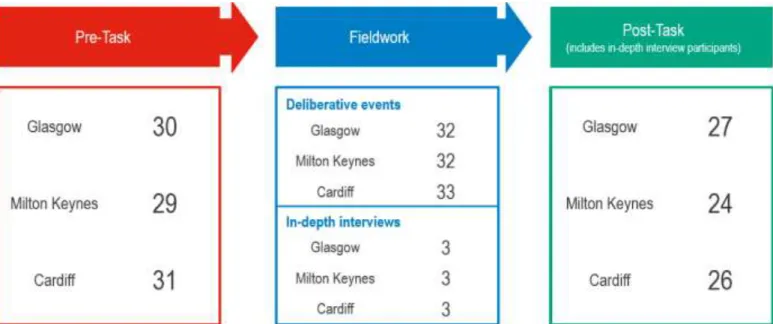
The research included an initial exploration of consumer perceptions of the current energy supply model. The research design was built in time across 3 phases to give Impact an in-depth understanding of participants' reactions to and perceptions of current and future energy supply models.
METHODOLOGY OVERVIEW
See Appendix 2 for the full discussion guide followed during the workshops and in-depth interviews. Impact conducted in-depth interviews internally with participants who were unable to attend the workshops for the following reasons: mobility issues in reaching the event, English not being the first language, older consumers and consumers who had commitments such as childcare that prevented them from attending are .
PRE-TASK RESULTS
The participants received a brief explanation of the current energy market and were asked how their relationship with it could change in the future. Finally, participants were asked to consider the question: If energy were just like any other product or service, what would they like?
CURRENT ENERGY SUPPLY MODEL
Initially this included the current model, but then participants who chose it were asked to choose one of the new models.5. This is closely followed by the current model, with very few customers choosing time of use and none choosing energy as a service.

FUTURE ENERGY MODELS
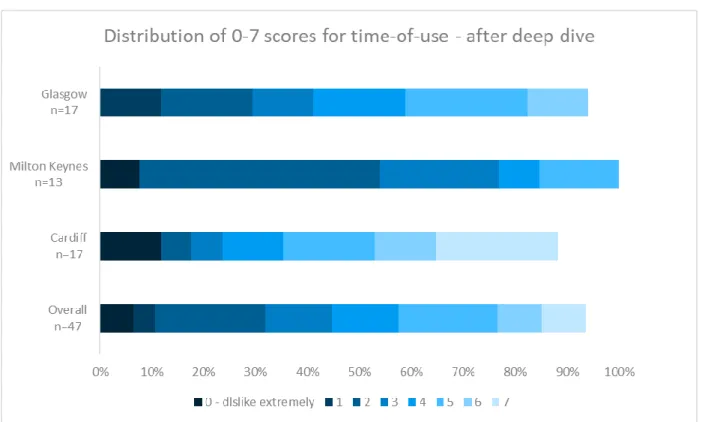
Despite many concerns about the time of use, consumers do see that elements of this model can work across the country and feel that it will be the easiest to implement in the short term. Consumers feel that not many products or energy needs in the home will fit the time-of-use tariff. This was expressed by consumers in vulnerable circumstances who participated in the in-depth interviews (including one participant with a physical disability and a retired participant).
However, some consumers suggest that this model may benefit those in vulnerable circumstances the most in the long run. Evidence that this model can work on a large scale and long-term before it is widely adopted.
POST-TASK
CONCLUSIONS
Consumers are nervous about moving away from the familiar, despite low understanding and low involvement in the current energy supply model. Time of use encourages the consumption of available and underutilized energy, so the selection of "peaks" may not match the energy supply. Consumers are consistently most positive about the peer-to-peer model, which receives more support than other models considered, including the current energy supply model.
Given time for reflection and contemplation, consumers are more likely to opt for peer-to-peer as their preferred approach over the current energy supply model. Compared to the current energy supply model, energy as a service is loved by some consumers and misunderstood by others.
RECOMMENDATIONS AND NEXT STEPS
Anything that can be adopted to make the current power supply model (or any future model) easier to understand is a benefit. It is also recommended to ensure that any future energy supply model(s) is based on current consumer expectations and experiences. Any energy supply model(s) introduced in the future must include an element of flexibility for the consumer.
A phased rollout of any future energy supply model(s) could help alleviate concerns and allow consumers to be slowly introduced to a new way of interacting. Finally, since consumers see each energy supply model as having a range of benefits as well as associated risks, there is a possibility to introduce elements of each of the models, as each has different value for different people.
APPENDIX 1: TECHNICAL APPENDIX
Consumers were told that they would receive the survey at the end of the workshop, but were given no further instruction. Regulation (GDPR), the consumers' participation in the study was not conditional on them giving permission for all of the above. As part of the recruitment process, consumers' emails were collected to send them pre-task and post-task.
Pre-task and workshop incentives were combined and delivered to consumers immediately at the end of the workshop. In-depth interviewees received their financial reward from the moderator at the end of the interview and the post-task reward was paid via bank transfer or cash sent to their address (the consumer indicated his preference) within 10 days of completing the survey.
APPENDIX 2: PRE-TASK
In total, 93% of workshop consumers completed the pre-task and 75% of all consumers completed the post-task. Consumers in vulnerable circumstances/hard-to-reach consumers received £50 to take part in the in-depth interview and were also invited to complete the post-task. Please give 3 or more examples of when you used energy because it was essential b. Please give 3 or more when you used energy for something you think is not essential c.
The energy industry is a growing industry that includes all companies involved in the production and sale of energy – including electricity and gas. Your energy supplier is a company that buys energy on your behalf on the energy market and charges you for the amount of energy you use.
Please reflect on how your relationship with the energy market might change
Describe how you deal with your current energy supplier. for example, do you communicate online, over the phone, etc.?). Why are you or they contacting you? for example to discuss a bill, to ask questions about services, to request a telephone, etc.?). Why are you or they contacting you? for example to discuss a bill, to ask questions about services, to report a power outage, etc.).
How – if at all – do you think the way you interact with your energy supplier might change. EG communication channels, contact frequency, etc.). If energy could be like another product or service you use, what product or service would you like it to be. EG mobile phone plans that bundle different services into one monthly fee, finance where you have different suppliers for different services you use, etc.).
APPENDIX 3: DISCUSSION GUIDE
915 Citizens Advice Workshop Discussion Guide
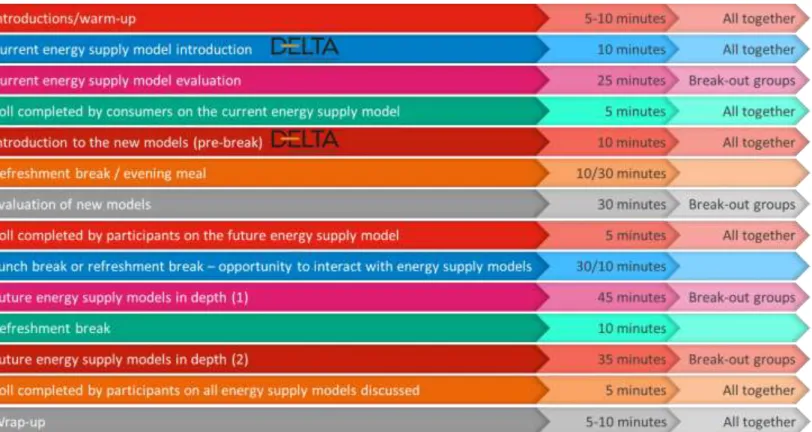
CORE SERVICES AND ADD-ONS (1) (45 minutes)
We would be happy to share your energy usage data with third parties to keep dynamic running smoothly. What information would you need to feel confident using the automated system (eg app notifications, manual overrides, etc.). With a manual system, would you still want notifications that encourage you to postpone energy use to a cheaper time?
What information do you need for both methods to get the most out of them? If you didn't want to be a trader, would you be happy that your neighbors/others could be traders?
WRAP UP (5-10 minutes)
What elements/features of the models you've seen today are most important, most appealing LEAD MODERATOR TO WRITE ON FLIPOVER AT FRONT OF ROOM. What elements/features of the models you've seen today are least important, least appealing LEAD MODERATOR TO WRITE ON FLIPOVER AT FRONT OF ROOM. Is there a hybrid of the discussed models that you would like to combine to make a better model.
APPENDIX 4: STIMULUS
APPENDIX 5: POST EVENT SURVEY
How satisfied were you with the event/interview overall?
How satisfied were you with each of the following?
Do you have any comments about the tasks, moderators, venue, posters/leaflets or the food that was provided?
Which - if any - of the energy models do you like and why?
Which - if any - of the energy models do you think would most benefit the wider-community in the future, and why?
Given what you discussed at the workshop/interview and assuming all these models are available, on a scale of. 0-10, what is the probability that you will use each of the energy models in the future, think about the next 10-20 years. Thinking about the opinions you had at the workshop/interview about all the energy models, do you think you have changed your opinion/view in any way since the event.
Did you discuss the content of the workshop/interview with friends and/or family at all? Were they positive or negative about the current energy model and proposed new energy models.
Have you discussed the content of the workshop/interview with friends and/or family at all? If so, what was their reaction? Were they positive or negative about the current energy model and the proposed new energy models?
Thinking about all the energy models that were discussed, was there anything missing or that you expected to see, in relation to how your energy supply might change in future? For example, do you think there is another
88 6. Considering what you discussed at the workshop/interview and assuming all these models are available, on a scale from. 10, what is the probability that you will use each of the energy models in the future when you think about the next 10-20 years. Is there any additional feedback you would like to provide after the workshop/interview that has not been covered. already?.
We would like to understand a little more about how your energy bills (electricity and/or gas) affect your household finances. D11 Would you be happy for your comments to be used externally, for example on published reports, on the Citizens Advice website etc?.
APPENDIX 6: POLL RESULTS
APPENDIX 7: DIARY
Consumers from Scotland say the system requires minimal effort but is also very outdated, especially when it comes to dependence on fossil fuels. Overall, consumers from all three locations view the time-of-use model in a largely negative light. Consumers from all three locations appreciate the model's similarity to mobile phone contracts, making it easier to understand.
Consumers from Glasgow in particular feel this model is too restrictive and some feel it is not different enough from the current energy market model: "I thought it was already a service!" Therefore, although some benefits of the Energy-as-a-Service model are seen by all, there are also some concerns, particularly among the Glasgow groups, while a stronger preference is shown among the Cardiff sample. The peer-to-peer trading model is preferred by consumers from Scotland and England, while consumers from Wales show a slight preference for the Energy-as-a-Service model.
APPENDIX 9: RECRUITMENT SCREENER
- RESPONDENT NAME
A lunch/dinner buffet will be served during the workshop, depending on the time of the workshop. There will also be a pre-task that you will be informed about at the end of the call, providing an additional financial incentive. E4 Have you participated in any energy-related (eg for a gas or electricity company) market research group or in-depth interview within the past year.
D4 Which of the following categories best describes the employment status of the highest income earner in your household. 4 I/my household always struggle to pay my energy bills and I/we are almost always behind on my payments 5 I'd rather not say.