For a claim to be successful, the claimant must be able to demonstrate that less favorable treatment occurred as a result of the combination of characteristics claimed. Multiple discrimination occurs when a person is treated less favorably because of more than one of the protected characteristics. There was also no significance in the characteristics of the intersectional cases reported when compared to the overall recorded Equal Opportunities profile of the local area and the CABx.
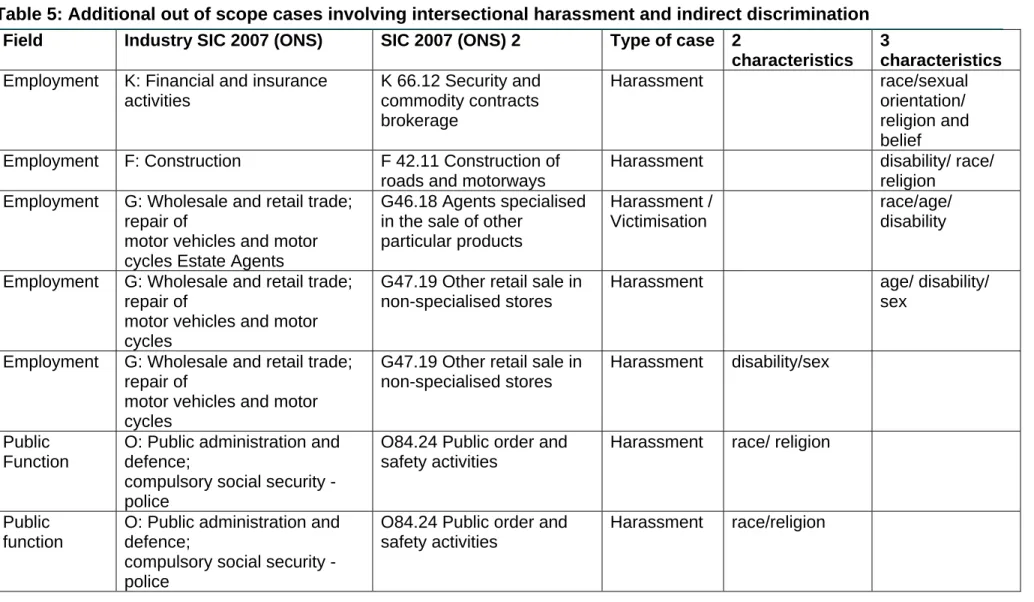
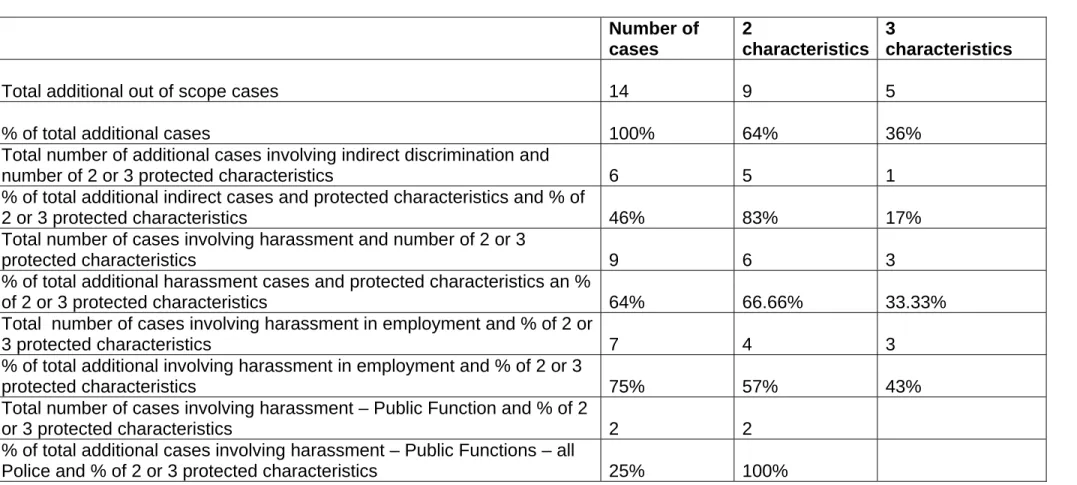
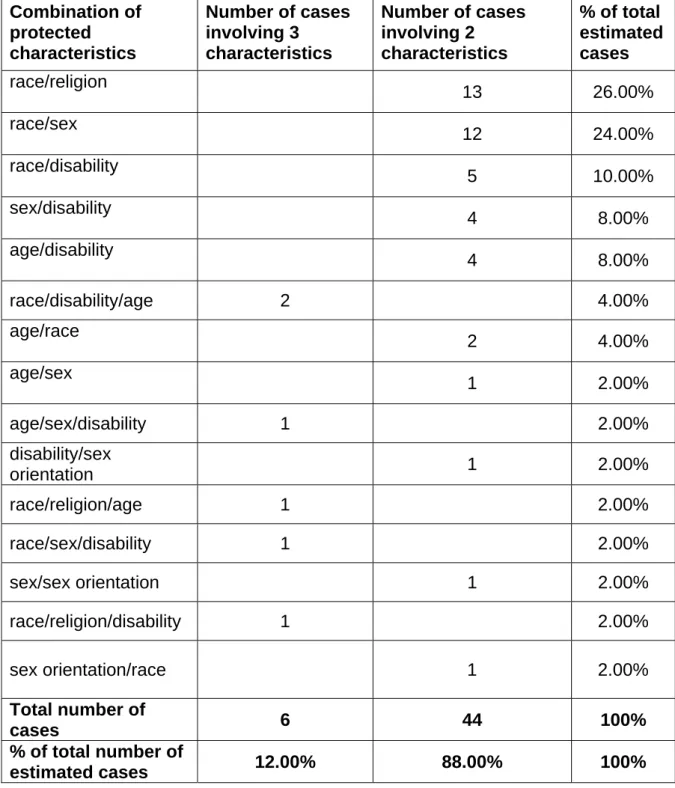
This section presents the findings of the Advisers' estimate of the total number of discrimination and intersectional discrimination cases seen in the past year. This section presents the statistical findings from the detailed analysis of the cases that, when looked at in detail, met the specific GEO definition of direct intersectional discrimination. The other 14 case studies collected fell outside the scope of the study and were either a combination of indirect and direct intersectional discrimination; were instances of intersectional harassment; were addition cases or were pregnancy cases.
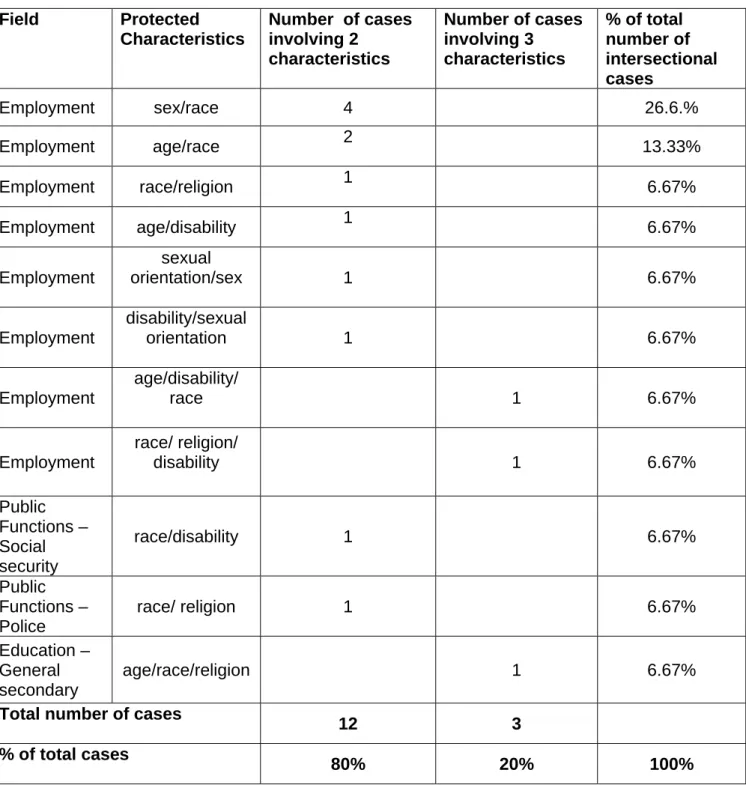
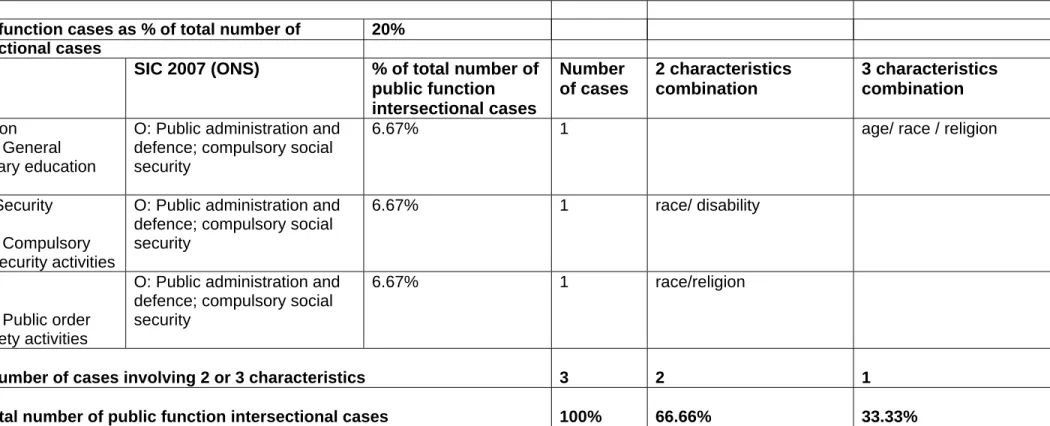
20% (n.3) of cases of direct intersectional employment discrimination were found in the manufacturing industry, with events and hospitality accounting for 13.3% of cases respectively (n.2). 53.3% of direct intersectional employment cases involved race in combination with another characteristic (n.8); 26.6% of the cases involved sex in combination (n.4);. In 100% of the public positions (n.3), race was a feature involved in the direct intersectional discrimination, and in two of the three cases, race was combined with religion.
The study identified cases where direct intersectional cases could be lost due to the limitations of the current legislative framework. In this case, counsel was clear that the client was subject to less favorable treatment because of the employer's prejudice against blacks and stereotypes about black men and sexual aggression. Of the total number of respondents, 48% thought they could use it directly.
Of the total number of respondents, 9% believe that the results would not be different if direct intersectional discrimination were used. However, of the 13% who believed that direct intersectional discrimination would make the employer less likely to settle, this was partly due to the specific elements involved in the case. 57% of respondents believed that a claimant's experience with the redress process would be better if intersectional discrimination could be used.
Their (the clients') experiences of the process are that the situation comes back to haunt them. Of the 14 additional cases: 36% involved the protected characteristics of race and religion (n.5); 29% of the cases involved sex and disability (n.4). Of the 15 instances of direct intersectional discrimination that met the GEO definition and were investigated in detail, further analysis revealed that 12 (80%) also included incidents of harassment.
This often occurs as a result of stereotypical attitudes or prejudices regarding particular combinations of protected characteristics.
- How many discrimination cases have you been involved in?
- What % of these involved multiple discrimination ?
- Looking at how these cases were presented, what percentage were Indirect
- Now, considering only those cases which meet the GEO definition of intersectional multiple discrimination, what % of these cases were in
- What is the common combination (re protected characteristics)?– may have a few combinations
- What % of these cases were 2 direct discrimination cases for the one situation?
- What % of these cases were 3 or more direct discrimination cases for the one situation?
- What % of the 2 strand cases dropped one ground of discrimination in favour of a stronger ground?
- In your opinion cases involving multiple discrimination (under current law
- From your experience working with claimants who have been subject to discrimination due to two or more characteristics - if the EB included multiple
- Case Ref No
- Is the case open or closed 3. Can you tell us about the case
- What characteristics (grounds) Race (includes nationality)
- Are these 2 grounds or 3+ grounds case
- In your opinion how strong was the case and what did you think was the likelihood of success? Did they settle? Prior to claim, after claim?
- If this case could have been a multiple or intersectional discrimination case; in your opinion would it have strengthened the case or increased the likelihood of
- What was the actual outcome of the client’s activity?
- From your experience with this case and the individual concerned please describe the clients experience of
- If this could have been an intersectional discrimination case do you think the experience would have been different for the individual? –
- Is there anything you would like to add about this case and any proposed change in the Equality Bill to allow multiple discrimination cases?
The project focuses on trying to identify cases of multiple direct discrimination on 2 grounds, but if you have indirect cases or where the combination includes 3 or more grounds, please raise them. The focus is primarily on race, disability, gender, gender reassignment, age, sexual orientation and religion or belief – however if you have cases involving motherhood/marriage and/or civil partnership, please raise them. The information obtained from this project will inform the OMB on what further steps to take on multiple discrimination.
11.If you had been able to use intersectional discrimination (that is, two or more characteristics combined), do you think the results would have been different. In your opinion, it is more or less likely that cases involving multiple discriminations (under current law: . involving two or more claims involving 2 or more different protected .. characteristics running simultaneously) before a court or a county court. Based on your experience working with claimants who have suffered discrimination on the basis of two or more characteristics - if the EB included multiple discrimination on the basis of two or more characteristics - if the EB included multiple discrimination, do you think the claimant would have a better experience of the complaints process.
Individual cases – look here only at those cases that only meet the GEO definition (direct/direct) intersectional. If no cases of direct/direct, ask about combinations including indirect and catch exceptional cases involving indirect discrimination. Please tell us about each individual case where multiple discrimination could have been used (not limited to cases from the last 12 months).
How strong do you think the case was and what do you think the likelihood of success was. If in this case it could be multiple or intersectional discrimination; whether you think it would strengthen the case or increase the likelihood of your opinion whether it would strengthen the case or increase the likelihood of success. Do you think the experience would be different for the individual if this was a case of intersectional discrimination?
Is there anything you would like to add about this case and any proposed changes to the equality law to allow for multiple instances of discrimination? Appendix Two: Other Findings – Cases outside the GEO definition of direct intersectional discrimination.