Coral reproduction in Western Australia
James Gilmour1,2, Conrad W. Speed1,2and Russ Babcock2,3
1Australian Institute of Marine Science, The UWA Oceans Institute, Crawley, Western Australia, Australia
2Western Australian Marine Science Institution, Perth, Western Australia, Australia 3Commonwealth Scientific and Industrial Research Organisation, Oceans and Atmosphere,
Brisbane, Queensland, Australia
ABSTRACT
Larval production and recruitment underpin the maintenance of coral populations, but these early life history stages are vulnerable to extreme variation in physical conditions. Environmental managers aim to minimise human impacts during significant periods of larval production and recruitment on reefs, but doing so requires knowledge of the modes and timing of coral reproduction. Most corals are hermaphroditic or gonochoric, with a brooding or broadcast spawning mode of reproduction. Brooding corals are a significant component of some reefs and produce larvae over consecutive months. Broadcast spawning corals are more common and display considerable variation in their patterns of spawning among reefs. Highly synchronous spawning can occur on reefs around Australia, particularly on the Great Barrier Reef. On Australia’s remote north-west coast there have been fewer studies of coral reproduction. The recent industrial expansion into these regions has facilitated research, but the associated data are often contained within confidential reports. Here we combine information in this grey-literature with that available publicly to update our knowledge of coral reproduction in WA, for tens of thousands of corals and hundreds of species from over a dozen reefs spanning 20 of latitude. We identified broad patterns in coral reproduction, but more detailed insights were hindered by biased sampling; most studies focused on species ofAcroporasampled over a few months at several reefs. Within the existing data, there was a latitudinal gradient in spawning activity among seasons, with mass spawning during autumn occurring on all reefs (but the temperate south-west). Participation in a smaller, multi-specific spawning during spring decreased from approximately one quarter of corals on the Kimberley Oceanic reefs to little participation at Ningaloo. Within these seasons, spawning was concentrated in March and/or April, and October and/or November, depending on the timing of the full moon. The timing of the full moon determined whether spawning was split over two months, which was common on tropical reefs. There were few data available for non-Acroporacorals, which may have different patterns of reproduction. For example, the massivePoritesseemed to spawn through spring to autumn on Kimberley Oceanic reefs and during summer in the Pilbara region, where other common corals (e.g. Turbinaria& Pavona) also displayed different patterns of reproduction to theAcropora. The brooding corals (Isopora&Seriatopora) on Kimberley Oceanic reefs appeared to planulate during many months, possibly with peaks from spring to autumn; a similar pattern is likely on other WA reefs. Gaps in knowledge were also due to the difficulty in identifying species and issues with Submitted26 February 2016
Accepted13 April 2016 Published18 May 2016 Corresponding author James Gilmour, [email protected]
Academic editor James Reimer
Additional Information and Declarations can be found on page 35
DOI10.7717/peerj.2010
Copyright 2016 Gilmour et al. Distributed under
methodology. We briefly discuss some of these issues and suggest an approach to quantifying variation in reproductive output throughout a year.
Subjects Marine Biology, Science Policy
Keywords Coral reproduction, Spawning corals, Brooding corals, Coral reefs, Western Australia, Coral larvae, Coral recruitment
INTRODUCTION
Reproduction in scleractinian corals
Sexual recruitment underpins the maintenance of most coral communities, so knowing their peak times of reproductive output is critical to the management of human activities that reduce recruitment to the adult population. Larval production, recruitment, and early post-recruitment survival in corals are reduced by extreme variation in physical factors such as temperature and salinity (Bassim, Sammarco & Snell, 2000;Harrison & Wallace,
1990;Harrison, 2011;Negri, Marshall & Heyward, 2007) or degraded water quality
(Gilmour, 1999;Harrison & Ward, 2001;Humphrey et al., 2008;Markey et al., 2007;Negri &
Heyward, 2001). Model projections highlight the implications of prolonged reductions in
larval recruitment for the maintenance of coral populations, and particularly their recovery following disturbances (Babcock, 1991;Done, 1987;Edmunds, 2005;Fong & Glynn, 2000;
Gilmour et al., 2006;Smith et al., 2005). The times of reproduction also influence the
community recovery via connectivity to other coral reefs (Gilmour, Smith & Brinkman,
2009;Done, Gilmour & Fisher, 2015). For example, the larvae of brooding corals are
released several times a year under a range of hydrodynamic conditions, but typically disperse over relatively short distances (< several kilometres), whereas the larvae of spawning corals are produced during one or a few discrete periods, and disperse over larger distances (> several kilometres). A detailed understanding of community reproduction is therefore required to mitigate human activities around critical periods of larval production and to inform the design of management networks reliant on estimates of larval exchange (Carson et al., 2010;Kool, Moilanen & Treml, 2013).
Most scleractinian corals have one of four patterns of sexual reproduction, depending on their sexuality (hermaphroditic or gonochoric) and developmental mode (brooding or broadcast spawning) (Baird, Guest & Willis, 2009;Fadlallah, 1983;Harrison &
Wallace,1990;Harrison, 2011;Richmond & Hunter, 1990). In brooding corals, the
Reproductive activity in spawning corals can be remarkably synchronised, culminating in the release of gametes by a high proportion of species and colonies during a few nights each year (mass spawning), or spawning by a similar proportion of colonies and species may be protracted over many nights and several months (Baird, Guest &
Willis, 2009;Harrison & Wallace, 1990;Harrison, 2011). The ultimate factor driving high
synchrony, particularly within species, is probably successful fertilisation and larval recruitment. However, a wide range of environmental factors underlie this success and cue spawning over increasingly fine temporal scales, such as water temperature, day length, moon phases and tidal amplitude (Baird, Guest & Willis, 2009;Guest et al., 2005a;
Harrison & Wallace, 1990;Penland et al., 2004;van Woesik, 2010). These cues all interact to
synchronise spawning within communities, so it is tempting to view mass spawning as a phenomenon that occurs at the community level, whereas each species is in fact
responding independently to its environment. As conditions vary, gametogenic cycles in each species will respond differently, as their environmental optima may differ or because the environment provides fewer synchronising cues (Oliver et al., 1988). Indeed,
environmental stress will reduce the energy available for gametogenesis and the likelihood of corals reproducing during a given year (Michalek-Wagner & Willis, 2001;Ward,
Harrison & Hoegh-Guldberg, 2000), also confounding generalities about spawning
patterns. The species composition of reefs changes as environmental conditions vary, further influencing the patterns of reproduction at the reef scale. Clearly there is significant scope for reproduction of coral assemblages on reefs to vary regionally and depart from the ‘mass spawning’ discovered on the Great Barrier Reef (Babcock et al., 1986;
Harrison et al., 1984) and subsequently pursued by some investigations of coral
reproduction around the world. This variation in timing and synchrony results in a range of reproductive patterns, from temporal isolation of spawning species to a highly synchronous mass-spawning.
Mass spawning in scleractinian corals was first discovered on parts of the GBR in austral spring (Harrison et al., 1984;Willis et al., 1985), where it is perhaps more synchronous than on any other coral reef worldwide. However, even on the GBR there is a spatial and temporal variation in mass-spawning. For example, the near-shore reefs spawn one month earlier than those on mid- and outer-shelf reefs (Willis et al., 1985), while the high- and low-latitude reefs have a more protracted period of spawning at times other than during spring (Baird, Guest & Willis, 2009;Baird, Marshall & Wolstenholme, 2002;
Harrison, 2008;Oliver et al., 1988;Wilson & Harrison, 2003). Additionally, spawning
times within coral assemblages also vary among years according to the timing of the full moon within the spawning window. The date of the full moon occurs several days earlier each month than in the previous year, causing spawning times to shift periodically (e.g. from October–November) if gametes are not yet mature at the time of full
Many of the early studies leading to the discovery of mass spawning on the GBR involved rigorous sampling of colonies using a range of methods throughout the year, which established synchronous reproductive cycles within and among populations
(Wallace, 1985). This led to more intensive sampling over weeks and days, which
established the remarkable synchrony among many colonies and species over a few nights each year. In contrast, some subsequent studies have focused on identifying the species participating in mass spawning events but not quantifying the proportion of participating colonies or the frequency of spawning during other times (nights, weeks, months, and seasons) of the year. Without estimates of the reproductive state of colonies during other times of the year, a relative assessment of the participation in mass spawning events is not possible; if there is a low participation in the mass spawning then there is no knowledge of the other time(s) of spawning, whereas if there is a moderate to high participation then it may be assumed incorrectly that spawning during the other time(s) is negligible. For example, a rigorous sampling of the reproductive state of coral
populations throughout the year has identified a second spawning by populations and even some colonies on the GBR (Stobart, Babcock & Willis, 1992;Wolstenholme, 2004) and other reefs around the world (Dai, Fan & Yu, 2000;Guest et al., 2005b;Mangubhai, 2009;
Mangubhai & Harrison, 2006;Oliver et al., 1988). Focussing only on the participation
of corals in the mass spawning can also miss the times of reproduction for entire species that are common and functionally important, such as the massivePorites(Harriott, 1983a;
Kojis & Quinn, 1982). Additionally, brooding corals are a significant component of
many reefs, and planulation in populations and colonies is typically spread over several months throughout the year (Ayre & Resing, 1986;Harriott, 1992;Harrison &
Wallace, 1990;Harrison, 2011;Tanner, 1996).
significance of periods of reproductive output by coral communities, which is among the suite of information required by managers to moderate the effects of human activities along Australia’s west coast.
METHODS
Western Australian regions and sources of reproductive data Western Australia’s coral reefs span more than 12,000 km of coastline and 20
of latitude, ranging from tropical to temperate climates, from coastal reefs to oceanic atolls hundreds of kilometres from the mainland (Veron & Marsh, 1988;Wilson, 2013). Consequently, WA has a phenomenal diversity of habitats and coral communities, with a corresponding range in reef-level patterns of coral reproduction. Because of these broad patterns in coral community composition, the examination of patterns of reproduction presented here is divided among six regions: (1) Kimberley Oceanic, (2) Kimberley, (3) Pilbara, (4) Ningaloo, (5) Abrolhos and Shark Bay, and (6) Rottnest and southwest WA (Fig. 1). Among these regions, the diversity of coral species and genera decreases with increasing latitude (Fig. 1), although coral cover can be similar among the tropical reefs and those at the subtropical Abrolhos Islands, before then decreasing in the temperate southwest (Abdo et al., 2012;Johannes et al., 1983;McKinney, 2009;Richards & Rosser,
2012;Richards, Sampey & Marsh, 2014;Speed et al., 2013;Veron & Marsh, 1988).
Regional data or data summaries of coral reproduction were taken from journal articles and public reports, unpublished data, and confidential reports to industry and government (Table S1). Where possible, raw data were interrogated and summaries produced across reefs for each region. However, in other instances raw data were not available and regional summaries were based on tables and text within reports that had not been peer-reviewed. Given the scope of these data, discrepancies also existed among studies and there are likely errors in data collection, analyses and species identification. Some regional summaries were adjusted to account for obvious errors in data or conclusions in some reports and the most likely patterns of reproduction were sometimes extrapolated from limited data. Additionally, samples were typically biased by factors such as the environmental conditions, the community composition, the sampling design and the methods used. For example, inferences about the patterns of reproduction on a reef were heavily biased when: data exist for a few species ofAcroporabut the community was dominated by non-Acroporacorals that reproduce at different times; environmental stress inhibited gametogenesis causing a large portion of the assemblage not to reproduce in a period; spawning was split over two consecutive months but only one month was sampled; coral species and/or genera were incorrectly identified. The issues were most acute in studies with limited spatial and temporal replication. For these reasons, a summary of information that commonly biases inferences about patterns of coral reproduction is presented for each region, to place in context the reproductive data, and times of spawning for species were assigned a level of confidence according to the available data (Tables 1,2andS2).
Table 1 Regional variation in coral diversity and reproduction across Western Australia. The number of species within each coral genus know to occur within each region of WA, and the number for which reproductive data are available. The percentage of species within each genus known to reproduce in spring or autumn within each region, of the total sampled. Regions are colour coded according toFig. 1.
Region Genus Total known species
Number of species sampled Spawning % (number) of species sampled
Spring Autumn Spring Autumn
Kimberley Oceanic Acropora 63 39 49 90 (35) 94 (46)
Echinophyllia 3 1 2 0 (0) 100 (2)
Favia 13 4 6 75 (3) 100 (6)
Favites 8 3 3 33 (1) 100 (3)
Goniastrea 6 2 6 100 (2) 100 (6)
Hydnophora 4 2 1 50 (1) 100 (1)
Lobophyllia 3 1 0 100 (1) –
Merulina 2 2 2 0 (0) 100 (2)
Montipora 28 0 0 – –
Platygyra 6 0 3 – 100 (3)
Kimberley Acropora 39 35 16 42 (15) 87 (14)
Echinophyllia 3 0 0 – –
Favia 9 2 1 0 (0) 100 (1)
Favites 6 2 1 0 (0) 100 (1)
Goniastrea 7 4 1 0 (0) 100 (1)
Hydnophora 4 4 0 75 (3) –
Lobophyllia 2 2 0 0 (0) –
Merulina 1 1 0 0 (0) –
Montipora 23 0 0 – –
Platygyra 5 3 1 0 (0) 100 (1)
Pilbara Acropora 49 35 43 34 (12) 98 (42)
Echinophyllia 2 0 0 – –
Favia 10 1 8 0 (0) 87 (7)
Favites 7 2 4 50 (1) 100 (4)
Goniastrea 7 5 7 0 (0) 100 (7)
Hydnophora 4 1 1 0 (0) 100 (1)
Lobophyllia 3 1 2 0 (0) 100 (2)
Merulina 2 1 1 0 (0) 100 (1)
Montipora 28 4 3 0 (0) 66 (2)
Platygyra 6 4 6 0 (0) 100 (6)
Ningaloo Acropora 39 17 26 12(2) 92 (24)
Echinophyllia 2 2 2 0 (0) 100 (2)
Favia 8 0 2 – 100 (2)
Favites 8 0 1 – 100 (1)
Goniastrea 7 1 1 0 (0) 100 (1)
Hydnophora 4 1 1 0 (0) 100 (1)
Lobophyllia 4 1 1 0 (0) 100 (1)
Merulina 2 2 2 0 (0) 100 (2)
Montipora 28 2 2 0 (0) 100 (2)
Platygyra 6 1 2 0 (0) 100 (2)
Reef habitats range from open ocean atolls surrounded by deep oligotrophic waters in the Kimberley Oceanic Region, to reefs heavily influenced by coastal processes such as tidally driven sediment resuspension in the inshore Kimberley and Pilbara Regions. From the coastal fringing reefs of Ningaloo, to the subtropical and temperate reefs at the Abrolhos Island and the Southwest Region, tidal processes are less extreme, waters are clearer and often lower in nutrients. This is due in part to the southward flowing Leeuwin Current which intensifies in winter, moderating winter temperature minima and assisting the transport of coral larvae to southern reefs (Cresswell, 1996;D’Adamo et al., 2009;
Hatcher, 1991). Consequently, there is a high level of reef development in the sub-tropical
reefs at the Abrolhos Islands. While the low latitude reefs in the Kimberley have the highest species diversity, they also experience the most pronounced differences in environmental conditions and community composition between the oceanic reefs and those adjacent to the mainland (Richards et al., 2015;Richards, Sampey & Marsh, 2014). Similarly, within the Pilbara Region, community composition differs between the most frequently studied inshore reefs in the Dampier Archipelago where most reproductive data exist, and mid-shelf around Barrow and Montebello islands (Richards & Rosser,
2012;Richards, Sampey & Marsh, 2014). More information about the environmental
Table 1 (continued ).
Region Genus Total known species
Number of species sampled Spawning % (number) of species sampled
Spring Autumn Spring Autumn
Abrolhos Acropora 39 0 20 – 100 (20)
Echinophyllia 2 0 1 – 100 (1)
Favia 8 0 5 – 100 (5)
Favites 8 0 5 – 100 (5)
Goniastrea 7 0 2 – 0 (0)
Hydnophora 2 0 0 – –
Lobophyllia 3 0 1 – 100 (1)
Merulina 1 0 1 – 100 (1)
Montipora 26 0 4 – 100 (4)
Platygyra 2 0 1 – 100 (1)
South West Acropora 1 0 1 – 100(1)
Echinophyllia 0 0 0 – –
Favia 1 0 0 – –
Favites 4 0 0 – –
Goniastrea 3 0 2 – 50 (1)
Hydnophora 0 0 0 – –
Lobophyllia 0 0 0 – –
Merulina 0 0 0 – –
Montipora 1 0 1 – 100 (1)
Platygyra 0 0 0 – –
Note:
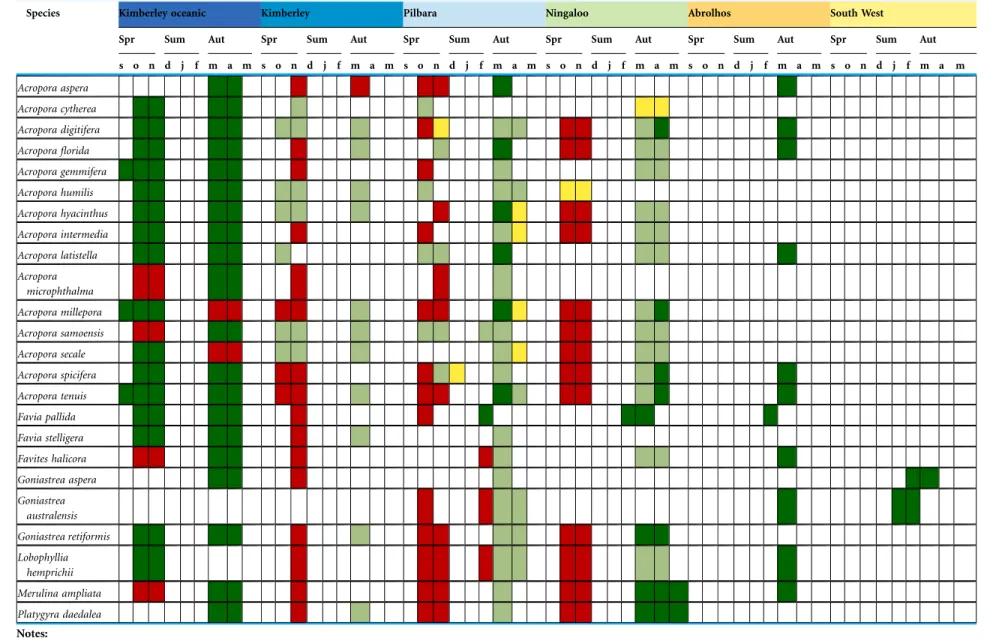
Table 2 Regional variation in spawning for coral species sampled most rigorously on Western Australian reefs.Regions are colour coded according toFig. 1.
Species Kimberley oceanic Kimberley Pilbara Ningaloo Abrolhos South West
Spr Sum Aut Spr Sum Aut Spr Sum Aut Spr Sum Aut Spr Sum Aut Spr Sum Aut s o n d j f m a m s o n d j f m a m s o n d j f m a m s o n d j f m a m s o n d j f m a m s o n d j f m a m
Acropora aspera
Acropora cytherea
Acropora digitifera
Acropora florida
Acropora gemmifera
Acropora humilis
Acropora hyacinthus
Acropora intermedia
Acropora latistella
Acropora microphthalma
Acropora millepora
Acropora samoensis
Acropora secale
Acropora spicifera
Acropora tenuis
Favia pallida
Favia stelligera
Favites halicora
Goniastrea aspera
Goniastrea australensis
Goniastrea retiformis
Lobophyllia hemprichii
Merulina ampliata
Platygyra daedalea
Notes:
Seasons and months are: Spring, Spr; September, s; October, o; November, n; Summer, Sum; December, d; January, j; February, f; Autumn, Aut; March, m; April, a; May, m. Spawning has not been recorded during Winter months (June, July, August) in Western Australia and they have been excluded. Taxonomic revisions are summarised inTable S2. Based on the available data, the sampling design and the methods used, confidence in the inferred months of spawning were ranked qualitatively according to:
Confident. Evidence based on the presence of pigmented eggs in colonies prior to the predicted dates of spawning in many colonies, sites and years; the presence and absence of pigmented eggs in many colonies around the predicted dates of spawning; and/or direct observations of spawning in multiple colonies.
Likely. Evidence based on the presence of pigmented eggs in many colonies prior to the predicted dates but with limited spatial and temporal replication; and/or most evidence indicates spawning during this month but with some contradictory data among studies.
Possible. Evidence based on the presence of large but unpigmented eggs several weeks prior to the predicted dates of spawning; and/or contradictory data among studies due to sampling design, methodology or species identification.
Gilmour
et
al.
(20
1
6),
Pee
rJ
,
DOI
1
0.771
7/peerj.20
1
characteristics and the context for reef development and coral reproduction in each region is provided inSupplemental Information 1. Preceding the reproductive summary for reefs within each region is information to place these data in context, which includes: the species diversity and community composition of corals; the number and types of reefs, sites and species for which reproductive data were collected and the time(s) of sampling; whether colonies were affected by disturbances at the times of sampling; and the methods used to infer the times of spawning or planulae release.
RESULTS
Regional patterns of coral reproduction: Kimberley Oceanic
The oceanic reefs of the Kimberley are atolls rising from depths of several hundred meters, with over 300 species and 57 genera of hard corals. Coral cover in many habitats can be over 70%, and much of the remaining substrata are covered in coralline and turf algae, with a very low cover of macroalgae and other benthic organisms. The Acroporidae are typically the dominant family of hard corals, followed by the Poritidae, Faviidae and Pocilloporidae, while soft corals are also common.
Coral reproduction has been investigated at all of the Kimberley oceanic reefs during one or more years (Table S1). From Ashmore, Cartier, Scott and Seringapatam Reefs, and the Rowley Shoals, several thousand colonies from over 130 species and 30 genera have been sampled during the autumn and/or spring spawning seasons, in one or more years. Of the total number of Acroporaspecies know in the region, approximately 62% were sampled in spring and 78% in autumn, compared to 20 and 32% of non-Acropora species, respectively (Table 1). The majority of the sampling has been conducted at Scott Reef, where there was sampling of colonies prior to the spawning in autumn and spring in consecutive years from 2007–2010, including repeated sampling of some tagged colonies. There has been comparatively little sampling at other times of year, so inferences about spawning during summer months may be underestimated. In most instances, the times of spawning were inferred from in situ ranking of gamete development, in addition to microscopic investigation of egg sizes and histological analyses of some spawning corals and brooding corals. Spawning has also been observed in situ on several occasions.
additional 30 species ofAcroporaand 20 species of non-Acroporasampled less rigorously (n= 5–10 colonies yr-1), but for a higher proportion of non-Acroporaspecies and colonies
spawning in autumn;Favia stelligeraandF. pallidaspawned during both seasons and Diploastrea helioporaspawned only during spring (Table S2). More intensive sampling of the non-Acroporaspecies may increase the proportion of instances of within-species biannual spawning among these species.
Within each season, spawning most commonly occurred during March and October, but varied according to the timing of the full moon. Split-spawning occurred every few years during both seasons and occasionally over consecutive years; splits usually occurring between March and April in autumn, and October and November in spring, following full moons that fell in the last week or so of the preceding months. Spawning has been observed directly in autumn and/or spring during six years, and colonies were sampled before and after to check for the disappearance of pigmented eggs. Based on these observations, spawning usually occurred 7–9 nights after the full moon during neap tides. However, the times of spawning varied among years and occurred any time from the night of the full moon to around 10 days after.
The majority of corals showed evidence of spawning either in March and/or April, and October and/or November, with the exception of the massivePorites. At the times of sampling during autumn and spring, pigmented eggs were observed in only a few massivePoritescolonies, but massivePoritescan spawn eggs with comparatively little pigmentation (Stoddart, Stoddart & Blakeway, 2012). Histological analyses of samples collected at these times indicated that colonies were dioecious and released eggs and sperm over several months in the year from spring to autumn. A peak in reproductive activity was not obvious, and stages of gamete development indicated spawning over several months from October–May, in contrast to the peak in spawning observed in massivePoriteson other reefs around Australia (Kojis & Quinn, 1982;Stoddart, Stoddart &
Blakeway, 2012). The sampling of all species was restricted a few months each year
Regional patterns of coral reproduction: Kimberley
There are diverse and extensive reef systems throughout Kimberley region, including inner shelf, fringing and patch reefs, exposed platforms and subtidal banks around the coastline and islands (Richards, Sampey & Marsh, 2014;Speed et al., 2013;Wilson, 2013). There are over 300 species of hard corals from 71 genera, and clear cross-shelf differences in species distributions exist between the coastal and offshore locations, with 27 species (8%) recorded only from nearshore locations and 111 species (33%) recorded only at offshore locations (Richards, Sampey & Marsh, 2014). There are no quantitative data describing the relative abundances of corals throughout the inshore Kimberley, but qualitative descriptions highlight the considerable variation in habitats and coral assemblages. For example, leeward intertidal reefs may be characterised by branching and tabularAcropora; subtidal zones can have a high cover and diversity of corals dominated by massivePoritesand species of Faviidae and foliose corals; exposed fringing reefs may have a comparatively low cover and diversity of corals dominated by massive Faviidae and soft corals; extensive tidal pools throughout the region can have a high cover and diversity of corals different to those in other zones (INPEX, 2011;
Wilson, 2013).
There are very few reproductive data for coral assemblages in the inshore Kimberley region, particularly given the extent and diversity of the reefs (Table S1). Inferences of coral reproduction in the region are largely based on surveys during one or two years at a small group of islands within the Bonaparte Archipelago (Fig. 1). Several hundred colonies from around 60 species and 15 genera were sampled during autumn or spring season, with sampling focusing on species ofAcropora(Tables 1andS2). Of the total number ofAcroporaspecies know in the region, approximately 90% were sampled in spring and 40% in autumn, compared to 30 and 4% of non-Acroporaspecies, respectively. Inferences about spawning during these seasons were drawn from in situ or microscopic examination of pigmented eggs within colonies, and there are no observations of coral spawning for the inshore Kimberley reefs.
parts of the Great Barrier Reef. If this was to occur in the Kimberley, spawning on the inshore reefs would be expected in February or March in autumn, and September or October in spring. Although sampling has not been conducted during these months, the existing data demonstrate that spawning did not occur exclusively a month earlier than on the oceanic reefs and that multi-specific spawning events have also occurred later in the season, during April in autumn and November in spring. Evidence for late spawning during autumn and spring may reflect a split-spawning during the years of sampling, as on the oceanic reefs.
Of 31 species sampled from seven genera on the inshore Kimberley reefs during late March, 30 had pigmented eggs and were likely to spawn in early April. This included many species that were sampled with low (5 colonies) replication, indicating that autumn is the main season of spawning. Indeed, based on the timing of the full moon and spawning on the oceanic reefs, the autumn spawning during that that year (2007) was likely spilt; so many colonies and species may have also spawned in early March, providing further evidence for autumn being the primary season of spawning for the region. Of 63 species sampled in late October, 25% contained pigmented eggs and were likely to spawn in early November, of which the majority wereAcropora; 37% of the 35 species of Acroporacontained pigmented eggs. However, eggs were absent from many of the colonies sampled with low replication (5 colonies) and the spring spawning may have been split, based on the timing of the full moon and the data for the oceanic reefs. Consequently, a proportion of colonies and species probably spawned in early October and future work may identify a higher proportion of species and colonies participating in a spring spawning. It remains to be determined whether the inshore reefs of the Kimberley display a similar degree of spawning synchrony during any one month in autumn and spring as on the oceanic reefs, or whether inshore spawning is more protracted over several months with seasonal peaks around autumn and spring, as may be the case on Indonesian reefs to the north (Baird, Guest & Willis, 2009). There are few data for the non-Acroporacorals, which are most likely to have less synchronous patterns of spawning, and nor are there currently any data for brooding corals that are probably common throughout parts of the region. The brooding corals in the Kimberley are likely to display similar patterns of reproduction to those at the oceanic reefs, with planulation occurring during many months through spring to autumn, and perhaps extending into some winter months.
Regional patterns of coral reproduction: Pilbara
There are extensive near-shore and mid-shore reefs systems throughout the Pilbara. Within the region much of the available information exists for the Dampier Archipelago (e.g.Blakeway & Radford, 2004;Griffith, 2004;Marsh, 2000;Richards & Rosser, 2012;
Veron & Marsh, 1988) and there is less information for reefs in the west Pilbara (but
see Marsh, 2000;Richards & Rosser, 2012;Veron & Marsh, 1988). The general pattern of
Island reefs. A slightly higher number recorded at the Dampier Archipelago may be due to greater diversity of habitats and environmental conditions (Griffith, 2004;Marsh, 2000;
Richards & Rosser, 2012). However, there are distinct assemblages of coral species
among the inshore reefs and those throughout the archipelago, reflecting the cross-shelf variation in environmental conditions and habitat types (Blakeway & Radford, 2004;
Richards & Rosser, 2012). Average total hard coral cover for the inshore reefs of the
Pilbara is approximately 20%, with the dominant families Faviidae and Dendrophylliidae having contributed to much of this cover (Speed et al., 2013). However, coral
community composition can also vary dramatically among the inshore reefs and species ofAcropora,Faviidae,Platygyra,TurbinariaandPavonaare common in some communities (Blakeway & Radford, 2004). The outer reefs of the west Pilbara can have communities characteristic of clearer water, with approximately twice the coral cover and a higher diversity. In particular, within the back-reef habitats many massivePorites colonies are associated with extensive coral assemblages, including a high cover (> 50%) of Acropora(Marsh, 2000;Speed et al., 2013).
Coral reproduction in the Pilbara region has been investigated at several reefs, with over 1,000 colonies sampled from 115 species, during one or more years (Table S1). Of the total number of Acroporaspecies know in the region, 71 and 88% were sampled in spring and autumn, respectively, compared to 28 and 46% for the non-Acropora species (Tables 1 andS2). By far the majority of these data were from the Dampier Archipelago, and the times of reproduction were inferred from in situ ranking of gamete development, microscopic investigation of egg sizes and histological analyses of some spawning and brooding corals. Spawning has also been observed in situ on several occasions. Given the frequency and timing of disturbances to Pilbara reefs in recent years, including dredging operations, temperature anomalies and cyclones, some data from the region were probably biased by coral colonies having insufficient energy reserves to invest in reproduction. In these instances, the proportion of species and colonies reproducing could be underestimated.
during spring is generally low (< 20%) (Tables 2andS2). Sampling around a split-spawning and with environmental stress has potentially underestimated the participation by corals in the spring spawning (October–December), but the primary spawning period is certainly autumn (usually March).
Many Pilbara reefs are dominated by corals such as massive Porites,Pavona decussata andTurbinaria mesenterina, which display different patterns of reproduction to most hermaphroditic species that participate exclusively in the spring and/or autumn spawning events. Within the Dampier Archipelago, repeated histological examination showed that these three taxa were gonochoric. Spawning occurred predominantly in December in the massivePorites(mainlyP. lobata), as on the Great Barrier Reef (Harriott, 1983a;Harriott,
1983b). ForPavona decussata,spawning occurred during March and April, possibly due to
split-spawning during that year (2007). In Turbinaria mesenterina, spawning occurred over several months, possibly from November–April. WhileT. mesenterinaretained eggs after this period, this does not indicate imminent spawning as this species has been reported to have a gametogenic cycle of more than 12 months (Willis, 1987). While spawning has not been observed, frequent sampling ofP. luteademonstrated that it spawned during spring tides predominantly 3 days (2–4 days) after the full moon, in contrast to the usual times of spawning during neap tides approximately one week after the full moon. In addition to these spawning corals, the main periods of reproductive output for the brooding corals in the Pilbara are also likely to occur at times other than during the dominant spawning periods in autumn and spring. Although cycles of gametogenesis in brooding corals have not yet been investigated in the Pilbara, they probably culminate in the release of planula larvae over several months through spring to autumn, and possibly into winter months.
Regional patterns of coral reproduction: Ningaloo
Ningaloo is an extensive fringing reef system almost 300 km in length, with diverse coral communities and over 200 species of hard corals from 54 genera (Veron & Marsh, 1988). Mean coral cover can be as high as 70% at areas of the reef flat and reef slope, but is typically less at other habitats such as in the lagoon (Speed et al., 2013). The remaining benthic cover is composed of coralline and turf algae, seasonal macroalgae growth and other benthic organisms. Within the coral communities, the Acroporidae are often most abundant, but the Faviidae, Poritidae, Pocilloporidae and soft corals are also common (Speed et al., 2013;Veron & Marsh, 1988). The deeper lagoons typically contain massivePoritesbommies and patches of staghornAcropora, while the outer-slope is dominated by robust corals with massive and encrusting growth forms, oftenPlatygyra sinensis and prostrateAcropora(Wilson, 2013).
Most data exist for several species of Acroporidae and Faviidae sampled during one or more months from spring to autumn at Coral Bay. Early work at Ningaloo suggests some variation in the time of spawning may exist among locations, with a higher proportion of corals spawning in March in the north and in April to the south, but this may also have been a consequence of split-spawning. Nonetheless, the studies of coral spawning at Coral Bay provide detailed information about temporal variation in spawning among months, lunar cycles, and the nights of spawning in autumn. Inferences about spawning times were drawn from in situ ranks of gamete development and microscopic investigation of egg sizes in random population samples and by re-sampling individual colonies, in addition to direct observations of spawning in situ.
Mass spawning at Ningaloo occurs during autumn, with a more protracted period of spawning over consecutive months, and little or no multi-specific spawning during spring (Tables 2 andS2). Of the species ofAcroporasampled in spring (n= 17) and autumn (n= 26), 12% were inferred to spawn in spring and 92% in autumn, with one spawning exclusively in summer. Of the 69 common non-Acroporaspecies, none were reproductively active in spring, compared to 20% in autumn (Tables 2andS2). However, a low proportion of species (< 20%) and particularly colonies have been sampled during spring. Additionally, there are very few reproductive data from parts of Ningaloo other than Coral Bay. Most Acroporidae and Faviidae colonies at Coral Bay participated in mass spawning during a single month in autumn, but a small proportion of many species also spawned during other months through summer and autumn. Species typically spawned during one or two consecutive months, with no evidence of spawning during discrete months or of a multi-specific spawning during spring, as on northern reefs. There are numerous observations of slicks of coral spawn during spring, but the extent to which these are a product of multi-specific spawning remains unknown (R. Babcock & D. Thompson, 2015, personal communication). Within species, individual colonies had a single gametogenic cycle and usually spawned within a few consecutive nights. The mass spawning usually occurred during neap tides in late March or early April, 7–10 nights after the preceding full moon, but a small proportion of colonies of several species also spawned following the full moon or the new moon during months either side of the mass spawning.
Cooler waters at Ningaloo could result in slower rates of gametogenesis and an increased likelihood of split-spawning during years in which a full moon falls early in March, and/or a higher proportion of colonies participating in an April spawning than on northern reefs.
There was little evidence of spawning at Ningaloo during months other than in autumn. Less than a few percent of colonies ofGoniastrea retiformis,A. humilisand A. papillaraehad visible eggs in October, but none were pigmented and the times of spawning were unknown. Existing data suggests thatA. papillaraeis the only species that does not participate in mass spawning and spawns exclusively during summer, probably during December and/or January. Additionally, a small proportion (< 5%) of Echinopora lamellosaalso spawned during summer in February, but with a higher proportion spawning during March (≈13%) and particularly April (≈80%). There are
currently no data for species of corals such as massive Poritesknown to spawn during summer at other reefs throughout WA. Given that spawning seems to be more protracted at Ningaloo, future work may identify a higher proportion of species and colonies spawning during summer, particularly for the non-Acropora. There is also no existing information for the times of planulation in brooding corals at Ningaloo, but planula release is likely to occur at similar times to other northern reefs, from spring through to autumn, with perhaps a lower incidence in spring due to the cooler water temperatures.
Regional patterns of coral reproduction: Abrolhos Islands and Shark Bay
The Houtman Abrolhos Islands have the highest latitude coral reefs in Western Australia. The coral communities are scattered among four islands, situated < 100 km from the coastline but near the edge of the continental shelf, with over 180 species from 42 genera of corals (Veron & Marsh, 1988). Coral cover ranges between 35 and 85% among habitats (Dinsdale & Smith, 2004), with an average cover for the region of approximately 44% (Speed et al., 2013). Unlike studies on a comparable latitude on the east coast of Australia (Harriott & Banks, 2002), the Abrolhos maintains high percentages of tabulate and particularly staghornAcropora(Abdo et al., 2012;Dinsdale & Smith, 2004). Much of the remaining substrata were covered in turf and coralline algae, although patches of macroalgae are also common. Situated to the north of the Abrolhos Islands, Shark Bay is a large shallow bay (∼12,950 km2) with an average depth of 9 m and is enclosed
by a number of islands (Veron & Marsh, 1988). The bay consists of vast seagrass meadows
(Wells, Rose & Lang, 1985) and coral growth is restricted to waters with oceanic
salinity, such as in the western side of the bay (Veron & Marsh, 1988), where 82 species from 28 genera of hard corals have been recorded (Veron & Marsh, 1988). Corals from the families Acroporidae and Dendrophylliidae are found in similar abundance of approximately 10–15% cover, and other genera found in low (< 2%) cover include Montipora,Platygyra,Pocillopora, andPorites(Bancroft, 2009;Cary, 1997;Moore,
Bancroft & Holley, 2011;Speed et al., 2013).
number of species know in the region, approximately 49% of theAcroporaand 34% of the non-Acroporawere sampled in autumn, but with no sampling at other times of the year (Table 1). Several hundred colonies from 107 species and 10 families were sampled in March 1987, and a small random sample of colonies during late February 2004 (Table S2). Most samples were from species of Acroporaand Faviidae around the Wallabi group of islands. The times of spawning were inferred from in situ ranking of gamete development, microscopic investigation of egg sizes and stages, and direct observation of spawning in situ and in aquaria. In addition to random sampling, tagged colonies were re-sampled before and after the main nights of spawning.
There is clearly a mass spawning by a high proportion of manyAcroporaspecies at the Abrolhos Islands during autumn, but no knowledge of whether corals also spawn during spring or summer (Tables 2andS2). Of the 107 species sampled, 58 species participated in the main two nights of spawning in March, with a further 36 species likely to spawn on other nights during March; a similar proportion ofAcropora(49%) and non-Acropora(31%) participated in the March spawning. Spawning occurred primarily over the 10 and 11 nights after the full moon, during spring tides of small amplitude (< 2 m), with reports of other spawning events also between 8 and 11 nights after the full moon. In addition to the species and colonies that spawned over a few consecutive nights, there was also evidence of a more protracted spawning by many colonies and species over a greater number of nights, and possibly also during April and/or other seasons. Within the species of mass-spawners, the mean number of colonies participating was 70%, and ranged between 10 and 100%. Most species spawned over a few nights, but within the assemblage spawning was probably protracted over almost three weeks, as early as a few nights before the full moon and up to two weeks later. Additionally, gametes were absent from a variable proportion of colonies in approximately half the species observed to spawn in March, and from all colonies in an additional 13 species, suggesting they either did not spawn during that year or were likely to spawn during a different season. Slicks of spawn have also been observed at the Abrolhos in February, although subsequent sampling suggested the bulk of the community was likely to spawn in March. The species known to spawn during months other than March on more northern reefs were either not sampled, or had a proportion of colonies without eggs and were sampled in low replication. There is currently no reproductive information for brooding corals, which are likely to release planulae over several months from spring to autumn, but with perhaps a reduced reproductive window due to cooler water temperatures.
Regional patterns of coral reproduction: Southwest Region
such asAcroporasp. andPorites lutea(Crane, 1999). Among the remaining corals, the dominant taxa are species of Favidiiae with subtropical affinities, such asGoniastrea australiensis. Macroalgae (SargassumandEcklonia) are common around Rottnest Island and contribute up to 60% of benthic cover (Wells & Walker, 1993). Between Rottnest Island and the Perth metropolitan coastline is Hall Bank, a small reef with a low diversity (14 spp.) but a high cover (≈50%) of corals, of which most areFavitesandGoniastrea
(Thomson & Frisch, 2010). In contrast, the reefs adjacent to the coastline have a lower
coral diversity and cover, such as Marmion lagoon with 10 species from eight genera
(Veron & Marsh, 1988). Fleshy macroalgae are dominant on most of the temperate
reefs, but corals are can often be found among the algae in low density (Thomson
et al., 2012). The most abundant coral on these reefs isPlesiastrea versipora, one of the
Indo Pacific’s most widespread corals, however it rarely reaches large sizes and other species tend to have higher cover (e.g.Goniastreaspp.Montipora capricornis).
Throughout the southwest region, coral reproduction has been investigated only at Rottnest Island during one or more years throughout the 1980s and (Table S1). At Rottnest Island, a total of nine species and > 600 colonies were sampled over multiple seasons, for months to years (Table 1). The majority of the sampling has been conducted at two sites, which includes consecutive sampling and spawning observations of colonies prior to spawning around summer and autumn from January–May. Histological analyses were also used to investigate reproduction in three species (Pocillopora damicornis, Alveopora fenestrataandPorites lutea) from December–April. Mature gametes were found in colonies of the most abundant spawning corals over several months through summer and autumn (Tables 2andS2). Histological analyses revealedPocillopora damicornisat Rottnest Island to be both a brooding and spawning coral. Gametes and planula larvae were common in colonies through summer to winter (December to early April), being most common in March, and rare or absent in winter.
It is recorded as a mass spawner on tropical reefs (Magnetic Island, Babcock et al., 1986; Taiwan,Dai, Soong & Fan, 1992), but did not spawn with other subtropical corals such asG. australiensisin Moreton Bay, on the east coast of Australia (Fellegara, Baird &
Ward, 2013). There is no knowledge of the distribution and patterns of reproduction
in brooding corals through the southwest region, with the exception ofPocillopora damicornisat Rottnest Island.
DISCUSSION
Summary of coral reproduction across Western Australia
The observed differences in reproduction among Western Australian (WA) coral reefs are due to their varying community composition, modes of reproduction, and the cycles of gametogenesis for coral species. The most obvious differences in community composition are the higher abundance and diversity of Acroporidae and massivePorites on offshore reefs and tropical reefs north of the Abrolhos Islands. Among the inshore reefs and those south of the Abrolhos Islands, species of Faviidae, Pocilloporidae, Turbinaria and/orPavonaare more common and there is a notable decline in the abundance and diversity of coral species (Lough & Barnes, 2000;Speed et al., 2013;Veron & Marsh, 1988). Beyond the effect of community composition, the modes of reproduction displayed by the different coral species distinguished their cycles of gametogenesis and times of reproductive output.
As on most tropical reefs around the world, the dominant mode of coral reproduction on WA coral reefs is broadcast spawning. Within a year, most individual corals have a single cycle of gametogenesis that culminates in spawning during one or a few consecutive nights each year. However, the times of spawning and the degree of synchrony among and within species vary among the different regions, with a latitudinal gradient in the spawning activity among seasons. The primary period of spawning on all WA reefs (apart from the southwest region) is in autumn, often culminating in the mass spawning of a relatively high proportion of species and colonies during March and/or April.
around the mass spawning in autumn from reefs in the Kimberley to the Abrolhos Islands (Table 2), although more data are again required to confirm this pattern.
Within these seasons, there is a comparatively poor understanding of spatial and temporal variation in spawning times (months, weeks, time of day). Mass spawning occurs most commonly in March and/or April, and the multi-specific spawning in October and/or November, often varying according to the timing of the full moon. As with coral communities on the Great Barrier Reef, spawning on WA reefs can be split over consecutive months in autumn and spring, depending on the timing of the full moon. The phenomenon typically occurs every few years, but can also occur in consecutive years. The nights of spawning were typically inferred from the presence of pigmented eggs in colonies days to weeks before the predicted dates, with very few direct observations of spawning and limited sampling conducted after the event. There is certainly a peak in spawning activity (mass spawning) over a few nights each year on most reefs, but with a variable participation by colonies and species in this primary spawning event. Most commonly, mass spawning occurs during neap tides between approximately 7–12 nights after the full moon, usually in March and/or April, on all reefs but for those in the temperate southwest region. However, intensive sampling of colonies over days and weeks at Ningaloo Reef has also documented spawning around the time of the new moon, as can occur in some species on the GBR (Babcock et al., 1986). Whether this pattern reflects a more protracted spawning that is unique to Ningaloo Reef, or is a feature of other WA reefs remains to be determined.
Despite some brooding corals being widely distributed and abundant on many of WA’s coral reefs (e.g. species of Pocilloporidae andIsopora), there is currently little information about their cycles of gametogenesis and times of planulae release. Within a year, brooding corals on WA reefs probably have multiple cycles of gametogenesis culminating in the release of planluae larvae over several months, similar to those on the GBR (Harriott, 1983b;Harrison & Wallace, 1990;Kojis, 1986;Tanner, 1996;Wallace
et al., 2007). On the Kimberley Oceanic reefs, planulae were present within
Isopora brueggemanniandSeriatopora hystrixduring several months through spring to autumn. Brooding corals on other WA reefs probably have similar cycles of planulation, but for perhaps a shorter reproductive window on higher latitude reefs. The relative proportion of planulae produced during different months of the year and the nights of their release relative to the phases of the moon are unknown for all brooding corals on all reefs.
Methods for assessing coral reproduction
magnitude and duration of coral spawning is vital given the logistical complexity of development operations and the cost of delays.
Many early studies of coral reproduction employed rigorous, and often complimentary, methods because so few data existed. The resulting publications provided a detailed description of the methodology and the assumptions on which conclusions were based. Attempts to quantify cycles of reproduction today require a good knowledge of this background literature, and particularly the limitations of the different approaches. The most relevant literature and methods for a particular study will depend on the questions to be addressed, the regions in which the reefs are found and the species to be investigated. However, to maximise the knowledge gained and minimise the biases from sampling effort, many publications should first be read and understood; for example:Alino & Coll,
1989;Ayre & Resing, 1986;Done & Potts, 1992;Fadlallah, 1983;Fan & Dai, 1995;Fong &
Glynn, 1998;Glynn et al., 1994;Glynn et al., 1991;Harrison, 1993;Harrison &
Wallace, 1990;Heyward & Collins, 1985;Sakai, 1997;Sebens, 1983;Shlesinger, Goulet &
Loya, 1998;Stoddart, 1983;Stoddart & Black, 1985;Szmant-Froelich, Reutter & Riggs, 1985;
Szmant & Gassman, 1990;Wallace, 1985. In the context of environmental management,
we provide some comments on the experimental design and methodology used in coral reproductive studies in Western Australia, which also provides some background to a thorough reading of the existing literature.
Community composition
For environmental management, information about coral reproduction is often required at the level of the entire community. Thus, there is a need to assess the composition of coral communities across the susceptible reefs, habitats and sites, in order to quantify the relative dominance of the species. As the species list of corals at tropical reefs can be extensive, a convenient cut-off point must be chosen. Therefore, we suggest that the species be ranked in terms of their contribution to total coral cover, and those making a cumulative contribution to most (≈80%) cover across all communities of interest be
chosen for assessment of reproductive behaviour. However, consideration must also be given to whether certain species, although low in relative abundance, play a critical role in ecosystem maintenance (e.g. keystone species).
Taxonomic resolution
identified species becoming entrenched in the literature. Such approaches are valid where the objective of management is to protect reef integrity by ensuring resilience of the coral assemblage at a functional level.
Inferring spawning and timing of sampling
Sampling of the dominant corals must take place throughout the potential reproductive seasons in order to determine the relative magnitude of reproductive output throughout the year. A key factor in the logical process of determining whether or not spawning has taken place is the construction of a series of data points through time that demonstrates the development of gametes and their subsequent disappearance after spawning. Oogeneic cycles in spawning corals take several months, so in species know to spawn biannually (March, October) or over a protracted period (September–April) eggs will be present in the population during most months. There is no evidence of corals spawning during winter months, so detailed sampling in this period is not necessary. A sampling program to determine the proportion of species and colonies spawning or releasing planulae throughout the year should, however, span at least nine months from the start of spring to the end of autumn.
Preliminary sampling should be conducted monthly, and take into consideration the influence of the lunar cycles. Ideally, sampling on Western Australian reefs should occur approximately one week before the predicted night of spawning, providing the greatest amount of information on the timing of spawning based on characteristics of gamete development; more than a week and eggs may not yet be pigmented, while less than a week the chances of missing an early spawning increases. The optimal time of sampling will depend on the assemblage. The presence of mature (pigmented) eggs or larvae (in brooding species), and fully developed sperm, followed by their subsequent disappearance, is the best basis for making strong inferences about the timing of spawning. It is important to note that in many corals, particularly the Acroporidae, eggs may not be pigmented more than two weeks prior to spawning and that
unpigmented eggs may also be spawned, highlighting the need for large sample sizes and for sampling to be conducted following spawning events. In other taxa, particularly some Faviidae, eggs may be pigmented for two months or more before spawning.
A single annual sample is a weak basis for inference, particularly when spawning is split or staggered, for species that have protracted spawning seasons, or for brooding corals. It is vital that accurate records of the exact timing of sampling are reported as metadata, in order for clear conclusions to be drawn regarding the timing of spawning based on sequential sampling.
individual colonies are therefore taken strategically, according to the wider pattern identified in the population from which random samples are also taken. For example, sampling an individual colony to determine whether it participates in both a spring and autumn spawning, or in both months of a split spawning, rather than during many months of the year.
Sample size
Sample sizes must be adequate for the purposes of the study and to account for the background variation in reproduction among species within the community, among conspecific colonies during a year, and among years. If all colonies are reproducing and spawn during the same month, then the level of replication required is small–but considerable sampling is first required to establish this trend and it is uncommon for many species on most reefs. Relying on a fixed sample size for all species can become problematic when colonies spawn during different months, different seasons, if stressed colonies are not reproducing, if they have separate sexes, or if spawning during a year is split. Simulations carried out to assess the power of sampling to detect reproductively mature colonies in coral communities (Styan & Rosser, 2012) can provide useful guidelines for designing sampling programs, after the underlying assumptions have been reviewed and the background variance established in the context of the assumptions of the simulation. The required replication can range from a few colonies per species when all spawn synchronously over a few nights each year, to many more colonies for assemblages with mixed patterns of reproduction during some years. For example, on a reef when 30% of the assemblage is spawning in spring, many colonies per species will need to be sampled following the full moon in October during a year of split-spawning (after the October spawning) so as not to underestimate the significance of the event, especially if a proportion of colonies are not reproducing due to environmental stress. Otherwise, insufficient sampling would not identify the period as important and it may not be investigated in subsequent years when spawning was not split and colonies not stressed.
It is important to note that the absence of eggs in a colony provides few insights into broader patterns of reproduction, further highlighting the need for sufficient replication. At least 10 or more colonies per species are therefore needed for adequate quantification of reproductive patterns on WA reefs that do not mass spawn during a single month each year–however, the replication required on each reef can only be determined after background variation in space and time are first established. We argue that for most WA reefs it is better to first sample the most abundant species rigorously to determine their pattern of reproduction, rather than sample most species within low replication. Additionally, within colonies not all polyps may be reproductive, so multiple samples from single colonies are advisable. For example, where both in situ and microscopic examination of eggs are used to infer times of spawning in certain coral species (e.g. staghornAcropora), eggs may be observed in one method but not the other.
Use of existing data and streamlining of sampling
managers because there is insufficient knowledge of the underlying reproductive biology of seasonality and within-population synchrony in coral species at any given location. Where there is well documented information on seasonality and synchrony, sampling may be streamlined. For example, when the species’ annual gametogenic cycle has been described and it has been shown that the population spawned with virtually 100% synchrony during one lunar period of the year, sampling could be conducted immediately before and after the predicted spawning window. However, for most species of coral in WA such information is lacking, making more extended sampling periods necessary.
Once the community has been defined and the experimental design confirmed, methods that can be used to determine the time of spawning or planulae release include: spawning observations, recruitment to artificial substrata, in situ examination of gametes, microscopic examination of gametes (immediate and preserved), and histological examination of gametes. The most appropriate method depends on the question to be addressed, the region in which the reefs are found and species being investigated, but a rigorous assessment usually combines multiple approaches.
Direct observations
Direct observations to establish the date and time of spawning include those made of colonies in situ or in aquaria (e.g.Babcock, Willis & Simpson, 1994). In situ observations are the most reliable way to confirm spawning, but are rarely conducted because the logistic difficulties limit replication. The most useful way to apply in situ spawning observations is therefore to combine them with data from previous reef surveys and in situ observation of gamete development (see below). Aquarium observations present similar logistical issues, and inflict some level of stress on colonies that potentially alters their time of spawning. The approach has been used more successfully in brooding corals kept in aquaria for several months, with the dates of planula release around lunar phases determined each day with the use of planula collectors (e.g. Richmond &
Jokiel, 1984;Jokiel, Ito & Liu, 1985).
Another observational method used to provide information on the timing of spawning in coral communities is visual surveys for coral spawn slicks, usually the morning after a spawning event. While this method is useful for establishing that some spawning has occurred, the approach cannot provide information on the scale of the spawning and the origin of the slicks is unknown; the absence of a slick obviously provides no evidence of spawning having not occurred. While all of these methods provide information about the time of spawning in a sub-set of species, they alone are not sufficient to establish the community-wide patterns of reproductive seasonality required for the purposes of managing environmental impacts.
Coral recruitment
Coral recruitment surveys can be used to inform the general timing of peaks in
substrata must be deployed and retrieved in a set period (≈few weeks) before and
after each spawning; the period before is required to pre-condition substrata with algal communities and the period after is required for larval metamorphosis and calcification to occur. Deploying and retrieving substrata each month is logistically difficult and provides indirect, and relatively imprecise, information about coral reproduction. A more precise identification of spawning times is usually required by environmental managers. The link between coral reproduction and recruitment can also be decoupled by unknown rates of larval mortality, current speeds and directions
(Caley et al., 1996;Edmunds, Leichter & Adjeroud, 2010;Hughes et al., 2000) and
recruitment provides retrospective rather than predictive insights into the times of reproductive output.
In situ examination of eggs
In situ examination of eggs is the most common and perhaps useful means of determining times of spawning, provided certain criteria are met. If knowledge of the proportion of colonies participating in a spawning event is required it is vital to know whether the species are hermaphroditic or gonochoric (separate sexes), as eggs will obviously be absent from male colonies. Eggs of gonochoric species are often small and relatively colourless
(Harrison & Wallace, 1990). Even where gonochoric species produce large coloured eggs,
testes will remain colourless or white and difficult to distinguish from the white skeleton of a coral fragment. The sex ratio of gonochoric species must be known if the presence of mature (pigmented) eggs in colonies is to be used to infer the proportion spawning. Thus, in situ visual examination of gonochoric species is more difficult and likely to lead to incorrect conclusions. It is also vital not to sample the sterile tips or the edges of a colony, which have grown subsequent to the initiation of gametogenesis in the rest of the colony
(Oliver, 1984;Wallace, 1985). Furthermore, is it very important to examine multiple
polyps within each sample, and multiple samples from each colony, as some polyps may be sterile or have low fecundity. These points apply to whatever method of oocyte examination is to be employed.
In situ examination of eggs is most useful for branching corals that have large (≈> 0.5 mm) pigmented oocytes prior to (< 2 weeks) spawning that can be easily
identified in the field (e.g.Acroporaspp.). Colonies are generally examined in situ several days prior to the predicted dates of spawning. Maturity is examined in the field by breaking off coral sections to expose oocytes (Harrison et al., 1984), and several sections should be examined if eggs are not initially observed. Oocyte pigmentation is often used as an indication of maturity and timing of imminent spawning. Egg colour varies with developmental stage from small unpigmented eggs (indicating spawning is still some months away), to large pigmented eggs. Importantly, the size of mature eggs and the degree and colour of pigmentation varies among species; when mature Acroporaeggs are typically pink or red, whereas the Faviidae may be blue or green, theMontipora may be brown due to the presence of zooxanthellae, while other species may have cream eggs when mature (Babcock et al., 1986;Harrison & Wallace, 1990;Heyward &
until two weeks or less before spawning, in some Faviidae eggs may be pigmented as much as two months before spawning, and species such asAcroporaand massivePoriteshave been observed to spawn unpigmented eggs (Babcock et al., 1986;Harrison et al., 1984;
Harrison & Wallace, 1990;Mangubhai & Harrison, 2007;Stoddart, Stoddart &
Blakeway, 2012), all complicating the use of egg colour as an indicator of imminent
spawning. While in situ visual observations have led to many useful inferences about the timing of spawning in coral communities, they can be ambiguous and are best used as part of a sampling program that also uses microscopic examination of eggs, and ideally the sequential sampling of tagged colonies. Spawning times should also be confirmed by the disappearance of eggs from colonies following the predicted date of spawning.
Microscopic examination of gametes
In situ examination of polyps is well supported by microscopic examination of the samples on the same day. Such examinations should be conducted on broken sections of coral under a dissecting microscope or with a hand lens, and can reveal gonads that were not visible underwater. This is particularly useful for species with small polyps and gonads, or those with a low fecundity (e.g. branchingAcropora). Inferences about the times of spawning are also improved by investigating the developmental stages of testes. When testes are prepared and examined with a compound microscope (40objective), sperm shape and motility can be observed. Testes enlarge markedly and sperm develop tails during the last month before spawning. Sperm heads remain spherical until the last one to two weeks before spawning, when they will become cone or acorn shaped, and a high degree of sperm motility occurs a few days before spawning (Harrison
et al., 1984). Microscopic examinations are more time consuming, but always more
reliable and informative than field observations alone.
Microscopic examination of gamete development can also be conducted on well preserved samples, but only after the sample has been decalcified with acid. Egg colour and shape are not retained following preservation and it is not possible to discern aspects of sperm morphology or behaviour. Where the dimensions of mature eggs or testes are known for species being sampled, measurements of their size can be can be used to make inferences about the likely time of spawning. Several studies have quantified the size of eggs within replicate colonies of a species at the time of spawning, and there can be variation in egg sizes within colonies and among conspecific corals (Gilmour et al., 2016;
Heyward & Collins, 1985;Mangubhai, 2009;Mangubhai & Harrison, 2007;Stobart,
Babcock & Willis, 1992;Wallace, 1985;Wallace, 1999). Egg size prior to spawning can
Histological examination of gametes
Histology is used for corals that are not well suited to field examinations, usually due to their morphology and their having small polyps and eggs that are not easily visible with the naked eye (i.e. massivePorites, Pavona). Often these are also gonochoric species with separate male and female colonies, for which histology provides the only approach to describing the development of testes prior to spawning. This method is also commonly employed to assess reproductive status of brooding corals and the presence of planula larvae. Preparation for histological examination is time consuming and costly, and usually involves decalcifying tissue, dehydration and fixing of samples in wax, and then sectioning and mounting tissue to slides. Egg and testis development or presence of planula larvae can then be assessed using previous work as guides (Szmant-Froelich,
Reutter & Riggs, 1985;Vargas-A˜ngel et al., 2006). The development and growth of gonads
and gametes can be tracked by measuring changes in size as well as morphological developmental features like sperm shape through time. As with in situ examination of gonads, sperm development stage is a particularly useful indicator of maturity and imminent spawning. Gamete development stages are frequently used in describing the reproductive status of corals sampled using histological methods, and also occasionally for microscopic examinations of freshly sampled tissues. Gamete development staging should be done with reference to published and accepted staging criteria available in the peer reviewed literature, and clearly defined so that the unambiguous interpretation of staging by others will be possible.
Complementary methods
The most informative studies of coral reproduction involve sequential sampling of colonies using a combination of complementary methods. For example, determining the times of spawning may involve monthly examination of eggs in preserved samples. As eggs approach a size in which spawning is likely, then preserved samples may be supplemented or replaced by in situ and microscopic examination of egg size and pigmentation, as well as the size of testes and the stages of sperm development. When the night of spawning is predicted within a given month, the in situ and microscopic examinations of eggs and sperm are continued on a daily basis around the predicted nights of spawning, possibly supplemented by in situ observations of spawning and evidence of spawn slicks the following day. On all reefs, a proportion of species and colonies typically spawn over several nights, so continued sampling is required to quantify the proportion of colonies without eggs and to identify the main night of mass spawning within a period.