INSTITUTO DE BIOCIÊNCIAS – RIO CLARO
unesp
PROGRAMA DE PÓS-GRADUAÇÃO EM CIÊNCIAS BIOLÓGICAS MICROBIOLOGIA APLICADA
BIOSSORÇÃO & BIODEGRADAÇÃO DE AZO CORANTE –
DESENVOLVIMENTO DE PROCESSOS UTILIZANDO RESÍDUOS COMO FONTE DE MICRO-ORGANISMOS
AZO DYE BIOSORPTION & BIODEGRADATION - PROCESS DEVELOPMENT WITH RESIDUES AS SOURCE OF MICROORGANISMS
GRAZIELY CRISTINA DOS SANTOS
Tese apresentada ao Instituto de Biociências do Câmpus de Rio Claro, Universidade Estadual Paulista, como parte dos requisitos para obtenção do título de Doutor em Ciências Biológicas - Microbiologia Aplicada.
BIOSSORÇÃO & BIODEGRADAÇÃO DE AZO CORANTE –
DESENVOLVIMENTO DE PROCESSOS UTILIZANDO RESÍDUOS COMO FONTE DE MICROORGANISMOS
AZO DYE BIOSORPTION & BIODEGRADATION - PROCESS
DEVELOPMENT WITH RESIDUES AS SOURCE OF MICROORGANISMS
Orientador: Prof. Dr. Carlos Renato Corso Co-orientador: Prof. Dr. Jörgen Forss
Tese apresentada ao Instituto de Biociências do Câmpus de Rio Claro, Universidade Estadual Paulista, como parte dos requisitos para obtenção do título de Doutor em Ciências Biológicas (Microbiologia Aplicada).
processos utilizando resíduos como fonte de microorganismos = Azo dye biosorption & biodegradation : process development with residues as source of microorganisms / Graziely Cristina Santos - Rio Claro, 2015 119 f. : il., figs., gráfs., tabs.
Tese (doutorado) - Universidade Estadual Paulista, Instituto de Biociências de Rio Claro
Orientador: Carlos Renato Corso Coorientador: Jörgen Forss
1. Biodegradação. 2. Corantes têxteis. 3. Direct red 75. 4. Cultura mista. 5. Casca de arroz. 6. MBBR. 7. Aminas. I. Título.
Aos meus pais, Jair e Cleusa, por toda a dedicação e apoio na realização de mais uma etapa.
Aos meus pais que tanto se esforçaram para que eu tivesse a possiblidade de estudar e chegar até aqui. Tivemos que suportar a distância e a saudade para que este objetivo fosse alcançado. Espero poder retribuir o orgulho que sinto deles.
Ao meu marido Douglas que tem me ensinado a ver o copo sempre meio cheio. Sem ele tudo teria sido mais difícil. Obrigada pelo apoio, compreensão, paciência e amor dedicados à mim. Suas palavras de incentivo são sempre essenciais.
Ao meu orientador Prof. Dr. Carlos Renato Corso, sempre tão paciente. Obrigado por acreditar no meu trabalho e pelos conselhos. Eu aprendi muito com esses anos de convívio e serei sempre grata.
Ao Prof. Dr. Jörgen Forss pelas discussões sempre interessantes, pela paciência, pela disposição em me ensinar e por tudo o que fez para que minha passagem pela Suécia fosse mais agradável possível. Agradeco tamém à sua família pela acolhida.
À Prof. Dra. Ulrika Welander pela confiança e pela oportunidade de realizar minha pesquisa na Suécia.
Ao Prof. Dr. Gilson Coutinho Jr. da Uniararas e à Soecco Soluções ambientais por ceder o inóculo de biodigestor de alimentos utilizado este estudo.
Ao meu irmão Michael e sua linda família. Meus sobrinhos Alessandra e Marco Antonio são a minha maior alegria.
Às famílias Santos, Barco e Resende Pereira que sempre me apoiaram e estão sempre torcendo pela minha felicidade.
Aos amigos do Lab Multi, Erica, Jaqueline, Renato (Bill) e Paulo (Chal) e aos incríveis momentos ao lado de vocês. Os dias de trabalho eram sempre mais divertidos e a amizade conquistada foi, sem dúvidas, uma das melhores coisas da pós-graduação.
Aos amigos de Rio Claro e São Paulo que nunca me deixaram de fora de um bom churrasco e uma boa conversa.
Às amigas de Rep., Amanda e Thays por sempre me acolher e me ajudar. Às ex-integrantes Lucieli, Grace e Fabíola também. Obrigada pela amizade e pelos conselhos.
Aos amigos de Campo Mourão e Ponta Grossa que mesmo distantes se fizeram presentes e me incentivaram na realização dos meus projetos pessoais e proficssionais.
Aos colegas de departamento da Linnaeus University na Suécia, pelas agradáveis conversas, almoços e pelo sempre tão esperado “fika”. À Lotta e Katarina por toda ajuda com equipamentos, análises e discussões e à Narges e Mario pelos momentos divertidos além do trabalho.
Aos amigos da Suécia que fizeram dessa experiência um momento para ser recordado com um sorriso nos lábios. Em especial ao Horácio (Pico) por sua amizade, seu carinho e cuidado para com “los brasileños”.
Ao grupo La peregrina, de Växjö, que nos acolheu como uma família e nos ajudaram a suportar a saudade da família e dos amigos do Brasil.
Ao Beto que está sempre disposto a ajudar e ensinar e à todos os professores e colaboradores do Departamento de Bioquímica e Microbiologia e do Programa de Pós graduação em Microbiologia Aplicada pela convivência e aprendizado.
“Only the one who does not question is safe from making a mistake.”
Biorreator B alimentado com meio de cultura de extrato de levedura apresentou as melhores taxas de descoloramento atingindo mais de 90% de descoloração, e a melhor remoção de DQO quando comparado ao Biorreator A. A descoloração utilizando glicose como fonte de carbono não foi tão eficiente como o extracto de levedura. As aminas aromáticas foram avaliadas por LC/MS, GC/MS e HPLC; no entanto, a de identificação das aminas não foi satisfatória devido à elevada porcentagem de compostos desconhecidos na composição do corante. Portanto, as cascas de arroz podem ser uma boa alternativa como meio suporte para o tratamento de efluentes têxteis, além do processo anaeróbio/aeróbio ser melhor indicado para ocorrência de biodegradação. Sendo assim, vimos que é possível o uso de resíduos agroindustriais e alimentícios serem usados como material de baixo custo para o tratamento de efluentes.
LC/MS, GC/MS and HPLC; however the attempt did not succeed well due to the high percentage of unknown compounds in the dye composition. Therefore, the rice husks can be a good alternative as a support material to textile wastewater treatment and the anaerobic/aerobic process is better indicated to dye degradation. Thus, it can be noticed that the use of residues from agro-industry and food industry, used as low-cost material, for wastewater treatment is possible.
2 AIMS ... 15
2.1 General aim ... 15
2.2 Specific aims ... 15
3 BACKGROUND ... 16
3.1 Dyes ... 16
3.1.1 Azo dyes and aromatic amines ... 18
3.1.2 Direct dyes ... 19
3.1.3 Direct Red 75 ... 19
3.2 Textile industry ... 21
3.2.1 Textile wastewater treatment ... 24
3.2.2 Biodegradation of azo dyes ... 28
References ... 34
4 CHAPTER 1 - Comparison of decolorization capacity of the azo dye Direct Red 75 by Phanerochaete chrysosporium and Saccharomyces cerevisiae ... 40
4.1 Abstract ... 41
4.2 Introduction ... 42
4.3 Material and Methods ... 44
4.3.1 Dye ... 44
4.3.2 Microorganisms ... 44
4.3.3 Decolorization test ... 48
4.4 Results and Discussion ... 49
4.4.1 Dye ... 49
4.4.2 Decolorization test ... 51
4.5 Conclusion ... 54
References ... 56
5 CHAPTER 2 - Use of inoculum of food waste biodigester in the azo dye Direct Red 75 biodegradation and biosorption ... 59
5.1 Abstract ... 60
5.2 Introduction ... 61
5.3 Material and Methods ... 63
5.3.1 Dye ... 63
5.3.3 Biosorption test ... 64
5.3.4 Biodegradation test ... 65
5.4 Results and discussion ... 65
5.4.1 Biosorption test ... 65
5.4.2 Biodegradation test ... 67
5.5 Conclusion ... 69
References ... 70
6 CHAPTER 3 - Evaluation of the Direct Red 75 biodegradation process in anaerobic bioreactor and fixed bed bioreactor using different support materials and rice husks as source of microorganisms ... 72
6.1 Abstract ... 73
6.2 Introduction ... 74
6.3 Materials and methods ... 77
6.3.1 Dye ... 77
6.3.2 Microorganisms ... 78
6.3.3 Treatment systems ... 79
6.3.4 Batch experiment ... 83
6.3.5 Chemical reduction ... 84
6.3.6 Analysis ... 85
6.3.7 Amines evaluation ... 86
6.3.8 Rice husk surface analysis ... 89
6.4 Results and Discussion ... 90
6.4.1 Decolorization ... 90
6.4.2 Chemical analyses ... 100
6.4.3 Amines evaluation ... 104
6.4.4 Rice husks surface area ... 108
6.4.5 Carrier evaluation ... 109
6.5 Conclusion ... 110
References ... 112
1 INTRODUCTION
With the continuous increase in human population comes the increase in the use of water, both for human use and for the utilization in agriculture and in industrial processes. Industries consume a great amount of water in their processes. According to the United Nations Educational, Scientific and Cultural Organization (UNESCO) (2003), approximately 22% of the total use of water in the world is for industry and, in developing countries, 70% of the industrial residues are discharged in rivers without treatment.
The textile industries are among the ones which use the most water in their processes, in addition to many chemical products such as dyes, detergents, salts and mordant. As great water consumers, these industries are also great generators of effluent.
The fashion industry is each day more exigent. In order to supply new textiles and new colors, the textile industry has been making a great effort to develop new technologies. Since new textiles have been developed, new dyes have been produced as well, aiming to present suitable characteristics for better fixation to the new fabric. Thus, the textile wastewater is increasingly complex and hard to be treated.
Since a certain amount of dye does not fix at the fabric fiber, the wastewater tends to be strongly colorful. Hence, as the dyes are easily visible to the unaided eye, there is a pressure by the population and authorities to stop the discard the treated wastewater still colorful in the watercourses. For this reason, it is crucial to have some information about the wastewater composition, i.e., about the dyes and other compounds used in processes such as dyeing, bleaching and washing.
The azo dyes are widely used by the textile industries and their degradation is a great challenge for the researchers. New methods for the dye degradation have been investigated and developed in order to improve the textile wastewater treatment. The treatment can be physical, chemical and biological.
Therefore, the dye biological treatment should be investigated in order to understand the biodegradation process and optimize the treatment system. For this purpose, microorganisms from different sources were evaluated regarding the ability to biodegrade an azo dye. Moreover, the presence of a carbon source to improve the decolorization process and the use of a support material were also analyzed.
Chapter 1 analyzes the biodegradation of the azo dye DR75 by Phanerochaete chrysosporium and Saccharomyces cerevisiae, pure cultures, by means UV-VIS spectrophotometry.
Chapter 2 evaluates both biosorption and biodegradation of DR75 by a mixed culture obtained from a food waste biodigester using the same method as chapter 1.
2 AIMS
2.1 General aim
It is to evaluate the decolorization process of the azo dye Direct Red 75 (DR75) using different sources of microorganisms in different treatment systems in order to find an effective and low-cost alternative for the biological treatment of textile wastewater.
2.2 Specific aims
Identifying a low-cost alternative and an effective treatment system to the biodegradation of the DR75 azo dye;
Investigating different sources of microorganisms for the DR75 treatment;
Analyzing the biodegradation capacity of the fungus Phanerochaete chrysosporium, the fresh yeast Saccharomyces cerevisiae and the mixed culture of microorganisms obtained from a food waste biodigester and rice husks;
Evaluating the dye biodegradation in systems with DR75 as only carbon source as well as investigating the role of glucose and yeast extract in the biological treatment.
Evaluating different methods and support materials to the dye biodegradation in bioreactors;
3 BACKGROUND 3.1 Dyes
The clothes have become increasingly colorful. Not only the clothes, but also many other things such as pictures, plastic articles, posters, magazines, makeup, cars, household appliances, etc. are more colorful. This wide range of colors is possible due to the dyes and pigments. The difference between dyes and pigments is related to solubility. Dyes are soluble colored compounds, while pigments are insoluble compounds and it is incorporated by a dispersion process into products such as plastics (CHRISTIE,2001).
The dyes are applied mainly to textile materials from solution in water. Before the existence of synthetic dyes, the textile materials were dyed with natural dyes from plants or animals until the mid-nineteenth century. Synthetic textile dyes are exclusively organic compounds (CHRISTIE,2001,ERKURT,2010).
William Henry Perkin discovered the first synthetic dye, a purple dye, in 1856. The original name was Aniline Purple, but later had become known as Mauveine (CHRISTIE,2001,
HUNGER,2003).
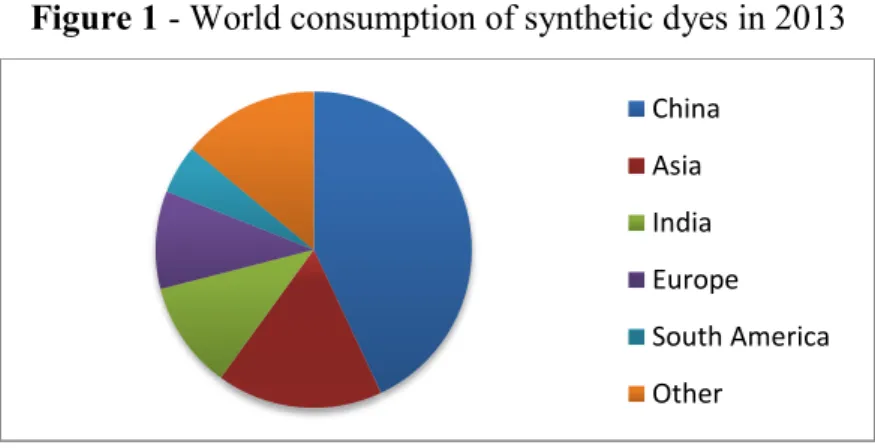
Nowadays, countless synthetic dyes have been applied in the textile industry to supply the fashion world which dictates the types of colors used. The colors used for textiles have an effect on the total dyes consumption. Figure 1 presents the world consumption of synthetic dyes in 2013 and it can be seen that China has become the major consumer accounting for 40– 45% and India accounts for about 10% of world consumption (IHS,2014).
Figure 1 - World consumption of synthetic dyes in 2013
Source: Adapted from IHS (2014).
China
Asia
India
Europe
South America
It is expected that the dye market increases at an average annual rate of about 3% (IHS,2014).
Since there are numerous dyes produced in the world, there is the necessity to register and to classify every one properly. The responsibility for this task is held by The Society of Dyers and Colorists from England which manages a database of dyes known as Colour Index. The nomenclature is related to the classification of the dyes. Dyes can be classified according to chemical structure such as azo dyes, anthraquinone dyes or by the application method such as direct dyes, reactive dyes, etc (HUNGER,2003).
According to Hunger (2003), the chemical classification is more appropriate than the usage classification, since it is easier to identify a dye belonging to a group with specific characteristics, for instance, azo dyes are strong, good all round properties and cost effective.
Despite that, Colour Index has adopted the application method as the main system to the dye nomenclature. For this reason, the colorants have a C.I. generic name given in accordance with the application method, its hue and a serial number related to the chronological order in which the colorant has been registered in the Colour Index (CHRISTIE,
2001,ERKURT,2010). For instance, Direct Red 75. Direct is the class of dye, red is the hue
and 75 is the chronological number which this specific dye was registered.
Besides the differences between the classification systems and the dye nomenclature, there are also different nomenclatures for the groups that compose the dye. Dyes contain 2 special groups called chromophore and auxochrome groups. Common chromophores are – C=C–, –C=N–, –C=O, –N=N–, –NO2, quinoid rings, while –NH3, –COOH, –SO3H, –OH are
common auxochromes.
Therefore, chromophores are electron systems with conjugated double bonds and auxochromes are electron withdrawing or electron donating substituents that cause the color of the chromophore by altering the overall energy of the electron system; which means the excitation of the electrons in the molecule makes the light be transmitted, in certain wavelength, and then, the color can be seen (FORSS,2013,GHALYet al.,2014).
industries belong to azo class. For this reason, they are present in a large amount of the textile wastewater, besides being the most researched class of dyes (HUNGER,2003,GHALY et al.,
2014).
3.1.1 Azo dyes and aromatic amines
In 1858, Peter Griess produced a diazonium salt, generated by the mixing of an aromatic amine with nitrous acid, that could be used to prepare colored compounds (CHRISTIE,2001). From there, many other azo dyes were produced.
Currently, about three thousand azo dyes are known and are in use worldwide (VALIZADEH et al., 2015). Most of these compounds are monoazo, which contain one azo
group, usually linking two aromatic rings, but it is also possible to contain two (diazo), three (triazo) or more azo groups (polyazo) (HUNGER,2003).
The azo dyes are widely used by industries such as food and textile industries. One of the probable solutions to the wastewater treatment which contain azo dyes is the degradation, whether by physical-chemical treatment or biological treatment. However, azo dyes are able to split off some genotoxic and carcinogenic amines (SCHNEIDERet al.,2004).
For this reason, the azo dyes that generate aromatic amines proven to be carcinogenic were banned by the Textile sector since 2003, following the recommendation of Directive 2002/61/EC of the European Parliament as regards the limitation of the marketing and use of certain dangerous substances and preparations (BASTIAN,2009).
Aromatic amines are formed when the azo dyes are reduced. Since the azo bond is broken and the amines are still present, the wastewater becomes colorless and toxic (ERKURT,
2010). Some textile industries are not concerned about the efficiency of the treatment which removes color and toxicity. They want just the color removal since this phase can be faster and cheaper than the whole process.
Researchers all over the world have struggled to find a way to eliminate the aromatic amines from the wastewater treated. Regarding the biological treatment, the aromatic amines degradation by microorganisms has been extensively investigated (HOSSEINI KOUPAIE et al.,
According to van der Zee and Villaverde (2005), the aromatic amines are generated by the reductive cleavage of the azo bond during the anaerobic treatment and it can be degraded during the aerobic treatment. Thus, the sequenced anaerobic-aerobic treatment seems to be suitable for this purpose, even though there is still much study to be done.
3.1.2 Direct dyes
Previously in history, it was necessary to fix the dye in the fibers using mordants. However the direct dyes were the first class that could be applied directly to the fibers, giving rise to the class of direct dyes (CHRISTIE,2001).
Some azo dyes are direct dyes as well, since the dyes have two different classifications. Direct dyes are widely used by the textile industry due to some specific characteristics, for instance solubility and ease of application.
Direct dyes are mainly applied in the dyeing of cellulosic fibers, as cotton and viscose, in paper, though it can be applied in leather as well. They are anionic compounds, designed to be soluble in water due to the addition of some groups such as –OH, –SO3-, and they are
commonly used because of the low cost and easy application, despite the fastness to satisfy the requirements moderately. Moreover, they are available in a wide range of hues (HUNGER,
2003,SEKAR,2011,WAWRZKIEWICZ,2011,SANTOS and BOAVENTURA,2015).
The solubility of these dyes is provided by the sulphonic acid groups in the structure and H-bonds and Van der Waals force keeps the dye retained by the fiber (CHRISTIE,2001,
HUNGER,2003,CHAKRABORTY,2014).
Direct dyes are almost completely dissociated in water bath containing electrolytes and ionic salts. A disadvantage of these dyes is related to the bond strength. The bonds are not strong enough to allow the dye keep itself attached to the fiber (WAWRZKIEWICZ,2011,
GHALY et al., 2014). For this reason it is better to wash the fabric dyed with direct dyes
separated from others.
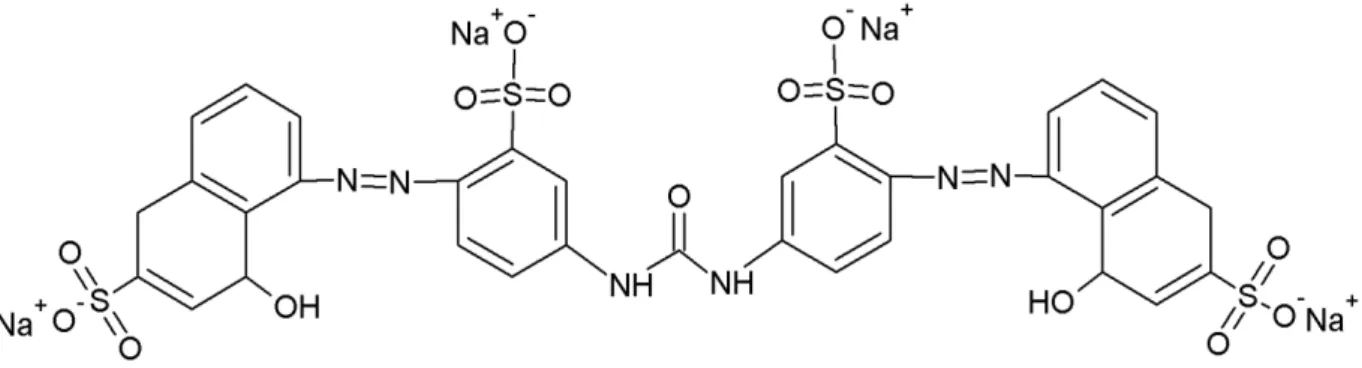
3.1.3 Direct Red 75
groups and 2 azo groups; therefore, a diazo dye (SEKAR, 2011). The structural formula is
presented in Figure 3.
Direct Red 75 is also known as Chlorazol fast pink BK and Sirius Rose BB. The molecular weight is 990.79.
Figure 2 – Direct Red 75 in solution (100 mg/L)
Source: Made by the author.
Figure 3 – Structural formula of the azo dye Direct red 75
Source: Made by the author.
This diazo dye has been applied not only in the textile industry, but in other industries as well. DR75 has been used as ink-jet ink, exhibiting high lightfastness, and as biological stain, for instance, to determine the amount of hepatic collagen of a rat liver (HUNGER,2003,
GHOSHet al.,2010). 3.2 Textile industry
Textile industry is one of the industries in the world that provides employment that does not require special skills. Due to this fact, it is one of the major employers in developing countries such as China, India, Bangladesh, Vietnam, Sri Lanka and Mauritius (GHALY et al.,
2014).
The Brazilian textile market plays an important role in the worldwide market as well. It is the fifth largest textile industry in the world and the fourth largest clothing industry; the second largest denim producer and third in production of knitted fabric. Brazil is a world reference in beachwear, jeanswear and homewear (CONFEDERAÇÃO,2012).
In spite of these numbers and of the importance of the textile industry to the country, the legislation on the use of dyes by the textile industries in Brazil and to protect the
environment and the human health is not as developed as in the European Union.
According to the National Confederation of Industry (Confederação Nacional da Indústria) and the Brazilian Association of Textile and Clothing Industry (Associação Brasileira da Indústria Têxtil e de Confecção) (2012), there are six laws and federal resolutions that can be applied to textile industries and wastewater treatment in Brazil:
1. Conama Resolution nº 430/2011 – Conditions and effluent discharge standards
2. Law nº 6.938/1981 – National Environmental Policy, its purposes and mechanisms of formulation and application
The aim is the preservation, improvement and recovery of environmental quality to life, in order to ensure conditions in the country to the socio-economic development, the interests of national security and the protection of the dignity of human life.
This law defines the textile and clothing industries as potentially polluting activity of medium grade and the aim is to reduce the environmental impact by up to 10 years for investments in the sector with modern and clean technology.
3. Law nº 10.165/2000 – Implantation of rates linked to the National Environmental Policy The textile and clothing industry is liable to tax with an average rate of potentially polluting activity.
4. Conama Resolution nº 313/2002 – Destination of industrial solid waste
This resolution regulates the recycling and presents very positive outlook for the correct destination of the sludge, there are even practical projects in that direction, as well as for textile waste from clothes manufacturing.
5. Law nº 9.984/2000 – National Water Resources Policy and Management System
This law represents, for the textile industry, the start of the National Agency of Water (Agência Nacional de Águas – ANA) activities and its relationship with the Ministry of Environment, resulting in direct consequences for the textile and clothing industry such as the search for water consumption indicators in the various links of industry production as well as signaling for constant reassessment of these indicators in order to reduce and reuse of water resources.
6. Conama Resolution nº 237/1997 – Environmental licensing incorporated to the environmental management tools
and fabric artifacts by the processing of textile fibers, vegetable, animal and synthetic origin fibers; manufacturing and finishing of yarns and fabrics; dyeing and printing.
Many environmental problems can be generated if those laws and resolutions are not fulfilled.
Besides the application of many dyes and other chemicals in different processes, the textile industry also has to deal with an important issue, the excessive use of water, since they use a large volume of water to dyeing, washing and rinsing the fabrics. According to Ghaly et al. (2014), about 200 L of water are used to produce 1 kg of fabric. Though, the exact volume of water required differs from industry to industry depending on the dyeing process and the type of fabrics produced.
As mentioned before, the amount of chemicals applied in all process in a textile industry is huge and due to the variety of chemicals compounds, some of them are low or non-biodegradable compounds, besides salt and organic load in the effluent make it complicated to be accordingly treated. Moreover, when the wastewater is released into the watercourses, they are able of harming the environment and human health (BENZINA et al.,
2012,GHALYet al.,2014,PUNZIet al.,2015). For instance, the presence of some chemicals in
Table 1 – Impact of the dyeing process with direct dyes to the environment
Input in the system Output in the system
- Formaldehyde (dye fixation), direct dye, salts (sodium chloride, sodium sulfate and sodium carbonate, in some cases), surfactant, cationic resin (condensation of dicyandiamide salts / ammonia or formaldehyde used in the dye fixation), complexing agents (EDTA, DTPA, DTPMP) and equalizing agents (fatty amine ethoxylate ), etc;
- Electricity; - Steam;
- Water (dyeing operations, washing the textile material and equipment);
- Compressed air (compressed gas cylinders).
- Air Pollution:
Air emissions (heat, through heat exchange).
- Water Pollution:
Generation of wastewater (residual bath dyeing and washing water from the washing of textile material and equipment). - Soil Pollution:
Generation of waste (packaging).
Source: Adapted from Bastian (2009)
The generation of colorful wastewater is among the main environmental impacts identified in a textile industry. The effluent composition changes according to the productive process which makes the characterization of the wastewater difficult. Since each sector of the industry generates an effluent with specific characteristics and certain organic load, it is required an specific treatment to comply the environmental legislation (BASTIAN,2009). 3.2.1 Textile wastewater treatment
Dyes are colorful compounds, highly visible. Thus, even minor releases into the environment may cause the appearance of color in watercourses, which attracts the critical attention of the public and local authorities, limits water uses, affects sunlight penetration and, consequently, affects the photosynthesis, due to the reduction of dissolved oxygen concentration, causing damage to the aquatic life (CHRISTIE, 2001, SARATALE et al., 2011,
The government environmental agencies stipulated some rules about the textile effluent discharges that should be followed by the textile industries. The treated water must have lower concentration of nitrogen than the wastewater and must not be colorful. Nevertheless, the textile industries still have not a proper treatment to remove these compounds from the wastewater (BENZINAet al.,2012).
The wastewater is colorful due to the presence of non-fixed dyes, in other words, a small percentage of the dye is not fixed to the fibers, remaining in the effluent. The percentage of non-fixed direct dyes that could remain in the effluents is 5-30% (BASTIAN,
2009). Therefore, the dyes must be removed from the wastewater, as well as the organic load and other chemicals in general, to avoid environmental pollution.
However, it is a challenge to succeed in the end of the wastewater treatment. Many researchers accepted this challenge and they are working to find a solution. Generally, it is required that the effluent passes through several processes to obtain water quality (WAWRZKIEWICZ,2011).
Every treatment method has advantages and drawbacks and the choice of the most appropriate methods will depend on the characteristics of each effluent (WAWRZKIEWICZ,
2011). The options are physical, chemical or biological treatment. Some physical and chemical parameters of the wastewater must be known to enable the choice of the most appropriated treatment. Some examples of the physical parameters are color, odor, pH, temperature, suspended and dissolved solids while chemical parameters are organic and inorganic compounds (SHULER and KARGI,2002).
The physical treatment is performed by different techniques, mostly non-destructive since the dye molecules bonds are not broken. The dye can be removed from the wastewater by adsorption, filtration, coagulation/flocculation and sedimentation (FERNÁNDEZ et al.,
2010).
Adsorption of dyes occurs when the dye molecules diluted in the wastewater are attached onto a solid surface (FORSS, 2013). This method has been employed for the dye
KHALED et al., 2009, LAKSHMI et al., 2009, CORSO et al., 2012, MEZOHEGYI et al., 2012,
MITTERet al.,2012,ALMEIDA and CORSO,2014).
Filtration is a technique to separate particles from liquids and membranes have been commonly used to this purpose. There are membranes made of different materials, polymers and pores sizes. The three filtration methods widely used are ultrafiltration, nanofiltration and reverse osmosis (FORSS,2013). As the filtration has been used for water reuse and chemical
recovery, this technique has been probed by textile industries in order to use membranes that are able to separate the hydrolyzed dyestuffs and dyeing auxiliaries (BUSCIO et al., 2015,
CHEN et al.,2015). Simultaneously, it is possible to reduce the color, BOD and COD of the
wastewater (SARATALEet al.,2011).
Coagulation/flocculation are processes mostly used as pre-treatment to remove suspended particles and coloring materials by reducing their surface charge and gather them to form larger particles prior to other treatment (DRAGAN and DINU, 2008, AHMAD et al.,
2015). Coagulants are added with intense mixing of the wastewater with the purpose to reduce or neutralize the surface charge of fine suspended particles while flocculants are added with gentle mixing and its purpose is to bring the fine particles close together to form larger particles (AHMADet al.,2015). Coagulation and flocculation agents have been used to remove
and even to degrade dyes in water solution. For instance, the green refined laterite soil investigated by Lau et al. (2014), was able to degrade the azo dye Acid Orange 7 and Dragan and Dinu (2008) evaluated the azo dye removal in aqueous solution by coagulation/flocculation using polycations which are synthetic flocculants.
Sedimentation is generally applied to remove the larger particles, formed during the flocculation, by using the gravity to deposit the suspended particles in the bottom of the wastewater treatment tank (GHALYet al.,2014,AHMADet al.,2015).
The chemical treatment is usually destructive. The oxidation occurs by the application of oxidizing agents, such as ozone (O3), hydrogen peroxide (H2O2) and permanganate
(MnO4), to modify the dye molecule by chemical reactions. Afterwards, the dye will be
In the advanced oxidation process (AOP), the radicals OH- formed are more reactive
than the others oxidizing agents already cited (VON SONNTAG,2008). According to Fernández et al. (2010), the AOP are divided in two classes: non-irradiation process including Fenton process, ozonation, sonolysis, electrochemical oxidation, electrical discharges and wet air oxidation, and irradiation process including photolysis and photocatalysis. The application of these methods for the dye textile wastewater treatment has been evaluated by some researchers as Punzi et al. (2015), Yu et al. (2014) and Jóźwiak et al. (2007) with satisfactory results.
Though the physical and chemical methods have demonstrated certain efficiency in the textile wastewater treatment, these techniques are still expensive; furthermore they have some operational problems as high sludge formation and regeneration requirement (ERKURT,
2010). Thus, the biological treatment has become an interesting alternative to treat textile wastewater.
The biological treatment is the most common technique used to wastewater treatment, having been applied for over 150 years (HUNGER,2003). According Ahmad et al. (2015), the
principle of the biological treatment system is the conversion of biodegradable wastes into simpler and harmless species through biological processes by many microorganisms such as bacteria, fungi and algae.
There are two different processes in the biological treatment, aerobic and/or anaerobic process (SHULER and KARGI,2002,HUNGER,2003). Aerobic process takes place by aerobes
microorganisms capable of growth at full oxygen tensions with carbon dioxide, water and biomass as final products. Anaerobic process takes places by microorganisms that cannot tolerate oxygen and the final products are carbon dioxide, methane and biomass (CHRISTIE,
2001,MADIGAN and MARTINKO,2006,AHMADet al.,2015). However, there are exceptions in
both groups of microorganisms. Microorganisms that can tolerate lower level of oxygen in the air are called Microaerophiles. The facultatives microorganisms are able to growth with or without oxygen in the atmosphere, despite to growth better with oxygen. The anaerobes can be aerotolerants or strict anaerobes. Aerotolerants tolerates oxygen though they cannot use it to their metabolism while strict anaerobes can be inhibited or killed by oxygen (MADIGAN and
Biological treatment has been constantly chosen by textile industry to degrade dyes and to treat the wastewater. Since the azo dyes are among the most applied dye in fabrics, the azo dye biodegradation process has become an interesting target of researches.
3.2.2 Biodegradation of azo dyes
Biodegradation process offers the attraction of the potential for the decolorization of the colorful wastewater with possible mineralization of the organic materials present (CHRISTIE,2001).
Several techniques have been developed in order to improve the quality of the treatment. The selection of the most appropriate technique will depend on many factors such as the effluent conditions, type of dye and concentration, in this case the azo dye structure, operating conditions, treatment quality needed, costs, flexibility, environmental impact, carbon and nitrogen sources, salinity, pH, temperature, the presence or absence of oxygen, etc. (SOLÍS et al.,2012,AHMAD et al.,2015).
According to Santos and Boaventura (2015), the biodegradation process of azo dyes is based on the cleavage of chemical bonds that produces hazardous aromatic amines followed by biodegradation of these metabolites to release a colorless and not harmful effluent. Then the aromatic amines are generated by anaerobic reaction, since the azo dyes can be used as electron acceptors. Afterwards, the aromatic amines are biodegraded by aerobic reaction (BAÊTAet al.,2012).
The biodegradation mechanism of azo dyes by microorganisms involves enzymatic reactions responsible for the reduction or oxidation of compounds, leading to the bonds break. The efficiency of this process depends on the adaptability and the activity of the selected microorganisms (SARATALEet al.,2011).
3.2.2.1 Bacteria
Bacteria are one of the most often employed microorganisms in the biological treatment of textile industry. Some of the reasons are the ease to cultivate and rapid growth under aerobic or anaerobic conditions. Some species are adapted to extreme conditions and they are able to express different types of enzymes (SOLÍS et al., 2012), that could be an
advantage for the success of the treatment.
Some researchers have analyzed the microbial community associated to the dye biodegradation and they noticed that it is common to find more bacteria than other microorganisms. Punzi et al. (2015) evaluated the microbial diversity in anaerobic reactors and they verified, by means of DGGE fingerprints of bacterial and eukaryotic rDNA, that the bacterial diversity is higher than the eukaryotic diversity. The reason can be the high metabolic flexibility of the bacteria. Yang et al. (2012) also demonstrated that the bacteria are the predominant microorganism in the treatment system. They analyzed the microbial diversity in a full-scale printing and dyeing wastewater system under aerobic and anaerobic conditions. Forss (2013) investigated the microbial community in anaerobic and aerobic reactors filled with rice husks and reported the presence of bacteria and fungi. The bacteria were more abundant in the anaerobic and aerobic reactors than fungi, likewise the previously cited research.
The biodegradation of azo dye by bacteria takes place by means of enzymes, reductases and oxidases. Reductases start the degradation breaking the bonds while oxidases complete the degradation mineralizing the compounds (SARATALEet al.,2011).
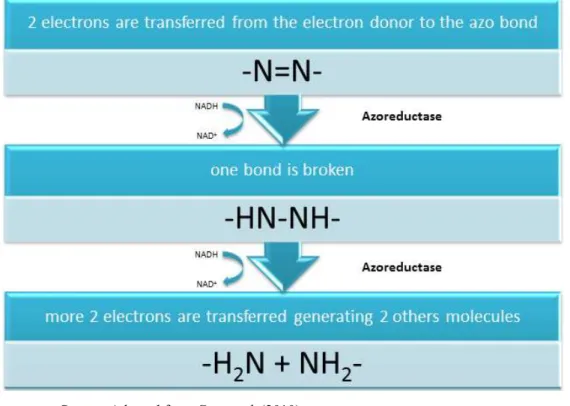
Azoreductase, an specific enzyme, catalyzes the reductive cleavage of azo bonds, in other words, the enzyme helps to break the azo bonds and then aromatic amines are generated (MOUTAOUAKKIL et al., 2003). Azoreductases can use reduced Nicotinamide Adenine
Dinucleotide (NADH), Nicotinamide Adenine Dinucleotide Phosphate (NADPH), reduced Flavin Adenine Dinucleotide (FADH) or Flavin Mononucleotide (FMN) as electron donors (SARATALEet al.,2011).
Figure 4 – Steps of the azo bond cleavage
Source: Adapted from Guo et al. (2010).
In the first step, two electrons are transferred from NADH, for example, to the azo bond (-N=N-), breaking one bond (-HN-NH-). In the second one, more two electrons are transferred, generating two others molecules (-H2N + NH2-) (GUOet al.,2010). This reaction
occurs in anaerobic environment and the azo dye acts as an electron acceptor. As the NADH is consumed by oxidative phosphorylation in aerobic conditions, it was suggested that the oxygen could inhibit the azoreductases interfering in the decolorization process (CHANGet al.,
2001). On the other hand, some specialized aerobic bacteria are capable of reducing the azo group by special oxygen-tolerant azoreductases.
Moutaouakkil et al. (2003) investigated the azoreductase purified from Enterobacter agglomerans isolated from dye-contaminated sludge. This strain presented an ability to grow on culture medium containing an azo dye, under aerobic conditions, and it was able to initiating the azo dye degradation.
Chang et al. (2001) analyzed the activity of cell-free extract of Pseudomonas luteola
conditions was 1.98 nmol mg protein–1 min-1 and 2.08 nmol mg protein–1 min-1 under aerobic
conditions.
The oxidases can be also applied to the azo dye biodegradation. The most known enzymes used for this purpose are tyrosinase, laccase, manganese-dependent peroxidase, and lignin peroxidase (ERKURT, 2010, SARATALE et al., 2011). Ligninolytic enzymes (laccase,
manganese-dependent peroxidase, and lignin peroxidase) are commonly used by fungi to degrade azo dye. However, some researchers have reported the action of bacterial oxidases for this purpose (MOLINA-GUIJARROet al.,2009,TELKEet al.,2009,PHUGAREet al.,2011).
Therefore, both reductases and oxidases play an important role in the dye biodegradation.
3.2.2.2 Fungi
Fungi are as capable of dye removal as bacteria and there are several studies showing the efficiency in the decolorization by fungi (AHMAD et al.,2015). For instance, Saroj et al.
(2014) demonstrated that Penicillium oxalicum SAR-3 was successful in the biodegradation of azo dyes Acid Red 183, Direct Blue 15 and Direct Red 75 since they reached higher levels of degradation, between 95–100%. Niebisch et al. (2010) used Lentinus crinitus extracellular extract in order to degrade the dye Reactive blue 220. Santos and Corso (2014) evaluated the biodegradation of the azo dye Direct Blue 71 by pellets of Phanerochaete chrysosporium and
Aspergillus oryzae they reported that both fungi were able to degrade the dye.
Fungi are widely used in biodegradation of azo dyes due to metabolic versatility and production of extracellular enzymes capable of acting in the breakage of the dye chemical bonds (SANTOS and CORSO,2014). Thus, the application of fungi in the decolorization process
is an attractive alternative due to the capacity of dye degradation and also because it is a low cost alternative (SARATALEet al.,2011).
Furthermore, filamentous fungi are ubiquitous in the environment. They can live in soil, plants, organic waste material and because of this, their metabolism can quickly adapt to several carbon and nitrogen sources (SARATALEet al.,2011,SOLÍSet al.,2012).
called ligninolytic system because of the powerful ability of extensively degrading lignin (ERKURT, 2010, MA et al., 2014). However, the enzymes from the ligninolytic system are
relatively nonspecific, which allows them to act in the degradation of organic persistent compounds (SARATALE et al.,2011,MAet al.,2014).
Similar towhat happens to bacteria, the laccases, for instance, are able to oxidize a wide range of other aromatic compounds when in the presence of suitable redox mediators (BOURBONNAIS and PAICE, 1990). Redox mediators are compounds that can accelerate the
electron transfer from the electron donor to a final electron acceptor (DOS SANTOS et al.,
2005). Riboflavin and Anthraquinone-2,6-disulfonate (AQDS) are examples of redox mediators.
Phanerochaete sp. is a WRF widely studied due to its good ability to biodegradation of organic compounds (GLENN and GOLD,1983,MARTINS et al.,2001,FARACO et al.,2009,
ENAYATIZAMIRet al.,2011,SANTOS and CORSO,2014).
Very little research has been done to explore the dye biodegradation by yeast (MARTINS et al.,1999,YU and WEN,2005,JADHAV and GOVINDWAR,2006,JADHAV et al.,
2007) when compared to filamentous fungi. Some studies are mainly related to the adsorption of dyes (DÖNMEZ,2002,AKSU,2003,KIMet al.,2015).
3.2.2.3 Mixed cultures
Despite the good performance in dye degradation shown by some strains of microorganism, sometimes, the use of pure cultures in the textile wastewater treatment cannot achieve satisfactory results, besides it seems not viable for industries. The cultivation of pure culture can demand a great effort, making the treatment a high cost process and time consuming.
According to Solís et al. (2012), the microorganisms work synergistically in a microbial consortium. Then, the degradation of organic persistent compounds such as dyes can be improved by the action of microorganisms from the consortium.
Some researchers have evaluated mixed cultures efficiency in the dye biodegradation (DAFALEet al.,2008,FORSS and WELANDER,2009,YANGet al.,2009,PHUGARE et al.,2011,
Among some advantages of the use of consortia mixed culture are the degradation of persistent compounds with the assistance of several enzymatic reactions, there are different strains that can act in the dye decolorization by different ways, they can use the metabolites produced by others strains and they use to be less sensitive to toxic compounds than pure cultures (SOLÍSet al.,2012,PUNZIet al.,2015).
On the other hand, there is a disadvantage as well, and it is the reproducibility of the system, since the results are not easily reproduced due to the complexity of the reactions and interaction among the different strains (SARATALE et al., 2011). Still, the effects of the
References
AHMAD,A.; MOHD-SETAPAR,S. H.; CHUONG, C. S.; KHATOON, A.; WANI, W. A.; KUMAR, R. and RAFATULLAH, M. Recent advances in new generation dye removal technologies: novel search for approaches to reprocess wastewater. RSC Advances, v. 5, 39, 30801-30818, 2015.
AKSU, Z. Reactive dye bioaccumulation by Saccharomyces cerevisiae. Process Biochemistry, v. 38, 10, 1437-1444, 2003.
ALMEIDA,E. J. and CORSO, C. R.Comparative study of toxicity of azo dye Procion Red MX-5B following biosorption and biodegradation treatments with the fungi Aspergillus niger
and Aspergillus terreus. Chemosphere, v. 112, 317-322, 2014.
BAÊTA,B. E. L.; AQUINO,S. F.; SILVA,S. Q. and RABELO,C. A.Anaerobic degradation of azo dye Drimaren blue HFRL in UASB reactor in the presence of yeast extract a source of carbon and redox mediator. Biodegradation, v. 23, 2, 199-208, 2012.
BAÊTA,B. E. L.; LIMA,D. R. S.; SILVA, S. Q. and AQUINO,S. F.Evaluation of soluble microbial products and aromatic amines accumulation during a combined anaerobic/aerobic treatment of a model azo dye. Chemical Engineering Journal, v. 259, 0, 936-944, 2015. BASTIAN, E. Y. O. Guia Técnico Ambiental da Indústria Têxtil São Paulo, Brasil: CETESB, 2009.
BENZINA,O.; FRIKHA,F.; ZOUARI-MECHICHI,H.; WOODWARD,S.; BELBAHRI,L.; MNIF, E. and MECHICHI, T. Enhanced decolourization of the azo dye Sirius rose BB by laccase–HBT system. 3 Biotech, v. 2, 2, 149-157, 2012.
BOURBONNAIS,R. and PAICE,M. G.Oxidation of non-phenolic substrates. An expanded role for laccase in lignin biodegradation. FEBS Letters, v. 267, 1, 99-102, 1990.
BRÜSCHWEILER, B. J.; KÜNG, S.; BÜRGI, D.; MURALT, L. and NYFELER, E. Identification of non-regulated aromatic amines of toxicological concern which can be cleaved from azo dyes used in clothing textiles. Regulatory Toxicology and Pharmacology, v. 69, 2, 263-272, 2014.
BUSCIO, V.; CRESPI, M. and GUTIÉRREZ-BOUZÁN, C. Sustainable dyeing of denim using indigo dye recovered with polyvinylidene difluoride ultrafiltration membranes. Journal of Cleaner Production, v. 91, 0, 201-207, 2015.
CHAKRABORTY,J. N. Dyeing with direct dye. In: CHAKRABORTY, J. N. Fundamentals and Practices in Colouration of Textiles. Woodhead Publishing India, 2014. 29-45.
CHEN,X.; ZHAO,Y.; MOUTINHO,J.; SHAO,J.; ZYDNEY,A. L. and HE,Y.Recovery of small dye molecules from aqueous solutions using charged ultrafiltration membranes.
Journal of Hazardous Materials, v. 284, 0, 58-64, 2015.
CHRISTIE,R. M. Colour Chemistry. The Royal Society Chemistry, 2001.
CONFEDERAÇÃO NACIONAL DA INDÚSTRIA E ASSOCIAÇÃO BRASILEIRA DA INDÚSTRIA
TÊXTIL E DE CONFECÇÃO.Têxtil e Confecção: Inovar, Desenvolver e Sustentar. Brasília:
CNI/ABIT, 2012. 74.
CORSO, C. R. and ALMEIDA, A. C. M. Bioremediation of Dyes in Textile Effluents by
Aspergillus oryzae. Microbial Ecology, v. 57, 2, 384-390, 2009.
CORSO, C. R.; ALMEIDA, E. J.; SANTOS, G. C.; MORAO, L. G.; FABRIS, G. S. and MITTER, E. K. Bioremediation of direct dyes in simulated textile effluents by a paramorphogenic form of Aspergillus oryzae. Water Science Technology, v. 65, 8, 1490-1495, 2012.
DAFALE,N.; RAO,N. N.; MESHRAM,S. U. and WATE,S. R.Decolorization of azo dyes and simulated dye bath wastewater using acclimatized microbial consortium – Biostimulation and halo tolerance. Bioresource Technology, v. 99, 7, 2552-2558, 2008.
DOSSANTOS,A. B.; TRAVERSE,J.; CERVANTES,F. J. and VANLIER,J. B.Enhancing the electron transfer capacity and subsequent color removal in bioreactors by applying thermophilic anaerobic treatment and redox mediators. Biotechnology and Bioengineering, v. 89, 1, 42-52, 2005.
DRAGAN, E. S. and DINU, I. A. Removal of azo dyes from aqueous solution by coagulation/Flocculation with strong polycations. Research Journal of Chemistry and Environment, v. 12, 3, 5, 2008.
DÖNMEZ,G.Bioaccumulation of the reactive textile dyes by Candida tropicalis growing in molasses medium. Enzyme and Microbial Technology, v. 30, 3, 363-366, 2002.
ENAYATIZAMIR, N.; TABANDEH, F.; RODRIGUEZ-COUTO, S.; YAKHCHALI, B.; ALIKHANI,H. A. and MOHAMMADI,L.Biodegradation pathway and detoxification of the diazo dye Reactive Black 5 by Phanerochaete chrysosporium. Bioresource Technology, v. 102, 22, 10359-10362, 2011.
ERKURT,H. A. The Handbook of Environmental Chemistry. Berlin: Springer, 2010. FARACO, V.; PEZZELLA, C.; MIELE, A.; GIARDINA, P. and SANNIA, G. Bio-remediation of colored industrial wastewaters by the white-rot fungi Phanerochaete chrysosporium and Pleurotus ostreatus and their enzymes. Biodegradation, v. 20, 2, 209-220, 2009.
FORSS,J.Microbial Treatment of textile wastewater applicable in developing countries,
(PhD) - Linnaeus University, Växjö, Sweden, 2013.
FORSS, J.; PINHASSI, J.; LINDH, M. and WELANDER, U. Microbial diversity in a continuous system based on rice husks for biodegradation of the azo dyes Reactive Red 2 and Reactive Black 5. Bioresource Technology, v. 130, 0, 681-688, 2013.
FORSS,J. and WELANDER, U.Decolourization of reactive azo dyes with microorganisms growing on soft wood chips. International Biodeterioration & Biodegradation, v. 63, 6, 752-758, 2009.
GHALY, A. E.; ANANTHASHANKAR,R.; ALHATTAB, M. and RAMAKRISHNAN, V. Production, Characterization and Treatment of Textile Effluents: A Critical Review. Journal of Chemical Engineering & Process Technology, v. 5, 1, 1, 19, 2014.
GHOSH,D.; GHOSH,S.; SARKAR,S.; GHOSH,A.; DAS,N.; SAHA,K. D. and MANDAL, A. K.Quercetin in vesicular delivery systems: Evaluation in combating arsenic-induced acute liver toxicity associated gene expression in rat model. Chemico-Biological Interactions, v. 186, 1, 61-71, 2010.
GLENN,J. K. and GOLD, M. H. Decolorization of Several Polymeric Dyes by the Lignin-Degrading Basidiomycete Phanerochaete chrysosporium. Applied and Environmental Microbiology, v. 45, 6, 1741-1747, 1983.
GUO,J.; KANG,L.; WANG,X. and YANG, J. Decolorization and degradation of azo dyes by redox mediator System with bacteria. In: ERKURT, H. A. The handbook of environmental chemistry. Berlin: Springer, 2010. 85-100.
HOSSEINI KOUPAIE, E.; ALAVI MOGHADDAM, M. R. and HASHEMI, S. H. Post-treatment of anaerobically degraded azo dye Acid Red 18 using aerobic moving bed biofilm process: Enhanced removal of aromatic amines. Journal of Hazardous Materials, v. 195, 0, 147-154, 2011.
HUNGER, K. Industrial Dyes: Chemistry, Properties, Applications. 1st. Weinheim, Germany: WILEY-VCH, 2003.
IHS. Chemical Economics Handbook: Dyes, 2014. Available in <https://www.ihs.com/products/dyes-chemical-economics-handbook.html>. Access in: 14 apr 2014.
JADHAV, J. P. and GOVINDWAR, S. P. Biotransformation of malachite green by
Saccharomyces cerevisiae MTCC 463. Yeast, v. 23, 4, 315-323, 2006.
JADHAV, J. P.; PARSHETTI, G. K.; KALME, S. D. and GOVINDWAR, S. P. Decolourization of azo dye methyl red by Saccharomyces cerevisiae MTCC 463.
Chemosphere, v. 68, 2, 394-400, 2007.
JÓŹWIAK, W. K.; MITROS, M.; KAŁUŻNA-CZAPLIŃSKA, J. and TOSIK, R.Oxidative decomposition of Acid Brown 159 dye in aqueous solution by H2O2/Fe2+ and ozone with GC/MS analysis. Dyes and Pigments, v. 74, 1, 9-16, 2007.
KHALED,A.; NEMR,A. E.; EL-SIKAILY,A. and ABDELWAHAB,O.Removal of Direct N Blue-106 from artificial textile dye effluent using activated carbon from orange peel: Adsorption isotherm and kinetic studies. Journal of Hazardous Materials, v. 165, 1–3, 100-110, 2009.
KIM,T. Y.; LEE,J. W. and CHO,S. Y.Application of residual brewery yeast for adsorption removal of Reactive Orange 16 from aqueous solution. Advanced Powder Technology, v. 26, 1, 267-274, 2015.
LAKSHMI,U. R.; SRIVASTAVA,V. C.; MALL,I. D. and LATAYE,D. H.Rice husk ash as an effective adsorbent: Evaluation of adsorptive characteristics for Indigo Carmine dye.
Journal of Environmental Management, v. 90, 2, 710-720, 2009.
LAU,Y.-Y.; WONG,Y.-S.; TENG,T.-T.; MORAD,N.; RAFATULLAH,M. and ONG,S.-A. Coagulation-flocculation of azo dye Acid Orange 7 with green refined laterite soil. Chemical Engineering Journal, v. 246, 0, 383-390, 2014.
MA, L.; ZHUO, R.; LIU, H.; YU, D.; JIANG, M.; ZHANG, X. and YANG, Y. Efficient decolorization and detoxification of the sulfonated azo dye Reactive Orange 16 and simulated textile wastewater containing Reactive Orange 16 by the white-rot fungus Ganoderma sp. En3 isolated from the forest of Tzu-chin Mountain in China. Biochemical Engineering Journal, v. 82, 0, 1-9, 2014.
MADIGAN,M. T. and MARTINKO,J. M. Brock biology of microorganisms. Upper Saddle River, NJ, USA: Pearson Prentice Hall, 2006.
MARTINS, M. A. M.; CARDOSO, M. H.; QUEIROZ, M. J.; RAMALHO, M. T. and CAMPUS,A. M. O.Biodegradation of azo dyes by the yeast Candida zeylanoides in batch aerated cultures. Chemosphere, v. 38, 11, 2455-2460, 1999.
MARTINS,M. A. M.; FERREIRA,I. C.; SANTOS, I. M.; QUEIROZ,M. J. and LIMA, N. Biodegradation of bioaccessible textile azo dyes by Phanerochaete chrysosporium. Journal of Biotechnology, v. 89, 2–3, 91-98, 2001.
MEZOHEGYI, G.; VAN DER ZEE, F. P.; FONT, J.; FORTUNY,A. and FABREGAT, A. Towards advanced aqueous dye removal processes: A short review on the versatile role of activated carbon. Journal of Environmental Management, v. 102, 0, 148-164, 2012.
MITTER,E. K.; SANTOS, G. C.; ALMEIDA,É.; MORÃO, L. G.; RODRIGUES,H. D. P. and CORSO, C. R. Analysis of Acid Alizarin Violet N Dye Removal Using Sugarcane Bagasse as Adsorbent. Water, Air, & Soil Pollution, v. 223, 2, 765-770, 2012.
MOUTAOUAKKIL, A.; ZEROUAL, Y.; ZOHRA DZAYRI, F.; TALBI, M.; LEE, K. and BLAGHEN, M.Purification and partial characterization of azoreductase from Enterobacter agglomerans. Archives of Biochemistry and Biophysics, v. 413, 1, 139-146, 2003.
NIEBISCH, C. H.; MALINOWSKI, A. K.; SCHADECK, R.; MITCHELL, D. A.; KAVA-CORDEIRO,V. and PABA,J.Decolorization and biodegradation of reactive blue 220 textile dye by Lentinus crinitus extracellular extract. Journal of Hazardous Materials, v. 180, 1–3, 316-322, 2010.
PHUGARE, S. S.; KALYANI, D. C.; PATIL, A. V. and JADHAV, J. P. Textile dye degradation by bacterial consortium and subsequent toxicological analysis of dye and dye metabolites using cytotoxicity, genotoxicity and oxidative stress studies. Journal of Hazardous Materials, v. 186, 1, 713-723, 2011.
PUNZI,M.; ANBALAGAN,A.; ARAGÃOBÖRNER,R.; SVENSSON,B.-M.; JONSTRUP, M. and MATTIASSON, B. Degradation of a textile azo dye using biological treatment followed by photo-Fenton oxidation: Evaluation of toxicity and microbial community structure. Chemical Engineering Journal, v. 270, 0, 290-299, 2015.
SANTOS, G. C. and CORSO, C. R. Comparative Analysis of Azo Dye Biodegradation by
Aspergillus oryzae and Phanerochaete chrysosporium. Water, Air, & Soil Pollution, v. 225, 7, 1-11, 2014.
SANTOS,S. C. R. and BOAVENTURA,R. A. R.Treatment of a simulated textile wastewater in a sequencing batch reactor (SBR) with addition of a low-cost adsorbent. Journal of Hazardous Materials, v. 291, 0, 74-82, 2015.
SARATALE,R. G.; SARATALE,G. D.; CHANG,J. S. and GOVINDWAR,S. P. Bacterial decolorization and degradation of azo dyes: A review. Journal of the Taiwan Institute of Chemical Engineers, v. 42, 1, 138-157, 2011.
SAROJ,S.; KUMAR,K.; PAREEK, N.; PRASAD,R. and SINGH, R. P. Biodegradation of azo dyes Acid Red 183, Direct Blue 15 and Direct Red 75 by the isolate Penicillium oxalicum
SAR-3. Chemosphere, v. 107, 0, 240-248, 2014.
SCHNEIDER,K.; HAFNER,C. and JAGER,I.Mutagenicity of textile dye products. Journal of Applied Toxicology, v. 24, 2, 83-91, 2004.
SEKAR,N. 12 - Direct dyes. In: CLARK, M. Handbook of Textile and Industrial Dyeing. Woodhead Publishing, 2011. 425-445.
SEMERARO,P.; RIZZI,V.; FINI,P.; MATERA, S.; COSMA,P.; FRANCO,E.; GARCÍA, R.; FERRÁNDIZ, M.; NÚÑEZ, E.; GABALDÓN, J. A.; FORTEA, I.; PÉREZ, E. and FERRÁNDIZ, M. Interaction between industrial textile dyes and cyclodextrins. Dyes and Pigments, v. 119, 0, 84-94, 2015.
SOLÍS, M.; SOLÍS, A.; PÉREZ, H. I.; MANJARREZ, N. and FLORES, M. Microbial decolouration of azo dyes: A review. Process Biochemistry, v. 47, 12, 1723-1748, 2012. TELKE,A. A.; KALYANI,D. C.; DAWKAR,V. V. and GOVINDWAR,S. P.Influence of organic and inorganic compounds on oxidoreductive decolorization of sulfonated azo dye C.I. Reactive Orange 16. Journal of Hazardous Materials, v. 172, 1, 298-309, 2009.
UNESCO. Water for People, Water for Life - UN World Water Development Report (WWDR). UK: UNESCO Publishing and Berghahn Books, 2003.
VALIZADEH, H.; SHOMALI, A.; NOURSHARGH, S. and MOHAMMAD-REZAEI, R. Carboxyl and nitrite functionalized graphene quantum dots as a highly active reagent and catalyst for rapid diazotization reaction and synthesis of azo-dyes under solvent-free conditions. Dyes and Pigments, v. 113, 0, 522-528, 2015.
VANDERZEE, F. P. and VILLAVERDE,S.Combined anaerobic–aerobic treatment of azo dyes—A short review of bioreactor studies. Water Research, v. 39, 8, 1425-1440, 2005. WAWRZKIEWICZ,M.Comparison of gel anion exchangers of various basicity in direct dye removal from aqueous solutions and wastewaters. Chemical Engineering Journal, v. 173, 3, 773-781, 2011.
VON SONNTAG, C. Advanced oxidation processes: mechanistic aspects. Water Science Technology, v. 58, 5, 1015-1021, 2008.
YANG,Q.; LI,C.; LI,H.; LI,Y. and YU, N.Degradation of synthetic reactive azo dyes and treatment of textile wastewater by a fungi consortium reactor. Biochemical Engineering Journal, v. 43, 3, 225-230, 2009.
YANG,Q.; WANG,J.; WANG,H.; CHEN,X.; REN,S.; LI,X.; XU,Y.; ZHANG,H. and LI, X. Evolution of the microbial community in a full-scale printing and dyeing wastewater treatment system. Bioresource Technology, v. 117, 0, 155-163, 2012.
YU,R. F.; CHEN,H. W.; CHENG,W. P.; LIN,Y. J. and HUANG,C. L.Monitoring of ORP, pH and DO in heterogeneous Fenton oxidation using nZVI as a catalyst for the treatment of azo-dye textile wastewater. Journal of the Taiwan Institute of Chemical Engineers, v. 45, 3, 947-954, 2014.
4
CHAPTER 1
Comparison of decolorization capacity of
the azo dye Direct Red 75 by
Phanerochaete chrysosporium
and
4.1 Abstract
In order to assess the biodegradation of the azo dye Direct Red 75 (DR75) by different forms of fungi, this study aims to investigate the decolorization capacity of the fresh yeast,
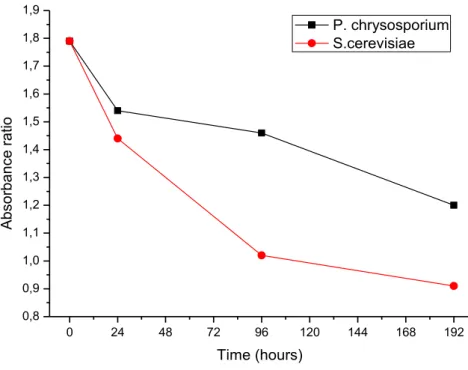
Saccharomices cerevisiae, and the pellets of filamentous fungi Phanerochaete chrysosporium. The results were expressed as percentage of decolorization and absorbance ratio values obtained by the ratio between the absorbance at a wavelength corresponding to the group’s chromophore and azo (A522/A320) indicated the occurrence of biodegradation by varying the
values of the samples compared to control. The percentage of decolorization showed that treatment with S. cerevisiae was more efficient, removing 77.14, 90.84 and 92.86% after 24, 96 and 192 hours, respectively, while treatment with P. chrysosporium removed 56.04, 61.84 and 81.91% after 24, 96 and 192 hours, respectively. The absorbance ratio suggests the occurrence of biodegradation, since the values of the treatments of 1.44, 1.02 and 0.91 for yeast and 1.54, 1.46 and 1.20 for P. chrysosporium showed a great variation in comparison to the absorbance ratio to the control 1.79 times evaluated. Therefore, DR75 was more easily biodegraded by fresh yeast, which can be easily acquired, than by single strain of fungus, which seems to be an expensive and labored option for the treatment of textile wastewater.
4.2 Introduction
Synthetic azo dyes are extensively used in the textile industries. According to Martins
et al. (2001), the azo dyes are considered persistent xenobiotic compounds due to the presence of a -N=N- bond and other groups that are not easily biodegraded, for instance, the sulphonic group (SO3-).
Several physical and chemical methods have been suggested for the treatment of dye contaminated wastewater but not widely used because of the high cost and secondary pollution that can be generated by excessive use of chemicals. Microbial degradation does not have a similar problem since they are a low cost treatment (JADHAV et al., 2007). Hence,
establishing a biological wastewater treatment to the azo dye degradation seems to be a plausible option.
The use of microorganisms in the treatment of industrial effluents has been widely studied. Each species has metabolic versatility that helps in removing contaminants such as textile dyes. The fungi play an important role in the nature and in biodegradation of chemical compounds as well. Researchers have reported the ability of filamentous fungi and yeasts to biodegrade azo dyes (AKSU,2003,YU and WEN,2005,VITOR and CORSO,2008,CORSO and
ALMEIDA,2009,ALMEIDA and CORSO,2014,SANTOS and CORSO,2014).
Yeast is one of the most ubiquitous microorganisms available for bioremediation of textile dyes, mainly at lower pH, besides being an inexpensive and easily available source of biomass (DÖNMEZ, 2002, AKSU, 2003). The yeast is a common waste from fermentation
process in some industries such as brewery and it can be used for other purposes, for instance as substrate for the biodiesel production by another yeast and adsorption of dye (RYUet al.,
2013,KIMet al.,2015).
The genus Saccharomyces has been used in the biodegradation of some dyes. The yeast cells of this genus are non-pathogenic, easily available, as already mentioned, and can grow on simple inexpensive medium (JADHAV and GOVINDWAR,2006).
S. cerevisiae is one of the most important commercial yeasts since they are applied in the manufacture of bread and beer. Probably, the commercial yeasts are improved by selection and genetic manipulation by the industrial microbiologists (MADIGAN and MARTINKO,2006).
Since they are genetic manipulated to have a high fermentative power, it can be advantageous to use fresh yeast in the biodegradation of persistent compounds.
The use of S.cerevisiae cells for biodegradation of the dyes methyl red and malachite green was evaluated by Jadhav et al. (2007) and Jadhav and Govindwar (2006), respectively.
S. cerevisiae MTCC 463 was able to degrade both dyes and enzymatic studies indicate the involvement of reductases as prominent enzymes in both researches.
The ability to dye degradation by filamentous fungi is also widely investigated.
Phanerochaete chrysosporium is commonly studied (GLENN and GOLD,1983,MARTINSet al.,
2001, FARACO et al., 2009, ENAYATIZAMIR et al., 2011, SANTOS and CORSO, 2014). This
filamentous fungus is known as white-rot fungi and they are capable of aerobic lignin depolymerization and mineralization because their capacity to produce one or more extracellular lignin (MARTINSet al.,1999,WESENBERGet al.,2003).
Ligninolytic enzymes are extracellular and they can degrade a wide variety of persistent compounds due to their lack of substrate specificity (WESENBERG et al., 2003,
KAUSHIK and MALIK,2009). Laccase, Manganese Peroxidase (MnP), Manganese Independent
Peroxidase (MiP), Lignin Peroxidase (LiP) and Tyrosinase are some of the enzymes involved in dye decolorization (KAUSHIK and MALIK,2009)
The biodegradation of dyes by P. chrysosporium has been evaluated by Enayatizamir
et al. (2011), Santos and Corso (2014), Faraco et al. (2009), Martins et al. (2001), Knapp and Newby (1999) and others, and they reported the ability to dye removal and biodegradation.
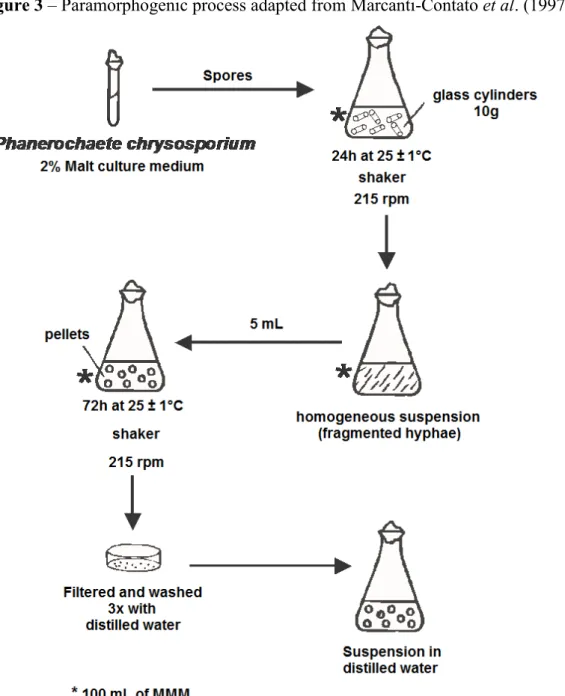
Marcanti-Contato et al. (1997) developed a procedure, known as physical paramorphogenese, to transform hyphae of Aspegillus sp into pellets. Santos and Corso (2014) applied the physical paramorphogenese method in Aspergillus oryzae and P. chrysosporium. The fungi in pellets form were able to biodegrade the azo dye Direct Blue 71 in 240 hours of treatment, showing that the pellets also can be effective in wastewater treatment.
In order to assess the biodegradation of the azo dye Direct Red 75 by different forms of fungi, this study aims to investigate the decolorization capacity of the fresh yeast, S. cerevisiae, and the pellets of filamentous fungi P. chrysosporium.
4.3 Material and Methods
4.3.1 Dye
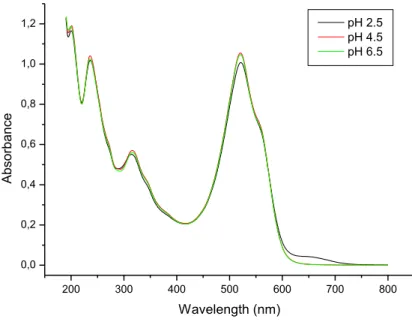
The azo dye Direct Red 75 (DR75) was acquired from Sigma-Aldrich Chemical Company, Inc. The maximum wavelength (λmax) analyzed in this study was 522 nm.
The stock solution of dye (1000 mg/L) was prepared from the dye dissolved in water. The stability of the dye in pH 2.5, 4.5 and 6.5 was analyzed by spectrophotometry. H2SO4
0.01 M ou NaOH 0.01 M were applied to correct the pH when needed.
4.3.2 Microorganisms
The fungi assessed in the present chapter were P. chrysosporium and the yeast S. cerevisiae.
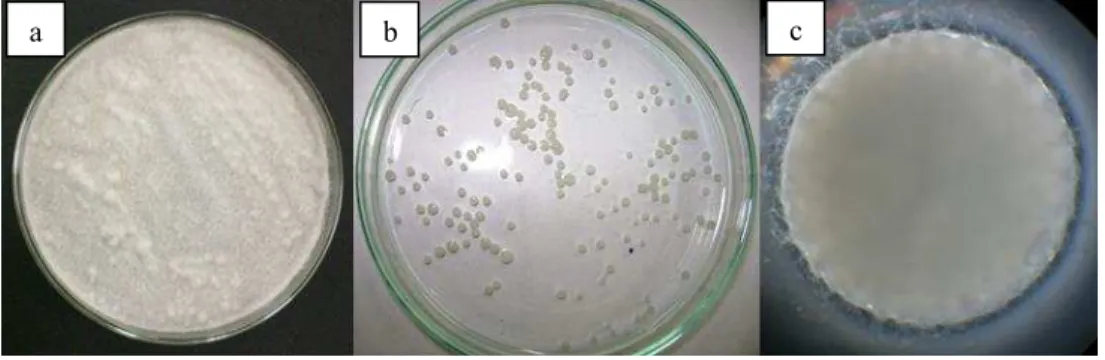
Figure 1 – P. chrysosporium in 2% Malt culture medium (a), in paramorphogenic form (b), pellet at 40x mag (c) in optical microscope
Source: Made by the author.
Figure 2 – S. cerevisiae as fresh yeast (a) and suspension diluted in distilled water (10-2) (b)
Source: Made by the author.
4.3.2.1 S. cerevisiae washing
10 g of fresh yeast was dissolved in distilled water. Afterwards, the solution was centrifuged for 8 minutes at 6000 rpm and then the supernatant was discarded. The procedure was repeated until the supernatant was clear.
In order to get a 10% yeast suspension, the washed yeast was added in a graduated cylinder and the volume was completed to 100 mL with distilled water.
4.3.2.2 Cellular viability test
The cellular viability (GILLILAND, 1959) was tested using 1 mL of the 10% yeast
suspension diluted in distilled water (10-2) and 1 mL of erythrosine stain prepared by the dilution of 1ml of erythrosine solution 10 g/L in 50 mL of 0.1 M sodium phosphate buffer (pH 6.8 – 7.0). Afterwards, the cells were observed in optical microscope to verification and
a
a
b
b
counting the live and dead cells. The dead cells were stained while the live cells were not stained.
The percentage of viability was calculated as follows (Equation 1):
(1)
The yeast counting was performed with a Neubauer chamber under an optical microscope.
4.3.2.3 Culture medium for P. chrysosporium (modified from Lodder (1970)):
2% Malt medium: - 2% Malt extract - 2% Agar
- 4% glucose - 1% peptone - distilled water
4.3.2.4 Minimum Mineral Medium (MMM) (modified from Pontecorvo et al. (1953)):
- 6 g/L of NaNO3
- 1 g/L of KH2PO4
- 0.5 g/L of KCl
- 0.5 g/L of MgSO4 . 7H2O