Identifying and Understanding the Health
Information Experiences and Preferences of
Individuals With TBI, SCI, and Burn Injuries
Nathan T Coffey, MPH
1, Ali A Weinstein, PhD
1, Cindy Cai, PhD
2,
Jimmy Cassese, MS
1, Rebecca Jones, MPH
1, Dahlia Shaewitz, MA
2,
and Steven Garfinkel, PhD
2Abstract
Introduction: Traumatic brain injury, spinal cord injury, and burn injury can cause lifelong disability and changes in quality of life. In order to meet the challenges of postinjury life, various types of health information are needed. We sought to identify preferred sources of health information and services for persons with these injuries and discover how accessibility could be improved. Methods:Thirty-three persons with injury participated in semistructured interviews. Responses to interview questions were coded using NVivo.Results:Participants’ difficulties accessing health information varied by injury type and individually. The majority of respondents found information via the Internet and advocated its use when asked to describe their ideal health information system. Nearly all participants supported the development of a comprehensive care website. When searching for health information, participants sought doctor and support group net-works, long-term health outcomes, and treatments specific to their injury.Conclusion:To optimize the quality of health information resources, Internet-based health-care platforms should add or highlight access points to connect patients to medical professionals and support networks while aggregating specialized, injury-specific research and treatment information.
Keywords
brain injuries, spinal cord injuries, knowledge translation, health services accessibility, qualitative research, rehabilitation
Introduction
Traumatic brain injury (TBI), spinal cord injury (SCI), and burn injury (burn) are serious conditions affecting millions of Americans each year (1-3). The symptoms vary, but all 3 types of injuries can impact physical and cognitive well-being. Rehabilitation has been shown to improve physical, social, and cognitive functioning of persons with TBI, SCI, and burn injuries (4-7).
In order to meet the challenges of postinjury life, persons with an injury need access to health information. Health infor-mation needs are complex and vary over time with the chang-ing needs of the individual (8). Those with chronic injury conditions have a high risk for medical complications and other health conditions throughout their lives (9). Despite the ability to access information through a variety of sources, previous studies have shown many individuals with injuries such as SCI continue to have unmet information needs (9,10).
We sought to identify the preferred sources of health information for individuals with TBI, SCI, and burn injuries and explore how those individuals thought access could be improved. These injuries are highly prevalent and severe in nature (1-3). Due to their severity, all 3 injuries can require long-term care and rehabilitation; thus, the need for health information among persons with these injuries is pro-nounced. Medical professionals and the Internet are 2 of the
1Center for Study of Chronic Illness and Disability, College of Health and
Human Services, George Mason University, Fairfax, VA, USA
2American Institutes for Research, Washington, DC, USA
Corresponding Author:
Ali A Weinstein, PhD, Center for Study of Chronic Illness and Disability, College of Health and Human Services, George Mason University, 4400 University Drive, MS 2G7, Fairfax, VA 22030, USA.
Email: [email protected]
Journal of Patient Experience 2016, Vol. 3(3) 88-95 ªThe Author(s) 2016 Reprints and permission:
sagepub.com/journalsPermissions.nav DOI: 10.1177/2374373516667007 jpejournal.sagepub.com
most common sources of health information for persons with injuries such as SCI (9-11). Likewise, experiential knowl-edge shared from others with similar injuries is highly val-ued (8). Medical professionals are often seen as the most trusted source of health information, while the Internet is the most common and preferred format for information (11,12). We explored how participants felt the health-care system and the accessibility of health information and services could be improved. Access to a computer-based personal health support system has been found to positively impact access to health-care information and patient quality of life (13). When communicating with medical professionals, shared decision-making can provide positive patient outcomes such as satisfaction and improvements in functional status (14). Self-reported descriptions of experiences and preferences may help determine ways to anticipate the needs of persons with injury and improve care while increasing the applic-ability and accessibility of health information resources. Such data would also help clarify the areas that need improved health information access and research for TBI, SCI, and burn injuries.
Previous studies exploring the health information needs of persons with injury have examined either a single injury type or populations with a broad range of conditions; this study uniquely compares and contrasts the needs and experiences of persons with common types of injuries: TBI, SCI, and burn. This study aimed to collect a broad range of information, examining not only qualitative health information needs and experiences but also collecting activities of daily living (ADLs), instrumental activities of daily living (iADL), and quality of life data. Additionally, it sought to assess the obsta-cles faced by persons with these injuries when accessing ser-vices and information through the US health-care system.
Methods
Participants
A total of 33 persons with injury were interviewed: 13 with TBI, 8 with SCI, and 12 with burn. Participants gave an oral consent prior to their participation in the phone interviews as approved through the institutional review boards of the American Institutes for Research and George Mason University.
Participants were recruited through a number of different outreach methods. First, National Institute on Disability, Independent Living, and Rehabilitation Research–funded SCI, TBI, and Burn Model Systems grantees were contacted to recruit participants. Participants were also solicited through advertisements placed in printed materials, web-sites, social media web-sites, and through recruitment messages sent to e-mails provided by consumer advocacy groups.
Data Collection
Semistructured interviews were conducted with individuals having TBI, SCI, and burn injuries. The first part of the
interview discussed the participant’s injury and care back-ground as well as ADL and iADL. Activities of daily living were calculated using the Barthel Index of Activities of Daily Living, and iADL was determined using the Lawton Instrumental Activities of Daily Living scale (15,16). The World Health Organization Quality of Life Instrument-abbreviated version (WHOQOL-BREF) was used to assess each participant’s quality of life (17).
The final open-ended part of the interview examined each individual’s medical, rehabilitation, and continuing care experience, specifically focusing on an information needs assessment.
Interviews were conducted and recorded over the phone and ranged from 20 to 128 minutes with the aver-age phone call lasting 40 minutes. The questions were read to study participants. To assess ADL, iADL, and quality of life, the interviewer read a list of answers from which participants selected the one they felt was most appropriate. The last section consisted of open-ended questions. Scripted prompts were utilized in the open-ended portion to ensure that participants’ answers were comprehensive.
Data Analysis
Qualitative data coding. Prior to analyzing participants’ responses, the research team created a bank of answers and themes. This bank was developed based on the responses of a random sample of interviews that included all injury types (TBI, SCI, and burn injury). After the answer bank had been reviewed and refined, 2 researchers coded interviews to determine interrater reliability. NVivo’s coding comparison query showed a 98.99%agreement (kcoefficient¼.7464). Percentage agreement is the percentage of the source’s con-tent where the 2 users agree on the code used to record a response. Since audio files were coded, the unit of measure-ment is seconds of duration.
Interviews were coded to record participants’ direct answers to each question as well as to identify themes in the responses that may have fallen outside the scope of a direct answer to a question. In some cases, a participant would respond to a question in a way that fell beyond the scope of the developed answer bank. In those cases, a new answer or theme code was added to the answer bank and the remain-ing research team members were notified of the change. In total, 10 new codes were added and 18 codes were modified during the coding process.
highlighted based upon overall participant response trends as well as any standout patterns for each injury type.
Quantitative data analysis. Descriptive statistics (means and standard deviations) were computed for collected quantita-tive data (ie, age, ADL, iADL; Table 1). Analyses of Var-iance with post hoc testing were conducted to determine whether there were statistically significant differences among the 3 injury groups. Percentages and frequencies were calculated for categorical data (ie, gender, ethnicity). Thew2tests were then performed to determine whether there were statistically significantly differences between the injury
groups. All of the quantitative analyses were conducted using SPSS version 22 statistical software package.
Results
Study participants responded to open-ended questions focus-ing on personal challenges faced since their injury and how their health had consequently been impacted. In addition, study participants discussed health information sources used to understand their injury and challenges they faced in find-ing resources. In dofind-ing so, respondents provided valuable insights into their existing support networks and perceived gaps in injury care information.
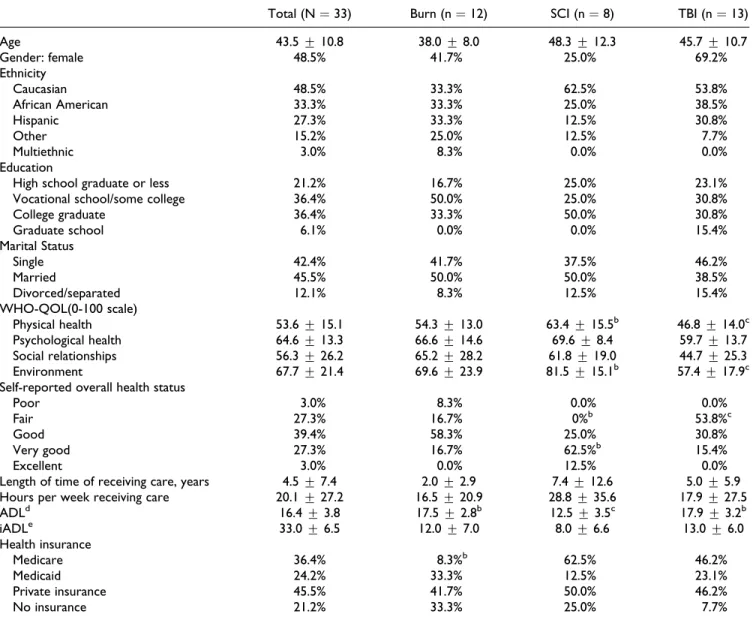
Table 1.Study Participant Characteristics.a
Total (N¼33) Burn (n¼12) SCI (n¼8) TBI (n¼13)
Age 43.5+10.8 38.0+8.0 48.3+12.3 45.7+10.7
Gender: female 48.5% 41.7% 25.0% 69.2%
Ethnicity
Caucasian 48.5% 33.3% 62.5% 53.8%
African American 33.3% 33.3% 25.0% 38.5%
Hispanic 27.3% 33.3% 12.5% 30.8%
Other 15.2% 25.0% 12.5% 7.7%
Multiethnic 3.0% 8.3% 0.0% 0.0%
Education
High school graduate or less 21.2% 16.7% 25.0% 23.1%
Vocational school/some college 36.4% 50.0% 25.0% 30.8%
College graduate 36.4% 33.3% 50.0% 30.8%
Graduate school 6.1% 0.0% 0.0% 15.4%
Marital Status
Single 42.4% 41.7% 37.5% 46.2%
Married 45.5% 50.0% 50.0% 38.5%
Divorced/separated 12.1% 8.3% 12.5% 15.4%
WHO-QOL(0-100 scale)
Physical health 53.6+15.1 54.3+13.0 63.4+15.5b 46.8+14.0c
Psychological health 64.6+13.3 66.6+14.6 69.6+8.4 59.7+13.7
Social relationships 56.3+26.2 65.2+28.2 61.8+19.0 44.7+25.3
Environment 67.7+21.4 69.6+23.9 81.5+15.1b 57.4+17.9c
Self-reported overall health status
Poor 3.0% 8.3% 0.0% 0.0%
Fair 27.3% 16.7% 0%b 53.8%c
Good 39.4% 58.3% 25.0% 30.8%
Very good 27.3% 16.7% 62.5%b 15.4%
Excellent 3.0% 0.0% 12.5% 0.0%
Length of time of receiving care, years 4.5+7.4 2.0+2.9 7.4+12.6 5.0+5.9 Hours per week receiving care 20.1+27.2 16.5+20.9 28.8+35.6 17.9+27.5
ADLd 16.4+3.8 17.5+2.8b 12.5+3.5c 17.9+3.2b
iADLe 33.0+6.5 12.0+7.0 8.0+6.6 13.0+6.0
Health insurance
Medicare 36.4% 8.3%b 62.5% 46.2%
Medicaid 24.2% 33.3% 12.5% 23.1%
Private insurance 45.5% 41.7% 50.0% 46.2%
No insurance 21.2% 33.3% 25.0% 7.7%
Abbreviations: ADLs, Activities of Daily Living; iADL, instrumental Activities of Daily Living; WHO-QOL, The World Health Organization Quality of Life Scale.
aSuperscript letters (b and c) indicate statistically significant differences between injury groups. bThe value is significantly different from unmarked values.
cA statistically significant difference from both b and unmarked values. dBarthel Activities of Daily Living Index (18).
Population Demographics
The study population’s mean age was 43.5+10.8 years. Of note, 72.7%of participants did not have a caregiver;
how-ever, of those who did, 75.9% of caregivers were either a
member of the participant’s family or significant other. The study population’s ethnic, socioeconomic, and injury type can be found in Table 1.
Information Sources
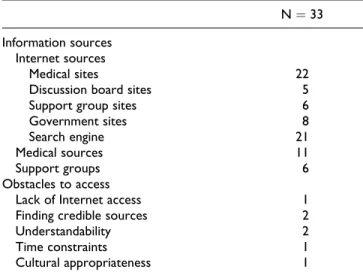
Almost all participants (91.7%) searched for and found
information on participants related to treatment, rehabi-litation, and coping via the Internet (Table 2). In fact, use of the Internet was indicated in twice as many responses than the second highest choice, medical sources such as doctors and nurses (45.8%). Of the
91.7% using the Internet as an information source, 88.0% stated they had used medical websites such as WebMD and Mayo Clinic. The following interviewee cites advantages such as convenience and having up-to-date information.
And in this day and age, the internet is probably the best model of . . . getting and accessing that information. Because, even if you built it into a module, a program that had modules, the information is so ever changing . . . or where you find that information is so ever changing every day that it would be soon outdated. (Interview 2201: SCI)
However, not every type of online resource was embraced; the majority of the study population did not use some platforms we hypothesized to be highly utilized. Online discussion boards were the most commonly unused platform, with 70.8%of respondents stating they did not use
them. Additionally, 59.1%of respondents stated they did not
use online support groups, and 61.5%indicated they did not
use government websites.
Obstacles to Accessing Health Information
Study participants reported few obstacles to accessing health information (Table 2). Only 3.8% reported that
lack of ‘‘Internet access’’ interfered with their ability to access information. Some of the most common causes of interference were ‘‘finding credible sources’’ (15.4%),
‘‘understandability/language’’ (12.0%), ‘‘available time’’
(7.1%), and ‘‘cultural appropriateness’’ (7.1%). One
study participant discussed how the Internet mitigated the obstacles they would otherwise face when accessing information:
. . . I was looking for medical related issues and I went to the library, I don’t know how current, how much or how current they would have at the library. And then of course access to the library is time consuming. You’ve got to get the van parked; you’ve got to get your chair in and out, that kind of a thing. So the internet is like a godsend. (Interview 2201: SCI)
Preferred Care System
The final interview question asked participants to describe their ideal health-care system without having to consider practical limitations such as cost. In doing so, respondents offered a variety of improvements to health information sys-tems, which they felt would be beneficial to others with similar perspectives and experiences.
Information format. When asked how they would like for information to be made available to them, participants most commonly preferred the Internet (41.5%). This was the most common answer for all injury groups, although within the TBI group, an equal number of participants wanted information to be shared in person (Table 3). One study participant discussed a structured system of services likely needed based on the level of severity and time since the injury event occurred.
I would like to see some type of color-coded ranking system depending upon your level of severity, at the time of your injury. Then, from there, it would gauge what type of services you’re most in need of at that point. From financial, to physical, to emotional, whatever. Then, from that ladder if you will, there is a clearinghouse you would go to, something universal. . .like a referral list or network. (Interview 3209: TBI)
Table 2.Patient Information Source Preferences and Obstacles to Accessing Information.
N¼33
Information sources Internet sources
Medical sites 22
Discussion board sites 5
Support group sites 6
Government sites 8
Search engine 21
Medical sources 11
Support groups 6
Obstacles to access
Lack of Internet access 1
Finding credible sources 2
Understandability 2
Time constraints 1
Cultural appropriateness 1
Table 3.Information Format Preferences for an Ideal Health-Care System.
Total (N¼33)
TBI (n¼13)
SCI (n¼8)
Burn (n¼12)
Internet 17 4 5 8
Printed materials 7 0 3 4
In-person communication 5 4 0 2
An overwhelming majority (92.3%), including 100%
of the TBI and SCI respondents, stated they would use a ‘‘comprehensive care website’’ (encompassing informa-tion on injury, treatment, recovery, support network), if it was available.
Desired information. When asked what types of information this ideal system should provide, 2 categories clearly emerged. The most common preference was for the new system to act as a comprehensive, consolidated information source (62.5%). Participants requested particular types of
information be available in an ideal health information sys-tem. Twenty percent of respondents discussed access to advanced research, such as health studies or the latest advances in technology, and tools designed to offer self-care education as part of the ideal system. One participant describes limitations in access to advanced information:
It’s been understandable, but sometimes it’s been too basic, and I would like more thorough information or more in-depth infor-mation. And sometimes, this might be more applicable to an earlier question, you know you get into the websites and it’s like different studies that have been done, and the author who con-ducted the study, but all you can get maybe is a summary of it. You can’t access the rest of the information because you don’t have the authority to or they’re not giving you access to that information. You have to go to a medical library, which we don’t have access to. (Interview 2201: SCI)
Participants wanted material on support networks (31.3%) from an ideal health-care system. Similarly, the 2
most common types of services participants cited an ideal health-care system should provide were support groups (22.2%) and access to medical professionals (22.2%).
Parti-cipants mentioned support groups not only in the context of social and emotional support but also as a means of sharing information. Several wanted a more relatable group:
I think a young adult support would be beneficial . . You see a lot of support groups and there is usually an older demographic. Something more on a level playing field wouldhave been more comfortable and I think that would have been more beneficial for me. (Interview 1212: Burn)
More than half of the participants wanting ‘‘access to medical and support professionals’’ had burn injuries (56.3%). Participants with traumatic brain injury differed,
desiring classes on their ‘‘condition, treatment, and life’’ (20.0%) more than ‘‘access to medical and support
profes-sionals’’ (12.0%). Participants did not want information
and services for themselves alone; 17.8% of respondents
referenced providing training for caregivers as a desired system feature.
Many desired information specific to their injury (46.4%). Individuals in the burn group expressed a need to
see more diagrams and pictures as a method to identify
severity and to search injuries based on where they occurred on the body. One SCI respondent described her need for gender-specific information.
My biggest difficulty is getting information related to women and spinal cord injury. And it’s not a lot out there right now, particularly as it relates to pregnancy and sexuality. (Interview 2208: SCI)
Desired services. Study participants detailed a number of additional services their ideal health-care system would provide. Psychological and physical therapies were 2 of the most common services discussed (21.4% and 17.9%,
respectively).
Getting back to work helped me to overcome some obstacles that only if I had gone back to work I would be able to over-come. Even with physical therapy, I wouldn’t be able to. So I would say, physical therapy in the beginning, and going back to work afterwards. (Interview 2209: SCI)
In participants’ descriptions of an ideal treatment world, quality physical therapy was often synonymous with improved health status because quality centers were seen as places where comprehensive care and information were provided. Specific centers of care, such as The Miami Proj-ect and Kernan Hospital (now University of Maryland Reha-bilitation & Orthopaedic Institute), were mentioned by respondents as examples of how an ideal form of care would look, including the best way to learn comprehensive infor-mation about SCI, TBI, or burn.
I would say that [Kernan Hospital] have a magnificent staff that is attuned to head injuries and brain injuries; and they are very knowledgeable and very, very understanding of the type of injury and what’s available to treat it. (Interview 3204: TBI)
The ability to physically reach care centers and profes-sionals was even more essential in some cases. Transporta-tion systems were menTransporta-tioned as an important component to access information at support groups or care facilities. Of note, 24.1% of respondents mentioned transportation ser-vices had not been available. Participants with burn dis-cussed a desire for transportation services to be provided by health-care entities in an ideal setting twice as often as participants in either the TBI or the SCI group.
Interviewer: So when you were first injured, did they provide you with transportation services? Participant: No. But I did, needed that. (Interview
3209: TBI)
Discussion
participant health status, their views on the applicability and usefulness of accessible postinjury care and rehabilitation materials, obstacles faced when seeking information, and desired programs, services, and knowledge.
The source of health information is a critical component to those seeking it. Interviews explored the types of websites persons with injury used when seeking health information. Our findings emphasize the utility of the Internet. Still, many participants also referenced health information experiences with a doctor. Thus, combining the strengths of each type of experience should be a priority when developing a comprehensive website. Although previous studies found web-based peer support groups can improve mental health symptoms such as depression, our study population gener-ally favored health-related websites over web-based support group sites and discussion boards (20,21).
Despite the relative unpopularity of support group web-sites in our study sample, support networks emerged as a critical service for study participants. Contact information for support groups and doctor networks improves the acces-sibility of resources for information-seeking persons. This form of desired information is therefore vital to a patient-centered health-care website. Studies have shown online communication assisted with problem-solving and coping strategies for people with chronic illnesses (22). A mixed-methods inquiry into informal friend and family networks for persons with SCI revealed that different networks served different roles related to advice, knowledge, advocacy, pre-venting secondary illness, managing secondary illness, and finances (23). Health-care systems should therefore apply a patient-centered perspective to sharing network information. Many study participants sought advanced research related to technological advancements, updated self-care tools, or medical research. Our study sample thus identifies an emer-gent information need, advanced research, which goes beyond general injury information, in a format where parti-cipants seek more technical information individually, as opposed to within a peer network. Persons with injury face information barriers when attempting to access advanced research to find high-quality medical information (24). In another qualitative study of persons with multiple sclerosis, researchers found that patients searched for health informa-tion related to medicines, expert therapies, and latest devel-opments in the medical field (25).
Injury-specific health information was important to study participants in the context of a comprehensive care site. Persons with TBI, SCI, and burn have ongoing health needs related to quality of life (10). Injured persons often rely on support networks to prevent and manage secondary health conditions (23). Serious injuries can require home modifica-tions and health equipment, supplies, and devices; all of which have been reported as a barrier to reintegration for injured persons (18).
Participants listed services that were important for an ideal health system, including many types of rehabilitation that can improve the quality of life. Previous studies have
identified transportation as a health service need for popula-tions with SCI and neurological disorders (18,19). Our study expanded upon those findings by examining the transportation needs of persons with TBI and burn injury, as well as indi-viduals with SCI, and identifying it as a critical resource for accessing non-Internet health information, services, and care. Health literacy, especially online health literacy, has been reported as a major barrier in finding information (12,26). High health and computer literacy skills have been linked to accessing higher quality information (22), but lack of e-health literacy skills has been identified as an intrinsic barrier for persons with chronic conditions (24). Our study population expressed less skepticism of online sources than what had been reported in previous studies, perhaps due to higher e-health literacy; however, the small sample size or the relatively high percentage of native English speakers may have also been a factor. Study participants discussed using more than 1 source, and some compared information from previous research. In order to match the recommendations put forth by participants, referrals and links to resources from medical professionals to online health information should be incorporated into an ideal health information website.
Strengths and Limitations
The semistructured interviews allowed each participant to provide an in-depth perspective of health information issues related to their injury. Common experiences emerged, denot-ing the transferability of responses. However, the total US population that has experienced TBI, SCI, or burn is too large for this sample size and data to statistically represent them, making generalizability a limitation. However, since this is a qualitative study, generalizability was not the goal of the investigation.
Study participants were recruited using the Internet (as well as other sources), which may have biased our sample in terms of preferences for Internet resources. Different num-bers of persons with injury were interviewed for each injury group. For this reason, each injury type was not equally represented in the statements dealing with overall responses. Interrater reliability measures, percentage agreement andk
coefficient, indicated both coders applied codes consistently. However, internal rate of return was not 100%, therefore,
minor discrepancies in code placement may be assumed.
Conclusion
support groups, and transportation. An ideal health informa-tion system should also incorporate informainforma-tion referrals from health professionals. Generalizability may be improved in future studies by recruiting participants from randomly selected rehabilitation facilities across the country.
Declaration of Conflicting Interests
The author(s) declared no potential conflicts of interest with respect to the research, authorship, and/or publication of this article.
Funding
The author(s) disclosed receipt of the following financial support for the research, authorship, and/or publication of this article: This work was funded by the National Institute on Disability, Indepen-dent Living, and Rehabilitation Research (NIDILRR) and is oper-ated by the American Institutes for Research (AIR) under grant number 90DP0012-01-00.
References
1. CDC’s Report to Congress 2013 on Traumatic Brain Injury Epidemiology and Rehabilitation. Centers for Disease Control and Prevention. Web site http://www.cdc.gov/traumaticbrainin jury/pubs/congress_epi_rehab.html. Accessed December 16, 2015.
2. Burn Incidence and Treatment in the United States: 2015. Amer-ican Burn Association. Web site. http://www.ameriburn.org/ resources_factsheet.php. Accessed December 16, 2015. 3. 2014 NSCISC Annual Statistical Report Complete Public
Ver-sion. National Spinal Cord Injury Statistical Center. Web site. https://www.nscisc.uab.edu/PublicDocuments/reports/pdf/ 2014%20NSCISC%20Annual%20Statistical%20Report%20C omplete%20Public%20Version.pdf. Accessed December 16, 2015.
4. Cicerone KD, Langenbahn DM, Braden C, Malec JF, Kalmar K, Fraas M, et al. Evidence-based cognitive rehabilitation: updated review of the literature from 2003 through 2008. Arch Phys Med Rehabil. 2011;92:519-30.
5. Bland DC, Zampieri C, Damiano DL. Effectiveness of physical therapy for improving gait and balance in individuals with trau-matic brain injury: a systetrau-matic review. Brain Inj. 2011;25:664-79. 6. Lude P, Kennedy P, Elfstro¨m ML, Ballert CS. Quality of life in and after spinal cord injury rehabilitation: a longitudinal multi-center study. Top Spinal Cord Inj Rehabil. 2014;20:197-207. 7. Moi AL, Wentzel-Larsen T, Salemark L, Hanestas BR.
Long-term risk factors for impaired burn-specific health and unem-ployment in patients with thermal injury. Burns J Int Soc Burn Inj. 2007;33:37-45.
8. Rozmovits L, Ziebland S. What do patients with prostate or breast cancer want from an internet site? A qualitative study of information needs. Patient Educ Couns. 2004;53:57-64. 9. Matter B, Feinberg M, Schomer K, Harniss M, Brown P,
John-son K. Information needs of people with spinal cord injuries. J Spinal Cord Med. 2009;32:545-54.
10. Burkell JA, Wolfe DL, Potter PJ, Jutai JW. Information needs and information sources of individuals living with spinal cord injury. Health Inf Libr J. 2006;23:257-65.
11. Marrie RA, Salter AR, Tyry T, Fox RJ, Cutter GR. Preferred sources of health information in persons with multiple sclero-sis: degree of trust and information sought. J Med Internet Res. 2013;15:e67.
12. Mattar AAG, Hitzig SL, McGillivray CF. A qualitative study on the use of personal information technology by persons with spinal cord injury. Disabil Rehabil. 2015;37:1362-71. 13. Gustafson DH, Hawkins R, Boberg E, Pingree S, Serlin RE,
Graziano F, et al. Impact of a patient-centered, computer-based health information/support system. Am J Prev Med. 1999;16:1-9. 14. Cerhan JR, Torner JC, Lynch CF, Rubenstein LM, Lemke JH, Cohen MB, et al. Association of smoking, body mass, and physical activity with risk of prostate cancer in the Iowa 65þ Rural Health Study (United States). Canc Causes Contr. 1997; 8:229-38.
15. Mahoney FI. Functional evaluation: the Barthel Index. Md State Med J. 1965;14:61-5.
16. Lawton MP, Brody EM. Assessment of older people: self-maintaining and instrumental activities of daily living. Geron-tologist. 1969;9:179-86.
17. WHOQOL-BREF: introduction, administration, scoring and generic version of the assessment: field trial version. World Health Organization. Web site. http://www.who.int/mental_ health/media/en/76.pdf. Accessed December 16, 2015. 18. Silver J, Ljungberg I, Libin A, Groah S. Barriers for individuals
with spinal cord injury returning to the community: a prelim-inary classification. Disabil Health J. 2012;5:190-96. 19. Foster M, Allen S, Fleming J. Unmet health and rehabilitation
needs of people with long-term neurological conditions in Queensland, Australia. Health Soc Care Community. 2015; 23:292-303.
20. Houston TK, Cooper LA, Ford DE. Internet support groups for depression: a 1-year prospective cohort study. Am J Psychiatr. 2002;159:2062-68.
21. Winzelberg AJ, Classen C, Alpers GW, Roberts H, Koopman C, Adams RE, et al. Evaluation of an internet support group for women with primary breast cancer. Cancer. 2003;97:1164-73. 22. Kim Y-M. Is seeking health information online different from seeking general information online? J Inf Sci. 2015;41:228-41. doi:10.1177/0165551514561669.
23. Guilcher SJT, Casciaro T, Lemieux-Charles L, Craven C, McColl MA, Jaglal SB. Social networks and secondary health conditions: the critical secondary team for individuals with spinal cord injury. J Spinal Cord Med. 2012;35:330-42. 24. Lee K, Hoti K, Hughes JD, Emmerton L. Dr Google and the
consumer: a qualitative study exploring the navigational needs and online health information-seeking behaviors of consumers with chronic health conditions. J Med Internet Res. 2014;16:e262. 25. Synnot AJ, Hill SJ, Garner KA, Summers MP, Filippini G,
Osborne RH, et al. Online health information seeking: how people with multiple sclerosis find, assess and integrate treat-ment information to manage their health [Published online August 28, 2014]. Health Expect. doi:10.1111/hex.12253. 26. Miller LMS, Bell RA. Online health information seeking: the
Author Biographies
Nathan T. Coffey, MPH, is a graduate research assistant in the Center for the Study of Chronic Illness and Disability within the College of Health and Human Services at George Mason University in Fairfax, Virginia, USA.
Ali A. Weinstein, PhD, is an associate professor in the Center for the Study of Chronic Illness and Disability within the College of Health and Human Services at George Mason University in Fairfax, Virginia, USA.
Cindy Cai, PhD, is a principal researcher at the American Institutes for Research, Washington, DC, USA.
Jimmy Cassese, MS, is a graduate research assistant in the Center for the Study of Chronic Illness and Disability within the College of Health and Human Services at George Mason University in Fairfax, Virginia, USA.
Rebecca Jones, MPH, is a graduate research assistant in the Center for the Study of Chronic Illness and Disability within the College of Health and Human Services at George Mason University in Fairfax, Virginia, USA.
Dahlia Shaewitz, MA, is a managing researcher and practice area director at the American Institutes for Research, Washington, DC, USA.