International Journal of Psychology and Educational Studies, 2016, 3 (1), 14-30
www.ijpes.com
International Journal of Psychology and Educational
Studies
Forgiveness Flexibility
Tuğba Seda Çolak
1& Mustafa Koç
21Düzce University, Düzce, Turkey 2Sakarya University, Sakarya, Turkey
AR TICL E IN FO A BS TRA CT
Article History: Received 03.10.2015 Received in revised form 10.11.2015
Accepted 12.12.2015. Available online 01.01.2016
Forgiveness flexibility is the skill to minimize the negative effect of an event by using cognitive, affective and behavioral skills while taking a stand at the end of an injurious process. A number of studies were conducted to test the flexibility of the structure of forgiveness. The theoretical structure, structural validity and the confirmatory factor analysis supported the theoretical structure of forgiveness flexibility. The criterion validity evaluated in similar manners was found high. Forgiveness flexibility designed as a three dimensional structure and its sub-dimensions was confirmed theoretically as the recognition of forgiveness andthe internalization of forgiveness through insight and its practice.
© 2016IJPES. All rights reserved Keywords:1
Recognition Forgiveness, gaining insight, forgiveness as attitude.
Introduction
Forgiveness has been defined as a willingness to abandon one’s right to resentment, negative judgement, and indifferent behavior toward offender (Enright, Freedman & Rique, 1998); responding with beneficence to the offender (Baskin & Enright, 2004); including empathy, humility and courage against offender (Worthington, 1998a). healing emotional wounds, restoring relationships (both inter- and intrapersonal), maintaining physical health, healthy intimate relationships and breaking the chain of violence (DiBlasio & Proctor, 1993; Fincham, Hall & Beach, 2006; Szablowinski, 2010; Wade, 1989) are some functions of forgiveness. According to Fitzgibbons, Enright, and O'Brien , Forgiveness is a way to decrease negative feelings, hostile behaviors and obsessive thoughts . Wade and Worthington defines forgiveness as a positive method to cope with injury through reorientation of thoughts, feelings and behaviors toward offender. At the same time lay people describe the concept of forgiveness as a multidimensional concept which includes cognitive, emotional and behavioral components (Kearns & Fincham, 2004).
One of the most important elements in forgiveness is the victim’s ability to evaluate -or rather re-evaluate- the offender not only within the framework of the incident that cause the offense, but within the offender’s own circumstances (Enright & Kitle, 1 . It should be prevented that the offending incident’s forgiveness does not harm the forgiving individual’s sense of self-respect and mental health (North, 1998). In fact, the
positive interest of the forgiving person towards the offender will increase (Wade & Worthington, 2005). Forgiveness is a concept that helps the individual remove the negative feeling from their life and turn it into a neutral or positive feeling. In literature, we can see tools to measure forgiveness. These measurement tools help determine to what extent the individual has forgiven or what exactly the individual has forgiven. In short, there are measuring tools are mainly result-oriented measures. However, forgiveness requires a process. The make sense out of the incidents and to make a decision of forgiveness requires an internal transformation within the individual. The term forgiveness flexibility has been suggested in order to explain this transformation process.
Flexibility is defined as a necessary component of an individual’s capability of adapting to difficult situations and its communicational skills (Cheung, 2001; Martin & Anderson, 1998). Based on the conditions created by the values individuals are related to, flexibility enables people to be insistent in their behavior when they desire to live the present moment, or to change their behavior in order to learn how to do things and to have better mental health (Bond, Hayes & Barnes-Holmes, 2006). There have been developed a number of terms in literature related to the concept of flexibility. All these concepts commonly emphasize the harmoniousness of an individual and the protection of mental health. Psychological flexibility is a qualification including the acceptance of experiences and behaving in accordance with an individual’s values Hayes, Luoma, ”ond, Masuda & Lillis, . Cognitive flexibility is an individual’s ability to try new ways of communication and its desire to meet different situations (Martin & Anderson, 1998). Coping flexibility has been defined as the ability to realize and discontinue ineffective coping strategies, to develop new coping strategies and to implement them (Kato, 2012). Based on the literature work on forgiveness, we can define forgiveness flexibility as an individual’s ability to extricate its cognitive, emotional and behavioral potential while determining a position in face of an offending incident in order to minimize the negative effects of this incident in an optimal amount of time. The individual goes through a cognitive preparatory phase by knowing what real forgiveness is. He/She tries to make sense out of the offensive incident or person, approaching the incidents with gained insight rather than evaluating the incident from its offensive perspective. Flexibility is predicted as the behavior the individual will adopt, from the moment he/she feels ready to remove the negative effects of the offense and its components that caused the offence, and shows an effort to increase positive feelings towards the incident. In this context, the requirements for a healthy forgiveness process have been identified as the individual’s acknowledgement of the concept of forgiveness, to truly know and internalize the concept and to finally apply forgiveness through a method which is true to the individual.
Acknowledging the Concept of Forgiveness
Internalizing the Nature of Forgiveness
Forgiveness requires insight (Worthington, 1998b) and this insight enables to break a vicious circle resulting from the offense Hargrave, . Forgiveness especially focuses on the individual’s internal transformation (Enright et al., 1998) and includes the increase in feelings such as empathy and compassion (Haris, Thoresen & Kopez, 2007). Findings have shown that individuals with high emotional stability and harmoniousness see forgiveness as a useful mechanism to maintain a relationship, and therefore forgive easier (Neto, 2007). After the offense, the individual should seek to make sense of the process, to accept what is experienced and to minimize the negative effects of the process. The individual who truly acknowledges the concept is fully aware what good the individual will do to him/herself by forgiving (Strelan, Mckee, Calic, Cook & Shaw, 2013). Besides extricating negative emotions, the recovery of the relationship could also be a side-product of forgiveness.
Actualization of Forgiveness
From a behavioral standpoint, forgiveness is defined as the overcoming of destructive behavior within a relationship (McCullough et al., 2009). If forgiveness is not correctly acknowledged and the necessary internal transformation has not taken place, the process of condone, excuse, forget, ignore, reconciliation, deny (Enright et al., 1998; Enright & Kitle, 1999) will come into play instead of forgiveness. Another possibility is pseudo-forgiveness. Pseudo forgiveness includes the expectation of appreciation by the offender (Enright et al., 1998).
In order for an individual to correctly apply forgiveness, it is crucial that the individual knows what forgiveness is and what it is not. The awareness on forgiveness created by knowledge on a cognitive level will make the individual prepared for the initiation of the forgiveness process. With the internalization phase, the process with which the individual needs the most time begins. The individual becomes ready for the practice phase after he/she has accepted what has happened and has identified individual methods on how to integrate coping mechanisms with his/her own personal preferences. In practice, the individual -as a being with freedom of choice- decides on a forgiving attitude towards the offense.
Study 12
The aim of this study was to develop a valid and reliable scale to measure Forgiveness Flexibility. Forgiveness flexibility scale was designed as three dimensional and dimensionality of the scale was investigated with a wide sample. The study was conducted among 1040 participants.
Method
Participants
Exploratory factor analysis (EFA) was conducted on 401 individuals (229 female/ 172 male) aged between 19 and 63 years. Educational backgrounds of the participants range between literate to postgraduate. Of all the participants 60.8% are married, 36.4% are single and . % has the marital status other . Confirmatory factor analysis (CFA) was performed with 639 participants from different grades and departments of Faculty of Education, Sakarya University in 2012-2013 academic year.
As a result of factor analysis for which eigenvalue was considered 1, the number of factors is three as seen in scree-plot graphic. In this aspect, a three-factor structure was preferred regarding the scale. After determining the factors in the structure, the loads of the items in these factors were examined. Since 15 items have low item loading or there is a difference of less than .10 in two factors, they were excluded from the scale and re-EFA was performed over 15 items.
Forgiveness Flexibility Scale (FFS)
FFS is Likert type scale developed to measure if the individual has got forgiveness flexibility or not. The scale consists of items and has three subscales. Example items for recognition subscale are Forgiveness is deceiving self" and "Forgiveness is submitting". The example items for internalization subscale are Forgiveness saves the individual from the trap of past and Forgiveness is an important factor for me to be peaceful . Example items for practice subscale are I try not to make the wrongdoings a current issue and I allow the compensation of the mistake . The participants are asked to grade how much the described situation with the items of each subscale fits themselves with a score 1-5. The individual can grade the situation with = I strongly disagree , = I disagree , = Neither agree nor disagree , = I agree and = I
strongly agree .
The scale gives a total score and three sub-scores. The lowest and highest total scores which can be obtained are 15 and 75. The lowest and highest scores which can be obtained from Recognition sub-scale is 4 and 20, Internalization sub-scale is and . The lowest and highest scores which can be obtained from Practice" subscale are 6 and 30. Low score indicates the incompetence in forgiveness flexibility and high score indicates the competence in forgiveness flexibility. The scale can be applied both individually and with group. Time for replying is 2 minutes.
The scale was applied to sample group for structure validity and reliability studies. According to the data obtained from the scales, EFA was performed for structure validity. In determination of the items to be included in the scale in EFA, it was taken into consideration that eigenvalues of the items are 1, loading values of items are at least .30, the items were included only in one factor and there was a difference of .10 between the factors if the item would be included in two factors ”(y(közt(rk, . In addition, varimax axial rotation of 25 degrees was performed during structure validity.
Model fit with item-factor structure obtained with EFA was tested with CFA. Reliability values of the scale were checked with internal consistency coefficients. SPSS 11.5 package program was used in determination of EFA and internal consistency coefficients and Lisrel 8.54 package program was used for CFA.
Results
Statistical processes in the study were performed with the order of EFA, CFA and determination of internal consistency coefficients. The findings are presented in the statistical process order.
Content Validity
Structure Validity
It indicates test’s degree of measuring an abstract concept factor properly in terms of a behavior to be measured ”(y(közt(rk, . To ensure the structure validity of the scale, EF“ and CF“ were conducted.
Exploratory Factor Analysis (EFA)
EFA is a statistical technique which aims to gather and measure the variables which measure the same structure or attribute and explain them with few factors ”(y(közt(rk, . Initially, EF“ was performed for the structure validity of FFS. KMO (Kaiser-Meyer-Olkin Measure of Sampling Adequacy) test which tests the adequacy of the sample was first checked to make this analysis. KMO value was found as .85. According to ”(y(közt(rk , it was concluded that factor analysis can be performed on such data for this value is acceptable over .70. Since, the data obtained by checking Bartlett Sphericity Test χ = . , p.=. showed significant difference, it was determined to be proper for factor analysis ”(y(közt(rk, . Varimax (25) axial rotation was performed, primarily for principal component analysis in a way that eigenvalue of 30 items were 1 in factor analysis. Since 15 items have low item loading or there is a difference of less than .10 in two factors, they were excluded from the scale.
EFA was performed over 15 items. As a result of analysis, it was found that FFS has a three-factor structure (see figure 1). In the first one of these factors, there are four items in total which are 1st, 5th, 8th and 12th items. The loading values of these items in the factor vary between .60 – .79. This factor which explains 16.9% of the total variance was named Recognition . The second factor in the scale consists of five items in total which are 2nd, 3rd, 6th, 7thand 14th items. The loading values of these items in the second factor vary between 0.50 – 0.73. This factor which explains . % of the total variance was named Internalization . The third factor in the scale consists of six items in total which are 4th, 9th, 10th, 11th, 13th and 15th items. The loading values of these items in the third factor vary between .46– .75. This factor which explains 15.73% of the total variance was named Practice . , , , . Items are scored as reverse items. Three factors in the scale explain 48.94% of the total variance.
Figure 1.Scree-plot Graphic Factor Structure Shape
As a result of EFA, it was found that the structure consists of 15 items and three factors. The values indicate that the scale explains the Forgiveness Flexibility well. Model fit test of the obtained values and structure was checked with CFA.
Component Number
15 14 13 12 11 10 9 8 7 6 5 4 3 2 1 5
4
3
2
1
Confirmatory Factor Analysis (CFA)
In the evaluation of the fit of the models established with CFA to the data, the evaluation is carried out by taking fit indexes such as x2 (chi-square), RMSEA, SRMR, GFI, AGFI, CFI, NNFI into consideration. In case that x2/df rate is 5 or less, model-data fit is accepted as good fit S(mer, Kline, . Hu and ”entler
(1999) suggests cutoff value lower than .08 for SRMR and .06 for RMSEA to conclude goodness of model. GFI and AGFI indexes are higher than .90 show that model-data fit is good. .90 and higher for CFI and NNFI shows that model-data fit is good “nderson & Gerbing, S(mer, Hooper,Coughlan & Mullen, 2008).
Table 1:Goodness of fit statistics for FFS
X2 df X2/df RMSEA SRMR CFI NFI NNFI GFI AGFI
FFS 203.30 87 2.33 .046 .03 .95 .92 .94 .96 .94
Note: x2 = Chi-square; df = degrees of freedom; RMSEA = root mean square error of approximation; SRMR =
standardized root mean square residual CFI = comparative fit index NNFI = non-normed fit index; GFI = goodness of fit index.
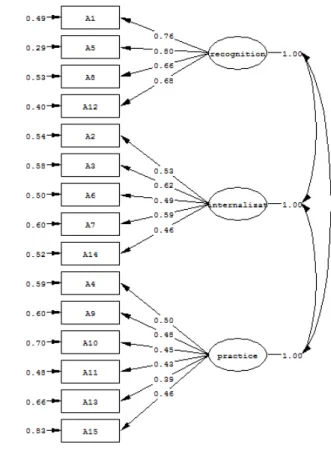
When the fit indexes of the scale were examined, it was seen the fit indexes showed good fit (see Table 1). It can be stated that the structure validity of the scale was confirmed based on these findings. For the reliability studies of the scale, internal consistency coefficients (alpha) were calculated. As a result of CFA, the model consisting of 15 items and three factors was found to theoretically and statistically fit (see Figure 2).
Figure 2.Forgiveness Flexibility CFA Explanation Rates and Error Variances
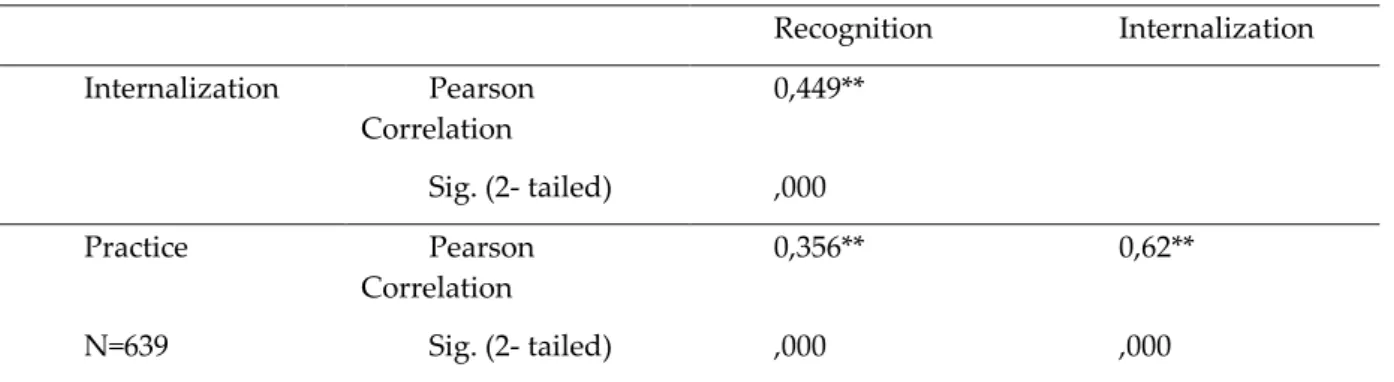
adequacy level of a subscale positively affects the adequacy level of other subscale. This may positively affect the cognitive efficacy, affective quality and behavioral skills of the individual regarding forgiveness flexibility.
Table 2: The Relationship Between Forgiveness Flexibility Sub Scales
Correlations
Recognition Internalization
Internalization Pearson Correlation
0,449**
Sig. (2- tailed) ,000
Practice Pearson
Correlation
0,356** 0,62**
N=639 Sig. (2- tailed) ,000 ,000
** Correlation is significant at the 0.01 level (2-tailed).
According to the findings, three sub-dimensions form a single forgiveness flexibility general structure. The factors affecting the general forgiveness flexibility structure are respectively; internalization (r=1.03), practice (r=.87) and recognition (r=.64). In order to identify the discriminant validity based on the internal criteria, the difference between the subscale and total scale scores to the score average, based on a 27% subgroup and supergroup were analyzed.
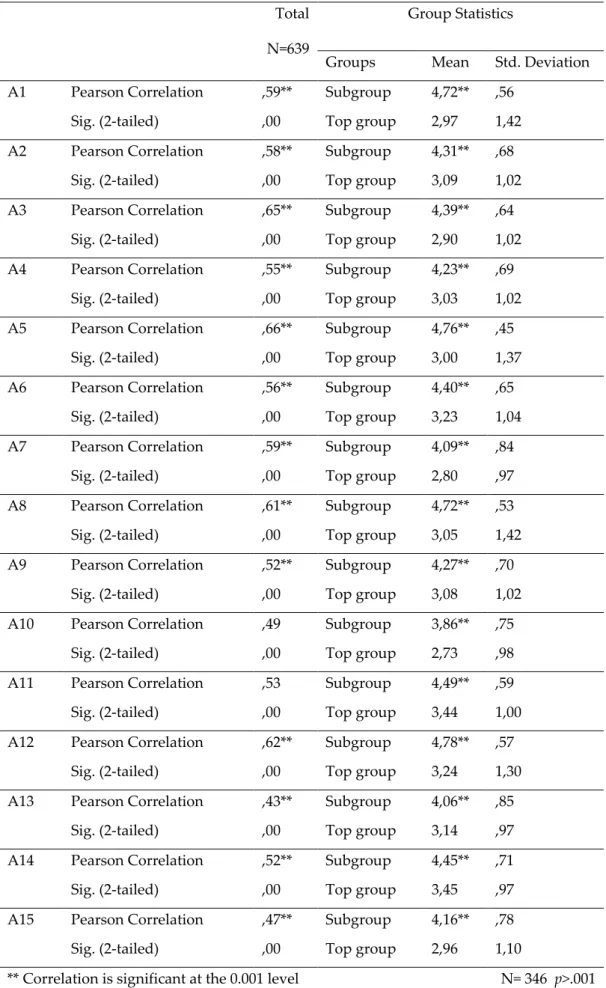
Table 3: Item-Test Scores Correlation and Independent Groups t-Test Results Regarding the Item Distinctiveness of Forgiveness Flexibility Scale
Total
N=639
Group Statistics
Groups Mean Std. Deviation
A1 Pearson Correlation ,59** Subgroup 4,72** ,56
Sig. (2-tailed) ,00 Top group 2,97 1,42
A2 Pearson Correlation ,58** Subgroup 4,31** ,68
Sig. (2-tailed) ,00 Top group 3,09 1,02
A3 Pearson Correlation ,65** Subgroup 4,39** ,64
Sig. (2-tailed) ,00 Top group 2,90 1,02
A4 Pearson Correlation ,55** Subgroup 4,23** ,69
Sig. (2-tailed) ,00 Top group 3,03 1,02
A5 Pearson Correlation ,66** Subgroup 4,76** ,45
Sig. (2-tailed) ,00 Top group 3,00 1,37
A6 Pearson Correlation ,56** Subgroup 4,40** ,65
Sig. (2-tailed) ,00 Top group 3,23 1,04
A7 Pearson Correlation ,59** Subgroup 4,09** ,84
Sig. (2-tailed) ,00 Top group 2,80 ,97
A8 Pearson Correlation ,61** Subgroup 4,72** ,53
Sig. (2-tailed) ,00 Top group 3,05 1,42
A9 Pearson Correlation ,52** Subgroup 4,27** ,70
Sig. (2-tailed) ,00 Top group 3,08 1,02
A10 Pearson Correlation ,49 Subgroup 3,86** ,75
Sig. (2-tailed) ,00 Top group 2,73 ,98
A11 Pearson Correlation ,53 Subgroup 4,49** ,59
Sig. (2-tailed) ,00 Top group 3,44 1,00
A12 Pearson Correlation ,62** Subgroup 4,78** ,57
Sig. (2-tailed) ,00 Top group 3,24 1,30
A13 Pearson Correlation ,43** Subgroup 4,06** ,85
Sig. (2-tailed) ,00 Top group 3,14 ,97
A14 Pearson Correlation ,52** Subgroup 4,45** ,71
Sig. (2-tailed) ,00 Top group 3,45 ,97
A15 Pearson Correlation ,47** Subgroup 4,16** ,78
Sig. (2-tailed) ,00 Top group 2,96 1,10
Concurrent Validity
Concurrent validity is studying the correlation between the scores obtained by the participants from a test to be developed and a) a previous test measuring the same behavior, b) a test measuring another related behavior ”(y(közt(rk, . In the study, -point Likert type, 18-item Heartland Forgiveness Scale which was developed by Thompson et.al. (2005) and which was adapted into Turkish by Bugay and Demir (2010) was used to measure forgiveness level of university students to ensure the Concurrent Validity. The scale has three sub-dimensions which are forgiving oneself, forgiving others and forgiving the situation. As a result of validity and reliability studies, test-retest coefficient was found as .83 for self-forgiving, .72 for forgiving others, . for forgiving the situation and . for total score. Cronbach’s α coefficients are . , . , .79 respectively and .86 for total score (Thompson et al., 2005). The correlation between Heartland Forgiveness Scale and FFS was found as .60.
Distinctiveness Attributes of the Items
In order to determine the distinctiveness of each of the 15 items in the scale, item analysis was performed and t test was used for independent groups ”alcı, . To this end, raw scores obtained by each student from the scale were calculated firstly and then raw scores of 639 students were listed in decreasing order. Afterwards, groups of %27 from the bottom (173 participants) and 27% from the top (173 participants) were determined. Independent groups' t-test values were determined on the score averages of the students in bottom and top group (see Table 3).
It was found that the difference between the scores of the participants in bottom and top groups were significant in ( t(344) , p<.001) level for each item. This result indicates that each item in the scale is distinctive in the required level, in other words, it can measure the behavior it was designed to measure without intermingling with other behaviors.
Internal Consistency Coefficients for FFS
Reliability analysis of FFS consisting of items was calculated using Cronbach’s alpha reliability coefficient, correlation value between split-half, Sperman-Brown formula and Guttman split-half reliability formula.
Total internal coefficient for 15 items of FFS was found as .83. Internal consistency coefficients for subscales of the scale are as follows . for Recognition , . for Internalization and . for Practice . These obtained values are acceptable values for reliability level of FFS. The values obtained as a result of validity reliability studies indicate that the scale is a useable one in terms of psychometric properties.
Discussion and Conclusion
Forgiveness is very important concept in forming of dynamics such as trust, respect, cooperation, sharing, responsibility and communication which are necessary for social life. The fact that the individuals currently exhibit behaviors which may harm both others and themselves indicates that forgiveness tolerance threshold is decreased highly in the society. Besides exhibiting forgiving attitude for a mistake, it is also important to make correct choices in forgiveness process. Forgiveness is a process which includes explanation the hurting event in right way, acceptance past as it is and determination new attitude for future. All these basements of forgiveness need a skill which people should gain. This skill can be defined as forgiveness flexibility . In this context, FFS was developed in order to determine whether individuals have forgiveness flexibility or not and psychometric properties of the scale was examined.
Valid and reliable scale which was developed can be used as a scale to measure the forgiveness flexibility behaviors in the literature. It is considered that the scale can be used to reveal the personalities exhibiting forgiveness flexibility in adolescents and adults and to examine whether forgiveness flexibility behaviors differ or not in terms of demographic factors.
Study 2
The correlation between the FFS total scale score and similar scales were identified in order to test the FFS structural validity.
Method
Participants
The data were obtained from a total of 625 students (234 male and 391 female) studying in different fields of the Sakarya University in the academic year 2014-2015. 20.8% of the participants are freshmen, 21% of them are sophomores, 35.2% of them juniors and 23% of them are senior students.
Instruments
Forgiveness Flexibility Scale: Is a scale which was developed in order to measure forgiveness flexibility. The scale consists of recognition, internalization and practice sub-dimensions. Cronbach alpha internal coefficient of the scale is .83.
Personal Meaning Profile (PMP): The scale consists of 57 items and 7 sub-scales. Cronbach’s alpha coefficient is
. Wong, . Structure of the scale affirmed and fit indexes of the scale’s adaptation version is x2=2879.32, df= 1536, p<.000, RMSEA=.054, CFI=.90, IFI=.90. Factor loadings of Turkish version of PMP ranged from . to . “kın, D(ş(nceli & Çolak, .
Meaning in Life Questionnaire (MLQ): MLQ, was developed by Steger et.al. in 2006, consists 10 items and 2 sub-scales (presence of Meaning in Life, and the Search for Meaning in Life . Cronbach’s alpha coefficient of the MLQ’s Turkish version is . for entire scale and . , . for sub-scales subsequently Demirbaş, .
Results
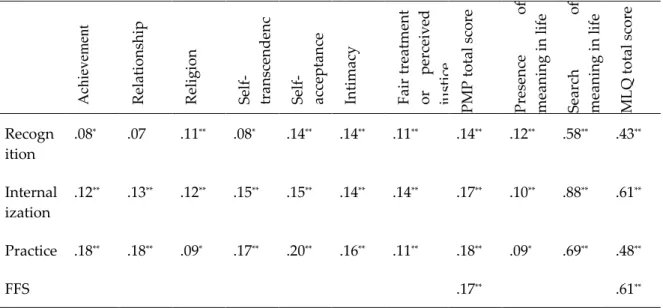
Table 4: Correlation coefficients between FFS and PMP, MLQ
Ach ie veme nt Rela tion ship Relig ion Self - tra n scendenc
e Self
- accept ance Intim acy Fa ir trea tmen t or perceiv ed jus tice PMP to tal sco re Presence of meanin g i n li fe Search of meanin g i n li fe MLQ tot al sc ore Recogn ition
.08* .07 .11** .08* .14** .14** .11** .14** .12** .58** .43**
Internal ization
.12** .13** .12** .15** .15** .14** .14** .17** .10** .88** .61**
Practice .18** .18** .09* .17** .20** .16** .11** .18** .09* .69** .48**
FFS .17** .61**
*Correlation is significant at the .05 level (2-tailed).
The Personal Meaning Profile and Meaning in Life Questionnaire were taken as measurements in order to test the structural validity of the forgiveness flexibility scale. The correlation factors between these measurements and the total score and subscale score are given on Table 4. Except the recognition dimension and the PMP’s relationship dimensions, all relationships between MLQ’s two sub-dimensions and total scale scores were found significant. It was also found that there is a significant relationship between the internalization and practice sub-dimensions and all the sub-dimensions of PMP and MLQ and their total scale scores.
Discussion
According the findings obtained from the study, the relationship between MLQ and FFS measurements have a significant relationship to all sub-dimensions and total scale scores, which supports the data found in the literature. The ability to forgive plays a key role in giving life a new meaning for the individual (Hantman & Cohen, 2010). The findings clearly show that finding meaning despite all adversities eases the harmonization and forgiveness process of the individual (Boyraz, Horne & Sayger, 2010; Burger, Crous & Rodt, 2013; Mason & Nel 2012). The fact that pain has a meaning is significant in the healing process and makes forgiveness easier (Coleman, 1998). Under the light of this knowledge, we can say that there is a significant relationship between forgiveness flexibility and the ability to find meaning in life. So we can say that having forgiveness flexibility is a factor that will contribute to the individual in living a meaningful life.
To actualize forgiveness helps the individual recover from the negative effects of the past and prevents that the past affects the present negatively. It is known that the extension of past experiences affects new relationships (Gerrig & Zimbardo, 2012). Individuals that have unfinished work show ulterior emotions such as resentment, anger, hate and pain. If these emotions remain unresolved, they will stay in the background and affect the individual’s present relationships negatively Corey, . If conflicts or problems remain unsolved, this negative effect will continue. The actualization of forgiveness helps the focus to shift from him/herself or the experienced offense to the relationship and to the values the individual naturally carries (Enright & The Human Development Study Group, 1996). That the individual fronts a being other than him/herself could be explained as transcendence oneself. Whereas transcend the self can be defined as the individual using its inner potential in a way it pleases the self (Frankl, 2004); Marshall (2009) defined forgiveness as one of human spirit sources like self-transcend and self-distancing. Forgiveness flexibility causes awareness that there are still valuable things beyond the individual’s personal disappointment. Findings obtained from the study show that there is a significant relationship between the subscales of PMP; namely Achievement, Religion, Self- transcendence, Self- acceptance, Intimacy, Fair treatment or perceived justice; and the subscales of forgiveness flexibility, recognition, internalization and practice. Even though a significant relationship between the relationship and recognition sub-dimensions could not be found, a significant relationship between the relationship and internalization and practice was found, which shows that recognition of the concept of forgiveness itself is not enough to create effective results in a relationship.
Study 3
The literature on the concept of forgiveness shows that it includes cognitive, emotional and behavioral components as put forth by many researchers (for example: Enright & Coyle, 1998; Enright & The Human Development Group, 1996; Kearns & Fincham, 2004). The term forgiveness flexibility has been constructed based on this information.
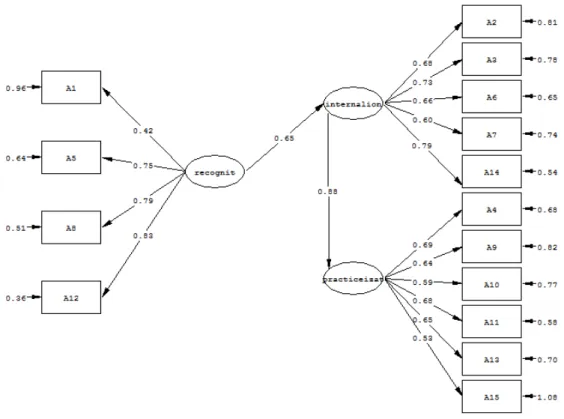
steps occur in this order and real forgiveness can only occur if it is a conscious process. The following model has been suggested in order to test this hypothesis (Figure 3).
Figure 3.Structure of Forgiveness Flexibility model
Method
Participants
The participants consist of 318 female and 305 male participants, being 623 people in total. 98 of the participants (16%) is in the 18-20 age group, 110 of the participants (18%) in the 21-25 age group, 91 of the participants (14%) in the 26-30 age group, 112 of the participants (18%) in the 31-35 age group, 120 of the participants (19%) in the 36-40 age group and 92 of the participants (15%) are older than 41.
Procedure
Structural equation modeling (SEM) utilized for hypothesis testing. Researchers hypothesized about forgiveness flexibility occur if the individual accomplishes the phases of recognition, internalization and practice subsequently.
Results
Table 5: Goodness of fit statistics for Hypothesis model
X2 df X2/df RMSEA SRMR CFI NFI NNFI GFI AGFI
209.16 88 2.37 .047 .03 .95 .92 .94 .96 .94
Figure 4. Forgiveness Flexibility Model
Discussion
There are basic two forgiveness models as decision based and process based forgiveness models. These models include decisional and emotional components. This study combines all components about forgiveness under a single roof. The study hypothesized that decisional, emotional and behavioral components of forgiveness must be handled as an entire structure and a process, and these components put into practice subsequently.
Since forgiveness is a term used in the resolution of past experiences and conflicts, it has a therapeutic purpose. However previous studies done in the field show a difference between how individuals define forgiveness and how the literature on the subject defines forgiveness, which prevents forgiveness to be used as a therapeutic tool (Kearns & Fincham, 2004). Wade and Worthington (2005) commented that defining forgiveness wrongly may cause terms such as compromise and forgetting to be confused with forgiveness. The findings of this study also support the findings found in literature. Worthington (1998b) commented that in order to true forgiveness to occur, the individual has to gain some insight. Only after the real definition of forgiveness and the individual’s gaining of insight can the true process of forgiveness begin. This process is concluded when it turns into behavioral practice. The findings of this study verify this structure.
Overall Discussion
The research is consistent of a range of works to verify the forgiveness flexibility structure. As a first step, the notion is presented describing the functional and conceptual characteristics of forgiveness flexibility. The notion of forgiveness can be described as an individual's ability to recover with minimum damage after offensive situations, using their cognitive, affective and behavioral skills. Forgiveness is a behavior that an individual has the freedom of choosing and forgiveness flexibility can be improved in time Çolak, . The future studies will result in the better recognition of the forgiveness flexibility.
maturity and improving coping strategies are sub outputs of forgiveness process for individuals. Aside from that, forgiveness is not a process that emerges automatically but a behavior that individuals must decide and work on. Karremans, et al. (2011) stated that without the ability to forgive, continuing a long relationship is not possible. In the literature, the negative effects in the individual's life caused by lack of forgiveness has been stated. Few examples to that are the emergence of negative feelings such as grudge, hate; the continuing increase of negative thoughts in the individual's mind; past problems effecting the daily relationships. Under the light of this information, it is crucial to develop forgiveness flexibility in an individual to implement the notion of forgiveness actively in their life. FFS, which was developed within this context, was added to the literature as a valid and credible measurement device to determine forgiveness flexibility structure.
Individuals that can find meaning in life have more fulfilling lives. The forgiving process helps individuals to find a meaning in their life by providing an ability to continuing interactions with other individuals and developing coping behaviors in face of an inescapable pain, which are the offensive past experiences. The researches support the relationship between spirituality and forgiveness (Younger, Piferi, Jobe & Lawler, 2004). It has been determined that the spirituality has a positive effect on quality of life and forgiveness is a factor to create this connection (Currier, Drescher, Holland, Lisman & Foy, 2015). The actual research results support the literature resultsrevealing the positive relationship between forgiveness flexibility and finding meaning in life.
Forgiveness caused by expectations does not overlap with real forgiveness. According to research conclusions, forgiveness is a notion that reasons change according to the culture. It was discovered that especially in collectivist countries, individual's reasons to forgive are caused by the expectations of the society rather than individuals forgiving in response to their emotions (Karremans, et al., 2011). It was found that individuals who emotionally forgive, forgets the features of the offender he/she attribute to the offender, however individuals who decisively forgive were unable to do that (Lichtenfeld, Buechner, Maier & Fernandez-Capo, 2015). The individual who has forgiveness flexibility will experience all the positive results of forgiveness, since he/she will actualize forgiveness with the insight he/she gained, instead of the necessities various expectations bring. As a result of the cognitive readiness to forgive and the awareness the individual has by objectively evaluating the process, the individual will determine the course of the relationship according to the change happening in the individual’s emotional state and thus demonstrate the forgiving behavior at his/her subjectively most optimal time. It is not possible to forgive when not ready cognitively or ignoring the negative feelings that have been emerged emotionally. So we can say that the forgiveness flexibility notion is progress that follows cognitive readiness, emotional maturity and behavioral implementation steps respectively.
Conclusion
References
“kın, “., D(ş(nceli, ”., & Çolak, T.S. , June . Factor structure of the Turkish version of the Personal Meaning Profile (PMP). Oral Presentation, 1. International Interdisciplinary Social Inquiry Conference, Bursa.
Anderson, J. C., & Gerbing, D. W. (1984). The effect of sampling error on convergence, improper solutions and goodness-of-fit indices for maximum likelihood confirmatory factor analysis. Psychometrika, 49, 155-173.
”alcı, “. . Sosyal bilimlerde araştırma Yöntem, teknik ve ilkeler. Ankara: Pegem Akademi Pub.
Baskin, T.W., & Enright, R.D. (2004). Intervention Studies on Forgiveness: A Meta-Analysis. Journal of Counseling & Development, 82, 79-90.
Bond, F. W., Hayes, S. C., & Barnes-Holmes, D. (2006). Psychological Flexibility, ACT, and organizational behavior. Journal of Organizational Behavior Management,26 (1-2), 25-54.
Boyraz, G., Horne, S. G., & Sayger, T.V. (2010). Finding positive meaning after loss: The mediating role of reflection for bereaved individuals. Journal of Loss and Trauma: International Perspectives on Stress & Coping, 15 (3), 242-258. DOI: 10.1080/15325020903381683
Bugay, A., & Demir, A. (2010). A Turkish version of Heartland Forgiveness Scale. Procedia Social and Behavioral Sciences, 5, 1927-1931.
Burger, D.H., Crous, F., & Roodt, G. (2013). Exploring a model for finding meaning in the changing world of work (Part 3: Meaning as framing context). SA Journal of Industrial Psychology, 39 (2). DOI: 10.4102/sajip.v39i2.1022.
”(y(közt(rk, Ş. . Sosyal ”ilimler için veri analizi el kitabi. Ankara: Pegem Akademi.
Cheung, C. (2001). Assessing Coping Flexbility in real-life and laboratory settings: A multimethod approach. Journal of Personality and Social Psychology, 80 (5), 814-833.
Çolak, T.S. . The effect of Logotherapy oriented group counselling on gaining forgiveness flexibility. (Unpublished Doctoral Dissertation). Sakarya University, Turkey.
Coleman, P.W. (1998). The process of forgiveness in marriage and the family. In R.D. Enright, J. North (Eds.), Exploring forgiveness, (s. 75-94). London: The University of Wisconsin Press.
Corey, G. (2005). Psikolojik danişma, psikoterapi kuram ve uygulamalari. Ankara: Mentis Pub.
Currier, J.M., Drescher, K.D., Holland, J.M., Lisman, R., & Foy, D.W. (2015). Spirituality, forgiveness, and quality of life: Testing a mediational model with military veterans with PTSD. International Journal for the Psychology of Religion, 25. DOI:10.1080/10508619.2015.1019793
Demirbas, N. (2010). Meaning in life and ego-resiliency. (Master Thesis). Hacettepe University, Ankara, Turkey.
DiBlasio, F. A., & Proctor, J. H. (1993). Therapists and the clinical use of forgiveness. The American Journal of Family Therapy,21, 175-184.
DiBlasio, F.A. (1998). The use of a decision-based forgiveness intervention within intergenerational family therapy. Journal of Family Therapy, 20, 77-94.
Diblasio, F.A. (2000). Decision-based forgiveness treatment in cases of marital infidelity. Psychotherapy, 37
(2), 149-158.
Enright, R.D., & The Human Development Study Group (1996). Counseling within the forgiveness triad: On forgiving, receiving forgiveness, and self-forgiveness. Counseling and Values, 40, 107-126.
Enright, R.D., Freedman, S., & Rique, J. (1998). The Psychology of interpersonal forgiveness. In R.D. Enright, & J. North (Eds), Exploring forgiveness (pp. 46-62). Madison: University of Wisconsin Press.
Fincham, F.D., Hall, J., & Beach, S.R.H. (2006). Forgiveness in marriage: Current status and future directions. Family Relations, 55, 415-427. DOI: 10.1111/j.1741-
Fitzgibbons, R. P., Enright, R., & O'Brien, T. F. (2004). Learning to forgive. American School Board Journal,
24-26.
Frankl, V.E. (2004). Logos, Paradox, and search for meaning. In A. Freeman, M.J. Mahoney, P. Devito, & D. Martin (Eds.), Cognition and Psychotherapy, (pp.83-100). NewYork: Springer Publishing.
Gerrig, R.J., & Zimbardo, P.G. (2012). Psikoloji ve yaşam Psikolojiye giriş G. Sart, Trans. . “nkara Nobel pub.
Gloud, W.B. (1986). Communicating Logotherapy. International Forum for Logotherapy, 9,2.
Graber, A. (2004). Viktor Frankl’s Logotherapy Method of choice in ecumenical pastoral psychology. USA: Wyndham Hall Press.
Hantman, S., & Cohen, O. (2010). Forgiveness in late life. Journal of Gerontological Social Work, 53 (7), 613-630. DOI: 10.1080/01634372.2010.509751
Hargrave, T. D. (1994). Families and forgiveness: Healing intergenerational wounds. New York: Brunner Mazel.
Harris, A.H.S., Thoresen, C.E., & Kopez S.J. (2007). Integrating positive psychology into counseling: Why and (when appropriate) how. Journal of Counseling & Development, 85, 3-13.
Hayes, S. C., Luoma, J. B., Bond, F. W., Masuda, A., & Lillis, J. (2006). Acceptance and commitment therapy: Model, processes and outcomes. Behaviour Research and Therapy, 44 (1), 1-25. DOI: 10.1016/J.BRAT0.2005.06.006.
Hooper, D., Coughlan, J., & Mullen, M. (2008). Structural equational modeling: Guidelines for determining model fit. The Electronic Journal of Business Research Methods, 6 (1), 53-60.
Hu, L., & Bentler, P.M. (1999). Cutoff criteria for fit indexes in covariance structure analysis: Conventional criteria versus new alternatives. Structural Equation Modeling, 6 (1), 1-55.
Karremans, J.C., Regalia, C., Paleari, F.G., Fincham, F.D., Cui, M., Takada, N., … Uskul, “.K. . Maintaining harmony across the globe: The cross-cultural association between closeness and interpersonal forgiveness. Social Psychological and Personality Science, 2(5), 443-451. DOI: 10.1177/1948550610396957
Kato, T. (2012). Development of the Coping Flexibility Scale: Evidence for the coping flexibility hypothesis. Journal of Counseling Psychology, 59 (2), 262-273.
Kearns, J.N., & Fincham, F.D. (2004). A prototype analysis of forgiveness. Personality and Social Psychology Bulletin, 30 (7), 838-855. DOI: 10.1177/0146167204264237.
Kline, R.B. (2011). Principles and practice of Structural Equational Modeling. (Third Edition). NewYork: Guilford Publications, Inc.
Laster, P.E., & Bishop, L.K. (2000). Handbook of test and measurement in education and the social science.
Maryland: Scarecrow Press.
Lichtenfeld, S., Buechner, V.L., Maier, M.A., & Fernandez-Capo, M. (2015). Forgive and forget: Differences between decisional and emotional forgiveness. PLoS One, 10 (5): e0125561. DOI: 10.1371/journal.pone.0125561
Marshall, M. (2009). Life with meaning. Guide to the fundamental principles of Viktor E. Frankl’s Logotherapy.
Martin, M. M., & Anderson, C. M. (1998). The Cognitive Flexibility Scale: Three validity studies.
Communication Reports, 11 (1), 1-9.
Mason, H.D., & Nel, J.A. . “ case of tragic optimism Volunteer counsellors’ experience of meaning.
Journal of Psychology in Africa, 22 (2), 273-278.
McCullough, M. E., Root, L. M., Tabak, B., & Witvliet, C. V. O. (2009). Forgiveness. In S. J. Lopez (Ed.),
Handbook of Positive Psychology (pp. 427-435). New York: Oxford.
Neto, F. (2007). Forgiveness, personality and gratitude. Personality and Individual Differences, 43 (8), 2313-2323.
North, J. . The Ideal of forgiveness. In R.D. Enright, & J. North Eds , Exploring Forgiveness (pp. 15-34). Madison: University of Wisconsin Press.
Strelan, P., Mckee, I., Calic, D., Cook, L., & Shaw, L. (2013). For whom do we forgive? A functional analysis of forgiveness. Personal Relationships, 20, 124-139. DOI: 10.1111/j.1475-6811.2012.01400.x
S(mer, N. . Yapısal eşitlik modelleri Temel kavramlar ve örnek uygulamalar. Türk Psikoloji Yazıları,
3, 74-79.
Szablowinski, Z. (2010). Between forgiveness and unforgiveness. The Heythrop Journal, 51, 471-482.
Thompson, L. Y., Snyder, C. R., Hoffman, L., Michael, S. T., Rasmussen, H. N., ”illings, L., … Roberts, D. E. (2005). Dispositional forgiveness of self, others, and situations.Journal of Personality, 73
,
313-359.Wade, N. G., & Worthington, E. L. (2005). In search of a common core: A content analysis of interventions to promote forgiveness. Psychotherapy: Theory, Research, Practice, Training, 42, 160–177.
Wade, S. H. (1989). The development of a scale to measure forgiveness. (Unpublished doctoral dissertation).
Pasadena, CA.
Wong, P. T. P. (1998). Implicit theories of meaningful life and the development of the Personal Meaning Profile (PMP). In P.T.P. Wong & P.S. Fry (Eds.), The human quest for meaning: A handbook of psychological research and clinical applications. Mahwah, NJ: Erlbaum.
Worthington, E. L. (1998a). An empathy-humility-commitment model of forgiveness applied within family dyads. Journal of Family Therapy, 20, 59–76.
Worthington, E.L. (1998b). The pyramid model of forgiveness: Some interdisciplinary speculations about unforgiveness and the promotion of forgiveness. In E.L. Worthington (Ed.), Dimension of forgiveness: Psychological research and theological perspectives (pp. 107-137). Philadelphia: The Templeton Foundation Press.