Susanne Jaeger
The German press coverage on France after World War II. A quantitative and qualitative content analysis of newspapers from 1946 to 19701
Kurzfassung: Wie spiegelte sich der fortschreitende Aussöhnungsprozess zwischen den früheren so genannten "Erbfeinden" Deutschland und Frankreich von 1946 bis 1970 in den deutschen Tageszeitungen wider?
Mit der Methode der quantitativen Inhaltsanalyse wurde eine repräsentative Stichprobe von Zeitungsartikeln über Frankreich bzw. Frank-reich betreffende Themen aus diesem Zeitraum untersucht. Zwei Aspekte standen dabei im Vordergrund: A) Die Auswahl von Nachrichten und mögliche Abweichungen zu den Vorhersagen aus Galtungs "Vier-Faktoren-Modell der Nachrichtenkommunikation", und B) die Kon-struktion von Protagonisten und Ereignissen in diesen Artikeln. Zusätzlich wurde eine qualitative Inhaltsanalyse einiger, in Hinblick auf "konstruktive" Berichterstattung vielversprechender Artikel aus dieser Stichprobe durchgeführt, um A) zu untersuchen, ob und inwieweit die bislang hinsichtlich Deeskalationsprozessen eher theoretischen Ableitungen aus dem Konflikt-Modell von Kempf sich in der Nachkriegs-berichterstattung wiederfinden, und B) konkrete, von Journalisten – auch unbeabsichtigter Weise – verwendete Stilmittel zu identifizieren, die potenziell zu einem besseren Verständnis des ehemaligen Feindes und – auf lange Sicht – zu Frieden und Versöhnung zwischen Deutschland und Frankreich beitragen konnten. Die übergeordneten Fragen dieser Studie sind: (Was) können wir aus der Berichterstat-tung in der Zeit eines erfolgreichen Aussöhnungsprozesses lernen und wie lassen sich diese Erkenntnisse auf die gegenwärtige Berichter-stattung über Nachkriegsprozesse übertragen? Einige wesentliche Ergebnisse aus beiden Teilstudien werden präsentiert.
Abstract: How is the continuing reconciliation process between the former "hereditary enemies" Germany and France reflected in German daily newspapers between 1946 and 1970?
Using quantitative content analysis, a representative sample of coverage of France and French-related topics published during this period was examined with an emphasis on a) the choice of news topics and possible deviations from the predictions of Galtung’s news-factors model and on b) how protagonists and events were portrayed in these articles. A further qualitative analysis was made of some promising journalistic attempts to achieve "constructive" coverage during the same period. This was intended a) to determine whether and how several theoretical deductions from Kempf’s conflict model of de-escalation processes are manifest in post-conflict coverage and b) to identify the stylistic "tools" journalists used – even unintentionally – to further a better understanding of the former enemy and – in the long run – to build peace and reconciliation between Germany and France. The overarching questions addressed by this study are: (What) can we learn from coverage during a successful reconciliation process, and how can these lessons be transferred to contemporary coverage of post-war processes? Major findings of the two studies will be presented.
1. Introduction
This case study of post-war coverage asks how news coverage in post-war societies can contribute to reconciliation, de-mocratization and peace building. As the successful historical reconciliation process between Germany and France after World War II is an important example of two former enemies overcoming a long history of animosity and eventually be-coming partners, it provides rich material for studying the characteristics of a more conciliatory media discourse. The focus of the study, though, is on the Western German press that after 1945 was gradually permitted by the Allied occupation authorities to resume publication. How did it explain to its readers that former enemies – and in the case of France a popular image of a “hereditary antagonism” had been widespread for nearly a century – were now partners who could be trusted and must be worked with? If there is evidence of press coverage of France that supported the reconciliation process be-tween Germany and France, perhaps we can learn from the earlier journalists’ skills and see whether and how these con-ciliatory style characteristics can in general be used for the coverage of post-war reconciliation processes in other countries.
The Cold War was among the major background factors that framed post-war coverage of France and the French in West German daily newspapers. Other factors can also be named, e.g. the need to reconstruct a ruined country and a devastated Europe, the reconstruction and democratization of the political and economic systems in Germany, as well as the redefini-tion of Germany’s role in the internaredefini-tional community and of its relaredefini-tionship with other naredefini-tions. In any interpretaredefini-tion of the findings, these political and social framing conditions must be kept in mind.
2. Theory
As concerns the basic theoretical framework, we share the widespread conviction that the media do not just communicate events, they also play an active role in the social construction of reality and the constitution of meanings via communication (cf. Berger & Luckmann, 1969; Tuchman, 1978; Wolfsfeld, 1993). News media provide a link between the various social segments of a society and are used by them in order to learn about the others, as well as about events happening some-where “outside”, in distant countries and societies (Kunczik, 1990). They inform a broader public about political decisions, as well as communicating public discourse to political decision-makers. Moreover, they process this information. They put certain issues on the public agenda and neglect others, provide information about facts and events and combine this infor-mation, emphasize some facts, ignore others and offer a cognitive frame for their interpretation (cf. Kempf, 2003).
This “intermediate” role of the media is not the only factor that suggests they can never be comprehended as completely independent social actors. With regard to political decision-making, they can be seen in a two-fold role, serving both as input and as an output environment for policy-making and decision-making with complex feedback loops (Naveh, 1998; 2002).
Research on media during conflicts or post-conflict situations not only show political decision-makers’ and interest groups’ successful attempts to influence media coverage to their own advantage (cf. e.g. Kunczik, 1990; MacArthur, 1993; Shea, 2001), it also shows how media impact on political decisions, on the political and social climate, and on the way events are discussed. Media coverage does have an actual influence on this media-created reality, even though it is still not quite clear how “direct” this impact is (cf. e.g. Jakobsen, 2000, Schallenberger, 1999).
3. Overall approach
The aim of this study is to determine whether there is evidence that West German post-war media coverage contributed to overcoming the differences between France and Germany. That means asking:
• Can we find specific style characteristics that possibly supported the reconciliation process,
• or can we at least find characteristics showing some reserve with regard to the continuance of antagonism?
To operationalize these questions, we asked how France, the French people and French interests and subjects were struc-tured and portrayed in everyday German coverage.
The study has two parts. Each focuses on a different aspect of the coverage and therefore uses a different methodological approach:
Part 1: Quantitative content analysis
The basic model of this content analysis is the “Four-factor model of news communication” proposed by Galtung (1998; Galtung & Vincent, 1992). These factors provided the basis for a coding schedule designed for making a long-term evalu-ation of the coverage of France and French concerns.
Part 2: Qualitative content analysis
The bases of the subsequent qualitative content analysis are the model of “escalation vs. de-escalation oriented conflict coverage” (Kempf, Reimann & Luostarinen, 1996; Kempf, 2002) and the model of “peace/conflict journalism vs. war/vio-lence journalism” (Galtung, 1998, 2002). Exemplary and at first glance particularly “constructive” looking articles from the quantitative sample were selected and evaluated in an in-depth analysis.
The questions of this section are: Can we identify specific characteristics (e.g. argumentation, introducing topics, writing style, way of situating events, etc.) of these articles, and what is their specific contribution to the reconciliation process?
4. Part 1: Quantitative content analysis1 4.1 Sample and sample characteristics
Coverage was studied that appeared in four nationwide and one regional daily German newspaper:
• Süddeutsche Zeitung
• Frankfurter Allgemeine Zeitung • Frankfurter Rundschau • WELT2
• Südkurier3
The investigated period is from 1946 to 1970. The 25-year time-span of relatively peaceful interaction, stretching over near-ly a generation, seems reasonabnear-ly long to assess major changes and to be able to speak of consolidating friendnear-ly relations. The Franco-German Treaty of Co-operation, i.e. the formal establishment of both sides’ willingness to cooperate, was signed in 1963, and, in addition, there is an examination of a period of several years subsequent to the signing of this treaty.4
Since it was not possible to investigate the entire coverage of these years, a random sample was taken, with the strategy as follows:
• From each month of coverage in the 25 years, one weekend per month was randomly selected A sample of 300 randomly chosen dates
• The different newspapers were randomly assigned to the selected dates. One of the newspapers was assigned to each date
Sample of 300 newspaper editions to investigate
• Basis for the collection of the articles was the entire newspaper edition
• The sample included articles dealing with France, the French and French topics, even if covered only as a secondary subject (i.e. among the topics were sports, reviews, travel, entertainment, etc.)
• Excluded were: letters to the editor, very small news flashes, reprints from other newspapers, pictures and subtitles incomprehensible without visual information, reprints of French literature, France only as a meeting place for delega-tions from other countries without French participants, etc.)
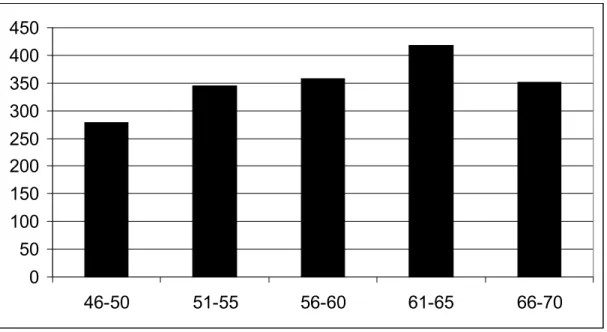
Applying this strategy, 1750 articles were included in the sample. In order to get a better overview, they were organized in blocs of five years (cf. Fig. 1).
1. The author wishes to thank her French co-worker Aude Plontz for all of her contributions and assistance in carrying out the quantitative study
2. All four papers are widely distributed in Western Germany and were licensed by the Allies in 1945. The exception is the Frank-furter Allgemeine Zeitung, which first appeared in November 1949.
3. The Südkurier is distributed in the Lake Constance region on the Swiss border, which was occupied by France after the war. It was included in the study in order to study whether there were differences in reporting which could possibly be attributed to more direct contacts between the local population and the French troops.
Figure 1: Number of relevant articles (five-years-steps)
During the first post-war years, the amount of coverage is relatively low compared to the other years, especially for the time span from 1961 to 1965. As far as the early years are concerned, the newspapers were very thin (sometimes only four pages), due to paper shortages. The number of pages later increased dramatically, as did the number of relevant ar-ticles. In the early 60s, the relationship between Chancellor Adenauer and General de Gaulle intensified, and these meetings led to the signing of the Franco-German Treaty of Co-operation between France and Germany in 1963, which was widely and heatedly discussed. According to that agreement, a cultural program for supporting and intensifying German-French youth exchanges was also set up (Franco-German Youth Office).
The rate of the number of relevant articles per studied issue also increases, and most of the newspapers reach a peak in the time span from 1961 to 1965 (cf. Fig. 2).
Figure 2: Rate of relevant articles per investigated edition
0
50
100
150
200
250
300
350
400
450
46-50
51-55
56-60
61-65
66-70
0 2 4 6 8 10 12
46-50 51-55 56-60 61-65 66-70
The Südkurier, though, differs from the others. Its rate rather decreases with time, which is possibly because it never ex-panded its coverage in terms of pages, extension of political coverage, adding extra pages for culture, travel, etc., as did the other newspapers.
Over the years, the share of articles also increased in which France and the French are the main subject. This is partly because during the years of Allied occupation, France was often covered as part of the Allied forces, and the focus was on what the Allies as a whole were doing. The later the articles appear, the more specific is the coverage overall, e.g. there is more coverage of French cultural events, unilateral actions on the part of French politicians, events and processes specif-ically concerning France, etc., which is also a matter of the development of the newspapers themselves (cf. Fig. 3)
Figure 3: Share of articles covering France as a main or as a secondary subject (p <0.01, Chi-square = 15,294; df = 4)
Figure 4: Number of articles of different text genres (p <0.01, Chi-square = 21,014; df = 8).
Text genres were also coded (cf. Fig. 4): Reviews of French books, movies and musical productions form one category. The other consists of commentaries (which had to be marked as such by placing, frame, subtitle, etc.). The rest are mainly news and news flashes, but also include articles from the sections on culture and other topics. Fig. 4 shows that in the first post-war period there are almost no commentaries or reviews (probably partly due to the lack of paper), while later on the
0% 10% 20% 30% 40% 50% 60% 70% 80% 90% 100%
46-50 51-55 56-60 61-65 66-70
side subject
main subject
0 50 100 150 200 250 300 350 400 450
46-50 51-55 56-60 61-65 66-70
number of those text genres increases, with the highest number of both occurring in the time span from 1961 to 1965. Nevertheless, there is almost no change in the number of reviews compared to the previous time span. The largest share of reviews with regard to the number of articles investigated is found in the late 1950s.
4.2 Theoretical framework of the analysis
The theoretical framework of the quantitative analysis is derived from the “Four-factor news communication model” pro-posed by Vincent & Galtung (1992; Galtung, 1998; cf. Tab. 1), which makes specific predictions about how news are se-lected.
Table 1: Four-factor news communication model (according to Vincent & Galtung; 1992; Galtung, 1998): The darker/the fewer the crosses in the cell, the lower the event’s chance to become “news.”
According to this model, the ideal top news event is:
• negative (not positive – this is less interesting)
• happens to a person (not structural/institutional, abstract – less interesting) • belonging to an elite (not ordinary person – less interesting)
• in an elite country (not a second, third or fourth world country – less interesting)
If an event has low news value in one factor (e.g. concerns ordinary people), this can be compensated for by high news value in another factor (e.g. the event must be negative, or should be highly personalized).
A blindfold news-selection routine, based on these factors, could pose several risks for reconciliation processes, e.g.:
• Negativism: One has no chance to change one’s impression of the other by getting to know his positive side. • Elite-Bias: One does not really learn about ordinary people in the other country, about shared problems, about the
other side in its entirety and variety – and peace seems to be something prescribed by handshaking elite persons. • Personalization: One does not learn about long-lasting processes, because events are removed from their structural
context and attributed to the unilateral actions of particular politicians. There is also a danger of trivializing events.
4.3 Variables and method of the content analysis
The coding process for the articles, as concerns German post-war coverage of France and the French, follows a two-step strategy (cf. Fig. 5)
Step 1: Identification of the general subject of the article
• What is the main event focused on in the article, and what part of French society is the chief focus? • What kind of event is it, and what is the general mood of the article?
The results of step 1 should indicate the overall direction of the article.
Person Structure
Negative Positive Negative Positive
Elite country Elite people
No problem: any ru-mors; however false
++++
Happy family events
+++
Cabinet falls
+++
Elections, even minor change
+++
Non-elite people
Accidents
+++
Prizes, lottery, wealth
++
Economic crashes
++
Economic growth
+
Non-elite country Elite people
Scandals (drugs)
+++
Prizes, lottery, wealth
++
Coup d’état
++
Elections, but major change
+ Non-elite
people
Mega-accidents
++
Miracles
+
Revolutions, ‘trouble’, riots
+
No chance: however true
Step 2: Identification of the actors and actions in the article
• Who are the actors referred to in the article, and how are they portrayed? The results of step 2 should indicate how the subject was developed in general.
Figure 5: Overall procedure of quantitative analysis
Step 1: Variables of the general subject
The general subject was defined as the main event focused on by the article. If there are several subjects, the main event is the one with the highest amount, extension and intensity of coverage, measured by the number of paragraphs it receives.
There are three coding decisions, depending on the three relevant news communication factors.1
• Person vs. Structure? • Elite vs. Non-Elite?
• Positive vs. negative vs. ambiguous?
With each variable, a choice of one of the possible categories was necessary.
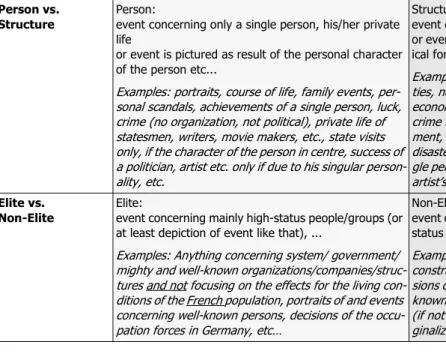
Table 2 shows the definitions of the variables:
1. France is regarded as an elite country, so this factor is not investigated. The variables were defined according to the examples given in the model and carefully supplemented by lists of examples. Nevertheless, as concerns the meaning of some variables, there still may be some interpretational differences between Galtung and the study presented here.
Person vs. Structure
Person:
event concerning only a single person, his/her private life
or event is pictured as result of the personal character of the person etc...
Examples: portraits, course of life, family events, per-sonal scandals, achievements of a single person, luck, crime (no organization, not political), private life of statesmen, writers, movie makers, etc., state visits only, if the character of the person in centre, success of a politician, artist etc. only if due to his singular person-ality, etc.
Structure:
event concerning a group/mass of people, an institution, or event is pictured as a result of social /political/econom-ical forces, culture etc...
Examples: elections, pol. relationships, meetings, trea-ties, negotiations, riots, war, revolutions, assassination, econom. events (e.g. reconstruction. fusions, crashes), crime (organized), portraits of organizations, govern-ment, companies, system, population’s living conditions, disasters, catastrophes (if they concern more than a sin-gle person), literature, movies, art, music (if not focus on artist’s life situation /lifework/course of life, etc.
Elite vs. Non-Elite
Elite:
event concerning mainly high-status people/groups (or at least depiction of event like that), ...
Examples: Anything concerning system/ government/ mighty and well-known organizations/companies/struc-tures and not focusing on the effects for the living con-ditions of the French population, portraits of and events concerning well-known persons, decisions of the occu-pation forces in Germany, etc…
Non-Elite:
event concerning ordinary people, society in general, low-status people, their culture, their life ...
Examples: focus on living conditions of the population, re-construction in general (not focus on governmental deci-sions or debate about it), economy in general (if not well-known company in centre), music /art/theatre/literature (if not focus on lifework of the artist/artist group), mar-ginalized oppositional groups, etc…
Collection of
investigation
material
Step 1:
Identification of general
subject of the article
Step 2:
Table 2: Definitions of variables of the general subject
Step 2: Variables of the actors within the article
Actors are defined as:
• French persons or institutions/groups • appearing in the article as
• actively doing something neutral/positive or something negative or
• as being the merely passive object of an action that can be either neutral/positive or negative for them.
Coding of non-French actors was excluded. Fictional persons are only coded if they symbolize real members of the French population.
The variables for actors are
• Elite-Person vs. Non-Elite-Person vs. Elite-Structure vs. Non-Elite-Structure • Active positively/negatively vs. being passive positively/negatively
For the definitions, see Tables 3 and 4.
Table 3: Definitions of actors
It was necessary to classify any French actors appearing in an article into one of the categories.
Being active is defined as:
• actively doing something, even including speaking (expressing oneself).
Being passive is defined as:
• being the passive object of someone else’s actions or of an event, receiving something, perceiving something in a passive way (not causing something by expressing one’s feelings), being the subject of others’ conversation.
Positive vs. negative vs. ambiguous
Positive:
Event is something mostly positive/ neutral or depiction of event as something positive/neutral Examples: state visits, neutral gov-ernment devices, elections, adminis-tration decisions (any of them without negative undertone in the article), peace and reconciliation, growth of relationship, friendship between Germans and French, re-views of French cultural products without negative undertone in arti-cle, acknowledgement and acknowl-edging depiction of French achievements and success, luck of some French actor, inventions, etc…
Negative:
Event is something mostly negative or depiction of event as something negative
Examples: war, riots, revolts, at-tempted assassinations, accidents, disasters, catastrophes, terrorism, death penalty, economic crashes, miserable life conditions, query of the righteousness of some French action, negative/downgrading depic-tions of French persons, culture, life-style, clear accusations of the French, negotiation success for the French but construction of them as pigheaded hardliners, etc….
Ambiguous:
Event or depiction of it in a way, that decision for one of the other variables would give wrong impression Examples: governmental success (with slight allusions of negative outcome for Germany), military success (event positive for the French + neutral depic-tion, but event as such negative), not clearly classifiable econom. events (neutral depiction but event makes slightly worried and both negative and positive outcome can be imagined), good diplomatic relations with commu-nist leaders (but no frank reproaches), reviews with equally positive and neg-ative aspects or not indicating whether the they’re really meant in a positive way, etc...
Elite-Person (EP)
Any single actor who is well-known, famous, mighty, has got a name, and is not defined with-in the article only by his function (e.g. the president of France does something = Elite-Struc-ture, de Gaulle does something = Elite-Person)
Non-Elite-Person (NEP)
Any single actor who is a member of the civil society, a small group of persons who are not organized and only accidentally together (e.g. playing children André and Elaine), (vs. single fictional per-sons representing the French pop-ulation →
Non-Elite-Structure)Elite-Structure (ES)
Famous, well-known and/or mighty groups/ institutions/ companies that represent the Elite, politicians/ diplomats/ policemen only portrayed in their function (not with their name), e.g. “the French ar-my”, “army units”
Non-Elite-Structure(NES)
On this level, multiple coding for each of the classified actors was possible.
Table 4: Definition of actions
Although the coding decisions were sometimes very hard, the reliability of the coding was enhanced because the coding table was developed in close cooperation with a French co-worker. Also, we carried out the coding procedure jointly. The reliability of the coding decisions was increased by intensive training sessions and controlled by Cohen's kappa (1960).1 The kappa values of the variables indicate sufficient inter-coder reliability (cf. Tab. 5).
Table 5: Inter-coder reliability
Some brief remarks about the definitions presented thus far: These seem to reflect sometimes very conservative thinking. Acts such as eliminating a threat, revolting against an unjust legal system, fighting injustice, etc. are not necessarily to be automatically placed in the “negative” category, nor is “being friendly” automatically to be placed in the “positive” one. We kept this in mind while coding and responded to doubtful cases in a more flexible manner than the examples presented here suggest. The question remains of how we distinguish the “good” from the “bad.” This decision is culturally biased and naturally reflects – beyond the model – our socialization, values and the ideology of our political systems. As we share the role of media consumers, we can assume that we reflect the ways audiences respond to articles. Moreover, we discussed doubtful coding decisions before agreeing on a final coding.
4.4 Results General subject
Contrary to Galtung’s predictions (cf. Fig. 6), there are far more articles covering structural than personal events or written in structural terms. There is a slight change over time, though: In the early post-war years, personalization had nearly no significance, and the share of subjects that were persons was only 3.2% (9 articles out of 279). Later it ranged between 8.6% (1956 to 1965) and 15.1% (1966 to 1970: 53 articles out of 351). This effect is probably partly due to the media development itself: The more pages available, the more space for covering trivial issues. Moreover, in the early post-war period it surely was more important to German audiences to know what the French, as the occupation force, had decided and how France as a whole had acted, than to read portrayals of or personal stories about individual French actors.
Positively active
The actor is doing something positive/ constructive/fair, build-ing up somethbuild-ing good (like friendship, economy, movie), in-viting someone, receiving a visi-tor, praising someone (who earns it in the eyes of the journalist), criticizes injustice, has success caused by him, makes wise deci-sions, etc…
Negatively active
The actor is doing something negative/ destructive/unfair, causes pain/misfortune on oth-ers, is fighting, criticizing or blaming others, makes a bad movie, writes a bad book, at-tacks, accuses, causes trouble, does illegal things, puts someone to death, is incapable in his ac-tions (not by handicap), etc…
Positively passive
The actor is appreciated by oth-ers, receives some good mes-sage, is just fine, is delighted, has success, is greeted, visited, wel-comed, perceives some happy events, has luck, has success (but is not the direct source of success), etc…
Negatively passive
The actor is criticized by some others, suffers something bad for him, is not well, receives bad news, is being accused, treated badly, is put to death, has to die, etc…
1. This statistic is used to assess inter-rater reliability. It gives a relatively strict statistical measure for the quality of inter-coder reliability compared to using % agreement by also taking the possibility of random coding into account. The coefficient can range from -1 (completely different ratings) to +1 (perfect accordance of the raters). In this study, the coefficients indicate good (0.60 - 0.75) to very good (0.75 - 1.00) inter-coder reliability (cf. Wirtz & Casper, 2002, 59). The statistics are based on 50 randomly selected articles and concern 24 variables. 7 other variables appeared in fewer than 5 cases (all of them concerning Non-Elite-Persons as actors), so the calculation of kappa was not reasonable there and was not included in the statistics shown in Table 5.
Coefficient kappa:
Min = 0.55 Max = 0.96
Range = 0.41 Median: 0.82
Figure 6: Share of structural vs. personal subjects (p < 0.001; Chi-square = 29,644; df = 4).
The elite-bias prevails, but not as significantly as in the prediction, above all if we look at the variability of this bias over time (cf. Fig. 7). While from 1946 to 1950 there was an absolute dominance of subjects concerning the French elite (73.8%), this share decreases over time to 55.6% (1956 to 1960) and later recovers only slightly (61.8% from 1966 to 1970). These results suggest an extended interest in what ordinary French people were doing and how they lived after the occupation period, with its high dependency on Allied policies.
Figure 7: Share of elite- vs. non-elite-subjects (p < 0.001; Chi-square = 25,647; df = 4)
There are more articles with a positive/neutral general subject and attitude than expected (cf. Fig. 8). The media tendency of negativism is not completely supported by the investigated material, although there is some variability over time. This can be seen as chiefly a result of the selected text material, which covers events of a period when peace with France and the creation of a better relationship was actually on the political agenda1.
1. Moreover, the selection of articles was based on entire newspaper editions and didn’t focus only on political news. 0%
10% 20% 30% 40% 50% 60% 70% 80% 90% 100%
46-50 51-55 56-60 61-65 66-70
Structure
Person
0% 10% 20% 30% 40% 50% 60% 70% 80% 90% 100%
46-50 51-55 56-60 61-65 66-70
Figure 8: Share of positive/neutral vs. negative vs. ambiguous general subjects (p < 0.05; Chi-square = 15,527; df = 8)
We find a relatively high share of positive/neutral coverage in the first period (61.6%), which can be partly explained by dependency on the Allies (press control, availability of independent information sources, compliance and good will of news-papers, etc.). Subsequently the share of this category goes down to around 53% and remains stable, except for the period from 1956 to 1960, when it is only 49.7%. In this period, the share of clearly negative subjects or moods is the highest (41.6%), while it normally hovers around 35%. In the early post-war years, though, this share is only 28%.
The share of ambiguously coded articles seems to compensate for the not overtly negative articles. Thus, if we view the data as distinguishing between neutral/positive subjects and negative/ambiguous subjects, the only major change of mood is between the early years of the occupation and the years after the occupation (p<0.05; Chi-square = 9.6088; df = 4), and even then there is no clear dominance of negative/ambiguous subjects.
Figure 9: Share of positive/neutral general subjects in the Südkurier compared to the other newspapers
A special case is coverage in the local newspaper Südkurier (cf. Fig. 9). This is the only one of the newspapers that displayed significant change over time in regard to this variable.1 None of the other newspapers showed significant change. The share
1. Chi-square = 11,4433, p < 0.05; df=4. 0%
10% 20% 30% 40% 50% 60% 70% 80% 90% 100%
46-50 51-55 56-60 61-65 66-70
ambiguous
negative
positive/neut.
0% 10% 20% 30% 40% 50% 60% 70% 80%
46-50 51-55 56-60 61-65 66-70
of positive subjects in the Südkurier is exceedingly high during the occupation (1946-1950: 71.7%).At that time, the dif-ference between the Südkurier and the other newspapers in the share of positive/neutral and negative/ambiguous subjects is significant.1 Later on, the share of positive coverage is close to the average of the other newspapers, and variations in frequencies are insignificant.
Actors mentioned in articles
As expected, most of the actors in the articles belonged to the elite. Surprisingly high, though, is the number of institutions/ groups/organizations compared to individual persons, both in terms of elite- and non-elite actors. According to Galtung’s model, we would expect some personification of events, at least in the article, even when the subject is not an individual person. This seems to be more or less the case as far as the elite is concerned, since there are many elite-person actors, but there is a striking difference, with regard to non-elite actors, between abstract structures and individual persons. (cf. Fig. 10)
Figure 10: Absolute number of actors in the articles
As one would expect, the elite-actors who rule the world are more often depicted as active than as the objects of others’ actions, while with non-elite actors the opposite is the case (cf. Fig. 11).
1. Chi-square=6.5794, p < 0.05, df=1.
0
200
400
600
800
1000
1200
1400
Figure 11: Absolute number of actors portrayed as being active or passive
Figure 12: Shares of actors’ portrayed (active and passive) actions
If we examine the relative frequencies of the actors portrayed as active (cf. Fig. 12), we find a remarkable share of elite-persons depicted as acting exclusively positively. In the active mode, when it is a matter of elite-actors, we also find a higher share of persons acting both positively and negatively, which also means showing a broader picture of their actions. If we compare the different actors depicted in the active mode, the differences between them are significant.1
1. Chi-square = 98.9271; df = 6; p < 0.01
0
200
400
600
800
1000
1200
EP active
EP
passive
ES active
ES
passive
NEP
active
NEP
passive
NES
active
NES
passive
0% 10% 20% 30% 40% 50% 60% 70% 80% 90% 100%
EP act. NEP act.
ES act. NES act.
EP pass.
NEP pass.
ES pass.
NES pass.
both (pos./neut.+neg.) excl. neg.
If we concentrate on actors portrayed as passive (cf. Fig. 12), there is a lower probability of elite-persons being depicted as the “victims” of others. Instead, both positive and negative actions are attributed to them simultaneously. Non-elite per-sons have to suffer in order to get newspaper coverage – if they are merely participating positively, nobody seems to care very much. The differences among protagonists depicted in the passive mode are also significant.1
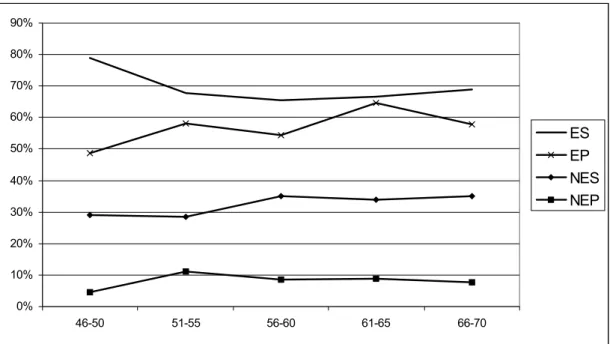
Figure 13 shows the change over time of the different actors’ rates of appearance in articles. Interrupted lines stand for non-significant changes. This is the case with non-elite actors. Non-elite structures occur in nearly every third article, no matter in what period. Non-elite persons occur in only about every tenth article.
We find significant changes, though, with elite-actors: The focus on elite-structures decreases, while the share of articles telling about elite-persons’ actions increases. In the time span from 1961 to 1965, it nearly reaches the amount of coverage of elite-structures, which may be due in part to the personal relationship and repeated meetings between Charles de Gaulle and Konrad Adenauer. However, it may also be a result of the high number of artists’ portrayals, at that time, of political events having personal consequences (e.g. OAS terrorism and the trials of dissident military men), and many others. Major changes with regard to the coverage of both kinds of actors are found between the earliest period and that from 1951 to 1955.
Figure 13: Shares of actors’ mention over time (df = 4; EP: Chi-square = 19,081; p < 0.001; ES: Chi-square = 15,852; p < 0.01; NEP: Chi-square = 8,565; n.s.; NES: Chi-square = 6,483; n.s.)
If we take a closer look at the individual actor groups and investigate the manner of portraying them, elite-persons seem to be a very interesting sub-group, because there is a clear change over time (cf. Fig. 14).
1. Chi-square = 28.5796; df = 6; p < 0.01
0% 10% 20% 30% 40% 50% 60% 70% 80% 90%
46-50 51-55 56-60 61-65 66-70
Figure 14: Shares of elite-persons’ actions (Condition: elite-person mentioned) (df = 4; EPact+: square = 3,345; n.s.; EPact-: Chi-square = 30,905 p < 0.001; EPpass+: Chi-Chi-square = 22,445; p < 0.001; EPpass-: Chi-Chi-square = 27,552; p < 0.001)
Regardless of at what time elite-persons are mentioned in the text, they are mostly depicted as acting positively/neutrally. However, other ways of portraying them increase significantly over time, which signifies a trend towards a more diversified depiction compared to the more one-dimensional portrayals of the early post-war years. Although portrayals of them acting negatively increase almost monotonously, this kind of depiction remains the least common over the years. And if we only distinguish between descriptions of elite-persons’ positive vs. negative actions/passive actions, this picture is confirmed again. Positive depiction remains stable and has a share of 90% of the respective articles, while negative depiction increas-es until 1965, then drops again slightly (cf. Fig. 15).
Figure 15: Shares of elite-persons’ actions (Condition: elite-person appears) (df = 4; EP+a/p: Chi-square = 1,162; n.s.; EP-a/p: Chi-square = 33,409; p < 0.001)
The depiction of elite-structures/institutions/groups’ actions/passive actions is not so consistent (cf. Fig. 16). 0%
10% 20% 30% 40% 50% 60% 70% 80% 90%
46-50 51-55 56-60 61-65 66-70
EP act +
EP act
-EP pass +
EP pass
-0% 10% 20% 30% 40% 50% 60% 70% 80% 90% 100%
46-50 51-55 56-60 61-65 66-70
Figure 16: Shares of elite-structures’ actions (Condition: elite-structures appear) (df = 4; ESact+: square = 9,302; n.s.; ESact-: Chi-square = 18,614; p < 0.001; ESpass+: Chi-Chi-square = 17,371; p < 0.01; ESpass-: Chi-Chi-square =6,228; n.s.)
Constant over 25 years is their depiction as mostly positively acting and (less often) as being the passive object of a neg-ative action. Portrayals of them as positively passive increase slightly, above all after 1960. Portraying them as negneg-atively active increases from a third of the articles mentioning elite-structures (1946 to 1950) up to over 50% of the articles (1956 to 1960). Afterwards the share decreases again and remains the least-used mode of portraying them. One has to keep in mind that in the 1950s, and in particular in the late 1950s, France was involved in several military actions and violent de-colonization processes (Indochina war, Suez crisis, liberation movements in Morocco, Tunisia, Algeria), which is partly re-flected by the data.
Figure 17: Share of Non-Elite-persons’ actions (Condition: non-elite-persons appear) (df = 4; NEP+a/p: Chi-square = 10,054; p < 0.05; NEP-a/p: Chi-square = 3,727; n.s.)
0% 10% 20% 30% 40% 50% 60% 70% 80% 90%
46-50 51-55 56-60 61-65 66-70
ES act +
ES act
-ES pass +
ES pass
-0% 10% 20% 30% 40% 50% 60% 70% 80% 90% 100%
46-50 51-55 56-60 61-65 66-70
Non-elite persons appear in only 145 articles over the entire 25-year span. Significant changes in coverage are found only if we distinguish between their actions/passive actions being depicted as positive or negative (cf. Fig. 17). The share of negative descriptions remains relatively stable, and variations are not statistically significant, while the share of positive descriptions decreases significantly from 100% in the first years to below 60% in the last time span. This supports the model’s predictions that these actors have to suffer or do something negative in order to get media attention. This does not change over time. What does change is that in the early years the investigated newspapers showed slightly more flex-ibility with regard to depictions of non-elite persons than in the later years, and this is possibly also due to the development of the particular self-image of high-quality newspapers: they try not to focus on human interest stories unless they involve really major issues.
The depiction of non-elite structures/institutions/groups does not change significantly over the years. Mostly they are por-trayed in a passive mode, and less often as acting negatively.
4.5 Conclusions
The data from the quantitative study indicates that the German newspapers actively followed the ongoing reconciliation process.
The selection of subjects was less dominated by news values like negativism and personalization, as one would expect from Galtung’s model. To some extent, the newspapers even managed to overcome elite-bias and made efforts to show a broad-er picture of France and the French lifestyle than only focusing on political issues.
The German newspapers showed their confidence in French actors by depicting them in a mostly positive/neutral way in-stead of emphasizing their negative actions. They also emphasized French cultural accomplishments. In the investigated material, we found current reviews and presentations of French art, literature, music, movies, etc., mostly in the late 50s and early 60s.
The German press also expressed confidence in French society and the ordinary French population by making them a sub-ject of coverage and depicting them in a generally less negative way than would be expected according to Galtung’s model. The only exceptions are individual non-elite persons, who had almost no chance to get media attention except when suf-fering or doing something negative.
The newspaper coverage of France and the French changed over time. Major differences are found between the early post-war period and the time after the Allied occupation. This can be partly seen as a result of the newspapers’ dependency on the Allied powers, the availability of information and the availability of paper and materials with which to print newspapers (cf. Dix, 1995). As well, it may be due to the newspapers’ development (increase in number of pages, diversification of subjects, supplements, etc.) and the change in relevant subjects on the public agenda.
Over time, there is a tendency to a more diversified depiction of French elite actors, as well as a tendency for slightly more “negative” coverage. There is also a tendency to more non-elite coverage and to slightly more personalization of events.
Allied press control does not seem to have had overly severe implications, though. The only newspaper showing significant changes of mood over time is the local newspaper Südkurier. In the early post-war years, it offered highly positive coverage of France and French-related issues, but later, after the years of Allied press control, there were no significant differences compared to the other newspapers. If there were any lingering feelings of resentment because the French administration had placed restrictions on the Südkurier, there is no evidence that the paper later tried to retaliate by focusing more on the negative side of France than did the other newspapers.
With any interpretation of the results, though, the limitations of a quantitative approach should be taken into account. The results look promising with regard to press contributions to German reconciliation with France, but one should also consider the framing conditions: to name only a few, the situation of Germany’s complete capitulation and the need for cooperation with France, as well as with the other occupation powers. Not only did an honest desire to overcome the effects of National Socialism influence the political agenda, but also German interests like regaining sovereignty, dependency on international support for reconstruction, as well as a desire to avoid a loss of face. These all surely contributed to the “cooperativeness” of the press, and it is hard to decide which of these motives predominated.
Moreover, there was surely a sense that German policy and public discourse were being monitored by the international environment. As the media are not only windows on the world (Tuchman, 1978), but also allow a look into the house itself, one had to be careful to keep one’s affairs in order. Not least of all, a significant factor can be seen in the Cold War and the current framing of public discourse in terms of Western Cold war propaganda, where anything having to do with com-munism was suspect (including left-wing French art, literature, trade union movements, etc.).
is no surprise that this admiration was revived after the war and provided a reliable common basis for rapprochement with the French, for regarding them as equal human beings and as a highly civilized nation.
Nevertheless, the results indicate that some news values are not self-evident and that the media dispose of more free space in constructing realities than is often grasped or apologetically maintained.
5. Part 2: Qualitative content analysis 5.1 Aims, models, expectations
In addition to the quantitative content analysis, a qualitative study was made of several exemplary articles selected from the quantitative sample. It is based on already-existing models of peace journalism:
• “Escalation vs. de-escalation oriented conflict coverage” (Kempf, Reimann & Luostarinen, 1996; Kempf, 2002) • “Peace/conflict journalism vs. war/violence journalism” (Galtung, 1998, 2002)
Both models provide systematic approaches to the question of how peaceful and conciliatory conflict coverage could be and also offer ideas about how events can be covered by the media, e.g. coverage that does not fan the flames of conflict with biased presentations, that leaves free space for peaceful options, that supports peace initiatives and non-violent con-flict resolution, etc.
Nevertheless, pure “peace journalism” is hard to find in media reality. In repeated analyses of war and conflict coverage, the thus-far theoretically deduced de-escalation oriented characteristics seldom could actually be identified. And even the analysis of the coverage of peace negotiations and treaties has shown a dominance of escalation orientation in articles (e.g. Hamdorf, 2000; Annabring, 2000).
Accordingly, the following qualitative study was, on one hand, motivated by theoretical interest. One of the aims of this study is:
• to look for de-escalation oriented aspects in post-war coverage and determine whether and which of these aspects appear, as well as how they are applied.
Do the de-escalation oriented characteristics of the model correspond in any way to empirical media reality? On the other hand, there is a very practical interest in learning from empirical examples, as well as transferring the acquired knowledge to a broader public. If suitable journalistic skills are already present, if there is an intuitive knowledge of how to cover events in a de-escalation oriented way, this can serve as evidence that peace journalism is not an abstract con-struction of researchers, but is already being regularly practiced and can be systematized and also taught. Other aims of the study, consequently, are
• to identify specific style characteristics of at first glance constructive and conciliatory articles that go beyond the model and can make coverage contribute to peace and reconciliation
• to systematize those characteristics and – if possible – reintegrate the findings into existing models of peace journal-ism or de-escalation oriented conflict coverage
What can researchers learn from journalists?
5.2 Method and procedure of qualitative content analysis
Figure 18 gives an overview of the procedure of analysis:
Figure 18: Overall procedure of the analysis
Selection of the articles
As the aim of the analysis of exemplary, conciliatory articles was to 1.) study their constructive power for reconciliation with regard to de-escalation oriented characteristics proposed by the models and 2.) find constructive characteristics in the em-pirical material that go beyond the models, this had several implications for the selection of articles and led to the following selection strategies for the sample:
• Formal characteristics: Adequate length of the article (max. half a page but not too short because of lack of content) and articles from various newspapers, periods of time, text genres and writing styles.
• Subject characteristics: Articles dealing with a great variety of subjects.
• Model characteristics: Articles containing, at first glance, some of the de-escalation oriented characteristics from Kempf’s model or the characteristics of Peace Journalism (Galtung).1
• Characteristics beyond the models: Articles containing at first glance eye-catching stylistic and subject characteristics going beyond the models, e.g. raising issues, selection of title, framing of topic, portrayal of actors, use of quotations, dealing with the past, flow of argumentation, writing style, symbols and allegories, etc.
Reading the text twice should confirm the impression of dealing with an article that is constructive with regard to reconcil-iation, or at least offers a sympathetic depiction of the French situation and should not leave a “foul taste” in the mouth. There should be no ambiguous hidden messages that are not clearly defined, cartoons beside the text that depreciate and detract from the positive content,2 too obviously supporting anti-communist ideology instead of dealing with French cine-matic trends as claimed,3 etc.
So far, 22 articles have been selected for investigation (cf. Tab. 6)
1. As the aim of the study is to empirically identify as many characteristics that can potentially contribute to peace and reconcilia-tion as possible, and not simply to test a model, this selecreconcilia-tion approach serves to a priori exclude articles with no conciliatory potential.
2. E.g. “Kiesinger: Quite far ahead – de Gaulle emphasizes ‘active friendship‘ / dialogue on GDR“ (FR, 14.1.1967) plus cartoon subtitled, “Monsieur Kiesinger – for once wouldn’t you like to try wearing only one hat?” (Kurt Kiesinger was a conservative German Chancellor.)
3. E.g. ”The intellectual France and the French movie“ (SZ, 16.10.1948)
Text code
Title Source Content
T16 Die Straßensänger in Paris Südkurier, 8.2.1946, p. 3 Feature of the flourishing street life in Paris after the ending of the German occupation – The Nazis couldn’t really affect the French joy of life. T15 Frankreichs wirtschaftlicher Aufbau
Viel ist schon getan, aber immer noch große Schwierigkeiten
Südkurier, 8.2.1946, p. 4 Detailed description of the war-caused damage in France and of the reconstruction efforts of both the French population and politicians
Selection of the
articles
(Basis: sample of
the quantitative
study)
Sentence by
sentence analysis of
the articles
(“Checklist for
escalation and
de-escalation oriented
coverage”)
Note down
everything not yet
included in the
checklist but
obviously supportive
to
1. reconciliation,
2. acceptance of the
message
Re-analyse article
once again, check
information by external
sources, review of
whole article
Overview:
- Systematize articles
- Systematize
T4 Die Stimme der Frau
Die politisch denkende Frau in Frankreich
Frankfurter Rundschau, 28.06.1946, p. 7
Enthusiastic report about the French women associ-ation „Union des Femmes Françaises“
T20 Frankreich für einheitliches Deutschland Reuters Parisbesuch - Verständnis für Eingliederung Berlins gewachsen
Die Welt, 12.2.1949, p. 1 Article about the successful visit of the mayor of Ber-lin in Paris. He was able to achieve concessions of the French with regards to the Berlin status by ne-gotiation.
T1 Der Prozeß gegen Otto Abetz Frankfurter Rundschau, 23.7.1949, p. 16
Detached report about the trial against the former German ambassador in Paris during the Nazi occu-pation
T2 Das Gespräch ist im Gang
Deutsche und französische Jugend singt und wandert
Südkurier, 5.11.1949, p. 3 Report about German and French young people travelling in each other’s country, the problems and perspectives of re-establishing a youth hostel move-ment
T6 Was die Welt so über uns denkt
Echo des Mannes auf der Straße zur deut-schen Wiederbewaffnung - von Madrid bis Kopenhagen
"FRANKREICH BRAUCHT FELDGRAU NICHT ZU FÜRCHTEN"
Süddeutsche Zeitung, 28.10.1950, p. 3 [French part of a big article written by vari-ous correspondents in several European capitals, S.J.]
French statements with regards to the German rear-mament suggest that there is less objection in France than expected.
T14 Ein französisch-deutsches Zwiegespräch Deutschland - Frankreich – Europa
Vertrauen stärkt Verständigungswillen - Verzicht auf lähmende Vorurteile
Südkurier, 25.11.1950, p. 3 A French and a German author write about the mood in their countries with regard to the German rearma-ment – the newspaper emphasizes the need of a frank dialogue between the two countries.
T10 Eine Träumerei von Robert Schuman Südkurier, 12.1.1952, p. 1 (commentary)
The European Coal and Steel Community is highly welcomed by the author. He explains structure and advantages of this union.
T12 45 Todes-Urteile im Oradour-Prozeß Auch Todesstrafe für Elsässer Boos
Südkurier, 14.2.1953, p. 2 (re-port and commentary)
The final sentences have been spoken in the trial of the Oradour massacre. The author condemns the crime and reflects about responsibilities.
T3 Monsieur Lecompte frischt Erinnerungen auf
Ehemalige französische Kriegsgefangene besuchen die Moosburger Neustadt
Süddeutsche Zeitung, 4.9.1954, p. 12
Report about a meeting of former French and Ger-man war prisoners during a French visit of the former prison camp in Germany
T11 Ein Brief aus Sombernon
"...daß mein Freund Ludwig Fabricius, Hamburg-Nienstedten, 70. Geburtstag hat"
Die Welt, 14.5.1955, p. 5, "Tagesbericht Hamburg"
A French old lady has saved a German officer during a Résistance fire. In reverse he has saved the village from destruction by SS-troops.
After the war they have become friends. T17 Internationale Verständigung Südkurier, 26.5.1956, p. 11,
"Konstanzer Zeitung"
Report about a German boy and a French soldier having become friends in Konstanz.
T19 So reisen Jean und Jeannette Ein französisches Mosaik
Frankfurter Rundschau, 28.7.1956, p. 12
Story about travelling in France framed by the por-tray of a fictional French couple, who don’t have much money but know how to enjoy life and travel-ling nevertheless
T18 Skeptisch Frankfurter Rundschau, 17.11.1956, p. 3 (commen-tary)
How the common people in Paris experience the Suez war
T8 Colette lernt tanzen
Deutsch-französischer Schüleraustausch
Frankfurter Allgemeine Zei-tung, 22.8.1959, "Die Frau"
The author tells his experiences with the students’ exchange and reflects about the French school sys-tem.
T9 Der Algerien-Rapport des Reserveober-sten Jules Roy
Ein französischer Schriftsteller beschwört seine Landsleute zum Verhandeln mit seinen Landsleuten
Süddeutsche Zeitung, 4.2.1961, p. 6
Table 6: List of investigated articles
Analyzing the articles
For the purpose of studying and evaluating post-conflict coverage, the model of “escalation vs. de-escalation oriented con-flict coverage” (Kempf et al., 1996) had to be slightly adapted. Some variables were tailored explicitly to violent concon-flicts and were defined too specifically. So they had to be modified in order to be able to assess the characteristics of less violent processes.
The adapted model was transformed into a “Checklist for escalation and de-escalation oriented coverage” (cf. Kempf, 2003; Bläsi, Kempf, Jaeger & Möckel, 2004) that served as the basic guideline for a sentence-by-sentence-analysis of the articles. Any characteristic of the checklist that occurred in the text has been recorded.
Additionally, any other outstanding characteristic not yet in the checklist but potentially seeming to contribute to a more empathic understanding of the French, to reconciliation, to a cooperative comprehension of the situation, etc. was record-ed. Special attention was given to elements like, e.g. raising the issue itself, selection of title, provision of background in-formation, context of the article, flow of argumentation, dramaturgy of the article, framing of the article, use of a certain writing style, of expressions, symbols, ways of dealing with actors, with quotations, with topics like the German-French past, the war, etc. So, more general and sentence-overlapping constructive characteristics that are at risk of being over-looked with a simple application of the checklist to each individual sentence could be ascertained as well.
With ongoing analysis of the article, some of the elements of the checklist that were found turned out to be used or meant in a contrary sense, so the article and the sentences had to be reviewed again until the meaning of the article and the characteristics were sufficiently clear.
For a better comprehension of the article and a broader knowledge of the depicted events, a comparison of text information with external sources was also allowed. The underlying intention was not to find out whether the reported event was cor-rectly depicted or not, but rather how the author of the article meant to depict it. External sources could be other articles in the relevant newspaper edition, history books, biographies, information provided by the Internet, e.g. about the author of the article, about the mentioned French organizations or institutions, etc. As much information was collected as was available and necessary to determine the meaning of the article. Contradictory information was evaluated in terms of the reliability of sources (e.g. official vs. personal reports).
After the first analysis, the article was reviewed again, a review was written, and a list was made of escalation and de-escalation oriented aspects, as well as a list of additional constructive elements.
T5 Die Partner von Baden-Baden Frankfurter Allgemeine Zei-tung, 17.2.1962, p. 1 (com-mentary)
Adenauer and de Gaulle have different ideas about the political integration of Europe. The author ar-gues towards seeing their common background, neutral evaluation of both sides’ interests and find-ing a compromise.
T21 Eine neue Generation in Frankreich Frankfurter Allgemeine Zei-tung, 21.4.1962, p. 7
Article about the changed economical culture in France since the Common Market has been estab-lished. The author is rather enthusiastic.
T22 Fast alle 900 000 Algerienflüchtlinge eingegliedert
Nur 4500 Arbeitslose / Erfolg der franzö-sischen Verwaltung und der Heimkehrer
Frankfurter Allgemeine Zei-tung, 16.11.1963, p. 3
Evaluation of the state of integrating Algerian gees in France. Both have been successful: Refu-gees as well as authorities.
T7 Die dünne Decke Südkurier, 6.2.1965, p. 1 (commentary)
De Gaulle’s press conference has revealed a still per-sisting mistrust against the Germans. The inner-Ger-man debate about the statute-barred prosecution of crimes during the Nazi regime fuels it even more and should be brought to an end.
T13 Nur noch ein Rest alten Argwohns Die Wahlkampf-Bundesrepublik in franzö-sischer Sicht / Anerkennung für unsere Sozial- und Wirtschaftsstrukturen
Süddeutsche Zeitung, 20.9.1969, p. 4
5.3 First findings
At this point, the quantitative analysis is still not complete. Nevertheless, this paper presents the preliminary results:
1. Nearly all the de-escalation oriented characteristics described by the model could be found in the sample.
2. The articles also contain constructive stylistic elements going beyond the checklist: Not only do these elements have the power to contribute to reconciliation, beyond that, some of them contribute to making the articles highly attractive and credible to recipients.
3. Conciliatory elements could be found in the articles, no matter what topic was dealt with.
Other findings are less encouraging:
1. Even if the results of the preceding quantitative analysis indicate something else: Articles not explicitly dealing with the reconciliation process itself and at the same time containing predominantly constructive elements were especially rare and hard to find.
2. Even articles dominated by constructive elements often contain problematic phrases or aspects that are not only not conciliatory, but also express continuing distrust between Germany and France, or even an escalation orientation.
Options for conciliatory coverage in various contexts
The articles can be grouped by the contexts dealt with and how these could potentially contribute to reconciliation. The groups are not mutually exclusive. Often, one and the same article contains elements fitting into more than one context.1
Reconciliation within the political context
Topics and opportunities:
These articles often deal with meetings between politicians (not only, but also French and German) where agreement could be reached or at least there was a less conflict-laden dialogue (e.g. T5, T20). In these articles recipients can learn about French intentions, learn to listen to French needs and fears and evaluate them in a less polarized manner (e.g. T5, T7). The articles sometimes try to deconstruct the distrust between France and Germany by emphasizing shared visions and possibilities for present and future cooperation (e.g. T5, T10, T14). They express confidence in French politicians, in their actions and intentions, their values and comprehension of democracy.
There are also articles dealing with the political behavior of the French people (e.g. T14, T18, T9). For example, one is about the political activities of Frenchwomen organized in the “Union des Femmes Françaises” in 1946 (T4). It praises their political consciousness, shows the compatibility of being a woman and being politically active and implicitly encourages German women to take French women as examples and become politically active.
Problematic aspects:
These issues are often raised in response to domestic events (e.g. forthcoming elections in Germany, states visits, meet-ings, domestic discourse about controversial subjects concerning German policy) (e.g. T13, T5, T7, T20, T14). This need not necessarily be a shortcoming. Often enough, though, the deeper meaning of the content can be understood by taking into account the overall situation at the time the article was written. By doing so, the article implicitly places an emphasis on promoting German needs and interests, even if French politicians and policy are superficially depicted in a correct, if not friendly fashion. Articles about meetings between French and German politicians often contain self-upgrading elements, and identification with one’s own side’s “wise” statesmen is supported. French statesmen, in contrast to the upgraded Ger-mans, come off less well in the end (e.g. T5). In some articles, cooperation with the French seems not to be motivated by a stated desire to become friends or by honest appreciation of French policy (even if the article claims this). Instead, it is a result of rational calculation to make use of this externally praised collaboration in order to improve one’s own situation or to achieve hidden goals (T7).
Reconciliation within the socio-cultural context
Topics and opportunities:
These articles portray French everyday life, problems ordinary French people have to face and how they cope with them. They investigate the social situation in France, as well as French culture and art.
The articles dealing with French problems after the Second World War express great empathy with these “brave” people: So much damage was done, but as wise and industrious as they are, the French are doing their best to reconstruct their country. (e.g. T15, T16, T4). Such a depiction of the French social situation does not overtly state, but it suggests implicit parallels between the problems the French and the German populations have to cope with, and it also gives examples of
how to overcome them (e.g. T4, T22). The later the article appears, the less emphasis is placed on topics like post-war reconstruction. Instead, there is often a depiction of the French as just ‘charming people in a beautiful country with a rich culture’ that is worth getting to know better (e.g. T19).
Problematic aspects:
In the early years, there was still talk of a sort of “folk character,” which suggests Nazi terminology and ways of viewing Germany and other nations (e.g. T4, T16). Even later, there was a danger of maintaining and projecting stereotypes about the French by celebrating merely the “l’art de vivre en France” in the articles (e.g. T19) and not reporting on the great variety of life styles and personalities found in the French population. In these kinds of reports, there often is a search for clues as to whether stereotypes of the “laissez faire” style of living, the “not so systematic” French working methods were still true or not (e.g. T21), which signifies a German interest in “how French people really are.” But at the same time, this is still just talking about the other and not really listening to him/her. Even worse is that in some articles the German system (economy, education, etc.) is upgraded by negative comparisons with the “backward” French system (e.g. T8, T13). A sort of pseudo-empathy with the French people is expressed, while simultaneously pointing out how successful the German system is. All in all, this gives the impression that French social policy and the French educational system – instead of con-tributing to the welfare of the French people – are “leaving them in the lurch.”
Reconciliation within the socio-economic context
Topics and opportunities:
Closely related to the socio-cultural context and already mentioned is the coverage of the French economy (e.g. T13, T21, T15). Many of these articles also deal with post-war reconstruction and contain above-mentioned characteristics like show-ing the good example of the industrious French people. Of course, economic pacts and international cooperative institutions like, e.g. the European Coal and Steel Community, European Currency Union, and Common Market are described construc-tively, if the agreement was beneficial to Germany in terms of regaining international acceptance and influence. In this case, we find coverage expressing confidence in French statesmen such as, e.g. Robert Schuman, praising them for their far-sightedness and wisdom (T10). There are also texts concerned with topics like how well the French people get along with an economically united Western Europe (e.g. T21) and how beneficial the Common Market is for the French.
Problematic aspects:
As time passed, more emphasis was put on the economic competition between Germany and France. Or at least the articles offer a competitive frame with regard to the situation (T13). There is sometimes talk of a French “inferiority complex” in face of “German economic achievements” (T21) or of a “certain French envy” (T13). There is also a self-congratulatory tone in the articles: German achievements are enthusiastically praised, and there is a tone of affected sympathy for the French, which explicitly or implicitly downgrades French economic policy, as well as the traditionally important role and culture of the French trade union movement (T13).
Building a new relationship
Topics and opportunities:
In the investigated period, we can find numerous articles about programs or meetings between French and German groups (as in T8: student exchange, T2: youth hostel movement, T3: veterans meetings). There are also articles giving examples of existing friendships among the German and French peoples (e.g. T11, T17) or emphasizing the need for a frank dialogue in order to build friendship (T14). Some of these articles additionally provide implicit suggestions on how to participate in these programs. The overall message of the articles: If we only become friends, war will become impossible! Let us have confidence in the youth of both countries who want to be united and will not fight against each other in the future! Let us also have trust into the gradual passing away of an older generation burdened with war experiences and sometimes unable to overcome them! The problem will be solved over time … (e.g. T2, T13). But there are also articles showing that the war generation could actively overcome some mutual mistrust (e.g. T3, T11). The articles are mostly upbeat. They combine enthusiastic anticipation of a united future and an emphasis on the similarity of the German and French peoples.
Problematic aspects:
The publication of these articles is often a matter of domestic and actual relevance (as e.g. T3: veterans meetings the week before somewhere in Bavaria, T11: a letter from a Frenchwoman to the editor). They are not published just because a German journalist finds this an important subject to write about, but seem to require an actual domestic event related to the topic (like most of the other contexts).