ESCOLA BRASILEIRA DE ADMINISTRAÇÃO PÚBLICA E DE EMPRESAS MESTRADO EXECUTIVO EM GESTÃO EMPRESARIAL
THE ANALYSIS OF FOREIGN MARKET ENTRY STRATEGIES ON THE BASIS OF DIFFERENT
CULTURAL BACKGROUNDS AND ENVIRONMENTS:
A QUALITATIVE STUDY CHARACTERISING THE DIFFERENCES AND SIMILARITIES OF
BRAZILIAN AND EUROPEAN FIRMS
DISSERTAÇÃO APRESENTADA À ESCOLA BRASILEIRA DE
ADMINISTRAÇÃO
PÚBLICA E DE EMPRESAS PARA OBTENÇÃO DO GRAU DE MESTRE
MAXIMILIAN SCHLECHTRIEM
MAXIMILIAN SCHLECHTRIEM
THE ANALYSIS OF FOREIGN MARKET ENTRY
STRATEGIES ON THE BASIS OF DIFFERENT
CULTURAL BACKGROUNDS AND ENVIRONMENTS:
A QUALITATIVE STUDY CHARACTERISING THE
DIFFERENCES AND SIMILARITIES OF BRAZILIAN AND
EUROPEAN FIRMS
Master's thesis presented to Corporate International
Master's program, Escola Brasileira de
Administração Pública, Fundação Getulio Vargas,
as a requirement for obtaining the title of Master in
Business Management.
PROFESSOR ALVARO BRUNO CYRINO
Rio de Janeiro
Schlechtriem, Maximilian
The analysis of foreign market entry strategies on the basis of different cultural backgrounds and environments: a qualitative study characterising the differences and similarities of Brazilian and European firms / Maximilian Schlechtriem. - 2016.
56 f.
Dissertação (mestrado) - Escola Brasileira de Administração Pública e de Empresas, Centro de Formação Acadêmica e Pesquisa.
Orientador: Alvaro Bruno Cyrino. Inclui bibliografia.
1. Planejamento estratégico. 2. Concorrência. 3. Marketing de exportação. I. Cyrino, Alvaro Bruno. II. Escola Brasileira de Administração Pública e de Empresas. Centro de Formação Acadêmica e Pesquisa. III. Título.
A
CKNOWLEDGMENTSI would like to acknowledge and thank the following people/organizations who have
supported me, not only during the course of this project, but throughout my Master
degree.
Firstly, I would like to express my gratitude to my supervisor Alvaro Bruno Cyrino, for
his unweaving support, guidance and insight throughout this project.
I would also like to thank Rolf Buddemeyer from Buddemeyer and Frederico Cardoso
from Vertty. Without their contribution and insights this research would not have been
possible.
Moreover, I would like to thank FGV EBAPE for enabling me to conduct one of my
interviews in person.
And finally, I would like to thank my close friends and family. You have all encouraged
and believed in me. You have all helped me focus on what has been a hugely rewarding
Table of Contents
1. Introduction ... 8
1.1. Contextualization and Relevance of the Problem ... 8
1.2. Justification of the Research Theme ... 8
1.3. Research Structure ... 9
2. Research Questions and Objectives ... 10
2.1. Main Research Question and Sub-questions ... 10
3. Literature Review ... 12
3.1. Porter’s: Generic Competitive Strategies ... 12
3.2. Treacy & Wiersema’s: Value Discipline Model ... 14
3.3. Ghemawat’s: CAGE Distance Framework ... 15
4. Research Methodology ... 18
4.1. Generating the Research Idea ... 19
4.2. Research Philosophy ... 19
4.3. Research Approach ... 20
4.4. Research Purpose ... 20
4.5. Research Strategy ... 21
4.6. Research Choices ... 21
4.7. Time Horizons ... 22
4.8. Data Collection and Analysis ... 22
4.9. Interview Guideline ... 23
5. Analysis of the Research Results ... 24
5.1. The Current Economic Context of Brazil and Europe ... 24
5.1.1. Brazilian Economic Context ... 24
5.1.2. European Economic Context ... 25
5.2. Introduction of Interviewed Companies ... 26
5.3.1. General Information ... 27
5.3.2. Porter’s: Generic Competitive Strategies ... 29
5.3.3. Treacy & Wiersema’s: Value Discipline Model ... 30
5.3.4. Ghemawat’s: CAGE Distance Framework ... 31
5.3.4.1. Cultural Distance ... 31
5.3.4.2. Administrative Distance ... 32
5.3.4.3. Geographical Distance ... 33
5.3.4.4. Economic Distance ... 34
6. Overview and Discussion of the Main Results ... 36
6.1. General Information ... 36
6.2. Porter’s: Generic Competitive Strategies ... 37
6.3. Treacy & Wiersema’s: Value Discipline Model ... 37
6.4. Ghemawat’s: CAGE Distance Framework ... 38
7. Recommendation ... 41
8. Conclusion ... 42
8.1. Contribution to Theory ... 42
8.2. Contribution to Managerial Practice ... 43
8.3. Limits of the Research and Suggestions for Further Research ... 44
9. Appendix ... 45
Appendix 1 ... 45
Appendix 2 ... 49
L
IST OF ILLUSTRATIONSList of Figures
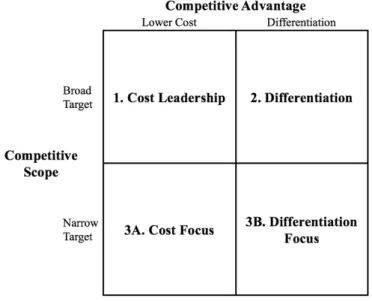
Figure 1 – Three Generic Strategies (Porter, 1985) ... 12
Figure 2 – CAGE distance framework (Ghemawat, 2007) ... 16
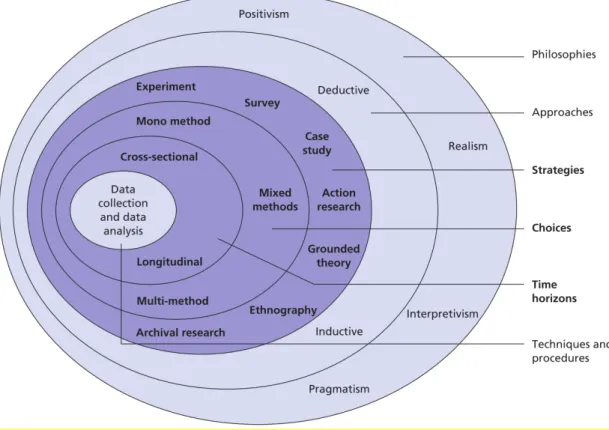
Figure 3 – The Research 'Onion' (Saunders et al., 2009) ... 18
L
IST OFS
YMBOLS,
A
BBREVIATIONS ANDA
CRONYMS;
Approx. Approximately
CAGE Framework Cultural, Administrative, Geographic and
Economic Framework
CEO Chief Executive Officer
CRM Customer Relationship Management
ECB European Central Bank
EEA European Economic Area
EFT Exchange-Traded Funds
ESM European Stability Mechanism
EU European Union
FGV EBAPE Fundação Getulio Vargas Escola Brasileira
de Administração Pública e de Empresas
GDP Gross Domestic Product
PLC Product Life Cycle
A
BSTRACTMoving into a new and foreign market can be challenging, especially when such market
has a different culture and working environment in comparison to the home market.
Thus, it is of utter importance to adjust a company’s strategy to the new market
conditions. Currently, there are no concrete guidelines of what aspects are most
important when moving from a developing market such as Brazil into a more
sophisticated market like Europe, or vice versa. The present study will examine two
companies from the same industry, but with different cultural backgrounds and its
strategic similarities and differences for operating in multiple international markets. The
data was collected via semi-structured interviews with the Chief Executive Officers
(CEOs’) from both companies, using an interview guideline that is based on three
different theoretical frameworks. The aim is to give recommendations to these two
industries of how to efficiently use existing theoretical frameworks and which aspects
are most significant when moving into a new market while keeping in mind a
company’s size and background.
Keywords: Brazil, Europe, Market Entry Strategy, Similarities Brazilian and European
1.
Introduction
Choosing the right strategy when moving to a foreign and unfamiliar market is crucial
for a company’s success. With increasing globalization and the rising wealth of
developing countries, firms are forced to compete internationally and focus on moving
into new markets. There are already popular and widely-spread theories and concepts
about companies’ strategies and their advantages and disadvantages, but they are fail to
provide guidance on which aspects are most important when moving to new markets.
The presented research uses, Porter’s “Generic Competitive Strategies” from 1985
complemented with the “Value Disciple Model” created 1993 by Treacy & Wiersema’s,
to classify the strategies used by the observed companies’ in their domestic and
international markets. Ghemawat’s “CAGE Distance Framework”, from 2007, is used
to get a deeper understanding on how each market is perceived and targeted. The
purpose of this study is to describe the similarities and differences of two companies’
originating in different market and operating internationally. As a result, providing
guidance to different types of firm when moving into the Brazilian or respectively to the
European market.
1.1.
Contextualization and Relevance of the Problem
Globalization is challenging companies worldwide to compete with their counterpart in
other countries, and at the same time it is enabling them to increase their global market
share. The most recent and rapid changes have happened, since the mid 90s, and are
expected to continue its exponential growth as information and transportation costs are
steadily decreasing. Nowadays, due to technological advances such as the internet, a
company does not have to grow to a certain size to deliver their products on the global
market. In this sense, low-cost distribution allows even small start-ups to afford
international distribution and selling their products all over the world.
1.2.
Justification of the Research Theme
One of the problems that most companies face when expanding their product portfolio
on a global scale are the economic, institutional, cultural and environmental differences
in each country of interest. Not only in regards to their choice of products, but also to
usually does not have to withstand poor and unpaved road conditions as most highway
infrastructure are very well maintained. In a country with the size of Brazil, on the other
hand, aiming for an infrastructure system as developed as in Germany is simple not
possible with the present resources, especially financially. Therefore, the expectations
for what is considered a good car option differs as well as the offered products portfolio.
This study will focus on analyzing the market strategies of two different sized
companies in the same industry with different cultural backgrounds. Research questions
will be focused on major differences and similarities in their strategies, when addressing
the “home” market of each other, respectively. The results will benefit the studied
companies to improve their current strategies and assist other companies in choosing
profitable strategies when entering a foreign market such as Brazil or Europe.
1.3.
Research Structure
The overall structure of the proposed study is divided into four major parts. The first
part focuses on the theoretical dimension of the research, highlighting the historical
willingness of companies from Europe to enter the Brazilian market and vice versa.
Additionally, the main theoretical frameworks such as Porter’s Generic Competitive
Strategies, Treacy & Wiersema’s Value Discipline Model and Ghemawat’s CAGE Distance Framework will be introduced in depth in order to analyze the two firms that will be examined. The theoretical frameworks will help establish a connection between
the firms and put them into perspective for a better understanding of the fundamental
differences of companies operating in the same industry, from different home countries
with different size and target groups. The second part is concerned with the
methodology used for this research, and will solely rely on qualitative research collected
by personal interviews. In the third part, the findings will be displayed, focusing on the
main differences and similarities when entering or maintaining their presence in a
foreign market. The fourth and final part analyses the results of the qualitative research
performed and underlines the synergies and advantages that can be created when
2.
Research Questions and Objectives
The recent economical troubles in Europe and the prolonging currency crisis in Brazil
are making investments and business expansions within these markets interesting to
analyze. These complementary facts have raised questions, among the authors’ interests,
for conducting research in the area of market expansions between Brazil and Europe.
The main objective of this research is to examine the present cultural and economical
differences between companies of each market and their implications on domestic and
international strategies. As well as to evaluate their differences and similarities as
companies’ to conclude how difficult it is to properly address the international market
needs. In this sense, to tackle this objective, several specific sub-goals were set to
identify the most important aspects when entering a developed market, or even an
emerging market such as Brazil. Therefore, interviews were conducted to the manager
from companies with different geographical coordinates, but operating in each other
markets. The concluding section of this research will help companies, who are planning
to move across the Atlantic Ocean, to better assess their strategy.
2.1.
Main Research Question and Sub-questions
By focusing on a specific industry and research area, this study aims to present the data
collected and relevance of the findings. Aside from the specifications of the two firms,
which originate from different markets and are operating not far from one another, will
enable the proposed study to identify main differences among them. The following
research question will act as a guideline and a portrayal for the main topic of interest:
What are the main differences and similarities of a Brazilian and a European firm when addressing the others’ market?
Furthermore, sub-research questions will assist in identifying the market analysis and
penetration strategies of the examined firms. They will identify such similarities and
differences, which are expected to be present as the firms have different cultural
backgrounds and working environment. These questions are as followed:
• What are the aspects which describe the Brazilian and the European market best?
o Are there huge differences within the European market or can it be
o How can the Brazilian market be addressed according to geographical
regions? What are their main differences?
• What is the main purpose of a local partnership?
o To what extent can a local partnership assist?
• What are the most important political aspects (i.e., tax-systems, infrastructure,
etc.) when entering a foreign market?
• How does the domestic strategy influence the international market approach?
These sub-questions are key issues that will assist in understanding this study’s main
research question. These questions, respectively, will also be used as a base for the
interviewing guidelines, which is going to further analyze the entry market approach
3.
Literature Review
The following chapter will introduce and explain three different theoretical frameworks
that are used later to analyze the studied companies and put them in perspective to one
another. The described frameworks are Porters’s: Generic Competitive Strategies,
Treacy & Wiersema’s: Value Discipline Model and Ghemawat’s: CAGE Distance
Framework.
3.1.
Porter’s: Generic Competitive Strategies
In 1980, Michael E. Porter identified the three broadest strategy levels, which at the
time were implemented in the most successful firms:
1. Overall cost leadership
2. Differentiation
3. Focus
According to Porter (1980) and his Five Forces Theory there are three main generic
strategies that leads a company to outperform its competitors. The initial three strategies
were later extended to “four” strategies in which the focus strategy is split into cost
focus and differentiation focus to better address the customer needs (see figure 1) (Porter, 1985).
Figure 1 – Three Generic Strategies (Porter, 1985)
The cost leadership strategy focuses primarily at reducing the costs within an organization, while charging average industry related prices. Another possible way, in
price. In both cases, the overall profit of the firm increased due to its lower
organizational costs, when compared to its competitors (Porter, 1985).
A firm pursuing a differentiation strategy is trying to be unique with those aspects that
are most valued for customers. By choosing one or more attributes of a product and
making them better than the industry standard’s, the firm can charge a premium price
and later compensated for the money invested within the development phase (Porter,
1985). The most common attributes firms change to be unique are features,
functionality, durability, support and brand image. A challenge firms face using this
strategy is the fact that as soon as they loose their “uniqueness”, i.e. different or
above-average, it will loose its customers as they are no longer willing to pay a premium price
for their product. (Porter, 1996)
In a previous book, Competitive Strategies (Porter, 1980), Porter identified the third
generic strategy he named focus. He later distinguished this strategy into two when
introducing his work on Competitive Advantages (1985) five years later. By proposing
to split the focus strategy into a) cost focus and b) differentiation focus, Porter
underlined the fact that the strategies targeted at a broad competitive scope can also be
applied to a narrow competitive scope. Any company operating within a niche market,
has to ensure that it is adding extra value to the customer and deliver a better service
than a commercial product provided by a bigger, more resourceful competitor from the
broad market. The extra value can be on the low cost side. For example, a lower price
can be offered to the customer by providing knowledge about specialized suppliers. On
the other hand, a firm operating within a niche market can offer a well-specified product
by knowing its customer needs very well and providing them with an optimal product.
As customers in a niche market are usually very loyal it makes the market unattractive
for bigger firms to enter and competitive advantages remain sustainable over a longer
time period compared to a broad target group. (Porter, 1985)
One must be aware that there are some limitations to Porter’s generic strategies. Porter
does not explain how to implement any of the strategies in a real world scenario. He
fails to clarify why it is not advisable to pursue more than one strategy at a time, since
according to him if a firm does it will end up “Stuck in the Middle” (Calantone, 2004).
Also, in the area of differentiated products, companies have shown that they are able to
Macmillan & Tampoe (2000) go even further in questioning that costs can not be
disregarded, no matter how differentiated products are. Another limitation of Porter’s
generic strategies is that it does not take external effects enough into account, by for
example looking at different market opportunities in fast-growing or emerging markets
(Lynch, 2003). As Porter´s framework does not discuss in detail the drivers of
differentiation. That´s why we need a framework that can shed light on the different
paths to generate value, discussed below.
3.2.
Treacy & Wiersema’s: Value Discipline Model
The Value Discipline Model from Treacy & Wiersema (1993) has first been introduced to the public in the Harvard business review in 1993. The article “Customer Intimacy
and Other Value Disciplines” describe three ways of becoming a market leader.
1. Operational Excellence
2. Product Leadership
3. Customer Intimacy
These three ways reflect in a sense, the previously described framework, Porter’s
generic strategies cost leadership, segmentation and differentiation strategies. The
difference between the models is that Treacy & Wiersema extend their model with
value disciplines, which gives it a deepened focus on the customer relationship.
Whereas Porter’s model is mainly focused on the overall market situation (Dimitroff,
2011).
The first strategy, operational excellence, is characterized by four principles. Starting
with “the management of people”, which includes well trained employees who are
doing their job on the most efficient and cheapest way possible. The second principle,
“efficient transaction” aims at a full supply chain in order to maximize the efficiency of
every entity involved. “Information technology” represents the opportunity to ensure
constantly high quality and cost control. The fourth and last principle, in order to
achieve operational excellence, is “customer service”. A good communication between
a company and its customers relies on the managing of customer expectations and
fitting them to the product portfolio. The corporate dimensions, which are increased by
aiming for operational excellence are an optimized cost structure, a highly adaptable
creating more efficient and quicker processes (Treacy & Wiersema, 1995). This value
discipline has similarities with the cost leadership generic strategy proposed by M.
Porter (1985).
A Product leadership strategy is aiming at providing the best possible product to the market and is highly valued by the customer. The main concept, while using this
strategy, are the encouragement of innovation, risk-management in terms of directing
the portfolio activities, the acknowledgment of past success of the firm and attraction of
new talent as a foremost resource and last but not least the willingness to educate and
lead the market by introducing new innovational products and services. Once these
principles are embraced through out the firm, it will benefit in the following
dimensions. First of all, by maintaining the high level of capabilities in delivering
products to the market, while continuing to improve the overall service capabilities.
Secondly a firm, with a product leadership strategy, will have an intellectual leverage
compared to its competitors as it is constantly attracting new talented people. Lastly as a
result, of the first two dimensions, the responsiveness will strongly be increased and
making it easier to adapt to new market conditions (Treacy & Wiersema, 1995).
Examples of firms with such a strategy are Apple, Google or Nike.
The last strategy describes by Treacy & Wiersema (1995), customer intimacy, is
comparable to the focus strategy of Porter (1980) as it is targeting at a niche market with
a very good understanding of the customer needs. The principles needed for an intimate
customer strategy are a “hollow delivery system” and “creating deep relationships”. A
hollow delivery system describes the fact that the strength of a company does not
necessarily lays in ownership, but in the capability of coordinating expertise and deliver
full solutions. When creating deep relationships, a company must be willing to allow
breakthrough thinking in order to improve the customer’s situation and should not focus
on short-term revenue. Positive dimensions created out of this strategy are a strong
product identification, a short cycle time and the range in which the products can be
delivered (Treacy & Wiersema, 1995).
3.3.
Ghemawat’s: CAGE Distance Framework
The cultural, administrative/political, geographic and economic (CAGE) framework
helps to identify the key differences of two countries. Furthermore, is it used to
how difficult it is to expand into a new market (Ghemawat, 2007). For the purpose of
this study only the CAGE framework at the country level will be described and can be
seen in figure 2.
Figure 2 – CAGE distance framework (Ghemawat, 2007)
The cultural distance is referring to specific attributes, which are defined by the people living in a country. Cultural differences such as language, religion, different values and
norms tend to hinder interactions between two countries. Language in this sense might
be the most obvious and feasible distance between two countries, but different values
and norms such as the fact that Chinese tolerate copyright and infringements more than
western countries can make working with them more difficult. An example for a
unilateral distance could be the cross-border relations which for insular countries is
relatively low (Ghemawat, 2007).
The administrative distance is comprised of laws, policies and institutions, which usually have political background and are enforced by governmental instruments. Next
to country specific politics, are international organizations and agreements also part of
the administrative distance. Countries tend to have a lot smaller administrative distance
to countries that where previous colonies due to their related culture and similar legal
systems. Other ways in order to reduce the distance of two or multiple countries are to
decree trade and/or currency agreements such as the foundation of the European Union
(EU). The member states of the EU already have a short geographical distance and as a
result of the Schengen agreement have decreased their administrative distance
decrease distance between the members and its companies as it establishes
environmental standards, such as the fight against the corruption and bribery, that lead
to more global trade (Ghemawat, 2007).
Geographical distance isn’t solely about the physical distance of two countries. It has been proven that the further two countries are apart the less likely it is that they conduct
business, but it is not the only attribute that has to be considered when measuring the
geographical distance. Other bilateral attributes are the fact if they share a land border
or not, have different time zones or climates, as far as transportation and communication
infrastructure that have to be considered in a geographical as well as economical
distance. Unilateral attributes are the access to an ocean or not, the topography or a
country and the size of country. These attributes are especially important when
analyzing big countries such as Russia, China, India, Brazil, Canada or the United
States (Ghemawat, 2007).
Economic distance refers to differences in the per-capita GDP of countries and shows big differences when analyzing rich compared to poorer countries. Rich countries tend
to have more cross-border activities as poorer countries, rich countries generally have a
higher average income due to their higher education and skill levels of their population.
Moreover, countries highly differ in terms of natural and financial resources, resulting
in more or less advanced infrastructure and information technology. Interactions
between rich-rich and rich-poor nations also vary, as rich-poor interactions focus more
on arbitrage as the poor country wants/needs the FDI of the rich and companies from
rich countries often want to slice their value chain internationally to be less depend on
the local economic situation and to profit from the lower wages. Therefore, physical
distance isn’t always bad as it can help to diversify a countries/companies portfolio and
4.
Research Methodology
The methodology of this study is based on the research onion from the book “Research
Methods for Business students, 5th Edition” by Mark Saunders, Philip Lewis and Adrian
Thornhill. Saunders et al. have created the “research onion” in order to clearly distinct
between the design and tactics of a research study. Resulting in six layers from which
three are concerned about the overall design/plan of the research; Strategies, Choices
and Time Horizon. The outer two layers being more concerned about the Philosophies
and Approaches used and all playing a role within the center of the onion ensuing the
Data collection and data analysis. (Saunders, Lewis, & Thornhill, 2009) All of the above can be seen in the figure 3 below.
The following chapter will describe the methodology used by linking it to the research
onion. The six layers of the onion are an effective way to present and visualize the
methodology.
4.1.
Generating the Research Idea
In order to generate the research idea two different approaches were used, the rational-
and creative thinking. According to Saunders et al. (2009), the first stage the rational thinking includes the following initiatives:
• Examining your own strengths and interest
• Looking at past project titles
• Discussion
• Search the literature
• Scanning the media
The second stage the creative thinking is comprised of:
• Keeping a notebook of ideas
• Exploring personal preferences using past projects
• Building relevance trees
• Discussion of ideas with colleagues
Using these attributes, the researcher developed, over the time period of several months,
his main research idea. Major stages towards the final research idea during this time
period were the discussions and brainstorming meetings, of possible ideas, with
multiple professors and fellow students. Once a certain direction of research ideas was
visible a rough literature review helped to identify the most interesting and promising
research idea.
4.2.
Research Philosophy
The first layer of the research onion focuses on the research philosophy, meaning to
create new knowledge which has not been achieved by previous studies. There have
been many studies in the past about the Brazilian as well as the European market,
nevertheless this study focuses on the market approach of companies from these
countries/continents on the respective others foreign market. Regarding the four
dimensions, mentioned by Saunders et al. in respects to the first layer: Positivism,
Realism, Interpretivism and Pragmatism (Saunders et al., 2009). This study relies on
sample size and limited time (Running, Ligon, & Miskioglu, 1999). Next to personal
interviews the study will also relate to secondary data and existing theories.
4.3.
Research Approach
The second layer of the research onion is concerned about the research approach, there
are two different kind of research approaches, the deductive and the inductive approach.
Both of them being fundamentally different, the deductive approach derives hypothesis
from an existing theory, in order to observe and finally confirm or refute the entire
theory. The inductive approach on the other hand is the complete opposite; The
researcher starts by observing a certain event/occasion, recognizes a pattern, derives
hypothesis and finally comes up with a new theory (Fereday & Muir-Cochrane, 2006).
This study will use a combination of the inductive and deductive approach. Using
multiple existing theories and concepts, the two firms’ market approaching strategies
are analyzed and evaluated on a managerial as well as cultural basis. In addition to the
interviews conducted in both firm, secondary data will be used to emphasize the key
findings of the primary data collection.
4.4.
Research Purpose
When pursuing the classification of a research purpose it is important to point out that
commonly a threefold of exploratory, descriptive and explanatory is used. Nonetheless,
the research purpose can, just as the research questions and objective, be descriptive and
explanatory at the same time (Saunders et al., 2009) and/or change over time (Robson,
2002).
An exploratory research purpose is generally used to identify the what exactly is
happing within a certain process and to achieve a deeper understanding of the process to
analyze it in a new way (Robson, 2002). There are three different principles when
having an exploratory related research purpose: 1. A mere literature search, 2.
Interviewing experts/insider or 3. Conducting focus groups (Saunders et al., 2009).
A descriptive research purpose in the other hand, is concerned about the portraying a
very precise picture/profile of a situation, event or person (Robson, 2002). Therefore, it
is necessary that have a very clear picture of the to study phenomenon/situation and
management studies it is common to combine a descriptive and explanatory study as the
descriptive study is precursor. Combined studies with a descriptive and explanatory
purpose are called descripto-explanatory studies (Saunders et al., 2009).
As described earlier explanatory studies usually use a descriptive study as basis or are
combined into a descripto-explanatory study. They focus on establishing a relationship
between two variables, generally explanatory studies use quantitative data and statistical
tools such as SPSS or R to determine the correlations and relationships of the variables
(Saunders et al., 2009).
Due to the lack of precursor studies in form of descriptive studies and the deficiency of
quantitative data, this study has an exploratory research purpose. With the use of two
principles, a literature review on the subject and data from interviews with insiders (two
CEOs` of international corporations).
4.5.
Research Strategy
There are multiple research strategies that will help researches to get the right
information, depending on the type of study conducted and the volitional results one
strategy can be more adequate than others. Saunders et al. (2009) consider seven
constructive strategies when conducting managerial or business studies: Experiments,
survey, case studies, action research, grounded theory, ethnography and archival
research.
The nature of this study implies finding the similarities and differences of two
companies when entering each others “home” market. Therefore, this study is will have
a case study strategy with a multiple (2) cases approach. A multiple cases strategy uses
the findings occurring in one case to establish a connection to the other and detect these
findings occur in both cases. Lastly, with a multiple cases strategy it is possible to
compare the findings of both generalize them, find similarities and differences (Yin,
2003).
4.6.
Research Choices
While getting closer to the inner circle of the research onion, one needs to decide to on
what kind of data will be collected; Qualitative, quantitative data or a mix of both.
databases with a relatively large sample. This type of data is easier to analyze with
statistical techniques and generate more numerical data than data collected by
qualitative methods. Qualitative data, on the other hand, are usually collected via
interviews and therefore does not have a large sample size. The advantage of qualitative
data lays in the depth of collected information, it does not have the restrictions of a
survey or questionnaire. It can refer to more than just word or numbers it can include
pictures and videos (Saunders et al., 2009).
The qualitative methods with a single single data collection technique was chosen for
this study, due to the limited time available. This study collects all its data via in-depth
interviews and uses qualitative data analysis procedures explained later.
4.7.
Time Horizons
Regarding the time horizon of a study, a decision between a cross-sectional and
longitudinal has to be made. A cross-sectional study is only concerned about a specific
phenomenon at a particular part in time. Whereas a longitudinal study is focused on
change and development over time (Saunders et al., 2009).
As mentioned earlier this study is focused on two specific firms and their point of view
on the others market and market entry strategy at the current time. Therefore, a
cross-sectional time-horizon is chosen.
4.8.
Data Collection and Analysis
The qualitative data have been collected via semi-structured interviews using an
interview guideline (see Appendix 1). The interview with the CEO of Buddemeyer is
conducted in person as part of a visit of the production sight in southern Brazil. The
second interview, with the CEO of Vertty, was held via skype due to big distance to
Portugal.
The retrieved data of the interviews will be analyzed by using a standardization table
and triangulation (Saunders et al., 2009) methods to be able to make the answer of the
two interview partners comparable. The standardized interview result table will display
the answers, of both interview partners, to the interview guideline questions next to each
4.9.
Interview Guideline
The interview guideline used for the two semi-structured interviews can be found in
appendix 1. It has been divided into four groups of questions. The first aiming at general
information, learning more about the history and overall structure. Afterwards, the
questions are related to the introduced frameworks and intend to let one identify the
company’s strategy and positioning by focusing on Porter’s generic strategies, the
5.
Analysis of the Research Results
The following chapter will display the current situation of the European and Brazilian
economy, introduce the interviewed companies and analyze the interview outcomes.
The outcomes are going to be used to classify each company’s general strategy as well
as the specific strategies in the domestic and international market with more detailed
view on the Brazilian and European market.
5.1.
The Current Economic Context of Brazil and Europe
Below the current status of the Brazilian and European economies are displayed and
contextualized, on the bases of well-grounded information given by international
institutions and governments, to better understand the situation and statements of the
interviewed companies.
5.1.1.
Brazilian Economic Context
Brazil is the fifth largest country in the world in terms of size and population
(approximately 200 million inhabitants since the 2013 census). The life expectancy has
been rising steadily in the past twenty years from an average age of 69 years old in 1996
to 74 years old in 2003 (The World Bank, 2014c). Another aspect why Brazil is
becoming more significant and of interest on an international scale is due to their
decreasing poverty level. In 2006, 17,3% of the Brazilian population was living under
the poverty line, this number has decreased to an astonishing 8,9% in 2013 (The World
Bank, 2014d). Brazil’s Gross Domestic Product (GDP) per capita grew very rapidly
between 2002 and 2011 from 2.800 USD to over 13.000 USD in 2011 (The World
Bank, 2015). In the past years, however, Brazil like many other South American
countries, has suffered from a stagnating and decreasing GDP growth. Nevertheless, it
is expected to rise again from 2016 onwards due to foreign direct investment attracted
by the low currency (The World Bank, 2014e).
The increased life expectancy rates and the strong decrease of poverty are both
indicators that consumerism from the Brazilian population will increase significantly in
the future (Ravenhill, 2011). In recent years since 2011, Brazil’s economy has
experienced multiple drawbacks as the result of multiple, and highly widespread by the
media, corruption scandals, as well as an increasing inflation rate (The World Bank,
and stead GDP growth at the time, but as the GDP growth is presently stagnating the
country is facing trouble in the international markets for its undervalued currency
(Jorge, Jorge, & Higonnet, 2014). In march 2015, Brazil has passed multiple
anti-corruption measures to prevent big scandals, such as the Petrobras scandal, from
repeating in the future (Alves, 2015). Brazil’s recent measures has helped to find a
solution for the rapidly decreasing value of its currency, which is to sell its monetary
reserves. This measure has a short-term effect, however, in the long run foreign direct
investments will be needed to help the country to stabilize its currency (Economic
Policy Board, 2015).
5.1.2.
European Economic Context
The European economic market is commonly known as the European Union (EU). This
assumption is only partially true since the EU only represents the 28 members’ state and
not all the countries participating in the European economic market. However, the EU is
currently considered the biggest trade union worldwide (European Commission, 2012).
A different way to analyze the European market is to look at the European Economic
Area (EEA), which next to the EU member states’ also includes Iceland, Lichtenstein
and Norway (European Free Trade Association, 2014). Due to the well-grounded and
public accessible data provided by the EU, this study will focus mainly on the economy
of the European Union.
The European Union has a collective population of over 500 million people and
comprises over 4 million square meters in geographical terms. The life expectancy,
within the EU, has risen in the past 10 years. For men, it has increased around four
years, from 74 to 78, and two years for women, from 81 to 83 years old. In regards to
unemployment rates, there have been negatively increasing. For youth unemployment
(younger than 25 years) there has been an increased from 18,7% in 2003 to 23,5% in
2013; while unemployment between 25 to 74-year-old citizens has risen from 7,8% in
2003 to 9,5% in 2013 (European Commission, 2015). On the other hand, the combined
GDP per capita of the EU member states has grown from 24.000 USD in 2003 to over
35.000 USD in 2013 (The World Bank, 2014a). Between 2004 and 2007, the GDP
growth was between 2 and 3 percent followed by a negative growth of over 4 percent in
2009, that later on led to a stabilized GDP growth within the EU of 1% in 2014
The significant increase of youth unemployment rate and the decrease of growth in
GDP per capita can be traced back to the financial crisis starting in 2007-2008
(Karanikolos et al., 2013). When analyzing unemployment rates, caution must be taken
for not generalizing the EU data, but to acknowledge that there are big differences
regarding the different member states. The large youth unemployment increase has
mainly taken place in southern European countries such as Portugal, Spain and Greece
(Verick, 2009). Economic measures such as the European Stability Mechanism (ESM),
has allowed the EU to bail-out some of the most affected states from collapsing by
giving them loans to pay of their country’s debts (Christova, 2011). Another proactive
measure currently used by the European Central Bank (ECB), is to support more growth
by lowering interest rates in order to make investments more attractive (Dudian & Popa,
2013).
5.2.
Introduction of Interviewed Companies
The first company that was interviewed was a Brazilian company called Buddemeyer, a
textile company located in the south of Brazil in São Bento do Sul. Buddemeyer
produces bedding, towels and bathrobes for kids and adults, with the toweling sector
being their main business accounting for 70% of the revenue.1 The company was
founded in 1952 by a German immigrant and his two sons. The well-grounded
knowledge of the founder in the area of textile machinery helped the company to grow
rapidly and the creation of a strong brand reputation in the Brazilian market. In 1971 the
company expanded to new markets trough exports to Europe and the United States. The
1990s were a special time for the company as they started to develop a stronger brand
name in international markes, trough the substitution of their previous strategies of
production for other fashion brands. Nowadays, the company is still a family business
and is led by the third and fourth generation, being the only the south American
company that is invited to display its portfolio at the biggest home textile exhibition
(Heimtextil) of its kind in Frankfurt, Germany indicating its high standards and quality.2
From the European market a young start-up from Portugal was interviewed. The
innovational towel brand, Vertty, was founded in 2012 by three Portuguese students
1
Information gathered in an interview with the CEO of Buddemeyer; Rolf Buddemeyer
2
who were not satisfied with their beach towels and saw improvements possibilities.3
Vertty’s mission is to “Reshape the beach” and “Create a unique beach towel”, they are
trying to reach this mission by turning a common object into a trendy accessory by
creating a towel with a modern design, light weight and large size. The biggest change
of their innovational towel was the embedment of a waterproof pocket within the towel
to store valuables, an environmental friendly and honest production method without
child labor and fair wages.4
5.3.
Interview Outcomes
The interview outcomes are displayed below, following order of the questionnaire, with
one paragraph per company in each section. All the information mentioned below was
gathered through personal interviews with the CEOs’ of each company. The initial
information provided can be found in the table in appendix 2.
5.3.1.
General Information
Buddemeyer has two production sites; one in São Bento do Sul in which the products
are being finalized and one preprocessing site located 16km outside of São Bento where
cotton is refined and colored. As mentioned above the company generated 70% of their
revenue in the toweling sector, within this sector their revenue is split in 75% made in
the Brazilian and 25% in foreign markets. These 25 percent are generated in the
following countries in decreasing order: 1. USA, 2. Argentina, 3. Germany, 4. Canada,
5. Switzerland, 6. Japan and 7. Russia. Overall, the Brazilian toweling production is
very strong in exports to Europe & the USA. Buddemeyer account for around 5% of the
Brazilian production of towels, but has a domestic market share of 11% due to well
placed marketing campaigns and good distribution network. The company uses different
concept of market entry, because the level of difficulty in building an own trademark is
different in each market. In particular, the French and North American market are
strongly designer trademark oriented, meaning customers will only buy products from
well-known brands. Whereas the German and Swiss market are more open to unknown
trademarks. The brand name, Buddemeyer, helps when targeting these markets, since it
is from German origin and considered to be long lasting quality product. Therefore, the
3
Information gathered in an interview with the CEO and Co-Founder of Vertty; Frederico Cardoso
4
German market is one that is target with the companies own brand and exclusive
retailers chosen by region. Except in the Russian or Japanese market, the company
relies on a direct exporting strategy to have an easier access to the market. Russia and
Japan are the only markets, where local team-members are needed during the
development phase to properly adapt the offered portfolio and address the market needs.
Another exception in distribution strategy is Argentina, in which Buddemeyer has its
own distribution center to serve the market needs. When looking for market expansion
opportunities, the company has two main indicators: 1. Does the market have easy
access in terms of distribution channels? Are synergies with our current channels
possible? And 2. Visit international textile fairs to find what is missing in other markets.
Overall Buddemeyer employs 1050 people, from which 850 are purely production
related, the remaining 200 employees are administrative staff in the areas of finance,
legal, human resources and marketing & sales. The marketing & sales sector involves
around 50 to 60 people, form which eight are solely responsible for export markets,
either product development (3) or international sales (5).
Vertty launched and manufactured their product in 2013 by using first an exclusive
manufacturer in Portugal and since 2015 multiple manufacturers, located in Portugal,
South Africa and China. In the first two years after its product launch the company sold
exclusively online. During 2015 the company started offering their products in stores as
well, by choosing global external retail partners. As a result of the shift to the offline
market, in 2015 Vertty sold 50% online and 50% at partner stores. In 2016 the online
versus offline sales are expected to change even further to 25% online and 75% offline
sales. The main market for Vertty are: Australia, United States, Portugal and South
Africa. Vertty is no longer supplying the Brazilian market due to reason, which are
going to be explained further into the interview outcomes. The concept of market entry
used by Vertty is primarily with the use of sales agents and distribution partner, only on
special requests made via email or on trade-shows does the company sell its products
directly. Exclusive local representatives are chosen in the following markets: Belgium,
Netherlands, Luxembourg, Estonia and South Africa, whereas the partner in South
Africa is part of a joint venture. Multiple local representatives are used in the markets of
Australia, United States, Israel, France, Italy, Qatar and Dubai. When entering a new
market, no local team-members are used, as they consider their products as passion
sports (e.g., surfing, swimming, sailing, etc.). In combination with the company’s
unique communication strategy, they believe that a big adaption of the product portfolio
is not necessary when moving into new markets. Vertty’s organizational structure is
very flat, due to its small size of only 5 to 7 employees. Within the company everyone is
working in every area of the business, but nevertheless has its responsible as the chief of
management, design, marketing, operations or finance sector.
5.3.2.
Porter’s: Generic Competitive Strategies
Both companies were asked to explain their general strategy in order to classify their
company according to the generic competitive strategies from Porter.
Buddemeyer’s product prices are very competitive, when presented on a market, such as
the Unites States, with the same conditions to all firms present. When competing on the
European market, the company faces issues regarding import taxes, which they
competitors from Portugal and Turkey are mostly exempt from. Their target clients are
primarily in the premium segment and as mentioned above the market is reached by
direct exports to whole sellers. Usually Buddemeyer keeps a certain strategy for four to
five years to build a strong bond between them and the retailers/partner. The
commitment to the partner depends on their performance in selling the products, if the
sales numbers are too low the partner gets dropped and a new partner is selected. There
are different stratgies for different markets, depending on the willingness of the market
to accept an own trademark or not. As spoken of, in the general information, for
example in Germany Buddemeyer can sell its own brand without using a private brand
(i.e., Armani) and has much higher profit margins as in markets such as France. Putting
their general strategy in Porter’s Framework, the company’s strategy can be explained
as differentiation strategy targeting a broad market.
Vertty as a very young, start-up, company on the other hand has started with a pure
online sales system in the beginning in order to find out how willing the market is to
adapt their products. The initial stock of products was sold out within six months on the
market, with buyers from over 50 countries ranging from Canada to Australia, and
proved that the demand of their product was big. The second phase of the company’s
sales strategy involved moving to the offline market with retail partners’ worldwide.
Vertty’s future sales plan is to move more and more in the offline market, with higher
markets, the company uses different communications strategies, in more mature markets
the product is placed in a niche targeting beach sports such as surfing, sailing or kiting.
On less mature markets the company chooses a broader communication strategy
targeting not only the niche, but every potential customer, which includes everyone
going to the beach. According to Porter, Vertty is therefore perusing two different
strategies. In less mature markets they are targeting a broad customer group with a
differentiated product and on more mature markets they are targeting a niche also by
using a differentiation strategy.
5.3.3.
Treacy & Wiersema’s: Value Discipline Model
Treacy & Wiersema categorize a company with their value discipline model and
describe them either as focusing on operational excellence, product leadership or
customer intimacy. Following, the two interviewed companies will be categorized as
perusing one or more focuses according to the framework.
Buddemeyer uses different pricing strategies depending on the market, in the Brazilian
as well as the market in the United States the company offers lower prices, with similar
or better quality, than the competition. In other markets such as Europe or Asia this
pricing strategy is not possible due to high import and transportation costs. The
investment in R&D, mainly product development, is higher than the competition.
Investments in new machinery is being approved when a new trend comes to the
market, which cannot be followed with the current machinery. As a result of the fully
integrated supply chain, the production capacity is very flexible and highly adaptable.
Therefore, the company tries to have a shorter product life cycle (PLC) than its
competitors and deliver a new product to the market every six months. The relationship
with the customer, especially the private labels, is usually very deep and Buddemeyer
tries to protect its customers’ products from piracy. Other key success factors mentioned
were; the very good understanding of what the customer wants and a 100%
anti-complaint strategy, that implies all products that have a defect will be exchanges
regardless of if the problem accrued due to mistakes of the company or the customer.
Taking all the above mentioned factors into account, the company can be describes as
focusing on product leadership and customer intimacy, all while being aware that
operational excellence will help to bind the customer closer to the company and
Vertty uses a similar pricing strategy in each market and generally offers its products at
a higher price compared to the competition. The research and development expenses are
also higher as the company tries to deliver the perfect product to the market and needs
to be up-to-date on the newest technologies and trends. As a result of its high
investment costs the product life cycle is much longer than the competing products.
Vertty is targeting niche markets as well as broad markets, therefore the communication
between them and the customer needs to be very close and intimate. A combination of
their easy to buy online platform and representative in the offline location the firm
manages to have a very personal and dedicated customer-relationship. Regarding
Treacy and Wiersema’s value discipline model, Vertty is focusing on customer intimacy
and product excellence. The operational component is completely outsourced and
doesn’t play a big part in the future of the company.
5.3.4.
Ghemawat’s: CAGE Distance Framework
Ghemawat’s CAGE distance framework displays a companies a company’s main
challenges regarding culture, administration (political), geographic and economic
distance. The following chapter will show the evaluations of the companies towards
international markets, with the main focus on Brazil and Europe, concerning the CAGE
framework.
5.3.4.1. Cultural Distance
For Buddemeyer the biggest cultural challenges to overcome, when moving to the
European market were the different norms and customer habits, in each country, for
example the Netherlands have a different pillow size than Germans and Switzerland yet
another. Not only the norms and habits are different across European countries, also
their expectation of to the product regarding design, color patterns and functionality.
Looking at their home market, Buddemeyer identified a cultural difference between the
people from the north and south, the north being much more conservatives than the
south.
For Vertty the biggest challenge to overcome, when moving to a new international
market is to keep control over all the distribution in all the different markets. Each
country has its own way, time and quality of getting work done. For a small company
worldwide in order to not decrease their profit margin. The cultural differences between
Europe and Brazil does not play a big role to Vertty as their products target a specific
niche, which has a similar mindset world wide.
5.3.4.2. Administrative Distance
On the administrative side the most important political aspect, for Buddemeyer, is the
tax and duty system of a foreign market. When comparing Brazil to Europe the tax
system is not very complex in Europe, but nevertheless has a high burden for non-EU
members. Therefore, competitors from Portugal and Turkey have a cost advantage. The
Brazilian tax system is very complex, even though the burden overall is not high the
complexity makes it more expensive than the European. Buddemeyer identified a big
advantage of Europe over Brazil in the infrastructure, which is very well developed in
Europe, whereas in Brazil there is a lot of investment needed. The biggest challenge to
overcome in the domestic market is get out of the comfort zone of the subsidies
provided by the government and change the traditional mental framework of most
Brazilian companies that it is difficult to compete internationally. On the other hand, the
biggest challenge to overcome, when moving to the European market, is in convincing
the customer that the stereotype of Brazilian products being low quality and price is not
true.
Vertty, as the international small global player, is most concerned about the import and
export taxes, because they may affect negatively their profit margins. In terms of
infrastructure, the company, is worried about the warehouse logistic due to the
outsources external distribution system. Vertty explained, the tax burden and
complexity for foreign products, within their industry, is very high in Brazil that the
market gets almost impossible to target, considering their profit margins expectation.
The biggest challenge, for Vertty, therefore is managing the margins of its products
depending on the import taxes. Markets such as Brazil and South Africa are very
protected, in South Africa the company managed to avoid the immense import taxes by
creating a joint venture with a local firm. Regarding Brazil, Vertty has had multiple
complaints from the customer side that shipments haven’t arrived due to customs
rejections, even though all forms and paper were filled out correctly and the taxes were
5.3.4.3. Geographical Distance
The physical distance between markets has become less important for Buddemeyer,
because transportation costs have decreased significantly in the last 20 years. Logistic
costs accounted between 7 to 8 percent in the past, nowadays being reduced to 3 to 4
percent. Therefore, the world has gotten smaller, when it comes to product shipments.
Buddemeyer only produces in Brazil, hence it transports its products first to the nearest
port in Itapua and from there via ships all across the globe, once on the right continent
land transportation (i.e., trucks and railroads) are used to deliver them to the final
destination. When asked how and if the European market can be target as one or
bundled, Buddemeyer does not agree and says that they strategy is to target specific
countries or even regions within countries. Each country needs to have its own sales
agent, which speaks the local language, only the British and Scandinavian market can
be bundled and targeted with one sales agent as they don’t mind bargaining in English.
Especially within the French market, the company, has discovered through experience
that a local sales agent is irreplaceable. The Brazilian market is targeted in a similar
way, state by state and in case such as Sao Paulo or Rio de Janeiro even supported by
multiple sales agents. The product expectations are different in each state or region due
to their unique colonial background, only in northern Brazil does the company use one
sales agent for multiple states due to big distances and lack of densely populated areas.
For Vertty the physical distance between markets is not a major challenge, because their
sales are either done online or handled by a local partner and the logistical costs are
relatively low due to the light weight, in spite of the volume, of their product. Another
factor that helps the company to decrease physical distance between them and the
customer is by using multiple internationally local manufacturers. The company has
outsourced the logistical part to external companies, which either deliver directly to the
end customer or in big badges to the rented warehouses by ship, plane, railroad and
trucks. The European market is partially targeted with special marketing campaigns,
only Portugal, therefore Verrty does not need to be differentiate the Europe into
bundles. The Portuguese market has its own online and offline marketing campaigns;
the other European markets are only served by the website. A difference has been
identified between northern and southern Europe, which can be explained by the
target, it was targeted as a whole with very little special marketing campaigns tailored
for Brazil.
5.3.4.4. Economic Distance
Within the economic distance Buddemeyer considers the per capita income to be the
most crucial indicator, if a market is worth moving to or not. The per capita income is
displays the average wealth of one person to spent, this is particularly important as the
demand for towels is limited. Therefore, Buddemeyer is looking for markets in which
the highest third of the population can afford their towels. Another advantage of being
located in Brazil is that it is the 5th biggest cotton producer in the world, which gives
manufacturer within a country a cost advantage over producers from countries that
need to import all raw materials (i.e., Portugal). Nevertheless, Brazil has disadvantages
in terms of skilled labor as the education level is lower compared to Portugal, in which
it is easier to find good and skilled labor. However, Buddemeyer mentioned that once
their employees are trained and skilled, they usually stay their whole career in one
company. Compared to Europe, where the employee turnover rate is much higher, that
is an advantage once the initial investment of training the employee is made. When
asked to compare the sophistication of the Brazilian to the European market, the
perception is split. On the one hand the company enjoys the level of sophistication in
Europe that the customer knows very well what kind of products they want. On the
other hand, it brings the downsides of the customer knowing the price structure of their
products too and are not willing to pay an arbitrary price. Anther downside of a high
level of sophistication is that is more difficult to bring the right product to the specific
market, which involves additional costs for the company. Looking at the capabilities of
the Brazilian vs. the European market, the European is much bigger in size, but
considering the fact that it can not be targeted as one the Brazilian market get the upper
hand over single European markets such as Italy. Observing the product portfolio of
Buddemeyer, it seems to be very competitive, with a very high quality/price ratio. This
is supported by the fact that the company accounts for only 5% of the Brazilian
production, but for 25% of the exports. At last, Mr. Buddemeyer was asked to give his
opinion on currency issues and rate the Brazilian Real and Euro. Overall, the impression
of the exchange rate of the past is negative (the Real being overvalued against the Euro)