INTRODUCTION
Corresponding author: Dra. Cléa Adas Saliba Garbin. Programa de Pós Graduação em Odontologia Preventiva e Social/Faculdade de Odontologia de Araçatuba/UNESP. Rua José Bonifácio 1193, Vila Mendonça, 16015-050 Araçatuba, São Paulo, Brasil.
Phone: 55 18 3636-2824
e-mail: [email protected]; [email protected] Received 6 January 2015
Accepted 31 March 2015
The stigma and prejudice of leprosy:
infl uence on the human condition
Cléa Adas Saliba Garbin
[1],
Artênio José Ísper Garbin
[1],
Maria Emília Oliveira Gomes Carloni
[1],
Tânia Adas Saliba Rovida
[1]and Ronald Jeff erson Martins
[1][1]. Programa de Pós Graduação em Odontologia Preventiva e Social, Faculdade de Odontologia de Araçatuba, Universidade Estadual Paulista, Araçatuba, São Paulo, Brasil.
ABSTRACT
Introduction: To analyze the knowledge, feelings and perceptions involving patients affected by leprosy, as a better understanding of these factors may be useful to decrease the stigma and prejudice associated with the condition. Methods: The study cohort consisted of 94 patients who underwent treatment for leprosy at the Health Units in the City of Cuiabá, Mato Grosso (MT), Brazil. The study questionnaire included items to collect information on socio-demographic data, knowledge about the disease, stigma, prejudice, self-esteem and quality of life of leprosy patients. Bivariate analyses were used to assess the data based on the
chi-square test with a 5% signifi cance threshold. Results: The results revealed that the study population consisted predominantly of males (55.3%) with an income between 1 and 3 times the minimum wage (67%). The survey respondents reported that the
most signifi cant diffi culties related to the treatment were the side effects (44.7%) and the duration of the treatment (28.7%).
A total of 72.3% of the subjects were knowledgeable about the disease, of whom 26.6% had the leprosy reaction. Stigma and prejudice were cited by 93.6% of the participants. Based on the responses, 40.4% of patients reported being depressed and sad, and 69.1% of the subjects encountered problems at work after being diagnosed. A total of 45.7% of the patients rated their quality of life between bad and very bad. Conclusions: Our results suggest that leprosy causes suffering in patients beyond pain and
discomfort and greatly infl uences social participation.
Keywords: Leprosy. Prejudice. Social stigma. Social discrimination.
Leprosy is a chronic infectious disease caused by
Mycobacterium leprae that mainly affects the skin and peripheral nerves and can lead to the development of physical disabilities
and potentially visible disfi gurements(1) (2). Transmission occurs
through the upper airway and manifests as skin lesions with reduced or no sensitivity, including pigment spots, patches,
infi ltrations and nodules. The lesions can affect any part of the
body, including the nasal mucosa and the oral cavity(3).
The manifestation of Hansen's bacillus can be severe and is associated with a prolonged incubation period between the initial infection and the development of skin reactions(3). The
time between contact with the bacterium and the development of the disease is approximately two to seven years, with an average
incubation period of three to fi ve years(4). Although the number
of new cases detected worldwide is in decline, some regions of Angola, Nepal, India, Brazil, Madagascar, Mozambique, Central African Republic and the Democratic Republic of the Congo remain endemic(5). Brazil recorded between 30,000 and
33,000 cases of leprosy in 2013 according to estimates by the Ministry of Health(6).
The geographic distribution of leprosy cases in Brazil is uneven and overlaps with regions of poverty, mostly in the northern, northeastern and midwestern regions. The States of Mato Grosso, Tocantins and Maranhão had the highest incidence of the disease in the country. In particular, the State of Mato
Grosso ranks fi rst in the detection of new cases with 7.69 cases
per 10,000 inhabitants. Due to the high endemicity, the capital, Cuiabá, is among the 45 municipalities selected by the Ministry of Health in 2013 to receive resources for contingent actions against leprosy(6).
Leprosy is associated with a long history of preconceived notions and is associated with stigmas related to death and mutilation. These perceptions lead to prejudice, discrimination and social exclusion, resulting in the infliction of mental suffering on leprosy patients, which can have serious repercussions in their personal and professional lives(7). During
the early 20th century, due to the lack of treatments and cures,
RESULTS METHODS
are considered segregating and exclusive. These actions consisted of health exile of leprosy patients, whereby these individuals were sent to community hospitals throughout the country(2).
Based on the idea that knowledge about leprosy may reduce prejudices and stigmas(8), this study sought to determine the
breadth of knowledge of the disease (transmission, symptoms and treatment) by leprosy patients. We also sought to analyze the feelings and perceptions, including prejudices, fears, feelings of exclusion and quality of life, in leprosy patients receiving treatment in an endemic area of the midwestern region of Brazil.
We conducted a cross-sectional, descriptive study utilizing a quantitative approach. The survey was conducted in a Reference Center for the treatment of patients with leprosy established by the Municipal Health Department in Cuiabá, State of Mato Grosso, Brazil. From the initial diagnosis of leprosy, the patients from all regions (North, South, East, West) of the capital were referred
to the leprologist doctor at the Reference Center to confi rm
the diagnosis. Subsequently, the patients scheduled a follow-up appointment with the purpose of identifying an effective multicomponent drug therapy [polychemotherapy (PCT)] to treat the disease. On average, 4 to 5 patients per day are scheduled during the morning shift over four days of the week.
The data collection occurred from April to August 2014 and covered all days of care. After clarifying the purpose of the research and the subsequent use of the collected data, a questionnaire was administered by a single trained researcher to all of the patients who
agreed to take part in the survey and signed a declaration affi rming
their free and informed consent. The data collection occurred on an individual basis in a private room in a clinic run by the researcher during the patient appointments. Using this approach, the participants were not inconvenienced by participating in the study.
Previously, we performed a pilot study consisting of 19 patients to examine the need to adapt the questions, to ensure that the patients understood the questions, and to ensure that the obtained data were reliable. Inclusion criteria were as follows: residence in Cuiabá, adult age, positive diagnosis for leprosy, no cognitive problems that hindered comprehension of the questionnaire, and signed the post-informed consent.
The structured questionnaire used for data collection was divided into the following categories for the interview: sociodemographic data, knowledge of the disease, social
participation, stigma, self-esteem and quality of life. The fi rst
section consisted of demographic characterizing the subjects regarding their living conditions. The second section consisted of questions regarding patient knowledge of leprosy, treatment options, perceptions regarding the disease, and changes in their
everyday life because of the illness. The fi nal section consisted
of questions concerning the presence of reactive leprosy episodes throughout the clinical treatment of the patient and whether these reactions affect the quality of life of the patient.
The data for the variables of the disease and the sociodemographic data are presented as frequencies. For statistical analyses, bivariate
analyses was conducted using the chi-square test with a 5%
signifi cance threshold to identify the most signifi cant differences
in the studied variables.
Ethical considerations
This study was conducted according to the standards required by Resolution 466/12 of the National Health Council and was approved by the Ethics Committee on Human Research of the School of Dentistry of Araçatuba [Universidade Estadual Paulista (UNESP)].
The losses were similar between the regions of Cuiabá (attrition rate). The survey was administered to 94 patients, most of whom were male (55.3%). All patients were between the ages of 24 and 82 years: 5 (5.3%) individuals were 24 to 29 years of age, 17 (18.1%) were 30 to 39 years of age, 22 (23.4%) were 40 to 49 years of age, 18 (19.2%) were 50 to 59 years of age, and 32 (34%) were over the age of 60.
Reported levels of education revealed that 23 (24.5%) participants were illiterate, 10 (10.6%) attained a partial primary education, 19 (20.2%) completed primary education, 10 (10.6%) attained a partial school education, 27 (28.7%) completed high school, 4 (4.3%) attained a partial college education, and only 1 (1.1%) participant completed college.
Participant responses to employment revealed that most of the individuals were working (41.5%), but many other participants were unemployed (25.5%), retired (19.2%), self-employed (11.7%) or students (2.1%). Reported incomes revealed that 8 (8.5%) participants earned less than the minimum wage, 63 (67%) earned 1-3 times the minimum wage and 23 (24.5%) earned 3-10 times the minimum wage.
In addition to the painful process of accepting the disease, the
patients must meet the challenge and diffi culties associated with
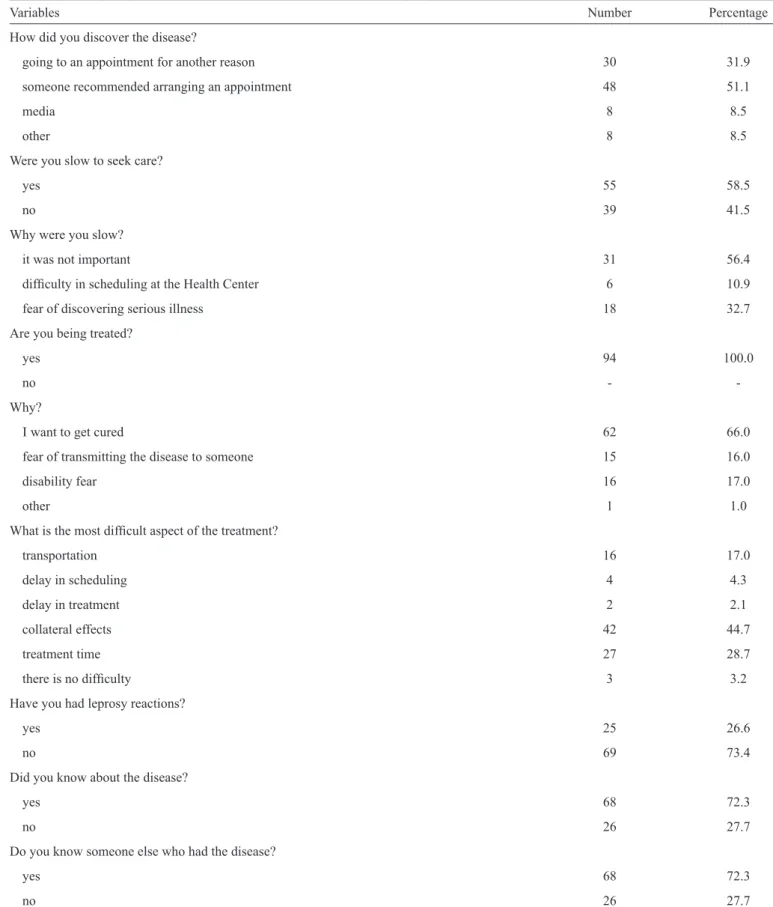
the treatment for leprosy. When asked about how they learned of contracting the disease, 48 (51.1%) participants said they discovered the condition because a family member or a close social contact advised them to make an appointment with a doctor. However, 55 (58.5%) participants delayed initiating their search for care because they felt that this was not important (56.4%). All of the patients surveyed were being treated with multidrug therapy (MDT), and most regimens aimed to cure the disease
(66%). Regarding the greatest diffi culty related to treatment, 42 (44.7%) participants stated that the most diffi cult aspect was
the side effects caused by the drug regimen. Only patients who have not started the treatment regimen can transmit the disease, as
the fi rst dose of the treatment is suffi cient to prevent transmission.
All of the patients were aware of this information.
Leprosy reactions are clinical complications that occur during treatment or after discharge from the hospital. Leprosy
reactions are characterized by acute and sub-acute infl ammatory
manifestations, and the symptoms, which include pain and physical indisposition, are caused by the action of the immune system(9). In this study, 25 (26.6%) patients reported
TABLE 1 - Study subjects’ characteristics, Araçatuba, State of São Paulo, Brazil, 2014.
Variables Number Percentage
How did you discover the disease?
going to an appointment for another reason 30 31.9
someone recommended arranging an appointment 48 51.1
media 8 8.5
other 8 8.5
Were you slow to seek care?
yes 55 58.5
no 39 41.5
Why were you slow?
it was not important 31 56.4
diffi culty in scheduling at the Health Center 6 10.9
fear of discovering serious illness 18 32.7
Are you being treated?
yes 94 100.0
no
-Why?
I want to get cured 62 66.0
fear of transmitting the disease to someone 15 16.0
disability fear 16 17.0
other 1 1.0
What is the most diffi cult aspect of the treatment?
transportation 16 17.0
delay in scheduling 4 4.3
delay in treatment 2 2.1
collateral effects 42 44.7
treatment time 27 28.7
there is no diffi culty 3 3.2
Have you had leprosy reactions?
yes 25 26.6
no 69 73.4
Did you know about the disease?
yes 68 72.3
no 26 27.7
Do you know someone else who had the disease?
yes 68 72.3
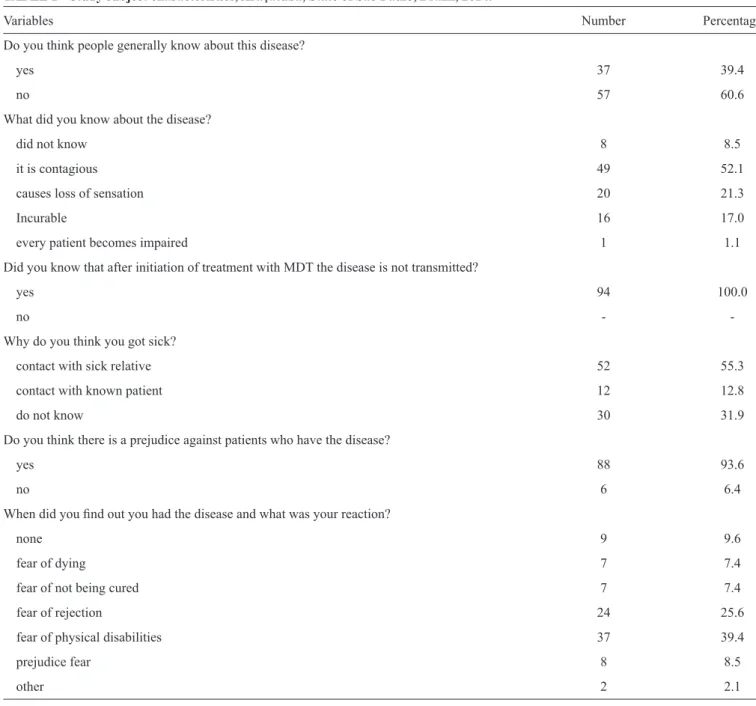
TABLE 2 - Study subject characteristics, Araçatuba, State of São Paulo, Brazil, 2014.
Variables Number Percentage
Do you think people generally know about this disease?
yes 37 39.4
no 57 60.6
What did you know about the disease?
did not know 8 8.5
it is contagious 49 52.1
causes loss of sensation 20 21.3
Incurable 16 17.0
every patient becomes impaired 1 1.1
Did you know that after initiation of treatment with MDT the disease is not transmitted?
yes 94 100.0
no
-Why do you think you got sick?
contact with sick relative 52 55.3
contact with known patient 12 12.8
do not know 30 31.9
Do you think there is a prejudice against patients who have the disease?
yes 88 93.6
no 6 6.4
When did you fi nd out you had the disease and what was your reaction?
none 9 9.6
fear of dying 7 7.4
fear of not being cured 7 7.4
fear of rejection 24 25.6
fear of physical disabilities 37 39.4
prejudice fear 8 8.5
other 2 2.1
MDT: multidrug therapy.
Regarding patient perception of the disease, most patients believed that the disease was infectious (52.1%) and that it caused a loss of sensitivity (21.3%). A total of 64 (68.1%) patients said they became ill due to contact with a relative or a known patient. Leprosy can arouse fear, discrimination and stigma toward the patients. This perception was shared by the vast majority of patients (93.6%) who believed there is prejudice against leprosy patients. The main patient reactions upon discovering the disease were fears of physical disabilities (39.4%) and social rejection (25.5%). (Table 2)
Regarding patient self-esteem, 63 (67%) of the respondents said they were depressed, and 38 (40.4%) said they were depressed and sad. A total of 36 (38.3%) patients reported
that they were no longer vain, 26 (27.7%) were afraid of dying, and 87 (92.6%) were afraid of experiencing disease sequelae.
Sixty-fi ve (69.1%) patients had problems at work: 8 (12.3%)
were dismissed from work, 16 (24.6%) were required to take time off work, 33 (50.8%) experienced prejudices within the work environment, and 8 (12.3%) reported other types of problems.
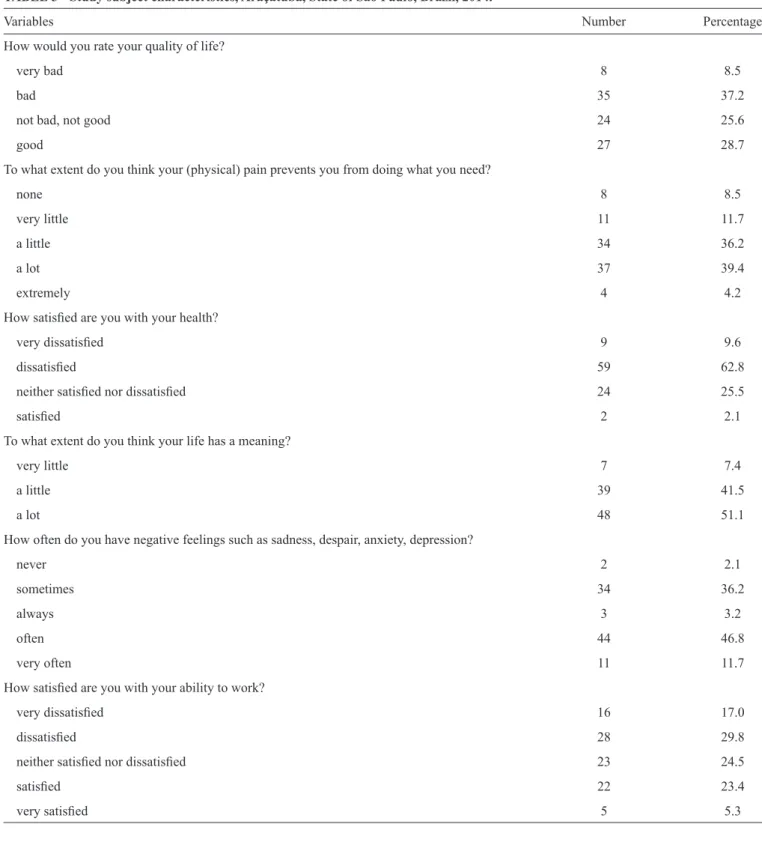
TABLE 3 - Study subject characteristics, Araçatuba, State of São Paulo, Brazil, 2014.
Variables Number Percentage
How would you rate your quality of life?
very bad 8 8.5
bad 35 37.2
not bad, not good 24 25.6
good 27 28.7
To what extent do you think your (physical) pain prevents you from doing what you need?
none 8 8.5
very little 11 11.7
a little 34 36.2
a lot 37 39.4
extremely 4 4.2
How satisfi ed are you with your health?
very dissatisfi ed 9 9.6
dissatisfi ed 59 62.8
neither satisfi ed nor dissatisfi ed 24 25.5
satisfi ed 2 2.1
To what extent do you think your life has a meaning?
very little 7 7.4
a little 39 41.5
a lot 48 51.1
How often do you have negative feelings such as sadness, despair, anxiety, depression?
never 2 2.1
sometimes 34 36.2
always 3 3.2
often 44 46.8
very often 11 11.7
How satisfi ed are you with your ability to work?
very dissatisfi ed 16 17.0
dissatisfi ed 28 29.8
neither satisfi ed nor dissatisfi ed 23 24.5
satisfi ed 22 23.4
very satisfi ed 5 5.3
For the survey questions related to quality of life, most of the patients answered bad (37.2%). Regarding questions related to restrictions in activities due to physical pain, 39.4% answered a lot. Additionally, 62.8% of respondents were
dissatisfi ed with their health, 48.9% thought that their life had little or small meaning, 46.8% often had negative feelings, and
46.8% were dissatisfi ed with their ability to work (Table 3).
We observed a statistically signifi cant association between the
presence of leprosy reactions and impairment in patient quality of life (p<0.001), and these patients chose the response bad
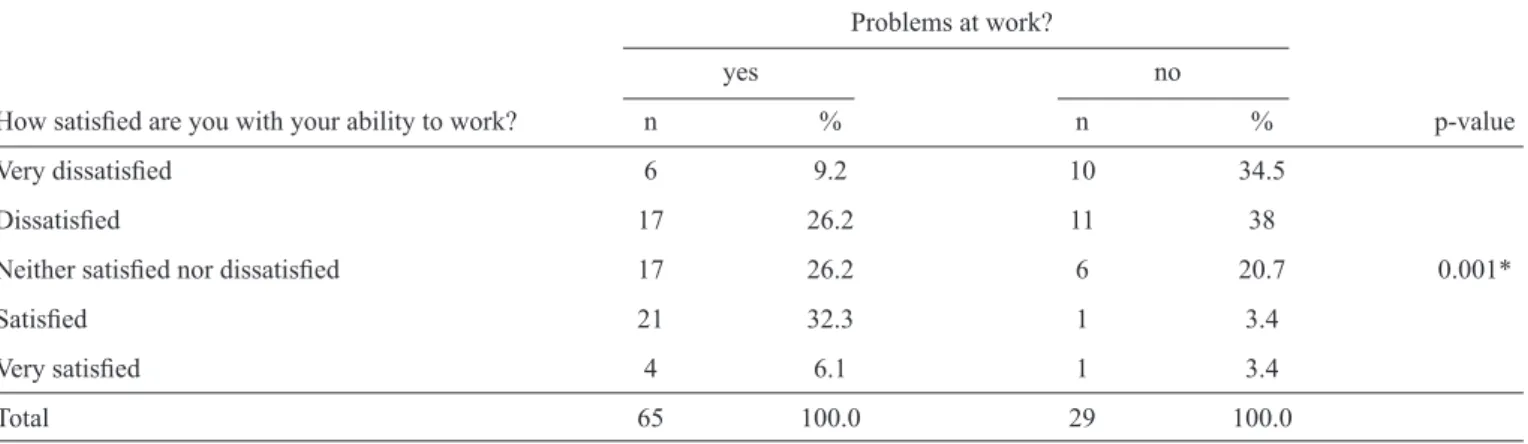
or very bad for almost all of the questions. Patients who do not display leprosy reactions largely live without jeopardizing the quality of their lives (Table 4). Table 5 shows that a
signifi cant association was also observed between the patient
TABLE 4 - Association between the perception of quality of life and the occurrence of leprosy reactions, Araçatuba, State of São Paulo, Brazil, 2014.
Have you had leprosy reaction?
yes no
How would you rate your quality of life? n % n % p-value
Very bad 8 32.0 - -
Bad 15 60.0 20 29
Not bad, not good 1 4.0 23 33.3 <0.001*
Good 1 4.0 26 37.7
Total 25 100.0 69 100.0
*maximum likelihood ratio.
TABLE 5 - Association between satisfaction with the ability to work and problems with employment, Araçatuba, State of São Paulo, Brazil, 2014.
Problems at work?
yes no
How satisfi ed are you with your ability to work? n % n % p-value
Very dissatisfi ed 6 9.2 10 34.5
Dissatisfi ed 17 26.2 11 38
Neither satisfi ed nor dissatisfi ed 17 26.2 6 20.7 0.001*
Satisfi ed 21 32.3 1 3.4
Very satisfi ed 4 6.1 1 3.4
Total 65 100.0 29 100.0
*maximum likelihood ratio.
DISCUSSION
The data in our study were collected over a 5-month period at a Reference Center for leprosy treatment involving patients who voluntarily participated in the survey. Therefore, our results and conclusions may not be generalizable to all patients or treatment clinics in Brazil.
In most regions of Brazil, the incidence of leprosy is higher in men than in women(10) (11) (12), which is consistent with our
fi ndings. However, the overall diagnosis by spontaneous demand
is higher in females because they seek more health services, which results in earlier treatment initiation, as females show greater concern with their self-image than men(13) (14).
Poor health conditions of a segment of the population due by socioeconomic factors, such as low educational level, increases the likelihood of developing disabling forms of the disease(15) (16) (17). The prevalence of leprosy in patients with
relatively few years of schooling was observed in our study, whereby the majority of participants had completed, at most, elementary school.
In general, knowledge of the disease is low in patients(13).Our
results showed that a high percentage of patients did not know of the disease, and that a small portion of patients had discovered their illness through the media; these results indicate the need for greater dissemination of information about leprosy by the media.
A signifi cant delay in the start of treatment was observed in most
of our study group. Most patients required years to be diagnosed, mainly because the patients felt that they did not suffer a serious
illness. The delay in diagnosis also signifi es a failure in the health
system, which is limited by a lack of trained professionals who can diagnose and initiate early treatment of leprosy(18). The early
diagnosis and adequate treatment of leprosy prevent the disease and thus prevent the associated downstream physical disabilities(19).
We observed that patients with the disease expressed discomfort because of the change in their physical appearance, which influenced their perception of themselves. Some participants in our study reported that their lives had changed dramatically after diagnosis. These changes were directly related
with the harmony of their lives. However, in another study, the
majority of respondents reported no diffi culties regarding the
treatment(20).
Support from family members during the manifestation of the disease depends on interpersonal family links(21). According
to another study, leprosy presented no barrier to patients receiving expressions of affection, warmth and acceptance by family members(13).
Leprosy patients may suffer feelings of denial, anger, depression, frustration, emptiness, or anxiety. These behaviors and feelings vary in intensity, duration and expression(13), which
was observed in the present study, as most of the patients became depressed.
In particular, people with stigmatizing diseases share a
common concern of confi dentiality, which is caused by the
fear of being perceived as having an incurable disease or by the fear of the lasting sequelae. These fears consequently cause leprosy patients to isolate themselves to avoid mistreatment and rejection. The beliefs associated with leprosy are complex due to the history of the disease. As the disease has been present in human history for centuries, strong stigmatizing beliefs, which have caused violent situations, have been ingrained in the records of various socio-cultural groups(22).
Concealment of the disease occurs mainly due to patient fears of exclusion. This behavior can motivate social isolation of the patient as a defense and protection against suffering(8). In the
present study, one patient revealed that she suffered from prejudice at work after diagnosis because she had to miss work once a month to receive treatment. Because the condition was leprosy, she was unfairly dismissed. This study also revealed the human suffering that arises from exclusion and prejudices in the workplace, which is consistent with reports from other authors(20) (23).
We observed a clear prejudice in the way individual leprosy patients perceive themselves and are perceived by others(18) (24).
In our study, respondents reported that they did not reveal their disease status to their co-workers out of shame or fear of isolation from their colleagues and out of fear of losing their jobs, both of
which are consistent with previous fi ndings(25) (26).
The main risk factor for contracting leprosy is living with a person affected by leprosy. Leprosy contraction is considered accidental and occurs due to the action of a foreign element within the patient(27) (28) (29). In our study, most leprosy patients
responded that they became ill through contact with other leprosy patients.
Studies have shown that although patients have had contact with a team of professionals with experience working with leprosy patients, the patients did not have adequate information on the effects of the treatment and the chance of a cure, which can lead to a perceived lack of physician credibility by the patient as well as treatment interruptions(13) (30). However, in our study, we observed
that the patients were well-informed, as most patients knew that the initiation of MDT prevents further transmission.
Leprosy can physically disable a patient, which is often the result of leprosy reactions. These reactions are responsible for the loss of peripheral nerve function and can make physical
disabilities worse(31), which directly affects the lifestyle of the
patient(32) (33). The recommended PCT treatment for leprosy
produces better and faster results with less risk of drug reactions and is affordable. Despite those facts, drugs may produce side effects that can include skin or even digestive disorders(34). In
our study, impairment in the quality of life of leprosy patients was detected mainly in the areas of physical appearance, emotional well-being, pain and the ability to work, which is in agreement with other studies(35) (36). These results are associated
with the development of disabilities, physical disfi gurements
that result in severe disabilities, social stigmatization and the marginalization of these individuals, including potential exclusion from society(36) (37).
Patients suffering from leprosy have diffi culty reestablishing
social ties and values as well as their self-esteem. These patients have a need to share their feelings and often seek reinstatement into the real world. An important way to address this problem is for a multidisciplinary team of health professionals to promote
health education for the general population and to affi rm the
value of leprosy patients as integral members of society by helping them in their process of reintegration. Moreover, participation by health system managers is important in this process of reducing the stigma associated with leprosy patients.
REFERENCES
The authors declare that there is no confl ict of interest.
CONFLICT OF INTEREST
1. Araújo MG. Hanseníase no Brasil. Rev Soc Bras Med Trop 2003; 36:373-382.
2. Talhari S, Neves RG, Penna GO, Oliveira MLV. Dermatologia Tropical: hanseníase. 4th ed. Manaus: Tropical; 2006.
3. Moreno CMC, Enders BC, Simpson CA. Avaliação das capacitações de hanseníase: opinião de médicos e enfermeiros das equipes de saúde da família. Rev Bras Enferm 2008; 61(esp):671-675. 4. Ministério da Saúde. Secretaria de Vigilância em Saúde. Departamento
de Vigilância Epidemiológica. Vigilância em Saúde: situação epidemiológica da hanseníase no Brasil. Brasília: Ministério da Saúde; 2008. (Cited 2014 October 14). Available at: http://bvsms.saude. gov.br/bvs/publicacoes/vigilancia_saude_situacao_hanseniase.pdf. 5. World Health Organization (WHO). Leprosy today. (Cited 2014
October 14). Available at: http://www.who.int/lep/en/.
6. Ministério da Saúde. Secretaria de Vigilância em Saúde. Departamento de Vigilância em Doenças Transmissíveis. Plano integrado de ações estratégicas de eliminação da hanseníase, fi lariose, esquistossomose e oncocercose como problema de saúde pública, tracoma como causa de cegueira e controle das geohelmintíases: Plano de Ação 2011-2015. Brasília: Ministério da Saúde; 2013. (Cited 2014 October 14). Available at: http:// bvsms.saude.gov.br/bvs/publicacoes/plano_integrado_acoes_ estrategicas_hanseniase.pdf
7. Baialardi KS. O estigma da hanseníase: relato de uma experiência em grupo com pessoas portadoras. Hansenol int 2007; 32:27-36. 8. Cid RDS, Lima GG, Souza AR, Moura ADA. Percepção de
9. Silva SF, Griep RH. Reação hansênica em pacientes portadores de hanseníase em centros de saúde da Área de Planejamento 3.2. do Município do Rio de Janeiro. Hansenol Int 2007; 32:155-162. 10. Aquino DMC, Caldas AJM, Silva AAM, Costa JML. Perfi l dos
pacientes com hanseníase em área hiperendêmica da Amazônia do Maranhão, Brasil. Rev Soc Bras Med Trop 2003; 36:57-64. 11. Almeida JRS, Alencar CH, Barbosa JC, Dias AA, Almeida MEL.
Autopercepção de pessoas acometidas pela hanseníase sobre sua saúde bucal e necessidade de tratamento. Ciênc Saúde Coletiva 2013; 18:817-826.
12. Pacheco MAB, Aires MLL, Seixas EM. Prevalência e controle da hanseníase: pesquisa em uma ocupação urbana de São Luís, Maranhão, Brasil. Rev Bras Med Fam Comunidade 2014; 9:23-30. 13. Santos VC, Pardo MBL. Percepções de portadores de hanseníase
sobre a doença, seu tratamento e as repercussões em seu cotidiano: um estudo no município de Nossa Senhora do Socorro – Sergipe. Rev Saude Ambient 2006; 7:30-38.
14. Silva AR, Santos ARR, Santos GMC, Silva VEB, Gonçalves EGR. Leprosy in Buriticupu, State of Maranhão: active search in the general population. Rev Soc Bras Med Trop 2012; 45:199-202. 15. Santana SC, Ueda ES, Schrcuder PAM, Gonide M. Papel das ações
educativas e o controle da hanseníase no município de Ariquemes, Rondônia. Cad Saude Coletiva 2008; 16:181-192.
16. Amaral EP, Lana FCF. Análise espacial da Hanseníase na microrregião de Almenara, MG, Brasil. Rev Bras Enferm 2008; 61(esp):801-807.
17. Miranzi SSC, Pereira LHM, Nunes AA. Perfi l epidemiológico da hanseníase em um município brasileiro, no período de 2000 a 2006. Rev Soc Bras Med Trop 2010; 43:62-67.
18. Eidt LM. Ser hanseniano: sentimentos e vivências. Hansen Int 2004; 29:21-27.
19. Ministério da Saúde. Secretaria de Políticas de Saúde. Departamento de Atenção Básica. Guia para o Controle da Hanseníase. Brasília: Ministério da Saúde; 2002. (Cited 2014 October 14). Available at: http://bvsms.saude.gov.br/bvs/publicacoes/guia_de_hanseniase.pdf. 20. Femina LL, Soler ACP, Nardi SMT, Paschoal VDA. Lepra para
hanseníase: a visão do portador sobre a mudança de terminologia. Hansenol Int 2007; 32:37-48.
21. Roosta N, David SB, Thomas HR. A comparison of stigma among patients with leprosy in rural Tanzania and urban United States: a role for public health in dermatology. Int J Dermatol 2013; 52:432-440. 22. Mendes CM. Conhecimento científi co versus manutenção de
crenças estigmatizantes: refl exões sobre o trabalho do psicólogo junto aos programas de eliminação da hanseníase. Pesq Prat Psicossociais 2007; 2:140-151.
23. van Brakel WH, Sihombing B, Djarir H, Beise K, Kusumaeardhani L, Yulihane R, et al. Disability in people affected by leprosy:
the role of impairment, activity, social participation, stigma and discrimination. Glob Health Action 2012; 5:18394. (Cited 2014 October 14). Available at: http://www.ncbi.nlm.nih.gov/pmc/ articles/PMC3402069/pdf/GHA-5-18394.pdf.
24. Sermrittirong S, Van Brakel WH. Stigma in leprosy: concepts, causes and determinants. Lepr Rev 2014; 85:36-47.
25. Nishida M, Nakamura Y, Aosaki N. Prevalence and characteristics of depression in a Japanese leprosarium from the viewpoints of social stigmas and ageing: a preliminary report. Lepr Rev 2006; 77:203-209.
26. De Groot R, Van Brakel WH, De Vries HJ. Social implications of leprosy in the Netherlands - stigma among ex-leprosy patients in a non-endemic setting. Lepr Rev 2011; 82:168-177.
27. Martins PV, Caponi S. Hanseníase, exclusão e preconceito: histórias de vida de mulheres em Santa Catarina. Ciênc Saúde Coletiva 2010; 15 (supl I):1047-1054.
28. Junior FGJG, Ferreira RD, Araújo OD, Camêlo SMA, Nery IS. Assistência de enfermagem ao portador de hanseníase: abordagem transcultural. Rev Bras Enferm 2008; 61 (esp):713-717.
29. Staples J. Interrogating leprosy ‘stigma’: why qualitative insights are vital. Lep Rev 2011; 82:91-97.
30. Nunes JM, Oliveira EN, Vieira NFC. Hanseníase: conhecimentos e mudanças na vida das pessoas acometidas. Ciênc Saúde Coletiva 2011; 16 (supl I):1311-1318.
31. Filgueira AA, Paresque MAC, Carneiro SMF, Teixeira AKM. Saúde bucal em indivíduos com hanseníase no município de Sobral, Ceará. Epidemiol Serv Saude 2014; 23:155-164.
32. Tsutsumi A, Izutsu T, Islam AM, Maksuda AN, Kato H, Wakai S. The quality of life, mental health, and perceived stigma of leprosy patients in Bangladesh. Soc Sci Med 2007; 64:2443-2453. 33. Brouwers C, van Brakel WH, Cornielje H, Pokhrel P, Dhakal
KP, Banstola N. Quality of life, perceived stigma, activity and participation of people with leprosy related disabilities in south-east Nepal. Disability, CBR and Inclusive Development 2011; 22:16-34.
34. Opromolla DVA. Terapêutica da hanseníase. Medicina, Ribeirão Preto 1997; 30:345-350.
35. Martins BDL, Torres FN, Oliveira MLW. Impacto na qualidade de vida em pacientes com hanseníase: correlação do Dermatology Life Quality Index com diversas variáveis relacionadas à doença. An Bras Dermatol 2008; 83:39-43.
36. Lustosa AA, Nogueira LT, Pedrosa JIS, Teles JBM, Campelo V. The impact of leprosy on health-related quality of life. Rev Soc Bras Med Trop 2011; 44:621-626.