Escola Brasileira de Administração
Pública e de Empresas – EBAPE
Fundação Getulio Vargas
Essays on Decision Sciences: Exploring Cognition, Information
Processing, and Complexity.
Tese submetida à Escola Brasileira de Administração Pública e de Empresas da Fundação Getulio Vargas como requisito para obtenção do
Título de Doutor em Administração
Aluno: Jarbas dos Santos Silva Professor Orientador: Alexandre Linhares
Escola Brasileira de Administração
Pública e de Empresas – EBAPE
Fundação Getulio Vargas
Essays on Decision Sciences: Exploring Cognition, Information
Processing, and Complexity.
Tese submetida à Escola Brasileira de Administração Pública e de Empresas da Fundação Getulio Vargas como requisito para obtenção do
Título de Doutor em Administração
Aluno: Jarbas dos Santos Silva Banca Examinadora:
Alexandre Linhares (Orientador, EBAPE/FGV) Flávio Carvalho de Vasconcelos (EBAPE/FGV).
Contents
Acknowledgments...4
List of Tables ...5
List of Figures ...6
Abstract ...7
CHAPTER 1 ...8
1. Introduction...8
2. Outline...9
3. Summary ...12
CHAPTER 2 ...14
1. Introduction...14
2. Accessibility, Processing Fluency and Priming...17
3. Method ...21
4. Results and Analysis ...24
5. General Discussion ...27
CHAPTER 3 ...31
1. Introduction...31
2. An empirical test of Managerial Algorithmics ...34
3. Method ...39
4. Results...43
5. Conclusion ...48
CHAPTER 4 ...53
1. Introduction...53
2. Summary of Previous SSAP Models ...56
3. Genetic Algorithms ...58
4. SSAP Model Formulation...61
5. Computational Results and Analysis ...66
6. Conclusion ...76
CHAPTER 5 ...78
BIBLIOGRAPHY...85
Acknowledgments
Agradeço, em primeiro lugar, a Deus pela oportunidade que me concedeu de estar bem e com saúde para enfrentar o desafio do doutorado.
Aos colegas da EBAPE/FGV por proporcionarem um ambiente de pesquisa ideal para o meu desenvolvimento e construção da presente tese.
A todos os funcionários da EBAPE/GFV pelo comprometimento e apoio técnico, indispensáveis para o desenvolvimento deste trabalho.
Ao meu orientador, Alexandre Linhares, pela dedicação e paciência dispensada desde o mestrado, quando começamos esta parceria, além da inspiração e amizade que compartilhou comigo durante todo este período.
Aos meus pais, Carlos e Marilda, e aos meus irmãos, Sérgio e Júlio, pelo apoio incondicional durante toda a minha vida.
List of Tables
Table 2.1. Summary of treatments………..23
Table 2.2. Distribution of CRT answers……….24
Table 2.3. Descriptive Results………24
Table 3.1. Decision making scenarios……….41
Table 3.2. Average problem level of complexity for Managers vs Non-Managers………..44
Table 3.3. Friedman and Kendall tests – mean ranks (N = 73)………..46
Table 4.1. Shelf space allocation optimization papers………...57
Table 4.2. SSAP instance’s parameters values………...68
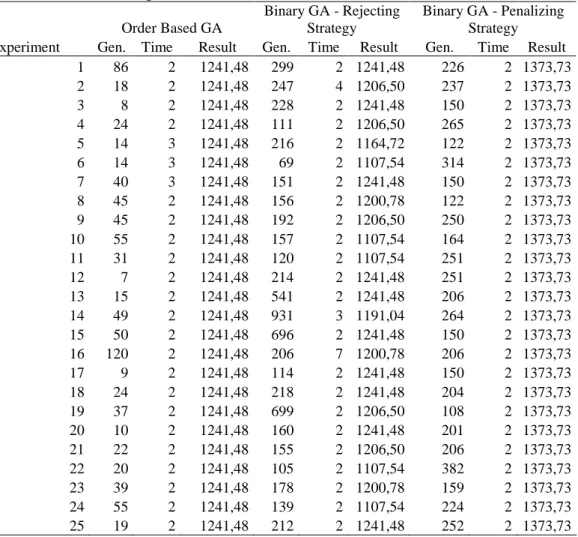
Table 4.3. SSAP : 10 products x 4 shelves………70
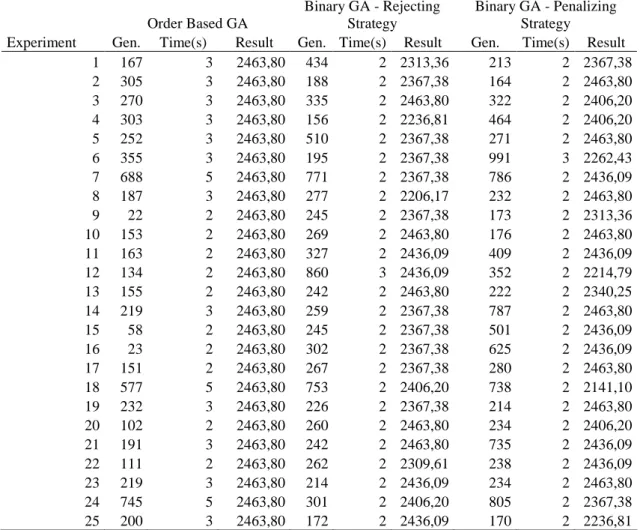
Table 4.4. SSAP: 15 items x 5 shelves………..71
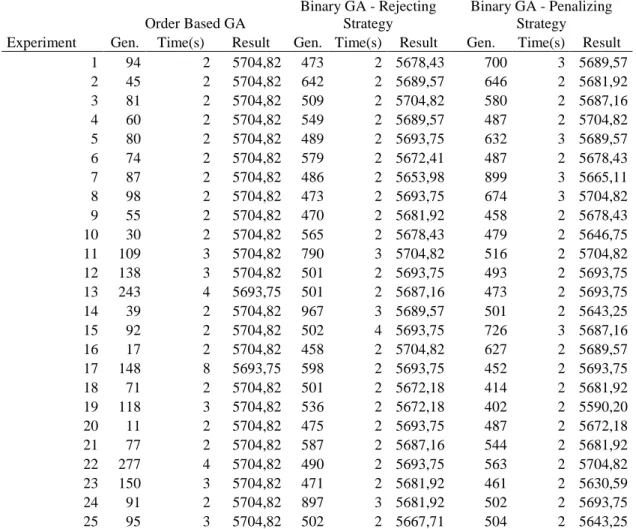
Table 4.5. SSAP: 30 products x 5 shelves……….72
List of Figures
Figure 2.1. Cognitive Reflection Test………...15
Figure 4.1 Representation of binary chromosome………60
Figure 4.2 Representation of an order based chromosome………...63
Abstract
This thesis provides three original contributions to the field of Decision Sciences. The first contribution explores the field of heuristics and biases. New variations of the Cognitive Reflection Test (CRT--a test to measure "the ability or disposition to resist reporting the response that first comes to mind"), are provided. The original CRT (S.
Frederick [2005] Journal of Economic Perspectives, v. 19:4, pp.24-42) has items in which the response is immediate--and erroneous. It is shown that by merely varying the numerical parameters of the problems, large deviations in response are found. Not only the final results are affected by the proposed variations, but so is processing fluency. It seems that numbers' magnitudes serve as a cue to activate system-2 type reasoning.
The second contribution explores Managerial Algorithmics Theory (M. Moldoveanu [2009]
Strategic Management Journal, v. 30, pp. 737-763); an ambitious research program that
states that managers display cognitive choices with a "preference towards solving problems of low computational complexity". An empirical test of this hypothesis is conducted, with results showing that this premise is not supported. A number of problems are designed with the intent of testing the predictions from managerial algorithmics against the predictions of cognitive psychology. The results demonstrate (once again) that framing effects profoundly affect choice, and (an original insight) that managers are unable to distinguish computational complexity problem classes.
The third contribution explores a new approach to a computationally complex problem in marketing: the shelf space allocation problem (M-H Yang [2001] European Journal of
Operational Research, v. 131, pp.107--118). A new representation for a genetic algorithm is
developed, and computational experiments demonstrate its feasibility as a practical solution method.
CHAPTER 1
Introduction
1. Introduction
How do managers make decisions? How do they process the myriads of information constantly bombarding them from all angles, such as competitors, new technologies, new laws and regulations, internal politics, customer groups, and so on and so forth? How does this continuous bombarding of possibly unrelated information lead to a manager's coherent perception of a complex scenario, and a potential course of action for the future?
These questions have recently gathered large momentum from studies at the interface between economics, organizational behavior, cognitive psychology, and computer science. We need to better understand, model, and predict human behavior, the subtle issues of cognitive psychology and the associated decision-making.
These are some of the overarching questions motivating this thesis. But not the only ones. How can better decisions be made? In fact, how can optimum decisions be made in scenarios that lend themselves to clear mathematical models? How can we improve the tools of
From economic theory to management to psychology to computer science and information-processing, the decision sciences encompass vast fields of knowledge. In this thesis, we hope to present new studies that touch on some of the aforementioned issues, and provide small but solid contributions to the decision sciences.
This thesis is formed by a series of independent essays. This is a format widely held in Universities across North America and Europe. It is also a format that has been gathering momentum in some Brazilian Schools, such as FGV's own EPGE. A series of essays enables a Doctoral candidate to concentrate on the topics in which he or she can bring the maximum scientific contribution, unbound to the constraints brought by a single topic within the confines of a single discipline. A series of essays enables scientific contributions to be brought to more than a single field of specialty.
Naturally, this is not to say that this format is better, or worse, than the traditional thesis spanning one large topic. Our philosophy here is that the format of a thesis should be subordinated to its scientific content--never the other way around. If the scientific
contributions are better presented through a monolithic manuscript, that is a perfectly valid form, and it may indeed be the best form for most theses. However, if and when the scientific content is better presented through self-contained, semi-independent essays, that is, perhaps, how it should be. Form should be subordinated to content. Form should not be a constraining force; demanding that scientific content be changed and revised in order to fit a form.
Though this thesis is molded in the form of independent essays, there is one topic that permeates all studies. This overarching topic is Bounded Rationality, and the associated concepts of heuristics and search. Some of these heuristics are found in the psychological experiments of the heuristics and biases programme. But there is another meaning of the term heuristic, in which the term refers to the search processes involved in optimization models, such as genetic algorithms.
The careful reader will see that there are links between the essays.
Chapter 2 and Chapter 3 share the same theoretical foundations, based fundamentally on the heuristics and biases programme and on bounded rationality theory, as well as the same methodology. Both chapters collect evidence as a by product of psychological experiments. Chapter 3 also deals with computational complexity theory and problem complexity classes, such as P and NP. Still related to computationally complex problems, Chapter 4 presents a new heuristic based on Genetic Algorithm to solve the NP-hard Shelf Space Allocation Problem, a crucial and still open issue in marketing.
As mentioned above, two key questions permeate this thesis. The studies presented in Chapter 2 and Chapter 3 are concerned with how decisions are made, and psychological experiments carefully demonstrate a number of new hypothesis concerning our cognitive abilities and limitations.
reasons may help us understand the interaction between intuition, information processing and reasoning on decision making. To achieve this goal, we manipulate the fluency of the CRT merely by changing its numerical parameters. These manipulations produce distinct
metacognitive experiences of ease and difficulty with which the answers can be brought to mind and processed. We show that numbers processing fluency has an effect (i) on the perception of difficulty and (ii) on the rate of correct responses to CRT problems. The mere magnitude of numbers serves as a cue to System 2 type reasoning.
In Chapter 3, we explore Managerial Algorithmics, a new research programme stating that managers display cognitive choices with a preference towards solving problems of low computational complexity. In this work we provide a first empirical test, through a set of six hypotheses, concerning whether managers (and non-managers) are able to distinguish among problem complexity classes. We present subjects with descriptions of seven decision-making scenarios, and ask them to rate and rank those scenarios by complexity. The results show that problem connotations exert more influence in the conceptualization process (i.e., framing effects), therefore managers cannot assess the computational complexity inherent in a task. We describe possible future refinements to this algorithmic theory, which may lead to a better understanding of managerial problem selection, problem reframing, and strategic choice.
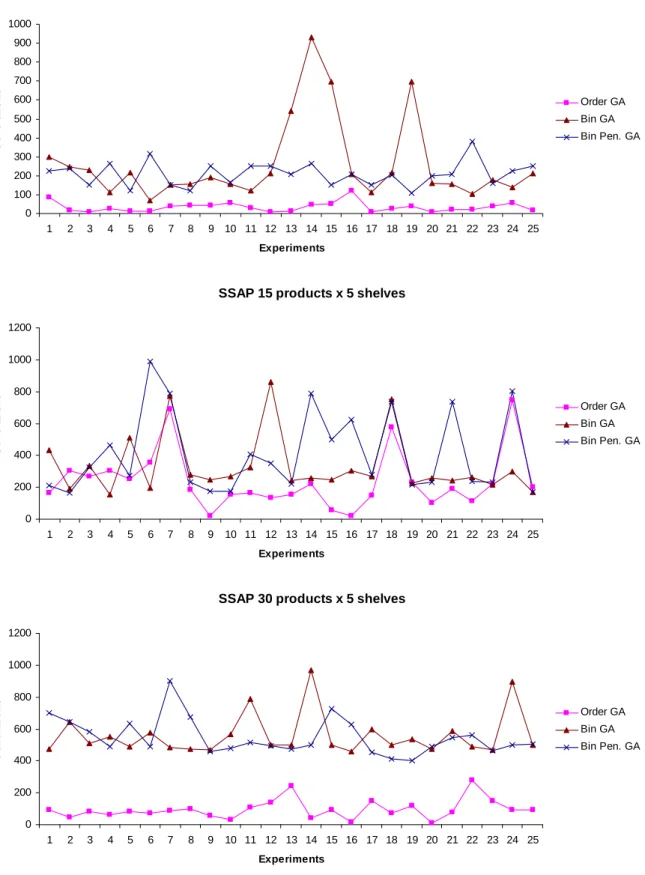
profit. In the proposed heuristic, chromosomes are the selection order of products that are transformed by a decoder function into binary product assortment decision variables. The SSAP, a NP-hard problem, is modeled as a multi-constrained knapsack problem. The heuristic is illustrated numerically by three randomly generated instances of SSAP. Computational results are compared against two standard Genetic Algorithms with binary representations. The first one utilizes a rejecting strategy and the other one a penalizing strategy to handle shelf space constraints. The proposed Order Based GA for solving the SSAP outperforms the two binaries GAs, suggesting the order representation as more suitable for approaching this problem.
3. Summary
The objective of this chapter is to introduce the reader to the content following on the subsequent chapters. As we have stated, the coming essays will deal with issues in cognitive psychology, decision-making, computer science, marketing and operations research.
As we have stated, the overarching umbrella that touches in all studies conducted here is the concept of bounded rationality.
CHAPTER 2
The Cognitive Reflection Test: Effects of Numerical Parameters on
Processing Fluency and Activation of System 2 Type Reasoning.
1. Introduction.
Frederick (2005) showed that a brief three-item measure of cognitive ability called Cognitive Reflection Test (CRT) has a huge importance on decision making: (a) regarding
intertemporal preferences, in general, respondents with high CRT scores preferred to wait to larger rewards than immediately receive smaller ones, i.e., they are more patient, and their decisions implied lower discount rates; moreover (b) concerning risk preferences,
patient option, expected value favors gamble, expected value favors sure gain and expected value favors sure loss - tested by Frederick (2005).
Many recent empirical findings concern cognitive abilities and preferences. Christelis et al. (2009), for example, reported an association between cognitive abilities and stock ownership in 11 countries of Europe; Benjamin, Brown and Shapiro (2006) showed that high cognitive ability is correlated with more patient and less risk averse behavior; while Dohmen et al. (2007), controlling for personal characteristics, educational attainment, income, and measures of credit constraints, showed exactly the contrary, i.e, lower cognitive ability is associated with greater risk aversion, and more pronounced impatience. Regarding the association between cognitive abilities and behavioral biases, Barber and Odean (2001) reported that low cognitive skills are associated with overconfidence; and Oechssler et al (2009) showed that higher test scores on CRT are correlated with lower incidences of the conjunction fallacy and conservatism in updating probabilities, with no significant difference in respect to anchoring.
Figure 2.1. Cognitive Reflection Test
(1) A bat and a ball cost $1.10 in total. The bat costs $1.00 more than the ball. How much does the ball cost? _____ cents
(2) If it takes 5 machines 5 minutes to make 5 widgets, how long would it take 100 machines to make 100 widgets? _____ minutes
Cognitive Reflection is defined as “the ability or disposition to resist reporting the response that first comes to mind” (Frederick, 2005, p. 35). According to Frederick (2005, p.27), “The three items on the CRT are “easy” in the sense that their solution is easily understood when explained, yet reaching the correct answer often requires the suppression of an erroneous answer that springs “impulsively to mind”. This first impression regarding the difficulty to suppress intuitive responses is consistent with the high rate of errors reported by Frederick: just 17% of the respondent sample (selected from top American universities) solved the three CRT questions correctly. Is there any reason for this behavior? Why do students from some of the best American universities commit this amount of errors in three trivial math
problems? Frederick (2005, p.27) reported that “when asked to judge problem difficulty (by estimating the proportion of other respondents who would correctly solve them), respondents who missed the problems thought they were easier than the respondents who solved them”. Is there any effect of perception of difficulty on CRT results? Is there any difference on
information processing that leads respondents to these CRT errors?
To address those questions, which are important to understand the interaction between intuition, information processing and reason on decision making, we will look at the effect of perception of difficulty, accessibility and different information processing trajectories, namely the processing fluency construct (for a revision, see Schwarz, 2004), on CRT results. Previous research has found that processing fluency, manipulated by displaying CRT
problems in two different types of print fonts, has a statistically significant effect on the rate of errors committed by CRT respondents (Alter et al, 2007). In the present study we
mind and processed. We show that the fluency of CRT input parameters (numbers magnitude) has an effect on the reported CRT high rate of errors.
2. Accessibility, Processing Fluency and Priming
Accessibility, “the ease (or effort) with which particular mental contents come to mind”, is a central concept in the analysis of intuitive judgments and preferences (Kahneman, 2003, p.699). Yet, according to Kahneman (2003, p.699), “the determinants of accessibility subsume the notions of stimulus salience, selective attention, specific training, associative activation, and priming.” Judgment of difficulty of a decision making situation is influenced by the individual expertise and familiarity of the context. The Cuban World Chess Champion José Raoul Capablanca once remarked about his personal, subjective, experience: ‘‘I know at sight what a position contains. What could happen? What is going to happen? You figure it out, I know it!’’ In another occasion, talking about the numerous possibilities that less-skilled players usually consider on each board position, he bluntly remarked: ‘‘I see only one move: The best one.’’ Perhaps the reader may think that Capablanca was quite simply being
arrogant. But there is evidence to the contrary, that expert decision-makers actually are biased towards very high quality choices. We believe that, in fact, Capablanca was telling us an important fact about expert human psychology and decision-making, which would later be documented in recognition-primed decision studies (see Klein, 1999).
availability heuristic is based on an assessment of accessibility of instances or associations that comes to mind (Kahneman, 2003). Both concepts are concerned whether specific contents retrieval to mind are easier or harder.
Schwarz and Vaughn (2002) showed that the concept of availability gives rise from two distinct sources of information: the recalled content and the experience of ease of recall. According to Schwarz (2004, p.337), “there is more to think than what comes to mind”, i.e., in judgment tasks people tend to trust the recalled content whenever the accessibility
experience seems uninformative for the task at hand. In the context of discount and augmentation effects, Schwarz (2004, p.343) declares that the “use of accessibility experiences is relatively automatic and effortless, whereas their disuse is deliberate”.
Consistent with this claim, and regarding the accessibility combined effect of rapid and serial operations, Kahneman (2003, p.700) asserts that “accessibility is a continuum, not a
dichotomy”. Another important concept associated with availability and accessibility is processing fluency, which is concerned to information processing traits, as defined below:
“Whereas accessibility experiences pertain to the ease or difficulty with which information can
be recalled or relevant thoughts can be generated, processing fluency pertains to the ease or
difficulty with which new, external information can be processed.” (Schwarz, 2004).
& Fazendeiro, 2003), judgments of risk (Alter and Oppenheimer, 2006; Song and Schwarz, 2009), and for judgments of truth. For example people are more likely to endorse a statement as true when the color in which it is printed makes it easy rather than difficult to read (Reber & Schwarz, 1999; Werth and Strack, 2003), or when the words rhyme (McGlone &
Tofighbakhsh, 2000).
A similar unconscious outcome is produced by priming mechanisms. Klein (1999) proposed a model of recognition-primed decision, in which experienced decision-makers would find themselves immersed in complex situations and rapidly take adequate courses of action. Decision-makers would rapidly perceive cues from any situation and retrieve from episodic memory similar situations (Tulving, 1983), which would bring assessments, diagnoses and plausible courses of action. Because priming mechanisms are automatic and unconscious (Bargh and Chartrand 1999, Bargh et al. 2001), these decision-makers reported doing "the obvious" action in different situations. This "obvious" course of action, Klein proposes, is brought from long-term episodic memory by priming mechanisms. Hence, decision-makers would not be selecting among distinct alternatives, but rather simply performing the
automatically-provided action. It’s a plausible explanation to imagine that the high rate of errors found by Frederick (2005) on CRT results was mediated by processing fluency of the stimuli and by priming mechanisms and that the erroneous CRT responses (10, 100 and 24 for CRT #1, #2 and #3 respectively) are brought to mind automatically and unconsciously as an “obvious” course of action.
deductive are denominated system 2 (referred to reason). Kahneman and Frederick (2002) used the CRT #1 – “bat and a ball” problem – to suggest that the cognitive self-monitoring of
system 2 over system 1 is quite light, and many system 1 erroneous judgments are endorsed
by system 2, which was supposed to be the situation in the CRT high rate of errors reported by Frederick (2005). Consistent with this proposition, Bargh and Chartrand (1999, p.476) state that “to consciously and willfully regulate ones own behavior, evaluations, decisions and emotional states requires considerable effort and is relatively slow.” Alter et al. (2007) shed light on what activates system 2, showing evidence that people engage in more
systematic processing when facing difficulty or disfluency while reasoning than those that did not. In the experiment #1, Alter et al. (2007) asked participants to answer the three CRT problems in two types of fonts, one difficult-to-read (disfluent treatment) and other easy-to-read (fluent treatment). As predicted, participants answered correctly more CRT questions in the disfluent treatment, i.e, they engaged in analytic processing to overcome their intuitions.
By definition, the Cognitive Reflection Test is founded on the same automaticity that characterizes the concepts of accessibility, priming and processing fluency, and for this motive, it is reasonable to expect that these four constructs have some kind of interaction. We use an approach similar to that of Alter et al. (2007) in the present study, varying the fluency and difficulty of CRT numerical parameters, and we propose to test the supposed interaction between cognitive reflection, accessibility, priming and processing fluency through the set of hypotheses below:
Hypothesis 2: there are differences in perception of difficulty between those who give the
correct response for CRTs and those who give the erroneous responses.
Hypothesis 3: there are differences in the perception of difficulty of CRTs when varying
processing fluency of the numerical parameters for each problem.
Hypothesis 4: the rational (disfluent) treatment will lead respondents to engage in more
systematic processing, resulting on a high rate of correct answers for CRT problems.
Hypothesis 5: the intuitive (fluent) treatment will lead respondents to trust their intuition,
resulting on a high rate of incorrect answers for CRT problems.
Hypothesis 6: there will be a high rate of system 1 errors, the impulsive ones (10, 100 and
24 for CRT #1, #2 and #3 respectively), for the intuitive (fluent) treatment.
In this study we use perception of difficulty as a proxy of accessibility and processing fluency.
3. Method
Overview
betray CRT respondents. Frederick (2005) reported that respondents who missed the problems thought they were easier than the respondents who solved them, and that
respondents do much better on analogous problems that invite more computation. Following those clues, the idea of this study was to dig deeper in understanding the reasons for this behavior. In order to do that, basically, respondents were asked to solve three different versions of CRT (intuitive1, trivial and rational) and after that to asses the level of difficulty of each problem in a Likert-type scale of five points (1 – very easy; 5 – very difficult).
Participants
Participants were 275 (148 men, 127 women, mean age 20.74 years) undergraduate and M.Sc students of the Brazilian School of Business and Public Administration (FGV) and of
Salvador University who participated voluntarily in the experiment.
Materials and Manipulations
questions were intercalated with three Bongard Problems (Bongard, 1970; Linhares, 2000), visual classification problems, in order to avoid respondents perception of the question patterns and hence anticipation of the real objective of the study (triggering System 2).
Table 2.1. Summary of treatments
CRT Control (intuitive) Treatment 1 ( rational) Treatment 2 (trivial) #1 [1.10]; [1.0] [3.90]; [1.70] [0.03]; [0.01] #2 [20]; [20]; [20]; [5]; [5] [3]; [8]; [12]; [7]; [2] [2]; [20]; [2]; [5]; [20] #3 [48]; [half] [17]; [one quarter] [2]; [half]
CRT#1. A bat and a ball cost ____ in total. The bat costs ____ more than the ball. How much does the ball cost? ___ cents
CRT#2. If it takes ___ machines ____ minutes to make ____ widgets, how long would it take ____ machines to make ____ widgets? _____ minutes
CRT#3. In a lake, there is a patch of lily pads. Every day, the patch doubles in size.
If it takes ____ days for the patch to cover the entire lake, how long would it take for the patch to cover ____ of the lake? _____ days
Procedure
Participants were told that the researchers were conducting an experiment regarding the level of difficulty of some specific problems. They were asked to individually fill out some
demographic information, to solve the questions and to indicate in a five-point (1–very easy; 5–very difficult) Likert-type scale the level of difficulty of each of the Bongard and CRT problems. To minimize suspicion and avoid bias, participants were told that there were no “deceptions or tricks” and that their honest opinion concerning problem’s difficulty was needed.
In the beginning of the questionnaire, participants read an instructions paragraph explaining the objectives of the experiment and the scale to be used. Upon completion of the study, participants were debriefed.
4. Results and Analysis
Table 2.2. Distribution of CRT answers
Question Correct Impulsive Other
CRT #1 - Bat and a Ball 8.25% 43.30% 48.45%
CRT #2 - Widgets 53.70% 31.70% 14.60%
CRT#3 - Lily Pads 43.68% 42.53% 13.79%
To analyze Hypothesis 1, which states that subjects perceive CRTs as easy problems, we performed a t test to verify whether the perception of difficulty variable differs significantly for the scale mean point (3 – reasonable) just for the original (intuitive) version of CRT. The results support this hypothesis for the three CRT problems: #1, N = 96, Mean = 2.04 versus 3.0, t(95) = -10.11, p = 0.000; #2, N = 79, Mean = 2.44 versus 3.0, t(78) = -5.49, p = 0.000; #3, N = 90, Mean = 2.56 versus 3.0, t(89) = -3.46, p = 0.001. These results support the idea that the CRTs are familiar problems that demand low computation and for this reason possibly their “answers” supposedly quickly jump to mind, eliciting the sensation of low difficulty for the problems, despite the high rate of errors (91.75%; 46.34%; 56.32% for CRT #1, #2 and #3 respectively).
Table 2.3. Descriptive Results
Intuitive Rational Trivial
CRT Mp N valid % Correct %
Errors Mp N valid % Correct
% Errors Mp
N valid % Correct % Errors Perception 2.04 96 2.14 85 1.72 85
#1
Answer 8.25 91.75 80.00 20.00 92.85 7.15 #2 Perception 2.44 79 2.39 96 1.67 89
Answer 53.66 46.34 73.95 26.05 91.01 8.99 Perception 2.56 90 2.82 79 2.35 92
#3
Answer 43.68 56.32 41.25 58.75 84.21 15.79
Notes: “Mp” refers to the perception of difficulty mean, “N valid” represents the number of valid observations, “% Correct”
To understand the effect of perception of difficulty on CRT results, we tested the intuitive version of CRT for differences in perception between those who gave the correct response and those who gave the erroneous ones (Hypothesis 2). We used perception of difficulty as a dependent variable and erroneous versus correct answers as a blocking factor. The results did not support Hypothesis 2 for any CRT problem: #1, correct (Mean = 1.50, SD = 0.756) versus erroneous (Mean = 2.09, SD = 0.930), t(94) = -1.74, p = 0.085; #2, correct (Mean = 2.52, SD = 0.890) versus erroneous (Mean = 2.35, SD = 0.919), t(77) = 0.846, p = 0.400; correct (Mean = 2.50, SD = 1.113) versus erroneous (Mean = 2.49, SD = 1.244), t(85) = 0.039, p = 0.969. It means that CRT perception of difficulty does not vary between groups of subjects who gave correct or erroneous answers for each question. As we are using
perception of difficulty as a proxy for information accessibility and fluency, another interpretation for these results is that does not seem to be much difference in data
accessibility and fluency between those who gave correct or wrong answers for each CRT problem.
Hypothesis 3 predicts that the magnitude of the numbers and processing fluency has an effect on the perception of difficulty of CRT problems. To test this hypothesis we used a one-way ANOVA for the three treatment groups presented in Table 2.1 (intuitive, trivial and rational), and used the perception of difficulty of each CRT problem as dependent variable. As
expected, the magnitude of the numbers showed a main effect on perception of difficulty for all three problems. For CRT #1, the treatments were perceived accordingly, trivial (Mean = 1.72) as easier, rational (Mean = 2.14) as harder and intuitive (Mean = 2.04) as intermediate,
F(2, 263) = 4.86, p < 0.01. Scheffé post hoc test indicated the trivial and rational as two clear
(MeanTrivial = 1.67, MeanRational = 2.39, MeanIntuitive = 2.44, F(2, 261) = 16.11, p < 0.001). The
same post hoc test indicated just two groups as well – trivial and the others (rational and intuitive). In CRT #3 the behavior was similar to CRT#1 regarding the perception of difficulty for each treatment (MeanTrivial = 2.35, MeanIntuitive = 2.56, MeanRational = 2.82, F(2,
258) = 3.50, p < 0.05) and relating to post hoc test. It seems that processing fluency, accessibility and familiarity of the numbers influence the perception of difficulty of each problem, yielding different perception for the same problem (same structure) based on the magnitude of the input parameters.
Consistent with Alter et al. (2007) the perception of difficulty and information disfluency seems to lead respondents to overcome their intuitions and engage in systematic processing, once the rate of correct answers for the rational treatment was higher than the intuitive one for CRT #1 and #2 (80% versus 8.25% and 73.95% versus 53.66%, respectively). This pattern was not replicated in CRT #3, where the rate of correct answers for the rational treatment was lower than the intuitive one (41.25% versus 43.68%). These results partially supported Hypothesis 4, which predicted that the rational treatment would motivate
respondents to a more analytical problem solving, leading them to a high rate of correct responses. As expected, the rate of correct responses for the trivial treatment was the highest.
rational one (56.32% versus 58.75%). As expected, the rate of incorrect responses for the trivial treatment was the lowest.
Regarding the rate of impulsive errors in the standard CRT, as reported in Table 2.2, for the overall respondents 43.30%, 31.70%, 42.53% committed the intuitive error in CRTs #1, #2 and #3 respectively against 48.45%, 14.60% and 13.79% for other errors. This result supports Hypothesis 6, which predicted that would have a high rate of system 1 errors, the impulsive ones (10, 100 and 24 for CRT #1, #2 and #3 respectively), for the intuitive (fluent) treatment. Oechssler et al. (2009) also found a similar distribution of errors in the CRT answers.
5. General Discussion
In the present study we show that:
(i) Subjects do not perceive Cognitive Reflection Test as hard problems; (ii) There are no statistically significant differences in perception of difficulty
between those who give the correct response for CRTs and those who give erroneous ones;
(iii) There are differences in the perception of difficulty of CRTs when varying processing fluency (numbers magnitude) of the data input parameters for each problem;
(v) The intuitive (fluent) treatment, defined by using the standard CRT, led respondents to believe in their intuitions, resulting on a high rate of incorrect answers for CRT problems;
(vi) There was a high rate of system 1 errors, the impulsive ones (10, 100 and 24 for CRT #1, #2 and #3 respectively), for the intuitive (fluent) treatment.
Some of these results replicate previous research regarding Cognitive Reflection Test
respondents’ behavior like the perception of CRT as easy problems, the high rate of errors in general and the high rate of system 1 errors (Frederick, 2005; Alter et al, 2007; Oechssler et al 2009), both in the standard version of CRT. On the other hand, the statistically
insignificant difference in perception of difficulty between those who give the correct
response for CRTs and those who give erroneous ones is not consistent with Frederick (2005) findings. Maybe this result was due to differences in the test method, since Frederick (2005) asked participants to estimate the proportion of other respondents who would correctly solve the CRTs, while we directly measured the perception of difficulty of the own respondent.
According to Oppenheimer (2008, p.240), fluency can influence judgment and decision making “by altering how information is represented and the operations that are performed on those representations”, i.e., fluency can activate a specific system of reasoning. Moreover, Alter et al. (2007, p.569) states that “Understanding when System 2 reasoning is likely to be used is therefore critical for understanding human judgment and decision making.”
Accordingly we showed that numbers processing fluency has an effect on the perception of difficulty and on the rate of correct responses of CRT problems, consequently it seems that numbers magnitude serves as a cue to activate the System 2 reasoning. This advance is important, since few studies have been done in the study of numbers fluency on decision making.
CHAPTER 3
Managerial Algorithmics: framing effects on computational complexity
1. Introduction
How are strategic management problems conceptualized and dealt with? When, and how, do managers decide to change a problem’s definition and structure? Which insights from the cognitive and the computational sciences can lead us to more precise theories of managerial problem selection, formulation, and strategic choice? These questions may be amongst the deepest ones facing strategic management, administration science, economic theory, and, on a broader philosophical scale, human rationality itself. In this work, we make a first
experiment concerning a new theory of managerial problem selection and formulation:
Managerial Algorithmics, a cognitive model of choice grounded in computational complexity
theory (Moldoveanu, 2009a, 2009b). Our objective is to test some of its premises and refine the theory, highlighting some promising avenues for further research.
Johnson, 1979). More complex problems are thought to require exponential time as a function of the input. These two classes are respectively referred to as P and NP, and it is widely believed—though there is no accepted proof—that P is a proper subset of NP. If that is true, then the hardest problems in NP are virtually intractable, as input size grows. These problems are called NP-complete (when in binary decision form) or NP-hard (when in optimization form). A precise mathematical formulation of these classes includes
abstractions such as indeterministic machines, an infinite tape, an oracle that always tells the truth, and other mathematical objects that should not concern us here. The theory is sound and it is important. The interested reader is referred to the classic introductory text of Garey and Johnson (1979)2, or to Papadimitriou (1994) for a more formal treatment.
Managerial Algorithmics is a new research programme with a “model of cognitive choices that managers implicitly make among alternative problem complexity classes” (Moldoveanu, 2009a, p. 737). The model states that managers “prefer to conceptualize their predicaments in terms of P-hard problems over conceptualizing them in terms of NP-hard problems” (p. 738)3. There is audacity in the theory; for it stands in contrast to Simon’s “satisficing model”, in which managers (and organizations) may approach computationally complex tasks, but with no strict demand for an optimum solution. Simon coined his portmanteau of “satisfy” and “suffice”, satisficing, to contrast with the term widely used by management scientists:
optimizing (Simon 1978). Managerial Algorithmics, on the other hand, poses that managers
2
There are additional classes, such as EXPTIME or EXPSPACE which exhibit much higher complexity than NP-hard problems. There are also problems that are simply incomputable (or undecidable), more on this below. 3
prefer tractable problems over NP-hard problems, with four possible reasons for the preference (Moldoveanu 2009a, p. 758—759):
(i) Managers may not be “adequately trained in solving NP-hard problems”; (ii) Managers may “develop an intuition for identifying and avoiding intractable
problems”;
(iii) Managers might have a “mal-adaptive and nonresponsive fear of computational complexity”; or
(iv) Managers may be “super-rational in the sense that they make cognitive choices on expected-net-present-value basis, choosing to solve NP-hard problems when salient decision variables are few in number (and computational costs are manageable) and switch to P-hard problem statements for situations in which salient variables are numerous”.
As students of both computational complexity and cognitive science, we find the link between the fields seriously worthy of investigation. The outline of this work is as follows: In section two, we develop six hypotheses with which to test some underlying premises of Managerial Algorithmics. In section three, we present materials and methods used in the study; followed by results in section four. Given the data obtained, section five refines Managerial Algorithmics theory, by proposing that focus should shift to Analysis of
Algorithms, as opposed to Computational Complexity, and outlining some promising avenues
2. An empirical test of Managerial Algorithmics
Do managers exhibit a “preference for P-hard problems over NP-hard problems”? This is an empirical question, and it presupposes that managers can discern between different problem complexity classes, the key hypothesis tested herein. Given our previous work in both the fields of computational complexity, studying the NP-hardness of industrial problems (Linhares and Yanasse 2002, Linhares 2009); and in cognitive science, studying strategic thought and abstract vision through psychological experiments and cognitive modeling (Linhares 2005, Linhares 2008, Linhares and Brum 2007, Linhares and Brum 2009, Linhares and Freitas 2009), we believe that an empirical experiment is warranted.
In order to develop some ideas that can be tested and contrasted to with the ideas of
Managerial Algorithmics, a trace of background may be valuable: we have been working on Hofstadter’s “computational temperature model” of problem formulation and solution, wherein one gradually develops an understanding of a scenario; this understanding is generally tied to some potential courses of action; and there can be fast changes in
perspective if attempts at that course of action seem fruitless (Hofstadter and FARG, 1995).
[A model of an intelligent machine] “will represent the number 2 not just by the two bits ‘10’, but as a full-fledged concept the way we do, replete with associations such as its homonyms ‘too’ and ‘to’, the words ‘couple’ and ‘deuce’, a host of mental images such as dots on dominos, the shape of the numeral ‘2’, the notions of alternation, evenness, oddness, and on and on...” (Hofstadter 1979, p. 678, reprinted in 1999).
Connotations have brought significant advances to economic theory on the last decades. An essential aspect of the concept of rationality is the principle of invariance (Tversky and Kahneman, 1986), which assumes that preferences are not affected by variations of irrelevant features of options or outcomes. However, Tversky and Kahneman (1981) posed that a risky prospect can be framed or described in different ways, for example as gains versus losses, yielding different associations and evaluations for the same situation, and violating the principle of invariance. The Asian disease problem is a classical example of violation of invariance due to framing effects.
The Asian Disease Problem
Imagine that the United States is preparing for the outbreak of an unusual Asian disease, which is expected to kill 600 people. Two alternative programs to combat the disease have been proposed. Assume that the exact scientific estimates of the
consequences of the programs are as follows:
If Program A is adopted, 200 people will be saved. (72%)
If Program B is adopted, there is a one-third probability that 600 people will be saved and a two-thirds probability that no people will be saved. (28%)
In this version of the problem, a substantial majority of respondents favor Program A, indicating risk aversion. Other respondents, selected at random, receive the mathematically-equivalent manipulation:
If Program C is adopted, 400 people will die. (22%)
If Program D is adopted, there is a one-third probability that nobody will die and a two-thirds probability that 600 people will die. (78%)
The majority of respondents now favors program D, the risk-seeking option. The connotations of the words “die” versus “people saved” are extremely significant in the subjective, first-person point-of-view, sense. These are not exercises restrained to university labs. Connotations form part of the politician’s toolbox. In the 1970s, the Brazilian Amazon policy was referred to as “Integrar para não entregar” (a pun, meaning that the forest should be populated, or integrated, to avert foreign invasion, or surrendered). Such an easy-to-remember nationalistic slogan brought widespread acceptance to policies such as (i) the creation of BR-163 and BR-230 roads, and (ii) the dislocation of over 20 million people to the forest, ultimately causing colossal deforestation. As the weekly The Economist (June 11 2009) put it: “[from satellites…] the southern part of Pará state looks as if someone has dropped large fish skeletons on the jungle, as spines of deforestation push into the trees from either side of the roads”. To this date, Brazilian weekly news sources still consider the forest under imminent threat of invasion.
connotation-loaded policies without surrendering to an inferior moral position: who could be against any form of “relief”, or who could support accounting by “unfair values”?
Words matter. Their connotations shape our perception of problems and, by consequence, our predispositions towards strategic choices.
Examples such as these have led to the idea of connotation theory: the cognition of managers (in fact, of all humans) should be deeply affected by the connotations involved in the words, in the phrasings, tones-of-voice, etc., of each particular situation (Linhares 2008). The intuition of managers would lie in their ability to rapidly converge, from the multiple
connotations cognitively active, to the state that is most appropriate, given the manager’s past
experience (Linhares and Freitas, 2009). This theoretical position would predict that humans
would see complexity with connotations associated with (i) high-stakes situations (large amounts of money, high responsibility, and life-or-death scenarios), (ii) time-pressured situations, and (iii) low-control situations (high oversight, social pressure, resource scarcity, etc.). Let us call these, by analogy to computational complexity theory, as hard connotations.
Managerial Algorithmics predicts that subjects would view NP-hard problems as more complex than computationally easy problems—enabling, therefore, a preference for easy problems, whereas connotation theory would predict that managers should observe cues such as stress and high-stakes situations as intrinsically harder, irrespective to the computational
complexity involved in tasks. According to connotation theory, computationally complex
attention. The predictions of the connotation-theory model can be contrasted with the predictions of Managerial Algorithmics, and enable us to propose and to test experimentally the following set of hypotheses:
Hypothesis 1: managers and non-managers can distinguish computationally complex
NP-hard problems from computationally tractable tasks.
Hypothesis 2: there are significant differences between managers and non-managers in
regards to their abilities to discern the computational complexity of problems.
Hypothesis 3: given the exact same computational problem, presented through different
connotations, managers and non-managers can identify the similarity in their complexity.
Hypothesis 4: subjects can correctly distinguish an incomputable problem as harder than
computable NP-hard problems.
Hypothesis 5: given computationally complex NP-hard problems with “easy connotations”,
and computationally easy problems with “hard connotations”, subjects classify their
complexity through their complexity rather than through the connotations involved.
Hypothesis 6: even if presented in sequence, given the same managerial setting and the same
complexity class, subjects can classify problems complexity irrespective to their connotations.
Blackstone 2001) suggest, for example, that to optimize production in a facility under constraints, managers should prioritize items with higher throughput per constraint time. This does not necessarily lead to the optimum solution, as we have recently found out, for the problem is NP-hard (Linhares 2009). There are also numerous cases in which complexity has remained an open problem for decades (Garey and Johnson 1979).
We may now present the material and methods involved in the investigation of these hypotheses.
3. Method
Overview
The purpose of this experiment is to test some premises of managerial algorithmics, i.e, that managers prefer to engage in solving tractable problems over NP-hard problems. In order to study that, seven scenarios were constructed using three classes of computational complexity problems (tractable, NP-hard and Incomputable) in a way that manipulated the connotations involved: for example, some computationally simple problems were framed with hard connotations (life-and-death decisions, high-stake situations, deadlines, stress), and computationally difficult problems were framed as low-stakes or high-control situations. Respondents were asked to indicate in a seven-point Likert-type scale the level of complexity of each of the seven problems4. To investigate if there are differences in complexity
4
perception between managers and non-managers, managerial experience was used as a blocking factor (i.e., groups of managers, versus non-managers/students). As a final manipulation, in the end of the experiment, respondents were asked to construct a problem rank in inverse order of complexity.
Participants
Participants were 73 (54 men, 19 women, mean age 28,43 years) undergraduate, M.Sc. and International M.Sc. students of the Brazilian School of Business and Public Administration (FGV) who participated voluntarily in the experiment5. The M.Sc. students with no
managerial experience were eliminated from the sample. Therefore, demographics for the group of managers was (N = 36; 26 men and 10 women, mean age 35,05; mean professional experience 13,8 years); and for the group of non-managers was (N = 37; 28 men and 9 women; mean age 22; mean professional experience 0,84 year).
Materials and Manipulations
Seven scenarios were constructed using three categories of computation problems: One
incomputable problem, five NP-hard computable problems and one tractable problem. The
highest priority (Mintzberg 1968). A proper, unambiguous, definition of tractable and NP-hard problems demands all these mathematical constructs and therefore does not reflect the furious pace of work in real managerial settings (Mintzberg 1968). Finally, a skeptical reader might argue that “time-complexity” would be a better description, but that still would not respect computational complexity. Computational complexity is much more vast than the time-complexity disparity between the P and NP classes might imply: consider, for example, the NC hierarchy or the PSPACE class, which concern parallelization and space complexity, respectively. 5
problem statements used, alongside problem definitions, complexity and references are shown in Table 3.1.
Table 3.1. Decision making scenarios.
Problem statement Comments on computational structure
References
A: You are the head of a world-renowned lab, working
on a secret project. You have received the following information: “Professor, we are having difficulties in solving a problem. We have a computer program, called ALPHA, that is taking too long to run. We need you to develop a second program that will tell us how long ALPHA will take to conclude its processing. Your program will receive ALPHA’s code and input data. Unfortunately, program ALPHA is top-secret and we cannot inform you what it does. All we need is to know how long ALPHA will take to conclude processing.” You have US$4.6 million to hire the best programmers and lease (or buy) supercomputers, should you wish so. You have complete and absolute freedom to select the team, equipment involved, and how to manage the project. Nobody is authorized to interfere with your choices.
It is impossible to compute whether a given program P working on a given input I will ever terminate. This is
beyond the ability of computation.
Computational complexity researchers do not even consider these issues—they belong to the field of computability.
Known as the
Halting problem: Undecidable (or incomputable). NP-hard problems are computable and have complexity of an infinitely lower scale than this one. (Turing 1936)
B: You walk into a toy store, and are suddenly
awarded with their lucky winner prize! At first you don't believe it, but you have really won a very large amount of money to spend however you wish. The only rule is that you spend all the money, with no change left.
Given a set S of integers, and a number T, is there a subset of S (prices) whose sum is exactly T (prize)? (integers can be obtained from currency by multiplying by 100).
Subset sum problem: NP-hard
(Karp 1972)
C: You are a new 6-month UN intern, and you've been
ask to arrange a large oval table in which
representatives from many countries will seat next to each other. You are given a list of countries that have waged war against each other and your instructions are to "Do not let any two countries that have fought wars against each other seat side by side". You are also asked to develop a procedure for future interns to avoid this uncomfortable situation.
Given a graph G=(V,E), find a sequence of traversing the graph that visits each vertex exactly once. (Nations map to vertices; edges link the nations that have never waged war against each other).
Hamiltonian cycle: NP-hard (Garey
and Johnson 1979)
D: You are the head of the Apollo 13 mission,
launched in April 11th 1970 to the Moon. However, two days later an explosion has deteriorated the spaceship, and it is returning to Earth. The spaceship lost most of its energy supply and it could lose it all. It is up to you to solve this problem and save the astronauts from death. Each type of equipment, when turned on, wastes an amount of energy that depends on the equipment previously turned on. You know the corresponding amounts and you must find a sequence of turning the machines on that does not empty the spaceship's energy. You have the entire NASA team at your disposal. The whole world is watching and knows the astronauts will die if you don't succeed. Time is running out.
Given a complete weighted graph
G=(V,E,f), with f:E R, find a
minimum weight Hamiltonian path. (Vertices correspond to equipment, weight of edges measure energy expenditure between the equipments).
Weighted Hamiltonian Path
(transformable also to Traveling
Salesman Problem
with additional city having zero distance to all others): NP-hard (Gutin & Punnen 2002)
E: You are the head of the Apollo 13 mission, and you
were responsible for successfully bringing back the astronauts alive. For budgetary planning for future missions, and also for personal curiosity, you would like to find out the sequence (of turning the machines on) that would waste the maximum possible energy.
Given a complete weighted graph
G=(V,E,f), with f:E R, find a
maximum weight Hamiltonian path. (Vertices correspond to equipment, weight of edges measure energy expenditure).
Taxicab Ripoff problem, or Maximum TSP: NP-hard (Gutin &
Punnen 2002)
F: You are the chief economist of a twenty-six billion
dollar fund. Your responsibilities are to apply the Capital Asset Pricing Model (CAPM) and the mathematical formula of Nobel Laureates Black and
Computable in polynomial time. P-hard, discussed
your portfolio: They fluctuate at the whim of the market and can change on a heartbeat, and you have to report results to the CEO and board of directors every week.
G: You have to fire people in order to cut your
personnel budget in a specified amount of the order of many millions of dollars. If you do not cut the specified amount in one week, you will lose your job. If you cut more than the specified amount, the unions will also ask the CEO for your job.
Given a set S of integers, and a number T, is there a subset of S (salaries) whose sum is exactly T (amount specified)? (integers can be obtained from currency by
multiplying by 100)
Subset sum problem: NP-hard
(Karp 1972)
To manipulate the problems level of complexity, the computationally simple problem F was framed with hard connotations (high-stake situations, low control, deadlines, stress), and computationally demanding problems like B, C and E were framed through easy connotations (as low stake situations). Problem A is much harder than any problem in any complexity class; it is incomputable, or undecidable (Turing 1936): while NP-hard (and even more complex) problems are computable, Problem A simply is not. Managerial Algorithmics presupposes that subjects would be able to perceive computationally complex problems as more challenging than computationally easy ones, therefore managers should have the ability to perceive the real structure of the problems, irrespective to framing and connotations manipulations–addressing Hypotheses 1, 2, 4 and 5. Our approach is rather like Kahneman’s test of the invariance principle.
To assess the impact of hard connotations and framing effects in the exact same
can show us whether or not connotations do indeed interfere in problem complexity, even when problems are presented in sequence (Hypothesis 6).
Procedure
Participants were told that the researchers were conducting an experiment regarding the level of complexity of some specific decision-making scenarios. They were asked to individually fill out some demographic information, to indicate in a seven-point (1–very easy; 7–very difficult6) Likert-type scale the level of complexity of each of the seven scenarios, and at the end to rank problems in inverse order of difficulty. To minimize suspicion and avoid bias, participants were told that there were no “deceptions or tricks” and that their honest opinion concerning problem complexity was needed (the additional ranking manipulation also checked for bias and lack of understanding of the task).
The questionnaires were administered in regular classes of undergraduate, M.Sc., and International M.Sc. courses on management of FGV during the month of June, 2009. In an initial part of the questionnaire, participants read an instructions paragraph explaining the objectives of the experiment and the scale to be used. Upon completion of the study, participants were debriefed.
4. Results
rejected the null hypothesis for 6 out of 7 problems. For the first task, the Mann-Whitney test (Mann and Whitney, 1947) and Wilcoxon Signed Ranks test (Wilcoxon, 1945) were used, while, for the second task, Friedman (1937) and Kendall’s W test (Kendall and Smith, 1939) were chosen.
Table 3.2. Average problem level of complexity for Managers vs Non-Managers
Non-Managers Managers Mann-Whitney Test
Difficulty
Level N = 37 N = 36 (Two-sided )
Problems Median Mean SD Median Mean SD
Managers vs
Non-Managers
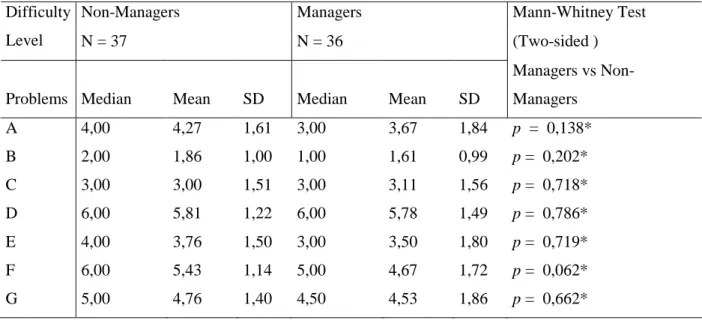
A 4,00 4,27 1,61 3,00 3,67 1,84 p = 0,138*
B 2,00 1,86 1,00 1,00 1,61 0,99 p = 0,202*
C 3,00 3,00 1,51 3,00 3,11 1,56 p = 0,718*
D 6,00 5,81 1,22 6,00 5,78 1,49 p = 0,786*
E 4,00 3,76 1,50 3,00 3,50 1,80 p = 0,719*
F 6,00 5,43 1,14 5,00 4,67 1,72 p = 0,062*
G 5,00 4,76 1,40 4,50 4,53 1,86 p = 0,662*
* p > 0,05
Table 3.2 presents average problem level of difficulty and the Mann-Whitney test for
managers and non-managers. Managers considered Problem F (Tractable) as difficult (MeanF
= 4,67), Problem A (halting problem, Incomputable, hardest of all) as easy (MeanA = 3,67),
Problem C (Hamiltonian Cycle – NP-hard) as easy (MeanC = 3,11), Problems B and G (both
subset sum, NP-hard) as easy (MeanB = 1,61) and as difficult (MeanG = 4,53), respectively.
Problem D (Weighted Hamiltonian Path, hard) and Problem E (Taxicab Ripoff,
NP-hard) were described using the same managerial context and presented in sequence, but the
account for significant differences between the means of all problems. The non-managers group’s perception of complexity was similar. These results reject hypothesis 1, that
managers (and non-managers) can distinguish computationally complex NP-hard problems from computationally tractable problems. The comparison between managers and non-managers using a two-sided Mann–Whitney test showed no significant differences (p > 0,05) for any problem (Problem A, p = 0,138; Problem B, p = 0,202; Problem C, p = 0,718; Problem D, p = 0,786; Problem E, p = 0,719; Problem F, p = 0,062; Problem G, p = 0,662). These results reject hypothesis 2, i.e, there are no significant differences between managers and non-managers in regards to their abilities to discern the computational complexity of problems.
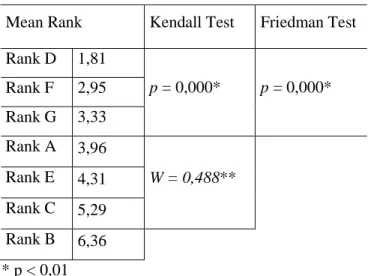
Table 3.3. Friedman and Kendall tests – mean ranks (N = 73)
Mean Rank Kendall Test Friedman Test
Rank D 1,81
Rank F 2,95
Rank G 3,33
p = 0,000* p = 0,000*
Rank A 3,96
Rank E 4,31
Rank C 5,29
W = 0,488**
Rank B 6,36
* p < 0,01
** Kendall’s coefficient of concordance
Table 3.3 displays the final rank as a result of the experiment second task. Problems B and G had the same computational complexity (both are subset sum, NP-hard) and were framed in opposite ways, the first through easy connotations whereas the second was presented through hard connotations. The treatment was effective: Problem G was seen as the third most
complex and Problem B as the seventh. The problems’ difference in level of complexity were consistent also by Wilcoxon7 Signed Ranks test (MeanB = 1,74 – easy vs MeanG = 4,64 –
hard; Wilcoxon Signed Ranks test, p = 0,000). These results reject hypothesis 3, i.e, given the
exact same computational problem, presented through different connotations, managers (and
non-managers) cannot classify their complexity in the same class.
Problem A (halting problem, Incomputable) was considered by the respondents the fourth hardest, after Problem D (Weighted Hamiltonian Path, NP-hard), the first one, Problem F (tractable), the second one, and Problem G (subset sum, NP-hard), the third one. The
problems’ level of difficulty (MeanA = 3,97 – easy vs MeanD = 5,78 – hard, Wilcoxon Signed
test, p = 0,000; MeanA = 3,97 – easy vs MeanG = 4,64 – hard; Wilcoxon Signed Ranks test, p
= 0,019) were consistent with the ranks. These results reject hypothesis 4 that subjects can correctly distinguish an Incomputable problem as harder than computable NP-hard problems.
Hypothesis 5 was rejected also: Problem F, computationally, the easiest one, was perceived as
difficult (MeanF = 5,05 – hard), indeed it was classified as harder than four NP-hard
problems (G, E, C, B) and even harder than the incomputable problem (A). The differences in level of difficulty were significant (MeanF = 5,05 – difficult vs MeanG = 4,64 – hard,
Wilcoxon Signed Ranks test, p = 0,044; MeanF = 5,05 – hard vs MeanE = 3,63 – easy,
Wilcoxon Signed Ranks test, p = 0,000; MeanF = 5,05 – hard vs MeanC = 3,05 – easy,
Wilcoxon Signed Ranks test, p = 0,000; MeanF = 5,05 – hard vs MeanB = 1,74 – easy,
Wilcoxon Signed Ranks test, p = 0,000; MeanF = 5,05 – hard vs MeanA = 3,97 – easy,
Wilcoxon Signed Ranks test, p = 0,000). The results clearly suggest that, given
computationally complex NP-hard problems with “easy connotations”, and computationally easy problems with “hard connotations”, subjects classify their complexity through the connotations involved rather than through a computational complexity lens.
Problems D and E, both NP-hard, were presented in sequence and described in the same context, the first one as a high-stakes scenario and the last one as a stable scenario. Their ranks were different, subjects considered Problem D as the hardest and Problem E as only the fifth one in the rank. The same occurred in the level of difficulty (MeanD = 5,79 – hard vs MeanE = 3,63 – easy, Wilcoxon Signed Ranks test, p = 0,000). Such results rejected hypothesis 6, i.e, even if presented in sequence, given the same managerial setting and the
5. Conclusion
In this first empirical test of Managerial Algorithmics, we show specifically that:
(i) Managers cannot distinguish computationally complex NP-hard problems from computationally tractable problems;
(ii) There are no significant differences between managers and non-managers in regards to their abilities to discern the computational complexity of problems; (iii) Given the exact same computational problem, presented through different
connotations, managers (and non-managers) cannot classify their complexity in the same class;
(iv) Subjects cannot correctly distinguish an Incomputable problem as harder than
NP-hard problems;
(v) Given computationally complex NP-hard problems with “easy connotations”, and computationally easy problems with “hard connotations”, subjects classify their complexity through the connotations involved rather than through the
computational demands; and finally that;
(vi) Even if presented in sequence, given the same managerial setting and the same complexity class, subjects classify problems complexity through their
connotations.
These are negative results for the presupposition that managers may “prefer to conceptualize their predicaments in terms of P-hard problems over conceptualizing them in terms of
NP-hard problems” (Moldoveanu 2009a, p. 738). Yet there are plenty of provocative
problems in which he has argued that are dealt with through low computational demands is of interest and may indeed require further study.
One crucial point is this: Computational complexity studies the intrinsic nature of problems,
regardless of the solution method attempted at their solution. A common misconception in
the literature is the notion that Computational Complexity is the study of solution methods. Consider an NP-hard problem, such as subset-sum. It can be approached by branch and bound methods, greedy algorithms, genetic algorithms, tabu search, neural networks, GRASP, and a host of other methods. Each of these methods has its own particular computational demands, in both worst-case scenarios and average-case scenarios. The performance study of particular solution methods is confined to the related field of Analysis of Algorithms. But NP-completeness, after proved, is a finding orthogonal to the computational demand of each approach.
Suppose a manager has to solve an NP-Hard problem akin to the TSP, like the Apollo 13 mission had. How can they “interpret their predicaments in terms of a different problem”? By not applying themselves to the exact nature of the problem, the mission would have been a failure. Managers may, of course, choose their solution methods (The Apollo 13 mission could have used thousands of different methods to find good solutions to their NP-hard problem). But managers cannot choose to change or ignore the exact nature of the problems they face. This is why we state that focus must be shifted from "Computational complexity" (the study of properties of problems) to "Analysis of algorithms" (the study of properties of
Quotes such as “A precise way to characterize problem statements is by examining the
algorithms that generate satisfactory solutions to them” (Moldoveanu 2009b, p.58) conflates
these two separate areas into one. For example, take the TSP (or any NP-Hard problem). Their defining characteristic is that there is no algorithm that generates a satisfactory
solution to it. Does this mean there is no precise way to characterize the TSP problem
statement? Hardly at all; the problem can be characterized and its complexity computed without having any satisfactory algorithm for it. If Managerial Algorithms is to turn into a promising research area, focus must be shifted from the study of properties of problems ("Computational complexity") to the study of properties of solution methods ("Analysis of algorithms").
Managers may not be able to distinguish between computational complexity classes and reframe problems accordingly; yet, they still have a host of available cognitive approaches. For the TSP, for example, Graham et al (2000) found out that subjects use hierarchical representations in their approach to small Euclidean TSPs (less than 50 cities).
A promising avenue of study is brought by Hofstadter’s concept of the parallel terraced scan (Hofstadter and FARG, 1995). It is nothing short of a detailed, empirically refutable,
psychologically plausible computational model on how problems are continuously reframed in one’s mind. In this theory, a cognitive variable of temperature both provides feedback on the quality and aesthetics of a possible solution and as to whether reframing should be