FUNDAÇÃO GETULIO VARGAS
ESCOLA DE ADMINISTRAÇÃO DE EMPRESAS DE SÃO PAULO
MARCUS VINÍCIUS PEINADO GOMES
Creating Meanings, Changing Contexts: Contested Sustainability in the Brazilian Beef Industry
MARCUS VINÍCIUS PEINADO GOMES
Creating Meanings, Changing Contexts: Contested Sustainability in the Brazilian Beef Industry
Tese apresentada à Escola de Administração de Empresas de São Paulo da Fundação Getulio Vargas, como requisito para a obtenção do título de Doutor em Administração Pública e Governo.
Linha de Pesquisa: Governo e Sociedade Civil em Contexto Subnacional
Orientador: Prof. Dr. Mário Aquino Alves
Gomes, Marcus Vinícius Peinado.
Creating Meanings, Changing Contexts: Contested Sustainability in the Brazilian Beef Industry / Marcus Vinícius Peinado Gomes. - 2014.
349 f.
Orientador: Mário Aquino Alves
Tese (CDAPG) - Escola de Administração de Empresas de São Paulo.
1. Sustentabilidade. 2. Hegemonia. 3. Desmatamento - Amazônia. 4. Realismo crítico. 5. Carne bovina - Indústria - Brasil. I. Alves, Mário Aquino. II. Tese (CDAPG) - Escola de Administração de Empresas de São Paulo. III. Título.
MARCUS VINÍCIUS PEINADO GOMES
Creating Meanings, Changing Contexts: Contested Sustainability in the Brazilian Beef Industry
Tese apresentada à Escola de Administração de Empresas de São Paulo da Fundação Getúlio Vargas, como requisito para a obtenção do título de Doutor em Administração Pública e Governo.
Linha de Pesquisa: Governo e Sociedade Civil em Contexto Subnacional
Data de aprovação: _____/____/_______
Banca examinadora:
____________________________________ Prof. Dr. Mário Aquino Alves (Orientador) FGV-EAESP
____________________________________ Prof. Dr. André Pereira de Carvalho
FGV-EAESP
____________________________________ Prof. Dr. Sérvio Túlio Prado Junior
FGV-EAESP
____________________________________ Prof. Dra. Isabel Garcia Drigo
USP-FEA-NESA
____________________________________ Professor Glenn Morgan
À Vera e Pedro, pela dedicação, fibra e ensinamentos de toda uma vida.
À Malu, pelo companheirismo, incentivo e compreensão ao longo desta trajetória.
AGRADECIMENTO
Escrever uma tese é um desafio. Na maioria das vezes, é um trabalho solitário, estressante e cansativo. A vida acadêmica é um longo caminho, cheia de obstáculos, idas e vindas. Esta pesquisa é mais uma curva neste caminho. Talvez, como todas as teses, os anos desta etapa foram muito intensos, algumas vezes extremamente difíceis, deixaram marcas, e eu não teria conseguido esta vitória sem o apoio de pessoas que amo, que estão ao meu lado e me transformaram ao longo dos anos. Para chegar ao final deste processo, diversas pessoas estiveram ao meu lado. Agradecer a todas, lembrando cada momento que vivi e toda a ajuda que recebi, muitas vezes sem saber que estava sendo ajudado ou compreender a ajuda, é impossível.
De início, devo agradecer aos meus pais, Pedro Gomes e Vera Lúcia, ao apoio incondicional, carinho e dedicação me deram força para seguir meus sonhos e objetivos. Mais do que isso, são exemplo de garra, determinação e vitória, que me ensinaram a buscar e sonhar por um mundo melhor. Conseguiram mudar as estruturas que influenciaram suas vidas para me darem as oportunidades que me fizeram chegar até aqui. Obrigado por todo o esforço e dedicação que possibilitaram a realização pessoal presente nestas páginas. Não tenho palavras para agradecê-los.
Na minha trajetória acadêmica, iniciação científica, mestrado e doutorado, o Mário foi fundamental em meu desenvolvimento. São 12 anos trabalhando juntos. Mário é para mim mais que um orientador, exemplo de compreensão, integridade intelectual e pessoal. Durante estes anos, nos tornamos colegas de trabalho, mas, mais importante: amigos. Mais um ciclo acadêmico se encerra, a amizade continua.
Não posso deixar de agradecer também as pessoas que me acolheram na Cardiff Business School para meu doutorado sanduíche.
I should also give a special thanks to Glenn Morgan, who has been generous in supporting my academic development, discussing my research and ideas, since we first met in Cardiff, and providing me with important opportunities. I thank him for helping me to organise my thoughts and further elaborate my research. Glenn has become a good friend as well, being also important in making life in UK easier.
I have been lucky to meet people like Mário, Rick and Glenn who encouraged me to pursue my own ideas and academic path, pushing my thoughts forward and opening important doors for my development and career. Thank you.
I would also like to thank the CORGies group at Cardiff Business School (CARBS), whose discussions and academic environment contributed to my development. A special thanks to Tim Edwards and Peter Wells, who discussed and commented earlier versions of these thesis’ chapters, and also Rachel Ashworth, Joe O'Mahoney, Tom Keenoy and Robyn Thomas, who inspired and helped me at Cardiff. Moreover, I should also thank Elsie, Elaine and Laine, who were always attentive and helpful in setting my live at CARBS.
Cardiff wasn’t just academic work and I should also thank other friendships developed during this period, such as with Heike, Steve, Tiago, Camila, Adriana, Ohad, Polina, Keyan and Moses. My dear Japanese friend Endo, Cardiff wouldn’t be ‘Cardiff’ without you.
Todos nós somos influenciados em nossa formação por pessoas que admiramos. Luís Guilherme Galeão e Peter Spink figuram entre elas. São exemplos de professores que sempre estiveram dispostos a me ouvir, incentivar minhas ideias e me ajudaram quando precisei.
Nestes 13 anos de EAESP, muitas pessoas me ajudaram, e não conseguiria lembrar de todas. Peço aqui minhas adiantadas desculpas, mas não poderia deixar de mencionar: Seu Antônio, Seu Edson, Santana, Dona Maria e, em especial, à Rosinha, Sandrinha e Fabiana, que acompanharam mais de perto as desventuras desta tese. Também não posso deixar de agradecer as meninas da secretaria, Claudinha, Martinha, Denise, Gisele, Luciana e Inês, sempre compreensivas e atenciosas.
Francisco Fonseca, Ricardo Bresler, Henrique Fingerman, Maria Irene Betiol, Tiago Corbisier e, com um carinho especial, Eduardo Diniz, Isleide Fontenelle, André Carvalho, Lilian Furquim, Elisa Larroudé, Fernando Abrúcio e Marco Teixeira (o Marquinho), pelos incentivos e ajuda nos momentos importantes. Também devo agradecer aos colegas da FGV, compreensíveis com as exigências do trabalho de uma tese, Cláudio Couto, Felipe Zambaldi, Chico Aranha, Nelson Barth, Kurt von Mettenheim, Lauro Gonzales, Marlei Pozzebon, Jorge Boucinhas, Daniel Andrade, Tania Veludo e Amon Barros.
Ainda sob o círculo da FGV, devo agradecer aos meus colegas de doutorado e pesquisas no CEAPG, em especial, Renê Fernandes, Lúcio Nagihb, Léo Barone e Fernando Burgos (juntos desde os tempos da graduação), Lya Porto, Natália, Toni, Adriano, Sofia, Cecilinha, Beni, Patrícia Mendonça, Patrícia Laczynski, Gabriela, Eliana, Flávio Foguel, Téo, Alexandre e César. Nos últimos quatro anos, Fernando Nogueira merece um agradecimento especial. Compartilhamos as adversidades da vida acadêmica e da reta final de tese, assim surgiu uma grande amizade que tenho certeza que levarei pelos anos vindouros. Obrigado pela amizade, Doutor.
Também gostaria de agradecer aos meus colegas de FEI, Martão, Renato Ladeia, Edson, Manfred, Sergio, Hong, Patrícia Podboi, Leda, Graça e, em especial, a Theodoro Peters.
Não posso deixar de agradecer às pessoas que me ajudaram na realização desta pesquisa, em suas diferentes etapas e momentos, a todos os entrevistados e seus assistentes, à Patrícia Guisordi, Danilo Santos, Nathalia Esper, Fábio Grigolleto, Elisa Larroudé e Malu Villela.
Agradeço à CAPES pelo financiamento do meu doutorado-sanduíche, sem o qual esta pesquisa não teria sido possível.
It’s A Long Way To The Top (If You Wanna Rock 'N' Roll) – Angus Young, Malcolm Young and Bon Scott, 1975
ABSTRACT
The objective of this research is to understand how organisations fashion their environment, through analysing why some practices become known as ‘sustainable’ in the Brazilian beef industry. The research engages with the organisational institutionalism literature by pointing the need to account for politics (i.e. actor’s negotiations) and meanings in order to understand how stability and change take place under a situated context (i.e. a particular time and space). The research concludes that the understandings of what could be considerate ‘sustainability’ are the result of actors fashioning their environment through actions and interactions that produce meanings. Following a hegemony approach, such disputes are not only about actors looking for resources’ advantages, but also aimed at protecting or attacking the societal logics that support actors’ dominant position. Moreover, actors exert their agency under the conditions of the present time (i.e. situated context), by drawing on an inherited past in order to produce a future they have envisaged. To analyse such processes, a hegemony approach to actors and societal logics was developed, highlighting the negotiation order, an arena in which actors struggle for hegemony. As an outcome of such negotiations, a focal issue emerges, influencing actors’ discourse and interests, and justifying their initiatives, programmes and technologies developed to address such issue; thus, fashioning consent. Drawing on Critical Realism and Critical Discourse Analysis, the research developed a longitudinal case study supported by public and confidential documents, alongside interviews with experts, in order to examine the sustainability path at the Brazilian beef industry. Three different contexts for agency regarding sustainability were found. In the first one, a silence upon sustainability practices was identified, while the second context emphasised the emergence of Amazon deforestation as a focal issue, due to Greenpeace and MPF agency, forcing the industry to develop a monitoring system to trace its cattle suppliers in order to avoid procurement associated with Amazon deforestation, among other illegal activities. Finally, during the third context, the monitoring system enabled the beef industry to take-over of sustainability, enabling the beef sector to build its legitimacy so as to influence the risks and opportunities associated to the context of sustainability. In terms of societal logics, the Amazon deforestation is denounced as an environmental problem anchored by capitalist logic characteristics, such as risk management, innovation and productivity increase, global supply chain and governance. Although during such attack the profit maximisation rationale is questioned by the imposition of environmental concerns over corporate behaviour, the developed solution draws upon the very same capitalism’s characteristic employed to attack it. As a consequence, a piecemeal change is illustrated by a transformation on the capitalism ‘quantitative efficiency’ – the productivity increase as a result of changing the proportion of resources consumed in the production process in order to avoid Amazon deforestation. However, the capitalism ‘qualitative efficiency’ is being preserved as the ruling dominant groups are still controlling the means of production and their associate resources (i.e. money, power and legitimation). Since such negotiations processes are mediated by the rationale of avoiding businesses risks, profit maximisation, the deep core of capitalist logic, is preserved. Therefore, the ruling groups maintain their hegemony.
RESUMO
LIST OF GRAPHS
Graph 1: ‘Institutional Entrepreneur’ Publications by Year ... 33
Graph 2 ‘Institutional Entrepreneur’ Citations by Year ... 34
Graph 3: ‘Institutional Work’ Publications by Year ... 40
Graph 4: ‘Institutional Work’ Citations by Year ... 40
Graph 5: ‘Institutional Logics’ Publications by Year ... 45
Graph 6: 'Institutional Logics' Citations by Year ... 46
Graph 7: 'Critical Realism' Publications by Year ... 82
Graph 8: 'Critical Realism' Citations by Year ... 82
Graph 9: Brazilian Cattle Herd by Regions ... 135
Graph 10: Brazilian Amazon Deforestation ... 243
Graph 11: Products Categories Exports ... 248
Graph 12: 2010's Terraclass: Amazon Deforested Areas - Land Usage ... 250
LIST OF FIGURES Figure 1: Overview of Cattle Supply Chain - Leather, Beef, Live Cattle and Co-Products ... 1
Figure 2: Hegemony Approach to Actors and Societal Logics ... 73
Figure 3: Stratified model of institutional analysis for this research ... 95
Figure 4: Negotiation Order of Sustainability under the Brazilian Beef Industry ... 96
Figure 5: Methodological Challenges and Approach Developed ... 98
Figure 6: Dimension of discourse analysis under CDA ... 103
Figure 7: Data Collection Steps and Objectives ... 108
Figure 8: Interviewees, Organisations, Length and Data of the Interview ... 123
Figure 9: Sustainability on Brazilian Beef Industry: A Timeline ... 128
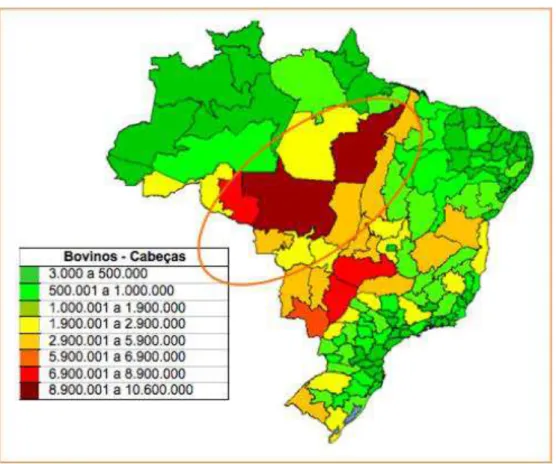
Figure 10: Cattle Herd Concentration on the Legal Amazon ... 136
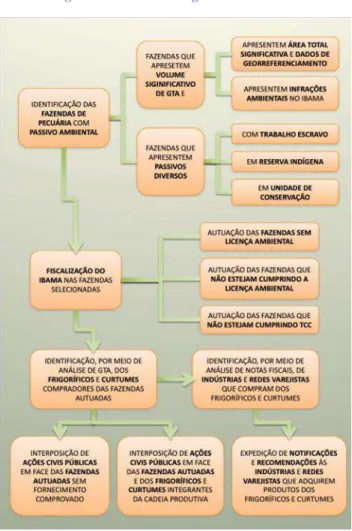
Figure 11: MPF’ Investigation Flowchart ... 145
Figure 12: Word Cloud of the Slaughtering the Amazon Report ... 159
Figure 13: GTPS' Timeline ... 187
Figure 14: GTPS' Organisational Structure ... 191
Figure 15: Word Cloud of the JBS Scorecard Report ... 204
Figure 16: JBS Scorecard on the Cattle Agreement ... 206
Figure 17: JBS' Monitoring System Sample 1 ... 220
Figure 18: JBS' Monitoring System Sample 2 ... 221
Figure 19: Illustration of Monitoring System ... 230
Figure 20: Stratified Model of Institutional Analysis for this Research... 233
Figure 21: Negotiation Order of Sustainability under the Brazilian Beef Industry... 234
List of Abbreviations and Acronyms
ABIEC – Associação Brasileira das Indústrias Exportadoras de Carne ABIOVE – Associação Brasileira das Indústrias de Óleos Vegetais ABPO – Associação Brasileira de Pecuária Orgânica
ABRAS – Associação Brasileira de Supermercados ACRIMAT – Associação dos Criadores de Mato Grosso
AR4 - IPCC 2007 – Fourth Assessment Report of the United Nations Intergovernmental Panel on Climate Change
BNDES – Banco Nacional de Desenvolvimento Econômico e Social BNDESpar – BNDES Participações S.A.
BPA – Boas Práticas Agropecuárias (Embrapa) CAR – Cadastro Ambiental Rural
CDA – Critical Discourse Analysis CEO – Chief Executive Officer
CNPJ – Cadastro Nacional da Pessoa Jurídica CNPTIA – Embrapa Informática Agropecuária COP – Conferência das Partes (das Nações Unidas) CPF – Cadastro de Pessoas Físicas
CSR – Corporate Social Responsibility
DETER – Sistema de Detecção de Desmatamentos em Tempo Real EMBRAPA – Empresa Brasileira de Pesquisa Agropecuária
ESRS – Environmental and Social Review Summary EU – European Union
FGV-EAESP – Escola de Administração de Empresas de São Paulo (Fundaçao Getulio Vargas)
FMD – Foot and Mouth Disease
GeoID – Geographical Identity Methodology (AgroTools) GHG – Greenhouse Gas
GRSB – Global Roundtable for Sustainable Beef GTA – Guias de Transporte Animal
GTPS – Grupo de Trabalho da Pecuária Sustentável
IBAMA – Instituto Brasileiro do Meio Ambiente e dos Recursos Naturais Renováveis IFC – International Finance Corporation
ILPF – Integração Lavoura-Pasto-Floresta
IMAFLORA – Instituto de Manejo e Certificação Florestal e Agrícola INCRA – Instituto Nacional de Colonização e Reforma Agrária IPCC – Intergovernmental Panel on Climate Change
ISO – International Organization for Standardization ITM – Integrated Territory Management
IUCN – International Union for the Conservation of Nature and Natural Resources MAPA – Ministério da Agricultura, Pecuária e Abastecimento
MCT – Ministério da Ciência e Tecnologia
MDIC – Ministério do Desenvolvimento, Indústria e Comércio Exterior MMA – Ministério do Meio Ambiente
MPDFT – Ministério Público do Distrito Federal e Territórios MPF – Ministério Público Federal
MPU – Ministério Público da União MTE – Ministério do Trabalho e Emprego NGO – Non-Governmental Organisation
PENSA – Centro de Conhecimento em Agronegócios (USP) Plano ABC – Plano de Agricultura de Baixa Emissão de Carbono PNMC – Plano Nacional sobre Mudança do Clima
PPCDAM – Plano de Prevenção e Controle do Desmatamento na Amazônia Legal PRODES – Projeto de Monitoramento do Desflorestamento na Amazônia Legal REL – Rural Environmental License
RER – Rural Environmental Registry
SAE – Secretaria de Assuntos Estratégicos da Presidência da República SEL – Single Environmental License
SNA – Sociedade Nacional de Agricultura SPI – Summary of Proposed Investment TAC – Termo de Ajustamento de Conduta TNC – The Nature Conservancy
UK – United Kingdom UN – United Nations
USA – United States of America USP – Universidade de São Paulo
WCED – World Commission on Environment and Development WCS – World Conservation Strategy
CONTENTS
1. Introduction ... 1
1.1. Sustainability : is it reorganising capitalism? ... 6
1.2. Overview of the thesis ... 13
2. Politics and Meanings in Organisational Institutionalism: Actors Jockeying and Their Impact on Institutions ... 18
2.1. Mapping Organisational Institutionalism: main elements and approaches 19 2.1.1. Political Struggles: the matter of self-interest and the paradox of embedded action ... 23
2.1.2. Institutional change and stability: endogenous and exogenous forces ... 26
2.1.3. Politics and the Exercise of Power: a hegemony approach... 30
2.2. Institutional Entrepreneurship ... 32
2.3. Institutional Work ... 39
2.4. Institutional Logics and Inhabited Institutions ... 44
2.5. Towards a Relational Approach: Hegemony ... 49
3. Hegemony: Towards a Relational Approach to Actors and Societal Logics ... 53
3.1. The Dialectics of Stability and Change: A relational approach and concepts definition ... 56
3.1.1. Agency and Structures ... 58
3.1.2 Institutions and Institutionalisation ... 61
3.1.3. The mesolevel of social action and stability and change ... 63
3.2. Hegemony and a Relational Approach ... 66
3.2.1. Translating a hegemony approach to organisational institutionalism perspective: The analytical framework in action ... 70
4. Methodology ... 75
4.1. Initial Research Considerations... 75
4.1.1. Why writing in English? ... 77
4.2. Research Question and Objectives ... 78
4.3. Critical Realism and Management Studies ... 82
4.3.1. Critical Realism and Discourse ... 88
4.4 Ontological and Epistemological Implications to Research Development ... 92
4.4.1. Methodological Challenges ... 96
4.4.2. Critical Discourse Analysis (CDA) ... 99
. . Events and time: following sustainability s path ... 104
4.6. Data Collection Procedures ... 107
4.6.1. Documents... 111
4.6.2. Interviews ... 113
4.6.2.1. The active nature of interview: Its political content and sharing results ethically ... 114
4.6.2.2. Interview procedures... 118
4.6.2.3. Interview schedule ... 119
4.6.2.4. Interviewees ... 121
5. Creating Meanings, Changing Contexts: Deforestation and the Brazilian Beef Industry ... 125
5.1. Voices on environmental impact: Void of practices ... 131
5.1.1. Cattle ranching and environmental impacts in the Brazilian Beef Industry . 131 5.1.2. Context for agency: The industry should thrive ... 136
5.2. Creating meanings for sustainability: The rise of deforestation ... 139
. . . Evidence that deforestation would emerge: MPF and Greenpeace s investigations background ... 141
. . . . Shaping your context while you get ready: Greenpeace s soya campaign . 147
5.2.2. Slaughtering the Amazon: Greenpeace s beef campaign ... 150
. . . . The Slaughtering the Amazon s report tone ... 156
5.2.3. The crisis has arrived: consequences for addressing sustainability ... 161
. . . . Crisis peak: IFC withdrawal of Bertin s loan and the rise of a giant ... 163
. . . . TAC: Adjustment of Conduct Term s widespread ... 168
5.2.3.3. Zero Deforestation Commitment ... 173
5.2.3.4. BNDES and the Socio-environmental Guidelines for livestock ... 179
5.2.3.5. GTPS formal constitution ... 184
5.2.4. Context for agency: The rise of deforestation ... 194
5.3. Anticipating risk: Nothing is so bad that you cannot take something good out of it ... 197
5.3.1. Bargaining the Litigation ... 198
5.3.2. Third round: Greenpeace versus JBS... 203
5.3.3. The rise of the Monitoring System ... 212
5.3.3.1 Geo-traceability for cleaning the deforestation stain ... 222
5.3.4. Cattle ranching GHG emissions: Between political and technical arguments ... 225
5.3.5. Context for agency: Transforming something bad into good ... 229
5.4. Conclusion ... 231
6. Repertoires, negotiation order and Capitalism ... 238
6.1. Silence on innovation and productivity increase: Alignment of what is at stake regarding Amazon deforestation ... 240
6.1.1. Brazilian government and the importance of controlling Amazon deforestation ... 240
6.1.1.1. Brazil carbon emissions reduction pledge ... 241
6.1.1.2. Brazil –the world s barn: Developmental political project on commodity exportation... 247
6.2. Governance and Risk Management: Combination of MPF and Greenpeace repertoires ... 251
6.2.1. MPF and its repertoires ... 251
6.2.2 Greenpeace and its repertoires ... 255
6.2.2.1. Greenpeace: a Social Movement bridging transnational contents ... 257
. . . .a. Global supply chain: the way of bridging industries environmental impacts and consumer market ... 258
. . . .b. United Nations Conferences and Greenpeace s campaigns: seeking legitimacy ... 263
6.2.3. Brand damage and litigation: Governance through political action... 268
. . Conclusion: Capitalism qualitative efficiency and Hegemony ... 273
. . . Capitalist quantitative efficiency and qualitative efficiency ... 275
6.3.2. Hegemony: the dominance through consent ... 276
7. Conclusion ... 279
7.1. Summary and key analyses ... 279
7.2. Theoretical Contributions ... 285
7.2.1. Methodological contributions ... 287
7.3. Limitations of the research ... 288
7.4. Future research ... 289
8. References ... 292
Appendices ... 316
Appendix A – Documents: Media ... 316
Appendix C – Documents: State Related Actors ... 319
Appendix D – Documents: Civil Society Organisations ... 321
Appendix E – Documents: Corporations ... 323
Appendix F – Consent Form: Portuguese ... 325
1
1. Introduction
When we discuss sustainability within cattle ranching, what it is clear is that sustainability is about efficiency increase. It is about producing more with fewer natural resources. And this is happening; it is speeding up. So that, nowadays, cattle ranching’s area is not growing anymore. Pasture area in Brazil has declined due to being transformed into agriculture. (Fernando Sampaio, Executive Director of ABIEC)
Cattle ranching is an important human activity. Almost every part of the animal – from its meat to its blood and bones – is used as inputs for several industries, such as fashion, automotive, pharmaceutics and, of course, food (Walker et al. 2013). After merging and acquisition processes, mainly financed by the Brazilian Development Bank (BNDES), the Brazilian slaughterhouse JBS1 became, in 2009, the world leader in production and commercialisation of beef (Fleury and Fleury 2011). Recently, Marfrig, another Brazilian multinational food processer, has become one of the official sponsors of the 2014 Fifa World Cup, showing the importance and economic power of this industry.
Such developmental effort has paid off. Brazil is the biggest exporter of beef with a livestock production chain generating an average of US$ 167 billion per year (ABIEC 2013). As consequence, such value chain has become global. Walker and colleagues (2013) have traced the cattle supply chain from the Amazon pasture to the high streets, and the result can be seen in the figure below that illustrates how complex and global is the cattle ranching context:
Figure 1: Overview of Cattle Supply Chain - Leather, Beef, Live Cattle and Co-Products
1
2 Source: Walker et al. 2013: 452.
Nowadays, cattle ranching is the economic activity that occupies the greater portion of area within Brazil (Schlesinger 2010), supporting a powerful and transnational food processing industry. It is possible to trace back the developed of the Brazilian beef industry and cattle ranching to the Brazilian colonisation period, since this economic activity is closely related to the Brazilian history, especially in the Brazilian territory consolidation (Schlesinger 2010; Silva et al. 2012). During the Portuguese colonisation, cattle ranching was employed as a land occupation strategy, so that Portuguese colonisers could claim the control of huge areas of natural grazing (i.e. Pampas region in the South of Brazil) over the Spanish domains in Latin America.
As centuries go by, cattle ranching (and the charque2 industry that supplied food to the colonisation towards Brazil inlands) expanded from Rio Grande do Sul – Southern Brazilian state – to the Southeast – São Paulo and Minas Gerais states. The reasons for such expansion was to supply the Brazilian market – firstly, to supply the inland expansion and, after 1808, the increasing local market and Portuguese real family, which arrived in Brazil due to the
2
3 Napoleonic war, bringing with it a huge flow of inhabitants (Schlesinger 2010; Silva et al. 2012).
In the recent years, the expansion occurred over the Midwest – Mato Grosso – and it is now moving towards the North region of Brazil – mainly Pará – in the Amazon Region (Smeraldi and May 2008; Schlesinger 2010; Silva et al. 2012). Obviously, the reason for this current expansion is different from the colonisation period. It is interesting to note that, at the beginning of the twentieth century, the biggest multinational slaughterhouses, mainly North-American, arrived in the Brazilian market, among them Wilson & Company, Armour, Swift, Continental and Anglo (Schlesinger 2010). From 1900 to 1980, such companies have dominated the international market of food processing, and brought an exportation orientation characteristic by targeting the European beef market (Schlesinger 2010). It is possible to say that this exportation path is still present; however, nowadays, the Brazilian multinationals, JBS, Minerva and Marfrig, are the ones controlling international market of beef and food processing.
On its turn, the cattle ranching expansion towards the North region can be traced back to the 1970’s, when the Brazilian dictatorship regime fostered such activity in the Amazon region as a strategy to occupy the area and solve land tensions in the Northeast and Southwest of Brazil (Schlesinger 2010).
Moreover, during the 1980’s, cattle ranching was considered a secure investment due to high inflation rates at that time. Saving money with investments in cattle would prevent the inflation corrosion without high costs; thus, such investment strategy was employed by several wealth families to secure and increase their fortunes.
Overall, cattle ranching – and beef consumption – is associated to the Brazilian culture; both as the meat consumption feast, illustrated by the Churrascarias, which are now being exported throughout the world, and as border activities, associated with the occupation of Brazilian territory.
4 ranching; the activity itself is also associated with environmental impacts. Some researchers have shown that this is a high resource-intensive activity, requiring over 43,000 litres of water to produce 1 kilogram of beef (International Food Policy Research Institute (IFPRI) 2012), and contributing to a great level of carbon emissions (Steinfeld et al. 2006; Gerber et al. 2013b), among other impacts (Fearnside 2005). In the Brazilian context, cattle ranching is also connected with deforestation, having become the greatest deforestation driver of the Brazilian Amazon Forest (Fearnside 2002; Margulis 2004; Fearnside 2005; Barreto et al. 2008).
Since 2009, Greenpeace, JBS, Marfrig and other companies, and the Brazilian State have been struggling over the idea of ‘sustainability’ and its materialisation into practices within this industry. The disputes started after the release of a Greenpeace report denouncing illegal practices in large Brazilian slaughterhouses, such as deforestation, invasion of indigenous lands and inhumane labour conditions (Greenpeace 2009c; Greenpeace 2011; Greenpeace 2012b). These denounces have triggered a series of responses, such as civil actions, issued by the Federal Prosecutor’s Office (MPF) in Brazil, against the denounced companies, multilateral commitments between Greenpeace and these companies, new organisations emerging from this context, and lawsuits against Greenpeace.
As a consequence of such bad expositions, Brazilian slaughterhouses lost international contracts and suffered pressure from big brands, such as Timberland, Walmart, Nike, among others, to clear the Amazon deforestation stain from their products. Under this scenario, the slaughterhouses developed a ‘monitoring system’, which is capable of tracking and geo -referencing their supply chain in order to avoid the business risk of being involved with Amazon deforestation and other illegal activities.
5 context of the Brazilian beef industry, in order to develop tracking systems for McDonald’s and Walmart worldwide.
Therefore, we might question: was the denunciation of Amazon deforestation that bad in business terms? Moreover, why was Amazon deforestation the predominant issue to be denounced among several environmental and social impacts of the Brazilian beef industry?
In addition, the ‘sustainability’ negotiation in the Brazilian beef industry case involves different kinds of organisations (i.e. Brazilian State – MPF, Ministry of Environment and BNDES; social movements and NGOs – Greenpeace; and, companies and their organisations – JBS and other slaughterhouses, GTPS3, ABIEC4 and farmers), which contribute to the development of a rich and in-depth study.
In order to deal with such questions, this thesis addresses the following research question: Why have some practices become known as ‘sustainable’ in the Brazilian Beef Industry? In addition, the objective of this research is to engage with the organisational institutionalism literature and discuss how organisations fashion their environment.
The process by which organisations can shape the context in which they are embedded was one of the three core areas5 that Parsons (1956) attributed to the Theory of Organisation that had just been born (Parsons 1956; Barley 2010). However, this area could be considered as one that has received less attention (Barley 2010). This thesis aims to contribute to this particular subject, by focusing on how the idea of sustainability in the beef industry could be addressed as a result of the influence of different actors.
Ergo, the various events in the sustainability’s case regarding the Brazilian beef industry ended up triggering a lot of disputes over the idea of sustainability in this sector, offering many elements for research, and, thus, bringing the opportunity of this particular
3 Grupo de Trabalho para a Pecuária Sustentável. In English: Brazilian Roundtable on Sustainable Livestock. 4
Associação Brasileira de Exportadores das Indústrias Exportadoras de Carne (ABIEC). In English: Association of Brazilian Beef Exporters.
5 Parsons (1956) in his seminal work argue that an organisation analysis should focus on: (i) the internal
6 moment to more deeply investigate how organisations engage themselves in attempts to shape their environment.
Moreover, during the research process, ‘sustainability’ emerged as a contested matter, which is being negotiated throughout actors’ interactions. Therefore, in this study, ‘sustainability’ is discussed as an issue driven by politics and power, rather than a technical one. Hence, in this context, ‘sustainability’ clarifies actors’ disputes over its meanings. In order to emphasise such disputes, institution is defined as meanings (Selznick 1996; Selznick 2011/1949), recovering the influence and importance of Selznick’s old institutionalism. Consequently, institutionalisation consists of infusing with value that goes further than technical requirement processes – put in another way, when practices and actions acquire values that go beyond the technical requirements at hand (Selznick 1948; Selznick 1996; Selznick 2011/1949).
Concluding, it is possible to argue that the infusion with values (i.e. institutionalisation process) is also the struggle over hegemony, as it will be discussed in chapter three. This implies that ‘sustainability’ is a political matter, and that a research agenda addressing it as such could be fostered: focusing on how different actors (NGOs, National States and their government bodies, social movements, corporations and multilateral organisms) are influencing such debate, which has consequences to resource access. Nevertheless, before further presenting this research, it is important to contextualise the reader with the ‘sustainability’ and ‘sustainable development’ discussions and background.
1.1. ‘Sustainability’: is it reorganising capitalism?
‘Sustainability’ is a compelling and ubiquitous matter in contemporary society agenda. Despite the lack of clarity in its idea, due to the concept of sustainable development being also vague and imprecise (Lélé 1991; Williams and Millington 2004; Hopwood et al. 2005; Marshall and Toffel 2005), the topic has increasingly captured the attention of businesses and global brands. According to Gro Brundtland, who was responsible for the report Our Common Future (also known as the Brundtland Report), from the United Nations (World
7 development’ term was established (Nobre 2002), the word ‘sustainability’ was captured by companies: “I think there is an abuse when it comes to sustainability. This word was introduced later, as if it delivered what sustainable development means (...)” (Angelo 2012, free translation).
In our capitalist world, it would be strange to imagine that companies would not join the ‘sustainability’ trend, using all means in order not to have their brand associated with practices that cause impacts on society and the environment. However, when it comes to ‘sustainability’ and the big global brands, hearts and minds are often led to a passionate and antagonistic debate. On the one hand, some argue that big global brands are leveraging sustainability to an unprecedented scale. On the other hand, some believe that, because they are the great villains, it would be naive to expect large corporations to place limits and restrictions on their actions in order to save the world from their environmental and social damages.
8 main complains revolve around it being “difficult or impossible to operationalise and implement”, and also questioning the feasibility of predicting future generations needs and abilities and, finally, reaching a consensus over it (Marshall and Toffel 2005: 673). As a result of this lack of clarity, practicality and consensus, there have been enduring ambiguities within definitional attempts of sustainable development, followed by efforts to put such definitions into practice through metrics, such as quantitative indicators (Parris and Kates 2003).
These efforts have been enacted by the corporate world within the institutionalisation process of the sustainable development movement, which, if on the one hand has placed the environmental concern under the public agenda, it has done so by rejecting the notion that environmental conservation necessary constrains economic development (Lélé 1991; Nobre 2002). In such context, the intentions guiding corporate actors towards characterising and measuring sustainable development were mainly in terms of enabling decision making and management, advocacy, participation and consensus building, and research and analysis, as Parris and Kates (2003: 13.13) suggest:
9 Even earlier to that, The Limits to Growth6 by Meadows et al. (1973) had already called the attention to the finitude of natural resources, popularising the concern with environmental issues in an unprecedented way. The book, however, was not only about the environmental dimension – it had problematized the economic dimension as well, by introducing finitude to the economic discussion on endless growth (Nobre 2002). In pushing forward such new perspective, this work provided a combination of five fundamental variables to address the limits regarding the environment and the economy. While two of these variables dealt with environmental threats (i.e. endangered non-renewable natural resources and deterioration of the environment), three others tackled economic and social processes (i.e. increasing industrialisation, rapidly growing population and expanding poor nutrition) (Nobre 2002).
Given this origin and the predominance of environmental concerns, Lélé (1991: 608) termed this early phase of sustainability as ‘ecological sustainability’ and sustainable development as “a process of change that has (ecological) sustainability added to its list of objectives”. For that reason, the areas of ecology and physical sciences were more represented in such early period (Lélé 1991). Later on, other fields (e.g. geography, law and business) joined the scene and contributed for what Franklin and Blyton (2011: 5) called “a noticeable shift in thinking from a primarily environmental conception of sustainability to a more tripartite prioritization of environmental, social and economic pillars of sustainability”. In this following phase, the early contributions of natural sciences were complemented by the need to explore the impact of social and economic systems, as well as their practices and behaviours (Franklin and Blyton 2011). As result, the field of ‘sustainability’ suffered a significant expansion in terms of its research scope, and also inherited the modelling and measuring techniques and mind-set from its natural sciences background (Franklin and Blyton 2011).
This process derives from the formation of the sustainable development idea and the relationships surrounding its establishment, such as the normative relation of the concept with the logic of scientific development and technology in capitalism, and, specifically concerning
6 The book was commissioned by the Club of Rome, a global think tank, based on Switzerland, focused on
10 the environmental matter, the underlying relation between economic development and environment (Nobre 2002). The complexity of such relations and interactions highlights the importance of approaching the subject of sustainable development in its different scientific and political dimensions, thus avoiding the temptation of pushing artificial divisions (Nobre 2002). Therefore, the vague and confusing first impression of sustainable development should not prevent scholars from exploring the different orientations and political interests behind the positions advocated by a diversity of groups (Nobre 2002).
In this sense, it could be suggested that ‘sustainable development’ was more successful in “raising environmental issues to the forefront of the international political agenda”, than other attempts by the environmental movements since the 1970s until then (Nobre 2002: 25). The Rio 92 conference was the culminating point of such efforts (Nobre 2002). Although recognising the vagueness and contradictions inherent to the concept of sustainable development, Nobre (2002) suggests that precisely the imprecision of the concept is responsible for its strength, and that the time to explore contradictions has already passed, without bringing much contribution. This research challenges such statement by claiming that tensions within the sustainable development concept have not really been solved, thus recalling Lélé’s (1991: 607) assumption that questions over the contradictions between environmental concerns and development have been put aside in favour of the supremacy of the concern over “how sustainable development can be achieved?”.
11 consequences in the material realm (e.g. organising of value chains, access to resources and development of new technologies).
As its origins are tied to the criticism of the finitude of environmental resources, the expression ‘sustainable development’ has the great contribution of qualifying ‘development’, by establishing the consensus that capitalism development might not lead to an environmental devastation, and, thus, accommodating severe criticisms on capitalism (Lélé 1991; Nobre 2002).
Following such argument, by qualifying ‘development’ and offering the innovation and productivity increase as a way to maintain the primacy of economic growth, capitalist logic is preserved, because the questioning of modes of production and consumption are left aside (Nobre 2002). In this sense, at the same time that ‘sustainable development’ was successful in establishing the environmental concern in the public agenda, it has bounded its criticism by preserving the assumption of economic growth as a need and an imperative. Moreover, by addressing such debate through an analysis of the relations between inputs and outputs in the production processes (Nobre 2002), which this study will latter term as capitalist ‘quantitative efficiency’, such process opens an exit to avoid more ‘qualitative’ criticisms to capitalism.
Therefore, the establishment of the sustainable development notion has transformed the political debate in terms of how theoretical, scientific and political diagnoses will create answers for what is ‘sustainable’ (Nobre 2002).
Under this perspective, Peter Dauvergne and Jane Lister (2013) have analysed the engagement of big brands with sustainability, through what they have called “eco-business”, in their book, Eco-Business: A Big-Brand Takeover of Sustainability. In this sense, the authors scape a potential reductionism by bringing the discussion about the role of big brands, with regard to sustainability, for the context of capitalism in the twenty-first century; thus, embedding the ‘sustainabilities’ negotiations within the characteristics of contemporary capitalism.
12 financialisation of economy, shifting national and local value chains into complex chains of transnational production, creates interconnected organisational spaces to organise such chains (Kristensen and Morgan 2012). This process is supported by the emergence of different transnational governance mechanisms (Djelic and Sahlin-Andersson 2006) – usually from non-state actors and market-based oriented (Cashore 2002) – which bring to the twenty-first century capitalism a transnational dimension, not only regarding the flow of capital and labour, but mainly through the creation of those interconnected organizational spaces (Kristensen and Morgan 2012), arranged in such a global scale that inevitably produces consequences to the literature of sustainability and its public arena.
In this context, Dauvergne and Lister (2013) show how large corporations – and their big brands – turn sustainability into a business, through the management of their supply chains and transnational businesses. Even though social movements and States play an important role in the advances regarding the reduction of environmental impacts, the authors stress that the characteristics of contemporary capitalism are the very drivers enabling big brands to transform sustainability into a business tool. One example of this is the eco-business approach that, in Dauvergne and Lister’s (2013) view, help large corporations to have greater efficiency and control of their supply chains, through the implementation of new techniques for tracking and auditing, in order to ensure the soundness of their products’ origins, reduce the use of natural resources, increase transparency, control, and, especially, the management of risk (e.g. brand damage) in the global value chain.
13 1.2. Overview of the thesis
The following chapter, Politics and Meanings in Organisational Institutionalism: Actors Jockeying and Their Impact on Institutions, has the objective of assessing the
organisational institutionalism regarding the silence about political processes (i.e. the constant jockeying among actors) and the importance of meanings. Both of them will be discussed in terms of their relevance to the comprehension of stability and change in institutions. The chapter maps organisational institutionalism’s main approaches and its historical development, emphasising the recent contribution of institutional entrepreneur, institutional work, institutional logics and inhabited institution to shed light on the matter of stability and
change. In conducting such examination, the chapter advocates for a relational approach to understand these matters.
Hegemony: Towards a Relational Approach to Actors and Societal Logics, the third
chapter engages with the theoretical discussion of the previous chapter by providing definitions and developing a theoretical framework to assess how actors are fashioning their environment through attacking or protecting the societal logics that supports their position. Thus, it is argued that institutions (e.g. meanings) could be understood as the result of political processes that have societal consequences. Such foci sustain that conflicts and relationships (i.e. actions and interactions) among actors could be understood as struggles for hegemony with an impact on the structural level, since hegemony concerns the actors’ conflicts over the symbolic system.
Actors can influence their environment under a specific time and space, which provide them with a context for agency that can be shaped (reproduced or transformed) by their engagement in an arena to negotiate a particular issue. Rather than analysing a field, the negotiation order focuses the analysis on an issue of actors’ interest emerging throughout their actions and interactions. Consequently, it emphasises their constant interplay, avoiding the trap of fieldcentrism that separates the moment institutional transformation from the reproduction one.
14 several meanings under negotiation, one might become hegemonic, emerging as a focal issue that will influence discourses and actors’ interests. These processes create a negotiation order that provides actors with the required legitimacy to develop their initiatives, programmes and technologies, which will assure their economic dominance (e.g. accesses to resources such as funding, market share, donations, among others to ensure the organisation’s survival). Thus, it is possible to highlight the actors’ interplay, in terms of how they are creating meanings (i.e. institutionalisation process) and, through such activity, they are able to change contexts (i.e. their environment).
Both the context for agency and the negotiation order are pervaded by societal logics that actors draw upon to sustain their discourses and practices. A focal issue will be the result of this inherited past based on which actors’ can exert their agency under a situated context, thus aiming to fashion it in order to achieve the future they envisage. These negotiations provide evidence of how actors are protecting or attacking such societal logics and the result could be stability or a piecemeal change. Whether the ruling elites will maintain their dominance or new dominant groups will rise should vary according to the time and space in question.
The forth chapter is the Methodology, which presents the researcher’s point of view and personal choices, such as writing in English. Moreover, the chapter presents and explains the decisions regarding the research question and objectives, justifying the study both in ontological and epistemological terms. At the end, the data collection and analysis’ procedures are discussed.
While the fifth chapter has the objective to provide the longitudinal case study on the negotiations around ‘sustainability’, the sixth chapter assesses how such negotiations might impact on the societal order by examining the extra-discursive elements that enable to comprehend why Amazon deforestation became a hegemonic meaning, instead of other environmental and social impacts.
15 consequences to both the situated context of sustainability in the Brazilian beef industry field and the societal logics that enables such interactions. While the discussion carried in this chapter supports that societal logics, actions and meanings are interrelated, it also identifies that actors are using characteristics of the twenty-first century capitalism in order to promote changes in the very societal logic employed to make sense of their context.
The sixth chapter, Repertoires, Negotiation Order and Capitalism, reveals that an actors’ interest alignment regarding the importance of Amazon deforestation facilitated its emergence as a focal issue – revealing both the historical conditions that actors have inherited and how MPF and Greenpeace employed the capitalist logic (i.e. governance and risk management) to define deforestation as an environmental concern under this situated context. Additionally, it demonstrates how capitalist societal logic’s characteristics are being protected or attacked by actors while they employ their actions’ repertoire. Thus, this chapter has the goal of discussing the negotiation order and its interactions with the capitalist logic.
By exploring how discourses are being used to sustain or attack the hidden processes and structures that support capitalism, the chapter achieves both: the Critical Discourse Analysis’ objective (Fairclough 2010) and enhances a hegemony approach (Joseph 2000; Joseph 2002; Delbridge 2007) by showing how actors construct consensus (i.e. the emergence of the focal issue). Underpinning such analysis is the examination of whether a piecemeal change may impact on the societal order, due to the stratified nature of society. However, it is possible to conclude that a change within stability is taking place, since it is argued that a piecemeal change is illustrated in the imposition of environmental concerns to the beef industry, which takes it over by the notion of ‘sustainability’. Therefore, it could be considered that, on the one hand, a transformation in the capitalist ‘quantitative efficiency’ (Gordon 1976) – an increase in productivity by transforming the proportion of resources consumed during production – occurred; while, on the other hand, the capitalist ‘qualitative efficiency’ (Gordon 1976) remained intact, as the ruling dominant groups are still controlling the means of production and its associated resources (i.e. money, power and legitimation).
16 perspective, under organisational institutionalism, for the importance of the local and historical contexts in which actors negotiate both the meanings and actions coming from various societal logics. Additionally, this study demonstrates the focal issue of these negotiations and the context focused by them, thus evidencing the dialectical relation between actors’ agency and their historical background.
Why Amazon deforestation has become a focal issue? Back in time, it is possible to argue that it was produced through actors’ actions drawing upon societal logics. In doing so, actors created a context for agency at a particular time, emphasising the relational approach towards societal order and the local context. The focal issue addressed is the outcome of a political project supported by a consent construction, which provides social cohesion and consensus, thus describing how the dominant groups maintain their position.
How actors shape their environment? By using – and influencing – societal logics in order to emerge a hegemony meaning that supports actors material advantages, in this process actors may aim (even unconsciously) at transforming or protecting the societal logics, producing gradual changes on their environment.
At the same time, a hegemony approach allows to understand the local negotiations reproducing the focal issue. Once the focal issue represents how a consensus is forged, its emergence is hegemony being exerted in a negotiation local context: the production of what is being contested is how the environment is fashioned.
Moreover, the negotiation order, under which such disputes take place, are embedded in the societal level of reproduction of dominant groups. By absorbing its criticism and producing a piecemeal change under the ‘quantitative efficiency’ of capitalism, the dominant groups preserve the social relations that secure their advantages – avoiding challenging the capitalist logic under its ‘qualitative efficiency’. Ergo, hegemony and the negotiation order enable to examine how, actors are not only struggling for meanings of ‘sustainability’, but protecting or attacking societal logic (as hidden structures) that sustains their position.
18
2. Politics and Meanings in Organisational Institutionalism:
Actors Jockeying and Their Impact on Institutions
... Institutionalization is product of the political efforts of actors to accomplish their ends and that the success of an institutionalization project and the form that the resulting institutions takes depend on the relative
power of the actors who support, oppose, or otherwise strive to influence it.
[...] Central to this line of argument is an apparent paradox rooted in the two senses in which the term institutionalization is used. Institutionalization as an outcome places organizational structures and practices beyond the reach of interest and politics. By contrast, institutionalization as a process is profoundly political and reflects the relative power of organized interests and the actors who mobilise around them. (DiMaggio 1988: 13, bold added)
This chapter addresses two gaps of organisational institutionalism, the silence about political processes (i.e. the constant jockeying among actors) and the importance of meanings. Both of them will be discussed in terms of their relevance to the comprehension of stability and change in institutions. It argues that institutions (e.g. meanings) must be understood as the result of political processes that have societal consequences. Such foci sustain that conflicts and relationships (i.e. actions and interactions) among actors could be seen as struggles for hegemony with an impact on the structural level, since hegemony concerns the actors’ conflicts over the symbolic system.
19 In this context, this chapter advocates that, in order to reassess the paradox of embedded agency, two discussions need to be made. The first one concerns the players’ involvement in the ‘institutionalisation and institutional change’ process and the necessary moderation of the notion of entrepreneur as an agent of change. Underneath this discussion is also examined the process of institutional reproduction, elaboration and transformation as a result of a constant interplay among actors. The second discussion addresses the need for a dialectical account of actors and structures and will be further elaborated in the next chapter, when analysing the impact of hegemonic struggles.
Thus, the chapter is divided as follows: (i) first, the importance of politics and meanings to understand the institutional process will be pointed out; then (ii) the four concepts developed to bring agency into organisational institutionalism, such as institutional entrepreneur, institutional work and institutional logics and inhabited institutions, will be
assessed in their relationship with the silence of politics and social power; (iii) finally, a relational approach will be suggested in order to account for the on-going processes that constitute the social life, this discussion will emphasise the relevance of hegemony into organisational institutionalism.
2.1. Mapping Organisational Institutionalism: main elements and
approaches
Organisational Institutionalism is considered to be a dominant paradigm in organisation studies (Greenwood et al. 2008; Suddaby 2010; Suddaby et al. 2010). Such predominance, however, is not followed by a consensus of its main concepts and ideas (Greenwood et al. 2008; Scott 2008; Suddaby 2010; Djelic 2010), a condition that has contributed to the production of several works7 evaluating and systematising its historical development and proposing some directions for future research. In the recent years, new
7
Just to give some examples of evaluations and historical analysis: Scott’s book Institutions and Organizations: Ideas and Interest, first published in 2001; Greenwood and colleagues’ The Sage Handbook of Organizational Institutionalism, published in 2008; or Morgan and colleagues’ The Oxford Handbook of Comparative Institutional Analysis, published in 2010. Also several journal special issues have been dedicated to the
20 concepts such as institutional entrepreneurship, institutional work, institutional logics and inhabited institutions were developed as attempts of the ‘second generation’ of new institutionalism to account for institutional stability and change (Morgan et al. forth coming). Despite the recent contribution towards bringing agency into scene, organisational institutionalism is still struggling to combine micro and macro levels of analysis in order to avoid both structural determinism and agency voluntarism (Mutch et al. 2006; Delbridge and Edwards 2007; Delbridge and Edwards 2013).
At the same time that agency and structural determinism become a challenge to organisational institutionalism, some gaps, such as the silence upon politics and social power (Greenwood et al. 2008), or the revival of the importance of meanings (Suddaby 2010), are also identified as needing attention of future research. This thesis engages in such debate by advocating a political view of the process by which organisational practices and processes acquire meanings, which go beyond their technical goals8; it will be shown that such processes could be seen as a political project that also has consequences for the societal order. Analysing how actors’ negotiations (i.e. politics) affect - and are affect by - the institutional process (i.e. meanings), could be an opportunity to bring micro and macro levels together. In this process, it is possible to emphasise the actors’ (i.e. micro level) conflicts and disputes over dominance, through fashioning consent over a symbolic system (i.e. macro level). In other words, the thesis advocates a hegemony approach to understand institutional stability and change – to examine that at the same time that actors’ actions and interactions shape a situated context, they are protecting and challenging the structural elements that support the social order.
Differently from its predecessors, the second generation of new institutionalism is more concerned with institutional change (Morgan et al. forth coming). Underpinning such concern is the intention of answering the criticism that institutional theory is rather focused on institutional conformity and, therefore, not able to understand the origins, processes and implications of change. In response to that, several approaches were developed to deal with the matter of change: institutional entrepreneurship (DiMaggio 1988; Battilana et al. 2009),
8 In this thesis, sustainability is discussed as an issue driven by politics and power, rather than a technical one. Thus, it shows that despite other several environmental impacts (technical argument) related to cattle ranching, it
21 institutional logics (Thornton and Ocasio 1999; Thornton and Ocasio 2008; Thornton et al. 2012), institutional work (Lawrence and Suddaby 2006; Lawrence et al. 2010; Lawrence et al. 2011) and inhabited institutions (Hallett and Ventresca 2006; Binder 2007; Hallett 2010; Delbridge and Edwards 2013). Even though each of these factions of research have their own particularities to engage with institutional theory issues, it is possible to suggest that, in general, such approaches were developed as an attempt to overcome what Seo and Creed (2002) defined as the paradox of embedded agency. The paradox is an inheritance of institutional theory (Seo and Creed 2002; Battilana 2006) and reflects upon how actors are able to engage in the process of changing institutions when their actions and rationality are embedded in their institutional environment.
The mapping of institutional theory (Battilana 2006; Greenwood et al. 2008; Scott 2008; Battilana et al. 2009) places the roots of such problems in the development and appropriation of the ‘new institutionalism’ during the 1980’s (Greenwood et al. 2008; Scott 2008; Suddaby 2010; Suddaby et al. 2010), when Meyer and Rowan (1977) and DiMaggio and Powell (1983), drawing on the Weberian analysis of the rationalisation of the world, criticised resource dependence theory and how it portrays organisations as agentic actors that seek to maximise their interests by responding to environmental circumstances through a technical rationality way (Scott 2008). This new institutionalism perspective revealed a taken-for-granted characteristic in some social processes that acquire a rule-like status (Meyer and Rowan 1977), thus suggesting that organisations are not so agentic since they suffer some constrains from institutions. In this process, they might rather seek legitimacy and survival, and not necessarily efficiency; therefore, organisation action is based on the cognition process of institutions and not particularly on seeking self-interest (Meyer and Rowan 1977; DiMaggio and Powell 1983; Greenwood et al. 2008; Scott 2008). Such influence of structures upon the action brings the origins of what was later labelled as structural determinism. This relates to the development of the new institutionalism and the predominance of the structural elements in explaining the organisational world, which left little space to an agentic actor (Battilana 2006; Battilana and D’Aunno 2010)9, since the focus was on the isomorphism and decoupling processes (Greenwood et al. 2008; Scott 2008).
22 On the other hand, agency voluntarism happens when agency is overstressed, rendering the actors the capacity of ‘disembedding’ themselves from their context and acting as they please in order to initiate an institutional change, in which the entrepreneur assumes a hero perspective (Battilana 2006; Lawrence and Suddaby 2006; Delbridge and Edwards 2007;
Levy and Scully 2007; Battilana et al. 2009; Clegg 2010; Battilana and D’Aunno 2010; Lawrence et al. 2010; Lawrence et al. 2011). At the same time, while in some periods of the organisational institutionalism development the focus was on structures over agency, in others there was a primacy of agency, as it will be discussed further. Such pendulum movement does not help to advance the dichotomy of agency and structure and asks for a different focus that, instead of targeting particular actors that promote change, emphasises the process of examining stability and change (Hardy and Maguire 2008), thus moderating the emphasis on the actor that promotes change (i.e. institutional entrepreneur) and focusing on the process that results in stability and change.
Despite the recent discussions on agency, organisational institutionalism is still struggling to bring micro and macro levels of analysis together (Tracey et al. 2011) and some authors (Mutch et al. 2006; Delbridge and Edwards 2007; Battilana and D’Aunno 2010; Delbridge and Edwards 2013) advocate that this is an ontological issue, as it will be examined in the methodological chapter. Nevertheless, the discussions on agency brought two different reflections for organisational institutionalism: i) throughout the evaluation and mapping of the area, “new directions” for research started to be framed; and ii) questions on whether the organisational institutionalism has gone too far from its core purposes (Greenwood et al. 2008; Suddaby 2010; Djelic 2010; Suddaby et al. 2010).
Regarding the “new directions”, the need to examine power and the role of politics in the evolution and change of institutional settings (Clegg 2002; Greenwood et al. 2008; Clegg
institutionalism, which roots are on Selznick, Gouldner and Blau, among others. Sometimes, such division put
them as different theoretical corpuses, with different objectives, legacy and influences (Greenwood and Hinings
1996; Selznick 1996). Our objective in using the label “new institutionalism” or “neo institutionalism”, rather
than engaging on such discussion or reinforcing a schism, is to refer to the theory development that points out some historical contexts and characteristics that have influenced the organisational institutionalism development. However, it is important to mention that some authors have suggested the need to come back to the early institutionalism and reflect upon its contributions to the understanding of agency in an institutional context (e.g. (Battilana et al. 2009; Battilana and D’Aunno 2010; Kraatz 2010; Suddaby et al. 2010; Slager et al. 2012)), few works have really engaged in considering the contributions of the old institutionalism to overcome the paradox
of embedded agency, an exception is Kraatz’s (2010) discussion of Selznick’s notion of leadership and its