between Long-Term Gregarious and Solitarious Desert
Locusts
Liesbeth Badisco1, Swidbert R. Ott2, Stephen M. Rogers2, Thomas Matheson3, Dries Knapen4, Lucia Vergauwen4, Heleen Verlinden1, Elisabeth Marchal1, Matt R. J. Sheehy3,5, Malcolm Burrows2, Jozef Vanden Broeck1*
1Department of Animal Physiology and Neurobiology, Katholieke Universiteit Leuven, Leuven, Belgium,2Department of Zoology, University of Cambridge, Cambridge, United Kingdom,3Department of Biology, University of Leicester, Leicester, United Kingdom,4Department of Biology, Universiteit Antwerpen, Antwerpen, Belgium, 5Faculty of Medicine and Health Sciences, University of Nottingham, Nottingham, United Kingdom
Abstract
Desert locusts (Schistocerca gregaria) show an extreme form of phenotypic plasticity and can transform between a cryptic solitarious phase and a swarming gregarious phase. The two phases differ extensively in behavior, morphology and physiology but very little is known about the molecular basis of these differences. We used our recently generated Expressed Sequence Tag (EST) database derived fromS. gregariacentral nervous system (CNS) to design oligonucleotide microarrays and compare the expression of thousands of genes in the CNS of long-term gregarious and solitarious adult desert locusts. This identified 214 differentially expressed genes, of which 40% have been annotated to date. These include genes encoding proteins that are associated with CNS development and modeling, sensory perception, stress response and resistance, and fundamental cellular processes. Our microarray analysis has identified genes whose altered expression may enable locusts of either phase to deal with the different challenges they face. Genes for heat shock proteins and proteins which confer protection from infection were upregulated in gregarious locusts, which may allow them to respond to acute physiological challenges. By contrast the longer-lived solitarious locusts appear to be more strongly protected from the slowly accumulating effects of ageing by an upregulation of genes related to anti-oxidant systems, detoxification and anabolic renewal. Gregarious locusts also had a greater abundance of transcripts for proteins involved in sensory processing and in nervous system development and plasticity. Gregarious locusts live in a more complex sensory environment than solitarious locusts and may require a greater turnover of proteins involved in sensory transduction, and possibly greater neuronal plasticity.
Citation:Badisco L, Ott SR, Rogers SM, Matheson T, Knapen D, et al. (2011) Microarray-Based Transcriptomic Analysis of Differences between Long-Term Gregarious and Solitarious Desert Locusts. PLoS ONE 6(11): e28110. doi:10.1371/journal.pone.0028110
Editor:Guy Smagghe, Ghent University, Belgium
ReceivedSeptember 8, 2011;AcceptedNovember 1, 2011;PublishedNovember 23, 2011
Copyright:ß2011 Badisco et al. This is an open-access article distributed under the terms of the Creative Commons Attribution License, which permits
unrestricted use, distribution, and reproduction in any medium, provided the original author and source are credited.
Funding:The authors gratefully acknowledge the K.U. Leuven Research Foundation (GOA/11/002), the Research Foundation of Flanders (FWO-Flanders) and the Interuniversity Attraction Poles program (Belgian Science Policy Grant P6/14). LB, HV and EM have been supported by a scholarship from the ’Agentschap voor Innovatie door Wetenschap en Technologie’ (IWT) and HV obtained a postdoctoral research fellowship from the K.U. Leuven Research Foundation. This work was also supported by grants from the Biotechnology and Biological Science Research Council (UK) to TM, MRJS, MB, SMR and SRO (BB/H002510/1; BB/D018587/1; BB/ H002537/1; BB/D018854/1). SRO is recipient of a University Research Fellowship from the Royal Society (UK). SRO and SMR also obtained a Royal Society Research Grant. The funders had no role in study design, data collection and analysis, decision to publish, or preparation of the manuscript.
Competing Interests:The authors have declared that no competing interests exist.
* E-mail: [email protected]
Introduction
Desert locusts (Schistocerca gregaria) are notable for their extreme form of phenotypic plasticity. Depending upon changes in population density, their genome can generate two markedly different phenotypes, which were thought to be different species when first discovered [1;2]. These two extreme phenotypes, called the solitarious and gregarious phases, adapt the locusts to very different lifestyles. The two phases differ in behavior, color, morphology, life history strategies, and physiology (Figure 1) [1–3]. Desert locusts can spend many generations in a cryptic solitarious phase in which they tend to actively avoid other locusts. Increased population density triggers the transformation towards the gregarious phase. Gregarious locusts aggregate in large migrating groups, which can ultimately lead to the formation of devastating swarms [1–4]. This process is fully reversible, but the full
phenotype of each phase develops over the course of several generations, mediated by epigenetic mechanisms. Behavioral characteristics are amongst the first to change during phase transition. This includes the key characteristic of whether locusts are attracted or repelled by each other. In situations where solitarious locusts are unable or unwilling to avoid each other (because of restricted food supply for example), visual, olfactory (pheromonal) and mechanosensory stimuli from other locusts induce behavioral gregarization within just a few hours [5–7]. This behavioural change leads to a positive feedback cycle in which gregarising locusts are now constantly bombarded with stimuli from each other, which consolidates and drives further phenotypic changes.
By contrast, solitarious locusts are much more cryptic in behavior, walk infrequently with a characteristic low creeping gait and are more crepuscular. Long-term gregarious locusts have bright aposematic warning colors as nymphs [8] whereas solitarious locusts’ cryptic behavior is complemented by cryptic green and/or brown coloration. Fully gregarious locusts have shorter hind legs, and more mechanosensory and gustatory exteroceptors on the legs; by contrast, fully solitarious locusts have more olfactory receptors on the antennae and larger eyes. Brain neuropiles involved in higher processing and learning/memory are larger in
CNS Expressed Sequence Tags (EST) database which provides an extensive coverage of theSchistocercaCNS transcriptome [17]. This has already allowed us to identify several genes that are differentially expressed in a phase-dependent manner [17]. EST sequence information is also available for the Migratory Locust (Locusta migratoria) [18;19], a distantly related species of grasshopper that likewise shows pronounced phase polyphenism [1;2]. We have now developed microarrays based around these EST databases. Our locust microarray platform contained probes representing all availableS. gregariaEST sequences contained in our database [17] and all availableS. gregariatranscript sequences in GenBank. We also included in the microarray design all availableL. migratoria
EST sequences that have no apparent ortholog in theS. gregariaset. In this study we have used these microarrays to carry out a transcriptome-wide analysis of molecular differences between the CNS of adult solitarious and gregarious desert locusts, comparing the expression of thousands of genes.
Results and Discussion
In total, 214 genes out of a total of 20,755 represented on the microarrays were differentially expressed between solitarious and gregarious locusts (at a 10% false discovery rate), 100 of which were more strongly expressed in the gregarious phase and 114 in the solitarious phase. Of the differentially expressed transcripts, 166 (78%) were identified by probe spots representingSchistocerca
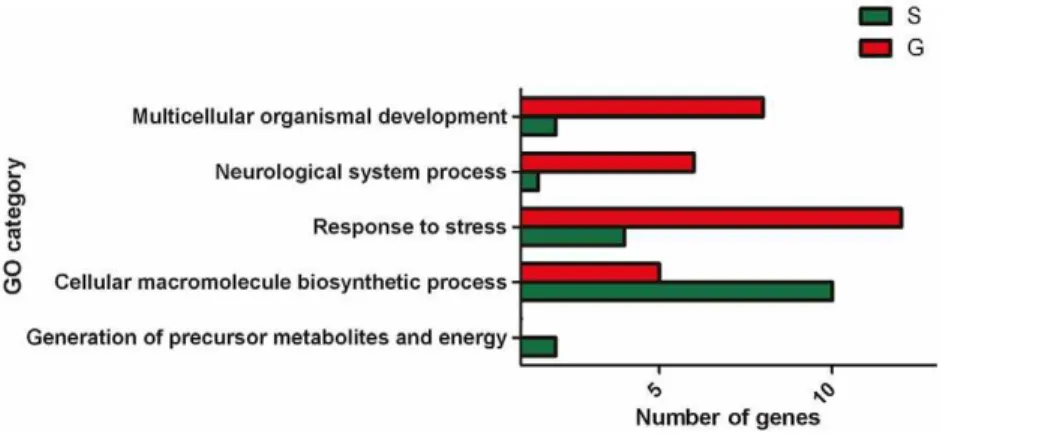
cDNAs and the remaining 48 (22%) by probes fromLocusta.Some 40% of the differentially expressed genes have been annotated to date (Table S1), allowing them to be classified under standard ‘Gene Ontology’ (GO) categories [20] (Figure 2). By combining a Fisher’s exact test (in which the set of differentially expressed genes was the test set and the complete set of annotated sequences was the reference set) and analysis of the GO term distribution, the differentially expressed genes could be classified under the five informative GO terms Multicellular organismal development
(GO:0007275),Neurological system process(GO:0050877),Response to stress (GO:0006950), Generation of precursor metabolites and energy
(GO:0006091) and Cellular macromolecule biosynthetic process
(GO:0034645). In addition, differential transcript levels were also observed for genes encoding pacifastins, hexamerins, three cytochrome P450 proteins and DNA methyltransferase 2.
Multicellular organismal development: nervous system development and modeling
Several of the differentially expressed genes classified under
Multicellular organismal development are likely to be involved in nervous system development and/or remodeling. Our previous findings [17] suggested that cellular processes controlling the development and regulation of neuronal structure are more active in gregarious than in solitarious locusts. There was a higher abundance in gregarious locusts of transcripts encoding the axon
Figure 1. Adult gregarious and solitarious desert locusts.The upper and lower panels show males (=) and females (R) of the gregarious (G) or solitarious (S) phases.
path finding regulators Slit and Fasciclin. The microarray experiment confirmed the upregulation of Slit-encoding tran-scripts in gregarious locusts, to which can be added other phase-specific differences in genes implicated in nervous system development. These include Cullin-3 and Glia Maturation Factor (GMF), two genes implicated in actin cytoskeleton dynamics. A homolog of Cullin-3, a ubiquitin ligase scaffold protein, was more strongly expressed in gregarious locusts whereas GMF was more abundant in solitarious locusts. InDrosophila melanogaster,Cullin-3 indirectly controls dendritic actin rearrangements via degradation of its target, the actin-cross-linking Kelch protein [21]. Although GMFs have not yet been functionally characterized in insects, their sequences show similarity to GMFs in nematodes and mammals, where they act as factors regulating neuronal and glial growth, differentiation and regeneration [22–24]. They may be evolutionary conserved suppressors of the actin-related protein (Arp) 2/3 complex that enhances actin polymerization and branching [25]. The phase differences in the expression of these two genes suggest that the actin cytoskeletons of neurons in gregarious locusts are more dynamic than those of solitarious locusts.
Chromatin-remodeling is an important epigenetic mechanism that influences development through control of transcription [26]. Two genes implicated in chromatin remodeling were upregulated in gregarious locusts: Osa, a modulator of the brahma chromatin remodeling complex [27], and chromodomain helicase DNA binding protein, which appears to be a homolog of the D. melanogasterMi-2 chromatin remodeler. Both are known transcrip-tional regulators of sensory nerve cell differentiation in D. melanogaster [28;29]. Control of mRNA splicing and translation provide a further level of developmental regulation in addition to the regulation of transcription. Homologs of the neural RNA binding proteins Musashi and Pasilla had more abundant transcript levels in gregarious locusts. Musashi is an indirect enhancer of neuronal differentiation [30]. Pasilla is aD. melanogaster
homolog of the human Nova-1 and Nova-2 proteins [31], which are required for normal function and development of the nervous system [32], but its role in the insect nervous system is unknown. The pronounced phase differences in the expression of genes normally implicated in nervous system development (guidance cues, regulators of cytoskeletal dynamics and transcriptional/ translational controllers) are unexpected in adult animals. Although these genes have not yet been functionally characterized in locusts, our data suggest that the nervous system of gregarious locusts may show more ongoing structural remodeling than that of
solitarious locusts. The key mechanisms of neuroplasticity include the alteration of existing connections and the establishment of new ones. Enhanced plasticity in the nervous system may allow gregarious locusts to adapt more easily or rapidly to new environments and deal with the sensory complexity of a swarm. This is consistent with the substantially larger brains of gregarious locusts compared to solitarious locusts. Although the primary sensory neuropils in the brain are relatively smaller in gregarious locusts, the higher integration centers are up to 50% larger than in solitarious animals [9].
A transcript that was more abundant in the solitarious CNS encodes a homolog of the Ca2+
-activated K+
channel Slowpoke. In
D. melanogaster,Slowpoke is involved in habituation [33;34], control of synaptic growth [35] and neurotransmitter release [36;37]. Reduced habituation, which may result from reduced Slowpoke expression, could be advantageous in the face of the sensory bombardment locusts receive in a swarm, as has been shown for the descending contralateral movement detector visual interneu-ron [11;13].
Neurological system process: sensory perception Transcripts encoding the long wavelength-sensitive opsin, a typical rhodopsin visual pigment protein [38], were more abundant in gregarious locusts. In addition, gregarious locusts showed a higher abundance of transcripts encoding a transient receptor potential-like (TRPL) channel and two different arrestins. All three kinds of proteins are key elements of the visual transduction cascade in insects [39]. Their higher expression in gregarious locusts may support vision at higher temporal resolutions. This requires a fast activation-inactivation cycle of rhodopsin, in which the inactivation of metarhodopsin is mediated through TRPL and arrestin [40;41].
Transcripts encoding the S. gregaria chemosensory proteins (CSPs) CSP1 and CSP3 [42] were more abundant in gregarious desert locusts. This observation concurs with recent findings in the migratory locust,L. migratoria. RNA interference against CSP3 in the gregarious phase ofL. migratoriareduced aggregation behavior and preference for pheromones [43], with the authors suggesting that CSPs may mediate behavioral changes in response to chemosensory signals from conspecifics. Our RNA samples, however, were generated solely from the CNS, which in L. migratoria does not contain appreciable amounts of CSP3 transcripts [43]. Their presence and differential expression in the CNS ofS. gregariamay point to a role for CSPs beyond that of peripheral olfaction in this species.
Figure 2. Classification of the annotated differentially expressed genes under GO categories.The number of transcripts classified under different GO terms that were more abundant in gregarious (red) and solitarious (green) locusts.
risk of infections spreading through the high densities of locusts found in swarms.
Gregarious animals also had higher levels of transcripts encoding heat-shock proteins (HSPs). An elevation of HSP-encoding transcripts has previously been shown in gregariousL. migratoria[49]. HSPs are molecular chaperones that are typically induced in response to various types of stress. They recognize proteins in a non-native conformation and have a role in the correct folding, assembly, intracellular localization, secretion, regulation and degradation of proteins [50]. Living under high population densities may lead to molecular stresses that require the increased protection provided by HSPs.
Oxidative stress resistance
Solitarious locusts in contrast to gregarious locusts seem to invest more in oxidative stress resistance; that is, resistance to the chronic accumulation of deleterious effects that occur over a lifetime. Organisms are protected from reactive oxygen species (ROS) by antioxidant systems. Ageing is associated with an accumulation of cellular waste and the detrimental effects of ROS and other free radicals [51]. Neurons are metabolically very active and produce many ROS. Once differentiated, neurons cease dividing, leading to a rapid accumulation of ROS damage. Increased transcript levels were found in solitarious locusts for genes encoding homologs of proteins that protect against oxidative stress damage including peroxiredoxin, 5-oxoprolinase and microsomal glutathione-S-transferase. The latter is also associated with insecticide resistance [52;53]. Another gene displaying higher expression levels in solitarious locusts encodes a homolog of transaldolase, an enzyme in the pentose phosphate pathway, which amongst other roles has been suggested to protect neurons from free radical damage [54]. The lower expression levels of oxidative stress management genes in gregarious locusts may result in them being less resistant to oxidative stress. This, in turn, may be linked to their shorter lifespans compared to solitarious animals [1;2]. Lower investment in anti-oxidative mechanisms by gregar-ious locusts may free metabolic resources for shorter term gains, such as earlier reproduction [55].
Basic cellular processes: protein synthesis and cellular respiration
Genes encoding homologs of proteins involved in basic cellular processes, such as protein synthesis and cellular respiration, showed higher expression in solitarious locusts. These included genes encoding electron-transferring flavoprotein dehydrogenase, mitochondrial ATP synthase coupling factor 6 (GO:Generation of precursor metabolites and energy), ribophorin and eight ribosomal proteins (GO:Cellular macromolecule biosynthetic process). This suggests that solitarious locusts, with their long lives and their enhanced protection from oxidative stress also invest more strongly in
hydroxylase activity inL. migratoria[57;58].
InL. migratoria, members of the protein superfamily containing juvenile hormone-binding proteins, hexamerins, prophenoloxi-dases and hemocyanins (the JHPH superfamily) are differentially expressed in the two phases [18;59]. We found three transcripts belonging to this family that were more abundant in the CNS of solitariousS. gregaria. These encoded gene products are arylphorin-like and closely resembleL. migratoriaJHPH proteins. Arylphorins are members of the hexamerin family of proteins, which were thought simply to provide haemolymph stores of amino acids [60], but recent work suggests they have additional functions. For example, they modulate caste differentiation in termites by suppressing the transition from workers to soldiers in a juvenile hormone-responsive manner [61;62]. Therefore, locust JHPH proteins could have a role in the maintenance of phase-specific characteristics.
Solitarious desert locusts had higher levels of DNA methyl-transferase 2 (Dnmt2)-encoding transcripts. This agrees with our previous observation of reduced Dnmt2 transcript levels following crowding of solitarious hoppers [63] and suggests that the epigenetic mechanisms that establish and/or maintain phase include alteration of the methylation state of genomic DNA [64]. Differences in the behavior of queen and worker bees have been related to different patterns of methylation in their brain DNA [65]. The Dnmt2 family can also methylate tRNAs, however [66], in which role they have been associated with stress resistance [67] and organ differentiation [68]. The differential expression of Dnmt2 could therefore reflect both phase-related differences in DNA methylation and tRNA methylation-mediated differences in stress resistance and/or CNS development.
Two pacifastin-like peptide precursors were differentially expressed. Pacifastins are a family of serine peptidase inhibitors found in arthropods [69]. The previous discovery of greater abundance of SGPP3 and SGPP4 transcripts in gregarious desert locusts using RT-qPCR [70;71] validates the results obtained with our microarrays.
Non-annotated differentially expressed genes
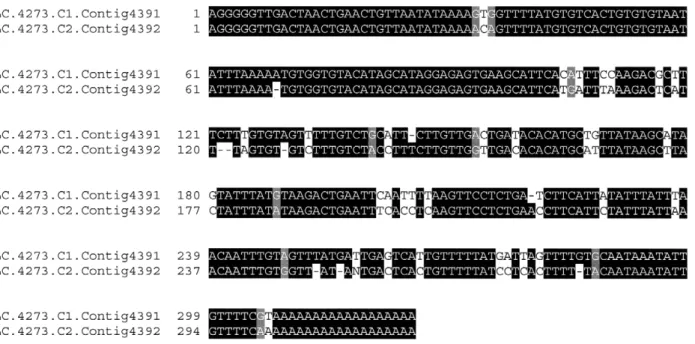
sequence comparisons. It is probable that these transcripts do not code for proteins. Only very short ORFs (ranging in length from 3 to 7 codons) could be detected in the different reading frames and it is unclear whether these are actually protein coding or merely contain motifs consistent with a protein coding transcript. A large part of eukaryotic genomes is transcribed into non-coding RNA species (ncRNA), whilst the protein-encoding genes only make up a small portion of the genome. The biological role of only a few classes of ncRNA molecules have been determined, but many more remain to be identified and/or functionally characterized [72]. Rapid Amplification of cDNA Ends (RAcE) analyses revealed that the LC.4273.C1.Contig4391 and LC.4273.C2.Con-tig4392 sequences in the EST database probably represent complete transcripts. Blast searches in the non-coding RNA database [73], the functional RNA database (fRNAdb [74]) and the database of non-coding RNA families (Rfam, [75]) yielded either no or low scoring hits, but some similarities were found with sequences in the microRNA database (miRBase [76–80]). Whether these low scoring blast hits in non-coding RNA databases genuinely indicate homology or whether these ESTs represent new and possibly locust-specific transcripts requires further investiga-tion. Given their markedly increased levels in the gregarious CNS, these transcripts may be part of a mechanism that establishes and/ or maintains certain gregarious phase characteristics.
General conclusions
The current microarray study revealed 214 genes that are differentially expressed between solitarious and gregarious desert locusts. Independent support for our data is provided by several previously published studies in both S. gregaria and L. migratoria. The pattern of differential gene expression in S. gregaria shows several similarities with that of L. migratoria. For example expression of transcripts for CSP3 and HSPs is stronger in gregarious locusts of both species. By contrast transcripts for hexamerins (high in gregariousL. migratoriaheads and solitarious
hind legs), cytochrome P450 proteins and alcohol dehydrogenases showed opposite patterns of expression in the two species. S. gregaria and L. migratoria belong to different sub-families of the Acrididae and have presumably evolved density dependent polyphenism independently. It remains to be seen just how strongly the convergent phase change processes are underpinned by similar changes in gene expression.
The radically different lifestyles of solitarious and gregarious locusts mean that they face very different challenges. For example, solitarious locusts rely on crypsis to avoid predation, whereas gregarious locusts in a swarm have a greatly reduced individual predation risk. Life in a swarm has its own risks however: there is increased competition for food and a higher risk of disease, and there is a need to move continually to find new resources. The challenge of extracting meaningful sensory information from the constantly moving throng of other locusts in a swarm is also considerable. The risks inherent to the solitarious lifestyle arise from their very low population densities, where for example, finding a mate or suitable oviposition sites may be difficult and require prolonged searching. Our microarray analysis has identified genes whose altered expression may enable locusts of either phase to deal with the different challenges they face. For example, genes for proteins such as HSPs that confer protection from acute physiological challenges are upregulated in gregarious locusts, as are genes encoding proteins that confer protection from infection. By contrast solitarious locusts, which require a long adult life, are more strongly protected from the slowly accumulating effects of ageing by an upregulation of genes related to anti-oxidant systems, detoxification and anabolic renewal. Gregarious locusts had a greater abundance of transcripts for proteins involved in sensory processing. Solitarious locusts have larger eyes and antennae than gregarious locusts, but the latter experience a more complex sensory environment that may require a greater turnover of proteins involved in sensory transduction, and possibly greater neuronal plasticity.
Figure 3. Pairwise alignment of the sequences corresponding to LC.4273.C1.Contig4391 and LC.4273.C2.Contig4392.The alignment was performed in ClustalW2 software [92;93] (input sequences were defined as DNA, other parameters were set at default values). Conserved residues are highlighted in black. Purine transition mutations are shaded.
(2010) [82].
Preparation of the RNA samples
Sampling was done separately for males and females. Each condition (solitarious males or females, gregarious males or females) was represented by three independent biological samples, which each contained pooled tissues from five adult locusts aged between 2 and 10 days after final eclosion. Head ganglia (midbrain, optic lobes and subesophageal ganglion) and thoracic ganglia were dissected, cleaned and rinsed in Ringer solution (1 L: 8.766 g NaCl; 0.188 g CaCl2; 0.746 g KCl; 0.407 g MgCl2; 0.336 g NaHCO3; 30.807 g sucrose; 1.892 g trehalose; pH 7.2). The samples were collected in 2 ml tubes with 1.4 mm MagNa Lyser Green Beads (Roche), immediately frozen in liquid nitrogen and stored at 280uC. The samples were homogenized using a MagNA Lyser instrument (Roche) (30 s, 6500 rpm) and total RNA was extracted from the homogenates (RNeasy Lipid Tissue Mini Kit; Qiagen). A DNase treatment (RNase-free DNase set; Qiagen) was also performed to eliminate any genomic DNA contamination. The quantity and integrity of the RNA was measured spectrophotometrically on an Agilent 2100 Bioanalyzer (Agilent Technologies).
Design of the microarrays
The locust microarrays were designed by means of the eArray system (Agilent Technologies). They contained probes represent-ing all available S. gregaria transcript sequences (i.e. all EST sequences [17] and allS. gregariatranscript sequences available in GenBank), plus all L. migratoria EST sequences [19] having no ortholog in theS. gregariaset (blastn hits producing E,1E-10 were considered orthologs). Probes were designed according to the following eArray criteria: (i) probe length: 60 nucleotides, (ii) two probes per target sequence (best probe methodology) and (iii) probe orientation: sense. Other parameters were set at default settings. In total 20,755 unique locust transcript sequences (12,783S. gregaria and 7,972L. migratoria sequences) were repre-sented on the arrays. Each sequence was reprerepre-sented by two probes, allowing for the design of the arrays in 4x44K slide format (Agilent Technologies), which also includes control features. The platform information has been deposited in the NCBI Gene Expression Omnibus (GEO) database, http://www.ncbi.nlm.nih. gov/geo) and is accessible under the accession number GPL11172. The current microarray study aimed at identifying genes differentially expressed in the solitarious and gregarious desert locust CNS. In order to rule out sex-dependent biases in the identification of phase-specific transcriptional differences, our sampling and hybridization design were strictly balanced across the two sexes. To that purpose, the experiment consisted of two independent hybridization runs, one per sex. Each one of them involved six samples (three solitarious and three gregarious), and
antisense T7 promoter. The reverse transcriptase also catalyzes synthesis of the second cDNA strand (which contains the sense T7 promoter sequence), providing the template for synthesis and linear amplification of cRNA strands. During the transcription step Cy3- or Cy5-labeled dCTPs were incorporated in newly synthesized cRNA strands. Prior to cDNA synthesis, Spike A Mix (Agilent) was added to each sample to be labeled with Cy3 and Spike B Mix to each sample to be labeled with Cy5. These Spike-In mixes test for linearity, sensitivity and accuracy of the microarray workflow. The labeled samples were purified (RNeasy Mini Kit; Qiagen). The cRNA yield and relative amount of incorporated labeled dCTPs were determined on a NanoDrop ND-1000 UV-VIS Spectrophotometer (Thermo Scientific).
Hybridization
Hybridizations were performed using the Gene Expression Hybridization Kit (Agilent) following the manufacturer’s instruc-tions for 17 hours at 65uC. Next, the microarrays were washed twice in GE Wash Buffer 1 (Agilent) for 1 minute each and finally in GE Wash Buffer 2 at 37uC for 1 minute.
Scanning of the microarrays and data analysis
Microarrays were scanned using a Genepix Personal 4100A confocal scanner (Axon Instruments) at a resolution of 5mm and excitation wavelengths of 635 nm and 532 nm. The PMT voltages for each wavelength were adjusted to obtain an overall green/red ratio as close as possible to 1. Spot identification and quantification of the fluorescent signal was carried out using GenePix Pro 6.0 software (Axon Instruments). The hybridization designs for both sexes were considered identical repeats and only phase was treated as a factor. The data obtained from all 16 hybridizations were pooled and used in a single statistical analysis (R packagelimma
deposited in the MIAME compliant NCBI Gene Expression Omnibus (GEO) database, http://www.ncbi.nlm.nih.gov/geo) and are accessible under the GEO series accession number GSE31237.
Supporting Information
Table S1 Annotated differentially expressed genes. ID refers to the EST or GenBank ID; log2FC is the log2-transformed fold-change in expression in gregarious over solitarious CNS; p -values are false discovery rate (FDR)-adjusted, with a cut-off at FDR = 10%.
(DOC)
Table S2 Non-annotated differentially expressed genes. ID refers to the EST or GenBank ID; log2FC is the log2-transformed fold-change in expression in gregarious over
solitar-ious CNS;p-values are false discovery rate (FDR)-adjusted, with a cut-off at FDR = 10%.
(DOC)
Acknowledgments
The authors gratefully thank S. Van Soest, L. Vanden Bosch and J. Van Duppen for technical support, J. Puttemans and M. Christiaens for help with the figures and R. Jonckers for taking care of the locust cultures. In addition, all other colleagues who took care of the locust cultures are thanked.
Author Contributions
Conceived and designed the experiments: JVB LB MB TM SRO SMR MRJS. Performed the experiments: LB HV EM. Analyzed the data: DK LV LB SRO SMR TM. Contributed reagents/materials/analysis tools: DK JVB MB TM SRO SMR MRJS. Wrote the paper: LB TM SRO SMR. Developed and validated the microarrays: LB JVB.
References
1. Uvarov B (1966) Phase polymorphism. In: Grasshoppers and Locusts: A handbook of general acridology. Cambridge: Anti-Locust Research Centre (Cambridge University Press). pp 332–386.
2. Uvarov B (1977) Grasshoppers and Locusts: A handbook of general acridology. Centre for overseas pest research. London.
3. Pener MP, Yerushalmi Y (1998) The physiology of locust phase polymorphism: an update. J Insect Physiol 44: 365–377.
4. Pener MP, Simpson SJ (2009) Locust phase polyphenism: an update. Advances in Insect Physiology 36: 1–272.
5. Lester LR, Grach C, Pener MP, Simpson SJ (2005) Stimuli inducing gregarious colouration and behaviour in nymphs ofSchistocerca gregaria. J Insect Physiol 51: 737–747.
6. Rogers SM, Matheson T, Despland E, Dodgson T, Burrows M, et al. (2003) Mechanosensory-induced behavioural gregarization in the desert locust Schistocerca gregaria. J Exp Biol 206: 3991–4002.
7. Simpson SJ, Bouai, chi A, Roessingh P (1998) Effects of sensory stimuli on the behavioural phase state of the desert locust,Schistocerca gregaria. J Insect Physiol 44: 883–893.
8. Sword GA (2002) A role for phenotypic plasticity in the evolution of aposematism. Proc Biol Sci 269: 1639–1644.
9. Ott SR, Rogers SM (2010) Gregarious desert locusts have substantially larger brains with altered proportions compared with the solitarious phase. Proc Biol Sci 277: 3087–3096.
10. Fuchs E, Kutsch W, Ayali A (2003) Neural correlates to flight-related density-dependent phase characteristics in locusts. J Neurobiol 57: 152–162. 11. Matheson T, Rogers SM, Krapp HG (2004) Plasticity in the visual system is
correlated with a change in lifestyle of solitarious and gregarious locusts. J Neurophysiol 91: 1–12.
12. Rogers SM, Krapp HG, Burrows M, Matheson T (2007) Compensatory plasticity at an identified synapse tunes a visuomotor pathway. J Neurosci 27: 4621–4633.
13. Rogers SM, Harston GW, Kilburn-Toppin F, Matheson T, Burrows M, et al. (2010) Spatiotemporal receptive field properties of a looming-sensitive neuron in solitarious and gregarious phases of the desert locust. J Neurophysiol 103: 779–792.
14. Verlinden H, Badisco L, Marchal E, Van Wielendaele P, Vanden Broeck J (2009) Endocrinology of reproduction and phase transition in locusts. Gen Comp Endocrinol 162: 79–92.
15. Rogers SM, Matheson T, Sasaki K, Kendrick K, Simpson SJ, et al. (2004) Substantial changes in central nervous system neurotransmitters and neuro-modulators accompany phase change in the locust. J Exp Biol 207: 3603–3617. 16. Anstey ML, Rogers SM, Ott SR, Burrows M, Simpson SJ (2009) Serotonin mediates behavioral gregarization underlying swarm formation in desert locusts. Science 323: 627–630.
17. Badisco L, Huybrechts J, Simonet G, Verlinden H, Marchal E, et al. (2011) Transcriptome analysis of the desert locust central nervous system: production and annotation of aSchistocerca gregariaEST database. PLoS One 6: e17274. 18. Kang L, Chen X, Zhou Y, Liu B, Zheng W, et al. (2004) The analysis of
large-scale gene expression correlated to the phase changes of the migratory locust. Proc Natl Acad Sci USA 101: 17611–17615.
19. Ma ZY, Yu J, Kang L (2006) LocustDB: a relational database for the transcriptome and biology of the migratory locust (Locusta migratoria). BMC Genomics 7: 11.
20. Ashburner M, Ball CA, Blake JA, Botstein D, Butler H, et al. (2000) Gene ontology: tool for the unification of biology. The Gene Ontology Consortium. Nat Genet 25: 25–29.
21. Djagaeva I, Doronkin S (2009) COP9 limits dendritic branching via Cullin3-dependent degradation of the actin-crosslinking BTB-domain protein Kelch. PLoS One 4: e7598.
22. Bosch EP, Zhong W, Lim R (1989) Axonal signals regulate expression of glia maturation factor-beta in Schwann cells: an immunohistochemical study of injured sciatic nerves and cultured Schwann cells. J Neurosci 9: 3690–3698. 23. Lim R, Miller JF, Zaheer A (1989) Purification and characterization of glia
maturation factor beta: a growth regulator for neurons and glia. Proc Natl Acad Sci USA 86: 3901–3905.
24. Lim R, Liu YX, Zaheer A (1990) Glia maturation factor beta regulates the growth of N18 neuroblastoma cells. Dev Biol 137: 444–450.
25. Nakano K, Kuwayama H, Kawasaki M, Numata O, Takaine M (2010) GMF is an evolutionarily developed Adf/cofilin-super family protein involved in the Arp2/3 complex-mediated organization of the actin cytoskeleton. Cytoskeleton (Hoboken) 67: 373–382.
26. Ho L, Crabtree GR (2010) Chromatin remodelling during development. Nature 463: 474–484.
27. Collins RT, Furukawa T, Tanese N, Treisman JE (1999) Osa associates with the Brahma chromatin remodeling complex and promotes the activation of some target genes. EMBO J 18: 7029–7040.
28. Baig J, Chanut F, Kornberg TB, Klebes A (2010) The chromatin-remodeling protein Osa interacts with CyclinE inDrosophilaeye imaginal discs. Genetics 184: 731–744.
29. Parrish JZ, Kim MD, Jan LY, Jan YN (2006) Genome-wide analyses identify transcription factors required for proper morphogenesis ofDrosophilasensory neuron dendrites. Genes Dev 20: 820–835.
30. Okabe M, Imai T, Kurusu M, Hiromi Y, Okano H (2001) Translational repression determines a neuronal potential inDrosophilaasymmetric cell division. Nature 411: 94–98.
31. Seshaiah P, Miller B, Myat MM, Andrew DJ (2001) pasilla, theDrosophila homologue of the human Nova-1 and Nova-2 proteins, is required for normal secretion in the salivary gland. Dev Biol 239: 309–322.
32. Jensen KB, Dredge BK, Stefani G, Zhong R, Buckanovich RJ, et al. (2000) Nova-1 regulates neuron-specific alternative splicing and is essential for neuronal viability. Neuron 25: 359–371.
33. Engel JE, Wu CF (1998) Genetic dissection of functional contributions of specific potassium channel subunits in habituation of an escape circuit in Drosophila. J Neurosci 18: 2254–2267.
34. Joiner MA, Asztalos Z, Jones CJ, Tully T, Wu CF (2007) Effects of mutant DrosophilaK+channel subunits on habituation of the olfactory jump response. Journal of Neurogenetics 21: 45–58.
35. Lee J, Wu CF (2010) Orchestration of stepwise synaptic growth by K+and Ca2+ channels inDrosophila. J Neurosci 30: 15821–15833.
36. Warbington L, Hillman T, Adams C, Stern M (1996) Reduced transmitter release conferred by mutations in the slowpoke-encoded Ca2(+)-activated K+ channel gene ofDrosophila. Invertebrate Neuroscience 2: 51–60.
37. Lee J, Ueda A, Wu CF (2008) Pre- and post-synaptic mechanisms of synaptic strength homeostasis revealed by slowpoke and shaker K+channel mutations in Drosophila. Neuroscience 154: 1283–1296.
38. Towner P, Harris P, Wolstenholme AJ, Hill C, Worm K, et al. (1997) Primary structure of locust opsins: a speculative model which may account for ultraviolet wavelength light detection. Vision Res 37: 495–503.
39. Hardie RC (2001) Phototransduction inDrosophila melanogaster. J Exp Biol 204: 3403–3409.
48. Wilson K, Thomas MB, Blanford S, Doggett M, Simpson SJ, et al. (2002) Coping with crowds: density-dependent disease resistance in desert locusts. Proc Natl Acad Sci USA 99: 5471–5475.
49. Wang HS, Wang XH, Zhou CS, Huang LH, Zhang SF, et al. (2007) cDNA cloning of heat shock proteins and their expression in the two phases of the migratory locust. Insect Mol Biol 16: 207–219.
50. Feder ME, Hofman GE (1999) Heat-shock proteins, molecular chaperones, and the stress response: evolutionary and ecological physiology. Annu Rev Physiol 61: 243–282.
51. Dugan LL, Quick KL (2005) Reactive oxygen species and aging: evolving questions. Sci Aging Knowledge Environ 2005: pe20.
52. Tu CP, Akgul B (2005)Drosophilaglutathione S-transferases. Methods Enzymol 401: 204–226.
53. Ranson H, Hemingway J (2005) Mosquito glutathione transferases. Methods Enzymol 401: 226–241.
54. Bolanos JP, Almeida A (2010) The pentose-phosphate pathway in neuronal survival against nitrosative stress. IUBMB Life 62: 14–18.
55. Fonseca DB, Brancato CL, Prior AE, Shelton PM, Sheehy MR (2005) Death rates reflect accumulating brain damage in arthropods. Proc R Soc London, B 272: 1941–1947.
56. Scott JG, Wen Z (2001) Cytochromes P450 of insects: the tip of the iceberg. Pest Management Science 57: 958–967.
57. Winter J, Bilbe G, Richener H, Sehringer B, Kayser H (1999) Cloning of a cDNA encoding a novel cytochrome P450 from the insectLocusta migratoria: CYP6H1, a putative ecdysone 20-hydroxylase. Biochem Biophys Res Commun 259: 305–310.
58. Feyereisen R, Durst F (1980) Development of microsomal cytochrome P-450 monooxygenases during the last larval instar of the locust,Locusta migratoria: correlation with the hemolymph 20-hydroxyecdysone titer. Mol Cell Endocrinol 20: 157–169.
59. Hughes AL (1999) Evolution of the arthropod prophenoloxidase/hexamerin protein family. Immunogenetics 49: 106–114.
60. Telfer WH, Kunkel JG (1991) The function and evolution of insect storage hexamers. Annu Rev Entomol 36: 205–228.
61. Zhou X, Tarver MR, Bennett GW, Oi FM, Scharf ME (2006) Two hexamerin genes from the termiteReticulitermes flavipes: Sequence, expression, and proposed functions in caste regulation. Gene 376: 47–58.
62. Zhou X, Oi FM, Scharf ME (2006) Social exploitation of hexamerin: RNAi reveals a major caste-regulatory factor in termites. Proc Natl Acad Sci U S A 103: 4499–4504.
63. Boerjan B, Sas F, Ernst UR, Tobback J, Lemiere F, et al. (2011) Locust phase polyphenism: Does epigenetic precede endocrine regulation? Gen Comp Endocrinol.
64. Kunert N, Marhold J, Stanke J, Stach D, Lyko F (2003) A Dnmt2-like protein mediates DNA methylation inDrosophila. Development 130: 5083–5090. 65. Lyko F, Foret S, Kucharski R, Wolf S, Falckenhayn C, et al. (2010) The honey
bee epigenomes: differential methylation of brain DNA in queens and workers. PLoS Biol 8: e1000506.
66. Goll MG, Kirpekar F, Maggert KA, Yoder JA, Hsieh CL, et al. (2006) Methylation of tRNAAsp by the DNA methyltransferase homolog Dnmt2. Science 311: 395–398.
67. Schaefer M, Pollex T, Hanna K, Tuorto F, Meusburger M, et al. (2010) RNA methylation by Dnmt2 protects transfer RNAs against stress-induced cleavage. Genes Dev 24: 1590–1595.
Functional RNA Database 3.0: databases to support mining and annotation of functional RNAs. Nucleic Acids Res 37: D89–D92.
75. Gardner PP, Daub J, Tate JG, Nawrocki EP, Kolbe DL, et al. (2009) Rfam: updates to the RNA families database. Nucleic Acids Res 37: D136–D140. 76. Griffiths-Jones S (2006) miRBase: the microRNA sequence database. Methods
in Molecular Biology 342: 129–138.
77. Griffiths-Jones S, Grocock RJ, van DS, Bateman A, Enright AJ (2006) miRBase: microRNA sequences, targets and gene nomenclature. Nucleic Acids Res 34: D140–D144.
78. Griffiths-Jones S, Saini HK, van DS, Enright AJ (2008) miRBase: tools for microRNA genomics. Nucleic Acids Res 36: D154–D158.
79. Griffiths-Jones S (2010) miRBase: microRNA sequences and annotation. Current Protocols in Bioinformatics Chapter 12: Unit-10.
80. Kozomara A, Griffiths-Jones S (2011) miRBase: integrating microRNA annotation and deep-sequencing data. Nucleic Acids Res 39: D152–D157. 81. Hoste B, Luyten L, Claeys I, Clynen E, Rahman MM, et al. (2002) An improved
breeding method for solitarious locusts. Entomol Exp Appl 104: 281–288. 82. Berthier K, Chapuis MP, Simpson SJ, Ferenz HJ, Habib Kane CM, et al. (2010)
Laboratory populations as a resource for understanding the relationship between genotypes and phenotypes: A global case study in locusts. Advances in Insect Physiology 39: 1–37.
83. Knapen D, Vergauwen L, Laukens K, Blust R (2009) Best practices for hybridization design in two-colour microarray analysis. Trends Biotechnol 27: 406–414.
84. Smyth GK (2005) Limma: linear models for microarray data. In: Bioinformatics and Computational Biology Solutions using R and Bioconductor Gentleman R, Carey V, Dudoit S, Irizarry R, Huber W, (eds). New York: Springer. pp 397–420.
85. Sclep G, Allemeersch J, Liechti R, De Meyer B, Beynon J, et al. (2007) CATMA, a comprehensive genome-scale resource for silencing and transcript profiling of Arabidopsisgenes. BMC Bioinformatics 8: 400.
86. Smyth GK, Speed T (2003) Normalization of cDNA microarray data. Methods 31: 265–273.
87. Smyth GK, Michaud J, Scott HS (2005) Use of within-array replicate spots for assessing differential expression in microarray experiments. Bioinformatics 21: 2067–2075.
88. Smyth GK (2004) Linear models and empirical bayes methods for assessing differential expression in microarray experiments. Statistical Applications in Genetics and Molecular Biology 3: Article3.
89. Benjamini Y, Hochberg Y (1995) Controlling the false discovery rate: a practical and powerful approach to multiple testing. Journal of the Royal Statistical Society Series B (Methodological) 57: 289–300.
90. Conesa A, Gotz S, Garcia-Gomez JM, Terol J, Talon M, et al. (2005) Blast2GO: a universal tool for annotation, visualization and analysis in functional genomics research. Bioinformatics 21: 3674–3676.
91. Gotz S, Garcia-Gomez JM, Terol J, Williams TD, Nagaraj SH, et al. (2008) High-throughput functional annotation and data mining with the Blast2GO suite. Nucleic Acids Res 36: 3420–3435.
92. Chenna R, Sugawara H, Koike T, Lopez R, Gibson TJ, et al. (2003) Multiple sequence alignment with the Clustal series of programs. Nucleic Acids Res 31: 3497–3500.