American Journal of Engineering Research (AJER)
e-ISSN: 2320-0847 p-ISSN : 2320-0936
Volume-5, Issue-10, pp-147-151
www.ajer.org
Research Paper Open Access
w w w . a j e r . o r g
Page 147
Formulation and Production of Bio-Hydraulic Fluid as an
Alternative to Mineralfluids for Automobiles.
C. C. EZE
Department of Mechanical Engineering, Michael Okpara University of Agriculture, Umudike, Abia State, Nigeria.
ABSTRACT:
This work formulated and produced bio-hydraulic brake fluid, as an alternative tomineral fluidsDOT 3, 4.and 5.1.Glycerolwas used as its base substance and various lubricants and additives were added to impart the desired performance characteristics to the fluid. The bio-fluid was subjected to some major fluid property tests, pour point, boiling points, freezing point and dynamic viscosities within a temperature range of 30°C to 100°C. Its mineral-based fluid counterpart was also tested of same properties. The results indicated that there is close similarity in these physio-chemical properties. The bio-based hydraulic fluid has its pour, boiling, freezing points, and viscosities as -44.9°C, 326oC, -48.2°C, and 0.009 kg/ms to 0.001 kg/ms for the tested temperature range, respectively as against -35°C, 205oC, -40°C and 0.007 kg/ms to 0.001 kg/ms range, respectively for mineral hydraulic brake fluid. This close correlation of properties which majorly determine this suitability as hydraulic fluid offers bio-fluid with glycerol as its base substance a good alternative to the conventional mineral based hydraulic fluid.Keywords:
Additives, Alternatives, Bio-hydraulic brake fluid Glycerol,Close correlation, DOT 3, 4,5.1, Mineral fluids.I.
INTRODUCTION
The dire need to find bio-based alternatives to mineral products has long arisen and is mounting stronger every day. The harmful green-house gas emissions from mineral products- hydraulic fluids fracturing and use inclusive, are badly afflicting our environment.Brake fluid is a type of hydraulic fluid used in hydraulic brake and hydraulic clutch applications in automobiles, motorcycles, light trucks, and some bicycles [1].Other equipment that might use hydraulic fluids also include; excavator, hydraulic brakes, power steering systems, transmissions trucks, lifts and industrial machineries and automobiles.
DOT 3, 4 and 5.1 brake fluids,some of the major brake fluids in use by the automobiles containpolyoxyalkylene glycol ethers, petroleum derivatives as their base substances. They consist of glycol ethers of ethylene, methyl, propylene, and butylgroups, including polyethylene oxide and aliphaticamine[2]. Glycol ethers can cause birth defects and can be hazardous to the reproductive system.To obtain an alternative to these brake fluid types to avert the environmental and health problems, glycerol, a vegetable oil derivative obtained from transesterification reaction [3], here from groundnut oil feedstock, was used as the base chemical to formulate the fluid in this work.
II.
MATERIALS AND METHODS
The materials and methods involved in the formulation of the bio-fluid formulation are given:
2.1 Hydraulic fluid formulation using glycerol-considerations
In mineral-based brake fluids, polyoxyalkyleneor polglycol which is the base-substance and solvent composition is about 60-90 % of the whole lot, the lubricants take 5-30%, and the additives, especially the corrosion inhibitors, anti-oxidant and the anti-foam take 2-5% [4].
In the formulation of bio- fluids, glycerol obtained from the transesterification reaction ofgroundnut oil with methanol in the presence of sodium hydroxide catalyst was used as the solvent and base substance. For this blend, 500 g of glycerol was used, representing 90% by mass of the whole fluid blend.Glycerol which has a high
boiling point in the range of 230-300oC and a freezing point of well below -50oCis alsoan anti-freeze for brake
and clutch fluid formulation for automotive application and can replace polyoxyalkyleneglycol ether blend
w w w . a j e r . o r g
Page 148
Vegetable oil can have excellent lubricity and high velocity index of about 223. Oil with a high viscosity index changes less with temperature than oil with a low viscosity index.
2.2 Lubricants and Additives used
To achieve the desired brake and clutch fluid’s properties, some chemicals (lubricants and additves) of
composition (5-30 % and 2-5%) of fluid body were also added to the base substance respectively. According to [4; 6], theselubricants and additivesinclude:
2.2.1 Bio-butanol and methanol
Bio-butanol (also butly alcohol) refers to a four-carbon alcohol (biologically produced), with a
chemical formula of C4H9OH. It was used as solvent in the blend. It has the boiling and melting points of
117.7oC and -89.9oCrespectively, and has a viscosity of 2.573x10³ mPa at 25oC.
It is also soluble in ethanol and methanol prompting the inclusion of this non-edible methanol in the lubricants used.
2.2.2 Diethylene glycol and furfural aldehyde
Diethylene glycol, alubricant substance which was added solely for the purpose of reducing the freezing temperature of the fluid compound was added to lower the freezing point property of the formulation.Also, a necessary characteristics of a satisfactory brake fluid shouldprovide coating which will protect the surface of such parts against corrosion even after the fluid has evaporated and vanished on the auto-parts. Consequently, diethylene glycol served as diluents and retardants in spite of the fact that this chemical attacks iron and steelit comes into contact with.
Though thischemicalis of fossil origin, the quantity in the whole recipe is so small that the emission contribution should be ignored when compared with the desired property input in the whole formulation. Furfural aldehyde was added to serve as both a retardant and as diluents. This substance has the triple characteristics of reducing the rate of evaporation, lowering the freezing point and improving the protective coating which is left as a residue on the parts in contact with the brake fluid. It also has a high boiling point of
162oC and a melting point of -37oC which is good in the making of hydraulics.
2.2.3 Graphite
A good fluid should develop minimum friction between the fluid molecules and the walls of the vessel in which it is contained. Graphite dust dissolved in methanol was used as friction modifier and enhance the
fluid’s overall viscosity index. Graphite also acts as anti-wear in the blend.
2.2.4 Small red bean and bitter leaf
Corrosion/rust inhibition and antioxidant Brake fluids usually corrodeinside of the metal components used such as calipers, master cylinders and ABS control valves. They must contain additives-corrosion inhibitors so asnot to corrodethe components they come intocontact withas vapours may form during very high temperature operations. Some leaves of bitter leaf plant(vernoniaamydalina) and small red bean have been found to be able to inhibit corrosion and rust in materials. They can as well serve as antoxidants and were used in this work [7]. Thus, grounded dry leavesof bitter leaf plants and dry small red bean were dissolved in ethanol for two days, filtered and added to the base substance to accomplish this inhibition and antioxidant effects.
2.2.5 Polyethylene oxide
Foam formation in fluids in operation affects the braking power. The incompressibility of the fluid will be compromised especially at high temperatures.Some quantities of polyethylene oxide was added to the fluid blend to reduce the foaming tendencies of the formulation[8]
2.2.6 Sulfur halides and silicone emulsion
Sulfur halides and silicone emulsion were added to the formulation to allow separation of oil and water [9; 10].
2.2.7 Monoethylene Glycol [11]
w w w . a j e r . o r g
Page 149
2.2.8 Organic sulphurOrganic sulphur compounds, the amides were added to hydraulic fluids to protect the inner surfaces of the fluid carrying lines under severe forces and extreme pressures.
2.3 Physiochemical analysis
Comparative analysis of some physiochemical properties of both glycerol-based hydraulic and polyoxyalkylene-based hydraulic fluids were done. This involved:
1. Determination of pour, boiling and freezing points of theglycerol based hydraulic fluid(bio-based
hydraulics) and polyoxalkylene-based fluid (mineral oil-based hydraulic fluid) samples.
2. Determination of dynamic viscosity of Glycerol-based hydraulic fluid and polyoxalkylene-based oil-based
hydraulic fluid sample over a temperature range of 30°C to 100°C.
The scope of the test method specifies a procedure for the determination of kinematic viscosity (v) of the fluid samples by measuring the time for a volume of liquid to flow under gravity through a calibrated glass capillary viscometer. The dynamic viscosity (µ) can be obtained by multiplying the kinematic viscosity (v) by
the density ρ of the liquid.
III.
RESULTS AND DISCUSSIONS
3.1 Results
Table 1: Formulation of bio-hydraulic fluids (glycerol-based hydraulic and clutch fluids).
s/n Chemical used Function in fluid Mass used
(g)
Percent in recipe (%)
1 Glycerol Recipe base chemical 500 90
2 Bio-butanol and methanol Formulation solvent 19.44 3.5
3 Diethylene glycol and furfural
aldehyde
Diluents and retardants 8.33 1.5
4 Grapites Friction modifier, anti-wear 5.55 1.0
5 Small red bean and bitter leaf Corrosion/rust inhibitor and
antioxidant
0.55 0.10
6 polyethylene oxide Alcohol-based anti-foam solvent 0.17 0.03
7 Sulfur halides, silicone emulsion Dispersants and Emulsifiers 0.11 0.02
8 Detergent Detergents 0.11 0.02
9 Polyalkylstrenes Defoamer 0.17 0.03
10 Monoethylene Glycol Anti-freezer, coolant 8.33 1.5
Table 2: Pour, Boiling and Freezing Points of Bio-based and Mineral-based hydraulic Fluids
Fluid sample Pour point
(oC)
Boiling point (oC)
Freezing point (oC)
Glycerol based hydraulic fluid (bio-based) -44.9 326 -48.2
Polyoxyalkylene glycol-based hydraulic fluid (mineral-based)
-35.0 205 -40.0
Table 3: Viscosity of Glycerol-basedand Polyoxyalkylene Glycol-based Hydraulic Fluids
Temperature (oC)
Viscosity of Bio-based hydraulic fluid (kg/ms)
Viscosity ofMineral-based hydraulic fluid (kg/ms)
30 0.009 0.007
40 0.008 0.006
50 0.006 0.004
60 0.005 0.003
70 0.004 0.002
80 0.003 0.001
90 0.002 0.001
w w w . a j e r . o r g
Page 150
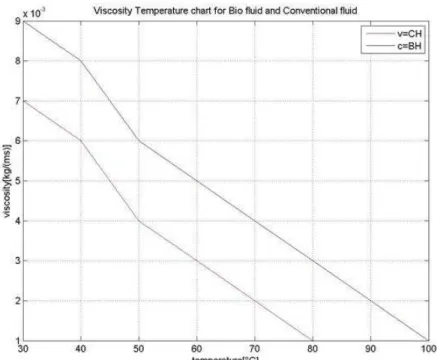
Fig.1: Viscosity –temperature graph for both Bio-based and mineral-based hydraulic fluids3.2 Discussions
From TABLE 1, it may be observed that the base substance is glycerol, a bye-product of transesterification reaction in the production of biodiesel. It is the bulk of the whole fluid mass, about 90 % of the hydraulics by mass composition. The rest are the lubricants and additives which variously serve different purposes.Lubricants and Additives deliver performance characteristics to the fluids.The bio-butanol and methanol form the fluid base solvent, the diethylene glycol and furfural aldehyde act as the diluent and retardant. The graphite composition redues wear of the fluid pots and lines. Dry small red bean and bitter leaf substrate inhibit corrosion and act as antioxidant. Foam formation is suppressed during operation by the inclusion of an alcohol-based anti-foam solvent,polyethylene oxide. Monoethylene glycol serves as both the anti-freezer and coolant. Block or solid state substance cannot be used as fluid and excessively high temperature is dangerous in fluid operations as this forms undesirable moisture in the fluid pipes and lines. All these lubricants and additives form about 8-9% of the whole formulation by mass.
TABLE 2 shows the pour, boiling and freezing points of Bio-based and Mineral-based hydraulic Fluids. There is close correlation in these properties of interest and so the bio-fluid type can be used in place of the conventional fluid. Brake fluid must have a high boiling point to avoid vapourizing in the fluid pots and lines. Vapourization is a serious problem because vapour is highly compressible relative to liquid fluid, and so
impairs the hydraulic transfer of braking force – causing brake failure. It may also be shown that the bio-based
hydraulics has an advantage of a higher boiling point of 326oC than its mineral-based counterpart which has a
boiling point of 205oC; it will be difficult for the bio-fluid to boil and develop vapours in operation.
From TABLE 3, the viscosities at various temperatures of interest (30-100oC) for both fluid types are
shown and there is also close correlation between the behaviour of the two. Since the mineral or conventional hydraulic fluidworks satisfactorily, the similar bio-based fluid formulation cannot be different. Most
automobiles in this tropical region operate within the temperature range investigated (30-100oC).
Fig. 1 shows how the viscosities of both fluid change with change in temperature. The pattern is similar and this shows thatthe formulated eco-and-health friendly bio-hydraulic fluid is an alternative to the pollutant, health-threatening mineral fluid.
IV.
CONCLUSION
w w w . a j e r . o r g
Page 151
ACKNOWLEDGMENTS
The fluid and thermodynamics laboratory, Department of Mechanical Engineering, Michael Okpara University of Agriculture, Umudike, Abia State, Nigeria.
REFERENCES
[1]. Brake-fluid- Wikipedia. https://en.wikipedia.org/wiki/Brake_fluid. Retrieved 20/6/16
[2]. Glycol ethers - Wikipedia, the free encyclopediahttps://en.wikipedia.org/wiki/Glycol_ethers California Anti-Foaming Agents
Gohsenol .com. Retrieved on 11/4/16
[3]. Galadinma, A., Z.N. Garba and B.M. Ibrahim, (2008). Homogenous transesterification of groundnut oil for synthesizing methyl
biodiesel. Int. J. Pure Applied Sci., 2:138-144
[4]. Brake fluid composition total lubricants.http://www.lubricants.total.com/advice/brake-fluids/brake-fluid-composition.html.
Accessed on 11/4/16
[5]. Physical properties of glycol ethers.http://scorecard.goodguide.com/chemical-profiles/html/glycol_ethers.htm. Accessed on
15/3/16
[6]. Chemical and physical information 3.1 chemical identity. https:// www.atsdr.cdc. gov/toxprofiles/tp99-c3.pdf. Accessed on
12/5/16
[7]. Antioxidants in food - Wikipedia, the free encyclopediahttps://en.wikipedia.org/wiki/List_of_antioxidants_in_food. Retrieved on
12/5/16
[8]. Gohsenol. http:// www.gohsenol. com/ doc_e /tech/ tech _02/ tech_02_05.shtml.Accessed on 11/4/16
[9]. Dispersants and Emulsifiers Chemical. http://www.afronchemical.com/solutions/ lubricant
Components/pages/Dispersants/Emulsifiers.aspx. Retrieved on 11/4/16
[10]. Brake fluid, Antifreeze Coolant, Glycol Ethers. http://www.advancepetro.com/aboutus.htm. Retrieved on 13/5/16