FUNDAÇÃO GETULIO VARGAS
ESCOLA DE ADMINISTRAÇÃO DE EMPRESAS DE SÃO PAULO
JOAQUINA MIMOSO FACHADA
WHEN A LOCAL COMPETITOR (SLIGHTLY) SHAKES UP THE GLOBAL GIANT: A CASE ON THE SOFT DRINK MARKET
JOAQUINA MIMOSO FACHADA
WHEN A LOCAL COMPETITOR (SLIGHTLY) SHAKES UP THE GLOBAL GIANT: A CASE ON THE SOFT DRINK MARKET
Dissertação apresentada à Escola de Administração de Empresas de São Paulo da Fundação Getúlio Vargas como requisito para obtenção do título de Mestre em Gestão Internacional
Campo do conhecimento: Marketing Internacional
Orientador: Prof. Dr. Luís Henrique Pereira
Mimoso Fachada, Joaquina.
When A Local Competitor (Slightly) Shakes Up the Global Giant: A Case on the Soft Drink Market
Orientador: Prof. Dr. Luís Henrique Pereira
JOAQUINA MIMOSO FACHADA
WHEN A LOCAL COMPETITOR (SLIGHTLY) SHAKES UP THE GLOBAL GIANT: A CASE ON THE SOFT DRINK MARKET
Dissertação apresentada à Escola de Administração de Empresas de São Paulo da Fundação Getulio Vargas como requisito para obtenção do título de Mestre em Gestão Internacional
Campo do conhecimento: Marketing Internacional
Data de aprovação: 28 / 06 / 2011
Banca examinadora:
___________________________ Prof. Dr. Luís Henrique Pereira (Orientador)
FGV-EAESP
___________________________ Prof. Dr. Mário Aquino Alves FGV-EAESP
ACKNOWLEDGMENTS
I would like to express my gratitude to my supervisor, Prof. Dr. Luís Henrique Pereira, whose expertise, understanding, and patience, added significantly to this thesis.
ABSTRACT
Global brands have retained much attention in the marketing field (Kotler, 1997; Holt, Quelch, and Taylor, 2004; Özsomer and Altaras, 2008) while local brands have often been underestimated (Ger, 1999; Schuiling and Kapferer, 2004). Nevertheless, the adaptation-standardization debate has been widely discussed. It focuses on defining how a an international company should build its strategy: by standardizing its marketing strategy or by adapting to better fit with local needs and culture (Levitt, 1983; Subhash, 1989; Herbig, 1998; Holt, 2004; Melewar and Vemmervik, 2004; Heerden and Barter, 2008). However, this subject has not been discussed in the specific context of alternative consumption offered by specific local competitors. Nowadays, an increase in the offer of alternative products is observed. The socially responsible consumption is growing (Sen and Bhattacharya, 2001; Holt, 2002; Loureiro, 2002; François-Lecompte and Valette-Florence, 2006). The cola soft drink market is of particular interest. Alternative colas are cola soft-drinks that have been emerging during the last decade in some regions or specific zones of the world. These colas clearly position themselves as an alternative to the global Coca-Cola soft-drink. The alternative is not built on price but on special characteristics of the products that usually constitute a specific value proposition, different from Coca-Cola. In France, for one decade, regional colas have grown in number, being more than fifteen today. Breizh Cola has been launched in 2002 and achieves almost a 10% market share in the Brittany region today. In 2009, Coca-Cola Entreprise started a specific marketing campaign in Brittany based on regional visuals and partnerships. This case of adaptation in a context of specific local competition is explored in this thesis which focuses on the reasons of the preference for Breizh Cola on the one side, and on the actions undertaken by Coca-Cola in Brittany on the other side. This study shows that Coca-Cola walks in the footsteps of Breizh Cola in order to better meet local expectations.
KEYWORDS:
TABLE OF FIGURES
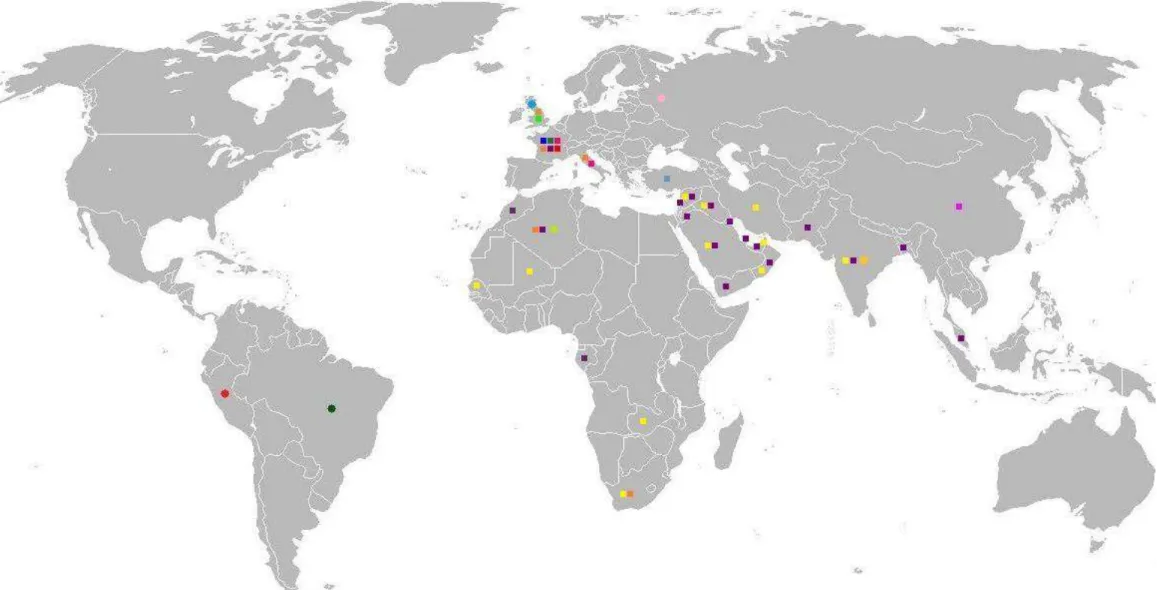
FIGURE 1. MAIN DISTINCTIVE REGIONAL SOFT DRINKS AND ALTERNATIVE COLAS IN THE
WORLD ... 20
FIGURE 2. FRENCH REGIONAL COLAS ... 22
FIGURE 3. EMBEDDED SINGLE-CASE DESIGN ... 47
TABLE OF TABLE
TABLE OF CONTENT
I. INTRODUCTION ... 12
I.1. CONTEXT ... 12
I.1.1. The Coca-Cola Company and Coca-Cola Entreprise in the Soft Drinks Market: World and French Overviews ... 12
I.1.2. Local Players as Specific Competitors ... 14
I.2. PROBLEM ... 23
I.3. OBJECTIVE ... 23
I.4. JUSTIFICATION ... 24
I.5. STRUCTURE OF THE THESIS ... 25
II. LITERATURE REVIEW ... 25
II.1. GLOBALIZATION AND GLOCALIZATION ... 25
II.2. GLOBAL BRANDS AND THE STANDARDIZATION VS ADAPTATION DEBATE ... 28
II.3. ANTI-AMERICANISM AND ANTI-GLOBALIZATION... 32
II.4. THE COUNTRY-OF-ORIGIN EFFECTS ... 34
II.5. LOCAL COMPETITORS ASSETS AND LOCAL BRANDS ... 35
II.6. CONSUMER CULTURE THEORY ... 37
II.7. CONSUMER RESISTANCE AND SOCIALLY RESPONSIBLE CONSUMPTION ... 38
II.8. REGIONAL CULTURES, A SPECIFIC MARKETING RESOURCE ... 41
III. METHODOLOGY ... 42
III.1. EXPLORATORY RESEARCH DESIGN ... 43
III.2. SECONDARY DATA AS BASIC SOURCE OF EVIDENCE ... 43
III.3. QUALITATIVE RESEARCH AS PRIMARY DATA ... 44
III.4. CASE STUDY AS A QUALITATIVE RESEARCH STRATEGY... 45
III.5. EMBEDDED SINGLE-CASE DESIGN ... 47
III.6. IN DEPTH INTERVIEWS AS SOURCE OF EVIDENCE IN THE CASE STUDY ... 48
III.7. WORLDVIEW ... 53
III.8. THE ISSUE OF VALIDITY ... 53
IV. RESULTS ... 55
IV.1. BREIZH COLA IN BRITTANY: AN OVERVIEW ... 55
IV.2. CONSUMERS AND SHOPPERS‟PREFERENCE FOR BREIZH COLA ... 56
IV.2.1. An Opportunity to Avoid Coca-Cola: Anti-Americanism and Anti-globalization at Work ... 56
IV.2.2. The Breton Feeling of Belonging Materialized in Breizh Cola ... 60
IV.2.3. A Socially Responsible Purchase ... 62
IV.2.4. A Good Taste ... 64
IV.2.5. A Successful Product in the Consumer’s and Professional’s Eye ... 65
IV.2.6. Factors of Success Supported by an Efficient Marketing Strategy ... 66
IV.3. COCA-COLA‟S SPECIFIC ACTIONS IN BRITTANY ... 68
IV.3.1. A Campaign based on Local Graphics and Partnerships... 68
IV.3.2. Coca-Cola’s Perception the Breton Market and Breizh Cola, and the Decision of Doing a Specific Campaign in Brittany ... 70
IV.3.3. Mixed Perceptions of Coca-Cola’s Actions in Brittany ... 72
IV.3.4. Apparent Encouraging Results for Coca-Cola ... 73
V. CONCLUSION ... 74
V.1. MAIN FINDINGS AND CONCLUDING REMARKS ... 74
V.2. LIMITATIONS AND FURTHER RESEARCH SUGGESTIONS... 76
VI. EXHIBITS ... 77
VI.1. SOFT DRINKS WORLD LEADERS BY CONSOLIDATED NET SALES IN BILLIONS EUROS IN 2009 ... 77
VI.2. MATURE MARKETS AND HIGH-GROWTH MARKETS... 77
VI.4. COCA-COLA ENTREPRISE IN FRANCE ... 78
VI.5. COCA-COLA ENTREPRISE‟S NOT CONSOLIDATED SALES 2005-2009 ... 79
VI.6. KUAT, THE COCA-COLA GUARANÁ-FLAVORED SOFT DRINK ... 79
VI.7. GUARANÁ ANTARTICA DISTINCTIVE BRAZILIAN SOFT DRINK ... 80
VI.8. UBUNTU, A FAIR TRADE COLA IN THE UK ... 80
VI.9. BIO COLA,OXFAM ORGANIC AND FAIR TRADE COLA ... 80
VI.10. UMAN COLA, THE HUMANITARIAN COLA SOLD IN FRANCE ... 81
VI.11. ZAM ZAM COLA ... 81
VI.12. ARAB COLA, A MUSLIM COLA BORN IN FRANCE ... 81
VI.13. EVOCA COLA FROM THE UK ... 82
VI.14. FUTURE COLA IN CHINA ... 82
VI.15. COLA TURKA IN TURKEY. ... 82
VI.16. BREIZH COLA IN BRITTANY ... 83
VI.17. CORSICA COLA ... 83
VI.18. ELSASS COLA IN ALSACE ... 84
VI.19. VENDEE COLA IN VENDÉE... 84
VI.20. FADA COLA IN MARSEILLE ... 84
VI.21. MEUH COLA ... 85
VI.22. LOCALIZATION OF BRITTANY IN FRANCE AND IN EUROPE ... 85
VI.23. BRITTANY: THE FOUR CURRENT DEPARTMENTS,FINISTÈRE,CÔTES-D‟ARMOR,MORBIHAN,ILLE-ET -VILLAINE; AND THE FIFTH HISTORIC DEPARTMENT OF LOIRE-ATLANTIQUE ... 86
VI.24. LANCELOT BEERS INSPIRED BY BRITTANY HISTORIC CHARACTERS AND LEGENDS ... 86
VI.25. FRENCH REGIONS AND THE GREAT WEST COMPOSED OF FOUR REGIONS, NAMELY BRITTANY,PAYS DE LOIRE,BASSE NORMANDIE, AND CENTRE ... 87
VI.26. STÉPHANE KERDODÉ AND THE BREIZH COLA STÉVIA ... 87
VI.27. COCA-COLA SPECIFIC CAMPAIGN FOR BRITTANY 2009... 88
VI.28. COCA-COLA SPECIFIC CAMPAIGN FOR BRITTANY 2010... 88
VI.29. COCA-COLA SPECIFIC CAMPAIGN FOR BRITTANY 2011 ... 88
VI.30. COCA-COLA OFFICIAL SUPPLIER OF THE ROUTE DU RHUM 2010 ... 89
VII. APPENDICES ... 89
VII.1. INTERVIEW N°1–GUY,SHOPPER AND CONSUMER ... 89
VII.2. INTERVIEW N°2–ANAIS,SHOPPER AND CONSUMER ... 93
VII.3. INTERVIEW N°3–CHRISTELLE,SHOPPER AND CONSUMER ... 96
VII.4. INTERVIEW N°4–AXEL,SHOPPER AND CONSUMER ... 100
VII.5. INTERVIEW N°5–JEAN-BAPTISTE,SHOPPER AND CONSUMER... 103
VII.6. INTERVIEW N°6–CÉLINE,SHOPPER AND CONSUMER ... 107
VII.7. INTERVIEW N°7–SARAH,SHOPPER AND CONSUMER ... 111
VII.8. INTERVIEW N°8–SIMON,SHOPPER AND CONSUMER ... 113
VII.9. INTERVIEW N°9–CHARLÈNE,SHOPPER ... 116
VII.10. INTERVIEW N°10–ANNIE,SHOPPER ... 119
VII.11. INTERVIEW N°11–PIERRE,BAR MANAGER AT L‟AETHERNAM,RENNES... 122
VII.12. INTERVIEW N°12–JACQUES,LE SURCOUF BAR OWNER,QUIMPERLE ... 124
VII.13. INTERVIEW N°13–PIERRE-FRANÇOIS,DRINKS‟DEPARTMENT SUPERVISOR AT INTERMARCHÉ ... 125
VII.14. INTERVIEW N°14–ARNAUD JOBARD,COCA-COLA ENTERPRISE´S DISTRIBUTION NETWORK MANAGER 126 VII.15. SHOPPERS AND CONSUMERS‟INTERVIEW GUIDE ... 128
I. Introduction
I.1. Context
I.1.1. The Coca-Cola Company and Coca-Cola Entreprise in the Soft Drinks Market: World and French Overviews
Coca-Cola is often taken as a symbol of the so-called globalization. The Coca-Cola Company was created in 1892 in the United States. The Coca-Cola drink was invented in 1896 (Euromonitor International, 2010, p.30). There is no denying that Coca-Cola is the major player on the soft-drink market worldwide. Coca-Cola is indeed the world leader with net sales of 22,29 billion euros in 2009 (Xerfi Global, 2010, p.14. See Exhibit 1). It is headquartered in Atlanta. 13,9% of its net sales are made in Europe (Xerfi, 2010, p.66. See Exhibit 3). Contrary to PepsiCo, Coca-Cola profits come mainly from overseas, around 80% (Xerfi, 2010, p.68). The sales in France represent 2 billion euros (Botta, 2011). Leaders on the soft drink market are mainly American and Japanese. Coca-Cola is challenged by PepsiCo which is, contrary to Coca-Cola, also an important actor on the food market. In other words, Coca-Cola is a pure player while PepsiCo is a diversified company (Xerfi Global, 2010, p.17). The largest consumer markets of soft drinks are the Northern American and the Western European markets. These markets are mature compared to countries such as Mexico, India, China, or Brazil. Per capita household consumption is higher in mature markets than in high growth markets such as Mexico, India, China, and Brazil, where, on the contrary, growth of per capita household consumption is higher than in mature markets (Xerfi Global, 2010, p.33. See Exhibit 2). In 2010, Coca-Cola has been ranked the number one brand by Interbrand in the best global brands report for the 11th year in a row (Interbrand, 2010, p.4), and ranked the 6th most valuable brand in the world by Millward Brown Optimor in the Brandz ranking 2011 (p.12). The Coca-Cola Company manufactures and distributes concentrates to more than 300 third-party bottlers who produce, package, distribute and merchandise Coca-Cola products worldwide. The Coca-Cola Company offers more than 3500 beverages in more than 200 countries (The Coca-Cola Company, 2011a).
one, producing Coca Cola beverages for the entire France and taking care of commercialization and distribution, especially promotion in points of sales; Coca-Cola Production which is a subsidiary of Coca Cola Entreprise that produces for France and Benelux; Socobo, a bottler for the Corsica region only. Coca-Cola Entreprise is a subsidiary of Coca Cola Entreprises Inc., a bottling company that produces, markets, and distributes soft drinks. The firm operates in Great Britain, France, Luxemburg, The Netherlands, Belgium, Norway and Sweden. Its headquarter is in Atlanta. Coca Cola Entreprises Inc.´s revenues reached $21 645 million in 2009 (Datamonitor, 2010, p.4). In France, Coca Cola Entreprise has 7 regional directions and 5 production sites (Coca Cola France, 2011. See Exhibit 4). In France, Coca Cola products are sold in more than 400 000 points of sale: 70% in supermarkets, 25% on the away-from-home market, and 5% in automatic distribution (Coca-Cola France, 2011). On the French soft drinks market, colas represent 57% in volume and 55% in value of the soft drinks sold in supermarkets and hypermarkets (Xerfi 700, 2010). The soft drink market in France is clearly dominated by Cola brands. There are 50 Coca-Cola drinks of which 22 are without sugar (Xerfi 700, 2010, p.47). Coca-Coca-Cola regular has a 36,1% market share, Coca-Cola Light a 9,1% share, Coca-Cola Zero a 5,6% share (Xerfi 700, 2010, data from the April 2009-March 2010 period). Coca-Cola brands represents a 53,5% of supermarkets sales in value on the soft-drinks market between April 2009 and march 2010 (Xerfi 700, 2010, p.13). The main competitor in France is not PepsiCo but Orangina Schweppes with a 19% share on the soft drinks market (Oasis, Schweppes, and Orangina brands) but PepsiCo Tropicana juice brand is very successful (Xerfi 700, 2010, p.39). Private labels are significant competitors on the fruit juices‟ market but they are far from dominate the soft drink market since they only represent 9,9% of sales‟ value on this market (Xerfi 700, 2010, p. 9). Coca Cola Enterprise‟s sales decreased by 4,7% in 2009 reaching 1 850 million euros. However, sales increased by 26% over the 2005-2009 period (See Exhibit 5). On the cola soft drinks segment, Coca-Cola has an 83% market share while Pepsi one is around 2% (Botta, 2011). In France, the 2011 soft-drinks‟ volume growth forecast is 6% (Xerfi 700, 2010, p.8).
from Atlanta. As Daft said, Coca-Cola “used to make TV commercials in Atlanta for China. That's not appropriate”. Since 2000, European instead of American managers have been running most of the European units. This increase in freedom is illustrated by several decisions taken at the local level. For instance, some local teams are developing flavors especially for European consumers. In Germany, a berry-flavored Fanta has been launched. In Turkey, a pear-flavored drink has been created. Besides, managers can sponsor local sport teams. Cola has suffered from a Coke contamination in Belgium in 1999. Since Coca-Cola‟s “localism” has been implemented, the brand seems to regain trust but it is a hard task for global companies to go “native”. For instance, in France, McDonalds started to use local products in order to improve its image but it did not impede French farmers to destroy a restaurant in 1999 (Echikson, William, Foust, Dean, 2000). A concrete example of local freedom is the fact that in 2003, Coca-Cola Classic budget was given to various agencies such as Mother in London, Berlin Cameron in New York and BETC Euro RSCG in Paris (Statégies, 2004). It should be noticed that taking regional aspects into account was not totally new in 2000. For instance, as detailed below, Coca-Cola launched a guaraná soft drink in 1997 in Brazil to fit with the local taste. Nevertheless, Coca-Cola is usually perceived as a global brand offering the same product the same way all over the world. It is true that the graphic standards used for adverts or communication support in retail outlets are always the same, wherever the customer is. In fact, this is not always the case since this thesis shows how Coca-Cola exceptionally adapted its graphic standards in Brittany, a French region where a local competitor is becoming pretty strong. This competitor is Breizh Cola, an alternative regional cola which now has a 10% market share in Brittany, a region where regional cultural identity is very strong.
I.1.2.Local Players as Specific Competitors
adaptation by Coca-Cola. As explained below, some of the soft drinks appearing on the map have been bought out by Coca-Cola and are thus not considered as competitors anymore.
Regional distinctive soft drinks can be defined as soft drinks that have kept for many years consumers‟ preference in some countries of the world. These soft-drinks usually have something very specific compared to the classic cola soft-drink, such as a different flavor or a different color. They illustrate well how local drinks constitute a specific competition for Coca-Cola. In Brazil, in 1997, Coca-Cola launched Kuat, a guaraná soft drink (The Coca-Cola Company, 2011b; Coca-Cola Brasil, 2011. See Exhibit 6) to compete with the historic Brazilian soft drink called Guaraná Antarctica created in 1921 (Antartica, 2011. See Exhibit 7). The Coca-Cola Company asserts that “In Brazil, drinks flavored with the guarana berry are a local favorite. Our guaraná drink, Kuat, was carefully developed to appeal to local guarana drinkers” (The Coca-Cola Company, 2011b), thus showing its interest for local adaptation. Many other cases are relevant. In Russia, Coca-Cola created Krushka and Bochka kvass drink (RT, 2011) to compete with the traditional kvass brown drink. Coca-Cola also bought out several regional soft-drinks such as the yellow Inka Cola in Peru in 1999 (The Coca Cola Company, 2011c), the pink Guaraná Jesus in the brazilian Maranhão region in 2001 (Renosa, 2011), the cola called Thumps Up in India in 1993 (Coca-Cola India, 2011). Many other distinctive regional soft-drinks exist: Irn-Bru in Scotland (Barr, 2011), Selecto in Algeria (Hamoud Boulaem, 2011), etc. This overview shows that Coca-Cola is all but alone and has to face competition from these specific distinctive soft drink companies.
Exhibit 14). Another example is Cola Turka which has been launched in 2003 in Turkey by the company Ulker (Cola Turka, 2011. See Exhibit 15).
the Beauce, a natural agricultural region in the Centre, a French administrative region. The sugar for Beauce Cola comes from beetroot (Le Monde, 2010). In 2009, the Bourganel brewery has launched Cola‟rdèche in Ardèche, a department in the Rhône-Alpes region (Brasserie Bourganel, 2011). There are two other regional colas in the Rhône-Alpes region. Alp‟Cola has been created in 2005 by Brasseurs Savoyards. Alp‟Cola is an organic product (Brasseurs Savoyards, 2011). Montania Cola has been created in 2010 by the company Routin, specialist of syrups and beers. The genepi plant form the mountains is one of the ingredients of Montania Cola (Routin, 2011). Besides, there are three fair trade regional colas in France. Beuk cola is a fair-trade cola produced in Brittany by the Kan Ar Bed cooperative. It is made with Costa-Rican sugarcane from the Coopecañera cooperative. Kan Ar Bed is distributor of fair trade products in alternative distribution network, bars, etc (Morlaix Communautés, 2008. See Figure 2). Another fair trade cola is Ehka Cola from the Basque Country in France, created by the company Alterka in 2003 with the support of Kan Ar Bed. It is a certified fair trade product by Max Haavelar. It is also made with Coopecañera cooperative‟s sugarcane (Alterka, 2011; Robert-Demontrond & Joyeau, 2004). Meuh Cola is the Normandy Cola since 2010. It is a fair trade and organic product (Solibulles, 2011. See Exhibit 21). The newest regional cola born in France is from Brittany. It is called Britt Cola and has been launched in June 2011 by Brasserie de Bretagne. It contains salted butter flavoring, a Breton specialty. A Brittany flag that really looks like the American one and a typical motocycle on the bottle aims at recalling the positive values of the US, especially liberty (Pochet, 2011).
Source: created by the author from websites cited in the introduction part.
Map‟s Legend
Alternative colas
French regional colas (See Figure 2)
French fair trade colas: Ekha Cola in Basque Country, Beuk Cola in Brittany
Humanitarian cola: UmanCola in France
Fair trade cola Ubuntu in the UK
Arab Cola. Born in Nice, South of France. Now also sold in Italy
Mecca Cola. Produced in France. Sold in more than 30 countries (main markets appear on the map)
Evoca Cola. Born in the UK. Sold in France, South Africa, Germany, Italia, and Algeria
Zam Zam Cola. Born in Iran. Sold in Middle East, Asian and African countries
Future Cola in China
Cola Turka in Turkey
Distinctive Regional Soft Drinks (some of these are also distributed in neighbor countries)
Selecto in Algeria
Irn-Bru in Scotland
Kvass in Russia, and Eastern Europe
Guaraná Antartica in Brazil and Guaraná Jesus in the Maranhão Region “Tubaínas” in Brazil, cheap local soft drinks of various flavors.
Thums Up in India
Figure 2. French Regional Colas
Source: created by the author from websites cited in the introduction part.
I.2. Problem
Some global brands, such as Coca-Cola, are so widespread that one may think that a local competitor is never an issue for an MNC. Global brands have retained much attention in the marketing field (Kotler, 1997; Holt, Quelch, and Taylor, 2004; Özsomer & Altaras, 2008) while local brands have often been underestimated (Ger 1999; Schuiling and Kapferer, 2004). Nevertheless, the adaptation-standardization debate has been widely discussed. It focuses on defining how a an international company should build its strategy: by standardizing its marketing strategy or by adapting to better fit with local needs and culture (Levitt, 1983; Subhash, 1989; Herbig, 1998; Holt, 2004; Melewar and Vemmervik, 2004; Heerden and Barter, 2008). However, this subject has not been discussed in the specific context of alternative consumption offered by specific local competitors. Nowadays, an increase in the offer of alternative products is observed. The socially responsible consumption is growing (Sen and Bhattacharya, 2001; Holt, 2002; Loureiro, 2002; François-Lecompte and Valette-Florence, 2006). The cola soft drink market is of particular interest. Indeed, alternative colas have been emerging during the last decade in some regions or specific zones of the world. These colas clearly position themselves as an alternative to the global Coca-Cola soft-drink. The alternative is not built on price but on special characteristics of the products that usually constitute a specific value proposition, different from Coca-Cola. In France, for one decade, regional colas have grown in number, being more than fifteen today. Breizh Cola has been launched in 2002 and achieves almost a 10% market share in the Brittany region today. In 2009, Coca-Cola Entreprise started a specific marketing campaign in Brittany based on regional visuals and partnerships. By studying a specific case of local competition faced by Coca-Cola, the aim is thus to fill a gap in the marketing field. No specific case of competition between a French regional cola and the global leader Coca-Cola, and a consequent adaptation by the global leader, has been treated in the academic field. Meanwhile, there are plenty of newspapers, magazines, and social networks that discussed and are still discussing this phenomenon.
I.3. Objective
preference for Breizh Cola. To do so, the research question to be answered is: Why do many customers prefer buying the regional soft drink Breizh Cola? The second aim is to observe how the leader Coca-Cola reacts. The second research question thus is: how does Coca-Cola react to this specific regional competition and act in Brittany? This study shows that Coca-Cola walks in the footsteps of Breizh Coca-Cola in order to better meet local expectations.
I.4. Justification
The subject chosen is topical and can thus be useful for various actors. It is of course of interest for marketing researchers and students. This work aims at bringing some new highlights to the international marketing field. Then, it is of interest for MNCs since this thesis looks for elements explaining the success of a local player offering a product quite similar to the one already offered by the global leader. It is also interesting for local players to know about the potential reactions of a leader they are challenging.
I.5. Structure of the thesis
First of all, the main theoretical references for our subject are discussed. The literature review examines the academic findings in relation to the present research. Therefore, a focus on each relevant study in the international marketing and consumer behavior fields is offered to strengthen this thesis by making it coherent with the past researches. The subjects discussed are: globalization and glocalization; global brands and the standardization versus adapation debate; anti-americanism and anti-globalization; the country-of-origin effects; local competitors assets and local brands; consumer culture theory, consumer resistance and socially responsible consumption, regional cultures as a specific marketing resource.
Then, details about the research methodology are given. The exploratory research design is justified. Secondary data are considered as the basic source of evidence. Primary data are those created by a qualitative research strategy which consists in an embedded single-case study. The main source of evidence for the single-case study is a set of fourteen in depth interviews of consumers/shoppers, sector‟s professionals, and a Coca-Cola manager. The worldview followed in this research is pragmatist. Finally, the issue of validity is discussed. In particular, proofs of reliability are detailed.
Afterwards, the case study results are exposed. An overview of Breizh Cola in Brittany is offered. Consumers‟preference for Breizh Cola is defined. Buying Breizh Cola gives the opportunity to avoid Coca-Cola, which illustrates anti-Americanism and anti-globalization. Then, Breizh Cola materializes the Breton feeling of belonging. Also, choosing Breizh Cola is a socially responsible purchase. Besides, consumers like Breizh Cola‟s taste. It is also perceived as a successful product. Finally, these factors of success are supported by Breizh Cola‟s efficient marketing strategy
The thesis is finally summed-up. The conclusion first focuses on the main findings of the thesis. It then states the limitations of this thesis and suggests further research.
II. Literature Review
II.1. Globalization and Glocalization
p.1473), globalization cannot be a simple synonym of internationalization, liberalization, universalisation, or westernization. According to Scholte, these are redundant concepts. They cannot entirely define globalization. Nevertheless, they are key elements in the process of globalization. Internationalization is the growth of transactions and interdependence among countries. Liberalization is the “process of removing officially imposed restrictions on movements of resources between countries in order to form an „open‟ and „borderless‟ world economy” (Scholte, 2008, p.1475). Universalization is a process of dispersing diverse objects or experiences to people in every part of the world (Scholte, 2008, p.1476). With this meaning, global is thus equivalent to worldwide or everywhere. Globalization as universalization generally implies homogenization and a cultural, economic, legal and political convergence. Westernization is then a particular form of universalization coming from the Western society, built on capitalism, industrialism, urbanism, and this process destroys “pre-existent cultures and local self-determination” (Scholte, 2008, p.1477). According to Scholte, these four conceptions do not exhaust the definitions of globalization. Scholte goes further these conceptions and suggests a fifth one. According to him, a relevant vision of globalization is the spread of transplanetary connections between people. People engage physically, linguistically, culturally for instance with people from all over the Earth (Scholte, 2008, p.1478).
comparatively devoid of distinctive substantive content” while something is “a social form that is generally indigenously conceived, controlled, and comparatively rich in distinctive substantive content” (Ritzer, 2003, p.195). For instance, a credit card is nothing because it is centrally conceived and controlled by the company and there is not much to distinguish one credit card from another. A Gucci bag is nothing because it is mass-produced and not tied to any person or specific service. On the contrary, a line of credit negotiated by local bankers and personal clients is one thing. Nothing goes with a nonplace, a nonperson, a nonservice while a thing goes with a place, a person, a service. Most of the times, there is a relationship between nothing and grobal and something and glocal (even if there are in-between situations). Nothings are often mass-produced and mass-distributes. Ritzer speaks about Coca-Cola as nothing and thus the sales of Coca-Cola as a grobalization of nothing (Ritzer, 2003, p. 199). Nevertheless, if demand grows and that an entrepreneur thinks there is a global market for a something, it would probably become a glocal nothing (Ritzer, 2003, p. 202), or a grobal something but this is less probable since the soft-drink would become produced at a very large scale, with no more tie to the local place.
Another fact to notice is that globalization is far from being total. As assessed by Rugman & Verbeke (2004), Multinational Enterprises are the drivers of the globalization process since they foster economic interdependence among national markets. Nevertheless, their observations remind us that globalization is not so global. The vast majority of the 500 largest MNEs‟ sales are made at home. The level of market coverage is not as global as one could imagine. In fact, very few of the top MNEs are really successful globally. “For 320 of the 380 firms for which geographic sales data are available, an average of 80.3% of total sales is in their home region of the triad.” (Rugman & Verbeke, 2004, p.3). Ohmae (Rugman & Verbeke, 2004, p.4) speaks of global impasse to describe the problems faced by the largest companies to repeat their home performance even in the two other triad markets. Very few firms succeed to do so, but Coca-Cola did. Coca-Cola is a triad power, which means, following Ohmae‟s definition “a company that has equal penetration and exploitation capabilities, and no blind spots, in each of the triad regions” (Rugman & Verbeke, 2004, p.4).
India, and artful consumption in Russia, Jackson asserts there are various consumption cultures in the world (Jackson, 2004, p.166).
II.2.Global Brands and the Standardization Vs Adaptation Debate
A brand is traditionally defined as a “name, term, sign, symbol, or design, or combination of them which is intended to identify the goods and services of one seller or group of sellers and to differentiate them from those of competitors” (Kotler, 1997, p.443). Due to the globalization process, global brands are everywhere, on the streets, in stores, in the media… Global brands are defined as having “widespread regional/global awareness, availability, acceptance, and demand and are often found under the same name with consistent positioning, personality, look, and feel in major markets enabled by centrally coordinated marketing strategies and programs” (Özsomer & Altaras, 2008, p.1). Many researchers tried to answer the question: Why do customers prefer global brands? In the economic domain, global brands have the power to make consumers pay high price premiums with not much resistance. In the psychological domain, global brands are perceived as building identities among consumers, symbols, global values (Özsomer & Altaras, 2008, p. 1).
The debate “standardisation versus adaptation” can also be called “globalisation versus localization” and may also refers to “global integration versus local responsiveness” (Heerden and Barter, p.37).
Companies should thus act as a true global actors on a global unique market. This standardization can bring strong advantages due to lower costs. According to Melewar and Vemmervik (2004, p.863), the gain of standardization consists of synergies across markets and economies of scales. Besides, the brand will benefit from a particular image worldwide thus avoiding confusion for consumers, for instance when traveling. However, product standardization is increasing, but differences remain. The homogeneization is not total (Heerden and Barter, p.38).
On the other side, those who defend local strategies assert that differences between cultures are strong and that standardization could thus represent a loss of competitive advantage (Melewar and Vemmervik, 2004, p.863). On the contrary, being receptive to the local needs, a company can build a specific competitive advantage. Besides, having a successful marketing strategy worldwide, that is meeting consumers‟ needs worldwide, is very difficult. Adaptation allows marketers to take advantage of differences and have an efficient international strategy (Heerden and Barter, 2008, p.38).
with no additional cost of localization”. In fact, marketers should “standardize marketing strategy as far as their markets will allow, and once that threshold is reached, localization needs to be considered”. An international company should adapt to local culture and it is important for customers (2008, p.44). This idea developed by Heerden and Barter brings the same insight than the position of Baalbaki and Malhotra who assert that it is possible to obtain the advantages of both standardization and adaptation. Indeed, the company should standardize its marketing strategy in similar segments over the world but differentiate when segments are very different (1993, p.43). Finally, localization is often necessary but it really depends on the market concerned.
suggest global cultural ideas and symbols, they participate to the building of a global identity, belonging, citizenship (Holt et al, 2004, p.70). The third characteristic is social responsibility. People expect companies to positively influence society‟s well being by addressing social issues. Holt et al did not find an important anti-American sentiment in their qualitative research. Nevertheless, many consumers cared such as a French who spoke about “imperialistic threats that undermine French culture” (Holt et al, 2004, p.70). In fact, people may not like American world politics (Irak war), but they still like American products. Interesting is the segmentation of consumers offered by Holt et al (2004, p.71). To succeed, global firms that usually compete with other global firms should not only focus on price, performance, features, but also on global characteristics of brands. First, executives should stop focus only on the least-global-denominator or only on glocal characteristics. They should keep in mind their status of global symbol. Second, they should manage the dark side, which means that they should try to build a positive image of the company. Third, they should build credible myths. Fourth, they should treat antiglobals as consumers. Antiglobals are those who are skeptical that transnational firms deliver higher quality goods, dislike brands focused on American values, and don‟t trust global companies. They represent 13% of Holt‟s research respondents (Holt et al, 2004, p.72). Holt‟s study showed that “one person in ten worldwide would not buy global brands if given a choice. That‟s an extraordinary number.” (Holt et al, 2004, p.74). Companies cannot ignore this segment which represents potential consumers. Investments in social activities can convince the skeptics. Five, corporate social initiatives should not be hypocritical and opportunistic but should imply entrepreneurship such as finding solutions at the base of the pyramid.
myths that global brands provide evoked by Holt et al. create cultural ideals), and perceived brand globalness constructs are based on consumer culture theory. A focus on consumer culture theory is offered below. The second stream of research used is the signaling theory. Signaling Theory says that firms are encouraged to use brands as signals because of high consumer uncertainty and imperfect and asymmetric information in the marketplace (Erdem & Swait, 1998, p.135). A brand becomes a signal because “it embodies a firm‟s past and present marketing strategies” (Erdem & Swait, 1998, p.136). Brands are credible market signals. The construct global brand credibility comes from the signaling theory. Brand credibility reflects to what extent the product position information contained in the brand is perceived as believable (Özsomer & Altaras, 2008, p.9). Then, in the ANMM theory, consumer memory is considered as a complex of nodes connected by relational links. Nodes store informations. “This network of brand associations constitutes the brand image and represents the perceived value of the brand in the eyes of consumers” (Özsomer & Altaras, 2008, p. 10). The constructs global brand quality, social responsibility, prestige, and relative price as brand associations, come from the associative network memory model. All theses constructs explain the likelihood of a global brand‟s purchase.
II.3.Anti-Americanism and Anti-Globalization
the US to break with the values of “international law, universal human rights, and the peaceful resolution of conflicts” (Martin, 2007, p.56). What is more interesting for this thesis is the “perceptions of America as a materialistic, narcissistic society in which the powerful exploit” (Martin, 2007, p.56). For instance, many consider that US companies are obsessed with their stock price and, as a consequence, mistreat employees. According to Martin, American leading companies can‟t change foreign policy, but they must reestablish their legitimacy in international markets. He notices that for many people, globalization and Americanization bring the same negative results. “No matter how “global” US-based businesses are, their American roots show”, hence the importance of managing their image. For Martin, the answer to fight anti-Americanism is better public relations, but not better advertising. Companies‟ practices must fit with consumers and citizens‟ needs and expectations: “Alleviating anti-Americanism is not a matter of patriotism; it is good business” (Martin, 2007, p.56). In the book “In Your Face: How American Marketing Excess Fuels Anti-Americanism”, Johny K. Johansson, a specialist of international marketing, focuses on one specific reason for anti-Americanism. He explains that this anti-Americanism is due to “marketing efforts that produced the fast-food nation. They have been the downfall of companies that market internationally and don't bother to be culturally sensitive” (Halpem, 2004). Consumers are more likely to attack fast foods, beverages companies or retail stores because they are industries´ leaders. Thus, consumers attack them instead of American electronics or automobile companies. Johansson thinks that American marketers should adapt more in foreign markets, even if beyond these reasons, there is also political aversion such as an anti-Bush sentiment during the Irak war (Halpem, 2004).
Asian crisis in 1997 (Green and Griffith, 2002, p.52). It is not a single movement but rather a movement of movements or even a mood. The movement is made various labour organizations, environmentalists and development NGOs, some political parties, etc. and is not uniform. For instance, Green and Griffith (2002, p.57) notice that “anti-capitalism and anti-Americanism are two complex and cross-cutting issues which threaten to divide the movement” since anti-capitalism is strong among the alternatives, and quite recognized by the statists, while reformists thinks the market is useful. According to Green and Griffith (2002, p.50), the movement is not only “anti” but suggests changes on issues such as democracy, ecology, international trade rules. For instance, it aims at increasing grassroots participation, favoring accountability in policy-making and companies, improving environmental protection, reforming world trade rules in order to benefit the weakest countries and communities.
II.4. The Country-of-Origin Effects
Understanding favorable or unfavorable (mis)matches is useful to managers in order to improve the use of COO information in advertising. For instance “the presence of a favorable product-country match would indicate that the product's COO could enhance product evaluations. A favorable mismatch, however, would indicate that the COO would not enhance evaluations” (Roth and Romeo, 1992).
While Bilkey and Nes (1982, p.89) admit that usually the country-of-origin is communicated by the words "Made in (name of country)", according to Roth and Romeo, “The COO phenomenon mirrors the global marketplace's increasing complexity” (1992). Indeed, products may be designed in one country and manufactured in a different country. There are various COO effects, mainly the effects of country of design (COD), country of assembly (COA) and country of parts (COP) of a product (Chowdhury and Ahmed, 2009, p.496-497). Chowdhury and Amhed showed that when COD, COA and COP associations are available to consumers, they affect product responses in different manners. For instance, countries that already have positioned themselves with a positive reputation for specific skills related to product development and manufacturing may expect a transfer of those associations to new products from the country (Chowdhury and Ahmed, 2009, p.499). Recently, Balabanis & Diamantopoulos have studied the consequences of brand origin misclassification and non-classification on consumers‟ brand image evaluations and associated purchase intentions. They have shown that misclassification and non-classification have adverse consequences on brand evaluations and purchase intentions. Hence, the importance of ensuring that consumers know the true brand‟s COO (2011, p.96). As described by Bilkey and Nes (1982, p.90), referring to Nagashima (1970), Lillis and Narayana (1974) about the US and Japan and Bannister and Saunders (1978) for England, it is observed that consumers evaluate the products from their countries more favorably than foreigners do.
II.5.Local Competitors Assets and Local Brands
Local brands are defined as brands that exist in one country or in a limited geographical area (Wolfe 1991, p.49).
global marketing field, the focus is on such transnational companies and more precisely how western firms can enter foreign markets (Ger, 1999, p. 64). But, as underlined by Ger, less powerful local companies are also part of the business area. Local firms are often threatened by transnational corporations at home, and abroad. But, Ger assesses “Local corporations cannot catch up with TNC‟s who are far ahead in the road and going very strong. However, they can take a different road” (1999, p. 65). Indeed, local companies can operate in alternative domains. Thanks to a focus on their local cultural capital, local brands are able to “out-localize” the influence of global companies and brands in local and international markets owing to their deeper understanding of the local culture and market. As affirmed by Ger “the intrinsic advantage retained by local corporations is their local identity and culture” (1999, p.65). Local strategies define the authentic by focusing on cultural goods and products for local conditions. A positioning based on localness enable local players to make the most of their cultural capital, thus creating a unique perceived value trough differentiation. For sure, global products provided by global firms are desirable in every society since they improve life high-quality, modern, etc). But, consumers are interested in more than only standardized products. Consumers pursue the desire for social meaning (Ger, 1999, p.67). There is a revival of localism in consumption. People express a return to their local roots and reconfigure global goods and their meanings to fit with their local culture. Local is thus a good alternative to the “modern normal global” and local firms can reinvent, reconstruct and repackage local products. They can offer non-conformist or ethically concerned products (Ger, 1999, p.76).
was illustrated in 1998 by the example of Coca-Cola in Belgium. Some consumers became sick after drinking a particular batch of the product. The news circulated quickly and globally, and it had a negative impact on Coca-Cola's brand image” (Schuiling and Kapferer, 2004, p.101). Thus, it is good for a company to have local brands in order to lower the risks. Nevertheless, local brands, due to lower economies of scale, may not bring significant profits.
II.6.Consumer Culture Theory
CCT has contributed to consumer research by focusing on the cultural dimensions of consumption. Consumer culture theory studies the sociocultural, experiential, symbolic, and ideological aspects of consumption (Arnould & Thompson, 2005, p.868). It is not a unified theory. CCT talks about culture in a more complex way than the common idea of homogenization in a globalized world. Indeed, CCT explores “the heterogeneous distribution of meanings and the multiplicity of overlapping cultural groupings that exist within the broader sociohistoric frame of globalization and market capitalism” (Arnould & Thompson, 2005, p.869). Consumer culture describes a network of global connections through which local cultures are more and more penetrated by global ideals and products. The expression "consumer culture" builds a concept of an interconnected system of images, texts, and objects which are produced commercially and that groups use to orient their lives and to make collective sense of their environment. (Arnould & Thompson, 2005, p.869). In other words, as assessed by Holt (2002, p.72), “Consumer culture is an irresistible form of cultural authority that generates a limited set of identities accessed through commodities. Firms act as cultural engineers that specify the identities and pleasures that can be accessed only through their brands”. Consumer culture theory says that one resource used by consumers to construct their identities is the cultural capital perceived in global brands (Özsomer & Altaras, 2008, p.7). According to Bourdieu (1979), an individual has three types of capital: the economic capital, which means financial resources; the social capital, which is composed of networks, affiliations, relationships; and cultural capital. Cultural capital is defined as the culturally valued taste and consumption habits. Art and education are for instance part of this cultural capital. In other words, cultural capital is a set of distinctive tastes and skills, knowledge, and practices possessed by people. In CCT, cultural capital is used not to define an individual but a brand.
totem-drink is considered as a good that is specific to the group. In Mythologies, Barthes talks about wine as a totem-drink for the French Nation (Gouez, 2007, p.15).
II.7. Consumer Resistance and Socially Responsible Consumption
Consumers protest punctually and collectively. But they also resist in silence, isolated, and sometimes during a long period of time, which implies even more negative consequences for companies. This phenomenon is called consumer resistance and has become a stream of research (Roux, 2007, p.59). It is of interest for marketers since it enables to understand the origin of consumers‟ critics. For instance, some rebel consumers decide to consume less in order to find a better way of life, and others are skeptic to consume products perceived as unethical. We can talk about a resistance continuum going from simple avoidance behavior to active rebellion, such as complaining or boycotting (Fournier, 1998, p.88).
second technique is “coat tailing on cultural epicenters”, which consists in building relationships with epicenters such as art, fashion, or sport communities and ethnic subcultures. The third technique is “life world emplacement”, which consists in building brands‟ value on disinterested everyday life situations far from the commercial world. The fourth technique is stealth branding, which consists for the brand to have a cool image (Holt, 2002, p.84-85). Antibranding sentiments we observed during the last decade are due to contradictions in these postmodern branding techniques. The first contradiction is the “ironic distance compressed”, which means that, since irony was becoming very common and becoming a cliché, it is not so efficient anymore. The second contradiction is the “sponsored society”, which means that stealth branding efforts are so numerous nowadays that they are more and more criticized. The third contradiction is the “authenticity extinction”, which means that texts considered as authentic are starting to be scarce. The fourth contradiction is “peeling away the brand veneer”, which means consumers take into account the gap between the brand‟s exposed ideals and the real corporate activities. The fifth contradiction is the “sovereignty inflation”, which means that consumers have not enough free time to absorb a so large set of fashions, tourist experiences, cultural texts... Due to these contradictions, Holt thinks a new post-postmodern branding paradigm will rise and will be based on the idea that brands as citizen-artists (2002, p.87).
for instance if the consumer refuses to buy a product that is harmful for the environment (Sen and Bhattacharya, 2001, p.226). For Bourdieu (1979), aversion is a form of consumer resistance to goods. Aversion corresponds to distastes. Distastes contrast with tastes, which represent preferences for goods. In fact, tastes are affirmed by the refusal of other tastes There are several product or brand criteria that can motivate the buying of a product and thus the refusal of a product, for instance: the inherent aspect of product (taste), the symbolic aspect of the product (a high end product), the packaging or container practical aspects…(Hogg & Savolainen, 1997). The socially responsible consumption can also be activism through boycott of irresponsible companies. Another form of socially responsible consumption is approach behavior, for instance through the purchase and the promotion of ethical products. No matter the form, these actions foster companies to act differently (Sen and Bhattacharya, 2001, p.226). According to François-Lecompte and Valette-Florence (2006, p.72-73), the socially responsible consumption has five dimensions. The first one is “behavior of organizations” means refusing to buy products from irresponsible companies. The dimension “purchase of product-share” refers to the purchase of products of which benefits are given to a particular cause/organization. The dimension “small businessess” refers to the will of helping small businesses. The dimension “product‟s origin” corresponds to the idea of favoring the purchase of products made locally. Finally, the dimension “consumption‟s volume” refers to the reduction of personal consumption. It has to be noticed that consumers are more willing to be socially responsible when they believe their actions have a real impact, for instance on the economy, the environment, etc (Shaw, 2006, p.1049). According to Carrigan and Attalla (2001, p.560), most of consumers think it is important that companies act responsibly but refuse to assume the consequences such as higher price or loss of time (2001, p.560). According to Eckhardt, Devinney, and Belk (2010, p. 427), consumers are not ready to lose their comfort for social causes. Mainly, the argument of economic rationalization is bases on a cost-benefits analysis. Consumers think that socially responsible consumption is costly. Price and quality are often considered as more important than ethical characteristics. Also, the perceived efficiency of actions increases the probability of socially responsible consumption (Shaw, 2006, p.1050).
globalization process (Robert-Demontrond and Joyeau, 2004, p.3). They classify alternative colas in two main categories: an offer based on ethics and an offer that ignores a priori the ethical discourse. There are four kinds of alternative colas based on ethics. The first kind is the fair trade cola (Ekha Cola, Beuk Cola). The second accounts for a communitarian logic (Mecca Cola for instance). Colas which declare political claims form the third kind of colas based on ethics (Mecca Cola that fosters the boycott of the American imperialism and sionism). Finally, some colas reflect a devotional religious act (Mecca Cola, Zam Zam Cola). There are three different kinds of colas corresponding to the offer that ignores a priori the ethical discourse. First, there are the colas which integrate an ethnic dimension (Breizh Cola, Corsica Cola, Ehka Kola, Arab Cola, Turka Kola). Then, there are the colas founded on political claims (Beuk Kola and Ehka Kola distributed in bars that do not distribute multinationals´ products, letting no choice for the consumers). Finally, there are the colas based on authenticity instead of modernity (Breizh Cola).
II.8.Regional Cultures, a Specific Marketing Resource
to create a regional atmosphere around the consumer. To do so, it is possible to build a sensorial environment, for instance recalling a smell, a music, a noise, etc, in a commercial (Dion, Rémy, and Sitz, 2010, p.17). The third action is to emphasize the regional treasures, by valorizing traditional recipes, or talking up geographic qualities for wines, etc. It can also consist in sponsoring regional events (Dion, Rémy, and Sitz, 2010, p. 17). The fourth action is to favor the regional exhibitionism, which means to show the pride of belonging to a specific a region in a product. The product is thus becoming a support of pride (Dion, Rémy, and Sitz, 2010, p.18). The fifth action is to position a brand as an alternative to globalization. The regional product would thus appear like a way to resist (even it is only symbolic or passive) to globalization, along with its market standardization and cultural homogenization. For some companies, such as Breizh Cola, the objective is to embezzle the international brands, symbols of the globalization process, in order to build regional brands of resistance (Dion, Rémy, and Sitz, 2010, p.19). The sixth action is to favor the community experience. Some local brands champion local places (bars, restaurants, etc) to favor contact between consumers, some others offer classes to learn about a regional tradition, etc (Dion, Rémy, and Sitz, 2010, p. 20). The seventh action is to emphasize the regional solidarity. Some people buy product to support their region. In this perspective, a collective brand called “Produit en Bretagne”, “Produced in Britanny” has been created. Buying a product labeled “Produit en Bretagne” thus means helping the Breton economy. Some international brands, such as Coca -Cola (visual marketing adaptation in Brittany) or McCain (Chtis Fries in the North), use the regional culture resources in their marketing strategies. But, most of the time, theses resources are used by small and medium companies to become strongly establish on regional markets. Nevertheless, all these actions cannot be taken in every region since the belonging feeling is not strong everywhere. Also, companies should pay attention not to caricaturize regional belonging through folklorization and stigmatization (Dion, Rémy, and Sitz, 2010, p.23).
III. Methodology
offered at the end of this section (Figure 5).
III.1. Exploratory Research Design
First of all, the type of research design chosen for this thesis is the exploratory research. The main objective is to explore or search through a problem or situation in order to provide insights and understanding (Malhotra, 2009, p.72). The findings of exploratory research are considered as tentative or as input for further research. This design has been chosen because it is the design to be used for the purpose of this thesis, which is gaining insights for developing an approach and hypotheses to the problem studied. The aim is not to lead a conclusive research, which would consist in testing hypotheses and examining specific relationships. Thus, the information needed is not precisely defined. The process of this research is flexible and less formal than for a conclusive research (Malhotra, 2009, p.73).
III.2. Secondary Data as Basic Source of Evidence
Secondary data analysis is one of the main methodologies used in exploratory research. Secondary data are those that have already been collected for purposes other than the specific problem of this thesis.
First of all, secondary data have been used in the introduction part in order to set up the context and give a broad view of the market of regional distinctive soft drinks and alternative colas. Secondary data used mainly come from corporate websites, paper or online newspapers and magazines articles. To write the literature review, mainly academic articles have been used, but also some paper books. The computerized databases used for the literature review are JStor, EBSCO, and Google Books. To write the methodology part, paper books from the FGV library have been used. Every source of secondary data is provided in the reference list.
strong insights. Also, documents cover many aspects of an issue, which is interesting while considering the context and defining the key elements of analysis. Other advantages of using these secondary data were clear. They were easily accessible, inexpensive, and quickly obtained (Malhotra, 2009, p.100). Moreover it enabled to better define the problem at the beginning of the research and then it helped to interpret primary data more insightfully. These secondary data were in fact the prerequisite to the collection of primary data (Malhotra, 2009, p.101). Nevertheless, some weaknesses of documentation should not be forgotten. These justify the use of at least one other method (like the one chosen in this thesis: the in depth interviews for case study). One disadvantage is that documents can be biased (unknown bias), or for instance deliberately blocked. Another disadvantage of secondary data is that, as it is abundant and very easy to collect, they may not be relevant or accurate. In order to face this issue, quality of these secondary data has been evaluated before being used. Only reliable sources have been used. Data have been compared from different sources. Most updated and reliable (corporate websites, famous magazines‟ articles, etc) data available have been kept. I used only the data that could bring insights for the subject. Data have also been reconfigured to increase their usefulness (figures created by the author). When possible, data available from an original rather than an acquired source have been preferred (corporate websites instead of articles using the same kind of data). Social networks and readers‟ comments on newspapers‟ websites have also been useful all along the analysis. To some extent, they can be considered as secondary data since they help to understand the situation, especially consumer behavior. All the secondary data used are external since no data published by FGV have been used. External data are those that originate from sources outside of the organization for which the research is being conducted (Malhotra, 2009, p.105).
III.3. Qualitative Research as Primary Data
research aims at quantifying the data through a statistical analysis and at generalizing the results from a sample to the population of interest. A quantitative research is based on a large number of representative cases while this thesis, as a qualitative research, is based on a unique case. Malhotra (2009, p.139) talks about a “small number of non representative cases”. Malhotra (2009, p.139) also says data collection in qualitative research is unstructured while it is structured in quantitative research. The term “unstructured” is misused. Asserting that qualitative research is unstructured is exaggerated. There is no denying that quantitative research is more structured, or better said rigid, via statistical data analysis, than qualitative research. Nevertheless, to a certain extent, data collection in qualitative research is structured (see case study and in-depth interviews methodology), even if data collection in qualitative research is less structured, or better said more flexible, than data collection in quantitative research.
III.4. Case Study as a Qualitative Research Strategy
by Yin have been taken into account. First, a case study inquiry relies on various sources of evidence (2003, p.14), and second, it benefits from a prior development of theoretical propositions in order to guide the data collection and its analysis. This is indeed what has been done. A theoretical proposition has been shaped. This proposition is: the Coca-Cola Company reacts to specific local competitors by reshaping its marketing strategy thanks to the inclusion of the apparent main elements of success that helped the local competitors to thrive. Then, there is no denying that, as suggested by Yin, a case study is not a mere data collection tactic, or a simple design feature but a true research strategy. More concretely, a case study involves an intensive examination of the phenomenon of interest (Malhotra, 2009, p.42). A case study as developed by Punch in 1998 consists in “the basic idea that one case (or perhaps a small number of cases) will be studied in detail, using whatever methods seem appropriate. While there may be a variety of specific purposes and research questions, the general objective is to develop as full an understanding of that case as possible” (Silverman, 2005b, p.126).
The five components of a research design developed by Yin have been followed: study‟s questions, proposition, unit of analysis, logic linking the data to the proposition, and the criteria for interpreting the findings (2003, p.21). The two research questions have been detailed in the introduction. Then, proposition which is the second component of the research design has been suggested: Coca-Cola walks in the footsteps of Breizh Cola in order to better meet local expectations. The third step is to define the units of analysis. It consists in defining what the case is. The case accounts for a situation of competition. The first unit of analysis is a phenomenon: the preference for Breizh Cola and the related market share gained by this local competitor over the global leader Coca-Cola. Our second unit of analysis is a set of actions: the ones taken by the Coca-Cola Company to face this phenomenon. The fourth component of the research design is linking the data to the proposition. The fifth element is the criteria for interpreting the findings. Here, the idea was to interpret the results from our interviews and secondary data analysis in the light of the existing theory exposed in the literature review.
bring concise insights and analysis. Data have been obtained from external secondary sources as explained above, and in-depth interviews as explained below.
III.5. Embedded Single-Case Design
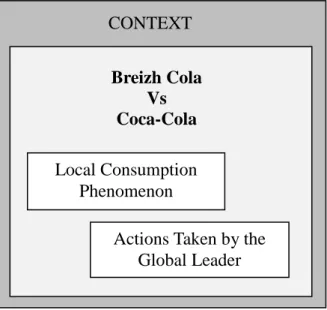
This thesis is made of an embedded single-case design. Contrary to the assessment of Yin stating that single-case designs are more vulnerable (Yin, 2003, p.53), a single-case has been chosen to offer a greater focus on the issue thanks to a good source triangulation (consumers, sector‟s professionals, companies‟ managers). Embedded case study has been chosen since the case involves two units of analysis (Yin, 2003, p.42), which are a phenomenon and a set of actions (Figure 3). Consumers‟ interviews constitute the base for the study of the first unit of analysis which is the local consumption phenomenon, and the interview of the Coca-Cola manager constitutes the base for the second unit of analysis which is the set of actions taken by the global leader. Nevertheless, every interview has been used for each unit of analysis. Indeed, assertions or each actor enabled to balance the various positions taken during the interviews.
Source: Adapted by the author from Yin (2003, p.42). CONTEXT
Breizh Cola Vs Coca-Cola
Local Consumption Phenomenon
Actions Taken by the Global Leader
III.6. In Depth Interviews as Source of Evidence in the Case Study
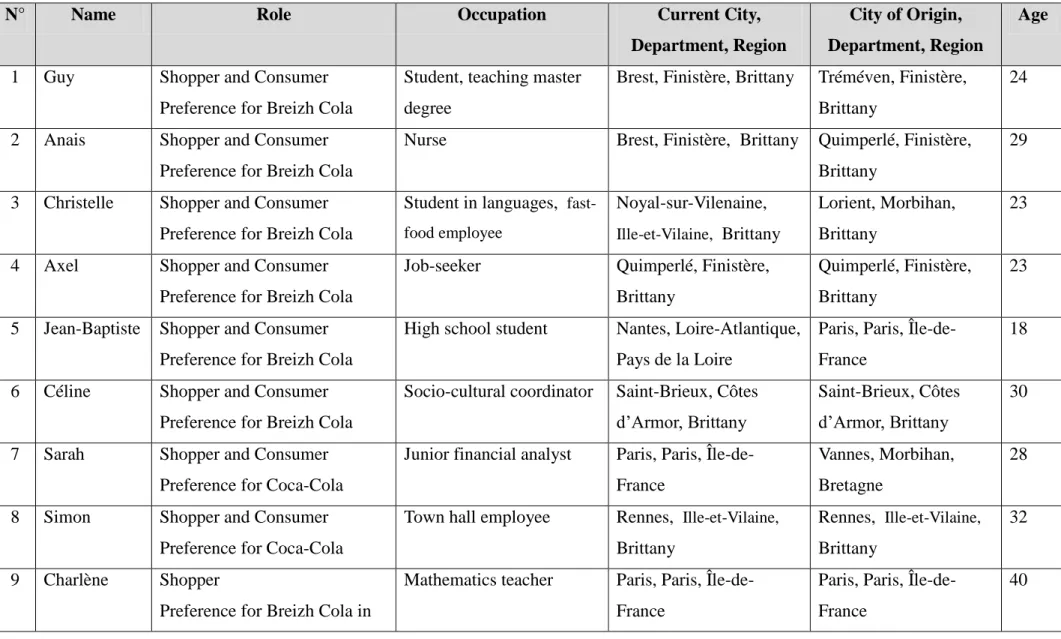
Table 1. Table of Interviewees: Names, Role, Occupation, City of Origin, Current City, Age.
N° Name Role Occupation Current City,
Department, Region
City of Origin, Department, Region
Age
1 Guy Shopper and Consumer
Preference for Breizh Cola
Student, teaching master degree
Brest, Finistère, Brittany Tréméven, Finistère, Brittany
24
2 Anais Shopper and Consumer Preference for Breizh Cola
Nurse Brest, Finistère, Brittany Quimperlé, Finistère, Brittany
29
3 Christelle Shopper and Consumer Preference for Breizh Cola
Student in languages,
fast-food employee
Noyal-sur-Vilenaine, Ille-et-Vilaine, Brittany
Lorient, Morbihan, Brittany
23
4 Axel Shopper and Consumer Preference for Breizh Cola
Job-seeker Quimperlé, Finistère, Brittany
Quimperlé, Finistère, Brittany
23
5 Jean-Baptiste Shopper and Consumer Preference for Breizh Cola
High school student Nantes, Loire-Atlantique, Pays de la Loire
Paris, Paris, Île-de-France
18
6 Céline Shopper and Consumer Preference for Breizh Cola
Socio-cultural coordinator Saint-Brieux, Côtes d‟Armor, Brittany
Saint-Brieux, Côtes d‟Armor, Brittany
30
7 Sarah Shopper and Consumer Preference for Coca-Cola
Junior financial analyst Paris, Paris, Île-de-France
Vannes, Morbihan, Bretagne
28
8 Simon Shopper and Consumer Preference for Coca-Cola
Town hall employee Rennes, Ille-et-Vilaine, Brittany
Rennes, Ille-et-Vilaine, Brittany
32
9 Charlène Shopper
Preference for Breizh Cola in
Mathematics teacher Paris, Paris, Île-de-France
Paris, Paris, Île-de-France
Source: created by the author. Brittany
10 Annie Shopper
Preference for Breizh Cola
Doctor Clohars-Carnoët
Finistère, Brittany
Clohars-Carnoët Finistère, Brittany
57
11 Pierre Sector‟s Professional Bar Manager at L‟Aethernam, Rennes
Rennes, Ille-et-Vilaine, Brittany
Quimperlé, Finistère, Brittany
25
12 Jacques Sector‟s Professional Le Surcouf Bar Owner, Quimperlé
Quimperlé, Finistère, Brittany
Quimperlé, Finistère, Brittany
39
13 Pierre-François
Sector‟s Professional Drinks‟ Department Supervisor at Intermarché, Lorient
Lorient, Morbihan, Brittany
N/A 28
14 Arnaud Jobard
Coca-Cola Enterprise Manager Coca-Cola Enterprise Distribution Network Manager
Paris, Paris, Île-de-France