Submitted25 February 2016 Accepted 12 September 2016 Published20 October 2016
Corresponding authors Xin Zhao, [email protected] Mao Huang,
Academic editor Melania Pintilie
Additional Information and Declarations can be found on page 17
DOI10.7717/peerj.2550
Copyright 2016 Wang et al.
Distributed under
Creative Commons CC-BY 4.0
OPEN ACCESS
Single-agent maintenance therapy for
advanced non-small cell lung cancer
(NSCLC): a systematic review and
Bayesian network meta-analysis of 26
randomized controlled trials
Qinxue Wang1,*, Haobin Huang2,*, Xiaoning Zeng1, Yuan Ma1, Xin Zhao1 and Mao Huang1
1Department of Respiratory & Critical Care Medicine, the First Affiliated Hospital of Nanjing Medical
University, Nanjing, Jiangsu, China
2Department of Cardiovascular Surgery, the First Affiliated Hospital of Nanjing Medical University, Nanjing,
Jiangsu, China
*These authors contributed equally to this work.
ABSTRACT
Background. The benefit of maintenance therapy has been confirmed in patients with non-progressing non-small cell lung cancer (NSCLC) after first-line therapy by many trials and meta-analyses. However, since few head-to-head trials between different regimens have been reported, clinicians still have little guidance on how to select the most efficacious single-agent regimen. Hence, we present a network meta-analysis to assess the comparative treatment efficacy of several single-agent maintenance therapy regimens for stage III/IV NSCLC.
Methods. A comprehensive literature search of public databases and conference pro-ceedings was performed. Randomized clinical trials (RCTs) meeting the eligible crite-ria were integrated into a Bayesian network meta-analysis. The primary outcome was overall survival (OS) and the secondary outcome was progression free survival (PFS).
Results. A total of 26 trials covering 7,839 patients were identified, of which 24 tri-als were included in the OS analysis, while 23 tritri-als were included in the PFS anal-ysis. Switch-racotumomab-alum vaccine and switch-pemetrexed were identified as the most efficacious regimens based on OS (HR, 0.64; 95% CrI, 0.45–0.92) and PFS (HR, 0.54; 95% CrI, 0.26–1.04) separately. According to the rank order based on OS, switch-racotumomab-alum vaccine had the highest probability as the most effective regimen (52%), while switch-pemetrexed ranked first (34%) based on PFS.
Conclusions. Several single-agent maintenance therapy regimens can prolong OS and PFS for stage III/IV NSCLC. Switch-racotumomab-alum vaccine maintenance ther-apy may be the most optimal regimen, but should be confirmed by additional evi-dence.
SubjectsEvidence Based Medicine, Oncology, Respiratory Medicine
Keywords Non-small cell lung cancer, Maintenance therapy, Bayesian network meta-analysis
INTRODUCTION
Lung cancer is one of the most common malignant tumors and the leading cause of cancer-related death worldwide. It is estimated that about 224,390 new cases of lung and bronchus cancer will be diagnosed and 158,080 deaths will occur in 2016 in the United
States alone (Siegel, Miller & Jemal, 2016). Non-small cell lung cancer (NSCLC) accounts
for approximately 85% of all lung cancer cases (Cufer, Ovcaricek & O’Brien, 2013).
For early stage NSCLC, radical surgery or radiotherapy may result in relatively better prognosis. Unfortunately, most patients (accounting for >70%) have advanced disease at diagnosis, thus are not amenable to curative treatment and are candidates for systemic
therapy only, with a dismal 5-year survival rate of <5% (Rossi et al., 2014;Tan et al.,
2015). The past decade has seen the evolution of individualized systemic treatment for
advanced NSCLC. The development of the anti-cancer agents, especially the blossom of molecular targeted anti-tumor agents, has prolonged progression free survival (PFS) and overall survival (OS) of some selected patients with specific and sensitive gene mutations (Cufer, Ovcaricek & O’Brien, 2013). Nonetheless, as these mutations only occur in a small percentage of patients, 4–6 cycles of platinum-based double-agent chemotherapy is still the gold-standard regimen recommended by guidelines for most patients with
non-resectable, locally-advanced, or metastatic NSCLC (Azzoli et al., 2011;Besse et al.,
2014;Ettinger et al., 2015). Additionally, prolonged platinum-based doublet therapies
show increased toxicity and no meaningful improvement in OS (Lima et al., 2009). In
the past, patients who successfully responded to front-line therapy had to wait for disease progression before receiving second-line or other treatment, and unfortunately, nearly half of them could not proceed with second-line therapy, mostly due to their declining
performance status (PS) (Berge & Doebele, 2013). In recent years, more attention has
been focused on maintenance therapy, which refers to the extension of one or more
agents to non-progressing patients after first-line induction chemotherapy (Owonikoko,
Ramalingam & Belani, 2010).
Although relatively new for NSCLC, maintenance therapy has been used in the
treatment of hematologic malignancies for years (Childhood ALL Collaborative Group,
1996;Salles et al., 2011). Continued use of at least one of the drugs given in induction therapy is defined as continuation maintenance, whereas switch maintenance refers to
administration of a totally different agent from first-line chemotherapy (Ettinger et al.,
2015). Switch-pemetrexed therapy has shown improvement of both OS and PFS
com-pared to placebo as single-agent maintenance in Ciuleanu’s trial (Ciuleanu et al., 2009),
as well as switch-erlotinib in Cappuzzo’s trial (Cappuzzo et al., 2010); and both have
been approved by Food and Drug Administration for maintenance therapy of advanced NSCLC patients non-progressing after 4 cycles of platinum-based first-line chemotherapy
in the United States (Cohen et al., 2010a;Cohen et al., 2010b). Former meta-analyses
studies have confirmed that single-agent maintenance therapy can prolong OS and PFS
in contrast to non-maintenance regimens (Behera et al., 2012;Yuan et al., 2012;Zhang et
al., 2015). Factors that may predict beneficial effects from maintenance therapy include
tumor histology, PS, and epidermal growth factor receptor (EGFR) mutation status (Zhou et al., 2015).
The recent inclusion of various agents such as sunitinib, pazopanib, and some vaccines in anti-tumor therapy, has propelled research into their use as maintenance therapy
options for NSCLC (Ahn et al., 2013;Alfonso et al., 2014;Butts et al., 2005;Giaccone et
al., 2015;O’Brien et al., 2015;Socinski et al., 2014). Some classic randomized clinical trials
(RCTs) of maintenance therapy, such as the INFORM study (Zhao et al., 2015), have
updated their final survival statistics as well. Nevertheless, the relative effects of any of these maintenance regimens compared with other regimens remain unclear due to lack of evidence from head-to-head RCTs. Network meta-analysis (NMA) can simultaneously synthesize evidence from both direct and indirect comparisons of diverse regimens into a single network, which enables us to estimate the relative efficacy of several agents when
head-to-head RCTs are not available (Salanti et al., 2008). By adopting Bayesian approach
in the analysis, we can rank the relative efficacy of these regimens by calculating the
corresponding probability of OS (Ades et al., 2006). Hence, herein, we present a NMA to
assess the efficacy of various single-agent maintenance therapy strategies for stage III/IV NSCLC. It is our belief that this analysis will provide some clinical evidence for clinicians to make decisions on maintenance therapy for NSCLC.
METHODS
Search strategy
We conducted a comprehensive literature search of PubMed, EMBASE, and the Cochrane Central Register of Controlled Trials (CENTRAL) from inception to November 09, 2015. We administered a high sensitivity searched strategy with keywords set around ‘‘non-small cell lung cancer,’’ ‘‘maintenance therapy,’’ and ‘‘RCT.’’ No language restriction was
administered. Details of the search strategy are presented inSupplemental Information
1. We also manually searched proceedings of the annual American Society of Clinical
Oncology (ASCO) meetings and European Society of Medical Oncology (ESCO) congresses from 2000 to 2015 as a supplement. Citations of relevant reviews and trials were also screened. All results were input into Endnote X7 reference software (Thomson Reuters, Stamford, CT, US) for duplication exclusion and further reference management.
Selection of trials
Studies meeting the following inclusion criteria were eligible: (i) RCTs, (ii) patients were pathologically or cytologically-diagnosed with non-resectable stage III or IV NSCLC, (iii) comparisons had to be between single-agent maintenance therapy and placebo, observation, or another single-agent maintenance regimen, and (iv) sufficient data on OS or/and PFS. Trials with randomization conducted before induction therapy and trials of complementary medicine were excluded. When multiple publications reported on one trial, we selected the most recent report for data extraction.
Data extraction and risk of bias assessment
Data was independently extracted by two reviewers (Q Wang and H Huang) using standardized data compilation forms. Name of the first author, publication year, number
of patients and population characteristics, induction and maintenance therapy regimens, survival statistics, adverse effects (AEs) were major aspects included. The hazard ratios (HRs) and 95% confidence intervals (CIs) were either obtained from the original articles
or estimated from Kaplan–Meier curves using Tierney’s spreadsheet (Tierney et al.,
2007). For each included trial, the following domains of bias were judged and ranked
into ‘‘low risk,’’ ‘‘high risk,’’ or ‘‘unclear risk’’: generation of random sequence, allocation concealment, blinding, incomplete outcome data, selective reporting of outcome, and other biases. Two investigators (Q Wang and H Huang) independently performed the assessment. All divergences during data extraction and assessment of risk of bias were solved by discussion with a third investigator (M Huang).
Statistical analysis
The NMA combined evidence from head-to-head comparisons into a network to obtain estimates of the relative efficacy of each treatment. Analyses were conducted using R 3.0.1 (R Development Core Team, 2013) with an interface to WinBUGS 1.4.3 (Medical Research Council Biostatistics Unit, Cambridge, UK). We built a network within the Bayesian framework and the posterior distribution of the treatment effect was estimated using Markov Chain Monte Carlo methods.
For the three-arm trialPerol 2012, log HRs (contrast statistics) were converted to log
HRs (arm-specific statistics) according to the method introduced byWoods, Hawkins &
Scott (2010).
All analyses were performed with 2 chains, and each had a sample of 200,000 simula-tions after discarding the results of a burn-in period of 40,000 simulasimula-tions. We estimated the relative treatment effects based on the posterior distributions and ranked the proba-bility for each treatment in descending order as the most efficacious regimen, the second, the third, and so on, according to OS and PFS separately. Since OS is the most concerned outcome in clinical trials of antitumor therapy, we set OS as the primary outcome in our analysis and draw conclusions based on OS mainly. The deviance information criterion (DIC) provided a measure of model fit that a lower value suggested a simpler model. Convergence of the model was assessed with the Brooks–Gelman–Rubin diagnostic methods in WinBUGS.
Both fixed and random effects models were administered in the primary analysis; posterior mean of the residual deviance (resdev), effective number of parameters (pD), and DIC results of the two models were compared in sensitivity analysis. We assessed the inconsistency between direct and indirect evidence using the method suggested by
Veroniki et al. (2013). We also assessed the probability of publication bias with
contour-enhanced funnel plots (Peters et al., 2008).
Quality assessment of evidence
We assessed the quality of evidence in two steps. First, we used the Grading of Recom-mendations Assessment, Development, and Evaluation (GRADE) system to assess quality
of direct evidence (Guyatt et al., 2011). GRADE focuses on a body of evidence rather than
individual studies. RCTs were initially identified as high quality of evidence and identifi-cation of problems on limitations in trial design, inconsistency, indirectness, imprecision
and publication bias decreased the evidence quality rating. Quality of evidence was rated as high, moderate, low or very low. Then, we used the iGRADE approach, which is a modification of the GRADE approach for mixed treatment comparisons proposed by
Dumville et al. (2012), to evaluate the quality of NMA evidence.
RESULTS
Characteristics of eligible studies
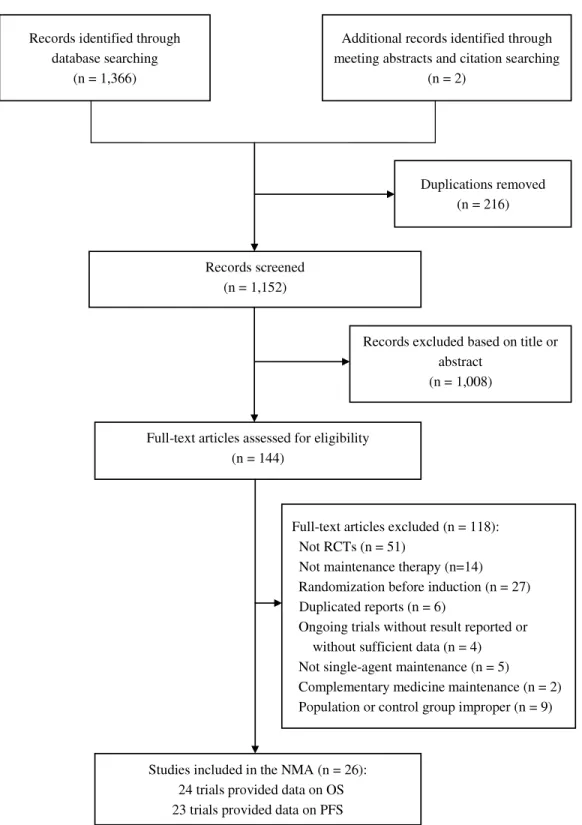
Through online databases and meeting abstracts searches, a total of 1,368 records were identified. After rounds of assessment, 26 trials covering 7,839 patients met all the
inclusion criteria, and comprised of 24 complete manuscripts (Ahn et al., 2013;Alfonso
et al., 2014;Belani et al., 2003;Brodowicz et al., 2006;Butts et al., 2005;Butts et al., 2014;
Cai et al., 2015;Cappuzzo et al., 2010;Carter et al., 2012;Ciuleanu et al., 2009;Fidias et al., 2009;Gaafar et al., 2011;Giaccone et al., 2015;Hanna et al., 2008;Hu et al., 2010;
Johnson et al., 2008;Karayama et al., 2013;Kelly et al., 2008;Mubarak et al., 2012;O’Brien et al., 2015;Pérol et al., 2012;Paz-Ares et al., 2013;Westeel et al., 2005;Zhang et al., 2012)
and 2 meeting abstracts (Belani et al., 2010;Socinski et al., 2014). Selection procedure is
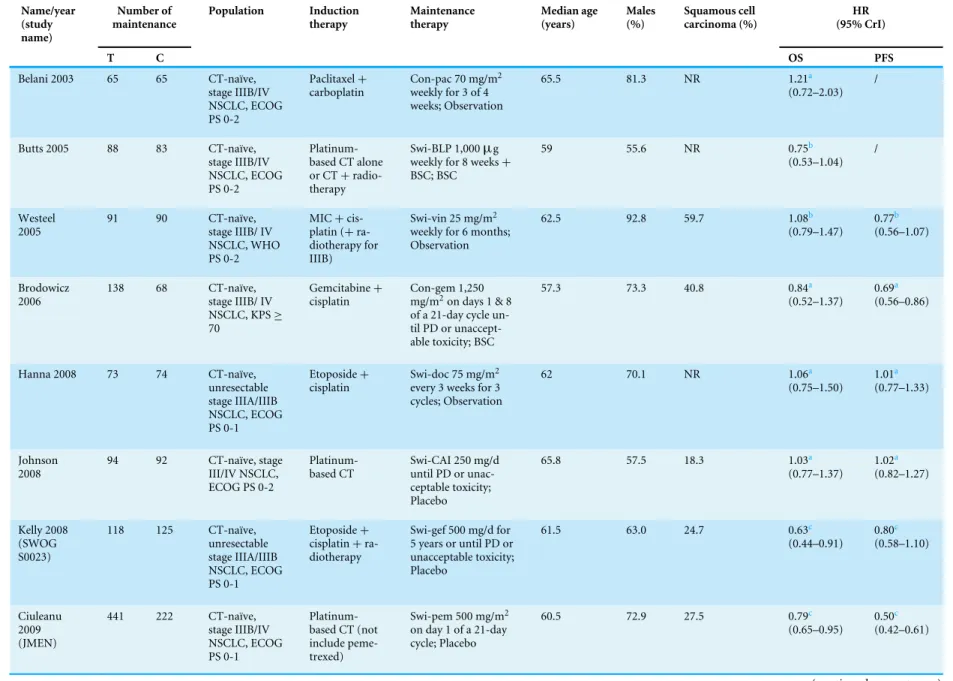
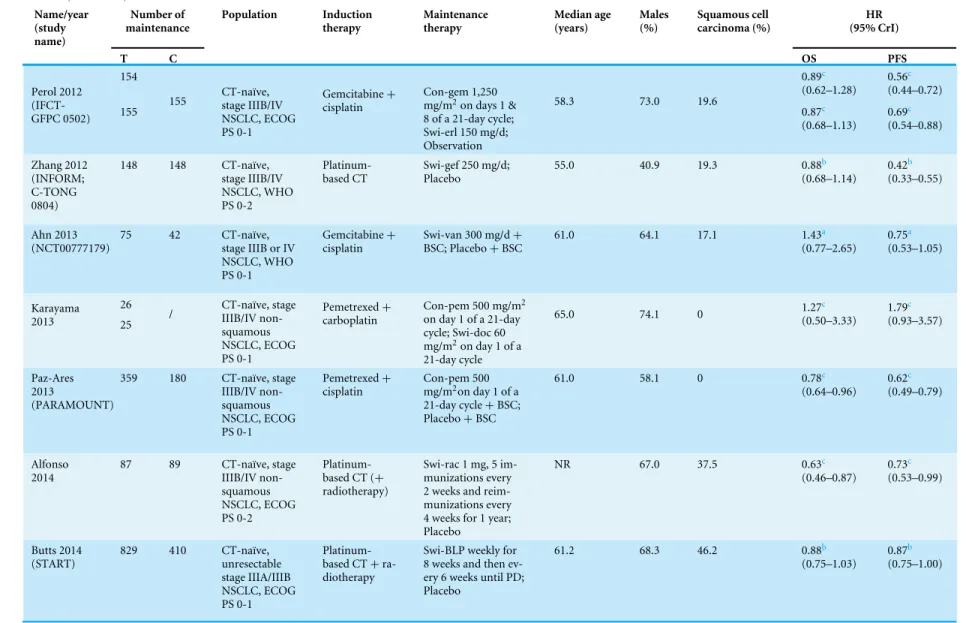
summarized inFig. 1. Summary of characteristics of the 26 eligible studies and HR data of
each individual study is shown in Table 1. With the exception ofPerol 2012which was a
three-arm trial (continue-gemcitabine or switch-erlotinib vs. observation) andKarayama
2013which compared two maintenance regimens directly (continue-pemetrexed vs.
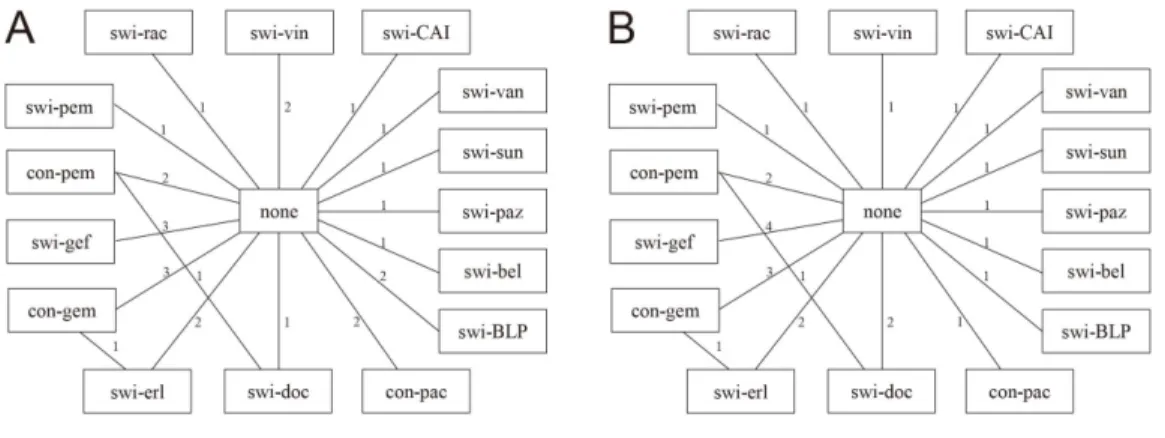
switch-docetaxel); the remaining 24 trials all compared single-agent maintenance therapy vs. no-maintenance control. The network of evidence constructed by the included RCTs is
shown inFig. 2. Risks of bias of the enrolled studies are depicted inTable S1.
OS and PFS analyses
In total, 24 trials were included in the OS analysis (Ahn et al., 2013;Alfonso et al., 2014;
Belani et al., 2003;Belani et al., 2010;Brodowicz et al., 2006;Butts et al., 2005;Butts et al., 2014;Cappuzzo et al., 2010;Carter et al., 2012;Ciuleanu et al., 2009;Fidias et al., 2009;
Gaafar et al., 2011;Giaccone et al., 2015;Hanna et al., 2008;Hu et al., 2010;Johnson et al., 2008;Karayama et al., 2013;Kelly et al., 2008;Mubarak et al., 2012;O’Brien et al., 2015;Pérol et al., 2012;Paz-Ares et al., 2013;Westeel et al., 2005;Zhang et al., 2012). No-maintenance control was set as the reference in all analyses. Based on assessment of model fit, results calculated by random effects models are presented in this section. The HRs for different maintenance regimens compared to no-maintenance are shown in
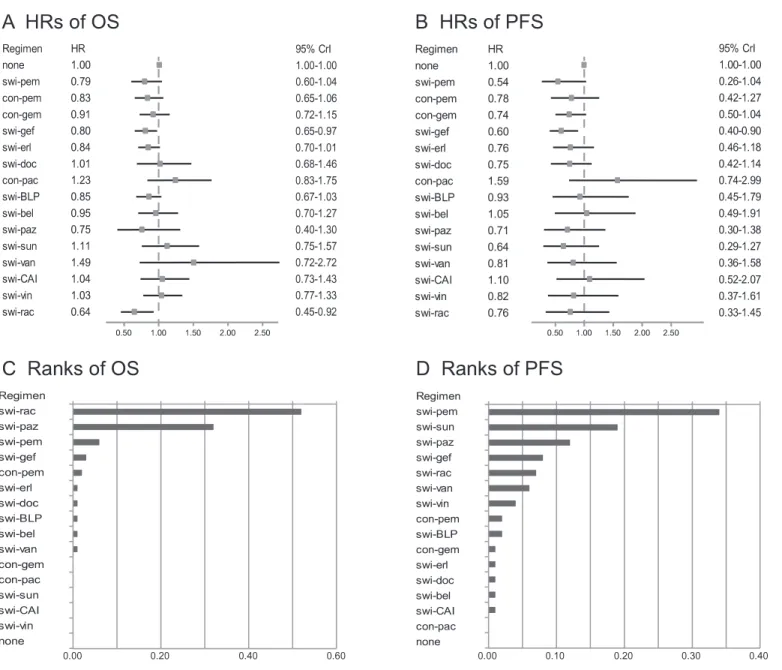
Fig. 3A. Several maintenance therapy regimens yielded longer OS than no-maintenance, although differences were not statistically significant in some regimens. Switch-docetaxel, continue-paclitaxel, switch-sunitinib, switch-vandetanib, switch-carboxyaminoimidazole (CAI), and switch-vinorelbine did not improve OS. Switch-maintenance therapy with racotumomab-alum vaccine showed excellent efficacy compared to no-maintenance with
a HR=0.64 [95% credible intervals (CrI), 0.45–0.92] Pooled relative treatment effect
estimates of all comparisons are presented inTable S2.
In PFS analysis, we included 23 trials (Ahn et al., 2013;Alfonso et al., 2014;Belani
et al., 2010;Brodowicz et al., 2006;Butts et al., 2014;Cai et al., 2015;Cappuzzo et al.,
Table 1 General characteristics of the eligible RCTs. Name/year (study name) Number of maintenance Population Induction therapy Maintenance therapy Median age (years) Males (%) Squamous cell carcinoma (%) HR (95% CrI)
T C OS PFS
Belani 2003 65 65 CT-naïve,
stage IIIB/IV NSCLC, ECOG PS 0-2
Paclitaxel+
carboplatin
Con-pac 70 mg/m2
weekly for 3 of 4 weeks; Observation
65.5 81.3 NR 1.21a
(0.72–2.03) /
Butts 2005 88 83 CT-naïve,
stage IIIB/IV NSCLC, ECOG PS 0-2
Platinum-based CT alone
or CT+
radio-therapy
Swi-BLP 1,000µg
weekly for 8 weeks+
BSC; BSC
59 55.6 NR 0.75b
(0.53–1.04) /
Westeel 2005
91 90 CT-naïve,
stage IIIB/ IV NSCLC, WHO PS 0-2
MIC+
cis-platin (+
ra-diotherapy for IIIB)
Swi-vin 25 mg/m2
weekly for 6 months; Observation
62.5 92.8 59.7 1.08b
(0.79–1.47)
0.77b
(0.56–1.07)
Brodowicz 2006
138 68 CT-naïve,
stage IIIB/ IV
NSCLC, KPS≥
70
Gemcitabine+
cisplatin
Con-gem 1,250
mg/m2on days 1 & 8
of a 21-day cycle un-til PD or unaccept-able toxicity; BSC
57.3 73.3 40.8 0.84a
(0.52–1.37)
0.69a
(0.56–0.86)
Hanna 2008 73 74 CT-naïve,
unresectable stage IIIA/IIIB NSCLC, ECOG PS 0-1 Etoposide+ cisplatin
Swi-doc 75 mg/m2
every 3 weeks for 3 cycles; Observation
62 70.1 NR 1.06a
(0.75–1.50)
1.01a
(0.77–1.33)
Johnson 2008
94 92 CT-naïve, stage
III/IV NSCLC, ECOG PS 0-2
Platinum-based CT
Swi-CAI 250 mg/d until PD or unac-ceptable toxicity; Placebo
65.8 57.5 18.3 1.03a
(0.77–1.37) 1.02a (0.82–1.27) Kelly 2008 (SWOG S0023)
118 125 CT-naïve,
unresectable stage IIIA/IIIB NSCLC, ECOG PS 0-1
Etoposide+
cisplatin+
ra-diotherapy
Swi-gef 500 mg/d for 5 years or until PD or unacceptable toxicity; Placebo
61.5 63.0 24.7 0.63c
(0.44–0.91) 0.80c (0.58–1.10) Ciuleanu 2009 (JMEN)
441 222 CT-naïve,
stage IIIB/IV NSCLC, ECOG PS 0-1
Platinum-based CT (not include peme-trexed)
Swi-pem 500 mg/m2
on day 1 of a 21-day cycle; Placebo
60.5 72.9 27.5 0.79c
(0.65–0.95)
0.50c
(0.42–0.61)
(continued on next page)
Table 1(continued) Name/year (study name) Number of maintenance Population Induction therapy Maintenance therapy Median age (years) Males (%) Squamous cell carcinoma (%) HR (95% CrI)
T C OS PFS
Fidias 2009 153 156 CT-naïve,
stage IIIB/IV NSCLC, ECOG PS 0-2
Gemcitabine+
carboplatin
Swi-doc 75 mg/m2
on day 1 of a 21-day cycle until PD (max-imum of 6 cycles);
BSC+delayed
doc-etaxel 75 mg/m2on
day 1 of a 21-day cy-cle (maximum of 6 cycles) once PD;
65.5 62.1 17.5 / 0.71c
(0.55–0.92)
Belani 2010 128 127 CT-naïve,
stage IIIB/IV NSCLC, ECOG PS 0-1 Gemcitabine+ carboplatin Con-gem 1,000
mg/m2on days 1 & 8
of a 21-day cycle
un-til PD+BSC; BSC
67.0 NR NR 0.97c
(0.72–1.30) 0.97c (0.92–1.04) Cappuzzo 2010 (SAT-URN; BO18192)
438 451 CT-naïve
re-current or stage IIIB/IV NSCLC, ECOG PS 0-1 Platinum-based CT
Swi-erl 150 mg/d un-til PD or unaccept-able toxicity; Placebo
60 74.1 40.6 0.81c
(0.70–0.95)
0.71c
(0.62–0.82)
Hu 2010 33 30 CT-naïve,
unresectable stage IIIA/IIIB NSCLC, PS 0-1
Platinum-based CT+
ra-diotherapy
Swi-vin 21 mg/m2on
days 1 & 8 of a 28-day cycle for 6 cycles; Observation
56.7 58.7 46.0 0.89a
(0.55–1.43) / Gaafar 2011 (EORTC 08021/ILCP 01/03)
87 86 CT-naïve,
stage IIIB/IV NSCLC, WHO PS 0-2
Platinum-based CT
Swi-gef 250 mg/d; Placebo
61.0 77.0 20.0 0.83c
(0.60–1.15)
0.61c
(0.45–0.83)
Carter 2012 61 58 CT-naïve,
unresectable stage IIIA/IIIB NSCLC, ECOG PS 0-1 Paclitaxel+ carboplatin+ radiotherapy
Con-pac 70 mg/m2
weekly for 3 of 4 weeks for 6 months; Observation
63.5 33.6 23.5 1.22a
(0.75–1.99)
1.51a
(1.04–2.19)
Mubarak 2012
61 59 CT-naïve, stage
IIIB/IV non-squamous NSCLC, ECOG PS 0-1 Pemetrexed+ cisplatin
Con-pem 500 mg/m2
of a 21-day cycle un-til PD or
unaccept-able toxicity+BSC;
BSC
60.0 67.3 0 0.95c
(0.46–1.97)
0.65c
(0.35–1.20)
(continued on next page)
Table 1(continued) Name/year (study name) Number of maintenance Population Induction therapy Maintenance therapy Median age (years) Males (%) Squamous cell carcinoma (%) HR (95% CrI)
T C OS PFS
154 0.89c
(0.62–1.28)
0.56c
(0.44–0.72) Perol 2012
(IFCT-GFPC 0502) 155
155 CT-naïve,stage IIIB/IV
NSCLC, ECOG PS 0-1
Gemcitabine+
cisplatin
Con-gem 1,250
mg/m2on days 1 &
8 of a 21-day cycle; Swi-erl 150 mg/d; Observation
58.3 73.0 19.6
0.87c (0.68–1.13) 0.69c (0.54–0.88) Zhang 2012 (INFORM; C-TONG 0804)
148 148 CT-naïve,
stage IIIB/IV NSCLC, WHO PS 0-2
Platinum-based CT
Swi-gef 250 mg/d; Placebo
55.0 40.9 19.3 0.88b
(0.68–1.14)
0.42b
(0.33–0.55)
Ahn 2013 (NCT00777179)
75 42 CT-naïve,
stage IIIB or IV NSCLC, WHO PS 0-1
Gemcitabine+
cisplatin
Swi-van 300 mg/d+
BSC; Placebo+BSC
61.0 64.1 17.1 1.43a
(0.77–2.65)
0.75a
(0.53–1.05)
26 Karayama
2013 25 /
CT-naïve, stage IIIB/IV non-squamous NSCLC, ECOG PS 0-1 Pemetrexed+ carboplatin
Con-pem 500 mg/m2
on day 1 of a 21-day cycle; Swi-doc 60
mg/m2on day 1 of a
21-day cycle
65.0 74.1 0 1.27
c (0.50–3.33) 1.79c (0.93–3.57) Paz-Ares 2013 (PARAMOUNT)
359 180 CT-naïve, stage
IIIB/IV non-squamous NSCLC, ECOG PS 0-1 Pemetrexed+ cisplatin Con-pem 500
mg/m2on day 1 of a
21-day cycle+BSC;
Placebo+BSC
61.0 58.1 0 0.78c
(0.64–0.96)
0.62c
(0.49–0.79)
Alfonso 2014
87 89 CT-naïve, stage
IIIB/IV non-squamous NSCLC, ECOG PS 0-2
Platinum-based CT (+
radiotherapy)
Swi-rac 1 mg, 5 im-munizations every 2 weeks and reim-munizations every 4 weeks for 1 year; Placebo
NR 67.0 37.5 0.63c
(0.46–0.87)
0.73c
(0.53–0.99)
Butts 2014 (START)
829 410 CT-naïve,
unresectable stage IIIA/IIIB NSCLC, ECOG PS 0-1
Platinum-based CT+
ra-diotherapy
Swi-BLP weekly for 8 weeks and then ev-ery 6 weeks until PD; Placebo
61.2 68.3 46.2 0.88b
(0.75–1.03)
0.87b
(0.75–1.00)
(continued on next page)
Table 1(continued) Name/year (study name) Number of maintenance Population Induction therapy Maintenance therapy Median age (years) Males (%) Squamous cell carcinoma (%) HR (95% CrI)
T C OS PFS
Socinski 2014 (CALGB 30607)
106 104 CT-naïve, stage
IIIB/IV non-squamous NSCLC, ECOG PS 0-1 Platinum-based CT
Swi-sun 37.5 mg/d; Placebo
66.0 55.7 33.2 1.08a
(0.78–1.52)
0.59a
(0.32–1.21)
Cai 2015 7 7 CT-naïve, stage
IIIB/IV EGFR gene-mutated NSCLC, PS 0-2
Paclitaxel+
cisplatin
Swi-gef 250 mg/d; Observation
61.0 53.3 0 / 0.60a
(0.03– 11.33)
Giaccone 2015
270 262 CT-naïve,
un-resectable stage IIIA/IIIB/IV NSCLC, ECOG PS 0-2
Platinum-based CT (+
radiotherapy)
Swi-bel monthly for 18 cycles followed by 2 quarterly cycles; Placebo
61.0 57.7 27.4 0.94c
(0.73–1.20) 0.99c (0.82–1.20) O’Brien 2015 (EORTC 08092)
50 52 CT-naïve,
stage IIIB/IV NSCLC, WHO PS 0-2
Platinum-based CT
Swi-paz 800 mg/d; Placeb
64.4 45.1 19.6 0.72c
(0.40–1.28)
0.67c
(0.43–1.03)
Notes.
aUnadjusted HRs estimated from Kaplan–Meier curves using Tierney’s spreadsheet.
bAdjusted HRs obtained from the original articles.
cUnadjusted HRs obtained from the original articles.
Abbreviations: BSC, best support care; NR, not reported; ECOG, Eastern Cooperative Oncology Group; CT, chemotherapy; L-BLP25, tecemotide; MIC, mitomycin C; KPS, Karnofsky performance status; PD, progressive disease; EGFR, epidermal growth factor receptor; OS, overallsurvival; PFS, progression free survival; HR, hazard ratio; CrI, credible interval; swi-pem, switch-pemetrexed; con-pem, continue-pemetrexed; swi-gef, switch-gefitinib; con-gem, continue-gemcitabine; swi-erl, switch-erlotinib; swi-doc, switch-docetaxel; con-pac, continue-paclitaxel; swi-BLP, switch-L-BLP25; swi-bel, switch-belagenpumatucel-L; swi-paz, switch-pazopanib; swi-sun, switch-sunitinib; swi-van, switch-vandetanib; swi-CAI, switch-carboxyaminoimidazole; swi-vin, switch-vinorelbine; swi-rac, switch-racotumomab-alum.
Figure 1 Flow diagram of trial selection.RCT, randomized controlled trial; NMA, network meta-analysis; OS, overall survival; PFS, progression free survival.
Figure 2 Network of evidence.(A) and (B) present network diagrams for OS and PFS separately. Numbers above the lines represent the amount of studies. Swi-pem, switch-pemetrexed; con-pem, continue-pemetrexed; swi-gef, switch-gefitinib; con-gem, continue-gemcitabine; swi-erl, switch-erlotinib; swi-doc, docetaxel; con-pac, continue-paclitaxel; swi-BLP, L-BLP25; swi-bel, switch-belagenpumatucel-L ; swi-paz, switch-pazopanib; swi-sun, switch-sunitinib; swi-van, switch-vandetanib; swi-CAI, switch-carboxyaminoimidazole; swi-vin, switch-vinorelbine; swi-rac, switch-racotumomab-alum.
2010;Carter et al., 2012;Ciuleanu et al., 2009;Fidias et al., 2009;Gaafar et al., 2011;
Giaccone et al., 2015;Hanna et al., 2008;Johnson et al., 2008;Karayama et al., 2013;Kelly et al., 2008;Mubarak et al., 2012;O’Brien et al., 2015;Pérol et al., 2012;Paz-Ares et al., 2013;Socinski et al., 2014;Westeel et al., 2005;Zhang et al., 2012). The HRs for different
maintenance regimens compared to no-maintenance regimens are shown inFig. 3B.
Continue-paclitaxel, switch-belagenpumatucel-L, or switch-CAI did not yield longer PFS than no-maintenance. Switch-pemetrexed and switch-gefitinib showed excellent efficacy
compared to no-maintenance with HRs=0.54 (95% CI [0.26–1.04]) and 0.60 (95% CI
[0.40–0.90]). Pooled relative treatment effect estimates of all comparisons are presented in
Table S2.
Ranking which indicated the probability of the best regimen in descending order,
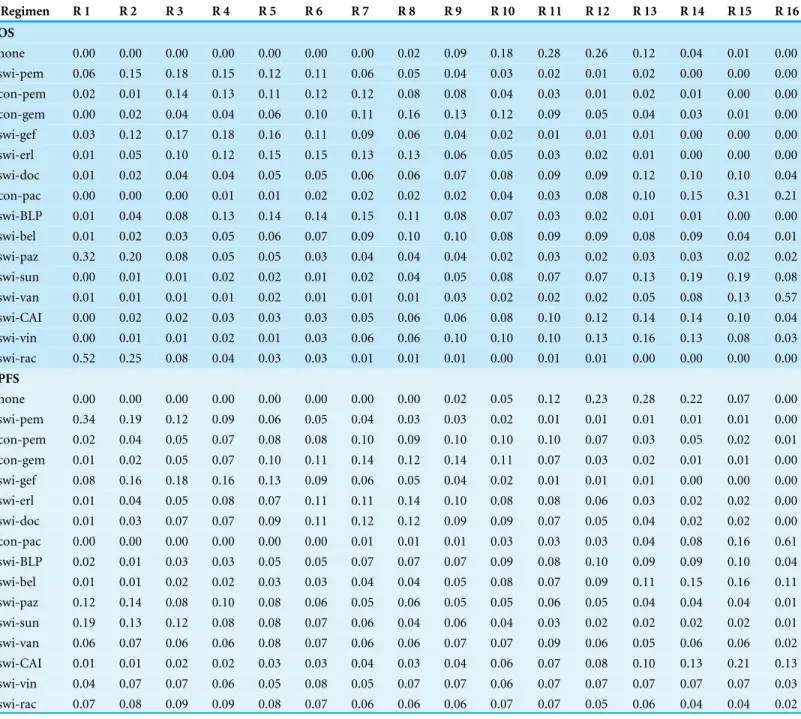
among all treatments is shown inFigs. 3C,3DandTable 2. According to the rank order
based on OS, switch-racotumomab-alum vaccine had the greatest probability as the best regimen (52%), with switch-pazopanib ranked second (32%), and switch-pemetrexed ranked third (6%). Based on PFS, switch-pemetrexed ranked first (34%), followed by switch-sunitinib (19%), with switch-pazopanib ranked third (12%).
Adverse events (AEs)
Maintenance chemotherapy (including pemetrexed, gemcitabine, docetaxel, paclitaxel, and vinorelbine) was commonly associated with hematologic events such as neutropenia, thrombocytopenia, and anemia. Maintenance tyrosine kinase inhibitor (TKI) (including EGFR-TKI and other TKIs) commonly caused more skin and gastrointestinal AEs, such as rash, nausea, and vomiting. Maintenance vaccine (including belagenpumatucel-L, racotumomab-alum, and L-BLP25) was commonly associated with injection site reaction and flu-like symptoms. The main AE of CAI was nausea.
Figure 3 OS and PFS analyses in total population.(A) and (B) show comparisons of HRs based on OS and PFS respectively in an unselected pop-ulation. Switch-racotumomab-alum vaccine showed most excellent efficacy compared to no-maintenance with a HR=0.64 (95% CI [0.45–0.92]) in OS analysis, as well as switch-pemetrexed (HR, 0.54; 95% CI [0.26–1.04]) in PFS analysis. (C) and (D) show the probability of every regimen to be the best one based on OS and PFS respectively in an unselected population. According to the rank order based on OS, switch-racotumomab-alum vaccine came first (52%). Based on PFS, switch-pemetrexed ranked first (34%). Swi-pem, switch-pemetrexed; con-pem, continue-pemetrexed; gef, switch-gefitinib; con-gem, continue-gemcitabine; erl, switch-erlotinib; doc, switch-docetaxel; con-pac, continue-paclitaxel; BLP, switch-L-BLP25; bel, switch-belagenpumatucel-L; paz, switch-pazopanib; sun, switch-sunitinib; van, switch-vandetanib; swi-CAI, switch-carboxyaminoimidazole; swi-vin, switch-vinorelbine; swi-rac, switch-racotumomab-alum; OS, overall survival; PFS, progression free survival; HR, hazard ratio; CrI, credible interval.
Sensitivity analysis
The primary outcome OS was calculated using both fixed and random effects models.
Resdev, pD and DIC were very similar for both models (−23.37, 15.8 and−7.5 in fixed
effects model;−23.33, 17.3 and−6.0 in random effects model), which indicated the
robustness of results.
Table 2 Rank orders.
Regimen R 1 R 2 R 3 R 4 R 5 R 6 R 7 R 8 R 9 R 10 R 11 R 12 R 13 R 14 R 15 R 16
OS
none 0.00 0.00 0.00 0.00 0.00 0.00 0.00 0.02 0.09 0.18 0.28 0.26 0.12 0.04 0.01 0.00
swi-pem 0.06 0.15 0.18 0.15 0.12 0.11 0.06 0.05 0.04 0.03 0.02 0.01 0.02 0.00 0.00 0.00
con-pem 0.02 0.01 0.14 0.13 0.11 0.12 0.12 0.08 0.08 0.04 0.03 0.01 0.02 0.01 0.00 0.00
con-gem 0.00 0.02 0.04 0.04 0.06 0.10 0.11 0.16 0.13 0.12 0.09 0.05 0.04 0.03 0.01 0.00
swi-gef 0.03 0.12 0.17 0.18 0.16 0.11 0.09 0.06 0.04 0.02 0.01 0.01 0.01 0.00 0.00 0.00
swi-erl 0.01 0.05 0.10 0.12 0.15 0.15 0.13 0.13 0.06 0.05 0.03 0.02 0.01 0.00 0.00 0.00
swi-doc 0.01 0.02 0.04 0.04 0.05 0.05 0.06 0.06 0.07 0.08 0.09 0.09 0.12 0.10 0.10 0.04
con-pac 0.00 0.00 0.00 0.01 0.01 0.02 0.02 0.02 0.02 0.04 0.03 0.08 0.10 0.15 0.31 0.21
swi-BLP 0.01 0.04 0.08 0.13 0.14 0.14 0.15 0.11 0.08 0.07 0.03 0.02 0.01 0.01 0.00 0.00
swi-bel 0.01 0.02 0.03 0.05 0.06 0.07 0.09 0.10 0.10 0.08 0.09 0.09 0.08 0.09 0.04 0.01
swi-paz 0.32 0.20 0.08 0.05 0.05 0.03 0.04 0.04 0.04 0.02 0.03 0.02 0.03 0.03 0.02 0.02
swi-sun 0.00 0.01 0.01 0.02 0.02 0.01 0.02 0.04 0.05 0.08 0.07 0.07 0.13 0.19 0.19 0.08
swi-van 0.01 0.01 0.01 0.01 0.02 0.01 0.01 0.01 0.03 0.02 0.02 0.02 0.05 0.08 0.13 0.57
swi-CAI 0.00 0.02 0.02 0.03 0.03 0.03 0.05 0.06 0.06 0.08 0.10 0.12 0.14 0.14 0.10 0.04
swi-vin 0.00 0.01 0.01 0.02 0.01 0.03 0.06 0.06 0.10 0.10 0.10 0.13 0.16 0.13 0.08 0.03
swi-rac 0.52 0.25 0.08 0.04 0.03 0.03 0.01 0.01 0.01 0.00 0.01 0.01 0.00 0.00 0.00 0.00
PFS
none 0.00 0.00 0.00 0.00 0.00 0.00 0.00 0.00 0.02 0.05 0.12 0.23 0.28 0.22 0.07 0.00
swi-pem 0.34 0.19 0.12 0.09 0.06 0.05 0.04 0.03 0.03 0.02 0.01 0.01 0.01 0.01 0.01 0.00
con-pem 0.02 0.04 0.05 0.07 0.08 0.08 0.10 0.09 0.10 0.10 0.10 0.07 0.03 0.05 0.02 0.01
con-gem 0.01 0.02 0.05 0.07 0.10 0.11 0.14 0.12 0.14 0.11 0.07 0.03 0.02 0.01 0.01 0.00
swi-gef 0.08 0.16 0.18 0.16 0.13 0.09 0.06 0.05 0.04 0.02 0.01 0.01 0.01 0.00 0.00 0.00
swi-erl 0.01 0.04 0.05 0.08 0.07 0.11 0.11 0.14 0.10 0.08 0.08 0.06 0.03 0.02 0.02 0.00
swi-doc 0.01 0.03 0.07 0.07 0.09 0.11 0.12 0.12 0.09 0.09 0.07 0.05 0.04 0.02 0.02 0.00
con-pac 0.00 0.00 0.00 0.00 0.00 0.00 0.01 0.01 0.01 0.03 0.03 0.03 0.04 0.08 0.16 0.61
swi-BLP 0.02 0.01 0.03 0.03 0.05 0.05 0.07 0.07 0.07 0.09 0.08 0.10 0.09 0.09 0.10 0.04
swi-bel 0.01 0.01 0.02 0.02 0.03 0.03 0.04 0.04 0.05 0.08 0.07 0.09 0.11 0.15 0.16 0.11
swi-paz 0.12 0.14 0.08 0.10 0.08 0.06 0.05 0.06 0.05 0.05 0.06 0.05 0.04 0.04 0.04 0.01
swi-sun 0.19 0.13 0.12 0.08 0.08 0.07 0.06 0.04 0.06 0.04 0.03 0.02 0.02 0.02 0.02 0.01
swi-van 0.06 0.07 0.06 0.06 0.08 0.07 0.06 0.06 0.07 0.07 0.09 0.06 0.05 0.06 0.06 0.02
swi-CAI 0.01 0.01 0.02 0.02 0.03 0.03 0.04 0.03 0.04 0.06 0.07 0.08 0.10 0.13 0.21 0.13
swi-vin 0.04 0.07 0.07 0.06 0.05 0.08 0.05 0.07 0.07 0.06 0.07 0.07 0.07 0.07 0.07 0.03
swi-rac 0.07 0.08 0.09 0.09 0.08 0.07 0.06 0.06 0.06 0.07 0.07 0.05 0.06 0.04 0.04 0.02
Notes.
Abbreviations: R, rank; OS, overallsurvival; PFS, progression free survival; HR, hazard ratio; CrI, credible interval; swi-pem, switch-pemetrexed; con-pem, continue-pemetrexed; swi-gef, switch-gefitinib; con-gem, continue-gemcitabine; swi-erl, switch-erlotinib; swi-doc, switch-docetaxel; con-pac, continue-paclitaxel; swi-BLP, L-BLP25; swi-bel, belagenpumatucel-L; swi-paz, pazopanib; swi-sun, sunitinib; swi-van, vandetanib; swi-CAI, switch-carboxyaminoimidazole; swi-vin, switch-vinorelbine; swi-rac, switch-racotumomab-alum.
Inconsistencies
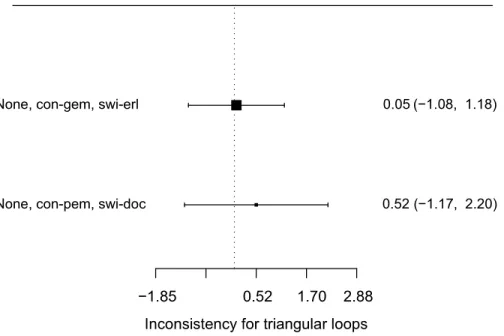
The data did not suggest any inconsistency between direct and indirect evidence in the
network (Fig. 4). In fact, direct evidence of the relative efficacy of different
mainte-nance therapy regimens was rather few in the network. In the analysis of OS, only two
Figure 4 Inconsistencies evaluation (based on OS).Only two closed loops were formed (none vs. con-gem vs. swi-erl; none vs. con-pem vs. swi-doc) in this NMA. The size of the black square represented the amount of included studies. Both loops had their credible intervals covered blank value, which meant there was no evidence of inconsistencies between direct and indirect data.
closed loops were formed (none vs. continue-gemcitabine vs. switch-erlotinib; none vs. continue-pemetrexed vs. switch-docetaxel).
Publication bias
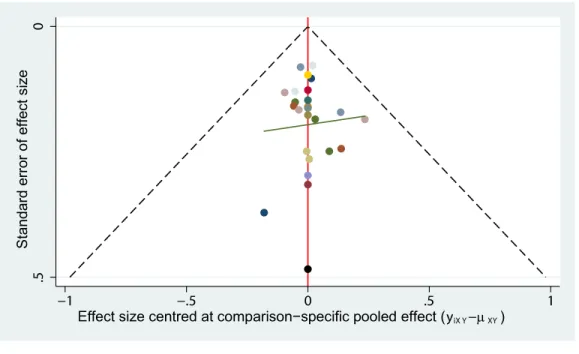
Symmetry of the ‘comparison-adjusted’ funnel plot suggested that efficacy of the regimens were no more exaggerated than their respective comparison-specific weighted average effect in small studies. The regimens also sorted from oldest to newest, and the resulting ‘comparison-adjusted’ funnel plot did not suggest any publication bias in the network (Fig. 5).
Quality assessment
GRADE and iGRADE analyses are presented inTable S3. Since direct data comparing
different maintenance therapy regimens was available for only two couples of regimens, measurement of inconsistencies between direct and indirect data was limited. In general, the most common reasons for lowering the quality of evidence were limitations in trial design and imprecision in some studies. Data suggested that evidence on switch-docetaxel, continue-paclitaxel and switch-vinorelbine were rated as limited quality, while evidence on switch-pemetrexed, switch-belagenpumatucel-L and switch-racotumomab-alum was rated as higher quality.
DISCUSSION
Although recent evidence provided by both RCTs and meta-analyses have shown that maintenance therapy might improve the outcomes of patients without progressive disease
Figure 5 Publication bias (based on OS).The funnel plot did not suggest any publication bias in the net-work.
(PD) after induction treatment, there is still little guidance on the choice of the most suitable regimens for patients with different characteristics in clinical practice. This NMA study compared the survival benefits among all available single-agent maintenance regimens based on OS and PFS in unselected population with the aim of providing beneficial information for making clinical decisions for NSCLC maintenance therapy.
Comparing to chemotherapy as well as EGFR-TKIs, cancer vaccines are a relative new treatment strategy but show promise in NSCLC therapy. NeuGcGM3 gangliosides are normally expressed on the plasma membranes of mammalian cells except human cells, due to a 92-bp deletion in the human gene that encodes an enzyme which
cat-alyzes the conversion of N-acetyl to NeuGc sialic acid (Alfonso et al., 2014). However,
NeuGcGM3 gangliosides are over-expressed on several tumor cells membranes, such as melanoma, breast cancer, and NSCLC. In addition, NeuGcGM3 gangliosides also play important roles in tumor biology, including promoting tumor metastasis and reinforcing tumor immune escape. Furthermore, NSCLC patients with higher expression of NeuGc gangliosides have lower OS and PFS. All the above characteristics make NeuGc
gangliosides attractive targets for tumor immunotherapy (Hernández & Vázquez, 2015).
Racotumomab-alum vaccine is an anti-idiotype vaccine targeting the NeuGcGM3 tumor-associated gangliosides, which can bind and directly kill NSCLC cells expressing the antigen. According to our NMA in unselected population, switch-racotumomab-alum vaccine might be the most efficacious maintenance regimen in prolonging OS. Switch-racotumomab-alum can decrease the hazard for death to 0.64. However, since there was only one study (176 patients) on racotumomab-alum vaccine, additional RCT studies with larger patient populations are required to confirm this finding. At present, racotumomab-alum vaccine is marketed in Cuba and Peru as maintenance therapy for
NSCLC patients. Meanwhile, clinical researches are underway in the United Kingdom and China.
Switch-pemetrexed and switch- pazopanib maintenance therapy also revealed favorable effect in prolonging OS. Pemetrexed has shown different effects according to pathological category of NSCLC, and is extremely efficacious for non-squamous NSCLC. In Ciuleanu’s study, switch-pemetrexed maintenance therapy decreased the HRs for OS and PFS to 0.70 (95% CI [0.56–0.88]) and 0.44 (95% CI [0.36–0.55]) in non-squamous population, which was significantly better than in the squamous population (OS HR 1.07, 95% CI
[0.77–1.50]; and PFS HR 0.69, 0.49–0.98) (Ciuleanu et al., 2009). Therefore,
switch-pemetrexed may be an efficacious regimen for non-squamous NSCLC. However, these two maintenance regimens have each been investigated in single eligible studies, therefore additional studies are required to confirm these observations.
Our NMA still has several limitations. Firstly, some regimens had few trials eligible for analysis, thus their small sample sizes may influence the reliability of outcomes. Secondly, since different agents and regimens have their particular target population, treating all unselected NSCLC patients as a whole may lead to the underestimation of some efficacious regimens. Thirdly, single bevacizumab maintenance therapy as a potential
effective regimen has been investigated in AVAPERL (Barlesi et al., 2011) and ATLAS
(Johnson et al., 2013) trials. However, since both of those two studies did not incorporate no-maintenance therapy as control, we could not integrate them into the network, thus the efficacy of bevacizumab maintenance was not compared to the other regimens.
Survival outcomes of patients receiving maintenance therapy are influenced by post-study therapy. However, most of the included studies did not provide detailed informa-tion about the effect of post-study therapy on survival. Some studies have reported that though maintenance therapy could improve PFS, there were no significant differences
in OS (Ahn et al., 2013;Pérol et al., 2012). We supposed the nonconformity between PFS
and OS results may partly be due to the choice of different post-study therapy. Thus, in our NMA, we also set PFS as an outcome to analysis. Future studies could choose maintenance regimen with PFS benefit continued with different post-maintenance therapies to determine which combination has the best OS outcome. Apart from efficacy and safety, the quality of life of patients and the cost-effectiveness of maintenance therapy should be taken into consideration when choosing maintenance therapy. Future studies should incorporate all these aspects in their study design and analysis.
In conclusion, our NMA demonstrates that several single-agent maintenance therapy regimens may prolong OS and PFS for stage III/IV NSCLC. Racotumomab-alum vaccine has shown potential survival benefit in unselected NSCLC population but should be confirmed with additional clinical evidence.
ACKNOWLEDGEMENTS
We thank LetPub (http://www.letpub.com) for its linguistic assistance during the
preparation of this manuscript.
ADDITIONAL INFORMATION AND DECLARATIONS
Funding
This work was supported by a grant from the Jiangsu Province Special Program of Medical Science (BL2012012). The funders had no role in study design, data collection and analysis, decision to publish, or preparation of the manuscript.
Grant Disclosures
The following grant information was disclosed by the authors: Jiangsu Province Special Program of Medical Science: BL2012012.
Competing Interests
The authors declare there are no competing interests.
Author Contributions
• Qinxue Wang and Haobin Huang conceived and designed the experiments, performed
the experiments, analyzed the data, contributed reagents/materials/analysis tools, wrote the paper, prepared figures and/or tables, reviewed drafts of the paper.
• Xiaoning Zeng performed the experiments, wrote the paper, prepared figures and/or
tables, reviewed drafts of the paper.
• Yuan Ma performed the experiments, wrote the paper, reviewed drafts of the paper.
• Xin Zhao and Mao Huang conceived and designed the experiments, analyzed the data,
reviewed drafts of the paper.
Data Availability
The following information was supplied regarding data availability:
The raw data has been supplied as aSupplementary File.
Supplemental Information
Supplemental information for this article can be found online athttp://dx.doi.org/10.
7717/peerj.2550#supplemental-information.
REFERENCES
Ades AE, Sculpher M, Sutton A, Abrams K, Cooper N, Welton N, Lu G. 2006.Bayesian
methods for evidence synthesis in cost-effectiveness analysis.Pharmacoeconomics
24:1–19DOI 10.2165/00019053-200624010-00001.
Ahn JS, Lee KH, Sun JM, Park K, Kang ES, Cho EK, Lee DH, Kim SW, Lee GW, Kang JH, Lee JS, Lee JW, Ahn MJ. 2013.A randomized, phase II study of van-detanib maintenance for advanced or metastatic non-small-cell lung cancer
following first-line platinum-doublet chemotherapy.Lung Cancer 82:455–460
DOI 10.1016/j.lungcan.2013.08.027.
Alfonso S, Valdes-Zayas A, Santiesteban ER, Flores YI, Areces F, Hernandez M, Viada CE, Mendoza IC, Guerra PP, Garcia E, Ortiz RA, De la Torre AV, Cepeda M,
Perez K, Chong E, Hernandez AM, Toledo D, Gonzalez Z, Mazorra Z, Crombet T, Perez R, Vazquez AM, Macias AE. 2014.A randomized, multicenter, placebo-controlled clinical trial of racotumomab-alum vaccine as switch maintenance
therapy in advanced non-small cell lung cancer patients.Clinical Cancer Research
20:3660–3671DOI 10.1158/1078-0432.CCR-13-1674.
Azzoli CG, Temin S, Aliff T, Baker Jr S, Brahmer J, Johnson DH, Laskin JL, Masters G, Milton D, Nordquist L, Pao W, Pfister DG, Piantadosi S, Schiller JH, Smith R, Smith TJ, Strawn JR, Trent D, Giaccone G, American Society of Clinical Oncology. 2011.2011 Focused update of 2009 American Society of Clinical Oncology clinical practice guideline update on chemotherapy for stage IV non-small-cell lung cancer. Journal of Clinical Oncology29:3825–3831DOI 10.1200/JCO.2010.34.2774.
Barlesi F, de Castro J, Dvornichenko V, Kim JH, Pazzola A, Rittmeyer A, Vikström A, Mitchell L, Wong EK, Gorbunova V. 2011.AVAPERL (MO22089): final efficacy outcomes for patients (pts) with advanced non-squamous non-small cell lung cancer (nsNSCLC) randomised to continuation maintenance (mtc) with bevacizumab (bev) or bev + pemetrexed (pem) after first-line (1L) bev-cisplatin
(cis)-pem treatment (Tx) [Abstract].European Journal of Cancer 47(Suppl. 2):16
DOI 10.1016/S0959-8049(11)70133-2.
Behera M, Owonikoko TK, Chen Z, Kono SA, Khuri FR, Belani CP, Ramalingam SS. 2012.Single agent maintenance therapy for advanced stage non-small cell lung
can-cer: a meta-analysis.Lung Cancer77:331–338DOI 10.1016/j.lungcan.2012.03.019.
Belani CP, Barstis J, Perry MC, La Rocca RV, Nattam SR, Rinaldi D, Clark R, Mills GM. 2003.Multicenter, randomized trial for stage IIIB or IVnon-small-cell lung cancer using weekly paclitaxel and carboplatin followed by maintenance
weekly paclitaxel or observation.Journal of Clinical Oncology21:2933–2939
DOI 10.1200/JCO.2003.02.563.
Belani CP, Waterhouse DM, Ghazal H, Ramalingam SS, Bordoni R, Greenberg R, Levine RM, Waples JM, Jiang Y, Reznikoff G. 2010.Phase III study of maintenance gemcitabine (G) and best supportive care (BSC) versus BSC, following standard combination therapy with gemcitabine-carboplatin (G-Cb) for patients with
advanced non-small cell lung cancer (NSCLC) [Abstract 7506].Journal of Clinical
Oncology28(Suppl. 15).
Berge EM, Doebele RC. 2013.Re-examination of maintenance therapy in non-small
cell lung cancer with the advent of new anti-cancer agents.Drugs73:517–532
DOI 10.1007/s40265-013-0032-4.
Besse B, Adjei A, Baas P, Meldgaard P, Nicolson M, Paz-Ares L, Reck M, Smit EF, Syrigos K, Stahel R, Felip E, Peters S, Panel M. 2014.2nd ESMO Consensus Conference on Lung Cancer: non-small-cell lung cancer first-line/second and
further lines of treatment in advanced disease.Annals of Oncology25:1475–1484
DOI 10.1093/annonc/mdu123.
Brodowicz T, Krzakowski M, Zwitter M, Tzekova V, Ramlau R, Ghilezan N, Ciuleanu T, Cucevic B, Gyurkovits K, Ulsperger E, Jassem J, Grgic M, Saip P, Szilasi M,
Wiltschke C, Wagnerova M, Oskina N, Soldatenkova V, Zielinski C, Wenczl M. 2006.Cisplatin and gemcitabine first-line chemotherapy followed by maintenance gemcitabine or best supportive care in advanced non-small cell lung cancer: a phase
III trial.Lung Cancer52:155–163DOI 10.1016/j.lungcan.2006.01.006.
Butts C, Murray N, Maksymiuk A, Goss G, Marshall E, Soulieres D, Cormier Y, Ellis P, Price A, Sawhney R, Davis M, Mansi J, Smith C, Vergidis D, Ellis P, MacNeil M, Palmer M. 2005.Randomized phase IIB trial of BLP25 liposome vaccine in stage
IIIB and IV non-small-cell lung cancer.Journal of Clinical Oncology23:6674–6681
DOI 10.1200/JCO.2005.13.011.
Butts C, Socinski MA, Mitchell PL, Thatcher N, Havel L, Krzakowski M, Nawrocki S, Ciuleanu TE, Bosquee L, Trigo JM, Spira A, Tremblay L, Nyman J, Ramlau R, Wickart-Johansson G, Ellis P, Gladkov O, Pereira JR, Eberhardt WE, Hel-wig C, Schroder A, Shepherd FA. 2014.Tecemotide (L-BLP25) versus placebo after chemoradiotherapy for stage III non-small-cell lung cancer (START):
a randomised, double-blind, phase 3 trial.The Lancet Oncology15:59–68
DOI 10.1016/S1470-2045(13)70510-2.
Cai KC, Liu DG, Wang YY, Wu H, Huang ZY, Cai RJ, Wang HF, Xiong G, Zhang ZL. 2015.Gefitinib maintenance therapy in Chinese advanced-stage lung
adenocarci-noma patients with EGFR mutations treated with prior chemotherapy.Neoplasma
62:302–307DOI 10.4149/neo_2015_036.
Cappuzzo F, Ciuleanu T, Stelmakh L, Cicenas S, Szczesna A, Juhasz E, Esteban E, Molinier O, Brugger W, Melezinek I, Klingelschmitt G, Klughammer B, Giaccone G. 2010.Erlotinib as maintenance treatment in advanced non-small-cell lung cancer:
a multicentre, randomised, placebo-controlled phase 3 study.The Lancet Oncology
11:521–529DOI 10.1016/S1470-2045(10)70112-1.
Carter DL, Garfield D, Hathorn J, Mundis R, Boehm KA, Ilegbodu D, Asmar L, Reynolds C. 2012.A randomized phase III trial of combined paclitaxel, carboplatin, and radiation therapy followed by weekly paclitaxel or observation for patients
with locally advanced inoperable non-small-cell lung cancer.Clinical Lung Cancer
13:205–213DOI 10.1016/j.cllc.2011.10.005.
Childhood ALL Collaborative Group. 1996.Duration and intensity of maintenance chemotherapy in acute lymphoblastic leukaemia: overview of 42 trials involving 12
000 randomised children.Lancet347:1783–1788
DOI 10.1016/S0140-6736(96)91615-3.
Ciuleanu T, Brodowicz T, Zielinski C, Kim JH, Krzakowski M, Laack E, Wu YL, Bover I, Begbie S, Tzekova V, Cucevic B, Pereira JR, Yang SH, Madhavan J, Sugarman KP, Peterson P, John WJ, Krejcy K, Belani CP. 2009.Maintenance pemetrexed plus best supportive care versus placebo plus best supportive care for
non-small-cell lung cancer: a randomised, double-blind, phase 3 study.Lancet374:1432–1440
DOI 10.1016/S0140-6736(09)61497-5.
Cohen MH, Cortazar P, Justice R, Pazdur R. 2010a.Approval summary: pemetrexed maintenance therapy of advanced/metastatic nonsquamous, non-small cell lung
cancer (NSCLC).Oncologist 15:1352–1358DOI 10.1634/theoncologist.2010-0224.
Cohen MH, Johnson JR, Chattopadhyay S, Tang S, Justice R, Sridhara R, Paz-dur R. 2010b.Approval summary: erlotinib maintenance therapy of
ad-vanced/metastatic non-small cell lung cancer (NSCLC).Oncologist 15:1344–1351
DOI 10.1634/theoncologist.2010-0257.
Cufer T, Ovcaricek T, O’Brien ME. 2013.Systemic therapy of advanced non-small cell
lung cancer: major-developments of the last 5-years.European Journal of Cancer
49:1216–1225DOI 10.1016/j.ejca.2012.11.021.
Dumville JC, Soares MO, O’Meara S, Cullum N. 2012.Systematic review and
mixed treatment comparison: dressings to heal diabetic foot ulcers.Diabetologia
55:1902–1910DOI 10.1007/s00125-012-2558-5.
Ettinger DS, Wood DE, Akerley W, Bazhenova LA, Borghaei H, Camidge DR, Cheney RT, Chirieac LR, D’Amico TA, Demmy TL, Dilling TJ, Dobelbower MC, Govindan R, Grannis Jr FW, Horn L, Jahan TM, Komaki R, Krug LM, Lackner RP, Lanuti M, Lilenbaum R, Lin J, Loo Jr BW, Martins R, Otterson GA, Patel JD, Pisters KM, Reckamp K, Riely GJ, Rohren E, Schild SE, Shapiro TA, Swanson SJ, Tauer K, Yang SC, Gregory K, Hughes M. 2015.Non-small cell lung cancer, version 6.Journal of the National Comprehensive Cancer Network13:515–524.
Fidias PM, Dakhil SR, Lyss AP, Loesch DM, Waterhouse DM, Bromund JL, Chen R, Hristova-Kazmierski M, Treat J, Obasaju CK, Marciniak M, Gill J, Schiller JH. 2009.Phase III study of immediate compared with delayed docetaxel after front-line therapy with gemcitabine plus carboplatin in advanced non-small-cell lung cancer. Journal of Clinical Oncology27:591–598DOI 10.1200/JCO.2008.17.1405.
Gaafar RM, Surmont VF, Scagliotti GV, Klaveren RJ, Papamichael D, Welch JJ, Hasan B, Torri V, Meerbeeck JP. 2011.A double-blind, randomised, placebo-controlled phase III intergroup study of gefitinib in patients with advanced NSCLC, non-progressing after first line platinum-based chemotherapy (EORTC 08021/ILCP
01/03).European Journal of Cancer47:2331–2340DOI 10.1016/j.ejca.2011.06.045.
Giaccone G, Bazhenova LA, Nemunaitis J, Tan M, Juhasz E, Ramlau R, Van den Heuvel MM, Lal R, Kloecker GH, Eaton KD, Chu Q, Dunlop DJ, Jain M, Garon EB, Davis CS, Carrier E, Moses SC, Shawler DL, Fakhrai H. 2015.A phase III study of belagenpumatucel-L, an allogeneic tumour cell vaccine, as maintenance
therapy for non-small cell lung cancer.European Journal of Cancer51:2321–2329
DOI 10.1016/j.ejca.2015.07.035.
Guyatt G, Oxman AD, Akl EA, Kunz R, Vist G, Brozek J, Norris S, Falck-Ytter Y, Glasziou P, DeBeer H, Jaeschke R, Rind D, Meerpohl J, Dahm P, Schüne-mann HJ. 2011.GRADE guidelines: 1. Introduction-GRADE evidence profiles
and summary of findings tables.Journal of Clinical Epidemiology64:383–394
DOI 10.1016/j.jclinepi.2010.04.026.
Hanna N, Neubauer M, Yiannoutsos C, McGarry R, Arseneau J, Ansari R, Reynolds C, Govindan R, Melnyk A, Fisher W, Richards D, Bruetman D, Anderson T, Chowhan N, Nattam S, Mantravadi P, Johnson C, Breen T, White A, Einhorn L. 2008.Phase III study of cisplatin, etoposide, and concurrent chest radiation with or without consolidation docetaxel in patients with inoperable stage III non-small-cell lung
cancer: the Hoosier Oncology Group and U.S. Oncology.Journal of Clinical Oncology
26:5755–5760DOI 10.1200/JCO.2008.17.7840.
Hernández AM, Vázquez AM. 2015.Racotumomab-alum vaccine for the treatment of
non-small-cell lung cancer.Expert Review of Vaccines14:9–20
DOI 10.1586/14760584.2015.984691.
Hu X, Li GM, Wen SM, Ren DC, Bie J, Pan RQ. 2010.Evaluation of the clinical efficacy
of maintenance chemotherapy for local advanced non-small cell lung cancer.Tumor
30:343–346.
Johnson BE, Kabbinavar F, Fehrenbacher L, Hainsworth J, Kasubhai S, Kressel B, Lin CY, Marsland T, Patel T, Polikoff J, Rubin M, White L, Yang JC, Bow-den C, Miller V. 2013.ATLAS: randomized, double-blind, placebo-controlled, phase IIIB trial comparing bevacizumab therapy with or without erlotinib, after completion of chemotherapy, with bevacizumab for first-line treatment of
ad-vanced non-small-cell lung cancer.Journal of Clinical Oncology31:3926–3934
DOI 10.1200/JCO.2012.47.3983.
Johnson EA, Marks RS, Mandrekar SJ, Hillman SL, Hauge MD, Bauman MD, Wos EJ, Moore DF, Kugler JW, Windschitl HE, Graham DL, Bernath Jr AM, Fitch TR, Soori GS, Jett JR, Adjei AA, Perez EA. 2008.Phase III randomized, double-blind study of maintenance CAI or placebo in patients with advanced non-small cell lung
cancer (NSCLC) after completion of initial therapy (NCCTG 97-24-51).Lung Cancer
60:200–207DOI 10.1016/j.lungcan.2007.10.003.
Karayama M, Inui N, Kuroishi S, Yokomura K, Toyoshima M, Shirai T, Masuda M, Yamada T, Yasuda K, Suda T, Chida K. 2013.Maintenance therapy with pemetrexed versus docetaxel after induction therapy with carboplatin and pemetrexed in
chemotherapy-naive patients with advanced non-squamous non-small-cell lung
cancer: a randomized, phase II study.Cancer Chemotherapy and Pharmacology
72:445–452DOI 10.1007/s00280-013-2218-6.
Kelly K, Chansky K, Gaspar LE, Albain KS, Jett J, Ung YC, Lau DH, Crowley JJ, Gan-dara DR. 2008.Phase III trial of maintenance gefitinib or placebo after concurrent chemoradiotherapy and docetaxel consolidation in inoperable stage III
non-small-cell lung cancer: SWOG S0023.Journal of Clinical Oncology26:2450–2456
DOI 10.1200/JCO.2007.14.4824.
Lima JP, Dos Santos LV, Sasse EC, Sasse AD. 2009.Optimal duration of first-line chemotherapy for advanced non-small cell lung cancer: a systematic review with
meta-analysis.European Journal of Cancer 45:601–607
DOI 10.1016/j.ejca.2008.11.006.
Mubarak N, Gaafar R, Shehata S, Hashem T, Abigeres D, Azim HA, El-Husseiny G, Al-Husaini H, Liu Z. 2012.A randomized, phase 2 study comparing pemetrexed plus best supportive care versus best supportive care as maintenance therapy after first-line treatment with pemetrexed and cisplatin for advanced, squamous,
non-small cell lung cancer.BMC Cancer12:423DOI 10.1186/1471-2407-12-423.
O’Brien ME, Gaafar R, Hasan B, Menis J, Cufer T, Popat S, Woll PJ, Surmont V, Georgoulias V, Montes A, Blackhall F, Hennig I, Schmid-Bindert G, Baas P. 2015.Maintenance pazopanib versus placebo in non-small cell lung can-cer patients non-progressive after first line chemotherapy: a double blind ran-domised phase III study of the lung cancer group, EORTC 08092 (EudraCT:
2010-018566-23, NCT01208064).European Journal of Cancer 51:1511–1528
DOI 10.1016/j.ejca.2015.04.026.
Owonikoko TK, Ramalingam SS, Belani CP. 2010.Maintenance therapy for advanced non-small cell lung cancer: current status, controversies, and emerging consensus. Clinical Cancer Research16:2496–2504DOI 10.1158/1078-0432.CCR-09-2328.
Paz-Ares LG, De Marinis F, Dediu M, Thomas M, Pujol JL, Bidoli P, Molinier O, Sahoo TP, Laack E, Reck M, Corral J, Melemed S, John W, Chouaki N, Zimmermann AH, Visseren-Grul C, Gridelli C. 2013.PARAMOUNT: final overall survival results of the phase III study of maintenance pemetrexed versus placebo immediately after induction treatment with pemetrexed plus cisplatin for advanced
nonsqua-mous non-small-cell lung cancer.Journal of Clinical Oncology31:2895–2902
DOI 10.1200/JCO.2012.47.1102.
Pérol M, Chouaid C, Pérol D, Barlési F, Gervais R, Westeel V, Crequit J, Léna H, Vergnenègre A, Zalcman G, Monnet I, Caer H, Fournel P, Falchero L, Poudenx M, Vaylet F, Ségura-Ferlay C, Devouassoux-Shisheboran M, Taron M, Milleron B. 2012.Randomized, phase III study of gemcitabine or erlotinib maintenance therapy versus observation, with predefined second-line treatment, after cisplatin-gemcitabine induction chemotherapy in advanced non-small-cell lung cancer. Journal of Clinical Oncology30:3516–3524DOI 10.1200/JCO.2011.39.9782.
Peters JL, Sutton AJ, Jones DR, Abrams KR, Rushton L. 2008.Contour-enhanced meta-analysis funnel plots help distinguish publication bias from other causes of asymme-try.Journal of Clinical Epidemiology61:991–996DOI 10.1016/j.jclinepi.2007.11.010.
R Development Core Team. 2013.R: a language and environment for statistical com-puting. Version 3.0.1. Vienna: R Foundation for Statistical Computing.Available at http:// www.R-project.org/.
Rossi A, Chiodini P, Sun J-M, O’Brien MER, Von Plessen C, Barata F, Park K, Popat S, Bergman B, Parente B, Gallo C, Gridelli C, Perrone F, Di Maio M. 2014.Six versus fewer planned cycles of first-line platinum-based chemotherapy for non-small-cell
lung cancer: a systematic review and meta-analysis of individual patient data.The
Lancet Oncology15:1254–1262DOI 10.1016/S1470-2045(14)70402-4.
Salanti G, Higgins JP, Ades AE, Ioannidis JP. 2008.Evaluation of networks of
random-ized trials.Statistical Methods in Medical Research17:279–301.
Salles G, Seymour JF, Offner F, Lopez-Guillermo A, Belada D, Xerri L, Feugier P, Bouabdallah R, Catalano JV, Brice P, Caballero D, Haioun C, Pedersen LM, Delmer A, Simpson D, Leppa S, Soubeyran P, Hagenbeek A, Casasnovas O, Intragumtornchai T, Ferme C, Da Silva MG, Sebban C, Lister A, Estell JA, Milone G, Sonet A, Mendila M, Coiffier B, Tilly H. 2011.Rituximab maintenance for 2 years in patients with high tumour burden follicular lymphoma responding to rituximab plus chemotherapy (PRIMA): a phase 3, randomised controlled trial. Lancet 377:42–51DOI 10.1016/S0140-6736(10)62175-7.
Siegel RL, Miller KD, Jemal A. 2016.Cancer statistics, 2016.CA: A Cancer Journal for Clinicians66:7–30DOI 10.3322/caac.21332.
Socinski MA, Wang XF, Baggstrom MQ, Gu L, Stinchcombe TE, Edelman MJ, Baker JR S, Mannuel HD, Crawford J, Vokes EE. 2014.Sunitinib (S) switch maintenance in advanced non-small cell lung cancer (NSCLC): an ALLIANCE (CALGB 30607),
randomized, placebo-controlled phase III trial [Abstract 8040].Journal of Clinical
Oncology32(suppl 15).
Tan PS, Lopes G, Acharyya S, Bilger M, Haaland B. 2015.Bayesian network meta-comparison of maintenance treatments for stage IIIb/IV non-small-cell lung cancer (NSCLC) patients with good performance status not progressing after first-line induction chemotherapy: results by performance status, EGFR mutation, histology
and response to previous induction.European Journal of Cancer 51:2330–2344
DOI 10.1016/j.ejca.2015.07.007.
Tierney JF, Stewart LA, Ghersi D, Burdett S, Sydes MR. 2007.Practical methods
for incorporating summary time-to-event data into meta-analysis.Trials8:16
DOI 10.1186/1745-6215-8-16.
Veroniki AA, Vasiliadis HS, Higgins JP, Salanti G. 2013.Evaluation of inconsistency
in networks of interventions.International Journal of Epidemiology42:332–345
DOI 10.1093/ije/dys222.
Westeel V, Quoix E, Moro-Sibilot D, Mercier M, Breton JL, Debieuvre D, Richard P, Haller MA, Milleron B, Herman D, Level MC, Lebas FX, Puyraveau M, Depierre A. 2005.Randomized study of maintenance vinorelbine in responders with advanced
non-small-cell lung cancer.Journal of the National Cancer Institute97:499–506
DOI 10.1093/jnci/dji096.
Woods BS, Hawkins N, Scott DA. 2010.Network meta-analysis on the log-hazard scale, combining count and hazard ratio statistics accounting for multi-arm trials:
a tutorial.BMC Medical Research Methodology10:54DOI 10.1186/1471-2288-10-54.
Yuan DM, Wei SZ, Lv YL, Zhang Y, Miao XH, Zhan P, Yu LK, Shi Y, Song Y. 2012.
Single-agent maintenance therapy in non-small cell lung cancer: a systematic review
and meta-analysis.Chinese Medical Journal 125:3143–3149.
Zhang C, Huang C, Wang J, Wang X, Li K. 2015.Maintenance or consolidation therapy
for non-small-cell lung cancer: a meta-analysis involving 5841 subjects.Clinical Lung
Cancer16:e15–e23DOI 10.1016/j.cllc.2015.01.002.
Zhang L, Ma S, Song X, Han B, Cheng Y, Huang C, Yang S, Liu X, Liu Y, Lu S, Wang J, Zhang S, Zhou C, Zhang X, Hayashi N, Wang M. 2012.Gefitinib versus placebo as maintenance therapy in patients with locally advanced or metastatic non-small-cell lung cancer (INFORM; C-TONG 0804): a multicentre, double-blind randomised
phase 3 trial.The Lancet Oncology13:466–475DOI 10.1016/S1470-2045(12)70117-1.
Zhao H, Fan Y, Ma S, Song X, Han B, Cheng Y, Huang C, Yang S, Liu X, Liu Y, Lu S, Wang J, Zhang S, Zhou C, Wang M, Zhang L. 2015.Final overall survival results from a phase III, randomized, placebo-controlled, parallel-group study of gefitinib versus placebo as maintenance therapy in patients with locally advanced
or metastatic non-small-cell lung cancer (INFORM; C-TONG 0804).Journal of
Thoracic Oncology10:655–664DOI 10.1097/JTO.0000000000000445.
Zhou F, Jiang T, Ma W, Gao G, Chen X, Zhou C. 2015.The impact of clinical characteristics on outcomes from maintenance therapy in non-small cell lung
cancer: a systematic review with meta-analysis.Lung Cancer89:203–211
DOI 10.1016/j.lungcan.2015.06.005.