jo˜
ao daniel aguiar de castro
engaging researchers in
research data management:
creating metadata models for
multi-domain dataset
description
supervisor: maria cristina de carvalho alves ribeiro
(ph.d.)
ph.d. thesis
Faculdade de Engenharia da Universidade do Porto / INESC TEC
http://www.fe.up.pt 2020, January
Jo˜ao Daniel Aguiar de Castro: Engaging researchers in research data manage-ment: Creating metadata models for multi-domain dataset description, Ph.D. The-sis, 2020, January.
e-mail:
A B S T R A C T
The rapid rate at which research data are produced is not matched by ge-neralised data sharing and reuse. Several initiatives and policies have taken shape in recent years to encourage the widespread adoption of Research Data Management best practices. In this context, metadata emerge as an es-sential component for sustained dissemination of research data. Ideally, the production of metadata should take place as early as possible in the data li-fecycle, making researchers the main stakeholders in this activity. However, most researchers do not have established data description practices, and the creation of metadata is generally considered a burdensome task. Moreover, the complexity associated with scientific standards frequently make these tools impractical for researchers to adopt.
In this work the development of domain-specific metadata models is ex-plored as a means to engage researchers in the description of their data, on the assumption that a collaborative approach between data curator and researchers helps to identify familiar concepts for the researchers, facilita-ting along the way metadata creation. In order to foster this collaboration, a data curator’s workflow is proposed. This workflow includes meetings and interviews with the researchers, to understand domain metadata re-quirements, the development of lightweight ontologies, followed by data description in Dendro, a staging platform for data description, developed at the University of Porto. This approach was first instantiated in several rese-arch domains. To overcome possible communication shortcomings with the researchers, content analysis of domain publications was later introduced, and evaluated, as a complementary task in this workflow.
In order to assess whether the data curator’s workflow allows for the crea-tion of quality metadata, 13 data descripcrea-tion sessions were carried out with researchers from different domains. After the data description sessions, par-ticipants completed a questionnaire to measure their attitude towards data description. The results show that researchers have produced satisfactory or good quality in most sessions. The data description activity was characte-rized as slightly demotivating and slightly time-consuming, yet somewhat interesting, moderately easy and moderately practical. Researchers also con-sidered data description a useful activity. This work allows the conclusion that metadata creation is a realistic activity to be performed by the resear-chers as long as adequate tools are provided to them. The proposed data curator’s workflow is regarded as a promising approach to engage resear-chers in research data management, through data description.
R E S U M O
O ritmo acelerado a que os dados de investigac¸˜ao s˜ao produzidos n˜ao ´e acompanhado pela generalizac¸˜ao da partilha e reutilizac¸˜ao dos mesmos. Assim sendo, v´arias iniciativas e pol´ıticas surgiram recentemente para enco-rajar a adoc¸˜ao das melhores pr´aticas de Gest˜ao de Dados de Investigac¸˜ao. Neste contexto, os metadados surgem como uma componente essencial para a disseminac¸˜ao sustentada dos dados. Idealmente, a produc¸˜ao de metada-dos deve ter lugar o mais cedo poss´ıvel no ciclo de vida metada-dos dametada-dos, o que faz dos investigadores os principais stakeholders nesta atividade. No en-tanto, a maioria dos investigadores n˜ao tˆem pr´aticas de descric¸˜ao de dados estabelecidas e a criac¸˜ao de metadados ´e geralmente considerada uma tarefa morosa. Al´em disso, a complexidade associada aos standards de metadados torna estas ferramentas pouco vi´aveis `a adoc¸˜ao por parte dos investigado-res.
Neste trabalho ´e explorado o desenvolvimento de modelos de metadados espec´ıficos a dom´ınios para envolver os investigadores na descric¸˜ao de da-dos, no pressuposto de que uma abordagem colaborativa entre o curador de dados e os investigadores ajuda a identificar conceitos familiares para os investigadores, o que provavelmente facilita a criac¸˜ao de metadados. A fim de promover essa colaborac¸˜ao, ´e proposto um workflow para o curador de dados. Este workflow inclui reuni ˜oes e entrevistas com os investigadores, para compreender os requisitos de metadados de dom´ınio, o desenvolvi-mento de ontologias leves, bem como a descric¸˜ao de dados no Dendro, uma plataforma desenvolvida na Universidade do Porto. Esta abordagem foi instanciada pela primeira vez em v´arios dom´ınios de investigac¸˜ao. Para su-perar poss´ıveis limitac¸ ˜oes na comunicac¸˜ao com os investigadores, a an´alise de conte ´udo em publicac¸ ˜oes cient´ıficas, foi posteriormente recomendada, e avaliada, como uma abordagem complementar neste workflow.
De forma a avaliar se o workflow do curador de dados permite a criac¸˜ao de metadados de qualidade, foram realizadas 13 sess ˜oes de descric¸˜ao de da-dos com investigadores de diferentes dom´ınios. Ap ´os as sess ˜oes de descric¸˜ao de dados, os participantes preencheram um question´ario para medir a sua atitude em relac¸˜ao `a descric¸˜ao dos dados. Os resultados mostram que os investigadores produziram resultados satisfat ´orios ou de boa qualidade na maioria das sess ˜oes. A atividade de descric¸˜ao de dados foi caracterizada como ligeiramente desmotivante e levemente demorada, por´em algo inte-ressante, moderadamente f´acil e moderadamente pr´atica. Os investigadores tamb´em consideraram a descric¸˜ao dos dados uma atividade ´util. Este traba-lho permite concluir que a criac¸˜ao de metadados ´e uma atividade realista para os investigadores, desde que lhes sejam fornecidas ferramentas adequa-das para o efeito. O workflow do curador de dados proposto ´e considerado uma abordagem promissora para envolver os investigadores na Gest˜ao de Dados de Investigac¸˜ao, atrav´es da descric¸˜ao dos dados.
A C K N O W L E D G E M E N T S
I am very grateful to many people who shared their experience, time, help and encouragement while I was working on this thesis. In particular to:
Professor Cristina Ribeiro, my supervisor, for the clarity of ideas and chal-lenges proposed, and above all, for the trust placed in my work;
Jo˜ao Rocha da Silva, who accompanied me from the moment I arrived at Infolab, for his commitment to solving various challenges, which made it possible to carry out this work;
Jos´e Lu´ıs Devezas for all his help and motivation, especially throughout the final sprint;
All the colleagues with whom I had the opportunity to get along at Info-lab, for all the good moments, namely: Ricardo Amorim, Joana Rodrigues, Yulia Karimova, N´elson Pereira and many others;
Cristiana Landeira, Marcelo Sampaio and Ana Lu´ıs Ferreira, for the mo-tivation with which they brilliantly developed the activities I proposed to them;
The researchers who kindly dedicated their precious time to collaborate with me;
Lu´ıs Miguel Costa for every word of encouragement whenever we meet; The Scientific Committee of the PhD Programme in Digital Media for granted me the scholarship that allowed me to advance with this work;
My family for the life they provided me;
My daughter, Matilde, born during this trip, for all the nights she allowed me to sleep;
Alexandra, my wife, the person who makes my life easy every day and who brought me here.
support funding acknowledgments
The funding for this work given by the PhD grant PD/BD/114143/2015, provided by the FCT - Fundac¸˜ao para a Ciˆencia e a Tecnologia.
C O N T E N T S
1 introduction 1
1.1 Motivation 2
1.2 Goals and contributions 3
1.3 Evaluation of the data curator’s workflow 5
I
An overview of the Research Data Management
land-scape
7
2 research data and rdm initiatives 8
2.1 Research data 8
2.2 Data Curation 9
2.3 RDM Initiatives and Infrastructures 11
2.3.1 FAIR Principles 12
2.3.2 Research Data Alliance 13
2.3.3 European Open Science Cloud 13
2.3.4 OpenAIRE 14
2.4 Researchers’ RDM perspectives and attitudes 14
3 rdm platforms 16
3.1 Repository directories 16
3.1.1 re3data 16
3.1.2 OpenDoar 17
3.2 Mainstream data repositories 17
3.3 Dendro, a staging platform for data description and
organi-zation 19
4 metadata to support rdm 22
4.1 Metadata Standards 23
4.1.1 Metadata Directory 23
4.1.2 Generic metadata standards 23
4.1.3 Disciplinary metadata standards 24
4.2 Requirements for Scientific Metadata 26
4.3 Ontologies for research data 28
4.4 Summary 29
II
Researchers engagement in metadata studies
31
5 a survey on researchers engagement in metadata-driven
rdm studies 32
5.1 Sampling procedures 32
5.2 Survey Corpus 35
5.3 Corpus description 36
5.4 Techniques to engage researchers 38
5.5 Metadata practices of study participants 41
5.6 Final remarks 42
Contents viii
III Engaging researchers in the data curator’s workflow
44
6 involving data creators in an ontology-based design pro-cess for metadata models 45
6.1 The role of researchers and data curators in data
descrip-tion 46
6.2 Steps in the development of the domain-specific metadata
models 47
6.3 Lightweight ontologies 49
6.3.1 An extensible lightweight ontology 50
6.3.2 Instantiating the process 51
6.4 Use cases in the data curator’s workflow 53
6.4.1 Vehicle simulation 53
6.4.2 Biological Oceanography 55
6.4.3 Hydrogen Production 56
6.4.4 Social Sciences 58
6.5 Lessons Learned 59
7 role of content analysis in improving the curation of
ex-perimental data 61
7.1 Content analysis related work 62
7.2 Content Analysis Approach 63
7.2.1 Sustainable chemistry, degradation of pollutant
parti-cles 64
7.2.2 Photovoltaic Generation, thin film experiments 64
7.2.3 Nanoparticle synthesis 65
7.3 Content Analysis evaluation 65
7.3.1 Sustainable chemistry evaluation 65
7.3.2 Photovoltaic generation evaluation 66
7.3.3 Nanoparticle synthesis evaluation 67
7.4 Conclusions 68
8 training researchers in metadata creation: a use case with mibbi in the biomedical domain 73
8.1 Metadata models for Biomedical Data 74
8.2 MIBBIUP ontology Development 75
8.3 The perspectives of researchers on RDM 77
8.4 Data description sessions at I3S 77
8.4.1 Overview of results 78
8.5 Conclusion 80
IV Multi-domain data description sessions
81
9 methods and procedures 82
9.1 Interview 82
9.2 Data description session set-up 84
9.2.1 Data description results evaluation 85
9.3 Follow-up questionnaire 86
9.3.1 Follow-up questionnaire structure 86
10 participants 89
10.1 Recruitment of participants 89
10.1.1 Sampling limitations and restrictions 90
contents ix
10.3 Sharing perspectives 96
10.4 Reuse perspectives 98
10.4.1 Data reuse negative experiences 98
10.4.2 Data reuse positive experiences 99
10.5 Organization practices 100
10.6 Metadata practices 102
10.6.1 Ad hoc and personal metadata practices 102
10.6.2 Guidelines and instrument-based metadata 103
10.6.3 Annotation benefits 103
11 data description sessions results 105
11.1 Individual session results 105
11.2 Overall sessions results 120
11.2.1 Descriptors count 121
11.2.2 Frequency distribution of the metadata categories 123
11.2.3 Metadata quality 127
11.3 Researchers’ feedback 131
11.3.1 Data description usefulness 131
11.3.2 Data description activity assessed by researchers 132
V
Conclusions
136
12 discussion 137
12.1 Quality of the metadata produced by the researchers 138
12.2 Researchers attitudes towards data description 138
12.3 Interview 139
12.4 Development of lightweight ontologies 140
12.5 Data description sessions 141
12.6 Content Analysis in the data curator’s workflow 141
12.7 Learning through collaboration 142
L I S T O F F I G U R E S
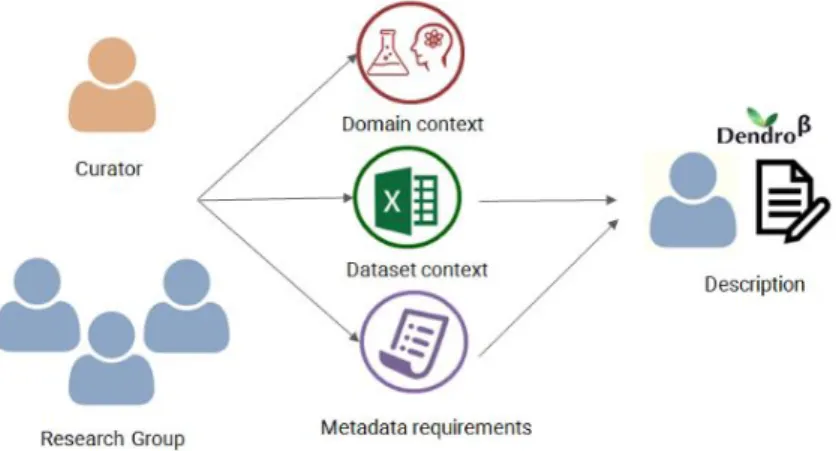
Figure 1 An overview of the data curator’s workflow 4
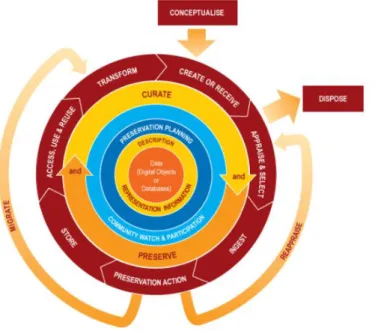
Figure 2 The DCC Curation Lifecycle Model 10
Figure 3 Data Asset Framework methodology 11
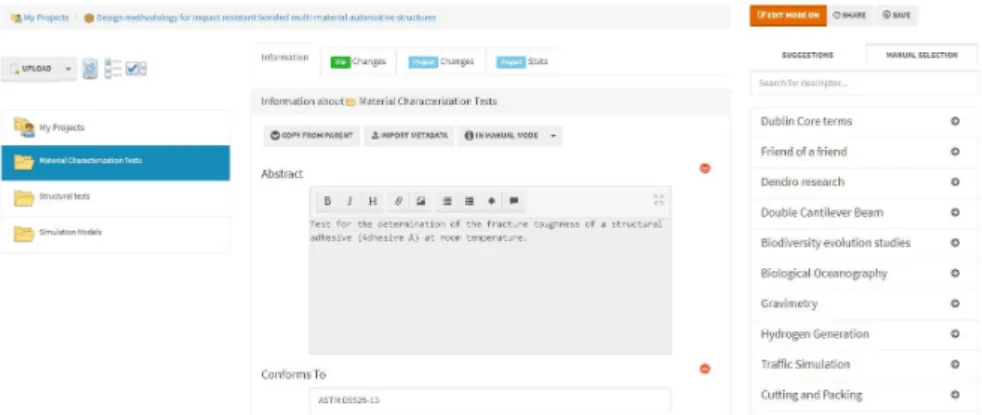
Figure 4 Data description in Dendro 20
Figure 5 Example of available vocabularies in Dendro 21
Figure 6 The Singapore Framework: Components of a DC Ap-plication profile 27
Figure 7 An architectural view of metadata requirements [88] 28
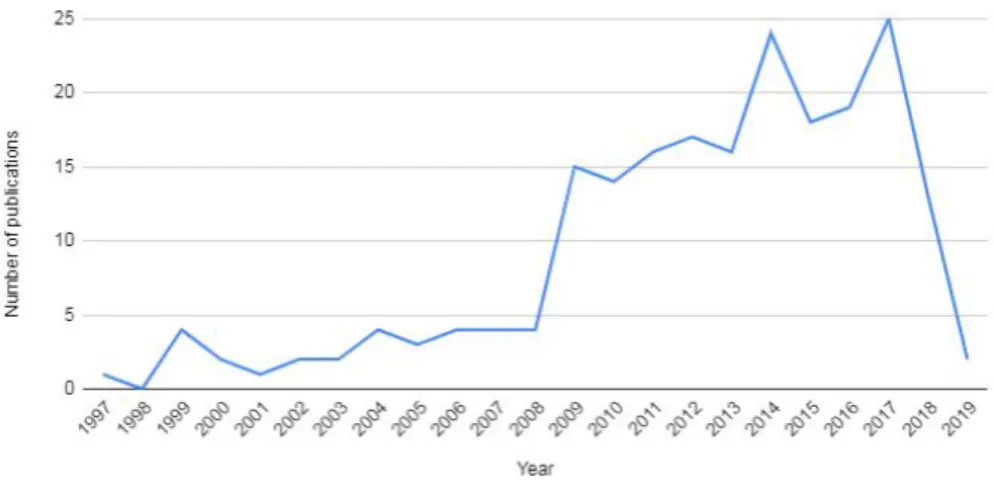
Figure 8 Number of entries retrieved from the Scopus database 33
Figure 9 Distribution of RDM metadata related studies over the years 34
Figure 10 Recording dataset metadata using heavyweight and lightweight ontologies 50
Figure 11 Integration of domain-specific descriptors in the Re-search ontology 51
Figure 12 Instantiation of the lightweigh ontologies in the Frac-ture Mechanics and Pollutant Analysis domains 52
Figure 13 From content analysis to the metadata template
eval-uation 63
Figure 14 General Approach to train researchers in metadata 74
Figure 15 MIBBIUP ontology implemented in Dendro 76
Figure 16 Data description session in Dendro 78
Figure 17 Data description session 86
Figure 18 Example of the metadata created in the Consumption Sociology session 108
Figure 19 Universe metadata to provide study geographical bound-aries 109
Figure 20 Methodological metadata provide by the Nutrition researcher 110
Figure 21 Folder structure created by the Structural Adhesive Joints researcher 111
Figure 22 Adaption of the Description element to include un-available descriptors in Dendro 114
Figure 23 Temporal coverage information represented in the project name in the Cultural Studies session 116
Figure 24 Upload of questionnaire file 118
Figure 25 Adaption of the Description field to propose new de-scriptors 119
Figure 26 Sample size metadata should include thickness and sample area information 119
Figure 27 Descriptors occurrence 122
Figure 28 Frequency of vocabulary used in the 13 sessions 122
Figure 29 Distribution of unique descriptors used in the 13 ses-sions, by vocabulary 123
Figure 30 Distribution of the metadata categories 123
Figure 31 Metadata categories frequency percentage 125
Figure 32 Distribution of metadata categories frequency by ses-sion 126
contents xi
Figure 33 Use of metadata categories in each session 128
L I S T O F T A B L E S
Table 1 Survey corpus 35
Table 2 Survey code categories 35
Table 3 Assessment of domains and number of participants, by publication. 38
Table 4 Techniques to engage researchers in the surveyed
stud-ies. 39
Table 5 Vehicle Simulation ontology 54
Table 6 Biological Oceanography ontology 56
Table 7 Hydrogen Production ontology 57
Table 8 Social Sciences ontology 59
Table 9 Results from the sustainable chemistry template
eval-uation 70
Table 10 Results from the photovoltaic generation template
eval-uation 71
Table 11 Results from the nanoparticle synthesis template
eval-uation 71
Table 12 Overall results 72
Table 13 Research data repositories in the biological sciences 75
Table 14 Selected descriptors from the MIBBI checklists 76
Table 15 Overview of the metadata created during the
ses-sions 79
Table 16 Transcription code list 84
Table 17 Metadata categories 87
Table 18 Participants demographics 95
Table 19 Researchers assessment of the data description activ-ity 133
Table 20 Semantic differential researchers agreement
percent-age 133
1
I N T R O D U C T I O N
Today, research environments are highly shaped by the fast-pace at which data are generated. Driven by new methods and advanced computing ca-pacity, the importance and complexity of data in the research activity is growing [54]. However, data availability tends to decline after publications
as a consequence of data mismanagement issues [120], or by a generalized
lack of awareness regarding data sharing and publication opportunities. Although not exclusive, these issues are ubiquitous to small projects in the long-tail of science, which usually struggle with lack of funding, in-frastructures and personnel [53]. To prevent data from being lost, or not
fully available, research funders, including the European Commission (EU), are asking grant applicants to elaborate data management strategies as a funding condition [42]. In an effort to make sure research data is soundly
managed, thereby findable, accessible, interoperable and reusable (FAIR), the EU, is running in its own terms “a flexible pilot under Horizon 2020, called the Open Research Data Pilot (ORD pilot), to improve and maximize access to and reuse of research data generated by Horizon 2020 projets” [41]. In order to attain
this goal the EU is promoting the adoption of the Data Management Plan (DMP), which is required for all the projects that participate in the ORD pilot.
To comply with the DMP, research projects should contain information about how the research data will be handled during their lifetime and beyond. During the development of a DMP researchers should answer, among oth-ers, the following questions:
Which data will be collected during the research project and in which conditions will the data be shared? In Chapter 2.4 I overview the RDM
landscape with attention to the types of research data reviewed by Willis et al. [128] and to the data lifecycle. In this chapter I also seek to identify
relevant initiatives having as their mission to support researchers in imple-menting best RDM practices, such as the Research Data Alliance (RDA)1
, a community-driven initiative that enables its members to develop and adopt measures to promote data sharing and data-driven research2
. Moreover, I look into researchers’ data sharing and reuse perspectives.
How will the data be made available (e.g. by deposit in a repository)? Recent years have seen great technological developments in the form of insti-tutional or online data repository services. For instance, DSpace instances3
, which traditionally are used for publications, are being customized to sup-port dataset deposit in institutions with short resources. Online services
1 https://www.rd-alliance.org/
2 https://www.rd-alliance.org/about-rda 3 https://www.dspace.com/en/pub/home.cfm
1.1 motivation 2
like Figshare4
and Zenodo5
are also suitable data management solutions for these institutions. While data repositories are not the focus of this disserta-tion, in Chapter3I summarize existing RDM platforms in which researchers
can disseminate their work, thus enabling to answer this question. An inter-esting perspective on how generalist data repositories are coping with data publishing was surveyed by Assante et al. [8]. I also had the opportunity to
collaborate in a comparative study of data platforms, with respect to their architecture, flexible metadata and interoperability [5].
What metadata will be created? In case metadata standards do not exist in your discipline, please outline what kind of metadata will be created and how? In order to answer these questions in Chapter 4.4 I cover the
avail-able metadata standards listed in the Digital Curation Centre’s Disciplinary Metadata Catalogue6
, which is part of an initiative by the RDA Metadata Standards Directory Working Group [11]. These metadata standards can
either be generic or developed by disciplinary communities. Yet, most stan-dards target data description only at the end of the research workflow and their adoption by researchers can be hard [89].
This work explores the hypothesis that the development of domain-specific metadata models is an adequate approach to involve researchers in RDM through data description.
1.1
motivation
The investment in RDM creates good opportunities for the dissemination of data but there is a need for a broader commitment of researchers. During my interactions with researchers I became aware that talking about man-dates is not a factor of motivation for them. To achieve better results RDM must be perceived as a complex ecosystem of stakeholders and technologi-cal infrastructures, both raising conceptual issues.
Several initiatives have taken position to better address RDM practical is-sues by taking advantage of the available infrastructures. However, some of these issues are of a more convoluted nature, as they depend on researcher’s motivation to be active participants in RDM workflows. A very concrete challenge is metadata creation. The dissemination of research data heav-ily relies in metadata [118], and, if it is made dependent on the few data
curators, metadata creation will inevitably cause a bottleneck in the RDM workflow [130]. Researchers need to be perceived as key players in metadata
creation, especially when institutions cannot allocate a data curator per de-partment or research group. Moreover, the absence of timely metadata from the start of data production can yield lackluster descriptions. Complex is-sues may also arise when researchers leave their teams after publishing and have not described their datasets.
By being directly involved in research activities, researchers know best the conditions under which the data were created and can yield more detailed information that enable others to find, interpret and reuse the data. How-ever, metadata creation can be a wearing task with no tangible short-term benefits for the researchers [70]. Difficulties to deliver metadata records
con-4 https://figshare.com/ 5 https://zenodo.org/
1.2 goals and contributions 3
taining contextual information for the datasets were associated with the low rates of data that are actually shared and reused [43]. Small research groups
may struggle to keep up with the description demands posed by the exist-ing datasets, and it is not expected that researchers will spend much time in data description activities. A possible compromise scenario is to support researchers in the description of their data as they produce them, postpon-ing the data curator intervention until later in the workflow. To find out more about how researchers are being engaged in metadata related studies, I conducted a survey whose results are presented in Chapter5.
At the University of Porto, the TAIL project7
, which took place from 2016 to 2019, focused in providing researchers with adequate tools to organize, de-scribe and publish their data [95]. The TAIL project envisioned researchers
as the core RDM stakeholders who needed straightforward workflows. Dur-ing the three years of the project, the TAIL team developed a RDM workflow based on the integration of different tools taking into account the require-ments of a panel of researchers built over time. Contacts with researchers at the University of Porto started with a scoping study [94] , sent through
the deans of its 15 schools, in 2011. This scoping study can be regarded as a preliminary effort to poll the availability of the researchers to RDM endeavours.
The activities described here were performed in the TAIL context. My par-ticipation in this project was inherently related to bridging the gap between researchers and the tools to support metadata creation as early as possible in the research data lifecycle.
1.2
goals and contributions
The application of the FAIR principles depends critically on rich metadata, yet domain vocabularies are still mostly underused. Therefore, the Action Plan to turning FAIR principles into reality [36] recommended, in 2018, the
development of use cases to further engage communities and the provision of tools to make data description as easy as possible and promote its adop-tion by researchers. According to the designated Expert Group on FAIR DATA, “(f)or some disciplines, the current situation may be satisfactory at present, but it is likely also that opportunities for wider use, greater analysis at scale and reuse across domains are being missed. It would be useful to define use cases to demonstrate the benefits and convince such communities to engage more fully with a FAIR ecosystems”.
Thereby, data curators must play an active role in strengthening the RDM practices of researchers within the limited possibilities that they may have to commit to such practices. My objective with this work was to foster the collaboration between data creators and data curators. This work promotes the engagement:
1.2 goals and contributions 4
The engagement of researchers in a data curator’s workflow for the development of domain-specific metadata models. These metadata models capture familiar concepts for the researchers that they can use in more casual descriptions, which likely mit-igate existing barriers to metadata creation.
The proposed data curator’s workflow, depicted in Figure 1, includes
meetings and interviews with researchers so the data curator can under-stand the domain and the context of data production. Moreover, by talking with researchers it is possible to infer their practices and metadata require-ments.
Figure 1:An overview of the data curator’s workflow
From there the data curator can suggest potential descriptors to the re-searchers, which upon validation, are formalized through a lightweight on-tology. The final step in this workflow are data description sessions with the researchers. The data description stage is supported by Dendro (see Sec-tion3.3), a platform developed in the TAIL project as well, as part of a PhD
dissertation [98].
The proposed data curator’s worflow is detailed in Chapter6. The approach
to devise the domain-specific metadata models was first explored in the Fracture Mechanics and Pollutant Analysis domains [24], in the work
pre-sented in the DCMI International Conference on Dublin Core and Metadata Applications in 20138
. This approach was further instantiated through the modeling of lightweight ontologies and presented in the Joint Conference of Digital Libraries9
[23] in 2014. The ontologies design process, illustrated
with a Vehicle Simulation case study, was communicated in the Metadata and Semantics Research Conference (MTSR)10
[22] in 2015.
As the number of researchers with whom I collaborated with grew, I re-alised that my communication with researchers was sometimes hampered both by my lack of domain expertise and their difficulty to master concepts
8 https://www.dublincore.org/conferences/ 9 https://www.jcdl.org/
1.3 evaluation of the data curator’s workflow 5
such as metadata. In order to streamline the data curator’s workflow I in-troduce manual content analysis of domain publications, as a way for the data curators to gather domain-specific knowledge, to ease the communi-cation and also to suggest to the researchers meaningful descriptors. This approach is described in Chapter7, which also includes an evaluation with
three researchers from experimental domains. The role of the content analy-sis approach was disseminated in the International Digital Curation Confer-ence in 2020 [21].
Finally, the data curator’s workflow also implies the reuse, whenever possi-ble, of existing metadata standards. The first step is to check the descriptors validated with the researchers in these standards. In Chapter8I report an
exploratory study where the goal was to train researchers, from the biomedi-cal domain, by introducing them to a previously curated subset of a domain standard. This approach was described in a MTSR publication in 2019 [102].
Several MSc dissertations were developed in close collaboration with re-searchers, according to the proposed workflow, namely:
• “Gattelli, R, (2015). Gest˜ao de dados de investigac¸˜ao no dom´ınio da Oceanografia Biol ´ogica: criac¸˜ao e avaliac¸˜ao de um perfil de aplicac¸˜ao baseado em ontologia [48]”
• “Karimova, Y. (2016). Vocabul´arios controlados na descric¸˜ao de dados de investigac¸˜ao no Dendro [59]”
• “Landeira, C. (2018). Gest˜ao de dados de investigac¸˜ao do tipo exper-imental: casos de uso e contribuic¸ ˜oes para a melhoria da qualidade dos metadados [61]”
• “Sampaio, M. (2019). Metadados para o uso de ferramentas de gest˜ao com investigadores do I3S [101]”
• “Ferreira, A. (2019). Application of the LabTablet app in a laboratory environement: Case study I3S [45]”
1.3
evaluation of the data curator’s
work-flow
To ascertain the merits of the proposed data curator´s workflow I carried out 13 data descriptions sessions, between January 2018 and September 2019, with 13 researchers from a diversity of domains.
The methods and procedures used to set up these sessions are further detailed in Chapter9. The activities in which each participant was involved
include interviews, a data description session in Dendro, and a follow-up questionnaire to obtain their feedback regarding their experience in creating metadata.
In Chapter 10 I explain the sampling techniques used to recruit
partici-pants and portray their demographics. Based on the interviews I introduce the participants domain and they are characterized according to their profes-sional title, frequency of data and repository usage, as well as their metadata experience. Moreover, I outline their data sharing and reuse perspectives,
1.3 evaluation of the data curator’s workflow 6
along with the data organization and metadata practices. The scientific do-mains represented in this study are: Family Psychology; Sustainable Chem-istry; Clinical Psychology; Magnetic Materials; Services; Consumption So-ciology; Organizations SoSo-ciology; Nutrition; Magnetic Dynamics; Cultural Studies Work Psychology; Structural Adhesive Joints and Health.
The data description sessions results are showcased in Chapter11. First,
I present individual results per session (Section11.1), and then the overall
sessions results (Section11.2).
Through the results of the data description sessions I intend to answer two fundamental questions to assess the general applicability of the data cu-rator’s workflow to support metadata creation by researchers from different domains.
Research Question 1. How do researchers assess the data description activity, taking into account the collaborative process between researcher and curator and the domain-specific metadata available?
In order to verify whether the proposed workflow has culminated in a positive experience for the researchers, it is necessary to probe their general attitude towards the data description activity (Section11.3). Do they think
metadata creation is an interesting and motivating activity? Do they con-sider it fast and easy? Is data description assessed as a practical activity? Moreover, where did they stand with respect to the perceived degree of data description usefulness?
However, a more positive attitude towards data description, in itself, does not say much about the success of the approach. To this end, the researcher’s perceptions has to be compared with the quality of the metadata produced. This brings me to the second question.
Research Question 2. Do the metadata models available in Dendro enable re-searchers to create quality metadata?
I answer this question by assessing the metadata records created by re-searchers according to the number and type of descriptors rere-searchers have used in describing the data, together with the overall accuracy of the meta-data records created. According to the criteria I have established the quality of the metadata is classified as poor, satisfactory or good (Section11.2.3).
Altogether, the proposed data curator´s workflow can be assessed as a promis-ing approach to engage researchers if the data description sessions yield satisfactory to good quality metadata records, and is generally perceived as a useful activity and a positive experience by the researchers.
The data description sessions are also convenient to gather insight on the choices researchers tend to make in terms of descriptor selection and the amount of time spent in this activity. These are tangible indicators that can inform future decision making in the development of services and tools to support researchers in daily RDM activities.
Part I
An overview of the Research
Data Management landscape
2
R E S E A R C H D A T A A N D R D M
I N I T I A T I V E S
Digital technologies, and the way they quickly evolve, raise as many chal-lenges for RDM, as they bring opportunities for the research community, that are still to be fully grasped. The landscape of contemporary science is highly impacted by the availability of research data. This imposes many challenges, as researchers now have to deal with the correct management of these assets.
Major research funding providers are demanding DMPs with recent calls for projects. Examples include the EU under Horizon2020 [41], and the
Na-tional Science Foundation [78]. Likewise, some publishers have also started
to request data as supplementary materials to the submitted articles, under the assumption that their readers should be able to validate or replicate the presented results. Nature, for instance, requests authors to disclose research materials as a condition for the publishing of research papers1
. Another example is an Open Access publisher, PLOS, that demands a full, unre-stricted access to the original data for each of the submitted manuscripts2
. Following these trends RDM is an increasingly concern for the scientific community. RDM, as a concept, is gaining traction in recent years, and en-compasses a wide range of services, tools and practices to help researchers in organizing, documenting and preserving their data, from the moment they start to producing it and beyond the end of research projects.
Several stakeholders are involved in the RDM process [67]. These
stake-holders are researchers themselves, the institutions, data curators, data cen-tres, third party users, funders and publishers. Every stakeholder has a role to play, which entails rights and responsibilities. It is the responsibility of the researchers, as well as of the data curators, to ensure that research data can be used by others. Researchers, are key RDM stakeholders, as they are domain experts and should be able to document data to allow others to in-terpret the data. Data curators, as experts in RDM, can complement their work, and provide them the necessary tools for them to improve their RDM practices.
2.1
research data
Research data are valuable resources, produced or used in the context of scientific research. It is on the basis of data analysis that researchers sup-port their decisions and draw conclusions that encourage innovation and scientific progress.
1 https://www.nature.com/srep/author-instructions/submission-guidelines#
competing-interests
2 https://journals.plos.org/plosone/s/data-availability
2.2 data curation 9
In its Principles and Guidelines for Access to Research Data from Public Funding, the Organisation for Economic Co-operation and Development [39],
defined research data as factual records (numerical scores, textual records, images and sounds) used as primary sources for scientific research, and that are commonly accepted in the scientific community as necessary to val-idate research findings. Moreover, a dataset constitutes a systematic, partial representation of the subject being investigated.
The value of data is influenced by their structure and organisation, which is enhanced when available in the digital environment. When this is the case, it can encourage the generation of new scientific knowledge and foster the collaboration between scientific communities.
Research data can be classified as raw data, usually unprocessed, or as processed data, which concerns data that have already went through a pro-cess of manipulation. Propro-cessed data is more refined and more easily inter-preted by third parties, such as tabular data [64]. Research data can also be
classified according to the discipline that produces it, and ultimately uses them.
Willis, Greenberg and White [128] argued that the classification of data
is helpful for understanding data similarities and differences, as well as its potential use overtime. Therefore, these authors summarized the different types of scientific data classified by the US National Science Board3
, UN-ESCO4
and CODATA5
, as either observational, experimental or computa-tional data.
Observational data cannot be recollected and are archived indefinitely, since its measurements are mostly time or space dependent and much of its value is in secondary analysis. Experimental data may be associated with a particular methodology or instruments, its usually produced in disciplines like physics and chemistry, and in principle can be subject to verification by repeating the measurements. Computational, statistical, or data resulting from simulations can also be recreated and verified if information about the original process is captured. Other types of data are those created in governmental, business, public and private life contexts that may also be useful for scientific applications [15].
2.2
data curation
Data curation is a practice to meet the challenge of the exponential grow of research data, and encompasses the activities undertaken for organising, describing, cleaning, enhancing and preserving data for sharing and reuse.
Data curation is defined by the Digital Curation Centre (DCC), a lead-ing research centre of expertise in digital curation with a focus on buildlead-ing capability and skills for RDM6
, as a process that “involves maintaining, pre-serving and adding value to digital research data throughout its lifecycle”7
. For the DCC, active RDM reduces threats to their long-term research value and mitigates the risk of digital obsolescence. On the other hand, data cura-tion is geared towards reducing data duplicacura-tion, aiming at a higher quality research. 3 https://www.nsf.gov/nsb/ 4 http://www.unesco.org/ 5 http://www.codata.org/ 6 http://www.dcc.ac.uk/about-us 7 http://www.dcc.ac.uk/digital-curation/what-digital-curation
2.2 data curation 10
Hence, it is important to pay particular attention to preservation and in-teroperability issues from the beginning of the data lifecycle, in order to counteract a general tendency of the data creators to be concerned with the preservation of data only at the end of the cycle. Therefore, the most rele-vant RDM decisions should be considered in a timely manner [91]. Framing
RDM processes in the data lifecycle allows researchers and data curators to evaluate the actions that should be addressed during the cycle. If planned in time, either before or at the time of the creation of the research data, the completion of the various stages of the data lifecycle are facilitated [10].
Regardless of whether decisions made, even those without a specific goal or strategic purpose for RDM, all research projects have an associated data lifecycle [124].
The DCC curation lifecycle model8
, in Figure2, provides an overview of
all the necessary steps for successful data curation. This model is adapt-able to various research domains and can be used to plan activities within organizations to ensure that all stages of the data curation are covered.
Figure 2:The DCC Curation Lifecycle Model
The DCC curation lifecycle model is divided in full, sequential and oc-casional actions. In a glimpse, full lifecycle actions correspond to the de-scription of research data, to the awareness to community activities and the participation in the development of shared standards, tools and adequate software. Sequential actions involves planning the creation of data and the production of metadata, the selection of data for long-term preservation, data deposit and storage in a secure manner, as well as transforming data to create new data from the original. Occasional actions includes the disposal of data not selected for long-term preservation, return data which fails vali-dation procedures for further appraisal and re-selection, as well as migrate data to different formats.
Liz Lyon [26], a researcher associated with the DCC, made a comparative
2.3 rdm initiatives and infrastructures 11
review of disciplinary data curation differences, based on 16 case studies, and has concluded that it is vital to develop alternative strategies to ag-gregate the different disciplines, since traditional approaches will not be able to meet the needs of researchers from several domains. This obser-vation reflects, to a large extent, one of the challenges pointed out to the universities seeking to establish data curation infrastructures. According to Martinez-Uribe and Macdonald [69], data curation requires trusted
relation-ships achieved by working and talking with the researchers early on in their research process. To these authors, the failure to engage with the specific need of researchers may lead to the development of data repository services that are under-exploited or indeed may not even be used.
At an institutional level, the people responsible in delivering services to researchers must be aware of the researchers’ attitude towards data curation, so that proper RDM can derive from knowing the education and training needs of researchers [105]. Hence, it was also suggested that library staff
should have data curation skills [4], while for others, data curation courses
should be included in the curriculum of Library and Information Science schools [51]. Toups and Hughes [116], have recommended that small
insti-tutions, with discrepancies in funding and man-power, should focused in in-terdepartmental collaboration to provide robust services for the researchers. The results from a survey, conducted in 2016, on the Data Asset Frame-work (DAF)9
, a methodology data provides organizations means to assess their RDM performance, depicted in Figure3, revealed that 46 percent of
re-searchers at Cambridge were not aware of the services available to them [56].
The survey was self-selecting, which means that the respondents were al-ready engaged to participate in RDM.
Figure 3:Data Asset Framework methodology
2.3
rdm initiatives and infrastructures
There are many initiatives promoting the management and sharing of re-search data. For data generated in projects in well-funded rere-search areas there are available mature data curation infrastructures. The NCBI10
, in the life sciences, and the ICPSR11
, in the social sciences, are two good exam-ples of infrastructures used by communities to get base data and to con-tribute with new research outputs. Other initiatives are also improving the
9 https://www.data-audit.eu/index.html 10 https://www.ncbi.nlm.nih.gov/ 11 https://www.icpsr.umich.edu/icpsrweb/
2.3 rdm initiatives and infrastructures 12
RDM practices of their communities by implementing FAIR principles [36],
namely the ESFRI12
infrastructures in the humanities; DARIAH13
, in the arts and humanities domain; CLARIN14
, which offers digital language re-sources, particularly targeted for the humanities and social sciences disci-plines; and ELIXIR15
, a distributed European research infrastructure for life science information.
JISC16
is another example of an initiative providing services for researchers, being a non-profit organization that develops resources for education and re-search in the United Kingdom. JISC has funded a free RDM online course, MANTRA17
, which is organized in 9 units, including a unit dedicated to supporting the development of DMPs.
Stall et al.[109] argued that three changes have to occur across all research
fields to change the research culture: make depositing open and FAIR data a priority for all; recognize and incentivize FAIR data practices; fund a global infrastructure to support FAIR data and tools.
2.3.1 FAIR Principles
The FAIR principles were conceived at the Lorenz conference, in 2014, and were published by the FORCE11 Group [36], following the adopted
crite-ria by the European Commission’s first set of data guidelines for the Hori-zon2020 framework programme [41]. Although independent from each
other, these principles are interlinked, aiming to make data searchable, ac-cessible, interoperable and reusable. It is a priority to define properties that contemporary data resources, tools, vocabularies and infrastructures should display to enable data reuse by third-parties [127]. Therefore, the FAIR
prin-ciples suggest the necessary requirements for the data to be in line with the four principles [36]:
Findable: data are findable when described with sufficiently rich metadata and registered or indexed in a searchable resource that is known and acces-sible to potential users;
Accessible: it means that both humans and machines are provided with the precise conditions by which the data are accessible. Anyone with a com-puter and an Internet connection should be able to have access, at least, to the metadata. In order for the data to be accessed and used appropriate au-thorisations and well-defined universal protocols have to be implemented. Interoperable: data and metadata must use a formal, accessible, shared, and a broadly applicable language for knowledge representation.
Reusable: to make data more usable, understandable or “science-ready” there is a need for rich metadata and documentation that meet relevant community standards and provide provenance information.
These principles do not prescribe, however, a specific line of implementation. Instead, they can be implemented incrementally and through combination.
12 https://www.esfri.eu/ 13 https://www.dariah.eu/ 14 https://www.clarin.eu/ 15 https://elixir-europe.org/ 16 https://www.jisc.ac.uk/ 17 https://mantra.edina.ac.uk/
2.3 rdm initiatives and infrastructures 13
This flexible approach makes it easier for more RDM stakeholders to join the FAIR ecosystem18
.
Several policies have worked on these principles and can be seen as pre-cursors to FAIR, such as the OECD’s 2007 Principles and Guidelines for Access to Publicly Funded Research Data [39], the Royal Society report in
2012, Science as an Open Enterprise19, the G8 Meeting of Ministers of Sci-ence in 201320
, and the European Commission Guidelines for Horizon 2020, in 2016 [41].
2.3.2 Research Data Alliance
The Research Data Alliance (RDA)21
is an initiative launched, in 2013, by the European Commission, the US Government’s National Science Founda-tion and the Australian Government’s NaFounda-tional Institute of Standards and Technology and Department of Innovation, with the aim of building a so-cial and technical infrastructure to enable open sharing and reuse of data. The participation in RDA is open, and experts from several international communities come together, in Working (WG) and Interest Groups (IG), to exchange ideas and agree on RDM topics like data sharing, education and training challenges, development of DMPs, certification of data repositories, along many other technological aspects.
RDA WKs, last from 12 to 18 months, and are the main vehicle to de-velop and implement the data infrastructure. On the other hand, IGs, are open-ended in terms of longevity and are focused on solving specific data sharing problems and identifying what kind of infrastructures needs to be built. As an international volunteer member based organization, RDA also encourages the establishment of national nodes, for raising awareness and widespread adoption of recommendations across local communities.
The number of RDA members grew from 8,800 members, in August 2019, to 9,614 in January, 2020, with a total of 88 WK and IGs groups up to this date.
2.3.3 European Open Science Cloud
The European Commission presented, in April 2016, its vision for the Euro-pean Open Science Cloud (EOSC) as part of the single digital market strat-egy. The goal of the EOSC22
is to give the EU global leadership in research data, ensuring that European scientists reap the full benefits of data-based science, through a virtual environment, across borders and disciplines, with free, ready-to-use, open and uninterrupted services for storing, managing, analysing and reusing research data.
The EOSC also envisages the creation of an European data infrastructure supported by high-capacity and supercomputing cloud solutions and its expansion through its gradual opening to the public sector and industry. EOSC is a clear political priority for European research and innovation. This is evidenced by the initial investment of 600 millions euros, between 2016 ad 2020, as well as the likely adoption of the EOSC as a European partnership for FP9 Horizon Europe23
, which will succeed Horizon 2020.
18 https://www.force11.org/fairprinciples 19 https://royalsociety.org/topics-policy/projects/science-public-enterprise/Report/ 20 https://www.gov.uk/government/news/g8-science-ministers-statement 21 https://www.rd-alliance.org/ 22 https://www.eosc-portal.eu/ 23 https://ec.europa.eu/programmes/horizon2020/en/tags/fp9
2.4 researchers’ rdm perspectives and attitudes 14
2.3.4 OpenAIRE OpenAIRE,24
is an infrastructure in the FAIR ecosystem, which mission is to “shift scholarly communication towards openness and transparency and
fa-cilitate innovative ways to communicate and monitor research.” OpenAIRE aims to provide a scientific environment that brings societal benefits.
This infrastructure is characterized by involving RDM stakeholders for an effective implementation of Open Science. Its diverse range of RDM workflow services, includes the provision of training content and the de-velopment of common global standards for linking research outcomes to several stakeholders. Thereby, OpenAIRE is connecting open research envi-ronments in Europe and promoting data culture changes.
2.4
researchers’ rdm perspectives and
at-titudes
Data sharing is one of the validation components of the scientific method, allowing the verification of results and an extension of research on the basis of previous results. The conversation around this topic has mainly discussed the motivation to share data in contrast with the researchers intention to keep control over their data.
In this context, Tenopir et al. [113], ran an international survey in 2011,
with a total of 1329 researchers, and concluded that there were effective bar-riers, rooted in the scientific community culture, which limited data sharing. Most respondents were satisfied with their practices in the initial stages of the data lifecycle, at a time when many organizations did not provide RDM support to their researchers. The main reasons identified for why the data was not made available to others was insufficient time and lack of funding.
Curiously, most respondents (85 percent) were interested in using other researchers’ data if the data were easily accessible, yet only half reported making their data available, and 36 percent reported to made their data easily accessible. This illustrated a clear discrepancy between interest and actual data sharing behaviors. Most of the respondents were willing to share data if they could obtain credit through citation, obtain copies of the publications that use their data and knowledge of any outputs developed from their data.
A more recent survey by Tenopir et al. [114], has revealed improvements
in the perception researchers have about data sharing and reuse. The au-thors were able to identify a more positive perception about the value of data sharing and a greater concern about the risks associated with the reuse of third party data. Most importantly, this survey showed progresses in data sharing behaviors, as most researchers reported making at least part of their data available to others.
Several other studies have assessed the main motivations to prevent data sharing. Arzberger et al. [7] also verified that the lack of time and of
insti-tutional support for RDM were among the main reasons for researchers to retain data. But commercial interests were also associated to a culture of low data sharing [2]. Savage and Vickers [104] concluded that confidentiality in
relation to the subjects, i.e., privacy (clearly evident in the case of medicine), future opportunities for publication and retention of exclusivity about the
2.4 researchers’ rdm perspectives and attitudes 15
data that took a long time to produce, were the main deterrents for data sharing [104]. According to a study by Wicherts et al. [123], there was a
more perverse motivation to explain the reluctance of some researchers to share their data; the fear that making data prone to peer scrutiny expose errors or produce conclusions that contradict their own. This authors ar-gued that the detection of errors and data sharing after the publication of results can reflect differences in the rigour with which researchers manage their data, since researchers who apply greater diligence in the archiving and management of their data tend to commit fewer mistakes.
An institutional study about disciplinary differences on RDM attitudes, by Akers and Doty [1], in 2013, found significant disciplinary differences in
RDM actions, attitudes and interest in support services, in most surveyed items. One conclusion was that researchers from the basic sciences were most likelier to share data with people outside their groups and deposit their data in data repositories. These researchers were also the ones most familiar with funding agency requirements for DMPs. On the other hand, Kim and Stanton [60], in a 2016 study, with 1317 researchers from 43
disci-plines, verified that there was no positive correlation between the funding agencies’ policies for data sharing and data sharing attitudes. Yet, jour-nals’ policies for data sharing influenced researchers’ data sharing practices. However, when Alawi, et al. [4] reviewed 500 publications, from 50 journals,
observed that the authors of papers published in high impact journals did not follow the publishers’ policies and did not made their data available in open access repositories.
Wiley and Kerby [125], carried out an institutional study in 2018, with
graduate students and postdoctoral researchers, to evaluate RDM skills, and concluded that many researchers expressed frustration when former col-leagues leave without providing annotations of the completed work. Consis-tent data description and organization was regarded as a challenge given the different workflows, practices and value concepts of individuals. A practi-cal solution to address this challenge was the provision of short descriptions to enable group members to understand the research workflow. In another study, conducted in 2016 [35], which consisted in 13 interviews with social
scientists to assess factors of influence on researchers’ perceptions and expe-riences in attempts to reuse data, it was concluded that data documentation was, among others, an important enabling factor for data reuse.
From interviews, carried out in 2016, with 23 quantitative social science researchers who have failed data reuse experiences [93], it was found that
access and interoperability are chief primary conditions for a successful data reuse experience, whilst understanding data documentation was less of an issue, at least for experienced researchers, though the process was still seen as challenging. The lack of support in reusing data was the most promi-nent issue of reported failed data reuse experiences, making it necessary to establish support systems for those willing to reuse data.
3
R D M P L A T F O R M S
Following the recent requirements in RDM, several platforms are being de-veloped and integrated into diverse research workflows. Dealing with re-search data from several domains can be an ambitious task when different requirements are in place [128]. These requirements are often related, at a
lower level, with metadata and preservation capabilities; these are, however, very likely to affect their longevity and reuse chances.
On the other hand, at a higher level, user experience and integration ca-pabilities are also crucial to ensure, among other achievements, that RDM platforms are adopted by their end users. An important factor that is cur-rently influencing the way these tools are being developed is the fact that researchers are being increasingly asked to collaborate in the management of their own data. This makes sense, as researchers are the ones who can ideally provide better insight about the data production context and mean-ing.
The absence of institutional support for data deposit or a suitable data repository for data generated by a particular discipline should not inhibit researchers from making their data available and get credit from their work, or even from seeking opportunities to reuse data produced by others.
3.1
repository directories
Data repositories play a key role in the dissemination of research data and results. Due to the increasing production of research data there are several solutions, developed both by open source communities and by organiza-tions, available. Consequently, choosing a platform suited to the needs and requirements of each community can be a difficult task due to the large va-riety of existing alternatives. In this scenario, repository directories are por-tals that display available data repositories, as well as metadata about the indexed repositories. These repository directories are convenient tools to help users find solutions that contain data that fits their needs. The Registry of Research Data Repositories1
(re3data) and the Directory of Open Access Repositories (OpenDOAR)2
are two fine examples of such directories. 3.1.1 re3data
re3data is the result of the combination of two existing initiatives: DataBib and re3data.org. The project partners for re3data are the GFZ German Re-search Centre for Geosciences3
, the Computer and Media Service at the
1 https://www.re3data.org/ 2 https://v2.sherpa.ac.uk/opendoar/ 3 https://www.gfz-potsdam.de/en/home/
3.2 mainstream data repositories 17
Humboldt-Universitat zu Berlin4
, the Purdue University Libraries5
and the KIT Library at the Karlsruhe Institute of Technology6
. The re3data is steered by the RDA, which decided on the fusion of the two existing portals.
As of January, 2020, re3data offered detailed information on more than 2,000 research data repositories, from a wide variety of domains, such as natural sciences, humanities, engineering and many others. Searching for a suitable data repository can be performed taking advantage of its 27 filters, regarding subject; type of content; country; policies, among other features. 3.1.2 OpenDoar
The OpenDOAR (Open Directory of Open Access Repositories) was put in production in 2005. At the time, there were many lists of repositories and open archives in place. However, there was not a single comprehensive or authority list that could compile all of them.
This directory has a comprehensive listing of repositories from around the world allowing access to their content, simultaneously providing tools to support the activity of repository managers. According to its statistics7 , the number of entries grew from a total of 3701 data repositories listed in September, 2018, to 5390 in August, 2020. To date, most of the repositories listed are multidisciplinary (3276), followed by data repositories targeting the health and medicine disciplines (526).
3.2
mainstream data repositories
Depending on the requirements of institutions when considering the imple-mentation of a RDM platform, hiring such services may be costly in the long run, and often poses serious limitations to the implementation of lo-cal requirements or platform customization. In this regard, several open source communities are actively developing solutions that can be locally in-stalled and deeply customized to meet such requirements, while keeping a set of features that enable data dissemination through the established pro-tocols. An example of these platforms is CKAN8
, which, although being used mainly by governments to disclose government-related data and con-tribute to administration transparency, also shows value when applied to the needs of research institutions. There are also online data repository ser-vices available to support the publishing of long-tail datasets, from which Zenodo9
, Figshare10
, Dryad11
and B2Share12
, given their growing popular-ity, are highlighted.
Since the main goal of having data published is to enable sharing and reuse across a vast community of users, metadata is an essential asset to fulfill this goal. However, when data repositories are implemented with no specific community in mind the metadata is often too generic and does not promote the reuse potential of the datasets [8]. Therefore, it is usefull to
4 https://www.cms.hu-berlin.de/en 5 https://www.lib.purdue.edu/ 6 https://www.bibliothek.kit.edu/cms/english/ 7 https://v2.sherpa.ac.uk/view/repository visualisations/1.html 8 https://ckan.org/ 9 https://zenodo.org/ 10 https://figshare.com/ 11 https://datadryad.org/stash 12 https://b2share.eudat.eu/
3.2 mainstream data repositories 18
identify what kind of metadata is captured by these services. CKAN
CKAN, is an open source, free software, developed by the Open Knowl-edge Foundation as a data management system. CKAN instances have been adopted by many open government data initiatives worldwide. Although not developed to meet RDM requirements, it has a flexible architecture that allow for the customization of its features to support RDM workflows, even at academic institutions13
. Each resource is associated with a set of meta-data, and its default configuration encompasses responsible party, title, re-source description, license and date of creation information. It is important to notice, however, that metadata fields can be customized, so users can de-fine new ones.
Zenodo
Zenodo is an multidisciplinary repository, based on the Invenio framework14 , aimed at the long-tail of science. Zenodo is supported by the European Or-ganization for Nuclear Research (CERN), in cooperation with the EU FP7 project OpenAIRE. This online repository service enables users to set their own communities and accepts data in any format and size. Another use-ful feature for small project is that Zenodo provides a DOI for every pub-lic dataset, so researchers can obtain credit for making their data available. The metadata provided includes title, author, publication date, community, license and subject.
Figshare
Figshare was developed by Mark Hahnel, an advocate for Open Data, and aims to provide an environment where authors gain scientific visibility through citation, by allowing the identification of each researcher. The data deposit process in Figshare is very agile, making data accessible without much delay, while also providing a DOI. It also provides portals and cu-ration workflow services for institutions and publishers. The information associated with research outputs in Figshare includes the title, author, de-scription, date, keywords, license and subject.
Dryad
The Dryad is a non-profit repository resulting from the joint initiative be-tween a group of journals and scientific communities (evolutionary biology and ecology), aimed at developing a sustainable solution for data process-ing. This repository established a partnership with DataONE15
, in order to guarantee indefinitely access to its contents. Dryad allows the sharing of any kind of data format, the storage of publications, and enables embargo periods as well. Dryad is raising data reuse awareness by encouraging au-thors to provide additional documentation to efficiently describe their data. Is also grants a DOI to published resources. To describe their resources users can provide, among others, temporal and spatial coverage, the full name of
13 https://rdm.inesctec.pt/
14 https://invenio.readthedocs.io/en/latest/ 15 https://www.dataone.org/
3.3 dendro, a staging platform for data description and organization 19
the lowest taxon level to which the organism have been identified (scientific name), and provenance information16
. B2Share
B2Share is a platform available under an open-source license for the dis-semination of data from diverse research contexts. It is one of the modules from the EUDAT17
range of services, an european-wide project that pro-vides a collaborative and interoperable environment for RDM stakeholders. B2Share is a free service that assigns a DOI to published datasets. Some of the metadata used are the author, publication date, description and key-words. Yet, different communities have emerged in B2Share18
and they were granted with the means to set their own metadata requirements.
Assante et al. [8] have analysed the metadata requested by generalist data
repositories at submission time, as well as the metadata exposed to end users, among other features, and concluded that the support these reposito-ries offer resemble the practices in literature publishing. However, metadata requirements for research data are not the same as those for publications, since the content of the datasets, often only numerical, makes their recovery and interpretation difficult. Therefore, these authors noticed that general-ist data repositories do not pay sufficient attention to relevant aspects to contextualize research data.
Another aspect to consider is that, data repositories mainly promote scription at the deposit stage, when it is already late to capture all the de-sirable information to make sense of the data. Therefore, it is convenient to adopt flexible solutions that address the needs of researchers from different domains, and encourage data description early in the data lifecycle.
The solution may involve the use of tools that make it possible to organise and describe the data upstream, while also ensuring a flexible means of combining metadata, to address the particularities of each dataset.
3.3
dendro, a staging platform for data
de-scription and organization
Data repositories are being created to preserve research data, but are in many cases targeted at “finished data”, which is only available near the end of the research workflow. Dendro [98], has been developed at the
Univer-sity of Porto, within the TAIL project, as a collaborative RDM platform for small research groups. It is designed to support data description from the moment that data is created and uses Linked Open Data at the core. Its data model encourages data curators to model ontologies that can satisfy the de-scription needs of each specific domain while retaining the interoperability characteristics of the ontology itself.
Data description should start as soon as possible in the research workflow, ideally as a complement task to be performed during the production of the datasets. This is the moment where researchers are still fully involved in the research process and are more aware of the conditions that originate their
16 http://wiki.datadryad.org/images/8/8b/Dryad3.0.pdf 17 https://www.eudat.eu/
3.3 dendro, a staging platform for data description and organization 20
data. For instance, recording an event temperature long after its occurrence will surely impact metadata reliability. Dendro, aims to tackle such issues as it offers researchers the opportunity to promptly register the underlying values of metadata for datasets, which is a desirable condition to obtain good quality metadata.
In order to make researchers active stakeholders in the overall descrip-tion process, data management soludescrip-tions need to be easily adopted, and Dendro follows a file management structure similar to a popular collabo-rative environment in the cloud – that most researchers are acquainted to work with – along with collaborative capabilities, thus allowing individuals from the same research team to incrementally create metadata records. This collaborative facet, common in semantic wikis, is handy to ease the data description effort, while also allowing a research team to keep track of the resource´s change log. Furthermore, Dendro is a fully open-source solution for multiple domain dataset description through an extensible, triple-store based data model.
Figure 4:Data description in Dendro
Data curators are also key stakeholders in the Dendro platform workflow. This platform is founded in a flexible data model that data curators can manipulate and expand. The process to evolve the data model is fairly sim-ple, I believe, as data curators with limited programming skills can create ontologies using tools like Prot´eg´e19
, and load them into Dendro. These ontologies are then materialized as descriptors in the Dendro user interface, to be combined with other ontologies previously loaded. As shown in Fig-ure5, descriptors from generic vocabularies are ingested in Dendro, namely
the Friend of a Friend vocabulary and an ontology version of the Dublin Core metadata standard (see Section4.1.2).
Although the creation of ontologies does not require programming skills, it does require conceptual modelling expertise and a thorough analysis of the concepts of the domain being modelled. Furthermore, the ability to add new descriptors into Dendro is fully controlled by the data curator, thus avoiding concept redundancy. This is one of the benefits of working with ontologies, since they enable the incremental approach of adding new descriptors as a data curator sees fit. All the generic and domain-specific ontologies, and correspondent descriptors, are available and searchable to all researchers while using Dendro.
Dendro is expected to act as a platform for data organization and de-scription, based on the principle that researchers are creating documented
3.3 dendro, a staging platform for data description and organization 21
Figure 5:Example of available vocabularies in Dendro
versions of their datasets early in the research workflow. By the time data reach a final stage in the research lifecycle, and a final publication is written, core data can be packaged and sent to an external data repository and follow regular deposit procedures. Moreover, if the process is executed fast and is successful, the researcher can still cite the datasets in the publication itself, satisfying the requests of funding agencies and publishers. In short, Dendro aims to make the deposit process as simple as possible for users, while in-tegrating with external platforms for the sake of interoperability. LabTablet, an electronic laboratory notebook solution, also developed within TAIL is one example of the Dendro integration capabilities [6]
Dendro also integrates with several data repositories, allowing researchers to export their described data to an external repository. This approach was tested in a pilot with Eudat. The gathered metadata in Dendro is pre-processed to filter descriptors recognized by B2Share through the existing API, while the complete metadata record is exported as an RDF file [107].


![Figure 7: An architectural view of metadata requirements [ 88 ]](https://thumb-eu.123doks.com/thumbv2/123dok_br/15964653.1100121/40.892.219.701.110.346/figure-architectural-view-metadata-requirements.webp)