UNIVERSIDADE DE SÃO PAULO
FACULDADE DE ODONTOLOGIA DE RIBEIRÃO PRETO
MICHELLE ALEXANDRA CHINELATTI
Influência dos níveis de energia do laser Er:YAG na capacidade de ablação, microdureza e morfologia da dentina superficial e profunda
MICHELLE ALEXANDRA CHINELATTI
Influência da energia do laser Er:YAG na capacidade de ablação, microdureza e morfologia da dentina superficial e profunda
Tese apresentada à Faculdade de Odontologia de Ribeirão Preto da Universidade de São Paulo para obtenção do título de Doutor em Odontologia.
Área de Concentração: Odontologia Restauradora, opção Dentística.
Orientadora: Prof.ª Dr.ª Regina Guenka Palma Dibb
AUTORIZO A REPRODUÇÃO E DIVULGAÇÃO TOTAL OU PARCIAL DESTE TRABALHO, POR QUALQUER MEIO CONVENCIONAL OU ELETRÔNICO, PARA FINS DE ESTUDO E PESQUISA, DESDE QUE CITADA A FONTE.
Chinelatti, Michelle Alexandra
Influência da energia do laser Er:YAG na capacidade de ablação, microdureza e morfologia da dentina superficial e profunda. Ribeirão Preto, 2008.
76p. : il.; 30cm.
Tese de Doutorado apresentada à Faculdade de Odontologia de Ribeirão Preto/USP. Área de concentração: Odontologia Restauradora.
Orientador: Palma-Dibb, Regina Guenka
Michelle Alexandra Chinelatti
Influência da energia do laser Er:YAG na capacidade de ablação, microdureza e morfologia da dentina superficial e profunda
Tese apresentada à Faculdade de Odontologia de Ribeirão Preto da Universidade de São Paulo para obtenção do título de Doutor em Odontologia.
Área de Concentração: Odontologia Restauradora, opção Dentística.
Aprovada em: ___/___/_____
Banca Examinadora
Prof. Dr. ______________________________________________________________ Instituição: __________________________________ Assinatura:________________
Prof. Dr. ______________________________________________________________ Instituição: __________________________________ Assinatura:________________
Prof. Dr. ______________________________________________________________ Instituição: __________________________________ Assinatura:________________
Prof. Dr. ______________________________________________________________ Instituição: __________________________________ Assinatura:________________
Dedico este trabalho ao meu marido, Tiago, com amor, admiração e gratidão pela compreensão, incentivo, carinho e apoio incondicional. Mesmo distante, a certeza da sua colaboração foi um dos principais motivos que nortearam a minha escolha pelo curso. Dividir a vida com você faz com que ela seja bem melhor!
Aos meus pais, Antonio (in memorian) e Aparecida, minhas fontes de amor, coragem e inspiração, que muito batalharam em prol do melhor para seus filhos e me ensinaram que o caminho a ser seguido, nem sempre o mais fácil, é aquele que leva à felicidade pessoal.
AGRADECIMENTOS
À Prof.ª Dr.ª Regina Guenka Palma Dibb, que, nos anos de convivência, muito me apoiou e ensinou, contribuindo para meu conhecimento científico e crescimento pessoal.
À Universidade de São Paulo, representada pela Magnífica Reitora Prof.ª Dr.ª Suely Vilela.
À Faculdade de Odontologia de Ribeirão Preto-USP, representada pelo Diretor Prof. Dr. Oswaldo Luiz Bezzon.
À Presidente da Comissão de Pós-Graduação da FORP-USP, Prof.ª Dr.ª Léa Assed Bezerra da Silva.
Ao Coordenador do Programa de Pós-Graduação em Odontologia Restauradora da FORP-USP, Prof. Dr. Jesus Djalma Pécora.
À Coordenação de Aperfeiçoamento de Pessoal de Nível Superior (CAPES), do Ministério da Educação, pela concessão da bolsa de doutorado e pelo apoio financeiro para a realização desta pesquisa.
Ao secretário do Programa de Pós-Graduação em Odontologia Restauradora da FORP-USP, Carlos Feitosa dos Santos, pela competência e simpatia com que realiza seu trabalho e sempre ajuda os alunos.
Às funcionárias da Seção de Pós-Graduação da FORP-USP, Isabel Cristina Galino Sola e Regiane Cristina Moi Sacilotto, pela paciência ao atenderem as constantes solicitações dos alunos.
A todos os alunos de Pós-Graduação do Departamento de Odontologia Restauradora da FORP-USP, por compartilharem nossas dúvidas, incertezas e alegrias ao longo do curso.
Aos Docentes do Departamento de Odontologia Restauradora da FORP-USP, pelos ensinamentos transmitidos.
À funcionária do Laboratório de Pesquisa em Dentística do Departamento de Odontologia Restauradora da FORP-USP, Patrícia Marchi, pela ajuda e atenção sempre demonstradas.
Ao funcionário do Laboratório de Pesquisa em Laser do Departamento de Odontologia Restauradora da FORP-USP, Reginaldo Santana Silva, pelo auxílio durante a realização da fase inicial deste trabalho.
Às funcionárias do Departamento de Odontologia Restauradora da FORP-USP, Maria Amália Viesti de Oliveira, Maria Izabel C. Francisco Miguel, Takami Hirono Hotta, Rosangela Angelini e Luíza Godoi Pitol, pelo carinho e apoio dados em várias fases do curso.
Às Profas. Dras. Silmara Aparecida Milori Corona e Maria Cristina Borsatto, pela amizade convivida e orientação em muitas atividades acadêmicas.
Ao mestrando Walter Raucci Neto pela parceria, paciência e tolerância em todas as fases desta pesquisa.
Às companheiras da pós, “Jú Faraoni” e “Dani Chimello”, por dividirem, desde o mestrado, essa jornada, que se tornou ainda mais valiosa quando compartilhada, mais recentemente, pela Vivian, Alessandra, Dani Messias, Carol, Silvinha e Cristiane, e pelo César, Fernando, Daniel, Juliano, Marcelo, Renato...
Às grandes amizades que nasceram na FORP-USP: Renata Ramos, Carolina Torres, Juliane Ciccone, Wanessa Zaroni, Rodrigo Galo, Márcio de Menezes, Marta Contente, Fátima Rizoli, Jaciara Miranda, Andréa Ortolan...
Ao Prof. Dr. Alberto Moreira Jorge Jr. e à Sra. Helena Racy, do Laboratório de Caracterização Estrutural do Departamento de Engenharia de Materiais da Universidade Federal de São Carlos, pelo auxílio na realização da fase inicial do projeto envolvendo microscopia eletrônica de varredura.
Ao Dr. Rodrigo Ferreira Silva, do Departamento de Química da Faculdade de Filosofia, Ciências e Letras de Ribeirão Preto – USP, pela colaboração na realização da fase final do projeto envolvendo microscopia eletrônica de varredura.
RESUMO
CHINELATTI, M. A. Influência dos níveis de energia do laser Er:YAG na capacidade de ablação, microdureza e morfologia da dentina superficial e profunda. 2008. 76p. Tese (Doutorado) – Faculdade de Odontologia de Ribeirão Preto, Universidade de São Paulo, Ribeirão Preto, 2008.
seletiva na dentina profunda em que ocorreu mais intensamente a ablação da dentina intertubular, apresentando a protrusão dos túbulos dentinários, contudo, a energia de 360 mJ o aspecto morfológico da dentina profunda foi semelhante a superficial. Podendo assim concluir-se que o aumento da energia do laser proporcionou maior perda de massa, independente da profundidade da dentina, contudo, morfologicamente pôde-se observar que a dentina profunda promoveu uma ablação seletiva, com menor remoção da dentina peritubular. Em relação à microdureza, as médias da dentina superficial foram significantemente superiores às da dentina profunda. As energias de 160 e 360 mJ foram diferentes entre si e das demais. Houve diferença entre todos os pontos medidos. Não foram observadas alterações morfológicas marcantes. Concluiu-se que a capacidade de ablação não depende da profundidade dentinária; a microdureza diminuiu com o aumento da energia, porém aumentou em relação às profundidades. A energia de 160 mJ promoveu um aumento nos valores de microdureza da dentina superficial na região mais próxima do preparo; a microdureza da dentina profunda não foi alterada quando foram utilizadas as energias de 160 e 200 mJ, enquanto os níveis de energia superiores promoveram uma diminuição na microdureza das dentinas superficial e profunda.
ABSTRACT
CHINELATTI, M. A. Influence of Er:YAG laser energy levels on ablation rate, microhardness and morphology of superficial and deep dentin. 2008. 76 p. Thesis (Doctorate) – School of Dentistry of Ribeirão Preto, University of São Paulo, Ribeirão Preto, 2008.
exhibiting increasing microhardness throughout; superficial dentin microhardness was the highest at 20 µm with 160 mJ, while the other energies demonstrated lower values than the control at all points; on deep dentin, 160 and 200 mJ were similar to the control, and other energies promoted significantly lower values. It may be concluded that the ablation rate did not depend on the depth of the dentin; an energy level lower than 360 mJ is recommended to ablate either superficial or deep dentin effectively without causing tissue damage. The lowest energy level increased superficial dentin microhardness at the closest extension under the cavity preparation; deep dentin subsurface microhardness was not altered by 160 and 200 mJ, while higher energy levels reduced subsurface microhardness of both superficial and deep dentin.
SUMÁRIO
1. Introdução... 14
2. Proposição ... 19
3. Capítulo 1 ... 21
3.1 Ablation rate and morphology of superficial and deep dentin irradiated with different Er:YAG laser energy levels ... 22
4. Capítulo 2 ... 43
4.1 Effect of Er:YAG laser energies on superficial and deep dentin microhardness... 44
5. Conclusões Gerais ... 65
Introdução 15
1. INTRODUÇÃO
A realização do preparo cavitário, por meio do corte ou desgaste da estrutura dental
utilizando instrumentos rotatórios adaptados em turbinas de baixa e alta-rotação, é baseada em
princípios mecânicos e biológicos. Entretanto, estes instrumentos quase sempre causam
desconforto e estresse ao paciente, por proporcionarem vibração, pressão e ruído, que
frequentemente são acompanhados de dor.
Pesquisas com novas tecnologias para a realização de preparos cavitários vem sendo
desenvolvidas com o objetivo de diminuir esse estresse, minimizar o desgaste de estrutura
dental sadia e proporcionar uma superfície mais adequada para a adesão dos materiais
restauradores (VISURI et al., 1996; KATAUMI et al., 1998; MARTINEZ-INSUA et al.,
2000; TAKAMORI et al., 2000; CORONA et al., 2001; PALMA-DIBB et al., 2003; RAMOS
et al., 2002; MONGHINI et al., 2004; SOUZA et al., 2004). O laser é uma destas tecnologias
emergentes para o preparo cavitário (DOSTALOVA et al., 1998; HIBST, 2002; TAKAMORI
et al., 2003; ATTRILL et al., 2004; CHINELATTI, 2003; CHINELATTI et al., 2003, 2004),
com características favoráveis no que se refere ao conforto do paciente, podendo, em muitos
casos, eliminar a necessidade de anestesia (KELLER ; HIBST, 1995; COZEAN et al., 1997).
O laser Er:YAG possui como meio ativo um cristal de ítrio-alumínio
(Ytrium-Aluminum-Garnet) dopado com íons érbio, que uma vez estimulado por uma lâmpada de
flash dentro de um ressonador, emite um comprimento de onda de 2,94 µm, que coincide com
o pico máximo de absorção da água e dos radicais hidroxila presentes nos tecidos dentais,
podendo ser aplicado em tecidos biológicos (KUMAZAKI et al., 1998; GIMBEL, 2000).
Desta forma, ocorre a vaporização da água e dos componentes hidratados dos tecidos,
causando um rápido aquecimento seguido por microexplosões resultantes do aumento da
Introdução 16
substrato em forma de partículas microscópicas, gerando um efeito fotomecanico (KELLER;
HIBST, 1995; MATSUMOTO et al., 1996). Esse processo de ablação consome a maior parte
da energia irradiada, sendo liberada apenas uma pequena fração a estrutura dental
remanescente (MATSUMOTO et al., 1996; HOSSAIN et al., 1999). Assim, desde que usado
sob refrigeração ideal, o laser Er:YAG não causa danos térmicos a polpa dental (AOKI et al.,
1998; HIBST, 2002; KIM et al., 2003; ATTRILL et al., 2004). Devido ao maior conteúdo de
água na dentina, sua ablação e mais intensa do que a do esmalte quando se utiliza a mesma
densidade de energia (HIBST; KELLER, 1989; SAKAKIBARA et al., 1994; JELINKOVA et
al., 1996; ARMENGOL et al., 1999; MERCER et al., 2003). Da mesma forma, a ablação da
dentina intertubular é maior do que a peritubular, pois apresenta maior quantidade de água
(SAKAKIBARA et al., 1994; VISURI et al., 1996; ARMENGOL et al., 1999; SULEWSKI,
2000). Ainda, alguns estudos (HIBST; KELLER, 1989; AOKI et al., 1998) observaram maior
ablação da dentina cariada, uma vez que esta apresenta alta permeabilidade e
consequentemente e mais úmida do que a dentina hígida. Contudo, pouco se sabe sobre a
atuação do laser Er:YAG em dentina profunda (SOUZA et al., 2004; FUENTES et al., 2004).
Em relação aos parâmetros do laser Er:YAG empregados para preparos cavitários, a
energia merece destaque por estar diretamente relacionada a capacidade de ablação do
substrato dental (MERCER et al., 2003; CORONA, 2003; MONGHINI et al., 2004) e a
resistência adesiva dos materiais restauradores (RAMOS et al., 2002; MARTINEZ-INSUA et
al., 2000; CHIMELLO et al., 2001; CEBALLOS et al., 2002). Alguns estudos (LI et al., 1992;
JELINKOVA et al., 1996; SAKAKIBARA et al., 1994; MEHL et al., 1997; KATAUMI et al.,
1998; SHIGETANI et al., 2002; CORONA, 2003) foram realizados na tentativa de padronizar
os valores para que se obtenha uma ablação ideal e segura dos tecidos dentais mineralizados.
No entanto, tais pesquisas ainda não resultaram em valores de aceitação comprovada. Apel et
Introdução 17
dos íons cálcio do esmalte dental, deixando a superfície ligeiramente desmineralizada. No
entanto, alguns pesquisadores (ARIAMOTO et al., 1999; KATAUMI et al., 1998;
ARMENGOL et al., 2000; CEBALLOS et al., 2002) observaram a presença de áreas de fusão
e recristalização, tornando a superfície hipermineralizada e acido-resistente. Isso reduziria a
permeabilidade do substrato dental e impediria a penetração de microrganismos cariogenicos,
podendo diminuir a recorrência de cáries secundárias (CEBALLOS et al., 2001). Por outro
lado, a pouca difusão de monômeros resinosos prejudicaria a adesão de materiais
restauradores estéticos (KATAUMI et al., 1998, KAMEYAMA et al., 2000; HOSSAIN et al.,
2000).
Uma maneira seguramente comprovada (ARENDS et al., 1980; KOULOURIDES ;
HOUSCH, 1983) de avaliar as mudanças superficiais na densidade mineral e a realização de
ensaios de microdureza dos tecidos dentais duros, nos quais um penetrador de diamante
produz uma deformação característica de acordo com o tipo de ponta, cuja medida do
comprimento define a profundidade de penetração. Assim, é possível estabelecer uma relação
direta entre o grau de dureza de uma região e a profundidade de penetração da ponta ativa do
aparelho (KIELBASSA et al. 1999). Contudo, os estudos de capacidade de ablação e
microdureza empregando laser Er:YAG são escassos e as metodologias e parâmetros são
diferentes, tornando-os insuficientes para que se possa chegar a uma conclusão a respeito da
consistência das cavidades produzidas por esse tipo de laser. Do mesmo modo, os estudos
ainda não são conclusivos com relação às alterações morfológicas superficiais do substrato
dental após a ablação com laser Er:YAG. Através de analise em microscopia eletrônica de
varredura pode-se verificar que a superfície dentinária apresenta irregularidades (VISURI et
al., 1996; TANJI, 1998; MARTINEZ-INSUA et al., 2000) e exposição dos túbulos (VISURI
et al., 1996; TANJI, 1998; AOKI et al., 1998). Aliás, diferentemente dos ácidos, o laser não
Introdução 18
2000, CEBALLOS et al., 2001), podendo fusionar a rede de fibras colágenas da região basal
da superfície irradiada, o que a torna destituída de espaços interfibrilares (CEBALLOS et al.,
2002).
Diante das vantagens proporcionadas pelo laser Er:YAG em relação aos métodos
convencionais para preparos cavitários, como diminuição de ruídos, vibrações e dor, sem
causar danos ao tecido pulpar, são necessários estudos que avaliem as alterações da dentina
superficial e profunda apos a irradiação em diferentes energias do laser Er:YAG, visando a
determinação de parâmetros adequados para a utilização deste equipamento. Daí a
importância de avaliar a capacidade de ablação, a microdureza e a morfologia do substrato
dentinário em diferentes profundidades na tentativa de buscar um método alternativo viável
Proposição 20
2. PROPOSIÇÃO
O presente estudo in vitro, composto por dois artigos científicos, teve como objetivos
avaliar a influência da irradiação do laser Er:YAG utilizando diferentes níveis de energia
indicados para a realização de preparos cavitários na:
· capacidade de ablação da dentina em diferentes profundidades (superficial e
profunda);
· microdureza subsuperficial das paredes de fundo de cavidades realizadas em dentina
superficial e profunda;
Capítulo 1 22
3. CAPÍTULO 1
3.1. Ablation rate and morphology of superficial and deep dentin irradiated with
different Er:YAG laser energy levels
Artigo científico enviado e considerado para publicaçaopublicação no periodicoperiódico
Photomedicine and Laser Surgery (Anexo 2).
ABSTRACT
Objective: This study evaluated the ablation rate of superficial and deep dentin irradiated with
different Er:YAG laser energy levels, and observed the micromorphological aspects of the
lased substrates by means of Scanning Electron Microscopy (SEM). Background Data: Little
is known about the effect of Er:YAG laser irradiation on different dentin depths. Methods:
Sixty molar crowns were bisected, providing 120 specimens, which were randomly assigned
into two groups (superficial or deep dentin) and later into five subgroups (160, 200, 260, 300,
or 360mJ). Initial masses of the specimens were obtained. After laser irradiation, final masses
were obtained and mass losses were calculated followed by the preparation of specimens for
SEM. Mass-loss values were submitted to two-way ANOVA and Scheffé and Fisher's LSD
Multiple-Comparison Tests (α=5%). Results: There was no difference between superficial and deep dentin; a significant and gradual increase in the mass-loss values was reached when
energies were raised, regardless the dentin depth; the energy level of 360 mJ showed the
highest values and was statistically different to the other energies. SEM images showed that
deep dentin was more selectively ablated, especially intertubular dentin, promoting tubule
protrusion; at 360 mJ, the micromorphological aspect was similar for both dentin depths.
Capítulo 1 23
than 360 mJ is recommended to ablate either superficial or deep dentin effectively without
causing tissue damage.
INTRODUCTION
Er:YAG laser has increasingly been used in operative dentistry1-6, becoming a more comfortable method for patients during cavity preparations, as conventional cavity drilling
may cause noise and pain.7-9 However, the time required for preparing cavities with the laser device is several times longer than the high-speed bur.10,11 In the clinic, this time may be reduced by increasing the energy level of laser irradiation for removing hard dental tissue, but
the risk of thermal damage in the tissues may be increased.
Er:YAG laser irradiation removes both enamel and dentin due to its wavelength of
2.94 µm, which matches the absorption peak of water and is absorbed by hydroxyapatite,
limiting the laser effect on these tissues to a superficial layer of a few micrometers, while
sparing the surrounding tissues.12-16 This superficial layer can be heated up rapidly so that the pressure within the irradiated tissue abruptly increases until the strength of the substrate is
surpassed. The overheated water is evaporated, resulting in a high steam pressure that causes
microexplosions of tooth tissue, characterizing the thermomechanical ablation process.7,12,13 Since Er:YAG laser energy is well absorbed by water, the higher content of water in dentin
facilitates the action of the laser, and the relatively predominant organic composition of
dentin, became this tissue less resistant to laser ablation than enamel.12,17-21
Basically, dentine consists of an organic matrix made up primarily of a hydrated type I
collagen and an inorganic phase made up of a nanocrystalline-carbonated apatite,22. Its
characteristic microstructure consists of oriented tubules of 1-2 µm in diameter surrounded by
highly mineralized (approx. 95 Vol% mineral phase) peritubular dentin embedded within a
Capítulo 1 24
dentin).24-26 In the arrangement of the dentin microstructure, the tubules run continuously between the enamel and the pulp and vary in density from about 15,000/mm2 at the dentine-enamel junction (superficial dentin) to 65,000/mm2 at the pulp (deeper dentine).27 These marked differences in the various regions of a tooth, such as tubule density and peritubular
and intertubular areas, distinguish superficial from deep dentin.24,27,28
The apatite phase contributes to most of the compressive strength that might directly
affect hardness, while the collagen phase provides elasticity23. Changes in these two phases might contribute to changes in the physical properties, hardness and elasticity modulus of
these biological composites. Since during irradiation with Er:YAG laser there is a
non-uniform destruction of tooth structure and the ejection of both organic and inorganic tissue
particles7,12,13, it is necessary to evaluate Studying the mechanical properties of dental tissues after cavity preparations using Er:YAG laser, is important to verify whether or not occur
alterations in their properties, such as microhardness, giving us an idea on how the
mechanical behavior of the irradiated tissue under clinical loading conditions could be.
Microhardness is defined as the resistance to local deformation based on the induced
permanent surface deformation that remains after removing the load, being considered a
supported method to evaluate superficial changes in the mineral density of hard dental tissues.
In this particular field of application, the literature available on the Er:YAG laser still
presents varying parameters of energy settings, and, besides the fact that little is known about
the effect of Er:YAG laser irradiation on different dentin depths,31,32 there are divergent results as well. Consequently, an optimal irradiation energy level should be determined to
optimize the efficiency of Er:YAG laser for removing both superficial and deep dentin
without affecting the microstructure of these substrates. Thus, the objective of this study was
to evaluate the ablation rate of dentin as a function of Er:YAG laser energy level and substrate
Capítulo 1 25
MATERIALS AND METHODS
Initially, this study was submitted to the Ethics Committee of the School of Dentistry
of Ribeirão Preto, University of São Paulo, and initiated after being approved (process #
2005.1.656.58.1) (Anexo 1)..
- Experimental design
This study was composed of a randomized complete block design with 12
experimental specimens per group / subgroup. The variation factors examined were dentin at
two levels (superficial and deep) and energy at five levels (160, 200, 260, 300 and 360 mJ).
The response variable was mass loss numeric numbers in mg.
- Specimen obtainment
Extracted sound human third molars, coming from the Tooth Bank of the School of
Dentistry of Ribeirão Preto, University of São Paulo, were used in this study. These teeth,
kept in distilled water at 4°C for no longer than six months, were cleaned with scalpels and
water/pumice slurry with dental prophylactic cups and examined under a 20X magnifier to
discard those with structural defects. Then, sixty teeth were selected and their crowns and
roots were separated by a cut 2 mm below the cementoenamel junction with a water-cooled
diamond saw in a precision cutting machine (Isomet 4000, Buehler GmbH, 40599 Dusseldorf,
Germany).
The crown of each tooth was fixed with wax in an acrylic plate and sectioned
longitudinally into two pieces in a bucco-lingual direction using a low-speed double-faced
diamond disk (#7015, KG Sorensen, Barueri, 06454-920, Brazil). To reduce experimental
Capítulo 1 26
sectioning of the hemi-crowns with a low-speed diamond saw in a precision cutting machine
under water irrigation. Superficial dentin was considered dentin within 0.5 mm of the enamel
in the central occlusal groove, and deep dentin was defined as the dentin surface within 1.5
mm of the highest pulp horn. The method of obtaining both dentins was based in previous
studies,29,30 but, according to our pilot study, a modification in the location of deep dentin was necessary to avoid pulp exposure during irradiation.
- Ablation rate assessment
The specimens of both superficial dentin and deep dentin groups were randomly
assigned to five subgroups according to the irradiation energy used for preparing cavities: 160
mJ, 200 mJ, 260 mJ, 300 mJ and 360 mJ. The specimens were identified and individually
stored in plastic containers with distilled water at 4ºC for 24 hours, with the purpose of
re-humidifying the substrate. After this period, the containers were kept at 37oC for 2 hours, and subsequently specimens were removed from the water, dried with absorbing paper for 20
seconds, and individually weighed in a precision analytical balance (Mettler, H54,
Switzerland) with six decimal places of accuracy to determine the initial mass (m1) in
milligrams. Once the initial masses were recorded, the specimens were hydrated for 1 hour at
room temperature. Before performing the irradiation, each specimen was fixed on an acrylic
plate and a 3-mm-diameter ablation site was delimited by attaching a piece of insulating tape
with a central orifice made by a punch.
The Er:YAG laser system used was the Twin Light operating at a pulse repetition rate
of 3 Hz in non-contact and focused mode (irradiation distance of 12 mm), irradiation time of
30 seconds, and with the pulse energy levels described above. The water supply system was
used throughout the irradiation time at a 2.5 mL/min flow. Once the irradiation was
Capítulo 1 27
thoroughly cleaned and stored in distilled water for 1 hour. Then, the final masses (m2) were
recorded by individually weighing the specimens in the precision analytical balance following
the same protocol described above. Dentin mass loss was calculated in milligrams by
subtracting the final from the initial mass (m1 - m2). The amount of dentin removed during
irradiation indicated the ablation rate under the experimental conditions tested.
-Statistical analysis
Data obtained from resulting amounts of dentin removed were analyzed by two-way
ANOVA (factors: dentin depth and energy) and Fisher’s LSD Multiple-Comparisons tests
using a statistical software (NCSS/PASS Dawson edition, NCSS, Kaysville, Utah, 84037,
USA) at a α=5% significance level.
- Micromorphological analysis
After being weighed, the specimens were submitted to the micromorphological analysis
of their laser-ablated surfaces by means of scanning electron microscopy. The preparation of
the specimens was performed according to the following protocol: immersion in 2.5%
glutaraldehyde (Merck KGaA, Frankfurter Str. 250, D-64293 Darmstadt, Germany) in an
0.1M sodium cacodylate buffer solution (pH 7.4) for 12 hours at 4°C; after fixation, the specimens were rinsed with an 0.1M sodium cacodylate (Merck KGaA, Frankfurter Str. 250,
D-64293 Darmstadt, Germany) buffer solution several times and sequentially dehydrated in
ethanol (Labsynth Produtos para Laboratório Ltda., Diadema-SP, Brasil) solutions, as
follows: 25% for 20 min, 50% for 20 min, 75% for 20 min, 90% for 30 min and 100% for 60
min, after which they were immersed in a hexamethyldisizilane (HMDS) solution (Merck
KGaA, Frankfurter Str. 250, D-64293 Darmstadt, Germany) for 10 minutes, placed on
Capítulo 1 28
mounted on metallic stubs with their ablated surfaces turned up, sputter-coated with gold
(SDC 050, Bal-Tec AG, Foehrenweg 16, FL-9496 Balzers, Liechtenstein) and examined in
scanning electron microscope (Philips XL30 FEG-SEM, Philips Electron Optics, Eindhoven,
Holland) operating at 10 kV. The entire ablated surface of each specimen was scanned and the
most representative areas were recorded in different magnifications.
RESULTS
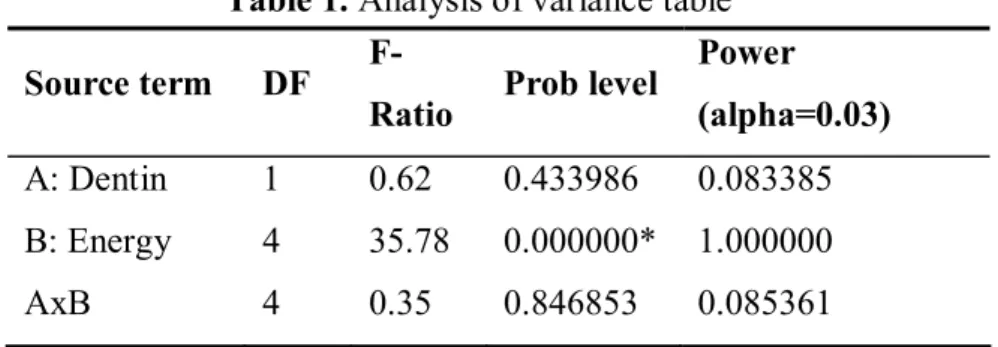
Table 1. Analysis of variance table
Source term DF
F-Ratio Prob level
Power
(alpha=0.03)
A: Dentin 1 0.62 0.433986 0.083385
B: Energy 4 35.78 0.000000* 1.000000
AxB 4 0.35 0.846853 0.085361
* Term significant at alpha = 0.03
Table 2. Ablation amount related to the factor energy
Energy (mJ) Mean of mass loss (mg)
160 4.00000 d
200 4.42917 cd
260 5.85000 bc
300 6.67083 b
360 8.90000 a
Capítulo 1 29
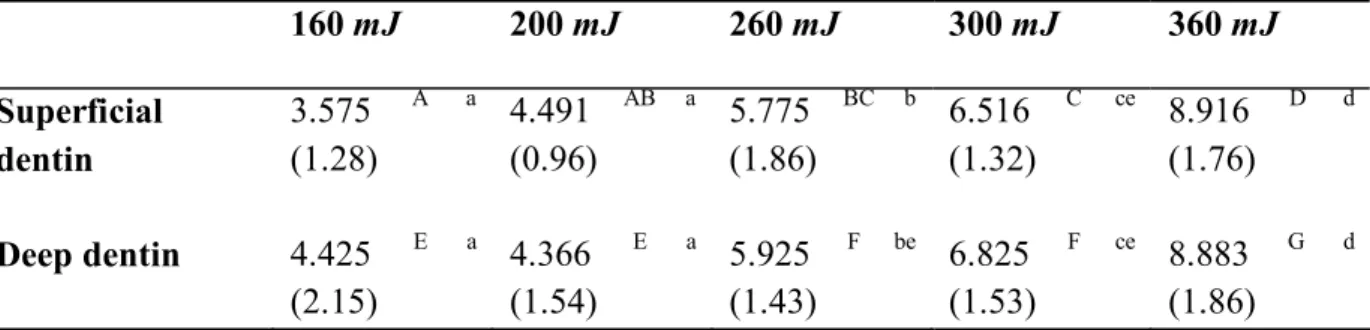
Table 3. Mean values and standard deviations of mass loss (mg) according to the dentin depth and energy level
160 mJ 200 mJ 260 mJ 300 mJ 360 mJ
Superficial dentin
3.575 A a
(1.28)
4.491 AB a
(0.96)
5.775 BC b
(1.86)
6.516 C ce
(1.32)
8.916 D d
(1.76)
Deep dentin 4.425 E a
(2.15)
4.366 E a
(1.54)
5.925 F be
(1.43)
6.825 F ce
(1.53)
8.883 G d
(1.86) Same superscript letters indicate statistical similarity.
Capital letters: to compare rows; Lower case: to compare columns.
- Ablation rate
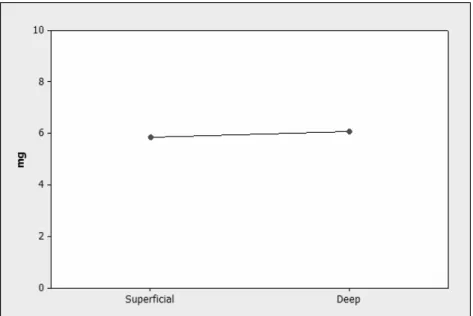
The analysis of variance (Table 1) revealed that there was no significant difference
between superficial and deep dentin (Fig. 1), there was a difference among the energies, and
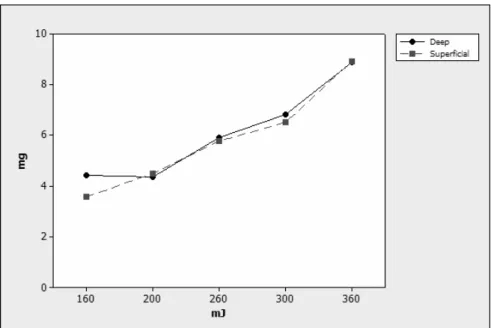
the interaction of the two factors was not significant. Comparing the energy levels, regardless
of the dentin depth, there was an increase in the mass-loss values with an increase in the laser
energy level (Fig. 2); 360 mJ provided the highest mass loss, which was significantly different
from all the others; there was no difference between 160 and 200 mJ, between 200 and 260
mJ, and between 260 and 300 mJ (Table 2). The interaction dentin depth x energy (Table 3)
showed that significantly higher mass-loss values were obtained with 360 mJ laser irradiation
Capítulo 1 30
FIGURE 1. Amount (mg) of mass ablated as a function of the depth of dentin.
Capítulo 1 31
FIGURE 3. Amount (mg) of mass ablated as a function of the energy level (mJ) and dentin
depth.
- Micromorphological analysis
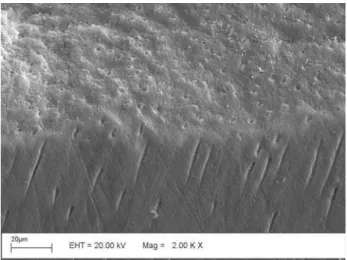
In deep dentin, laser irradiation at 160, 200, 260, and 300 mJ energy levels (Fig. 5.A,
5.B, 5.C, and 5.D, respectively) resulted in irregular surfaces with microcracks and higher
removal of intertubular dentin, leaving the peritubular dentin with a protrusion aspect (tubule
protrusion). This aspect was not observed in superficial dentin, which exhibited flat surfaces,
and similar ablation of both intertubular and peritubular dentin at the same energy levels (Fig.
4.A, 4.B, 4.C, and 4.D).
Both in superficial and deep dentin (Fig. 4.E and 5.E, respectively), the energy of 360
mJ promoted flat surfaces with microcracks, no melting, and similar ablation of intertubular
Capítulo 1 32
Capítulo 1 33
FIGURE 5. SEM images - micromorphological aspects of deep dentin irradiated by Er:YAG
Capítulo 1 34
DISCUSSION
The ablation rate can be evaluated in terms of the amount of dental tissue removed
within a given time33 and is correlated with such parameters of irradiation as the number of pulses per second, energy per pulse, and duration of the treatment.34-37 The amount of tissue removed is thought to increase in proportion to the Er:YAG laser energy. However, with
increased ablation efficiency, the dentin microstructure may be affected by the thermal effect
and the resulting surface may vary from a white spot to charring, fusion, roughening, melting,
recrystallization, cracking, and both de/remineralization and deproteinization.8,10,13,38-41 Researches34-36,42 indicate that adjustments to variable parameters, including irradiation time, water spray, pulse energy, and pulse repetition rate, should be made to improve the ablation
ability of the laser. Moreover, different depths of dentin should be considered as additional
variables affecting the ablation rate.
In this study, the ablation rate was not significantly influenced by dentin depth, and
both superficial and deep dentin had a direct relationship with the laser energy resulting in
higher tissue removal as the energy level was raised. In other words, if the energy levels are
maintained constant, changing the dentin depth will not influence the amount of tissue
removed. It can be understood that only one of these factors may influence the amount of
dentin removed, that is, the energy level. This study supports previous statements36,40,42 that the ablation rate generally increases as a function of the energy level and adds new
information concerning the dentin location. The explanation is based on the principle that the
higher the energy per pulse on tooth tissue, the higher the energy density per pulse repetition,
and, consequently, a higher inertial-confined heating of water creates enormous subsurface
pressures that lead to the microexplosive removal of the surrounding mineral matrix and
Capítulo 1 35
On the other hand, small increases in the energy levels did not result in significant
amounts of dentin removed. These results suggest that, regardless of the dentin depth, there is
a similar amount of tissue removed when the energy level is not highly increased. This
behavior was previously described as saturation-type and shows the occurrence of a shielding
resulting from ablation products not completely removed and deposited at the irradiated
tissue.35,44 Diverging results were found by Shigetani et al.42 who obtained differences between 50 mJ and 100 mJ, and between 150 mJ and 200 mJ. This disagreement may be
attributed to differences in laser devices, pulse repetition rates, and types of substrate
employed.
Concerning the variation in the depth of the substrate, there was no difference between
the mass losses of either superficial or deep dentin. Thus, variations in the water and mineral
contents in dentin were not sufficiently significant to affect the gross amount of tissue
removal. This fact probably is due to the absence of a significant influence of the
mineralization degrees of superficial and deep dentin, therefore variations in microhardness
were related to the decreased hardness near the pulp by a decrease in the hardness of the
intertubular dentin matrix, which may be less mineralized.45
However, the micromorphological analysis revealed that deep dentin was more
selectively ablated than superficial dentin, exhibiting greater intertubular dentin removal,
which characterizes the protruded aspect of the tubules indicating that peritubular dentin is
more resistant to laser energy. This pattern can be explained by the fact that peritubular dentin
has a high mineral content and lacks collagen as an organic matrix, different from the
intertubular dentin, it makes up 92% of the collagen matrix.46,47 Moreover, such features are present mainly in the intertubular dentin located next the pulp.24,28,45 Another interesting micromorphological observation was made for both superficial and deep dentin ablated using
Capítulo 1 36
intertubular and peritubular dentin, which means that this energy level promoted a
non-selective ablation pattern.
The comparison of the results obtained in this study is difficult due to the scarceness
of published studies about Er:YAG laser irradiation on superficial and deep dentin. Therefore,
more studies need to be performed on this issue in an attempt to standardize the optimal
parameters for tooth tissue ablation without compromising their intactness as well as their
mechanical properties.
CONCLUSION
Based on the results of this study, it can be concluded that the ablation rate was not
dependent on the dentin depth and was influenced only by the energy, which may be
recommended at a level lower than 360 mJ to ablate both superficial and deep dentin
effectively without damaging the integrity of the substrates; although variations in the depth
of the substrate did not change the ablation rate, they influenced the selectiveness of the
ablation, as deep dentin was more selectively ablated with minor removal of peritubular
dentin.
REFERENCES
1. Dostálová, T., Jelinková, H., Krejsa, O., Hamal, K., Kubelka, J., Kugerova, H., and
Procházka, S. (1998). Noncontact Er:YAG laser ablation: clinical evaluation. J. Clin.
Laser Med. Surg. 16, 273-282.
2. Hibst, R. (2002). Lasers for caries removal and cavity preparation: state of the art and
Capítulo 1 37
3. Takamori, K., Furukawa, H., Morikawa, Y., Katayama, T., and Watanabe, S. (2003).
Basic study on vibrations during tooth preparations caused by high-speed drilling and
Er:YAG laser irradiation. Lasers Surg. Med. 32, 25-31.
4. Attrill, D.C., Davies, R.M., King, T.A., Dickinson, M.R., and Blinkhorn, A.S. (2004).
Thermal effects of the Er:YAG laser on a simulated dental pulp: a quantitative
evaluation of the effects of a water spray. J. Dent. 32, 35-40.
5. Chinelatti, M.A., Ramos, R.P., Chimello, D.T., Borsatto, M.C., Pécora, J.D., and
Palma-Dibb, R.G. (2004). Influence of the use of Er:YAG laser for cavity preparation
and surface treatment in microleakage of resin-modified glass ionomer restorations.
Oper. Dent. 29, 430-436.
6. Chinelatti, M.A., Ramos, R.P., Chimello, D.T., Corona, S.A., Pécora, J.D., and
Palma-Dibb, R.G. (2006). Influence of Er:YAG laser on cavity preparation and surface
treatment in microleakage of composite resin restorations. Photomed. Laser Surg. 24,
214-218.
7. Wigdor, H.A., Walsh, J.T., Featherstone, J.D., Visuri, S.R., Fried, D., and Waldvogel,
J.L. (1995). Lasers in dentistry. Lasers Surg. Med. 16, 103-133.
8. Cozean, C., Arcoria, C.J., Pelagalli, J., and Powell, L. (1997). Dentistry for the 21st century? Erbium:YAG laser for teeth. J. Am. Dent. Assoc. 128, 1080-1087.
9. Bader, C., and Krejci, I. (2006). Marginal quality in enamel and dentin after
preparation and finishing with an Er:YAG laser. J. Dent. 19, 337-342.
10. Hossain, M., Nakamura, Y., Tamaki, Y., Yamada, Y., Murakami, Y., and Matsumoto,
K. (2003). Atomic analysis and knoop hardness measurements of the cavity floor
Capítulo 1 38
11. Aoki, A., Ishikawa, I., Yamada, T., Otsuki, M., Watanabe, H., Tagami, J., Ando, Y.,
and Yamamoto, H. (1198). Comparison between Er:YAG laser and conventional
technique for root caries treatment in vitro. J. Dent. Res. 77, 1404-1414.
12. Hibst, R., and Keller, U. (1989). Experimental studies of the application of the
Er:YAG laser on dental hard substances: I. Measurement of the ablation rate. Lasers
Surg. Med. 9, 338-344.
13. Matsumoto, K., Nakamura, Y., Mazeki, K., and Kimura, Y. (1996). Clinical dental
application of Er:YAG laser for class V cavity preparation. J. Clin. Laser Med. Surg.
14, 123
14. Matsumoto, K., Wang, X., Zhang, C., and Kinoshita, J.I. (2007). Effect of a novel
Er:YAG laser in caries removal and cavity preparation: A clinical observation.
Photomed. Laser Surg. 25, 8-13.
15. Hossain, M., Nakamura, Y., Kimura, Y., Nakamura, G., and Matsumoto, K. (1999).
Ablation depths and morphological changes in human enamel and dentin after
Er:YAG laser irradiation with or without water mist. J. Clin. Laser Med. Surg. 17,
105-109.
16. Gimbel, C.B. (2000). Hard tissue laser procedures. Dent. Clin. North Am. 44,
931-953.
17. Kim, J.M., Kim, M.E., and Kim, K.S. (2005). Ablation rate and intrapulpal
temperature by irradiation with Er:YAG laser. Korean J. Oral Med. 9, 375-381.
18. Jelinková, H., Dostalová, T., Krejsa, O., Hamal, K., Kubelka, J., and Procházka, S.
(1997). The influence of Er:YAG laser ablation on cavity surface and cavity shape.
SPIE Proc. 2672, 193-196.
19. Armengol, V., Jean, A., and Marion, D. (2000). Temperature rise during Er:YAG and
Capítulo 1 39
20. Mercer, C.E., Anderson, P., and Davis, G.R. (2003). Sequential 3D X-ray
microphotographic measurement of enamel and dentine ablation by an Er:YAG laser.
Br. Dent. J. 25, 99-104.
21. Lizarelli, R.F., Kurachi, C., Misoguti, L., and Bagnato, V.S. (1999). Characterization
of enamel and dentin response to Nd:YAG picosecond laser ablation. J. Clin. Laser
Med. Surg. 17, 127-131.
22. Raum, K., Kempf, K., Hein, H.J., Schubert, J., and Maurer, P. (2007). Preservation of
microelastic properties of dentin and tooth enamel in vitro--a scanning acoustic
microscopy study. Dent. Mater. 23, 1221-1228.
23. Kinney, J.H., Marshall, and S.J., Marshall, G.W. (2003) The mechanical properties of
human dentin: a critical review and re-evaluation of the dental literature. Crit. Rev.
Oral Biol Med. 14, 13-29.
24. Marshall, G.W. Jr. (1993). Dentin: microstructure and characterization. Quintessence
Int. 24, 606-617.
25. Balooch, G., Marshall, G.W., Marshall, S.J., Warren, O.L., Asif, S.A., and Balooch,
M. (2004). Evaluation of a new modulus mapping technique to investigate
microstructural features of human teeth. J. Biomech. 37, 1223-1232.
26. Habelitz, S., Rodriguez, B.J., Marshall, S.J., Marshall, G.W., Kalinin, S.V., and
Gruverman, A. (2007) Peritubular dentin lacks piezoelectricity. J. Dent. Res. 86,
908-911.
27. Marshall, G.W., Marshall, S.J., Kinney, J.H., and Balooch, M. (1997). The dentin
substrate: structure and properties related to bonding. J. Dent. Res. 25, 441-458.
28. Pashley, D. (1989). Dentin: a dynamic substrate-a review. Scanning Microsc. 3,
Capítulo 1 40
29. Fuentes, V., Toledano, M., Osorio, R., and Carvalho, R.M. (2003). Microhardness of
superficial and deep sound human dentin. J. Biomed. Mater. Res. A. 15, 850-853.
30. Toledano, M., Osorio, R., Osorio, E., Prati, C., and Carvalho, R.M. (2005).
Microhardness of acid-treated and resin infiltrated human dentine. J. Dent. 33,
349-354.
31. Souza, A.E., Corona, S.A.M., Palma-Dibb, R.G., Borsatto, M.C., and Pécora, J.D.
(2004). Influence of Er:YAG laser on tensile bond strength of a self-etching system
and a flowable resin in different dentin depths. J. Dent. 32, 269-275.
32. Gonçalves, M., Corona, S.A., Palma-Dibb, R.G., and Pécora, J.D (2007). Influence of
pulse repetition rate of Er:YAG laser and dentin depth on tensile bond strength of
dentin-resin interface. J Biomed Mater Res A. Nov 1, [Epub ahead of print].
33. Kim, K.S., Kim, M.E., and Shin, E.J. (2005). Irradiation time and ablation rate of
enamel in contact and non-contact irradiation with Er:YAG laser. Photomed. Laser
Surg. 23, 216-218.
34. Mehl, A., Kremers, L., Salzmann, K., and Hickel, R. (1997). 3D volume-ablation rate
and thermal side effects with the Er:YAG and Nd:YAG laser. Dent. Mater. 13,
246-251.
35. Lizarelli, R.F.Z., Moriyama, L.T., Jorge, J.R.P., and Bagnato, V.S. (2006).
Comparative ablation rate from a Er:YAG laser on enamel and dentin of primary and
permanent teeth. Laser Phys. 16, 849-858.
36. Corona, S.A.M., S ouza, A.E., Chinelatti, M.A., Borsatto, M.C., Pecora, J.D., and
Palma-Dibb, R.G. (2007). Effect of energy and pulse repetition rate of Er:YAG laser
on dentin ablation ability and morphological analysis of the laser-irradiated substrate.
Capítulo 1 41
37. Corona, S.A., Souza, A.E., Chinelatti, M.A., Pecora, J.D., Borsatto, M.C., and
Palma-Dibb, R.G. (2007). Influence of energy and pulse repetition rate of Er:YAG laser on
enamel ablation ability and morphological analysis of the laser-irradiated surface. J.
Biomed. Mater. Res. A. 84A, 569-575.
38. Ceballos, L., Osorio, R., Toledano, M., Tay, F.R., and Marshall, G.W. (2002).
Bonding to Er:YAG laser treated dentin. J. Dent. Res. 81, 119-122.
39. Chimello-Sousa, D.T., Souza, A.E., Chinelatti, M.A., Pecora, J.D., Palma-Dibb, R.G.,
and Milori Corona, S.A. (2006). Influence of Er:YAG laser irradiation distance on the
bond strength of a
40.
41.
42.
43.
44. restorative system to enamel. J. Dent. 34, 245-251.
40.45. Monguini, E.M., Wanderley, R.L., Pecora, J.D., Palma-Dibb, R.G., Corona, S.A., and
Borsatto, M.C. (2004). Bond strength to dentin of primary teeth irradiated with
varying Er:YAG laser energies and SEM examination of the surface morphology.
Lasers Surg Med. 34, 254-259.
41.46. Ekworapoj, P., Sidhu, S.K., and McCabe, J.F. (2007). Effect of different power
parameters of Er,Cr:YSGG laser on human dentine. Lasers Med. Sci. 22, 175-182.
42.47. Shigetani, Y., Okamoto, A., Abu-Bakr, N., and Iwaku, M. (2002). A study of cavity
preparation by Er:YAG laser--observation of hard tooth structures by laser scanning
microscope and examination of the time necessary to remove caries. Dent. Mater. J.
Capítulo 1 42
43.48. Lee, B.S., Lin, C.P., Hung, Y.L., and Lan, W.H. (2004). Structural changes of
Er:YAG laser-irradiated human dentin. Photomed. Laser Surg. 22, 330-334.
44.49. Lizarelli, R.F., Moryiama, L.T., and Bagnato, V.S. (2003). Ablation of composite
resins using Er:YAG laser--comparison with enamel and dentin. Lasers Surg. Med.
33, 132-139.
45.50. Kinney, J.H., Balooch, M., Marshall, S.J., Marshall, G.W. Jr., and Weihs, T.P. (1996).
Hardness and Young’s modulus of human peritubular and intertubular dentine. Arch.
Oral Biol. 41. 9-13.
46.51. Senawongse, P., Otsuki, M., Tagami, J., and Mjör, I. (2006). Age-related changes in
hardness and modulus of elasticity of dentine. Arch. Oral Biol. 51 , 457-463.
47.52. Bachmann, L., Diebolder, R., Hibst, R., and Zezell, D.M. (2005). Changes in chemical
composition and collagen structure of dentine tissue after erbium laser irradiation.
Capítulo 2 44
4. CAPÍTULO 2
4.1. Effect of Er:YAG laser energies on superficial and deep dentin
microhardness
Artigo científico submetido para publicação ao periódico Lasers in Medical Science (Anexo 3)
ABSTRACT
This study evaluated the microhardness of superficial and deep dentin irradiated with different Er:YAG laser energies. Seventy-two molars were bisected and randomly assigned into two groups (superficial or deep dentin) and into six subgroups (160, 200, 260, 300, 360mJ, control). After irradiation, cavities were longitudinally bisected. Microhardness were performed at six points (20, 40, 60, 80, 100, 200µm) under the cavity floor. Data were submitted to ANOVA and Fisher’s Tests (α=0.05). Superficial dentin presented higher microhardness than deep dentin; 160mJ resulted in the highest microhardness and 360mJ the lowest ones. Values at all points were different, exhibiting increasing microhardness throughout; superficial dentin microhardness was the highest at 20µm with 160mJ; on deep dentin, 160 and 200mJ were similar to the control. The lowest energy increased superficial dentin microhardness at the closest extension under the cavity; deep dentin microhardness was not altered by 160 and 200mJ.
INTRODUCTION
Capítulo 2 45
drilling may cause noise and pain [7-9]. Er:YAG laser irradiation removes both enamel and dentin due to its wavelength of 2.94 µm, which matches the absorption peak of water and is absorbed by hydroxyapatite, limiting the laser effect on these tissues to a superficial layer of a few micrometers, while sparing the surrounding tissues [10-14]. This superficial layer can be heated up rapidly so that the pressure within the irradiated tissue abruptly increases until the strength of the substrate is surpassed. The overheated water is evaporated, resulting in a high steam pressure that causes microexplosions of tooth tissue, characterizing the thermomechanical ablation process [7, 10, 11]. Since Er:YAG laser energy is well absorbed by water, the higher content of water in dentin facilitates the action of the laser, and the relatively predominant organic composition of dentin, became this tissue less resistant to laser ablation than enamel [10, 15-19].
Basically, dentine consists of an organic matrix made up primarily of a hydrated type I collagen and an inorganic phase made up of a nanocrystalline-carbonated apatite [20]. Its characteristic microstructure consists of oriented tubules of 1-2 µm in diameter surrounded by highly mineralized (approx. 95 Vol% mineral phase) peritubular dentin embedded within a partially mineralized (approx. 30 Vol % mineral phase) collagen matrix (intertubular dentin) [21-23]. In the arrangement of the dentin microstructure, the tubules run continuously between the enamel and the pulp and vary in density from about 15,000/mm2 at the dentine-enamel junction (superficial dentin) to 65,000/mm2 at the pulp (deeper dentine) [24]. These marked differences in the various regions of a tooth, such as tubule density and peritubular and intertubular areas, distinguish superficial from deep dentin [21, 24, 25].
non-Capítulo 2 46
uniform destruction of tooth structure and the ejection of both organic and inorganic tissue particles [7, 10, 11], it is necessary to evaluate the mechanical properties of dental tissues after cavity preparations using Er:YAG laser, such as microhardness, giving us an idea on how the mechanical behavior of the irradiated tissue under clinical loading conditions could be. Microhardness is defined as the resistance to local deformation, based on the induced permanent surface deformation that remains after removing the load [28, 29]. It is considered a supported method to evaluate superficial changes in the mineral density of dental hard tissues [30, 31], as well as plays an important role in stress distribution when mastication forces are applied on a restored tooth [32].
The literature available on the Er:YAG laser still presents varying parameters of energy settings, and, besides the fact that little is known about the effect of Er:YAG laser irradiation on different dentin depths [33, 34], there are divergent results as well. Consequently, an optimal irradiation energy level should be determined to optimize the efficiency of Er:YAG laser for removing both superficial and deep dentin without damaging their mechanical properties. Thus, the objective of this study was to evaluate the ablation rate of dentin as a function of Er:YAG laser energy level and substrate depth, and to observe the micromorphological aspects of the irradiated surfaces. Thus, this study aimed to evaluate possible alterations in the microhardness of superficial and deep dentin after cavity preparations by Er:YAG laser with different irradiation energy levels.
MATERIAL AND METHODS
Capítulo 2 47
Experimental design
This study was composed of a randomized complete block design with 12 experimental specimens per group / subgroup. The variation factors examined were dentin at two levels (superficial and deep), energy at six levels (160, 200, 260, 300 and 360 mJ, and control- not irradiated), and subsurface point at six levels (20, 40, 60, 80, 100 and 200 µm). The response variable was Knoop microhardness numeric numbers in kgf.
Specimen obtainment
Capítulo 2 48
based in previous studies [32, 36], but, according to our pilot study, a modification in the location of deep dentin was necessary to avoid pulp exposure during irradiation.
The specimens of both superficial dentin and deep dentin groups were randomly assigned into six subgroups, being five according to the irradiation energy used for preparing cavities (160 mJ, 200 mJ, 260 mJ, 300 mJ and 360 mJ) and one the control (without irradiation). The specimens were identified and individually stored in plastic containers with distilled water at 4ºC for 24 hours, with the purpose of re-humidifying the substrate. Before performing the irradiation, each specimen was fixed on an acrylic plate and a 2-mm-diameter ablation site was delimited by attaching a piece of insulating tape with a central orifice made by a punch.
The Er:YAG laser system used was the Twin Light (Fotona Medical Lasers, Slovenia, Ljubjana) operating at a pulse repetition rate of 3 Hz in non-contact and focused mode (irradiation distance of 12 mm), irradiation time of 30 seconds, and with the pulse energy levels described above. The water supply system was used throughout the irradiation time at a 2.5 mL/min flow. Once the irradiation was performed, the insulating tape was removed; the specimens were removed from the plates and thoroughly cleaned. Specimens were individually placed in acrylic resin blocks to facilitate the bisection of cavities in their long axis, being one half destined to microhardness test and the other half to SEM analysis. Specimens of control subgroup did not receive laser irradiation; they were included and longitudinally bisected.
Microhardness test
hemi-Capítulo 2 49
sections were cleansed with distilled water in an ultrasonic apparatus to remove any debris. Before testing microhardness, each specimen was placed on a plate and fixed with plastic wax using a parallelometer (ELQuip, São Carlos, SP, Brazil) to ensure that its surface was kept parallel to the horizontal plane. Knoop hardness was assessed using a microhardness tester (Shimadzu HMV-2000, Shimadzu Corporation, Kyoto, Japan). Settings for load and penetration were 10 g and 20 s. Penetrations were performed under cavity preparations at distances of 20, 40, 60, 80, 100, and 200 µm apart from the middle of the cavity floor or apart from the superior edge of control specimens. At each distance, three horizontally 100-µm-spaced measurements were performed and their mean was calculated.
Micromorphological analysis
Capítulo 2 50
Statistical analysis
Data of dentin microhardness were analyzed by three-way ANOVA (factors: dentin, energy and subsurface) and Fisher’s LSD Multiple-Comparisons tests using a statistical software (NCSS/PASS Dawson edition, NCSS, USA) at α=5% significance level.
RESULTS
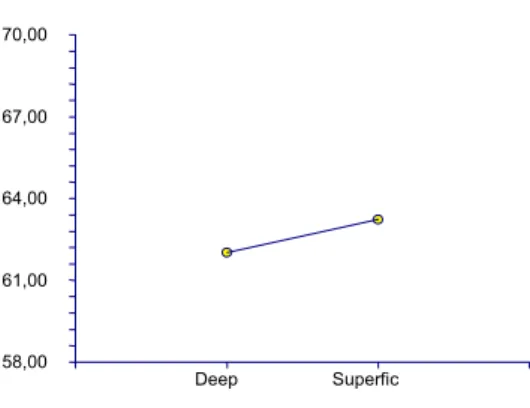
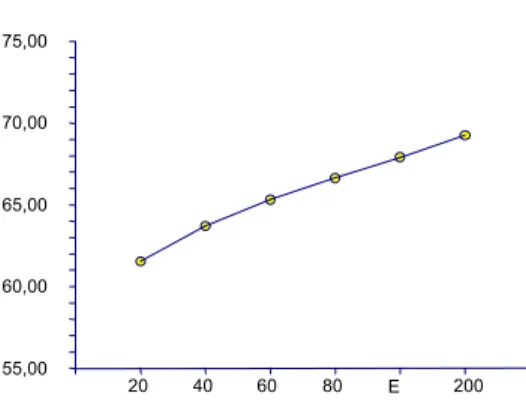
The variance analysis revealed that there was a significant difference between dentin depths, energies, subsurface points, and in the factor interactions. Fisher’s LSD Multiple-Comparison Test showed that microhardness of superficial dentin was significantly higher than deep dentin (Fig. 1). Comparing the energy levels (Fig. 2), regardless of the dentin depth, the energy of 160 mJ resulted in the highest microhardness values, and 360 mJ the lowest ones; microhardness values of both dentins irradiated with 200 mJ were lower than 160 mJ and the control, and higher than those lased with 260 and 300 mJ, which presented similar means. Values at all subsurface points were different and exhibited increasing microhardness throughout (Fig. 3).
Figure 1. Overall means of subsurface microhardness according with the dentin depth. 58,00
61,00 64,00 67,00 70,00
Capítulo 2 51
Figure 2. Means of subsurface microhardness as a function of the energy level, regardless of the dentin depth.
Figure 3. Means of subsurface microhardness of both dentin depths as a function of the subsurface points.
The interaction dentin depth x energy (Fig. 4) showed that the significantly lowest microhardness values of either superficial or deep dentin were obtained with a laser irradiation of 360 mJ; microhardness of superficial dentin ablated with 160 mJ was significantly higher than both the control and that irradiated with the other energies; microhardness of deep dentin lased with 160 and 200 mJ was similar to the control, and that with 260 and 300 mJ was lower in comparison to the control deep dentin; superficial and deep dentin presented similar microhardness when both were irradiated either with 260 or 300 mJ.
55,00 60,00 65,00 70,00 75,00
20 40 60 80 E 200 58,00
61,00 64,00 67,00 70,00
Capítulo 2 52
Figure 4. Means of subsurface microhardness as a function of the dentin depth and the energy level
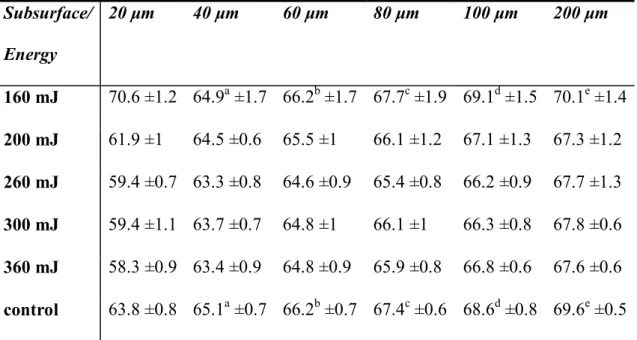
Table 1. Knoop microhardness means values of superficial dentin and standard deviations according to the energy levels and depths
Same superscript letters indicate statistical similarity
Subsurface/ Energy
20 µm 40 µm 60 µm 80 µm 100 µm 200 µm
160 mJ 70.6 ±1.2 64.9a ±1.7 66.2b ±1.7 67.7c ±1.9 69.1d ±1.5 70.1e ±1.4
200 mJ 61.9 ±1 64.5 ±0.6 65.5 ±1 66.1 ±1.2 67.1 ±1.3 67.3 ±1.2
260 mJ 59.4 ±0.7 63.3 ±0.8 64.6 ±0.9 65.4 ±0.8 66.2 ±0.9 67.7 ±1.3
300 mJ 59.4 ±1.1 63.7 ±0.7 64.8 ±1 66.1 ±1 66.3 ±0.8 67.8 ±0.6
360 mJ 58.3 ±0.9 63.4 ±0.9 64.8 ±0.9 65.9 ±0.8 66.8 ±0.6 67.6 ±0.6
control 63.8 ±0.8 65.1a ±0.7 66.2b ±0.7 67.4c ±0.6 68.6d ±0.8 69.6e ±0.5 58,00
61,00 64,00 67,00 70,00
Deep Superfic
Capítulo 2 53
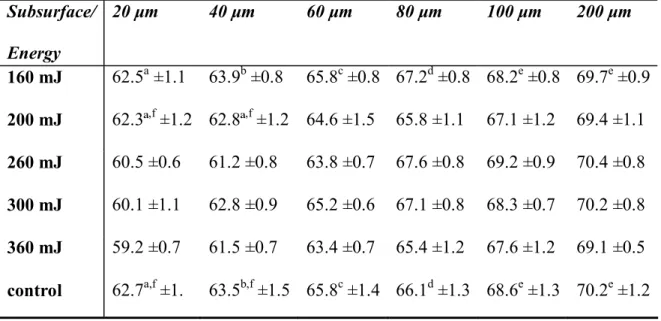
Tables 1 and 2 display the microhardness of superficial and deep dentin, respectively, according to each subsurface point and energy. The interaction of all factors revealed that for superficial dentin irradiated with 160 mJ, the subsurface microhardness was higher than the control at 20 µm and similar at the remaining points; for deep dentin with 160 mJ, the subsurface microhardness was similar to the control at all points; the other energies resulted in lower values than control at all subsurface points of both superficial and deep dentin.
Table 2. Knoop microhardness means values of deep dentin and standard deviations according to the energy levels and depths
Same superscript letters indicate statistical similarity
SEM micrographs of subsurface of both superficial and deep dentin irradiated with 160, 200, and 260 mJ (Figs. 5, 6, 7, 8, 9, and 10, respectively) showed a corrugated and wave appearance with opened tubules and the absence of smear layer, and a crystalline-like aspect along the interfaces. The SEM micrographs of both dentin depths irradiated with 300 and 360 mJ (Figs. 11, 12, 13, and 14, respectively) showed flatter surfaces with opened tubules and the absence of smear layer.
Subsurface/ Energy
20 µm 40 µm 60 µm 80 µm 100 µm 200 µm
160 mJ 62.5a ±1.1 63.9b ±0.8 65.8c ±0.8 67.2d ±0.8 68.2e ±0.8 69.7e ±0.9
200 mJ 62.3ª,f ±1.2 62.8ª,f ±1.2 64.6 ±1.5 65.8 ±1.1 67.1 ±1.2 69.4 ±1.1
260 mJ 60.5 ±0.6 61.2 ±0.8 63.8 ±0.7 67.6 ±0.8 69.2 ±0.9 70.4 ±0.8
300 mJ 60.1 ±1.1 62.8 ±0.9 65.2 ±0.6 67.1 ±0.8 68.3 ±0.7 70.2 ±0.8
360 mJ 59.2 ±0.7 61.5 ±0.7 63.4 ±0.7 65.4 ±1.2 67.6 ±1.2 69.1 ±0.5
Capítulo 2 54
Figure 5. SEM micrograph of superficial dentin subsurface irradiated with 160 mJ
Figure 6. SEM micrograph of deep dentin subsurface irradiated with 160 mJ
Capítulo 2 55
Figure 8. SEM micrograph of deep dentin subsurface irradiated with 200 mJ
Figure 9. SEM micrograph of superficial dentin subsurface irradiated with 260 mJ
Capítulo 2 56
Figure 11. SEM micrograph of superficial dentin subsurface irradiated with 300 mJ
Figure 12. SEM micrograph of deep dentin subsurface irradiated with 300 mJ
Capítulo 2 57
Figure 14. SEM micrograph of deep dentin subsurface irradiated with 360 mJ
DISCUSSION
The results obtained in this study indicated a decrease in the microhardness values of both superficial and deep dentin, in the tissues underneath the floor of the cavities prepared by Er:YAG laser using higher energy levels (mainly 260 mJ, 300 mJ and 360 mJ). In the face of such situation, it is quite possible to consider that the three highest energies were the most influent in the response of the microhardness. This finding reinforces previous statements [2, 9] that, although the use of high energy levels in dentin accelerates the ablation process, it reduces the mechanical properties of the irradiated substrates.
Capítulo 2 58
mineral content [39]. Moreover, changes in hardness and tissue composition produced by high Er:YAG laser energy levels may be related to the denaturation of the dentin organic matrix, with a strong modification of the collagen chain [40].
Additionally, it has been reported [41] that Er:YAG laser radiation modifies the calcium-to-phosphorus ratio. Besides, increased energies produce surface irregularities with greater ablation of intertubular dentin, which resulted in a protruded appearance of peritubular dentin and the opening of dentinal tubules [37]. Since peritubular dentin is highly mineralized [26], the thermal effects, the changes in size and the ultrastructure of apatite crystals probably corroborate the microhardness changes [42]. This way, the intense removal and/or modification of both inorganic and organic structures would become the substrate less resistant to local deformations under load conditions, which may explain the reduction in the dentin microhardness values after being irradiated with the high energy levels used in this study.
A significant increase in microhardness values was found only in the closest point (until 20 µm) under the floor of cavities prepared in superficial dentin using the lowest energy level (160 mJ). As already described above, the higher the energy, the higher the ablation rate, but causing evident alterations in the organic structures. Then, it may be considered that 160 mJ promoted lower tissue removal with unremarkable damages in the organic matrix, which could have increased the proportion of the mineral content. Additionally, this most superficial layer has a natural increased stiffness because its abundant intertubular dentin presents a more homogeneous distribution of the mineral phase within the collagen matrix [43].
Capítulo 2 59
deleterious thermal side effects in the tissues under the irradiated surface, especially under water [10, 11, 13, 14].
Taking into account the dentin depths, the superficial dentin microhardness was higher than deep dentin, thus accepting the hypothesis that, as in sound dentin [43], the decreased hardness near the pulp could be explained by a decrease in the hardness of the intertubular dentin matrix. Thus, it is likely that the intertubular dentin near the pulp is less mineralized [26] and influence the resistance to deformation of these substrates after being submitted to the ablation process by Er:YAG laser.
The clinical application of the knowledge on the mechanical properties of dentin under normal and altered conditions would help the adhesive restorative treatment [37, 44], since there is a strong relationship between dentin microhardness and bond strength [39]. Adhesive restorations are more retained by hard dentin due to their better mechanical stability, which indicates that microhardness may provide a first step towards predicting the behavior of dentin/restorations interfaces [24, 36], besides being a quantitative method to predict variations in the mineral content of dentin irradiated by Er:YAG laser [45].
CONCLUSIONS
Capítulo 2 60
REFERENCES
1. Dostálová T, Jelinková H, Krejsa O, Hamal K, Kubelka J, Kugerova H, Procházka S (1998) Noncontact Er:YAG laser ablation: clinical evaluation. J Clin Laser Med Surg 16:273-282
2. Hibst R (2002) Lasers for caries removal and cavity preparation: state of the art and future directions. J Oral Laser Appl 2:203-211
3. Takamori K, Furukawa H, Morikawa Y, Katayama T, Watanabe S (2003) Basic study on vibrations during tooth preparations caused by high-speed drilling and Er:YAG laser irradiation. Lasers Surg Med 32:25-31
4. Attrill DC, Davies RM, King TA, Dickinson MR, Blinkhorn AS (2004) Thermal effects of the Er:YAG laser on a simulated dental pulp: a quantitative evaluation of the effects of a water spray. J Dent 32:35-40
5. Chinelatti MA, Ramos RP, Chimello DT, Borsatto MC, Pécora JD, Palma-Dibb RG (2004) Influence of the use of Er:YAG laser for cavity preparation and surface treatment in microleakage of resin-modified glass ionomer restorations. Oper Dent 29:430-436
6. Chinelatti MA, Ramos RP, Chimello DT, Corona SA, Pécora JD, Palma-Dibb RG (2006) Influence of Er:YAG laser on cavity preparation and surface treatment in microleakage of composite resin restorations. Photomed Laser Surg 24:214-218 7. Wigdor HA, Walsh JT, Featherstone JD, Visuri SR, Fried D, Waldvogel JL (1995)
Lasers in dentistry. Lasers Surg Med 16:103-133
8. Cozean C, Arcoria CJ, Pelagalli J, Powell L (1997) Dentistry for the 21st century? Erbium:YAG laser for teeth. J Am Dent Assoc 128:1080-1087
Capítulo 2 61
10.Hibst R, Keller U (1989) Experimental studies of the application of the Er:YAG laser on dental hard substances: I. Measurement of the ablation rate. Lasers Surg Med 9:338-344
11.Matsumoto K, Nakamura Y, Mazeki K, Kimura Y (1996) Clinical dental application of Er:YAG laser for class V cavity preparation. J Clin Laser Med Surg 14:123
12.Matsumoto K, Wang X, Zhang C, Kinoshita JI (2007) Effect of a novel Er:YAG laser in caries removal and cavity preparation: A clinical observation. Photomed Laser Surg 25:8-13
13.Hossain M, Nakamura Y, Kimura Y, Nakamura G, Matsumoto K (1999) Ablation depths and morphological changes in human enamel and dentin after Er:YAG laser irradiation with or without water mist. J Clin Laser Med Surg 17:105-109
14.Gimbel CB (2000) Hard tissue laser procedures. Dent Clin North Am 44:931-953 15.Kim JM, Kim ME, Kim KS (2005) Ablation rate and intrapulpal temperature by
irradiation with Er:YAG laser. Korean J Oral Med 9:375-381
16.Jelinková H, Dostalová T, Krejsa O, Hamal K, Kubelka J, Procházka S (1997) The influence of Er:YAG laser ablation on cavity surface and cavity shape. SPIE Proc 2672:193-196
17.Armengol V, Jean A, Marion D (2000) Temperature rise during Er:YAG and Nd: YAG laser ablation of dentin. J Endodont 26:138-141
18.Mercer CE, Anderson P, Davis GR (2003) Sequential 3D X-ray microphotographic measurement of enamel and dentine ablation by an Er:YAG laser. Br Dent J 25:99-104