http://dx.doi.org/10.1590/s2175-97902017000116116
A
r
*Correspondence: N. Lourith. School of Cosmetic Science. Mae Fah Luang University. Chiang Rai, 57100 Thailand. Tel.: +66 53 916834; fax: +66 53 916831. E-mail: [email protected]
Development of sunscreen products containing passion fruit
seed extract
Nattaya Lourith
1,2,*, Mayuree Kanlayavattanakul
1,2, Jiraporn Chingunpitak
31School of Cosmetic Science, Mae Fah Luang University, Chiang Rai, Thailand, 2Phytocosmetics and Cosmeceuticals Research Group, Mae Fah Luang University, Chiang Rai, Thailand, 3School of Pharmacy, Walailak University, Nakhon Si Thammarat,
Thailand
Application of sunscreen is the most established method of protecting skin from premature aging and photoaging. In this study, the passion fruit seed extract, enriched with biologically beneicial phenolics, was formulated into sun-protective makeup product. The UVB protection of concealer mousse was found have twofold higher sun protection factor (SPF) than the liquid foundation (15.48 ± 1.60 and 5.88 ± 0.30, respectively). The SPF of concealer mousse as well as the liquid foundation containing 0.1% and 0.3% of the passion fruit seed extract were 18.75 ± 0.28, 18.99 ± 0.71 and 9.32 ± 0.88, 9.77 ± 1.37, respectively. Therefore, the concealers with a similar sun-protective eicacy (p>0.05) were included for stability test accordingly. The sun-protective eicacy did not signiicantly shift (p>0.05) because the 0.1% and 0.3% passion fruit extract concealers had SPF of 18.09 ± 1.48 and 18.60 ± 1.21. The concealers exhibited UVA photoprotection with a boot star rating of 4 and a critical wavelength wider than 370 nm. The safety of 0.1% passion fruit extract concealer mousse was assessed. It did not cause skin irritation when assessed in human volunteers. This sunscreen makeup product provides UVA and UVB protection and is therefore suitable for daily application.
Uniterms: Cosmetics/study. Photoprotection/sun protection. Photoprotection/products development. Passion fruit/applications.
INTRODUCTION
Ultraviolet A (320-400 nm) and B (290-320 nm) light can cause irreversible skin damage, including cancer, hyperpigmentation, and aging. Application of sunscreen protects skin from damages; therefore, it is accounted
as an important strategy to combat adverse efect of sun
exposure. Currently, plant-based actives are receiving increased attention (Cefali et al., 2016; Silva et al., 2016). Those of fruit residues as high value-added chemical from food supply chain wastes are established and emerging globally. The alternative feedstock for innovative chemical and materials i.e. sustainable consumption by transforming wastes from fruit processing is interesting because of its high volume, chemical richness, and heterogeneity. Therefore, transformation of this waste into active
healthy ingredients without harmful efects on food safety
will be economically favorable way of managing these agricultural waste products that is often expensive to treat and dispose (Matharu, Melo, Houghton, 2016).
Passion fruit with a purple rind (Passilora edulis) is popularly consumed in the form of beverage to improve physical and mental health and enhance beauty (Gruenwald, 2009). Therefore, this fruit is cultivated as an important agricultural crop in Thailand. However, a large amount of waste is generated from agro-industrial processing of this fruit, i.e. peels and seeds, which could cause environmental pollution (Lourith, Kanlayavattanakul, 2013). The seed of passion fruit has been widely used as a multifunctional ingredient in certain industries (Leão et al., 2014) including cosmetics owing to its potent antioxidant activity and UV protection
eicacy, which are synergistic in photoaging protection.
The antioxidant activity of the seed extract is comparable to that of ascorbic acid, owing to a high content of
our laboratory revealed the sun-protective property of the extract, which is similar to that of benzophenone-3 (BP3), octylmethoxycinnamate (OMC), and ferulic acid at their different sun protecting ranges. Moreover, the passion fruit seed extract has been used as a natural
skin-lightening agent owing to its tyrosinase inhibitory efect.
The sun-protective property of the extract is supported by quercetin and rosmarinic acid contained in it (Lourith, Kanlayavattanakul, 2013), which had been previously reported as potential ingredients against photooxidative damage (Choquenet et al., 2008; Sánchez-Campillo et al., 2009; Silva et al., 2016).
In this work, the stable and efficient sunscreen formulations containing passion fruit seed extract were developed. Their sun-protective capacities were investigated in vitro. The selected products underwent skin irritation test in human volunteers.
MATERIAL AND METHODS
All of the solvents for extraction were reagent grade purchased from Sigma-Aldrich (USA). Standards, reagents
and solvents for 2,2′–Azino-bis (3-ethylbenzothaiazoline)-6-sulfonic acid) (ABTS), 1,1-diphenyl-2-picrylhydrazyl (DPPH) and ferric reducing ability of plasma (FRAP) assays were from Fluka (USA) except absolute EtOH and EtOH were from Merck (Germany).
Those for formulations were of cosmetic grade supplied by Namsiang (Thailand).
Passion fruit seed extract preparation and quality control
Seeds of purple P. edulis cultivated in Chiang Rai, the northern province of Thailand, were received from the fruit juice production (2nd Royal Factory at Mae Chan)
closed to Mae Fah Luang University. The seeds were
treated and extracted by reluxing in 40% methanolic water for 30 min. The whole was iltered and concentrated under
vacuo, partitioned with n-hexane and EtOAc, respectively, giving n-hexane, EtOAc and aqueous (Aq.) fractions, accordingly, of which the EtOAc fraction was included for further steps due to its potent activity. Thereafter, quality control by means of antioxidant activities using ABTS, DPPH and ferric reducing ability of plasma (FRAP) assays of the extract were assessed (Lourith, Kanlayavattanakul, 2013).
In brief, the stock solution containing ABTS (7 mM) and potassium persulfate (2.450 mM) was kept under ambient temperature for 16 h in a light protection vessel. Before use, the solution was diluted in EtOH to
obtain an absorbance of 0.700 ± 0.200 at 750 nm with the microplate reader (ASYS, UVM340, UK). In the assay,
20 μL of samples were mixed with the ABTS solution
(180 µL), individually. The absorbance at 750 nm was determined after 5 min of mixing using the microplate reader. The ability to scavenge ABTS•+ was calculated.
The inhibitory concentration at 50% (IC50) of a reference
compound, ascorbic acid, was used for comparison to the IC50 value of the extract.
DPPH radicals (6 × 10⁻⁵ M) were prepared in
absolute EtOH. The scavenging activity of the extract against DPPH● was monitored at 517 nm using the microplate reader. The IC50 of the extract was calculated
in comparison with ascorbic acid.
FRAP reagent was prepared in a 2,4,6-tri(2-pyridyl)-S-triazine (TPTZ) solution (10 mM, 2.5 mL) in a solution containing 40 mM HCl, FeCl3 (20 mM, 2.5
mL) and acetate bufer, pH 3.6 (0.3 M, 25 mL). The test
samples in EtOH were reacted with the FRAP reagent. The absorbencies were recorded at 595 nm using the microplate reader. The reducing power was expressed as an equivalent concentration (EC) to that of 1 mM FeSO4 and ascorbic acid was used as the positive control.
All of the procedures were repeated in triplicates.
Formulation of makeup products
Liquid foundation and concealer mousse, the popular makeup product, with the ingredients as shown in Table I and II were subjectively to be developed. Passion fruit seed extract from the previous study(Lourith, Kanlayavattanakul, 2013) was added into the stable base formulations.
Accelerated stability and in vitro photoprotective
efficacy assessment
The preparations were firstly assessed by means of a centrifugation assay (3,500 rpm for 30 min). Those that remained homogeneous were further encountered in 7 heat-cool cycles (4 ± 2 °C for 24 h and 45 ± 2 °C for 24 h, each cycle) (Chuarienthong, Lourith, Leelapornpisid, 2010). pH (Satorius Docu-pH+ Meter, Germany) and sun protection ability before and after heat-cool cycle were determined using SPF analyzer (Optometrics LLC/SPF-290F, USA). The sun protection factor (SPF) was assessed by spreading each formulation (2 mg/ cm2) in an evenly
manner over a Transpore tape (70.7 mm2), the substrate,
with a ingertip covered with a vinyl glove. The plate was
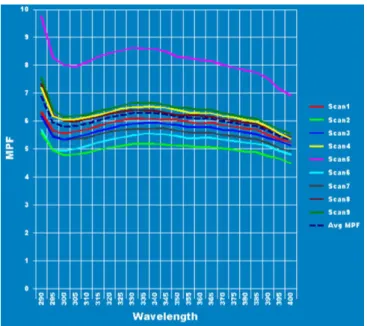
9 diferent scanning spots on the substrate at 2 nm interval between 290–400 nm (COLIPA, 2011; Kanlayavattanakul, Lourith, 2012a, 2012b). UVB protection eicacy as SPF, UVA protection eicacy as Boot star rating, and critical
wavelength were recorded. All of the measurements were undertaken in triplicates.
Primary skin irritation test
Healthy Thai volunteers aged between 20 and 40 years old with no skin diseases were enrolled in this study. The experimental protocol was conformed to the Helsinki protocol. People with hypersensitive skin or a history of allergies were excluded. Women who were pregnant or lactating and people who were dieting also were excluded from the study. All subjects were informed about the study both in writing and verbally and signed a written consent form, which was approved by the ethical committee of Mae Fah Luang University prior to enrollment.
A preliminary single-application closed patch test was performed in 20 volunteers. Finn chambers (8 mm) obtained from Smartpractice (USA) were used for observation of a skin irritation against the sample (20 µL) for a period of 24 h on the volar forearms of volunteers. Skin irritation severity was graded over a range of 0-4. Data collected were used to calculate MII (Mean Irritation
Index). A MII value < 0.2 was interpreted as non-irritation in a compassion with water (negative control) and 0.1% sodium lauryl sulfate (positive control) (Chuarienthong, Lourith, Leelapornpisid, 2010).
Statistical analysis
Data are presented as the mean ± SD. The parameters were compared and analyzed using one sample t test and
ANOVA test with a signiicance level of p<0.05 using the
SPSS program version 16.0.
RESULTS AND DISCUSSION
The passion fruit seed extract was prepared using the same procedure described in our previous study, and is shown in Table III (Lourith, Kanlayavattanakul, 2013). Assessment of antioxidant activity is one of the general protocols to ensure the quality and safety of the botanical extract used in personal care and cosmetics products. Antioxidant activity may vary depending on geographical condition and harvesting period (Antignac et al., 2011).
This would help in delineating speciications of the passion
fruit seed extract for industrial application.
Thereafter, the extract was further developed into the sunscreen makeup product as shown in Figure 1, and
TABLE I - Composition of the liquid foundation
Ingredient % w/w
F F0.1 F0.3
C30-45 alkyldimethicone 1-2 1-2 1-2
PEG-9 dimethicone 1-2 1-2 1-2
Cyclopentasiloxane 6-8 6-8 68
Cyclopentasiolxane and dimethicone cross polymer 0-1 0-1 0-1
TiO2 10-12 10-12 10-12
Yellow iron oxide treated silicone 0.8-1.2 0.8-1.2 0.8-1.2
Black iron oxide treated silicone 0.05-0.07 0.05-0.07 0.05-0.07
Red iron oxide treated silicone 0.1-0.3 0.1-0.3 0.1-0.3
Polymethylsilsesquioxane 0.5-1.5 0.5-1.5 0.5-1.5
Caprylyl methicone 9-11 9-11 9-11
DI water 53-55 53-55 53-55
Propylene glycol 10-12 8-10 8-10
NaCl 0.5-1 0.5-1 0.5-1
Propylene glycol (and) diazolidinyl urea (and) methylparaben (and) propylparaben 0.4-0.5 0.4-0.5 0.4-0.5
Triethanolamine 0.02-0.03 0.02-0.03 0.02-0.03
Propylene glycol 1-2 1-2 1-2
their sun protection factor (SPF) was examined in vitro as shown in Figure 2.
SPF is an indicator evaluating UVB protection
eicacy of sunscreen product. In vivo assay using human volunteers has been conducted (International Organization
for Standardization, 2010). However, an alternative method,
in vitro SPF assessment, has been developed because it
is more time eicient, less expensive, and more ethnical
(Fujikake et al., 2014). Therefore, in vitro assessment, i.e., the method described by Mansur et al. (1986), is widely
TABLE II - Composition of the concealer mousse
Ingredient % w/w
M M0.1 M0.3
Caprylyl methicone 2-5 2-5 2-5
Squalane 1.8-2.1 1.8-2.1 1.8-2.1
Isostearyl isostearate 0.9-1.4 0.9-1.4 0.9-1.4
Dimethicone 0.9-1.5 0.9-1.5 0.9-1.5
Talcum 6.1-7.7 6.1-7.7 6.1-7.7
Titanium dioxide, hydrated silica, hydrogen dimethicone 2-4 2-4 2-4
Titanium dioxide 12-16 12-16 12-16
Yellow iron oxide treated silicone 2-3 2-3 2-3
Red iron oxide treated silicone 0.4-0.6 0.4-0.6 0.4-0.6
Black iron oxide treated silicone 0.2-0.4 0.2-0.4 0.2-0.4
Dimethicone (and) cetearyl dimethicone crosspolymer 35-38 35-38 35-38
cyclopentasiloxane (and) dimethicone crosspolymer 11.9-12.3 11.9-12.3 11.9-12.3
Jojoba oil 5.1-6.3 5.1-6.3 5.1-6.3
Beeswax 1.1-1.5 1.1-1.5 1.1-1.5
Propylene glycol (and) diazolidinyl urea (and) methylparaben (and) propylparaben 0.1-0.2 0.1-0.2 0.1-0.2
Propylene glycol 0.1-0.3 0.1-0.3 0.1-0.3
Passion fruit extract - 0.1 0.3
TABLE III - Antioxidant activities of the passion fruit seed extract
Antioxidant Ascorbic acid Passion fruit seed extract
Present study Lourith, Kanlayavattanakul (2013)
ABTS (IC50, µg/mL) 3.404 ± 0.025 6.607 ± 0.011 9.0 ± 0.0
DPPH (IC50, µg/mL) 2.660 ± 0.079 4.410 ± 0.020 2.7 ± 0.2
FRAP (EC) 6,214.689 ± 28.249 2,018.942 ± 15.785 2,814.0 ± 11.6
used along with the optometric SPF analyzer and the Labsphere UV transmittance analyzer, during the research and product development because they are reliable and
eicient for the SPF determination before human testing
(Chiari et al., 2014; Jarzycka et al., 2013; Séhédic et al.,
2009; Surget et al., 2015). In addition, in vitro SPF analysis is more feasible with the industrial practice.
Both the base concealer mousse and foundation exhibited similar sun protective activity in terms of boot star rating and critical wavelength greater than 4 and wider than 370 nm, revealing a broad protection against UVB and UVA (Jain, Jain, 2010; Séhédic et al., 2009). However,
SPF of the base mousse was signiicantly (p = 0.000) better
than that of the foundation (Table IV).
Incorporation of the passion fruit seed extract
signiicantly (p<0.05) enhanced UVB protective eicacy.
UVB protection of passion fruit concealer mousse
was signiicantly (p>0.05) better than that of the liquid
foundation. Moreover, the synergistic effect of the pigments of the base mousse was 7.34% higher than that of the foundation. However, 0.1% and 0.3% passion fruit concealer mousses insignificantly differed in terms of
SPF (p=0.902), as shown in Table IV. The passion fruit
mousse concealers were therefore selected for a stability evaluation under accelerated conditions of 7 heat-cool cycles. The developed sunscreen makeup products were physicochemically and chemically stable, as shown in Table V.
The concealer mousse containing 0.1% of passion fruit extract was therefore chosen for skin irritation test in
the human volunteers owing to its photoprotective eicacy
and economic feasibility. Closed patch test was assessed in 20 Thai volunteers. No skin irritation was observed when the base and passion fruit concealer mousses were used,
which was similar to the efect of water (MII = 0).
Protection of skin against harmful UV rays is important in the prevention of premature skin aging and
TABLE IV - Sun protection eicacy of the passion fruit makeup
products
Formula
UVB
protection UVA protection
SPF Boots star
rating
Critical wavelength
F 5.88 ± 0.30 5.00 ± 0.00 389.40 ± 0.16 F0.1 9.32 ± 0.88 5.00 ± 0.00 389.40 ± 0.00 F0.3 9.77 ± 1.37 5.00 ± 0.00 389.40 ± 0.00 M 15.48 ± 1.60 4.00 ± 0.00 388.60 ± 0.22 M0.1 18.75 ± 0.28 4.00 ± 0.00 388.70 ± 0.00 M0.3 18.99 ± 0.71 4.00 ± 0.00 388.70 ± 0.00
TABLE V - Stability of passion fruit concealer mousse
Condition Parameter Formula
M M0.1 M0.3
Initial
pH 6.54 ± 0.03 6.49 ± 0.03 6.09 ± 0.06
SPF 15.48 ± 1.60 18.75 ± 0.28 18.99 ± 0.71
Boots star rating 4.00 ± 0.00 4.00 ± 0.00 4.00 ± 0.00 Critical wavelength 388.60 ± 0.22 388.70 ± 0.00 388.70 ± 0.00
Heat-cool
pH 6.48 ± 0.02 6.30 ± 0.50 5.89 ± 0.40
SPF 15.56 ± 0.53 18.09 ± 1.48 18.60 ± 1.21
Boots star rating 4.00 ± 0.00 4.00 ± 0.00 4.00 ± 0.00 Critical wavelength 388.80 ± 0.11 388.30 ± 0.00 388.70 ± 0.00
photoaging (Iannacone, Huges, Green, 2014). Therefore, application of sunscreen is the most established method.
Particularly, UV ilters with antioxidant activity are highly
accredited for their superior protection from skin damage (Oresajo et al., 2010). Plant-derived sunscreen agents are dramatically popular alternatives to the standard synthetic agents. Natural active ingredients are greatly presumed by the consumers as being safer than the synthetic ones and economically advantageous alternatives (Oliveira et al., 2009). In addition, the scientiic evidence supports
the effectiveness and benefits of the topical botanical therapies, and the proof of safety enables dermatologists and cosmetic chemists to encourage the consumers to use these products (Fisk et al., 2014; Iannacone, Huges, Green, 2014).
Makeup products are decorative cosmetics formulated in several dosage forms. Use of natural ingredients in makeup products is gaining popularity among the cosmetic users and industries (Fisk et al., 2014). In addition, makeup products such as foundation and mousse having sun-protective effects are widely popular. However, application of titanium dioxide (TiO2) as sunscreen and pigment in the product may not match the skin color or tone, particularly in Asian skin type. Thus, alternative agents, especially those of botanical sunscreens, are in focus. In addition, UVA and UVB protective cosmetics are appropriate for daily use and in vitro evaluation of sun protective efect is recommended
to investigate the protecting eicacy (Nash, Tanner, 2014;
Séhédic et al., 2009). Passion fruit seed extract with an SPF comparable to that of BP3, OMC, and ferulic acid (Lourith, Kanlayavattanakul, 2013) and better than Thanaka (Kanlayavattanakul, Lourith, 2012a; 2012b) is the natural sunscreen widely used in Myanmar and the northern part of Thailand. Makeup products in the form of liquid foundation and concealer mousse are popular sunscreen products, and application of a thick layer additionally contributes to the sun protection efficacy (Petersen, Wulf, 2014).
The UVB protection efficacy of the passion fruit concealer mousses further strengthens its protection against photo-damage of epidermal Langerhans (Lee et al., 1999). In addition, a twofold higher SPF of concealer mousses than that of the foundation, with SPF greater
than 15, reveals their beneit as a daily topical sunscreen
product (Séhédic et al., 2009) for skin cancer protection (Skin Cancer Foundation, 2016). Furthermore, the presented sunscreen product containing passion fruit seed extract was found to be better than the products containing 10% of Helichrysum arenarium, Crateaegus monogyna, and Sambac nigra, with SPF of 6.80 ± 0.26, 6.00 ± 0.42,
and 9.88 ± 1.66, respectively (Jarzycka et al., 2013), as
well as 10% green cofee oil cream with SPF of less than
4 (Chiari et al., 2014). This presented natural sunscreen products exhibited a comparable SPF (11.14 ± 1.44 and 17.78 ± 2.92) with some of the commercially available tinted creams and better critical wavelengths (378 and 377 nm), as previously reported (Séhédic et al., 2009). In a comparison with the SPF 13.57 ± 1.15 of sunscreen product incorporated with ethyl acetate (EtOAc) fraction of Salicornia ramosissima (Surget et al., 2015), passion fruit seed EtOAc fraction mousse exhibited better sun protection.
CONCLUSION
An efficient and safe sunscreen product in the form of concealer mousse containing passion fruit seed extract was proposed. This makeup product with photoprotective effect is suitable for daily application against photo-damage. This is accounted as one of the evidence-based researches, supporting the active agent for sunscreen products derived from the renewable sources. The prepared extract is compatible with other cosmetic ingredients. Therefore, the non-irritating sunscreen products containing passion fruit seed extract are encouraged for further in vivo eicacy evaluation.
ACKNOWLEDGEMENT
The authors acknowledged the Oice of the National
Research Council of Thailand for financial supported (FY 2013) and Mae Fah Luang University upon facilities supported.
REFERENCES
ANTIGNAC, E.; NOHYNEK, G.J.; RE, T., CLOUZEAU, J.; TOUTAIN, H. Safety of botanical ingredients in personal care products/cosmetics. Food Chem. Toxicol., v.49, p.324-341, 2011.
CEFALI, L.C.; ATAIDE, J.A.; MORIEL, P.; FOGLIO, M.A.; MAZZOLA, P.G. Plant-based active photoprotectants for sunscreens. Int. J. Cosmet. Sci., v.38, p.346-353, 2016. CHIARI, B.G.; TROVATTI, E.; PECORARO, É.; CORRÊA,
M.A.; CICARELLI R.M.B.; RIBEIRO, S.J.L.; ISAAC,
V.L.B. Synergistic efect of green cofee oil and synthetic
CHOQUENET, B.; COUTEAU, C.; PAPARIS, E.; COIFFARD, L.J.M. Quercetin and rutin as potential sunscreen agents: determination of efficacy by an in vitro method. J. Nat. Prod., v.71, p.1117-1118, 2008.
CHUARIENTHONG, P.; LOURITH, N.; LEELAPORNPISID,
P. Clinical eicacy comparison of anti-wrinkle cosmetics
containing herbal flavonoids. Int. J. Cosmet. Sci., v.32, p.99-106, 2010.
COLIPA. European Cosmetic Toiletry and Perfumery Association. Method for in vitro determination of UVA protection. Brussels: COLIPA, 2011.
FISK, W.A.; AGBAI, O.; LEV-TOV, H.A.; SIVAMANI, R.K. The use of botanically derived agents for hyperpigmentation: a systemic review. J. Am. Acad. Dermatol.,v.470, p.352-365, 2014.
FUJIKAKE, K.; TAGO, S.; PLASSON, R.; NAKAZAWA, R.; OKANO, K.; MAEZAWA, D.; MUKAWA, T.; KURODA, A.; ASAKURA, K. Problems of in vitro SPF measurements brought about by viscous fingering generated during sunscreen applications. Skin Pharmacol. Physiol. v.27, p.254-262, 2014.
GRUENWALD, J. Novel botanical ingredients for beverages. Clin. Dermatol., v.27, p.210-216, 2009.
IANNACONE, M.R.; HUGES, M.C.B.; GREEN, A.C. Efects
of sunscreen on skin cancer and photoaging. Photodermatol. Photoimmunol. Photomed., v.30, p.55-61, 2014.
I N T E R N A T I O N A L O R G A N I Z A T I O N F O R STANDARDIZATION. ISO 24444: cosmetics – sun
protection test methods – in vivo determination of the sun protection factor (SPF). Geneva, 2010.
JAIN, S.K.; JAIN, N.K. Multiparticulate carriers for sun-screening agents. Int. J. Cosmet. Sci., v.32, p.89-98, 2010.
JARZYCKA, A.; LEWIŃSKA, A.; GANCARZ, R.; WILK,
K.A. Assessment of extracts of Helichrysum arenarium, Crataegus monogyna, Sambac nigra in photoprotective UVA and UVB; photostability in cosmetic emulsions. J. Photochem. Photobiol. B Biol., v.128, p.50-57, 2013. KANLAYAVATTANAKUL, M.; LOURITH, N. Thanaka loose
powder and liquid foundation preparations. Household Per Care Today, v.7, p.30-32, 2012a.
KANLAYAVATTANAKUL, M.; LOURITH, N. Sunscreen liquid foundation containing Naringi crenulata powder. Adv. Mat. Res., v.506, p.583-586, 2012b.
LEÃO, K.M.M.; SAMPAIO, K.L.; PAGANI, A.A.C.; SILVA, M.A.A.P. Odor potency, aroma profile and volatiles composition of cold pressed oil from industrial passion fruit residues. Ind. Crops Prod., v.58, p.280-286, 2014.
LEE, C.K.; HAN, S.S.; SHIN, Y.K.; CHUNG, M.H.; PARK, Y.I.; LEE, S.K.; KIM, Y.S. Prevention of ultraviolet radiation-induced suppression of contact hypersensitivity by Aloe vera gel components. Int. J. Immunopharmacol., v.21, p.303-310, 1999.
LOURITH, N.; KANLAYAVATTANAKUL, M. Antioxidant activities and phenolics of Passilora edulis seed recovered from juice production residue. J. Oleo Sci., v.62, p.235-240, 2013.
MANSUR, J.S.; BREDER, M.N.R.; MANSUR, M.C.A., AZULAY, R.D. Determinação do factor de proteção solar por espectrofotometra. An. Bras. Dermatol. v.61, p.121-124, 1986.
MATHARU, A.S.; MELO, E.M.; HOUGHTON, J.A. Opportunity for high value-added chemicals from food supply chain wastes. Bioresour. Technol. v.215, p.123-130, 2016.
NASH, J.F.; TANNER, P.R. Relevance of UV ilter/sunscreen
product photostability to human safety. Photodermatol. Photoimmunol. Photomed., v.30, p.88-95, 2014.
O L I V E I R A , A . C . ; VA L E N T I M , I . B . ; S I LVA , C . A . ; BERCHARA, E.J.H.; BARROS, M.P.; MANO, C.M.; GOULART, O.F. Total phenolic content and free radical scavenging activities of methanolic extract powders of tropical fruit residues. Food Chem., v.115, p.469-475, 2009. ORESAJO, C.; YATSKYER, M.; GALDI, A., FOLTIS,
P.; PILLAI, S. Complementary effects of antioxidants and sunscreen in reducing UV-induced skin damage as demonstrated by skin biomarker expression. J. Cosmet. Laser. Ther.,v.12, p.57-162, 2010.
PETERSEN, B., WULF, H.C. Application of sunscreen – theory
SÁNCHEZ-CAMPILLO, M.; GABALDON, J.A.; CASTILLO, J.; BENAVENTE-GARCÍA, O.; DEL BAÑO, M.J.; ALCARAZ, M.; VICENTE, V.; ALVAREZ, N.; LOZANO, J.A. Rosmarinic acid, a photo-protective agent against UV and other ionizing radiations. Food Chem. Toxicol., v.47, p.386-392, 2009.
SÉHÉDIC, D.; HARDY-BOISMARTEL, A.; COUTEAU, C.; COIFFARD, L.J.M. Are cosmetic products which include an SPF appropriate for daily use? Arch. Dermatol. Res., v.301, p.603-608, 2009.
SILVA, E.V.; COSTA, S.C.C.; BRANCO, C.R.C.; BRANCO, A. In vitro photoprotective activity of the Spondias purpurea L. peel crude extract and its incorporation in a pharmaceutical formulation. Ind. Crop. Prod., v.83, p.509-514, 2016.
SURGET, G.; STIGER-POURVEAU, V.; LANN, K.L., KERVAREC, N.; COUTEAU, C.; COIFFARD. L.J.M.; GAILLARD, F.; CAHIER, K.; GUÉRARD, F.; POUPART, N. Structural elucidation, in vitro antioxidant and photoprotective capacities of a purified polyphenolic-enriched fraction from a saltmarsh plant. J. Photochem. Photobiol. B. Biol., v.143, p.52-60, 2015.
SKIN CANCER FOUNDATION. Prevention. Sun Protection. Sunscreen. 2016. Available frem: <http://www.skincancer. org/prevention/sun-protection/sunscreen>. Access on: May 23, 2016.