Author’s Accepted Manuscript
Trypanocidal activity of polysaccharide extract
from
Genipa americana
leaves
Racquel Oliveira da Silva Souza, Paloma Leão
Sousa, Ramon Róseo Paula Pessoa Bezerra de
Menezes, Tiago Lima Sampaio, Louise Donadello
Tessarolo, Francisca Crislandia Oliveira Silva,
Maria Gonçalves Pereira, Alice Maria Costa
Martins
PII:
S0378-8741(17)32031-7
DOI:
http://dx.doi.org/10.1016/j.jep.2017.08.042
Reference:
JEP11012
To appear in:
Journal of Ethnopharmacology
Received date: 23 May 2017
Revised date:
30 August 2017
Accepted date: 31 August 2017
Cite this article as: Racquel Oliveira da Silva Souza, Paloma Leão Sousa, Ramon
Róseo Paula Pessoa Bezerra de Menezes, Tiago Lima Sampaio, Louise
Donadello Tessarolo, Francisca Crislandia Oliveira Silva, Maria Gonçalves
Pereira and Alice Maria Costa Martins, Trypanocidal activity of polysaccharide
extract
from
Genipa americana
leaves,
Journal of Ethnopharmacology,
http://dx.doi.org/10.1016/j.jep.2017.08.042
This is a PDF file of an unedited manuscript that has been accepted for
publication. As a service to our customers we are providing this early version of
the manuscript. The manuscript will undergo copyediting, typesetting, and
review of the resulting galley proof before it is published in its final citable form.
Please note that during the production process errors may be discovered which
could affect the content, and all legal disclaimers that apply to the journal pertain.
Trypanocidal activity of polysaccharide extract from Genipa americana leaves
Racquel Oliveira da Silva Souzaa*, Paloma Leão Sousaa, Ramon Róseo Paula
Pessoa Bezerra de Menezesb, Tiago Lima Sampaiob, Louise Donadello
Tessaroloa, Francisca Crislandia Oliveira Silvac, Maria Gonçalves Pereirac,
Alice Maria Costa Martinsa.
a Departamento de Análises Clínicas e Toxicológicas, Universidade Federal do
Ceará, Fortaleza, Ceará, Brasil.
b Departamento de Fisiologia e Farmacologia, Universidade Federal do Ceará,
Fortaleza, Ceará, Brasil.
c Faculdade de Educação, Ciências e Letras do Sertão Central, Universidade
Estadual do Ceará, Quixadá, Ceará, Brasil.
* Corresponding author: Phone: +55 (85) 3366 8269. Fax: +55 (85) 3366 8263.
E-mail: [email protected]; [email protected]
Abstract
Ethnopharmacological relevance: The parts of the Genipa americana
(Rubiaceae) tree, also known as “jenipapo” or “jenipapeiro”, has been used in traditional Medicine in parasitic and bacterial infections. Thus, the experimental evolution of the antiparasitic activity of polysaccharide extracts from Genipa americana leaves, and correlation with antiparasitic and popular use is important.
benznidazole-resistant) developmental forms, a protozoan that causes Chagas’ disease.
Materials and Methods: An extract rich in polysaccharides was obtained from the leaves of Genipa americana (GaEPL) by associating depigmentation in methanol followed by extraction of polysaccharides in NaOH and precipitation with ethanol. Cytotoxicity to mammalian cells (LLC-MK2) was determined using an MTT assay. Antiparasitic activity was evaluated against epimastigote, trypomastigote and amastigote forms of T. cruzi. Cell-death mechanism was determined in epimastigote forms by flow cytometry analysis after FITC-annexin V (Ax), 7-AAD, and H2DCFDA staining. Striking morphological changes were observed by scanning electron microscope.
Results: GaEPL (6.5% yield; 54.6% total carbohydrate; 21.1% uronic acid and 12% protein), inhibited all T. cruzi developmental forms, epimastigotes after periods of 24 h (IC50= 740±0.075 µg/mL), 48 h (IC50= 710±0.053 µg/mL) and 72 h (IC50= 870±0.052 µg/mL) of incubation; trypomastigotes (IC50= 470±0.082 µg/mL) after periods of 24 h and intracellular amastigotes (IC50/2 = 235 or IC50= 470 µg/mL) after periods of 24 and 48 h of incubation, with no toxicity on LLC-MK2 cells at the used concentrations. Analysis of the possible action mechanism in the parasites suggested cell death by necrosis with the involvement of reactive oxygen species (ROS). The scanning electron microscopy (SEM) confirmed T. cruzi death by necrosis.
Conclusions: GaEPL showed significant activity against the epimastigote, trypomastigote and amastigote forms of T. cruzi, strain Y, suggesting cell death by necrosiswith involvement of reactive oxygen species.
Keywords:Plant polysaccharide, Genipa americana, Trypanosoma cruzi,
1. Introduction
American trypanosomiasis, also called Chagas disease, is considered one of the main public health problems in Latin America, where it causes more than 7,000 deaths per year (WHO, 2015). In Brazil, benznidazole (BZ) is the drug of choice to treat the disease, but it has limited therapeutic action and several side effects, which frequently lead to treatment interruption (Cerecetto and González, 2002; Bahia et al., 2012).
Natural plant products are a source of compounds that could be potentially active against protozoa (Croft et al., 2005; Salem and Werbovetz, 2006). Mesquita et al. (2005) identified antileishmanial and antitrypanosomal activities of ethanolic extract of Caesaria sylvestris leaves from medicinal plants of the Brazilian Cerrado (tropical savanna ecoregion). A previous study demonstrated that methanolic extracts of plants used in Mexican folk medicine exhibited the highest trypanocidal activity (Molina-Garza et al., 2014).
Genipa americana (Rubiaceae), a plant popularly known as “jenipapo”
or “jenipapeiro”, is found in Brazil from Amapá to São Paulo and Mato Grosso states (Corrêa, 1984; Delprete et al., 2005). In Brazil, several medicinal uses have traditionally been attributed to this species. The leaves decoction has been used as antidiarrheal and anti-syphilitic therapy (Côrrea, 1984), whereas the leaves macerated, has been used to treat fever by some native tribes (Delprete et al., 2005).Based on ethnobotanical surveys, the traditional use of this species is for the treatment of cough, anemia, contusions, dislocations; as depurative and associated with popular beliefs (Souza et al., 2013). In addition, the barks decoction (ad libitum) is used in the treatment of malaria by indigenous of the Upper Rio Negro in Amazonas (Kffuri et al., 2016).
The phytochemical analysis of G. americana leaves extracts revealed the presence of iridoids, mono and sesquiterpenes and of triterpenes and steroids. Therefore, also revealed the presence of hydrolyzable tannis, proanthocyanidins, cinnamic derivatives, phenylpropanoglycosides, geniposidic acid, genipatriol and flavonoids (Guarnaccia et al., 1972; Hossain et al., 2003; Alves et al., 2017; Vasconcelos et al., 2017).
falciparum and in vivo on Plasmodium berghei (Deharo et al., 2001), as well as the anti-parasitic and antimicrobial effects (Oliveira et al., 2012; Nogueira et al., 2014; Tallent, 1964).
Although the literature has several studies on extracts and pure compounds obtained from plants with good potential for the trypanocidal action (Paveto et al., 2004; Veiga-Santos et al., 2010), little is known about their mechanism of action. However, experimental reports of the antitrypanosomal effect of Genipa americana polysaccharide extracts were not found. Thus, this study focuses on evaluation of antitrypanosomal activity of polysaccharide extracts from Genipa americana leaves on all Trypanosoma cruzi
developmental forms and the type of cell death that was triggered.
2. Materials and Methods
2.1. Plant material
Samples of G. americana leaves were collected in nature in the District of Custodio-Quixadá, state of Ceará, Brazil and identified by Ms. Vanecia dos S. Gomes (State University of Ceará). A voucher specimen was deposited at Prisco Bezerra Herbarium (Federal University of Ceará, n. 4683).
2.2. Chemicals
Fetal bovine serum (FBS) was obtained from Invitrogen (Grand Island, NY, USA). LIT medium (HiMedia Laboratories, Mumbai, IND), DMEM medium (VITROCELL, São Paulo, BR), Catalase (CAT; Sigma-Aldrich, Brazil). Benznidazole (BZ; Lafepe, Brazil), Sodium dodecyl sulfate (SDS - Vetec, São Paulo, Brazil), (3-[4,5-dimethylthiazol-2-yl]-2,5-diphenytetrazolium bromide formazan – MTT) were obtained from Amresco (Ohio, USA), FITC-conjugated to annexin V/7-AAD from BD Pharmingen, California, USA, and H2DCFDA from Sigma-Aldrich™, St. Louis, USA.
2.3. Extraction of polysaccharides from Genipa americana leaves
twice. The insoluble material was extracted in 0.1 M NaOH (1:50 w/v, 97 ºC, the procedure was repeated three times) resulting in alkaline extracts that were pooled (supernatants 2 and 3), neutralized with 1 M HCl, precipitated with 4 volumes of ethanol and centrifuged. The supernatant was dialyzed against running water for 72 h, centrifuged (1445 x g, 30 min, r.t.) and the final supernatant was lyophilized and named polysaccharide extract of G. americana
- GaEPL (Souza et al., 2015).
2.4. Cells and parasites
LLC-MK2 (epithelial cells from the kidney of the monkey Macaca mulatta) were maintained in DMEM medium (Vitrocell, São Paulo, Brazil) supplemented with 1% antibiotic solution and 10% of FBS in T-25/75 cm² flasks maintained at 37 ºC in a humidified atmosphere with 5% CO2. These cells were split each time they reached 80-90% confluence after being harvested with a solution containing 0.25% trypsin and 2.21 mM EDTA.
The Trypanosoma cruzi Y (benznidazole-resistant) strain was isolated in the Laboratory of Parasite Biochemistry, University of São Paulo (São Paulo - Brazil) and donated in epimastigote and trypomastigote forms. Epimastigote forms of T. cruzi (Y strain) were maintained at 28 ºC with weekly transfers in liver infusion tryptose (LIT) supplemented with 10% FBS. Trypomastigote forms were obtained by infecting LLC-MK2 cell monolayers in DMEM supplemented with 2% FBS at 37 ºC in a 5% CO2 atmosphere.
2.5. Genipa americana polysaccharide extract activity assay against T. cruzi
epimastigote forms
2.6. Genipa americana polysaccharide extract activity assay against T. cruzi
trypomastigote forms
Trypomastigote forms (106 cells/mL) were obtained from the supernatant of infected LLC-MK2 cells that were dispensed into 96-well plates in DMEM medium supplemented with 2% FBS in the absence or presence of different concentrations of GaEPL (9-1500 µg/mL) or BZ (1.56-200 µg/mL), in triplicate. The parasites were incubated for 24 h at 37 ºC in a 5% CO2 atmosphere. After incubation, parasite viability was determined by assessing mobility under an Olympus CX31 light microscope. An aliquot (10 µL) of each sample was placed on slides. The slides were cover-slipped and the parasites were counted in a Neubauer chamber, and the concentration that inhibited growth by 50% (IC50) was determined by regression analysis of the data (Adade et al., 2014).
2.7. Cytotoxicity to mammalian cells
LLC-MK2 cells were assayed for cell viability determination using MTT assay (Mosmann, 1983). A suspension of 105 cells was seeded in a 96-well microplate and maintained at 37 ºC in a 5% CO2 atmosphere for 24 h to obtain confluent cell monolayers. Subsequently, the medium was removed, and the monolayers were then treated with different concentrations of GaEPL (9-3000 µg/mL), BZ (1.56-200 µg/mL) or phosphate-buffered saline (PBS) in triplicates for 24 h. After the treatment, 100 μL of the culture medium were removed and
2.8. Genipa americana polysaccharide extract activity assay against T. cruzi
amastigote forms
LLC-MK2 cells were seeded in 24-well plates containing glass coverslips (13-mm diameter) cultivated in DMEM supplemented with 10% FBS and 1% antibiotics, at 37 ºC, in a 5% CO2 atmosphere for 24 h. Subsequently, the media was removed from the wells and LLC-MK2 cells were infected with trypomastigote forms (parasite: host-cell ratio of 20:1) in DMEM medium containing 2% FBS. After 48 h of interaction, the microplate was washed with PBS to remove the non-internalized parasites and treated with GaEPL (235 and 470 µg/mL), BZ (67 and 134 µg/mL) or PBS. After incubation for 24 or 48 h at 37 ºC, the coverslips were collected, washed with PBS, fixed in Bouin’s solution, and stained with Giemsa (Lima et al., 2016). The percentage of infected cells and the number of intracellular amastigotes per 100 cells was determined by counting 300 cells in triplicate under an Olympus light microscope CX 31.
2.9. T. cruzi epimastigote death pathway assays induced by the Genipa americana polysaccharide extract
Flow cytometry experiments were performed in a FACSCalibur system and analyzed using the Cell Quest software (Becton-Dickinson, California, USA). A total of 10.000 events were acquired in the region previously established as that corresponding to T. cruzi epimastigote forms. The results were established by determining the fold change (treated/non-treated cell ratio) of the geometric mean of fluorescence. At the end of each incubation period, the cells were washed and submitted to cytometry flow analysis to evaluate the pathways by which GaEPL induces T. cruzi death.
Epimastigote forms (106 cell/mL) were incubated for 24 h at 37 ºC in the absence or presence of GaEPL (740 µg/mL). After incubation, the parasites were washed and stained with FITC-annexin V (Ax) and/or 7-AAD, according to
in fluorescence caused by the conversion of nonfluorescent dye to highly fluorescent 2’,7’ dichlorofluorescien, according to the manufacturer’s instructions (Sigma–Aldrich™, St. Louis, USA). Epimastigotes without GaEPL treatment were used as controls and experiments were carried out in triplicate.
2.10. T. cruzi epimastigote morphological changes induced by the Genipa americana polysaccharide extract
Epimastigotes forms were treated with GaEPL for 24 h [IC50/2 (370 µg/mL) and IC50 (740 µg/mL)]. After incubation, the parasites were washed with PBS and fixed for 2 h with 2.5% glutaraldehyde solution (Electron Microscopy Sciences, Hatfield, Pennsylvania). After fixation for 2 h at room temperature, parasites were washed with PBS, and then dehydrated with ethanol. Subsequently, samples were dried with CO2, coated with gold, and observed in a FEG Quanta 450 scanning electron microscope (FEI, Oregon, USA). Digital images were acquired and stored in a computer (Lima et al., 2016).
2.11. Evaluation of the involvement of peroxyde hydrogen on Genipa americana polysaccharide extract tripanocidal effect
Epimastigote forms of T. cruzi (106 cells/mL) were cultivated as described above and treated with GaEPL for 24 h [IC50 (740 µg/mL)] in the absence or presence of catalase (25 µg/mL). Afterward, parasite growth inhibition was quantified in a Neubauer chamber (Guo et al., 2015, with modifications).
2.12. Statistical analyses
The statistical analysis was performed using the GraphPad Prism 5 program (GraphPad Software, San Diego, CA, USA). Results were expressed as mean±S.E.M. and analyzed by ANOVA and Bonferroni test. Differences were considered for p values less than 0.05.
The extraction of polysaccharides from G. americana leaves showed a total yield of 6.5%, revealing high content of carbohydrate (54.6%, incluiding 21.1% uronic acid) and 12% protein.
The GaEPL exhibited trypanocidal activities for all developmental forms of the parasites. GaEPL inhibited growth of the epimastigote with an IC50 at24, 48 and 72 h of 740±0.075, 710±0.053, 870±0.052 µg/mL, respectively, while BZ exhibited an IC50 at 24, 48 and 72 h of 56.76±1, 15.91±3, 16.5±1 µg/mL, respectively. For the trypomastigote forms, GaEPL showed an IC50 of 470±0.082 µg/mL, while the BZ positive control showed IC50 of 67±20 µg/mL. Next, the cytotoxicity of GaEPL was determined in LLC-MK2cells with different concentrations using the MTT assay. GaEPL reduced LLC-MK2viability with an IC50 of 2250±0.071 µg/mL and SI of 4.8 for trypomastigotes, showing good selectivity for these infective forms (Table 1).
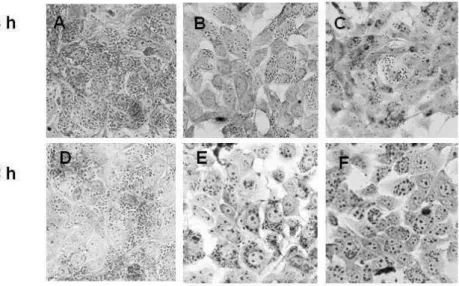
In addition, GaEPL was also tested against T.cruzi amastigote forms after LLC-MK2 cell infection with the trypomastigotes. GaEPL reduced the percentage of infected cells at 24 and 48 h. Untreated cells showed approximately 79% of infected cells in 24 h and 70% in 48 h. Cells treated with 235 or 470 µg/mL of GaEPL showed 49% and 46% reduction of infected cells in 24 h; and 44% and 53% in 48 h, respectively. GaEPL (235 and 470 µg/mL) was also assessed in amastigotes/100 LLC-MK2 cells, showing inhibition in 24 and 48 h, as well as BZ, with 67 and 134 µg/mL (Fig. 1). In the light microscopy analysis, it was observed that the GaEPL significantly decreased cell infectivity at both concentrations and periods studied (Fig. 2).
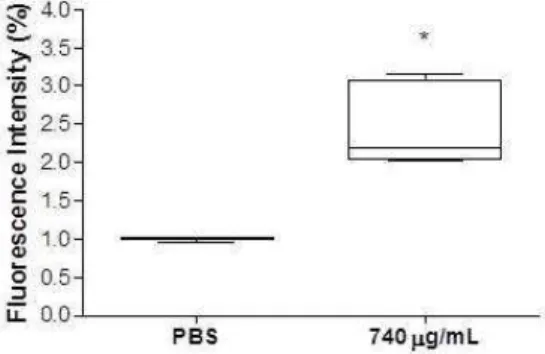
After the observation of GaEPL toxicity to T. cruzi, the parasite death mechanism was investigated. T. cruzi epimastigotes treatment with GaEPL at 740 µg/mL (IC50) for 24 h resulted in an increase in 7AAD+/AX- labelled cell populations when compared to non-treated cells. These results suggest that T. cruzi death occur predominantly by necrosis (Fig. 3A-C). In addition, it evaluated the production of reactive oxygen species (ROS) in epimastigote forms treated with GaEPL at 740 µg/mL (Fig. 4). The results showed a significant increase in total ROS production after 24 h of treatment.
Morphological changes induced by GaEPL in epimastigotes are shown in
rounding and shortening of the parasite and apparent leakage of cytoplasmic contents, and cell membrane degradation with pores (Fig.5B-C). These data are typical evidence of necrosis, confirming the flow cytometry data.
In order to determine the involvement of peroxyde hydrogen on GaEPL effect, epimastigotes treated with GaEPL (IC50) or GaEPL (IC50) + CAT shows no significant differences (Table 2). These data suggest that the effect of GaEPL is not related to the production of peroxyde hydrogen.
4. Discussion
The extraction of crude polysaccharides from G. americana leaves revealed satisfactory yield and present high carbohydrate content (including uronic acid) and lower protein. These findings agree with the data found for the polysaccharide extracts and fractions obtained from the leaves of this plant (data in publication) and other polysaccharide extracts from plants using the same extraction protocols (Souza et al., 2015; Pereira et al., 2012; Pereira et al., 2016).
Extraction of polysaccharides from G. americana leaves showed a total yield similar to those described for Geoffroea spinosa bark (Souza et al., 2015). Chemical analysis of polysaccharides from G. americana leaves showed a high content of carbohydrates (54.6%), with a minor protein content (12%). The carbohydrate and protein contents were similar to those described for G. spinosa bark (62% and 9%), Azadirachta indica seed tegument (54% and 4%) and Caesalpinia ferrea pods (44% and 6%) (Souza et al., 2015; Pereira et al., 2012; Pereira et al., 2016).
Several plant polysaccharides have been described with in vitro and in
vivo immunostimulating activity (Luetting et al., 1989; Tomoda et al., 1994). A novel cytotoxic proteoglycan, structurally related to arabinogalactan-protein, from the corn of saffron plant (Crocus sativus L.) showed a certain level of apoptosis in macrophages culture with non-cytotoxic concentration resulting in an increase in DNA laddering, characteristic of apoptotic cells (Escribano et al., 1999). This correlation and the high carbohydrate content associated with protein would also be linked to associated the anti-parasitic activity demonstrated in our study.
Our results show that polysaccharides extracted from Genipa americana leaves have an anti-parasitic effect against the epimastigote, trypomastigote and amastigote forms of T. cruzi. The leaves of G. americana
are used in traditional Medicine to treat diarrhea, syphilis and fever (Côrrea, 1984; Delpret et al., 2005). Additionally, the anti-parasitic and antimicrobial effects had been already experimentally demonstrated for the leaves (Oliveira et al., 2012; Deharo et al., 2001; Nogueira et al., 2014; Tallent, 1964), and our present results are in accordance with the use of G. americana for treatment of parasitic and bacterial infections.
Other plant extracts also showed trypanocidal activities. The aqueous extract from Neurolaena lobata leaves demonstrated an effect against epimastigote forms of T. cruzi after incubation for 48 h at 550 µg/mL (Berger et al., 1998) and eighteen out of 43 crude methanolic extracts showed trypanocidal activity against epimastigote forms at 2000 µg/mL after incubation for 2 h, while thirteen showed trypanocidal activity even at 1000 µg/mL after incubation for 48 h (Abe et al., 2002). The ethanolic extract from Guazuma ulmifolia leaves showed 63.86% inhibited on in epimastigote growth at a concentration of 1000 µg/mL for 72 h (Calixto Júnior et al., 2016). In this study, we showed that GaEPL significantly inhibited the growth of epimastigotes (24, 48 and 72h) at concentrations lower than 1000 µg/mL.
was barely active, showing only 37.3% of lysis of trypomastigote forms (da Silva Filho et al., 2004). Thus, our data demonstrated that GaEPL were most effective against trypomastigote forms in comparison to those extracts.
Natural plant products are an alternative source of drugs to fight T. cruzi
infection, some of which exhibit trypanocidal activity and lower toxicity (Luize et al., 2005; Sülsen et al., 2006; Rojas et al., 2010). In this study, GaEPL showed low toxicity against LLC-MK2 cells, being more toxic to the protozoa than to the mammalian cells. Considering the LC50 concentrations against the trypomastigotes, GaEPL SI was 4.8, demonstrating to be 2.08 times higher than that of BZ, the drug currently used to treat Chagas disease, showing that GaEPL has good selectivity against the T. cruzi Y strain. Moreover, methanolic extracts of the medicinal plants found in Saudi Arabia and Yemen exhibited antitrypanosomal activity with SI < 4 (Mothana et al., 2014).
A previous study demonstrated the cytotoxicity activity of crude extracts of several plant species against epimastigotes, trypomastigotes and amastigotes of T. cruzi (Mafezoli et al., 2000; Pizolatti et al., 2002; Molina-Garza et al., 2014; Meira et al., 2015). In the present study, GaEPL showed potent activity against the amastigote forms it is suggested that the GaEPL has to cross the host cell membrane in the order to gain access to the intracellular parasite, whereas the extracellular trypomastigote is directly exposed to the extract.
To identify the mechanism of cell death induced by GaEPL treatment, analyses of the classical necrosis/apoptosis processes were performed. In this study, GaEPL treatment caused an increase in the fluorescence intensity of 7AAD+/Ax- and 7AAD+/Ax+, indicating alteration of cell membrane integrity, suggestive of cell death by necrosis.
The morphological changes observed at electron microscopy such as body shape, with rounding and shortening of the parasite and apparent leakage of cytoplasmic contents, of cell membrane degradation with pores, in addition to the flow cytometry results, suggest that GaEPL causes necrotic cell death in T. cruzi.
The main contribution of this study was the demonstration of the effect of polysaccharide extract obtained from G. americana leaves as a rich source of natural antiparasitic product against T. cruzi.
5. Conclusions
The polysaccharide extract of G. americana showed significant activity against the epimastigote, trypomastigote and amastigote forms of T. cruzi,
strain Y (benznidazole-resistant), suggesting cell death by necrosis with involvement of reactive oxygen species. Therefore, GaEPL can be a rich source of natural products against Chagas’ disease.
Acknowledgements
The authors are grateful to Ms. Vanecia dos S. Gomes, who identified the plant species and Profa. Julia Manso Alves for the donation of cells and parasites (IQ-USP). This research was funded by Brazilian grants from CNPq and CAPES. We also thank Analytic Center - UFC/CT - INFRA/Pro and CAPES Equipment.
References
Abe, F., Nagafuji, S., Yamauchi, T., Okabe, H., Maki, J., Higo, H., Akahane, H., Aguilar, A., Jiménez-Estrada, M., Reyes-Chilpa, R., 2002. Trypanocidal constituents in plants. 1. Evaluation of some Mexican plants for their trypanocidal activity and active constituents in Guaco, roots of Aristolochia taliscana. Biol. Pharm. Bull. 25, 1118–1191.
Alves, J.S.F., de Medeiros, L.A., Fernandez-Pedrosa, M.F., Araújo, R.M., Zucolotto, S.M., 2017. Iridoids from leaf extract of Genipa americana. Rev. Bras. Farmacogn. http://dx.doi.org/10.1016/j.bjp.2017.03.006
Atawodi, S.E, Bulus, T., Ibrahim, S., Ameh D.A, Nok, A.J, Mamman, M., Galadima, M., 2003. In vitro trypanocidal effects of methanolic extracts of some Nigeria savannah plants. Afr. J. Biotechnol. 2, 317-321.
Bahia, T.M., Andrade, L.M., Martins, T.A.F., Nascimento, A.F.S., Diniz, L.F., Caldas, I.S., Talvani, A., Trunz, B.B., Torrele, E., Ribeiro, I., 2012. Fexinidazole: a potential new drug candidate for Chagas disease. PloS Negl. Trop. Dis. 6, e1870.
Berger, I., Barrientos, A.C., Cáceres, A., Hernández, M., Rastrelli, L., Passreiter, C.M., Kubelka, W.,1998. Plants used in Guatemala for the treatment of protozoal Infections II. Activity of extracts and fractions of five Guatemalan plants against Trypanosoma cruzi. J. Ethnopharmacol. 62, 107–115.
Borges, A.R., Aires, J.R., Higino, T.M., de Medeiros, M.D., Citó, A.M., Lopes, J.A., de Figueiredo, R.C., 2012.Trypanocidal and cytotoxic activities of essential oils from medicinal plants of Northeast of Brazil. Exp Parasitol. 132, 123–128.
Calixto Júnior, J.T., de Morais, S.M., Gomez, C.V., Molas, C.C., Rolon, M., Boligon, AA., Athayde, M.L., de Morais Oliveira, C.D., Tintino, S.R., Henrique Douglas, M.C., 2016. Phenolic composition and antiparasitic activity
of plants from the Brazilian Northeast ‘‘Cerrado”. Saudi. J. Biol. Sci, 23, 434–
440.
Camargo, E.P., 1964. Growth and Differentiation in Trypanosoma cruzi.I. Origin of Metacyclic Trypanosomes in Liquid Media. Rev. Inst. Med. Trop. São Paulo. 6, 93–100.
Cerecetto, H., González, M., 2002. Chemotherapy of Chagas’ disease: status
and new developments. Curr. Top. Med. Chem. 2, 1187-1213.
Corrêa, P.M., 1984. Dicionário das plantas úteis do Brasil e das exóticas cultivadas. IBDF, Rio de Janeiro.
Croft, S.L., Barrett, M.P., Urbina, J.A., 2005. Chemotherapy of trypanosomiases and leishmaniasis. Trends. Parasitol. 21, 508–512.
da Silva Filho, A.A., Pires Bueno, P.C., Gregório, L.E., Andrade e Silva, M.L., Albuquerque, S., Bastos, J.K., 2004. In-vitro trypanocidal activity evaluation of crude extract and isolated compounds from Baccharis dracunculifolia D. C. (Asteraceae). J. Pharm. Pharmacol. 56, 1195–1199.
Deharo, E., Bourdy, G., Quenevo, C., Muñoz, V., Ruiz, G., Sauvain, M., 2001. A search for natural bioactive compounds in Bolivia through a multidisciplinary approach. Part V. Evaluation of the antimalarial activity of plants used by the Tacana Indians. J. Ethnopharmacol. 77, 91-98.
Escribano, J., Rios, I., Fernández, J. A.,1999. Isolation and cytotoxic properties of a novel glycoconjugate from corms of saffron plant (Crocus sativus
L.).Biochim. Biophys. Acta, 1426, 217–222.
Fernandez, V., Franco de Diana, D., Fernández, D., Vega Gómez, M.C., Segovia Abreu, J., Castiglioni, D., Sales, L., Martinez, M., López, D., Bobadilla, N., Alfonso, J. , Mojoli Le Quesne, A., Monges, D., Vera, M., 2011. Efecto antimitótico y citotóxico del extracto etanólico de Genipa americana L. sobre tejido meristematico de Allium cepa L. y cultivo celular NCTC-929. Steviana. 3, 48-53.
Finco, F. D.B. A., Böser, S., Graeve, L., 2013. Antiproliferative activity of Bacaba (Oenocarpus bacaba) and Jenipapo (Genipa americana L.) phenolic extracts: A comparison of assays. Nutrition & Food Science. 43, 98-106.
Guarnaccia, R., Madyastha, K.M., Tegtmeyer, E., Coscia, C.J., 1972. Geniposidic acid,an iridoid glucoside from Genipa americana. Tetrahedron Lett. 50, 5125–5127.
Guo, C., Liu, S., Dong, P., Zhao, D., Wang, C., Tao, Z., Sun, M.Z., 2015. Akbu-LAAO exhibits potent anti-tumor activity to HepG2 cells partially through produced H2O2 via TGF-β signal pathway. Sci Rep. 5, 1-14.
Hossain, C.F., Jacob, M.R., Clark, A.M., Walker, L.A., Nagle, D.G., 2003. Genipatriol, a new cycloartane triterpene from Genipa spruceana. J. Nat. Prod. 66, 398–400.
Kffuri, C.W., Lopes, M.A., Ming, L.C., Odonne, G., Kinupp, V.F., 2016. Antimalarial plants used by indigenous people of the Upper Rio Negro in Amazonas, Brazil. J. Ethnopharmacol.178, 188-198.
Lima, D.B., Sousa, P.L., Torres, A.F., Rodrigues, K.A., Mello, C.P., Menezes, R.R., Tessarolo, L.D., Quinet, Y.P., de Oliveira, M.R., Martins, A.M., 2016. Antiparasitic effect of Dinoponera quadriceps giant ant venom. Toxicon. 120, 128-132.
López, J.A., Little Junior, E.L., Ritz, G.F.,1987. Arboles communes del Paraguay, DC: Peace Corps, Washington.
Luize, P.S., Shioji-Tiuman, T., Morello, L.G., Korehiza Maza, P., 2005. Effects of medicinal plant extracts on growth of Leishmania (L.) amazonensis and
Trypanosoma cruzi. Braz. J. Pharm. Sci. 41, 85-94.
Mafezoli, J., Vieira, P.C., Fernandes, J.B., da Silva, M.F.G.F., de Albuquerque, S., 2000. In vitro activity of Rutaceae species against the trypomastigote form of Trypanonosma cruzi. J. Ethnopharmacol. 73, 335–340.
Meira, C.S., Guimarães, E. T., Santos, J.A.F., Moreira, D.R.M., Nogueira, R. C., Tomassini, T.C.B., Ribeiro, I.M., Souza, C.V.C., Santos, R. R., Soares, M. B.P., 2015. In vitro and in vivo antiparasitic activity of Physalis angulata L. concentrated ethanolic extract against Trypanosoma cruzi. Phytomedicine. 22, 969–974.
Mesquita, M.L., Desrivot, J., Bories, C., Fournet, A., Paula, J.E., Grellier, P., Espindola, L.S., 2005. Antileishmanial and trypanocidal activity of Brazilian cerrado plants. Mem. Inst. Oswaldo Cruz. 100, 783-787.
Molina-Garza, Z. J., Bazaldúa-Rodriguez, A. F., Quintanilla-Licea., Galaviz-Silva, L., 2014. Anti-Trypanosoma cruzi activity of 10 medicinal plants used in northeast Mexico. Acta Trop.136, 14-18.
Mosmann, T. 1983. Rapid colorimetric assay for cellular growth and survival: application to proliferation and citotoxicity. J. Immunol. Methods, 65, 55-63.
Mothana, R. A., All-Musayeib, N. M., Al-Ajmi, M. F., Cos, P., Maes, L., 2014. Evaluation of the In vitro antiplasmodial activity of medicinal plants uses in Saudi and Yemeni traditional medicine. Evid. Based. Complement .Alternat. Med. eCAM, 2014, 905639.
Nogueira, F.A., Nery, P.S., Morais-Costa, F., Oliveira, N.J.F., Martins, E.R., Duarte,E.R., 2014. Efficacy of aqueous extracts of Genipa americana L. (Rubiaceae) in inhibiting larval development and eclosion of gastrointestinal nematodes of sheep. J. Appl. Anim. Res. 42,356-360.
Nwaka, S., Hudson, A., 2006. Innovative lead discovery strategies for tropical diseases. Nat. Rev. Drug. Discov. 5, 941-955.
Oliveira, L.D.R., Miranda, J.P.H.V., Curado, G.S, Costa Neto, J.P., Santos, B.F., Barros, E.E.L., Louvandini, H., Melo, F.R., 2012. Haemonchus contortus:
in vivo anthelmintic activity of Genipa americana L. leaves in sheep. Planta Med. 78, 420.
Paveto, C., Güida, M.C., Esteva, M.I., Martino, V., Coussio, J., Flawiá, M.M.,Torres, H.N., 2004. Anti-Trypanosoma cruzi activity of green tea (Camellia sinensis) Catechins. Antimicrob. Agents. Chemother. 48, 69–74.
Pereira, L.P., Mota, M.R.L., Brizeno, L.A.C., Nogueira, F.C., Ferreira, E.G.M., Pereira, M.G., Assreuy, A. M.S. 2016. Modulator effect of a polysaccharide-rich extract from Caesalpinia ferrea stem barks in rat cutaneous wound healing: role of TNF-α, IL-1β, NO, T G F –β. J. Ethnopharmacol.187, 213-223.
Pizzolatti, M.G., Koga, A.H., Grisard, E.C., Steindel, M., 2002. Trypanocidal activity of extracts from Brazilian Atlantic rain forest plant species. Phytomedicine. 9,422–426.
Pott, A., Pott, V.J., 1994. Plantas do Pantanal, Corumbá: EMBRAPA-CPAP Brasília.
Rojas, J., Solís, H., Palacios, O., 2010. Evaluación in vitro de la actividad anti Try-panosoma cruzi de aceites esenciales de diez plantas medicinales. Anal. Facult. Med. 71, 161–165.
Rosas, L.V., Cordeiro, M.S.C., Campos, F.R., Nascimento,S.K.R., Januário Salem, M.M., Werbovetz, K.A., 2006. Natural products from plants as drug candidates and lead compounds against leishmaniasis and trypanosomiasis. Curr. Med. Chem. 13, 2571–2598.
Salem, M.M., Werbovetz, K.A., 2006. Natural products from plants as drug candidates and lead compounds against leishmaniasis and trypanosomiasis. Curr. Med. Chem. 13, 2571–2598.
Souza, R.O.S., Assreuy, A.M.S., Madeira, J.C., Chagas, F.D.S., Parreiras, L. A., Santos., G.R.C., Mourão., P.A.S., Pereira., M.G., 2015. Purified polysaccharides of Geoffroea spinosa barks have anticoagulant and antithrombotic activities devoid of hemorrhagic risks. Carbohydr Polym. 124, 208-215.
Souza, R.K.D., Mendonça, A.C.A.M., Silva, M.A.P., 2013. Ethnobotanical, phytochem-ical and pharmacological aspects Rubiaceae species in Brazil. Rev. Cubana PlantMed. 18, 140–156.
Sülsen, V., Güida, C., Coussio, J., Paveto, C., Muschietti, L., Martino, V., 2006.
In vitro evaluation of trypanocidal activity in plants used in Argentine traditionalmedicine. Parasitol. Res. 98, 370–374.
Tallent, W.H., 1964. Two new antibiotic cyclopentanoid monoterpenes of plant origin. Tetrahedron,20, 1781-1787.
Tomoda, M., Miyamoto, H., Shimizu, N., Gonda, R., Ohara, N., 1994. Two acidic polysaccharides having reticuloendothelial system-potentiating activity from the raw root of Rehmannia glutinosa. Biol. Pharm. Bull.17, 1456–1459.
Veiga-Santos, P., Pelizzaro-Rocha, K.J., Santos, A.O., Ueda-Nakamura, T., Dias Filho, B.P., Silva, S.O., Sudatti, D.B., Bianco, E.M., Pereira, R.C., Nakamura, C.V., 2010. In vitro anti-trypanosomal activity of elatol isolated from red seaweed Laurencia dendroidea. Parasitology 137, 1661–1670.
Figure 2. Light microscopy of Trypanossoma cruzi-infected LLCMK2 cells treated with GaEPL for 24 (A, B, C) and 48 h (D, E, F) at 37 ºC.
Table 1
Antiparasitic activity of G. americana polysaccharide extract on the extracelular forms of T. cruzi and host cell cytotoxicity.
GaEPL= polysaccharide extract from Genipa americana leaves.
BZ= benznidazole. IC50= Inhibitory concentration at 50%. SD= Standard deviation. SI= Selective index. Values are shown as means ± SD of three independent experiments performed in triplicate. *Significantly different from the control group (One-way analysis of variance and Bonferroni post-test, *p<0.05). a Cell viability of LLC-MK2 determined 24 h after treatment.
Epimastigote
(T. cruzi)
Trypomastigote
(T. cruzi) LLC-MK2a SI
GaEPL IC 50 ± S.D
(µg/mL)
BZ IC 50 ± S.D
(µg/mL)
GaEPL IC 50 ± S.D
(µg /mL)
BZ IC 50 ± S.D
(µg/mL)
GaEPL IC 50 ± S.D
( µg /mL)
BZ IC 50 ± S.D
(µg/mL)
GaEPL BZ
24 h 740±0.075 56.76±15 470±0.082 67±20 2250±0.071 160±75.09 4.8 33.6
48 h 710±0.053 15.91±3 - - - -
Table 2
Evaluation of the involvement of hydrogen peroxyde on epimastigote forms of
T. cruzi in the effect of G. americana polysaccharide extract.
% cell viability
Control 100±5.2
Catalase (25 µg/mL) 90±5.1
GaEPL (IC 50– 740 µg/mL) 44.4±4.4*
GaEPL + CAT 34.2±2.9*
GaEPL= polysaccharide extract from Genipa americana leaves. CAT = Catalase